Overview
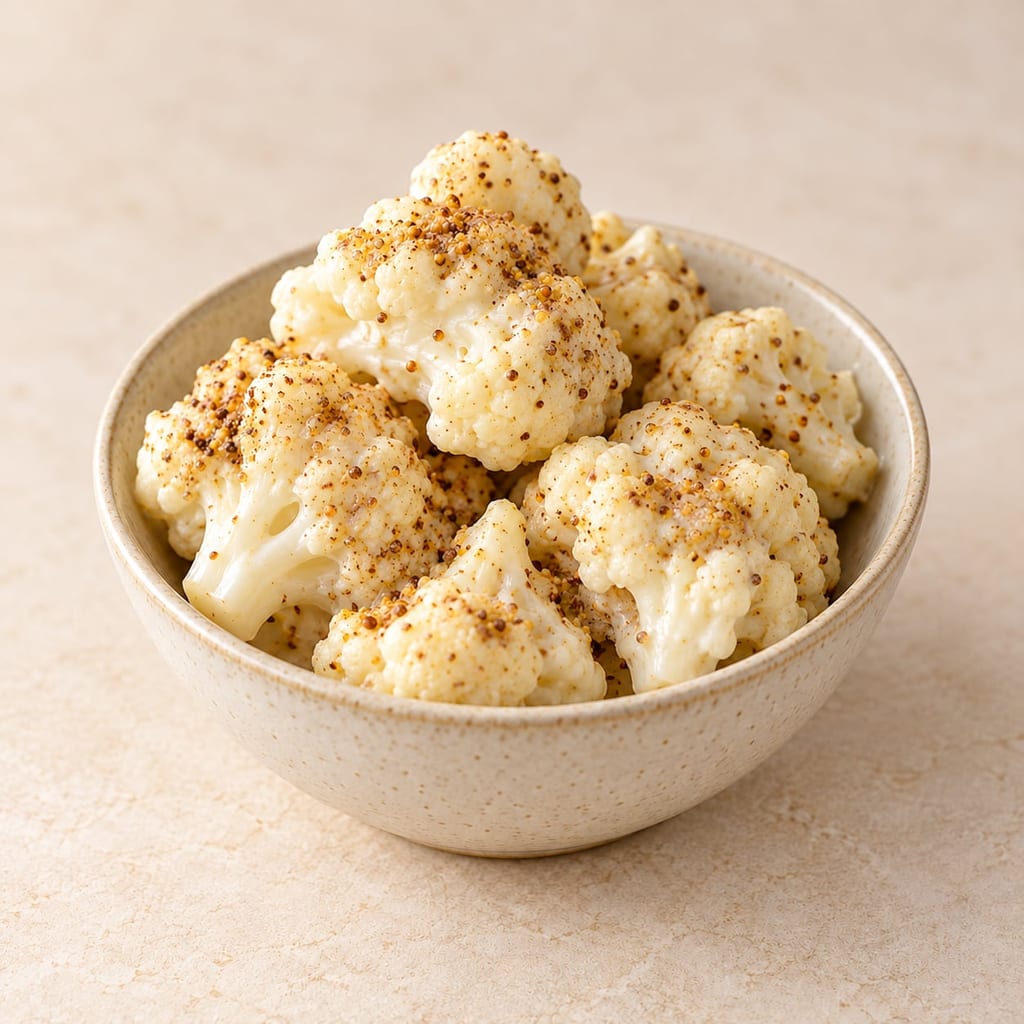
Moungra (Μούγκρα) is a Cypriot cauliflower preparation recorded with mustard and sourdough. The Cyprus Food Museum gives three versions rather than one standard formula, and their measures and methods should be read separately. The museum's chronology spans the 19th to 21st centuries, but its entry does not establish an earliest record or an origin.
Sources for this section
Three versions
Version A, attributed to Kyperounta, uses 1 kg of bakery sourdough dough and 1 to 2 kg of cauliflower, with salt and mustard in unstated amounts. The dough is left to sour for two days. Small pieces are briefly boiled in salted water, seasoned after draining, cooled and covered with the dough diluted to a slurry. The vessel is shaken once or twice a day and the cauliflower is used after three to four days.
Version B lists 2 kg of cauliflower, salt, vinegar and 50 g of crushed mustard. Its Greek phrase for the bread quantity is ambiguous and is not treated as a quarter loaf. The starter sours for seven to eight days, and the cauliflower takes about a week.
Version C, the most complete, is the one set out above. The museum notes an apparent typo in one step, so its exact wording there is uncertain.
Sources for this section
Serving context
A 2018 Annabelle Hotel account places moungra among Cypriot dips served as meze. It describes a restaurant version of blanched cauliflower with a dough of flour, water, yeast and mustard seeds. That account gives no quantities or timings and is not shown to match any of the museum's versions.
Sources for this section
What the record does not establish
Fermentation temperatures, measured endpoints, yields, vessel capacities and storage guidance for the finished product are not given, and the bread quantity in version B is not stated. USDA NIFA guidance recommends tested recipes for home vegetable fermentation and does not validate moungra. The versions above are recorded accounts, not tested instructions for making or storing it.
Sources for this section
Places
Kyperounta
Traditional preparation · Locality evidenceThe museum entry associates one of its three versions with Kyperounta. The record does not give an earliest attestation or origin date.