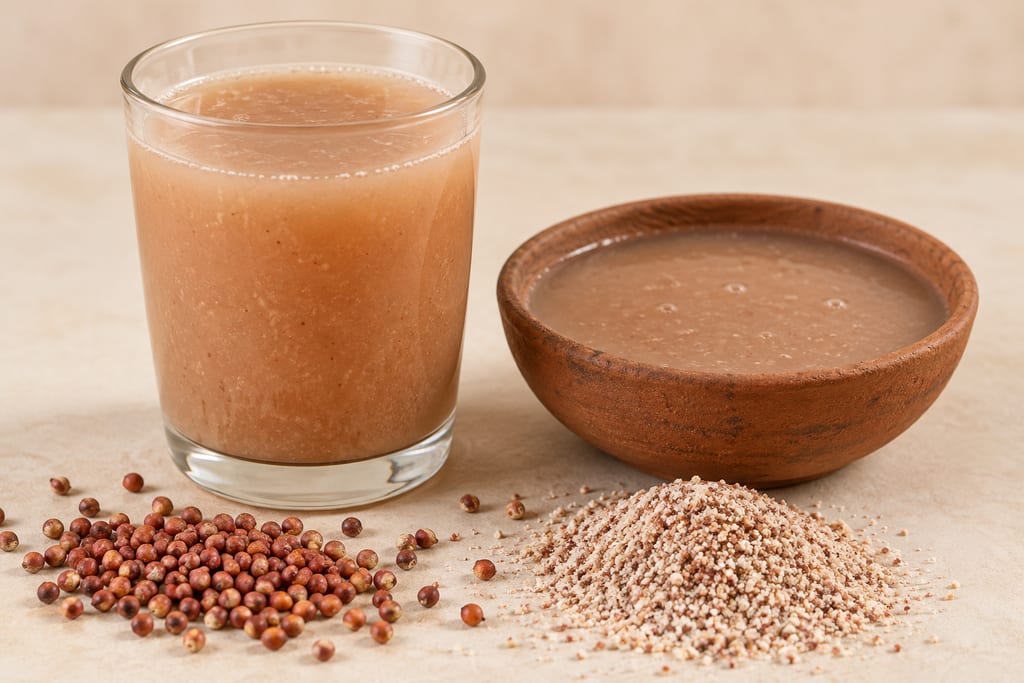
Merissa
Sudanese opaque sorghum beer made from soured, toasted, cooked and malted grain through three linked fermentations, drunk fresh while still fermenting.
 FermenteaWhere food goes to change
Modern method
Umqombothi
A South African opaque beer soured from sorghum malt and maize meal, cooked as a thick porridge, then fermented again after a second addition of malted sorghum.
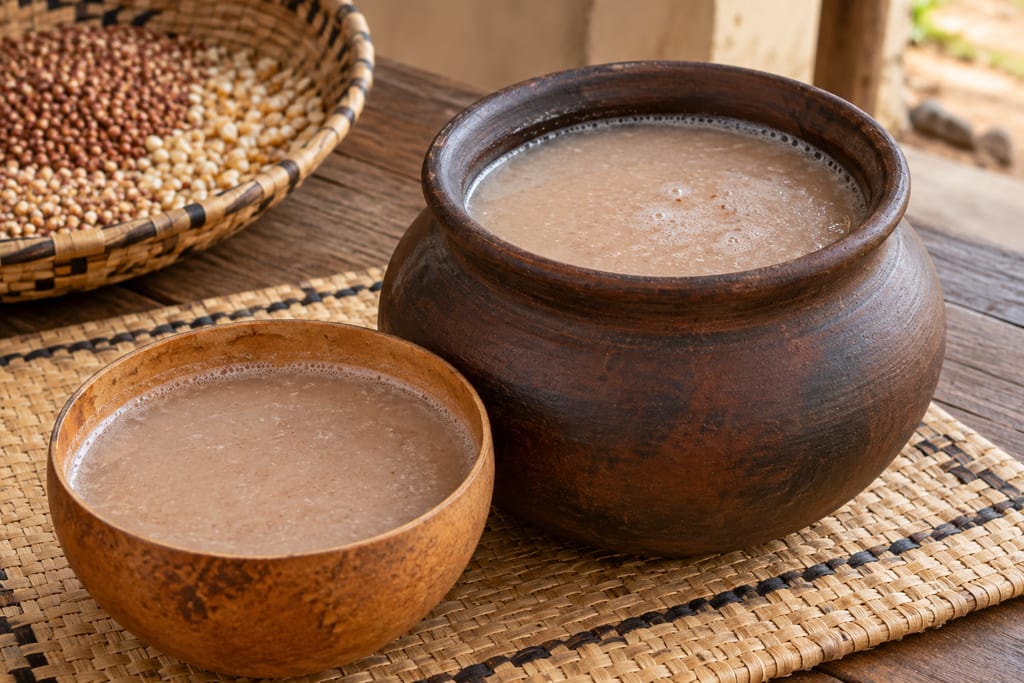
Umqombothi is a traditional South African beer made principally from sorghum malt, maize and water. It is typically opaque, grain-rich, mildly sour and alcoholic.
Unlike a clear European lager, umqombothi retains significant suspended cereal material and may have a thick, almost porridge-like body.
It is commonly consumed while still relatively fresh and can retain living fermenting organisms.
The beer's character comes from the interaction of starch conversion, lactic acid fermentation and alcoholic fermentation.
The scientific name for sorghum is Sorghum bicolor. Maize is Zea mays.
The base recipe uses white maize meal and commercially prepared malted sorghum.
The name umqombothi is written in the Latin-based orthography of southern African languages, so no separate traditional non-Latin script is required.
The word is particularly associated with isiZulu usage, while related traditional beers and naming conventions occur in isiXhosa and other southern African communities.
The original research formula combines a first souring stage, a cooked cereal-porridge stage and a second fermentation after an additional malt addition.
This creates a drink whose production is fundamentally different from simply mixing malt extract with yeast.
Sorghum was cultivated in Africa long before the arrival of European settlers.
Traditional sorghum-based beers form part of a broader African history of cereal farming, household food production, preservation and social exchange.
Umqombothi is particularly significant because its value extends beyond alcohol.
It has been associated with communal labour, hospitality, ceremonies, funerals, weddings and rituals involving ancestors.
Traditional beer could function as an important contribution to gatherings, as a medium of social exchange and as part of offerings made during ceremonies.
The production of beer has historically been closely associated with women's household knowledge in several southern African societies.
Brewing expertise includes evaluating the cereal, managing the cooking fire, judging the fermentation and knowing how to serve the resulting beer.
The drink is therefore an element of culinary and social heritage, not simply an alternative to industrial beer.
Historical terminology must nevertheless be handled carefully.
A traditional sorghum beer is not necessarily identical to a present-day recipe containing maize. Maize originated in the Americas and arrived in Africa through post-Columbian exchange.
Consequently, the broader African sorghum-beer tradition is older than the maize-and-sorghum formula documented here.
The exact date on which the particular contemporary mixture became established cannot be determined from the cited research.
Later commercial and industrial developments brought traditional opaque beers into more standardised manufacturing systems.
Yet household and small-scale production has continued alongside commercial production.
The drink also entered modern popular culture, notably through Yvonne Chaka Chaka's song Umqombothi.
That modern cultural prominence should be understood alongside, rather than substituted for, the beer's deeper social history.
The two principal cereals perform complementary roles.
Maize meal supplies a substantial quantity of starch.
Starch provides the carbohydrate reserve that can ultimately become fermentable sugar.
Sorghum malt contributes both starch and enzymes associated with germinated grain.
During sorghum malting, the grain is germinated and subsequently dried.
Germination activates enzymatic systems that mobilise stored carbohydrates.
Amylases are central to this process because they break starch into shorter carbohydrate chains and fermentable sugars.
The sorghum malt in this recipe is divided into two additions.
The first participates in the initial cereal mixture and souring stage.
The second is added after the intermediate cooking stage.
This sequence matters because substantial heating can reduce or destroy the activity of enzymes and microorganisms present earlier in the process.
Adding fresh malt after cooking introduces another source of enzymatic and microbial activity.
The process therefore alternates between biological transformation and heat treatment.
Umqombothi is not normally defined by a single pure fermentation organism.
Lactic acid bacteria and yeasts are major functional groups in traditional preparations.
Lactic acid bacteria metabolise available carbohydrates and produce acids, principally lactic acid.
These acids contribute the characteristic sourness.
Yeasts metabolise sugars to ethanol and carbon dioxide, providing alcohol and effervescence.
The interaction between bacteria and yeasts varies with the grains, starter material, conditions and equipment.
Microbial studies of umqombothi have identified numerous organisms beyond the familiar brewing yeast Saccharomyces cerevisiae.
A 2023 sequencing investigation documented substantial differences among raw ingredients, customary beer and experimentally optimised beer.
Its findings included bacteria such as Apilactobacillus pseudoficulneus in a customary sample and Kosakonia cowanii in raw ingredients.
The study also reported Vibrio alginolyticus as a dominant bacterial species in an optimised sample and the fungus Apiotrichum laibachii among prominent fungal findings.
These observations are useful evidence of microbial diversity, but they must not be turned into claims that every traditional umqombothi contains these exact organisms.
Nor should every detected species automatically be described as beneficial.
Sequencing can identify microbial material, but the presence of a sequence alone does not necessarily establish the viability, abundance or pathogenic behaviour of an organism in a particular batch.
Research also documents potential spoilage and contamination problems during traditional cereal fermentation.
This is one reason the exact microbial composition of a household ferment should not be assumed from a generic recipe.
Cooking the first soured cereal mixture creates a porridge known in some preparations as isdudu.
Heat alters starch granules and the texture of the mixture.
In the presence of sufficient water, starch gelatinisation increases water absorption and changes the accessibility of carbohydrate chains to enzymes.
The porridge becomes thicker as the cereal absorbs water and starch molecules interact with the surrounding liquid.
This physical transformation affects the eventual body of the beer.
Cooking also changes the microbial population.
Heat can reduce organisms introduced during the initial souring phase, although the degree of reduction depends on actual product temperature and exposure time.
The later malt addition can reintroduce microorganisms and enzymes.
Consequently, the second fermentation does not necessarily contain exactly the same microbial population as the first.
This helps explain why umqombothi is often considered a two-stage fermentation even though the cereal is processed through several preparation operations.
The preserved research formulation uses:
Ingredient — Quantity — Purpose
Malted sorghum, first addition — 500 g — Enzymes, cereal components and microorganisms
White maize meal — 1,000 g — Main starch-rich adjunct
Water — 7 L — Souring and brewing medium
Malted sorghum, second addition — 500 g — Renewed enzyme and microbial contribution
The source identifies commercially prepared King Korn malted sorghum and White Star maize meal.
Those brands are part of the experimental provenance. A different malt or maize meal may contain different moisture levels, enzyme activity and microbial populations.
No added commercial yeast is specified in this particular formula.
The nominal vessel is a ten-litre bucket. This does not mean that ten litres of finished beverage were measured.
The actual strained yield is not provided.
The later customary-brew studies describe cooking at 95°C and a second fermentation at 25°C.
That combination is supported by a subsequent published customary-brew comparison, but it is not identical to the wording of the earlier 2021 process description.
The difference must remain explicit.
The published studies do not give one consistent intermediate heating condition.
Published description — Intermediate heating — Second fermentation
Initial 2021 Scientific Reports methodology — 45°C for 30 minutes — 30°C for 24 hours
Customary-brew formulation in subsequent research — 95°C for 30 minutes — 25°C for 24 hours
Experimental optimised formulation — 95°C for 1.1 hours — 29.3°C for 25.9 hours
All three descriptions use the same general concept: an initial souring, intermediate heating, a second sorghum-malt addition and further fermentation.
But the temperatures are not interchangeable.
At 45°C, the cereal mixture experiences moderate warming, and the treatment should not be interpreted as equivalent to thorough porridge cooking.
At 95°C, the mixture experiences substantially more intense heating, with different implications for starch gelatinisation and microbial survival.
The original 2021 article explicitly states 45°C in its initial method section, although later papers associated with the research programme use 95°C.
The database record's existing 95°C cooking stage therefore has independent support in the later publications.
It would be inaccurate to silently amend the original 2021 paper's value or pretend that all three descriptions specify the same experimental procedure.
For this recipe page, the 95°C customary-brew procedure is retained as the principal documented version, with the other process conditions preserved as separate published variations.
The study uses a ten-litre fermentation bucket for the initial mixture.
A suitable vessel is needed to heat the cereal porridge.
Accurate temperature measurement is important because the research specifies both fermentation and cooking temperatures.
A stirring utensil is needed to keep the maize and malt evenly distributed.
The container should be food-grade and suitable for its intended temperature.
A loose cover or appropriately vented fermentation arrangement is required because carbon dioxide can accumulate during fermentation.
The source does not prescribe a safe sealed-bottle packaging procedure.
A suitable sieve can be used to separate coarse material from the finished drink, although the primary customary-brew study does not provide a complete household filtration specification.
Clean and sanitised equipment is particularly important because the process reintroduces malt after heating.
1\. Measure the cereals. Prepare 500 g malted sorghum and 1,000 g white maize meal.
2\. Measure the water. Place seven litres of suitable water into the fermentation vessel.
3\. Combine the first mixture. Add the maize meal and first malt addition. Stir gently until distributed. The source does not prescribe a particle-size measurement or a specific stirring duration.
4\. Cover the mixture. Use a covered vessel suitable for fermentation rather than an airtight pressure vessel.
5\. Carry out the first souring. Hold at 25°C for 24 hours. This stage permits the initial microbial transformation of the cereal mixture.
6\. Stir the soured mixture. Redistribute the cereal material before transferring it for cooking.
7\. Cook the porridge. In the later documented customary-brew method, heat the mixture at 95°C for 30 minutes. This condition belongs to that version and must not be attributed to the 45°C methodology.
8\. Cool the porridge. Bring the cooked mixture back to 25°C before adding more malt.
9\. Add the second malt portion. Introduce the remaining 500 g malted sorghum and distribute it gently throughout the cooled porridge.
10\. Carry out the second fermentation. Hold at 25°C for 24 hours in the customary-brew formulation.
11\. Assess the resulting beer. The research analyses physicochemical characteristics but does not supply a validated consumer-ready endpoint for all batches.
12\. Handle as a fresh ferment. The source does not establish a shelf-stable packaging process or a fixed finished yield.
The later customary-brew account reports two separate 24-hour fermentation stages, divided by cooking and cooling. Their durations are observations, not a single endpoint or safe-release test.
This is a research-specific process schedule rather than a universal traditional household recipe.
A separate experimental optimisation investigated the effects of cooking time, fermentation temperature and fermentation duration.
The selected optimised conditions were:
Intermediate cooking at 95°C for 1.1 hours.
Cooling before the second sorghum-malt addition.
Final fermentation at 29.3°C for 25.9 hours.
These are measured research conditions, not historical household defaults.
The work used statistical and modelling approaches to compare outcomes.
The optimised beer showed different physicochemical characteristics from the customary preparation, including differences in acidity.
A reported pH of 3.27 ± 0.03 for the optimised sample contrasted with 4.23 ± 0.02 for the customary sample in that study.
Those values belong to specific experimental batches and should not be claimed as guaranteed results from this recipe.
Other analytical measurements accompany it, but they must not be mistaken for a direct universal ABV specification.
In particular, degrees Plato and percent alcohol by volume are different measurements and cannot be treated as identical numbers.
Another research protocol used a different sequence.
It incorporated an initial ferment, separated liquid and cereal fractions, brought the liquid to a boil, returned solids and reduced the temperature while cooking.
That study used 60°C for 40 minutes during a porridge-making stage.
It also introduced a malt-and-beer-powder mixture before the second fermentation.
Because those materials and conditions differ from the present record, the protocol should remain a documented variation rather than being spliced into the 95°C customary method.
The comparison reinforces an important point: umqombothi brewing is a family of related practices, not one universally agreed laboratory recipe.
Umqombothi and related southern African opaque beers vary by language community, ingredients and process.
Traditional brewers may use different proportions of maize and sorghum, sometimes with other cereals.
Some formulations include maize malt as well as sorghum malt.
Others introduce commercial yeast or beer-related starter products.
The cereal mixture may be soured for different periods and at different ambient temperatures.
A study of the South African value chain reports fermentation temperatures of 22–28°C and production periods of two to four days among different producers.
Those are observations of variability, not substitutions for the exact study method.
The amount of coarse material retained in the finished beer also varies.
Some beers are relatively fluid, while others are notably thick.
These differences affect appearance, mouthfeel, fermentation rate and practical serving.
Umqombothi is characteristically opaque.
Its colour may be pale tan, pinkish or light brown depending on the cereals and processing.
The flavour combines grain character, acidity and fermentation-derived aroma.
Sorghum contributes distinctive cereal and malty notes.
Lactic acid fermentation produces a sourness that can resemble aspects of cultured grain or dairy fermentations, although the drink does not contain milk.
The maize fraction contributes body and can leave an appreciable cereal texture.
The beer may be slightly effervescent because it contains carbon dioxide from continuing fermentation.
It is not intended to resemble a fully clarified lager.
The exact taste of the study batch is not defined by an independently verified sensory endpoint.
Umqombothi is often shared at gatherings rather than served solely as an individual packaged drink.
Traditional serving vessels include ceramic pots, bowls and calabashes.
Beer may be poured or ladled into smaller vessels for sharing.
Its communal role is especially prominent in ceremonies, hospitality and family occasions.
Traditional beer can accompany substantial meals, meat and other foods served at social gatherings.
The drink's historical uses also include ceremonial offerings, and those practices should be distinguished from everyday drinking.
Contemporary producers and hospitality venues also sell traditional-style sorghum beer.
However, the methods used by commercial producers may include controls and packaging procedures absent from a household preparation.
The first souring stage can develop acidity and changes in cereal aroma.
During the second fermentation, carbon dioxide formation may create bubbles or foam.
The beer remains cloudy because it contains suspended cereal material and microorganisms.
Sediment and separation are not automatically signs of contamination.
The sour character is part of the expected flavour profile.
However, pronounced putrid odours, visible mould or other abnormal contamination are reasons to reject a batch.
A failure to produce expected fermentation activity can arise from poor malt performance, unsuitable conditions or changes in microbial populations.
The recipe provides no validated procedure for correcting stalled fermentation.
A sour taste is not proof of microbiological safety.
Similarly, a pleasant aroma does not establish that unwanted organisms are absent.
Umqombothi is alcoholic, and the exact alcohol content of the preserved customary formulation should not be inferred from typical published ranges.
Traditional South African sorghum beers are often described as relatively low in alcohol, but actual measurements vary with fermentation conditions and ingredients.
The active fermentation creates continuing carbon dioxide.
This is one reason fresh umqombothi has a short practical storage life.
Research describes consumption within approximately one or two days after production for certain traditional preparations.
That observation is not a guaranteed safe shelf life for every household batch.
The product is especially sensitive to the condition of its cereals, water, equipment and fermentation environment.
Mouldy grains must not be used. Some grain-associated toxins can survive processing, making the original condition of the ingredients important.
Microbiological research has identified both fermentation-associated organisms and potential contaminating microorganisms.
The 95°C cooking stage is not a complete product-sterilisation process because additional malt is introduced after the mixture cools.
The second stage therefore requires its own hygiene controls.
The source does not validate sealed packaging or storage at room temperature.
Because the beer can remain active, closed containers may build pressure.
For commercial sale, the process would require appropriate controls over raw-material quality, sanitation, fermentation, microbiological safety, alcohol, packaging and shelf life.
Editorial conclusion: Retain the measured maize-and-sorghum formulation and the existing 95°C customary process, but document the 45°C wording in the earlier paper and the different optimised conditions. These are legitimate source differences, not details to average together.
Umqombothi is described in the cited research as a South African traditional beer. This entry records the study's measured customary preparation and does not claim a specific origin or traditional household formula.
Scaling: source batch only
Umqombothi is an alcoholic fermented drink. Published values vary across processes, and this exact 2021 customary batch is reported in degrees Plato rather than as a directly measured alcohol-by-volume figure.
Hazard sourceA two-stage umqombothi study says the beverage's short shelf life reflects continuing carbon-dioxide production; the process has no packaging validation.
Hazard sourceKeep brewing equipment clean and sanitized as described in home-brewing sanitation guidance.
Control sourceDo not seal the vessel while the second fermentation is active; the cited study reports continuing carbon-dioxide production and does not validate sealed packaging or storage.
Control sourceThis is an alcoholic, actively fermenting drink; the published measured batch does not give a directly reported ABV for this exact formula.
The study documents process conditions, not a shelf-stable product. Continued carbon-dioxide production means closed packaging can build pressure; no pressure-rated bottling step is provided.
The studies identify the preparation as South African umqombothi but do not specify a narrower traditional locality for this recipe batch.
Sudanese opaque sorghum beer made from soured, toasted, cooked and malted grain through three linked fermentations, drunk fresh while still fermenting.
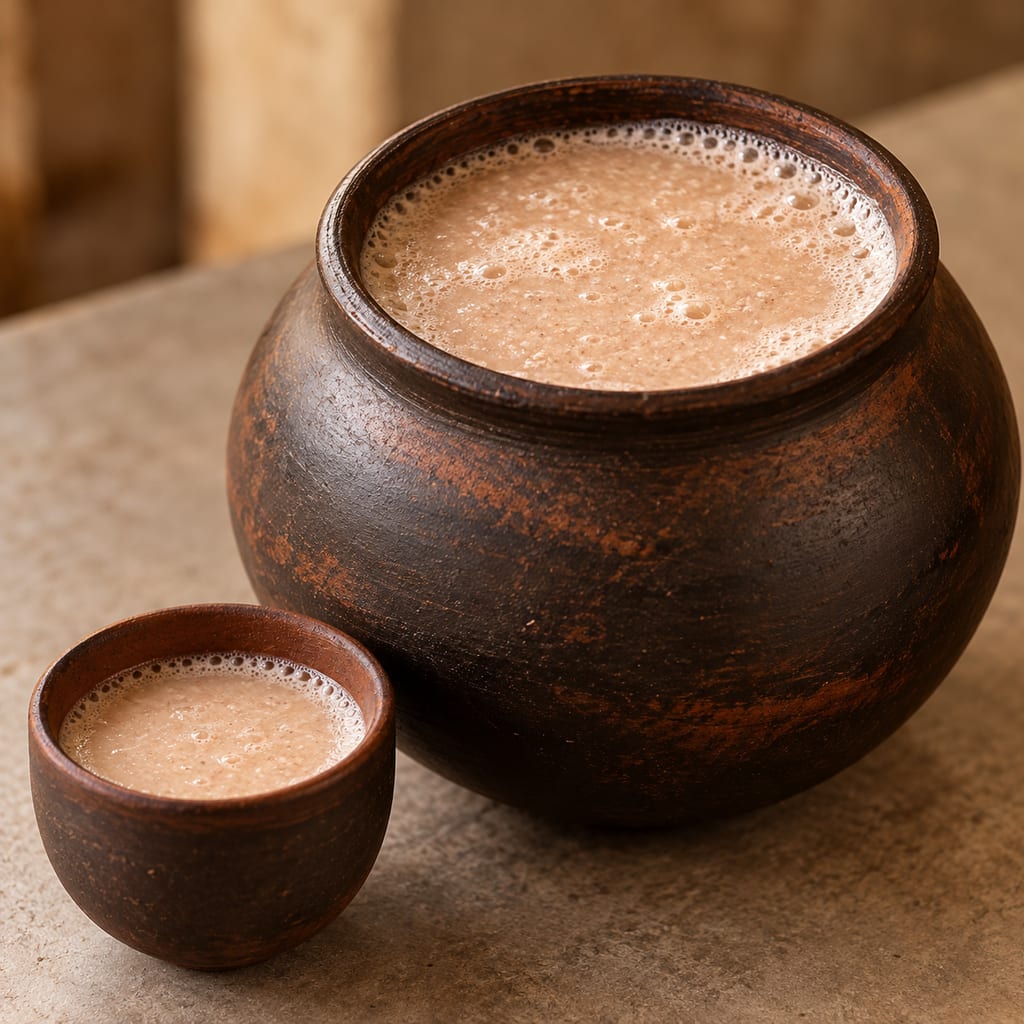
South Africa's opaque sorghum beer, soured by lactic acid bacteria before its mash is cooked and fresh malt stirred in, leaving a cloudy, creamy, cereal-thick drink that keeps only a day or two.
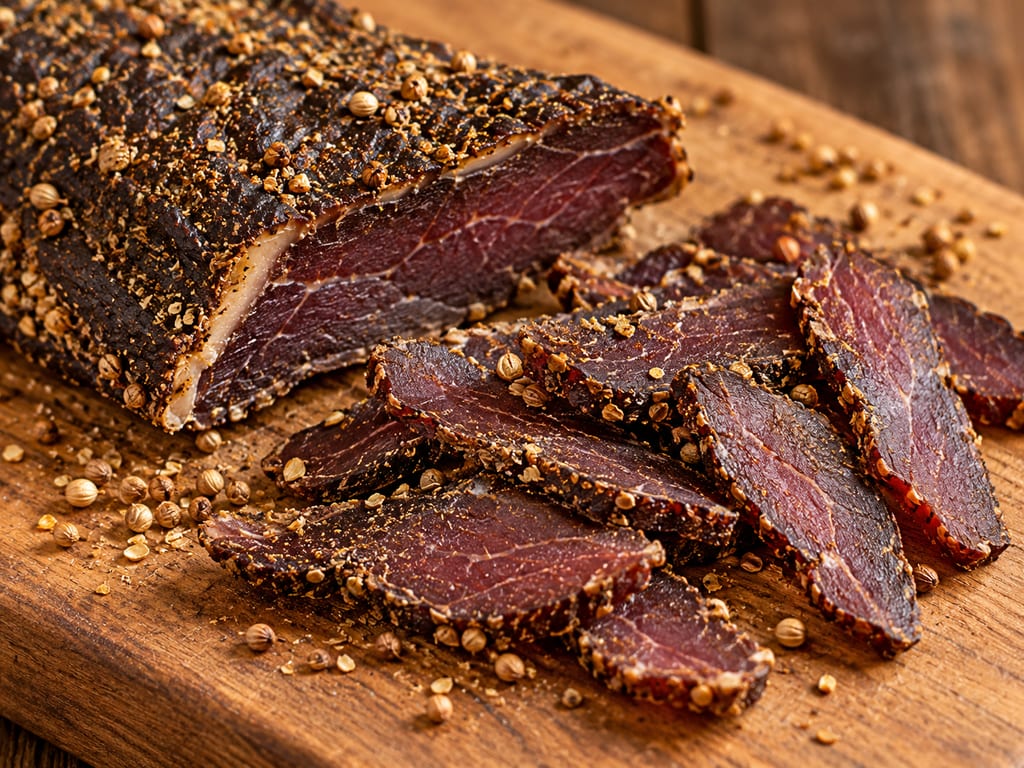
Strips of whole-muscle beef or game seasoned with salt, vinegar, roasted coriander and pepper and air-dried without cooking, sold anywhere from soft and moist to hard and very salty.
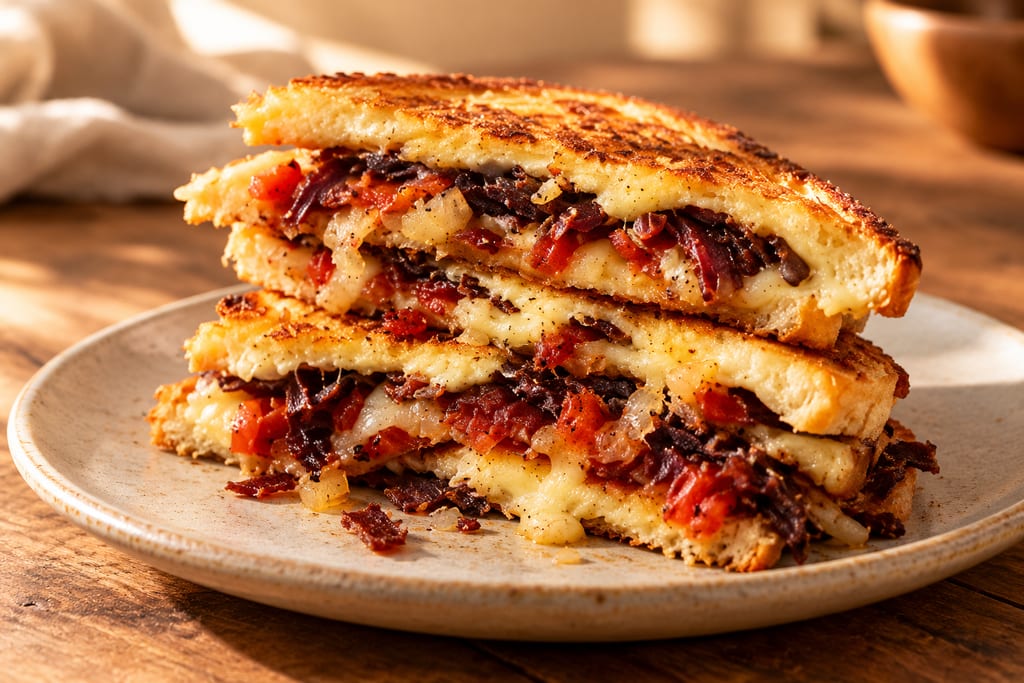
Chopped biltong, sweet onion, cream cheese and Cheddar fill bread toasted in a hinged grid over gentle coals, then finished with biltong dust.
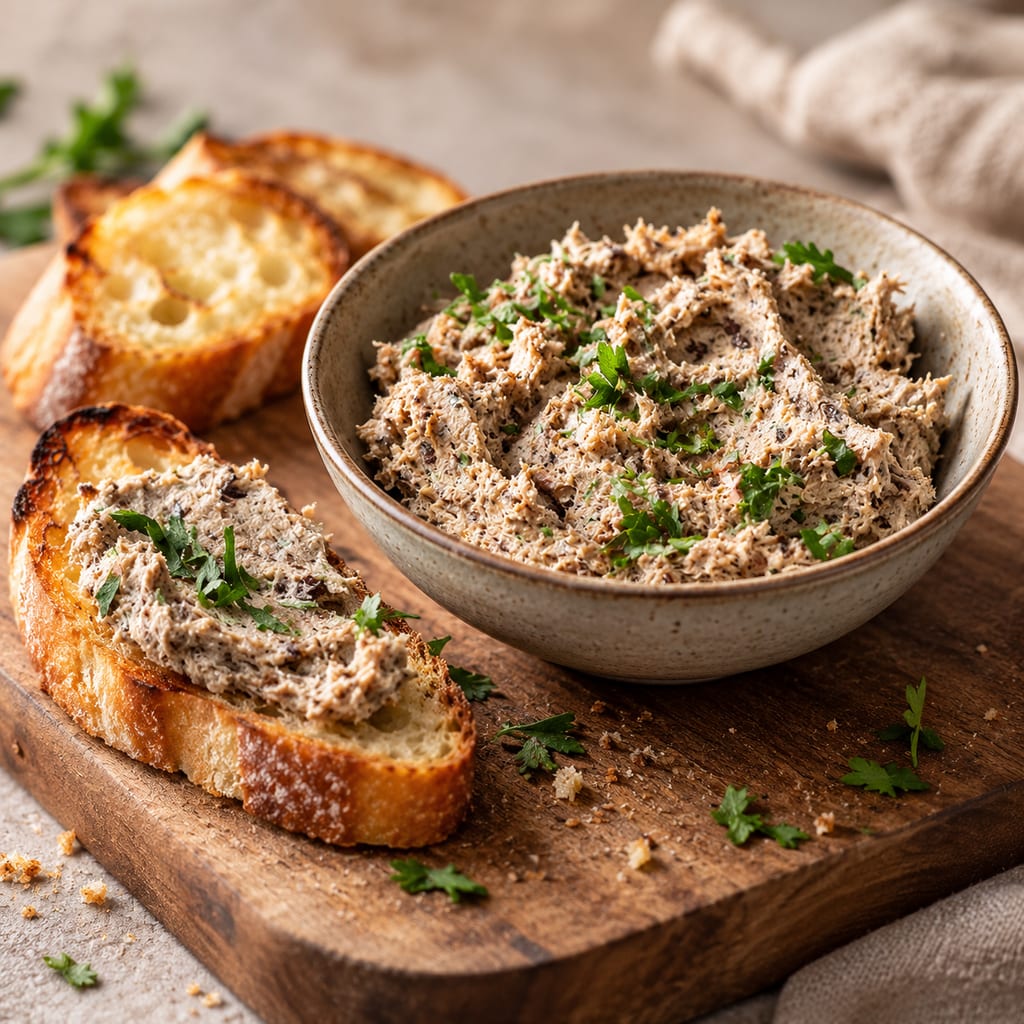
A cold biltong spread with sour cream, mayonnaise, mustard, lemon and herbs; serve it with crackers, crostini or bread.

Biltong, bacon and vegetables simmer in tomato-herb stock, then join cooked pasta, milk, cream and Cheddar in this outdoor potjie.
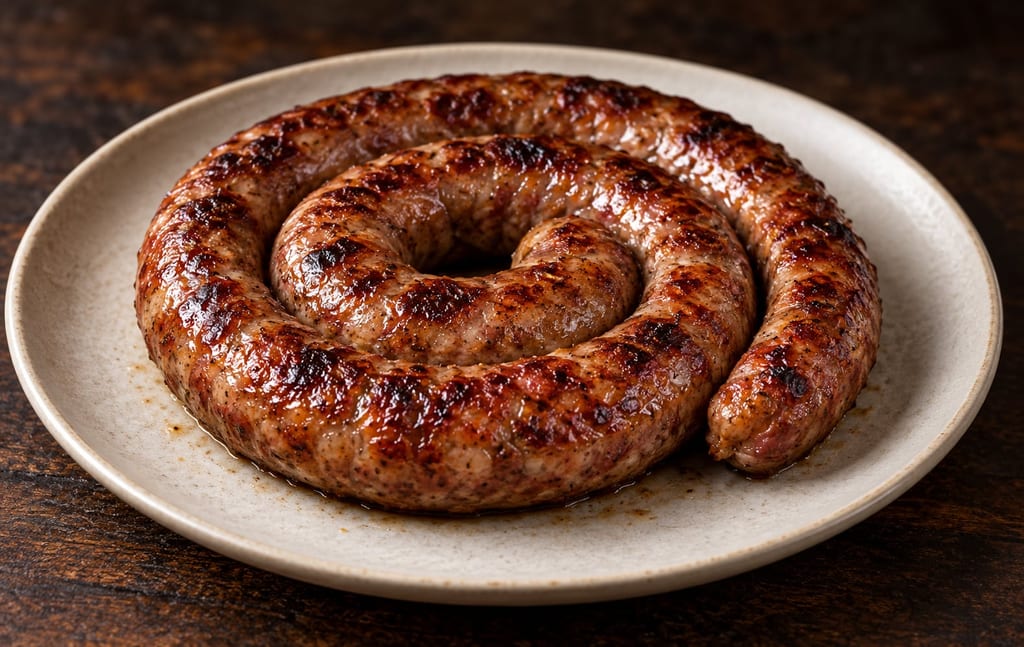
A coarse South African farmhouse sausage of beef with pork or mutton fat, defined by its coriander seasoning and cooked fresh over coals rather than preserved.
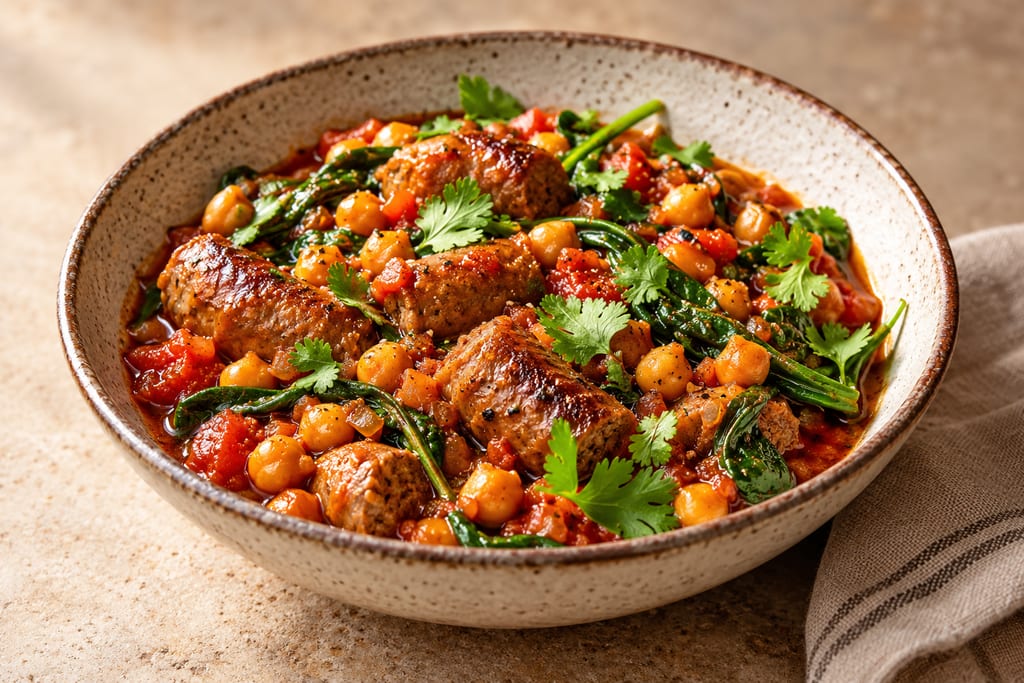
Lesego Semenya’s contemporary South African stew combines browned boerewors, chickpeas, tomato, spinach and warm spices.

A South African boerie roll puts fully cooked boerewors in a soft bread roll and tops it with warm tomato-and-onion smoor.

A deep amber-red American ale brewed from pale, Munich, CaraVienne and chocolate malts, bittered with Columbus hops and finished with Amarillo.

A source-specific modern extract adaptation of Düsseldorf Altbier, with specialty malts, two hop additions and an ale yeast. It is distinct from a brewery's commercial Altbier process and from Kölsch.

Andong soju is a rice spirit from North Gyeongsang, distilled from steamed rice and wheat nuruk. This method makes the starter before fermenting the rice mash in a jar.
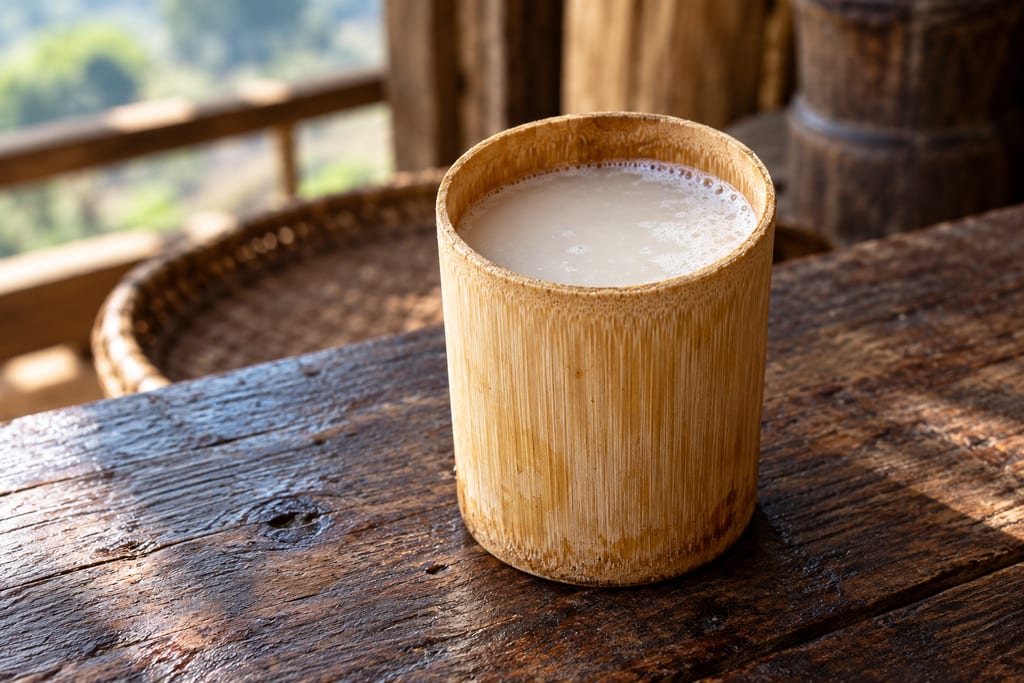
Angami rice beer from Nagaland. A surveyed method mixed cooked rice with piazu, fermented it for about four days in summer or a week in winter, then added water and filtered it. The starter ratio leaves the rice-weight basis unclear.

Apong names Mising rice beverages in Assam, including pale Nogin and ash-associated Po:ro. Sources describe distinct preparations and do not establish one unified household recipe or validated safety endpoint.

An Okinawan rice spirit made by turning all the rice into black koji, fermenting it with water and yeast, then pot-distilling and maturing the spirit.

This is a process overview, not a complete batch recipe: key quantities, yield and packaging directions are absent. The AHA tutorial uses Hop Hammer Imperial IPA as an example; this page is not that full formulation.
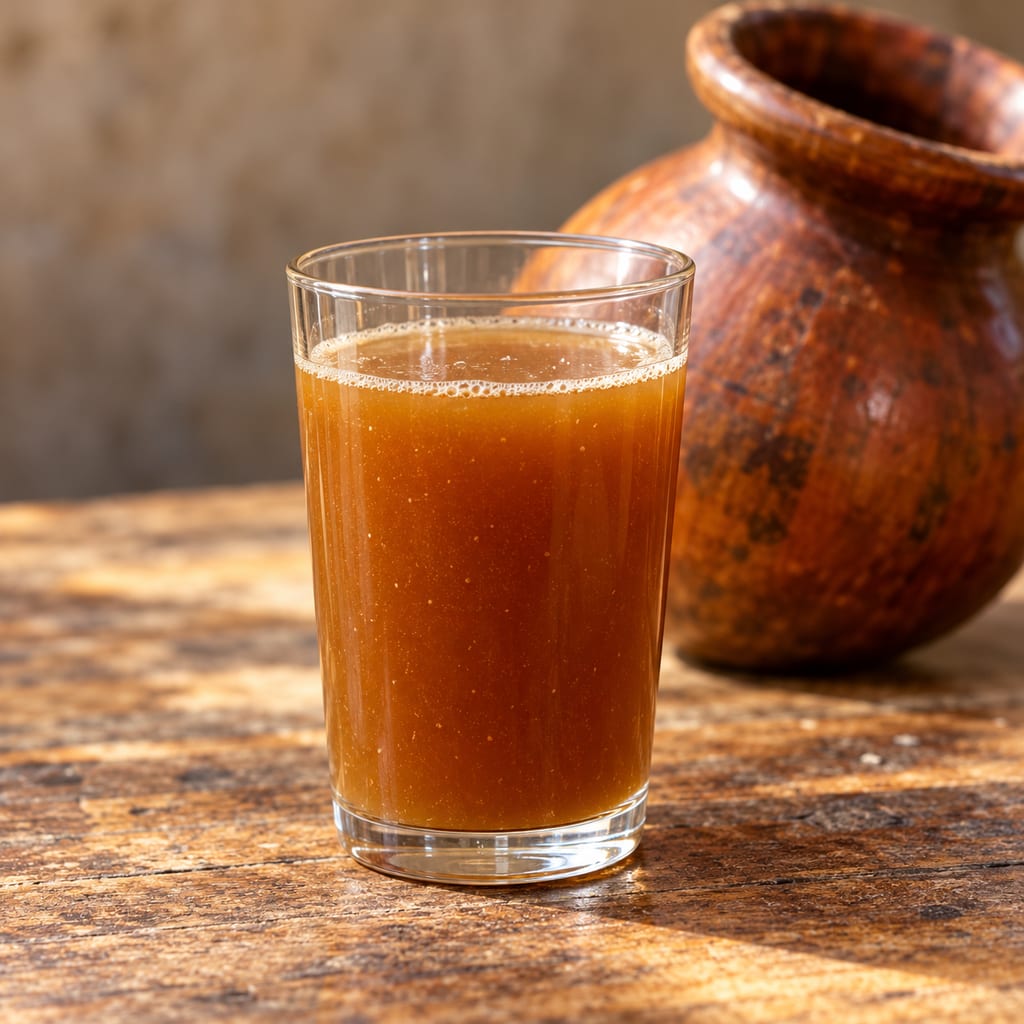
A darker Ethiopian maize tella, brewed from maize baked into a hot, dry kita pancake and then fermented in three stages with barley malt, gesho and water.
No community contributions have been published for this entry yet.
Sign in to contribute. Published comments and photos are free to read.
Scientific ReportsInspiration · Process · Location · Safety
A modeling method for the development of a bioprocess to optimally produce umqombothi (a South African traditional beer)Traditional-brew method combines 500 g sorghum malt, 1,000 g maize meal and 7 L water and sours at 25°C for 24 hours
The original 2021 Scientific Reports method says 45°C for 30 minutes after souring, cooling to 25°C, then a second 500 g malt addition and fermentation at 30°C for 24 hours. Later publications report a different customary variant at 95°C and 25°C.
The paper labels a reported measurement 'alcohol content' in degrees Plato; it does not provide a directly measured ABV or validate household storage and packaging.
World Journal of Microbiology and BiotechnologyProcess · Location · History
Analysis of the bacterial and fungal populations in South African sorghum beer (umqombothi) using full-length 16S rRNA amplicon sequencingResearchers repeated the customary South African umqombothi process with the same ingredient formula and 25°C fermentation stages
The 2023 microbiome study's customary-brew branch cooks at 95°C for 30 minutes, cools to 25°C, adds a second 500 g of sorghum malt and ferments at 25°C for 24 hours; its optimised branch uses different conditions.
Article identifies umqombothi as South African sorghum beer
Cited in: The microbiology; Signs of progress and problems
HeliyonSafety · Process
Physicochemical and microbiological changes during two-stage fermentation production of umqombothiUmqombothi's short shelf life is linked to continuing carbon-dioxide production during active fermentation
Two-stage process and alcoholic outcomes depend on process conditions
Cited in: The microbiology; A different two-stage study; Signs of progress and problems; Food safety and shelf life
Clemson Cooperative ExtensionSafety
Cleaning and Sanitation for the HomebrewerClean and sanitize home-brewing equipment
Scientific Reports, 2021Inspiration
A Modeling Method for the Development of a Bioprocess to Optimally Produce UmqombothiOriginal experimental formulation and the 45°C/30°C methodology
Cited in: Ingredients; Important source discrepancy: 45°C versus 95°C; Experimental optimised variation
Fermentation, 2021Inspiration
Nutritional Compositions of Optimally Processed UmqombothiCustomary 95°C/25°C and optimised process variants
Cited in: What it is; What cooking changes; Ingredients; Important source discrepancy: 45°C versus 95°C; Documented preparation: customary 95°C version; Experimental optimised variation; Flavour and appearance; Food safety and shelf life
Processes, 2020Inspiration
Processing, Characteristics and Composition of UmqombothiTraditional brewing processes and composition
Cited in: What it is; Why sorghum and maize work together; What cooking changes; Equipment; Regional variations; Flavour and appearance
National Museum PublicationsInspiration
Umqombothi: Our African BeerSocial, cultural and material history
Cited in: A history rooted in southern African grain culture; Equipment; How it is consumed
EU CAP NetworkInspiration
Value Chain Analysis of Umqombothi in South AfricaContemporary production variability
Cited in: Regional variations; How it is consumed
Department of Science and Innovation, 2021Inspiration
South African Sorghum Market StudySorghum use, beer production and typical characteristics
Cited in: A history rooted in southern African grain culture; Why sorghum and maize work together