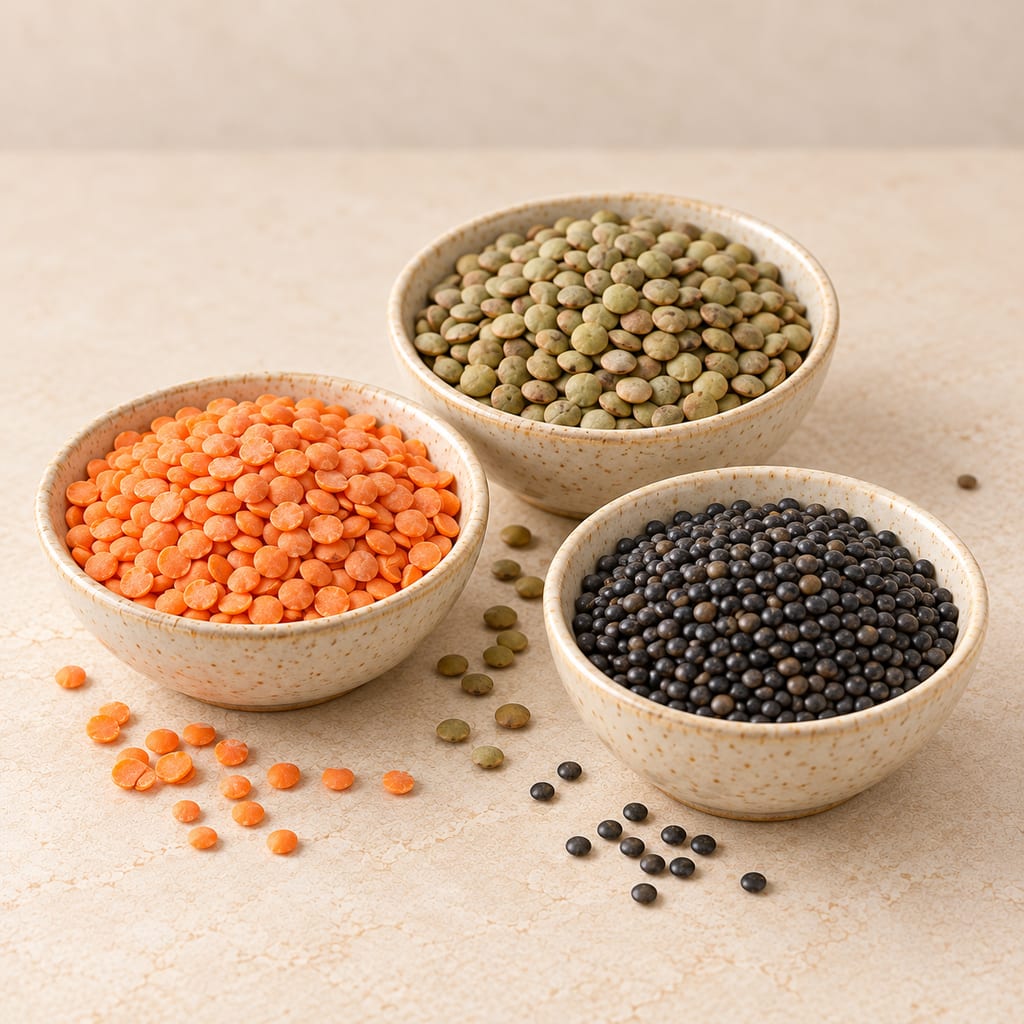
Lentils
Lentils are the flat, lens-shaped seeds of Lens culinaris, a legume first cultivated in Southwest Asia 8,000 to 10,000 years ago. They are cooked whole, dehulled, split or milled into flour.
 FermenteaWhere food goes to change
Equipment · Industrial and laboratory plant
MATS uses microwave energy and pressurised hot water to heat sealed food packages in an industrial process. Product and package geometry affect heating; it is not a domestic microwave canner.
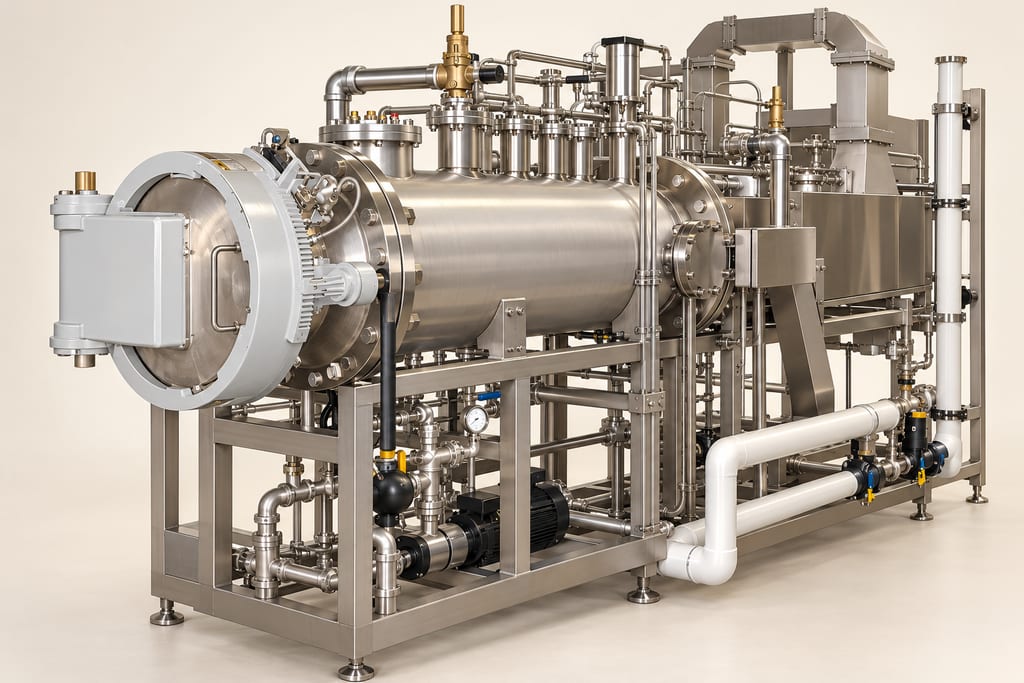
Microwave-assisted thermal sterilisation (MATS) is an industrial heat-processing system for sealed foods. Washington State University developed a four-cavity system that combines microwave heating with hot-water heating in pressurised cavities. In contrast to an ordinary microwave oven, the microwave cavity is part of a controlled packaging and thermal line: food remains enclosed in its package while the system applies and measures a food-specific process.
The package is an active part of that design. WSU's research describes polymeric trays and pouches that allow microwave energy to reach the food; the package must also tolerate the thermal treatment and remain sealed. MATS is therefore not just a microwave source around a container. Its generator, cavity, circulating water, transport equipment, package and validated process schedule work together.
In the treatment section, sealed food packages move through an integrated industrial system while microwave energy and circulating hot water contribute to heating. A 2012 Army photograph of a MATS-B installation at AmeriQual shows the scale of the apparatus: a large horizontal treatment vessel, supporting frame and connected pipes. That photograph documents one installation, not a complete process diagram or a specification for every system.
MATS and microwave-assisted pasteurisation systems (MAPS) share some engineering ideas but serve distinct thermal processes and products. WSU research compares the MATS and MAPS pilot systems and tests predicted heating against measurements at cold spots in packaged foods. Product composition, thickness, package material and geometry affect heating patterns. As a result, the process must be developed and validated for the particular product and equipment rather than transferred from a different package or recipe.
The equipment's history has moved from food-engineering research into commercial production. The U.S. Army reported a MATS-B system installed at AmeriQual in Evansville in August 2012 for research and development work. In 2020, Washington State University reported that Tata SmartFoodz was operating a continuous MATS-30 system in India. Tata later identified its Sri City manufacturing facility as producing Tata Q meals with MATS technology. These are separate deployments with different roles; they do not make the equipment's manufacturing origin or any one model universal.
WSU's 2025 research account also describes microwave-assisted processing experiments on lentil hummus. That is a product-specific research example, not evidence that all legumes or hummus recipes behave alike. It makes lentils a relevant food context for the technology, but the equipment should be understood as processing a formulated, sealed food rather than raw lentils alone.
Microwave heating does not make sterilisation automatic. The microwave field and the food interact, so the coldest point in a package must be identified and the scheduled process validated for its formulation, package and target. WSU research treats measured cold-spot heating as a central part of engineering validation. The MATS label does not supply a general recipe, certify a particular meal, or make different systems interchangeable.
This industrial system is not a household microwave canner. The National Center for Home Food Preservation says that processing freshly filled jars in domestic microwave ovens is not recommended because it does not prevent all risks of spoilage. The sources here describe engineered in-package plant and food-specific process validation; they do not provide operating settings for readers to reproduce at home.
Heating depends on the food's composition and package geometry. WSU pilot research measures cold spots and validates heating behavior; a process established for one packaged food cannot be assumed to work for another.
Source →An industrial MATS line is not a household microwave canner. The National Center for Home Food Preservation does not recommend processing freshly filled jars in domestic microwave ovens because the practice does not prevent all risks of spoilage.
Source →Washington State University developed and studied a pilot MATS system; the U.S. Army also documented a separate MATS-B installation at AmeriQual in Evansville. The country-level row does not imply one machine moved between sites or identify an invention location.
The Army article places a MATS-B system at AmeriQual for research and development testing; this is one documented installation, not a claim about all MATS units.
WSU reported a continuous MATS system in production at Tata SmartFoodz, and Tata identified its Sri City manufacturing facility as using MATS technology. This records a deployment, not the technology's origin or a claim that all commercial systems are identical.
Lentils are the flat, lens-shaped seeds of Lens culinaris, a legume first cultivated in Southwest Asia 8,000 to 10,000 years ago. They are cooked whole, dehulled, split or milled into flour.
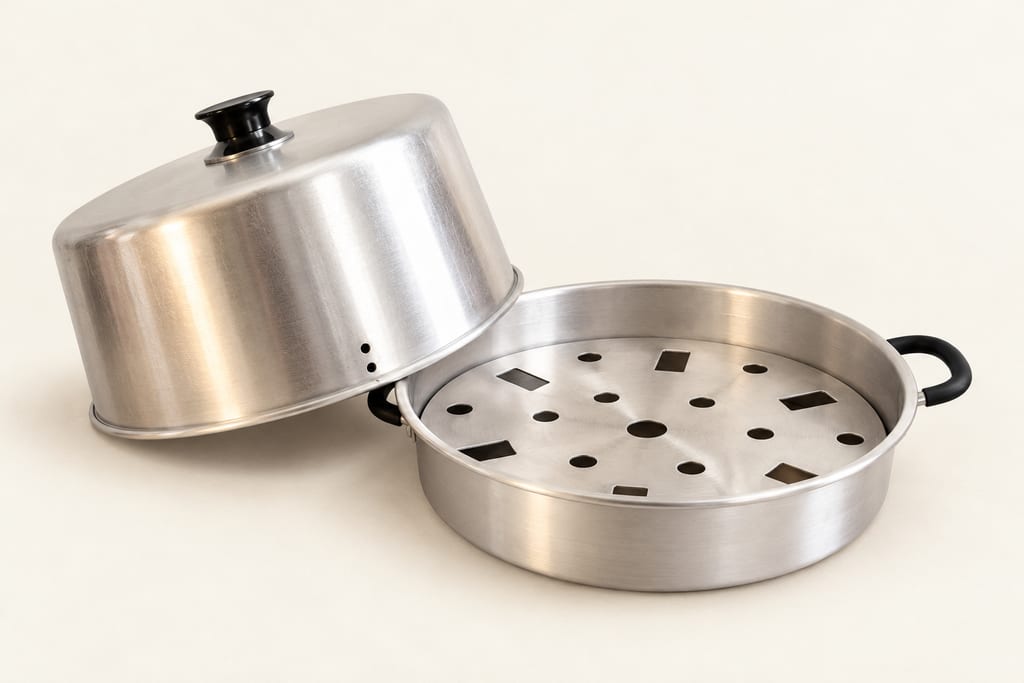
A shallow rack base and tall vented cover process jars in atmospheric steam. NCHFP limits the method to tested high-acid or acidified recipes requiring no more than 45 minutes, including altitude adjustment; this is not pressure canning.
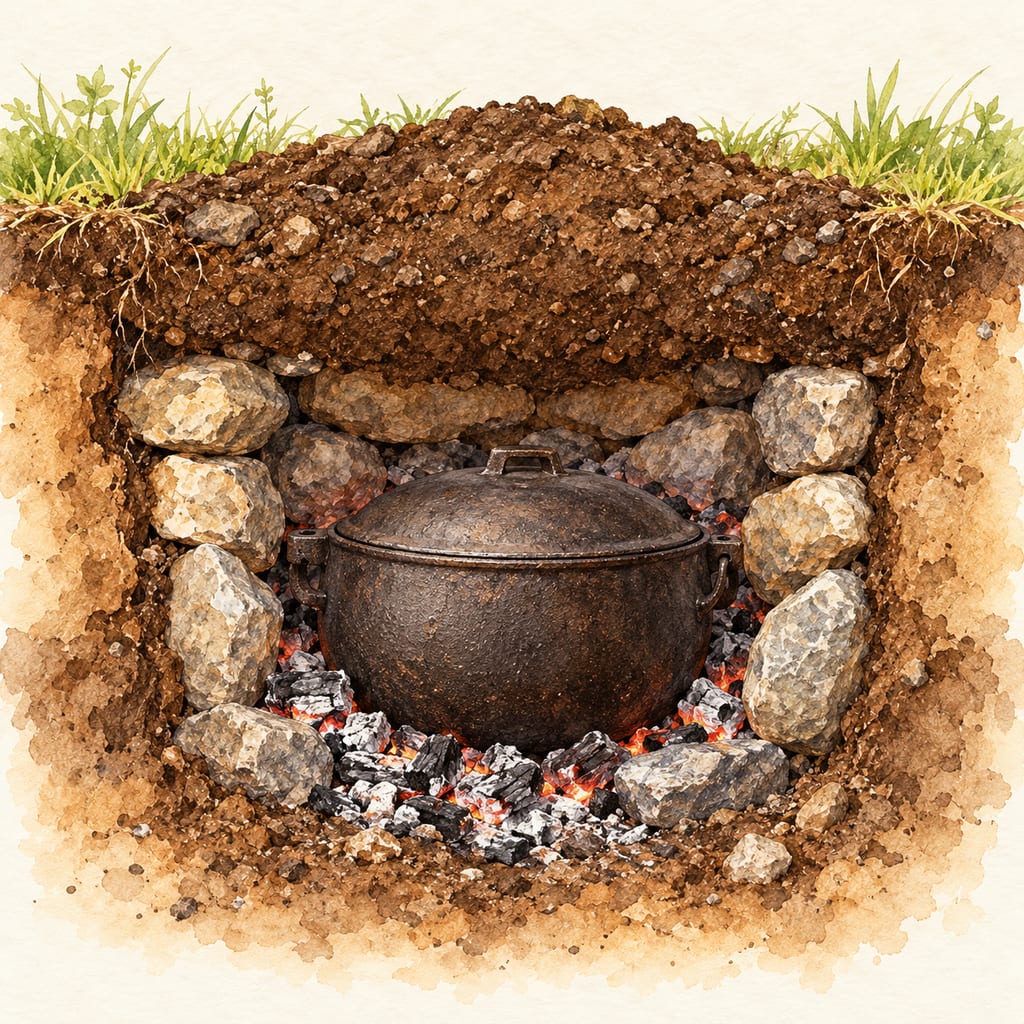
A covered iron vessel used in Maine bean-hole cooking, set into a preheated stone-lined pit and buried for a slow cook.
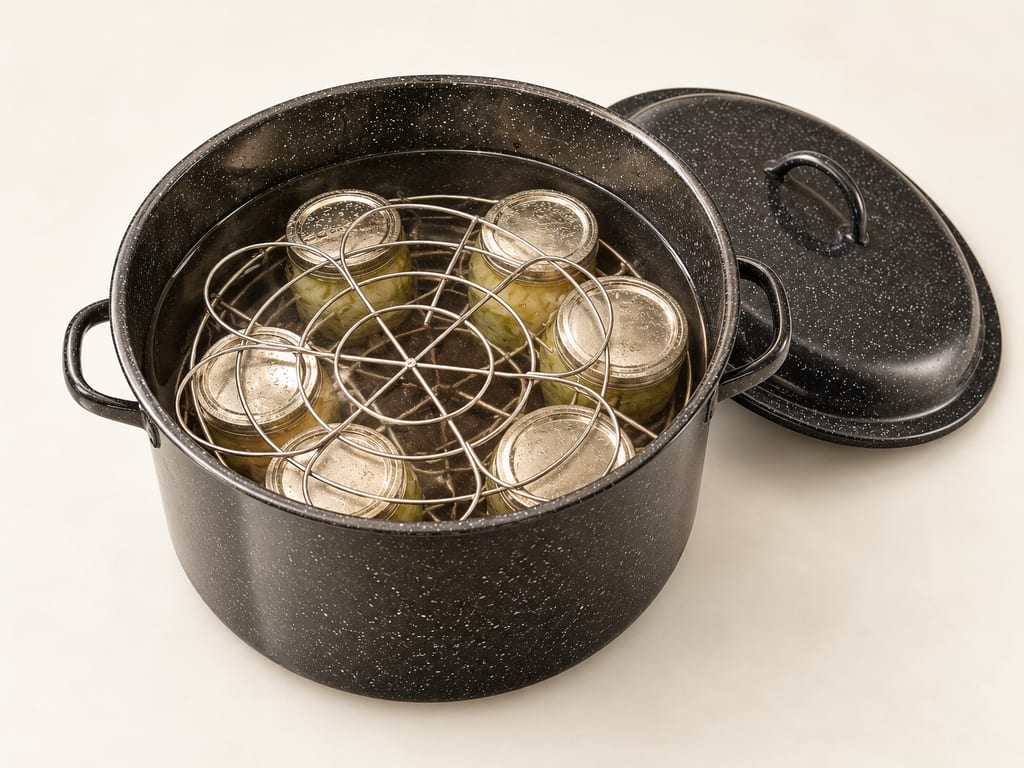
A deep, lidded pot with a removable rack processes jars beneath boiling water. It is intended for foods with tested boiling-water processes; low-acid foods require pressure canning.
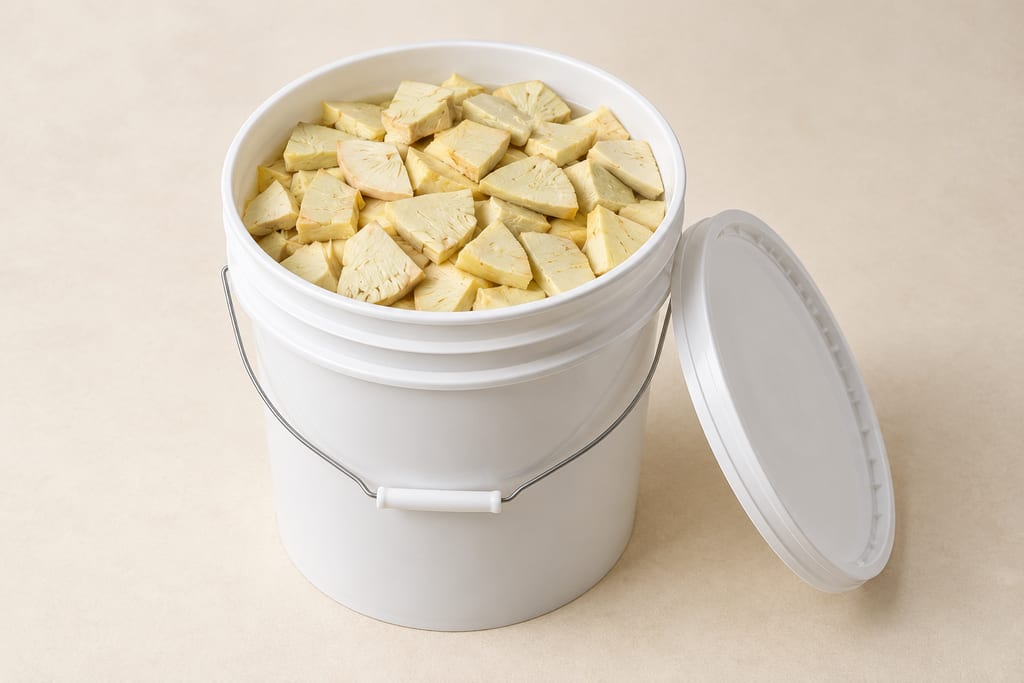
A contemporary household enclosure for preparing mā, fermented breadfruit, documented in Hawai‘i using food-safe buckets, coolers or large sealable bags in place of a pit.
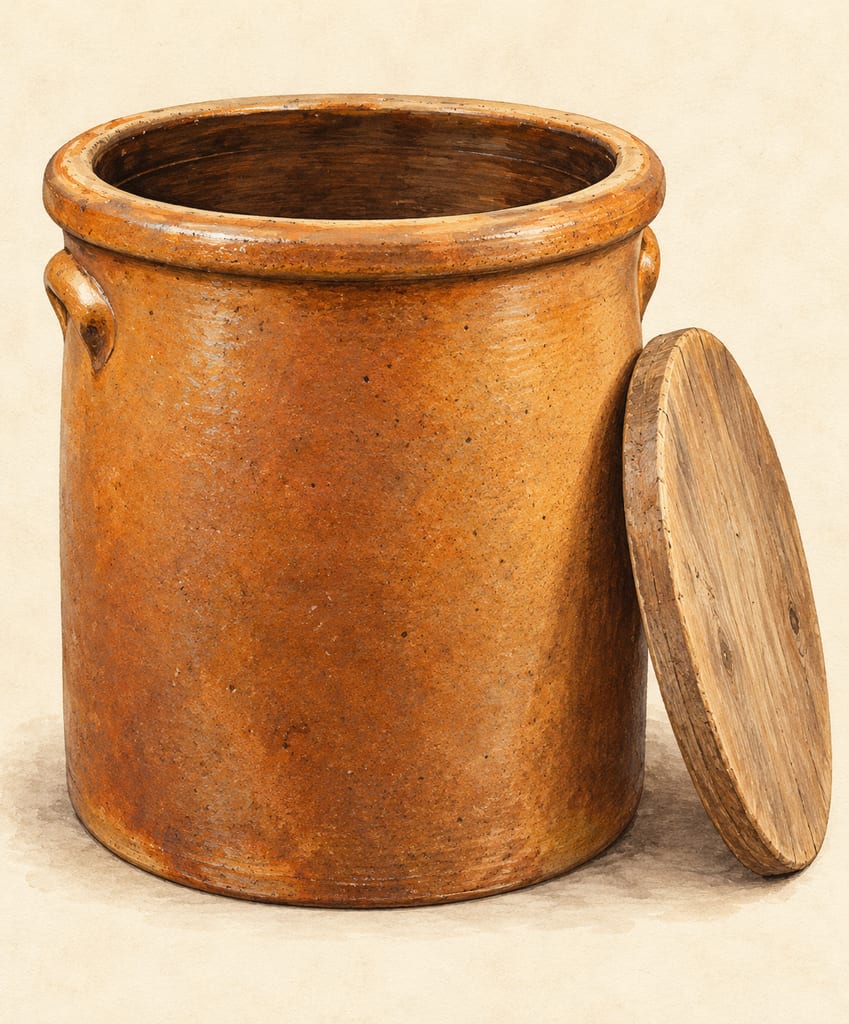
Containers for salt-curing fish and meat range from broad-mouthed stoneware crocks to tubs, cut-down barrels and chests. Their material, depth, cover and ability to retain or drain liquid shape how the food sits in salt or brine.
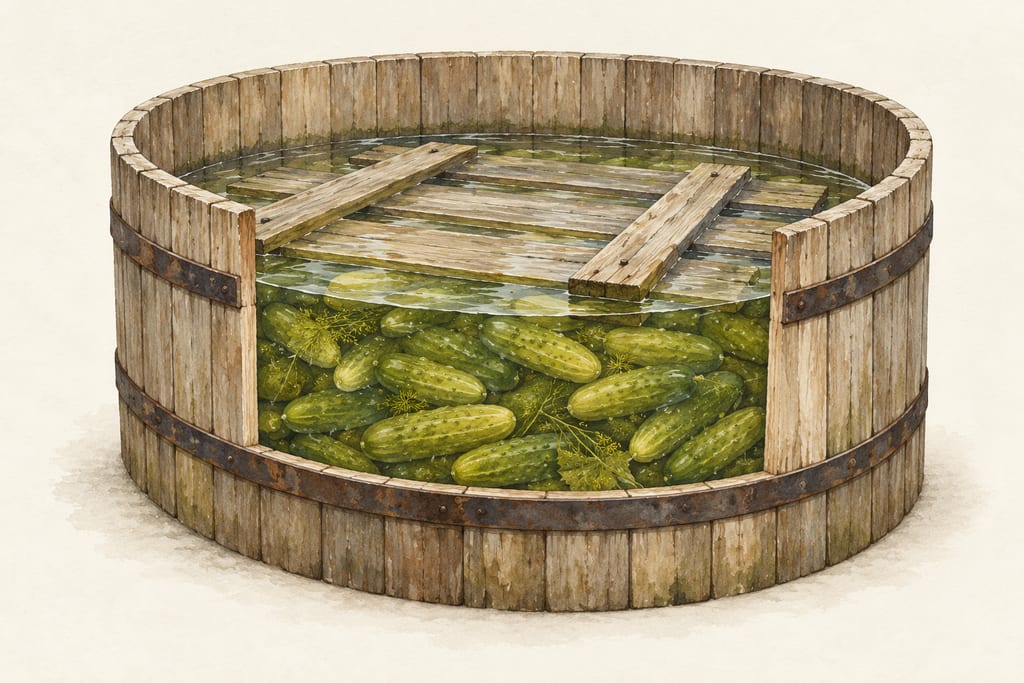
A bulk brining vat holds cucumbers and other vegetables under cover brine for fermentation and storage. North Carolina sources document a mid-century wooden tank yard and later outdoor fiberglass systems.

Threaded, heat-processing jars hold food and a fitted lid during a tested canning process; jar size and process belong to the specific recipe.
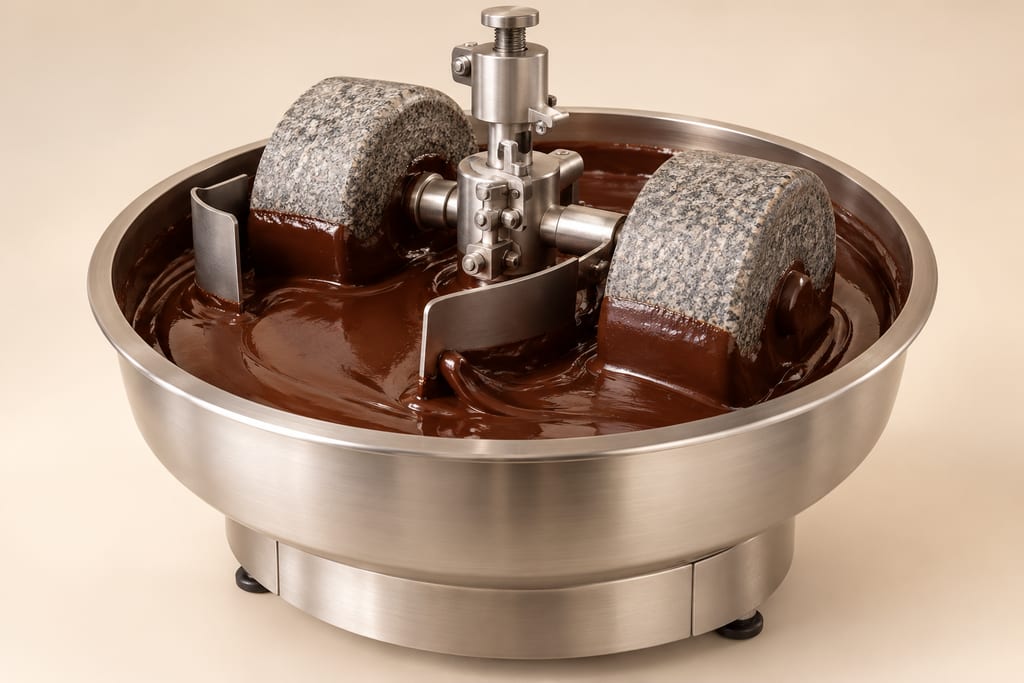
A chocolate refiner or melanger uses powered rotation and stone rollers to refine cocoa mass. Some models also process nut and seed pastes; design, material and operating limits vary.

Soft, spreadable Calabrian pork sausage made with a great deal of red chilli and fatty pork, stuffed into natural casings, sometimes smoked and matured while staying soft.

A way to add independent temperature logging to an existing food dehydrator without changing its built-in controls or protections. It is a monitoring method, not a rewiring plan.

Pleurotus cystidiosus is the abalone mushroom, a cultivated oyster-type fungus with dark brown caps that grows more slowly and is more demanding than other Pleurotus species.

A dark, balanced vinegar from Emilia-Romagna made by combining cooked or concentrated grape must with wine vinegar, then acetifying and refining it in wood under a protected specification.

A living dairy inoculum that starts controlled cream fermentation, developing acidity and aroma before sour cream or cultured butter is finished.

A small electric incubator holds jars at a selected temperature for yogurt and other documented warm food preparations. Controls, capacity and vessel arrangement vary by model.

Adygean salt is a seasoned table salt associated with Adygea and the wider North Caucasian culinary tradition. Salt is blended with garlic and a variable selection of herbs and spices; the exact mix depends on the named style and maker.

The African Caesar-group mushroom, Amanita masasiensis, is a wild ectomycorrhizal species of central and southern African woodlands, eaten locally. The genus contains deadly poisonous species, so identification needs care.
No community contributions have been published for this entry yet.
Sign in to contribute. Published comments and photos are free to read.
Washington State UniversityEquipment form · Packaging · Engineering history
Microwave assisted thermal processing of homogeneous and heterogeneous food packed in a polymeric containerWSU's four-cavity MATS system combines hot-water heating in pressurised cavities with microwave heating for food in polymeric packages.
The research identifies food and circulating-water dielectric properties, heating patterns and cold-spot location as engineering variables.
The thesis studies the system as a developed WSU research technology; it does not identify a universal system design.
Cited in: An in-package thermal system; Moving sealed food through the line
Journal of Food EngineeringEngineering · Heating patterns · Process limits
Development of a computer simulation model for processing food in a microwave assisted thermal sterilization (MATS) systemThe 2013 primary study models electromagnetic-field distribution and food heating patterns in a MATS cavity system.
The study experimentally checks predicted heating patterns and reports effects from water circulation and cavity-to-cavity field distribution.
The paper concerns validated engineering models, not a transferable operating schedule for arbitrary foods.
Cited in: An in-package thermal system
Washington State UniversityEquipment operation · Validation · Process limits
Optimization of Microwave Assisted Thermal Sterilization and pasteurization processes using analytical models and computer simulationThe 2022 dissertation describes pilot-scale MATS and MAPS research and shows that heating depends on food composition and package size.
Its validation compares predicted heating rates with measured rates at food cold spots for the tested samples.
The findings support product-specific process development, not one general schedule.
Cited in: Validation and limits
U.S. ArmyGeography · Documented installation · Visual reference
MATS-B microwave installed at AmeriQual assists CFD at NatickThe article reports that a MATS-B system was installed at AmeriQual in Evansville, Indiana, in August 2012 for research and development testing.
The article's first image shows the installed treatment equipment and credits the photograph to the U.S. Army.
The 2012 article describes that installation and testing goals; it does not establish present-day operation or specifications for all units.
Cited in: Moving sealed food through the line; Research and commercial deployments
Washington State University InsiderCommercial deployment · Geography · Scale
India partnership deploys new WSU microwave technologies for safer mealsWSU reported a Tata SmartFoodz MATS-30 continuous system in production in India in 2020.
The article distinguishes WSU microwave sterilisation and pasteurisation technologies and identifies commercial deployment as a collaboration with Tata SmartFoodz and 915 Labs.
This is a dated deployment report, not a guarantee that the same equipment or capacity remains in operation today.
Cited in: Research and commercial deployments
Tata Consumer ProductsGeography · Commercial use
Tata Consumer Products to acquire Tata SmartFoodz, owner of the brand 'Tata Q'Tata's 2021 corporate release identifies a manufacturing facility in Sri City, Andhra Pradesh, and states that Tata Q meals were made using MATS technology in India.
Cited in: Research and commercial deployments
Washington State University InsiderIngredient context · Research application · Process limits
Microwave technologies give hummus longer shelf life, eliminate preservativesWSU reports laboratory work on lentil-based hummus and distinguishes microwave-assisted pasteurisation from microwave-assisted sterilisation.
The reported product outcomes are specific to the study and do not establish a home process or a general schedule for other foods.
Cited in: Research and commercial deployments
National Center for Home Food Preservation, University of GeorgiaHome preservation limit · Safety
Equipment and Methods Not RecommendedThe National Center does not recommend processing freshly filled jars in domestic microwave ovens because the practices do not prevent all risks of spoilage.
Cited in: Validation and limits
Journal of Food ScienceIndustrial system design · Heating uniformity · Process limits
Unlocking Potentials of Microwaves for Food Safety and QualityThe review describes microwaves delivering energy through polymeric packages for in-package sterilisation and pasteurisation.
It explains that microwave propagation and heating are complex and require system design for heating uniformity and regulatory food-safety process development.
The article reviews MATS and MAPS development in research laboratories and food plants; it does not provide a universal process schedule.
Cited in: Moving sealed food through the line