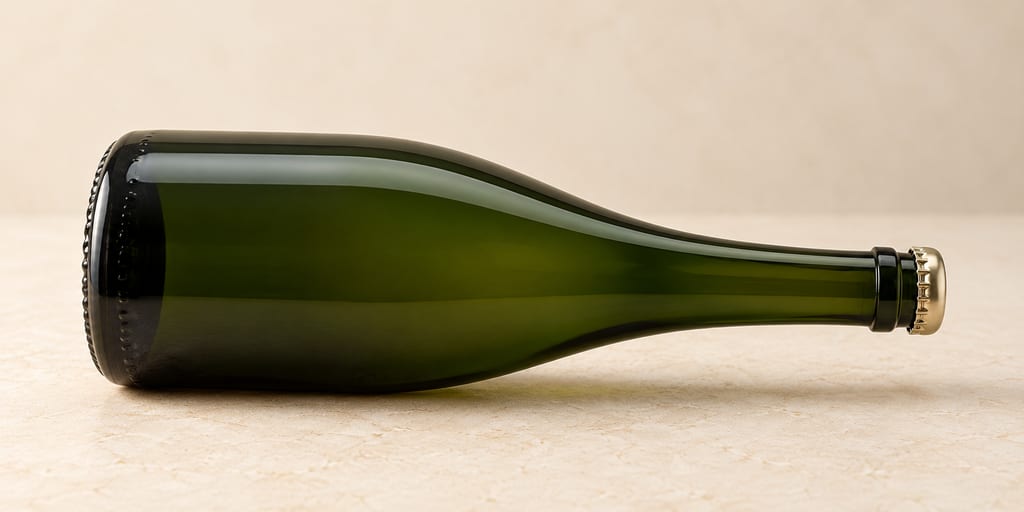
Bottle for secondary fermentation
Champagne’s traditional-method bottle holds wine through its second fermentation and subsequent maturation on lees. At tirage it has a crown cap and internal insert; bottle formats and specifications vary.
 FermenteaWhere food goes to change
Equipment · Fruit deseeding tools
Plume d’oie taillée en biseau
A goose feather cut at a bevel and soaked before use, its hollow shaft guiding currant pips out one by one while the berry remains whole.
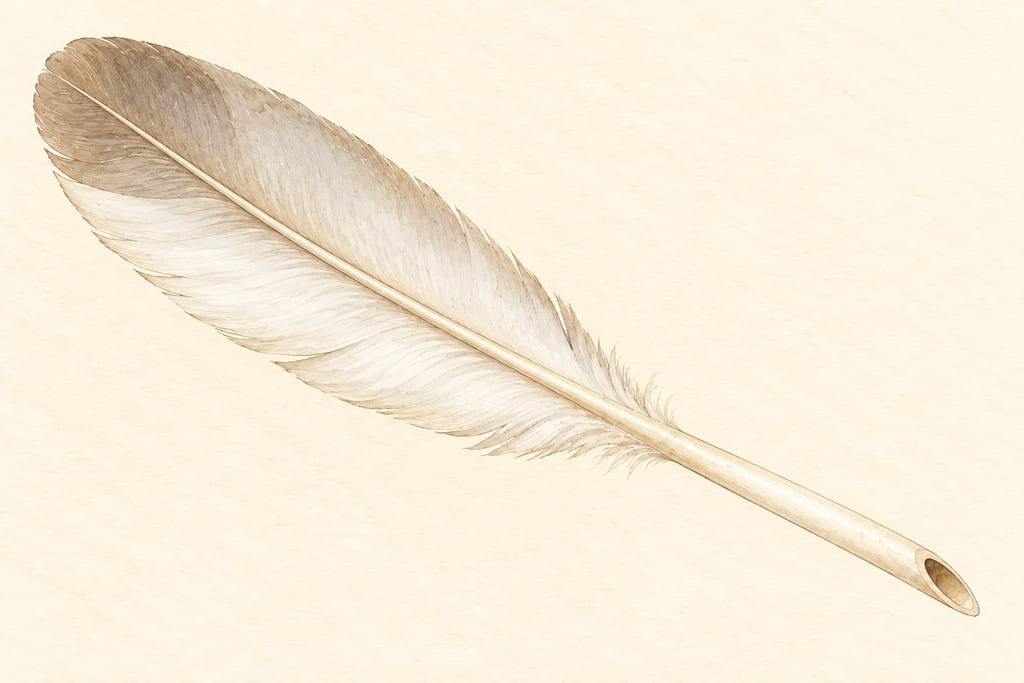
The prepared goose quill is a feather tool used in Bar-le-Duc to remove pips from currants for the town's distinctive whole-fruit preserve. Its working end is a small bevel cut across the hollow feather shaft. That matters because this is not a conventional quill pen: it is a hollow, feather-shaped implement whose tapered end makes a fine incision and whose channel receives the pips as they are drawn out.
The method is designed to keep each currant recognizable rather than turn the fruit into pulp or strain out its seeds after crushing. The operator works berry by berry, removing the pips while leaving the skin and flesh substantially intact. The feather is therefore a precise tool for a narrowly defined task, not a general-purpose spoon, knife or strainer.
Before work begins, the feather is cut at a bevel and soaked in water; no soak duration or water temperature is defined. During deseeding, one hand steadies an individual currant while the other guides the prepared tip into its skin. Pips are eased out one at a time and slide through the hollow shaft; the flap of skin can then be laid back over the small opening. The sequence preserves the berry's form and texture.
The operation depends on a careful touch, not leverage or speed. A regional guide compares about an hour and a half per kilogram for an experienced worker with fifteen hours for a novice. Those figures illustrate the skill and labor required in the local process; they are not a guaranteed rate for every worker, fruit or tool. A press, sieve or kitchen knife would not do the same job without changing how the fruit is opened or handled.
The documented modern practice is at Maison Dutriez in Bar-le-Duc, in the Meuse department of France. The earliest date associated with the confection is 1344, and local heritage tradition describes the goose-quill method as unchanged since the fourteenth century. That date is for the preserve and its method, not an individually dated feather; it does not establish that today's tool is identical in every detail to one used then.
The technique does not specify a standard quill length or diameter, feather supplier, or after-use cleaning and storage routine. It does describe soaking the bevel-cut feather before use. The documented role is hand removal of pips from individual currants in this Bar-le-Duc preserve tradition; the item is not established here as a general-purpose tool for other fruits or regions.
Local heritage accounts date the earliest mention of Bar-le-Duc currant preserve to 1344 and describe the goose-quill deseeding method as unchanged since the fourteenth century. This is a claim about the preserve and its technique, not a surviving feather or a direct 1344 record naming this tool. The prepared quill is documented in present-day use at Bar-le-Duc by Maison Dutriez.
This is a precision hand tool used on currants one at a time, not a bulk seed screen or a mechanical destoner. A local heritage guide gives example processing times of about 1.5 hours per kilogram for an experienced worker and 15 hours for a novice; these are not universal performance specifications.
Source →The sources identify no standard feather length, diameter or maker, and the historical date applies to local preserve tradition rather than an individually dated quill.
Source →Current use is documented at the Maison Dutriez in Bar-le-Duc. The date 1344 applies to local preserve history and does not independently date the feather tool.
Champagne’s traditional-method bottle holds wine through its second fermentation and subsequent maturation on lees. At tirage it has a crown cap and internal insert; bottle formats and specifications vary.
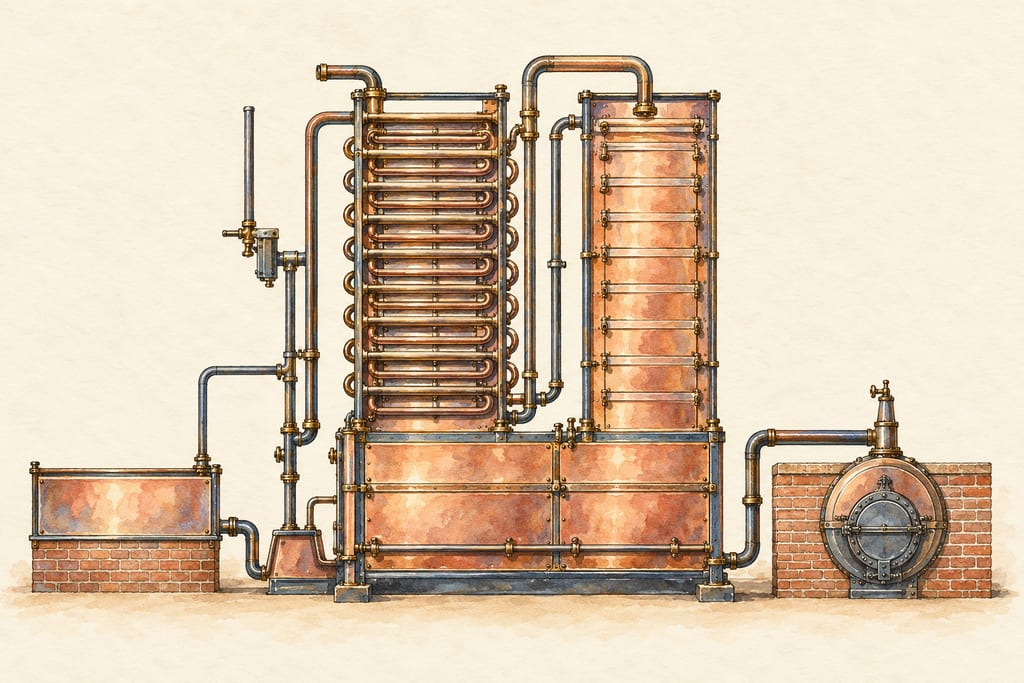
A column still is a distillation apparatus built around one or more vertical columns. Its continuous and rectifying designs appear in several spirits traditions, but materials and product character vary by installation.
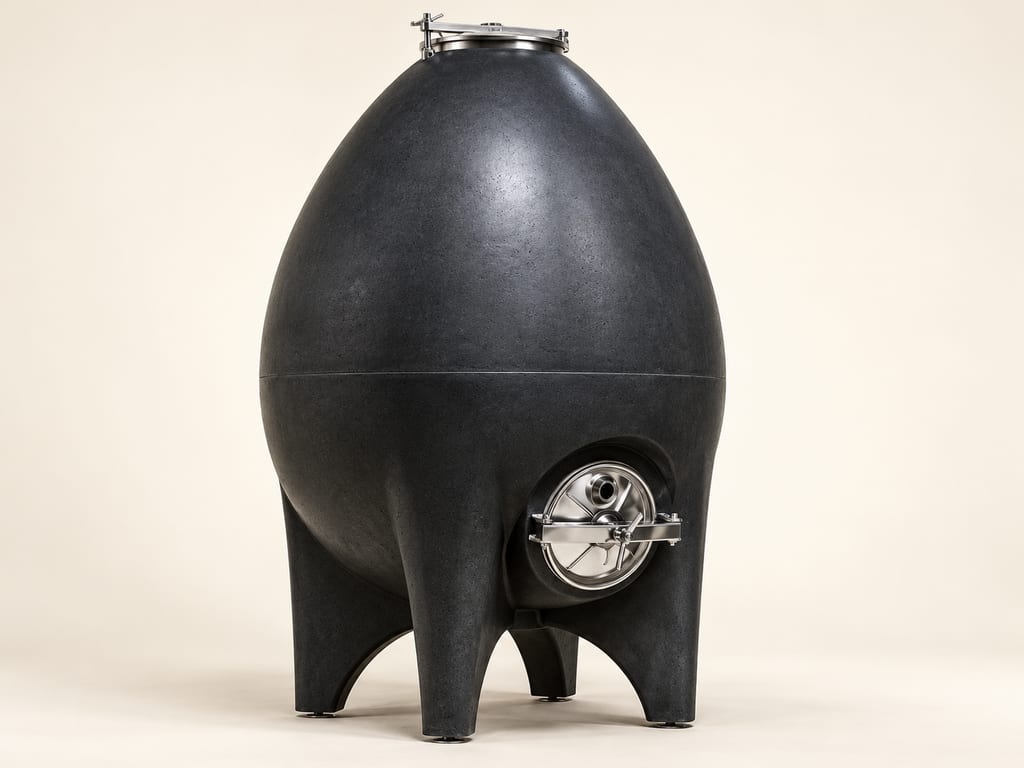
A modern ovoid concrete wine vat with smooth curved walls, made in several sizes and fitted according to model. Used for wine fermentation and maturation; support, access, cooling and interior treatment vary.
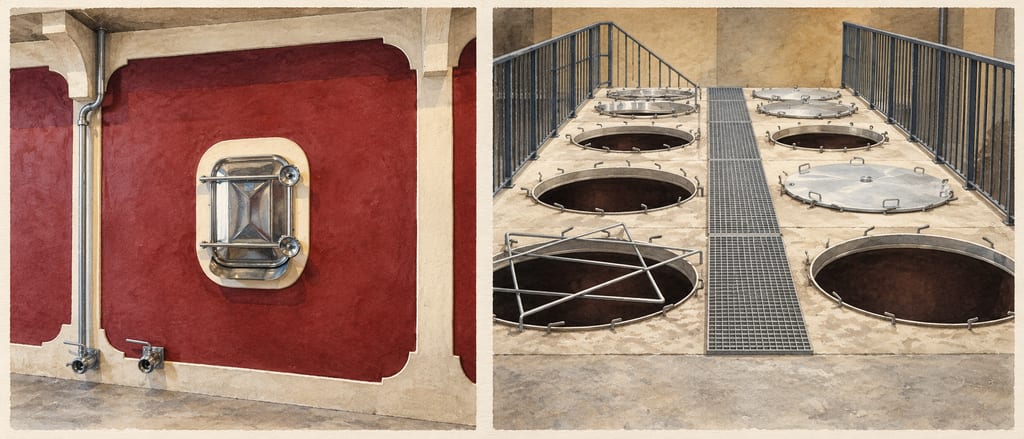
Concrete wine tanks are heavy, fixed vessels in rectangular, cylindrical and tapered forms. Their thermal response and wine contact depend on mix, wall construction and interior finish.
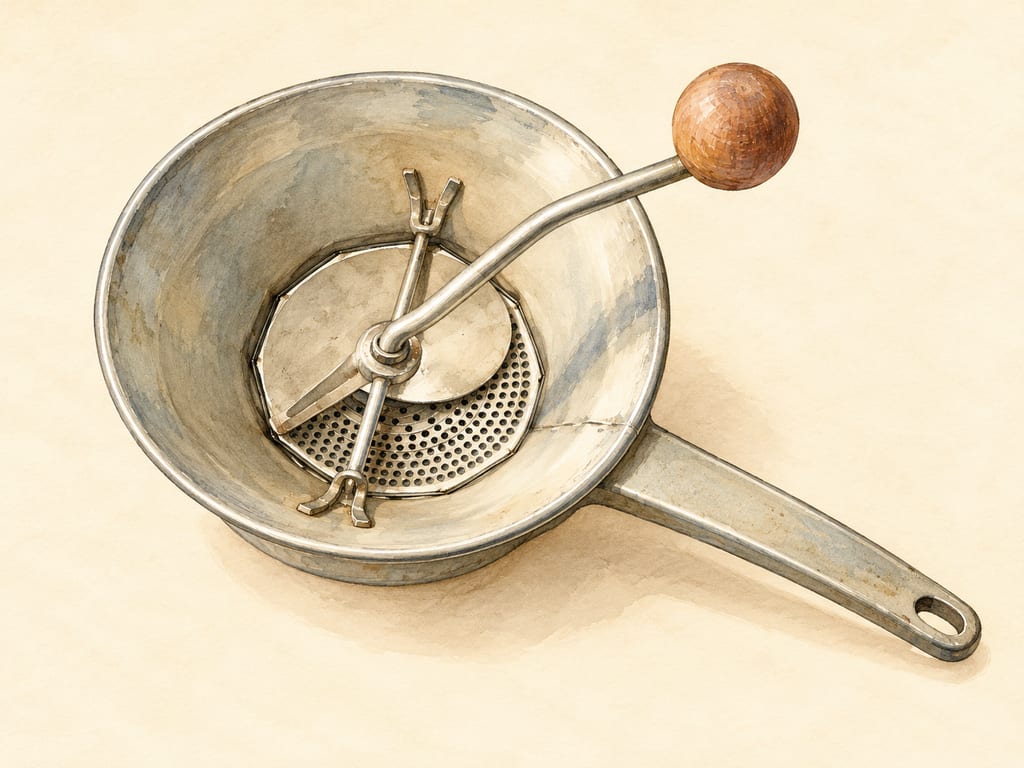
A hand-cranked food mill presses softened food across a perforated disk, producing a purée while keeping larger pieces in the chamber. Its exact shape and disk depend on the model.
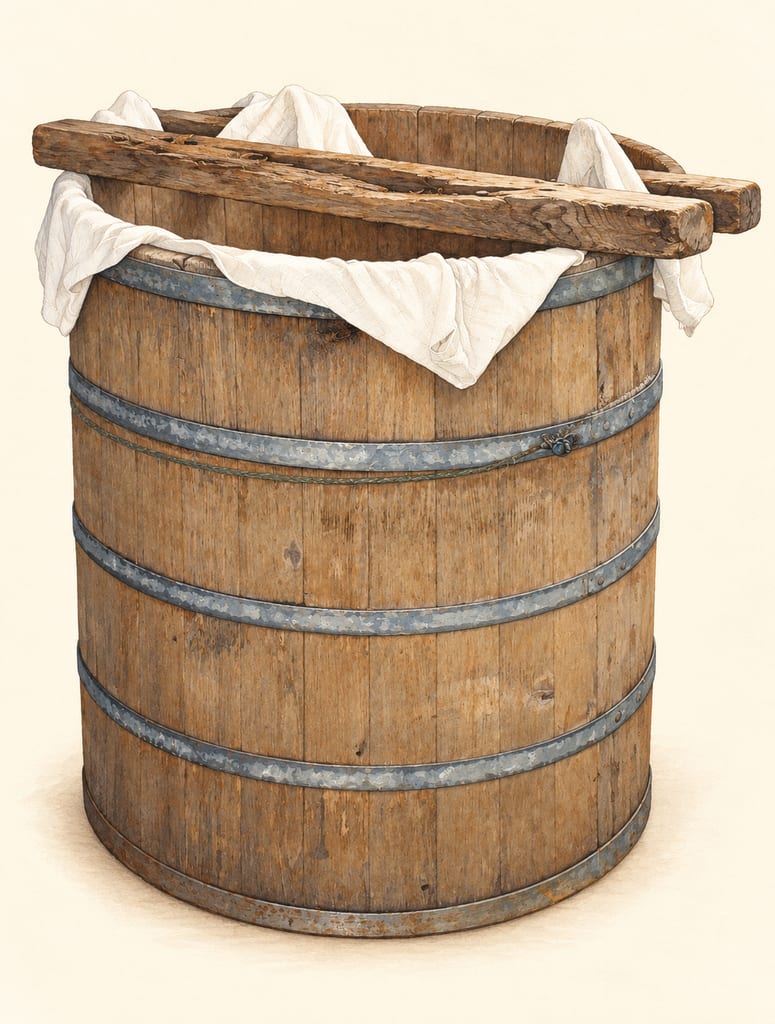
The gerle is a broad wooden vat used to receive and work milk for Salers cheese in its French AOP area. Its coopered form and microbial role are documented, but sources do not establish when this particular vessel first appeared.
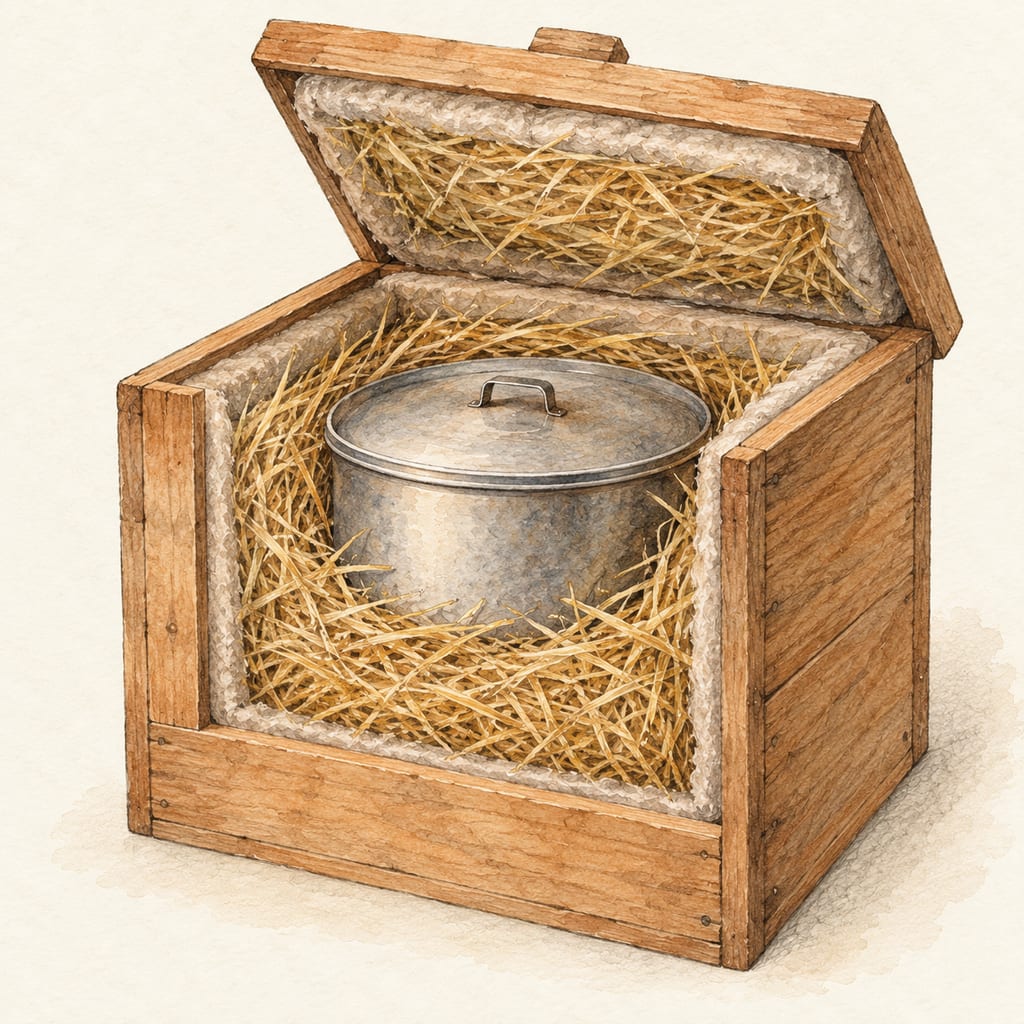
A haybox, also called a fireless or retained-heat cooker, is an insulated enclosure that lets a lidded pot finish cooking in heat already stored in the food after it leaves a stove. It generates no heat and is not a preservation method.
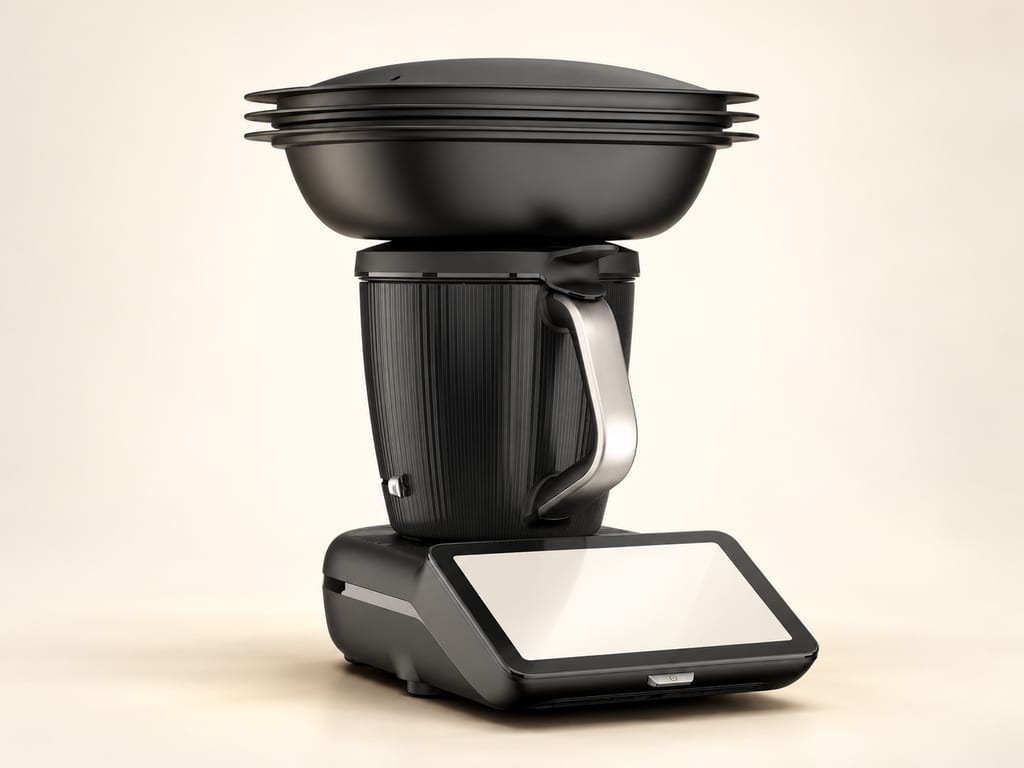
A modern electric countertop machine that heats, chops and stirs food in one mixing bowl. Cookidoo lists Thermomix models for making powidl and quince membrillo, although the full methods are not public on the pages reviewed.

Protected Italian vinegar made only from cooked grape must, fermented and aged in a battery of wooden barrels for at least 12 years: sweet, sharp and syrupy.

Airag is Mongolia’s fermented mare’s-milk drink, traditionally churned with saved starter in a reusable cowhide khokhuur.

Appam, or hoppers, are South Indian and Sri Lankan rice pancakes made from a fermented coconut-and-rice batter and cooked in a curved pan to a crisp lacy rim and a soft, spongy centre.
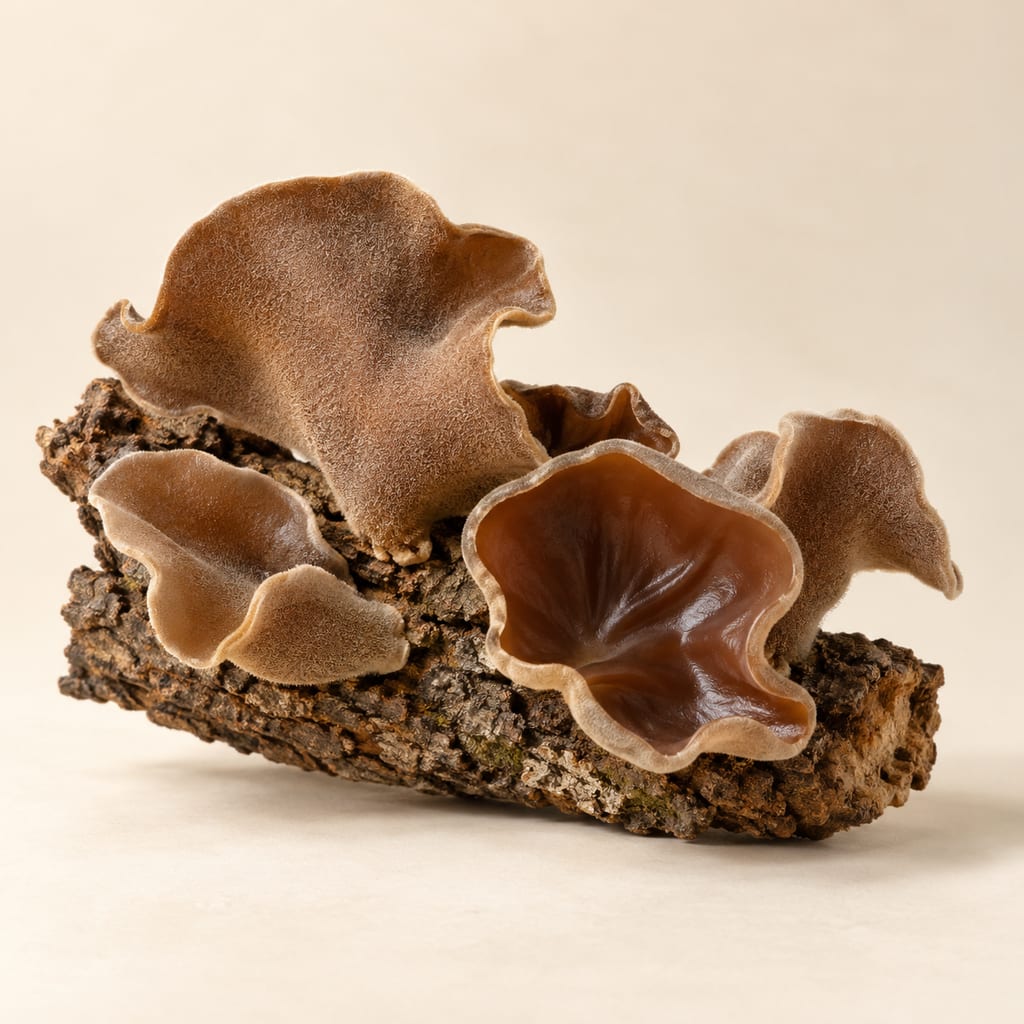
Auricularia tremellosa is a wood ear fungus of the genus that supplies most dried wood ear sold in China; its own food record is thin, and the culinary practice described here comes from the closely related wood ear species.

Ayran is Turkey’s cold, savoury yogurt drink: plain yogurt is loosened with water and lightly salted, then whisked smooth or aerated into a soft cap of foam.
A thin stone griddle used over an open hearth. Norwegian archaeology documents the established tradition from the early Middle Ages; a Viking-period origin is only a cautious suggestion linked to Shetland.

Crushed or milled barley cooked in water until the starch softens and the mixture thickens, the plainest way a northern household turned stored grain into a meal, here with apple and hazelnut.
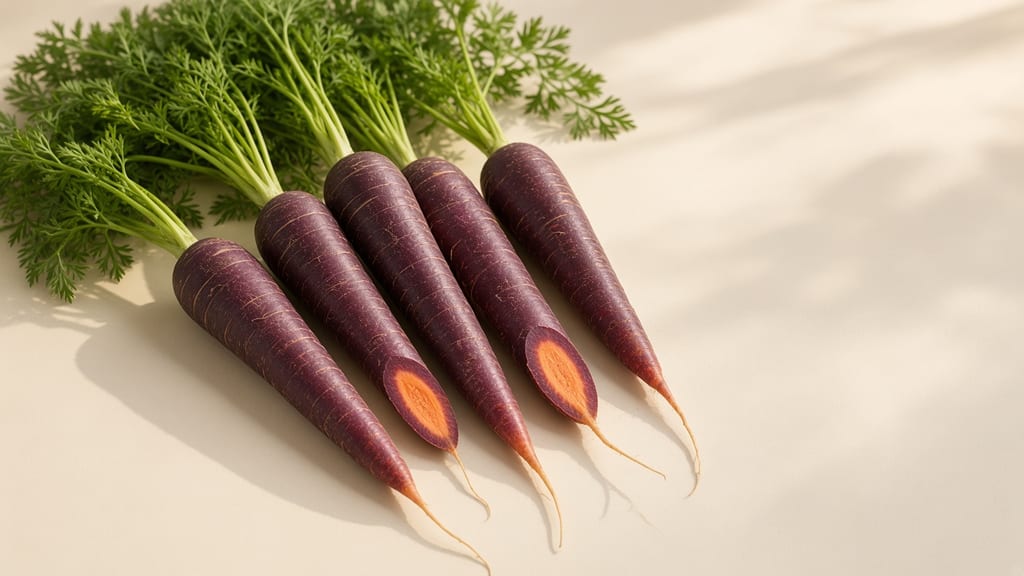
Black carrot is the anthocyanin-pigmented Eastern carrot (Daucus carota var. atrorubens), the purple root that preceded orange types and still colours kanji and şalgam.
No community contributions have been published for this entry yet.
Sign in to contribute. Published comments and photos are free to read.
Maison DutriezEquipment · Method · History
Le caviar de Bar-le-DucThe quill is cut at a bevel and soaked in water before use.
The operator removes currant pips one by one, sliding them through the hollow feather shaft; the berry incision is covered again with a flap of skin.
The producer dates the earliest known mention of Bar-le-Duc preserves to 1344 and claims the process has not changed since then.
Cited in: A feather prepared to deseed currants; Bevel, soak and hollow shaft; A living Bar-le-Duc technique
Meuse AttractivitéEquipment · Method · Geography
À la Lorraine - Maison DutriezThe goose feather is cut at a bevel, and the worker uses it to open the berry and remove its pips without destroying the fruit's form.
The regional tourism record places the current Maison Dutriez at Bar-le-Duc and says the local process dates from the fourteenth century.
The page gives a local estimate of about 1.5 hours per kilogram for an experienced worker and 15 hours for a novice; these are examples, not universal rates.
Cited in: A feather prepared to deseed currants; Bevel, soak and hollow shaft; A living Bar-le-Duc technique
Musée barrois, presented by Meuse Grand SudEquipment · Method · History
Pot de confiture de groseilles avec son couvercle (Juin 2026)The museum's June 2026 object entry says the Bar-le-Duc currants are deseeded with a bevel-cut goose feather and describes this as requiring care and patience.
It reports the town's preserve history from 1344 while distinguishing the modern Maison Dutriez as the remaining family producer.
Cited in: Bevel, soak and hollow shaft; A living Bar-le-Duc technique
La Dépêche du Midi; Jean-Christophe Verhaegen / AFPEquipment · Method · Image
La confiture de groseilles de Bar-le-Duc: une friandise de luxe faite à la plume d'oieThe article's attributed photograph shows Anne Dutriez holding a goose quill to remove pips from a currant, while its caption describes preserving the berry.
The article reports that this hand movement takes practice and distinguishes a reported origin story from established historical fact.
Cited in: A feather prepared to deseed currants