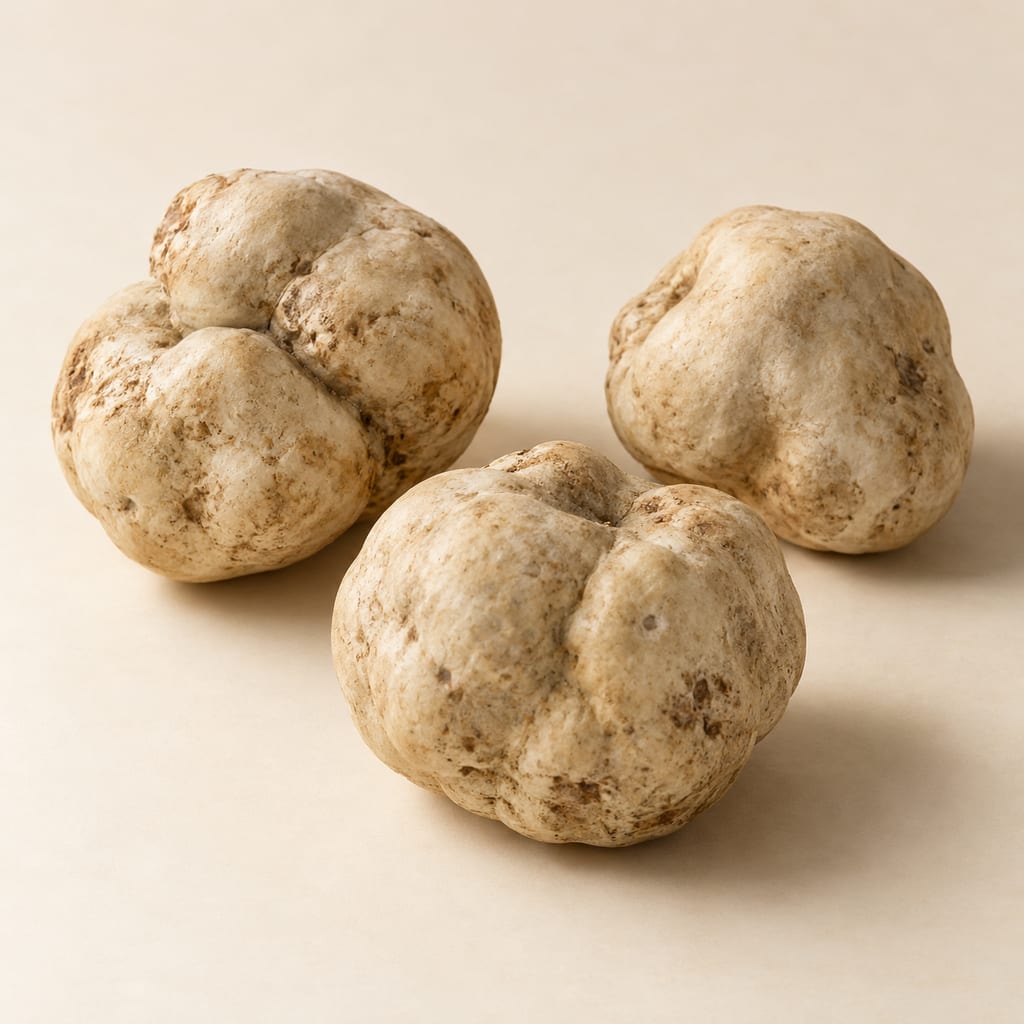
Afrocastellanoa ivoryana
Afrocastellanoa ivoryana is a truffle-like false truffle of African woodlands, ectomycorrhizal with woodland trees and recorded as a regional wild food in West and Central Africa.
 FermenteaWhere food goes to change
Mushrooms
Lactifluus rubroviolascens is an orange-brown African milkcap of miombo and savanna woodland, listed among edible fungi, with its preparation and safety still needing validation.
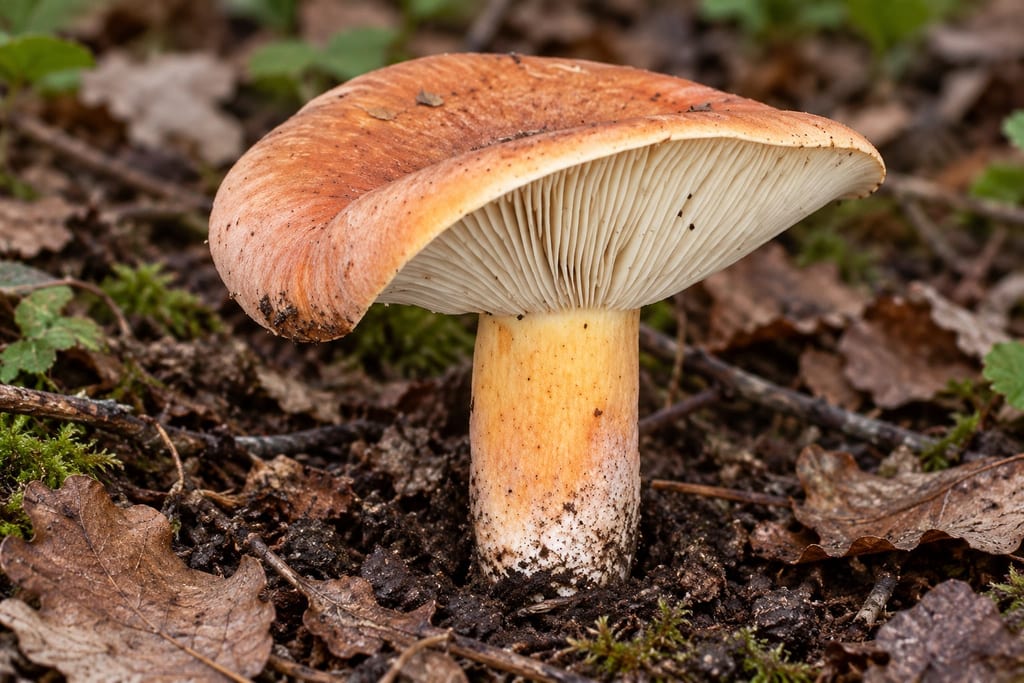
Lactifluus rubroviolascens is a milkcap that was first described as Lactarius rubroviolascens by R. Heim in 1938 and was later moved by Verbeken into the genus Lactifluus. The older name Lactarius rubroviolascens is still used as a search name, and the species is recorded under both.
Field characters noted in the sources include an orange-brown colour, watery latex, and red spots at a wound that turn quickly black. Those features help separate it from other milkcaps, but the sources do not establish a complete list of look-alikes, and Lactarius chromospermus, a miombo species, is named as a different species that is not regarded as edible.
The species is ectomycorrhizal, so it lives in partnership with the roots of woodland trees. Recorded habitats include miombo woodland, where it is associated with Marquesia macroura, and wooded savanna where it is associated with Uapaca kirkiana and Uapaca pilosa. The sources describe a wide ecological range across woodland, savanna and forest.
The recorded distribution covers Benin, Cameroon, the Democratic Republic of the Congo, Kenya, Madagascar, Malawi and Zambia. These are records in the sources, not a survey of the species range, and the entry gives no abundance or season.
The EFTA edible-species inventory records the species as a regional milkcap used for food. Taxonomic sources list it among edible fungi, including a French guide to the edible mushrooms of Upper Katanga and a guide to the edible fungi of Central African dense forests. No consulted source gives a preparation, a cooking method or a local name for the species.
The catalogue record keeps the food status as an institutional record, with preparation, identity and current safety still needing separate validation. No source consulted gives a toxicity finding for this species, and none establishes a safe method. A regional mycologist should be consulted before any wild milkcap is eaten.
The open questions are the local harvesting and preparation practices, the toxicity of the species, and whether the field characters hold across the full recorded range. The current genus placement also needs confirmation against the full monograph, which the consulted sources summarise but do not reproduce. Until those are answered, the page can say that the species is a recorded edible milkcap, and no more.
The recorded habitat in the sources; it is not a record of a food tradition.
One of the recorded countries. Regional food use is recorded in a French guide to Upper Katanga, as the sources report.
One of the recorded countries.
Afrocastellanoa ivoryana is a truffle-like false truffle of African woodlands, ectomycorrhizal with woodland trees and recorded as a regional wild food in West and Central Africa.
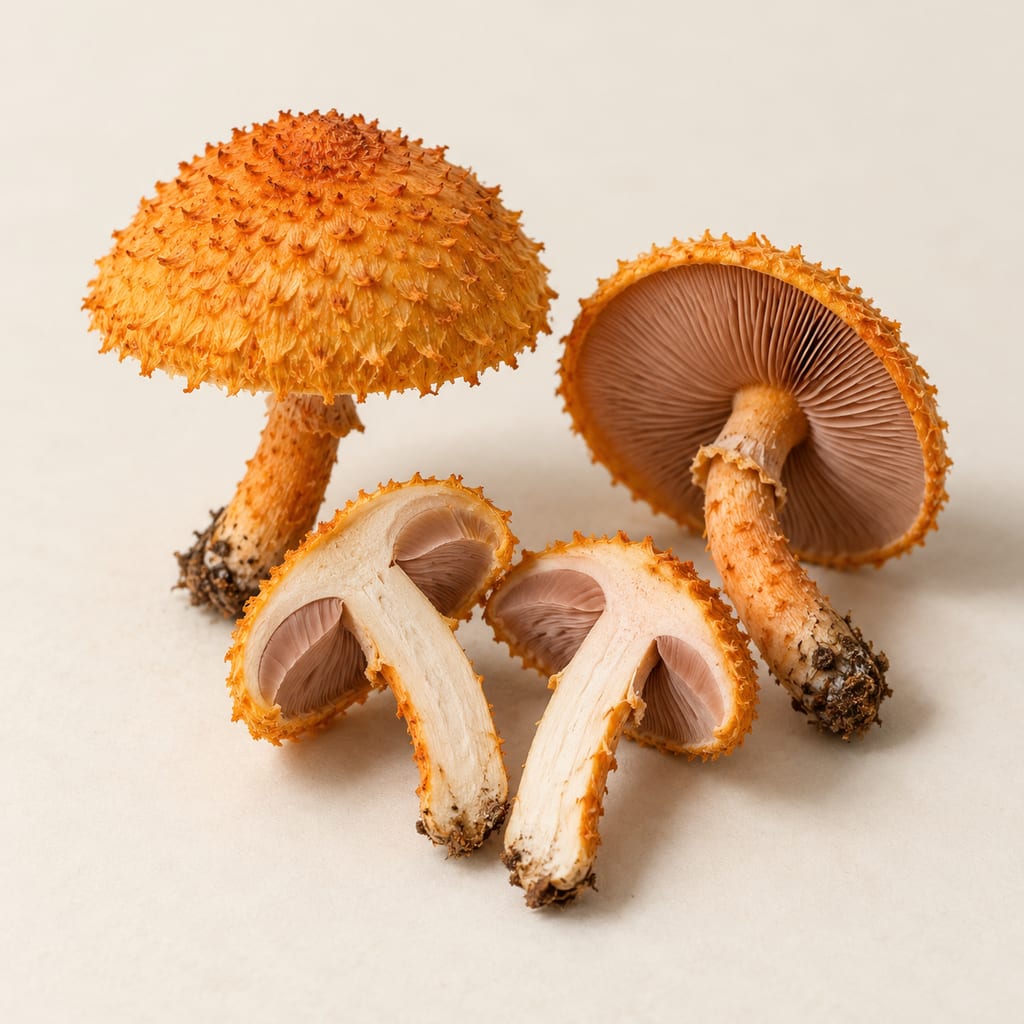
A forest mushroom of the genus Agaricus, recorded as a wild food in the Tshopo province of the Democratic Republic of the Congo in a voucher-backed ethnomycological survey.
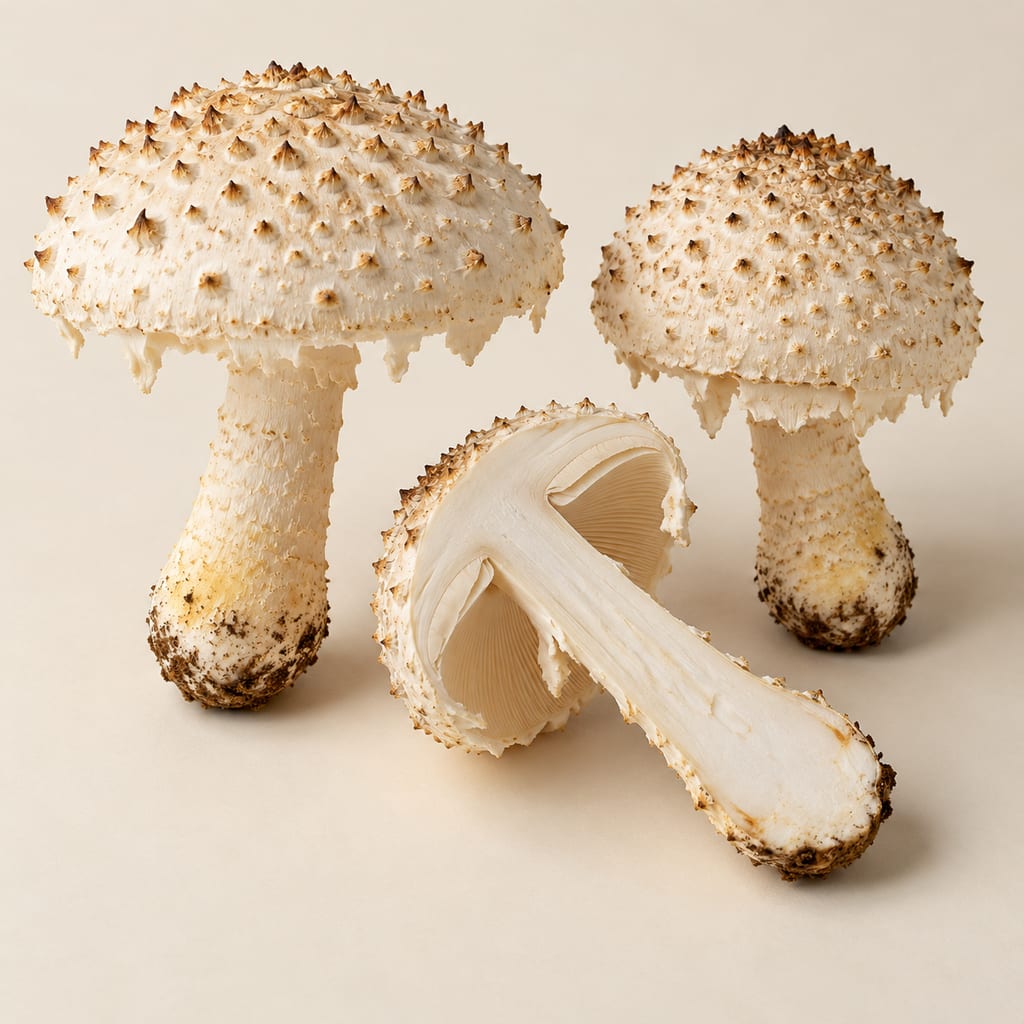
Amanita afrospinosa is a white, warted Amanita of miombo woodland in southern and central Africa. A regional food-use record exists, but the Amanita genus includes deadly species, so no safe use is established here.
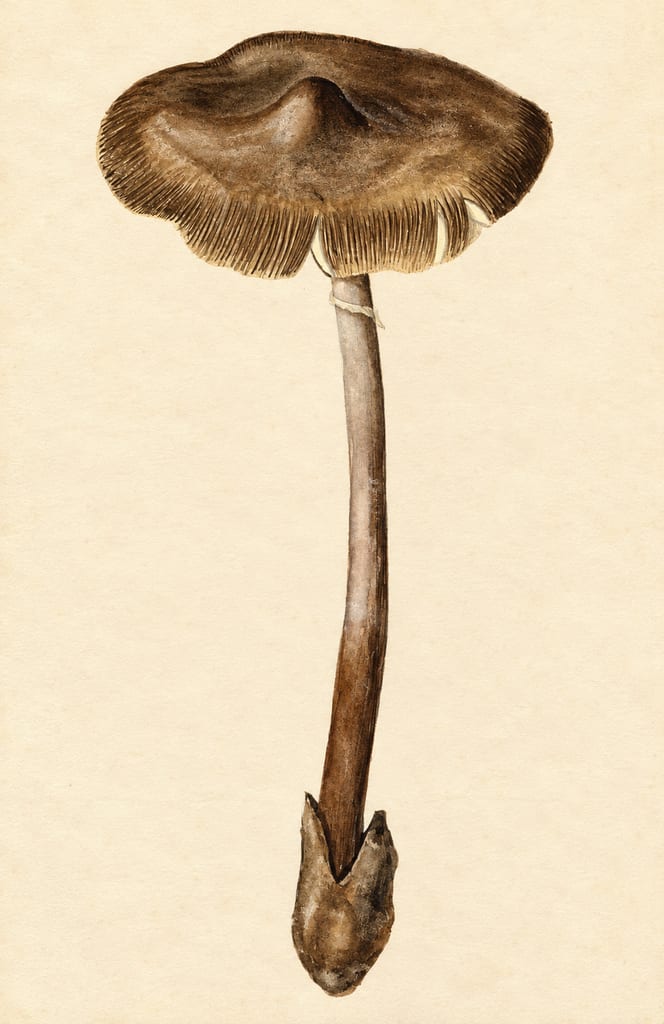
A wild ectomycorrhizal Amanita of the Congo rainforest, recorded as locally consumed in Tshopo province. Its preparation was not established, and the genus includes deadly species.
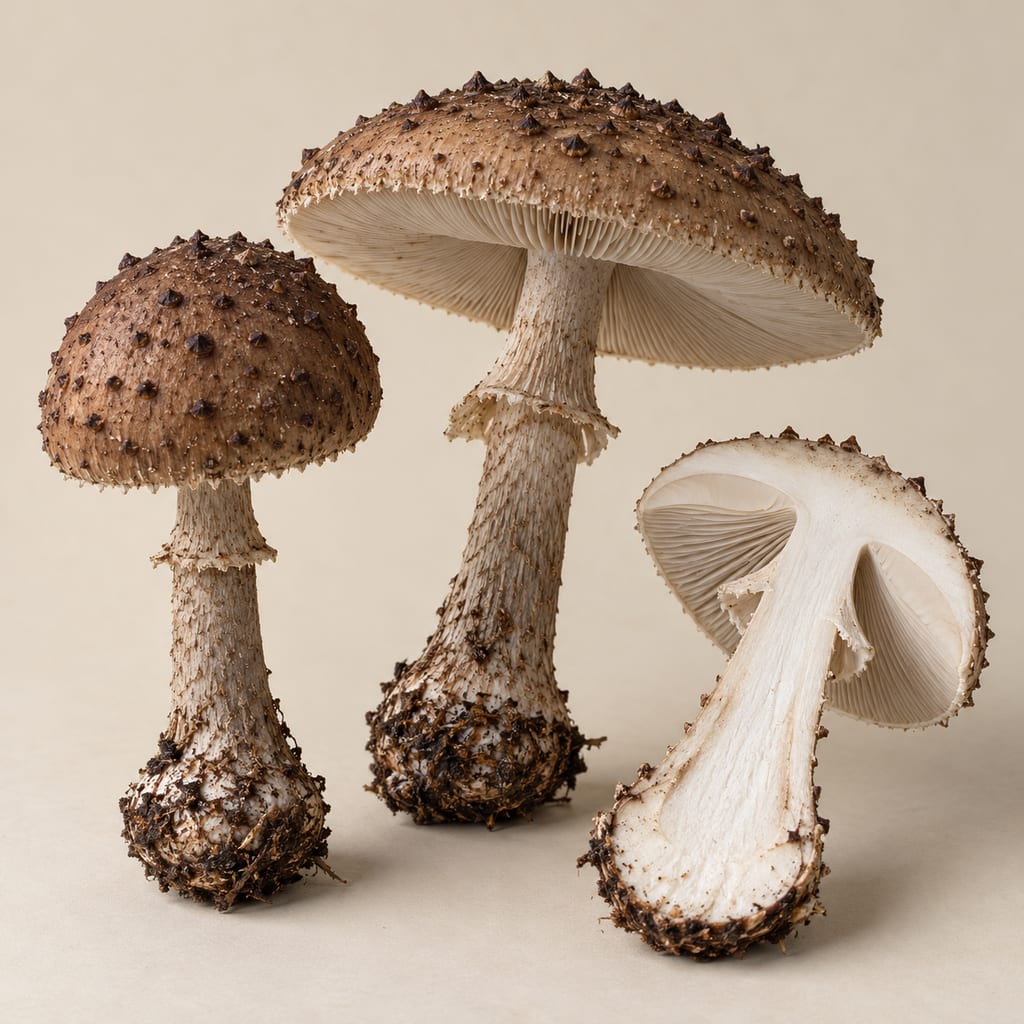
A wild ectomycorrhizal Amanita of the Congo rainforest, recorded as locally consumed in Tshopo province. Its preparation was not established, and the genus includes deadly species.
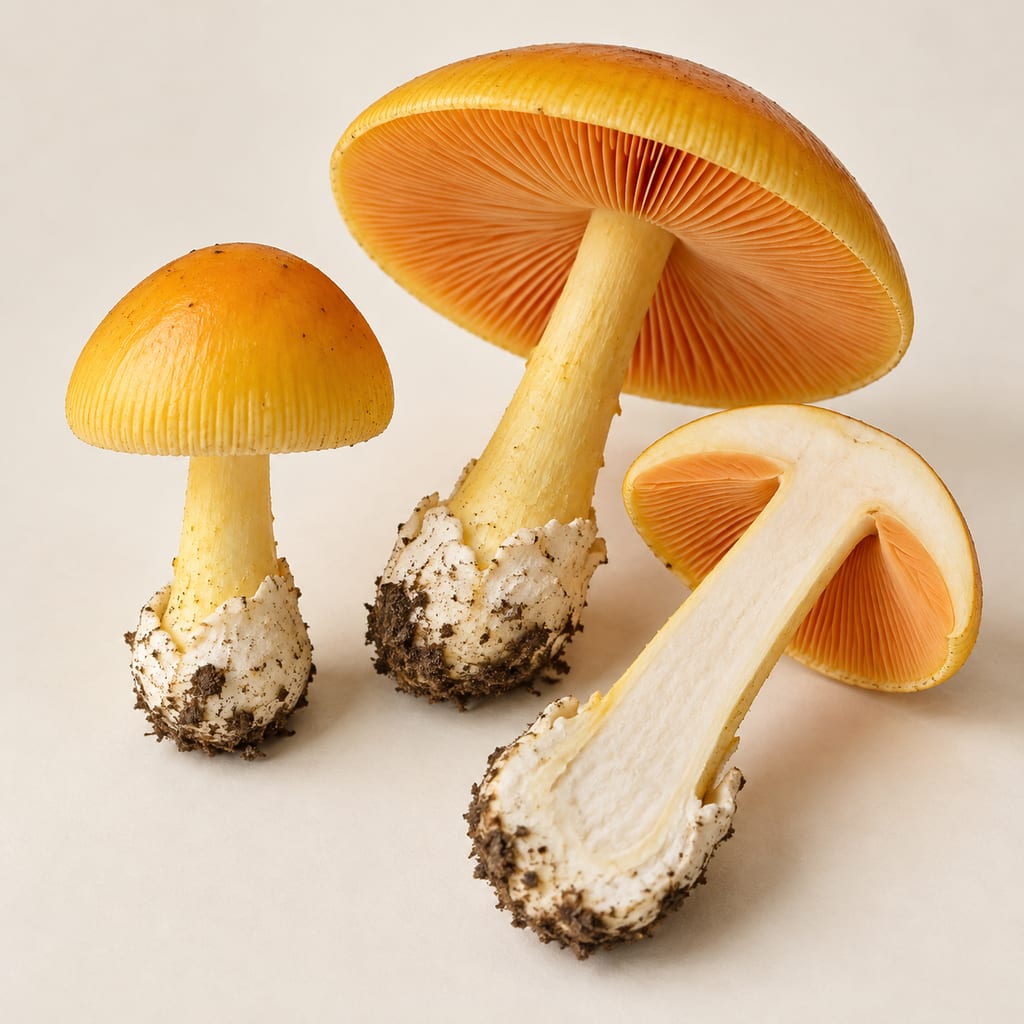
A wild miombo Amanita recorded as a local food in northern Zambia, with collections also documented in Haut-Katanga, DRC. The evidence is regional and does not make wild identification safe.
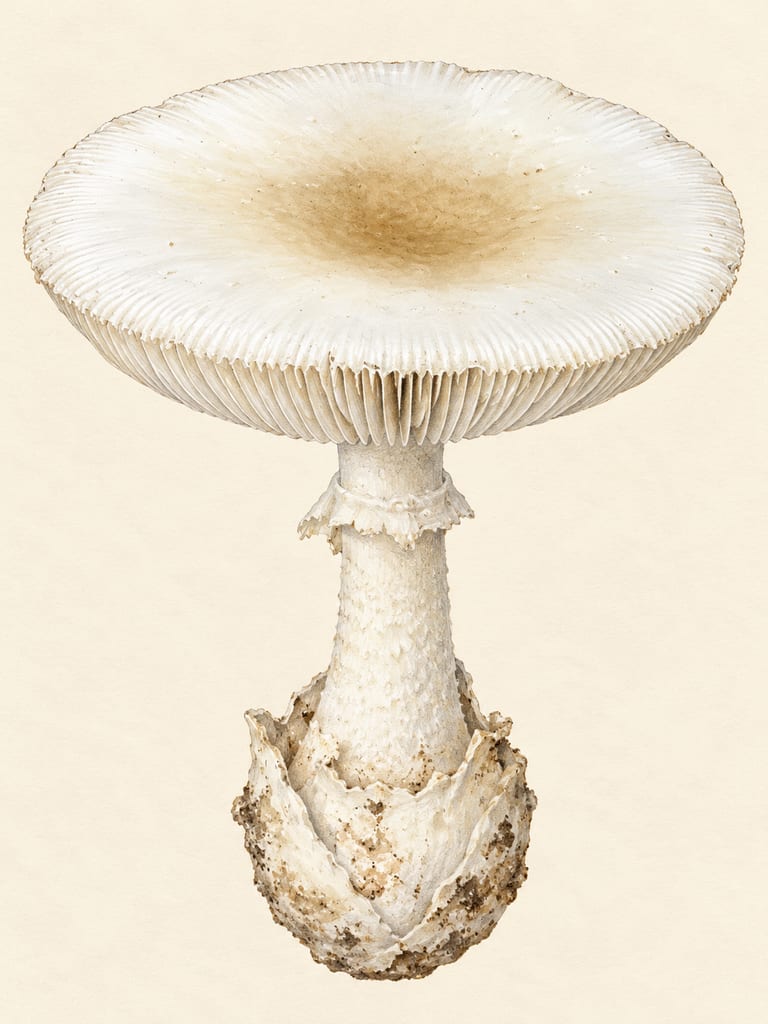
Amanita loosei is a large wild Amanita of tropical African miombo and open woodland, gathered and sold as a valued seasonal food. Regional food-use evidence is not a guide to identifying wild mushrooms.
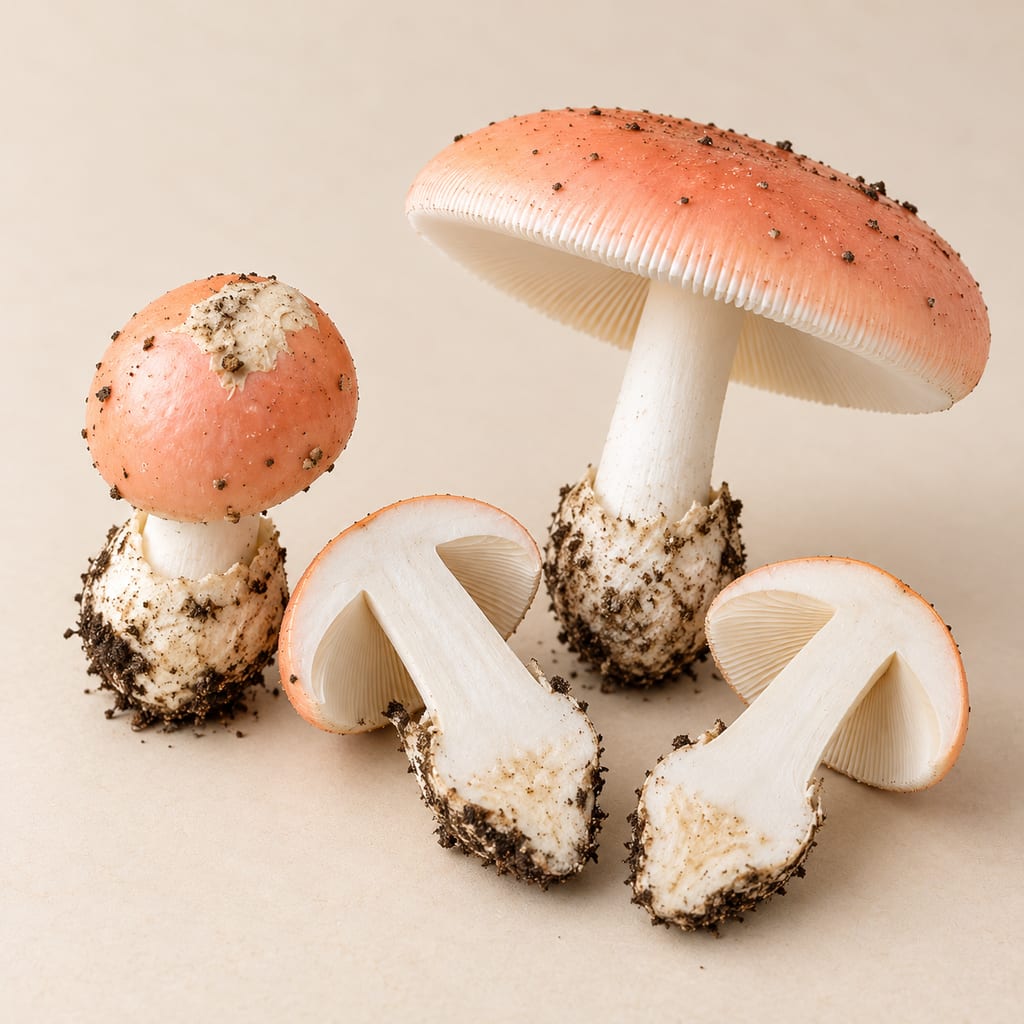
Amanita pudica is a wild rainforest fungus of Tshopo Province in the DR Congo, recorded as locally eaten in interviews. The genus contains deadly poisonous species, so identification by a specialist is essential.

A Cap-Pelé boucanière is an Acadian herring-smoking building. The documented Willie Niles example is a one-storey wood-frame structure with a ridge smoke vent and interior bays for hanging fish-bearing cannes.

Achcharu is a family of Sri Lankan vinegar pickles made with mixed vegetables or seasonal fruit and a piquant spice dressing. This version is a quick, refrigerated, non-fermented mixed-vegetable pickle.

The acocote is a long, hollowed and dried gourd used to draw aguamiel from a mature maguey. It is a harvesting tool: the sap is transferred to a separate vessel before it ferments into pulque.

Adrak murabba preserves young ginger in sugar syrup, a sweet South Asian preparation recorded in Indian cookery and food-processing sources.

Parkia biglobosa seeds are fermented into regional West African seasonings, including nététou, iru, dawadawa and soumbala. The yellow fruit pulp is a separate food, and names and methods vary by place.

Japanese reddish-brown vinegar from sake lees matured about three years, turned to vinegar by acetic bacteria; the vinegar of Handa and Edomae sushi rice.

A refined common-wheat flour blended for a broad range of baking; its protein and behavior vary with wheat, milling and market.

The almond mushroom, Agaricus subrufescens, was cultivated in eastern North America in the 1800s, lost its market, and returned as a cultivated mushroom from Brazil, where it is grown under several names.
No community contributions have been published for this entry yet.
Sign in to contribute. Published comments and photos are free to read.
EFTA (European Fungi Taxonomy Association)Identity · Geography · Food
Lactifluus rubroviolascens (R. Heim) VerbekenRegional milkcap in EFTA's edible-species inventory
Ectomycorrhizal in woodland, savanna and forest
Recorded in Benin, Cameroon, DR Congo, Kenya, Madagascar, Malawi and Zambia
Cited in: What it is; Habitat and distribution; Food status; What is still open
Not confirmed from the search resultTaxonomy · Ecology · Identification
Record for Lactarius rubroviolascens (doi 10.25518/1780-4507.18508)Described as Lactarius rubroviolascens R. Heim, Candollea 7, 1938; now Lactifluus rubroviolascens (R. Heim) Verbeken
Field features: orange-brown colour, watery latex, red spots turning black at a wound
Associated with Marquesia macroura in miombo and with Uapaca kirkiana and U. pilosa in wooded savanna
Cited in: What it is; Habitat and distribution; Food status