
Almond mushroom
The almond mushroom, Agaricus subrufescens, was cultivated in eastern North America in the 1800s, lost its market, and returned as a cultivated mushroom from Brazil, where it is grown under several names.
 FermenteaWhere food goes to change
Mushrooms
Irpex rosettiformis is a wood-decaying polypore of the Americas, reported by a 2025 study as edible and cultivated from wild Brazilian strains, with no traditional culinary record yet found.
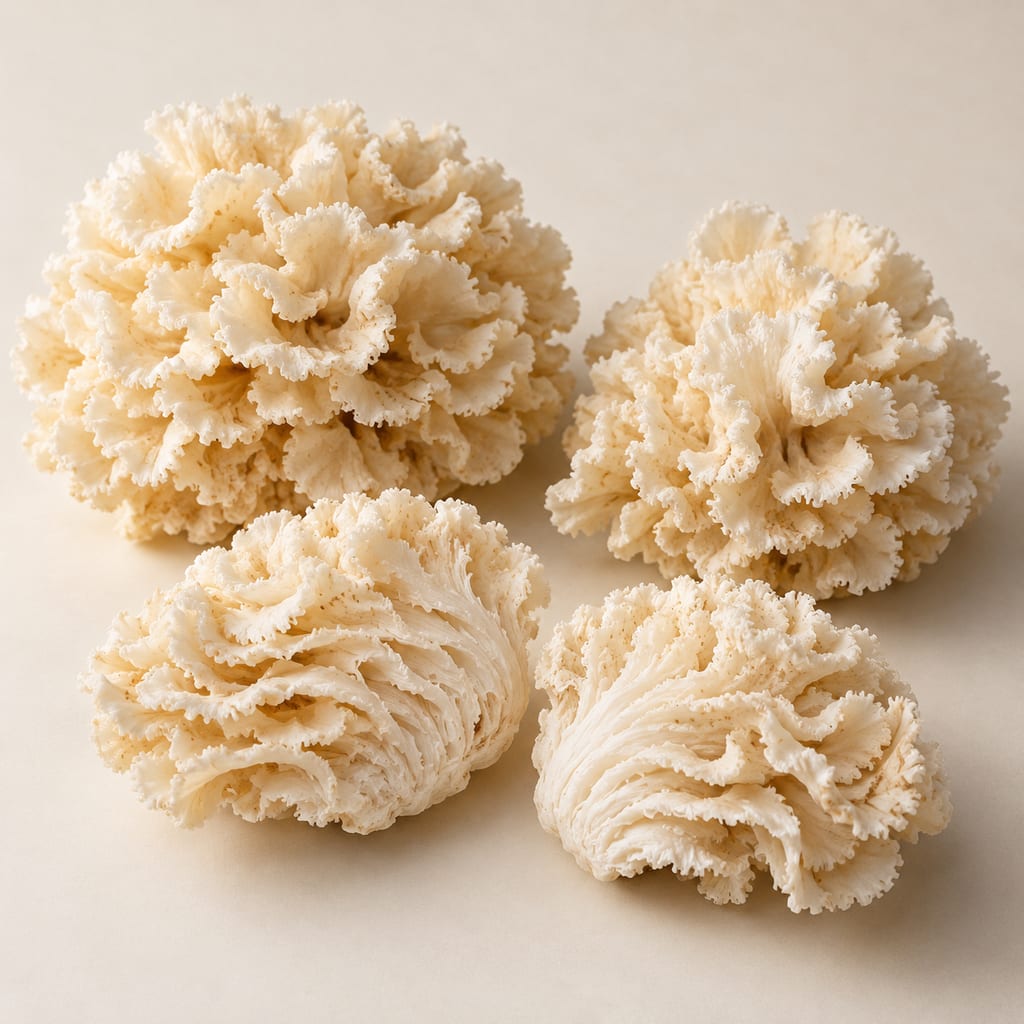
Irpex rosettiformis is a polypore, a bracket-like wood-decaying fungus that releases its spores from pores on the underside of its fruiting body. Its fruiting bodies are described as edible in a 2025 study, and the species occurs in tropical and subtropical parts of the Americas. The common name used for it here, rosette polypore, is an English label drawn from the catalogue and is not a name established in a taxonomic authority.
Irpex is the genus that also contains Irpex lacteus, the milk-white toothed polypore, which some sources list as inedible. The name Irpex rosettiformis should not be read as a claim about that species, and the sources treat the two separately.
The 2025 study is the first source found that treats Irpex rosettiformis as a food crop. Its authors report the first successful cultivation of wild Brazilian strains, and the best strain reached a biological efficiency of about 29 to 30 per cent on a sawdust substrate. Biological efficiency is the fresh weight of mushrooms produced per unit of dry substrate, which makes it a yield measure for growers.
The fruiting bodies are reported as high in crude fibre, about 23 to 28 per cent, and in crude protein, about 19 to 26 per cent. Potassium is the most abundant mineral, followed by phosphorus and magnesium. The authors suggest that the species could be grown with methods used for other commercial mushrooms and could enter the edible mushroom industry. That is a proposal in the study, not a established market.
No traditional culinary use, flavour description or cooking method for Irpex rosettiformis was found in the sources consulted. The catalogue carries a food-use label for it, but the label is a research flag pending specialist evidence review, not a finding about preparation.
Because the only detailed source reviewed is the paper's abstract record, the full text should be checked for a description of how the fruiting bodies are prepared and any safety data. Until then, the page cannot state how the species is eaten.
The study describes the species as edible, but a food description in a research paper is not a safety assessment, and this page does not give an edibility verdict. Polypores are tough and often hard to tell apart in the field, and the look-alike risk for this species has not been recorded here.
Anyone considering the species should identify it with a qualified mycologist before eating it. Wild collection and cultivation both need the same identification care.
Open questions: traditional names, cooking methods and any toxicity data for Irpex rosettiformis are not established. The full text of the 2025 study and a check of Brazilian and wider Neotropical ethnomycology records would address them.
Wild strains from Brazil were cultivated for the study. This does not establish a traditional food use in Brazil.
The 2025 study describes the species' range as tropical and subtropical regions of the Americas.
The almond mushroom, Agaricus subrufescens, was cultivated in eastern North America in the 1800s, lost its market, and returned as a cultivated mushroom from Brazil, where it is grown under several names.
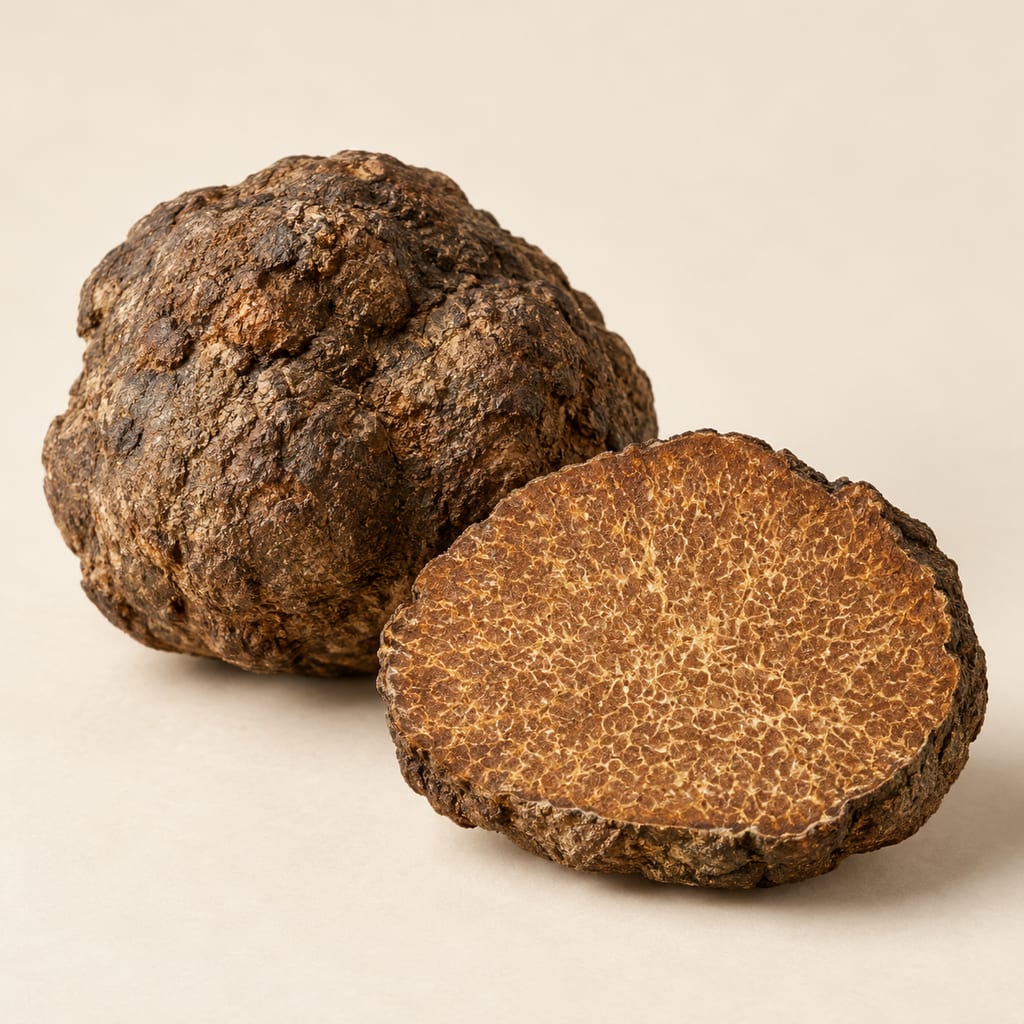
Polyporus indigenus, a polypore of the Brazilian Amazon. Its underground sclerotium, not the fruiting body, is the part people eat, and it is known locally as pão do índio.

Beef is the meat of domestic cattle, Bos taurus and Bos indicus, sold as steaks, roasts, ground meat and cured products, and used in broths, salami and koji seasonings.
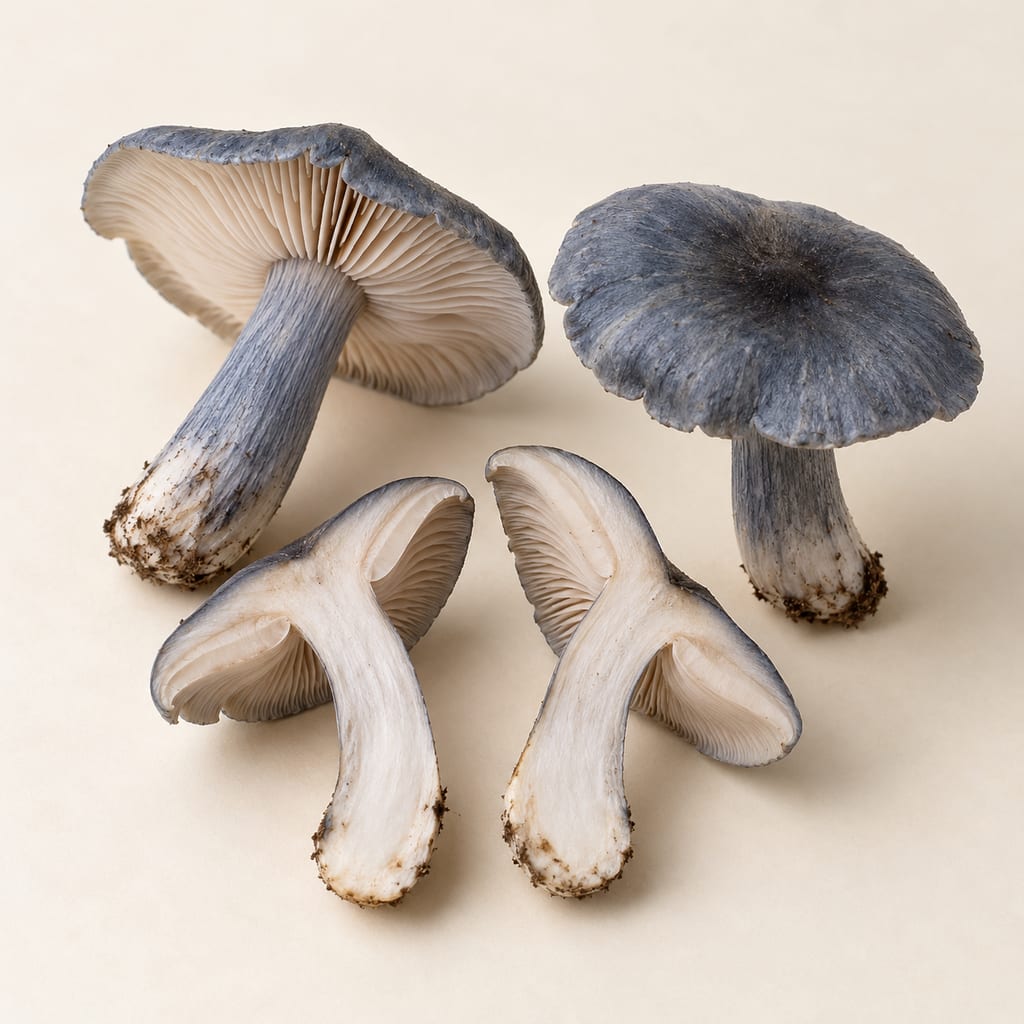
Bloxam's entoloma is a rare pink-gilled mushroom of old grasslands. Historical sources call it edible, but food-use evidence and older identifications remain uncertain; this does not recommend gathering or eating it.
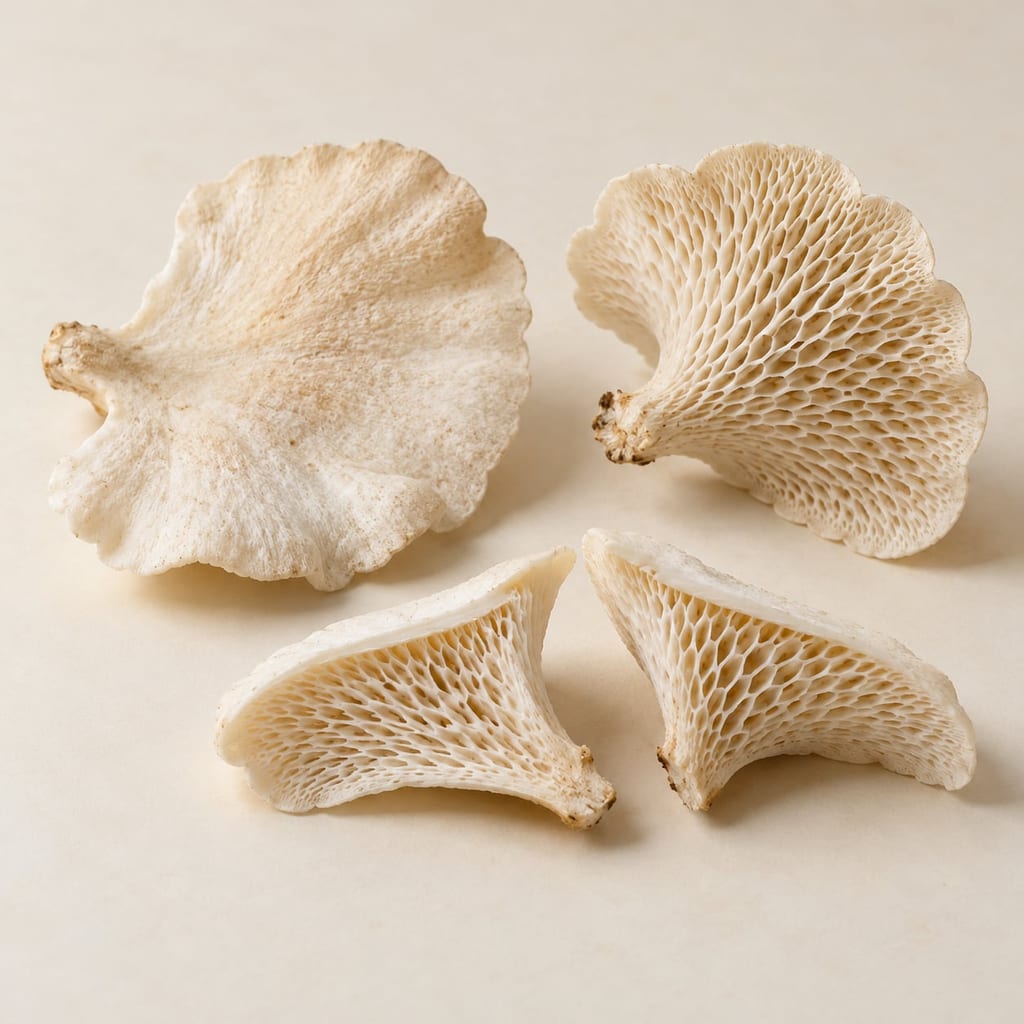
Brazilian honeycomb polypore, Favolus brasiliensis, is a wood-growing fungus of tropical forests recorded as food in Brazil and Guyana. It has no standardized food-safety assessment.
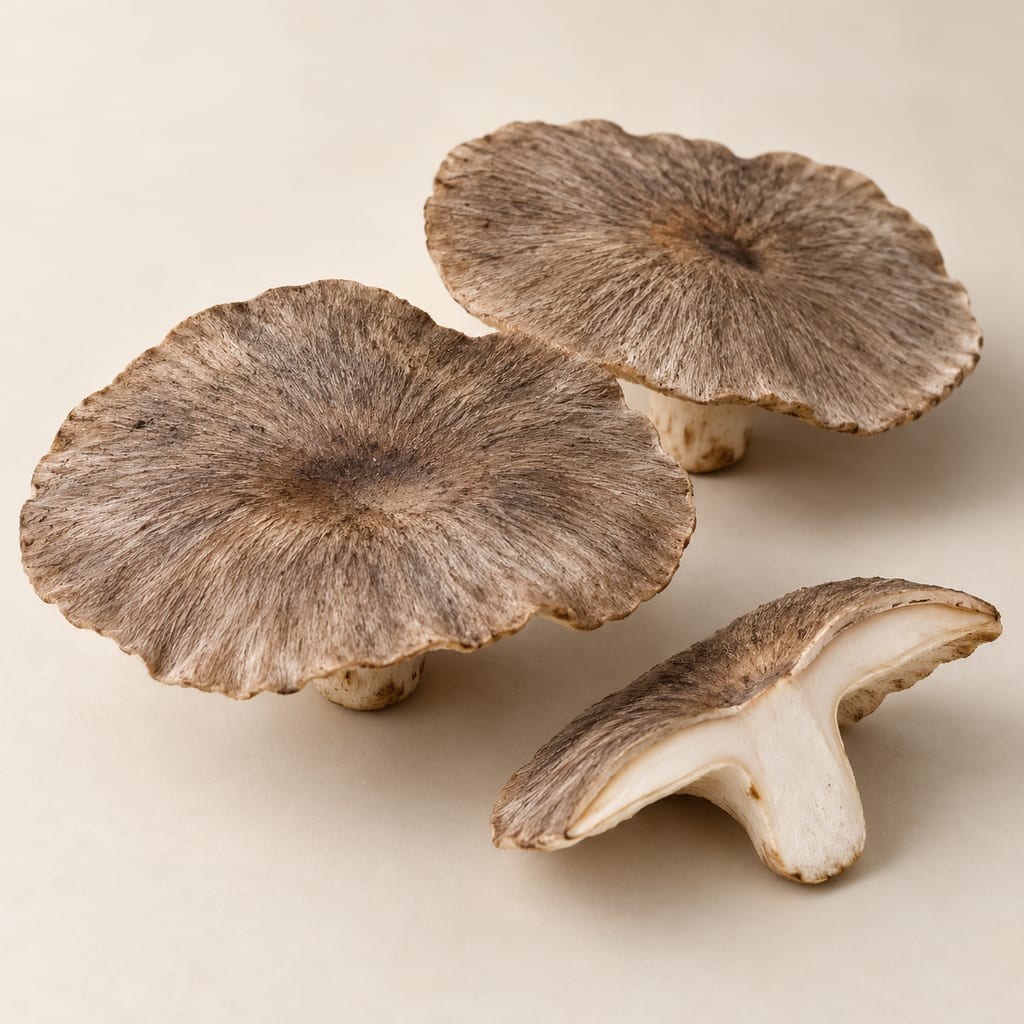
Bresadolia paradoxa is a large fungus of dead hardwood logs in Amazon and Atlantic Forest sites in Brazil and Colombia. Its only edibility source is a conservation assessment, so the claim is lightly documented.
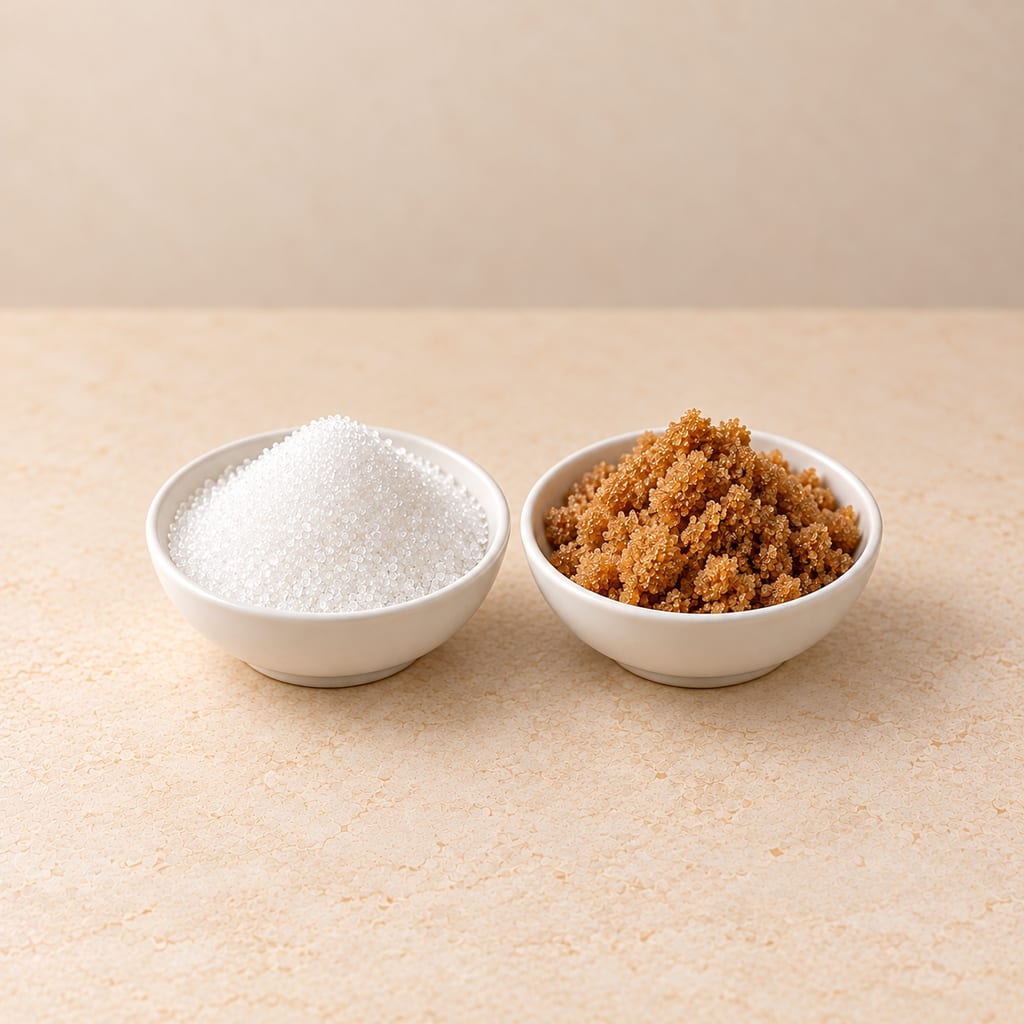
White sugar is refined sucrose, almost pure; brown sugar is sucrose with molasses, left in or added back. Molasses makes brown sugar moister, darker and more strongly flavoured.
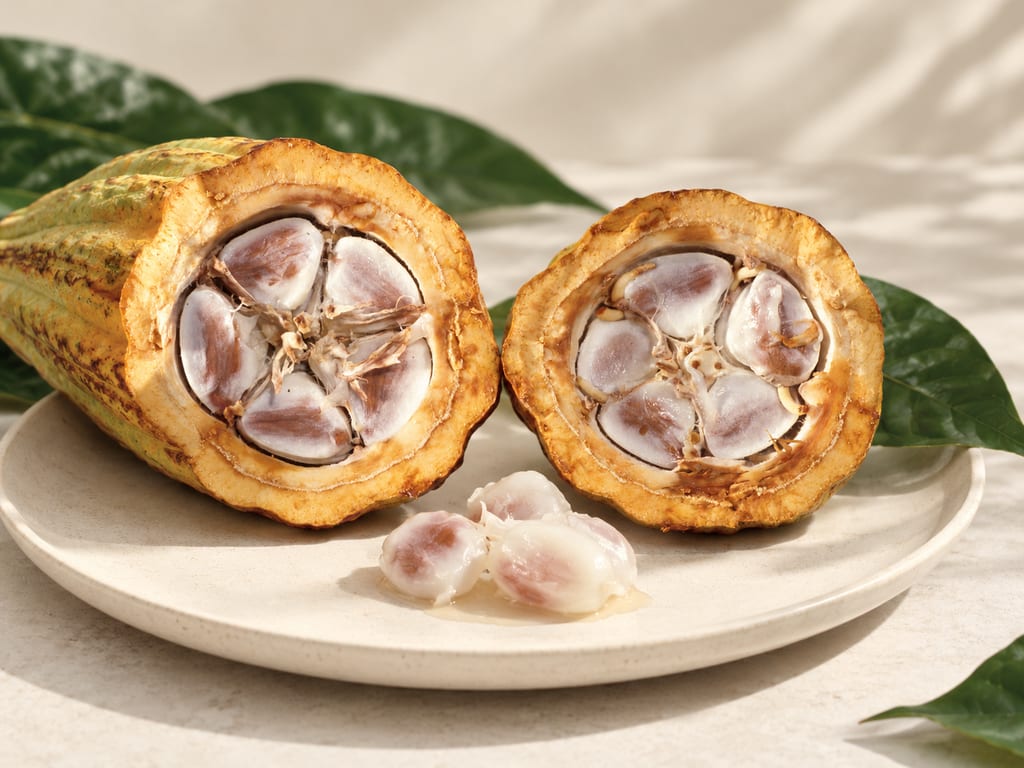
Cacao pulp is the moist, sweet-acid mucilage around cacao seeds. It fuels bean fermentation and can be extracted for fruit drinks, wine and vinegar.

Soft, spreadable Calabrian pork sausage made with a great deal of red chilli and fatty pork, stuffed into natural casings, sometimes smoked and matured while staying soft.

A way to add independent temperature logging to an existing food dehydrator without changing its built-in controls or protections. It is a monitoring method, not a rewiring plan.

Pleurotus cystidiosus is the abalone mushroom, a cultivated oyster-type fungus with dark brown caps that grows more slowly and is more demanding than other Pleurotus species.

A dark, balanced vinegar from Emilia-Romagna made by combining cooked or concentrated grape must with wine vinegar, then acetifying and refining it in wood under a protected specification.

A living dairy inoculum that starts controlled cream fermentation, developing acidity and aroma before sour cream or cultured butter is finished.

A small electric incubator holds jars at a selected temperature for yogurt and other documented warm food preparations. Controls, capacity and vessel arrangement vary by model.

Adygean salt is a seasoned table salt associated with Adygea and the wider North Caucasian culinary tradition. Salt is blended with garlic and a variable selection of herbs and spices; the exact mix depends on the named style and maker.

The African Caesar-group mushroom, Amanita masasiensis, is a wild ectomycorrhizal species of central and southern African woodlands, eaten locally. The genus contains deadly poisonous species, so identification needs care.
No community contributions have been published for this entry yet.
Sign in to contribute. Published comments and photos are free to read.
FAPESP Virtual Library (record of Mycological Progress paper)Identity · Cultivation · Food use · Nutrition
Mycological Progress 2025 study on Irpex rosettiformis cultivation and composition, FAPESP bibliographic recordIrpex rosettiformis is described as edible and found in tropical and subtropical regions of the Americas.
First successful cultivation of wild Brazilian strains; best strain reached a biological efficiency of about 29-30% on sawdust substrate.
Fruiting bodies high in crude fibre (about 23-28%) and crude protein (about 19-26%); potassium most abundant mineral, then phosphorus and magnesium.
Cited in: What it is; Cultivation and the research on its food value; Food use and what is not known; Safety and limits; Notes
PubMed Central, as suppliedFood use
Food-use record supplied in the fungi catalogue (entry F-49963b9b93cf)Catalogue entry for Irpex rosettiformis, with a supplied food-use label pending specialist review.
Cited in: Food use and what is not known