
Fermented meat around the world
Dry salami, sour pork with rice, matured sheep and aged blubber follow different paths from animal to food. Their stories connect microbes with climate, slaughter, migration and the meals people share.
 FermenteaWhere food goes to change
Substrates
Squid is a cephalopod used fresh, dried and in salted seafood ferments such as Japanese shiokara. Its body, viscera and ink appear in distinct regional preparations, so the name alone does not specify a species or process.
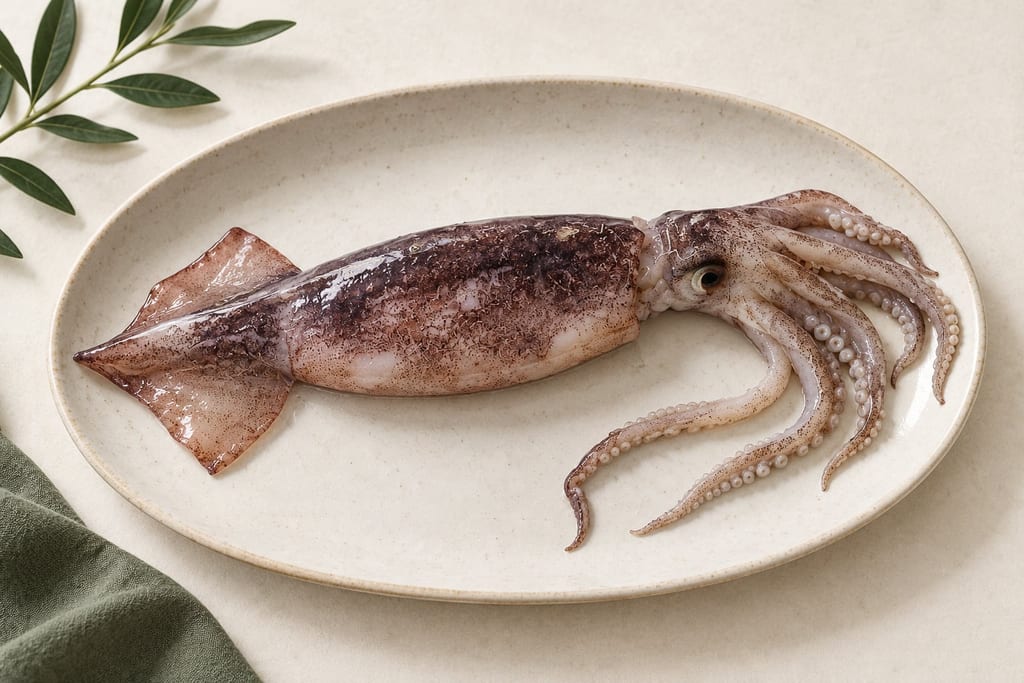
Japanese shiokara is a family of salted seafood preparations rather than one squid recipe. MAFF describes the Miyagi example within the Sanriku coastal region and explains that seafood flesh and/or viscera are salted and matured. Its wider account groups shiokara with other salted-fermented fishery foods. The word therefore reaches beyond squid: named products use bonito viscera, sea-cucumber intestines, sweetfish viscera, salmon or trout viscera, sea urchin, and other materials. A squid page should not turn this broader family history into a claim that every shiokara uses squid.
MAFF distinguishes the salted-fermented group from pickled-fermented products such as narezushi and rice-bran-pickled fish. In narezushi, fish and cooked rice are kept together so lactic-acid fermentation occurs. In shiokara, the documented account focuses on salted seafood and enzymatic change. They are both preservation traditions, but their materials and biological pathways differ. “Fermented seafood” is an umbrella description, not a single process.
The Japanese account traces shiokara references to a Heian-period written source while suggesting that salting seafood may predate that record. This is evidence of an old food family, not a precise date of invention. It does not show that present-day recipes, species, salt levels or household methods have remained unchanged.
Squid are marine cephalopod molluscs. The everyday food name covers many species, so a market sign or recipe that says only “squid” does not tell you which animal was used. Squid are not octopus or cuttlefish, even though all three are cephalopods and share a familiar head-and-arms outline. The Smithsonian describes squid and cuttlefish as having eight arms and two longer tentacles, while octopuses have eight arms. Squid have an internal supportive pen; cuttlefish have a broader internal cuttlebone. Their body shapes can still be confused in a photograph, which is why a caption alone is not enough for image identification.
A typical squid has an elongated mantle, a head with prominent eyes, eight arms and two longer tentacles used to capture prey. The mantle encloses the main body cavity and ends in a fin pair. In some market preparations the head and tentacles remain attached; in others, processors remove the head and viscera and sell the cleaned mantle as a tube. The FAO cephalopod catalogue describes species-specific differences in mantle, fins, suckers and tentacles. Those differences matter for identification, but a food item called “squid” usually does not justify a species-level claim.
The mantle, fins, arms and tentacles are common edible parts. The FAO catalogue lists whole frozen squid, cleaned mantle tubes, arms, fresh sashimi squid, dried and smoked products, salted products, salted-fermented products, canned goods, pastes and prepared items such as rings or steaks. This list describes different markets and treatments; none should be collapsed into a single preservation method. A dried squid is not automatically fermented. A frozen whole squid is a raw ingredient. A salted-fermented shiokara is a distinct prepared food.
Viscera are important in some preparations even when processors remove them from retail squid. The digestive gland is commonly called liver in food descriptions. The MAFF account of Toyama kurozukuri describes thinly sliced Japanese flying squid aged with its liver, salt and ink. Other shiokara forms may use flesh and viscera differently. Squid ink can color the product and contribute to a particular recipe, but ink is not a universal ingredient in squid ferments.
Descriptions such as “cleaned tube,” “head,” “tentacles,” “whole” and “dried” tell the reader which part and stage is pictured. They do not by themselves establish species, freshness, safety or a fermentation history. For a preparation, the ingredient list and method need to name the cut and treatment actually used.
The MAFF shiokara entry describes three broad Japanese squid-shiokara forms. Akazukuri, or red shiokara, combines squid pieces with viscera and salt and is described as the form most commonly sold. Shirozukuri, or white shiokara, uses skinned squid flesh and is noted as favored in western Japan. Kurozukuri includes squid ink; the general MAFF entry notes a Fukui association. These terms help orient a reader but do not replace the regional name or full ingredient list.
Toyama also has a named product called kurozukuri. Its separate MAFF entry documents thinly sliced Japanese flying squid matured with ink and liver, and describes a historical Toyama specialty. The term overlaps with the broad black-form description, but one entry should not be used to silently rewrite all regional black shiokara as one identical method. A Toyama kurozukuri account, a broad style label, and an ink-containing product from another region are related evidence, not interchangeable batches.
MAFF recounts an uncertain origin story for the Toyama product and notes a written reference to the name in an 1808 letter. It says the form had developed by the Kyōhō era, while an earlier Genroku origin is presented as uncertain. These are distinct chronological claims: an uncertain beginning, a source-backed written name, and a later account of a form close to the present product.
MAFF explains that the salt in shiokara is used to preserve seafood and that digestive enzymes already present in the animal contribute to changes in smell and flavour during maturation. This is an enzymatic process within the salted seafood, not evidence that every batch depends on the same microbial community. The ingredient itself can therefore be active in its own transformation: flesh and viscera differ in composition, and the named form matters.
Salt also draws water from tissue and changes the environment in which enzymes and microorganisms act. MAFF’s general salted-food account discusses dehydration and maturation as separate effects of salt. The specific product account for Toyama kurozukuri describes a commercial method involving salt, refrigeration, squid flesh, liver and ink. Those are source-specific observations. The account provides no basis for treating any one salt concentration or duration as a universal squid-fermentation formula.
MAFF reports that older commercial shiokara often had more salt and longer aging, while newer products have followed consumer preference for milder saltiness and shorter maturation. These descriptions show how products change with preservation technology and market taste. They are not validated home-process limits and cannot be copied into an unrelated recipe. A process must be supported by its own exact source and qualified safety review.
MAFF describes shiokara in Miyagi as a household food made in different local forms, supported by the area's varied fishery resources. That coastal setting is a documented regional association, not a claim that all squid or all salted seafood originated there. The local food family includes preparations from squid as well as bonito, sea squirt, sea urchin and other seafood; each material brings its own texture and handling needs.
The Toyama kurozukuri entry describes the product as an accompaniment to rice or an appetizer with alcoholic drinks, eaten year-round. It also records a shift from a locally consumed preserved food toward a specialty sold more widely and adjusted to newer preferences. This is a named product history, not a universal serving rule for shiokara. The English and Japanese MAFF pages provide different editorial summaries, so the more detailed Japanese product account should be attached to claims about its local history and production.
Current retail forms also differ from home preparation. MAFF reports that processed products are now commonly purchased in Toyama. A jar or package sold under a regional name is a finished commercial product with its own formulation and controls. It should not be used as evidence for an unrecorded household recipe or for a generic fermentation schedule.
Japanese flying squid (Todarodes pacificus) is one named food species, not a synonym for all squid. The FAO species catalogue places it in northwestern Pacific waters, with a distribution from northern Japan through the Sea of Japan and East China Sea toward Hong Kong. It describes distinct seasonal spawning groups and migratory patterns for this species. That range helps explain why it occurs in Japanese seafood markets; it does not establish where shiokara originated or where every squid used in it was caught.
Other species enter regional dishes and fisheries. The MAFF Toyama kurozukuri account names Japanese flying squid as a common material and also describes a firefly-squid version from Toyama Bay. Caribbean reef squid and spear squid are separate species shown in this page’s reference gallery for comparison. Their photographs identify live animals, not ingredients used in Japanese shiokara. A regional species or fishing range should remain separate from a food tradition’s cultural geography.
Purchase and sourcing records should preserve species and catch origin where the seller or processor provides them. A species label is useful for traceability and for matching a preparation to its documented source. When those details are absent, record them as unknown rather than backfilling them from a dish name or a nearby port.
Raw squid can carry Anisakis larvae. Japan’s Ministry of Health, Labour and Welfare lists squid among seafood that may be parasitized and says larvae can move from viscera into muscle after the host dies and time passes. It warns that eating infected seafood raw, including seafood that has not been frozen or heated sufficiently, can cause anisakiasis. Visual inspection can help remove visible larvae, but it cannot turn an unvalidated raw preparation into a safe one.
The Ministry specifically says that ordinary vinegar treatment, salting, soy sauce and wasabi do not kill Anisakis larvae. Therefore salt curing, ink, maturation, sourness, aroma or a traditional name should not be presented as parasite controls. Its public guidance gives specified freeze and heat controls for Japanese businesses. Those controls belong to the exact source and jurisdiction; this ingredient account does not convert them into a fermentation formula or a universal home-safety threshold.
Use clean, properly chilled seafood and follow current official guidance for the place where it will be prepared and sold. Keep viscera and flesh distinctions explicit, especially when a product uses raw organ material. For a recipe that calls for raw squid or a raw matured product, require product-specific authoritative process validation before presenting it as safe to make or eat.
Japan’s Consumer Affairs Agency lists squid as a recommended item for allergen labelling on processed foods. This is a Japan-specific labeling recommendation, not a universal rule. Mollusc allergy information should be handled according to the law and guidance that apply to the product’s market; readers should check the actual package and local requirements.
Squid tissue, viscera, ink and the fermented product are not identical ingredient declarations. A named shiokara may include flesh and viscera, while a white form may use skinned flesh and a black form may add ink. These distinctions help readers interpret ingredient statements, but they do not replace a manufacturer’s full allergen declaration or explain cross-contact.
The atlas record does not establish a single species, a universal raw-material condition, a home salt level, fermentation temperature, pH, time, water activity or storage life for squid shiokara. Those omissions remain open rather than being filled with generalized values. Use a process only when the exact source supports its material and controls; never rely on smell, taste or visible activity to establish safety.
molluscs
MAFF identifies Sanriku as a transmission region for shiokara and gives Miyagi examples; this is not a claim that squid or shiokara originated here.
MAFF documents Toyama kurozukuri as one regional product made from squid, liver, salt and ink; it does not define every squid shiokara form.
Dry salami, sour pork with rice, matured sheep and aged blubber follow different paths from animal to food. Their stories connect microbes with climate, slaughter, migration and the meals people share.

A gelling polysaccharide extracted from red seaweeds, sold as kanten strips or powder; it sets firm at a low concentration and stays solid until about 85 °C.

Akahatsu, Lactarius akahatsu, is a wild milkcap of East Asian pine and mixed forests that is sold in Yunnan markets, with its edibility and identity still needing species-level review.

The almond mushroom, Agaricus subrufescens, was cultivated in eastern North America in the 1800s, lost its market, and returned as a cultivated mushroom from Brazil, where it is grown under several names.
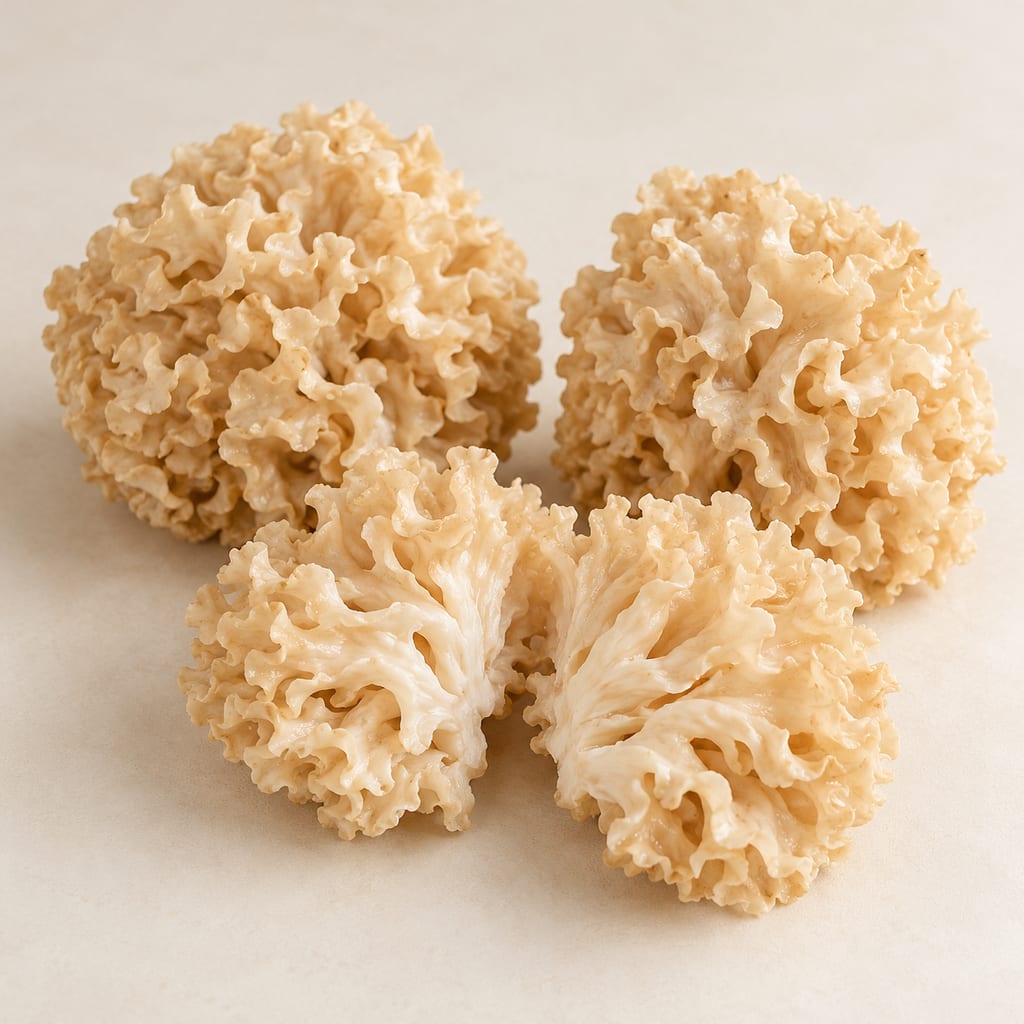
The Asian cauliflower mushroom, Sparassis latifolia, is a cultivated fungus with a frilled, fronded form that is eaten in China, Japan and Korea. Many Asian records under the name Sparassis crispa refer to this species.
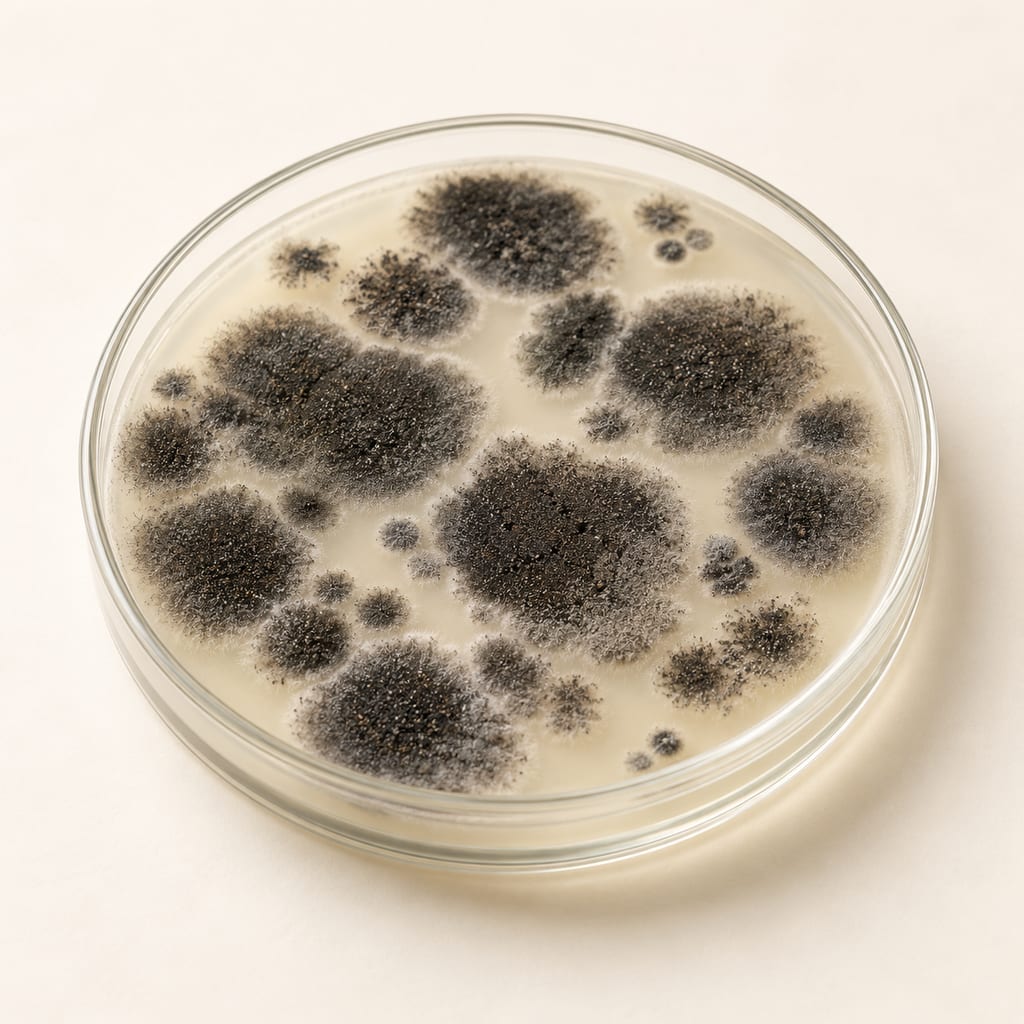
Aspergillus luchuensis is the black koji mould used in Japanese shochu and awamori, valued for the citric acid it makes alongside the starch-converting enzymes of koji.
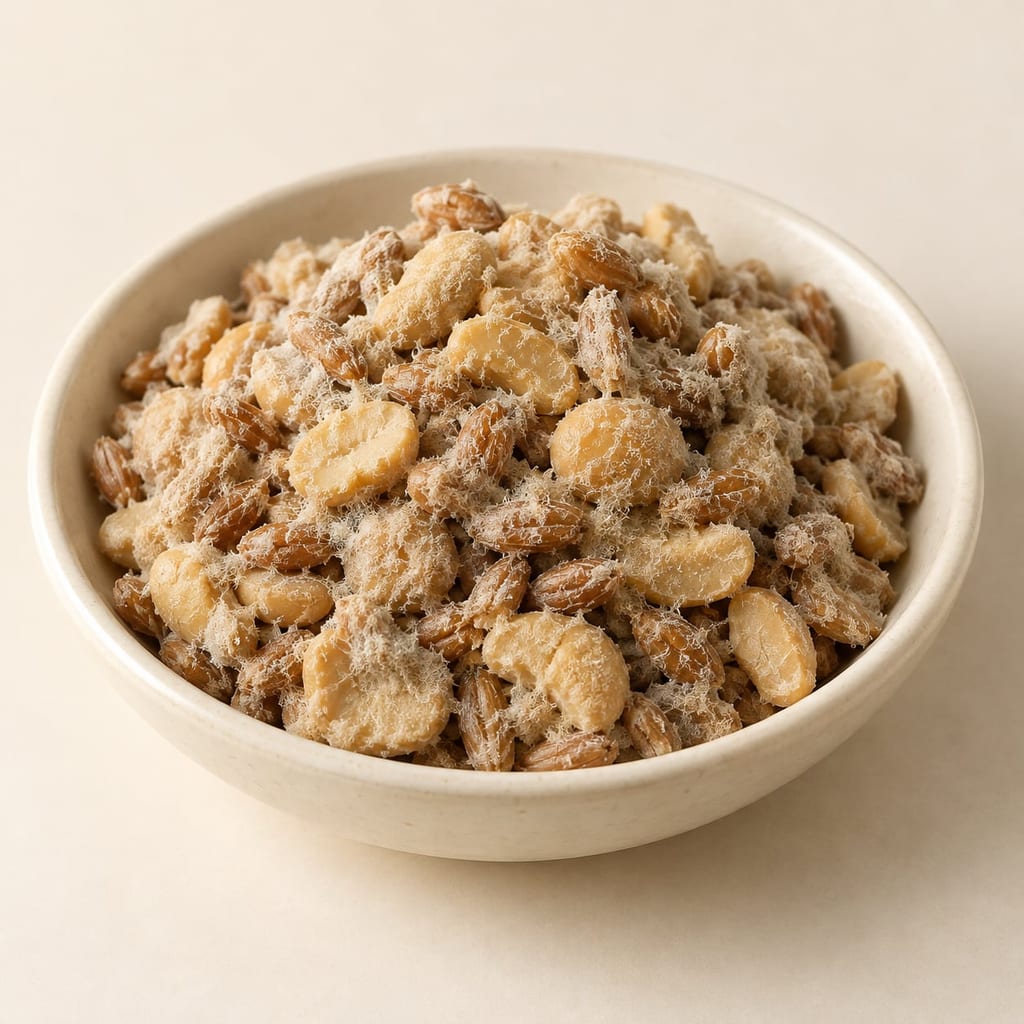
Aspergillus sojae is a koji mould of the Aspergillus flavus group, closely related to A. oryzae, used as a starter in soybean fermentations such as Korean meju, doenjang and ganjang.
Awamori yeast ferments sugar released from rice koji in the Okinawan spirit’s mash. Sakimoto names the ingredient but gives no strain, form, supplier or dose.
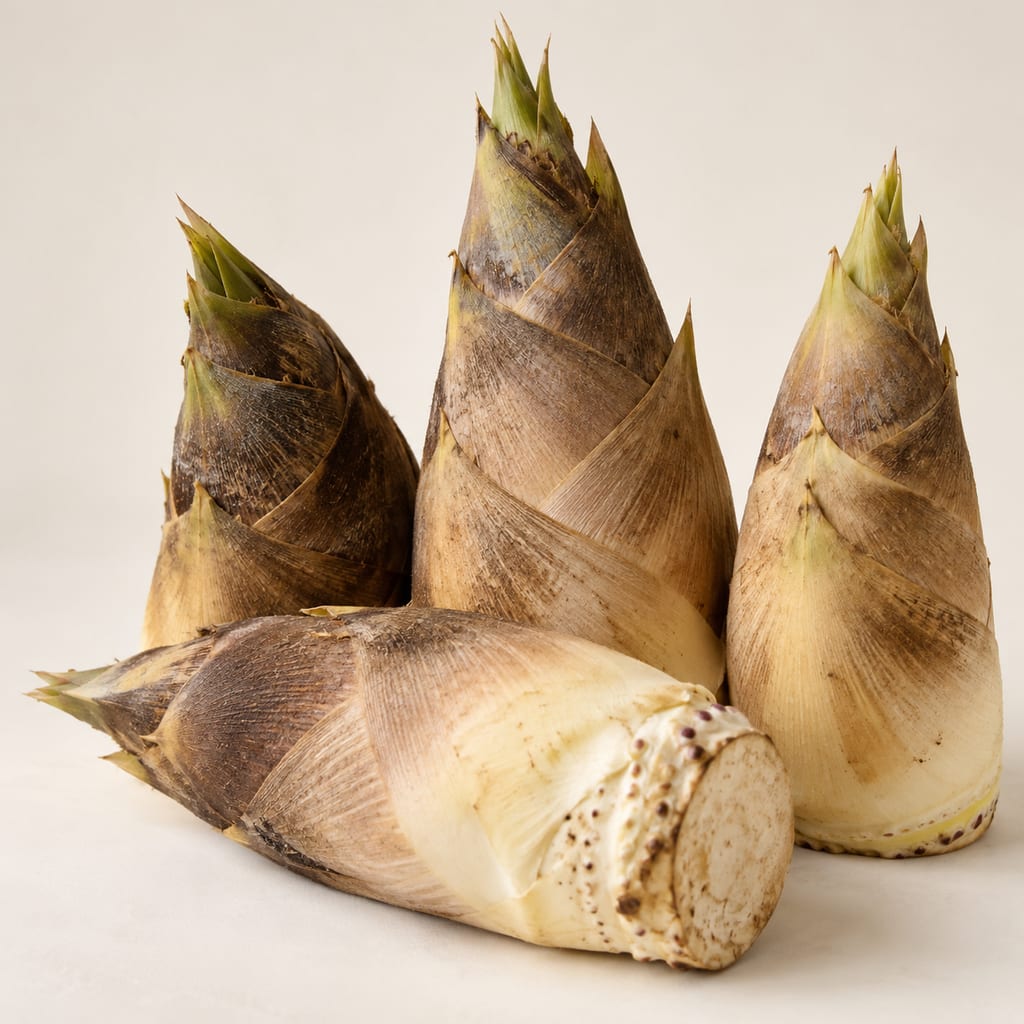
Bamboo shoots are the young culms of many bamboo species, eaten after boiling or leaching in Asia, and fermented into sour and preserved foods in the Himalayas, northeast India and Burma.

Protected Italian vinegar made only from cooked grape must, fermented and aged in a battery of wooden barrels for at least 12 years: sweet, sharp and syrupy.

Airag is Mongolia’s fermented mare’s-milk drink, traditionally churned with saved starter in a reusable cowhide khokhuur.

Appam, or hoppers, are South Indian and Sri Lankan rice pancakes made from a fermented coconut-and-rice batter and cooked in a curved pan to a crisp lacy rim and a soft, spongy centre.

Auricularia tremellosa is a wood ear fungus of the genus that supplies most dried wood ear sold in China; its own food record is thin, and the culinary practice described here comes from the closely related wood ear species.

Ayran is Turkey’s cold, savoury yogurt drink: plain yogurt is loosened with water and lightly salted, then whisked smooth or aerated into a soft cap of foam.
A thin stone griddle used over an open hearth. Norwegian archaeology documents the established tradition from the early Middle Ages; a Viking-period origin is only a cautious suggestion linked to Shetland.

Crushed or milled barley cooked in water until the starch softens and the mixture thickens, the plainest way a northern household turned stored grain into a meal, here with apple and hazelnut.

Black carrot is the anthocyanin-pigmented Eastern carrot (Daucus carota var. atrorubens), the purple root that preceded orange types and still colours kanji and şalgam.
No community contributions have been published for this entry yet.
Sign in to contribute. Published comments and photos are free to read.
Ministry of Agriculture, Forestry and Fisheries, JapanHistory · Identity · Geography · Method
ShiokaraShiokara is a seafood family using salted flesh and/or viscera; squid, bonito, sea squirt, uni and other materials are named.
The entry identifies the Sanriku coast as a transmission region and gives a Miyagi example; it describes locally made variations and an early written mention in a Heian-period source, while treating an earlier origin as probable rather than certain.
MAFF distinguishes red, white and black squid-shiokara forms and describes their material differences; the reported old and modern commercial salt levels are descriptive observations, not validated home-process limits.
Cited in: Shiokara is a family of preparations; Red, white and black forms; How salt and maturation shape flavour; Serving and cultural setting; Allergens and what remains unspecified
Ministry of Agriculture, Forestry and Fisheries, JapanIdentity · Method · Geography
Kurozukuri (Salted squid in ink)Toyama kurozukuri is a specific preparation made with Japanese flying squid body, liver and ink.
The example does not establish a method for all shiokara or squid ferments.
Cited in: Edible parts and market forms; Red, white and black forms; How salt and maturation shape flavour; Serving and cultural setting
Smithsonian OceanIdentity
Octopuses, Squids, and RelativesSquids and cuttlefish have eight arms and two tentacles, unlike octopuses, which have eight arms; squid have an internal pen.
Cited in: A cephalopod, not a fish
Ministry of Health, Labour and Welfare, JapanSafety
AnisakiasisAnisakis larvae can occur in squid and may move from viscera to muscle after death.
Salt, vinegar, soy sauce and wasabi do not reliably kill Anisakis; follow authoritative controls rather than assuming fermentation makes raw squid safe.
Cited in: Raw handling and parasite hazards; Allergens and what remains unspecified
Consumer Affairs Agency, JapanSafety
Food allergy labelling handbook for processed foodsSquid is listed as a recommended allergen labelling item in Japan; this is jurisdiction-specific.
Cited in: Allergens and what remains unspecified
Ministry of Agriculture, Forestry and Fisheries, JapanHistory · Identity · Geography · Method · Use
黒作り(くろづくり)Toyama kuro-zukuri is described as a regional shiokara made with Japanese flying squid flesh and ink; the detailed method also uses liver and salt.
MAFF distinguishes the product's uncertain origin claim from an 1808 written mention of the name and a Kyōhō-era account of a form close to the modern version.
The product is served with rice or as an appetizer with alcoholic drinks; retail products have shifted toward milder saltiness and shorter maturation.
Cited in: Edible parts and market forms; Red, white and black forms; How salt and maturation shape flavour; Serving and cultural setting
Ministry of Agriculture, Forestry and Fisheries, JapanHistory · Method
Fishery fermented foodMAFF distinguishes salted-fermented fishery products from pickled-fermented foods such as narezushi.
It describes endogenous digestive enzymes as contributing to shiokara flavour and lists squid shiokara among several named products made from different seafood.
Cited in: Shiokara is a family of preparations; How salt and maturation shape flavour
Food and Agriculture Organization of the United NationsIdentity · Geography · Ingredients
Cephalopods of the World: an annotated and illustrated catalogue of cephalopod species known to date. Volume 2: Myopsid and Oegopsid SquidsJapanese flying squid (Todarodes pacificus) is one species with a range in the northwest Pacific; its species range does not identify the origin of shiokara.
The catalogue describes mantle, fin, arm and tentacle forms and lists edible parts and distinct commercial products including frozen whole squid, mantle tubes, arms, dried, salted-fermented and other products.
Cited in: A cephalopod, not a fish; Edible parts and market forms; Species and fishing grounds