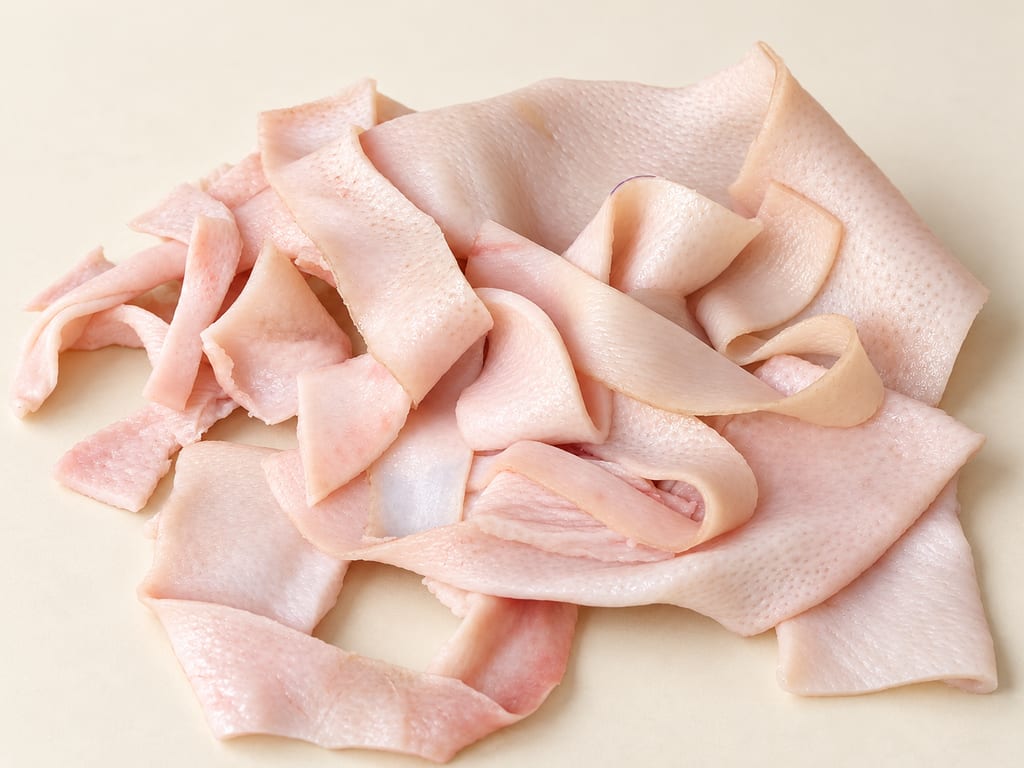
Pork skin
Pork skin is collagen-rich pig skin used fresh or cooked; in documented Southeast Asian meat ferments it is usually prepared separately before it joins the pork.
 FermenteaWhere food goes to change
chicharrón de cuero · chicharrón de puerco · cuero · cuero duro · Mexican pork rind
Mexican pork skin, scored, salted and dried, half-cooked in warm lard until it turns glassy, then dropped into very hot lard where it puffs to an airy, crackling sheet.
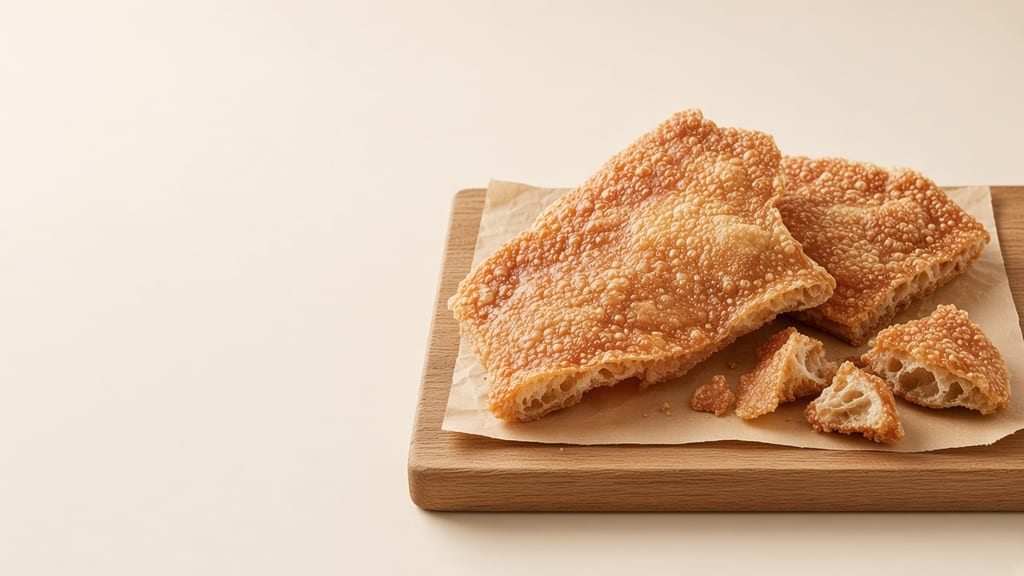
Most of Central Europe's cracklings are the leftovers of lard. Chicharrón de cuero turns that order round. The skin is the point, and the fat is cut away and used to cook it.
Larousse Cocina's dictionary of Mexican gastronomy describes how it starts at the slaughter. The pig is scalded in water that must not be too hot, or the skin breaks. It is scraped with two tools, the curved campana and the straight raspa. The skin is then taken off and the fat removed, except on the belly, where some meat may be left on purpose. That choice gives two products, chicharrón solo and chicharrón con carne.
This page covers the skin alone, cuero, which Larousse records as the name used in Zacatecas and San Luis Potosí, along with cuero duro.
The inside of the skin is scored in a grid with the tip of a knife. The cut must not go through. Larousse then has the skin salted and aired, orear in Spanish, for two to three days, and the salt washed off.
El Universal's home version from 2023 is shorter. It scrapes the hair off with a knife and flames the hard spots, scores the grid, rubs in a tablespoon of salt and hangs or lays the skin in the sun for 24 to 36 hours. It warns that the skin will at least double in size later, so the pieces should be cut to fit the pot before cooking.
Larousse calls the middle step sancochado. The skin goes into lard that is not very hot, so it half-cooks without frying. El Universal gives about an hour and a half on low heat, until the skin is firmer and small bubbles form around it.
The skin is then drained and left to dry again. Larousse gives another day. It shrinks and turns reddish-brown and translucent, hard like plastic. In that state it has its own names, monguis and chicharrón encolado, and it can be sold to be fried later.
The last fry is fast. Larousse says it takes only a few seconds in very hot lard for the hard skin to puff into crisp chicharrón. El Universal tells the home cook to heat the lard on high for at least 10 minutes first, and to press down the edges as they curl, because the skin puffs quickly.
Larousse distinguishes thin chicharrón, which it links to the states of central Mexico, from thick. It also records a variation in which evaporated milk goes into the lard, which makes the chicharrón pinker and softer.
Larousse claims that most Mexicans eat chicharrón at least once a week. It lists it in tacos, simmered in salsa verde and in pressed form. Chicharrón prensado is a separate product, and the article on cracklings covers it.
Other skin-first snacks follow similar lines. BBC News described British pork scratchings in 2015 as pig skin cut in strips and cooked, with a thick crusty fat layer under the rind, and set them beside lighter double or treble cooked crackling and the puffed pork crunch.
Cooks do not agree on water. Álvaro Molina, the Colombian chef of Casa Molina, told El Colombiano in 2025 that Mexican and Asian cooks sun-dry the skin side with coarse salt, and argued against first boiling pork belly in water, which in his view takes away flavour. The Mexican method here uses no water step; the skin is dried, half-cooked in lard and fried.
Larousse Cocina's dictionary of Mexican gastronomy describes the full trade method, from scalding and scraping the pig to the dried monguis and the final fry, and says chicharrón is eaten in tacos, in salsa verde and in pressed form. It notes Salvador Novo's derivation of the word from Nahuatl chichinoa, to burn, and calls that derivation doubtful.
No dated early recipe for chicharrón de cuero was found.
Scaling: linear
The final fry uses lard heated hard for at least 10 minutes, and the skin puffs and spits fast.
Hazard sourceCurling edges must be pressed down while the skin is in the very hot lard.
Hazard sourceDry and cool the half-cooked skin fully before the final fry
Control sourceUse a deep pot with room for the skin to double in size
Control sourceKeep water away from the hot lard and children away from the pot.
No validated shelf life is published for the dried monguis or the fried chicharrón.
Chicharrón de cuero as described by Larousse Cocina and El Universal; no single place of origin is claimed.
Larousse records the names cuero and cuero duro here; a naming note, not an origin claim.
Pork skin is collagen-rich pig skin used fresh or cooked; in documented Southeast Asian meat ferments it is usually prepared separately before it joins the pork.
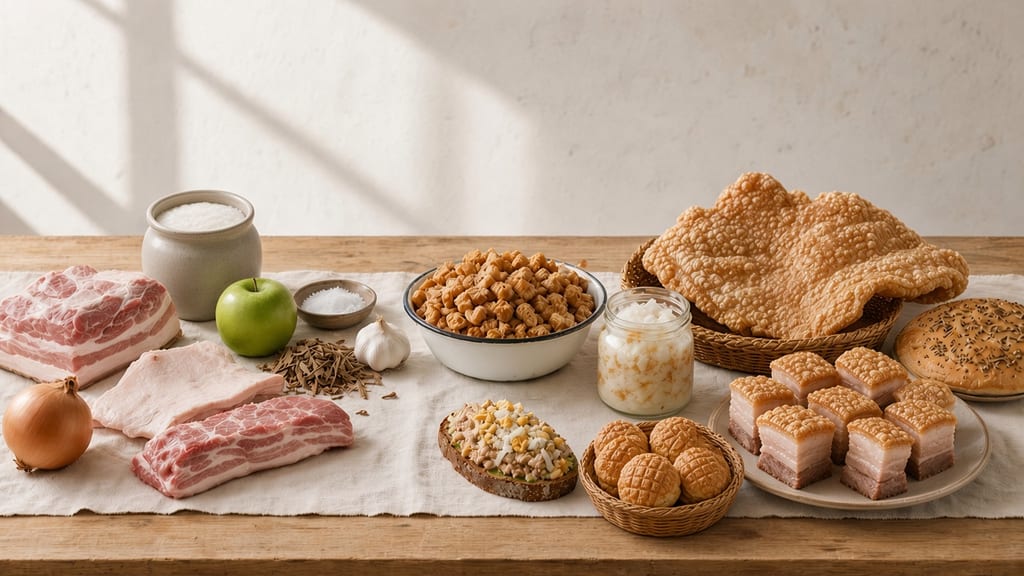
Škvarky, skwarki, tepertő, chicharrón, gratons. How cooks render pig fat, dry and fry skin, press and wring the pieces, and bake with them, from the Czech pig-killing to Mexico and Soria.

Chipotle is a ripe jalapeño pepper smoke-dried in a wood-fired cocedor. Camargo, Chihuahua, documents a large-scale version of the process; its source accounts do not establish a complete home batch or validated safety endpoint.
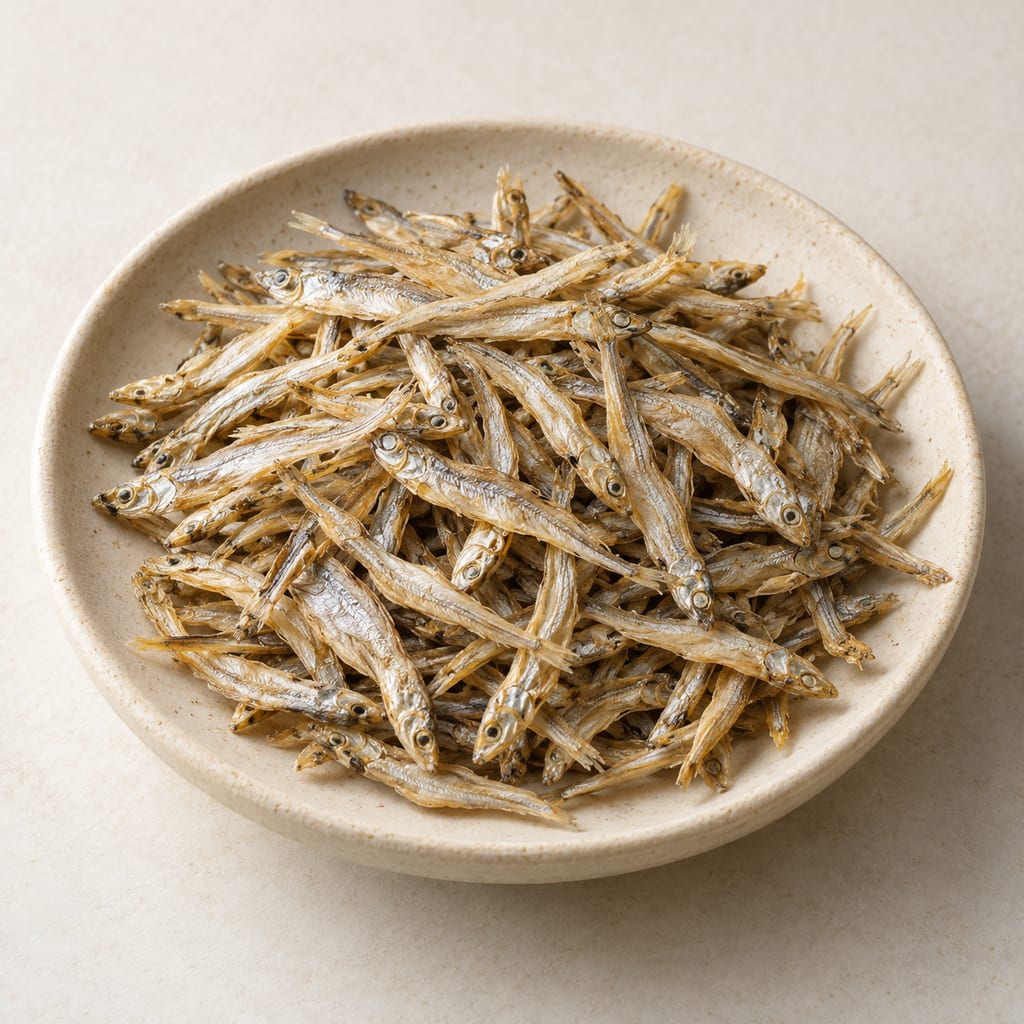
Small central-Mexican lake silversides, Chirostoma spp., dried whole and sometimes salted, then fried, roasted or simmered into Lenten tortitas and snacks.
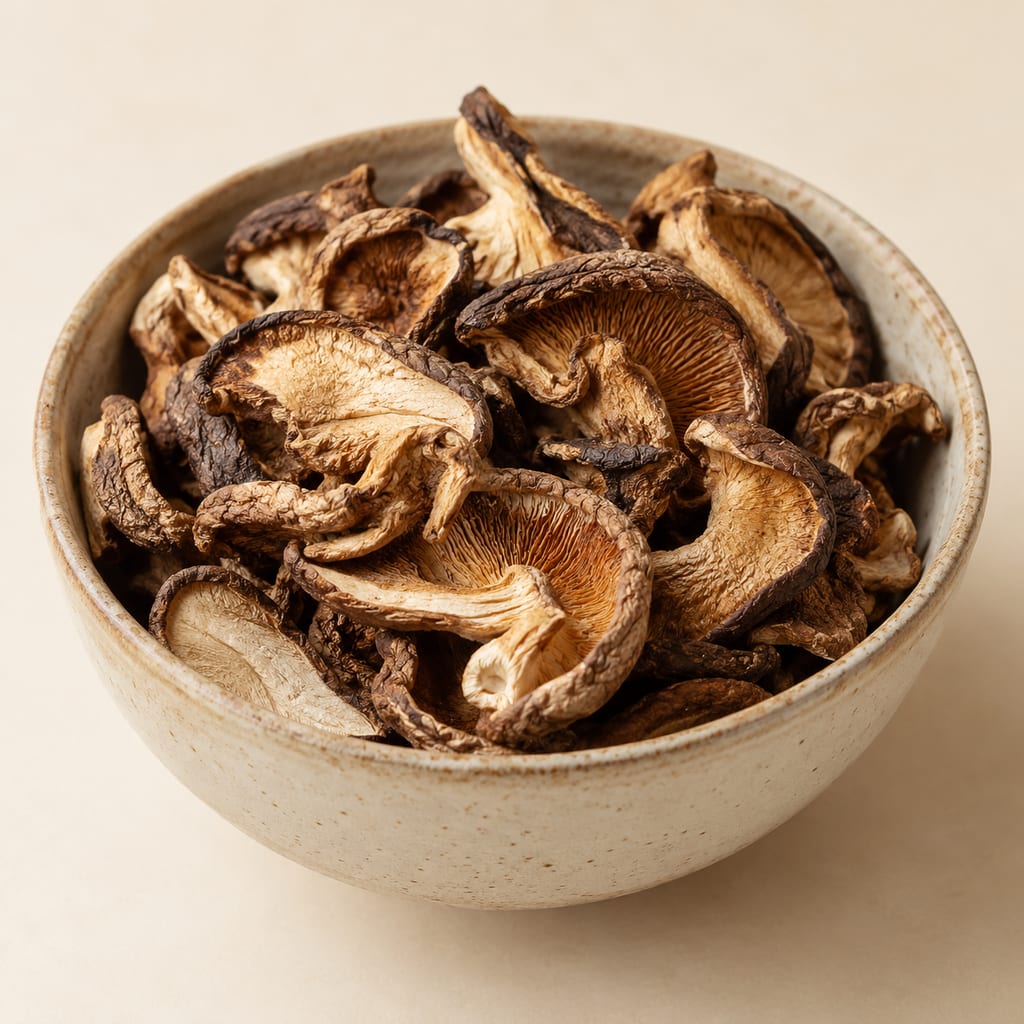
Sun-dried mushrooms are mushrooms spread in open sunlight and left to lose their water to solar heat and moving air, a method recorded in Nigeria, Tanzania, Mexico and among Algerian desert truffle gatherers.
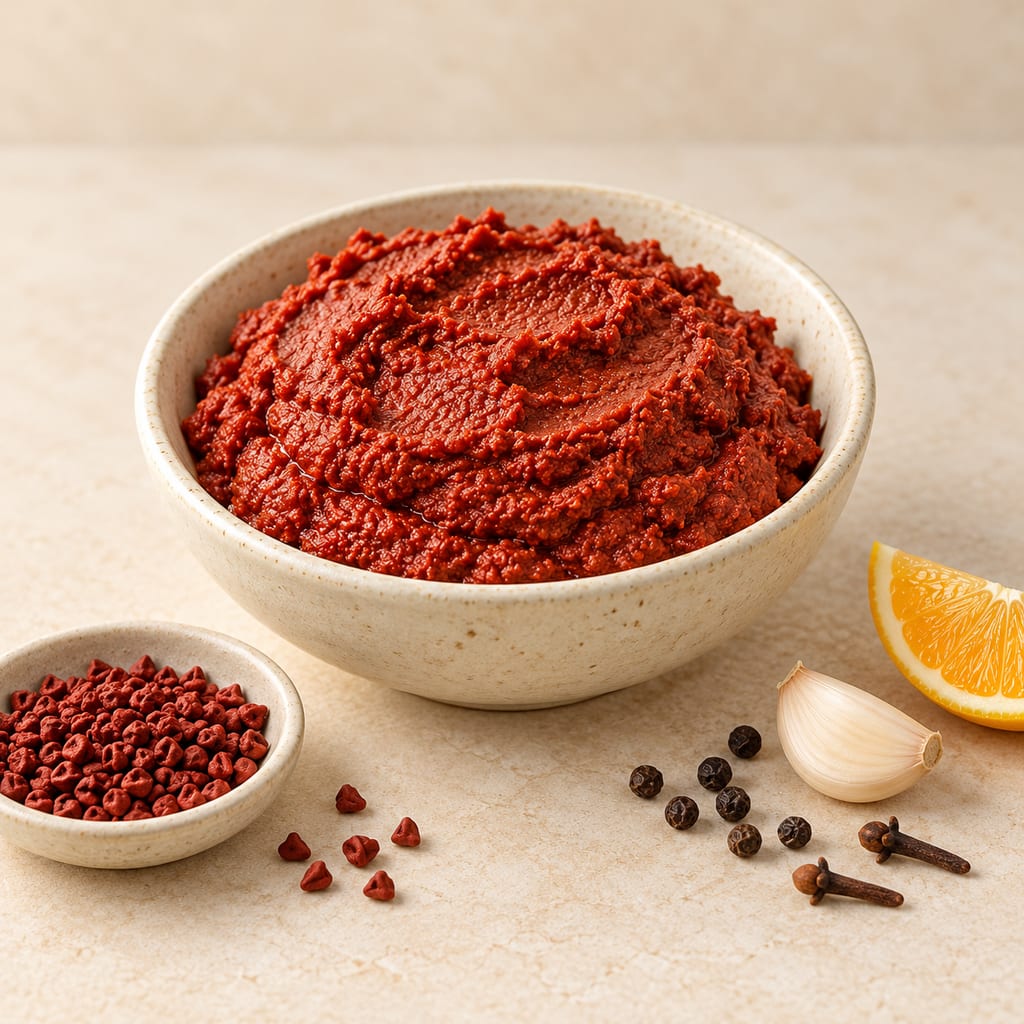
A Yucatecan recado rojo is a brick-red seasoning paste built on annatto seed, garlic and sour orange. This measured home version shows one route into a much wider family of market and household recados.
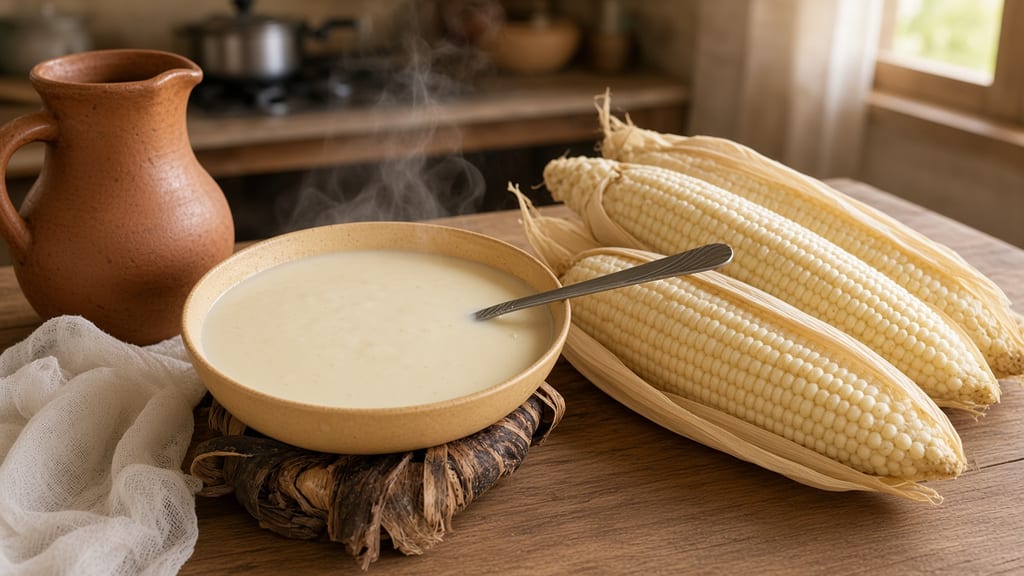
A hot, sour maize drink from Tabasco made from maize that is not lime-cooked. The ground grain sours for half a day, then makers strain it and boil it until thick.
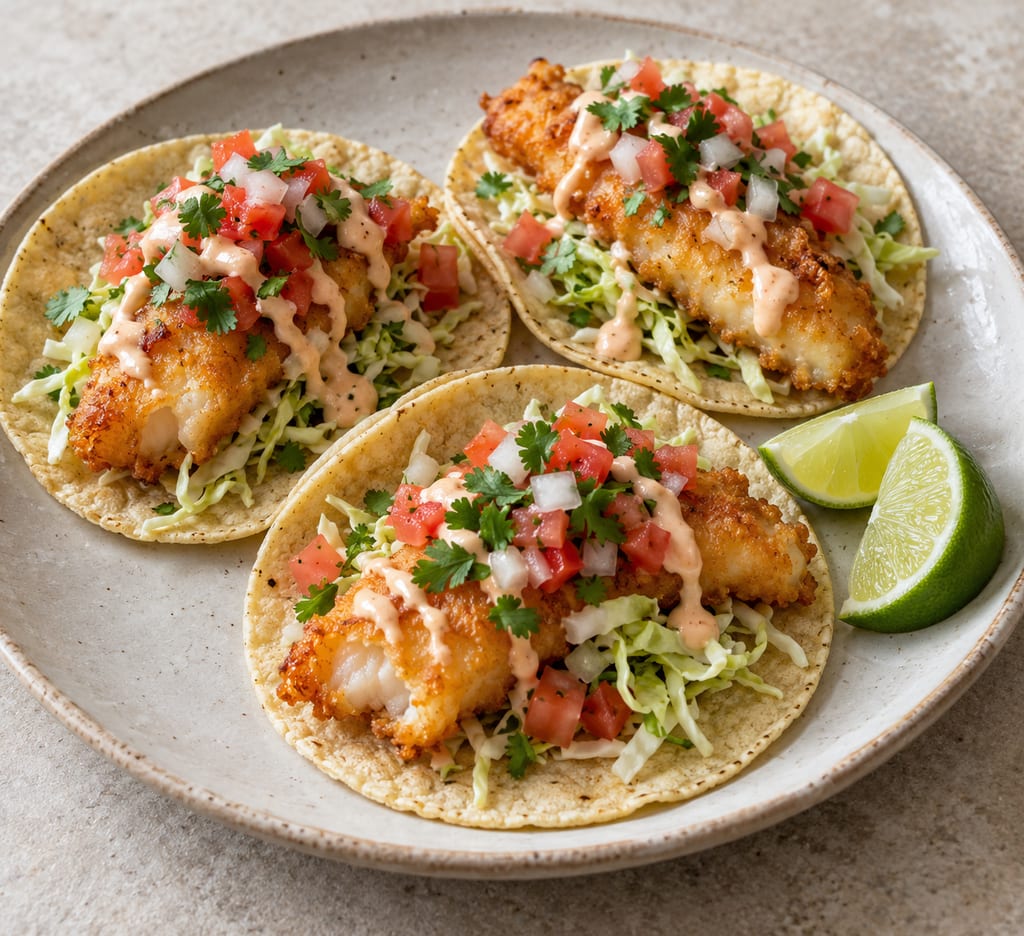
Crisp battered white fish in warm corn tortillas with shredded cabbage, lime and fresh salsa. This home version draws on the Ensenada style without claiming to be a definitive historic formula.
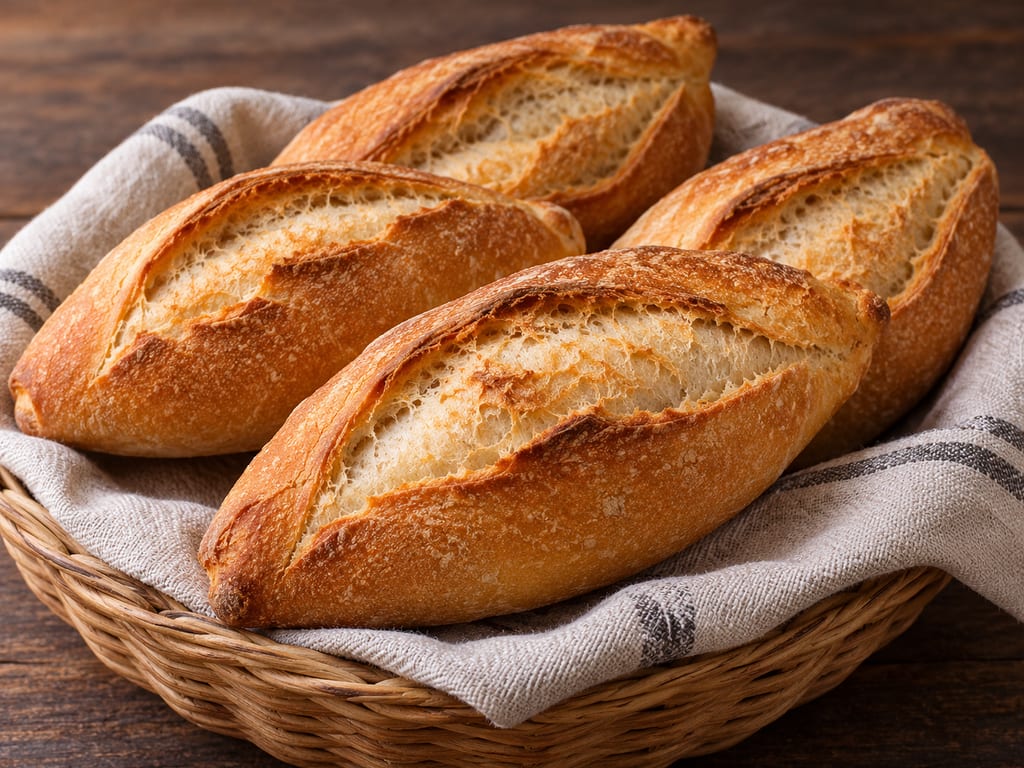
A measured, commercial-yeast home method for Guadalajara-style birote salado, with a six-hour preferment, shaped rolls and a two-temperature steam bake. This formula contains no egg.
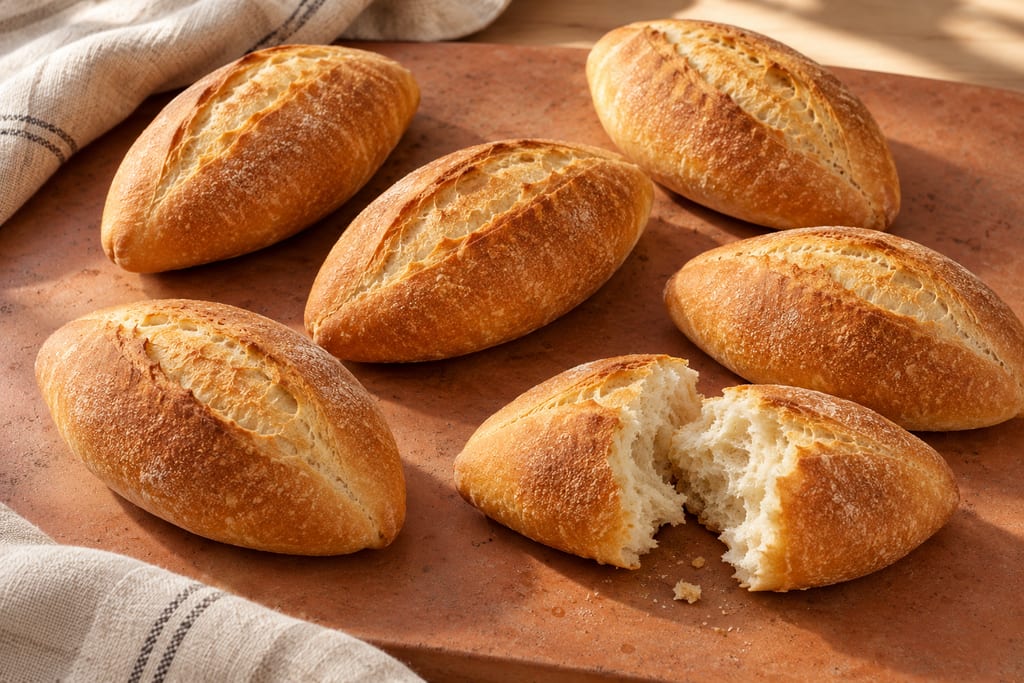
Small, lightly enriched rolls with tapered ends and a scored top; this six-roll formula bakes on a hot stone with steam for a thin, crisp crust.
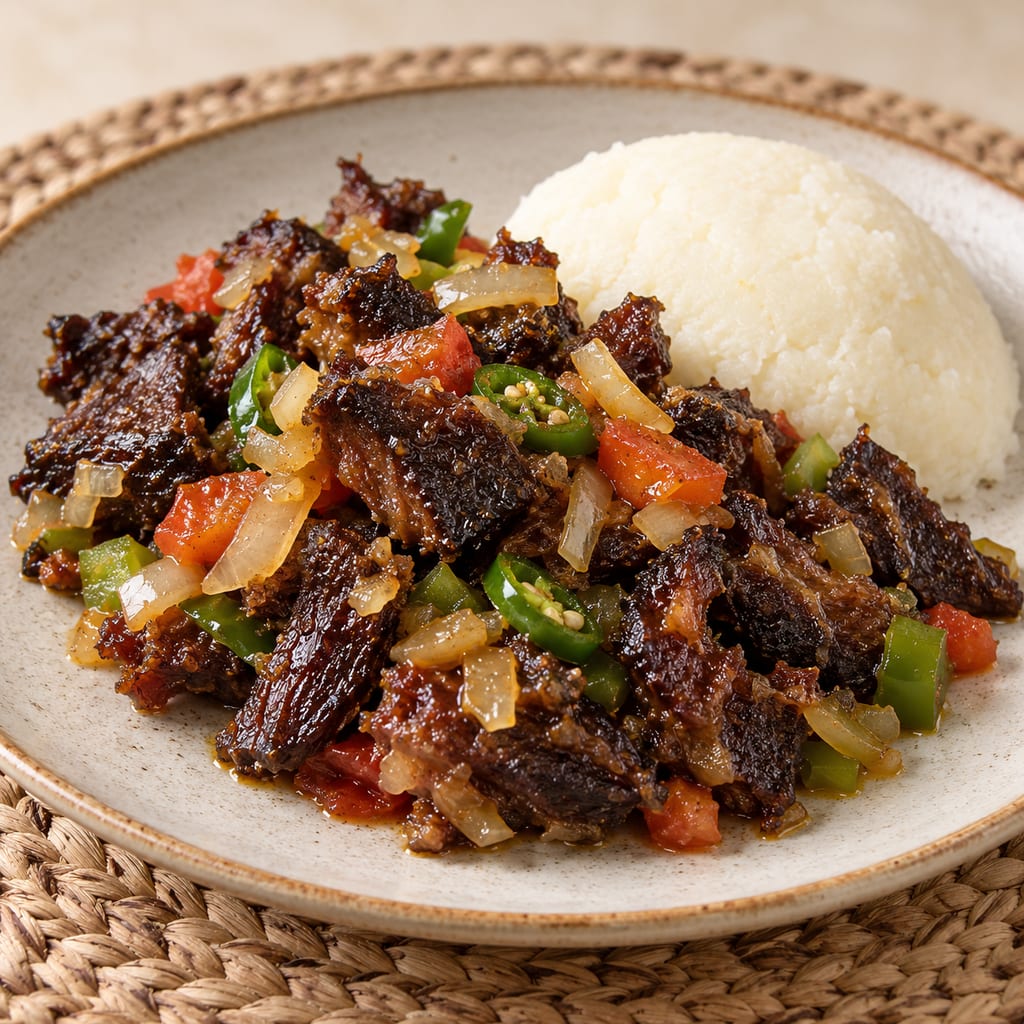
Alina Magano Johannes’s Oondhingu is a family dish from Onyaanya, Oshikoto, in northern Namibia: softened dried beef fried with vegetables and served with pap.
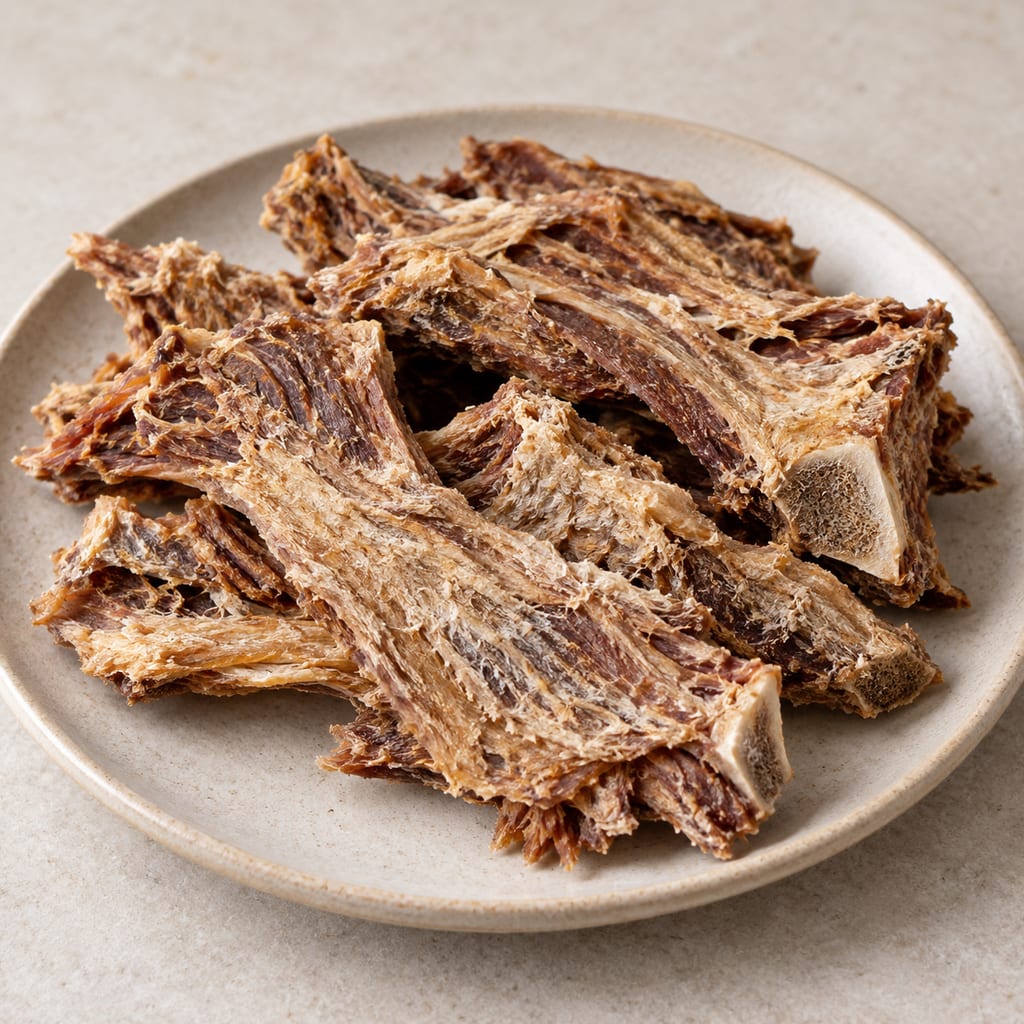
Alpaca charqui is Andean dried meat, made from camelid meat exposed to hot sun by day and frost by night at high altitude, the ancestor of the modern word jerky.
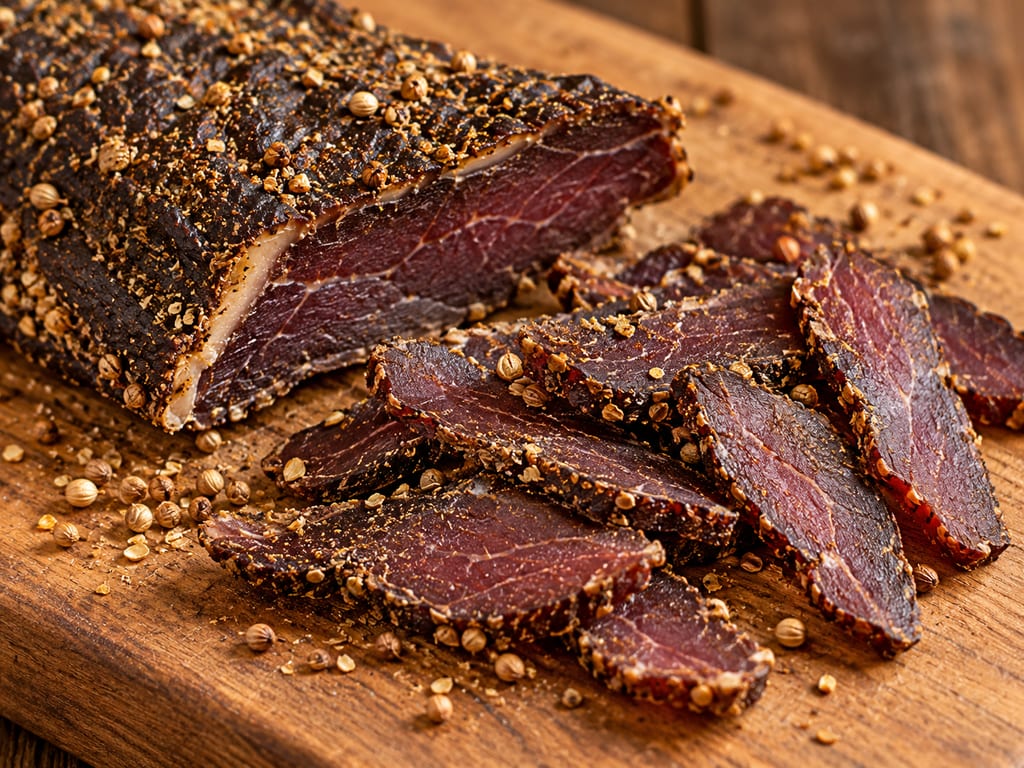
Strips of whole-muscle beef or game seasoned with salt, vinegar, roasted coriander and pepper and air-dried without cooking, sold anywhere from soft and moist to hard and very salty.
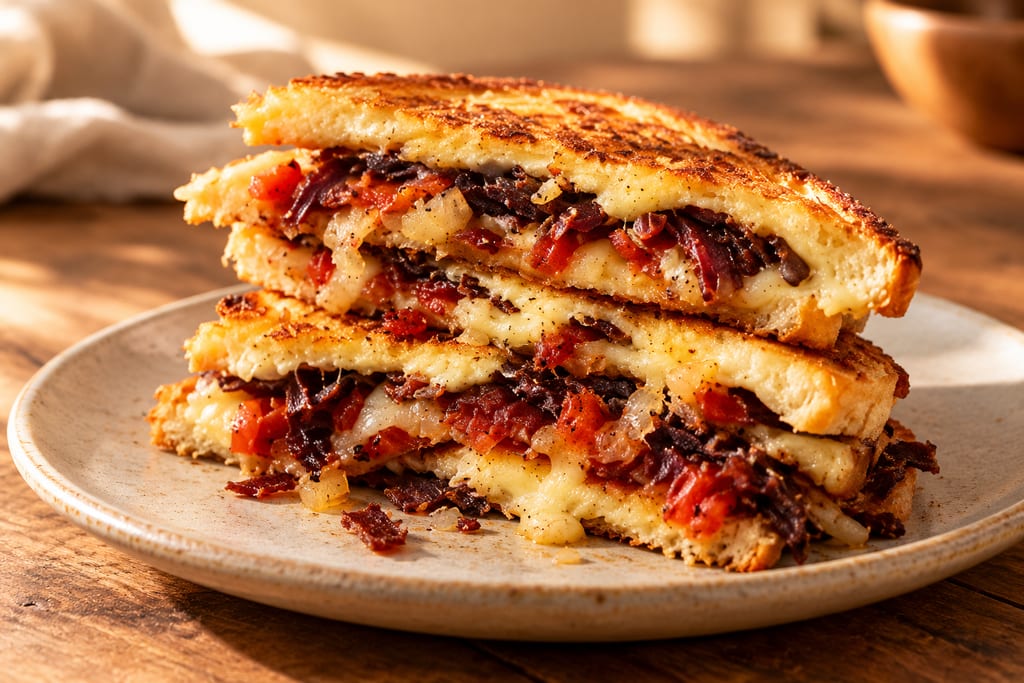
Chopped biltong, sweet onion, cream cheese and Cheddar fill bread toasted in a hinged grid over gentle coals, then finished with biltong dust.
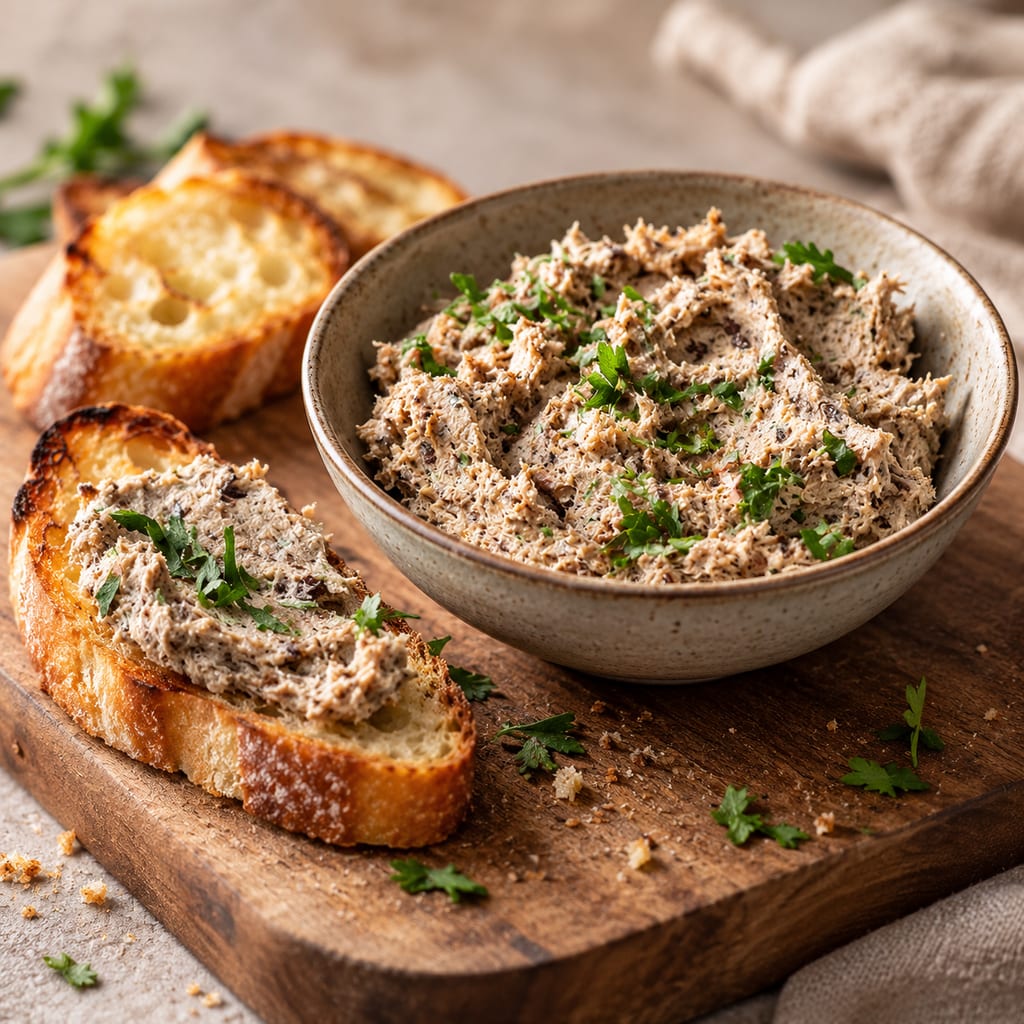
A cold biltong spread with sour cream, mayonnaise, mustard, lemon and herbs; serve it with crackers, crostini or bread.
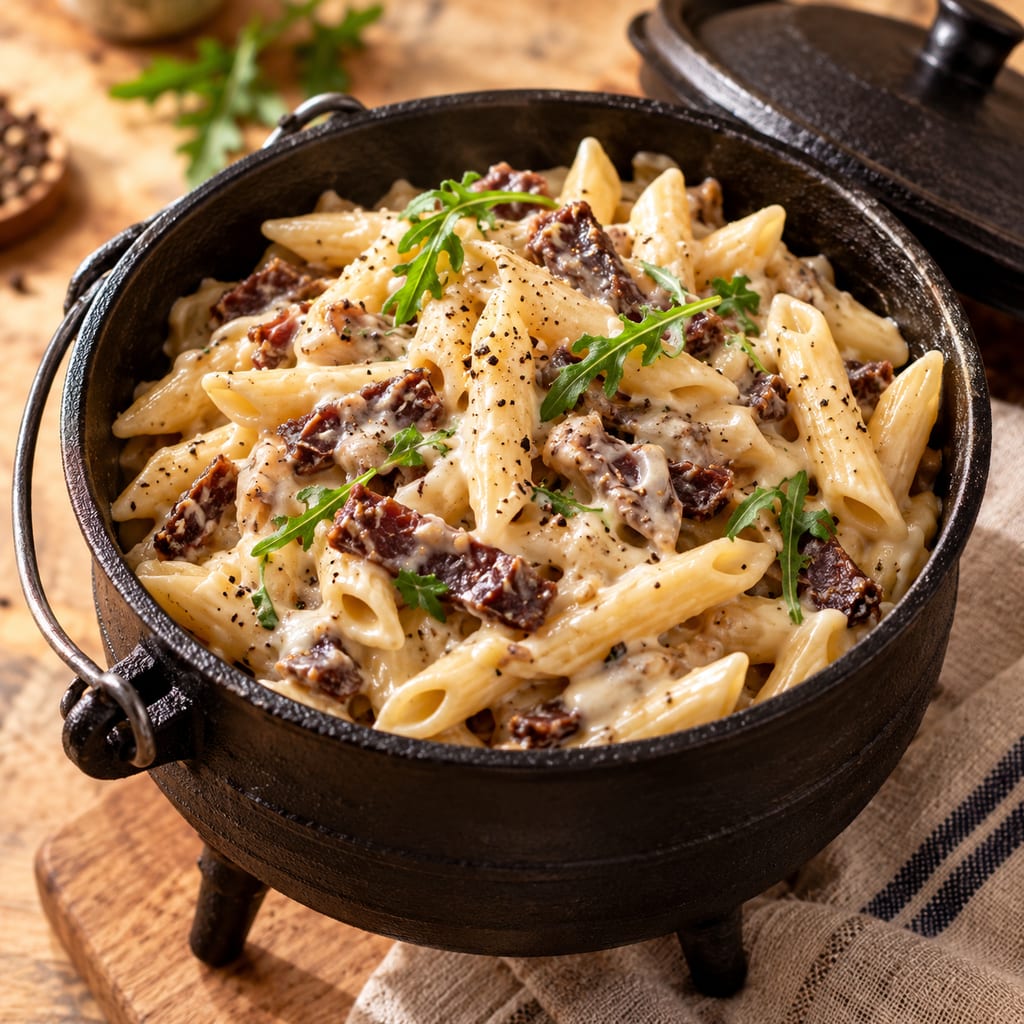
Biltong, bacon and vegetables simmer in tomato-herb stock, then join cooked pasta, milk, cream and Cheddar in this outdoor potjie.
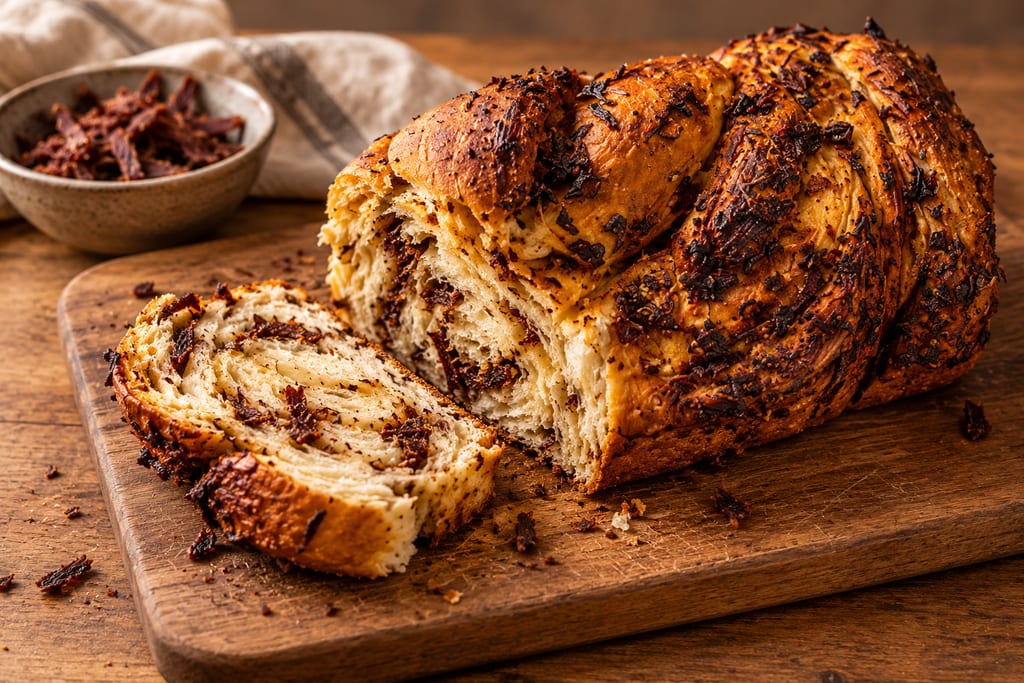
Yeasted bread wrapped around biltong, tomato pesto, Cheddar and feta, split lengthwise into a braid and baked; served with chilli-biltong butter.
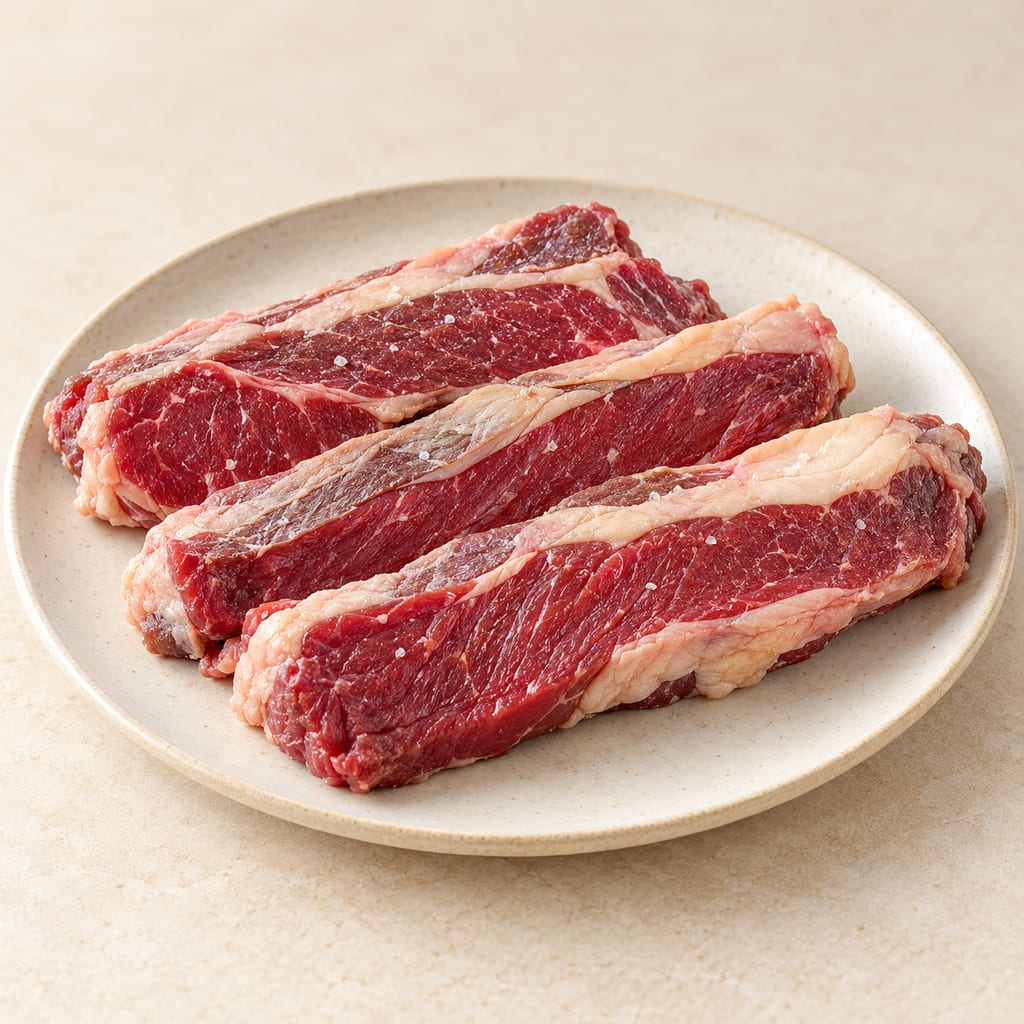
Beef given limited salt and partial surface drying, a short-keeping Brazilian meat that is much less durable than fully dried charque and is treated as a cold-chain product.
No community contributions have been published for this entry yet.
Sign in to contribute. Published comments and photos are free to read.
Larousse Cocina, Diccionario enciclopédico de la gastronomía mexicanaMethod · History · Use
ChicharrónScalding not too hot, scraping with campana and raspa
Fat removed except belly part; solo or con carne
Grid scored without piercing; salted and aired 2–3 days; salt washed off
Sancochado in not very hot lard; dried another day into hard translucent reddish-brown monguis or chicharrón encolado
Final fry in very hot lard takes seconds and puffs it
Thin and thick styles; evaporated milk in lard for pink, softer chicharrón
Larousse claim: most Mexicans eat it at least once a week
Uses: tacos, salsa verde, prensado
Novo's chichinoa etymology called doubtful
Names cuero and cuero duro in Zacatecas and San Luis Potosí
Cited in: Skin first; Scored, salted and aired; The half-cooking; Seconds in very hot lard; How it is eaten
El Universal, Menú, 10 July 2023Method
Cómo hacer chicharrón de cerdoScrape hair, flame hard spots; score grid inside without piercing; 1 tablespoon salt
Dry in the sun 24–36 hours
Cut to fit the pot; expands to at least double
Sancocho in lard on low heat about 1½ hours until firmer with small bubbles; drain, cool and harden
Fry in lard heated on high for at least 10 minutes; puffs fast; flatten curling edges
Cited in: Scored, salted and aired; The half-cooking; Seconds in very hot lard
El Colombiano, 3 May 2025Context
Todo lo que quería saber de los chicharrones (y cómo prepararlo mejor)Molina's view: Mexicans and Asians sun-dry the skin side with coarse salt; he advises against cooking pork belly in water first
Cited in: Relatives and a disagreement
BBC News, 20 June 2015Context
Are pork scratchings going posh?British scratchings are pig skin cooked with a fat layer; double or treble cooked crackling and puffed pork crunch
Cited in: Relatives and a disagreement