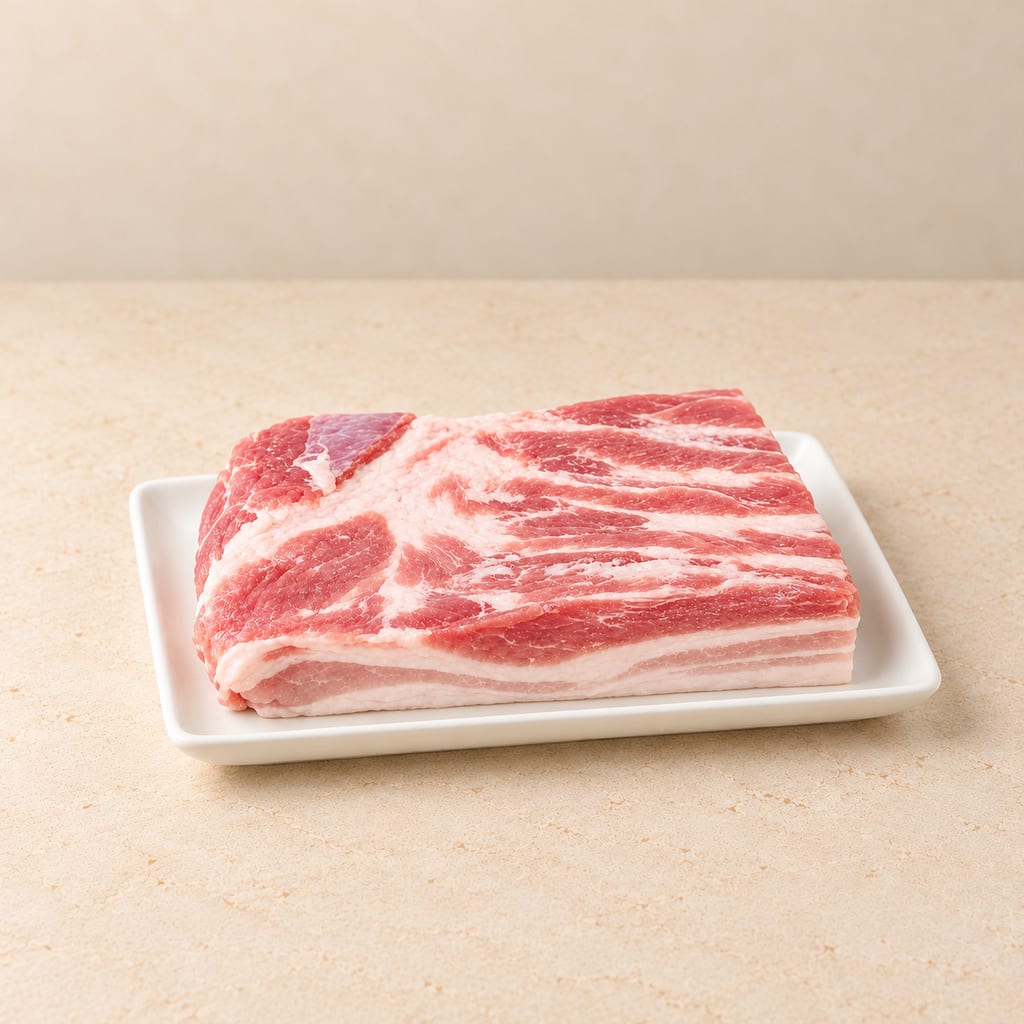
Fatty pork belly
Raw pork belly combines muscle and adipose tissue in layers. Its fat content varies, and a recipe weight of belly is not a measured weight of pure fat.
 FermenteaWhere food goes to change
Fat or oil
Pig fat melted out of its tissue and strained. Austrian food law grades it as plain lard, house lard and lard with cracklings, and a 1949 lard study sets the heat limit at 116–121 °C.

Lard is pig fat that has been melted out of the tissue that held it. The Austrian food code puts the rule in one line. Schweineschmalz is made only by rendering pig fat tissue. When it melts again it leaves no sediment, and its water content does not exceed 0.5%.
The same code sets out how the melted fat may be parted from the tissue. Rendered animal fats are separated from the remaining fatty connective tissue by physical means only, which it names as settling, pressing or centrifuging. What stays behind is the crisp residue that Czech cooks call škvarky, Austrians Grammeln and English speakers cracklings. That residue has its own page here.
Lard sits beside other rendered fats. Tallow comes from cattle and goose fat from geese. The Austrian code describes goose fat as pale yellow, granular and mild, and beef tallow as matt yellow and brittle with a tallow smell.
The Austrian code separates lard into grades by how it was made. Hausschmalz, house lard, is the best quality. It is rendered with particular care, usually in small batches in open, directly heated pans. The fat must be fresh, or chilled only for a short time. The code names two cuts for it. One is Rückenspeck, back fat, and the other is Bauchfilz, the soft fat from inside the belly.
Hausschmalz has a clean roasted smell and taste that comes from the open pan, and it contains nothing else. Grammelschmalz is lard with the cracklings left in it, and its water content may reach 2%. Bratenschmalz is a different thing again. It is the fat that collects when pork is roasted, and it carries the meat juices with it.
The difference matters at the stove. Hausschmalz and plain lard are the frying and baking fats. Grammelschmalz, with its cracklings and extra water, is eaten on bread. Bratenschmalz is a by-product of a roast and not a rendered fat at all.
The Czech ethnographic encyclopedia describes how the fat came off the pig at a home slaughter, the zabijačka. The halves were split and the inner fat, called plsní sádlo, was taken out with the kidneys. The outer fat, řemenové sádlo, was lifted off the back. Raw fat was then either salted for smoking as slanina or cut up and rendered into sádlo and škvarky.
Gut fat was handled apart. The intestines were cleaned and separated, and the intestinal fat was washed and rendered on its own. A 1949 paper on lard by J. W. Cole of the University of Tennessee gives the same advice for the highest quality. Leaf fat and trimmings can be blended, but intestinal fat should be rendered separately.
Cole also asked for the rind to come off. Too much rind, he wrote, may give lard a softer body and take it off the chalk-white colour wanted. He told renderers to cube the fat at about 2.5 cm or grind it, because grinding speeds the work. Lean meat had to be trimmed away. It turns brown and crisp before the fat is done and colours the lard.
Freshness came first. Fat held at 0–2 °C for five to seven days, he reported, gains free fatty acids and gives lard with a lower smoke point and poorer keeping.
Cole blamed bad cooking for more poor lard than all other faults together. Overcooking, or cooking at high heat, raises the free fatty acids and cuts the keeping time. His limit was that the fat should not pass 116–121 °C at any point. Stainless steel, rust-free iron and aluminium kettles were all fine. Copper and rusty iron were not, because the fat could combine with the metal and form salts that make it less stable.
Over an open fire he asked for hardwood, which gives an even heat, and for frequent stirring. Stirring also speeds the rendering.
He gave two tests for doneness. The cracklings turn amber, and if rind is still on the fat, small white blisters form on the skin. The second test is that no more moisture rises. A cold lid passed over the kettle shows it, since any steam condenses on the cold metal.
The hot lard was then strained through enough muslin or cheesecloth to hold back sediment and cracklings. If a lard press was used to squeeze out the last fat, the press and every storage vessel had to be scrubbed and dried first. Old or rancid fat on a container spoils new lard faster.
Cole wanted the hot lard cooled as fast as possible and stirred often while it cooled. Lard left unstirred separates, the liquid oil parting from the harder stearin, and the result is grainy. He also warned against beating or whipping, which works air into the fat and shortens its keeping.
Rancidity, in a 1948 note from the US Department of Agriculture that Cole reprinted, comes from the chemical breakdown of fats with oxygen. Air, heat, light and metal all speed it. Once lard is rancid there is no way to repair it. The standing advice was to use clean fresh fat, render thoroughly without overheating, pack the lard in small containers filled to the top to drive out air, seal them and keep them in a dark, cool place.
Cole put the storage temperature at about 4 °C and never above 16 °C. His list of causes of poor keeping included fat that was partly rancid before rendering, fat from underfinished hogs, too little rendering, sediment, poor containers, light, musty storerooms and warm storage.
In Czech villages rendered lard and škvarky went into stoneware. The ethnographic encyclopedia records that rendered sádlo, škvarky and clarified butter were kept in stoneware vessels in the cold and dark. Fat and tallow, it adds, were kept in rendered form.
A slaughter in winter, before Christmas or at carnival, gave a household meat and fat until spring. The encyclopedia lists what the rendered sádlo then did. People spread it on bread. They baked and fried with it, both meat and baked goods. It went into jíška, the fat and flour base for sauces and soups, and it was the fat stirred into potatoes, porridge, dumplings, pulses and cabbage. Rendered sádlo or bacon fat was the cooking fat all year.
One use stands out. Zhřívanice was spirit drunk with hot lard. The encyclopedia gives it in a single phrase, kořalka a horké sádlo, without a recipe.
Polish traditional product records describe the same pantry further north. In Kashubia, every pantry once had a stone pot of smalec with skwarki. On the Kociewie lands, smalec was made twice a year at the pig slaughter, in spring before Easter and before Christmas, and it was used for frying and baking in place of other fats.
Czech has sádlo for both the raw fat and the rendered fat, and škvarky for the cracklings. Rendering is škvaření, and the verb vyškvařit means to render out. Slovak uses masť for the rendered fat; the Slovak encyclopedia of folk culture describes oškvarky as what is left after rendering masť.
In Polish the rendered fat with its bits is smalec, or szmalec on the Kociewie lands, and the bits are skwarki or skrzeczki. On the Kujawy plain, the grey smalec made from ground skwarki was also called omasta. In Austria the word is Schmalz and the cracklings are Grammeln, a name the Austrian code reserves for products from pig fat tissue. In Hungarian, the Magyar Néprajzi Lexikon calls fat rendering zsírsütés and the cracklings töpörtyű or tepertő.
Jewish cooks in Eastern Europe used goose fat where their Christian neighbours used lard. The YIVO Encyclopedia puts it in one line. Goose fat, it says, was to Jews what lard was to Christians.
Rendering was part of the slaughter day, and it had its own workers. The Magyar Néprajzi Lexikon lists fat rendering among the women's tasks at a Hungarian pig killing, with cleaning the guts and making sausage.
In Hungary's western region, the lexicon records a step before melting. Pieces of fat were thrown briefly into boiling water, then skinned, cubed and melted down. The step had local names, köpesztés and abárolás.
Polish records give an idea of the scale. On the Kujawy plain, pigs were fattened to about 200 kg, and the słonina, the back fat, was cut "na cegłę", as thick as a brick. Smalec there was made twice a year, at the spring and winter slaughters.
Every batch of home lard gives two products. The liquid fat is poured or strained off and sets white. The solid pieces left behind are the cracklings. How much fat stays in them depends on how long they cook and whether they are pressed. The Slovak encyclopedia notes that oškvarky contain more than half fat and were therefore pressed further. The Austrian code requires Grammeln sold as food to hold at least 20% fat.
Some households kept the two together. Grammelschmalz and smalec ze skwarkami are lard with the cracklings stirred back in. Kashubian cooks stirred the smalec as it cooled so the skwarki would not sink to the bottom. Others strained the fat clean for frying and baking and kept the cracklings for spreads and dough.
The step-by-step home method is on the recipe page for škvarky and sádlo. The cracklings themselves, with their fat content and the names they go by, are on the pork cracklings page.
The Austrian grades describe what a cook can buy. Plain Schweineschmalz is rendered pig fat with almost no water and no sediment. Hausschmalz is made in small open pans from back fat or belly fat and has a roasted taste. Grammelschmalz carries its cracklings and more water, and it is a spread rather than a frying fat.
Cole's paper gives the reason to care about smoke point. A Consumers Union test, he wrote, found an average smoke point for lard of about 177 °C, against about 204 °C for most vegetable shortenings. Fat that is stale before rendering gives lard with a lower smoke point.
For keeping, his advice was small containers filled to the top, sealed, and stored in the dark at around 4 °C.
Home rendering of sádlo and škvarky at the zabijačka as recorded by the Czech ethnographic encyclopedia.
Grades and definitions of lard in the Austrian food code; not a claim about origin.
Regional smalec traditions in Kashubia, Kociewie and Kujawy.
Fat rendering as women's work at the pig killing, from the Magyar Néprajzi Lexikon.
Home and locker-plant rendering advice from the University of Tennessee; no claim of a local tradition.
Raw pork belly combines muscle and adipose tissue in layers. Its fat content varies, and a recipe weight of belly is not a measured weight of pure fat.
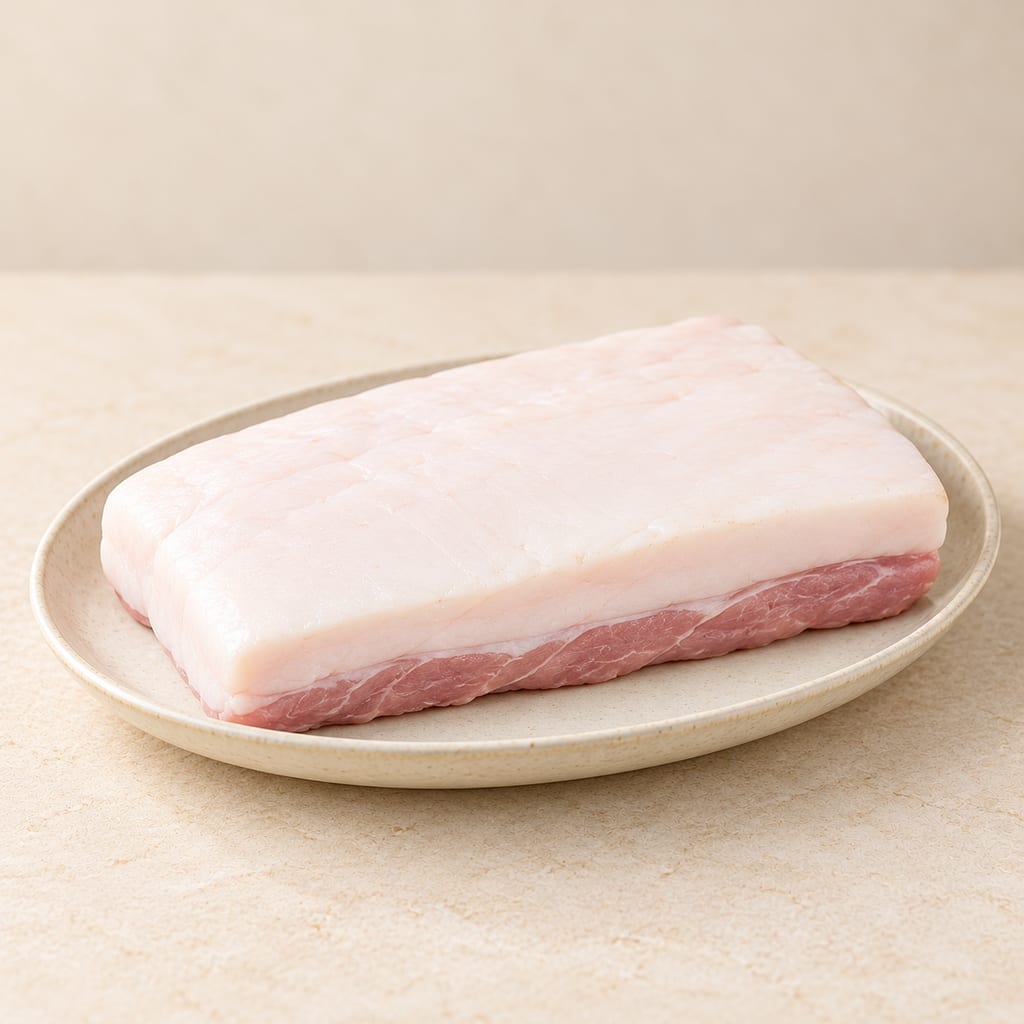
Unrendered subcutaneous pork fat provides distinct pale pieces, texture and lipid flavor precursors in sausage, and differs from belly, leaf fat and rendered lard.
Pig adipose tissue used raw in some fermented meats and made into distinct products such as cured lardo, salo and rendered lard. Cut and firmness affect processing.
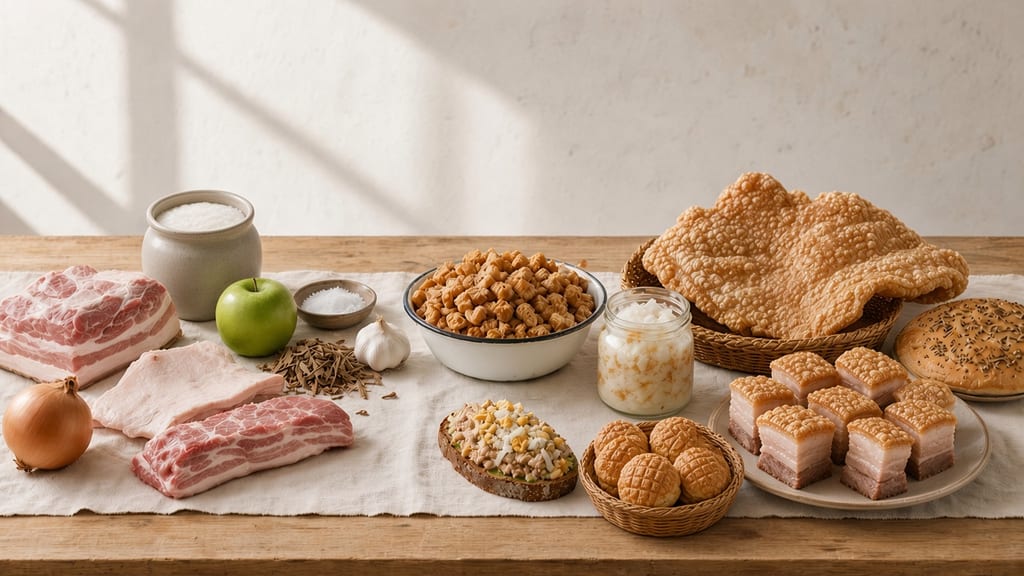
Škvarky, skwarki, tepertő, chicharrón, gratons. How cooks render pig fat, dry and fry skin, press and wring the pieces, and bake with them, from the Czech pig-killing to Mexico and Soria.
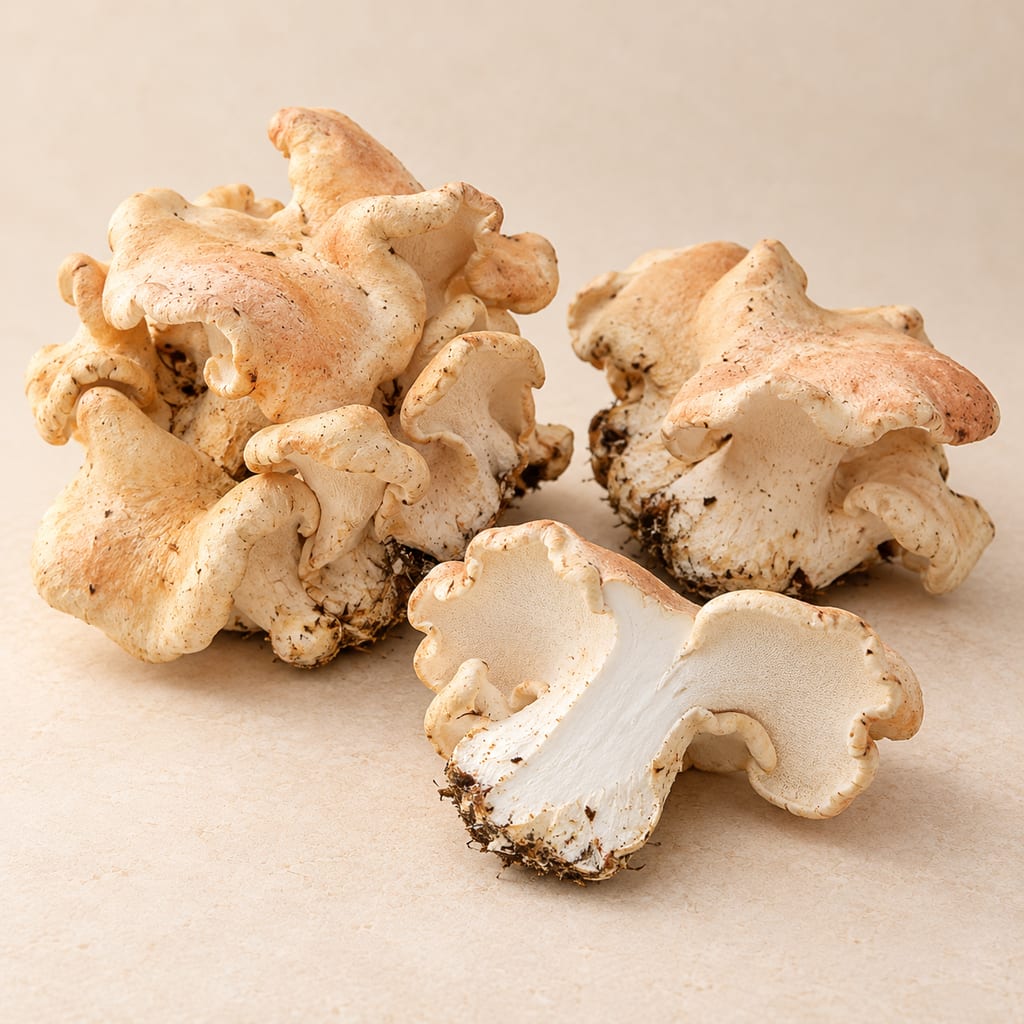
Albatrellus confluens is a ground-growing polypore with fused buff-orange caps. Sources document Chinese market use and regional edibility, but others reject it as too bitter; taxonomy also varies between Albatrellus and Albatrellopsis.
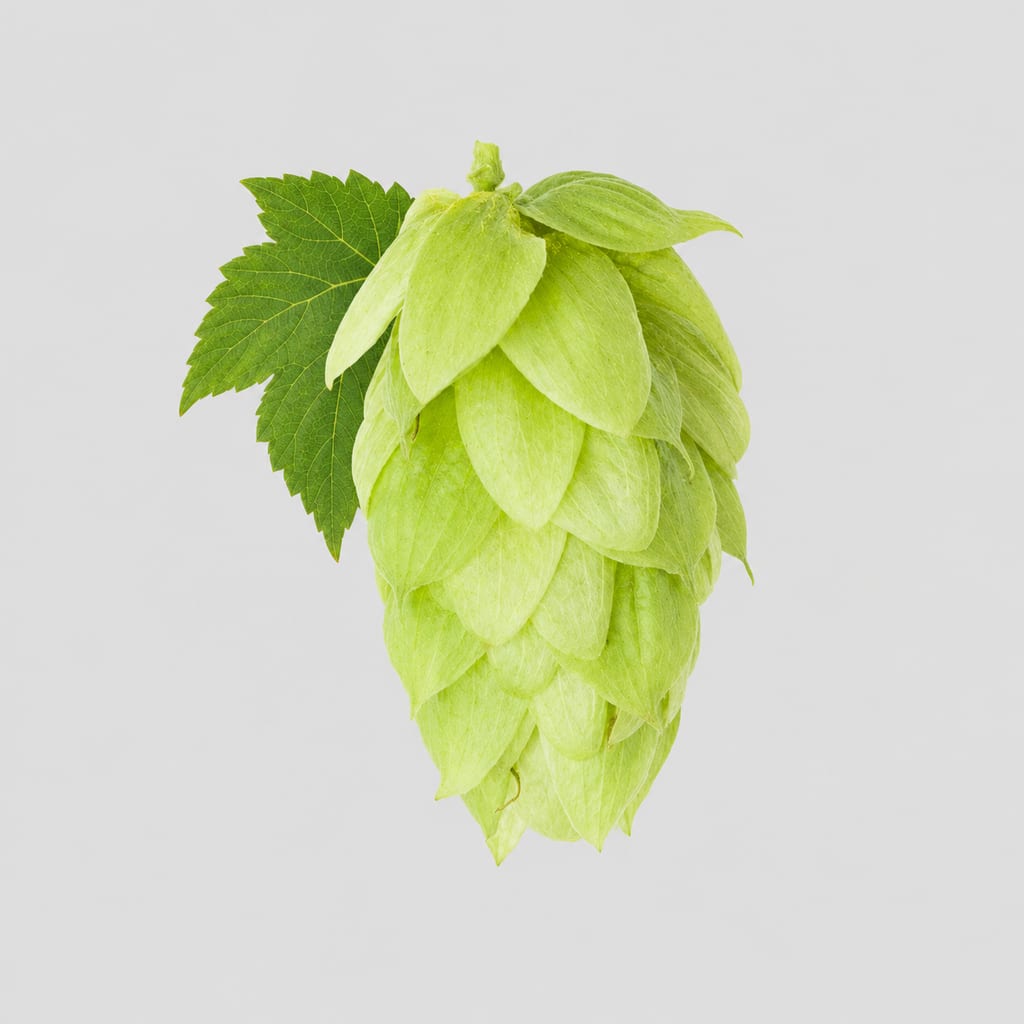
Saaz, or Žatecký poloraný červeňák, is a Czech fine-aroma hop cultivar used for herbal hop character and bitterness in beer. Its cultivar, product form, origin and lot analysis describe different parts of the ingredient.
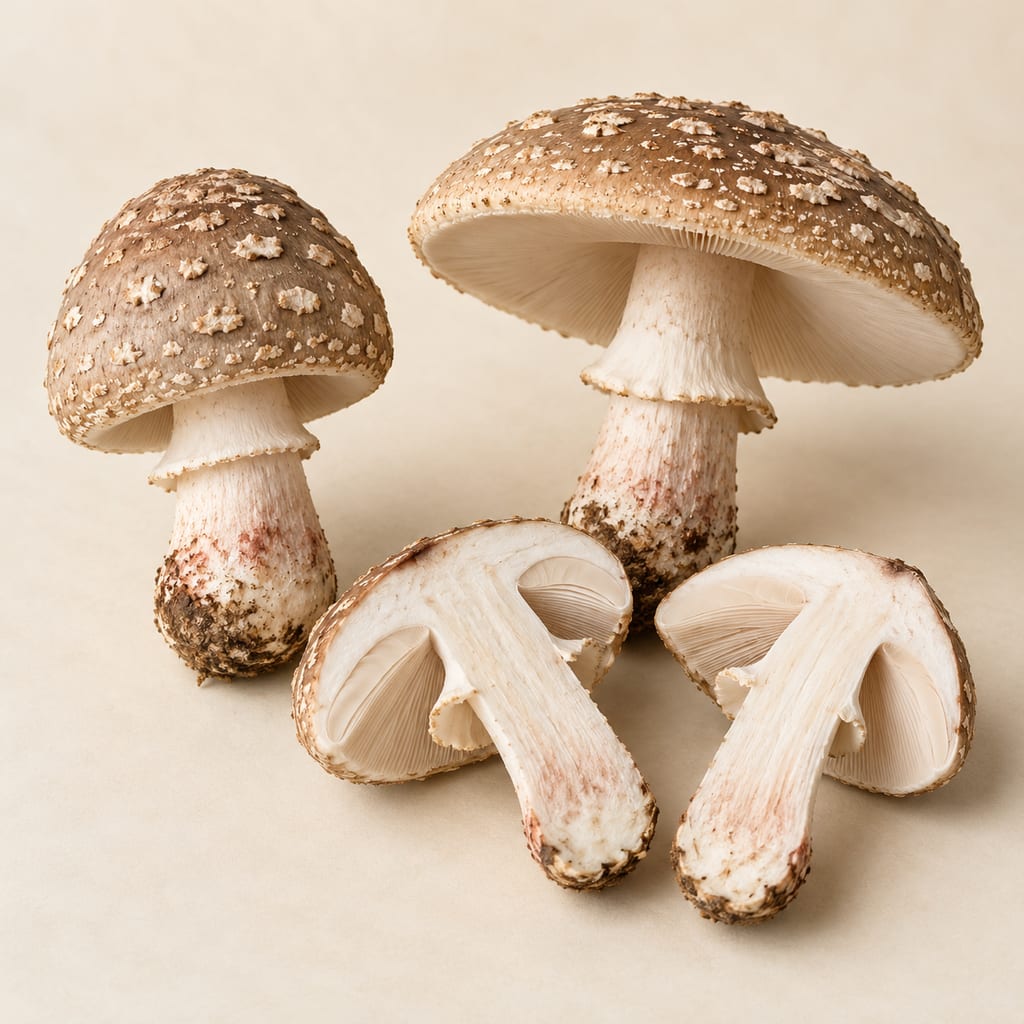
The European blusher, Amanita rubescens, is a woodland amanita whose flesh turns pink when cut. It is eaten only well cooked and is easily confused with the poisonous panthercap.
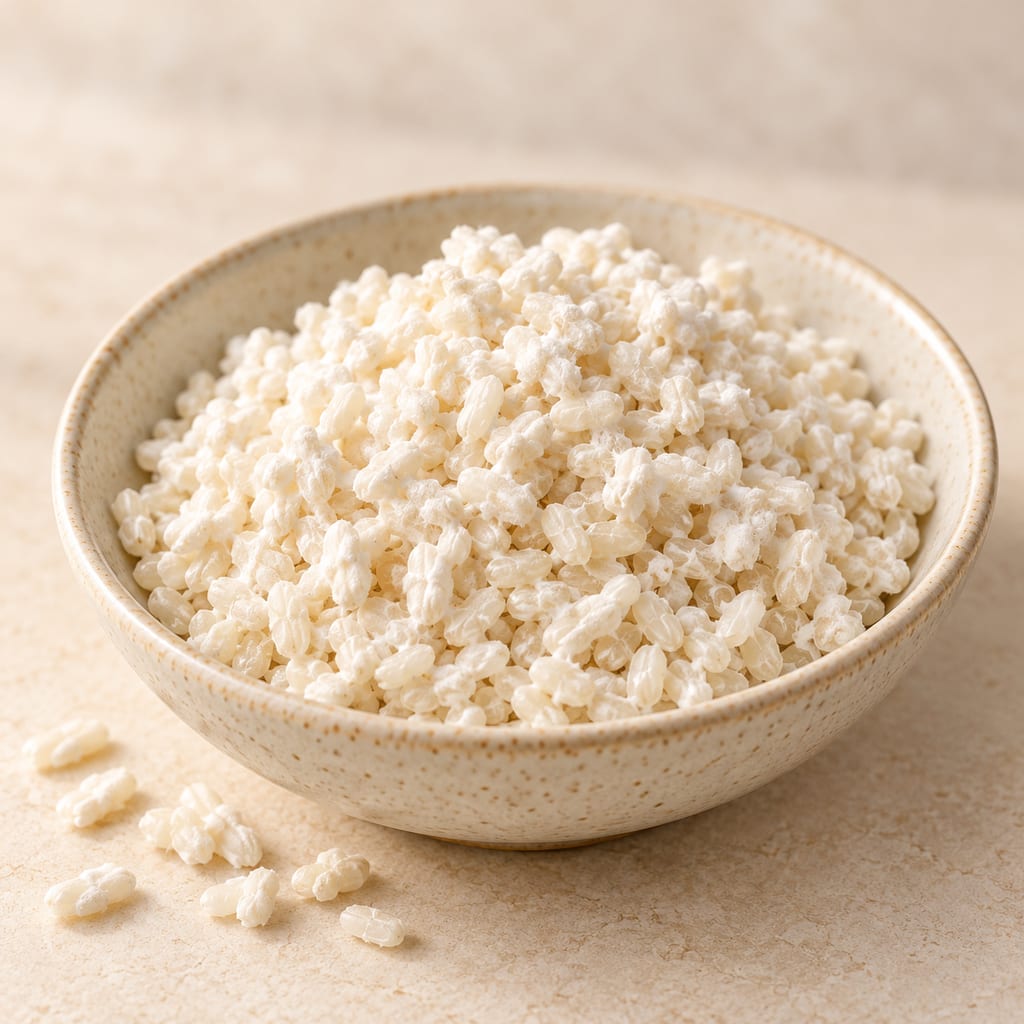
Koji is steamed grain — rice, barley, soybean or wheat — grown out with a food-grade Aspergillus mold until the kernels carry working enzymes. It is bought or cultivated, and it converts starch and protein for the foods that follow.
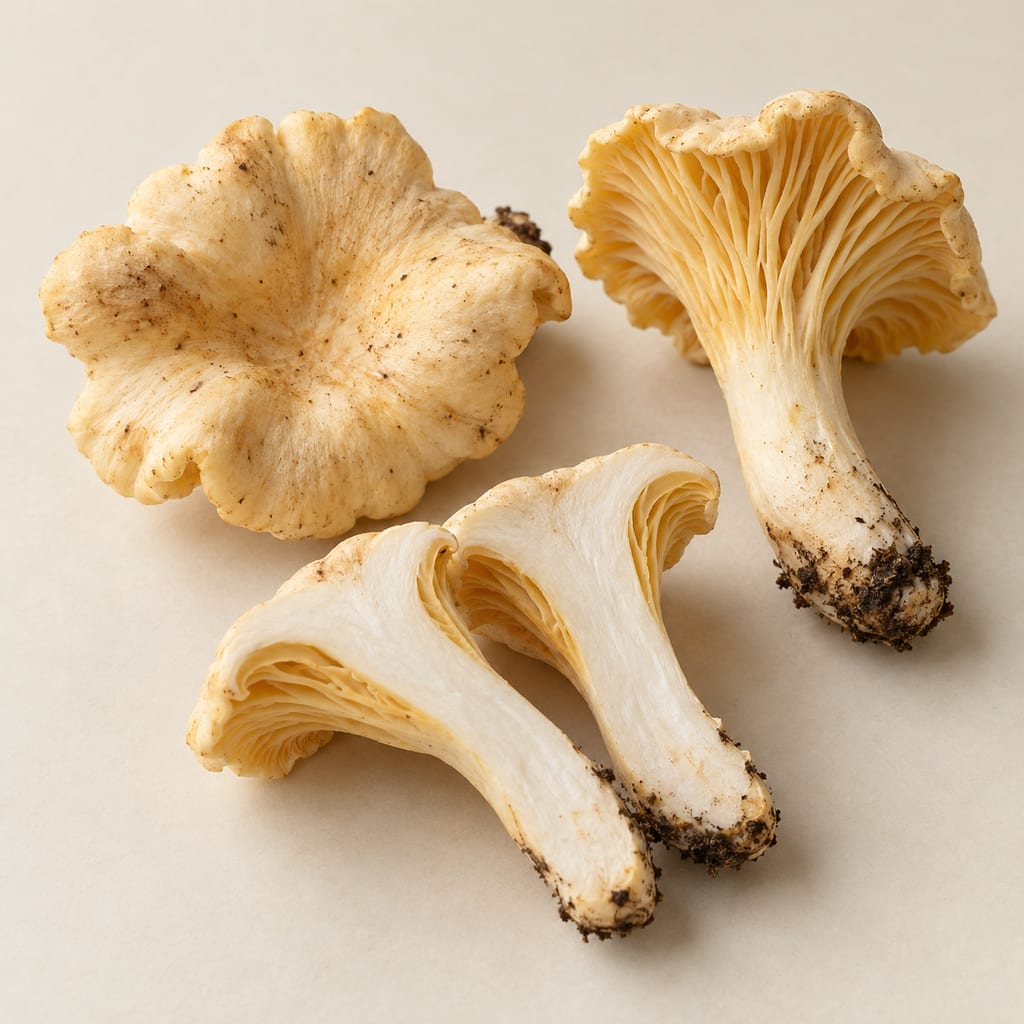
Cantharellus pallens is a pale, fleshy European chanterelle with orange-yellow folded ridges. It is gathered and sold as food in documented regional traditions, but its variable appearance makes photographs unreliable for identification.
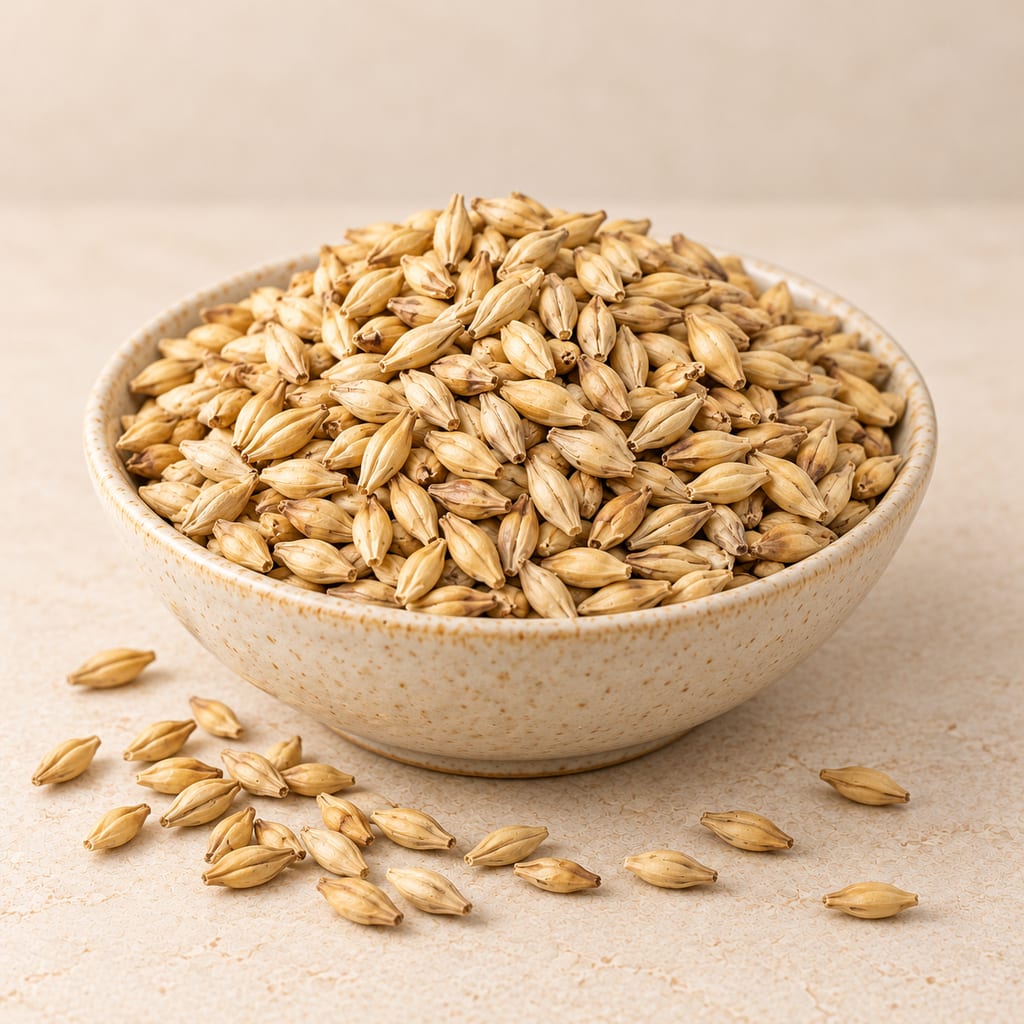
A pale, lightly kilned barley base malt that supplies wort material and brewing enzymes, with product-specific flavour, analysis and handling requirements.
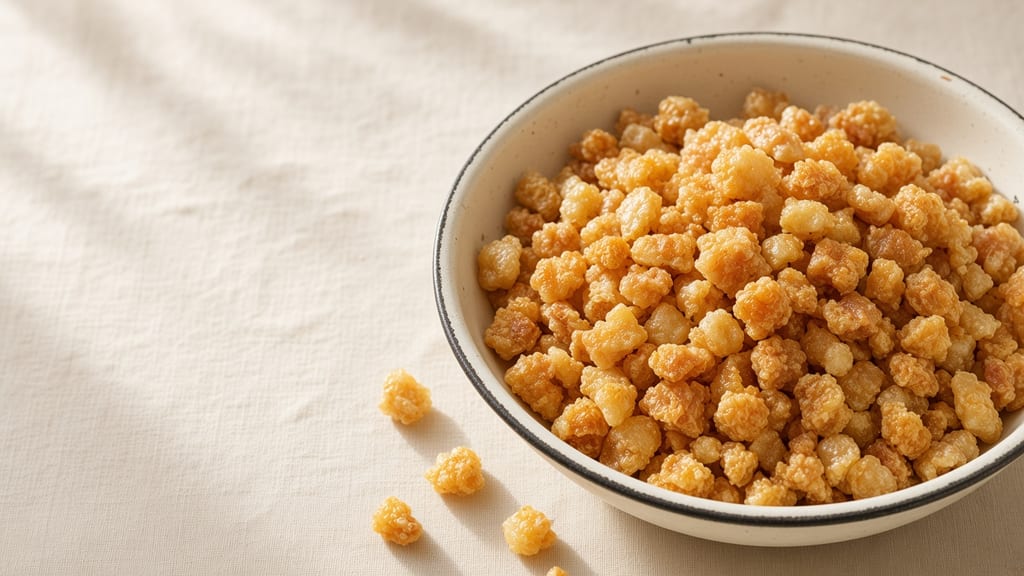
The crisp pieces left when pig fat is rendered into lard: škvarky, skwarki, tepertő, Grammeln. Still mostly fat, they are eaten on bread, ground into spreads and worked into savoury dough.
Saccharomyces pastorianus is the hybrid lager yeast, a cross of the ale yeast S. cerevisiae and the cold-tolerant S. eubayanus, that ferments beer at cool temperatures from the bottom of the tank.

A gelling polysaccharide extracted from red seaweeds, sold as kanten strips or powder; it sets firm at a low concentration and stays solid until about 85 °C.

A Dominican table and seasoning condiment of sour orange juice, mixed with lime and salt and bottled raw; garlic, oregano or a hot pepper may be added for meat or a spicier bottle.

Cicerbita alpina is an alpine perennial whose tender shoots and leaves have been eaten raw or cooked. Sámi milk preparations and modern Carnian dishes are distinct uses, with serious identification and preservation limits.

Japanese skipjack tuna cooked, then repeatedly smoked and dried over a wood fire by the hand-fired tebiyama method into a hard block for shaving into dashi: the first stage of katsuobushi.

A Swedish-style spirit vinegar made by fermenting neutral alcohol with live vinegar bacteria, with a separate guide to commercial ättika strengths.

A yeast-raised wheat ring shaped from a firm dough, briefly boiled and baked. This source-batch formula gives a gently malted crust and a chewy crumb.

A warm dip of garlic, anchovy and olive oil, often enriched with butter, that Piedmont serves over a flame with raw and cooked vegetables and bread.

Bechamel is a white sauce of milk thickened with a butter and flour roux, one of the French mother sauces, and the base from which Mornay and other cheese and cream sauces are made.
No community contributions have been published for this entry yet.
Sign in to contribute. Published comments and photos are free to read.
Österreichisches Lebensmittelbuch (Codex Alimentarius Austriacus)Identity · Quality
Österreichisches Lebensmittelbuch B 30, 1.5.1 Speisefette von LandtierenSchweineschmalz is made only by rendering pig fat tissue, leaves no sediment and has at most 0.5% water
Separation only by settling, pressing or centrifuging
Hausschmalz: best quality, fresh back fat or Bauchfilz, small amounts, open directly heated vessels, roasted smell and taste, no other ingredients
Grammelschmalz: lard with Grammeln left in, at most 2% water
Bratenschmalz is a by-product of roasting pork with roasting juices
Goose fat and beef tallow descriptions
Cited in: Fat melted out of pig tissue; Three grades in one code; Lard and cracklings, two products of one pot; Choosing lard to cook with
Österreichisches Lebensmittelbuch (Codex Alimentarius Austriacus)Identity
Österreichisches Lebensmittelbuch B 30, 1.5.3 Grammeln (Grieben)Grammeln are the tissue left after rendering; at least 20% fat; the name Grammeln only for pig fat tissue
Cited in: Names across the lard belt; Lard and cracklings, two products of one pot
Reciprocal Meat Conference Proceedings, American Meat Science Association, 1949Method · Safety · Storage
Processing and storage problems of lardFresh fat; 32-35 °F for 5-7 days raises free fatty acids
Leaf and trimming fat can be blended; intestinal fat rendered separately
Remove rind; cube 1 inch or grind; remove lean
Do not exceed 240-250 °F; no copper or rusty iron; hardwood and frequent stirring over open fire
Doneness: amber cracklings, white blisters on rind, no rising moisture tested with a cold lid
Strain through muslin or cheesecloth; clean press and containers
Cool fast, stir, avoid whipping; unstirred lard turns grainy
USDA 1948 note: rancidity from air, heat, light, metal; cannot be repaired
Store around 40 °F, not over 60 °F, in small full sealed containers in the dark
Consumers Union smoke point: lard average 350 °F vs 400 °F for most vegetable shortenings
Cited in: Which fat goes into the pot; Heat, metal and air; Cooling it smooth; Choosing lard to cook with
Etnologický ústav AV ČR / Mladá fronta, 2007History · Method · Use
Národopisná encyklopedie Čech, Moravy a Slezska, entries "zabijačka" and food storage (volume Z)Inner plsní and outer řemenové fat removed at the zabijačka
Intestinal fat washed and rendered
Raw fat salted for slanina or rendered into sádlo and škvarky
Uses of rendered sádlo: bread, baking, frying, jíška, omastek for potatoes, kaše, knedlíky, legumes, cabbage; zhřívanice (kořalka a horké sádlo)
Slaughter before Christmas and at masopust secured meat and fat until spring
Comenius Orbis pictus quotation
Rendered sádlo, škvarky and šmolc stored in stoneware in cold and dark
Cited in: Which fat goes into the pot; The crock in the pantry
Ministerstwo Rolnictwa i Rozwoju Wsi, gov.plUse · History
Smalec ze skwarkami (Smôłt ze szpérkama), Lista produktów tradycyjnychEvery Kashubian pantry had a stone pot of smalec with skwarki
Smalec stirred as it cools so skwarki do not sink
Cited in: The crock in the pantry; Names across the lard belt; Lard and cracklings, two products of one pot
Ministerstwo Rolnictwa i Rozwoju Wsi, gov.plUse · History
Szmalec kociewski ze skrzeczkami, Lista produktów tradycyjnychSmalec made twice a year at świniobicie, spring and Christmas
Used for frying and baking instead of other fats
Cited in: The crock in the pantry; Names across the lard belt
Ministerstwo Rolnictwa i Rozwoju Wsi, gov.plHistory
Szary smalec po kujawsku, Lista produktów tradycyjnychPigs fattened to about 200 kg; słonina na cegłę; also called omasta; made twice a year
Cited in: Names across the lard belt; Who rendered it
Centrum pre tradičnú ľudovú kultúru, encyclopedia of Slovak folk cultureIdentity
OškvarkyOškvarky are what remains after rendering masť; more than half fat, so pressed further
Cited in: Names across the lard belt; Lard and cracklings, two products of one pot
Magyar Néprajzi Lexikon, Akadémiai Kiadó, via Magyar Elektronikus KönyvtárIdentity · Method
töpörtyűNames töpörtyű and tepertő
Western region: fat thrown briefly into boiling water (köpesztés, abárolás), skinned, cubed, melted
Cited in: Names across the lard belt; Who rendered it
Magyar Néprajzi Lexikon, Akadémiai Kiadó, via Magyar Elektronikus KönyvtárHistory
disznóölésFat rendering (zsírsütés) is women's work at the pig killing, with cleaning guts and making sausage
Cited in: Names across the lard belt; Who rendered it
The YIVO Encyclopedia of Jews in Eastern EuropeContext
GeeseGoose fat was to Jews what lard was to Christians
Cited in: Names across the lard belt