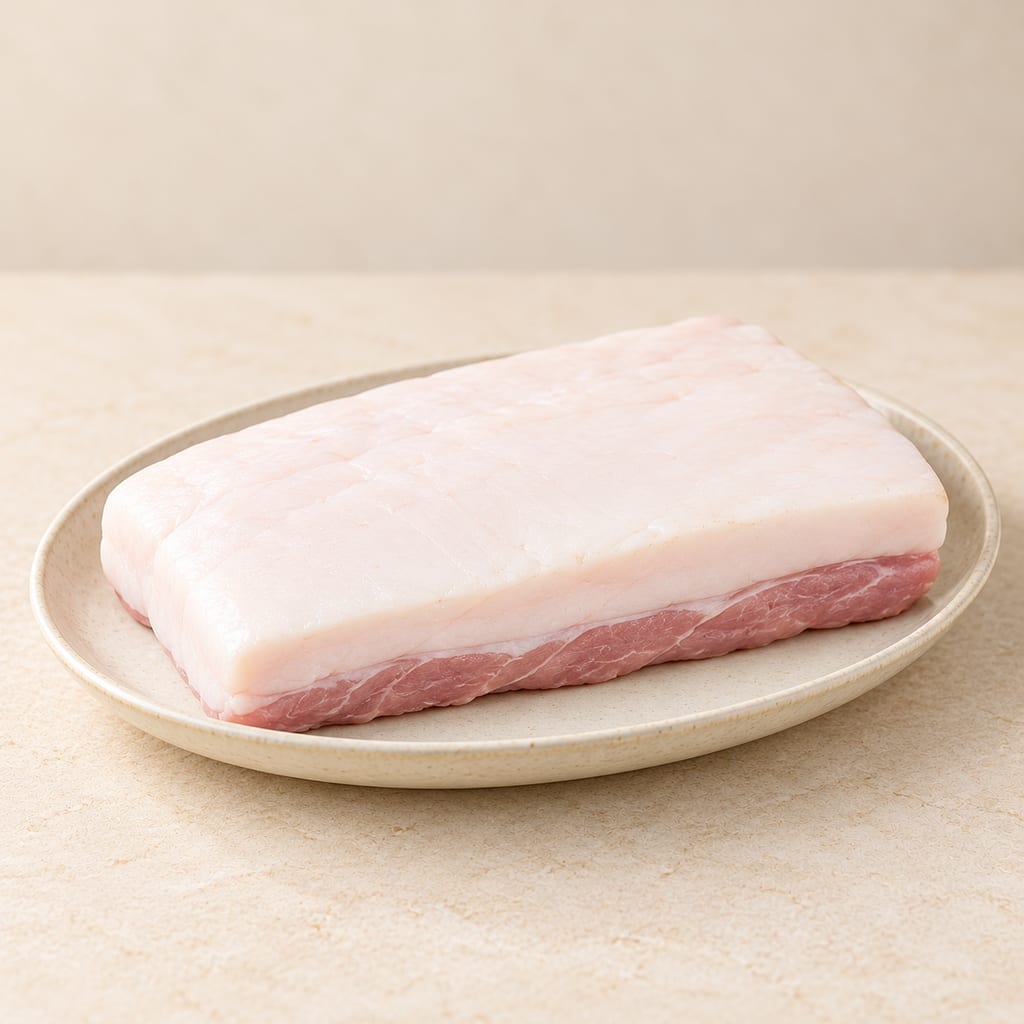
Pork back fat
Unrendered subcutaneous pork fat provides distinct pale pieces, texture and lipid flavor precursors in sausage, and differs from belly, leaf fat and rendered lard.
 FermenteaWhere food goes to change
Fat or oil
The crisp pieces left when pig fat is rendered into lard: škvarky, skwarki, tepertő, Grammeln. Still mostly fat, they are eaten on bread, ground into spreads and worked into savoury dough.
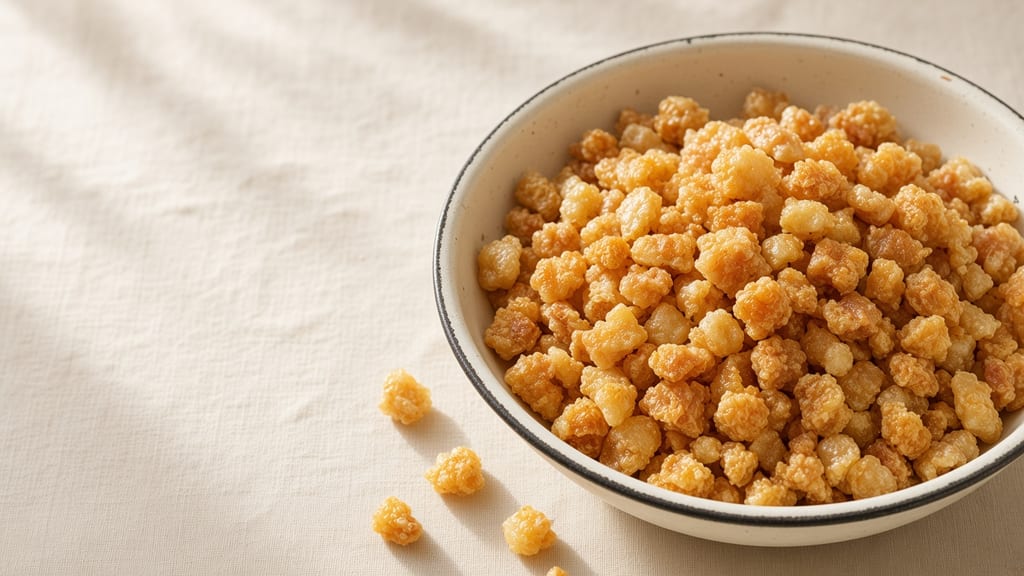
When cubes of pig fat are heated slowly, the fat runs out and the tissue that held it shrinks, browns and crisps. Those pieces are cracklings. The Austrian food code defines Grammeln, or Grieben, as exactly this: the tissue that remains when animal fat is melted out. Only a product from pig fat tissue may be sold as Grammeln.
The code sets a few rules for cracklings sold as food. They must contain no bone splinters and no burnt or dirty tissue. Bristles and rind may appear only where they cannot technically be avoided. The fat content must be at least 20 %.
In a home kitchen the cracklings come out at the end of rendering. J. W. Cole, writing on lard for American meat scientists in 1949, gave amber colour in the cracklings as the first sign that the lard was done. The hot fat is then strained, and the cracklings stay in the cloth or the sieve.
The Slovak ethnographic encyclopedia gives the same definition from the other side. Oškvarky are the pieces of fat left after rendering lard, mainly from pork slanina and less often from poultry. Because they still hold more than half fat, households pressed them further to win more lard.
Czech calls them škvarky and Slovak oškvarky. Polish says skwarki, while the regional entries on Poland's traditional products list use the Kashubian szpérki and the Kociewie skrzeczki. Austrian German has Grammeln and German more widely Grieben.
Hungarian has several. The Magyar Néprajzi Lexikon gives töpörtyű and tepertő as the general words, csörge in western Transdanubia, pörc in central and eastern Transdanubia, and kurcina between the Danube and the Tisza.
Further south and east the word changes again. Serbs fry čvarci, and the town of Valjevo holds a festival for one kind of them. Slovenes make ocvirki at the winter koline. Jewish households in eastern Europe rendered goose fat rather than lard and kept the goose cracklings, grivn, as a delicacy. In Vietnam the crisp pieces are tóp mỡ.
This page covers the pork cracklings of the fat-first kind, the by-product of lard. Skin-first snacks such as Mexican chicharrón de cuero and British pork scratchings start from rind rather than back fat. Chicharrón has its own page.
Most central European cracklings are a by-product. The cook wants lard, and the cracklings are what the strainer catches. The Hungarian lexicon describes how, in the western regions, the fat pieces were first thrown briefly into boiling water, a step called köpesztés or abárolás, then skinned, cubed and melted.
The same entry records a different product from the 20th-century Great Plain and the Tisza region. Bőrös tepertő, skin-on crackling, was cut larger, about the size of a palm, from the fleshy belly and scored. It was made to be eaten, not as a by-product.
Skin-first cracklings take that idea to the end. Mexican chicharrón de cuero, as the Larousse dictionary of Mexican gastronomy describes it, begins with pig skin that is scraped, scored, salted and dried for days before it ever meets hot fat. British pork scratchings are strips of skin with a layer of fat under the rind.
A crackling is shrunken fat tissue, and most of it is still fat. The Hungarian application for tepertős pogácsa as a Traditional Speciality Guaranteed gives crackling at 12–13 % protein and 82–84 % fat.
The yield is small. A Lyon charcutier told Le Progrès in 2014 that 150 kg of fresh rigon, the fat-ringed muscle from under the belly, cooked in 100 kg of lard, gives about 20 kg of gratons, because the rigon loses 87 % of its weight. A Puebla producer of chicharrón prensado described about 100 kg of fat yielding about 12 kg of pressed crackling. A Hanoi column puts the ratio for tóp mỡ at more than 3 kg of meat for 1 kg.
Because so much of a crackling is still fat, bakers can treat it as a fat. The Hungarian specification requires that at least 60 % of the fat in tepertős pogácsa come from crackling.
What happens after the strainer decides the texture. Some traditions leave the cracklings loose, and others press out more fat.
The Emilia-Romagna list of traditional products describes ciccioli made by cooking fat cuts and rind in a caldaia at about 120 °C for about four hours, then pressing them to part them from the strutto, the lard, before salting and seasoning. In Campania, cicoli from Mugnano del Cardinale and Quadrelle come from fat parts boiled in a big pot; the solid blocks left after squeezing are the cicoli.
In Valjevo, in western Serbia, the local press describes duvan čvarci, tobacco cracklings. Slanina is rendered for hours and wrung through clean cloth until the pieces come apart into thin golden threads that look like tobacco. Ordinary loose pieces are called šoder čvarci.
Ground cracklings are the other road. A Kashubian account on Poland's traditional products list says some households strained the smalec and ground the skwarki. The Hungarian pogácsa specification asks for a crackling cream of 70–75 % skinless crackling and 25–30 % pig fat, crushed with a rolling pin or minced on the smallest plate.
Czech cracklings are usually left unsalted so that they stay crisp, the Prague chef Roman Paulus told Radio Prague in 2022. Salt goes in later, when they are ground into a spread or eaten with bread.
Kashubian cooks salt and season the fat at the very end, when the skwarki are golden and the pan comes off the heat: marjoram rubbed between the hands, pepper and salt. Emilian ciccioli are salted and flavoured after pressing. In each case the salt meets the cracklings when the frying is over.
At a Hungarian pig-killing, according to the lexicon, the fresh tepertő was a breakfast or supper on its own, and corn flatbreads were often baked with it. Czech farm workers taken on for the harvest were brought a second breakfast that could include bread, cheese, slanina, škvarky, sádlo and soured milk. The Slovak encyclopedia records fresh oškvarky served with bread as a dish.
Vietnamese cooks scatter tóp mỡ on bún riêu and stir-fry it with sour pickled mustard greens, dưa xào tóp mỡ, a dish the Hanoi column calls a classic. Jewish households in eastern Europe ate bread rubbed with garlic and goose fat, with a few grivn on top, alongside a glass of tea.
The Slovak encyclopedia lists three further uses. Ground oškvarky were covered with lard in glass jars as a bread spread. They went into oškvarkové pagáčiky, small savoury bakes. And they dressed porridge, boiled potatoes and stewed cabbage.
Czech potato cookery used them the same way. The Czech ethnographic encyclopedia notes a baked potato dish made savoury with garlic and sometimes škvarky, and potato pancakes that became more a treat than a staple when škvarky or smoked meat were added.
In Slovenia, cracklings and some ham are rolled into ocvirkovka, a savoury rolled bake made in Dolenjska, Posavje and Štajerska for Fat Tuesday. In Campania, cicoli fill pizze and torte rustiche. A Virginia cookbook of 1879 prints cracklin bread: corn meal with a teacup of cracklings rubbed in, salt and warm water, shaped into pones and eaten hot. In Hungary crackling cream is the fat in tepertős pogácsa.
Cracklings were packed like lard. The Czech encyclopedia records rendered sádlo and škvarky stored in stoneware. The Hanoi column says tóp mỡ kept for weeks when it was poured into the bowl with the fat. A Slovenian report says ocvirki last months without refrigeration.
Those are household accounts, not tested shelf lives. The fat in cracklings turns rancid like any lard, and Cole's 1949 advice applies: keep them cold, dark and covered, in a full container, and throw them out if they smell stale.
Sádlo and škvarky made and stored at home.
Encyclopedia entry on oškvarky and their uses.
Regional names and methods from the Magyar Néprajzi Lexikon.
Legal definition of Grammeln.
Kashubian and Kociewie smalec with skwarki.
Local press describes duvan čvarci made for the town's festival; it does not date the method.
Newspaper column on tóp mỡ in Hanoi homes and food stalls.
Unrendered subcutaneous pork fat provides distinct pale pieces, texture and lipid flavor precursors in sausage, and differs from belly, leaf fat and rendered lard.
Pig adipose tissue used raw in some fermented meats and made into distinct products such as cured lardo, salo and rendered lard. Cut and firmness affect processing.
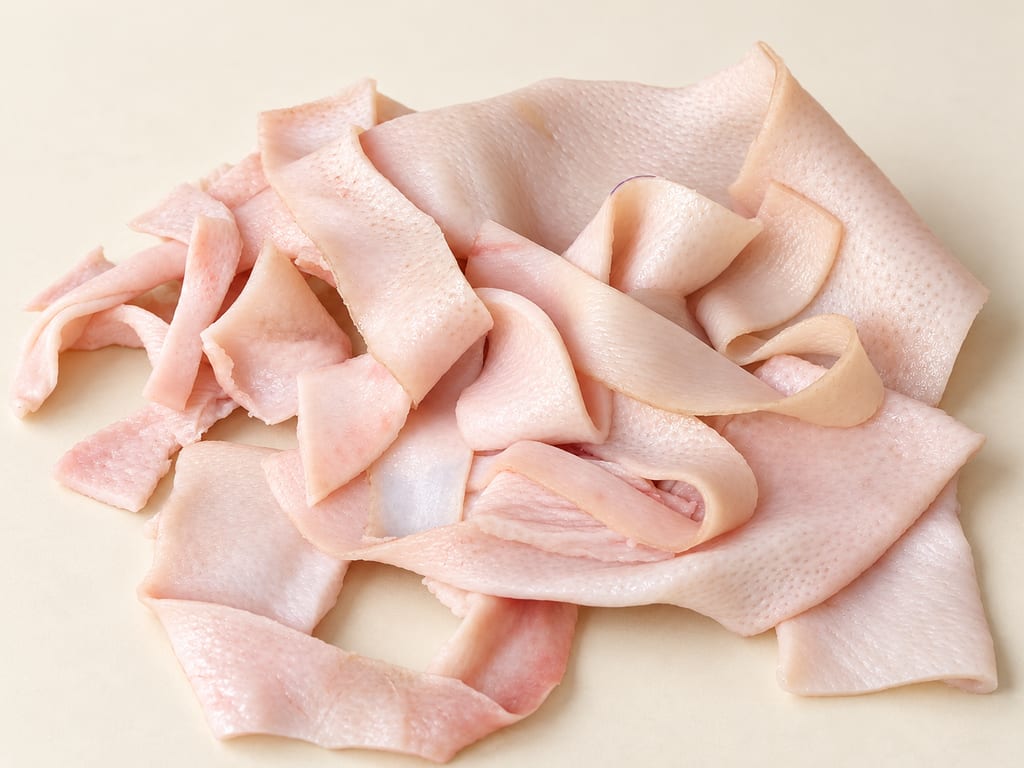
Pork skin is collagen-rich pig skin used fresh or cooked; in documented Southeast Asian meat ferments it is usually prepared separately before it joins the pork.

Chiloé potato cakes combine cooked mashed potatoes with drained raw grated potato; this measured version is fried and yields 20.
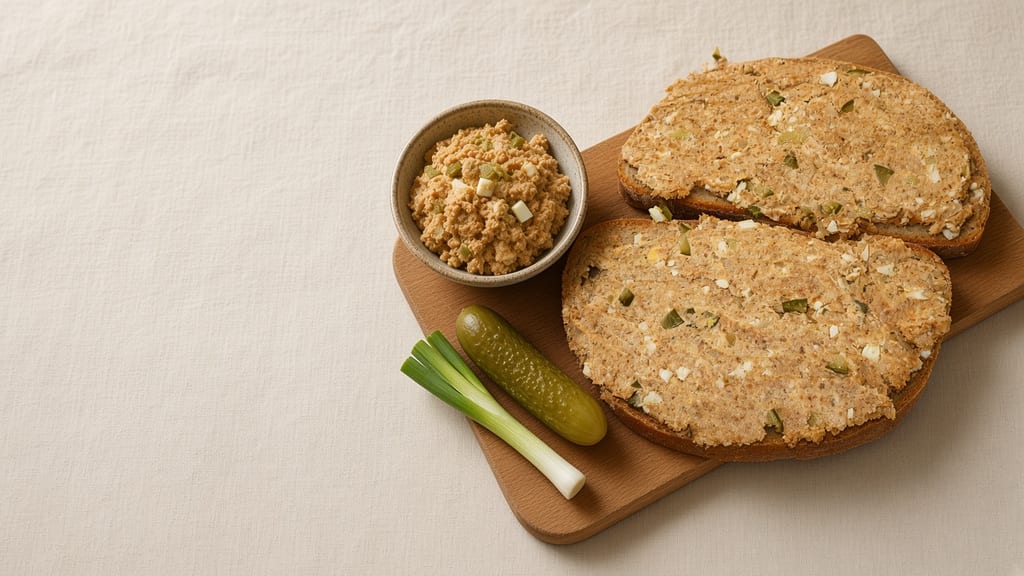
Ground or roughly chopped škvarky bound with a little lard, onion, mustard and hard-boiled egg, spread on fresh bread. A zabijačka leftover that became a pub staple.
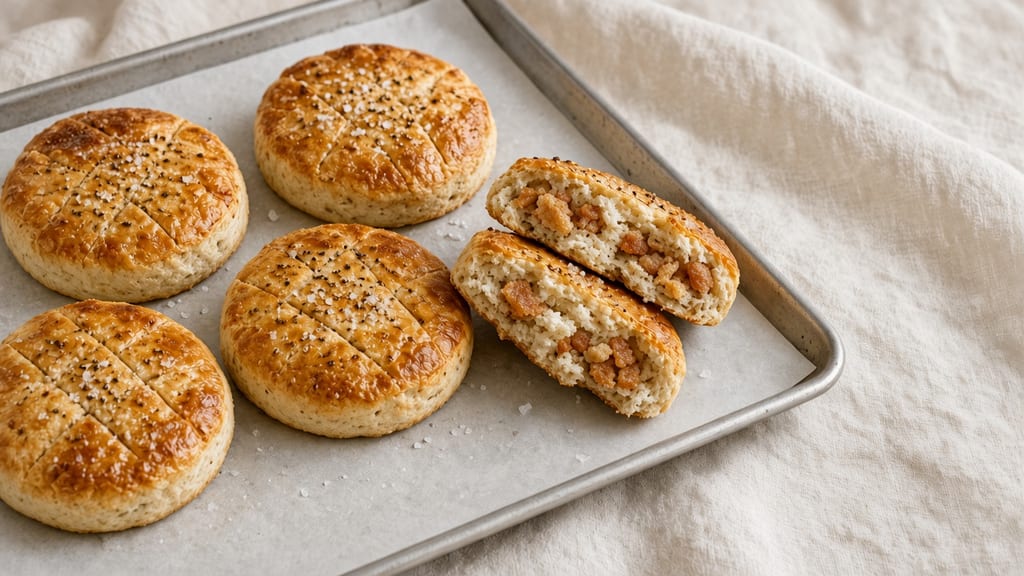
Small yeast flatbreads from Czech home baking, made with lard and chopped škvarky worked into the dough, scored in a grid, brushed with egg and scattered with coarse salt and caraway.
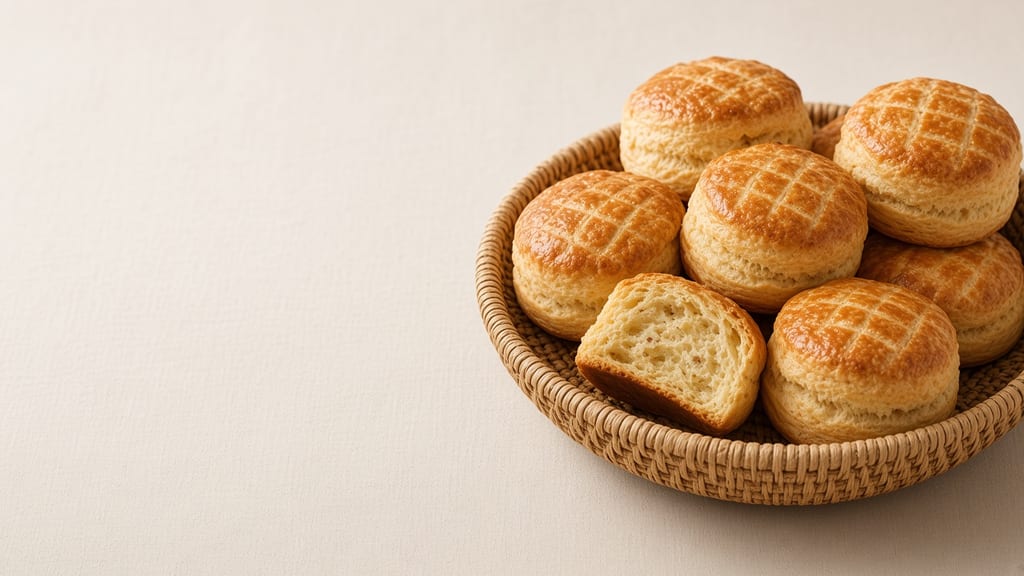
Small round yeast scones made with crackling cream, scored in a fine grid and baked hot until reddish brown. A Traditional Speciality Guaranteed in the EU, made short or flaky.
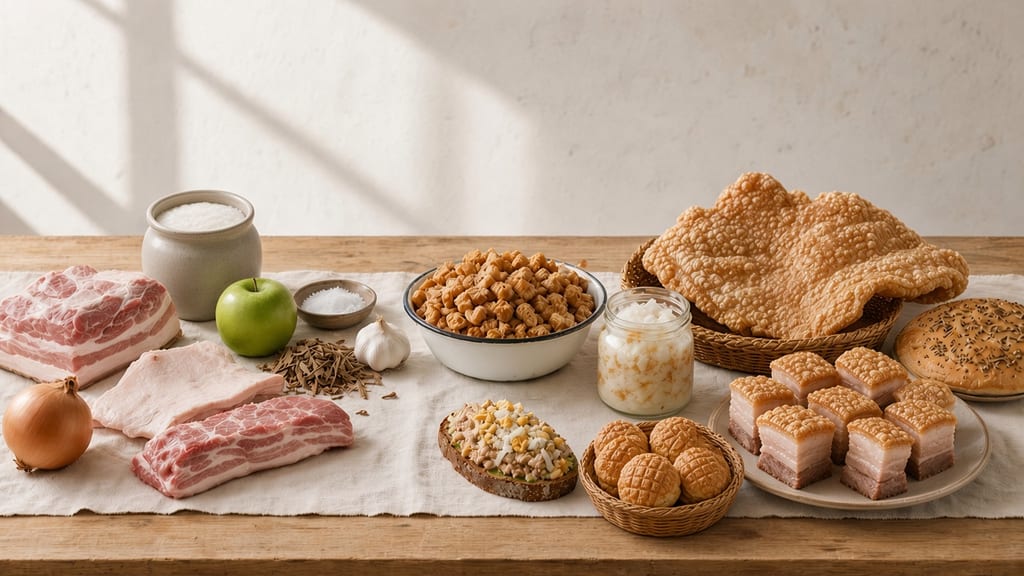
Škvarky, skwarki, tepertő, chicharrón, gratons. How cooks render pig fat, dry and fry skin, press and wring the pieces, and bake with them, from the Czech pig-killing to Mexico and Soria.
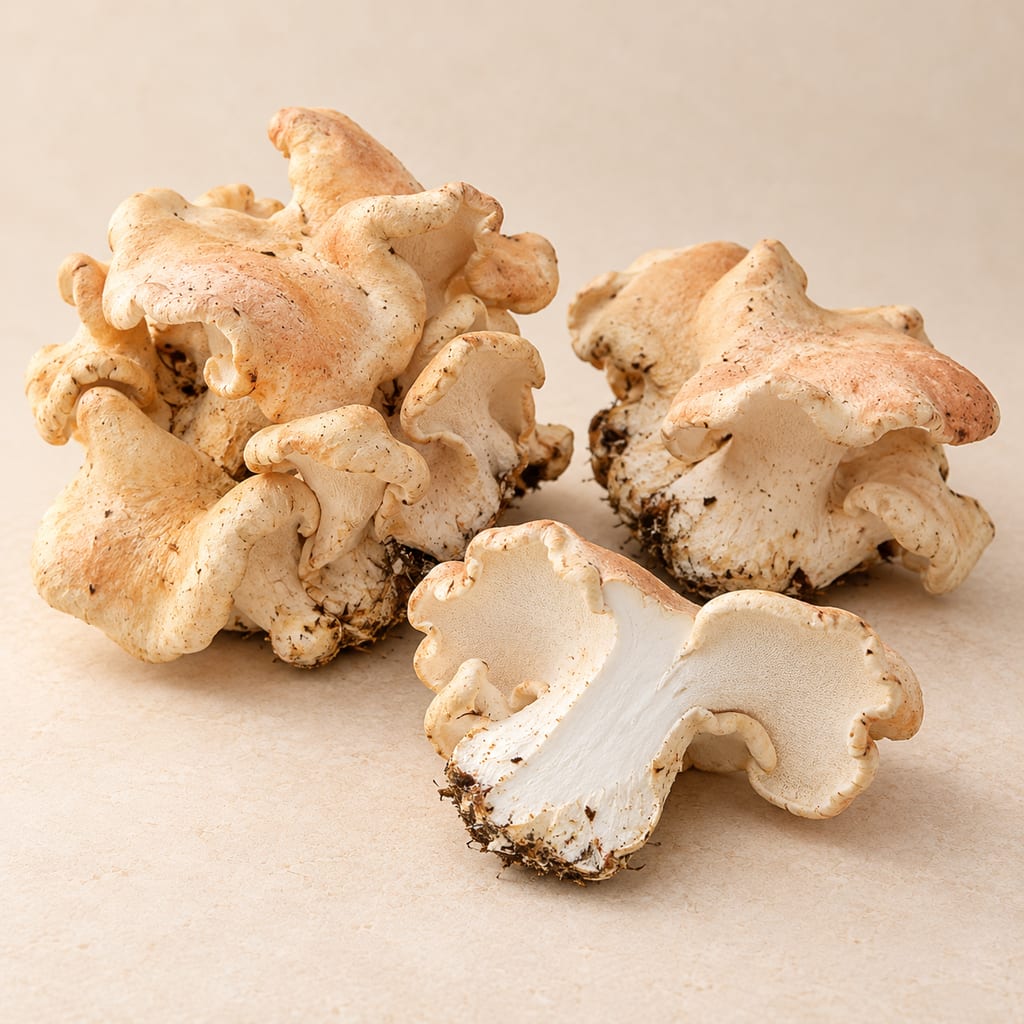
Albatrellus confluens is a ground-growing polypore with fused buff-orange caps. Sources document Chinese market use and regional edibility, but others reject it as too bitter; taxonomy also varies between Albatrellus and Albatrellopsis.
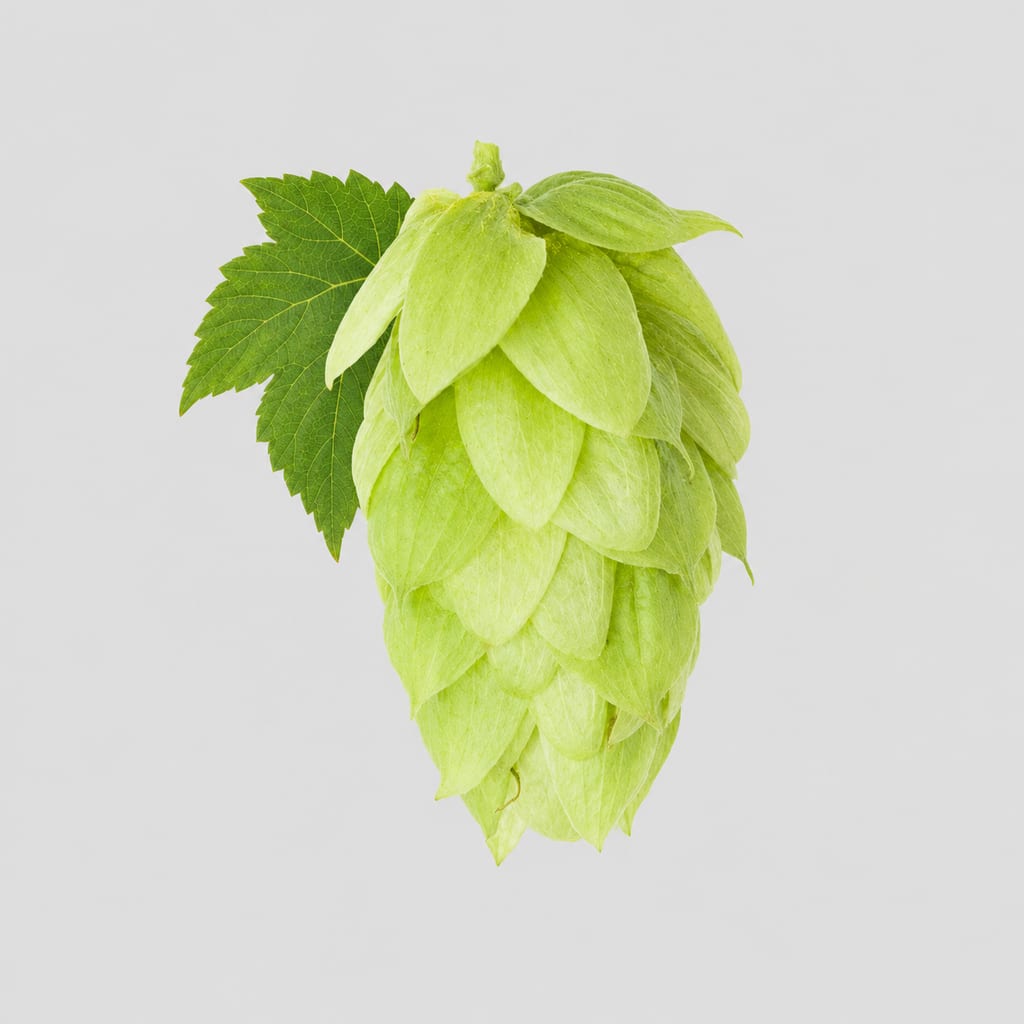
Saaz, or Žatecký poloraný červeňák, is a Czech fine-aroma hop cultivar used for herbal hop character and bitterness in beer. Its cultivar, product form, origin and lot analysis describe different parts of the ingredient.
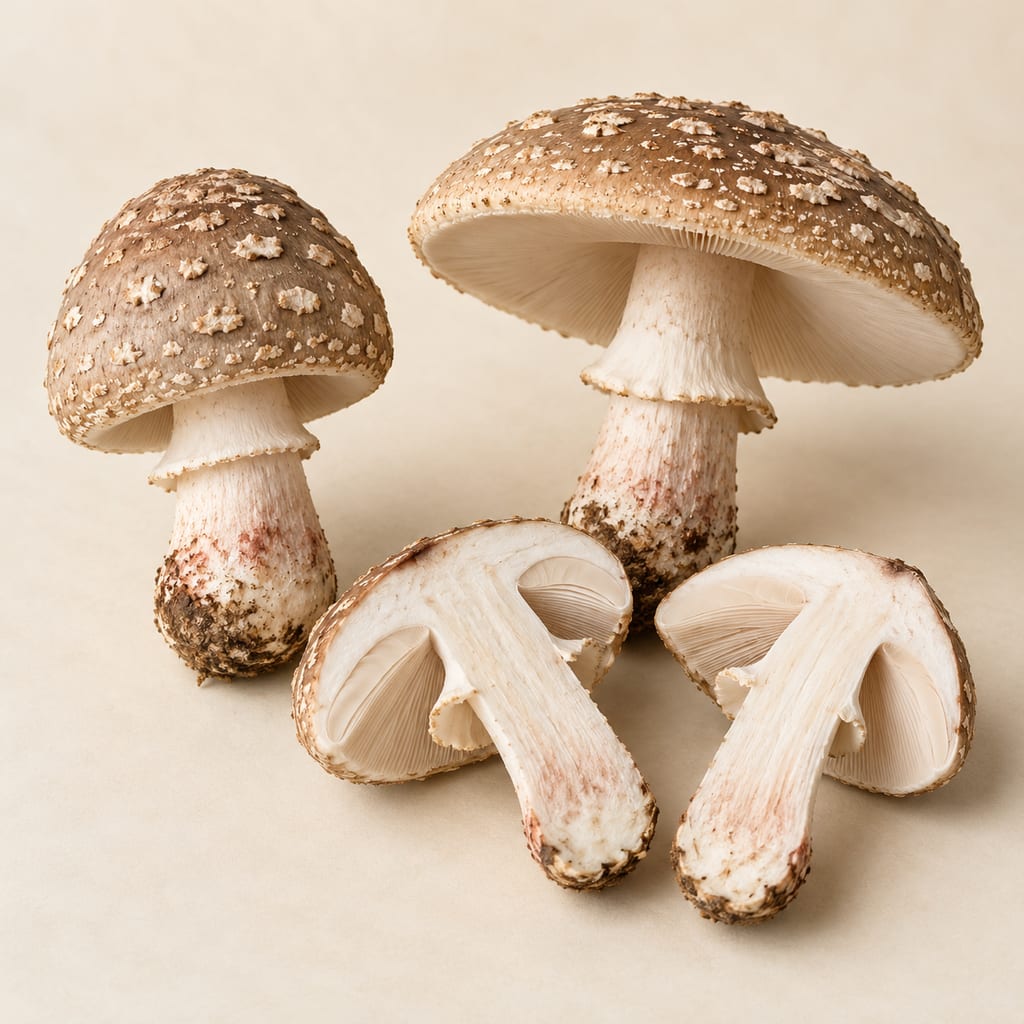
The European blusher, Amanita rubescens, is a woodland amanita whose flesh turns pink when cut. It is eaten only well cooked and is easily confused with the poisonous panthercap.
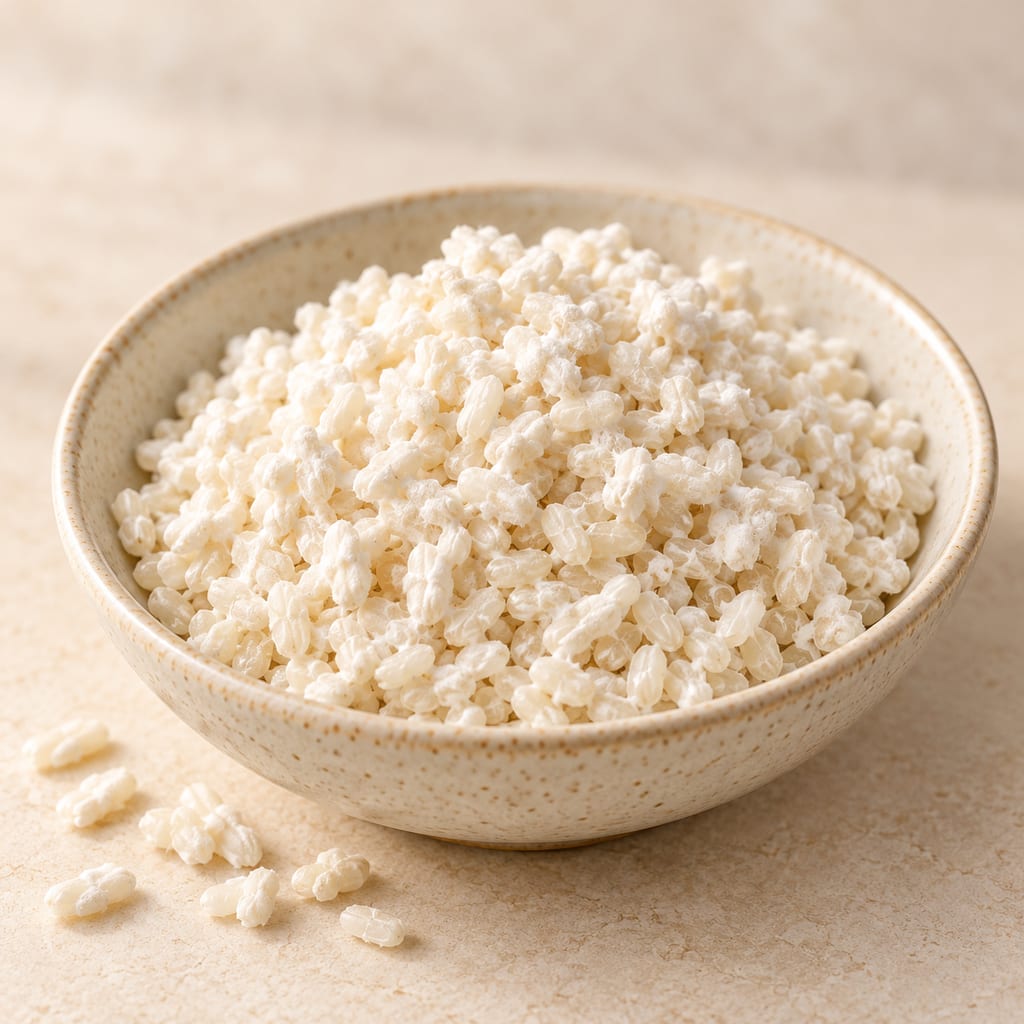
Koji is steamed grain — rice, barley, soybean or wheat — grown out with a food-grade Aspergillus mold until the kernels carry working enzymes. It is bought or cultivated, and it converts starch and protein for the foods that follow.
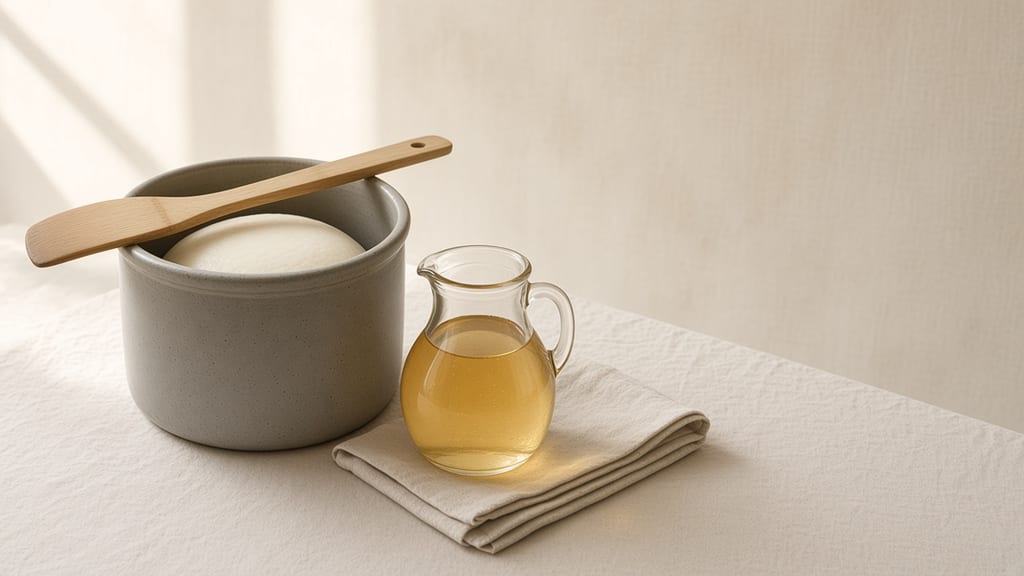
Pig fat melted out of its tissue and strained. Austrian food law grades it as plain lard, house lard and lard with cracklings, and a 1949 lard study sets the heat limit at 116–121 °C.
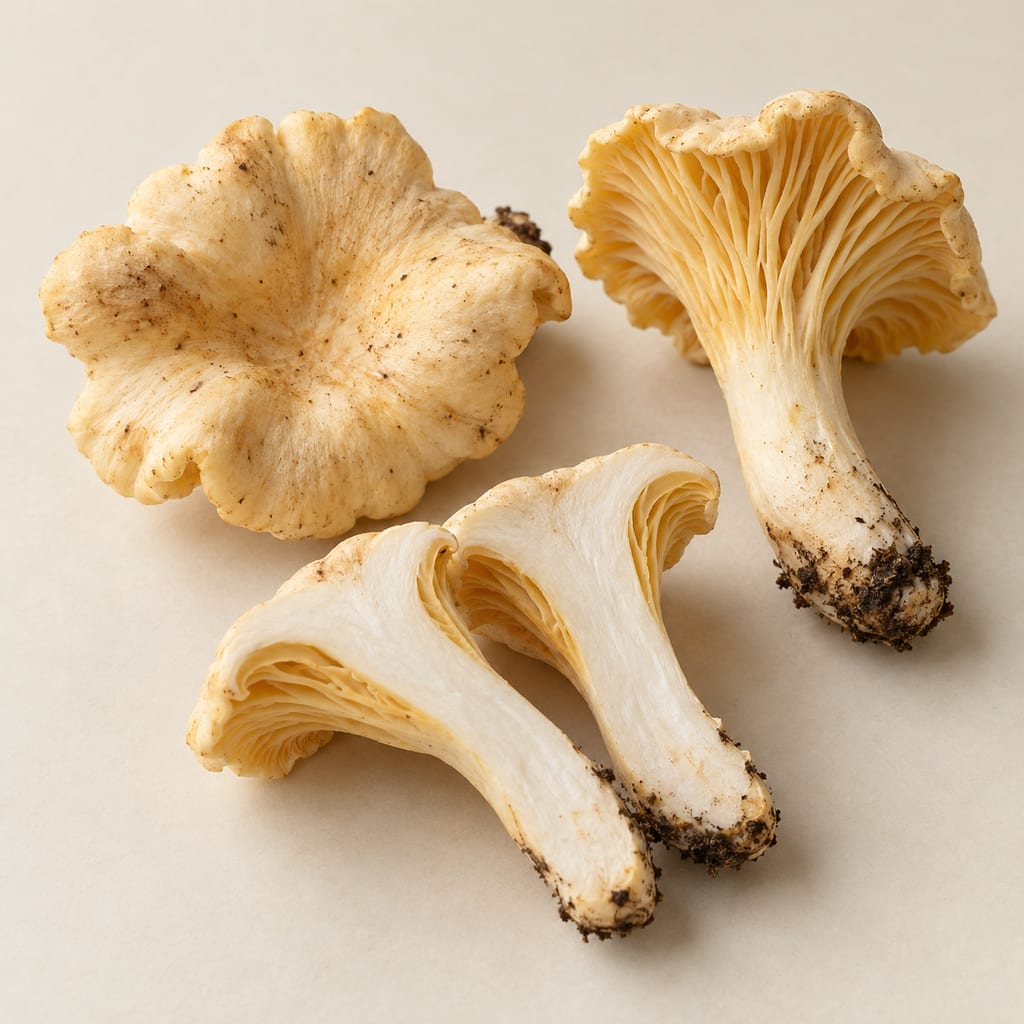
Cantharellus pallens is a pale, fleshy European chanterelle with orange-yellow folded ridges. It is gathered and sold as food in documented regional traditions, but its variable appearance makes photographs unreliable for identification.
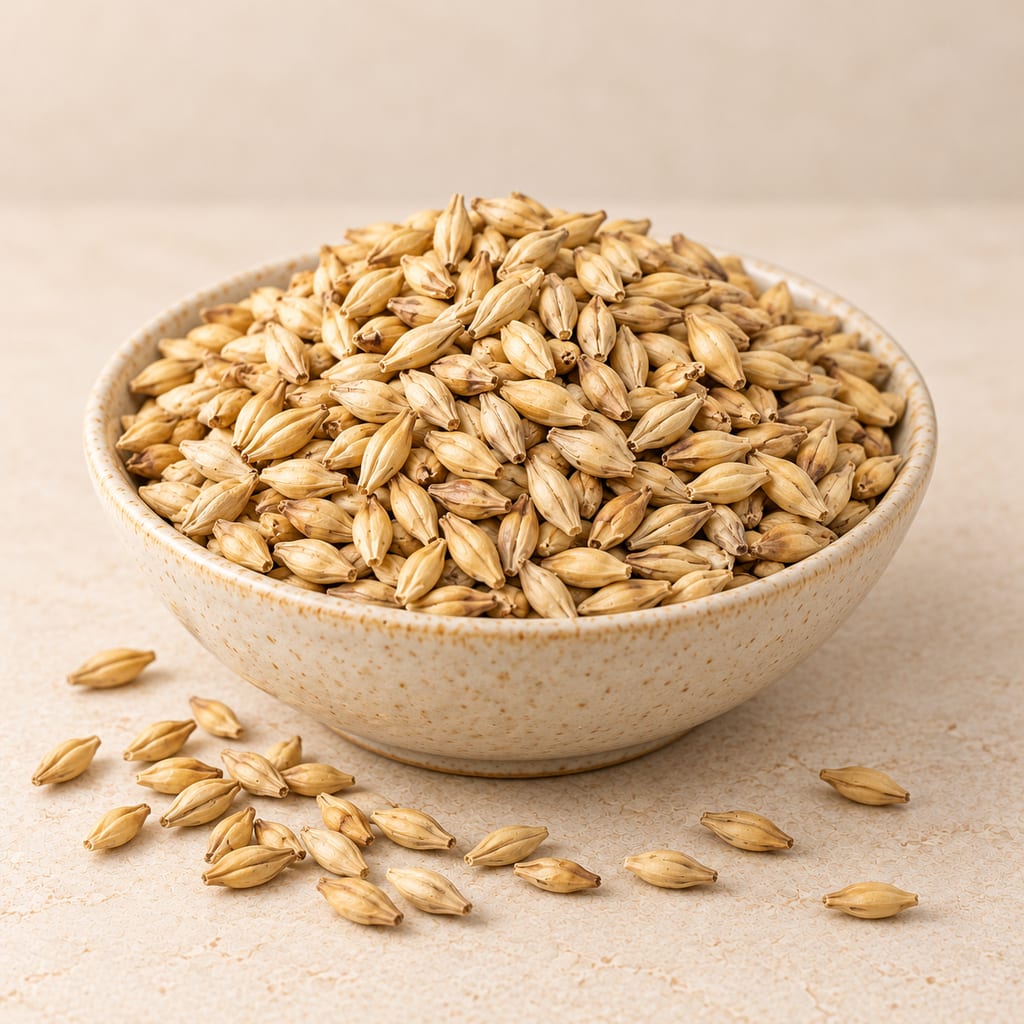
A pale, lightly kilned barley base malt that supplies wort material and brewing enzymes, with product-specific flavour, analysis and handling requirements.
Saccharomyces pastorianus is the hybrid lager yeast, a cross of the ale yeast S. cerevisiae and the cold-tolerant S. eubayanus, that ferments beer at cool temperatures from the bottom of the tank.

A Cap-Pelé boucanière is an Acadian herring-smoking building. The documented Willie Niles example is a one-storey wood-frame structure with a ridge smoke vent and interior bays for hanging fish-bearing cannes.

Achcharu is a family of Sri Lankan vinegar pickles made with mixed vegetables or seasonal fruit and a piquant spice dressing. This version is a quick, refrigerated, non-fermented mixed-vegetable pickle.

The acocote is a long, hollowed and dried gourd used to draw aguamiel from a mature maguey. It is a harvesting tool: the sap is transferred to a separate vessel before it ferments into pulque.

Adrak murabba preserves young ginger in sugar syrup, a sweet South Asian preparation recorded in Indian cookery and food-processing sources.

Parkia biglobosa seeds are fermented into regional West African seasonings, including nététou, iru, dawadawa and soumbala. The yellow fruit pulp is a separate food, and names and methods vary by place.

Japanese reddish-brown vinegar from sake lees matured about three years, turned to vinegar by acetic bacteria; the vinegar of Handa and Edomae sushi rice.

A refined common-wheat flour blended for a broad range of baking; its protein and behavior vary with wheat, milling and market.

The almond mushroom, Agaricus subrufescens, was cultivated in eastern North America in the 1800s, lost its market, and returned as a cultivated mushroom from Brazil, where it is grown under several names.
No community contributions have been published for this entry yet.
Sign in to contribute. Published comments and photos are free to read.
Österreichisches LebensmittelbuchIdentity
Österreichisches Lebensmittelbuch B 30, 1.5.3 Grammeln (Grieben)Tissue left after melting out; no bone splinters, burnt or dirty tissue; bristles and rind only where unavoidable; at least 20 % fat; Grammeln only from pig fat tissue
Cited in: What is left in the pot
Reciprocal Meat Conference Proceedings, AMSA, 1949Method · Storage
Processing and storage problems of lardAmber cracklings as a doneness sign
Rancidity and storage advice
Cited in: What is left in the pot; Keeping cracklings
Centrum pre tradičnú ľudovú kultúruIdentity · Uses
OškvarkyPieces left after rendering, mainly from pork slanina, less from poultry
More than half fat, so pressed further
Fresh with bread; ground and covered with lard in jars; oškvarkové pagáčiky; dressing porridge, potatoes, cabbage
Cited in: What is left in the pot; Pressed, wrung and ground; Eaten on their own; Cooked into other food
Magyar Néprajzi Lexikon (MEK edition)Identity · History
töpörtyűNames töpörtyű, tepertő, csörge, pörc, kurcina
Western regions: brief boiling, köpesztés or abárolás
Bőrös tepertő from fleshy belly, palm-sized, scored, 20th-century Great Plain
Breakfast or supper at pig-killing; corn flatbreads baked with it
Cited in: One food, many names; Fat first or skin first; Eaten on their own
Ministerstwo Rolnictwa i Rozwoju Wsi, gov.plIdentity · Method
Smalec ze skwarkami (Smôłt ze szpérkama)Kashubian name szpérki
Seasoning at the end with marjoram, pepper and salt
Some ground the skwarki
Cited in: One food, many names; Pressed, wrung and ground; Salt and seasoning
Ministerstwo Rolnictwa i Rozwoju Wsi, gov.plIdentity
Szmalec kociewski ze skrzeczkamiKociewie name skrzeczki
Cited in: One food, many names
vamedia.info, 16 September 2026Method
Najavljen 20. festival duvan čvarakaDuvan čvarci rendered for hours and wrung through cloth into tobacco-like threads
Šoder čvarci as the ordinary kind
Festival since 2006
Cited in: One food, many names; Pressed, wrung and ground
RTV Slovenija, 27 February 2017Uses
A Wintertime FeastOcvirki at koline; last months without refrigeration
Ocvirkovka for Fat Tuesday in Dolenjska, Posavje, Štajerska
Cited in: One food, many names; Cooked into other food; Keeping cracklings
YIVO Encyclopedia of Jews in Eastern EuropeUses
GeeseGrivn as a delicacy
Bread with garlic, goose fat, grivn and tea
Cited in: One food, many names; Eaten on their own
An Ninh Thủ Đô, 17 September 2023Uses · Storage
Khi tóp mỡ lên đờiMore than 3 kg meat for 1 kg tóp mỡ
Bún riêu topping; dưa xào tóp mỡ
Kept for weeks in fat
Cited in: One food, many names; How much fat stays in; Eaten on their own; Keeping cracklings
Larousse CocinaIdentity
ChicharrónChicharrón de cuero starts from scraped, scored, salted, dried skin
Cited in: Fat first or skin first
BBC News, 20 June 2015Identity
Are pork scratchings going posh?Scratchings are strips of pig skin with a fat layer under the rind
Cited in: Fat first or skin first
Official Journal of the European Union (GOV.UK copy)Identity · History
Publication of an application for a TSG: Tepertős pogácsa, OJ C 94, 10 March 2016Crackling 12–13 % protein and 82–84 % fat
Crackling cream 70–75 % crackling, 25–30 % fat
Oral data: crackling used for soap in the central Tisza region; eating developed gradually
At least 60 % of the fat from crackling
Cited in: How much fat stays in; Pressed, wrung and ground; Cooked into other food
Le Progrès, 20 November 2014Identity
Le graton lyonnais, l'ancêtre du biscuit apéritif150 kg rigon in 100 kg lard gives about 20 kg gratons; rigon loses 87 % of its weight
Cited in: How much fat stays in
Secretaría de Cultura, via Google Arts & CultureMethod
How do I prepare chicharrón prensado?220 lb of fat gives about 26 lb of pressed chicharrón
Cited in: How much fat stays in
Regione Emilia-RomagnaMethod
CiccioliFat cuts and rind cooked in a caldaia at about 120 °C for about 4 h, pressed, then salted and flavoured
Cited in: Pressed, wrung and ground; Salt and seasoning
Regione CampaniaMethod · Uses
CicoliFat parts boiled; blocks left after squeezing; filling for pizze and torte rustiche
Cited in: Pressed, wrung and ground; Cooked into other food
Radio Prague International, 31 August 2022Method
Czech Food Classics: Pork crackling spreadCracklings usually unsalted to stay crisp
Cited in: Salt and seasoning
Etnologický ústav AV ČR, 2007Uses
Národopisná encyklopedie Čech, Moravy a Slezska, vol. P: entry "přesnídávka"Second breakfast for seasonal workers included škvarky and sádlo
Cited in: Eaten on their own
Etnologický ústav AV ČR, 2007Uses
Národopisná encyklopedie Čech, Moravy a Slezska, vol. B: entry "brambory"Baked potato dish savoury with garlic and sometimes škvarky
Raw-potato placky with škvarky or smoked meat became a treat
Cited in: Cooked into other food
Etnologický ústav AV ČR, 2007Storage
Národopisná encyklopedie Čech, Moravy a Slezska, vol. ZSádlo and škvarky stored in stoneware
Cited in: Keeping cracklings
Historical Foodie (transcription)History · Uses
Cracklin Bread, from Housekeeping in Old Virginia (1879)Corn meal, a teacup of cracklins, salt, warm water, made into pones
Cited in: Cooked into other food