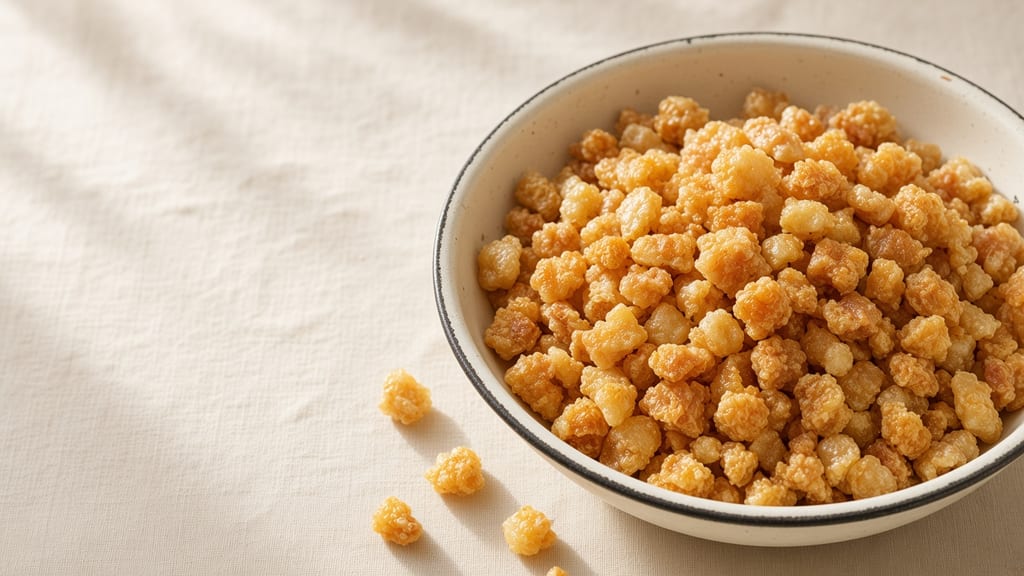
Pork cracklings
The crisp pieces left when pig fat is rendered into lard: škvarky, skwarki, tepertő, Grammeln. Still mostly fat, they are eaten on bread, ground into spreads and worked into savoury dough.
 FermenteaWhere food goes to change
tepertős pogácsa · crackling scones · pork crackling pogácsa · töpörtyűs pogácsa
Small round yeast scones made with crackling cream, scored in a fine grid and baked hot until reddish brown. A Traditional Speciality Guaranteed in the EU, made short or flaky.
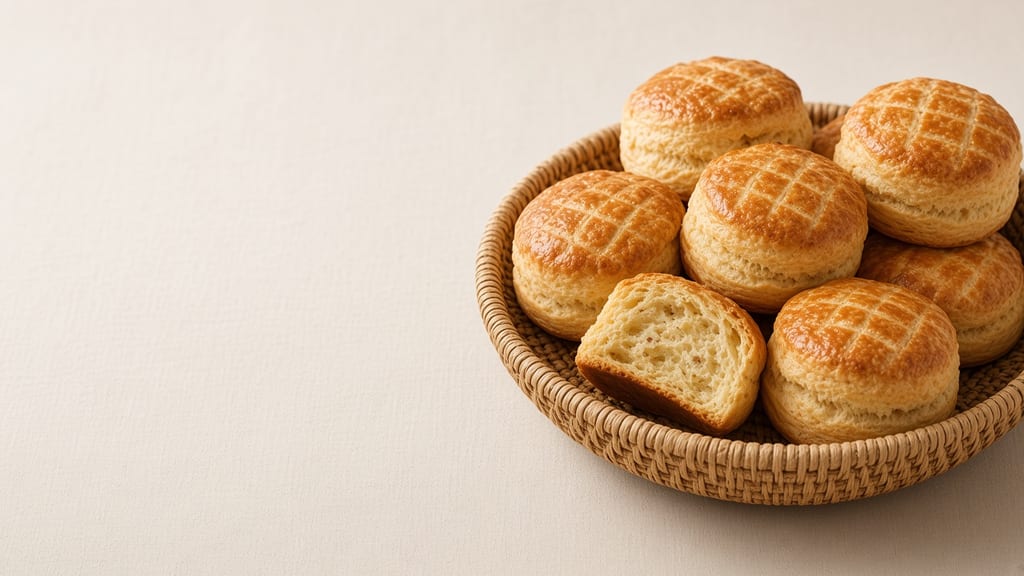
Tepertős pogácsa is one of the few crackling foods with a legal definition. The Principal Order of Hungarian Bakers in Komárom applied for it as a Traditional Speciality Guaranteed, and the EU registered it in 2013. The specification describes a round, cylindrical savoury scone 3–5 cm across and 25–50 g in weight, seasoned with salt and pepper, raised with yeast and either short or flaky. The top is shiny reddish brown and scored densely into squares; the sides are sand-coloured and matt.
The numbers are strict. Fat makes up 20–30 % of the dry matter. Cracklings equal 25–40 % of the flour weight, and at least 60 % of all the fat must come from the cracklings. Only pig fat is allowed. Salt stays under 4 % of the dry matter. No additives, raising agents or preservatives may be used.
The cracklings themselves are defined too. They are what is left after frying fat bacon with little or no meat, and contain 12–13 % protein and 82–84 % fat. The specification credits the high fat with making the scones dry out more slowly and keep longer than others of their kind.
Everything starts with tepertőkrém, crackling cream. It is 70–75 % fresh, skinless cracklings and 25–30 % lard. The cracklings are flattened with a rolling pin until no coarse pieces remain, or minced on the finest setting, then mixed with the lard. Goose cracklings, vegetable fat and margarine are excluded, and so are cracklings with the skin on.
For the short scone, 250–400 g of this cream is rubbed into each kilogram of flour until it coats the flour particles. The specification calls that coating the essential condition of the short texture.
The short scone, omlós, is the method given above. It breaks into pieces, with the brown crackling bits spread evenly through a crumb that is short but not crumbly.
The flaky scone, leveles, has a layered structure. The crackling cream gets 1.5 % salt and the pepper, because salt added only to the dough would break the layers. Half the lard goes into the cream and half into a basic dough of flour, about 1 % salt, yeast in milk, wine or vinegar, possibly egg and yolk, and sour cream.
The cold cream is spread thinly over the rolled dough. Either the dough is rolled up, rested 15–30 minutes, rolled out and rolled up again at 90 degrees, or the cream is spread and the dough folded at least three times. The specification warns that if the 90-degree turn is skipped the scones will tilt in the oven. In baking, the fat melts between the cold layers and steam pushes them apart. The flaky scones are rolled a finger thick, 1–2 cm, scored, cut, glazed, risen 40–45 minutes and baked at 220–240 °C for 8–10 minutes.
The specification has the dough made from cold ingredients and rested cold, either until its core reaches 26 °C or in a fridge at 5–8 °C for at least three hours. It names this cold dough of 24–26 °C as one of the special features of the product. Over-kneading is the other risk: the short texture will not come if the dough is worked too long.
Pogácsa is an old word. The specification dates it to around 1395, when it meant a griddle bread baked in ash and embers, the hamuban sült pogácsa of Hungarian folk tales. The small cut scone became popular later and was the favourite bakery product of the peasant kitchen.
Crackling came later. The specification links it to rendering becoming a common household job, first in noble households of the 18th century and among peasants of the Danube–Tisza region from the 1850s. It also records that around 1900, peasant households in the Central Tisza region used crackling to make soap, and that eating it developed only gradually. After the pig-killing, scones were then baked with fresh, small, skinless cracklings. Zsigmond Bátky's 1933 summary of Hungarian ethnography mentions scones of unleavened and leavened dough with cracklings among their flavourings, and the specification lists cookbooks with the recipe from 1881 onwards.
The Magyar Néprajzi Lexikon adds that at the pig-killing, corn flatbreads were often baked with the fresh tepertő.
The specification says tepertős pogácsa is served as a second dish with main-course soups such as goulash and bean soup, offered to guests at meetings, baked for weddings, christenings, Christmas and Easter, and served with wine in village tourism. Hungary also lists it among its Hungarikum products. Its Czech and Slovak relative, the škvarkový pagáč, has its own page on this site.
The EU specification says the word pogácsa was first used around 1395 for a griddle bread baked in ash and embers. Crackling scones needed two things: rendering bacon fat as a common activity, and crackling as an everyday food. The specification cites a 1770s description of a noble household and 18th-century inventories with lard firkins, and lard firkins in peasant registers between the Danube and the Tisza from the 1850s. It records oral data from around 1900 that crackling was used for making soap by peasant households in the Central Tisza region, and that eating it developed gradually. An ethnographic summary of 1933 mentions scones made with cracklings, and cookbooks print the recipe from 1881.
Scaling: linear
Use fresh cracklings, as the specification requires.
Traditional Speciality Guaranteed; applicant the Principal Order of Hungarian Bakers, Komárom.
The crisp pieces left when pig fat is rendered into lard: škvarky, skwarki, tepertő, Grammeln. Still mostly fat, they are eaten on bread, ground into spreads and worked into savoury dough.
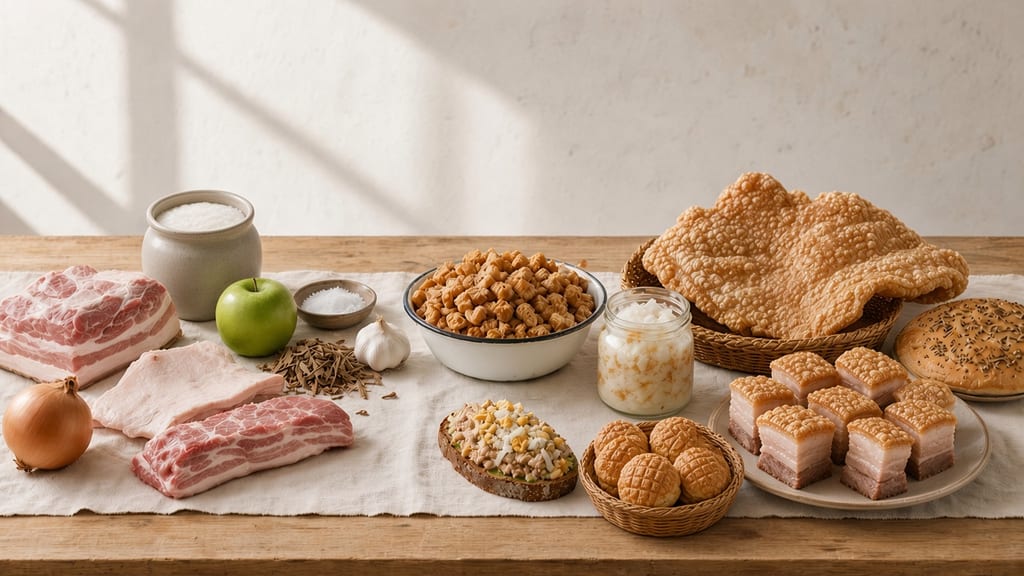
Škvarky, skwarki, tepertő, chicharrón, gratons. How cooks render pig fat, dry and fry skin, press and wring the pieces, and bake with them, from the Czech pig-killing to Mexico and Soria.
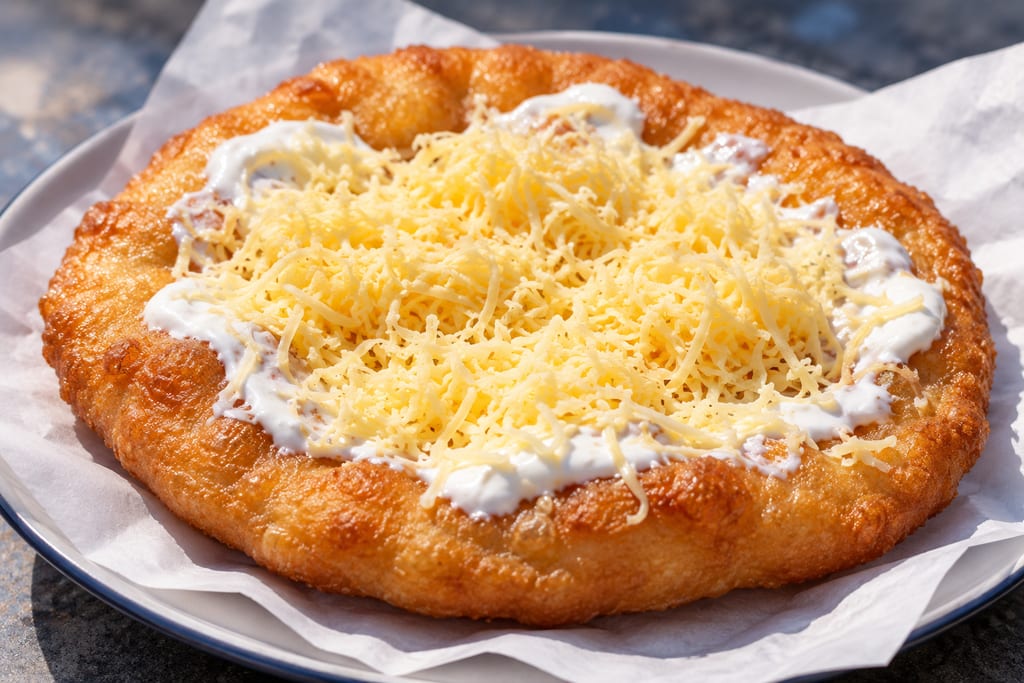
Soft yeast dough is shaped into rounds and fried at 180 °C, then brushed with garlic water and topped with sour cream and grated cheese.
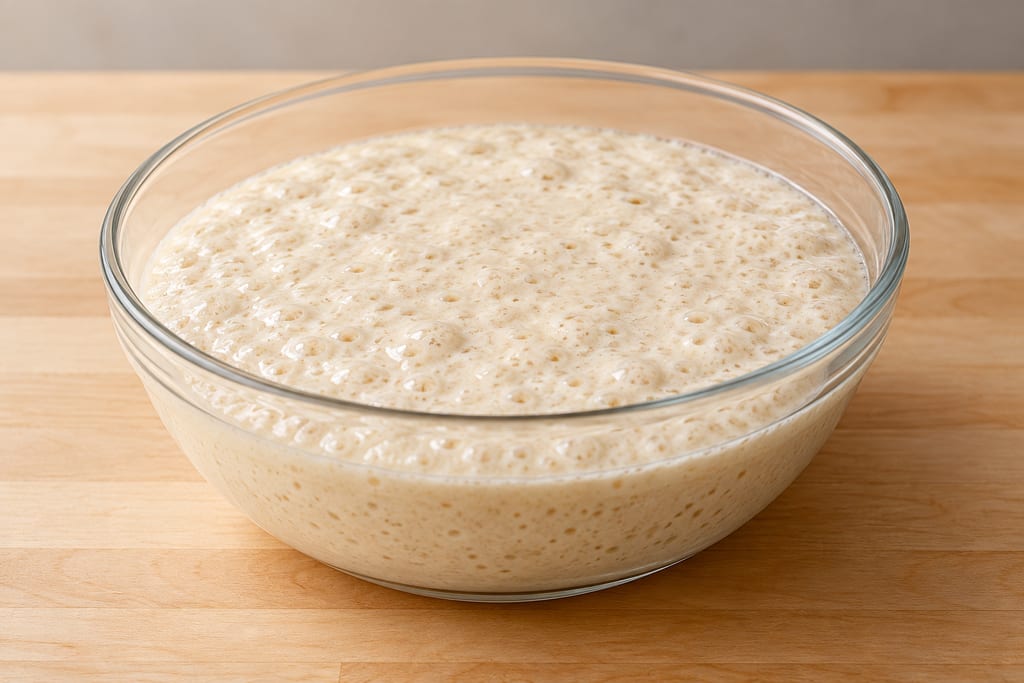
Poolish is a loose, unsalted bread preferment of roughly equal weights of wheat flour and water with a pinch of baker's yeast, left to ripen before it goes into the final dough.
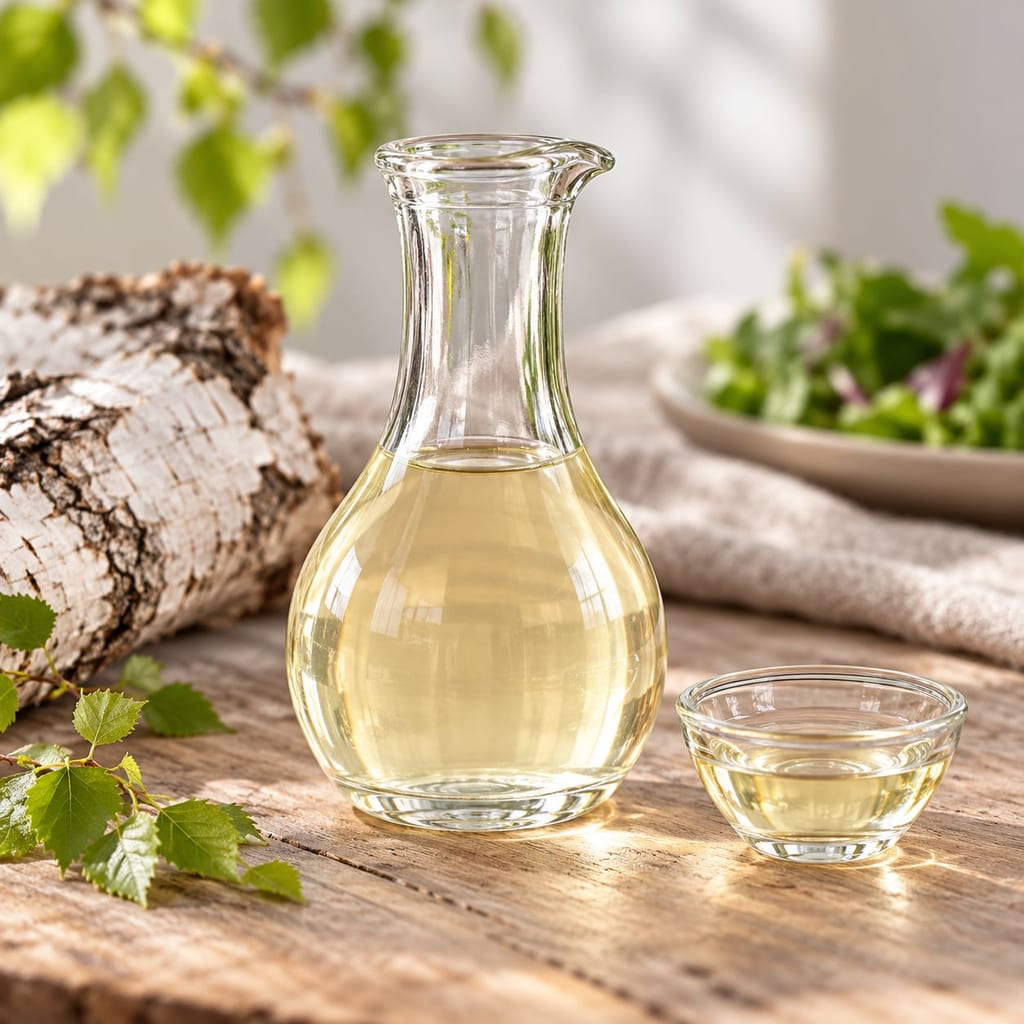
Vinegar from spring birch sap fermented to alcohol and then acetic acid, usually with added sugar or honey because the sap is so dilute; made in Sweden and described in older eastern European accounts.
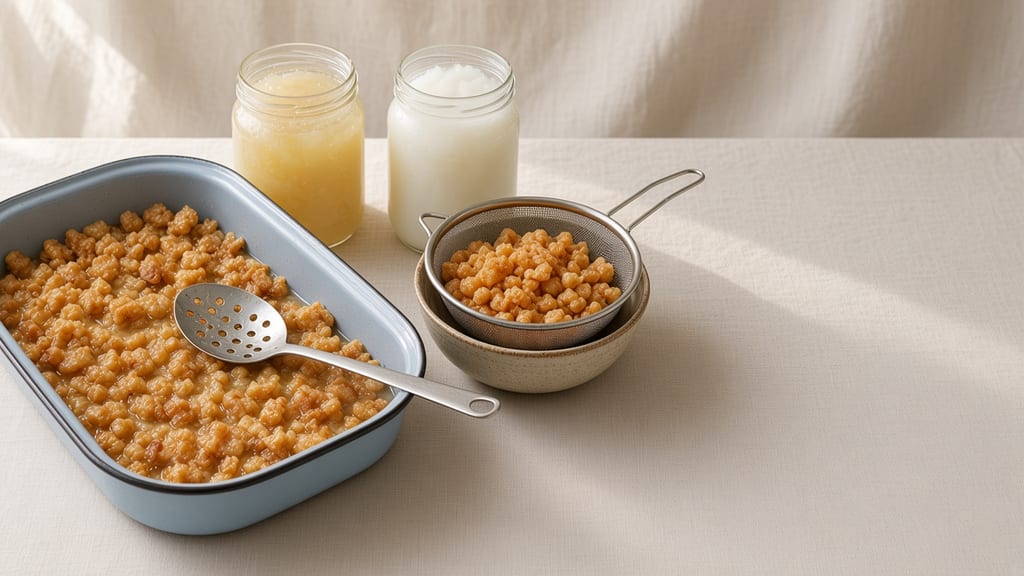
Cubed pig fat rendered slowly until the cracklings turn amber, then strained into lard. The Czech zabijačka method, with its Polish, Hungarian, Slovak, Austrian and Serbian relatives.

A mayonnaise sauce with chopped gherkins or capers, herbs and lemon, served with fried and grilled fish. It was named in nineteenth-century France alongside steak tartare.

Zacusca is a Romanian and Moldovan spread of roasted eggplant and sweet peppers cooked down with onion, tomato and oil, made in quantity in autumn and kept in jars for winter.
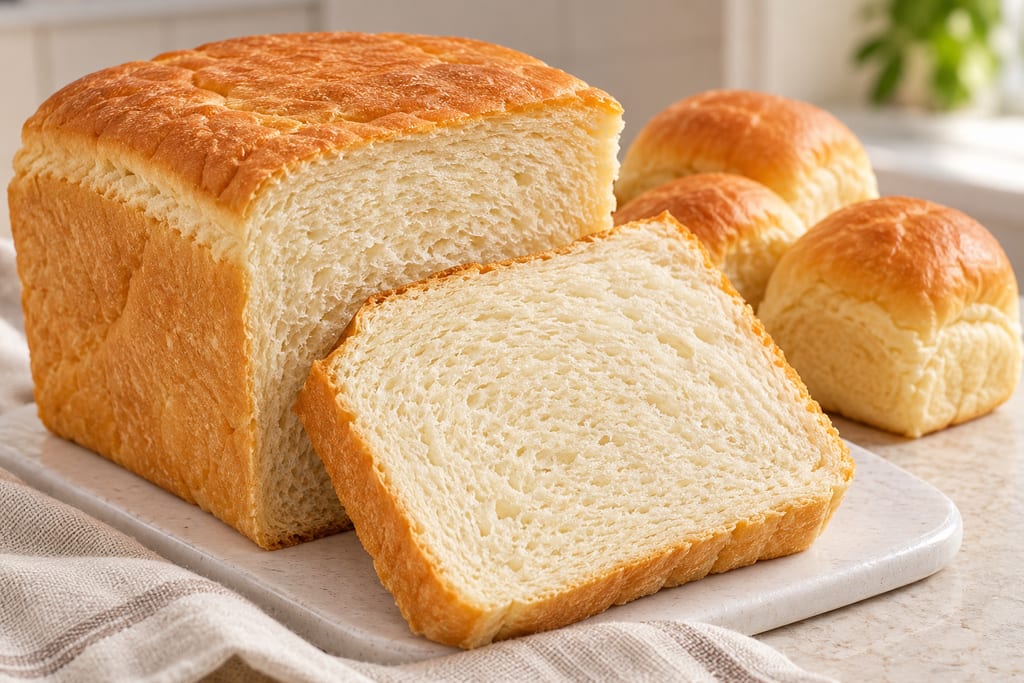
This softer home-style Agege bread uses a scalded flour paste, an enriched yeast dough and a 9×5-inch loaf pan, with rolls from the extra dough.
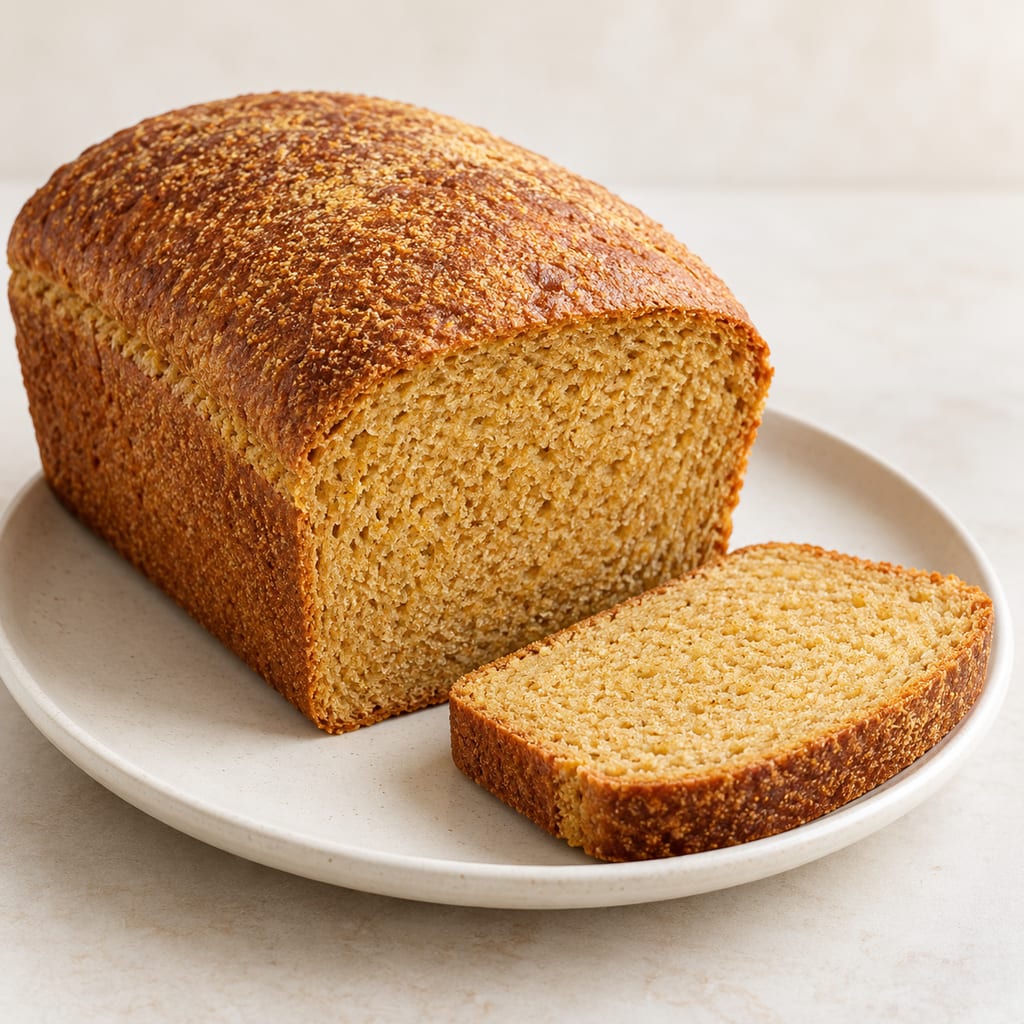
Anadama is a New England yeast loaf made with wheat flour, cornmeal and molasses. Scalded cornmeal enriches the dough, while molasses lends sweetness and a dark crust; it is especially good toasted or beside soup and baked beans.

A yeast-raised wheat ring shaped from a firm dough, briefly boiled and baked. This source-batch formula gives a gently malted crust and a chewy crumb.
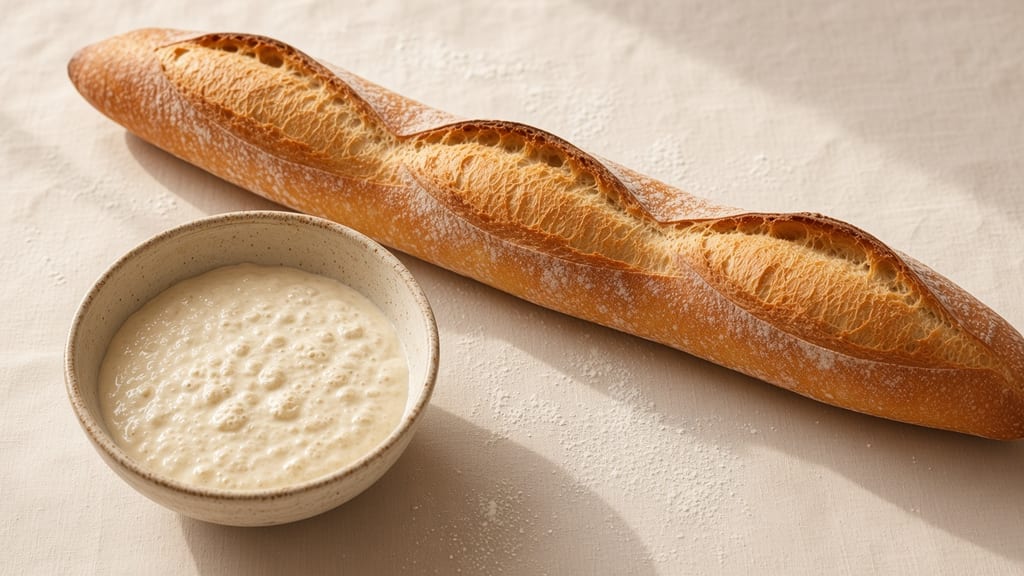
Three lean baguettes using 25 g ripe starter in an overnight sponge, then yeasted final dough, shaped and steam-baked like a classic baguette.

Three long crusty wheat baguettes from an overnight yeast poolish, shaped by hand and baked with steam for a deep golden crust.
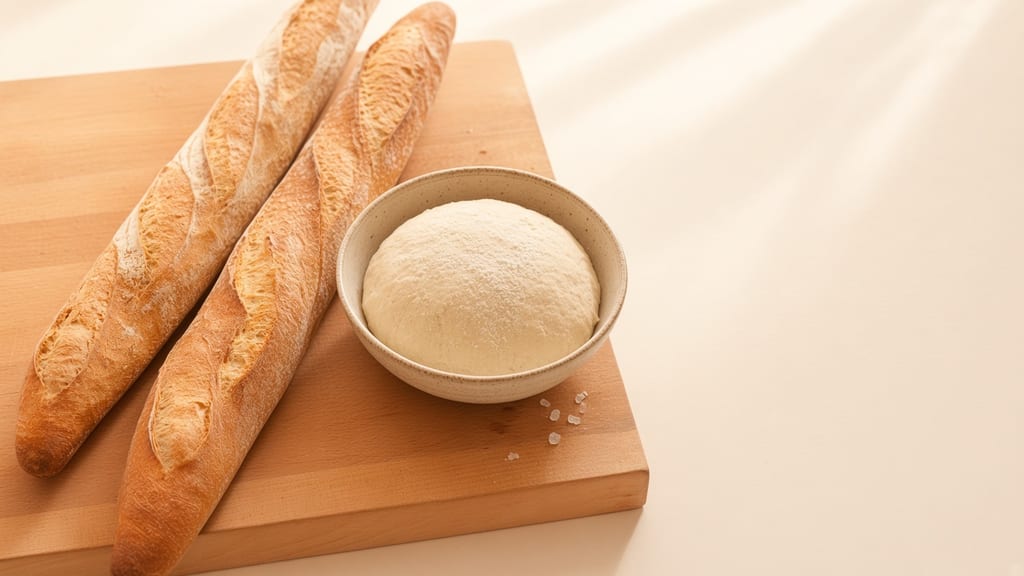
Lean baguettes built with 105 g cold pâte fermentée in the dough, then shaped and steam-baked like a classic long loaf.
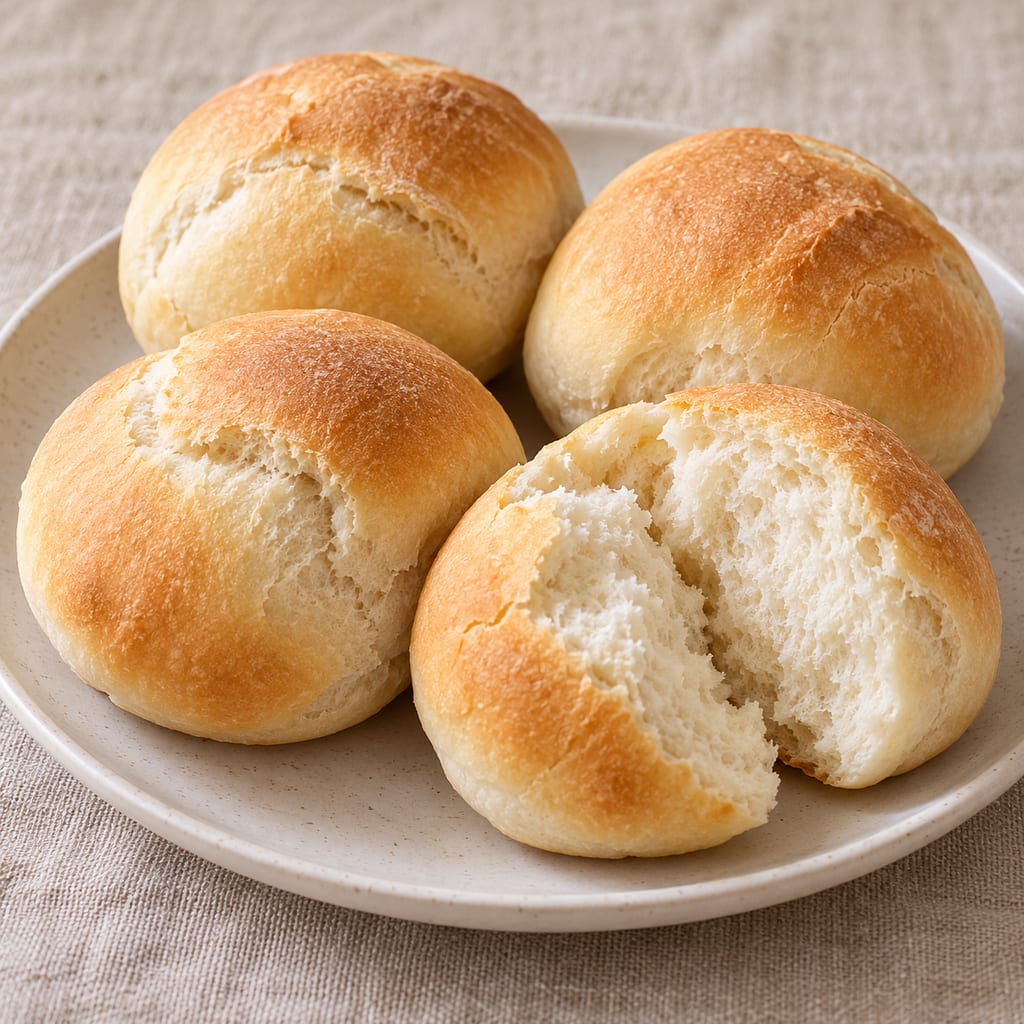
A lightly salted, yeast-raised Barbadian roll, baked in a dozen-roll home batch and often split for cutters.
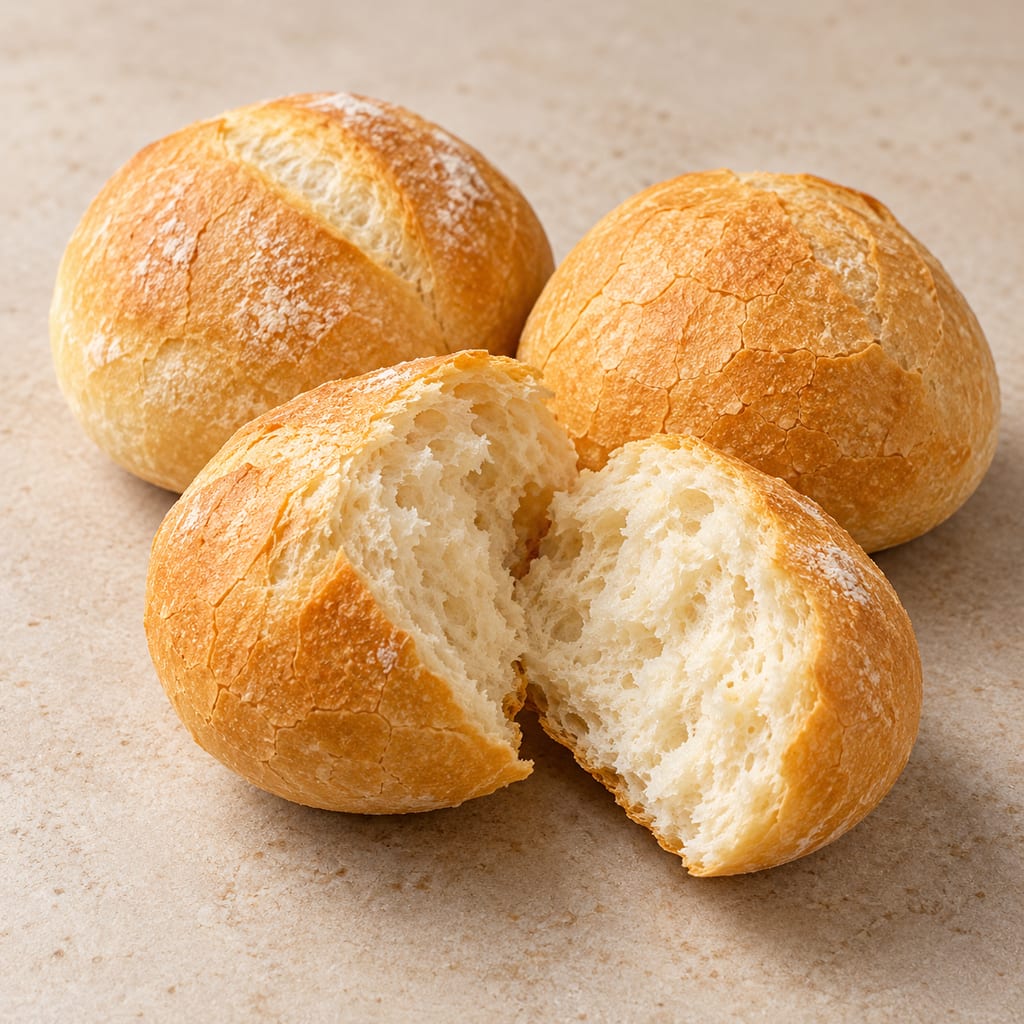
A crisp Belgian roll made from a supplier’s Croc-flour dough, mixed by hand or machine, proofed in rounds and baked with steam.

A Cap-Pelé boucanière is an Acadian herring-smoking building. The documented Willie Niles example is a one-storey wood-frame structure with a ridge smoke vent and interior bays for hanging fish-bearing cannes.

Achcharu is a family of Sri Lankan vinegar pickles made with mixed vegetables or seasonal fruit and a piquant spice dressing. This version is a quick, refrigerated, non-fermented mixed-vegetable pickle.

The acocote is a long, hollowed and dried gourd used to draw aguamiel from a mature maguey. It is a harvesting tool: the sap is transferred to a separate vessel before it ferments into pulque.

Adrak murabba preserves young ginger in sugar syrup, a sweet South Asian preparation recorded in Indian cookery and food-processing sources.

Parkia biglobosa seeds are fermented into regional West African seasonings, including nététou, iru, dawadawa and soumbala. The yellow fruit pulp is a separate food, and names and methods vary by place.

Japanese reddish-brown vinegar from sake lees matured about three years, turned to vinegar by acetic bacteria; the vinegar of Handa and Edomae sushi rice.

A refined common-wheat flour blended for a broad range of baking; its protein and behavior vary with wheat, milling and market.

The almond mushroom, Agaricus subrufescens, was cultivated in eastern North America in the 1800s, lost its market, and returned as a cultivated mushroom from Brazil, where it is grown under several names.
No community contributions have been published for this entry yet.
Sign in to contribute. Published comments and photos are free to read.
Official Journal of the European Union (copy hosted by GOV.UK)Method · Identity · History
Publication of an application for a TSG: Tepertős pogácsa, OJ C 94, 10 March 2016Shape, size, weight, crust
Fat 20–30 % dry matter; cracklings 25–40 % of flour; 60 % fat from crackling; salt max 4 %; no additives
Crackling cream 70–75 % cracklings, 25–30 % fat; exclusions
Short method quantities, rest, scoring, rise, bake
Flaky method salt, fat split, lamination, rise, bake
Crackling 12–13 % protein, 82–84 % fat; slower drying
History: 1395, 18th c. nobles, 1850s firkins, soap c. 1900, Bátky 1933, Dobos 1881
Serving occasions
Cited in: A scone with rules; The crackling cream; Short or flaky; Why the cold matters; From soap to scones; Serving
Hungarikum Bizottság, hungarikum.huIdentity · Uses
Tepertős pogácsaListed as a Hungarikum; served with soups, wine, holidays
Cited in: Serving
Magyar Néprajzi Lexikon, Akadémiai Kiadó, 1977–1982 (MEK edition)History
töpörtyűCorn flatbreads baked with fresh tepertő at the pig-killing
Cited in: From soap to scones