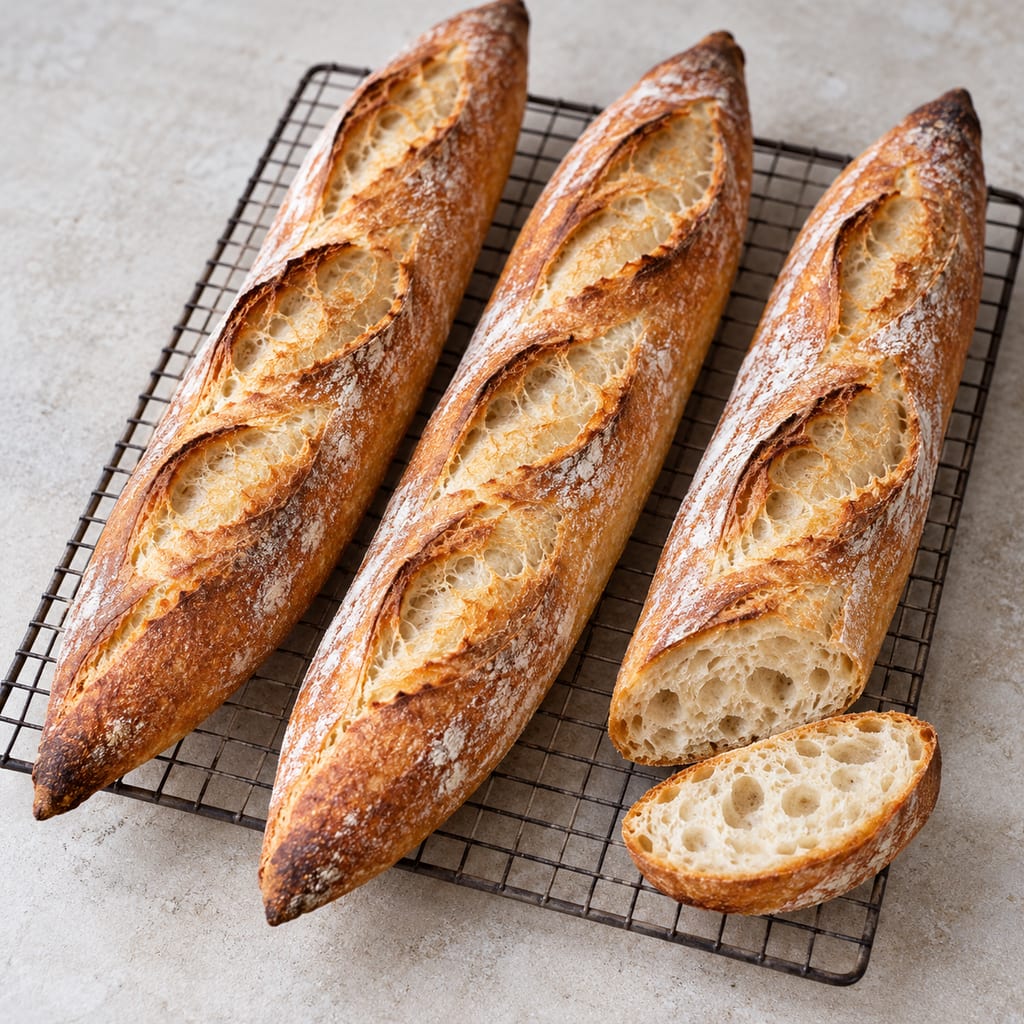
Baguette with overnight poolish
Three long crusty wheat baguettes from an overnight yeast poolish, shaped by hand and baked with steam for a deep golden crust.
 FermenteaWhere food goes to change
Sourdough poolish baguette · Baguette with starter preferment · Levain baguette hybrid
Three lean baguettes using 25 g ripe starter in an overnight sponge, then yeasted final dough, shaped and steam-baked like a classic baguette.
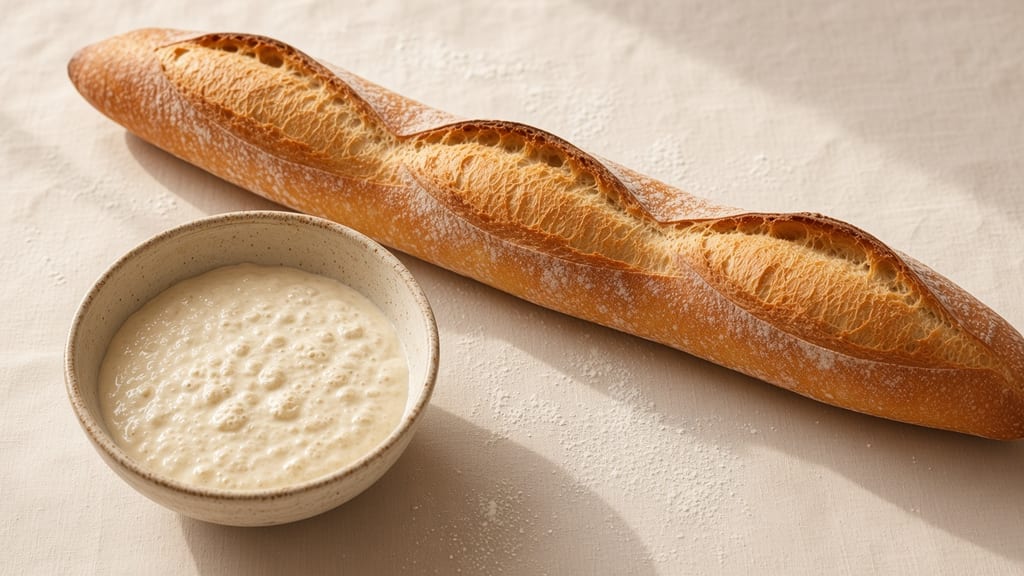
King Arthur Baking's Classic Baguettes page allows a direct swap in the poolish: 25 g of healthy sourdough starter, fed or unfed, in place of the pinch of commercial yeast. The rest of the sponge stays 113 g cool water and 120 g all-purpose flour, then rests about 14 hours until expanded and bubbly. The final dough in that same source still lists 1½ teaspoons of active dry or instant yeast with 255 g lukewarm water, 420 g flour and 12 g salt.
This is therefore a hybrid home baguette: wild culture in the wet preferment, commercial yeast in the final dough, lean ingredients only. It is not a pure pain au levain under the French decree's pain au levain label, which needs a defined levain and crumb acidity targets. It is a documented way to bring starter flavour into the Classic Baguettes schedule without rewriting the bake.
If your starter is very vigorous and you want to experiment toward less packaged yeast, the same publisher's sourdough baguette tips discuss dropping commercial yeast while accepting longer rises. That further reduction is not the measured batch below.
Keep the starter portion at the stated 25 g. A larger dump of unmeasured starter changes hydration and acidity and leaves the Classic Baguettes timing behind.
A maintained starter is a community of yeasts and lactic acid bacteria refreshed over days. A poolish is usually a commercial-yeast paste mixed for one dough. Substituting starter into the poolish slot changes the inoculum and the flavour acids without turning the preferment into a perpetual mother. Use the portion and move on.
The Muséum national d'Histoire naturelle separates levure de boulanger as a selected product from levain as a baker-refreshed culture. UNESCO's baguette description allows leaven and/or yeast among the four ingredients. This recipe uses both on purpose, following the Classic Baguettes tip rather than inventing a new baker's percentage.
Do not taste the preferment. Raw flour rules still apply. Bubbles and rise mark readiness for mixing, not safety.
Stir 25 g ripe starter into 113 g cool water, then mix in 120 g all-purpose wheat flour until no dry flour remains. Cover and rest about 14 hours at room temperature. The sponge should look expanded and actively bubbly, closer to a ripe poolish than to a stiff levain dome.
Mix the sponge with 255 g lukewarm water, 1½ teaspoons yeast, 420 g flour and 12 g salt. Knead to a soft, mostly smooth dough. Bulk-ferment 45 minutes, fold, then another 45 minutes until puffy, as in the Classic Baguettes method.
Starter acidity can shorten or tighten the dough compared with a yeast-only poolish. If the dough feels slack or tears early, shorten the final proof rather than adding unmeasured flour beyond a light bench dusting.
Divide into three, rest, and shape 16-inch tapered logs using the same flatten-fold-roll sequence as the overnight poolish baguette. Proof until slightly marshmallow-puffy, about 45–60 minutes near 68°F (20°C).
Heat the oven to 450°F (about 232°C) with a steam pan ready. Slash three to five times, load, pour boiling water for steam, and bake 24–28 minutes to a deep golden brown. Cool on a rack or in the cracked oven.
Expect a slightly more tangy crumb than the yeast-only poolish batch when the starter is ripe and acidic. Crust colour and bake time remain the source cues.
French baguette craft long used levain, then leaned on commercial yeast for speed after the early twentieth century. The 1993 decree again allows levain, yeast or both for pain de tradition française. This home hybrid sits in that both category without claiming contest or decree certification.
Gaps: the Classic Baguettes tip does not republish a full second method card for the starter swap; timings above reuse the yeast-poolish schedule. Pure levain baguettes with no commercial yeast need a different bulk and proof clock not fixed on that tip line.
Link this loaf with the overnight poolish baguette and the pâte fermentée baguette to taste how inoculum changes the same shape.
Use the same bowl, cloth or parchment, lame, stone or tray, and cast-iron steam pan as for the poolish baguette. No fermentation cabinet is required for the published room-temperature schedule.
Boiling water and a 232°C oven cause burns if handled without protection. Raw preferment and dough are not food until baked. Paper-bag overnight storage or freezing leftovers follows the Classic Baguettes note; no longer safety shelf life is established here.
Eat these baguettes the day they bake. The Classic Baguettes storage note allows a paper bag overnight and freezing for longer keeping, then thawing and reheating before serving. Plastic softens the crust.
Slice on a bias for sandwiches or tear by hand along the grignes. The hybrid preferment gives a mild tang that sits under the wheat sweetness rather than a full sour miche profile.
If the loaves stale, dry slices for croûtons rather than claiming a safety extension past ordinary bread practice. No validated refrigerated dough hold is given for shaped unbaked baguettes in this tip-based schedule.
This formula assumes you already keep a wheat starter that rises predictably after feeding. Building a starter from flour and water takes several days of refreshment and is a separate project. King Arthur and many extension services publish starter methods; none of them is embedded as a second recipe here.
Fed starter and unfed discard both appear in the Classic Baguettes tip. Fed starter usually gives a stronger rise in the sponge. Unfed starter still contributes flavour while the final-dough yeast handles most of the gas. Choose based on your refresh schedule, not on a health claim.
Weigh the 25 g portion. Volume tablespoons of bubbly starter vary with hydration and how recently it was stirred.
A ripe starter adds lactic and acetic notes that a yeast-only poolish lacks. In a lean baguette those notes should stay in the background: wheat sweetness first, mild tang second. If the crumb tastes sharply vinegary, the starter was likely past peak or the sponge ran too long in a warm room.
Crust flavour still depends on bake colour. Pulling the loaves pale keeps them soft and dull. The source asks for deep golden brown. That colour is quality guidance for this formula, not a pathogen kill-step chart.
Compare a loaf from this hybrid sponge with the yeast poolish baguette baked the same week. The shape matches; the preferment is the variable.
Raymond Calvel's autolyse rests flour and water before salt and yeast to reduce mixing oxidation. The Classic Baguettes card used here does not require a separate autolyse step; the long poolish already hydrates part of the flour overnight. Adding an extra autolyse on top of the tip would be your own trial, not this source batch.
Gentle mixing, adequate fermentation and steam are the Calvel-adjacent habits that transfer cleanly to home baguettes without rewriting the card. Intensive high-speed mixing for many minutes is what Calvel blamed for white, bland crumb in postwar shops.
French decree tradition breads reject many additives Calvel also disliked. This home hybrid stays additive-free in the ingredient list even though it is not a labelled French retail loaf.
Evening of day 1: mix the starter sponge. Morning of day 2: mix the dough, bulk with the fold, shape before midday, bake early afternoon. Or shift the sponge to dawn and bake at night. The 14-hour rest is elastic by a few hours in cool kitchens; hot kitchens run fast and need watching.
If the sponge is ready before you are, refrigerate it briefly and bring it back while you weigh the final dough. The Classic Baguettes tip does not detail a long cold hold for the starter sponge, so keep any chill short and treat longer holds as untested.
Shaped loaves are meant to proof and bake the same day in this schedule. Retarding shaped baguettes overnight can work in other formulas but is not specified on this tip line.
All-purpose wheat flour is the default. Bread flour stiffens the dough. Whole-wheat substitutions change water demand and were not rewritten into this card. Salt is ordinary table salt at 12 g; do not double it to chase contest mineral flavours.
Water should be potable. Chlorine at normal municipal levels rarely stops a sponge with this yeast load, but very hot water kills yeast. Lukewarm for the final dough means pleasantly warm on the wrist, not cooking-hot.
Commercial yeast packets list instant or active dry. Instant can usually go straight into the dough; active dry is often bloomed, though the Classic Baguettes method mixes either style into the dough directly as written.
Yeast and bacteria release carbon dioxide that inflates the gluten network. Preferments give them a head start so the final dough needs less floor time for the same flavour. Visible bubbles show gas production; they do not show that raw dough is safe to eat.
Oven spring is the last burst of gas expansion before the crust sets. Steam delays that set. Dry heat after the steam phase browns and thickens the crust. Both phases appear in the Classic Baguettes bake even when the preferment changes.
If a loaf opens along the side instead of at the scores, the surface skin was tighter than the scored line or the proof went too far. Adjust the next bake; do not treat a split loaf as unsafe solely from shape.
Weigh flour and water in grams. Spoon-and-sweep cups vary enough to throw hydration off in a lean dough. The Classic Baguettes card allows cups but prefers weight.
A kitchen scale also makes the 25 g starter portion honest. Eyeballing a spoon of bubbly paste is how hybrid sponges quietly become wetter than the card.
Record room temperature if you can. A sponge that ripens in 11 hours in a warm flat and 16 hours in a cold one is still the same formula. Chasing a fixed clock without watching bubbles fights the ferment.
Use this recipe beside the overnight poolish baguette when teaching preferments. The shaping chapter is the same; only the sponge inoculum changes.
Read the long-loaf history article for Favrais, the 1919 labour law, Calvel, the 1993 decree and UNESCO. Those pages explain why bakers argue about levain and levure in the first place.
The standalone poolish and pâte fermentée entries on Fermentea remain the place for preferment theory without a full baguette shape.
Classic Baguettes documents the 25 g starter substitution for the poolish yeast. French tradition rules allow levain and/or yeast. This batch keeps final-dough yeast.
Yield 3 baguettes · Scaling: source batch only
Uncooked flour can carry harmful bacteria; raw dough must not be tasted.
Hazard sourceThe method uses a hot oven and a pan of boiling water for steam.
Hazard sourceDo not taste raw dough or preferments. Bake fully. Wash hands, utensils and surfaces after handling flour.
Control sourceUse oven protection when loading loaves and pouring boiling water for steam.
Control sourceDo not taste the poolish, levain preferment, pâte fermentée or raw dough.
Protect hands and face when pouring boiling water into a hot pan.
The source gives crust colour and time as bake cues, not an internal temperature safety limit.
Biological leavening
Sourdough starter in the preferment plus commercial yeast in the final dough.
Sources: Classic Baguettes
Fermentation: step 1. Overnight starter sponge.
Mixing: steps 2, 3. Final dough.
Fermentation: step 4. Bulk with fold.
Shaping: steps 5, 6. Baguette shaping and proof.
Baking: steps 7, 8. Steam bake.
Sources: Classic Baguettes
French loaf type; measured method from King Arthur Classic Baguettes starter-substitution tip.
Three long crusty wheat baguettes from an overnight yeast poolish, shaped by hand and baked with steam for a deep golden crust.
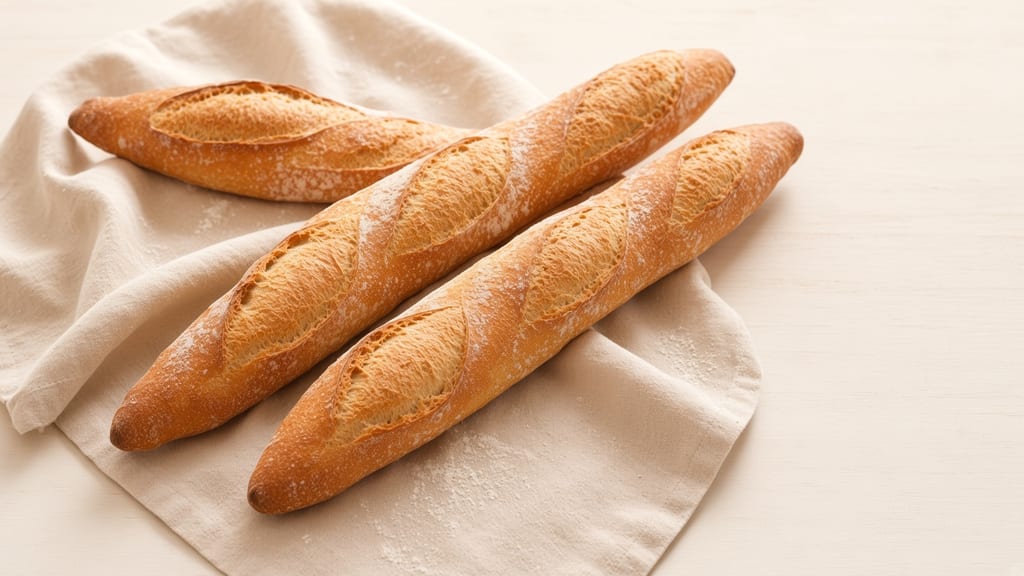
From 1920 price lists and Favrais's 1904 manual to the 1993 Décret Pain and UNESCO 2022: how long French breads, night-work law, Calvel and three ferments shaped the baguette.
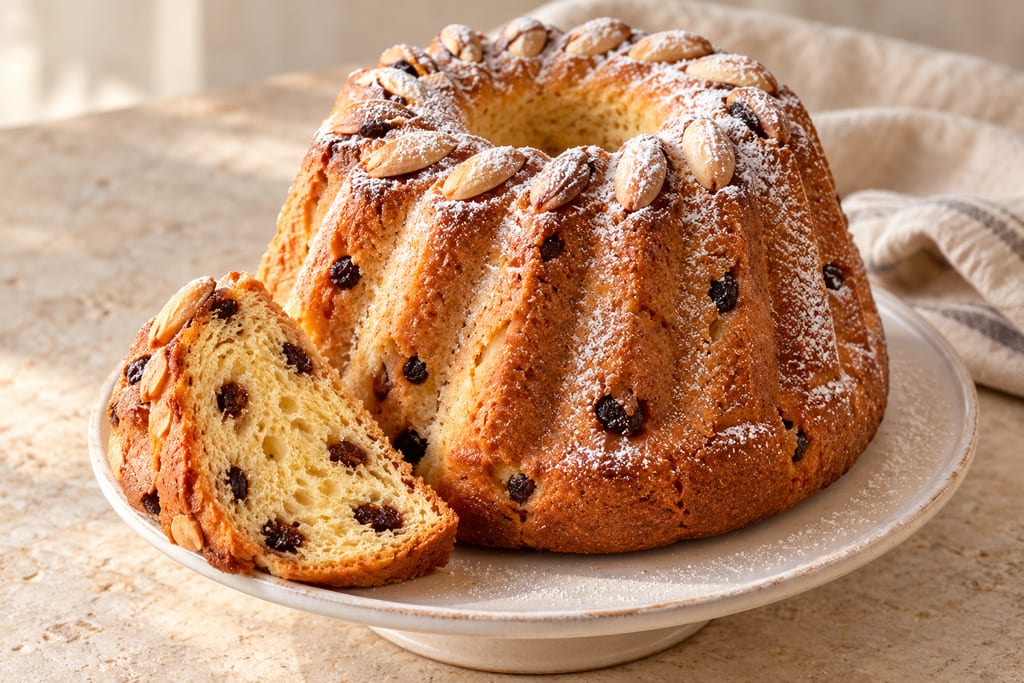
An enriched Alsatian yeast ring with raisins and almonds, kneaded with butter, proofed in a fluted mould and baked until browned.
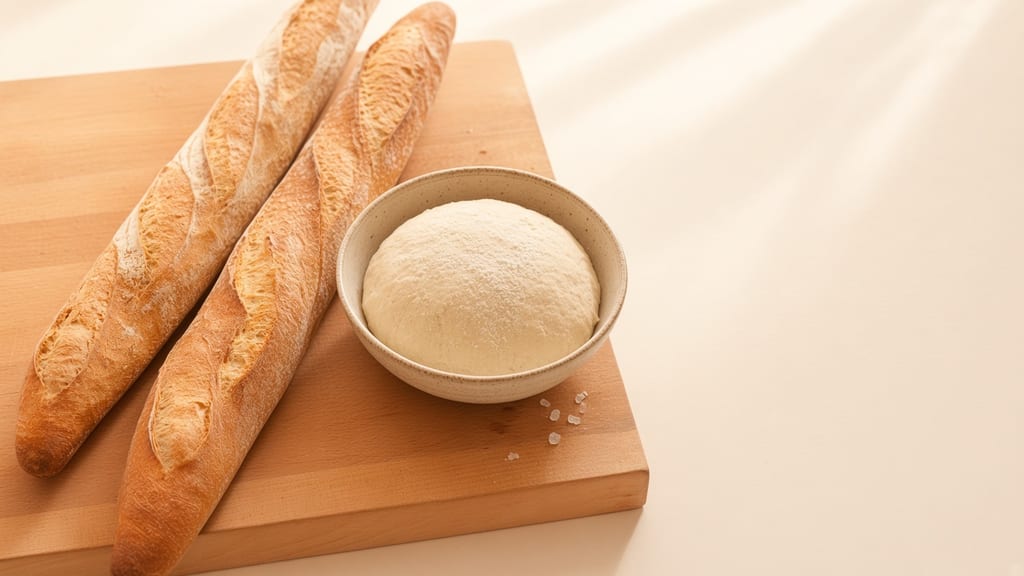
Lean baguettes built with 105 g cold pâte fermentée in the dough, then shaped and steam-baked like a classic long loaf.
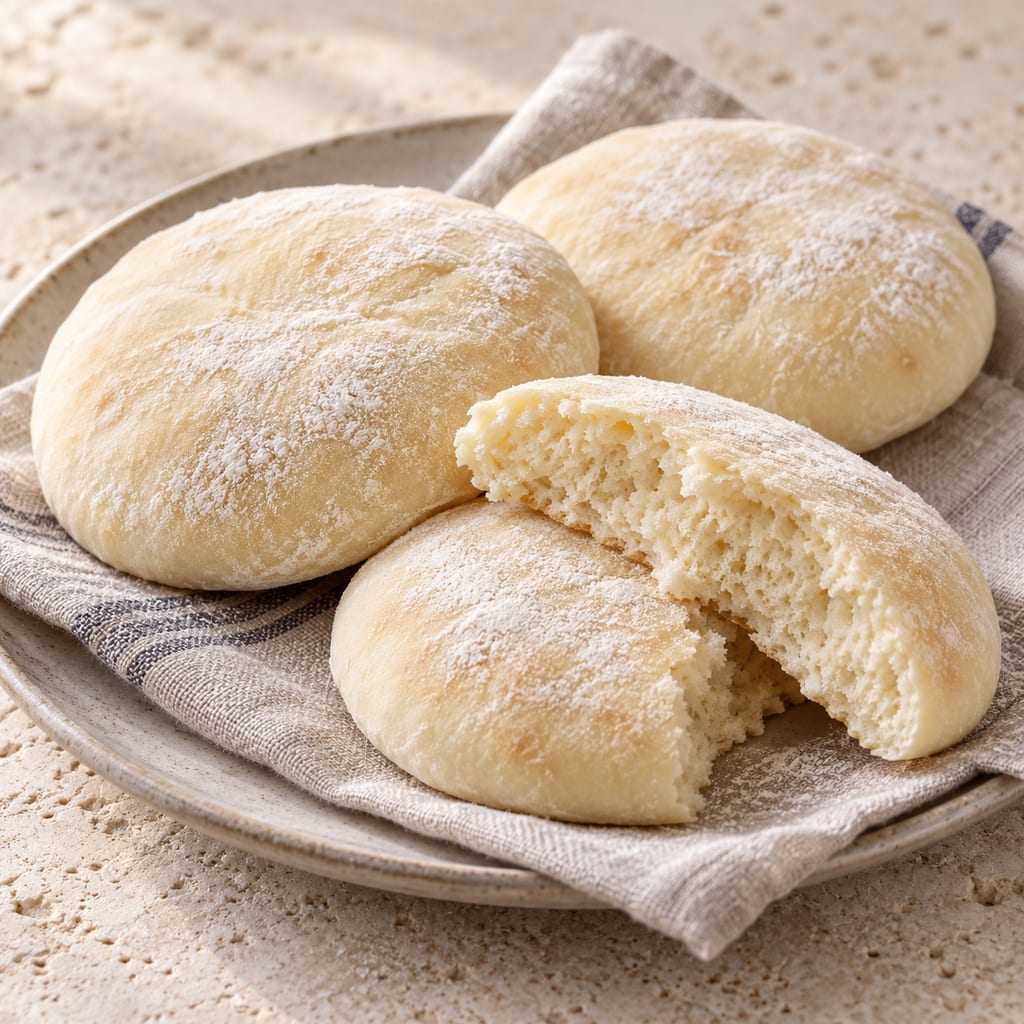
A pale, softly baked, low-profile bread associated with northern France and Tournai. This source-specific household method makes four large faluches; it differs from older accounts of leftover bread dough baked during communal bread baking.
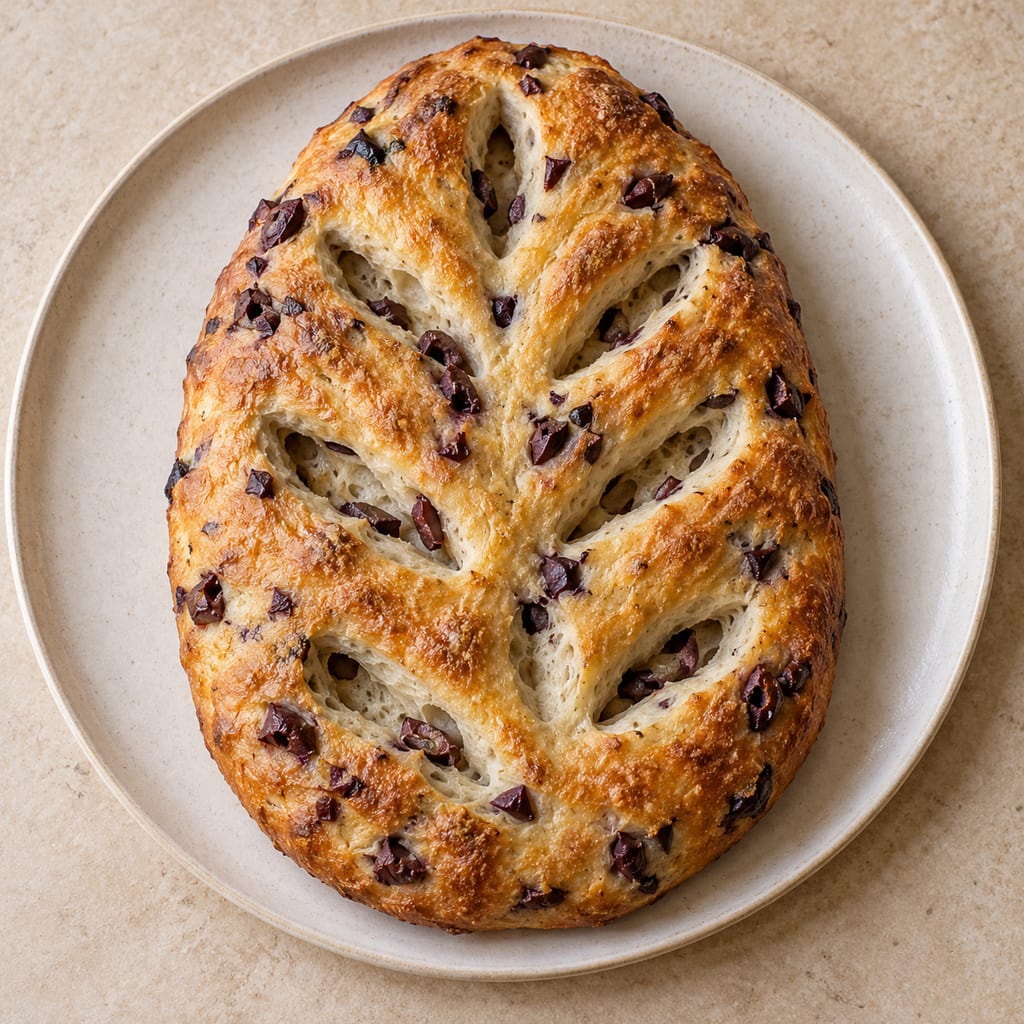
A Provençal olive bread shaped as a flattened oval with seven open slits. This Le Cordon Bleu formula uses wheat flour, fresh yeast, olive oil and Kalamata olives.
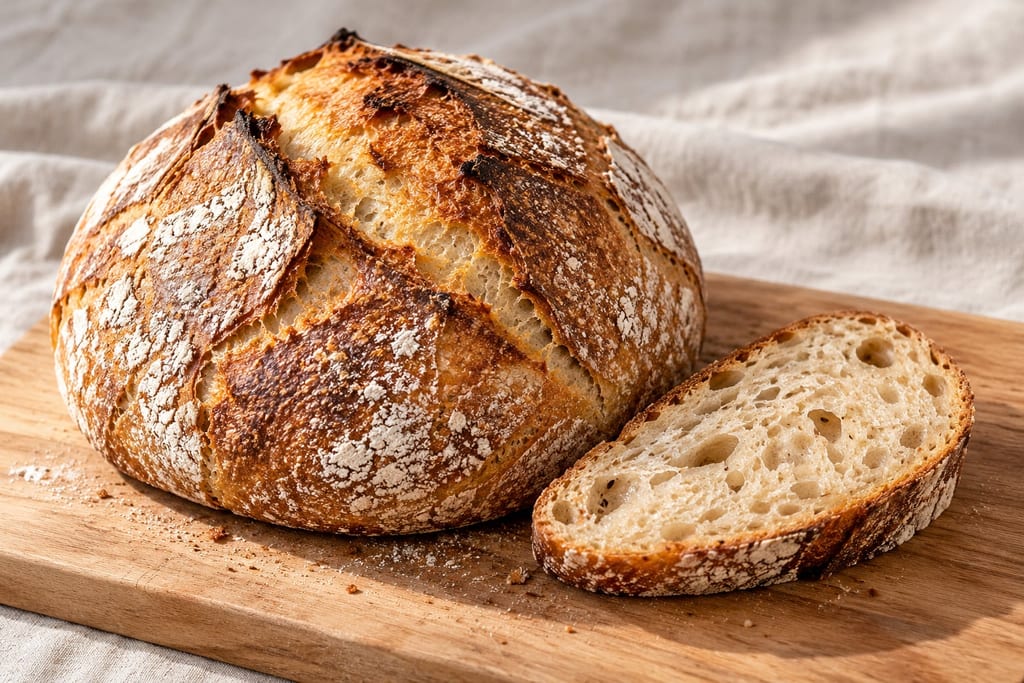
Two large French-style wheat loaves use unfed sourdough starter, whole-wheat flour, long room-temperature fermentation and a covered-pot bake.
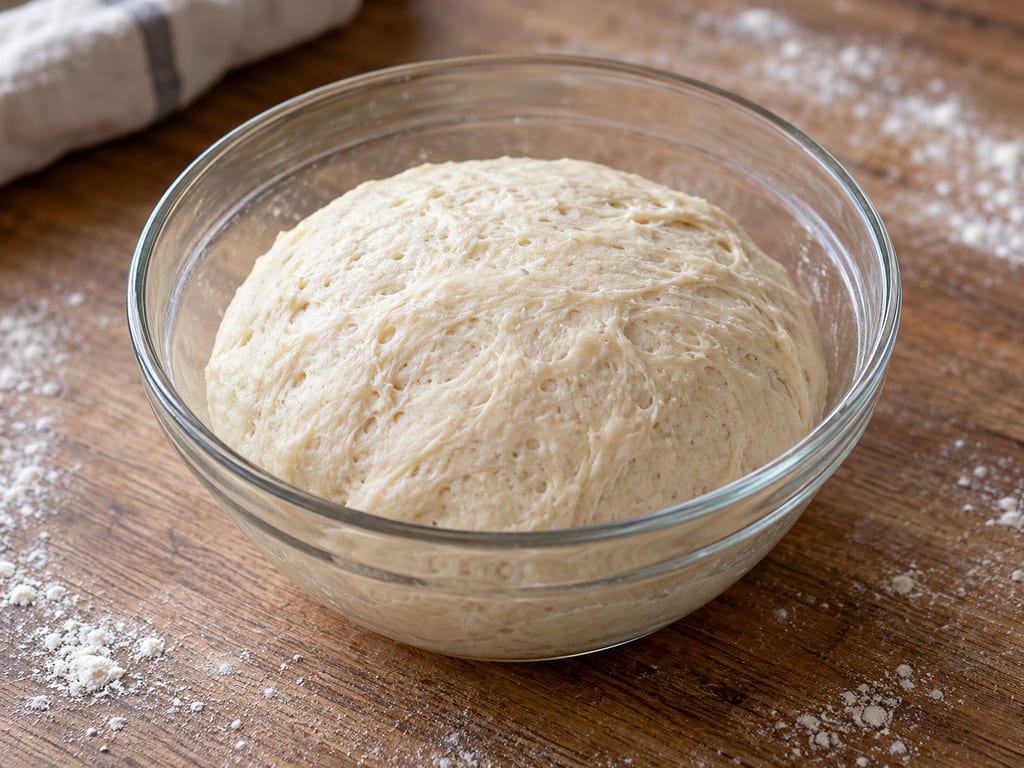
Pâte fermentée is a bread preferment made from salted, yeasted dough set aside to ferment and mixed into a later batch, carrying developed dough and fermentation products with it.
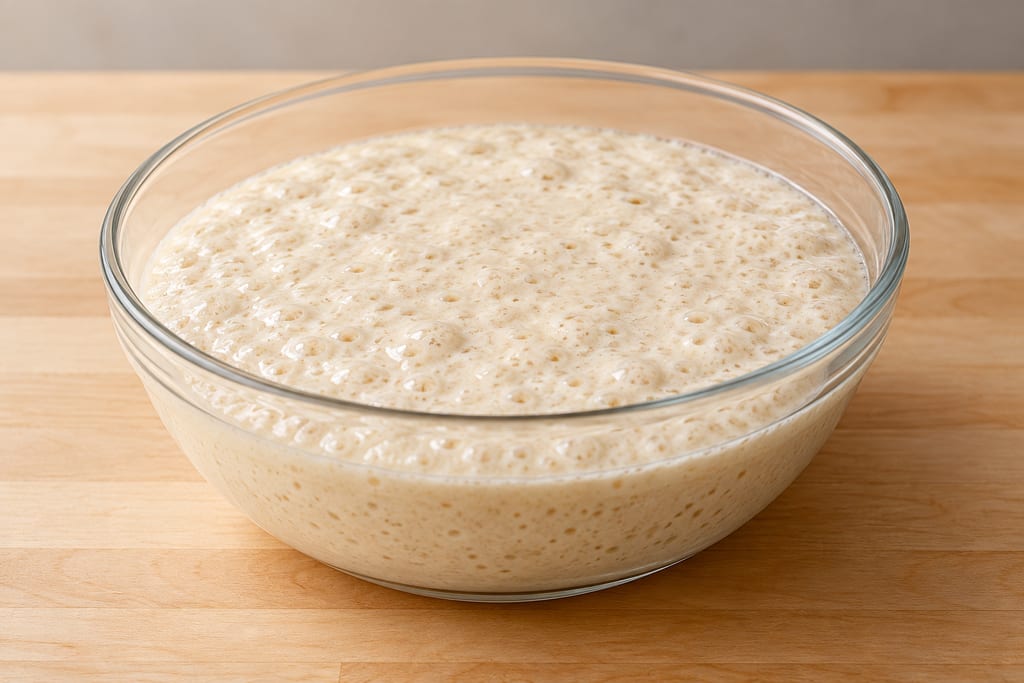
Poolish is a loose, unsalted bread preferment of roughly equal weights of wheat flour and water with a pinch of baker's yeast, left to ripen before it goes into the final dough.
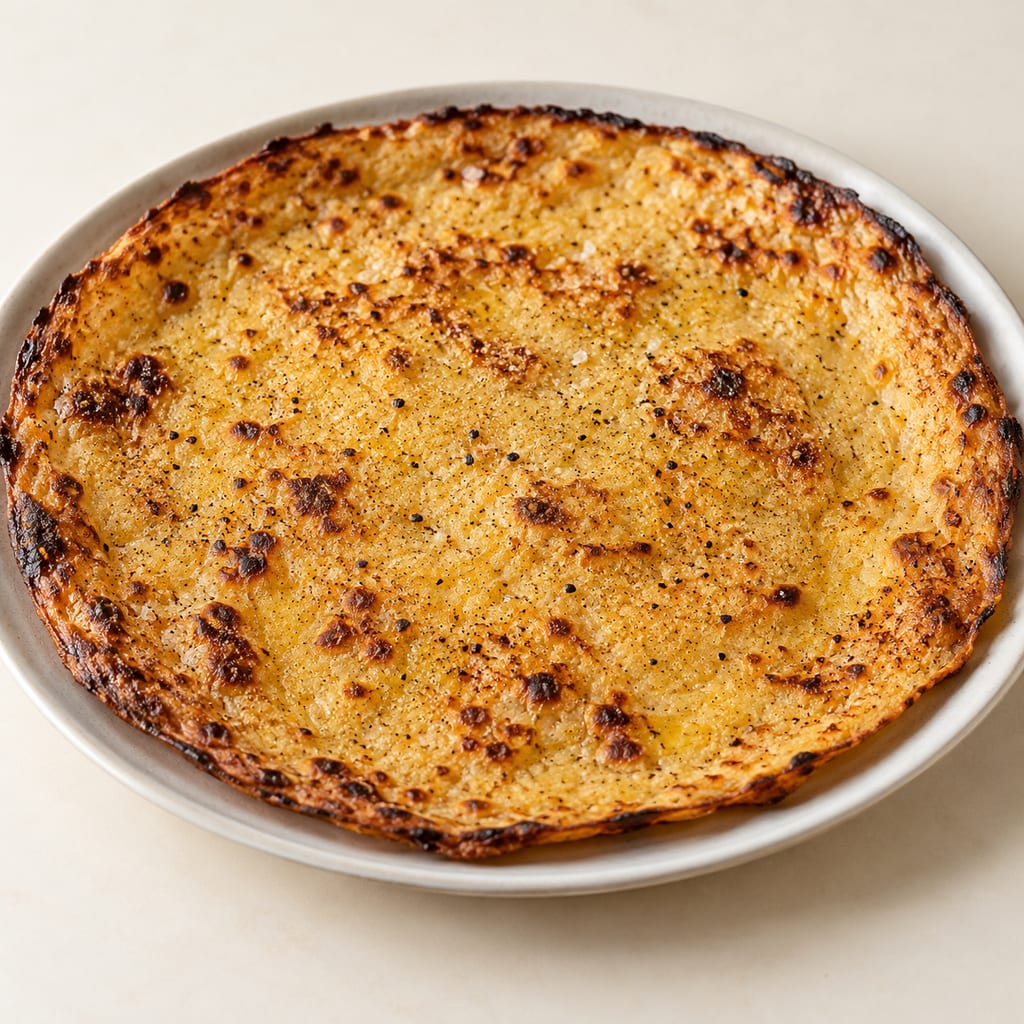
Socca is a thin chickpea-batter pancake from Nice, cooked on a very hot copper plate and served piping hot. This page follows the Nice source; the Genoa farinata formula, which conflicts on water quantity, is not blended in.
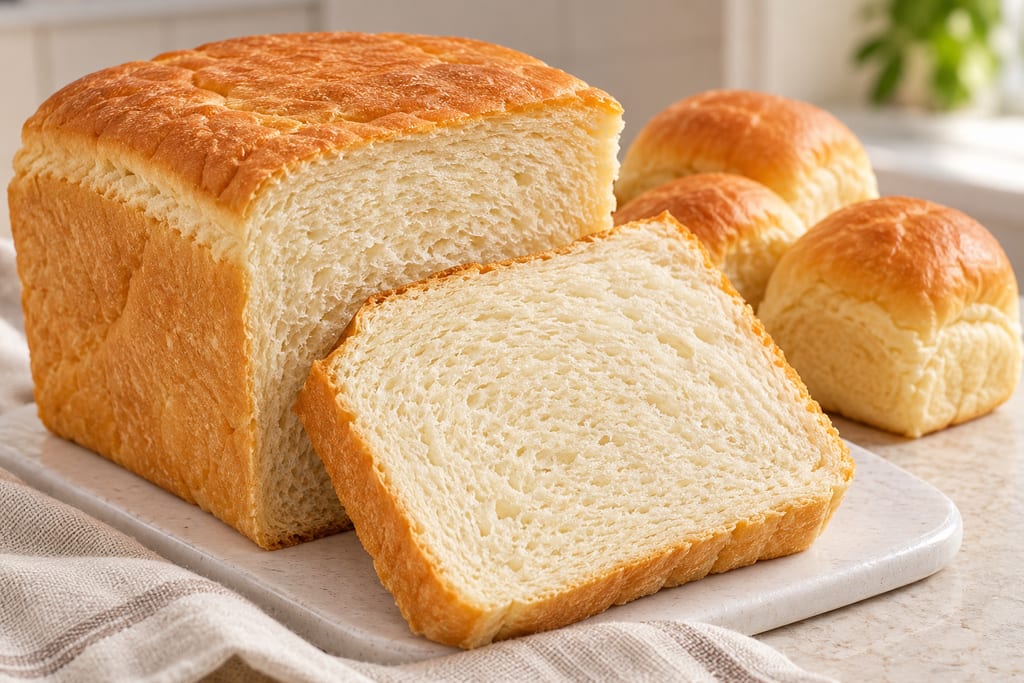
This softer home-style Agege bread uses a scalded flour paste, an enriched yeast dough and a 9×5-inch loaf pan, with rolls from the extra dough.
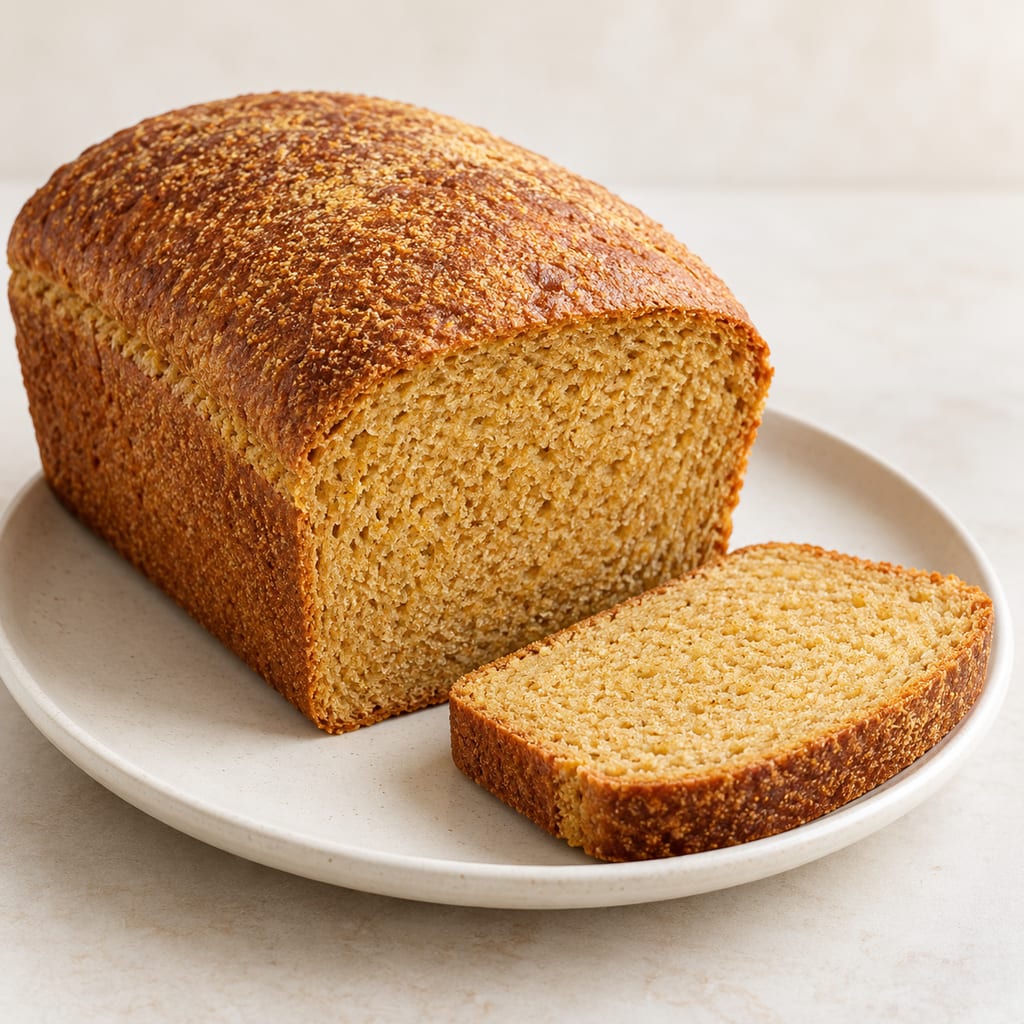
Anadama is a New England yeast loaf made with wheat flour, cornmeal and molasses. Scalded cornmeal enriches the dough, while molasses lends sweetness and a dark crust; it is especially good toasted or beside soup and baked beans.

A yeast-raised wheat ring shaped from a firm dough, briefly boiled and baked. This source-batch formula gives a gently malted crust and a chewy crumb.
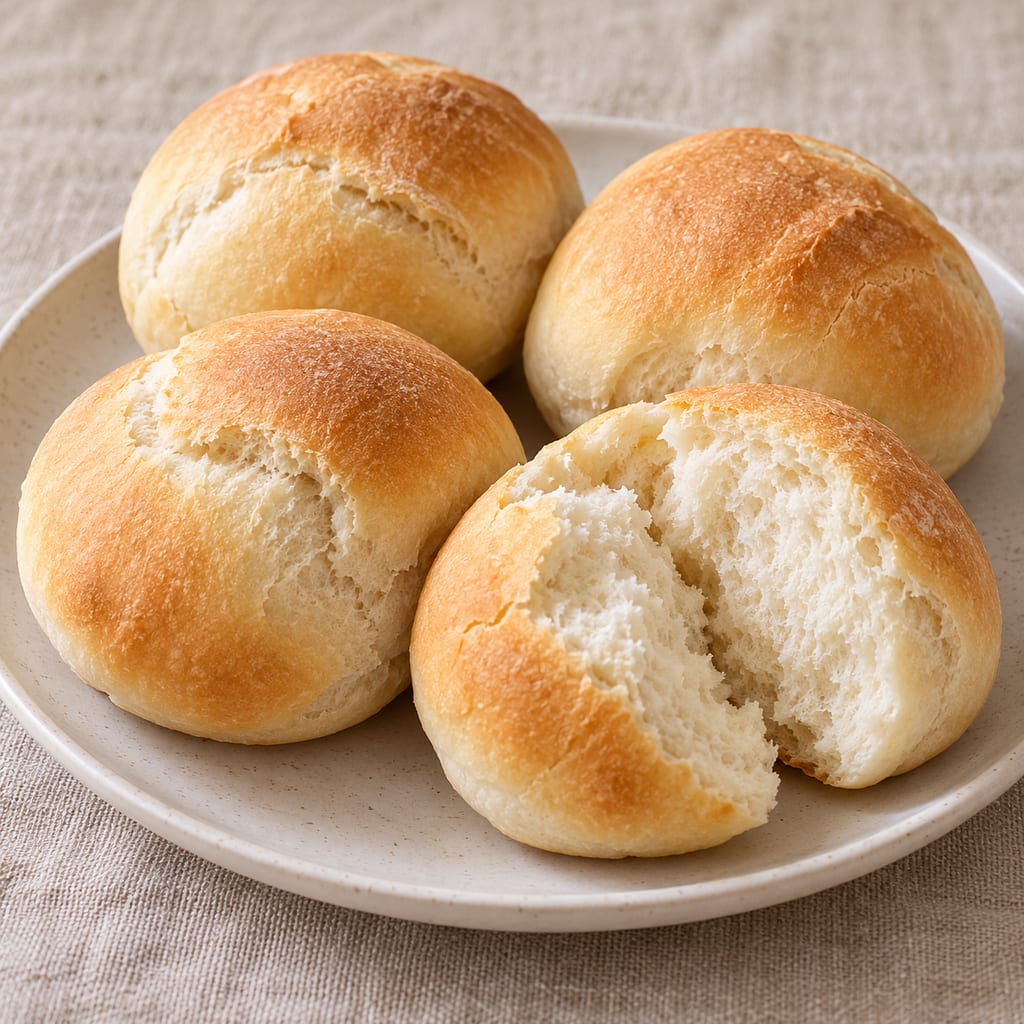
A lightly salted, yeast-raised Barbadian roll, baked in a dozen-roll home batch and often split for cutters.
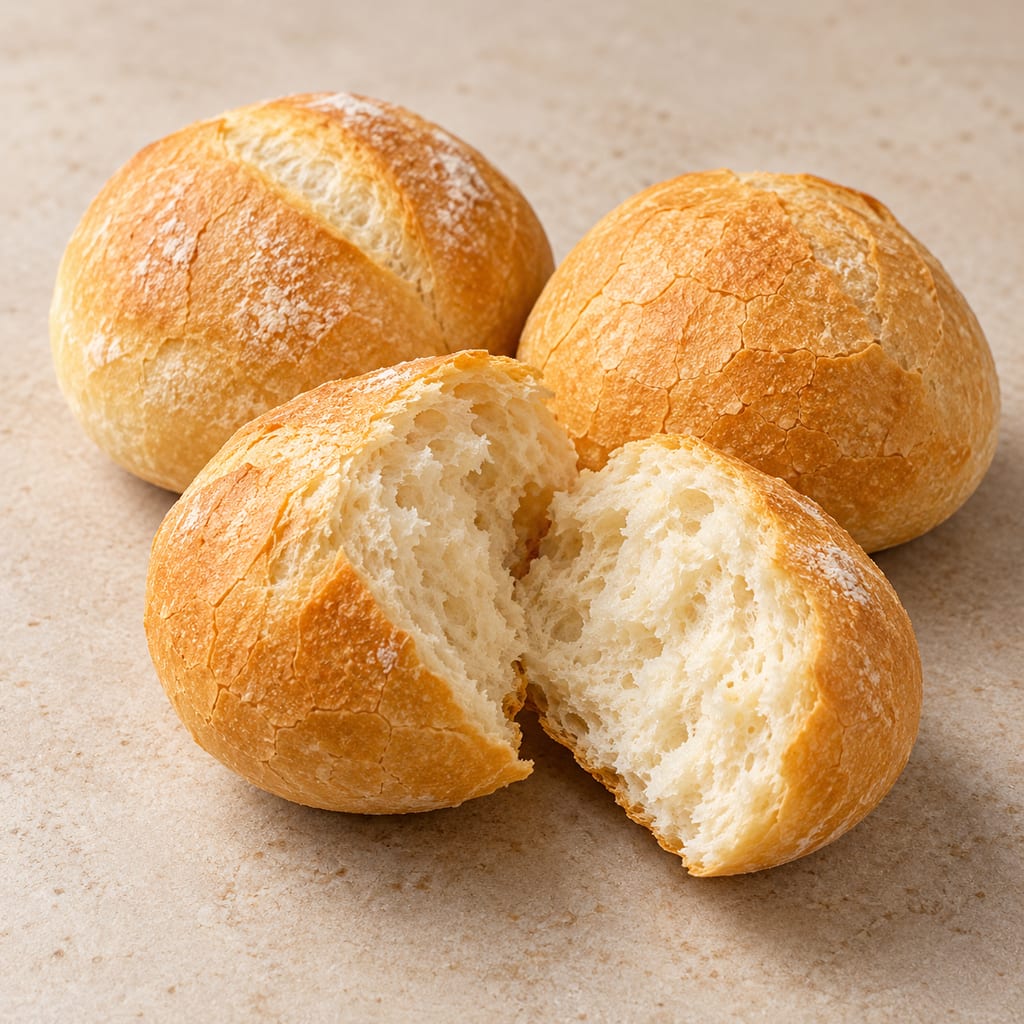
A crisp Belgian roll made from a supplier’s Croc-flour dough, mixed by hand or machine, proofed in rounds and baked with steam.
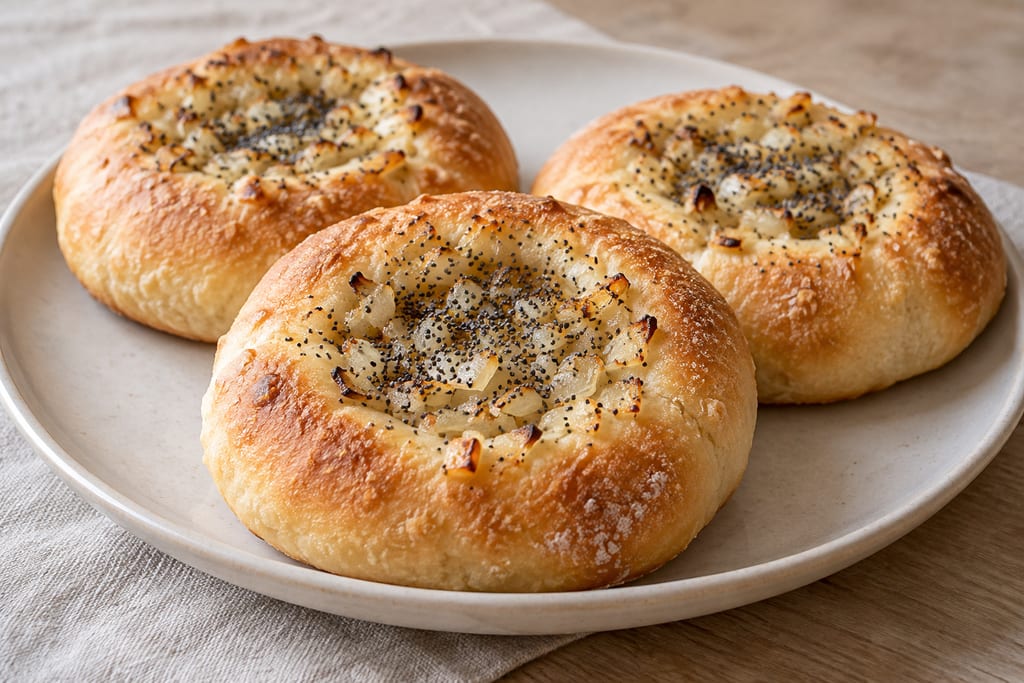
Bialys are soft, yeasted wheat rolls baked without boiling, each shaped with an onion-filled central depression instead of a hole.
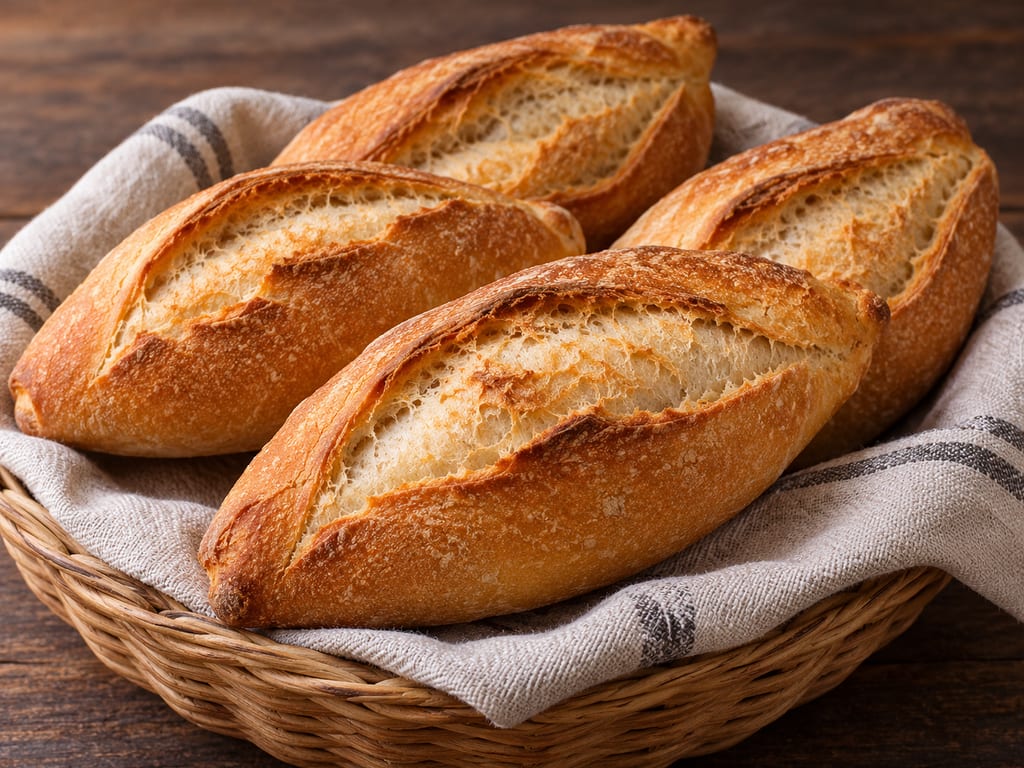
A measured, commercial-yeast home method for Guadalajara-style birote salado, with a six-hour preferment, shaped rolls and a two-temperature steam bake. This formula contains no egg.
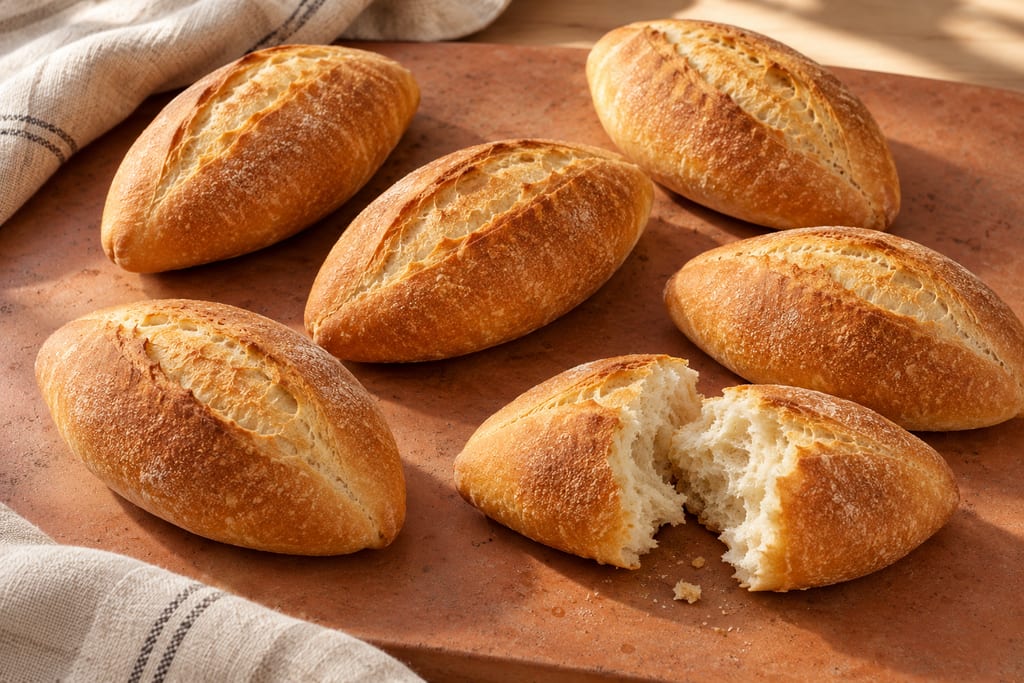
Small, lightly enriched rolls with tapered ends and a scored top; this six-roll formula bakes on a hot stone with steam for a thin, crisp crust.
No community contributions have been published for this entry yet.
Sign in to contribute. Published comments and photos are free to read.
King Arthur BakingMethod
Classic Baguettes25 g starter substitution for poolish yeast
dough weights
shape and bake
Cited in: A baguette preferment with ripe starter; Mix, ferment and judge the sponge; Shape and bake like a classic baguette; History notes and honest limits; Equipment and safety; Serving and keeping; Building or borrowing a starter; What you should taste in the crumb; Scheduling around a working day; Ingredient notes; Plain language on fermentation gas; Photograph and scale notes for home bakers; Cross-links
King Arthur BakingMethod
Prefermentpoolish vs levain distinction
Cited in: Levain culture is not the same as a one-bake poolish; What you should taste in the crumb
MNHNHistory
Quelle est la différence entre levure et levain ?levure vs levain definitions
Cited in: Levain culture is not the same as a one-bake poolish
LégifranceHistory
Décret n° 93-1074tradition and pain au levain labelling rules
Cited in: A baguette preferment with ripe starter; History notes and honest limits; Autolyse and other Calvel habits
CDCSafety
Raw Flour and Doughno raw dough tasting
Cited in: Levain culture is not the same as a one-bake poolish; Equipment and safety; Plain language on fermentation gas
UNESCOHistory
Artisanal know-how and culture of baguette breadleaven and/or yeast among four ingredients
Cited in: Levain culture is not the same as a one-bake poolish; Cross-links
see URLHistory
la-civilisation-de-la-baguettesupporting citation used in section
Cited in: History notes and honest limits
see URLHistory
autolyse-sourdoughsupporting citation used in section
Cited in: Autolyse and other Calvel habits
see URLHistory
https://www.aipf-calvel.fr/association-aipf/le-professeur-calvel/supporting citation used in section
Cited in: Autolyse and other Calvel habits