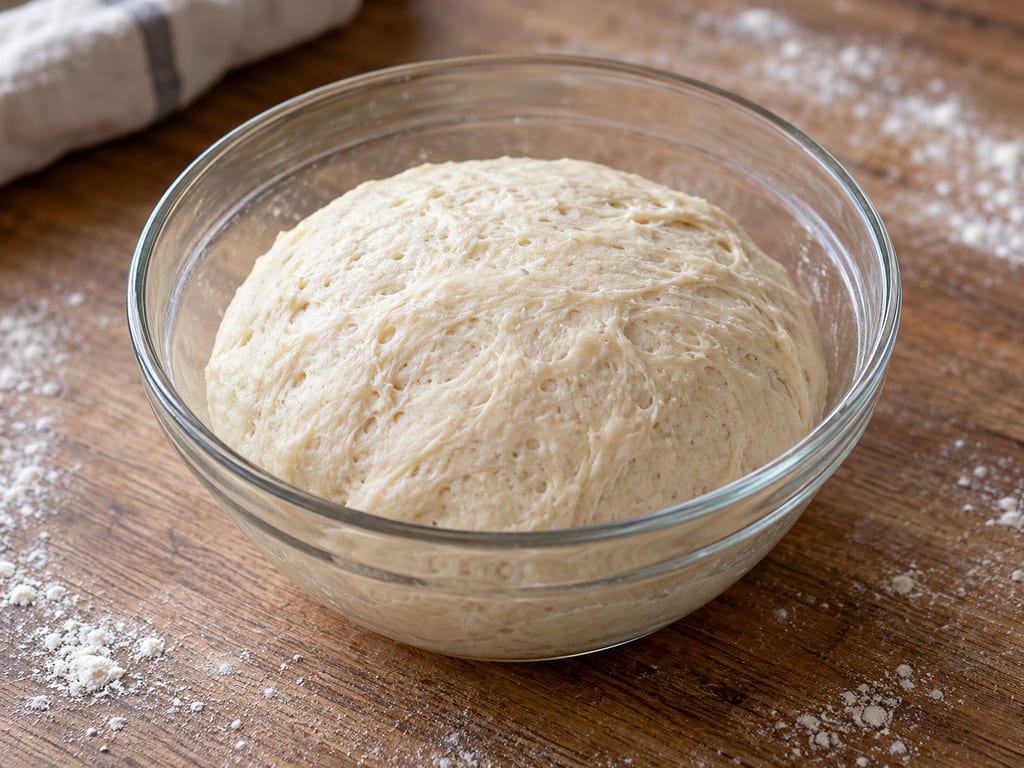
Pâte fermentée
Pâte fermentée is a bread preferment made from salted, yeasted dough set aside to ferment and mixed into a later batch, carrying developed dough and fermentation products with it.
 FermenteaWhere food goes to change
Baguette à la pâte fermentée · Old-dough baguette · Baguette pâte fermentée
Lean baguettes built with 105 g cold pâte fermentée in the dough, then shaped and steam-baked like a classic long loaf.
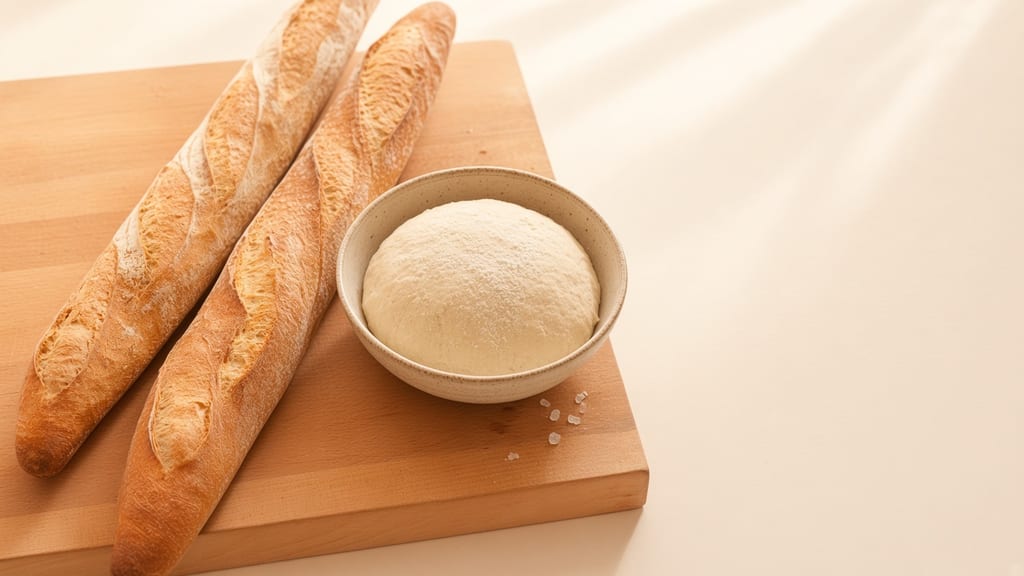
Pâte fermentée is salted, yeasted dough held from an earlier mix, then cut into a new dough. King Arthur Baking's preferment reference and Fermentea's own pâte fermentée recipe treat it as a way to carry fermented flavour and dough strength into later lean breads, including baguettes. Hot Bread Kitchen's published rustic bâtard uses 105 g of pâte fermentée cut small into a fresh dough.
This baguette batch makes the preferment from the Hot Bread Kitchen proportions already documented on Fermentea (180 g bread flour, 120 g lukewarm water, 2/3 teaspoon active dry yeast, 1 teaspoon kosher salt; 30 minutes at room temperature, then 8–24 hours cold). It then uses 105 g of that old dough in a lean final dough shaped as baguettes with the Classic Baguettes shaping and steam bake.
The combined schedule is therefore two sourced methods joined for home use: preferment from Hot Bread Kitchen / Fermentea pâte fermentée; shaping and baking from King Arthur Classic Baguettes. Exact industrial baguette baker's percentages for old-dough baguettes vary by shop and are not copied from a single contest formula here.
Mix 120 g lukewarm water, 2/3 teaspoon active dry yeast, 180 g bread flour and 1 teaspoon kosher salt to a shaggy dough, about two minutes on low. Cover 30 minutes at room temperature, then refrigerate 8–24 hours. The dough does not need to warm before use.
When you are ready to mix the baguettes, cut 105 g into walnut-sized pieces. Return any unused preferment to another bread within its cold window or discard; the source batch is not an indefinite mother.
Count the flour, water and salt already inside those 105 g when you think about total dough balance. The final dough weights below are chosen to keep a manageable home baguette batch alongside the old dough rather than to clone a bakery spreadsheet.
Combine 105 g pâte fermentée pieces with 240 g lukewarm water, 1 teaspoon active dry or instant yeast, 400 g all-purpose or bread flour and 10 g table salt. Mix and knead to a soft cohesive dough. The old dough should disperse; small flecks are fine at first and fade with kneading.
Bulk-ferment about 45 minutes, fold once, then another 45 minutes until puffy. Divide into three, rest 15 minutes, and shape 16-inch baguettes as in the Classic Baguettes sequence. Proof 45–60 minutes near 68°F (20°C).
Bake at 450°F (about 232°C) with steam for 24–28 minutes to deep gold. The old dough usually deepens aroma and can shorten the sense of wait compared with a straight dough, which matches how professional references describe pâte fermentée.
Before separate preferment bowls were standard, bakers saved a piece of finished dough for the next mix. The modern French term pâte fermentée names that habit. It differs from poolish (usually unsalted, wetter, mixed only as a sponge) and from levain (a maintained acidifying culture).
For baguette history, old dough sits with the commercial-yeast craft of twentieth-century shops: fast enough for several oven loads, flavourful enough to avoid a bland straight dough. It is one answer to the same quality problem Calvel later attacked with autolyse and longer fermentation.
This home loaf will not match a Paris Grand Prix baguette de tradition. It teaches the feel of fermented dough in a long shape.
Gaps: final-dough yeast and flour weights are a home junction of the 105 g Hot Bread Kitchen preferment use with Classic Baguettes shaping/bake, not a single reprinted bakery card. Kosher salt teaspoon weight varies by brand in the preferment. No internal crumb temperature is given.
Safety: never taste raw preferment or dough. Use protection for steam. Bake until deep golden in the stated window.
Make the preferment via Fermentea's pâte fermentée recipe when you want the full standalone method. Compare with the overnight poolish baguette and the starter-sponge baguette from this package.
Mixer or bowl, fridge space for the overnight dough, scale, parchment or couche, lame, oven-safe steam pan and a stone or tray. Ordinary cleanable tools only.
Cold preferment straight from the fridge is normal for this method. Do not leave cut pieces of old dough at warm room temperature for hours before mixing.
The preferment batch makes more than the 105 g this baguette needs. Hot Bread Kitchen's bâtard uses that 105 g portion; the rest of the dough can seed another lean bread within the 8–24 hour cold window or be discarded. Do not keep refreshing it as if it were levain.
If you only want one baguette session, you can mix a half preferment by halving each preferment ingredient, then still weigh 105 g if the dough mass allows, or scale the final dough down proportionally. Half-batch arithmetic is ordinary kitchen scaling; it is not a separately validated bakery test.
Mark the container with the mix time. Cold dough looks quiet. Activity resumes when it hits the final mix.
Unlike poolish, pâte fermentée carries salt from the start. Salt slows yeast and tightens gluten. That is why old dough can sit through a cold night without turning into a pool of alcohol as fast as an unsalted wet sponge might.
Kosher salt teaspoon weights differ by crystal size. The Hot Bread Kitchen line states a teaspoon without a gram weight. Keep the same brand across tests if you want repeatable preferments, or weigh your teaspoon once and note it.
Final dough salt is listed separately in grams so the baguette seasoning stays measurable even when the preferment salt is approximate.
Old dough already has developed gluten. The final dough can feel stronger earlier than a straight mix. Use that strength to build a tight skin when rolling the baguette, but stop before you tear the surface. Tears bake into ragged ears.
The Classic Baguettes fold-and-roll sequence still applies: flatten, fold, seal, turn, repeat, then roll to length. Keep the seam down on the couche so it does not open in the oven.
Score with confident shallow strokes. Deep hacking deflates a soft proof. Three to five cuts match the classic look without copying a single baker's signature mark.
Saving dough is older than the French marketing phrase pâte fermentée. British and American bakers talk about old dough in the same practical sense. The Real Bread Campaign describes afore-ye-dough habits as flavour tools rather than museum pieces.
In a baguette shop, old dough helped yeasted production taste less blank before long cold ferments became fashionable again. It is a commercial-yeast technique, not a return to village levain, even when the flavour reminds people of longer ferments.
Pair this recipe with the history article's sections on yeast, night work and the 1993 decree to see why shops needed fast doughs that still tasted like bread.
Serve the day of the bake. The crust softens overnight even in paper. Freeze extras the same day if you need them later, then reheat from thawed until the crust wakes up.
These loaves suit cheese, butter, soups and sandwiches. Because the formula is lean, sweet toppings are optional, not built in.
Leftover ends dry into breadcrumbs or pan potage thickeners. That is ordinary thrift, not a fermentation step.
Yeast and bacteria release carbon dioxide that inflates the gluten network. Preferments give them a head start so the final dough needs less floor time for the same flavour. Visible bubbles show gas production; they do not show that raw dough is safe to eat.
Oven spring is the last burst of gas expansion before the crust sets. Steam delays that set. Dry heat after the steam phase browns and thickens the crust. Both phases appear in the Classic Baguettes bake even when the preferment changes.
If a loaf opens along the side instead of at the scores, the surface skin was tighter than the scored line or the proof went too far. Adjust the next bake; do not treat a split loaf as unsafe solely from shape.
The preferment is about 67% water on flour by the Hot Bread Kitchen masses (120 g water on 180 g flour). That is firmer than a classic poolish and softer than some stiff biga doughs.
The final dough adds 400 g flour and 240 g water around 105 g of that old dough. Hydration feels medium; adjust only with teaspoon dustings of flour on the bench, not with unmeasured cups dumped into the bowl.
Yeast in the final dough is lower than in the Classic Baguettes yeasted dough because the old dough already contributes fermented flour and yeast cells. If the bulk rise is sluggish in a cold kitchen, extend the bulk rather than doubling yeast on the first try.
A good bake shows opened grignes, a chestnut to deep gold crust and irregular crumb holes without a dense wet core. Soft pale loaves need more time or heat. Burned tips with raw centres mean the oven was too fierce for the proof state; lower the rack or shorten the pre-steam phase next time only if you also extend total bake carefully.
Flavour should read as wheat and gentle fermentation, not as raw yeast. Old dough done well tastes rounded, not simply sour.
Photograph loaves on parchment or linen for your notes. Home records beat memory when you change flour brands.
Make the preferment using the same masses as Fermentea's pâte fermentée recipe. This baguette page is the long-loaf application, not a replacement for that preferment entry.
Link the two so readers can learn the old-dough method once and then see it inside a baguette schedule. The history article discusses why twentieth-century shops needed such tools.
Do not merge this recipe with the Lao sticky-rice baguette or Vietnamese bánh mì breads on the site; those are related shapes with different enrichment and crumb goals.
Keep the three baguette ferments distinct in the related block so readers can choose poolish, starter sponge or old dough without scrolling past unrelated diaspora loaves.
Use only a light dusting of flour on the bench. Extra flour worked into a lean baguette dough tightens the crumb and dulls the crust colour.
If the dough sticks while shaping, flour your hands and the cloth more than the dough itself. A slightly tacky surface stretches into a better skin than a dry, floury rope.
Wash the bench after raw dough work. Flour left on boards is still raw flour under CDC guidance.
Professional preferment references place pâte fermentée in baguettes and other lean French breads. Hot Bread Kitchen publishes the preferment batch and a 105 g use in a rustic bâtard.
Yield 3 baguettes · Scaling: source batch only
Uncooked flour can carry harmful bacteria; raw dough must not be tasted.
Hazard sourceThe method uses a hot oven and a pan of boiling water for steam.
Hazard sourceDo not taste raw dough or preferments. Bake fully. Wash hands, utensils and surfaces after handling flour.
Control sourceUse oven protection when loading loaves and pouring boiling water for steam.
Control sourceDo not taste the poolish, levain preferment, pâte fermentée or raw dough.
Protect hands and face when pouring boiling water into a hot pan.
The source gives crust colour and time as bake cues, not an internal temperature safety limit.
Fermentation: steps 1, 2. Make and cold-hold pâte fermentée.
Mixing: steps 3, 4. Final dough with old dough pieces.
Fermentation: step 5. Bulk fermentation.
Shaping: step 6. Baguette shape and proof.
Baking: steps 7, 8. Steam bake.
Sources: The Hot Bread Kitchen Cookbook preview (pâte fermentée) · Classic Baguettes
Preferment practice linked to French lean breads; home batch joins Hot Bread Kitchen preferment use with Classic Baguettes shaping.
Pâte fermentée is a bread preferment made from salted, yeasted dough set aside to ferment and mixed into a later batch, carrying developed dough and fermentation products with it.
From 1920 price lists and Favrais's 1904 manual to the 1993 Décret Pain and UNESCO 2022: how long French breads, night-work law, Calvel and three ferments shaped the baguette.
An enriched Alsatian yeast ring with raisins and almonds, kneaded with butter, proofed in a fluted mould and baked until browned.
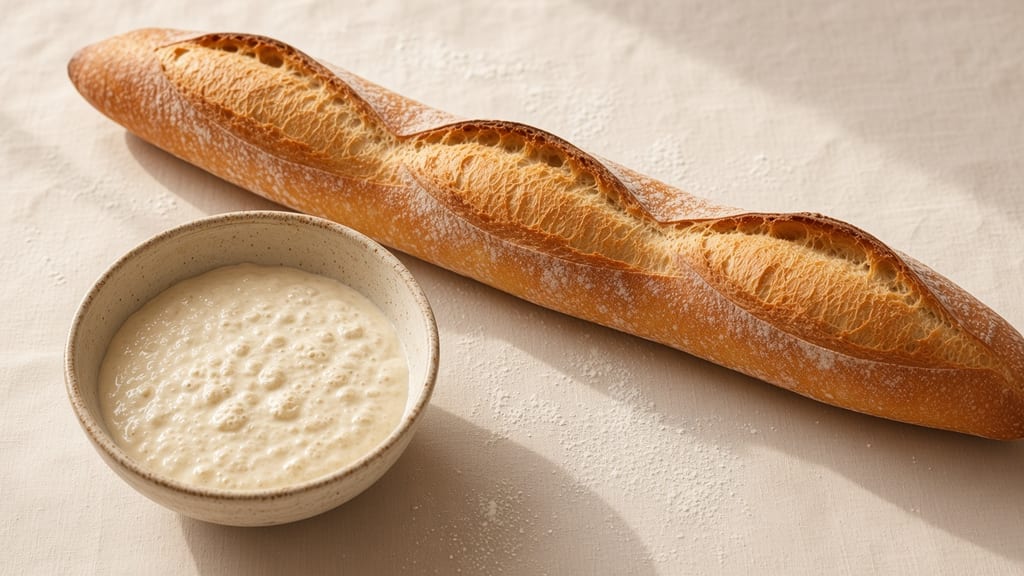
Three lean baguettes using 25 g ripe starter in an overnight sponge, then yeasted final dough, shaped and steam-baked like a classic baguette.
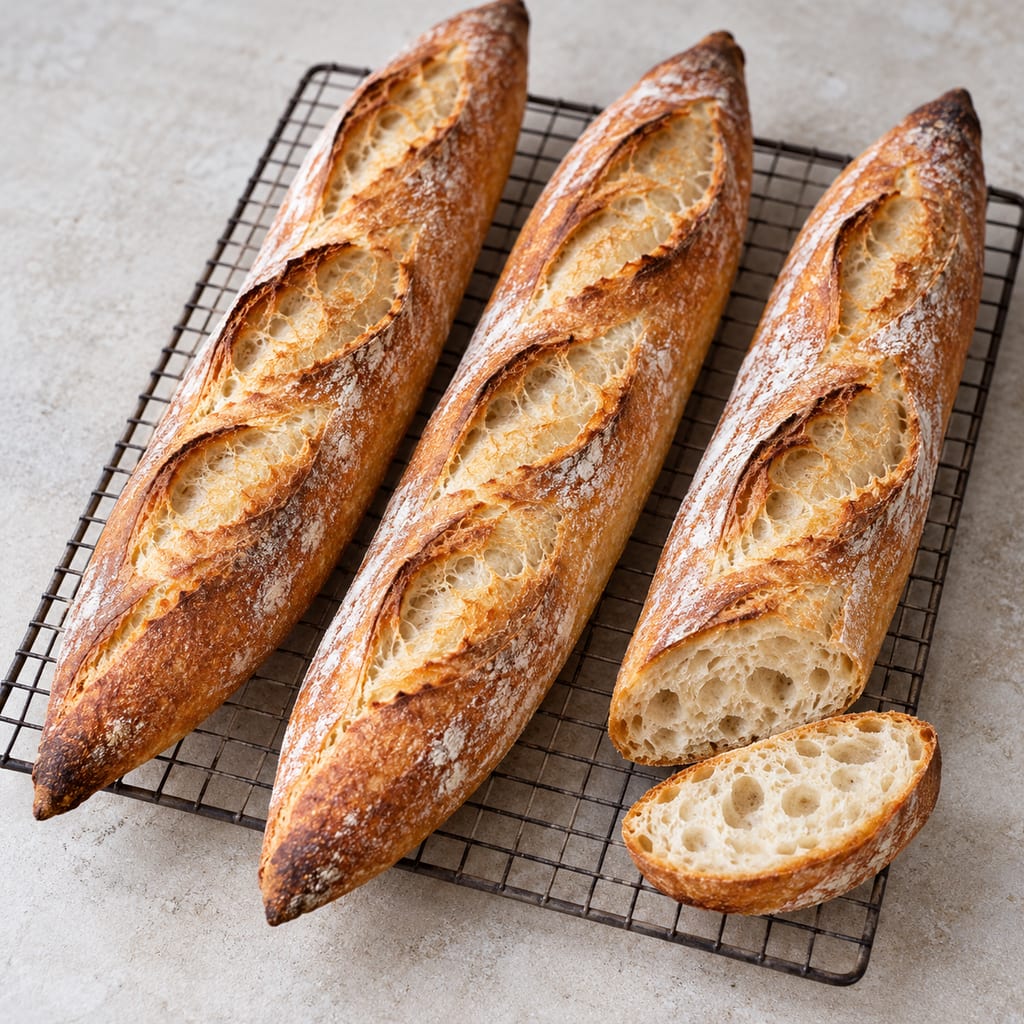
Three long crusty wheat baguettes from an overnight yeast poolish, shaped by hand and baked with steam for a deep golden crust.
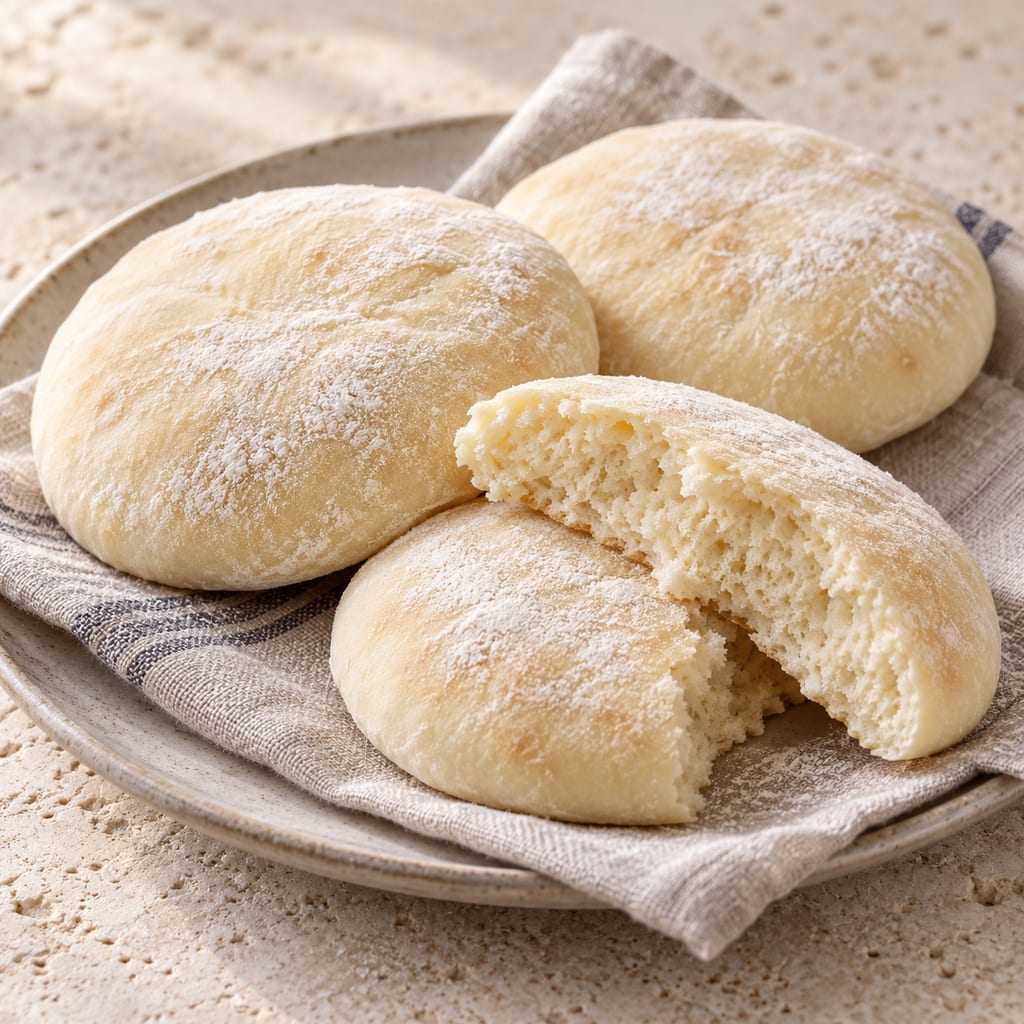
A pale, softly baked, low-profile bread associated with northern France and Tournai. This source-specific household method makes four large faluches; it differs from older accounts of leftover bread dough baked during communal bread baking.
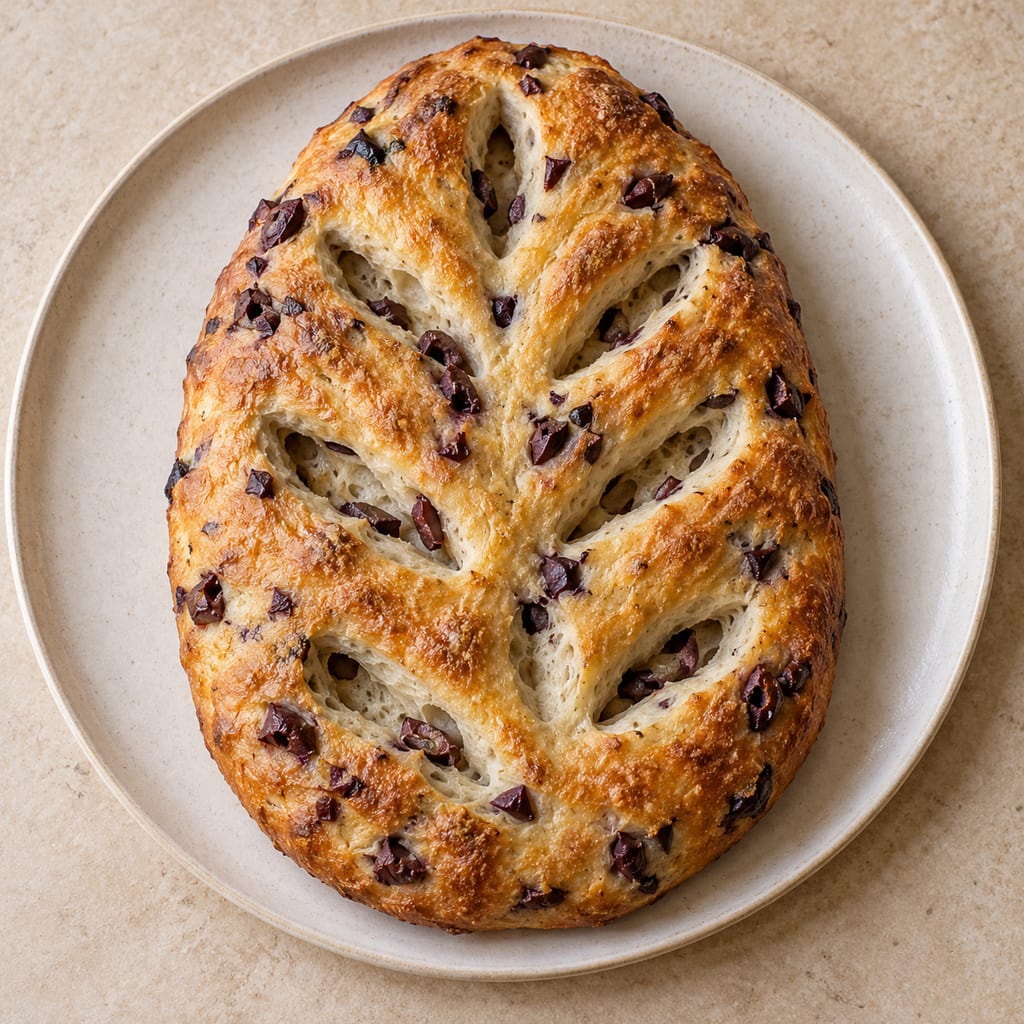
A Provençal olive bread shaped as a flattened oval with seven open slits. This Le Cordon Bleu formula uses wheat flour, fresh yeast, olive oil and Kalamata olives.
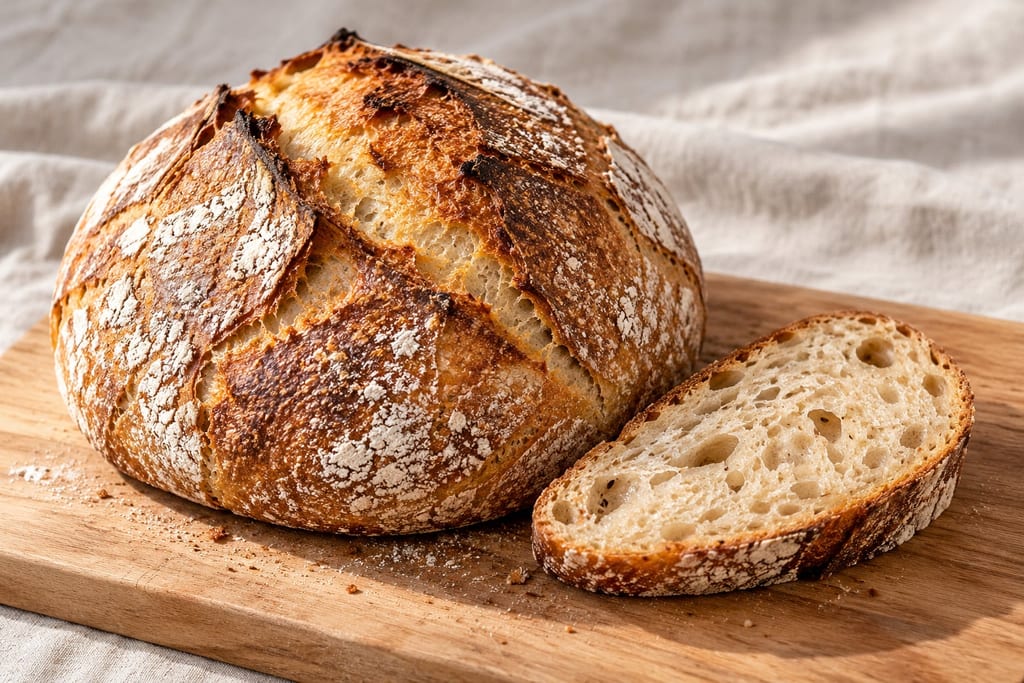
Two large French-style wheat loaves use unfed sourdough starter, whole-wheat flour, long room-temperature fermentation and a covered-pot bake.
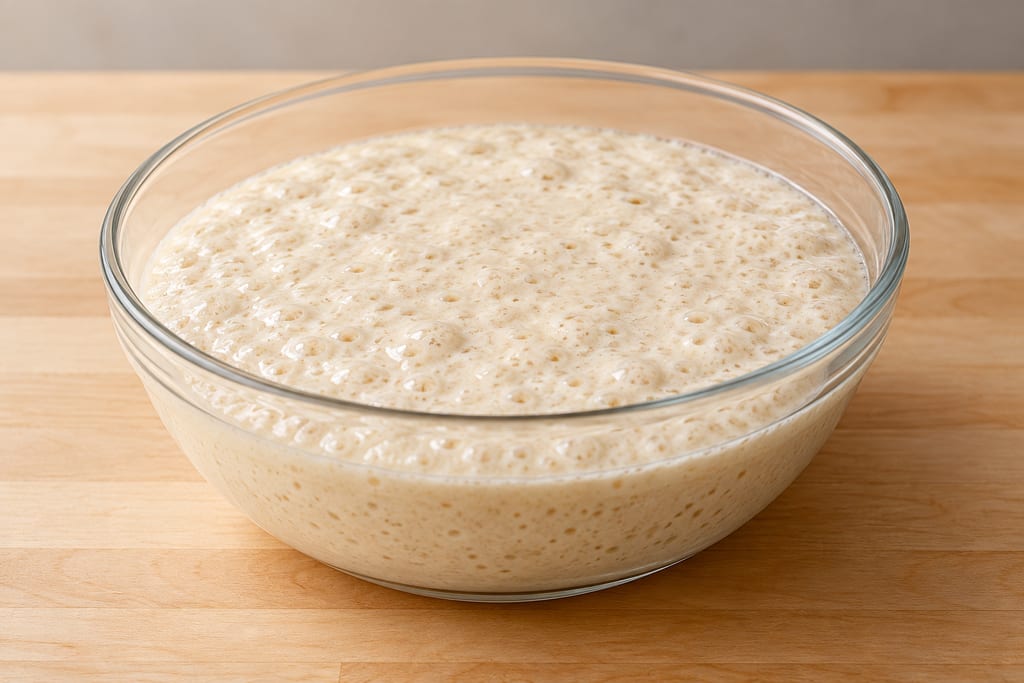
Poolish is a loose, unsalted bread preferment of roughly equal weights of wheat flour and water with a pinch of baker's yeast, left to ripen before it goes into the final dough.
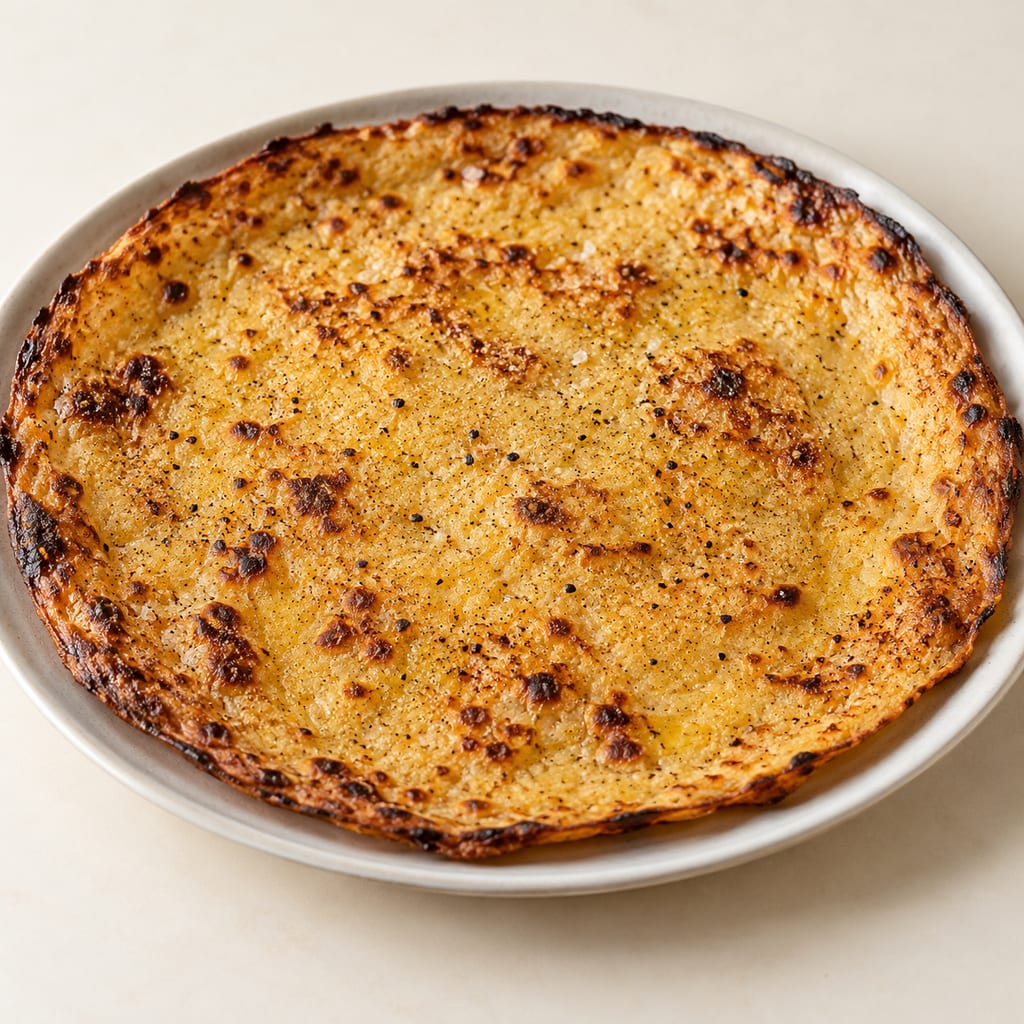
Socca is a thin chickpea-batter pancake from Nice, cooked on a very hot copper plate and served piping hot. This page follows the Nice source; the Genoa farinata formula, which conflicts on water quantity, is not blended in.
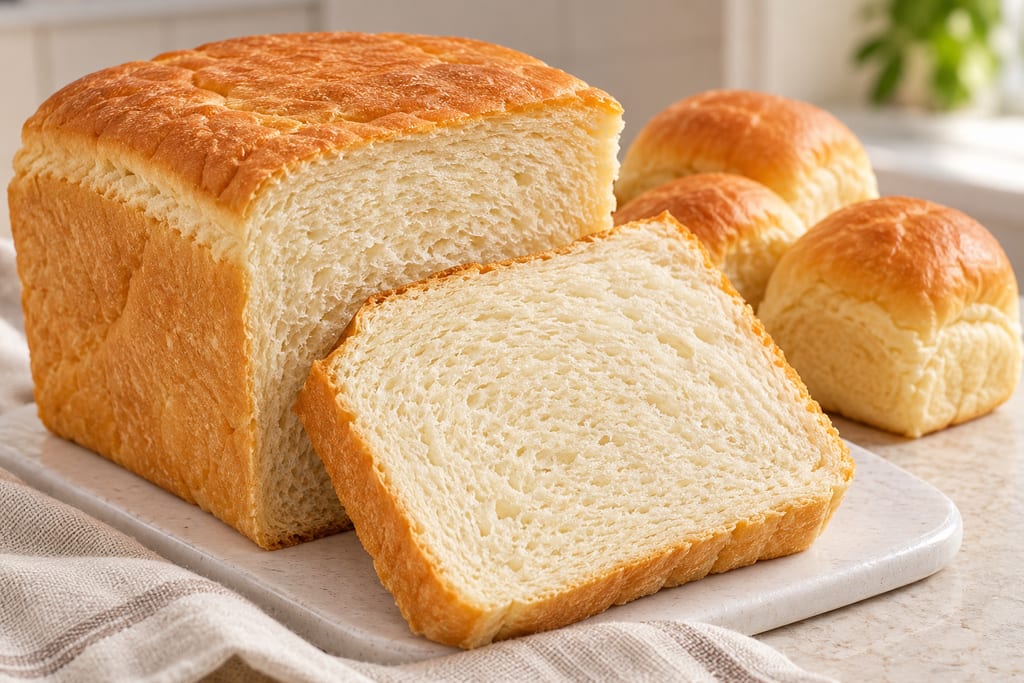
This softer home-style Agege bread uses a scalded flour paste, an enriched yeast dough and a 9×5-inch loaf pan, with rolls from the extra dough.
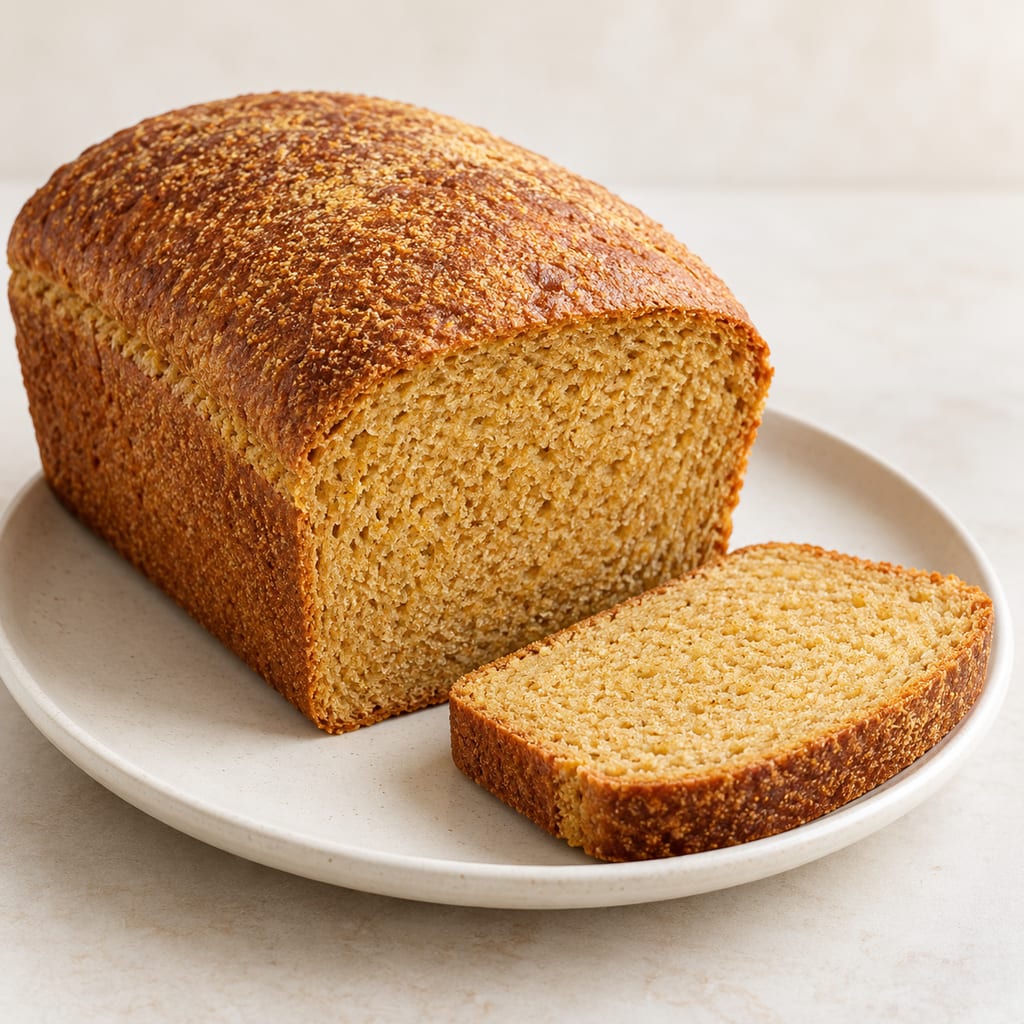
Anadama is a New England yeast loaf made with wheat flour, cornmeal and molasses. Scalded cornmeal enriches the dough, while molasses lends sweetness and a dark crust; it is especially good toasted or beside soup and baked beans.

A yeast-raised wheat ring shaped from a firm dough, briefly boiled and baked. This source-batch formula gives a gently malted crust and a chewy crumb.
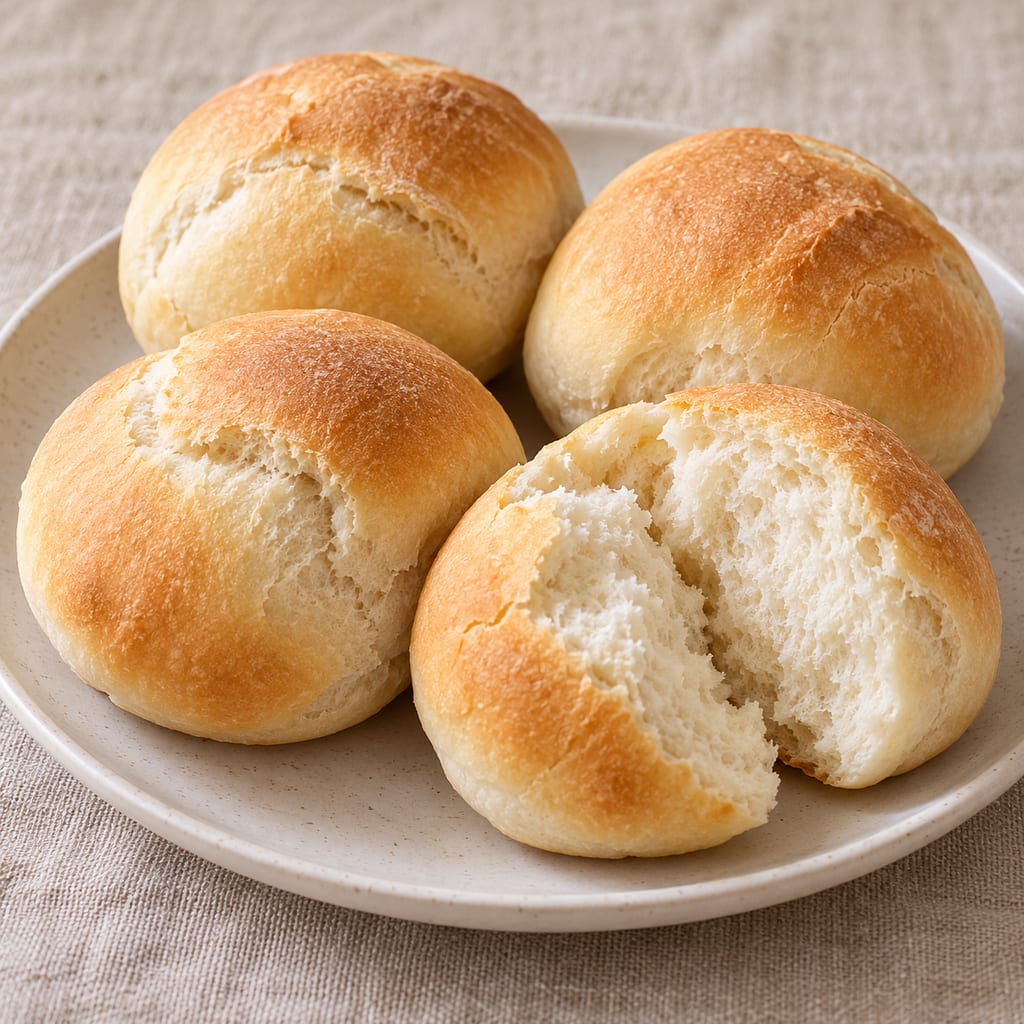
A lightly salted, yeast-raised Barbadian roll, baked in a dozen-roll home batch and often split for cutters.
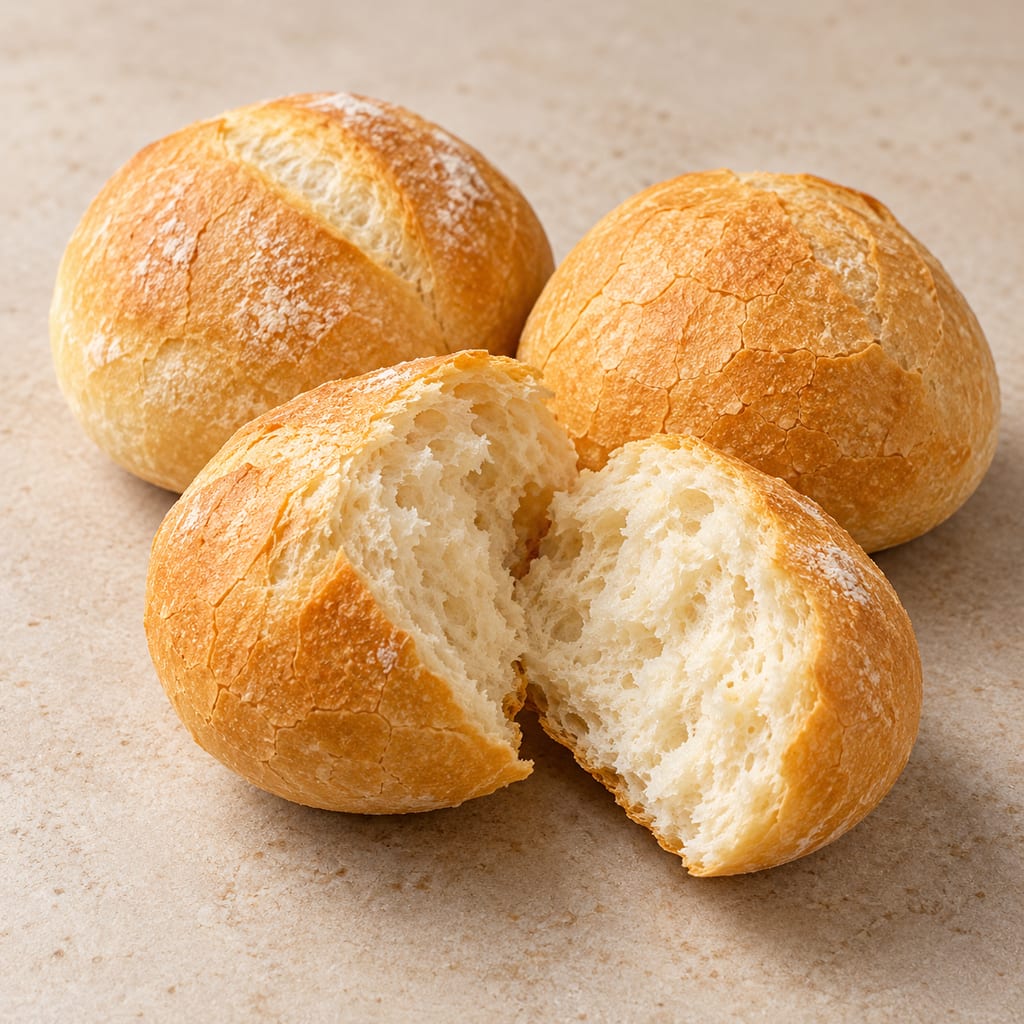
A crisp Belgian roll made from a supplier’s Croc-flour dough, mixed by hand or machine, proofed in rounds and baked with steam.
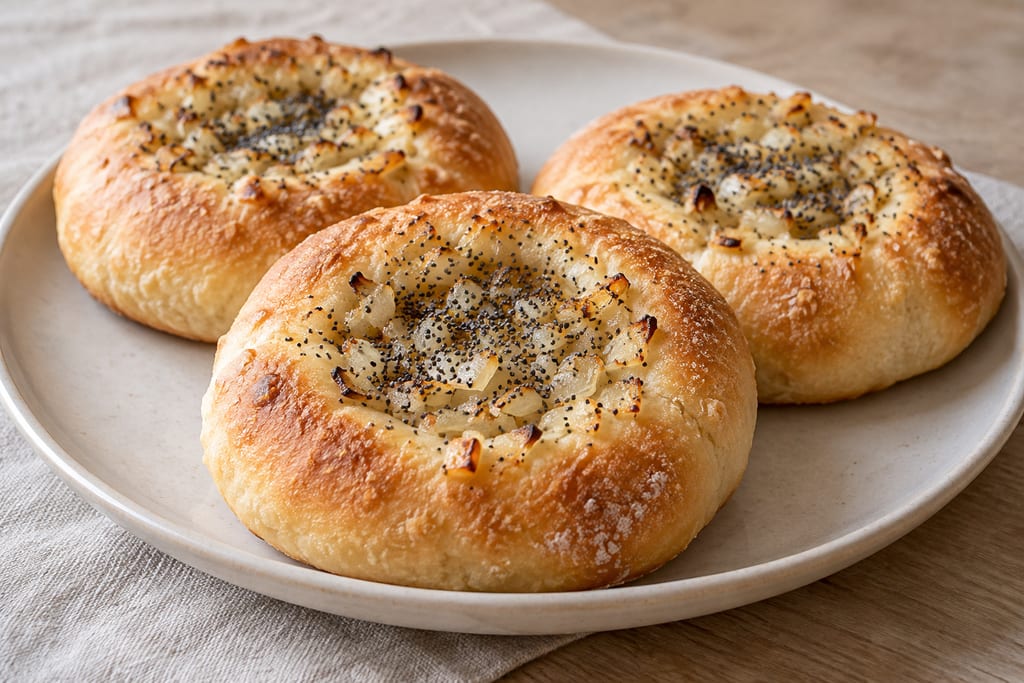
Bialys are soft, yeasted wheat rolls baked without boiling, each shaped with an onion-filled central depression instead of a hole.
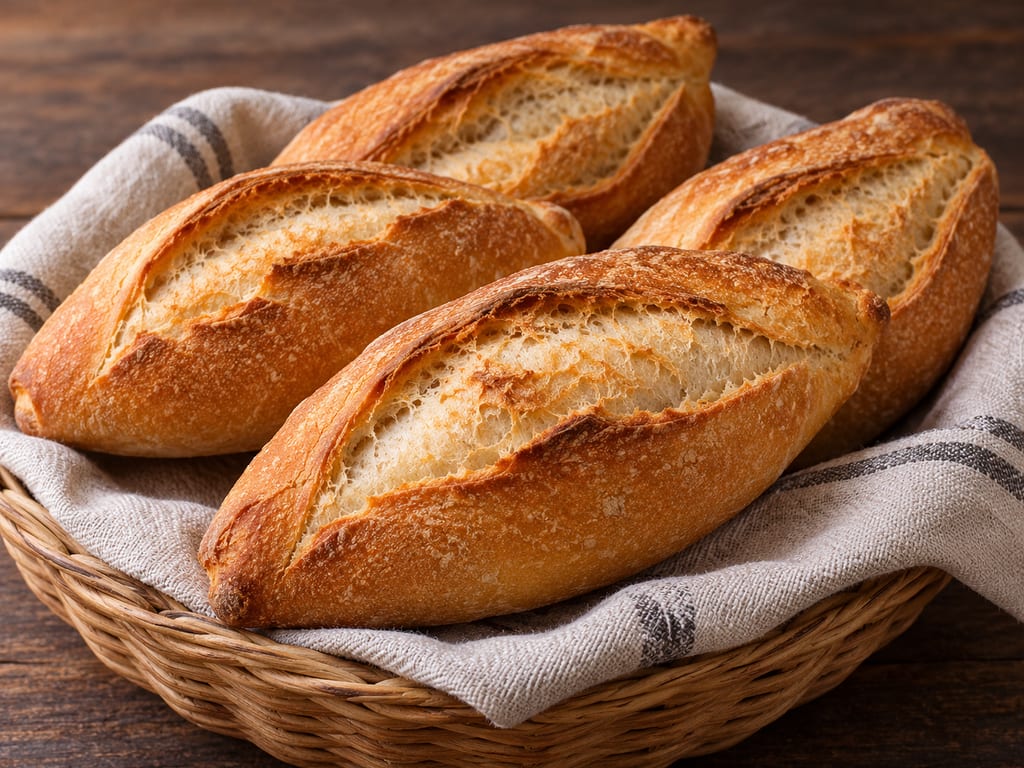
A measured, commercial-yeast home method for Guadalajara-style birote salado, with a six-hour preferment, shaped rolls and a two-temperature steam bake. This formula contains no egg.
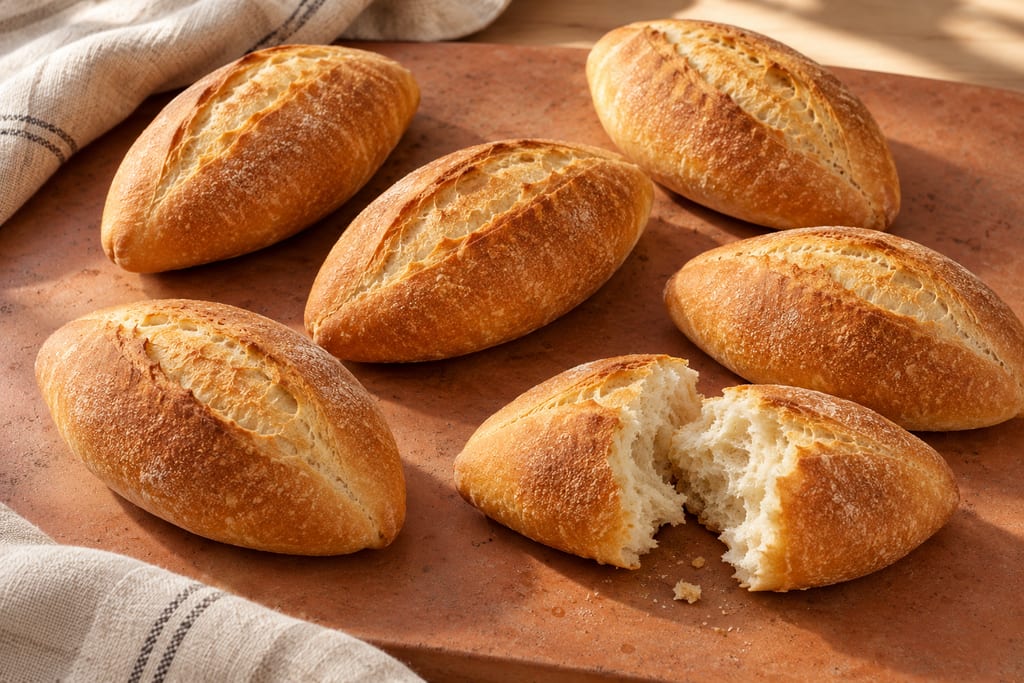
Small, lightly enriched rolls with tapered ends and a scored top; this six-roll formula bakes on a hot stone with steam for a thin, crisp crust.
No community contributions have been published for this entry yet.
Sign in to contribute. Published comments and photos are free to read.
Hot Bread KitchenMethod
The Hot Bread Kitchen Cookbook preview (pâte fermentée)preferment ingredients
8–24 h cold hold
105 g use
Cited in: Old dough in a long loaf; Make the pâte fermentée first; Equipment; Preferment yield and leftover dough; Salt in the old dough; Baker's percentages in plain words; Relation to Fermentea's pâte fermentée page
King Arthur BakingMethod · History
Prefermentpâte fermentée definition and use in lean breads
Cited in: Old dough in a long loaf; Final dough, shape and bake; Why bakers kept a piece of dough; Salt in the old dough; Historical place of old dough; Relation to Fermentea's pâte fermentée page
King Arthur BakingMethod
Classic Baguettesshaping
proof near 68°F
450°F steam bake 24–28 min
Cited in: Old dough in a long loaf; Final dough, shape and bake; Gaps, safety and links; Equipment; Shaping tension for long loaves; Serving; Plain language on fermentation gas; Baker's percentages in plain words; What success looks like; Bench flour and sticky dough
Real Bread CampaignHistory
Afore ye doughold dough as flavour method
Cited in: Why bakers kept a piece of dough; Historical place of old dough
CDCSafety
Raw Flour and Doughno raw dough
Cited in: Gaps, safety and links; Plain language on fermentation gas; Bench flour and sticky dough
see URLHistory
https://www.aipf-calvel.fr/association-aipf/le-professeur-calvel/supporting citation used in section
Cited in: Why bakers kept a piece of dough
see URLHistory
JORFTEXT000000727617supporting citation used in section
Cited in: Historical place of old dough