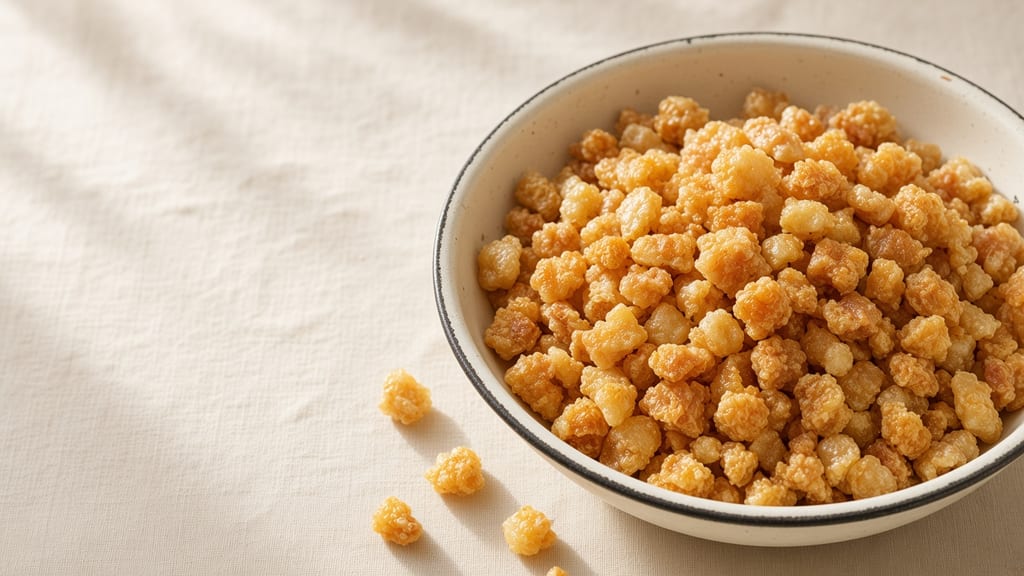
Pork cracklings
The crisp pieces left when pig fat is rendered into lard: škvarky, skwarki, tepertő, Grammeln. Still mostly fat, they are eaten on bread, ground into spreads and worked into savoury dough.
 FermenteaWhere food goes to change
škvarkové placky · škvarkové pagáče · placky se škvarky · crackling cakes
Small yeast flatbreads from Czech home baking, made with lard and chopped škvarky worked into the dough, scored in a grid, brushed with egg and scattered with coarse salt and caraway.
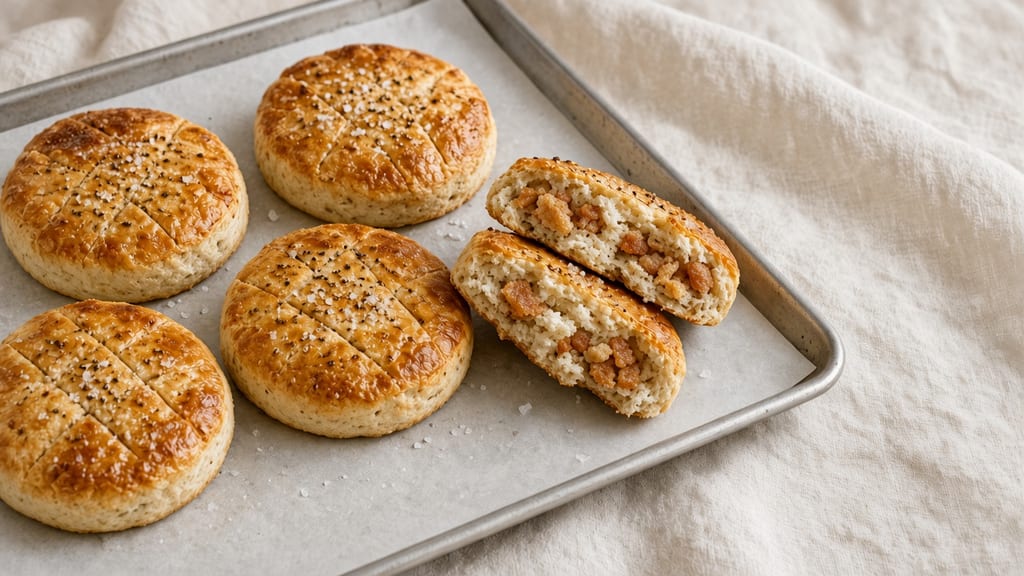
Škvarkové placky are small flatbreads of yeast dough with lard in the dough and chopped škvarky kneaded through it. The tops are scored in a grid, brushed with egg and scattered with coarse salt and caraway, and they come out golden and soft inside.
Vlasta.cz, printing a family recipe in November 2026, says they were baked mainly in the cold season. That was pig-killing time, when škvarky were fresh, and the magazine calls the placky a treat that did not belong to everyday meals. It also says the same idea went by placky in some places and pagáče in others, with the cracklings taking the place of fat in the dough.
Placka is one of the widest words in Czech baking. The national ethnographic encyclopedia uses it for unleavened flat cakes baked in the oven or on the stove plates, which in Moravia went by osúch, pagáč, pagáček and posúch. In Moravia and Silesia the yeast cakes called vdolky elsewhere were also called osúchy or pagáče.
Cracklings appear in the encyclopedia's potato cookery. Potato placky, it says, became a treat when škvarky or smoked meat went in, and a baked potato dough was salted and seasoned with garlic and sometimes škvarky. No entry describes wheat yeast placky with cracklings, so the dated history of this exact bake is still open.
Vlasta.cz gives two regional forms. In Slovácko, it says, pagáče were first made from unleavened dough and baked dry on the stove plates. The placky of Vysočina were yeast dough with whole cracklings. The magazine adds that regional recipes usually ask for the škvarky chopped small, and that placky made with ground škvarky smoothed into the dough counted as a delicacy.
The recipe here is the one the presenter Laďka Něrgešová took from her great-grandmother. Half the flour is semi-coarse, the polohrubá mouka of Czech kitchens, and half is plain. A yeast starter rises in the well of the flour with warm milk and sugar before lard, egg, salt, pepper and crushed caraway go in.
The škvarky are added after the first rise. The risen dough is pulled into a sheet, scattered with chopped cracklings, rolled up and kneaded until they are spread through it.
The dough is cut into 12 to 14 pieces and flattened by hand. After a short second rise the tops are scored, brushed and salted, and the placky bake at 190 °C for about 20 minutes. Vlasta.cz advises letting them cool to lukewarm before eating and suggests a vegetable salad with them.
Cracklings are mostly fat, so a dough with 300 g of them gets far more fat than the lard alone suggests. The Hungarian specification for tepertős pogácsa measures crackling at 82–84 % fat, and the Slovak encyclopedia records that cracklings hold more than half fat. That is why the placky stay soft inside and why Vlasta.cz advises eating them in moderation.
The same idea runs through the region. Slovak households baked oškvarkové pagáčiky, and Hungary protects its tepertős pogácsa, where crackling cream is rolled into the dough. Those versions are on their own pages.
The Czech national ethnographic encyclopedia records placky as a broad family of flat cakes, unleavened ones called osúch, pagáč, pagáček or posúch in Moravia, and potato placky that became a treat when škvarky or smoked meat went in. It does not describe a wheat yeast placka with cracklings.
The recipe here is a family recipe from the great-grandmother of the presenter Laďka Něrgešová, printed by Vlasta.cz in November 2026. The magazine says such placky were baked mainly in the cold season at pig-killing time, and that they were a treat, not everyday food.
Yield 13 placky · Scaling: linear
Cracklings make these heavy; Vlasta.cz advises eating them warm, not hot, and in moderation.
Vlasta.cz says the Vysočina placky were yeast dough with whole cracklings.
Pagáče first from unleavened dough baked dry on stove plates, according to Vlasta.cz.
The crisp pieces left when pig fat is rendered into lard: škvarky, skwarki, tepertő, Grammeln. Still mostly fat, they are eaten on bread, ground into spreads and worked into savoury dough.
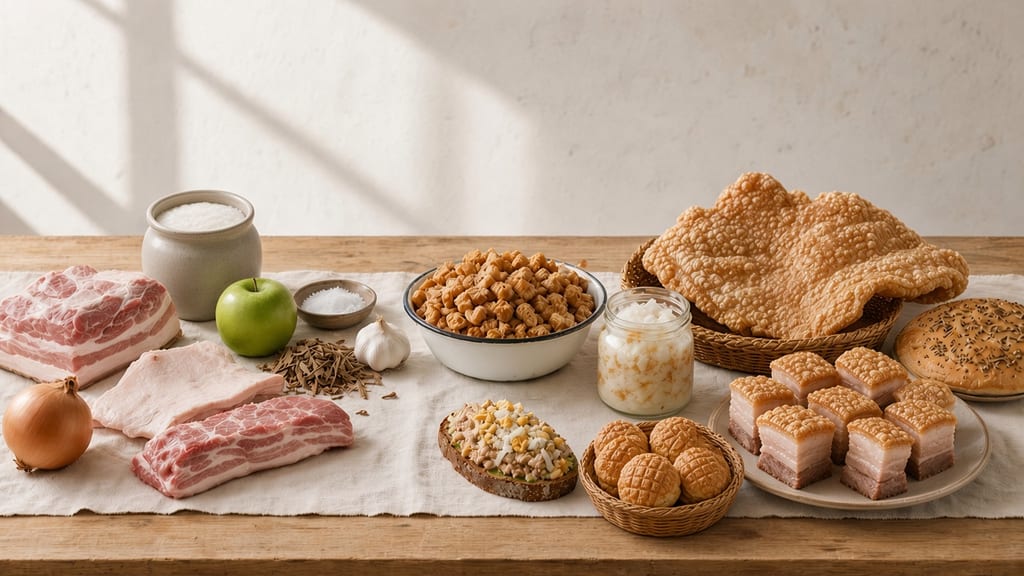
Škvarky, skwarki, tepertő, chicharrón, gratons. How cooks render pig fat, dry and fry skin, press and wring the pieces, and bake with them, from the Czech pig-killing to Mexico and Soria.
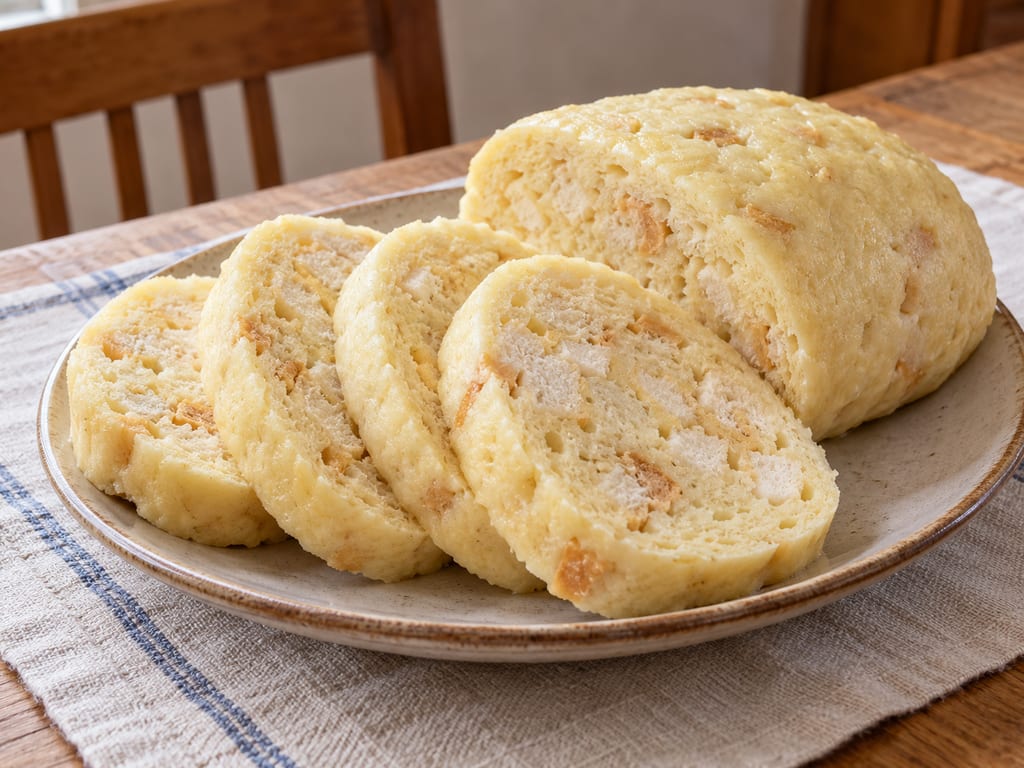
Czech houskové knedlíky are yeast-raised flour dumplings studded with stale white roll cubes, shaped as logs and steamed until tender for serving with sauce.
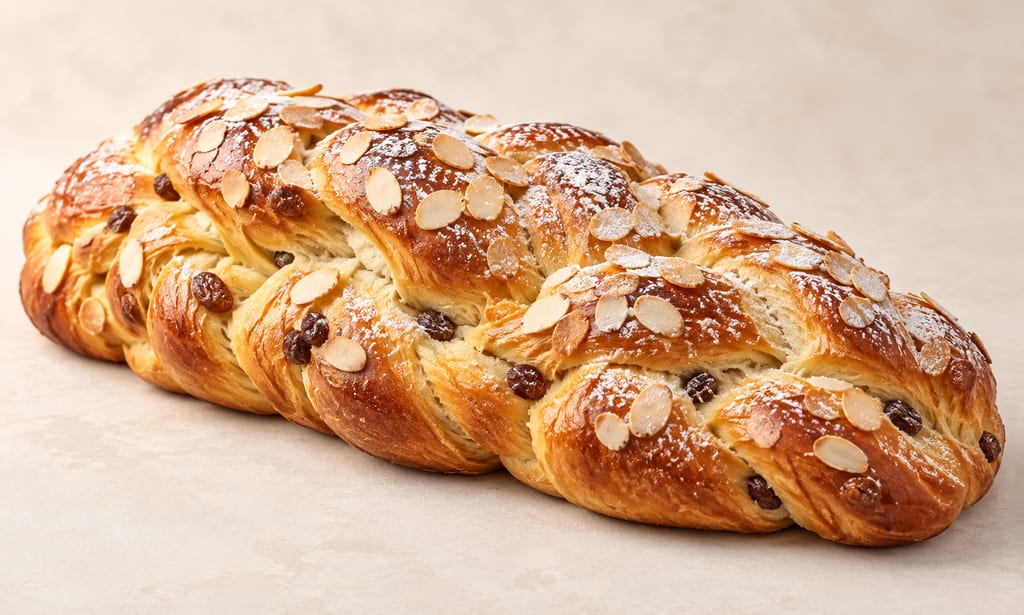
A Czech enriched yeast loaf with raisins, lemon zest and almonds, braided from six strands, proofed twice and baked in two oven stages.
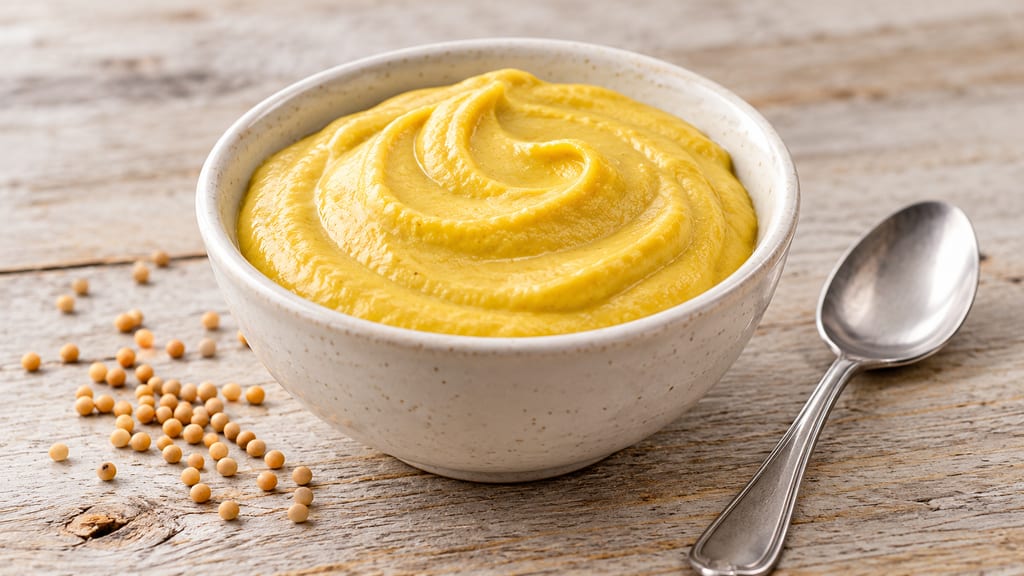
A mild, creamy Czech-style table mustard made from ground seed, vinegar, water, salt and a little sweetness. This home version follows a Czech Television formula and is not a copy of SPAK’s proprietary product.
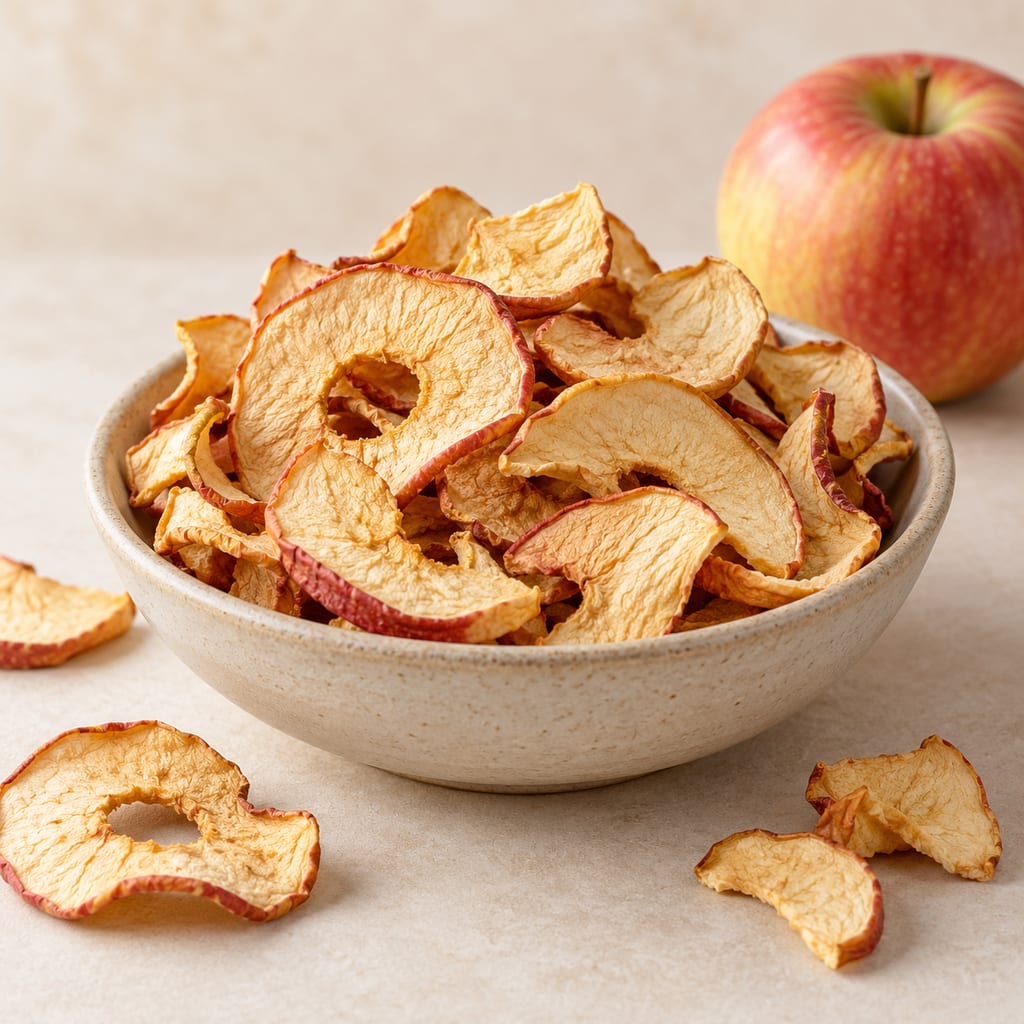
Křížaly are Czech dried apple or pear pieces. The name has regional meanings beyond apple slices, and drying practice varies by place and dryer.
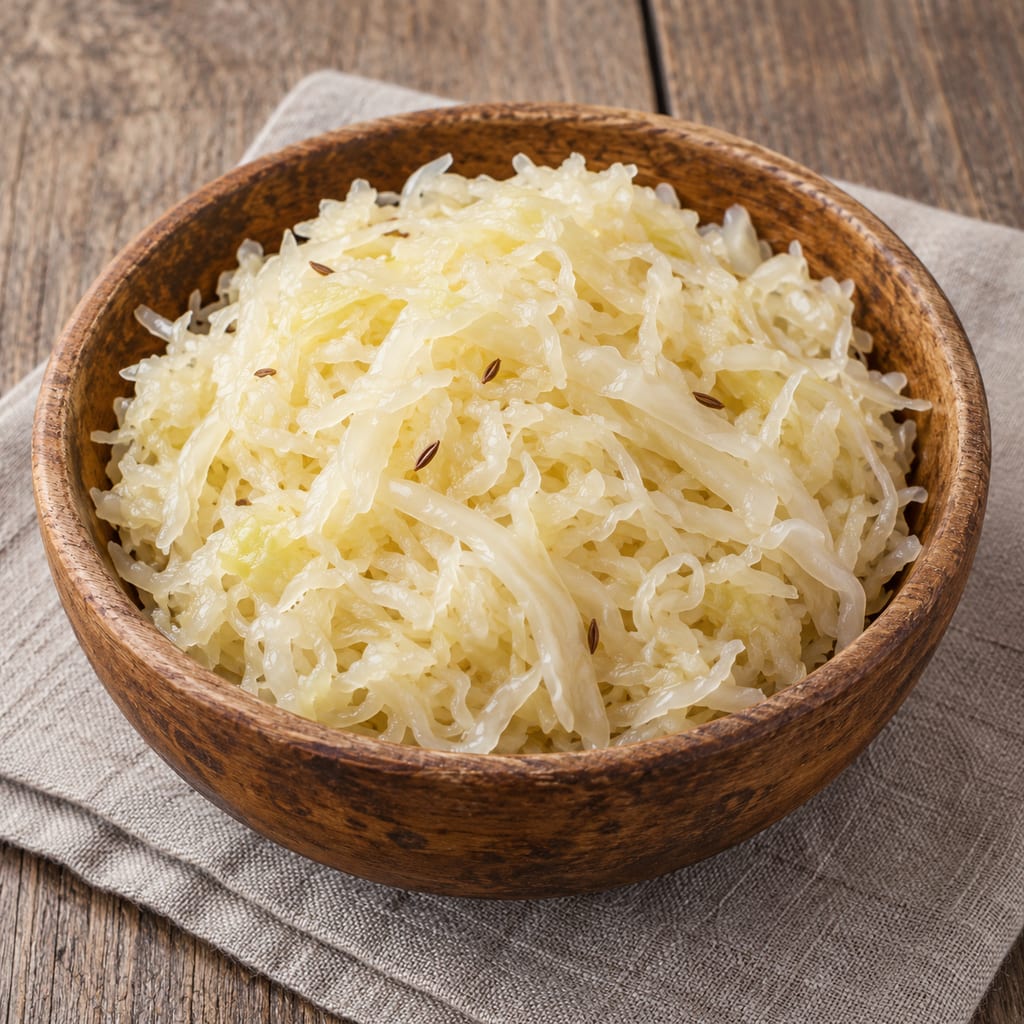
Kysané zeľí is Czech sour cabbage: shredded cabbage layered with salt and caraway and pressed in a wooden barrel. The regional account is descriptive and gives no validated salt ratio or endpoint.

Meat-trim koji garum is a savoury liquid seasoning made by holding meat scraps with rice koji, salt and water at steady warmth before straining the mash.
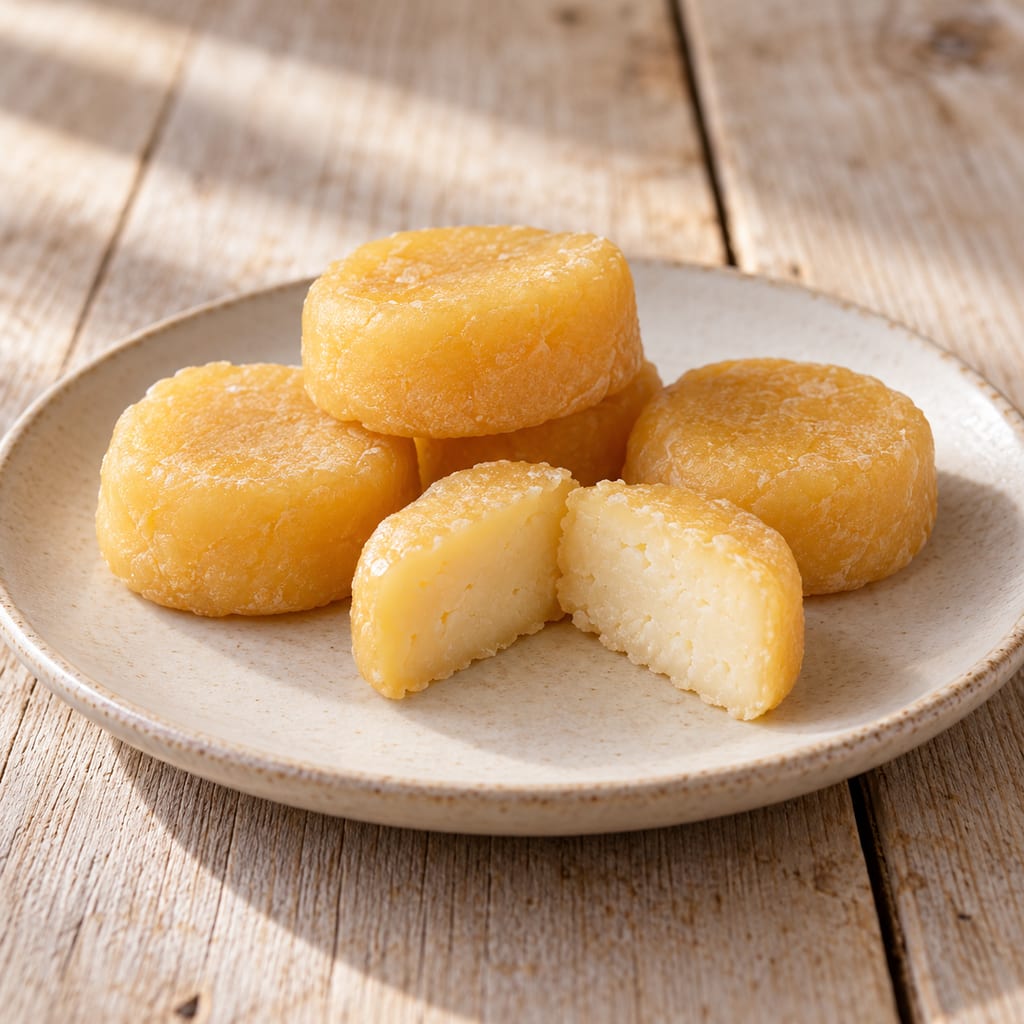
A ripened Czech table cheese made from skimmed acid-set curd, salted, cultured and ripened from the surface inward, with a golden smear and a paler centre.

Pracharanda is finely reduced dried pear used as a topping on porridge, dumplings and cakes in Czech sources. Accounts of its preparation differ.
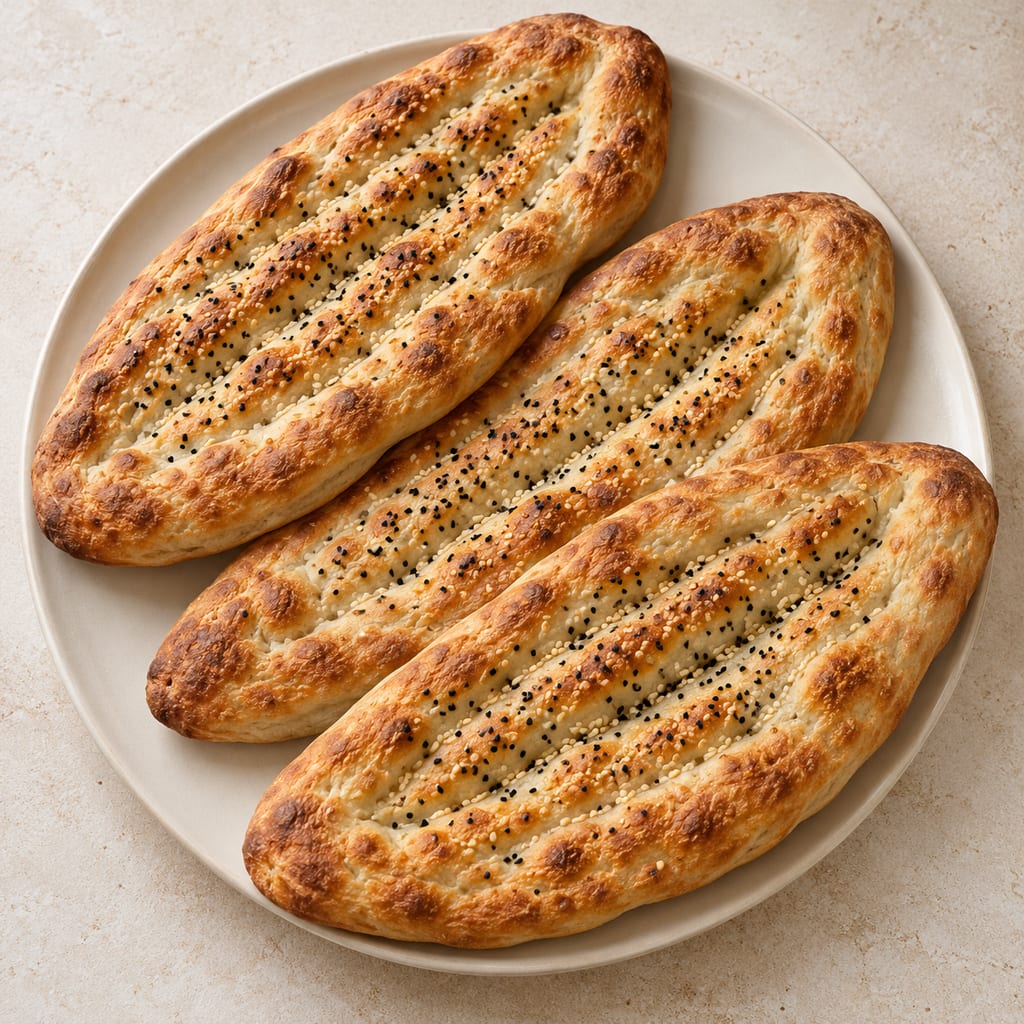
A long oval Afghan wheat bread, leavened with yeast, grooved along its length and baked until crisp outside and chewy within.
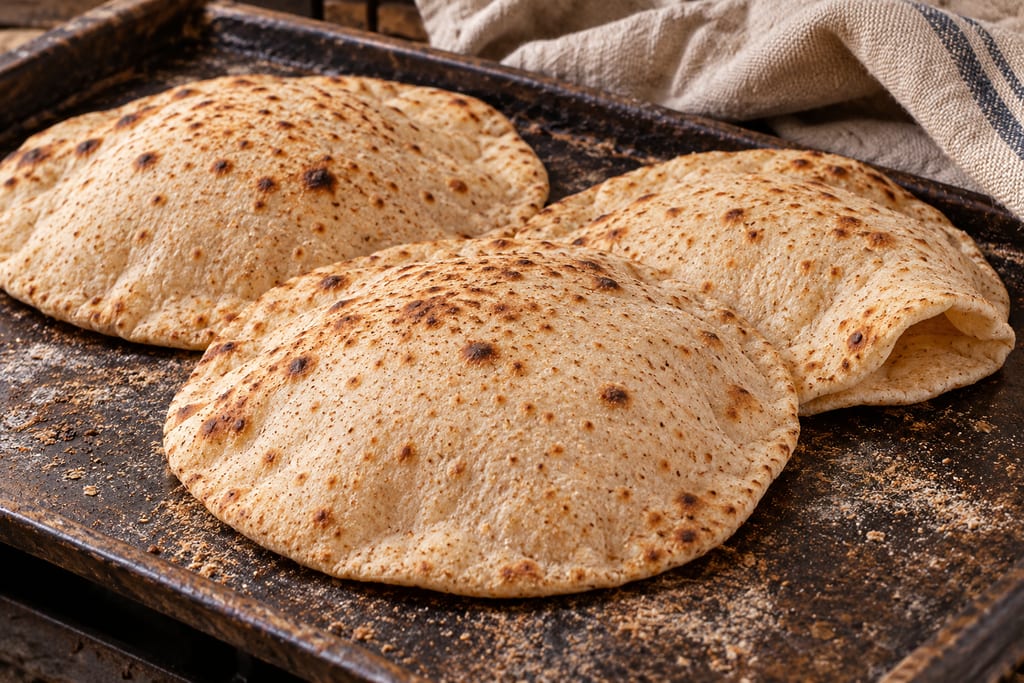
This home adaptation of Egyptian aish baladi uses a refrigerated yeast biga, whole-wheat dough, bran dusting and a very hot baking surface to make 16 pocketed rounds.
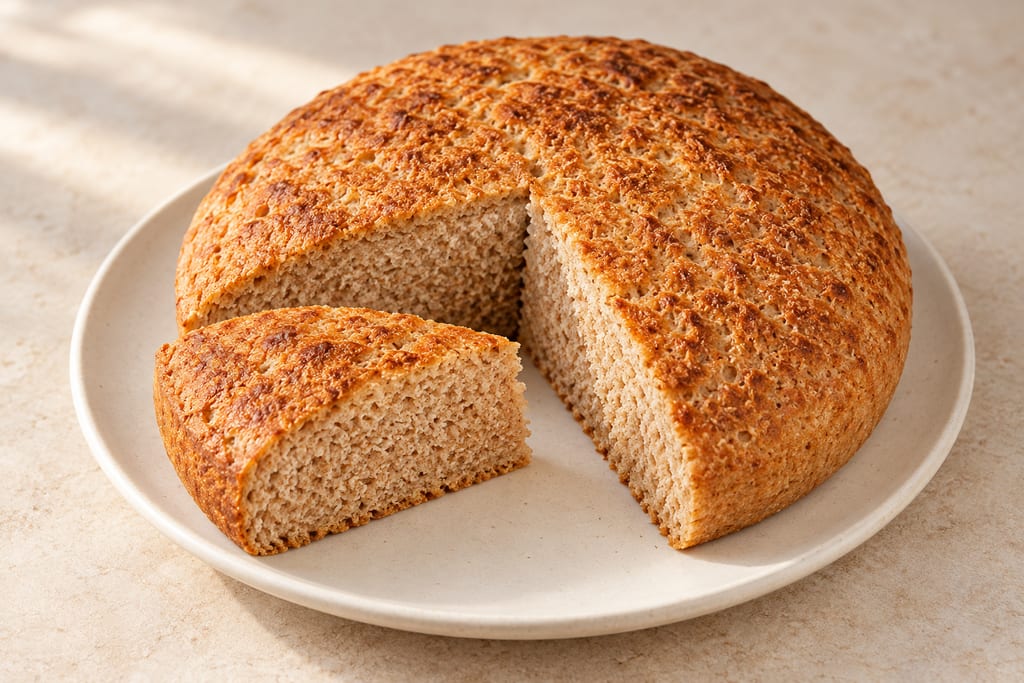
This oven-baked Amdo balep uses yeast, whole-wheat and white flour, a long covered rise and a two-sided bake in a heavy oven-safe pot.
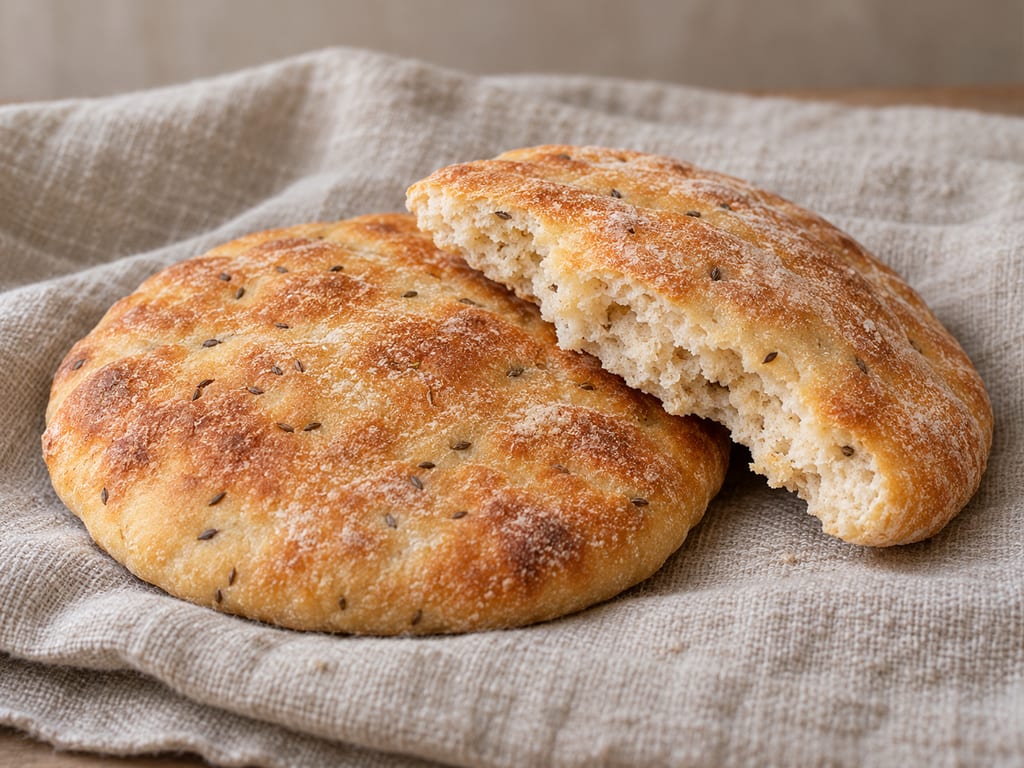
A measured, yeast-raised Ayacucho chapla home method shared by Thermomix Peru presenter Roxanna Salaverry. It makes thin, anise-scented rounds baked at 240°C; the historic qunchu-leavened form is documented separately.
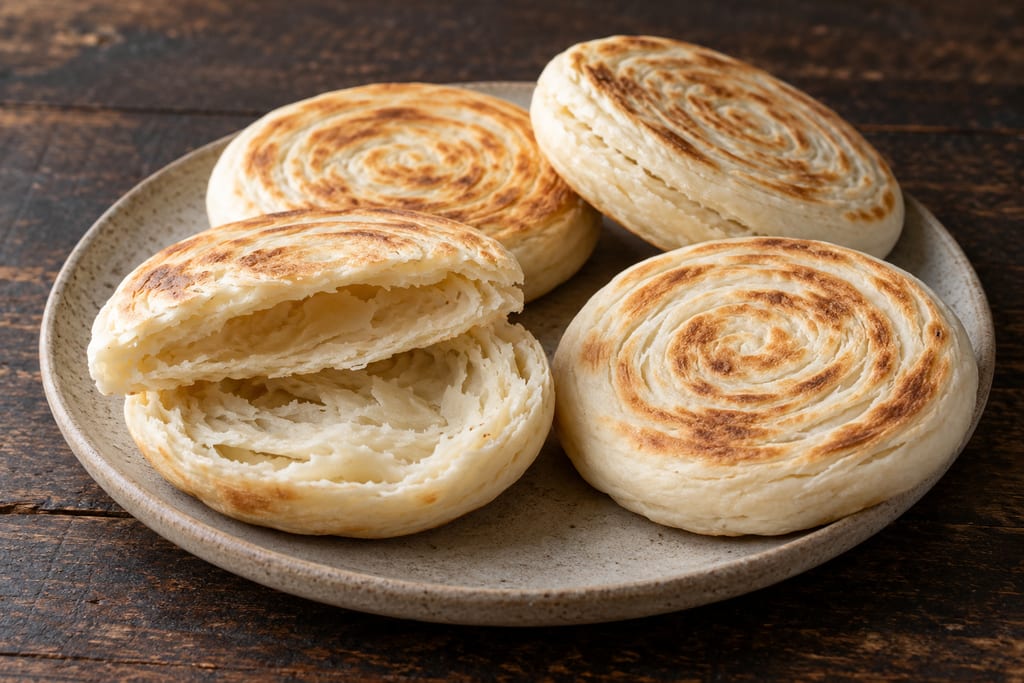
This Shaanxi-associated yeast flatbread uses a simple water dough, coiled shaping and a skillet bake. It is the bread used in roujiamo, not the filled meat dish.
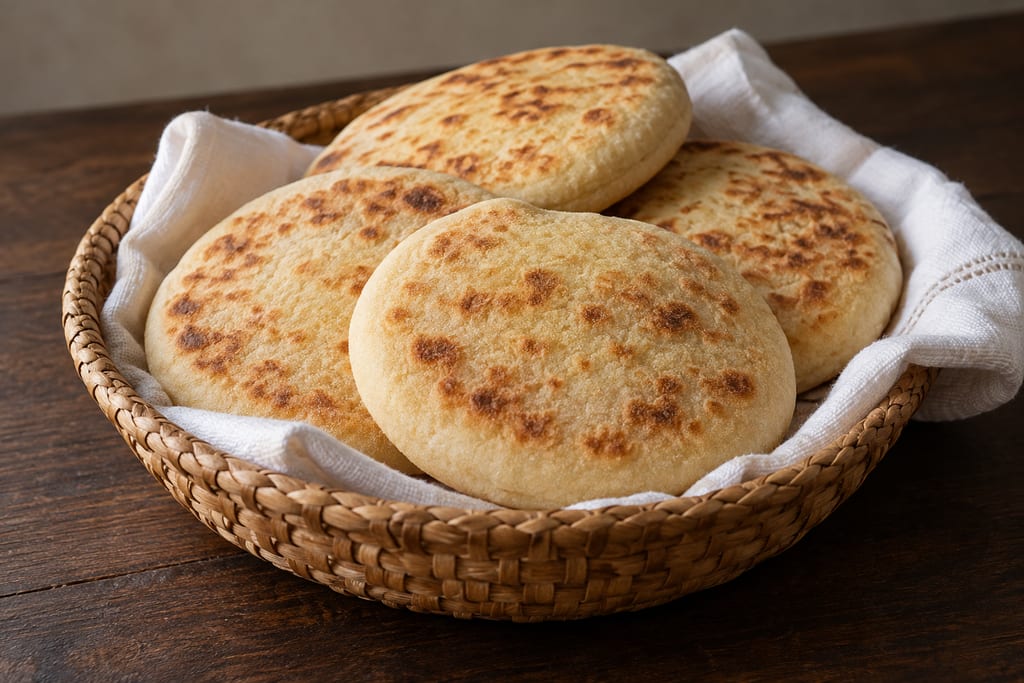
A Moroccan yeast-raised semolina pocket bread cooked on a dry pan or griddle; this measured batch makes about twenty 4-inch rounds.
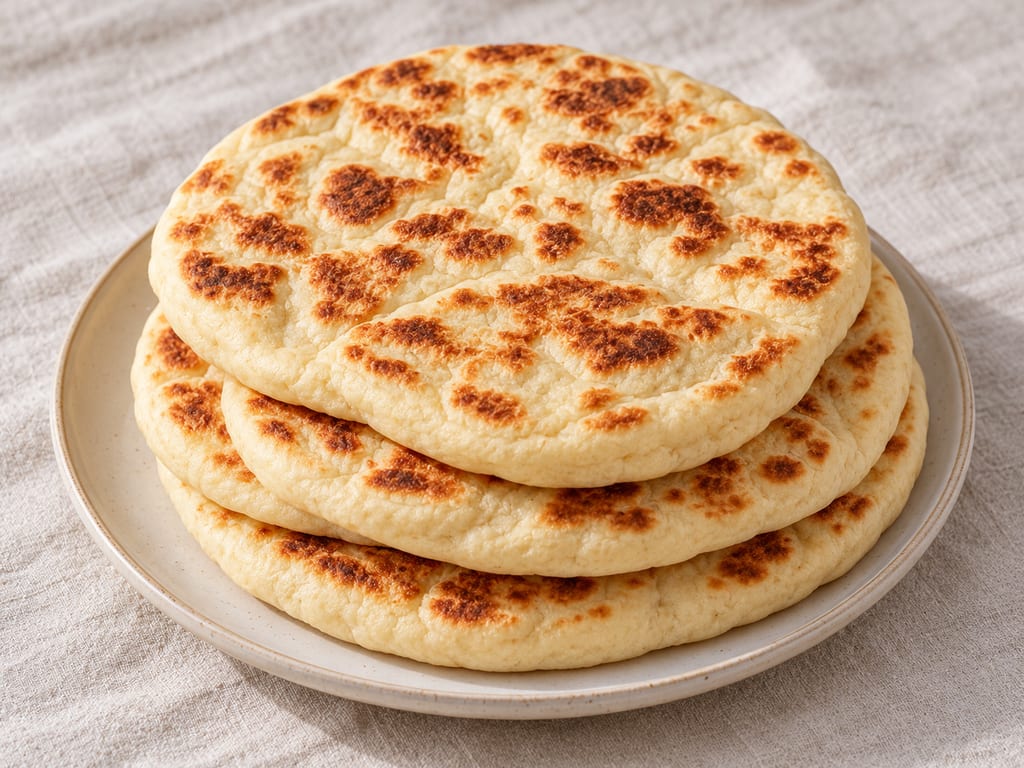
This Turkish bazlama uses yeast, plain yogurt and olive oil for a soft dough cooked in a skillet. Shape it into twelve small or six larger rounds, flip as bubbles appear, and wrap the breads to keep them soft.
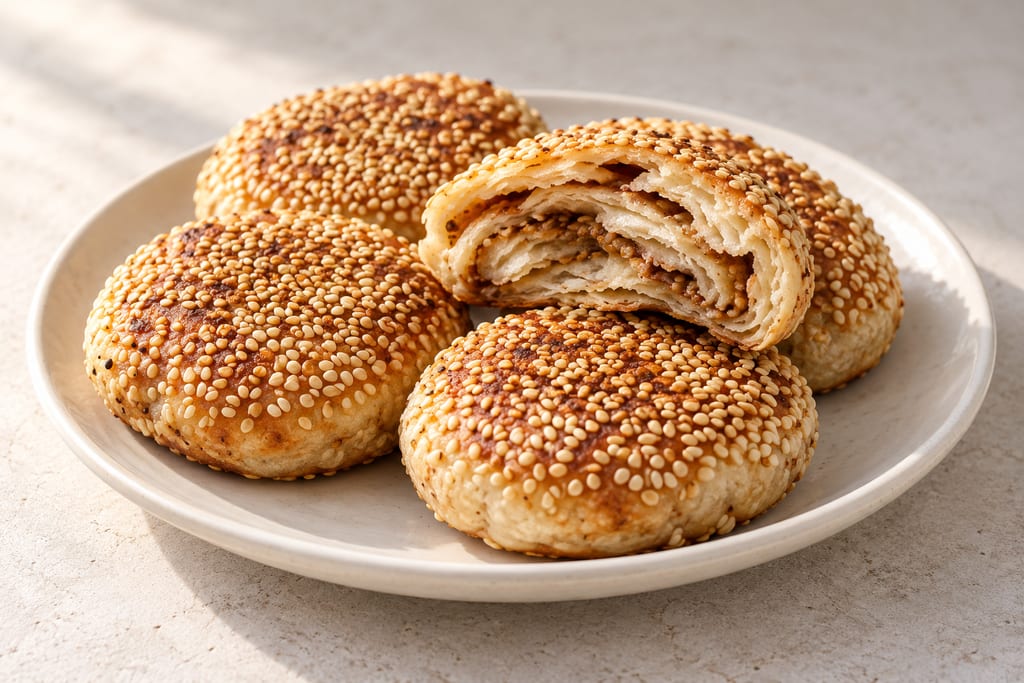
A Beijing-style yeast dough is layered with seasoned sesame paste, sealed into small buns, briefly pan-fried, seeded, and baked.
No community contributions have been published for this entry yet.
Sign in to contribute. Published comments and photos are free to read.
Vlasta.cz, 5 November 2026Method · Context
Škvarkové placky podle rodinného receptu prababičky Laďky NěrgešovéIngredients and method as listed: 250 g semi-coarse and 250 g plain flour, 150 ml warm milk, a handful of sugar, half a cube of yeast, 180 g lard, 1 egg, 1 tsp salt, ½ tsp crushed caraway, ½ tsp pepper, about 300 g škvarky; rise 45 minutes; 12–14 pieces; proof 20 minutes; 190 °C about 20 minutes
Called placky in some places and pagáče in others; cracklings replace fat in the dough
Slovácko pagáče first from unleavened dough baked dry on stove plates; Vysočina placky from yeast dough with whole cracklings
Regional recipes usually chop cracklings small; ground cracklings were a delicacy
Baked mainly in the cold season and at pig-killings; a treat, not everyday food
Eat warm, not hot, and in moderation
Cited in: A bake for pig-killing time; The many placky; The recipe; Cracklings in place of fat
Etnologický ústav AV ČR / Mladá fronta, 2007Context
Národopisná encyklopedie Čech, Moravy a Slezska, entry "moučné pokrmy" (volume M)Moravian names for unleavened placky: osúch, pagáč, pagáček, posúch
Cited in: The many placky
Etnologický ústav AV ČR / Mladá fronta, 2007Context
Národopisná encyklopedie Čech, Moravy a Slezska, entry "brambory" (volume B)Potato placky became a delicacy with škvarky or smoked meat; baked potato dough salted, with garlic and sometimes škvarky
Cited in: The many placky
Etnologický ústav AV ČR / Mladá fronta, 2007Context
Národopisná encyklopedie Čech, Moravy a Slezska, entries "pečivo" and "přesnídávka" (volume P)In Moravia and Silesia yeast vdolky were called osúchy or pagáče
Cited in: The many placky
Official Journal of the European Union C 94, 10 March 2016Context
Publication of an application for registration of a name pursuant to Article 50(2)(b) of Regulation (EU) No 1151/2012: Tepertős pogácsa (TSG)Crackling 82–84 % fat
Cited in: Cracklings in place of fat
Centrum pre tradičnú ľudovú kultúru, encyclopedia of Slovak folk cultureContext
OškvarkyCracklings hold more than half fat
Oškvarkové pagáčiky among the uses of cracklings in Slovakia
Cited in: Cracklings in place of fat