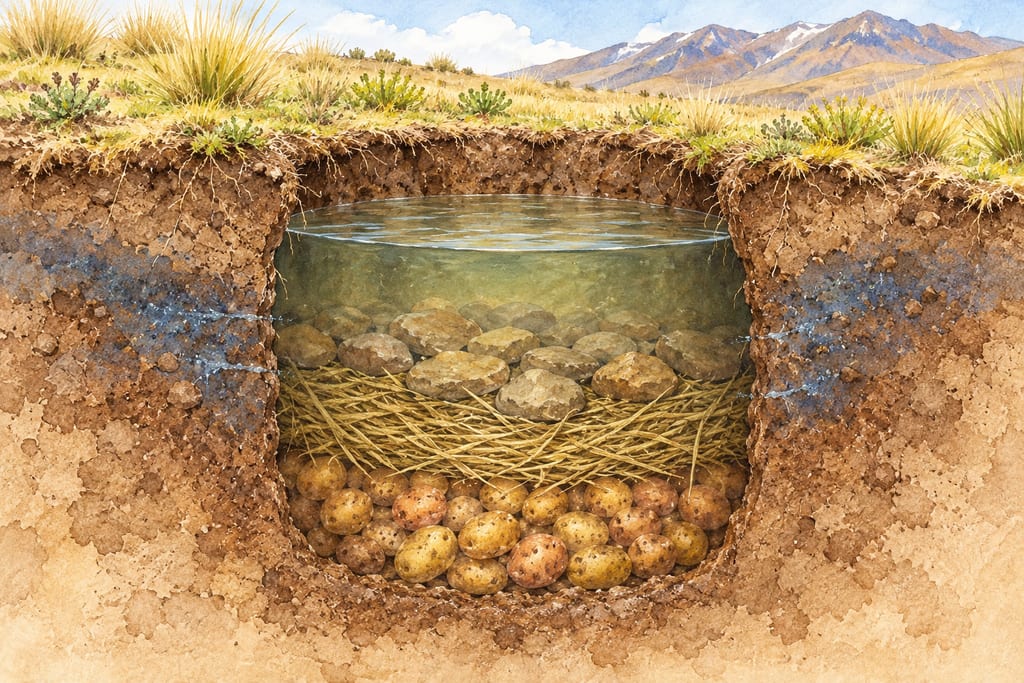
Tocosh spring-fed pit
In the Huánuco highlands, tocosh potatoes are placed in deep earthen wells beside running water. Dry straw and stones cover the potatoes as seepage fills the pit, submerging its contents during a long fermentation.
 FermenteaWhere food goes to change
tocosh · togosh · tuqush
Peruvian Andean fermented potato: tubers held in water-fed earthen wells for a long lactic fermentation, giving an acidic food that can be dried and ground into flour for storage.
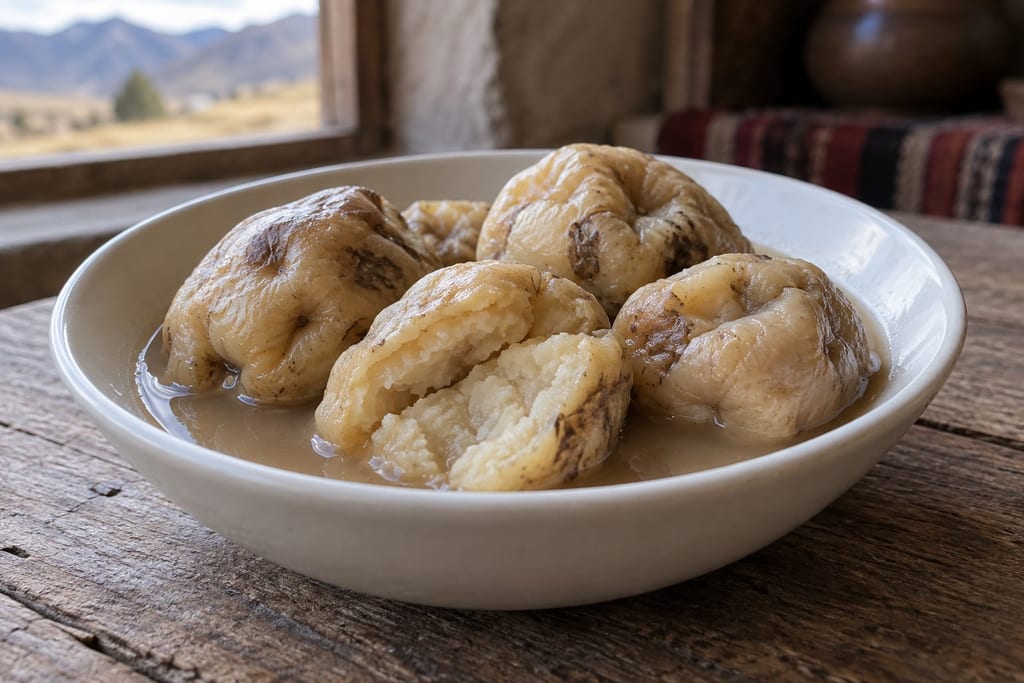
Tocosh is a fermented potato from the Andean highlands of Peru. Unlike chuño and tunta, which are frozen and dried, tocosh is made by lactic fermentation in water. The result is acidic, and it keeps well enough to be dried and ground into flour.
The Huánuco accounts name the food tocosh and describe a maize version made by the same route. Other names in the research are togosh and tuqush.
The documented method places potatoes in a deep earthen well fed by flowing water, covers them with straw and stones, and lets seepage submerge the load. The fermentation runs for months and is judged by local observation. Research on the fermented potatoes identifies diverse lactic-acid bacteria.
Dates and origins are uncertain. The sources document the practice in recent field work and do not establish when it began.
Fresh tocosh and tocosh flour are used in mazamorra, a porridge-style dish. Drying and grinding turn the fermented potatoes into a flour that can be stored.
Tocosh is a traditional Andean fermented potato. The documented accounts from Huánuco describe potatoes held in water-fed earthen wells for months, with the fermented food then eaten fresh or used as flour in mazamorra. The catalogue places it among the Andean tuber systems that also include chuño and tunta, which are frozen and dried rather than fermented. The field accounts record a maize version made in a similar way.
Scaling: not established by the sources; the documented practice is a single local well load.
The sources record foam and local signs of progress but do not establish a safe completion point or a validated food-safety endpoint.
Hazard sourceThe pit is fed by flowing water and open earth, so the water source can introduce organisms and the sources do not give water-quality limits.
Hazard sourceA deep water-filled pit presents a serious fall and access hazard.
Hazard sourceJudge the product by documented local practice only; do not treat fermentation signs as proof of safety
Control sourceDry and grind only after fermentation is complete, as the local practice does
Control sourceThe lactic-acid bacteria isolated from tocosh are documented; their presence does not establish that every lot is safe.
No process validation is recorded for this traditional food.
Field observations at highland sites in the Huánuco region. The sources do not give a single village or elevation for the practice as a whole.
The wider Andean practice that the catalogue names; origin dates are uncertain.
In the Huánuco highlands, tocosh potatoes are placed in deep earthen wells beside running water. Dry straw and stones cover the potatoes as seepage fills the pit, submerging its contents during a long fermentation.
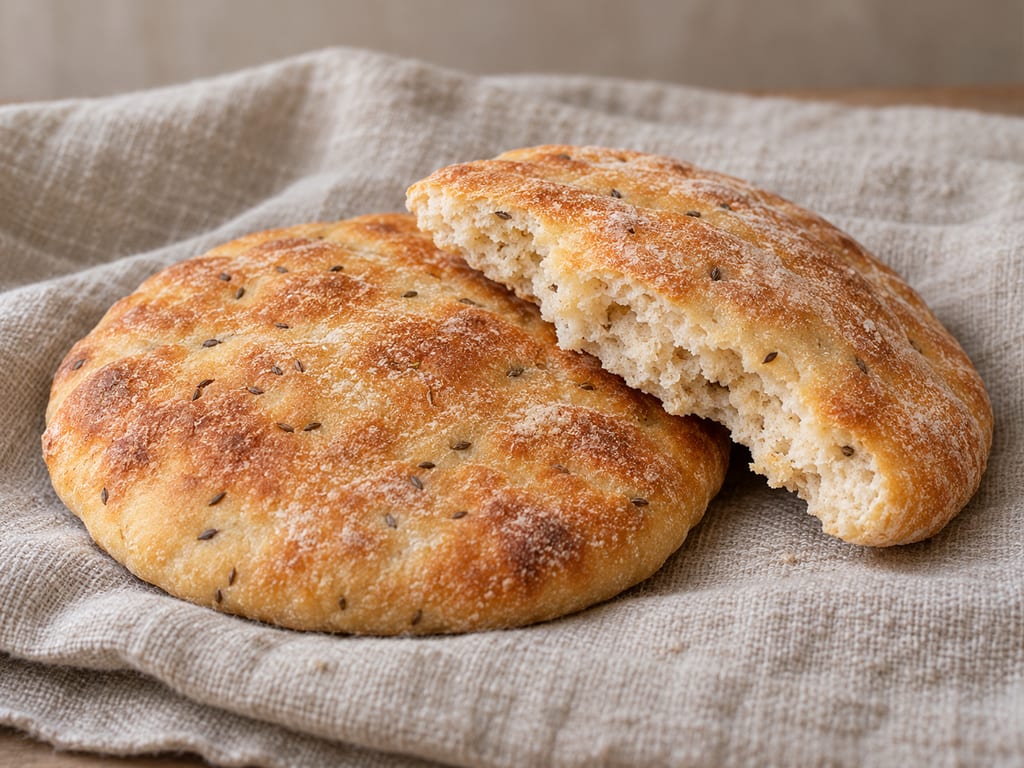
A measured, yeast-raised Ayacucho chapla home method shared by Thermomix Peru presenter Roxanna Salaverry. It makes thin, anise-scented rounds baked at 240°C; the historic qunchu-leavened form is documented separately.
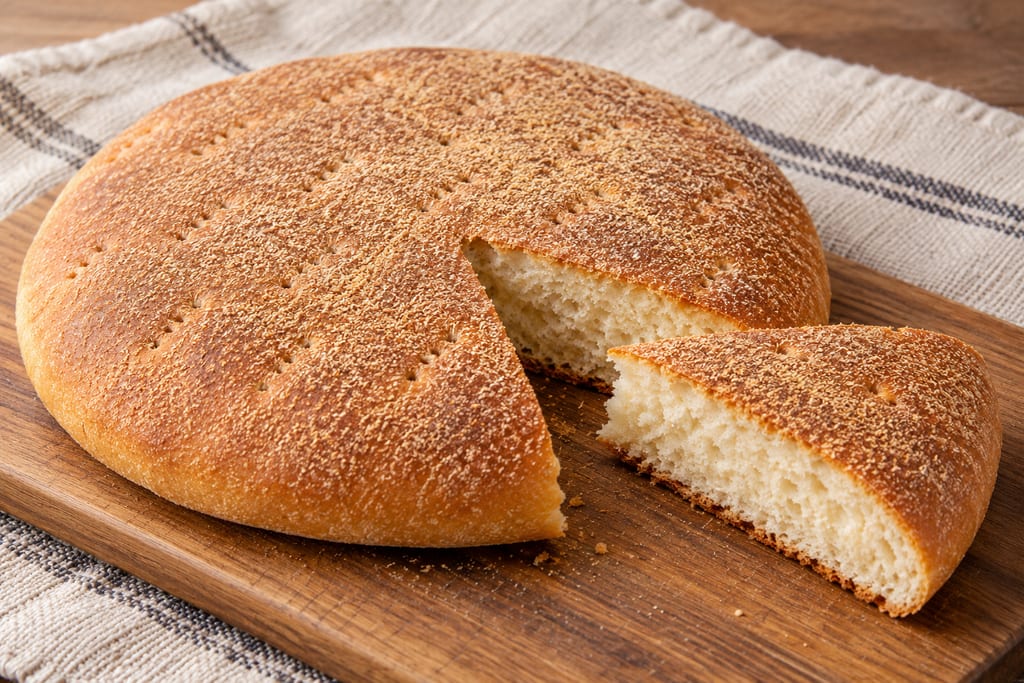
Pan chuta is a broad, lightly sweet wheat loaf associated with Oropesa in Cusco; this home-scale version uses chamomile, brown sugar and butter.
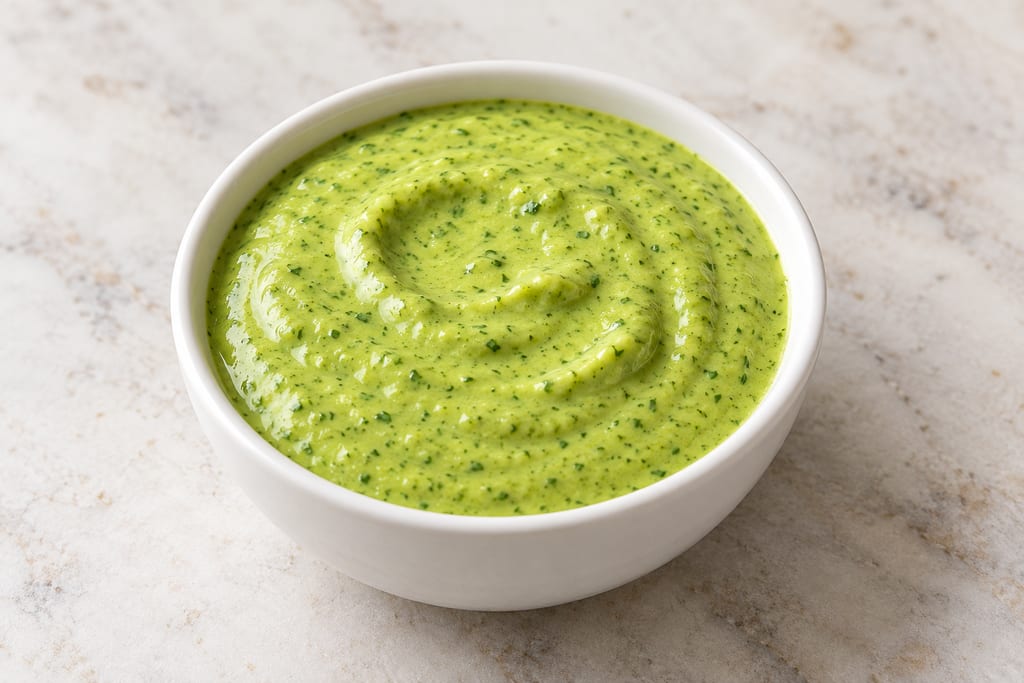
Ají verde is a Peruvian green sauce of coriander, chilli, onion and garlic in a mayonnaise or cheese base. It is best known through Peruvian restaurant cooking abroad.
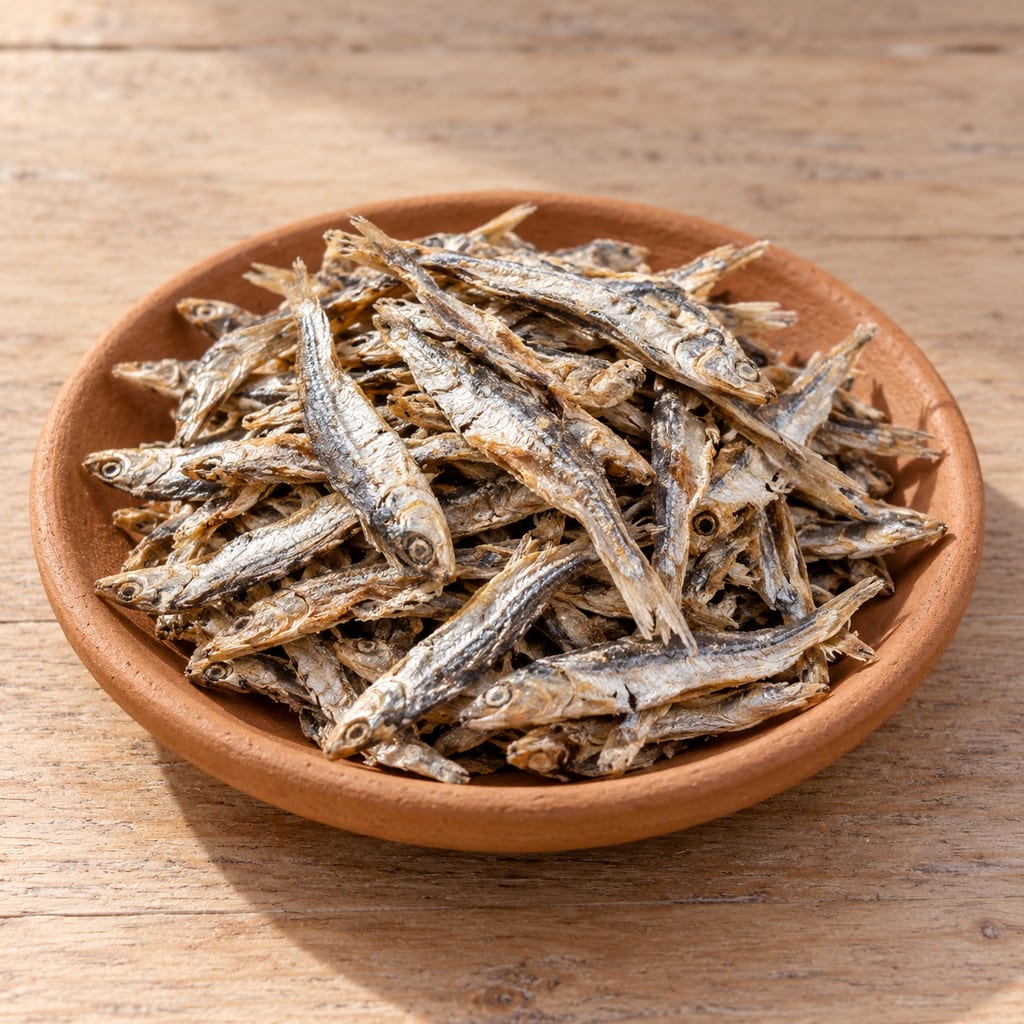
Anchoveta salted, drained of sanguaza and sun-dried on sand or stones at Caleta de Carquín, a technique declared part of Peru's cultural heritage in 2016.
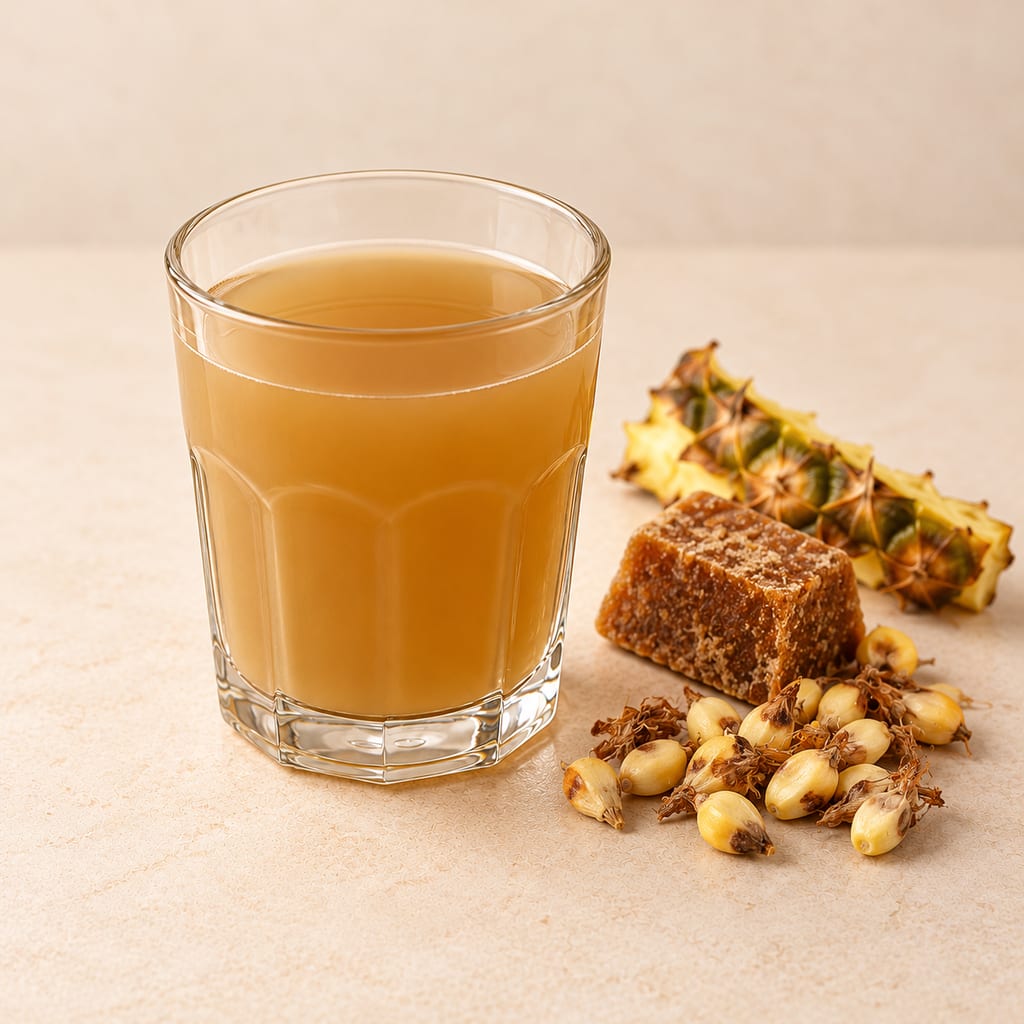
A contemporary Ecuadorian recipe simmers jora flour with spices, then adds panela and pineapple peel before a short spontaneous ferment. Its particular aromatics and measurements belong to this published adaptation.
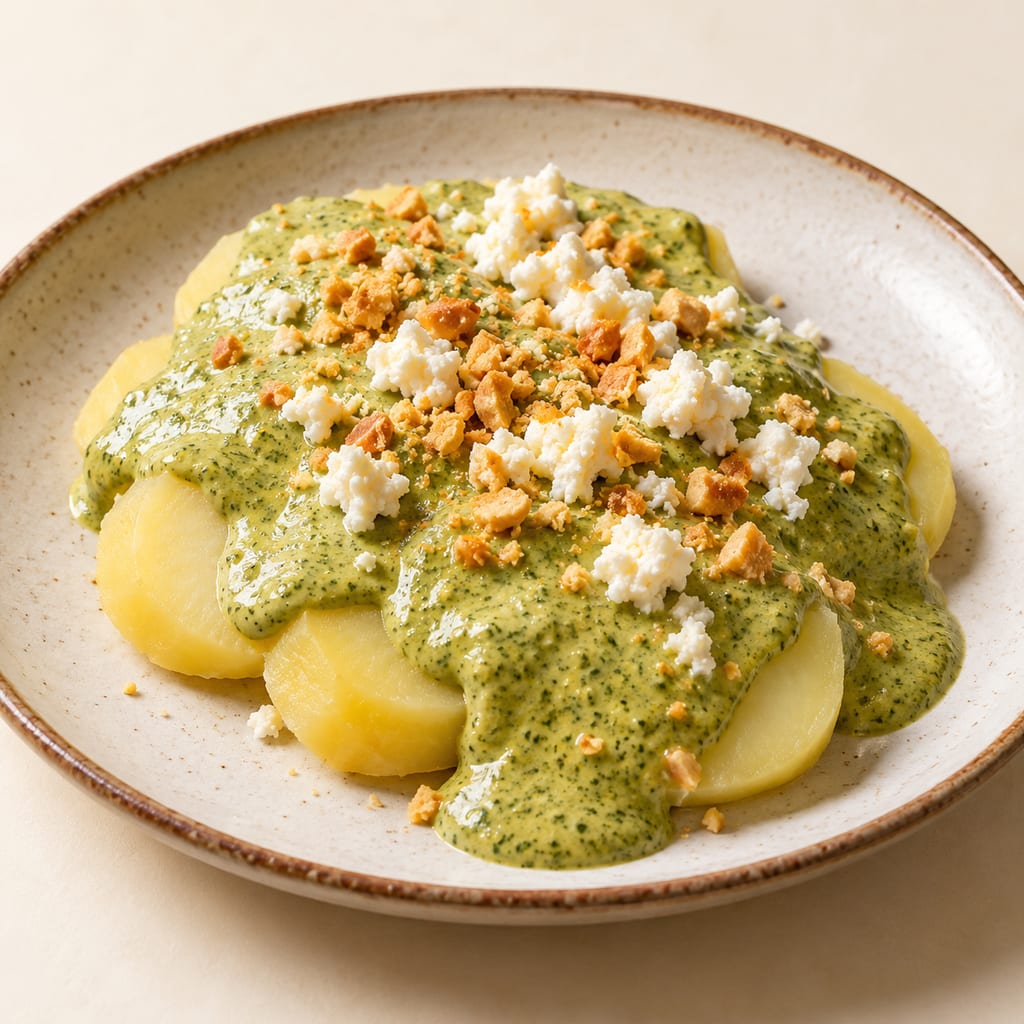
Ocopa is a sauce from Arequipa, Peru, of huacatay, dried mirasol chillies, nuts, fresh cheese and soda crackers. It is usually spooned over boiled potatoes.
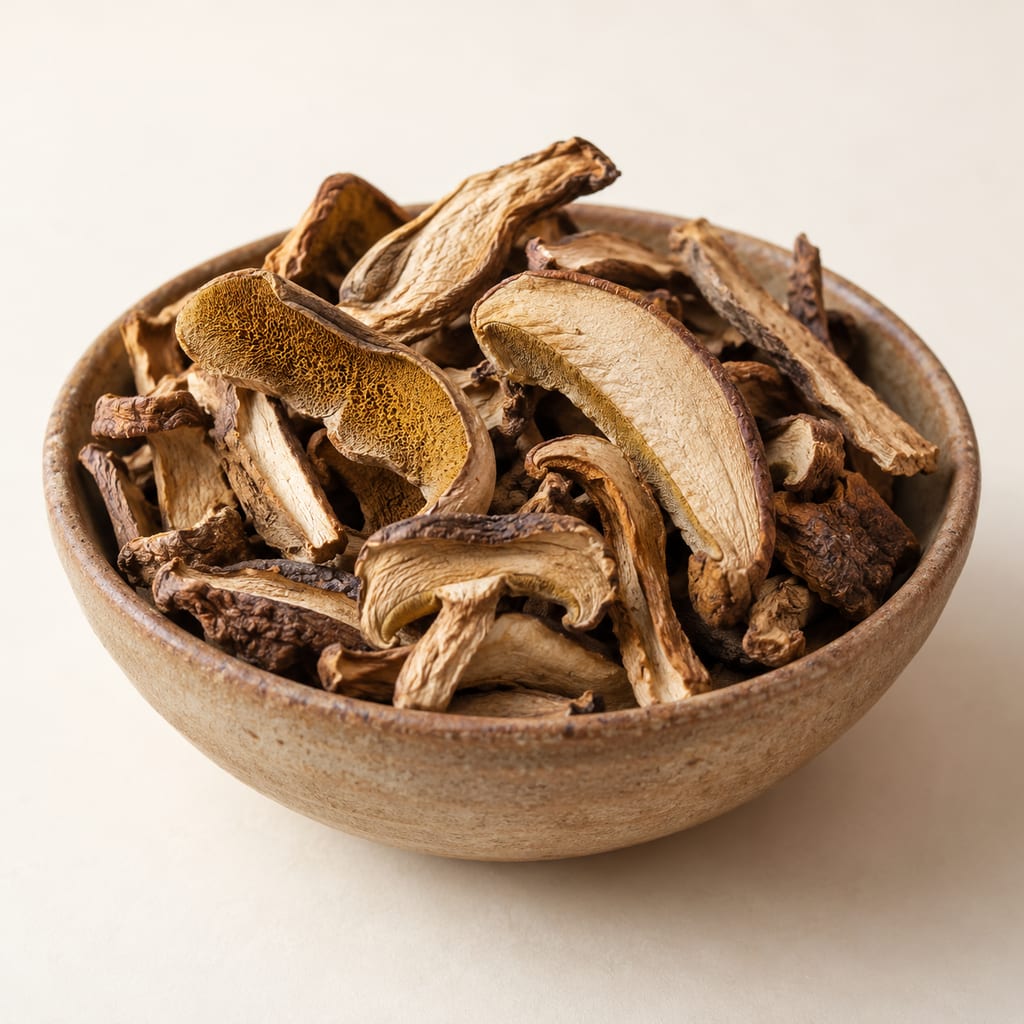
Protected solar-dried mushrooms are slices of wild Suillus luteus dried under a shade cover, a fitotoldo, rather than in open sun, as tested in an experimental study from Apurímac, Peru.
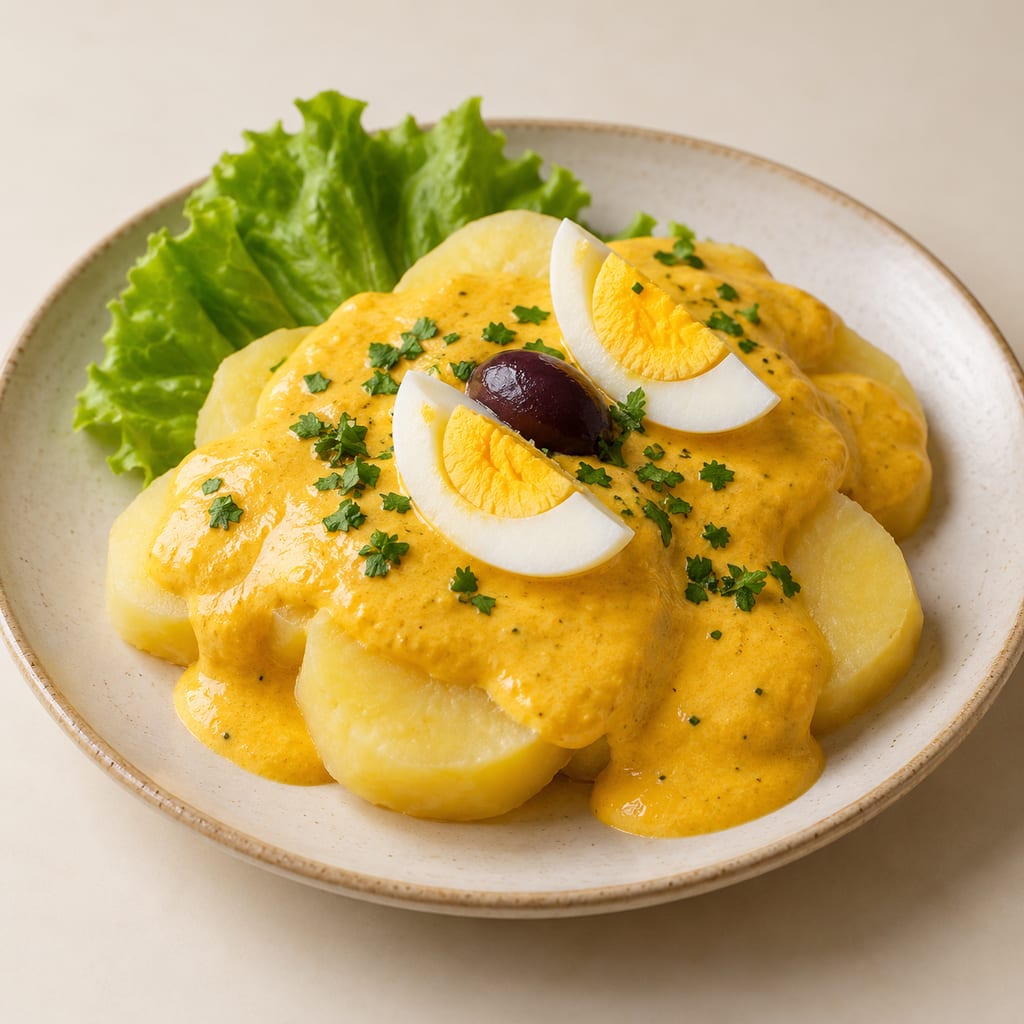
A creamy Peruvian sauce of ají amarillo, fresh cheese and milk, served with potatoes. This source-based version sautés aromatics before blending the sauce.
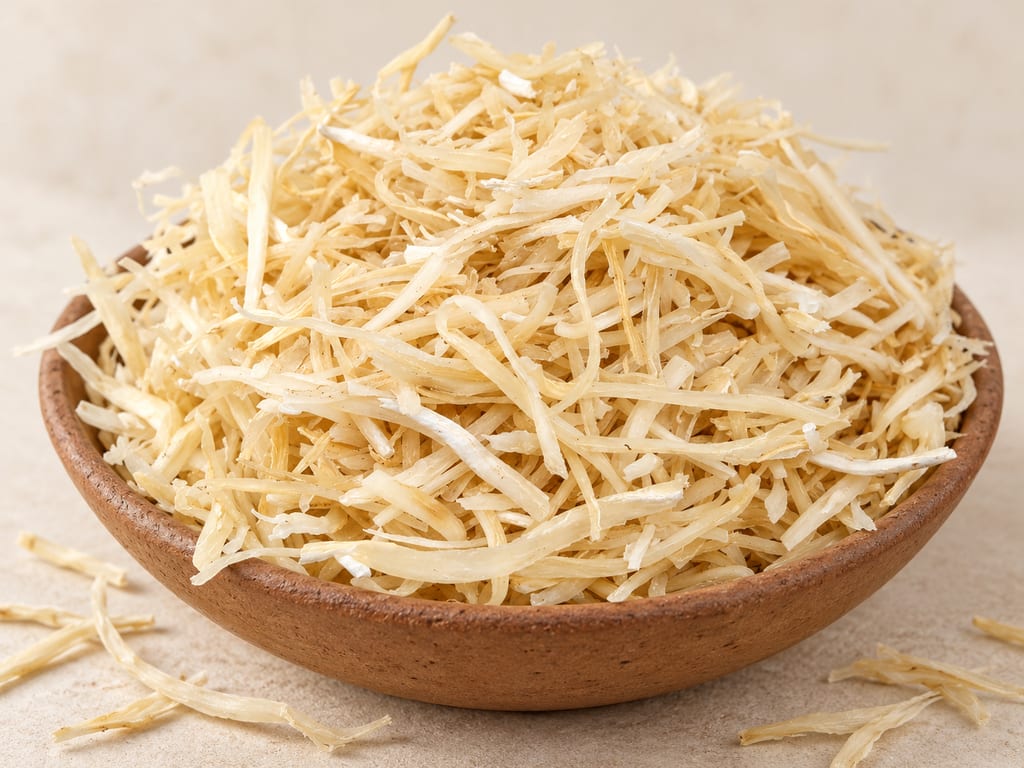
Abacha is a fermented cassava-strip preparation from southeastern Nigeria, sold wet or dried and later rehydrated for meals such as African salad.
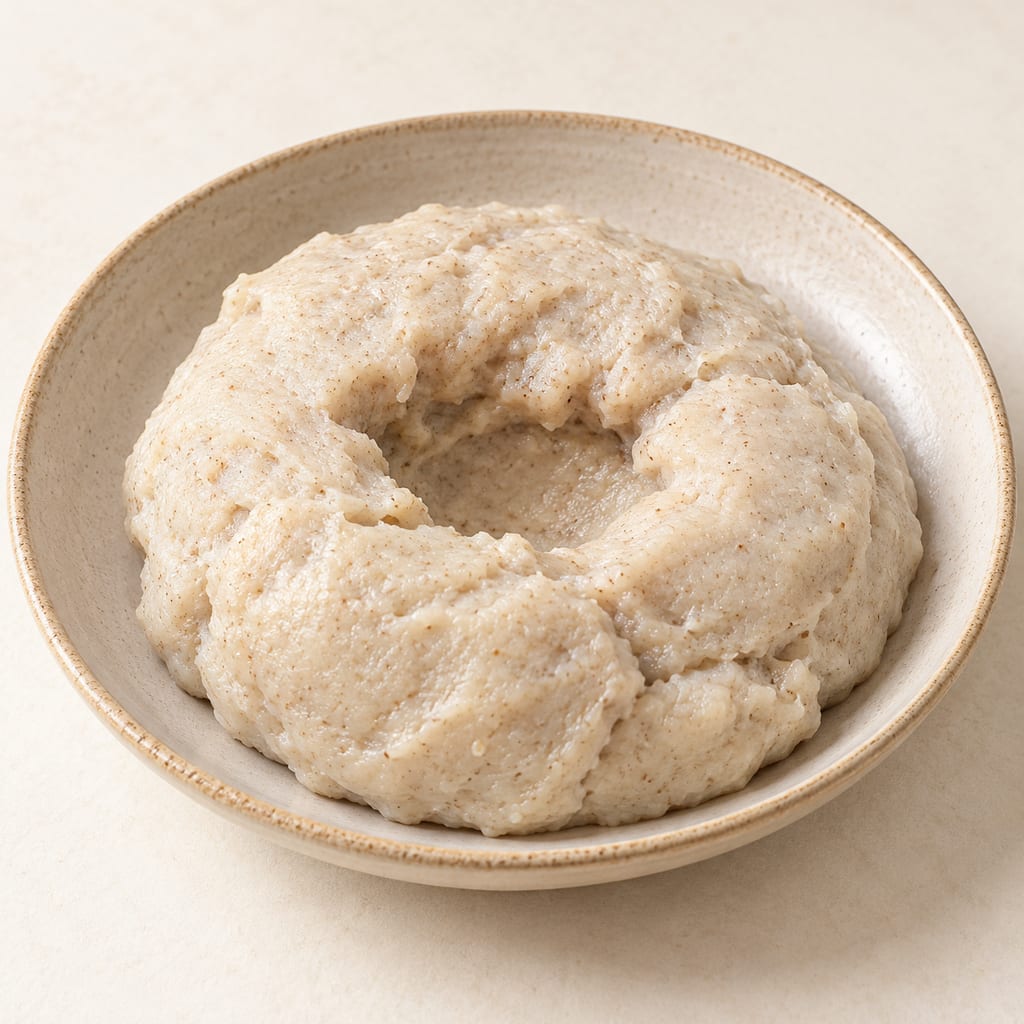
Aceda is Sudan’s firm cereal porridge, commonly made from sorghum and shaped into a smooth mound. Some versions use fermented dough; fermentation is not universal.
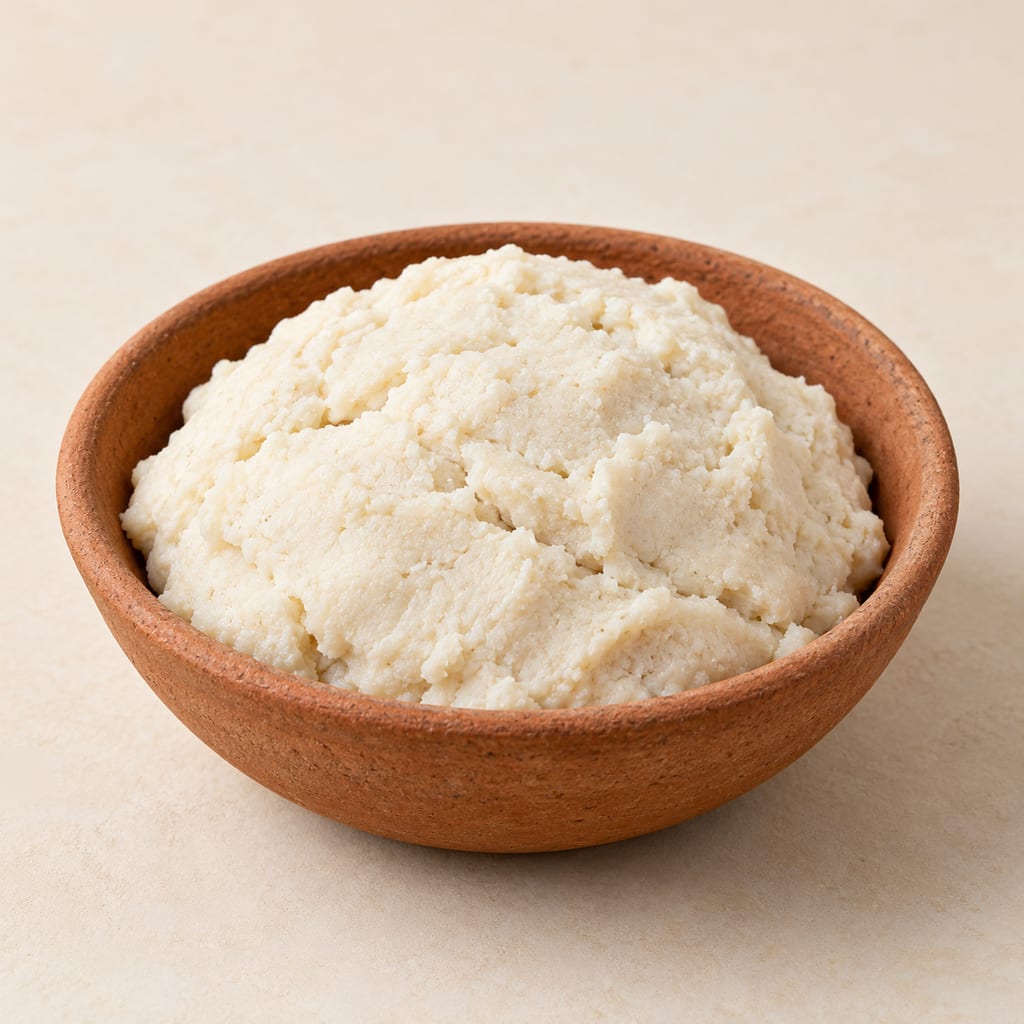
Ghanaian sour cassava dough fermented with traditional inoculum and drained during fermentation. It is used as a base for cooked foods such as banku and akple; process variants and safety outcomes differ.

Appam, or hoppers, are South Indian and Sri Lankan rice pancakes made from a fermented coconut-and-rice batter and cooked in a curved pan to a crisp lacy rim and a soft, spongy centre.
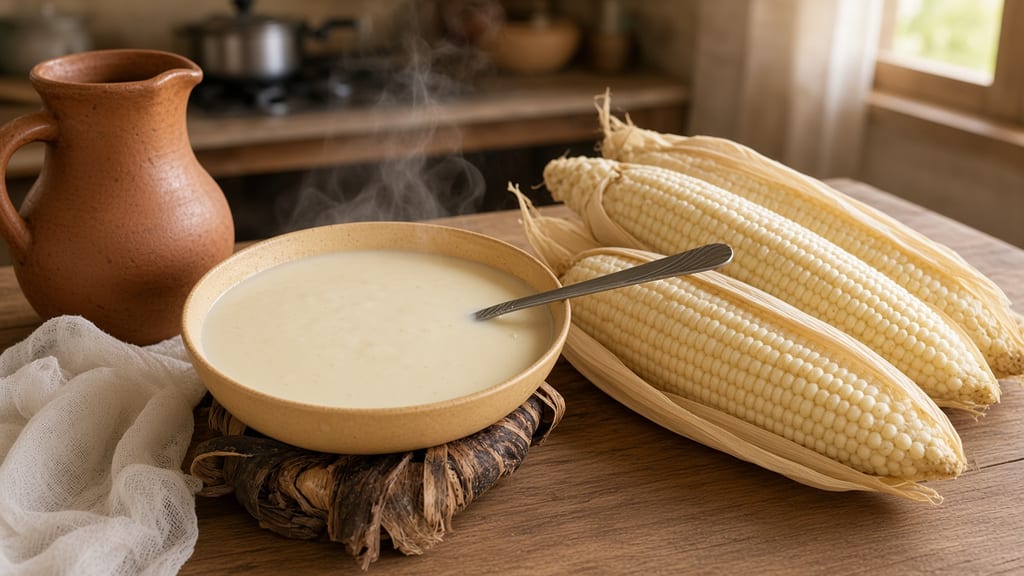
A hot, sour maize drink from Tabasco made from maize that is not lime-cooked. The ground grain sours for half a day, then makers strain it and boil it until thick.
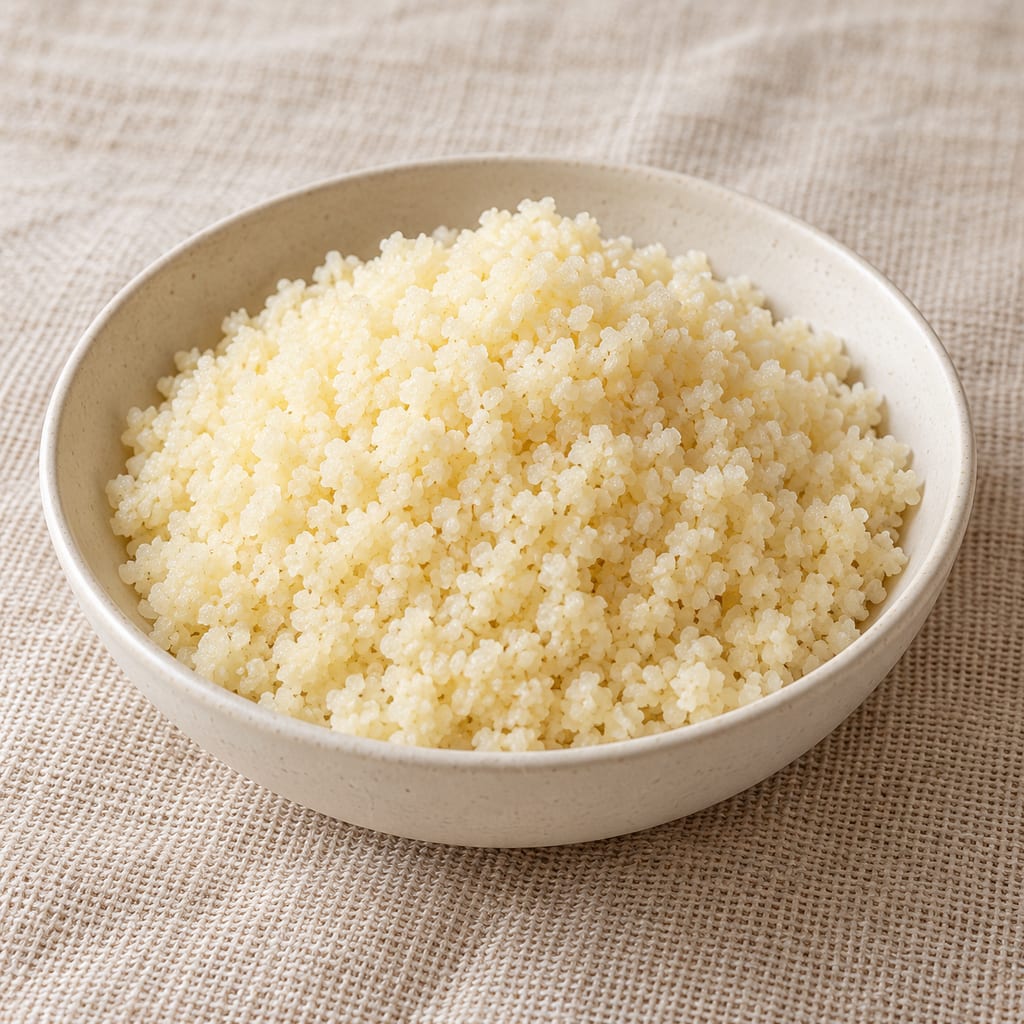
Ivorian cassava semolina: grated cassava is fermented overnight with a traditional inoculum, pressed, sieved into granules, dried and steamed. Documented in a 2006 field study; no sole original process is established.
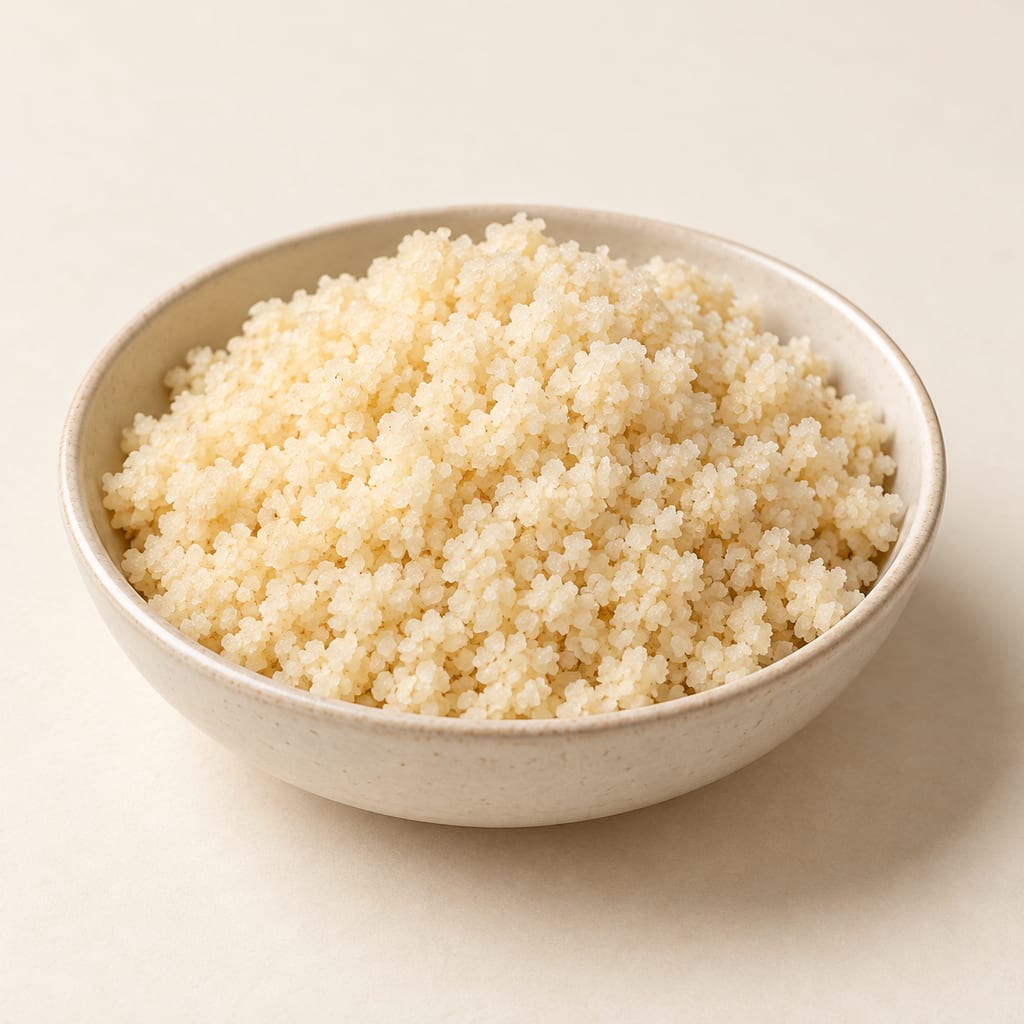
Attiéké is an Ivorian staple of grated cassava fermented with a traditional inoculum, then pressed, sieved, granulated, dried and steamed into fine couscous-like grains.

Crushed or milled barley cooked in water until the starch softens and the mixture thickens, the plainest way a northern household turned stored grain into a meal, here with apple and hazelnut.
No community contributions have been published for this entry yet.
Sign in to contribute. Published comments and photos are free to read.
PubMedMethod · Safety
Tocosh fermented potato researchSubmerged or water-associated fermentation of potatoes produces an acidic transformed food distinct from chuño
Diverse lactic-acid bacteria identified
Cited in: What tocosh is; Uses
ScienceDirectMethod
Tocosh research articleFermented potatoes may be dried and ground into flour for storage
PMCMethod · History · Safety
Genomic Insights into the Probiotic Potential of Lactic Acid Bacteria Isolated from Tocosh: Traditional Peruvian Fermented PotatoesTraditional Peruvian fermented potatoes studied for lactic-acid bacteria
Documented wells and sampling after three and six months
Cited in: Fermenting in water
Universidad de Lima, Ingeniería IndustrialMethod · History · Use
Estudio para la instalación de una planta productora de mazamorra de tocosh con maca, quinua y lechePotatoes placed in earthen wells beside running water, covered with straw and stones, and submerged by seepage
Approximately five to six months for the observed process
Fresh tocosh or tocosh flour used in mazamorra
Cited in: What tocosh is; Fermenting in water; Uses