
All-purpose wheat flour
A refined common-wheat flour blended for a broad range of baking; its protein and behavior vary with wheat, milling and market.
 FermenteaWhere food goes to change
Mushrooms
The eastern black morel, Morchella angusticeps, is a black morel of eastern North American hardwood forests, described in 1879, with no edibility verdict in the sources reviewed.
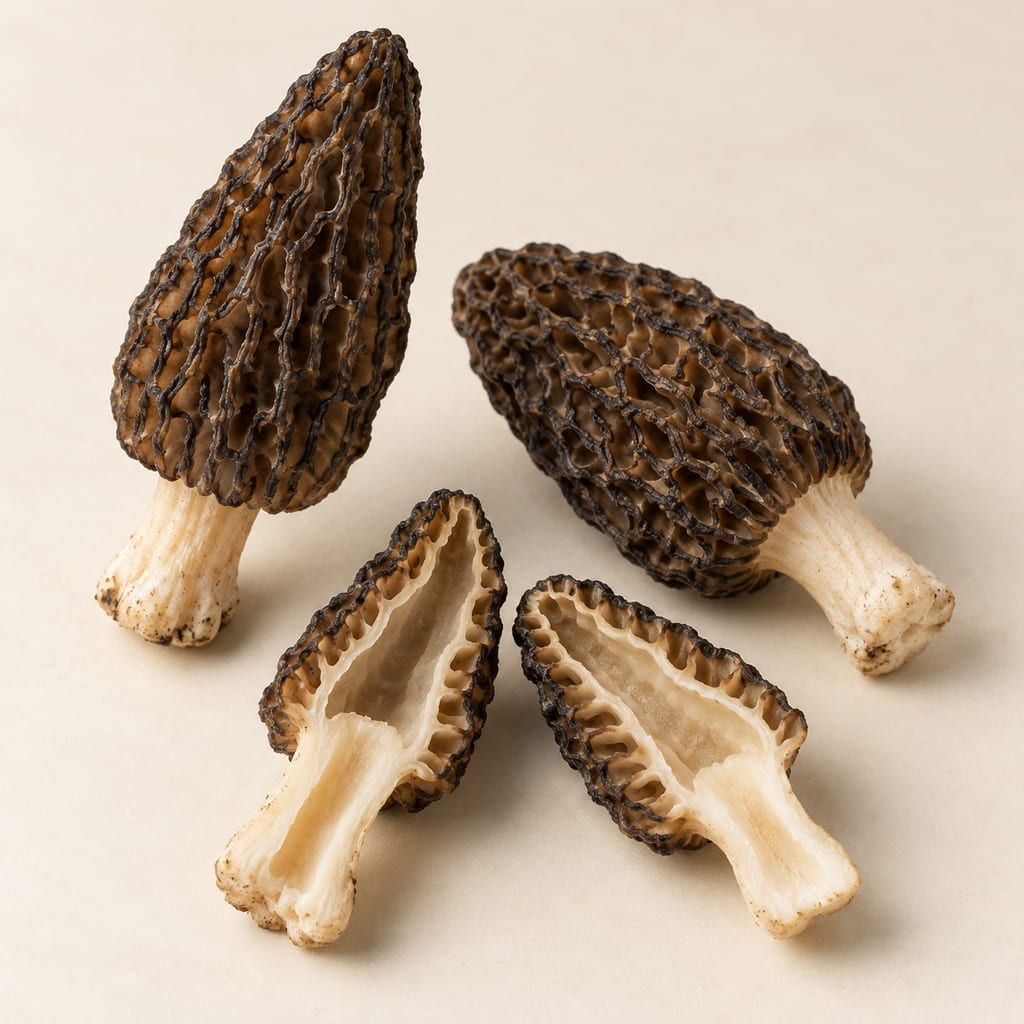
The eastern black morel is Morchella angusticeps, a fungus of the Morchellaceae. Charles Horton Peck described it in 1879. It belongs to the black morels, the Elata clade, which is the sister group of the yellow morels.
The name took its present form in 2012. A revision of North American morels then described nine black-morel species and fixed M. angusticeps to the larger, widely distributed eastern species. Before that revision, the species was often called M. elata, a name some sources now restrict to Europe.
The species is found across eastern North America, east of the Rocky Mountains. It grows alone, scattered or in groups under hardwoods, including white ash, green ash and tulip tree, and Peck's type-locality notes describe sandy soil along woodland borders and in open places. The sources date its fruiting to March through May.
The sources reviewed record no Asian distribution for this species, and none is claimed here.
Morphologically, the eastern black morel is very hard to separate from several western North American black morels that grow in conifer burn sites. Its ridges and pits darken as the morel matures, and it has the cap-to-stem groove typical of the black morels.
A smaller, similar black morel, M. septentrionalis, occurs in northeastern North America. Telling the species apart, and telling any morel from a false morel, needs a specialist's examination; a photograph or a description alone does not settle it.
The 1879 description is the only food statement found, and it calls the plant edible as a historical note. The sources reviewed give no current edibility verdict, no cooking requirement and no raw-consumption warning for this species, and none is given here.
The sources do not support eating any morel gathered in the wild on the strength of this page. Anyone gathering the eastern black morel should have the specimen identified by a qualified mycologist and should follow a tested preparation.
No dated food tradition for this species was found beyond Peck's remark, and no regional use is recorded in the sources reviewed. Its Asian and European distribution, its preparation and its toxicity are not established by the sources checked for this page.
Distribution and season only. The sources reviewed record no food use by place, and no Asian record was found for this species, so none is given.
A refined common-wheat flour blended for a broad range of baking; its protein and behavior vary with wheat, milling and market.

Toasted almonds are whole sweet almond kernels dry-roasted until golden to brown. Heat replaces their marzipan note with a roasted, nutty one; they thicken and flavour romesco.
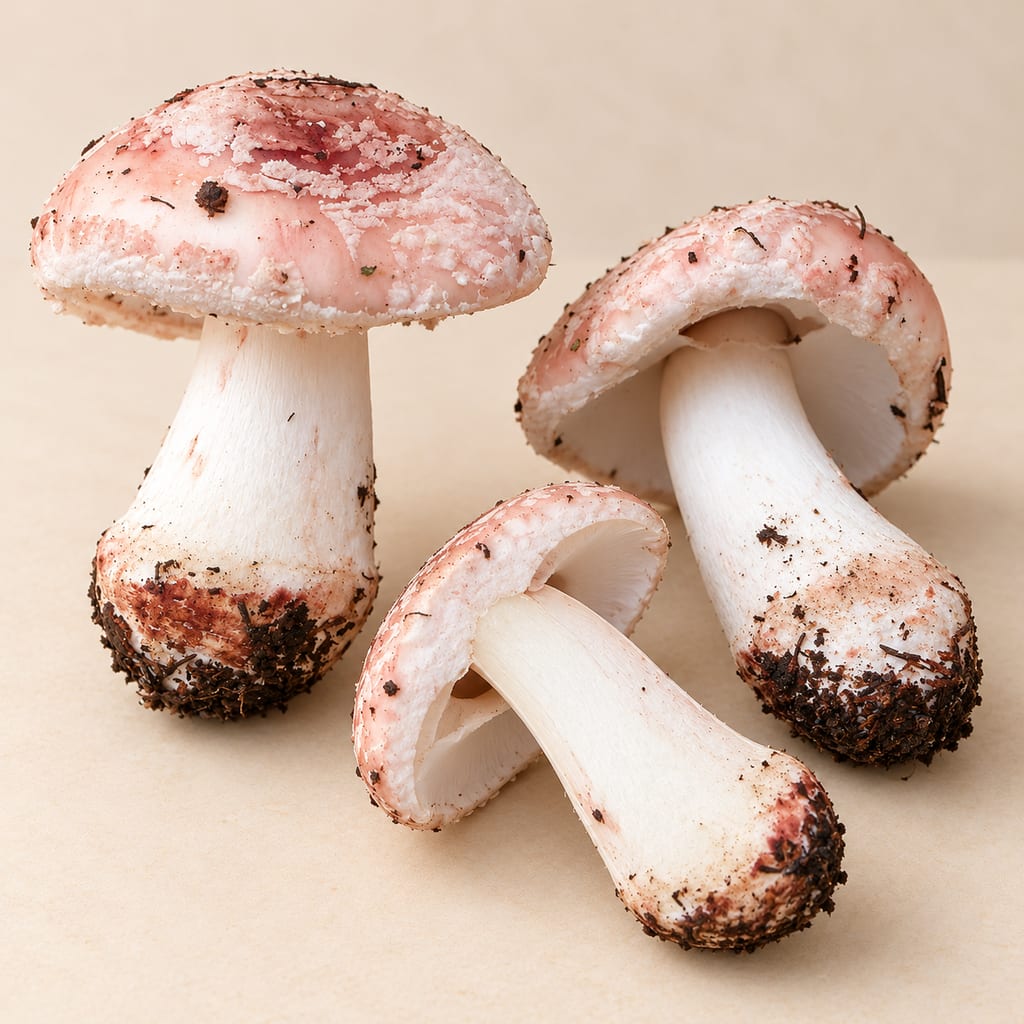
Amanita novinupta is a western North American blusher, a forest mushroom recorded as food in Mexico, and one that must be cooked because its raw flesh is toxic.
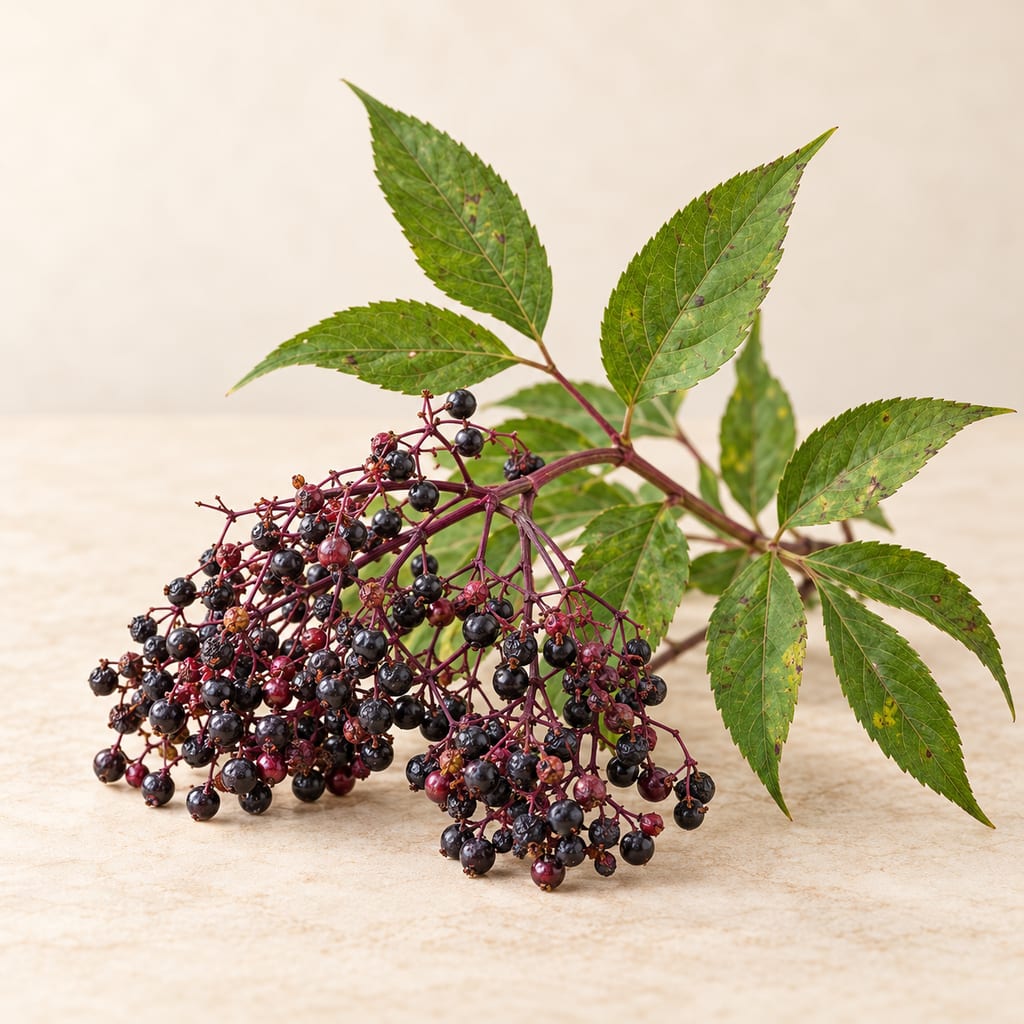
Sambucus canadensis is the accepted name used here for American elderberry. Missouri production guidance and named-cultivar studies give useful regional growing information, while food and analytical sources leave process questions open.
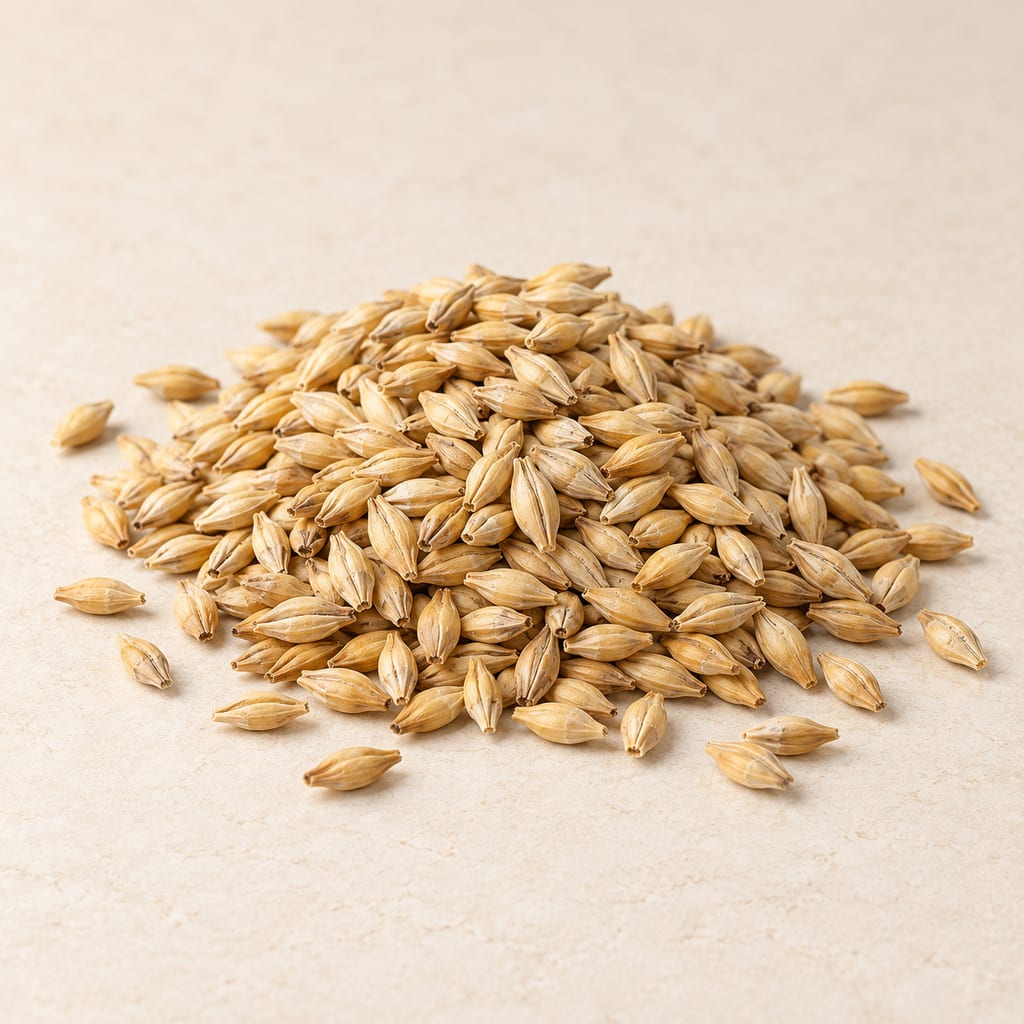
A lightly kilned brewing base made from two-row barley. It supplies starch and enzymes for the mash, with the maltster’s product and lot analysis defining its brewing properties.

Ripe avocado flesh is the soft, buttery, fat-rich pulp of Persea americana, eaten raw. It is low in acid, so it is a fresh ingredient that needs care in chilled dishes.
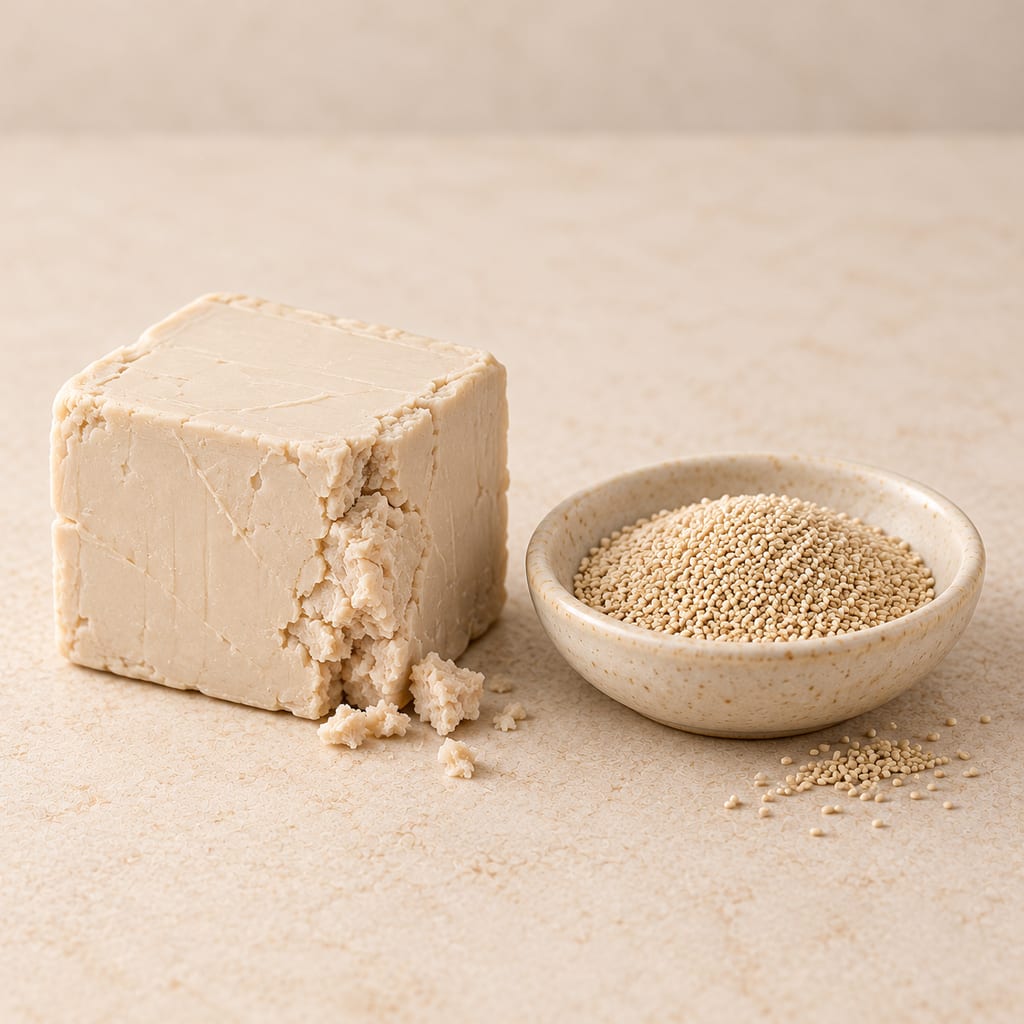
Baker's yeast is a cultivated living leavener, commonly sold fresh or dried. In dough, selected Saccharomyces cerevisiae cells make gas that can raise bread.
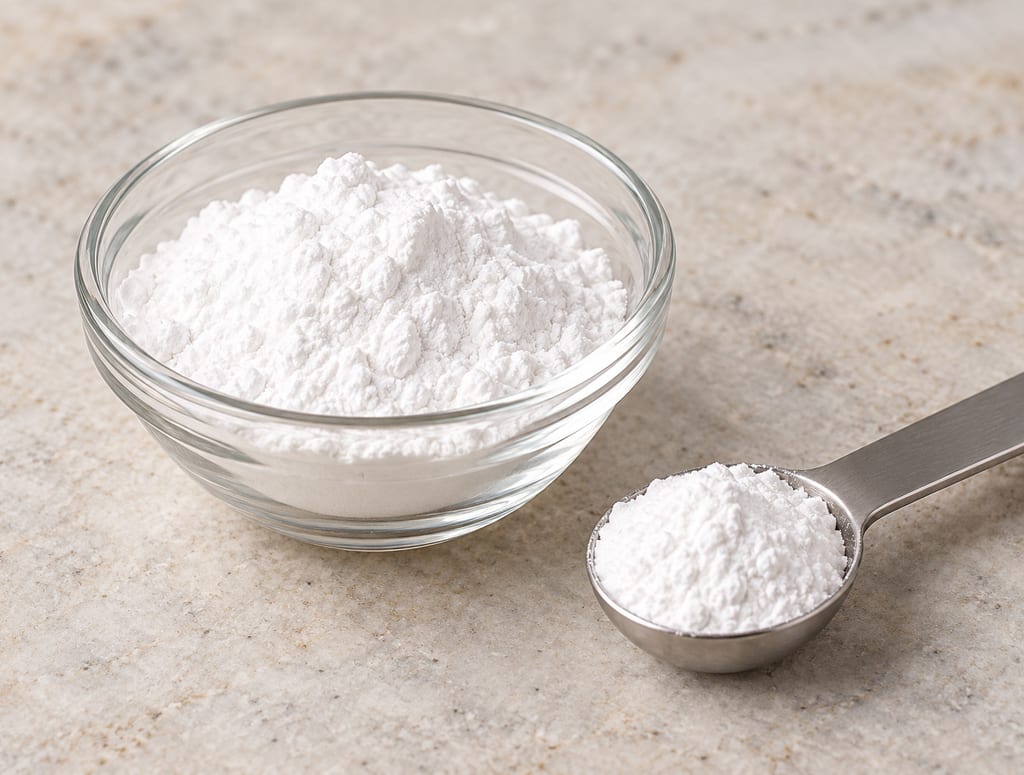
Baking powder is a dry chemical leavener that combines bicarbonate with acid-reacting ingredients and a carrier. Moisture and heat release carbon dioxide for quick breads, batters and griddle cakes.

A Cap-Pelé boucanière is an Acadian herring-smoking building. The documented Willie Niles example is a one-storey wood-frame structure with a ridge smoke vent and interior bays for hanging fish-bearing cannes.

Achcharu is a family of Sri Lankan vinegar pickles made with mixed vegetables or seasonal fruit and a piquant spice dressing. This version is a quick, refrigerated, non-fermented mixed-vegetable pickle.

The acocote is a long, hollowed and dried gourd used to draw aguamiel from a mature maguey. It is a harvesting tool: the sap is transferred to a separate vessel before it ferments into pulque.

Adrak murabba preserves young ginger in sugar syrup, a sweet South Asian preparation recorded in Indian cookery and food-processing sources.

Parkia biglobosa seeds are fermented into regional West African seasonings, including nététou, iru, dawadawa and soumbala. The yellow fruit pulp is a separate food, and names and methods vary by place.

Japanese reddish-brown vinegar from sake lees matured about three years, turned to vinegar by acetic bacteria; the vinegar of Handa and Edomae sushi rice.

The almond mushroom, Agaricus subrufescens, was cultivated in eastern North America in the 1800s, lost its market, and returned as a cultivated mushroom from Brazil, where it is grown under several names.
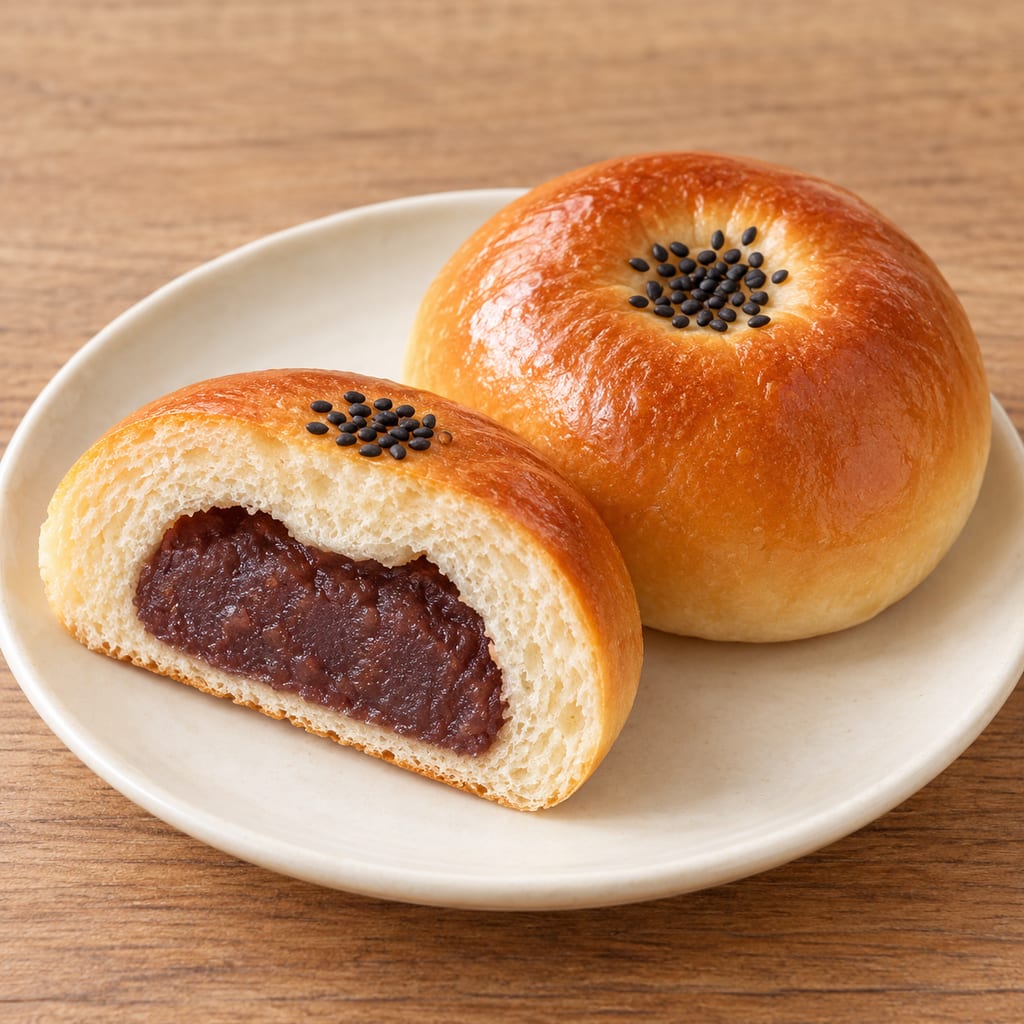
Anpan is a soft wheat bun filled with sweet red-bean paste and finished with egg wash and black sesame. This dough rises with commercial instant yeast.
No community contributions have been published for this entry yet.
Sign in to contribute. Published comments and photos are free to read.
WikipediaIdentity · Habitat
Morchella angusticepsMorchella angusticeps Peck (1879), Morchellaceae, Pezizales, Pezizomycetes; one of the black morels of eastern North America; associated with hardwoods in spring; a smaller similar black morel, M. septentrionalis, occurs in northeastern North America
Cited in: What it is; Where and when it grows; Identification; Edibility and safety
MushroomExpert.comHabitat · History · Identity
Morchella angusticepsGrows under hardwoods including white ash, green ash and tulip tree; fruits March to May; widespread east of the Rocky Mountains
Peck 1879 description remarked that the plant was edible; the site itself gives no edibility verdict
Cited in: Where and when it grows; Edibility and safety; Open questions
MycologiaIdentity · Taxonomy
Taxonomic revision of true morels (Morchella) in Canada and the United States2012 revision formally described nine North American black-morel species in the Elata clade and epitypified M. angusticeps for the larger, widely distributed eastern species; morphologically similar to several western species
Cited in: What it is; Identification