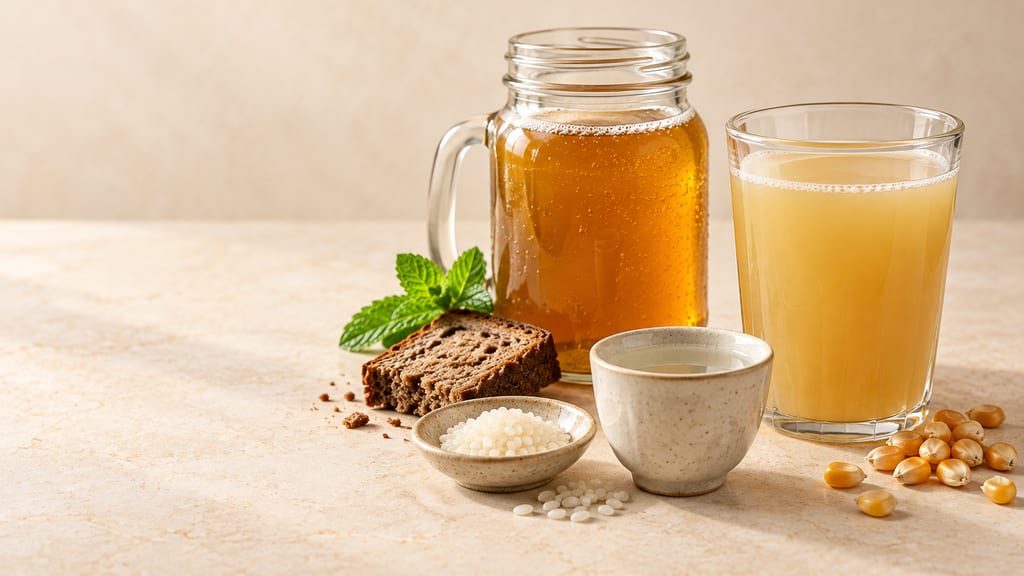
Yeast and the world's fermented drinks
People kept, traded and steered living ferments for thousands of years before anyone saw a yeast cell. This is that history, region by region, and a guide to what a yeast strain is today.
 FermenteaWhere food goes to change
Cultures
The ginger beer plant is a retained, grain-like mixed culture of yeasts and bacteria in a polysaccharide gel, used to ferment a ginger-flavoured sugary drink; it is not a ginger bug.
The ginger beer plant, often shortened to GBP, is a retained, grain-like mixed culture: yeasts and bacteria held in a polysaccharide gel and carried from one batch of sweet ginger liquid to the next. The older microbiology literature also calls it sugary kefir grain, and the sources sometimes spell it gingerbeer plant.
The name ginger beer on its own does not tell which culture made the drink. A teaching article describes a ginger beer made with baker's yeast, and a study of ginger beer made by back-slopping describes a ginger-bug activation stage, in which a starter is grown from ginger root and sugar. Those are different processes from transferring a retained grain, and a ginger bug is not a ginger beer plant.
A 1989 study by M. Pidoux, titled for the sugary kefir grain or gingerbeer plant, reports several bacteria and yeasts in the grains it sampled and describes the grain as built by Lactobacillus hilgardii producing a polysaccharide gel. That study's sample does not establish one fixed community for every household or for every product sold as ginger beer plant, and a seller's label describes the seller's product; it is not an independent identity test.
Names in older fermentation literature have changed. NCBI Taxonomy lists Zygotorulaspora florentina as the current name for a yeast formerly called Zygosaccharomyces florentinus, and LPSN lists Lentilactobacillus hilgardii as the current name for Lactobacillus hilgardii. These updates sort out the names. They do not show that either organism is in a particular jar. Likewise a collection strain of Z. florentina with an oak-exudate origin is a single strain, not a whole ginger beer plant, and a Ginger Beer Plant Medium in a culture collection's catalogue is a laboratory medium, not a drink recipe.
Harry Marshall Ward's 1892 paper, written after work in 1891 and 1892, is the classic primary study that later sources name, and it examined the association of yeast and bacteria that makes the plant. Its full text could not be read for this page, so detailed observations credited to Ward are not repeated here. A 2008 article in Science in School describes British ginger-beer history and cites him, but it is a secondary teaching source, and its own recipe uses baker's yeast.
The available sources do not give a single birthplace, one continuous lineage, or a seasonal calendar for the ginger beer plant. Another page on this site covers water kefir grains, whose origin accounts also mention a British ginger-beer plant history; the sources reviewed here do not settle how the two are related.
The drink the plant ferments is a separate preparation from the culture. A supplier publishes a guide to its own live grains, and that is one product-specific account: its timing, sensory descriptions, storage suggestions and bottling advice have not been independently validated and should not be carried over to an unidentified culture.
The sources reviewed give no feed schedule, fermentation endpoint, alcohol estimate, bottle-pressure limit or shelf life. Bubbles, grain movement, taste, smell or appearance cannot establish that a ferment is safe, and a household method would need review of one exact product and process, including food-safety and bottle-pressure controls.
A 2008 teaching article describes British ginger-beer history and cites H. Marshall Ward's 1892 study of the culture. It does not establish where the culture arose.
People kept, traded and steered living ferments for thousands of years before anyone saw a yeast cell. This is that history, region by region, and a guide to what a yeast strain is today.
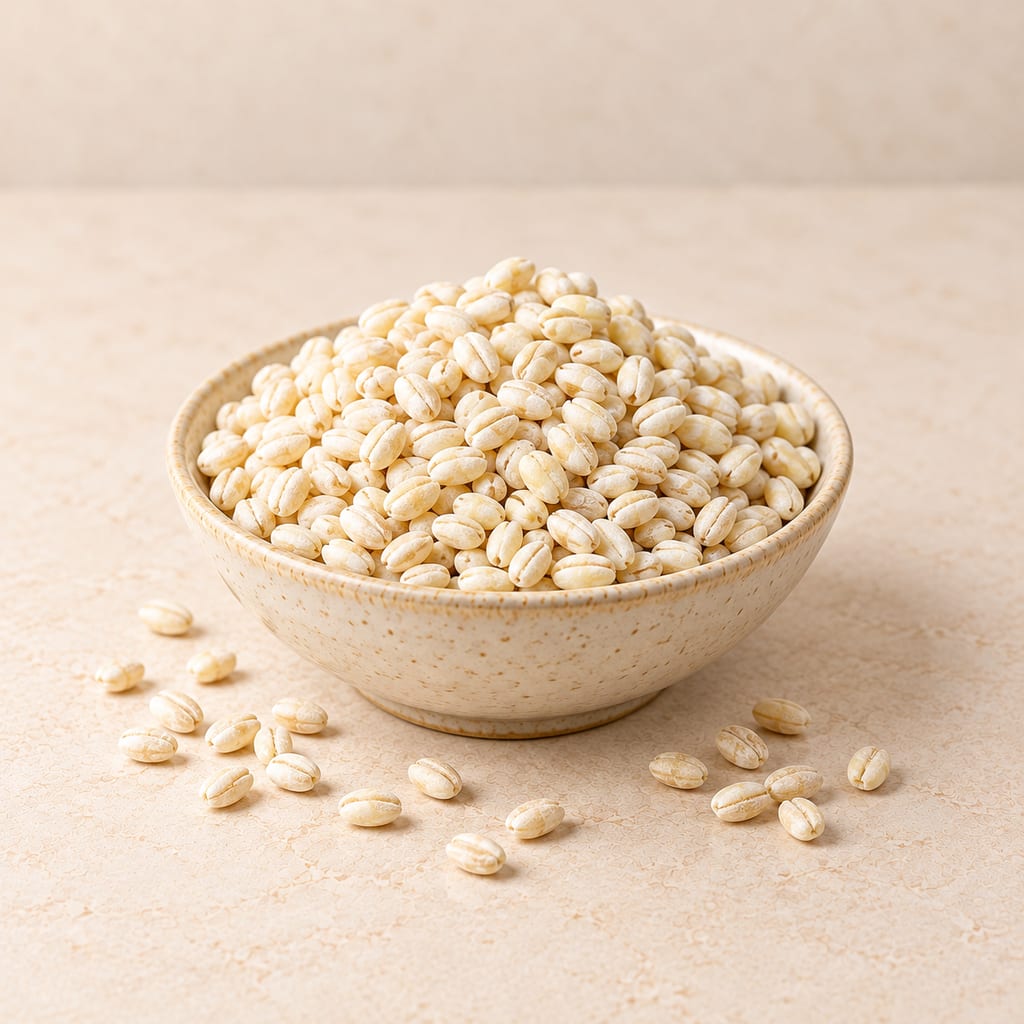
Barley is a hardy cereal, domesticated in the Middle East over 10,000 years ago, eaten whole, pearled or milled, malted for brewing, and grown with koji mold for barley miso.
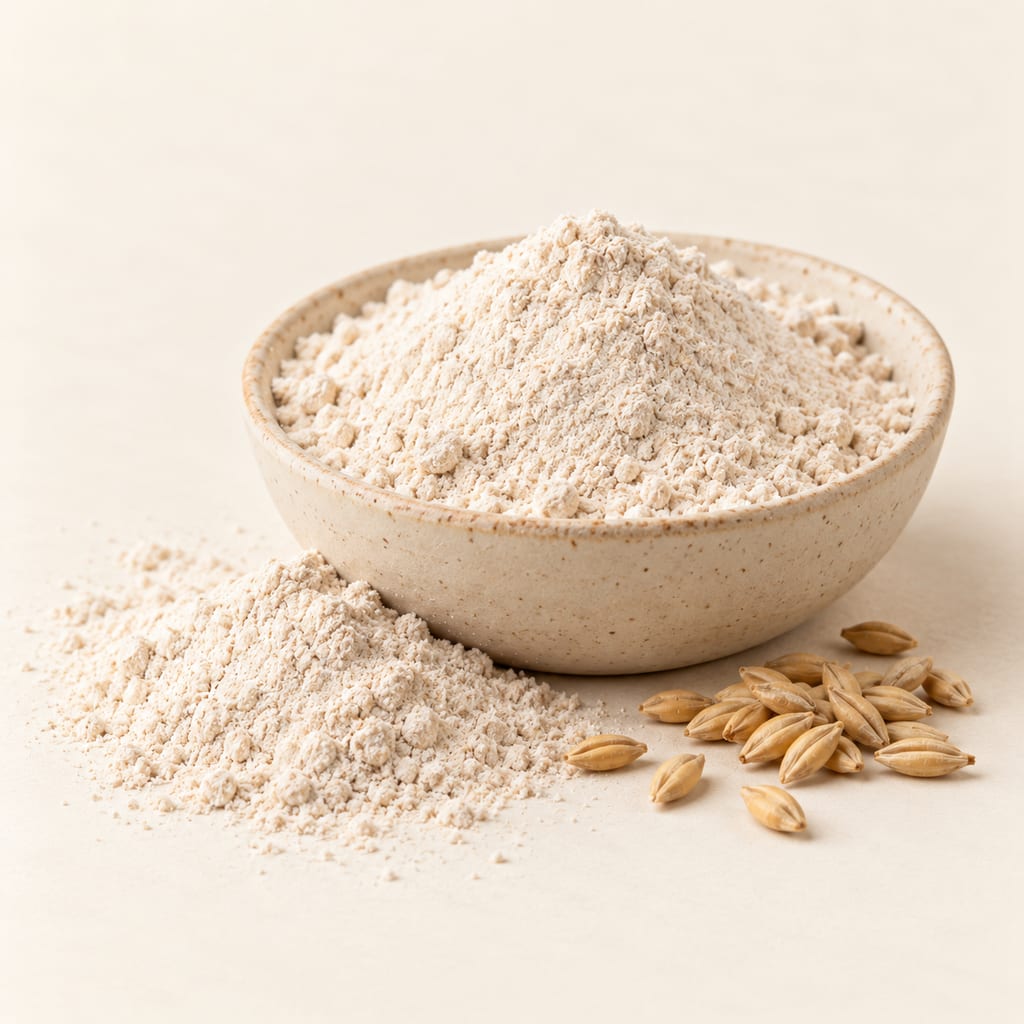
Barley flour is ground barley grain; whether it comes from pearled or hulless kernels, its milling and limited wheat-like gluten-forming ability shape the doughs and foods it can make.
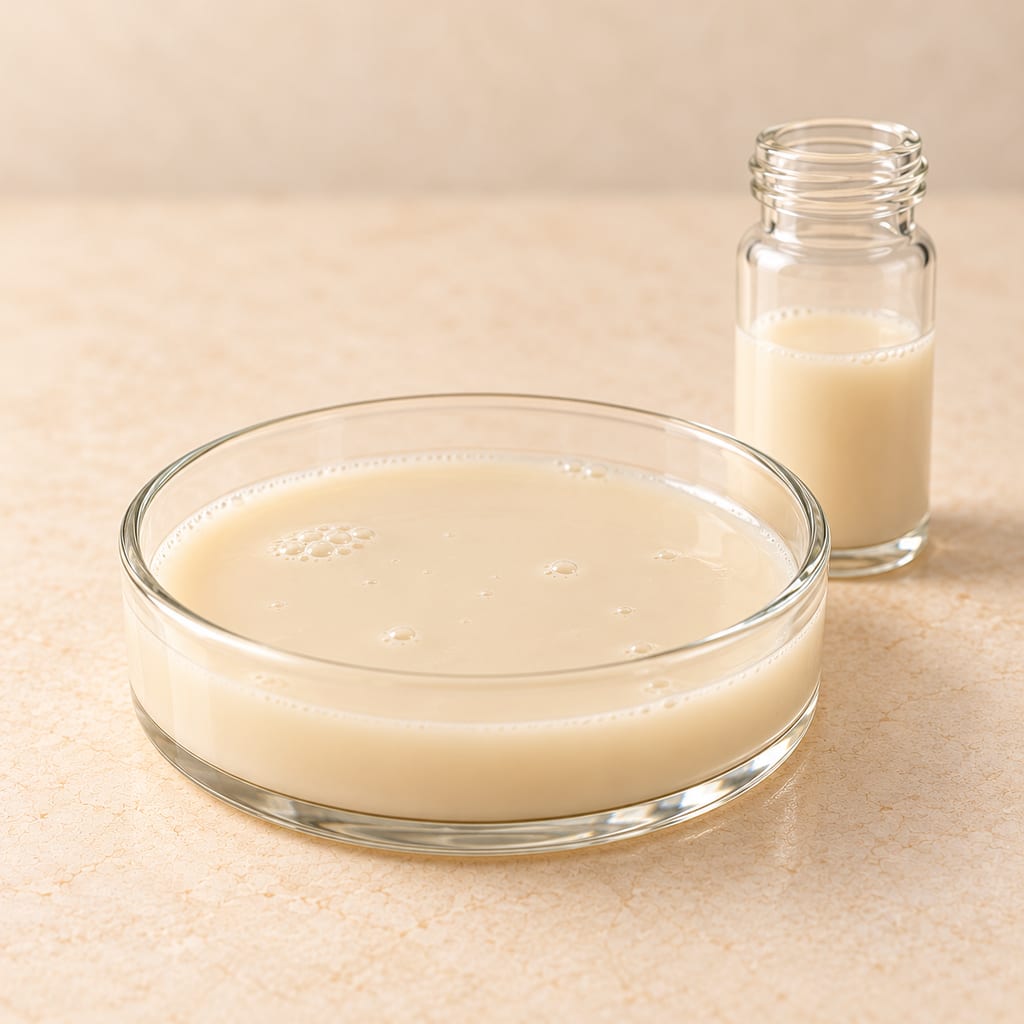
Brewer’s yeast is a working name for living cultures selected for brewing, not one strain or always one species. Ale and lager cultures differ, and older household books may use the term for foam or sediment from brewery beer.
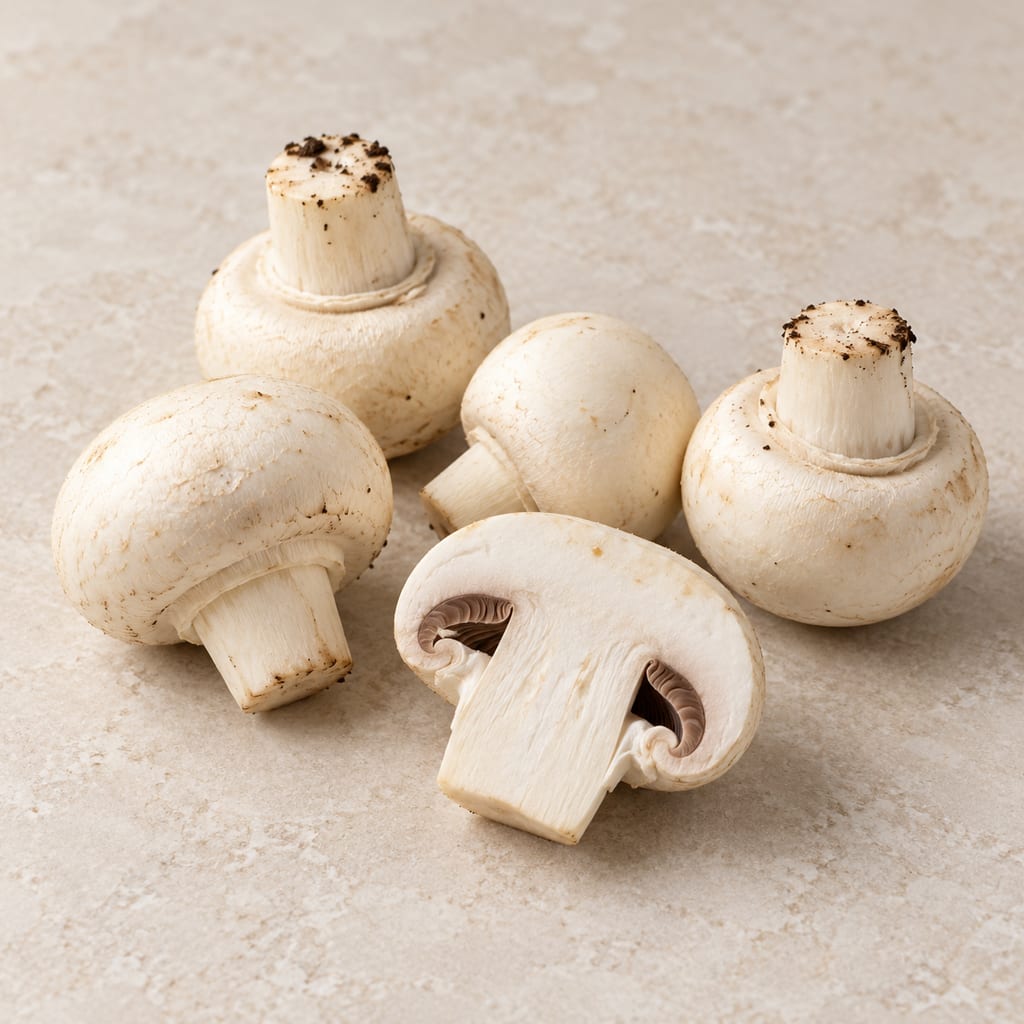
A cultivated form of Agaricus bisporus sold young as a button and at more mature stages as cremini or portobello, used fresh or preserved in everyday cooking.
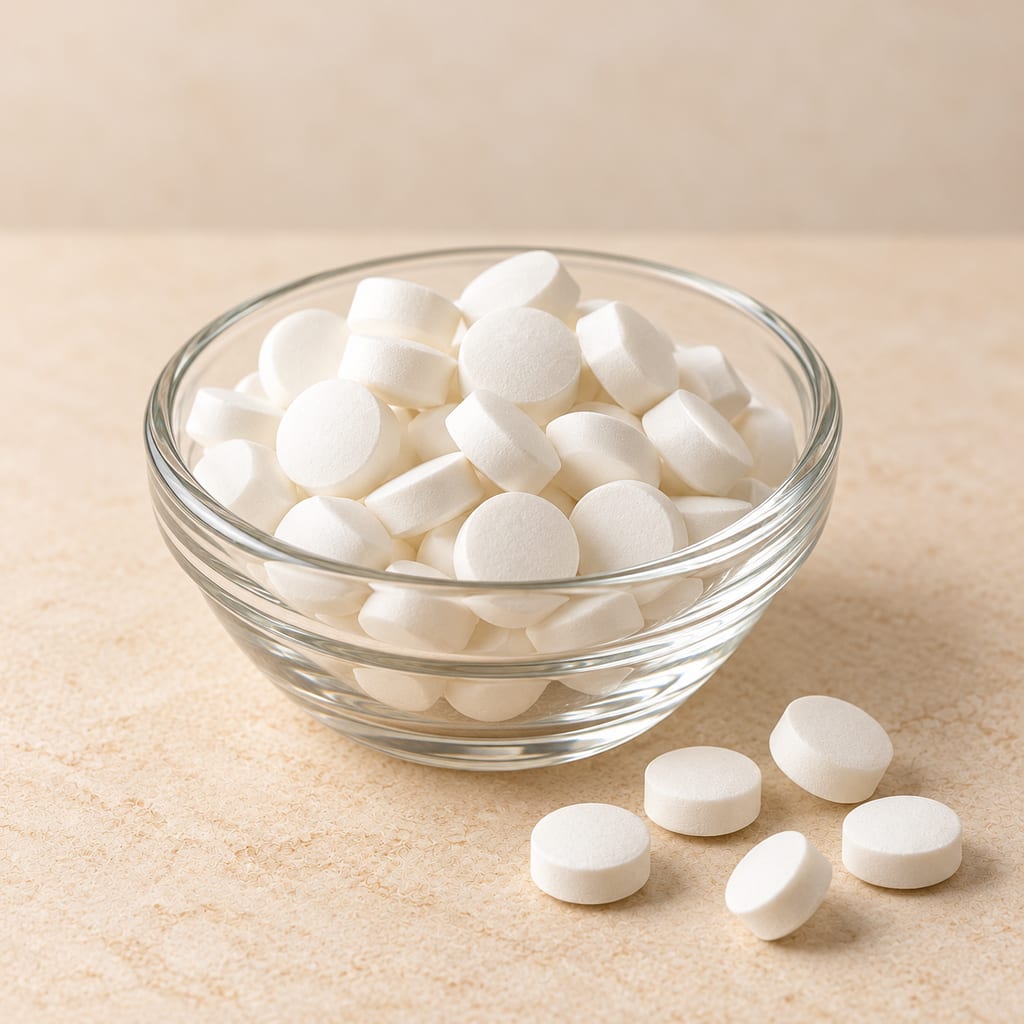
Campden tablets portion a metabisulfite salt for particular wine, cider or other fermentation uses. Tablet strength and the resulting free sulfur dioxide depend on the product and liquid.
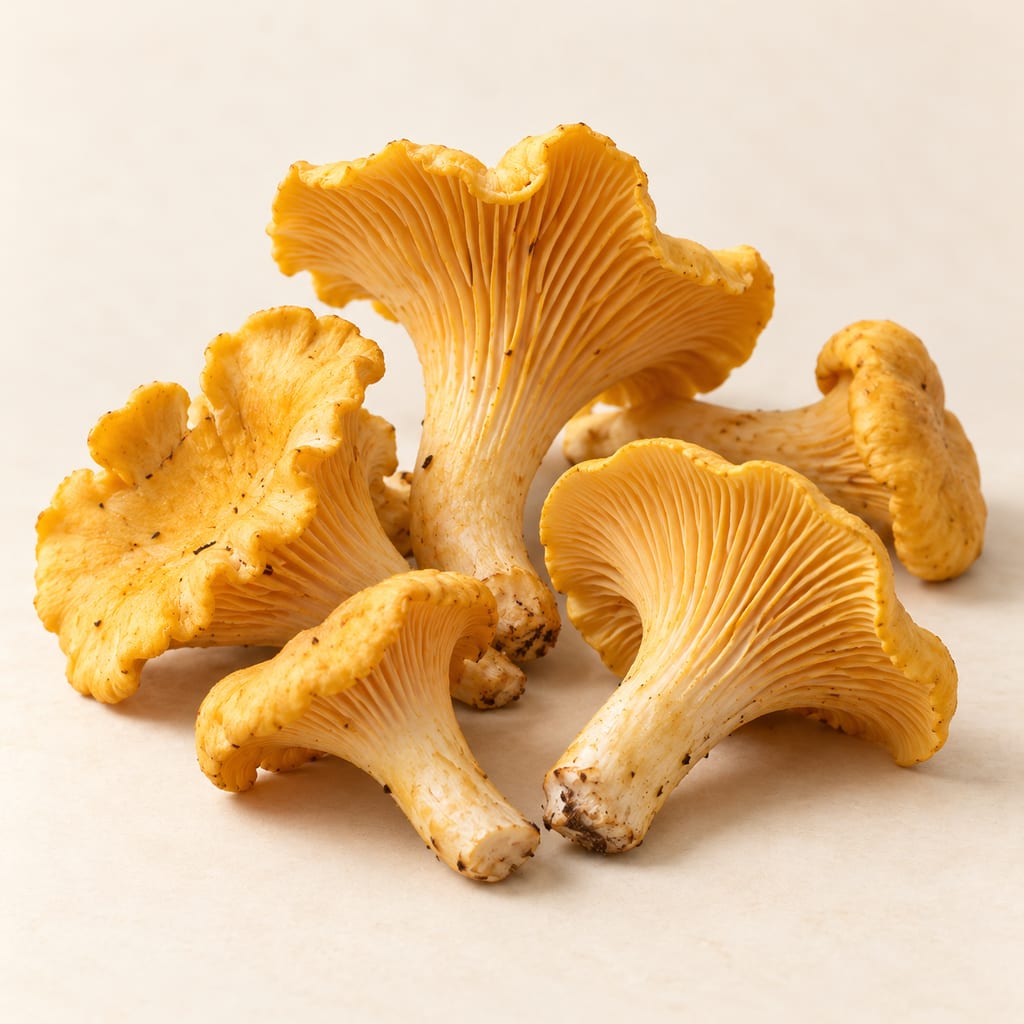
Chanterelles are wild, tree-associated edible mushrooms, particularly the European golden chanterelle Cantharellus cibarius, prized for their firm flesh, fruity aroma and use fresh, frozen, dried or pickled.
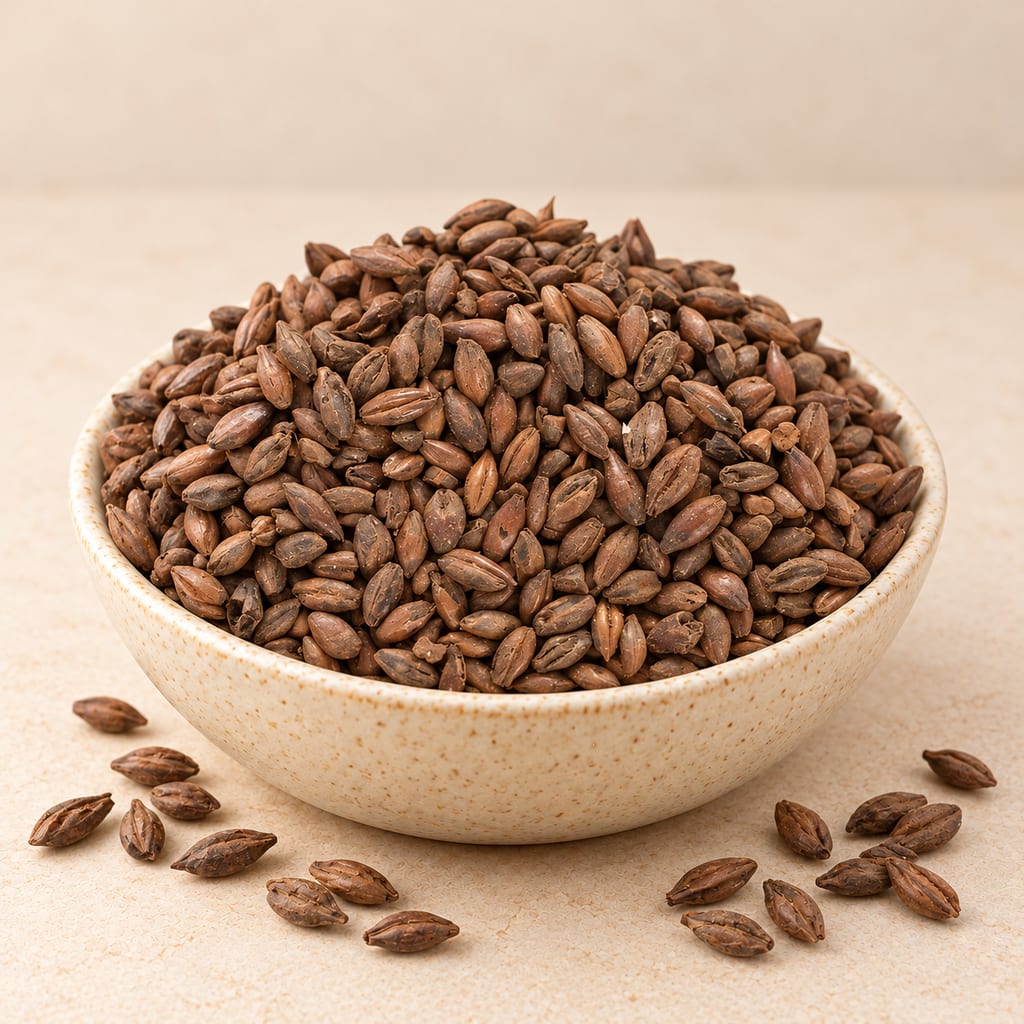
Chocolate malt is barley that has been malted and then roasted to a dark brown, used in porters, stouts and brown ales for colour and a bitter-cocoa, roasted-coffee flavour. It contains no cocoa.
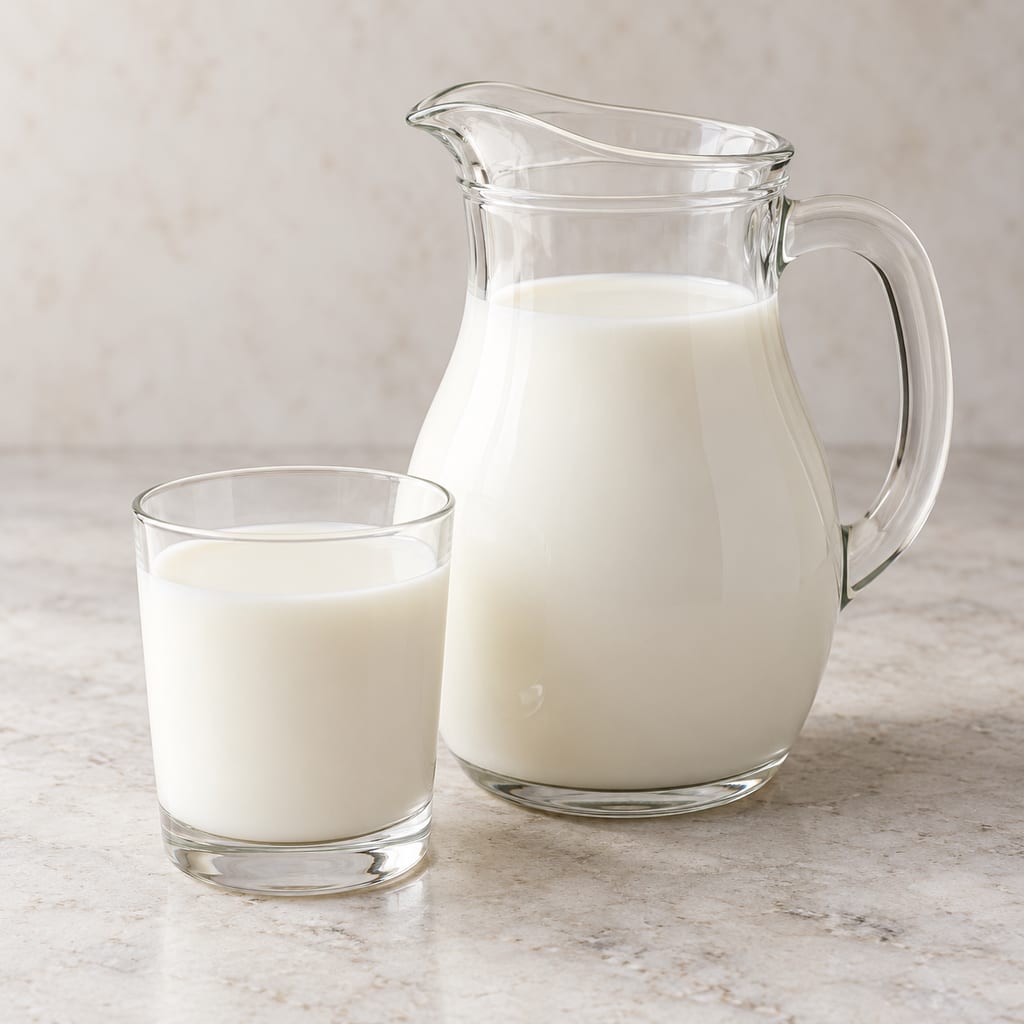
Cow milk and water-buffalo milk are distinct dairy substrates whose fat, protein and mineral balance affects cheese; this ingredient name preserves a choice rather than defining a blend.

A Cap-Pelé boucanière is an Acadian herring-smoking building. The documented Willie Niles example is a one-storey wood-frame structure with a ridge smoke vent and interior bays for hanging fish-bearing cannes.

Achcharu is a family of Sri Lankan vinegar pickles made with mixed vegetables or seasonal fruit and a piquant spice dressing. This version is a quick, refrigerated, non-fermented mixed-vegetable pickle.

The acocote is a long, hollowed and dried gourd used to draw aguamiel from a mature maguey. It is a harvesting tool: the sap is transferred to a separate vessel before it ferments into pulque.

Adrak murabba preserves young ginger in sugar syrup, a sweet South Asian preparation recorded in Indian cookery and food-processing sources.

Parkia biglobosa seeds are fermented into regional West African seasonings, including nététou, iru, dawadawa and soumbala. The yellow fruit pulp is a separate food, and names and methods vary by place.

Japanese reddish-brown vinegar from sake lees matured about three years, turned to vinegar by acetic bacteria; the vinegar of Handa and Edomae sushi rice.

A refined common-wheat flour blended for a broad range of baking; its protein and behavior vary with wheat, milling and market.

The almond mushroom, Agaricus subrufescens, was cultivated in eastern North America in the 1800s, lost its market, and returned as a cultivated mushroom from Brazil, where it is grown under several names.
No community contributions have been published for this entry yet.
Sign in to contribute. Published comments and photos are free to read.
World Journal of Microbiology and Biotechnology; Springer NatureMicrobiology
The microbial flora of sugary kefir grain (the gingerbeer plant): biosynthesis of the grain from Lactobacillus hilgardii producing a polysaccharide gelA 1989 study by M. Pidoux calls its subject sugary kefir grain (the gingerbeer plant) and reports several bacteria and yeasts in the sampled grains (abstract).
Cited in: A retained grain-like culture, not a ginger bug; What the culture contains; Ward and the history
Yemoos Nourishing CulturesUse
Ginger Beer Plant GuideA supplier's guide to its own live grains; product-specific timing, storage and bottling advice, not independently validated.
Cited in: Using it, and what the sources leave open
Science in School; European Molecular Biology LaboratoryHistory · Use
Ginger beer: a traditional fermented low-alcohol drinkBritish ginger-beer history citing Ward; a ginger-beer process using baker's yeast, distinct from a retained grain culture.
Cited in: A retained grain-like culture, not a ginger bug; Ward and the history; Using it, and what the sources leave open
Food Chemistry; Elsevier; abstract indexed by PubMedMicrobiology · Use
Ginger beer derived from back-slopping: Volatile compounds, microbial communities on activation and fermentation, metabolites and sensory characteristicsGinger beer made by back-slopping with a ginger-bug activation stage, a process distinct from transferring a retained grain culture.
Cited in: A retained grain-like culture, not a ginger bug
NCBI TaxonomyTaxonomy
Taxonomy Browser: Zygotorulaspora florentinaZygotorulaspora florentina is the current name; Zygosaccharomyces florentinus is its basionym.
Cited in: What the culture contains
LPSN; Leibniz Institute DSMZTaxonomy
Species Lentilactobacillus hilgardiiLentilactobacillus hilgardii is the current combination; Lactobacillus hilgardii is its basonym.
Cited in: What the culture contains
Leibniz Institute DSMZTaxonomy
267: Ginger Beer Plant MediumA laboratory culture medium named for the ginger beer plant, not a household beverage formula.
Cited in: What the culture contains
Yemoos Nourishing CulturesUse
Ginger Beer Plant vs Ginger BugA seller's account of the difference between a retained grain culture and a ginger bug; a seller's description of its own product.
Cited in: A retained grain-like culture, not a ginger bug