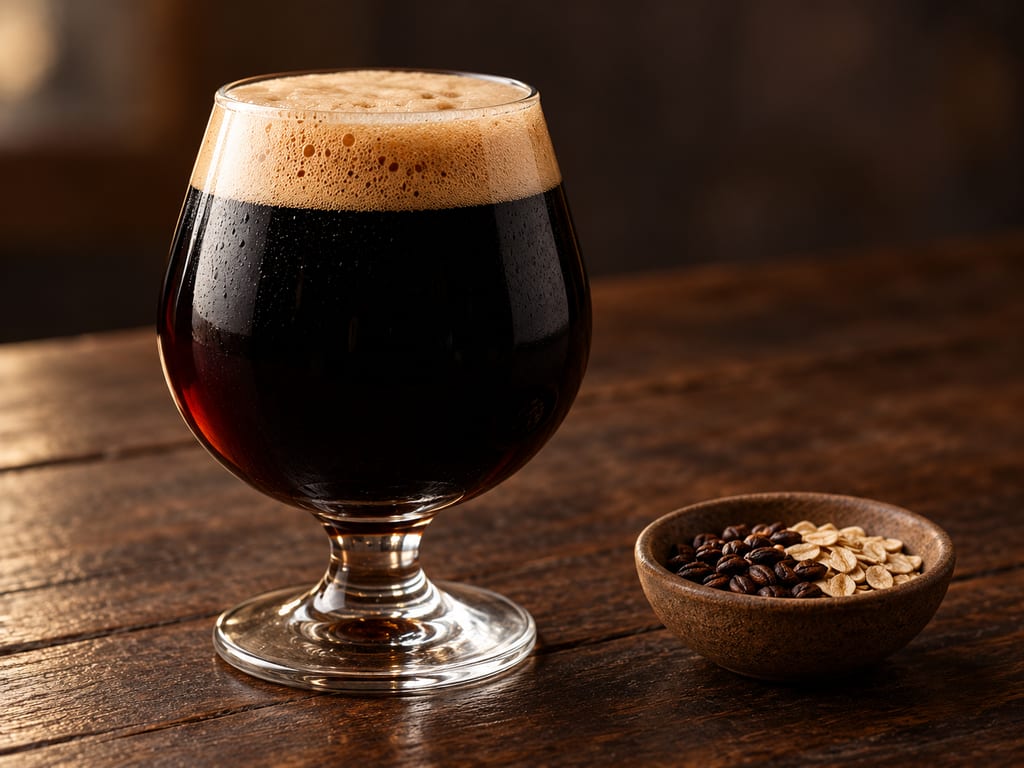
Dark Cellar imperial stout
An all-grain imperial stout with pale malt, roasted barley, dark malts and oats, fermented with an American ale-yeast starter.
 FermenteaWhere food goes to change
Spices and aromatics
Warrior is a named American hop cultivar, YCR 5, used for measured bitterness in beer. Its current form and lot analysis determine how a brewer uses it.
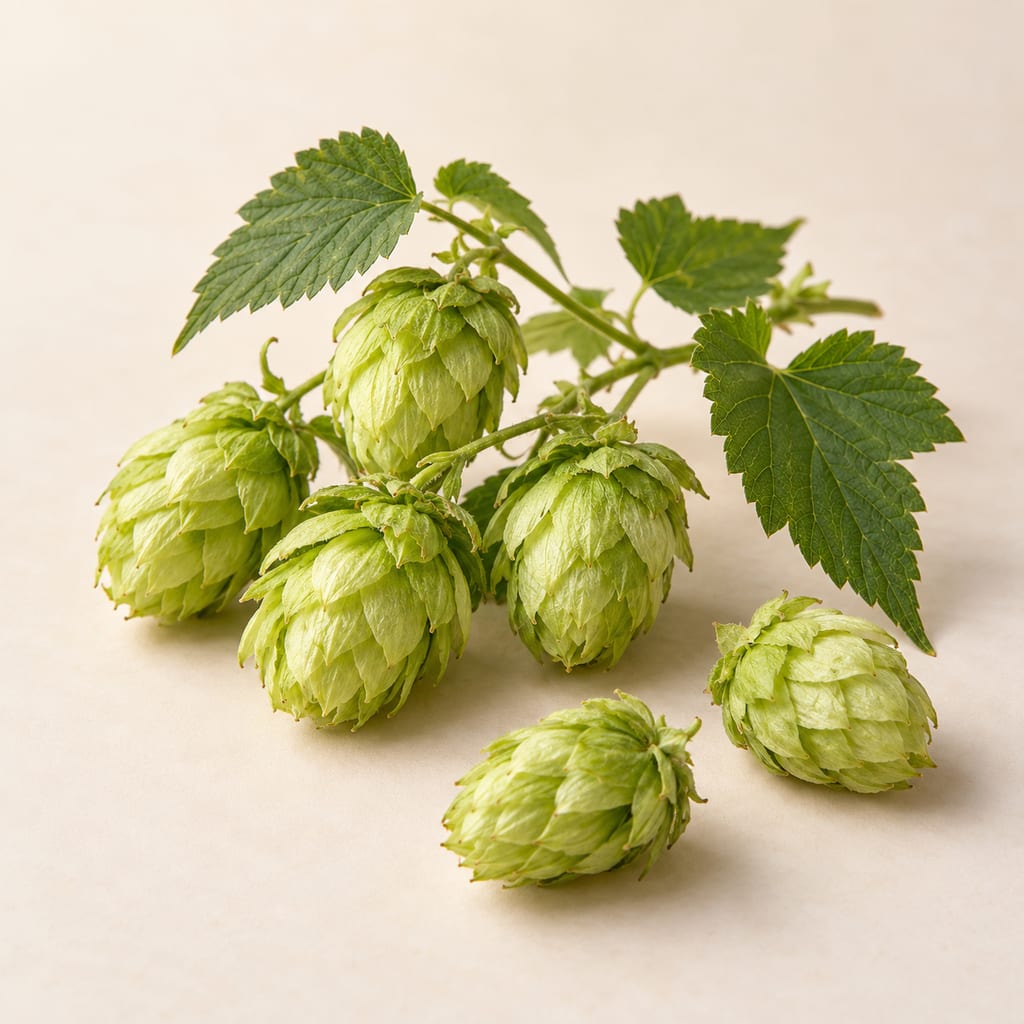
Warrior® is a brewing hop sold under a brand name and tied to cultivar selection YCR 5. The U.S. plant patent calls it YCR Accession No. 5; the current breeder and supplier use Warrior® Brand YCR 5. Its botanical species is Humulus lupulus L., the perennial hop whose female flowers form papery cones. A cone's overlapping bracts and bracteoles enclose lupulin glands: small, yellow, sticky reservoirs of resins and essential oils that give hops their brewing value. The patent describes Warrior's cones as medium-sized and conical in its Washington field observations. Brewers may buy Warrior as whole-leaf hops, T-90 pellets or CO2 hop extract. These are different physical preparations of one named cultivar, not different Warrior varieties.
Warrior is usually chosen to provide bitterness with a restrained aromatic footprint. The breeder says it was selected for high alpha acids, low cohumulone, storage stability and tolerance to powdery mildew. Its current supplier lists citrus, herbal, stone-fruit, grassy and woody descriptors. Grower and merchant descriptions also mention mild pine, citrus or resin notes. These are useful expectations for raw hops, not a promise that every beer will smell of each descriptor. Aroma in beer depends on hop composition, addition point, wort and fermentation conditions, and sensory interactions in the beer matrix.
Warrior and Hallertauer Magnum are sometimes grouped as bittering hops or offered as substitutions. That is a functional brewing comparison, not a shared name or documented shared lineage. Warrior is the U.S. YCR 5 selection from Yakima Chief Ranches, and its patent records parentage as unknown. Hallertauer Magnum is a separate German cultivar: the USDA accession record gives the cross Galena × German male hop 75/5/3 and identifies the German Hop Research Institute in Hüll as its origin. Both can supply substantial alpha acids, but their chemical ranges, oils, geography and crop analyses are not identical. Substitution changes ingredient identity and may change bitterness and aroma; it cannot turn Warrior into a synonym for Magnum.
The published record is clear about what is not known. The 2002 U.S. plant patent says YCR Accession No. 5 was found among plants created in a controlled breeding program, but gives the selected plant's parentage as unknown. The patent's inventor is Charles E. Zimmermann and its assignee is Yakima Chief Ranches. It documents discovery and initial root-cutting reproduction in a research nursery in Prosser, Washington, followed by asexual reproduction in Granger, Washington. The patent's trial description is based on specimens grown in Granger in the 1998 growing season. This supports Washington as the documented selection and test geography; it does not mean every Warrior crop is Washington-grown or disclose the cross used to create the selection.
Yakima Chief Ranches' history places Warrior among early selections of its breeding program, alongside Ahtanum, Palisade and Simcoe. The ranches' current description says Warrior was selected for brewing and field traits; the patent supplies a contemporaneous botanical and chemical account. The patent was filed in 1999 and issued in 2002, firm documentary dates. The inspected public material does not establish the exact year Warrior was first selected, first sold or released to all growers. Its first selection and general sale dates remain undocumented in those records.
This is modern cultivar-breeding history, not the much older history of hops as a species or brewing ingredient. A grower or brewer may call the plant Warrior, Warrior® Brand, YCR 5 or YCR Accession No. 5; these names point to the same cultivar selection. YCR is useful when distinguishing it from German Hallertauer Magnum or other high-alpha hops. “Bittering hop” is a use category rather than a taxonomic rank: suppliers sell Warrior as pellets and whole leaf, and the current supplier lists its CO2 extract product too.
Hops are perennial, dioecious plants: male and female flowers occur on separate plants, and commercial yards primarily grow female plants for their cones. The Ontario Ministry of Agriculture, Food and Agribusiness notes that hops are commonly propagated from rhizomes or softwood cuttings, with crowns less common. That general crop guidance helps explain how a selected cultivar can be kept true to type: growers propagate established plants vegetatively rather than relying on seed from a cross. Warrior's own patent likewise records stable reproduction over successive generations, root-cutting discovery and subsequent asexual propagation. These are general and Warrior-specific strands of evidence; Ontario's growing calendar and field recommendations should not be transferred wholesale to Washington.
The patent's sample gives a snapshot, not a universal growing prescription. For Granger plants observed in 1998, it reports a medium-size conical cone, relatively late maturation after September 15, crop yield of 2,750–3,000 lb per acre, and good pickability. It also says the cultivar had moderate tolerance to powdery mildew and Sphaerotheca. The patent explicitly warns that botanical and analytical characteristics can vary with cultural practices, climate, location and season. A dated test plot tells us how those Granger plants behaved, not how a present crop will yield or resist disease. The breeder's current page retains powdery-mildew tolerance as a selection trait, not immunity.
Cultivation continues beyond the cultivar's original Washington test plots. The current supplier page identifies Warrior as YCR 5 | US and lists product lots in several forms. That supports a U.S. commercial identity, but does not locate every Warrior field or identify the farm for each lot. The exact crop origin should come from the package or supplier lot record, not be inferred from the name Yakima.
A fresh hop cone is bulky and perishable. Commercial dried whole leaf retains the cone form; a T-90 pellet is dried hop material milled and pressed into a compact cylinder. T-90 identifies a pellet product class, not a new plant variety. The current Warrior product page lists whole-leaf and T-90 products and separately offers CO2 hop extract. CO2 extraction concentrates hop constituents into an extract product; it is not a cone or pellet, and its dose cannot be treated as gram-for-gram interchangeable with either. Specifications should be read for the form actually purchased.
General hop handling guidance is useful only with its scope clear. OMAFRA's Ontario profile describes fresh hops as a fast-moving seasonal product and dried whole leaf an d pellet forms as oxygen- and light-sensitive; it recommends oxygen-excluding packaging and gives Ontario storage ranges. Hop Products Australia gives a different producer-specific pellet process and storage specification for its own supply chain. A Warrior package has its own instructions. For a real batch, follow the supplier's seal, refrigeration, crop-date and best-before guidance, and use the lot's alpha-acid analysis. “Good storage stability” is a cultivar-selection trait, not a shelf-life guarantee for an opened packet.
Lupulin glands in a hop cone contain resins and essential oils. In the resin fraction, alpha acids (humulones) include humulone, cohumulone and adhumulone; beta acids include lupulones. Alpha acids in an unboiled hop are poorly soluble and are not the main source of beer's familiar kettle bitterness. During wort boiling, heat converts a portion of them into iso-alpha acids, which are much more bitter. Conversion is incomplete: the amount recovered in beer depends on extraction and isomerization as well as time, wort conditions, hop form, plant material left behind and later losses. Alpha-acid percentage is an input measurement, not a direct bitterness score for finished beer.
This chemistry explains why early and late boil additions behave differently. Longer hot exposure gives alpha acids more opportunity to isomerize, while many aroma-active oil compounds are volatile and are lost, transformed or carried away during boiling and fermentation. Hop oil includes myrcene, humulene, caryophyllene and many minor compounds, but raw-hop aroma does not map one-to-one onto the glass. Late additions retain more volatile compounds but generally yield less alpha-acid isomerization. Warrior's high-alpha selection makes it efficient as an early bittering addition; its milder aromatic profile suits recipes where later additions or another cultivar carry more aroma. This is a use tendency, not a rule that Warrior can never be added late.
Cohumulone is one member of the alpha-acid family, not a separate bittering mechanism. Warrior is described as relatively low in cohumulone compared with its total alpha acids. The current breeder separately describes Warrior's bittering as mild and clean; those descriptors are its product characterization, not proof that cohumulone alone predicts how a particular beer will taste. Boil conditions, the beer's sweetness and roast, measured bitterness compounds, fermentation and sensory interactions matter too. Careful wording is that low cohumu lone is a documented selection/specification trait and that the breeder markets Warrior for mild, clean bittering; avoid presenting “low cohumulone always makes smooth beer” as a universal chemical law.
The patent reports 15–17% alpha acids by cone weight for its 1998 Granger observations, 4.5–5.5% beta acids, 24–26% cohumulone as a share of alpha acids, and total oil of 1.0–2.0 mL per 100 g. The current Yakima Chief Hops page reports broader typical ranges: 13–18% alpha acids, 4–6% beta acids, cohumulone 23–28% and total oil 1.0–2.5 mL per 100 g. Charles Faram's 2024 product sheet gives a narrower 13–15% alpha range and 4.3–6% beta range. These values are not a single fixed chemical formula. They refer to different specifications, crop years and measurement contexts; the patent itself cautions that climate, cultivation, location and season change results. A package or lot analysis is the right value for the batch in hand.
Alpha acids are reported as a mass percentage of hop material. If a recipe names Warrior at 15% alpha acids, a 15% assay corresponds to that recipe's target input; if the purchased lot tests at another value, the same weight no longer supplies the same alpha-acid mass. Recipe-level bitterness cannot be calculated from alpha-acid mass alone without kettle, wort, time, volume, utilization and model assumptions. For Dark Cellar Imperial Stout, the source recipe gives 1.5 oz (43 g) Warrior at 15% alpha acids at the start of a one-hour boil. This is its bittering addition, with Willamette listed separately at 30 and 5 minutes. The recipe's stated overall 62 IBU belongs to the full recipe and its source assumptions; it is not a Warrior-only measurement.
Warrior's beta acids and oils add detail to its identity without changing that practical reading. The current breeder lists beta acids of 4–6% and total oil of 1.0–2.5 mL/100 g. It places myrcene at 40–55% of total oil and lists narrower ranges for several other components. Oil percentages are proportions of the oil fraction, not of the entire cone, and their sensory effect depends on brewing conditions and the beer matrix. Each figure describes a different fraction of the hop and answers a different brewing question.
Warrior is a brewing botanical, usually applied where a recipe needs measured bittering. In Dark Cellar Imperial Stout it does one specific job: it enters at the beginning of the boi l with a stated 15% alpha-acid assay. The recipe does not describe Warrior as a late aroma addition, dry hop, garnish or preservative treatment. In the kettle, conversion of alpha acids into iso-alpha acids is chemical and thermal; fermentation itself is carried out later by yeast. Hops can affect microbial growth in beer, but a Warrior addition does not sterilize the beer or replace sanitation. Hop acids' reported inhibitory activity against some Gram-positive brewing bacteria is not a substitute for sanitation or a food-safety control.
For a cook or brewer, forms differ in handling and concentration. Whole-leaf cones show the bracts and take more physical space; T-90 pellets are compacted dried hops; CO2 extract is concentrated and needs supplier dosage information. Use a sealed, labelled packet with cultivar and crop or lot details. Keep oxygen and heat exposure low according to supplier instructions and reseal promptly. The lot-specific assay gives a better starting point than a generic typical range. If packet analysis is missing or storage history unclear, the likely issue is uncertainty in aroma and bitterness, not a measurable safety conclusion. Storage time depends on the product form, pack and supplier guidance.
Hops are not yeast, starter or fermenting culture. They do not produce alcohol or acid by themselves. They contribute bitter resins, volatile aroma compounds and other plant material to beer; yeast carries out alcoholic fermentation. The plant has culinary uses beyond brewing: OMAFRA notes that young tender hop leaves and shoots may be cooked. That is a statement about hops generally, not evidence that Warrior cones are a customary food or that Warrior shoots have a special culinary use. The available sources identify no special Warrior culinary tradition beyond brewing.
The Ontario crop profile warns that hop stems and leaves may irritate skin and advises protective clothing for field handling; it also flags prolonged worker exposure during pregnancy as a concern because of antispasmodic effects. These are occupational notes for plant handling, not a dose limit or claim about ordinary beer consumption. Sources reviewed did not establish a Warrior-specific food allergen declaration or universal dietary warning. Do not infer that beer brewed with Warrior is vegan, gluten-free, alcohol-free or suitable for a medical diet from the hop ingredient alone; those properties depend on the whole p roduct and process.
Patent records discovery and first propagation here, not every current crop.
Patent test location for the quoted cone and chemical observations.
An all-grain imperial stout with pale malt, roasted barley, dark malts and oats, fermented with an American ale-yeast starter.

A refined common-wheat flour blended for a broad range of baking; its protein and behavior vary with wheat, milling and market.

Toasted almonds are whole sweet almond kernels dry-roasted until golden to brown. Heat replaces their marzipan note with a roasted, nutty one; they thicken and flavour romesco.
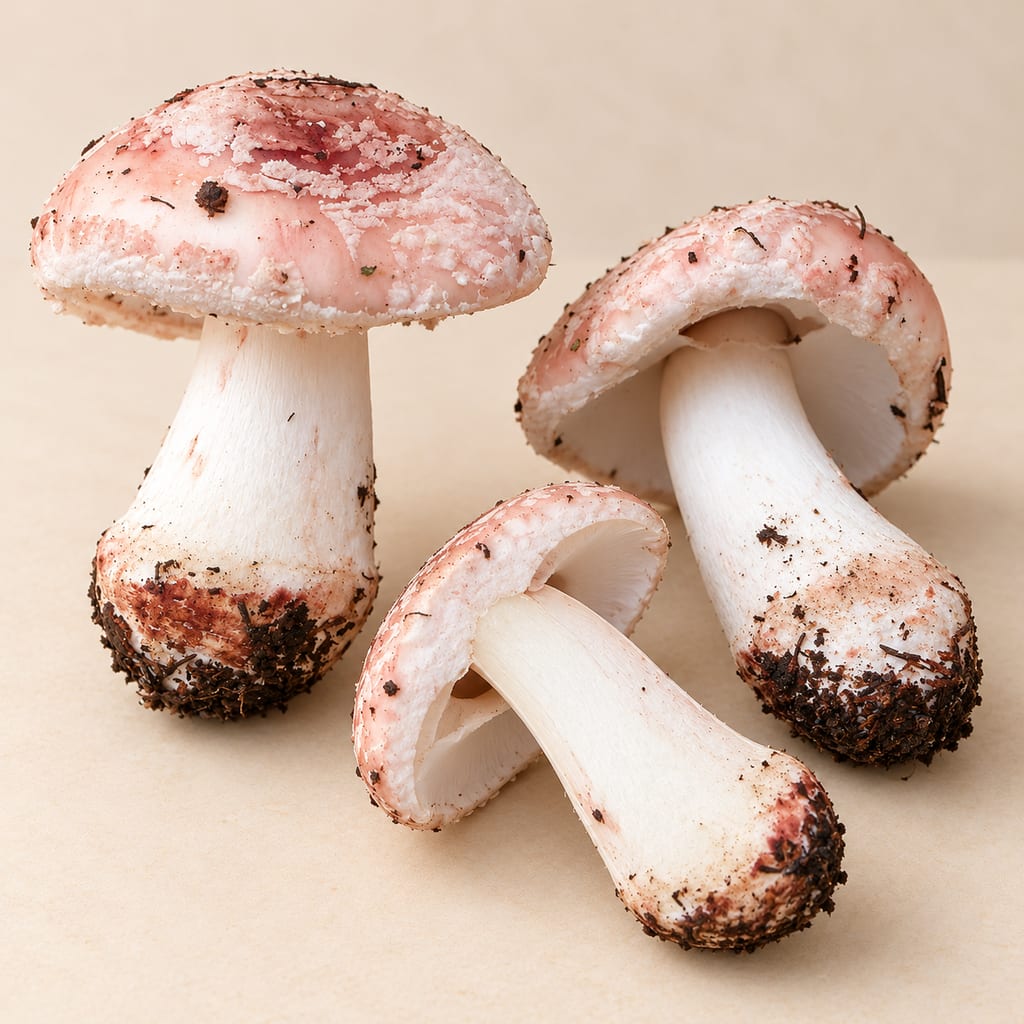
Amanita novinupta is a western North American blusher, a forest mushroom recorded as food in Mexico, and one that must be cooked because its raw flesh is toxic.
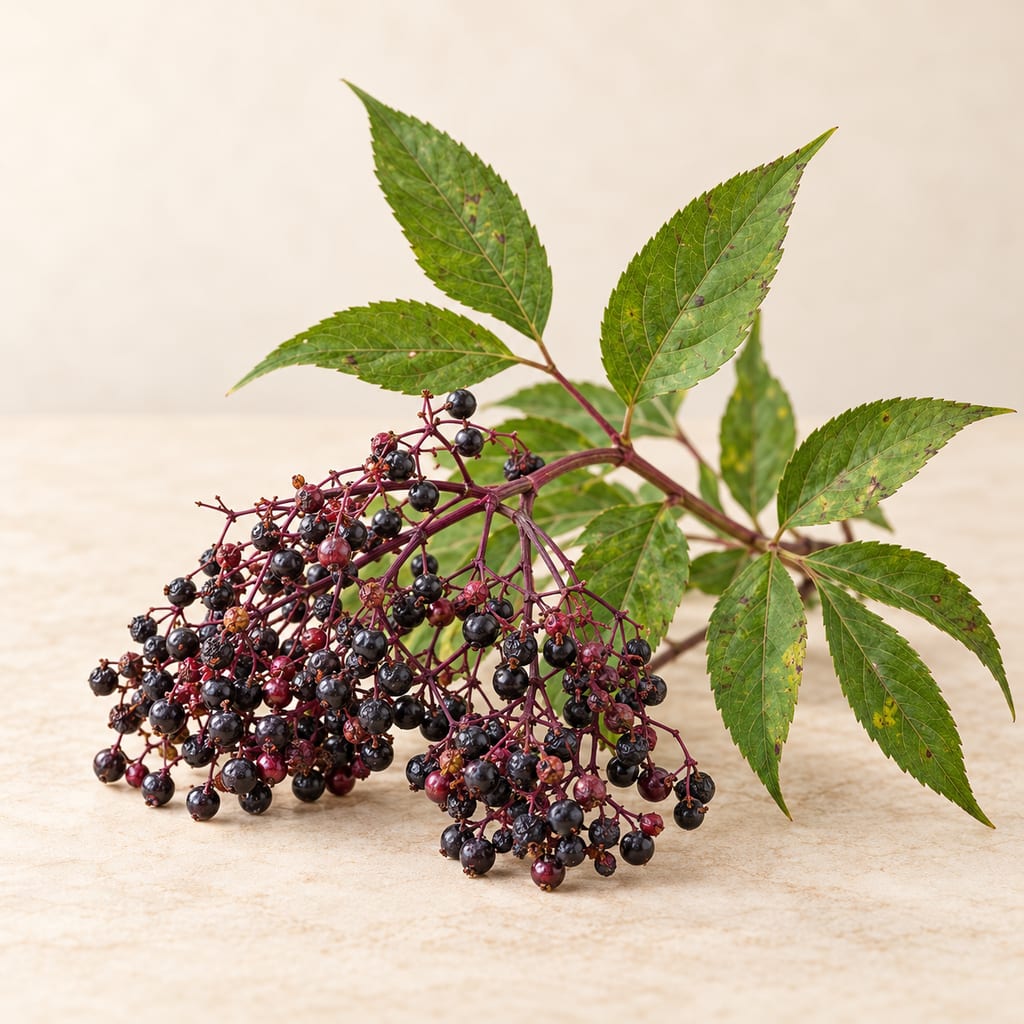
Sambucus canadensis is the accepted name used here for American elderberry. Missouri production guidance and named-cultivar studies give useful regional growing information, while food and analytical sources leave process questions open.
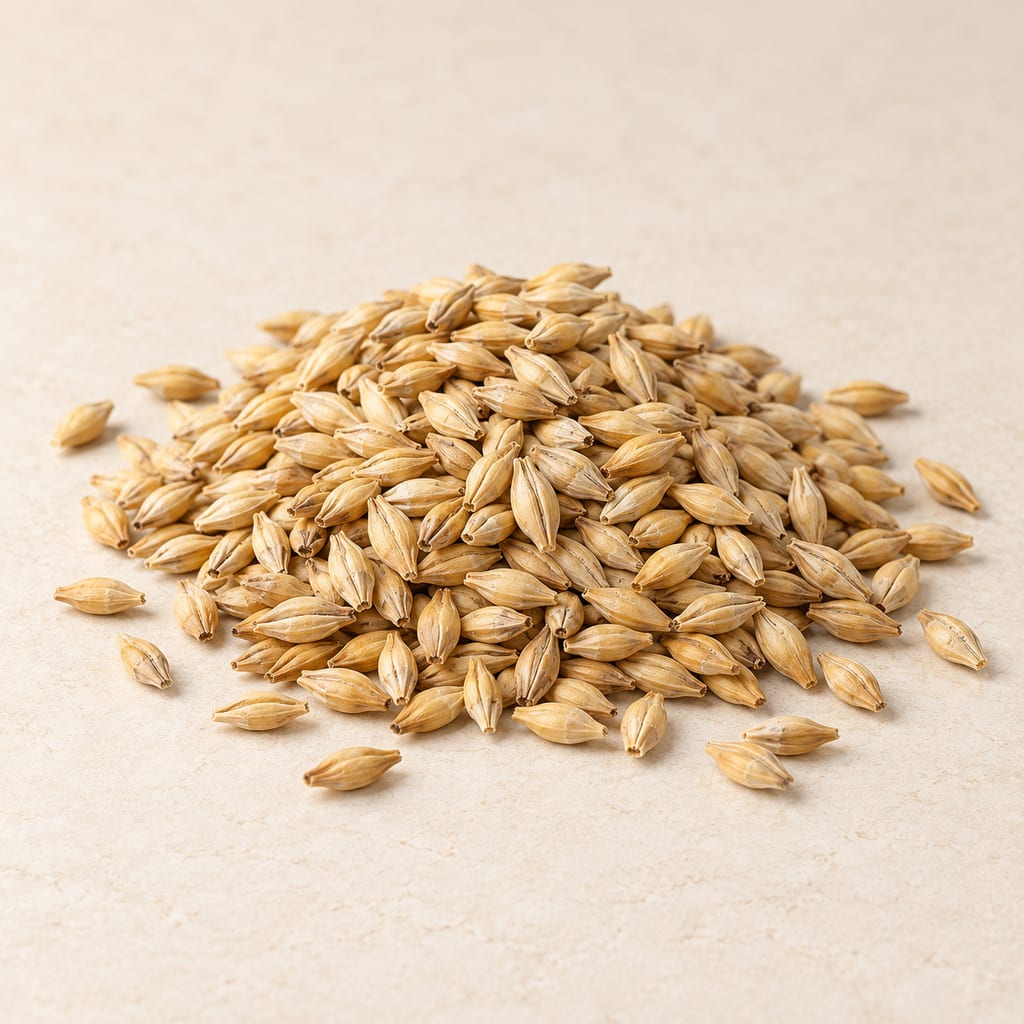
A lightly kilned brewing base made from two-row barley. It supplies starch and enzymes for the mash, with the maltster’s product and lot analysis defining its brewing properties.

Ripe avocado flesh is the soft, buttery, fat-rich pulp of Persea americana, eaten raw. It is low in acid, so it is a fresh ingredient that needs care in chilled dishes.
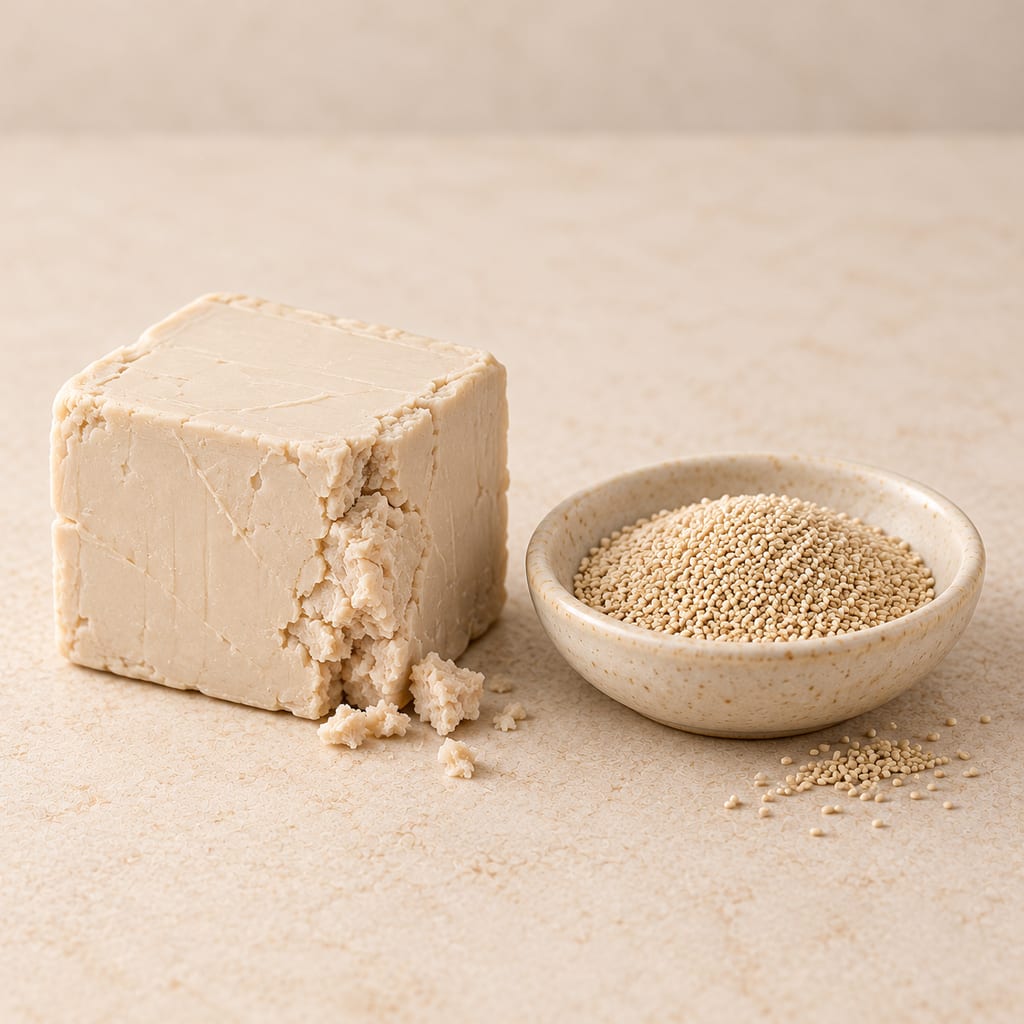
Baker's yeast is a cultivated living leavener, commonly sold fresh or dried. In dough, selected Saccharomyces cerevisiae cells make gas that can raise bread.
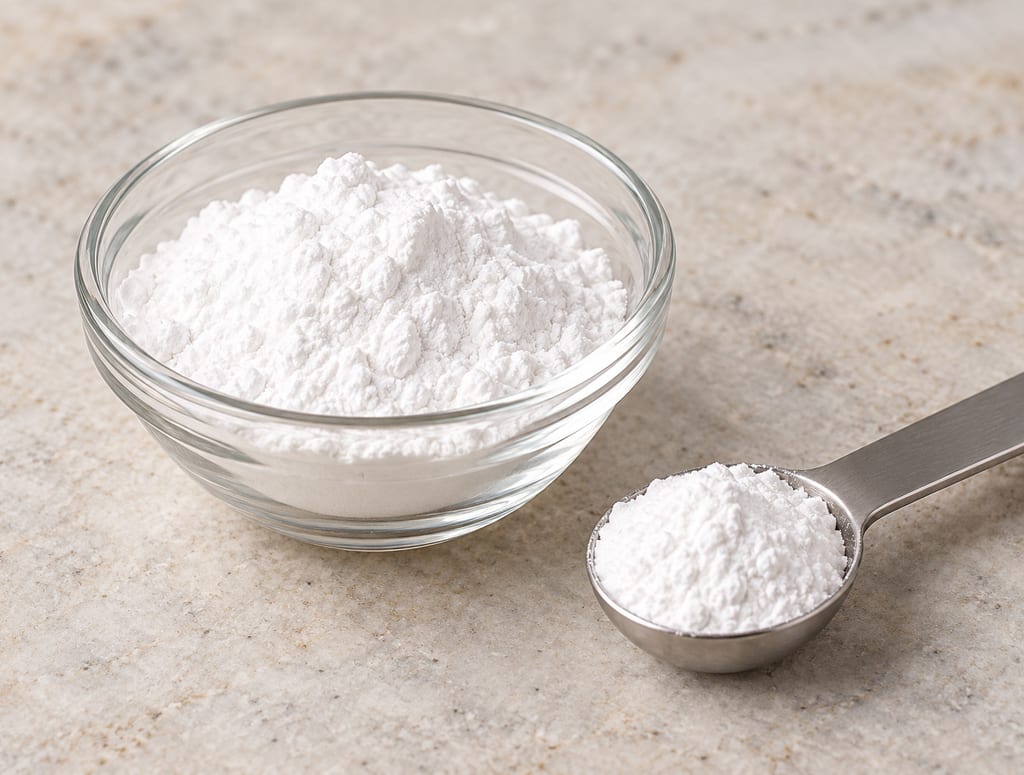
Baking powder is a dry chemical leavener that combines bicarbonate with acid-reacting ingredients and a carrier. Moisture and heat release carbon dioxide for quick breads, batters and griddle cakes.

Soft, spreadable Calabrian pork sausage made with a great deal of red chilli and fatty pork, stuffed into natural casings, sometimes smoked and matured while staying soft.

A way to add independent temperature logging to an existing food dehydrator without changing its built-in controls or protections. It is a monitoring method, not a rewiring plan.

Pleurotus cystidiosus is the abalone mushroom, a cultivated oyster-type fungus with dark brown caps that grows more slowly and is more demanding than other Pleurotus species.

A dark, balanced vinegar from Emilia-Romagna made by combining cooked or concentrated grape must with wine vinegar, then acetifying and refining it in wood under a protected specification.

A living dairy inoculum that starts controlled cream fermentation, developing acidity and aroma before sour cream or cultured butter is finished.

A small electric incubator holds jars at a selected temperature for yogurt and other documented warm food preparations. Controls, capacity and vessel arrangement vary by model.

Adygean salt is a seasoned table salt associated with Adygea and the wider North Caucasian culinary tradition. Salt is blended with garlic and a variable selection of herbs and spices; the exact mix depends on the named style and maker.

The African Caesar-group mushroom, Amanita masasiensis, is a wild ectomycorrhizal species of central and southern African woodlands, eaten locally. The genus contains deadly poisonous species, so identification needs care.
No community contributions have been published for this entry yet.
Sign in to contribute. Published comments and photos are free to read.
US Patent and Trademark OfficeIdentity · History · Agronomy · Chemistry
Hop plant named YCR Accession No. 5, US PP12,404 P2Original patent: unknown pedigree, Washington selection and 1998 sample, filed 1999 and granted 2002.
Cited in: Warrior is a named cultivar; A Washington selection with an incomplete pedigree; What the field record says about growing Warrior; Reading a Warrior bag's numbers
Yakima Chief HopsIdentity · Forms · Chemistry
Warrior Brand YCR 5Current breeder/supplier identity, product forms, typical acid and oil ranges and descriptors.
Cited in: Warrior is a named cultivar; What the field record says about growing Warrior; From cone to brewing ingredient; The chemistry behind bittering; Reading a Warrior bag's numbers; Use, storage and sensible limits
Ontario Ministry of Agriculture, Food and AgribusinessCultivation · Handling
HopsGeneral hop plant, harvest, product forms and worker handling; not Warrior-specific.
Cited in: What the field record says about growing Warrior; From cone to brewing ingredient; Use, storage and sensible limits
Yakima Chief RanchesHistory
Hop BrandsOfficial listing identifies Warrior Brand as YCR 5.
Cited in: A Washington selection with an incomplete pedigree
Hop Breeding CompanyHistory
Hop Breeding CompanyYCR breeding context and early Warrior selection; exact release year unstated.
Cited in: A Washington selection with an incomplete pedigree
BrewingScienceScience
Humulus lupulus: Hop Alpha-acids Isomerization – A ReviewReview of hop anatomy, alpha-acid isomerization and process dependence.
Cited in: The chemistry behind bittering; Use, storage and sensible limits
USDA Agricultural Research ServiceDistinction
Hallertauer Magnum (21670)Separate Magnum cultivar with German Hüll origin and known parentage.
Cited in: Warrior is a named cultivar
Hop Products AustraliaForms · Handling
Standardised Production ProcessProducer T-90 pellet processing and packaging context, not Warrior-specific.
Cited in: From cone to brewing ingredient
Charles FaramChemistry
Warrior Hop Variety Specifications and Characteristics2024 trade sheet alpha and beta ranges; lot-specific values may differ.
Cited in: Reading a Warrior bag's numbers
American Homebrewers AssociationUse
2026 Official Big Brew Recipes: Dark Cellar Imperial StoutPage 3 Warrior 43 g at 15% alpha acids for 60 minutes, Willamette later, recipe 62 IBU.
Cited in: Reading a Warrior bag's numbers; Use, storage and sensible limits