






























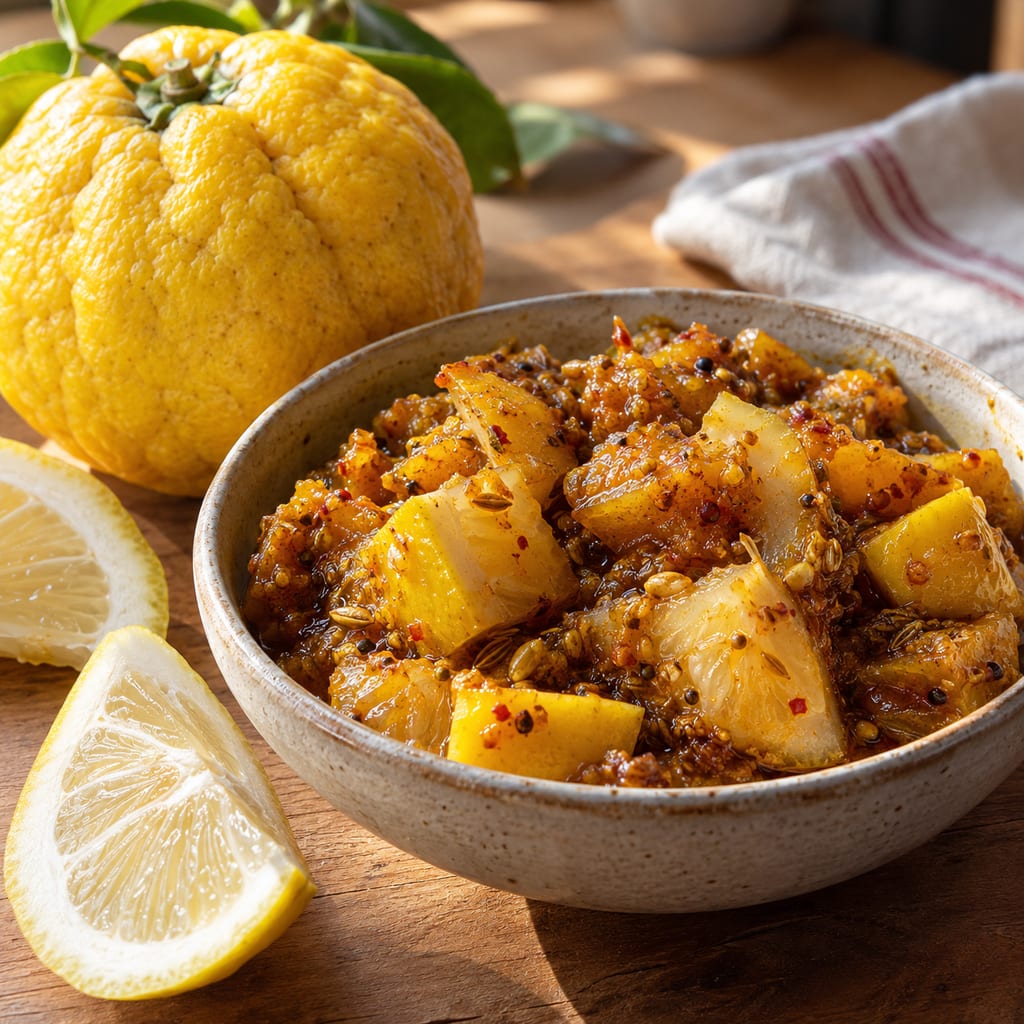
Galgal pickle
Ripe Himalayan galgal is boiled, sun-dried and cooked with mustard oil, spices and jaggery before a further rest in a ceramic jar.
 FermenteaWhere food goes to change
1504 records with their sources, across 11 categories.
 Fruit preserves12
 Fermented fruit and fruit-derived foods3
 Acid and oil pickles2
 Condiments and enzymatic seasonings1
Ripe Himalayan galgal is boiled, sun-dried and cooked with mustard oil, spices and jaggery before a further rest in a ceramic jar.
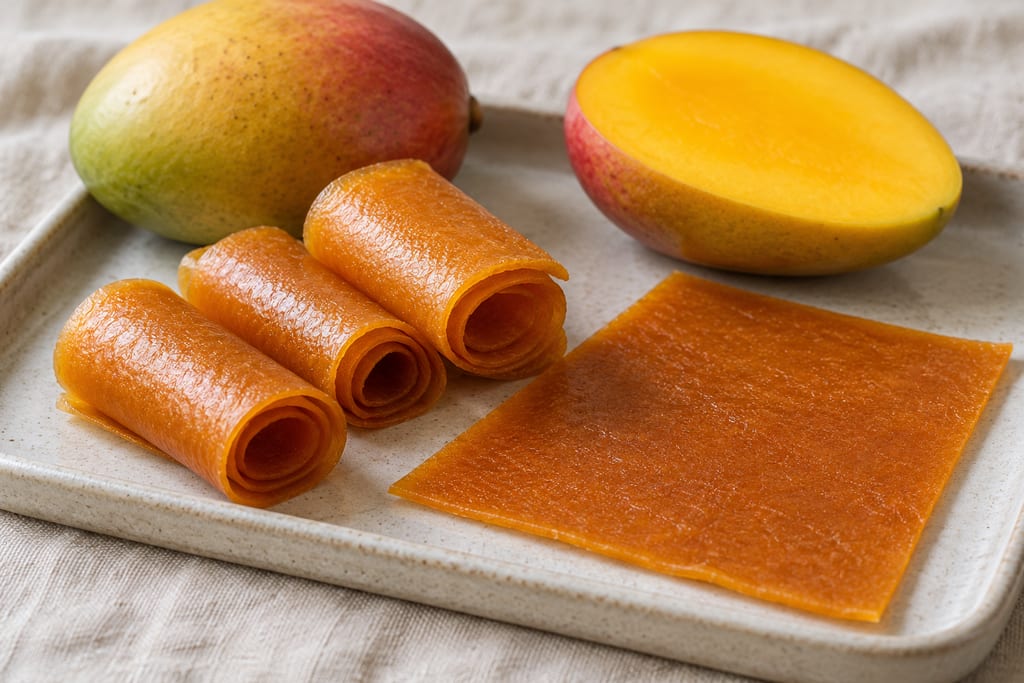
Sieved mango purée with honey and warm spices, spread a quarter inch thick and dried at 140 °F (60 °C) for about 10 hours into a flexible fruit sheet.
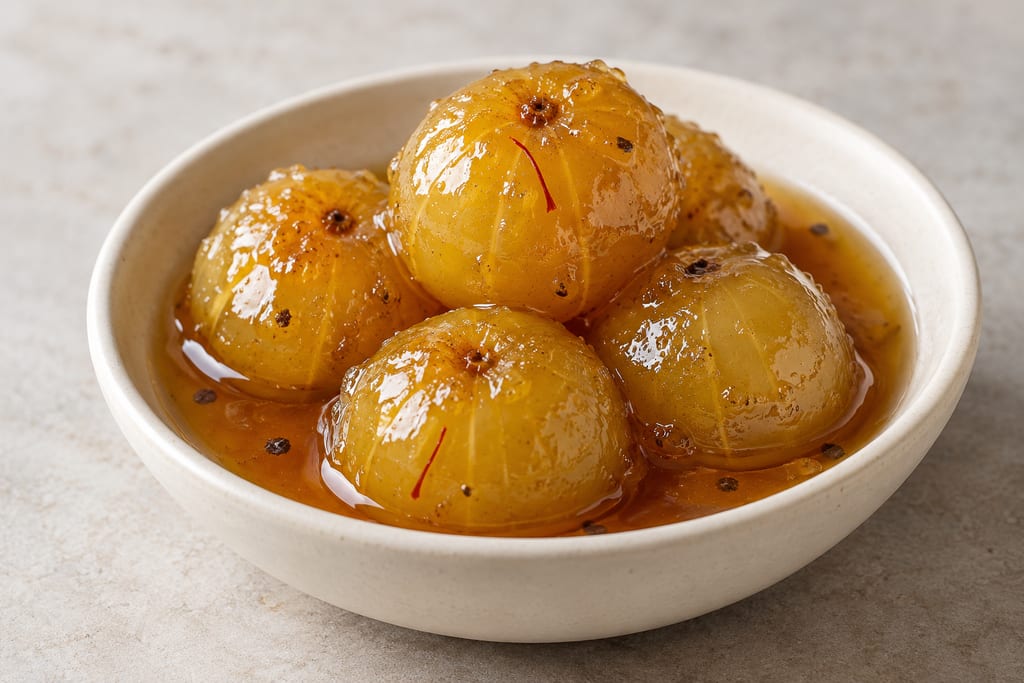
Amla murabba preserves whole Indian gooseberries in a heavy sugar syrup scented with cardamom and sharpened with pepper and black salt. This household method soaks the fruit before cooking.
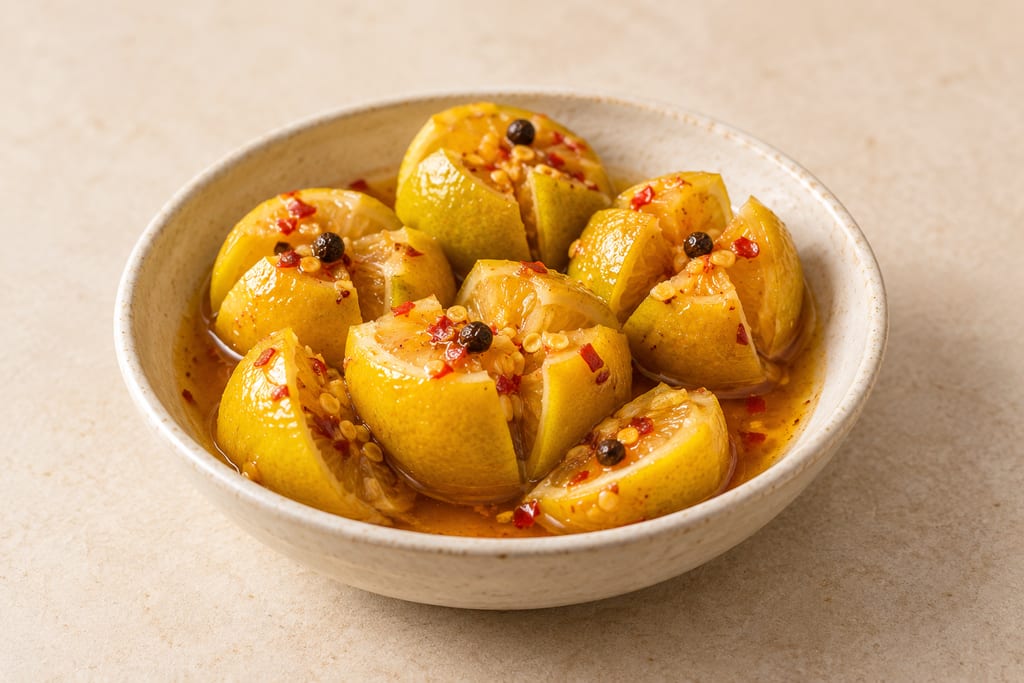
Peter Kuruvita’s published lime pickle stuffs 20 limes with rock salt, then simmers them in vinegar, sugar and chilli before a two-week rest.
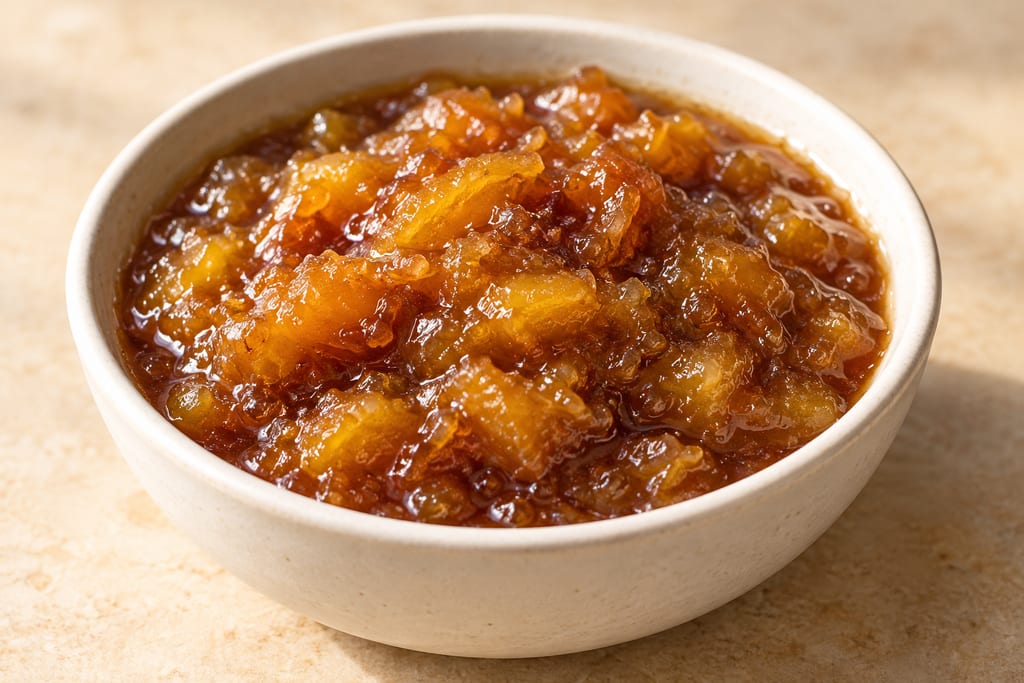
A Suryabinayak municipal recipe cooks ripe lapsi pulp in sugar syrup with cloves, cardamom, cinnamon, sukumel and ginger juice to make a sweet Nepali achar.
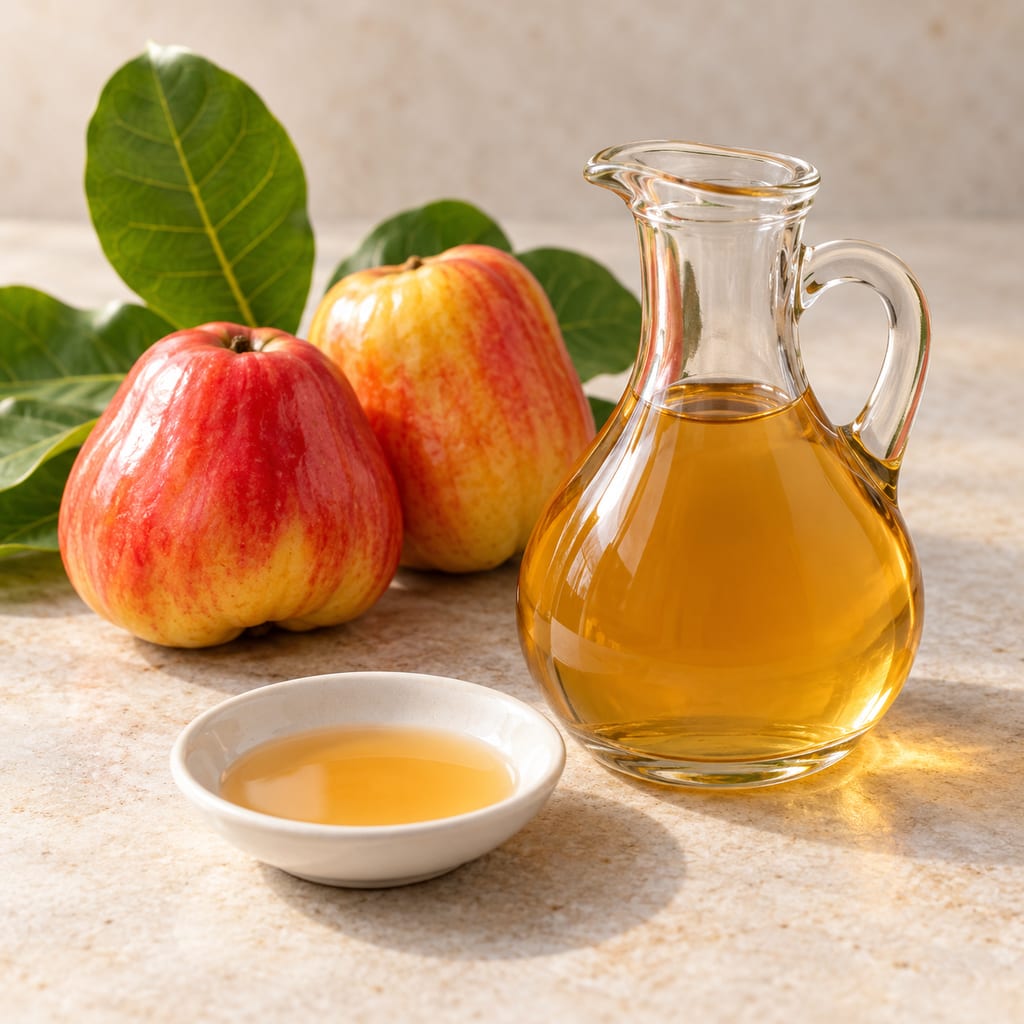
Vinagre de caju is made by fermenting cashew-apple juice into an alcoholic base, then aerating it so acetic bacteria can convert ethanol into acid. Brazilian guidance records the sequence, but not a complete home-scale formula.
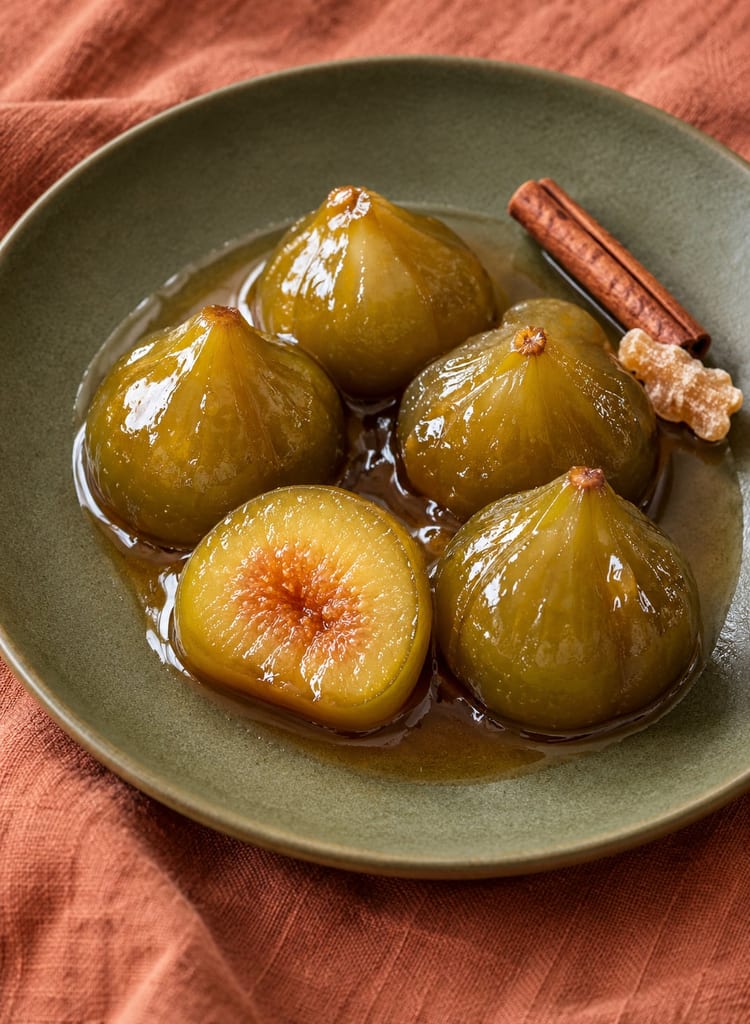
Whole unripe figs are softened and cooked in cinnamon and ginger syrup as a refrigerator-only South African konfyt; this method does not provide a shelf-stable canning process.
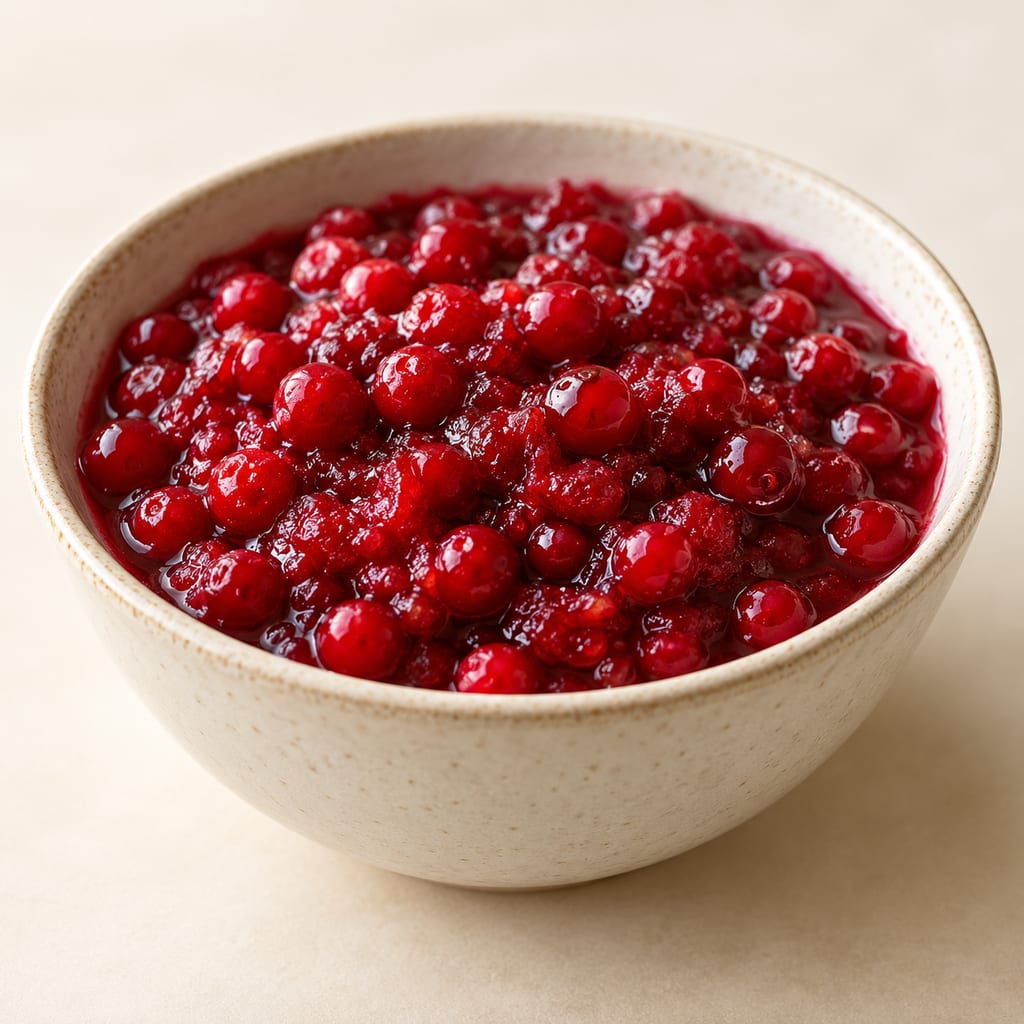
A Swedish uncooked lingonberry accompaniment: frozen berries are mixed with granulated sugar and thawed, with occasional stirring, until the sugar dissolves.
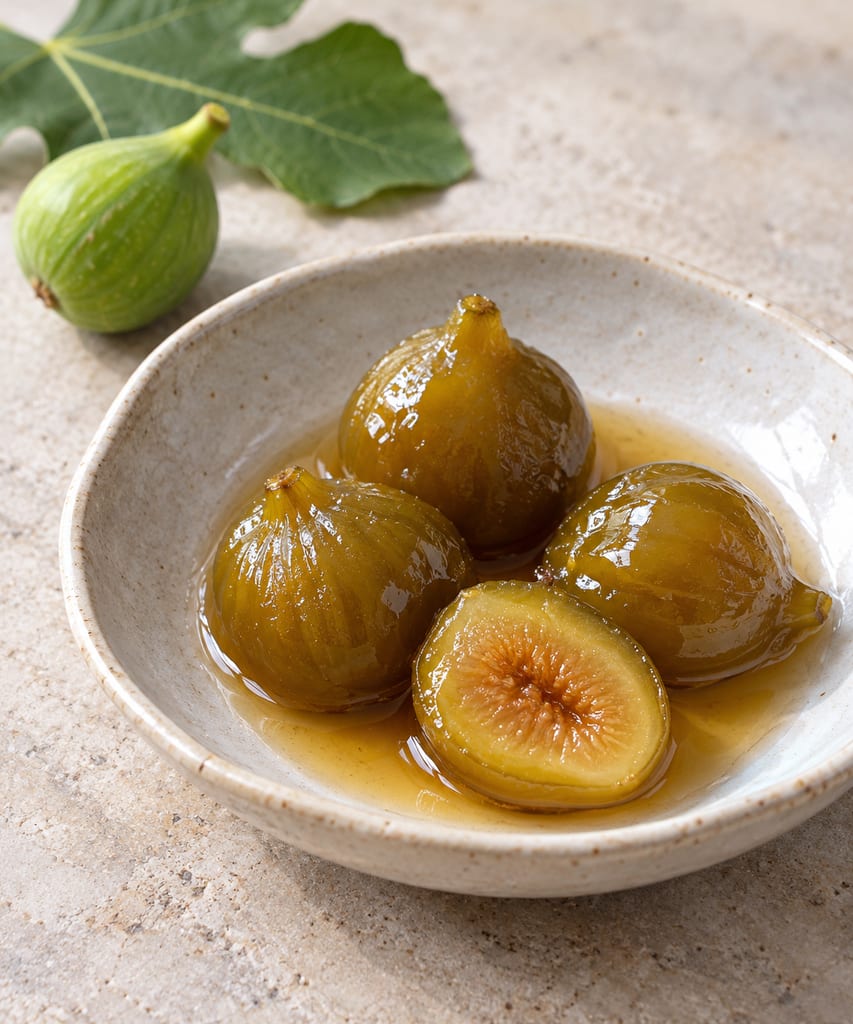
Hard green figs are parboiled and cooked whole in a lemon-sharpened sugar syrup as a refrigerator-only South African konfyt; the method does not establish shelf-stable canning.
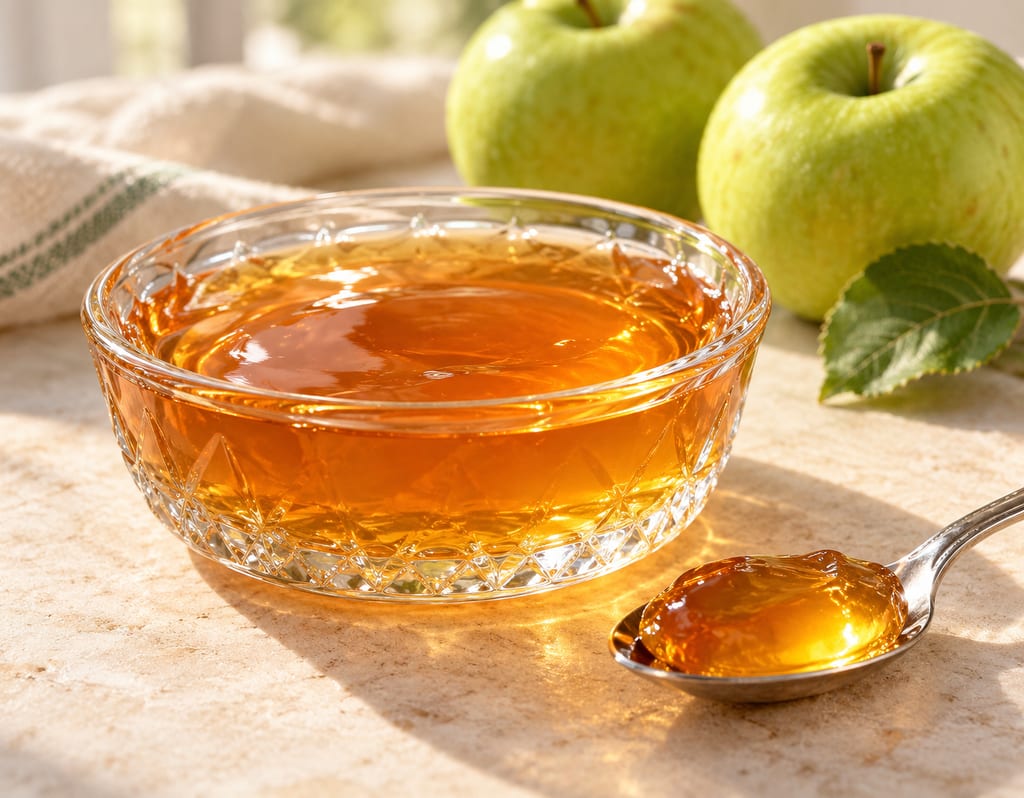
A clear jelly made from tart-apple juice, sugar and optional strained lemon juice. This batch uses a stated fruit-to-water preparation, gel endpoint, hot fill and altitude-adjusted boiling-water process.
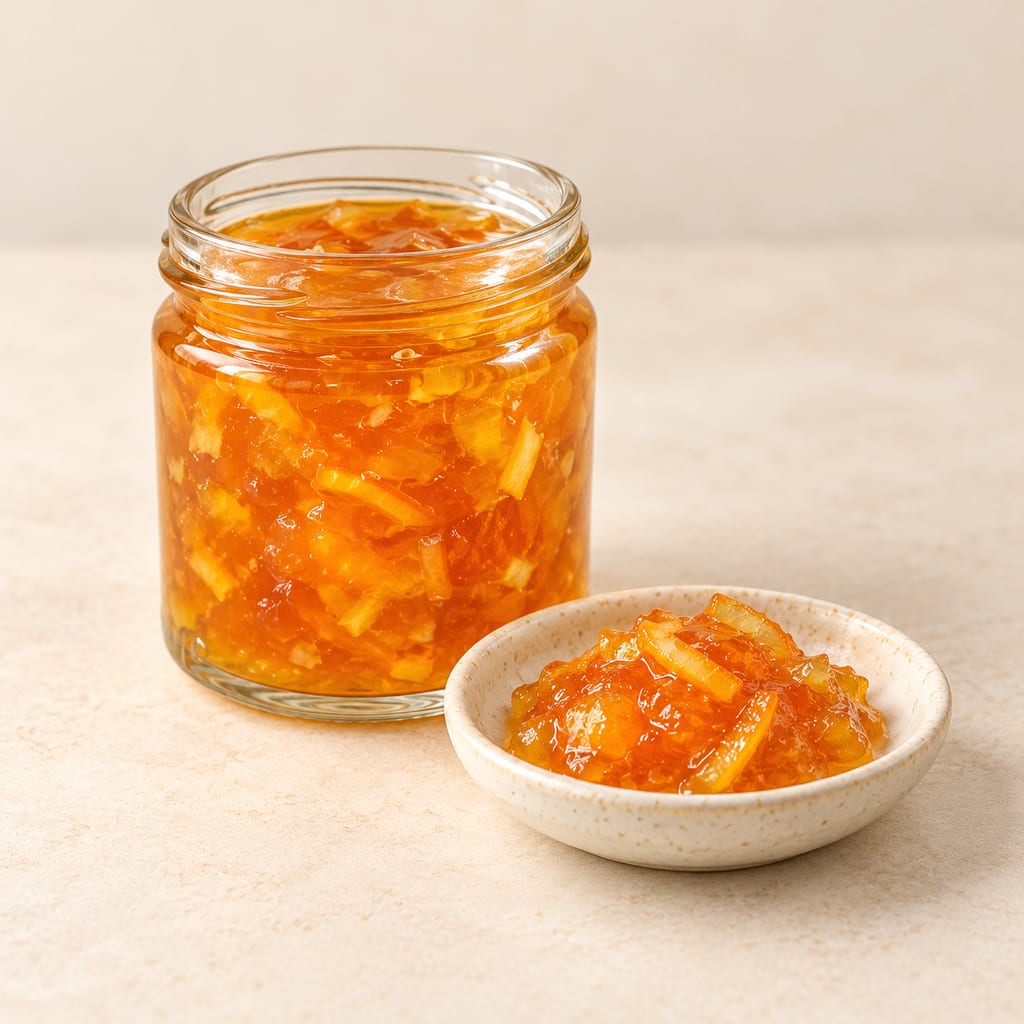
Orange marmalade suspends thin strips of citrus peel in a sweet gel. This navel-orange batch includes pulp and lemon and is preserved in a boiling-water canner.
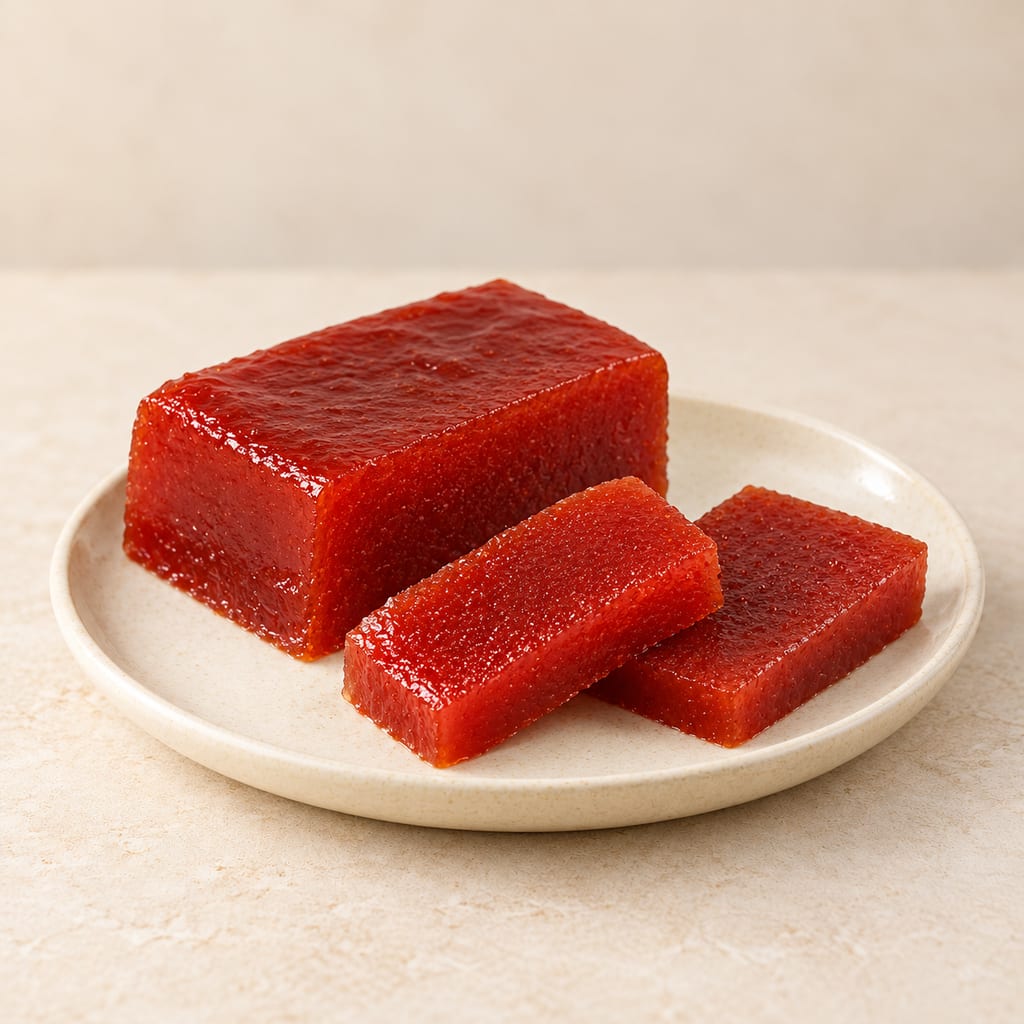
Dulce de membrillo is quince cooked with sugar into a firm paste for slicing. This family method softens the fruit in a pressure cooker, then blends it and leaves it to set.
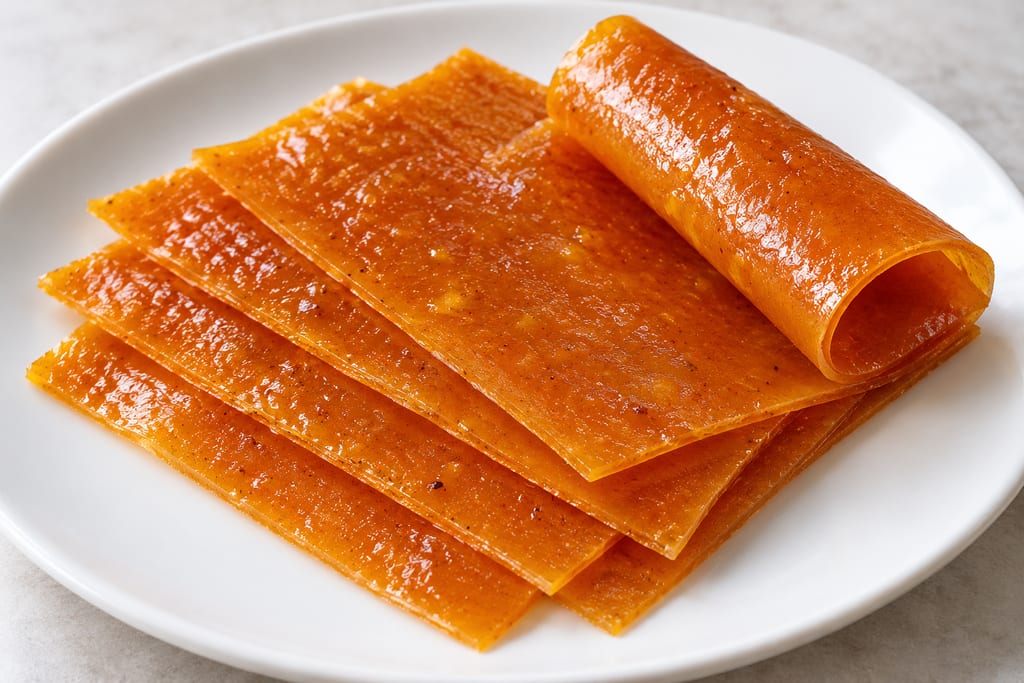
Ripe mango pulp spread thin and dried as a chewy fruit leather. This entry records one controlled unsweetened experiment and distinguishes it from Bengali sun-dried aamshotto and sweetened or spiced variants.
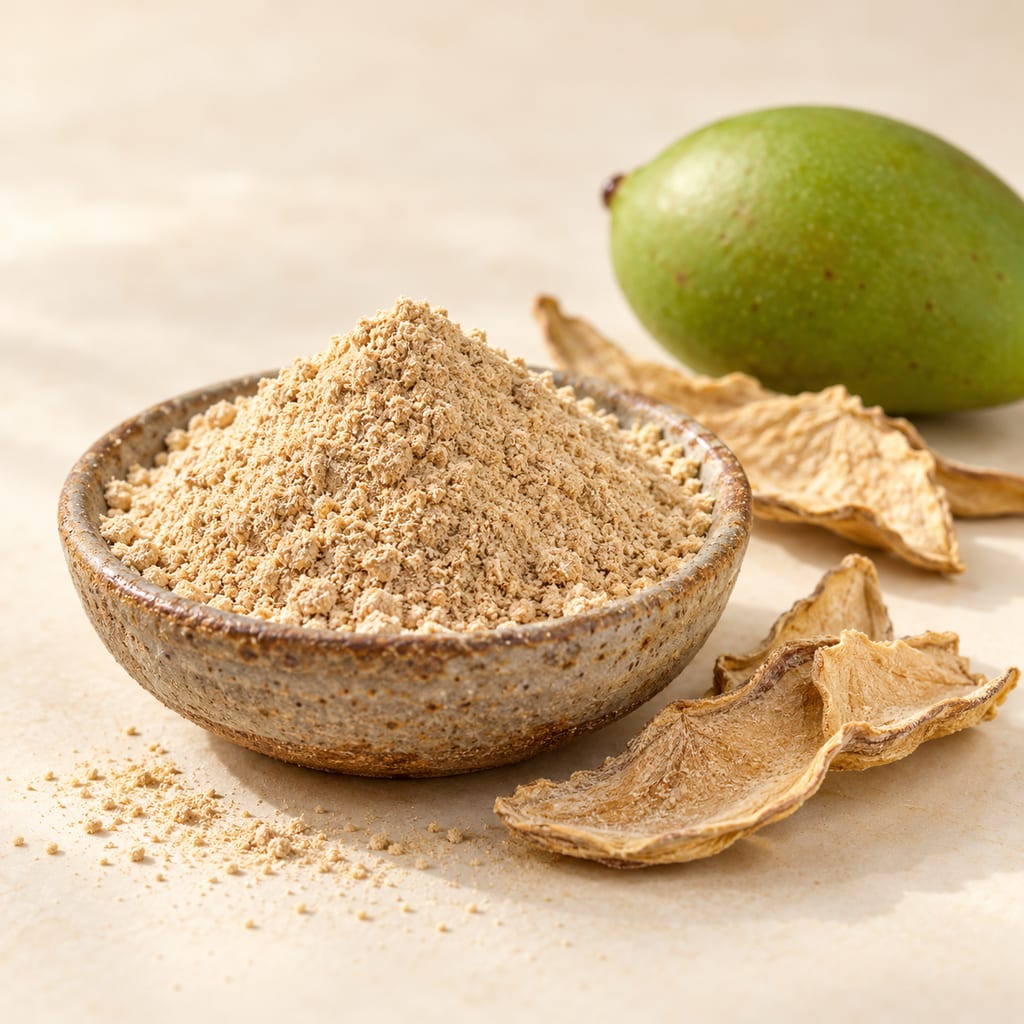
Thin slices of sour unripe mango are sun-dried over four days and ground into a tangy powder, following a five-fruit account published with an Indian mango study.
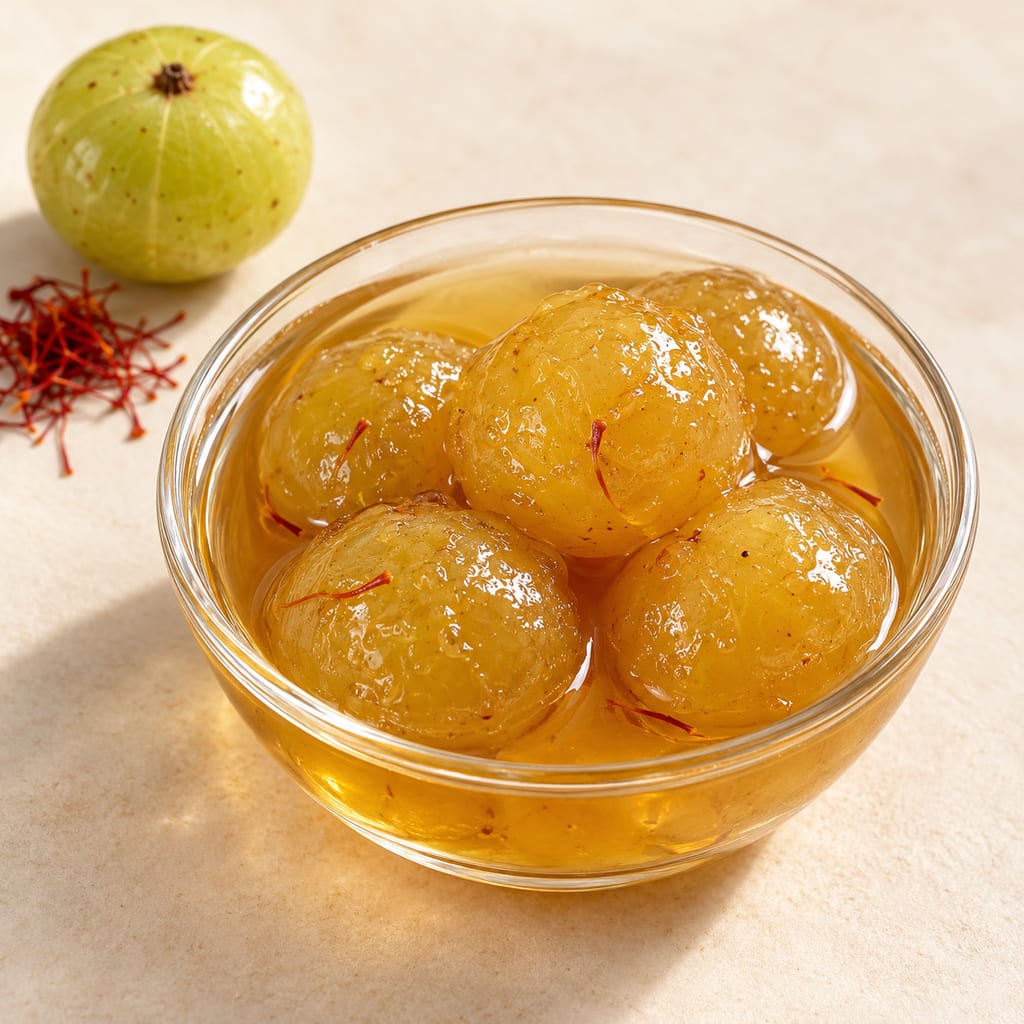
Whole amla simmer in sugar syrup with saffron, black cardamom and pepper in this chef's version of the Indian fruit preserve. The fruit is soaked overnight before cooking.
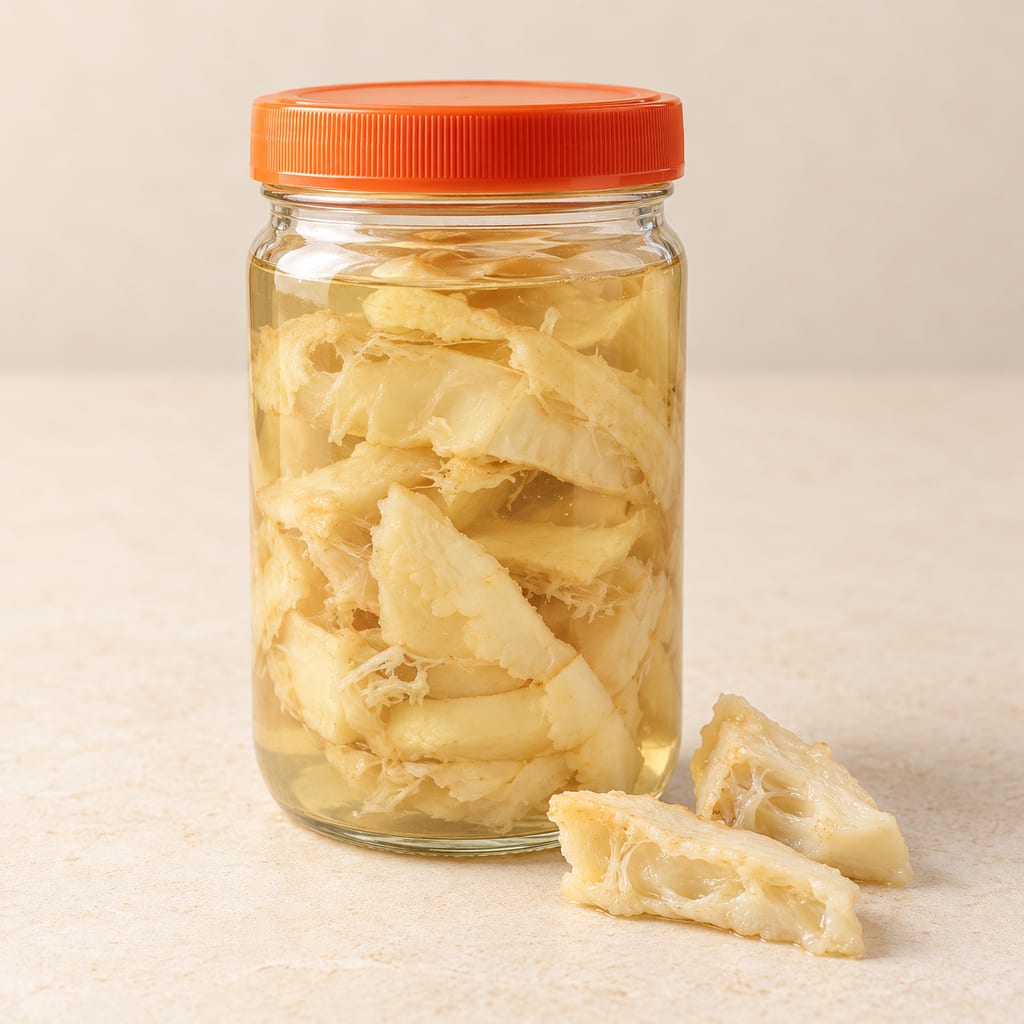
Cempedak inner rind is cut, salted and submerged in water for a short spontaneous fermentation used in Kalimantan home cooking.
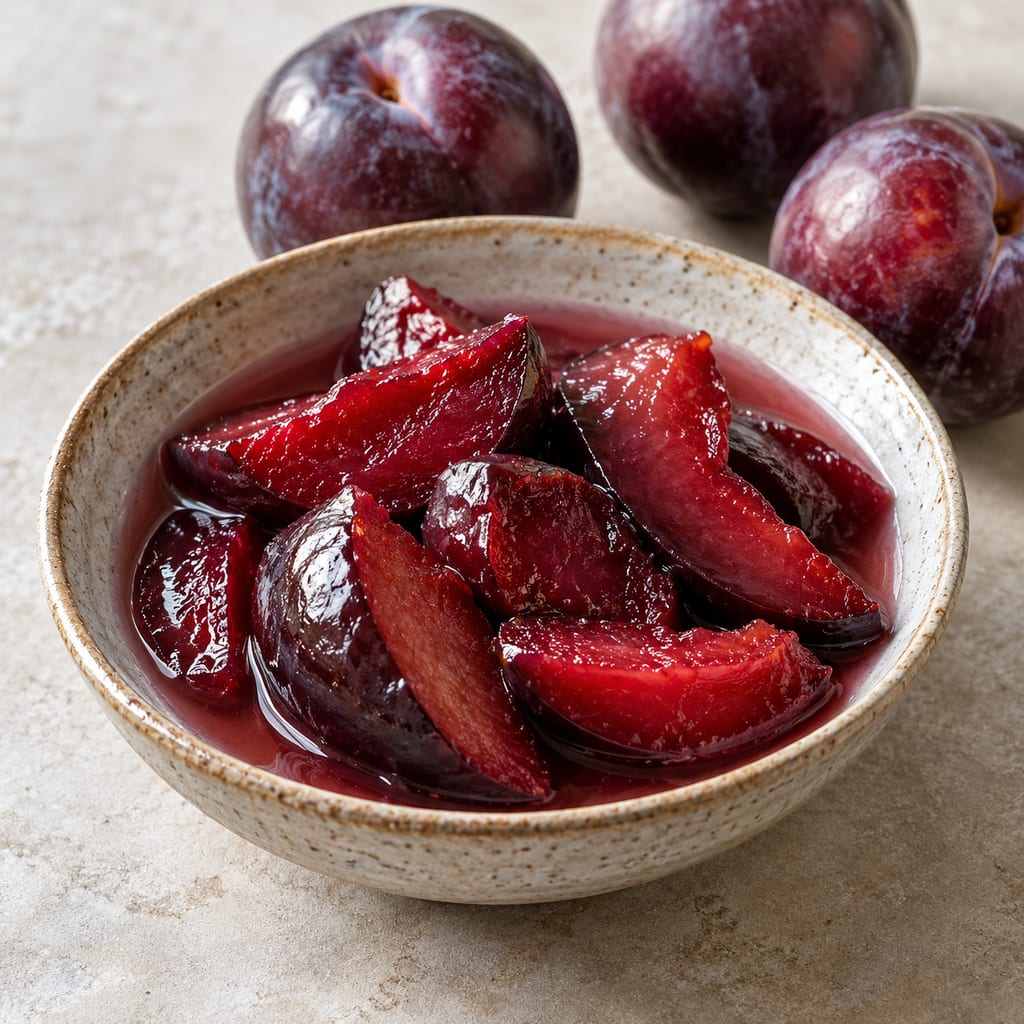
Pitted ripe plums release their own juice under a 2% salt cure, then ferment while weighted below the liquid.
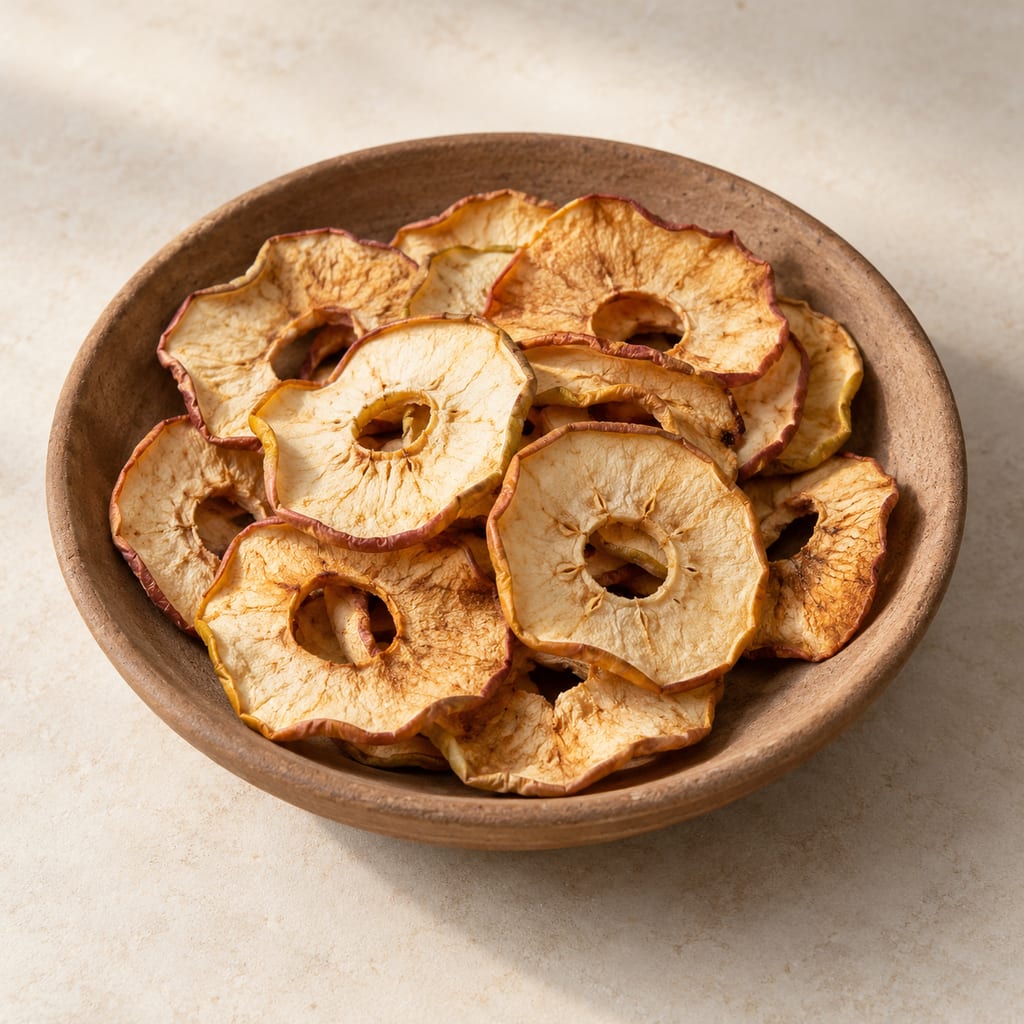
Apple slices dried until most of their water has gone, shrinking and concentrating into leathery or crisp rings, with the modern controls that a plausible old technique turns out to need.