
African fermented foods, drinks and preservation
From sour breads and milk to savoury seeds, cassava staples and living beers, African fermentation follows the crop, the community and the work of transformation.
 FermenteaWhere food goes to change
Traditional method
ogiri-okpei
Ogiri-okpei is a Nigerian condiment of cooked Prosopis africana cotyledons left to ferment spontaneously in leaf-lined containers, then ground and dried.
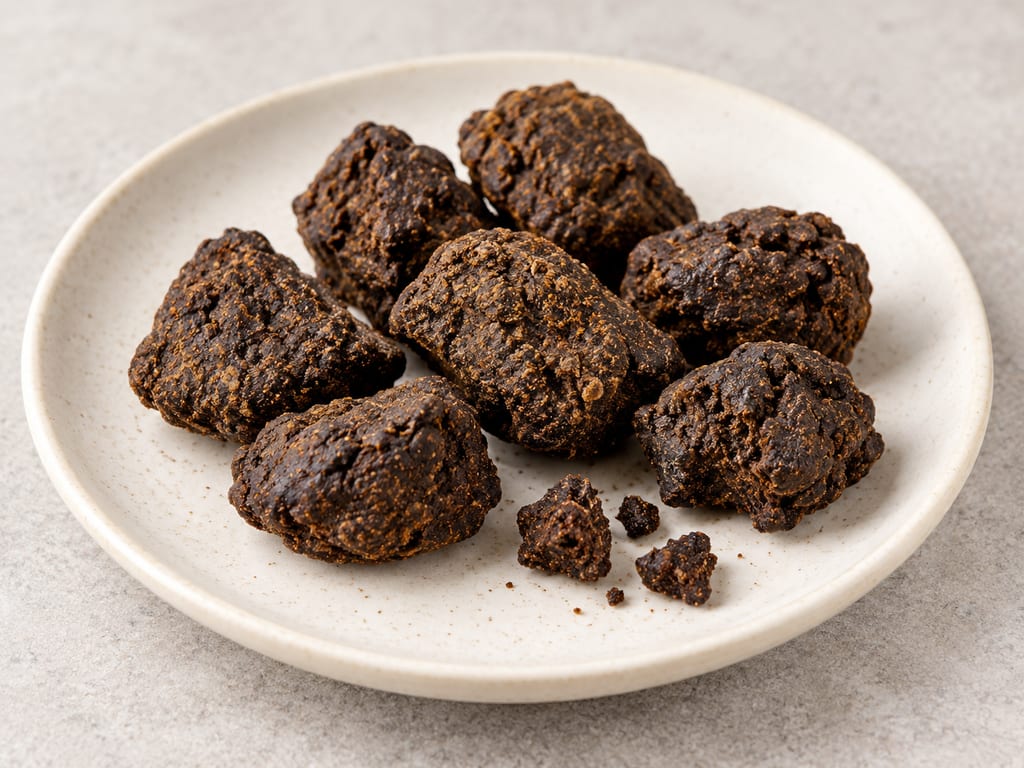
Ogiri-okpei is a strongly flavoured West African seasoning made by fermenting the seeds of Prosopis africana, a tree found in parts of tropical African savannah.
The seeds are boiled, dehulled and fermented until their composition and aroma change. The fermented material is then ground into a paste and may be shaped and dried for storage or sale.
Names include ogiri-okpei, okpei, okpiye and okpehe, with spellings and usage varying among Nigerian communities.
The condiment belongs to a wider family of alkaline-fermented legume and oilseed seasonings.
It resembles other West African products such as iru and dawadawa in its strong savoury function, but the source species and particular traditions differ.
This recipe is specifically based on Prosopis africana, not African locust bean (Parkia biglobosa), castor seed or fermented melon seed.
The original study uses a spontaneous process rather than an intentionally introduced commercial starter.
That makes it historically informative but raises important problems for anyone attempting to reproduce it without microbial controls.
Raw material — Approximately 800 g Prosopis africana seeds
Recovered cotyledons — Approximately 350 g
Initial boiling — 8 hours
Water-removal heating — 15 minutes
Fermentation vessel — Plastic basket lined with plantain leaves
Fermentation — 96 hours
Temperature — Laboratory room temperature; numeric value not provided
Sun exposure during fermentation — Approximately 1 hour daily
Final processing — Grind to paste and sun-dry
Final drying duration — Not stated
Finished yield — Not stated
Safety status — Spontaneous research process; not validated for home manufacture
Prosopis africana belongs to the legume family, Fabaceae.
It grows across parts of West and Central Africa and produces pods containing hard seeds.
The seeds are not immediately convenient to cook.
Their hard outer seed coats require substantial processing before the edible cotyledons can be separated and fermented.
This is why the first boiling stage is unusually long.
The plant is sometimes described as African mesquite, although the name should not be confused with every American mesquite species.
The botanical identification matters because local names for fermented seasonings can refer to different plants.
In a food database, Prosopis africana should remain the scientific identification attached to this particular recipe.
Fermented seed condiments are important in Nigerian food cultures.
They provide concentrated flavour to soups and stews and can partially substitute for expensive animal ingredients.
Okpei is especially documented in central and southeastern Nigeria, including communities associated with Igala, Idoma and Igbo food traditions.
A modern review records the names okpiye, okpei and okpehe in different communities.
The condiment has also been associated with the Nsukka area of Enugu State.
The original research purchased seeds in markets at Awka, Anambra State, and prepared them using a previously documented traditional method.
That location establishes the provenance of a particular study.
It does not establish that Awka invented ogiri-okpei or that the product is confined to one state.
No precise first invention date is supported by the available sources.
The word ogiri can refer to several fermented condiments.
Depending on region and tradition, raw materials may include melon seeds, fluted pumpkin seeds, castor seeds or other legumes and oilseeds.
These products cannot safely be substituted at the manufacturing stage merely because they share a market name.
Castor seeds in particular contain serious toxic constituents and require specialized traditional processing. Their treatment should never be inferred from the Prosopis method.
For this recipe, the exact species is central.
The seeds provide protein, fat, carbohydrates and other nutrients.
After boiling and dehulling, the study recovered approximately 350 g cotyledons.
This substantial reduction reflects the removal of the hard seed coats and associated processing losses.
Water is needed for washing and boiling.
The published method does not give the volume.
Washed plantain leaves are wilted over fire and used to line and cover the fermentation basket.
They provide a traditional food-contact surface and help contain the seed mass.
Their use also influences exposure to air and moisture.
The leaves should not be understood as a microbiological safety guarantee.
The process relies on naturally occurring microorganisms.
This is one of the most consequential differences between this preparation and a controlled soybean fermentation.
The particular microbial population depends on the substrate, environment, handling and equipment.
The process uses a large cooking vessel, equipment for dehulling and washing, a heat source, a basket, plantain leaves and a mortar.
The exact basket dimensions are not specified.
The study used a plastic basket lined with leaves.
The fermentation was conducted at laboratory room temperature.
No numerical temperature or controlled humidity value is provided.
This is an ethnographically based experimental process, not a validated home-preservation recipe.
Clean and wash approximately 800 g seeds.
Remove visible debris and unsuitable material.
The aim is to prepare the seeds for boiling and manual dehulling.
Boil the seeds for eight hours.
The purpose is to soften their exceptionally hard seed coats.
The recorded method does not give a fixed water volume.
The long boil is part of this species-specific process.
It should not be shortened merely because other legumes cook more quickly.
Remove the softened outer coats by rubbing or mashing the boiled seeds between the palms.
Separate the cotyledons.
The study recovered approximately 350 g from the starting material.
Wash the recovered cotyledons.
This removes loosened hull material and processing residues.
Heat the cotyledons over a fire for 15 minutes to evaporate excess moisture.
This is not the final drying stage.
It prepares the seed mass for subsequent fermentation.
Wash plantain leaves and wilt them briefly over fire.
Line a plastic basket with the leaves.
The exact number of leaves is not specified.
Place the prepared cotyledons into the lined basket.
Cover them with additional leaves.
The arrangement creates a moist environment in which microorganisms can act on the cooked seeds.
Allow the seeds to ferment for 96 hours at laboratory room temperature.
The experimental procedure included exposing the basket to sunshine for approximately one hour each day.
The effect of that exposure depends on local weather and equipment.
The room temperature was not quantified.
After fermentation, grind the seeds in a mortar to make a smooth paste.
This converts the individual fermented cotyledons into a concentrated condiment.
Sun-dry the paste.
The original study does not state a drying duration, finished moisture content or final water activity.
The final yield is also not reported.
This is a critical gap for anyone attempting to manufacture a shelf-stable product.
Ogiri-okpei is a mixed, spontaneous, alkaline fermentation.
Organisms reported in studies include species of Bacillus, Staphylococcus and Micrococcus.
These names represent groups detected during research.
Their presence does not mean every strain within those groups is suitable for food manufacture.
Some Bacillus organisms produce strong proteolytic enzymes.
These enzymes break seed proteins into smaller peptides and amino acids.
The resulting compounds contribute to the seasoning's intense taste and aroma.
Amino-acid metabolism can release ammonia and related nitrogen compounds.
This contributes to alkaline conditions and the powerful smell associated with the condiment.
The process is fundamentally different from producing a strongly acidic vegetable pickle.
The 2008 study measured changes in soluble sugars, free amino acids and other components.
Free amino acids and soluble sugars increased, reaching a peak around 72 hours, before declining subsequently.
The fermentation itself continued to 96 hours.
These observations are valuable because they demonstrate that longer fermentation does not necessarily produce a simple continuous increase in every desirable compound.
Traditional spontaneous fermentation depends on competition and succession among microorganisms.
The population detected at the beginning may differ from the population after several days.
This complexity can contribute desirable flavour, but it also makes the process difficult to standardize.
The intense aroma develops primarily from microbial transformation of seed constituents.
Proteins are degraded into smaller nitrogen-containing compounds.
Some amino acids contribute savoury tastes.
Others become precursors for volatile aroma compounds.
The combination creates a seasoning that can be used in relatively small quantities.
A small piece may flavour an entire soup.
The dried form can also be convenient to transport and portion.
Its dark appearance and compact shape reflect the later grinding, shaping and drying rather than the appearance of the raw seeds.
Ogiri-okpei is used mainly as a seasoning.
It is commonly added to cooked soups and stews.
Okpei may contribute savouriness to ofe nsala, a traditional Nigerian white soup.
Other ingredients vary by community and household.
Strong fermented condiments complement the flavours of bitterleaf and other leafy vegetables.
The condiment provides savoury depth rather than acting as the main bulk ingredient.
Related regional preparations use fermented seed seasonings alongside meat, fish, vegetables and thickening ingredients.
The exact seasoning choice is culturally specific.
Ogiri-okpei should not automatically be substituted for every condiment called ogiri, iru or dawadawa without acknowledging differences in flavour and raw material.
The names okpei, okpiye and okpehe appear in different communities.
The Prosopis africana condiment is associated particularly with central Nigerian traditions.
Southeastern Nigerian markets also sell related preparations.
Commercial products may be sold as balls, irregular lumps or compact blocks.
Differences in drying, grinding and shaping affect their physical appearance.
Some products may have been manufactured from different seed species despite similar names.
Ingredient identification is therefore essential.
Hard seed coats can remain in the finished paste and make it unpleasant to eat.
The interior and exterior of the seed mass may experience different conditions.
Poor drying after grinding can encourage microbial deterioration.
Spontaneous fermentation can permit unwanted organisms to grow.
A pungent smell is characteristic, but sensory judgement cannot establish which microorganisms or toxins are present.
The process involves cooking seeds and then holding them moist for several days.
Some bacterial spores can survive prolonged cooking.
The published procedure does not provide a validated microbial safety endpoint.
The reported presence of Staphylococcus species is a reason for further microbial identification rather than a blanket declaration of safety.
Potential hazards include undesirable spore-forming bacteria and other contaminants.
Aflatoxins and other fungal contaminants may also warrant assessment depending on raw-material sourcing and storage, although the original ogiri-okpei experiment does not establish specific contamination levels for every batch.
The final sun-drying step is especially poorly specified for home reproduction.
Neither the drying duration nor water activity is supplied.
Do not infer shelf stability from the condiment's dark colour, dry exterior or strong aroma.
This preparation illustrates a distinctive African approach to generating savoury flavour from plant materials.
It uses a hard-seeded savannah tree rather than soybeans or cereal grains.
Its long preliminary boiling, leaf-lined fermentation, grinding and drying form a complete local technology.
The microbiological research shows how proteins and other seed compounds are transformed during fermentation.
The culinary result is a concentrated seasoning with a role in soups and regional food identity.
It is an important example of why a world fermentation reference needs to record botanical identity, local terminology and exact production stages separately.
Ogiri-okpei is a West African condiment made from Prosopis africana seeds, prepared by a traditional method reported from Nigeria. The documented laboratory preparation is not a claim about the food's origin.
Yield 350 g recovered cotyledons before fermentation (approximate study mass) · Scaling: source batch only
The process boils seeds and then holds a moist substrate through spontaneous alkaline fermentation; Bacillus spores can survive cooking and grow under favorable warm conditions.
Hazard sourceThis published spontaneous process has no validated home critical limits. Do not treat the source’s appearance or aroma description as a safety test; a qualified food-safety process review is needed.
Control sourceThe study reports a spontaneous process but does not establish a validated safety endpoint or storage period. Never use smell or taste to judge safety.
The study obtained seeds from markets in Awka and ran the preparation in its laboratory; it does not claim this is the sole place of production.
From sour breads and milk to savoury seeds, cassava staples and living beers, African fermentation follows the crop, the community and the work of transformation.
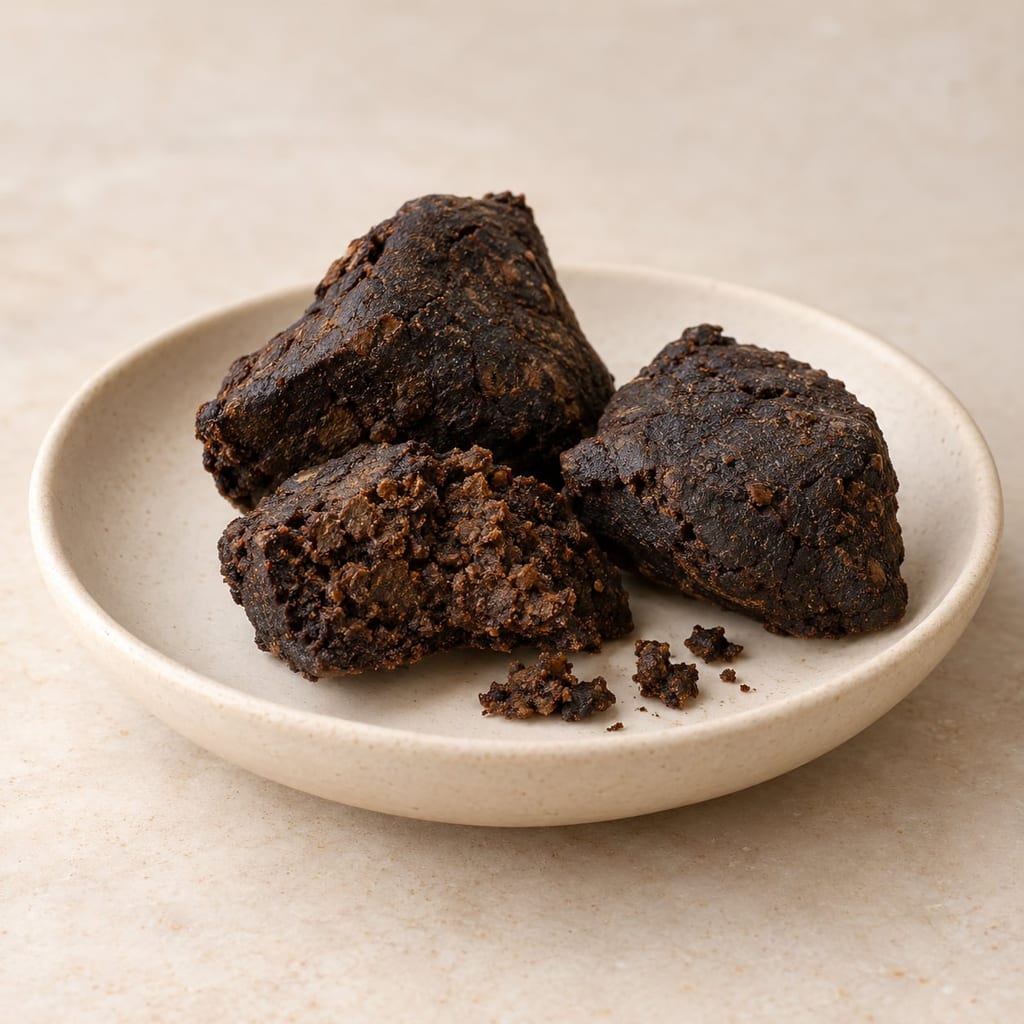
Okpiye, also written okpeye, is a Nigerian condiment from fermented Prosopis africana seeds; published studies describe laboratory batches, not a validated home method.
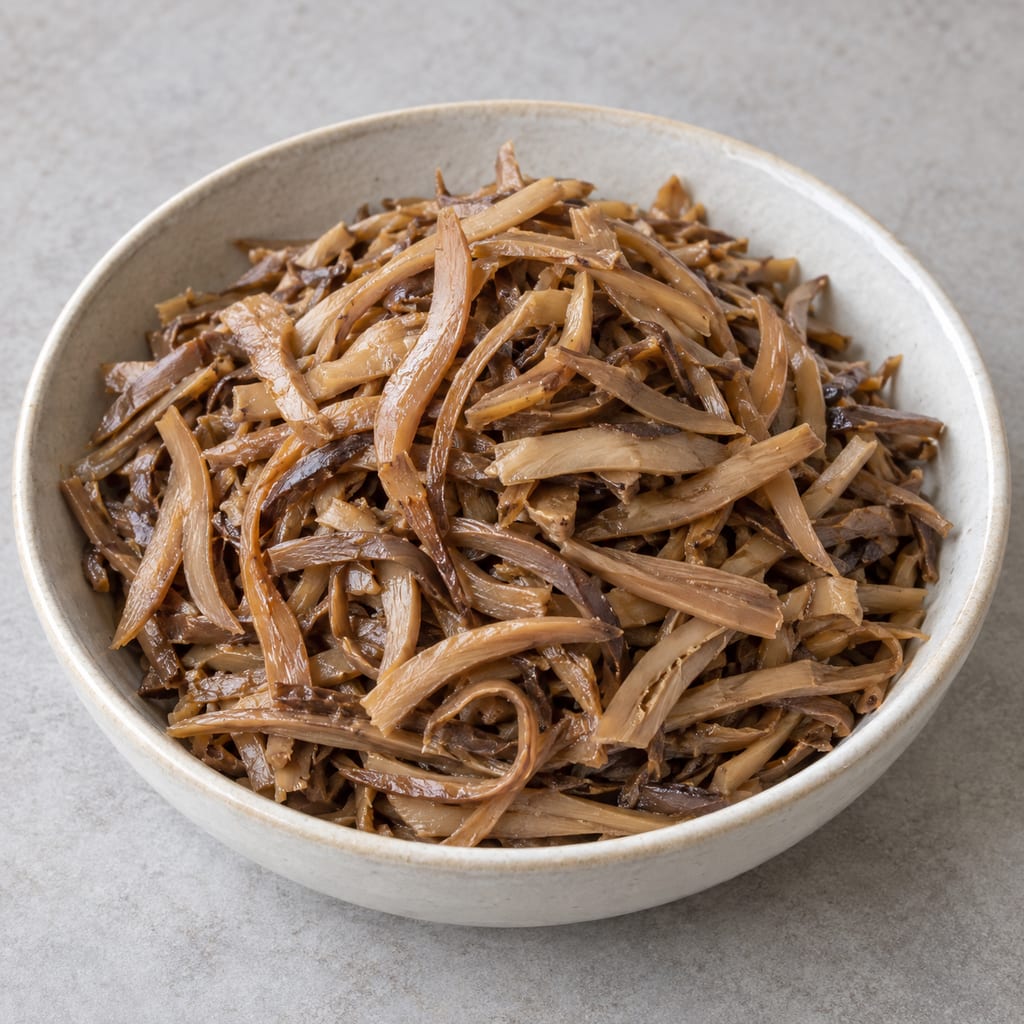
Sliced cotyledons of the African oil bean, boiled soft and fermented in banana-leaf parcels into the sharply savoury Nigerian condiment and salad ingredient known as ukpaka.
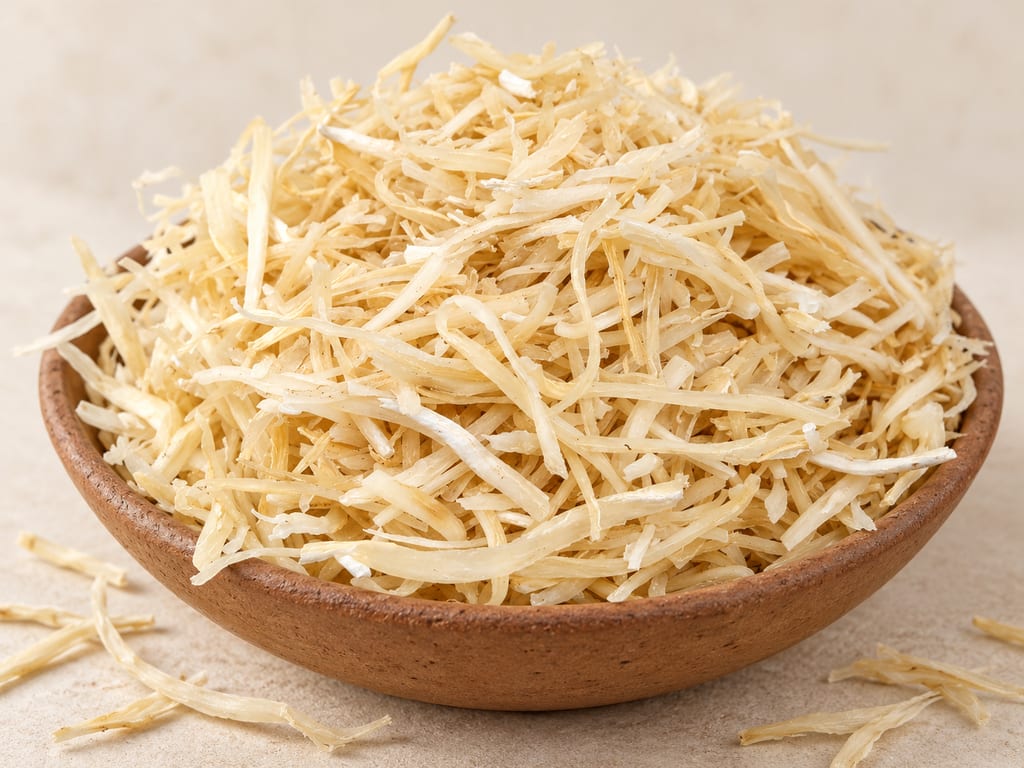
Abacha is a fermented cassava-strip preparation from southeastern Nigeria, sold wet or dried and later rehydrated for meals such as African salad.
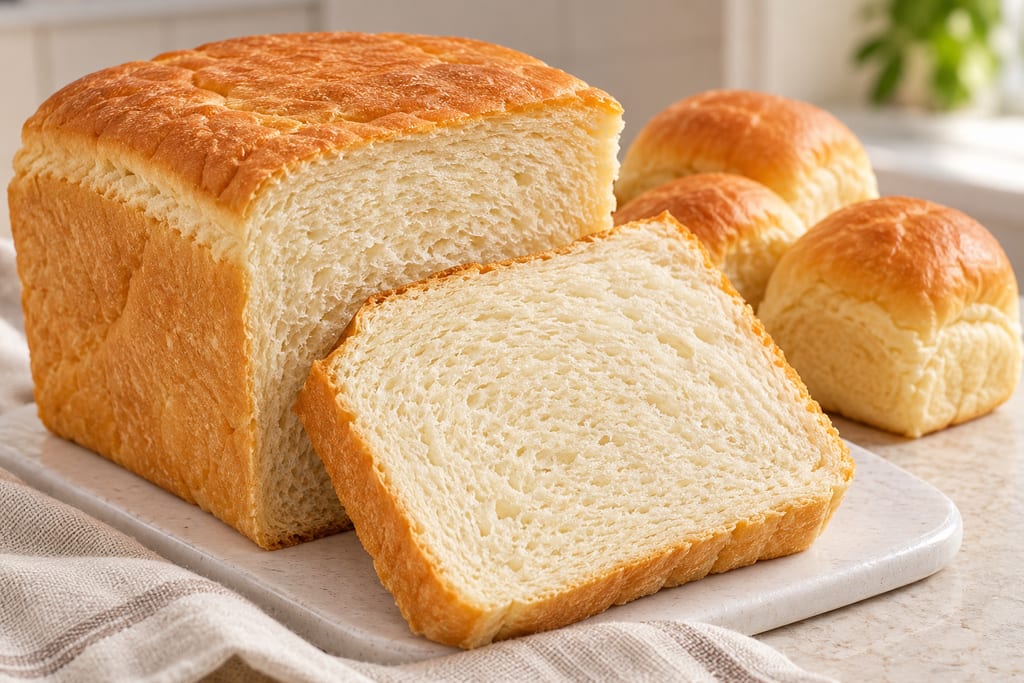
This softer home-style Agege bread uses a scalded flour paste, an enriched yeast dough and a 9×5-inch loaf pan, with rolls from the extra dough.
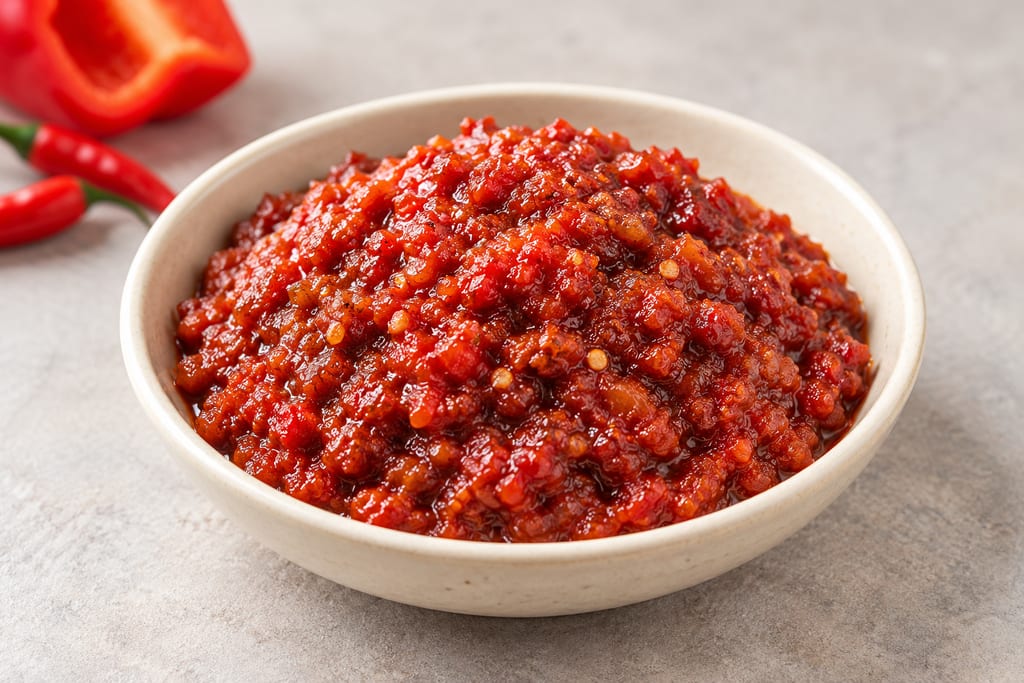
Ata dindin is the Yoruba fried pepper sauce: chillies, red bell pepper and onion blended and cooked down in oil until the oil separates. The same name is also given to a finished stew built on it.

Eba is a West African dish of cooked gari, stirred into hot water until it forms a thick paste. It is a cooking stage with no new fermentation, served with soup.
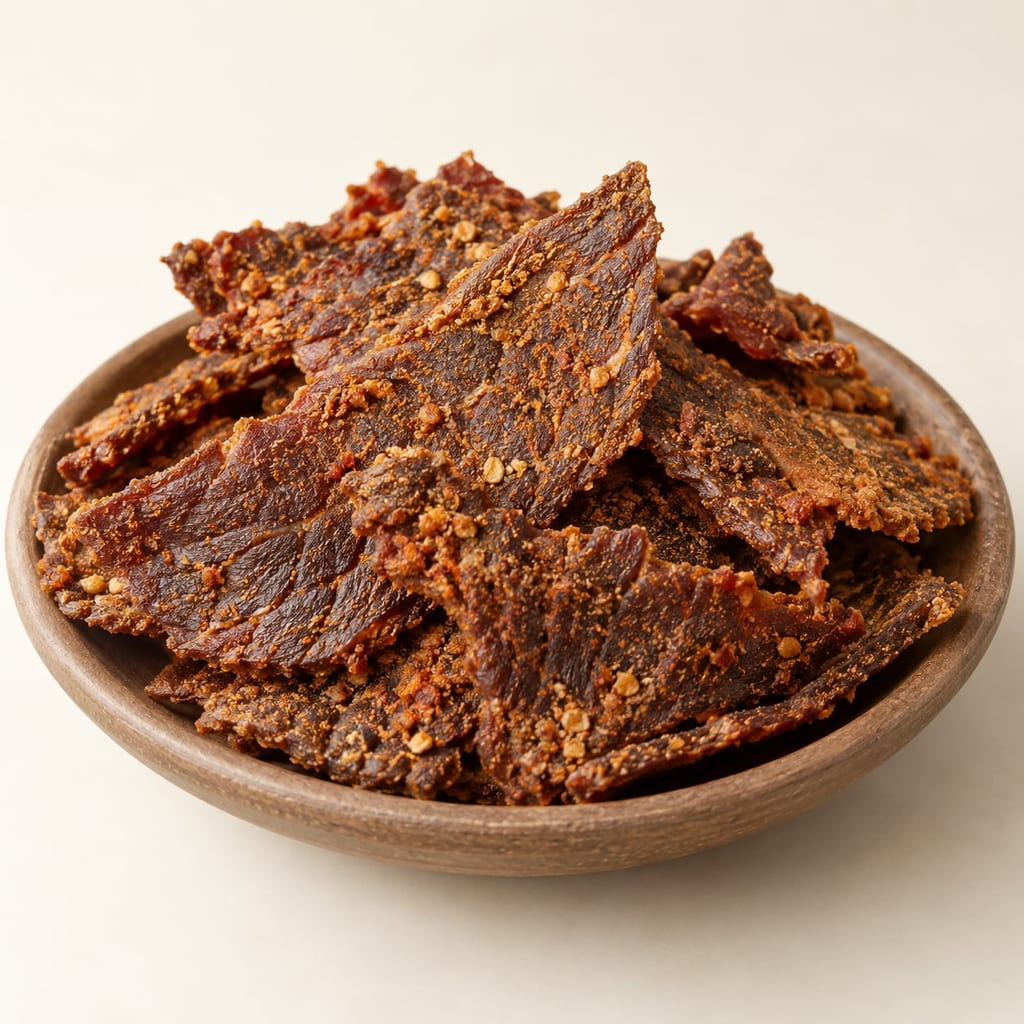
Kilishi is a Hausa-land dried meat from northern Nigeria and southern Niger: thin slices of beef or other meat, dried, coated in a spiced groundnut paste and dried again.
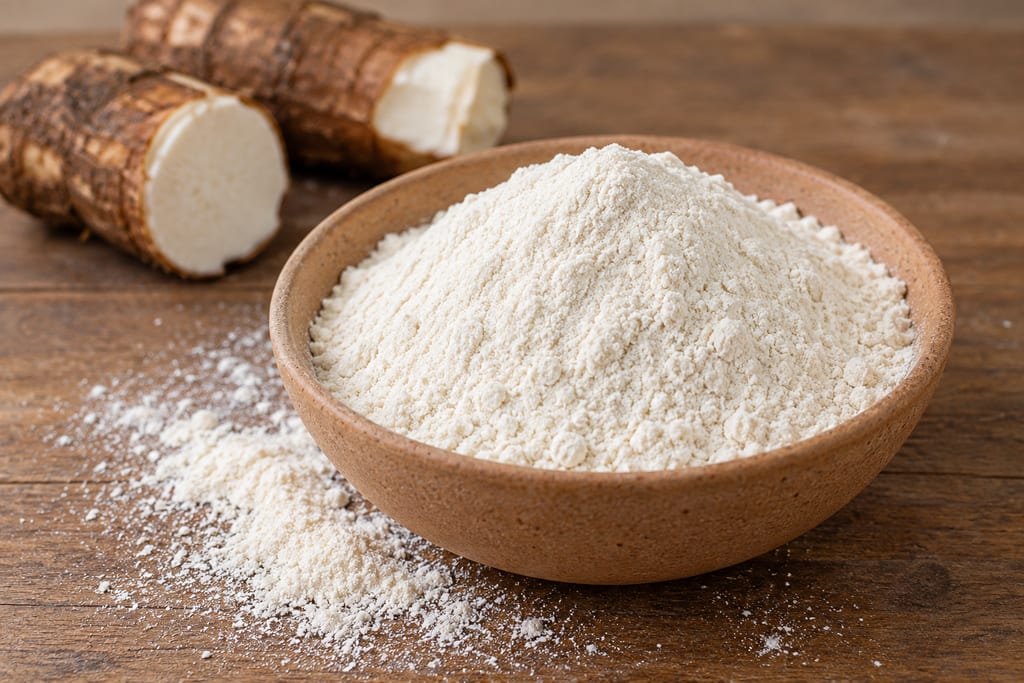
Lafun is a Nigerian fermented cassava flour described in historical accounts. This record documents reported processing stages, not a validated household method or a batch-specific cyanogen and moisture safety endpoint.

Soybeans boiled soft and fermented in a leaf-lined basket by the hearth, then in many Naga households pounded, wrapped in leaves and fermented again into a dark, pungent seasoning paste.
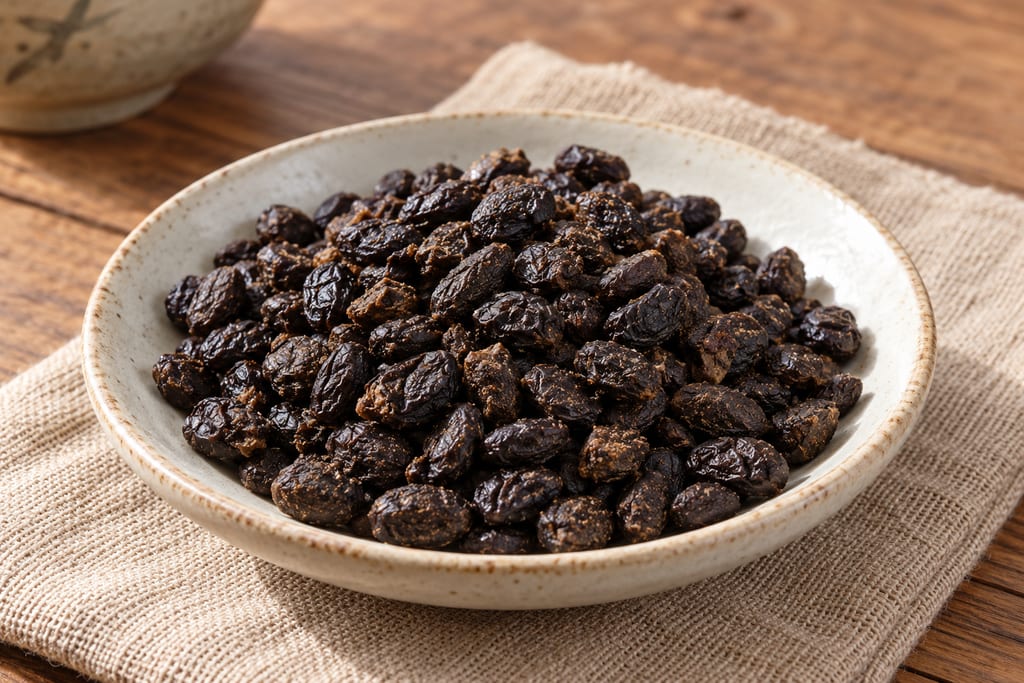
A Chinese fermented soybean condiment in which Bacillus-led bacteria, not moulds, drive the fermentation. Documented in Zunyi, Guizhou, and kept separate from mould-led douchi.
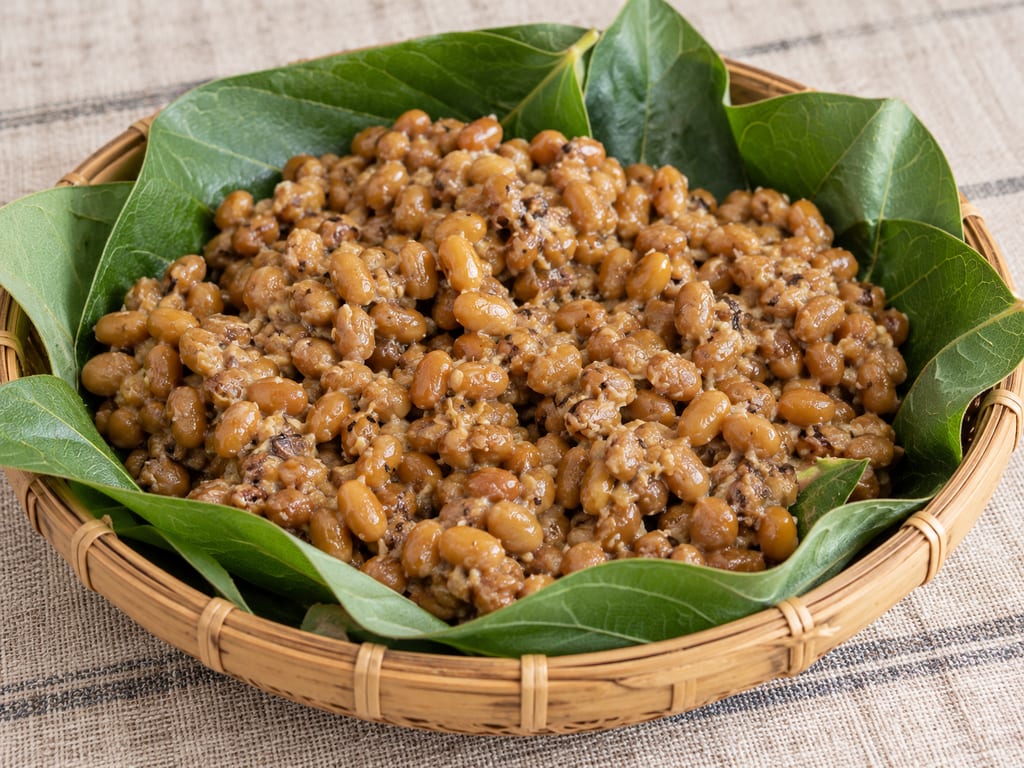
A Mizo alkaline soybean ferment made by holding cooked beans in leaf-lined containers, sometimes with wood ash, until they turn sticky, soft and pungent; eaten fresh or used as a seasoning.
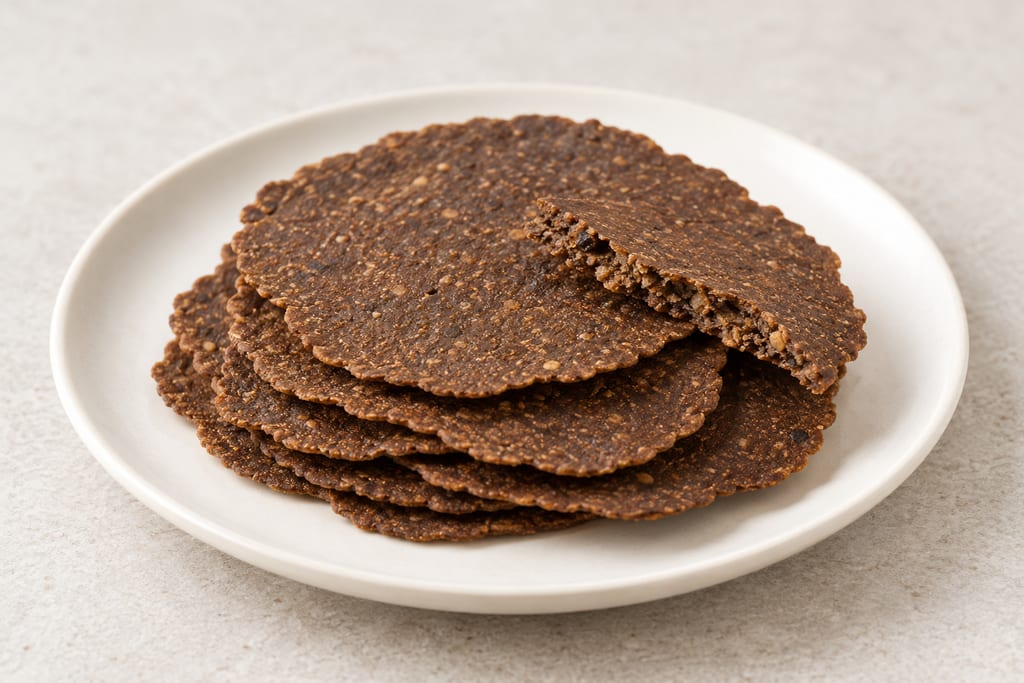
Black soybeans cooked, inoculated with a named Bacillus subtilis culture and fermented warm and humid into northern Thailand's thua nao, then optionally dried into thin discs.
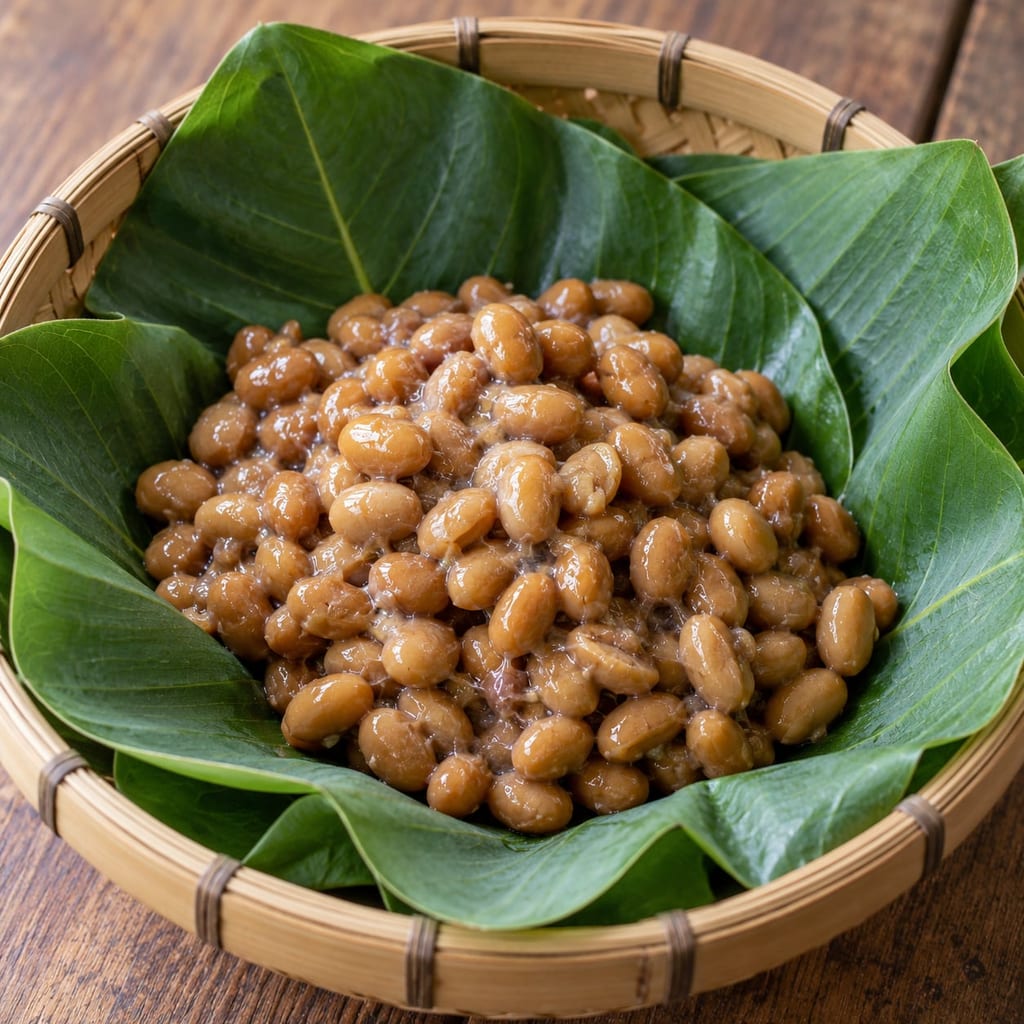
A sticky fermented soybean food of Manipur, made by packing cooked soybeans in leaf-lined bamboo baskets and keeping them warm, related to but distinct from Bekang and Akhone.
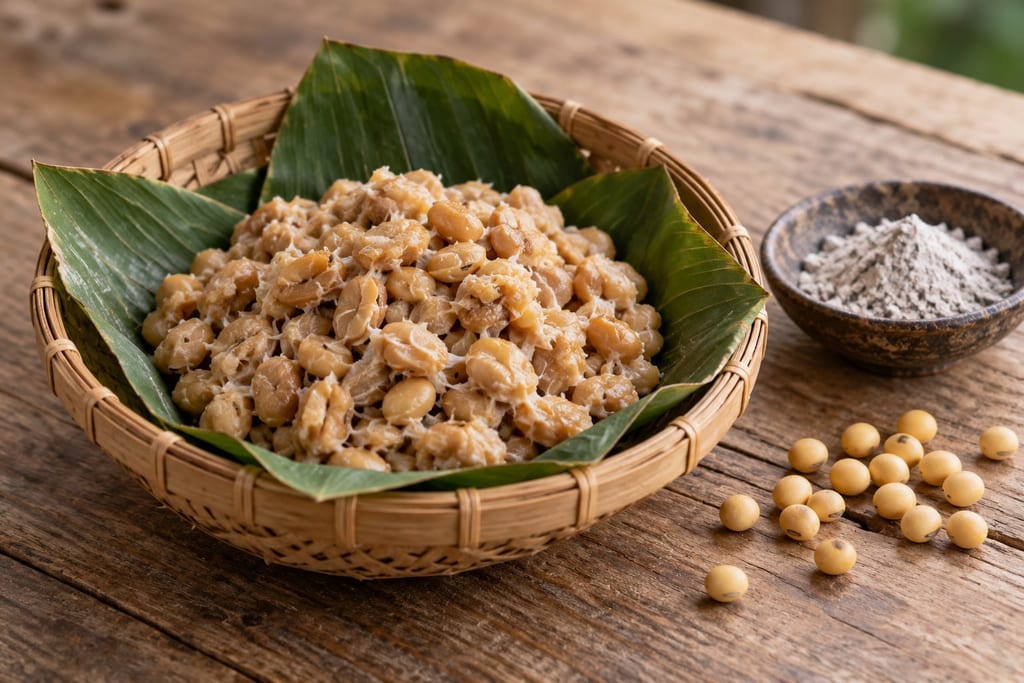
A sticky fermented soybean food of the eastern Himalaya, made here with a measured addition of firewood ash as an alkaline aid to the bacteria that drive it.
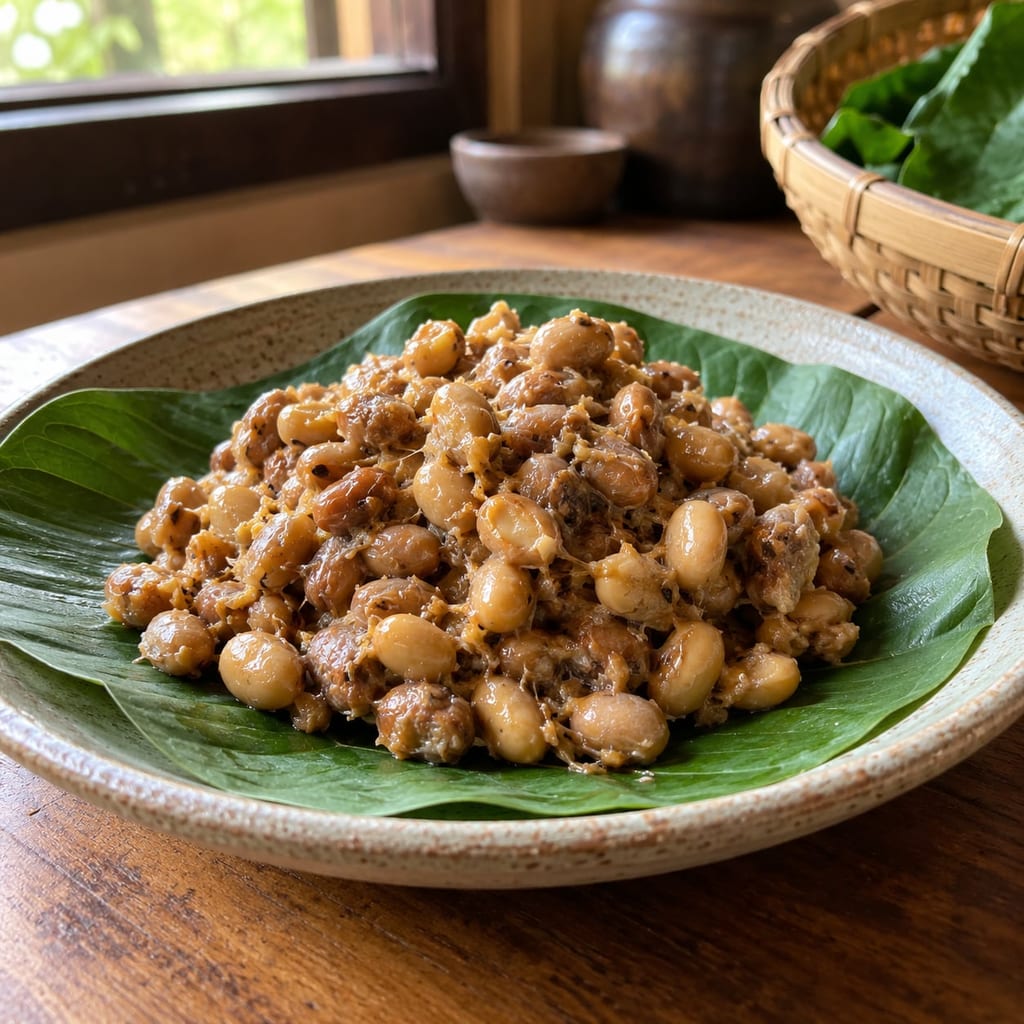
A home kinema made from overnight-soaked white soybeans, cooked, drained hot, wrapped in cloth and insulated to ferment for about a week.
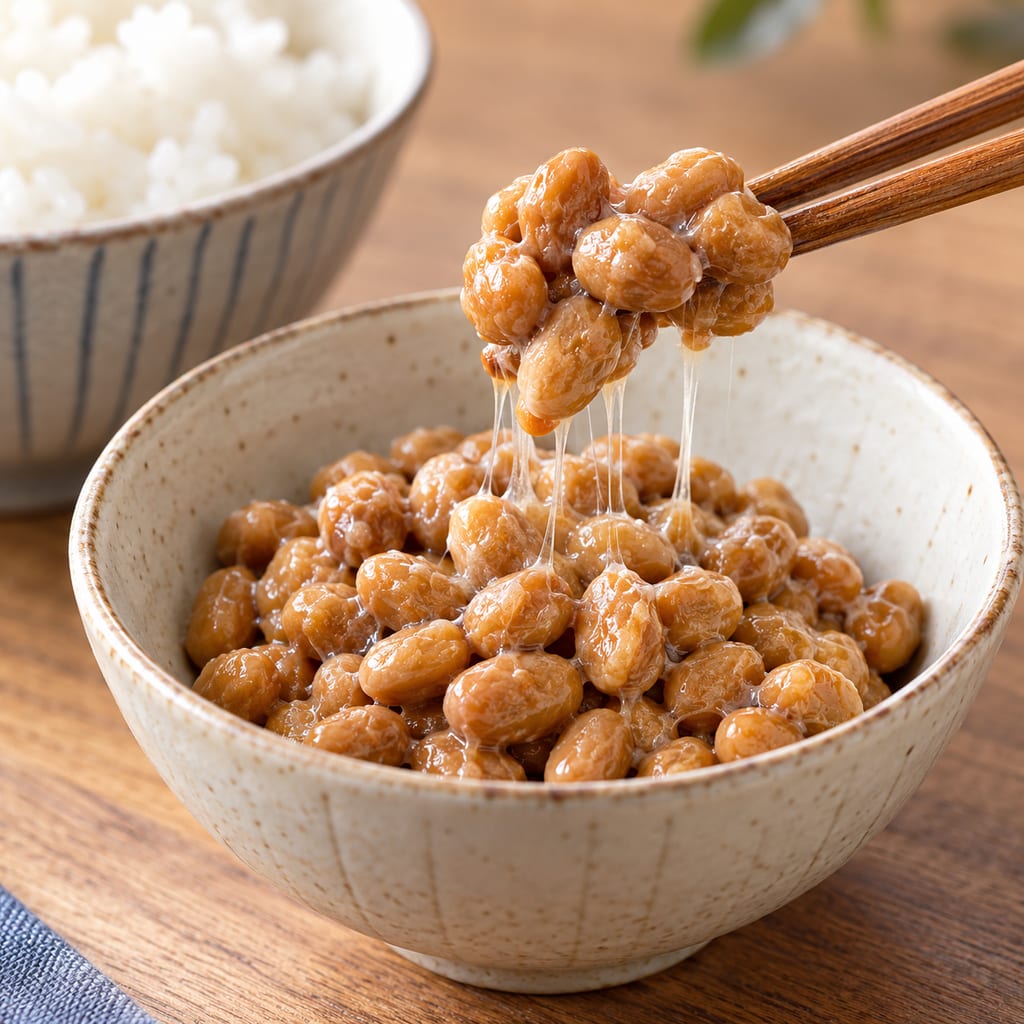
Natto is a Japanese fermented soybean food with a sticky coat and long strings, made by steaming soybeans and inoculating them with a natto Bacillus starter, then keeping them warm.
No community contributions have been published for this entry yet.
Sign in to contribute. Published comments and photos are free to read.
Journal of Industrial Microbiology and BiotechnologyInspiration · Process · Geography
Biochemical changes during the fermentation of Prosopis africana seeds for ogiri-okpei productionAbout 800 g seed; 8 h boil; dehulling to about 350 g cotyledons; 15 min heating; 96 h at laboratory room temperature with daily sunlight exposure; grinding and sun-drying.
Cited in: What is ogiri-okpei?; The tree and its seeds; Prosopis africana seeds — approximately 800 g; Starter culture — none added; The fermentation microbiology; Bacillus activity; Ammonia and alkalinity; Biochemical changes over time; Mixed microbial populations; Why the condiment tastes so strong; Nsala soup; Bitterleaf soup; Oha and other soups; Incomplete dehulling; Uneven fermentation; Excessive moisture; Contamination; Unpleasant or unusual aromas; Why ogiri-okpei matters
UK Health Security AgencySafety
Bacillus species (food poisoning)Bacillus spores can survive cooking and subsequently grow in favorable conditions.
Cited in: Recipe at a glance; Ogiri is not one ingredient; Water — quantity not stated; Plantain leaves — quantity not stated; Equipment; Documented traditional-process preparation; Stage 1 — Clean; Stage 2 — Boil; Stage 3 — Dehull; Stage 4 — Wash; Stage 5 — Remove excess water; Stage 6 — Prepare the leaves; Stage 7 — Load and cover; Stage 8 — Ferment; Stage 9 — Grind; Stage 10 — Sun-dry; How ogiri-okpei is eaten; Regional and linguistic variations; Safety
BC Centre for Disease ControlSafety
Fermented Foods Safety Guidance: Section 1, Introduction to Fermented FoodsThe guidance distinguishes alkaline fermentation and discusses process controls; it does not validate this recipe.
Cited in: Recipe at a glance; Ogiri is not one ingredient; Water — quantity not stated; Plantain leaves — quantity not stated; Equipment; Documented traditional-process preparation; Stage 1 — Clean; Stage 2 — Boil; Stage 3 — Dehull; Stage 4 — Wash; Stage 5 — Remove excess water; Stage 6 — Prepare the leaves; Stage 7 — Load and cover; Stage 8 — Ferment; Stage 9 — Grind; Stage 10 — Sun-dry; How ogiri-okpei is eaten; Regional and linguistic variations; Safety
AchiReference
Achi — Microorganisms Associated with Natural Fermentation of Prosopis africana Seeds for Okpiye, 1992Cited by the written account of this record.
Cited in: Recipe at a glance; Cultural history; Ogiri is not one ingredient; Water — quantity not stated; Plantain leaves — quantity not stated; Equipment; Documented traditional-process preparation; Stage 1 — Clean; Stage 2 — Boil; Stage 3 — Dehull; Stage 4 — Wash; Stage 5 — Remove excess water; Stage 6 — Prepare the leaves; Stage 7 — Load and cover; Stage 8 — Ferment; Stage 9 — Grind; Stage 10 — Sun-dry; The fermentation microbiology; Why the condiment tastes so strong; How ogiri-okpei is eaten; Regional and linguistic variations; Safety; Why ogiri-okpei matters
doi.orgReference
Production and Nutritional Characteristics of Nigerian Fermented Legume Condiments, 2025Cited by the written account of this record.
Cited in: Recipe at a glance; Cultural history; Ogiri is not one ingredient; Water — quantity not stated; Plantain leaves — quantity not stated; Equipment; Documented traditional-process preparation; Stage 1 — Clean; Stage 2 — Boil; Stage 3 — Dehull; Stage 4 — Wash; Stage 5 — Remove excess water; Stage 6 — Prepare the leaves; Stage 7 — Load and cover; Stage 8 — Ferment; Stage 9 — Grind; Stage 10 — Sun-dry; The fermentation microbiology; Why the condiment tastes so strong; How ogiri-okpei is eaten; Regional and linguistic variations; Safety; Why ogiri-okpei matters
PubMedReference
PubMed — Biochemical Changes During Ogiri-Okpei ProductionCited by the written account of this record.
Cited in: Recipe at a glance; Cultural history; Ogiri is not one ingredient; Water — quantity not stated; Plantain leaves — quantity not stated; Equipment; Documented traditional-process preparation; Stage 1 — Clean; Stage 2 — Boil; Stage 3 — Dehull; Stage 4 — Wash; Stage 5 — Remove excess water; Stage 6 — Prepare the leaves; Stage 7 — Load and cover; Stage 8 — Ferment; Stage 9 — Grind; Stage 10 — Sun-dry; The fermentation microbiology; Why the condiment tastes so strong; How ogiri-okpei is eaten; Regional and linguistic variations; Safety; Why ogiri-okpei matters