
Fermented meat around the world
Dry salami, sour pork with rice, matured sheep and aged blubber follow different paths from animal to food. Their stories connect microbes with climate, slaughter, migration and the meals people share.
 FermenteaWhere food goes to change
Modern method
Toroī · toroi
Dixon's 2007 thesis records ten toroi study batches, five with puha and five with watercress, each from 2 kg of shell-on green-lipped mussels and about 600 g of greens. Its method is a laboratory one.
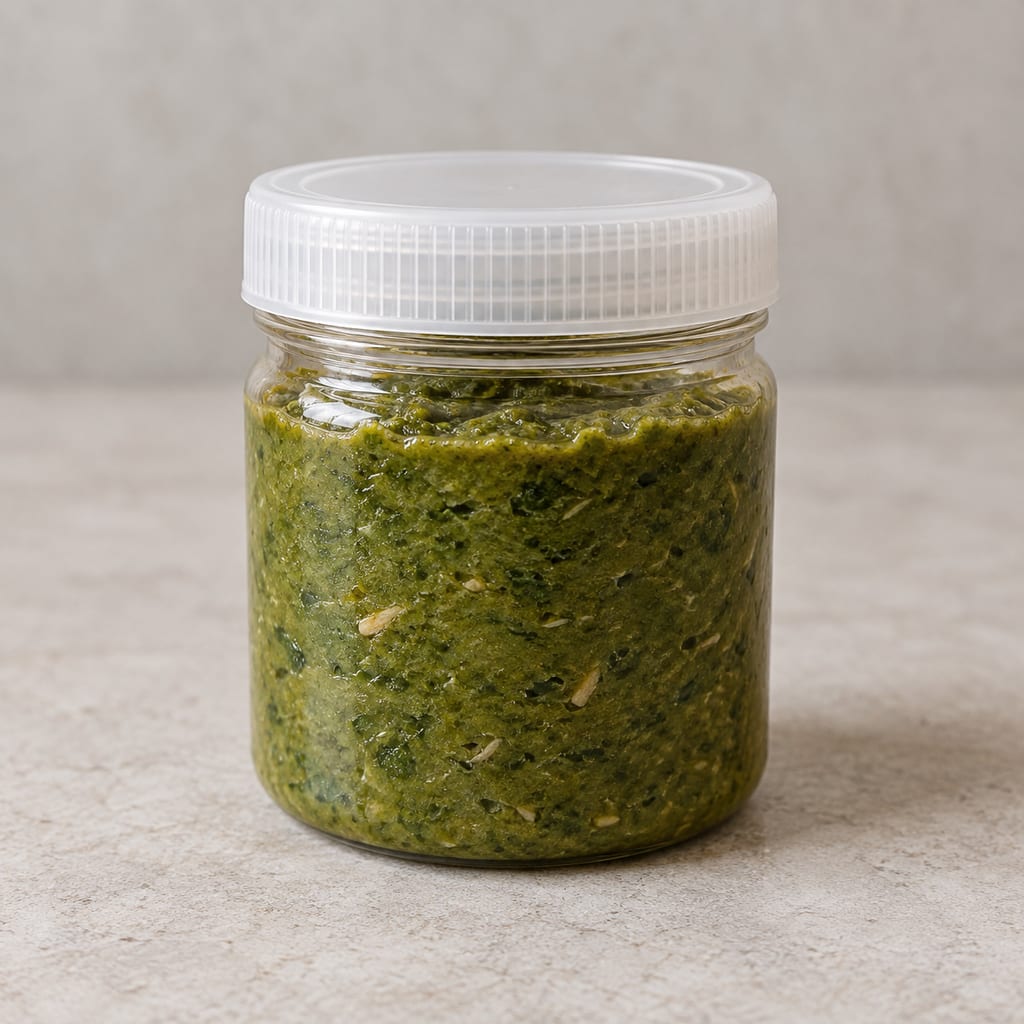
Toroī is a traditional Māori food combining shellfish, particularly mussels, with edible greens such as pūhā. Some documented versions use watercress instead.
The spelling toroī, with a macron over the final vowel, is recognised in Māori language references. Scientific publications also use toroi or tiroi.
In te reo Māori, the verb toroī can mean to ferment or brew. The noun also identifies a food made with mussels and pūhā.
The mussel most relevant to modern research is the New Zealand green-lipped mussel, Perna canaliculus.
Pūhā refers to edible sow-thistle species, including Sonchus oleraceus and Sonchus asper in relevant botanical accounts.
Watercress is commonly identified as Nasturtium officinale.
The food may be served as a relish or soup. Some historical methods involve storage and fermentation, but not every documented toroī preparation follows the same microbiological process.
That distinction is especially important because toroī has been the subject of serious food-safety research.
The recipe in this record reproduces a specific 2007 research preparation. It is not a validated household fermentation method.
Māori food traditions include a wide range of marine, freshwater, forest and cultivated resources.
Shellfish are particularly important in coastal and estuarine food systems.
Mussels, pāua, pipi, cockles and other marine foods have long been gathered and eaten.
Edible wild greens provide another important category of food.
Pūhā is frequently associated with Māori cooking and with dishes combining greens and meat or other proteins.
Toroī brings these two resources together.
Te Ara, the Encyclopaedia of New Zealand, describes toroī as fresh mussels combined with pūhā and mussel stock to produce a distinctive relish or soup.
This culinary description is broader than a single laboratory fermentation recipe.
It illustrates that toroī has a place in the food culture independent of the modern scientific effort to understand its microbiology.
The precise invention date of toroī is unknown.
The Māori dictionary records the word toroī as a verb meaning to ferment or brew and as a noun referring to fermented food.
One cited written example of the verb dates to 1864.
A separate biographical text from 1998 includes toroī among recognised Māori foods.
These references demonstrate historical terminology and continuing cultural recognition.
They do not establish that the exact mussel-and-watercress formula used in a 2007 university thesis existed in the same form in 1864.
The distinction between a word's history and a particular recipe's history is important.
Traditional Māori food knowledge also contains numerous local practices, and some techniques were transmitted orally.
The absence of an early published recipe does not prove that a food is recent. It means the surviving documentary evidence should not be extended beyond what it supports.
Research published in 2001 examined traditional Māori food-processing methods, including toroī or tiroī.
The investigators consulted knowledgeable Māori elders and converted their accounts into process diagrams.
They identified three distinct methods of tiroī preparation.
The methods differed in how the greens and mussels were cooked, mixed and stored.
Some involved substantial cooking.
Others involved storage arrangements that might permit fermentation.
In one preparation, cooked greens were combined with mussels and sealed beneath a layer of fat.
The purpose of that layer was not established with certainty.
It could have reduced contamination from outside, but it also could have altered oxygen availability.
The researchers concluded that the available descriptions were insufficient to establish the microbiology of every process.
This is an essential historical finding: toroī cannot accurately be described as always undergoing one identical lactic-acid fermentation.
Many preserved foods undergo changes during storage.
Some changes are caused by microorganisms.
Others are enzymatic or chemical.
A food can develop a stronger flavour over time without necessarily undergoing a protective lactic-acid fermentation.
The 2001 microbiological research found evidence that one investigated tiroī method may involve lactic-acid fermentation.
The other two appeared closer to cooking and bottling processes.
This matters because a truly acidifying fermentation can create conditions that inhibit certain pathogens.
A cooked food stored in a sealed jar without sufficient acidification has a different safety profile.
The word toroī identifies a traditional food and practice, but its use alone does not prove the final product has achieved a safe pH.
Lorraine Louise Dixon's University of Waikato research prepared ten experimental batches.
Five used pūhā.
Five used watercress.
Each batch used one green rather than combining the two.
The combined batch weighed approximately 1.5 kg after processing.
The study used purchased mussels rather than relying on uncontrolled wild harvesting.
This is important because the researchers were investigating microbial safety and needed a defined starting material.
The exact edible mussel yield from two kilograms of shell-on mussels was not supplied separately.
The mussel shells therefore should not be counted as part of the edible finished batch.
The green-lipped mussel is a bivalve mollusc endemic to New Zealand waters.
It is an important seafood species and supports a substantial aquaculture industry.
Like other bivalves, mussels filter water while feeding.
This feeding behaviour allows them to accumulate microorganisms and other substances present in their environment.
Their safety therefore depends strongly on the quality of the waters from which they are harvested.
The fact that a mussel is alive when collected does not prove it is free of hazards.
Shellfish can accumulate pathogens or marine biotoxins.
Some hazards are not reliably eliminated by ordinary cooking.
For toroī, raw-material sourcing is therefore one of the most important safety considerations.
Pūhā is a wild edible green associated with Māori foodways.
Sow-thistle plants can have a bitter flavour.
Cooking changes their texture and can reduce some of the original bitterness.
Watercress is an aquatic plant with a peppery character.
Although both can be used in toroī, they are botanically different.
Pūhā belongs to the sunflower family, Asteraceae.
Watercress belongs to the cabbage family, Brassicaceae.
Their chemical compositions and environmental contamination risks therefore differ.
Watercress gathered from streams may be exposed to faecal contamination and other waterborne hazards.
The 2007 study used retail-sourced ingredients, not arbitrary wild plants.
The two variants should be recorded separately within the same recipe family.
The research method boils the selected green before combining it with mussels.
Cooking softens plant tissues and changes flavour.
It also reduces many vegetative microorganisms.
However, boiling does not necessarily eliminate all bacterial spores.
The botanical material may still introduce spores or other contamination during subsequent handling.
The research investigated Bacillus cereus, a spore-forming organism associated with various food materials.
The presence of a cooking stage is therefore relevant but does not establish sterilisation.
The vegetables also supply moisture and potentially fermentable compounds.
Their behaviour during storage can influence the final product.
The following stages reproduce the 2007 research process and must not be treated as a validated household preservation protocol.
1. Select one vegetable. Prepare either approximately 600 g pūhā or approximately 600 g watercress. The study used the two plants in separate experimental batches.
2. Clean the greens. Wash carefully, rub the stalks and remove dead leaves and large unsuitable stalks.
3. Cut the plant material. Prepare pieces approximately 5 cm long.
4. Boil the greens. Use 1 L tap water and boil for 30 minutes.
5. Drain. Retain the plant-cooking liquid for possible use. The amount subsequently required is not specified.
6. Clean the mussels. Scrub 2 kg shell-on green-lipped mussels under running water using a stiff brush.
7. Steam the mussels. The study uses a wire basket and steams until the shells open. It does not specify a measured internal cooking temperature or exact duration.
8. Remove the flesh. Use a sterile knife as described in the research protocol.
9. Chop the mussels. Cut the flesh into pieces approximately 1 cm long.
10. Reserve the liquid. Retain approximately 400 mL of the mussel-steaming liquid.
11. Combine and blend. Mix the cooked greens with mussel flesh and process to a purée.
12. Pack the experimental jars. The study used 70 mL and 120 mL screw-cap plastic jars with little headspace.
13. Store under research conditions. The prepared samples were held at 4°C and microbiologically assessed over time.
The exact fermentation endpoint is not established by these steps.
The storage periods in the thesis were research observation intervals rather than a universally safe household schedule.
The study used small plastic jars with screw caps.
This arrangement reduced exposure to external contamination but also affected oxygen availability.
A low-oxygen environment can favour certain microorganisms while inhibiting others.
For seafood products, that distinction has serious food-safety implications.
Clostridium botulinum is a particular concern in inadequately controlled, low-acid, reduced-oxygen seafood preparations.
The jar size, fill level, oxygen availability and storage temperature therefore matter.
However, the research did not establish these conditions as a complete validated safety system for arbitrary ingredients and storage periods.
A different vessel or larger batch cannot be assumed to behave identically.
The 2007 thesis examined the product for several pathogens and investigated deliberate contamination challenges.
The experiments included Escherichia coli and Listeria monocytogenes.
The results demonstrated that refrigerated toroī could retain or support dangerous microorganisms under some conditions.
In the Listeria challenge, an inoculated strain increased approximately sevenfold over 19 days during refrigerated storage.
This is particularly important because refrigeration is often assumed to prevent bacterial growth completely.
Some pathogens, including Listeria monocytogenes, can grow at refrigeration temperatures.
The study also found that naturally present Bacillus cereus was detected early but was no longer recovered after two weeks in the investigated samples.
That observation does not establish that every future batch becomes free of B. cereus after the same period.
The study used particular raw materials, containers and analytical methods.
Research Commons
A related study examined the survival of deliberately introduced E. coli in toroī.
Researchers prepared ten batches using cooked pūhā or watercress and green-lipped mussels.
They introduced E. coli at two different concentrations.
The initial levels were approximately 0.72 cells per gram and 604 cells per gram, expressed through the study's analytical method.
The contaminated samples showed declining E. coli numbers during storage, but the decline was slow.
The results demonstrated that refrigeration alone should not be relied upon to rapidly eliminate faecal contamination.
This is particularly relevant to shellfish and watercress harvested from contaminated environments.
The thesis also examined whether bacteriocin-producing microorganisms or purified bacteriocins could inhibit Listeria monocytogenes.
A strain of Lactobacillus sakei was investigated because it produces antimicrobial substances.
The researchers also studied nisin.
The experiments showed that particular interventions could reduce Listeria under specific conditions, but the effectiveness depended on the initial contamination and dose.
One study found that a L. sakei treatment could control a lower experimental inoculum but did not provide the same protection at a substantially higher contamination level.
These results are valuable scientific evidence.
They do not create a simple household recipe involving an arbitrary spoonful of starter culture.
The exact organism, amount and contamination conditions were part of a controlled research design.
The 2007 thesis abstract suggested that carefully prepared toroī could be safe after at least two weeks of refrigerated fermentation, provided ingredients were suitable and handling was carefully controlled.
However, the same research programme demonstrated growth of inoculated Listeria and slow disappearance of E. coli.
Earlier work also identified serious uncertainty over the protective mechanisms in traditional methods.
These findings should not be flattened into a blanket claim that two weeks at 4°C makes toroī safe.
The evidence instead shows that raw-material quality and contamination levels are critical, and that refrigeration alone is not a reliable pathogen-elimination step.
A public recipe page should describe the laboratory process without presenting it as an approved preservation method.
Toroī may be served as a relish or soup.
The combination of mussels and greens creates a strongly marine, savoury preparation.
Mussel stock contributes flavour.
Pūhā or watercress adds a vegetal component.
The texture depends on whether the ingredients remain chopped or are blended.
The 2007 laboratory method produces a purée-like mixture.
Traditional household preparations may have a coarser texture.
The food can be understood within the broader Māori tradition of combining gathered marine resources and edible plants.
However, the source does not specify one universal serving temperature, portion size or compulsory accompaniment.
Those details should remain unknown rather than being invented.
Toroī presents elevated food-safety concerns because it combines shellfish, moist vegetables and potentially prolonged storage.
Some versions rely on processes whose microbiological nature is not fully established.
The study's 4°C storage condition is a research parameter, not a comprehensive safety standard.
Shellfish sourcing must comply with relevant harvest-area controls.
Watercress should not be collected casually from potentially contaminated waterways.
Visible freshness, smell and the absence of mould cannot demonstrate that a batch is safe.
The correct editorial classification is traditional food and documented experimental process — not validated for unsupervised home preservation.
Te Ara describes toroī in Māori foodways as fresh mussels with pūhā and mussel stock served as a relish or soup. Te Aka gives a noun sense for fermented food, pickled pūhā and mussels, with an example cited to 1998. Its separate 1864 example is a verb sense for fermenting, not an attestation of this dish. Neither source establishes an origin date or exclusive region.
Yield 1.5 kg · Scaling: source batch only
Dixon reports that inoculated Listeria monocytogenes increased about seven-fold over 19 days under refrigerated study conditions. This experimental challenge result does not describe every natural batch.
Hazard sourceDixon's method is a laboratory study with purchased mussels and fixed batches. These stages do not establish a generally usable household process.
The thesis reports growth of inoculated Listeria monocytogenes in its refrigerated challenge experiment. This is a study result, not a finding about every naturally prepared batch or a safe storage window.
Dixon's 4 °C study storage and at-least-two-week chilled recommendation apply to that study method, not a current qualified approval or universal safe-storage limit. No current authoritative shellfish guidance body was inspected for this record.
Te Ara, Te Aka and the Fisheries Infosite glossary connect toroī/toroi with Māori foodways and fermented or pickled pūhā and mussels. These sources do not establish an exclusive origin or complete regional distribution. Dixon's laboratory batches are not treated as evidence of a traditional locality.
Dry salami, sour pork with rice, matured sheep and aged blubber follow different paths from animal to food. Their stories connect microbes with climate, slaughter, migration and the meals people share.
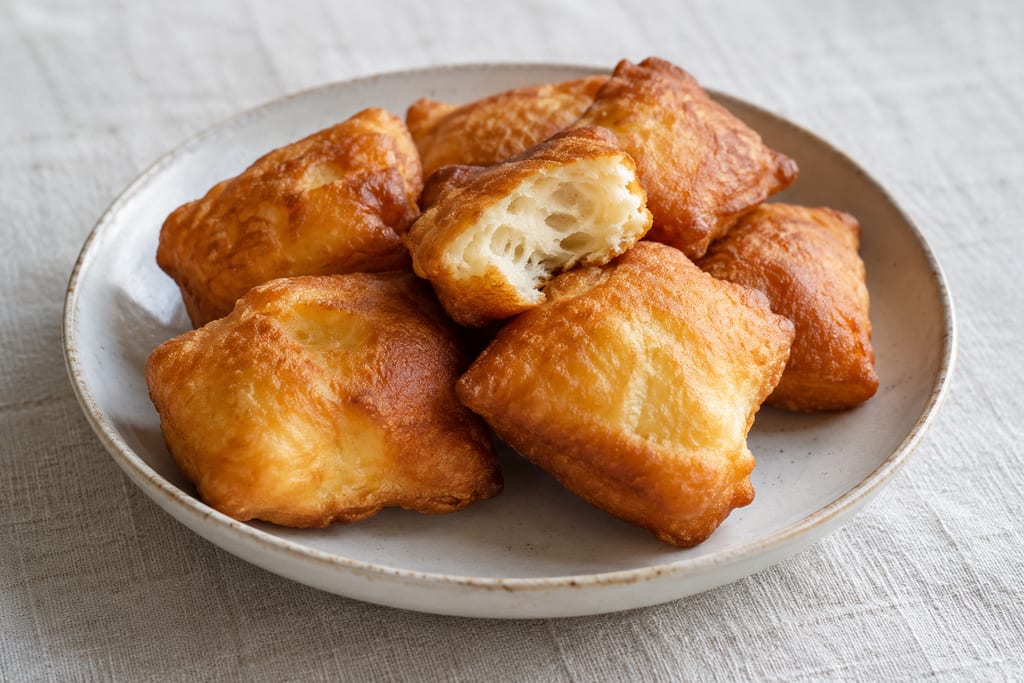
A yeast-leavened Māori fried bread recipe shared by Aunty Gina Harding, with a 12–14 piece batch, two rises and a 165°C fry.
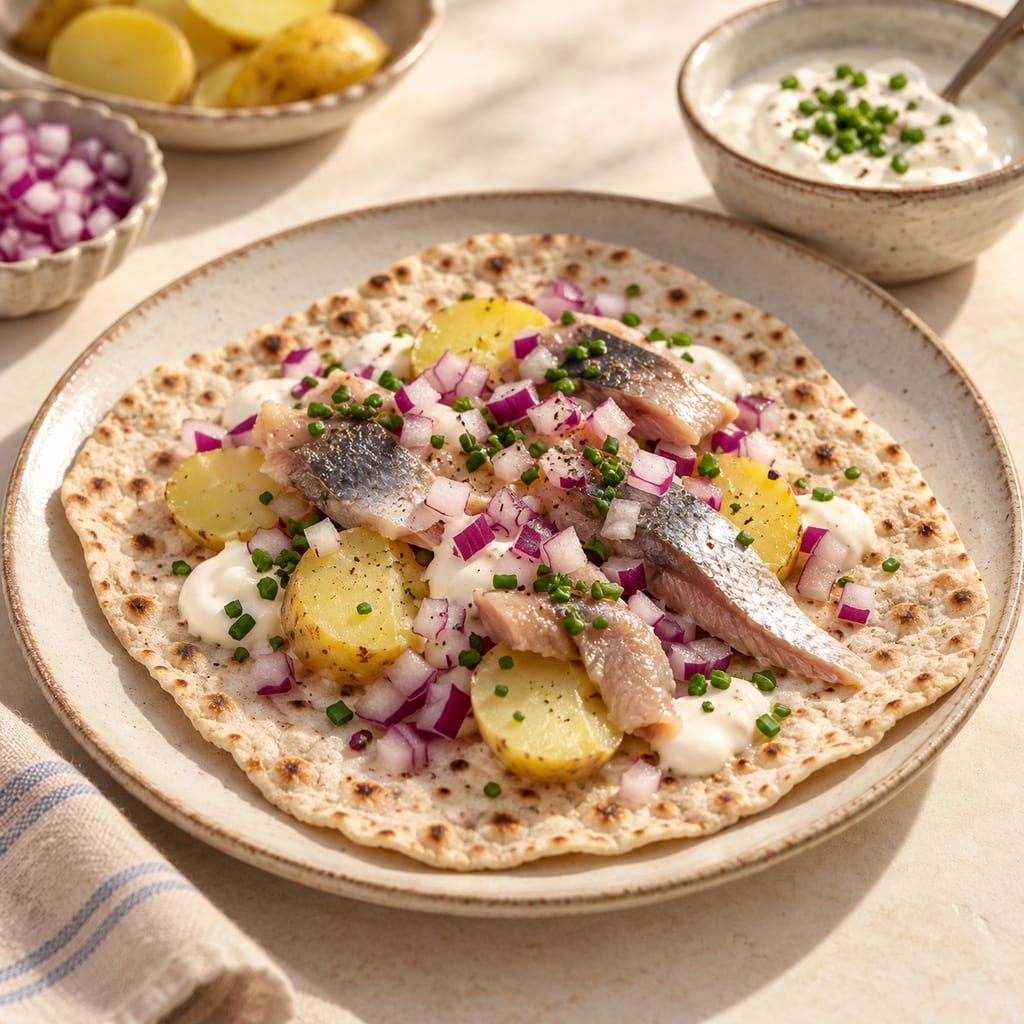
A Swedish late-summer meal of commercially prepared surströmming, tunnbröd, potatoes, onion and cultured cream. This is a serving preparation; the specialist fish fermentation is not made at home here.
A concrete fermentation tank installed below ground at a Senegalese fish-processing site was documented as an adaptation that emulated the older practice of burying fish during fermentation.

A documentary account of Icelandic hákarl, fermented and dried Greenland shark. It describes cultural context and one production study, not a home preparation method.
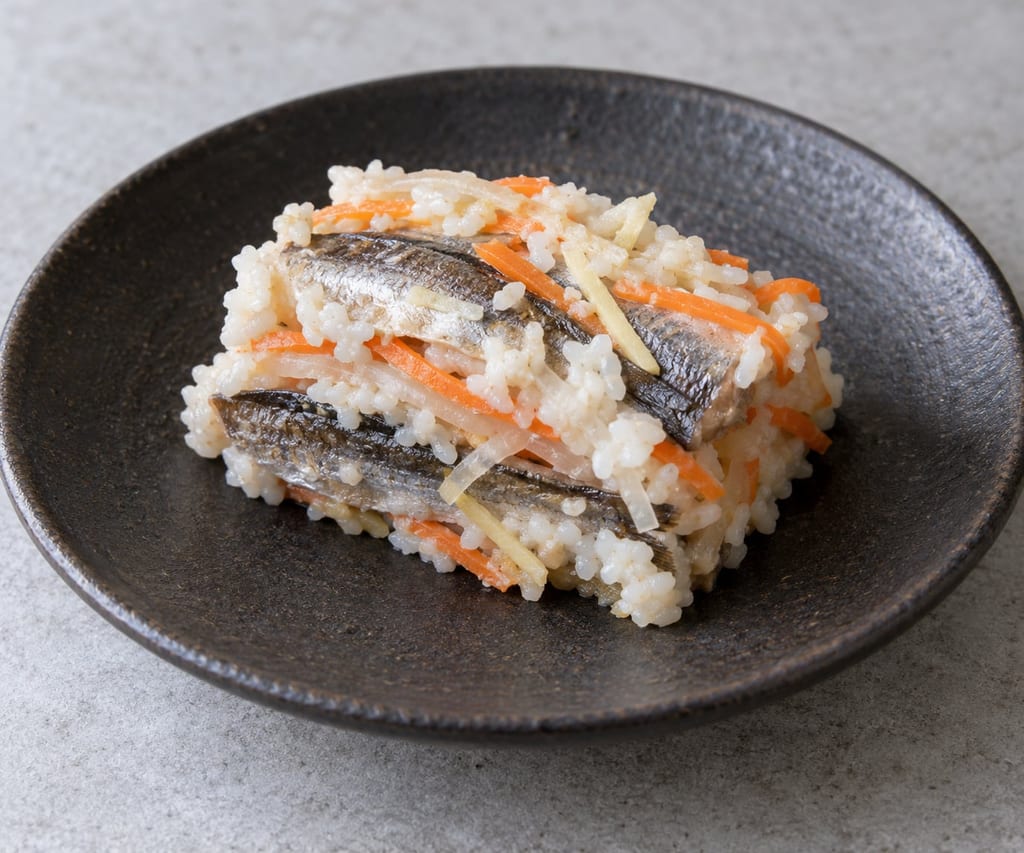
Hokkaido izushi layers fish, vegetables, rice and kōji for cold-season lactic fermentation. This MAFF recipe uses small hatahata with a vinegar pretreatment; it is one regional household formula, not a universal izushi method.
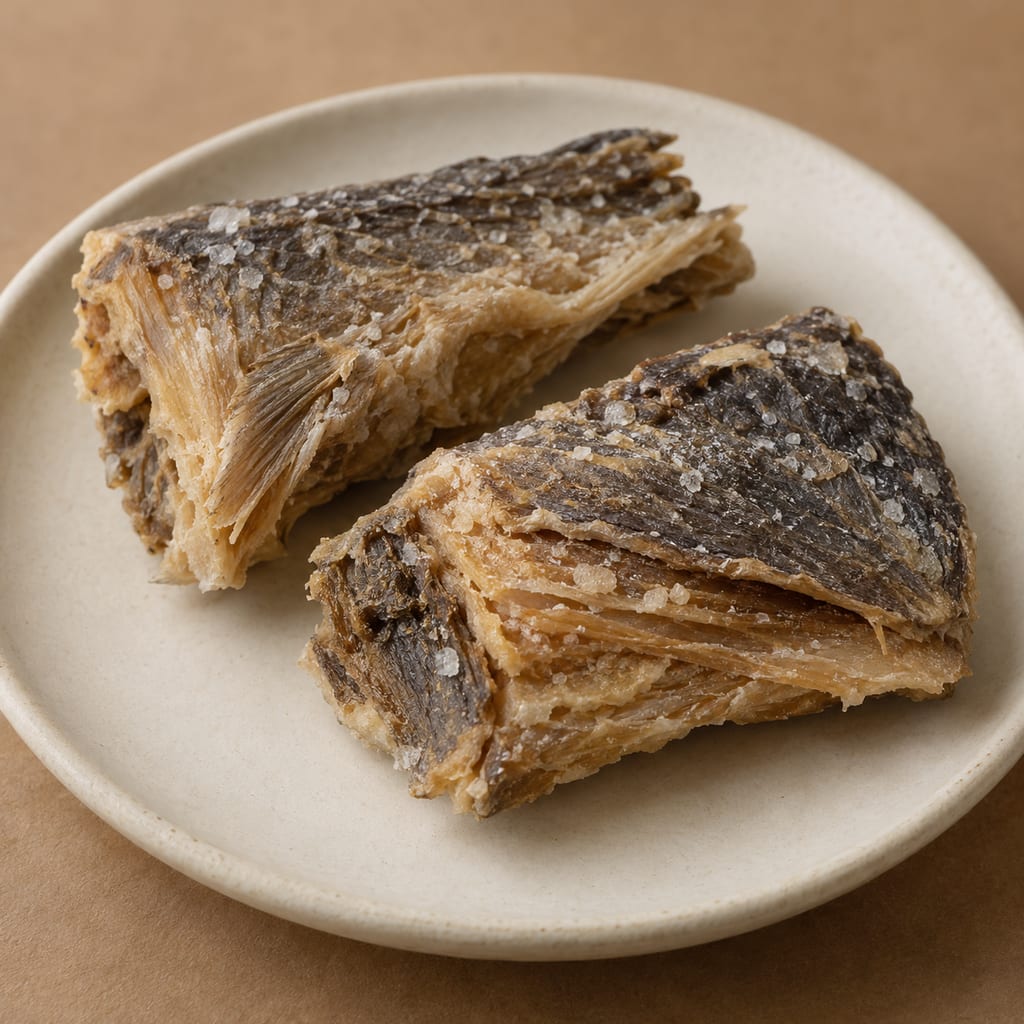
Lanhouin is a strongly flavoured fermented fish condiment documented in coastal West Africa, including southern Benin. This page records one published research reproduction as evidence, not as a validated home-preservation recipe.
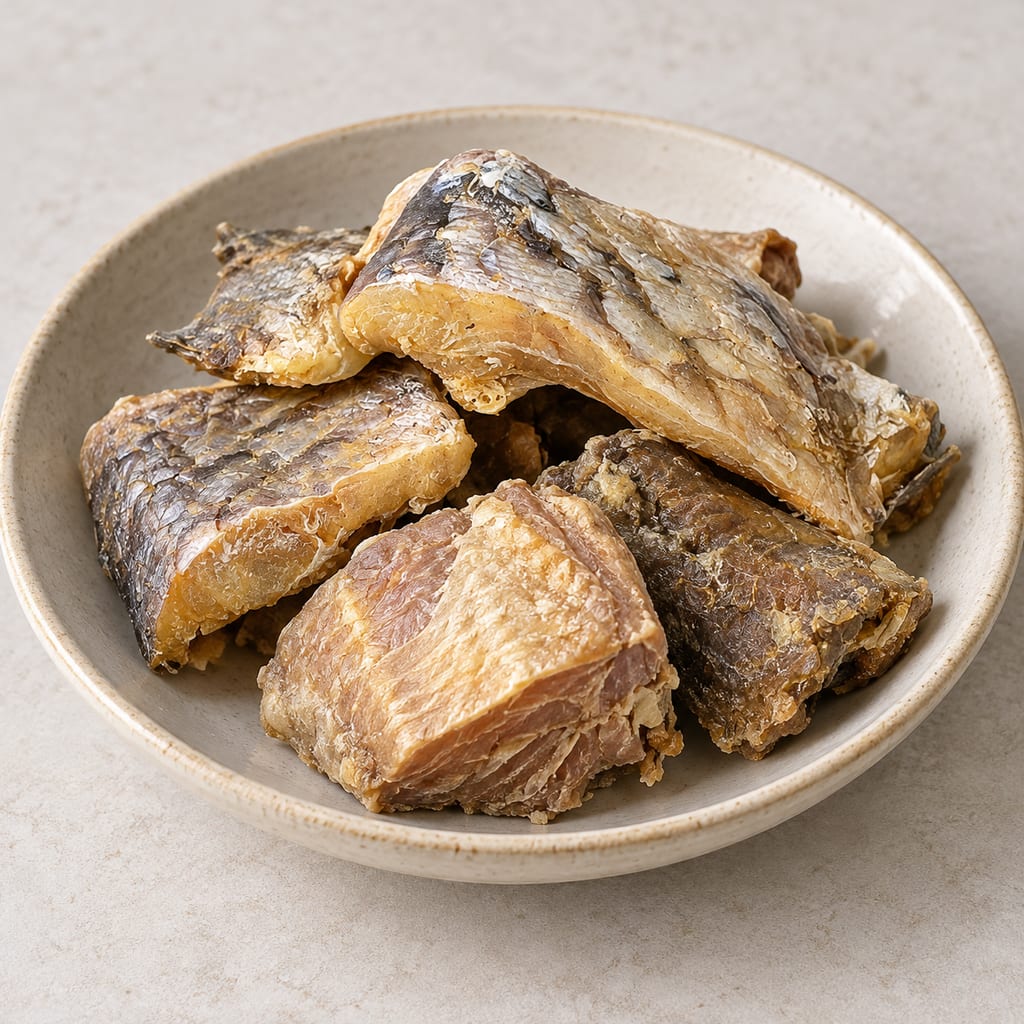
Momone is a Ghanaian salted and fermented fish condiment made from varied marine fish. Historical surveys describe both semi-dried and drier products, with salting and drying methods differing across coastal communities.
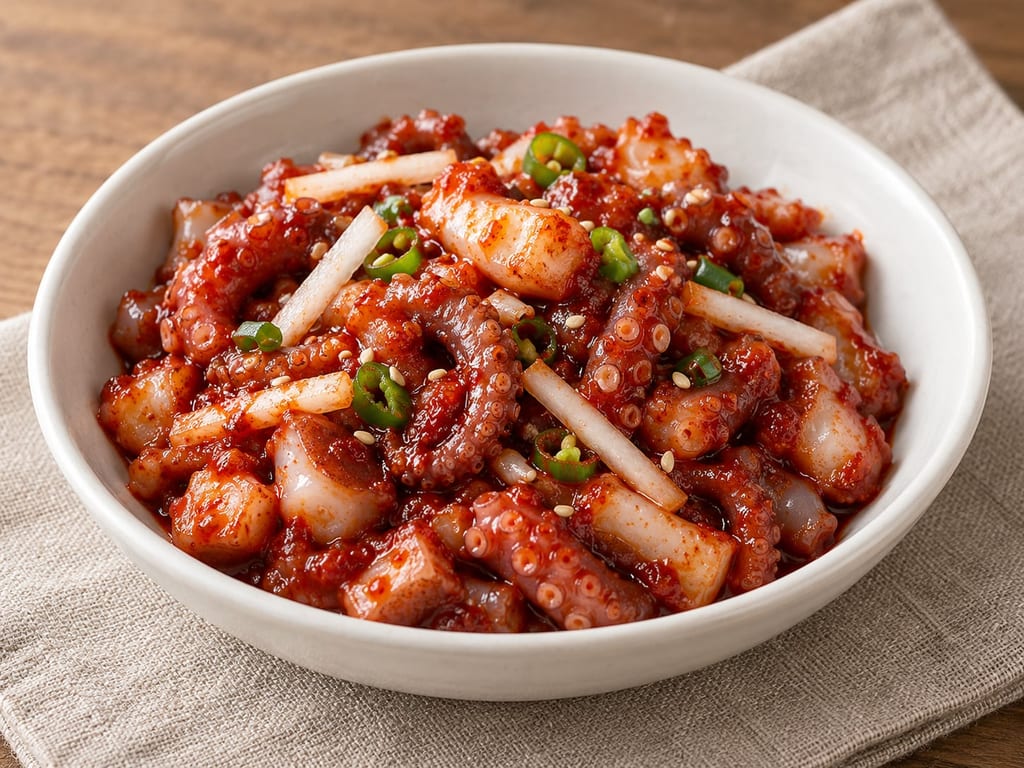
Nakji jeotgal is Korean salted octopus, served among jeotgal varieties with rice. This entry documents the dish and one creator’s quick-home version; it does not provide a household preparation method.
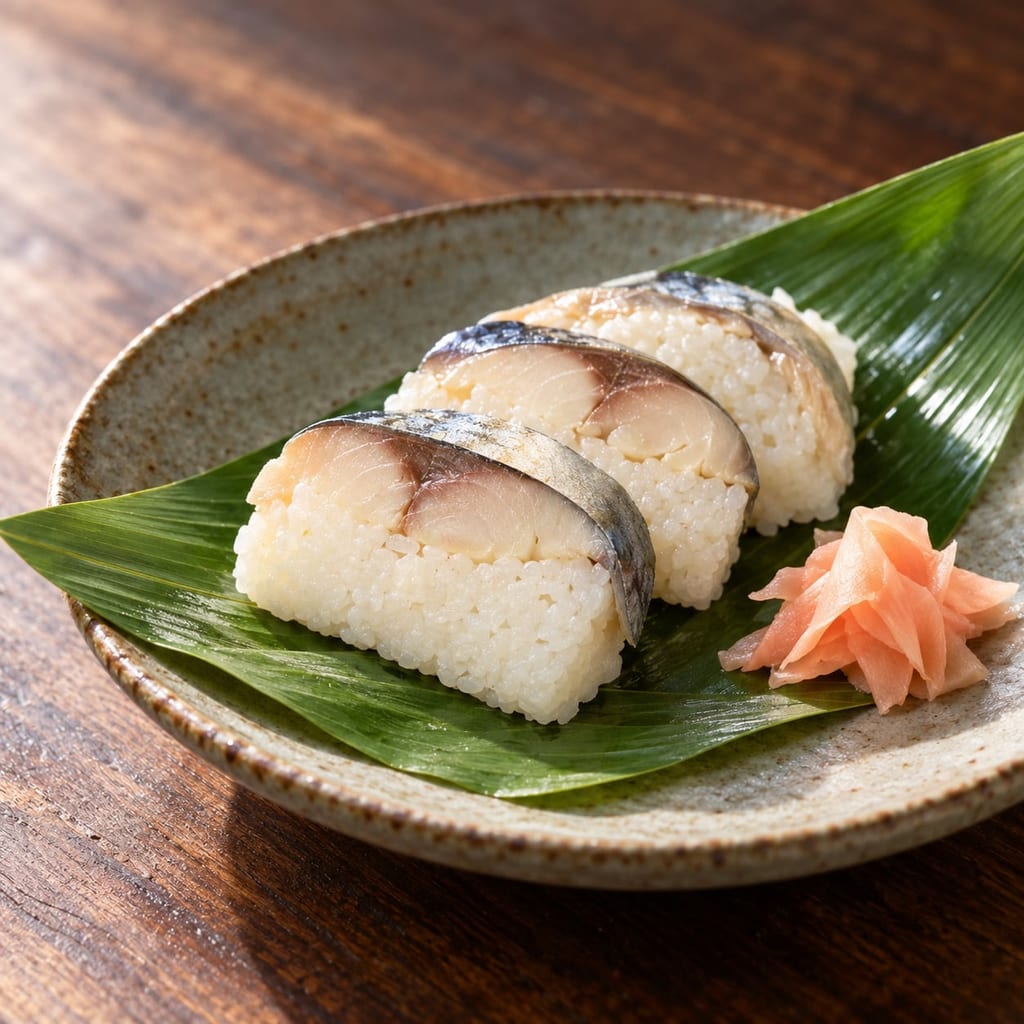
A documentary account of Japanese narezushi, a family of salted-fish and rice ferments. This entry preserves the East Kishu (Mie) source’s identity and regional context without providing a household preparation method.

Soft, spreadable Calabrian pork sausage made with a great deal of red chilli and fatty pork, stuffed into natural casings, sometimes smoked and matured while staying soft.

A way to add independent temperature logging to an existing food dehydrator without changing its built-in controls or protections. It is a monitoring method, not a rewiring plan.

Pleurotus cystidiosus is the abalone mushroom, a cultivated oyster-type fungus with dark brown caps that grows more slowly and is more demanding than other Pleurotus species.

A dark, balanced vinegar from Emilia-Romagna made by combining cooked or concentrated grape must with wine vinegar, then acetifying and refining it in wood under a protected specification.

A living dairy inoculum that starts controlled cream fermentation, developing acidity and aroma before sour cream or cultured butter is finished.

A small electric incubator holds jars at a selected temperature for yogurt and other documented warm food preparations. Controls, capacity and vessel arrangement vary by model.

Adygean salt is a seasoned table salt associated with Adygea and the wider North Caucasian culinary tradition. Salt is blended with garlic and a variable selection of herbs and spices; the exact mix depends on the named style and maker.

The African Caesar-group mushroom, Amanita masasiensis, is a wild ectomycorrhizal species of central and southern African woodlands, eaten locally. The genus contains deadly poisonous species, so identification needs care.
No community contributions have been published for this entry yet.
Sign in to contribute. Published comments and photos are free to read.
Te Ara – The Encyclopedia of New Zealand / Manatū TaongaInspiration · History · Location
Māori foods – kai MāoriComplete 187-line print page opened; lines 102–104 describe toroī with fresh mussels, pūhā and mussel stock, served as a relish or soup. This account is not Dixon's batch.
Lines 102–104 also provide Māori foodways context; they do not define a process endpoint or validate the laboratory method.
Te Aka Māori Dictionary / Te WhanakeInspiration · History · Location
toroī – Te Aka Māori DictionaryComplete entry opened; definition 3 gives the noun sense fermented food, pickled pūhā and mussels. Its 1998 citation is a usage example, not an origin date.
The separate 1864 example is a verb sense for fermenting and is not treated as an attestation of this dish.
Cited in: What is toroī?; Toroī in Māori food culture; Historical evidence and language; How toroī is eaten
New Zealand Ministry of Fisheries / Fisheries InfositeInspiration
GlossaryComplete 945-line glossary page opened; line 887 defines Toroi as fermented pūhā and mussels. The entry supports terminology only, not a method or safety claim.
University of WaikatoInspiration · Process · Safety
Microbiological Quality of Toroi: A Māori food delicacyThe accepted source register and independent audit report inspection of the full 180-page thesis, including the summary, methods §§2.1–2.3, printed pp. 43–48, discussion and conclusions, pp. 120–125. A fresh ordinary web-reader request during this assignment timed out.
Methods §§2.1–2.3 report ten experimental batches, five each with watercress and pūhā. Each used 2 kg purchased shell-on green-lipped mussels and about 600 g of one plant variant. The source details plant preparation, a 30-minute boil in 1 L tap water, mussel scrubbing and steaming, sterile-knife shucking, retaining about 400 mL steaming liquid, blending, jar packing and 4 °C study storage.
The thesis reports lactic-acid fermentation in studied batches and about seven-fold growth of inoculated Listeria monocytogenes over 19 refrigerated study days. These findings are specific to its methods and challenge experiment; they do not validate a household process or describe all natural batches.
New Zealand Ministry for Primary Industries / New Zealand Food SafetySafety
Food safety when fishing and gathering shellfishOrdinary page opening returned 403 and a direct request returned an anti-bot shell; no body text was inspected or used. Its search result is discovery-only and supports no hazard or handling statement here.
Dixon, 2007Science
Dixon, 2007 — Microbiological Quality of Toroi: A Māori Food Delicacy, University of WaikatoCited by the written account for this record.
Cited in: What is toroī?; Toroī in Māori food culture; Historical evidence and language; Traditional processing and variation; Why the fermentation claim needs care; Ingredients — the 2007 research batch; The role of green-lipped mussels; Pūhā and watercress; Why the greens are cooked; The documented study preparation; Why the experimental vessel matters; What the microbiological research found; The E. coli investigation; Bacteriocins and Listeria control; The apparent contradiction in safety conclusions; How toroī is eaten; Quality and safety
Te AraContext
Te Ara — Māori Foods: ToroīCited by the written account for this record.
Cited in: What is toroī?; Toroī in Māori food culture; Historical evidence and language; Traditional processing and variation; How toroī is eaten
Method · History · Safety · Science
Traditional Māori Food Preparation Methods and Food Safety, International Journal of Food Microbiology, 2001Cited by the written account for this record.
Cited in: Traditional processing and variation; Why the fermentation claim needs care; Quality and safety
Science
Preliminary Microbiological Investigation of Kina and Tiroi, 2001Cited by the written account for this record.
Cited in: Why the fermentation claim needs care; What the microbiological research found
Science
Survival of Escherichia coli in Toroī, 2007Cited by the written account for this record.
Cited in: The E. coli investigation; The apparent contradiction in safety conclusions
Safety · Science
Addition of Bacteriocins to Inhibit Listeria monocytogenes in Toroī, 2008Cited by the written account for this record.
Cited in: Bacteriocins and Listeria control; The apparent contradiction in safety conclusions