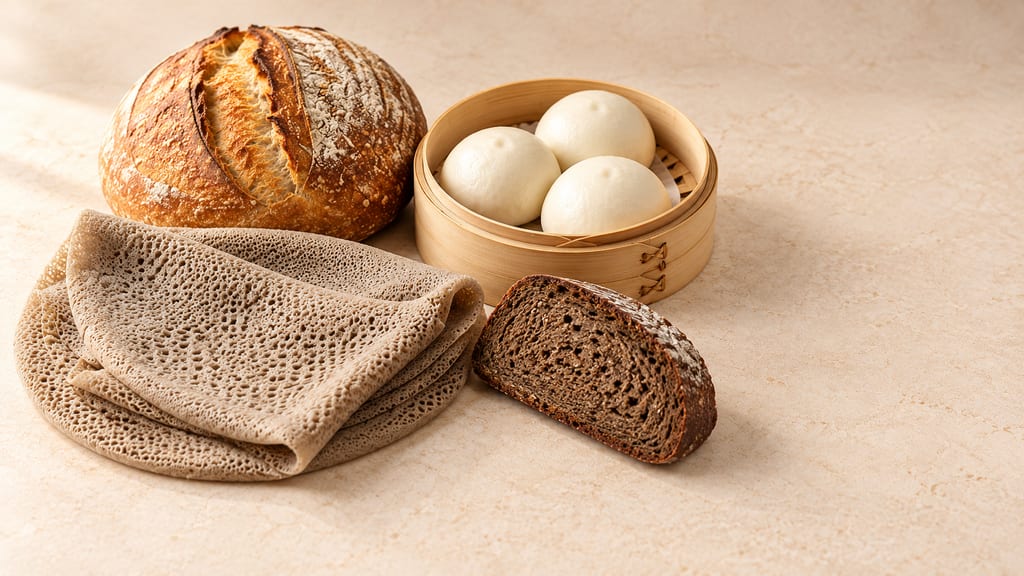
Bread around the world
From the baguette and the steamed bun to injera, titiyas, Finnish rye and cassava bread: how grain, microbes and heat answer the question of what bread is for.
 FermenteaWhere food goes to change
Substrates
The grain of Secale cereale is milled whole or refined for breads whose crumb, flavour and fermentation differ from wheat loaves.
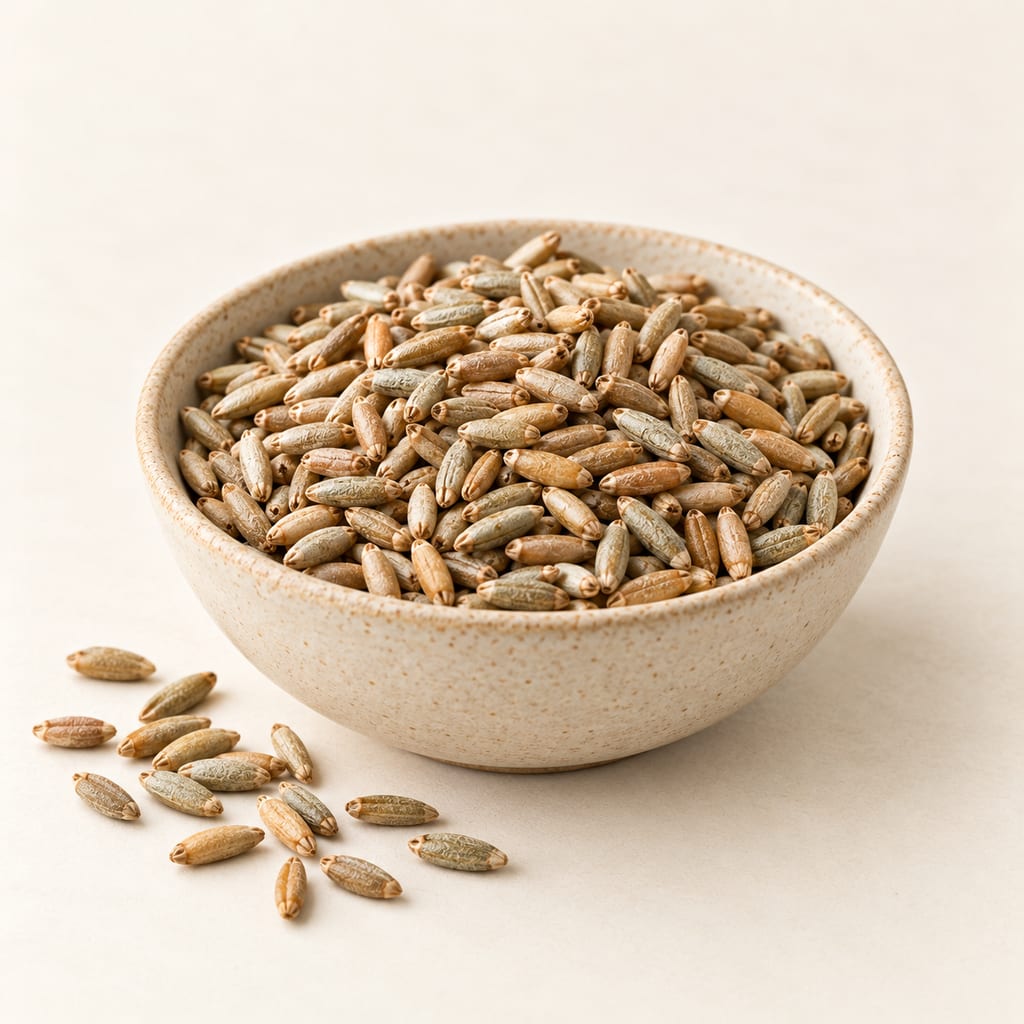
Rye is the cereal grass Secale cereale, a member of the grass family Poaceae. Its harvestable grain is a dry seed, and the plant is grown for grain, forage and cover cropping. Cereal rye and winter rye are common English names. The Finnish word ruis means rye; Finnish breads include ruisleipä, while reikäleipä names a flat loaf with a central hole. These bread names belong to regional food traditions, not to separate rye species.
Rye is not ryegrass. Ryegrass belongs to the genus Lolium and is grown mainly as turf, forage or pasture; the two grasses are not interchangeable ingredients. Rye also differs from wheat and barley, although the crops share long histories in fields and in human food. Triticale is another related grain, a hybrid of wheat and rye, with its own identity. A loaf that contains rye flour is not automatically a pure-rye loaf: recipes may use rye alone or combine it with wheat, and a named flour blend may contain several flours.
Rye's early history differs from that of wheat and barley. Researchers commonly describe it as a secondary domesticate: a plant that first grew as a weed among cultivated cereals and later became a crop in its own right. As wheat and barley agriculture spread, rye could travel in the same fields. Its ability to compete in cooler places, at higher elevations and on poorer soils helped make it useful where the main crops grew less reliably.
The story is not a settled single-origin account. Genetic and archaeological work points to wild and weedy rye relatives in western Asia, including the Anatolian and Caucasus region, but the precise place where domesticated rye evolved remains disputed. The archaeological record contains low numbers of rye grains in some early sites, and later dating has shown that certain finds once treated as prehistoric were intrusive material from much more recent layers. The presence of rye in a site is not, by itself, proof that people there were cultivating a domesticated crop.
A recent crop-history synthesis describes rye spreading from Anatolia into Europe as an arable weed during the Neolithic, more than six thousand years ago, while cautioning that early European finds are sparse and hard to interpret. More secure evidence of rye as a crop grows later across European contexts. This gradual shift from companion weed to cultivated cereal explains why the domestication story is debated and why a precise birthplace should not be assigned to the grain.
Rye's cold tolerance and ability to grow on less fertile soils helped it become important in northern, central and eastern Europe. It is cross-pollinated and occurs in spring and winter forms; winter rye is common in many modern production systems. The crop's robustness is relative, not a promise that it grows well in every soil or climate. As with other cereals, cultivar, local conditions and the purpose of planting shape how it is managed.
In parts of Europe, rye moved from a less prominent cereal to a major agricultural crop. Medieval evidence from central Europe shows its importance to household agriculture; historical material from Germany also preserves a record of older rye populations. Its place later changed as wheat production and consumption expanded. The long story of rye is therefore agricultural as well as culinary: bread tradition grew alongside the crop's adaptation to winter, poor soils and cooler growing regions.
Cereal rye is cultivated well beyond its early European bread belt. Modern agricultural sources document production and baking use in the United States, while crop research also describes rye production in North and South America and China. In the United States, winter rye is grown not only for grain but as a cover crop, forage, seed and a raw material for baked goods and spirits. Those uses do not make North American rye bread a single regional style; they show how a crop with several uses travels beyond the traditions most closely associated with rye loaves.
The rye kernel contains an outer bran layer, a germ and a starchy endosperm. Wholemeal flour retains the grain's components; more refined flours remove more of the outer layers. Rye may be sold as whole kernels, cracked grain, meal, flakes or flour. The names used for flour colour and extraction differ among mills and countries, so terms such as light, medium, dark and wholemeal are not a single universal grading scale.
Milling changes more than colour. The amount of bran and germ changes fibre content and water absorption, while the mill's process changes particle size and the amount of damaged starch. A recipe written for a fine, light rye flour may handle differently from one written for coarse meal or wholemeal. A product called pumpernickel flour can be a milling or market term; it does not establish one fixed extraction rate or guarantee that the flour has the composition of a particular finished bread.
Home bakers can buy rye flour ready milled or grind rye kernels when they have a mill suitable for the grain. The flour grade should match the method where a recipe specifies one. Replacing wheat flour with rye, or swapping one rye grade for another, changes water absorption and dough structure. A proportion from one formula is not a universal substitution ratio.
Rye flour supplies starch, protein, minerals and fibre. Its storage proteins include secalins, but they do not build the elastic, continuous gas-retaining network that wheat gluten forms in a wheat loaf. Rye dough can therefore feel sticky and paste-like even when it is behaving as the formula intends. In breads with a high rye share, starch and soluble fibre contribute more to the crumb's structure than a strong wheat-like gluten web.
Arabinoxylans, often called pentosans in older baking literature, are cell-wall fibres that bind water and thicken dough. Their amount and solubility vary with the kernel fraction and milling. They affect dough viscosity, water retention and crumb firmness. Wholemeal rye usually carries more of the outer grain than refined flour, so it also brings a different balance of fibre and water demand. That is one reason a dough's hydration cannot be transferred blindly between flour types.
Rye's starch and enzymes matter during baking. Amylases break starch into smaller sugars, including sugars that can feed yeast and lactic-acid bacteria. Rye flour can have substantial amylase activity; if starch is broken down too far while the loaf is heating, the crumb may stay gummy or weak instead of setting into slices. Flour quality, sprouting before harvest, milling and the full formula affect that balance, so a bread result cannot be predicted from the word rye alone.
Sourdough is especially useful in many rye-rich breads because fermentation acidifies the dough. Lactic-acid bacteria and yeasts use flour carbohydrates and produce acids, gases and flavour compounds. Lower pH can restrain excessive amylase activity and helps the starch-based rye crumb set during baking. Sourdough also changes the soluble fibre around the starch. These effects explain the connection between rye and sourdough without turning it into a rule that every rye loaf must be sour.
Rye can also be used in yeast-raised breads and in blends with wheat flour. A wheat component supplies more of the elastic structure familiar in wheat doughs; the rye contributes its own flavour, colour and water-binding fibre. The balance belongs to the named formula. A small rye addition in a mostly wheat loaf behaves differently from a loaf built mainly from wholemeal rye, and neither can stand in for every bread sold as rye.
Some rye traditions scald part of the flour before mixing it into dough. Heating flour with water changes starch and fibre behaviour, but the result depends on the specific recipe and process. Experimental work on scalded rye wholemeal flour studies its effects in semi-wheat-rye bread; it is evidence for those tested formulas, not a general instruction for all rye baking. Keep a scalded dough, a sourdough starter and a yeast-raised dough distinct when reading a recipe.
Finnish rye bread shows how one crop supports several local forms. In eastern Finland, limppu refers to a round loaf. In western Finland, reikäleipä is a flat disc with a hole; the loaves were hung on poles under the ceiling to dry and store them. The Finnish government feature describes local rye breads as lighter than German and Baltic varieties and notes that people eat them as sandwiches, with soup, or simply with butter. Those descriptions belong to a source's account of Finnish breads, not a rule for all rye loaves.
In Estonia, Eesti rukkileib names a rye bread whose protected geographical description covers the country. The EUIPO account describes flour from rye, water, salt and sourdough kept from a previous batch. The retained dough connects a new loaf to the bakery's earlier ferment, while the flour itself supplies the bulk of the cereal base. The description identifies one named Estonian tradition; it does not make every Estonian loaf identical.
Rye breads elsewhere in northern, central and eastern Europe range from compact whole-grain loaves to mixed rye-and-wheat breads, crisp breads and darker long-baked breads. The catalogue includes separately researched examples such as Borodinsky bread, Faroese rye bread, Latvian rye-bread kvass, Lithuanian dried-rye-bread gira, and several Nordic and German loaves. A bread name signals a preparation with its own history and method. Rye is the shared crop, not a recipe that can be made uniform across the map.
Rye has uses beyond human food. Grain may be used for animal feed or sent to malt houses and distilleries for beer and spirits. The green crop is grazed or cut for forage, and winter rye is widely planted as a cover crop. Its roots and fast ground cover can reduce erosion and suppress weeds, while returning plant material to soil. These are different agricultural uses of the same species; forage rye is harvested as a plant, whereas food rye is harvested for grain.
The cereal's role in brewing or distilling is also distinct from the breadmaking role of rye flour. A malted grain is germinated and kilned to develop enzymes for a beverage process; it is not simply another name for whole rye or bread flour. Likewise, rye bread used later in kvass is a made food being fermented in a new process. Keep rye grain, rye flour, malted rye and baked rye bread as separate materials when following a method.
Choose a product whose label identifies rye and the form needed: kernels, meal, flakes, wholemeal flour or a named grade. For a mixture, read the ingredient declaration rather than assuming the words rye blend mean pure rye. At home, start from a tested bread method that specifies its flour and whether it uses a maintained sourdough, baker's yeast or both. Finnish examples use rye flour with water and salt, and some preserve part of a previous dough as the next starter; that is one tradition rather than a universal starter-maintenance rule.
Keep the grain or flour according to its package directions, protected from moisture and pests. Flour quality changes with milling and storage, and wholemeal flour contains more of the grain's outer layers than refined flour. The sources do not support one shelf life for every rye product, flour grade or package, so follow the maker's date and storage guidance instead of applying a generic duration. Discard recalled or visibly contaminated product; freshness cannot be judged by a single universal smell test.
Rye flour is raw flour unless its maker states otherwise. Grain can be exposed to harmful bacteria before or during milling, and grinding does not reliably kill them. Do not taste raw rye flour or raw dough, and do not treat home-heating flour as a substitute for baking. Keep raw flour away from ready-to-eat foods, wash hands and equipment after handling it, and cook the dough according to its recipe.
Rye contains gluten-related storage proteins. It is not safe to describe rye flour as gluten-free, even though its proteins behave differently from wheat gluten in bread dough. People with coeliac disease need to avoid rye as well as wheat and barley; an artisan or sourdough label does not change that. A commercial blend may contain wheat in addition to rye, so check the current package for both ingredients and allergen information.
The fibre and fermentable carbohydrates in rye have attracted nutritional research, but this page does not turn a particular flour analysis or sourdough trial into a health promise. Flour composition varies by cultivar, milling, soil and crop conditions. Fermentation may change some carbohydrates, but it does not prove that a loaf is suitable for a person with coeliac disease or another medically required diet. Use the food label and relevant clinical guidance for that decision.
A peer-reviewed synthesis describes rye spreading from Anatolia as an arable weed, while finding no consensus on the location where domesticated rye evolved; this is not a precise birthplace claim.
Rye became an important crop in parts of Europe; early grain finds are sparse and some have been redated, so this broad association does not claim a single domestication centre.
The sources document rye as a long-standing crop and bread grain, including the country's regional limppu and reikäleipä forms.
The EUIPO description documents Eesti rukkileib as a rye bread associated with Estonia; it does not define every rye bread made there.
The crop-history synthesis discusses later European rye finds in Germany and Austria, and the genetics study analyses historical German rye; this is a documented crop association, not a single bread origin.
Agricultural and extension sources document modern rye grain, cover-crop, forage and baking uses in the United States.
A peer-reviewed rye genetics study lists China among regions producing rye today; this row does not imply a rye-bread tradition or specific growing locality.
A peer-reviewed crop study documents rye production in North America, without identifying every national production area.
A peer-reviewed crop study documents rye production in South America; this does not establish one regional bread form.
From the baguette and the steamed bun to injera, titiyas, Finnish rye and cassava bread: how grain, microbes and heat answer the question of what bread is for.
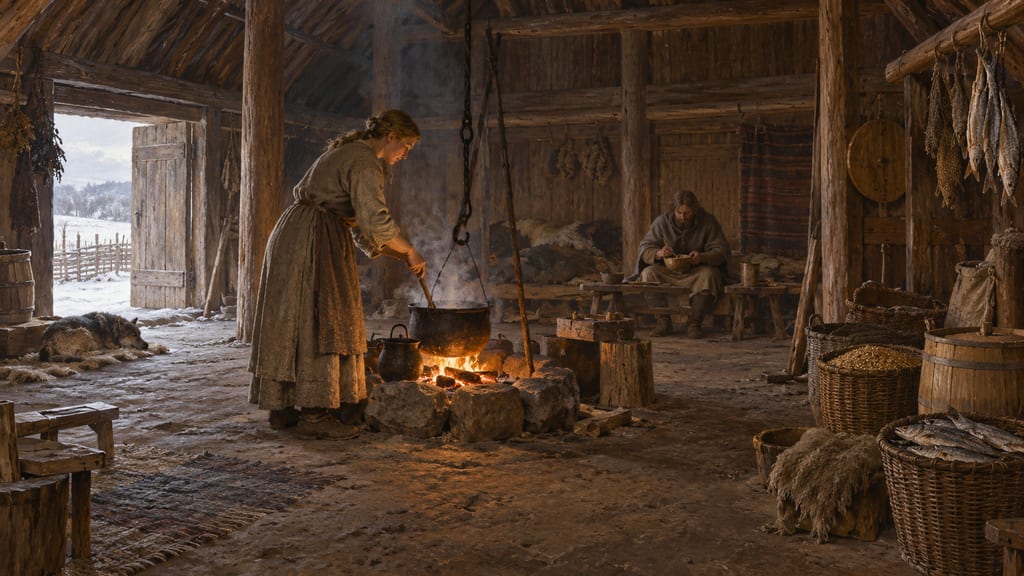
How ordinary Viking-Age households grew, dried, smoked, salted and cooked their food through the northern year, and how to cook their dishes today with supermarket ingredients.
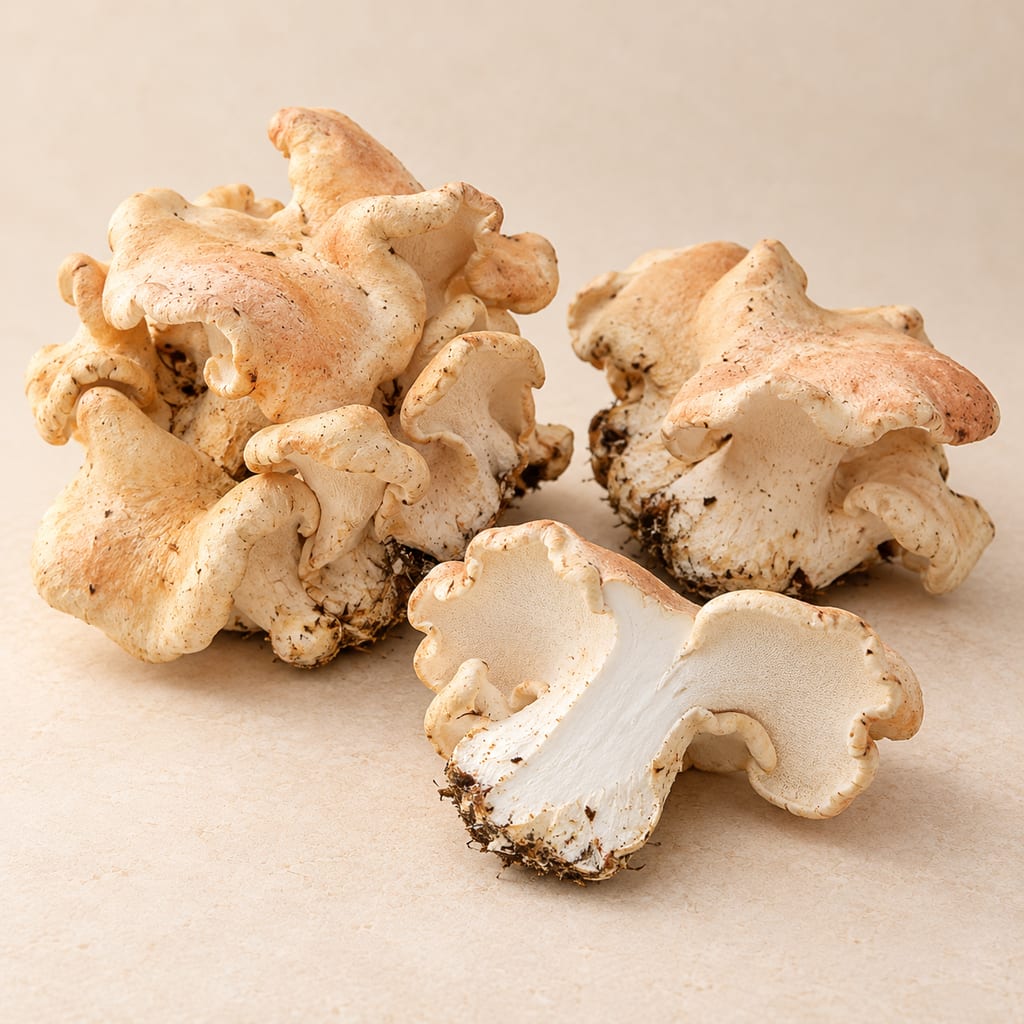
Albatrellus confluens is a ground-growing polypore with fused buff-orange caps. Sources document Chinese market use and regional edibility, but others reject it as too bitter; taxonomy also varies between Albatrellus and Albatrellopsis.
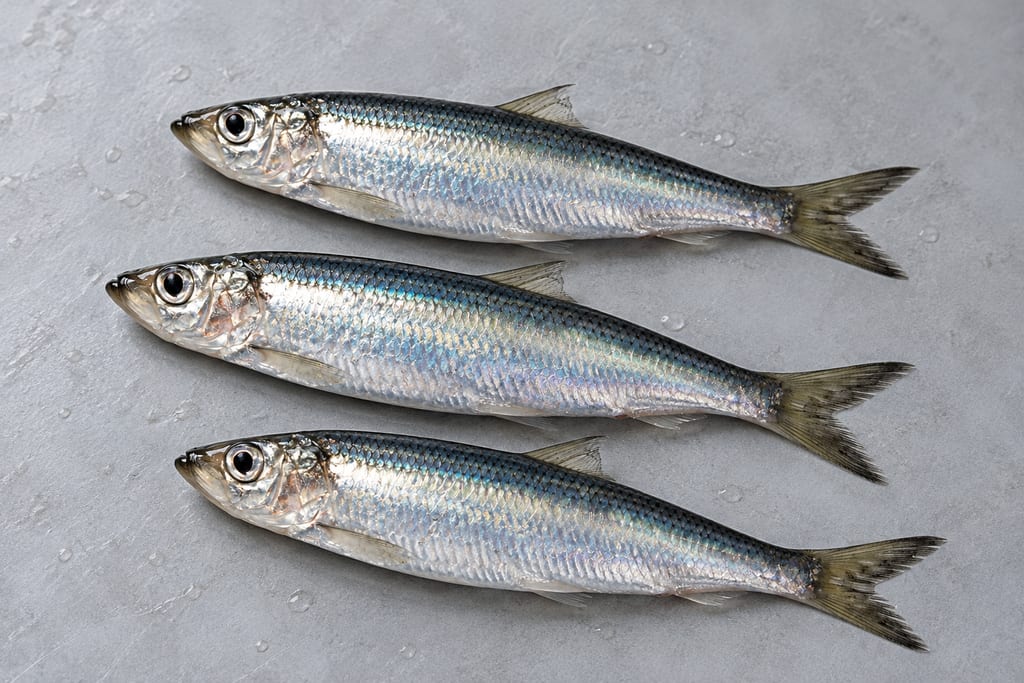
A small, schooling herring of the brackish Baltic Sea, sold under regional names including Finnish silakka and Swedish strömming. It is the raw fish behind several regional preparations, including Sweden’s fermented surströmming.
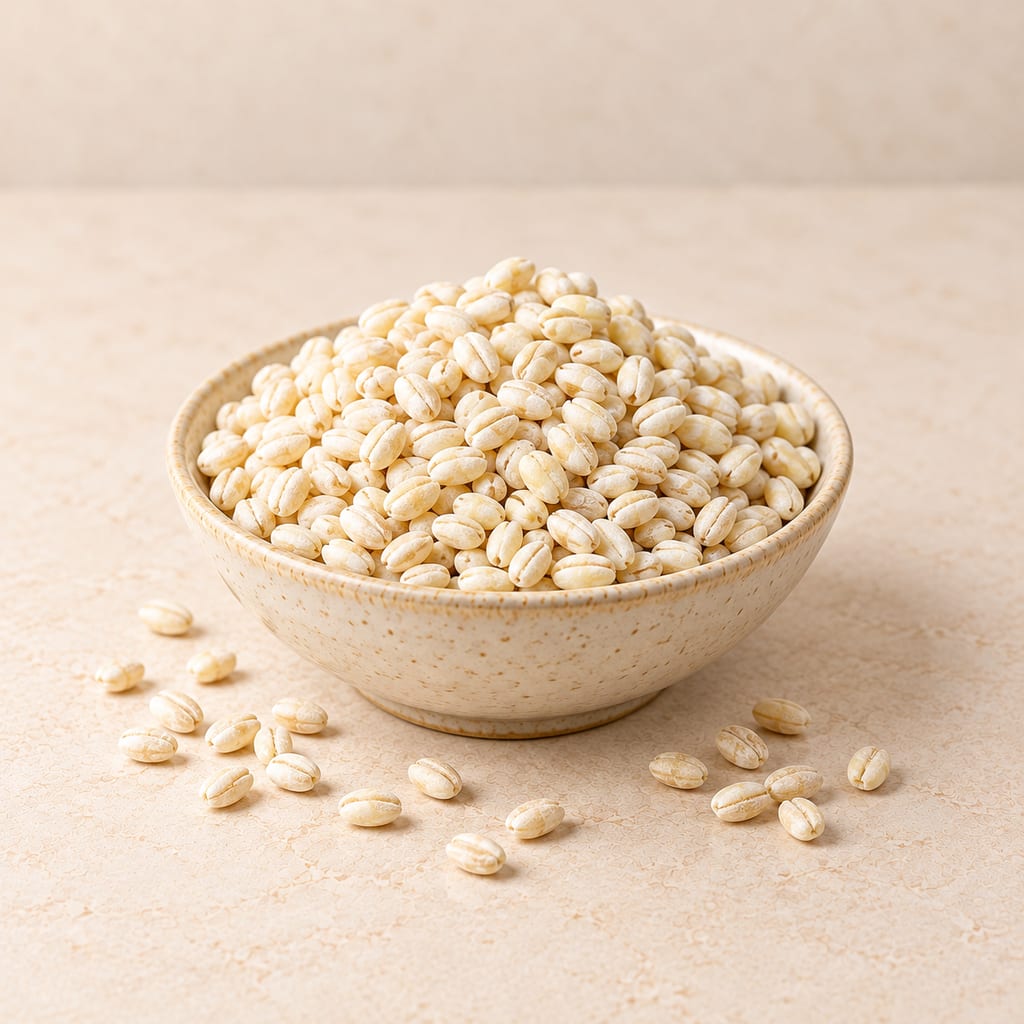
Barley is a hardy cereal, domesticated in the Middle East over 10,000 years ago, eaten whole, pearled or milled, malted for brewing, and grown with koji mold for barley miso.
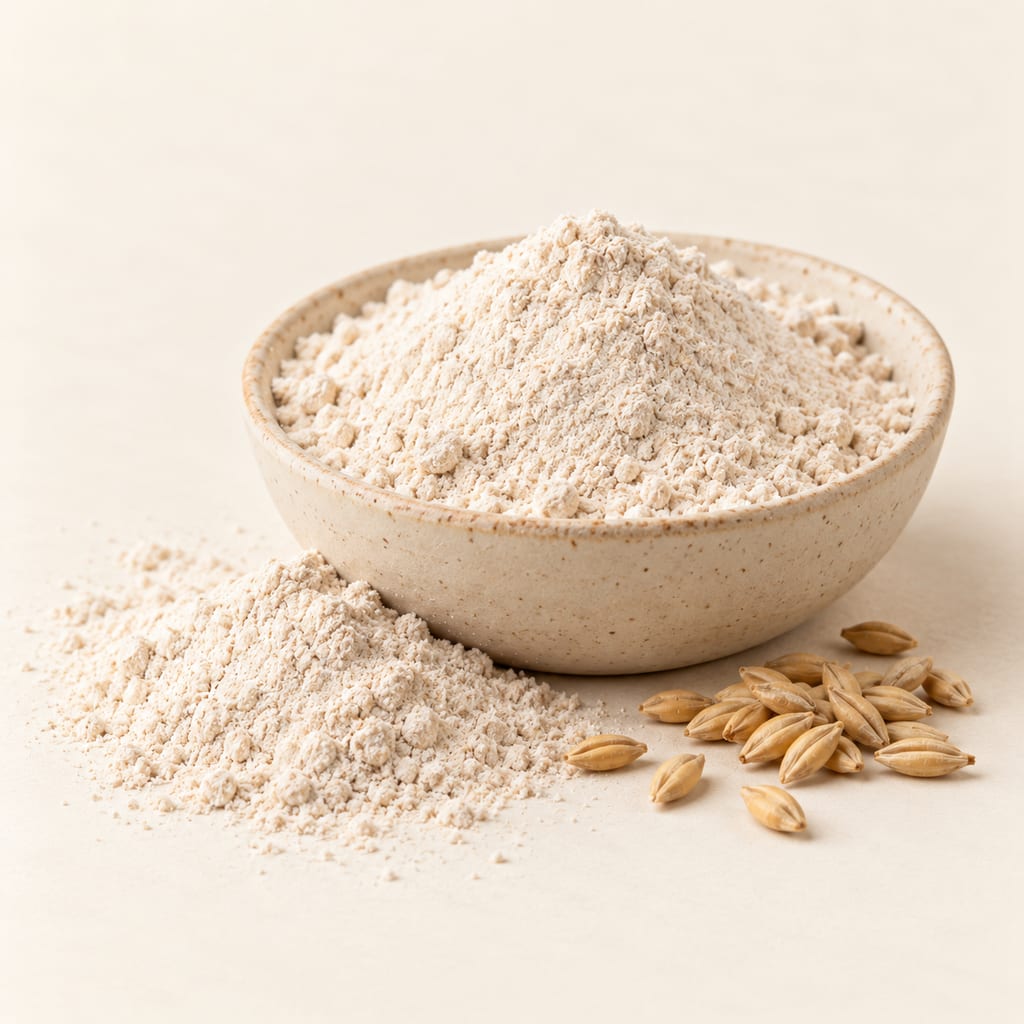
Barley flour is ground barley grain; whether it comes from pearled or hulless kernels, its milling and limited wheat-like gluten-forming ability shape the doughs and foods it can make.
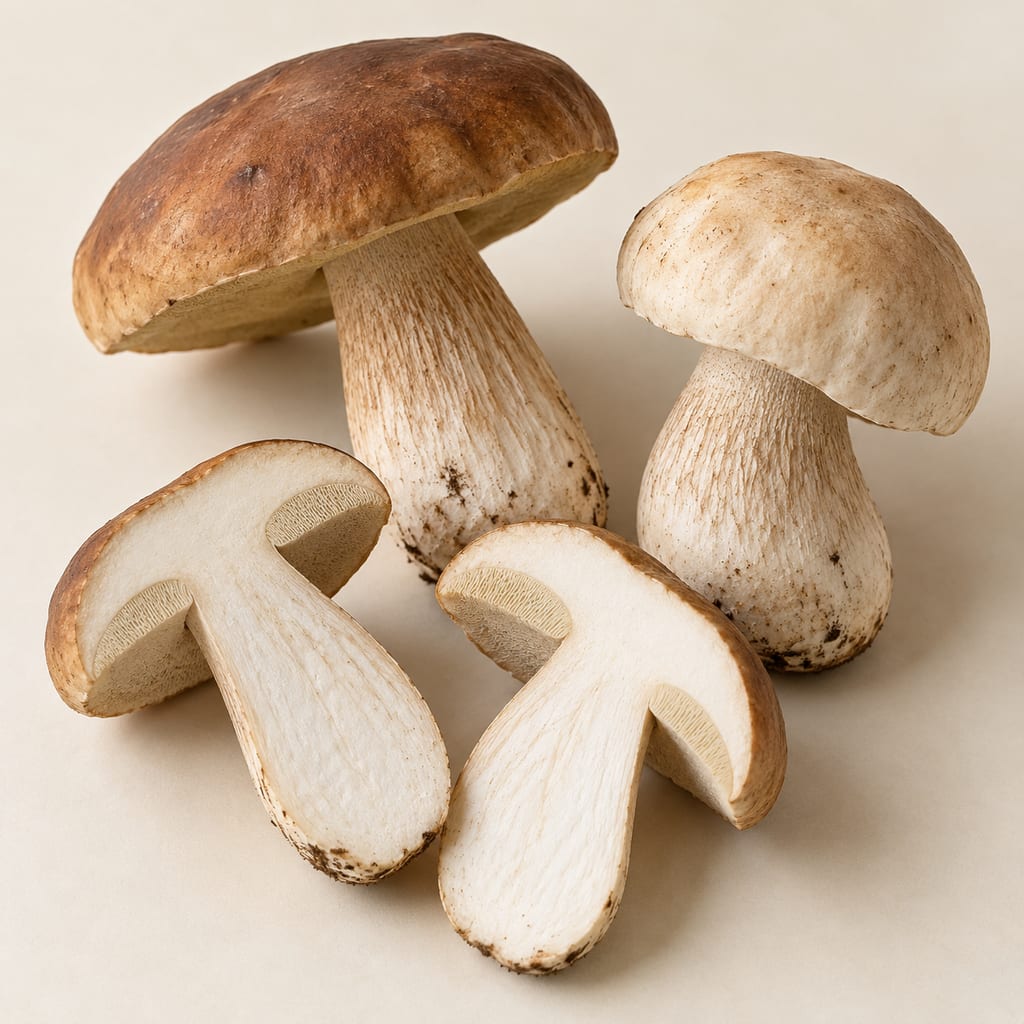
Boletus betulicola is a slender, birch-associated bolete of the penny bun group, kept as its own species by Finnish mycologists and treated by others as a form of Boletus edulis.
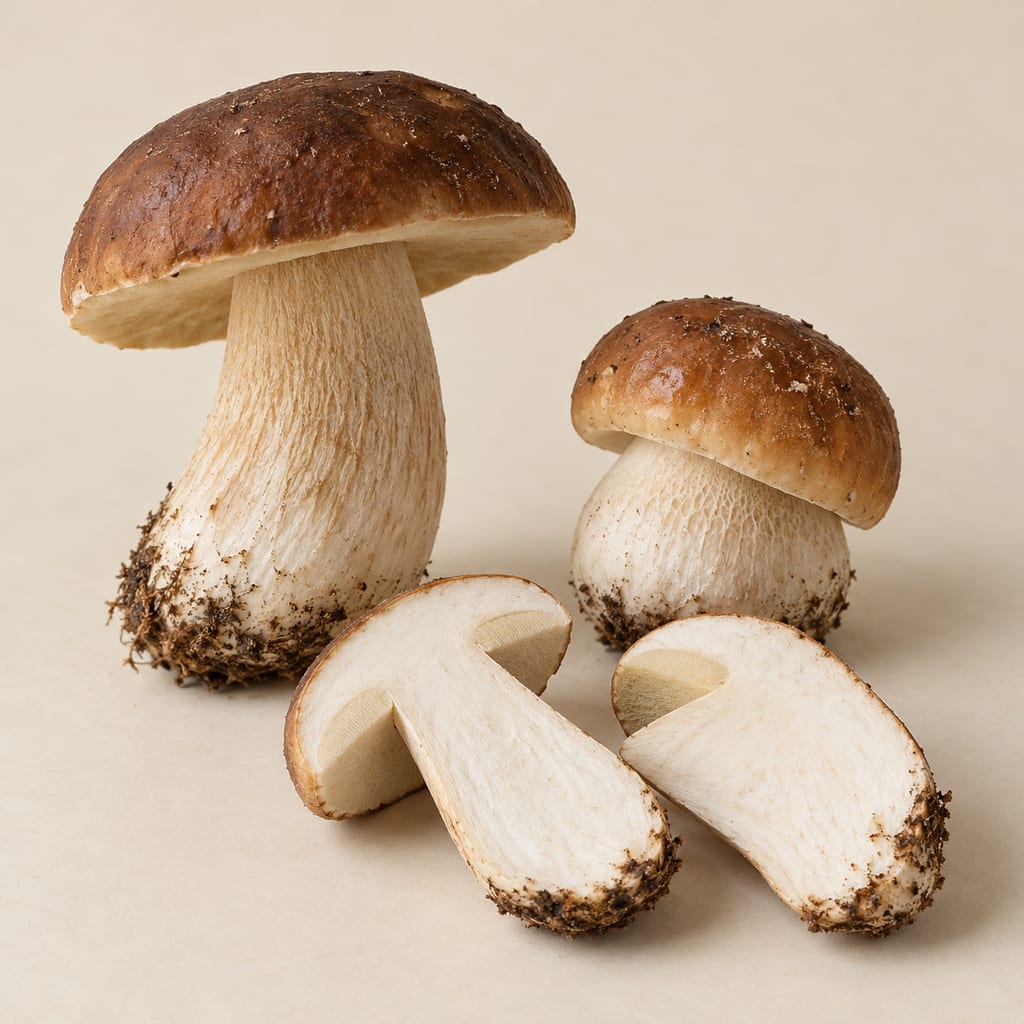
Boletus pinetorum is a greyish-brown penny bun relative that grows with Scots pine on dry sandy heaths in Fennoscandia and Estonia, described as a new species in 2009.
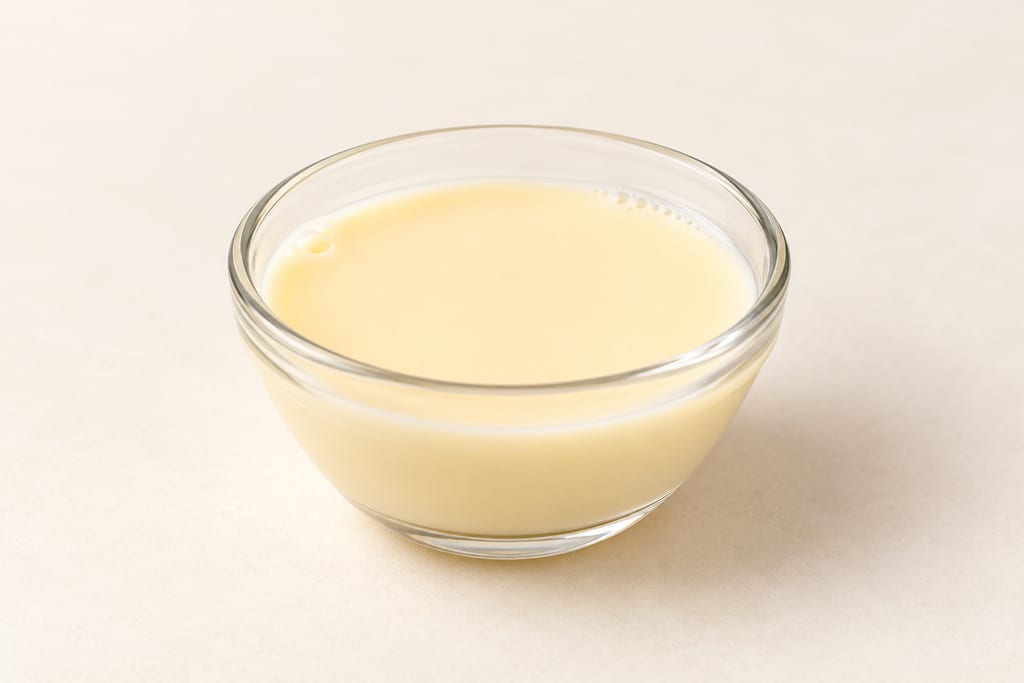
Bovine colostrum is the changing first secretion around calving, concentrated in proteins and maternal immune components; it feeds newborn calves and appears in seasonal foods and processed products.
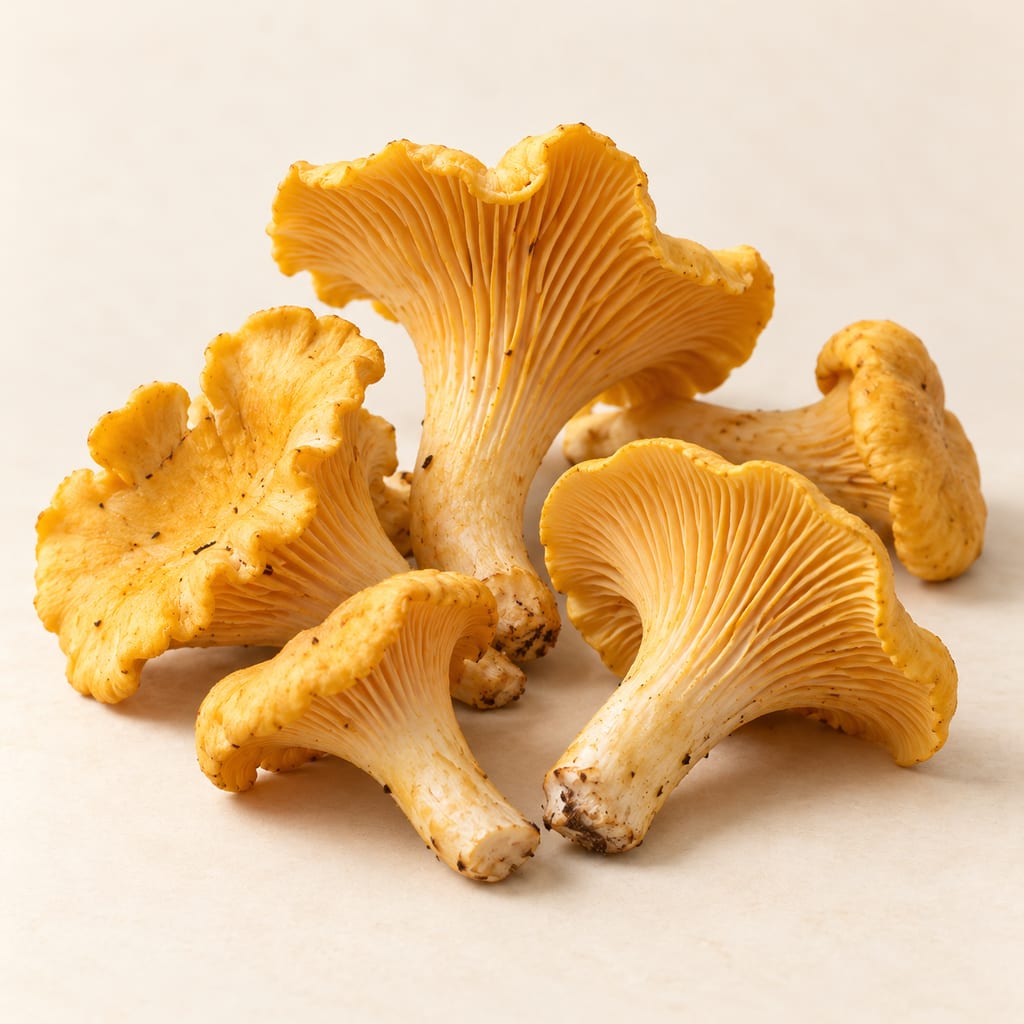
Chanterelles are wild, tree-associated edible mushrooms, particularly the European golden chanterelle Cantharellus cibarius, prized for their firm flesh, fruity aroma and use fresh, frozen, dried or pickled.

At North Abydos in Egypt, a fixed early Dynastic brewery comprised parallel semi-subterranean installations with rows of ceramic mash vats; excavation reports revise their number, scale and estimated batch capacity.

Ají amarillo is the orange-yellow Peruvian chilli cultivar group of Capsicum baccatum, used to colour and season huancaína sauce and ají de gallina. Published heat estimates do not establish one range for the named cultivar.

Toasted almonds are whole sweet almond kernels dry-roasted until golden to brown. Heat replaces their marzipan note with a roasted, nutty one; they thicken and flavour romesco.

Kodiak salmon, halibut and cod cut as seg'aq and hung on an initaq rack to become tamuuq, with kac'amaasaq and kupcuunaq named as different results.

Aniseed is the dried ripe fruit of Pimpinella anisum, an aromatic Apiaceae spice commonly called a seed. It adds a sweet, warm aroma to breads such as Moroccan krachel and South African mosbolletjies, and is distinct from star anise.

A fixed Late Chalcolithic installation in Areni-1 cave combined a shallow clay pressing basin with a large jar set into the cave floor and storage vessels nearby.

Ripe avocado flesh is the soft, buttery, fat-rich pulp of Persea americana, eaten raw. It is low in acid, so it is a fresh ingredient that needs care in chilled dishes.

A portable dome and pan used over a hearth, with embers on the lid and heat from below. Regional peka and saç forms share this principle while differing in materials, pan shape and how the food is cooked.
No community contributions have been published for this entry yet.
Sign in to contribute. Published comments and photos are free to read.
Philosophical Transactions of the Royal Society BPeer reviewed crop history synthesis
Commensal domestication pathways amongst plants: exploring segetal and ruderal crop originsRye's secondary domestication from an arable weed; no consensus on exact domestication location; Anatolian spread into Europe; uncertainty in archaeological dating; later European cultivation evidence. Full text inspected, rye section.
Cited in: A crop that began as a field companion; From cold-climate staple to a global crop
Evolutionary ApplicationsPeer reviewed genetics and crop history research
Genetic diversity and relationship between domesticated rye and its wild relatives as revealed through genotyping-by-sequencingRye as a secondary domesticate; relationship to weedy progenitors; importance as a crop in Central and Eastern Europe; crop uses and climate adaptation. Abstract and article metadata inspected.
Cited in: A crop that began as a field companion; From cold-climate staple to a global crop; Beyond the bread oven
North Carolina State University Extension Gardener Plant ToolboxUniversity extension botanical and cultivation profile
Secale cereale (Cereal Rye, Rye, Winter Rye)Species and family identification; distinction from ryegrass; cover-crop, forage and grain uses; worldwide cultivation; growing conditions. Full page inspected.
Cited in: The grain and its names; From cold-climate staple to a global crop; Beyond the bread oven
ThisisFINLAND, Ministry for Foreign Affairs of FinlandGovernment cultural feature
The root of Finnish rye breadFinnish reikäleipä shape and hanging storage; limppu in eastern Finland; rye cultivation over 2,000 years; regional texture and serving differences. Full page inspected.
Cited in: Sourdough is common, not compulsory; Regional loaves and ways of eating; Choosing, storing and using rye at home
ThisisFINLAND, Ministry for Foreign Affairs of FinlandGovernment cultural feature and family history account
We love Finnish rye bread: A baking story that stretches across borders and generationsFinnish rye bread culture, regional dried and soft bread traditions, historical cultivation date reported via Helsinki's Hotel and Restaurant Museum, and a named home sourdough account. Full page inspected; process figures are not generalized.
Cited in: Regional loaves and ways of eating; Choosing, storing and using rye at home
European Union Intellectual Property OfficeEuropean institutional geographical indication description
GI Conference 2025: GI Photos Exhibition descriptionsEesti rukkileib is associated with Estonia; its described area covers Estonia and its named rye bread uses rye flour, water, salt and sourdough retained from prior dough. Estonia section inspected.
Cited in: Regional loaves and ways of eating
Cereal ChemistryPeer reviewed flour and baking review
The Major Constituents of Rye (Secale cereale L.) Flour and Their Role in the Production of Rye BreadRye flour constituents and their roles in rye bread structure. Abstract inspected; technical claims are limited to the review's abstract-level scope.
Cited in: What rye contributes to dough; Sourdough is common, not compulsory; Gluten, coeliac disease and what rye can promise
FoodsPeer reviewed experimental methods paper
Procedures for Breadmaking Quality Assessment of Rye Wholemeal FlourRye wholemeal flour baking quality, starch behavior, amylase activity and the use of controlled dough tests. Full text inspected.
Cited in: Whole grain, meal and flour; What rye contributes to dough; Sourdough is common, not compulsory
FoodsPeer reviewed experimental bread study
The Contribution of Scalded and Scalded-Fermented Rye Wholemeal Flour to Quality Parameters and Acrylamide Formation in Semi-Wheat-Rye BreadTested rye scald treatments and their effects on semi-wheat-rye bread; supports explaining scalding as a specific regional/formula operation rather than a universal rye step. Full text searched and abstract/results inspected.
Critical Reviews in Food Science and NutritionPeer reviewed review of cereal fiber and breadmaking
Cereal Arabinoxylans—Their Enzymatic Degradation and Relevance for Breadmaking and Human HealthRye flour arabinoxylans bind water and affect dough viscosity, gas retention and bread structure; sourdough acidity and microbial enzymes can change their composition. Abstract and rye-relevant passages inspected.
Cited in: What rye contributes to dough
Agricultural Marketing Resource Center, Iowa State UniversityAgricultural market and use profile drawing on USDA statistics
Rye ProfileWinter and spring rye; contemporary US production and home/artisan baking; rye flour's contribution to baked goods; malted rye and distilling uses. Current profile inspected, including its cited 2020–2021 production data.
Cited in: Whole grain, meal and flour; Beyond the bread oven; Choosing, storing and using rye at home
U.S. Food and Drug AdministrationPrimary food safety guidance
Handling Flour Safely: What You Need to KnowRaw flour can carry harmful bacteria; milling does not kill them; raw flour, dough and batter should not be tasted; cook flour-containing foods and clean handling surfaces. Full page inspected.
Cited in: Choosing, storing and using rye at home
National Health ServicePrimary public health guidance
Coeliac disease: TreatmentRye is a gluten-containing cereal and is excluded from a gluten-free coeliac diet. Full page inspected.
Cited in: Gluten, coeliac disease and what rye can promise
iSciencePeer reviewed archaeobotany and crop genetics research
Sequencing of historical plastid genomes reveal exceptional genetic diversity in early domesticated rye plantsRye as a major historical crop in northern, central and eastern Europe; modern production in North and South America and China; regional crop uses; historic rye material from Germany. Full text inspected.
ThisisFINLAND, Ministry for Foreign Affairs of FinlandGovernment cultural and producer feature
Finnish rye-bread revolution hits the USFinnish word ruis means rye; a named Finnish bakery uses 100% rye flour in the United States; distinction between that producer's bread and local rye loaves mixed with wheat. Full page inspected.
Cited in: The grain and its names
Innograin, University of ValladolidUniversity cereal science explainer
Rye flourRye flour milling and grade terminology; bran retention; sprouting and enzyme activity; arabinoxylans and dough viscosity; distinction between mixed and rye-rich breads. Full page inspected.
Cited in: Whole grain, meal and flour