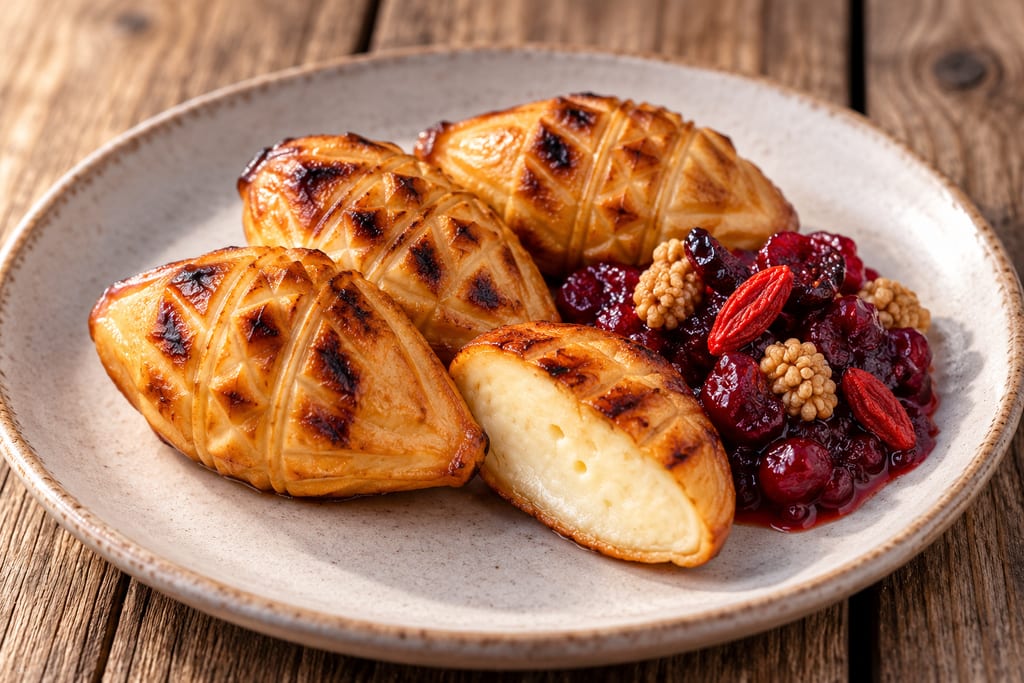
Grilled Oscypek with cranberry
Small Oscypek are grilled until the exterior is crisp and the cheese softens, then served with cranberry, goji berries and mulberries.
 FermenteaWhere food goes to change
Twaróg · Twarożek with lemon · Lemon-set curd cheese
A fresh Polish curd cheese set by warming milk with lemon juice, then drained through a sieve. It is a different route from the sour-milk method used for cultured twaróg.
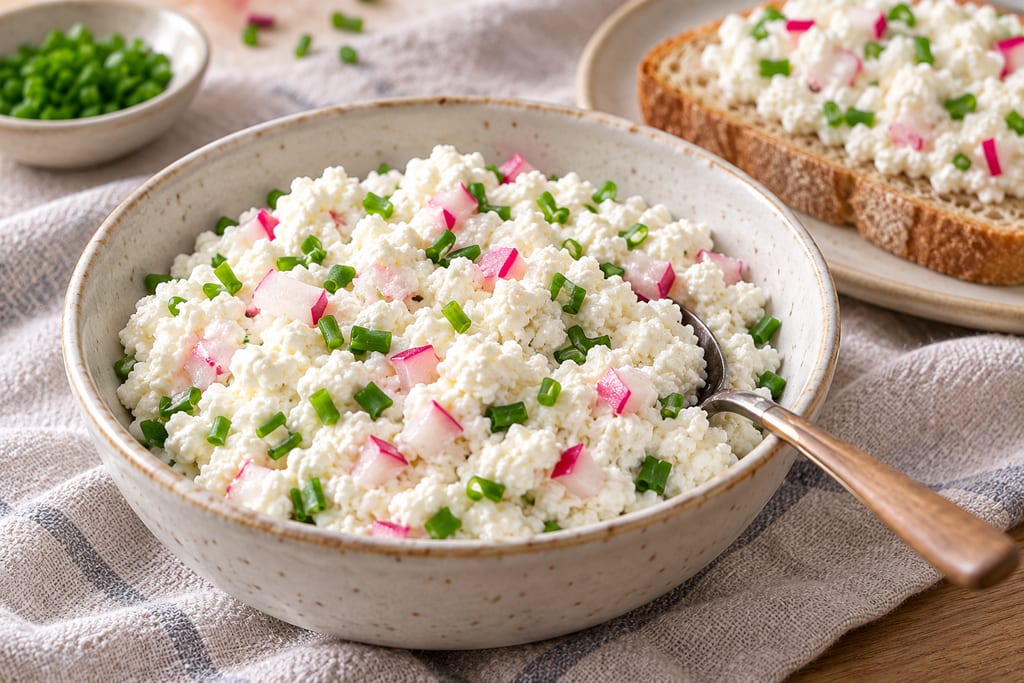
Twaróg is the Polish fresh curd cheese, and the word is used for both cultured and quick home versions. The two videos here make a quick version, in which lemon juice sets warm milk into curds. Lemon is an acid, and when it reaches the milk the proteins gather into curds while the liquid separates into yellow whey.
This is a different process from the traditional route. The Polish ministry describes the traditional twaróg as one that starts from milk that has already soured, and only then is warmed to separate the whey. Lemon-set curd is not shown to be equivalent to that cheese, or to quark.
The detailed video uses one litre of store milk, which it describes as pasteurised, and the juice of half a lemon. The milk is warmed gently and must not come to a boil. The lemon juice is stirred in until the curds and the yellow whey separate. If the milk does not curdle, the video suggests adding a little sour cream, but gives no amount.
The curd is strained through a sieve and drains for several hours. The video then mixes the curd with chopped radish and chives, two tablespoons of thick yogurt or sour cream, a pinch of salt and a little pepper. The result is a spread rather than a block.
A second video sets the curd with lemon in the same way but gives no amount for the juice. It heats the milk, adds the lemon, lowers the heat for five minutes, covers the pot for five minutes, and then strains and cools the curd. Its closing statement about leaving the curd unweighted to keep it moist is unclear, so it is not used here.
Neither video gives a yield, a refrigerator temperature or a storage duration. The CDC advises pasteurised dairy for soft cheeses, and its guidance does not validate either home method.
Traditional twaróg in Wielkopolska starts with souring the milk before warming it to separate the whey. Setting the milk with lemon juice is a separate process.
Scaling: source batch only
Fresh soft cheese can carry Listeria, and the CDC advises pasteurised dairy. The video's milk is pasteurised store milk.
Hazard sourcePasteurised dairy and refrigerated storage of the finished curd
Control sourceNo storage duration is given by either video.
The lemon set is not shown to be a validated process; curd appearance does not establish safety.
The Polish ministry describes traditional twaróg. The lemon-set home method is a modern adaptation and is not established as traditional.
Small Oscypek are grilled until the exterior is crisp and the cheese softens, then served with cranberry, goji berries and mulberries.

A yeast-raised wheat ring shaped from a firm dough, briefly boiled and baked. This source-batch formula gives a gently malted crust and a chewy crumb.
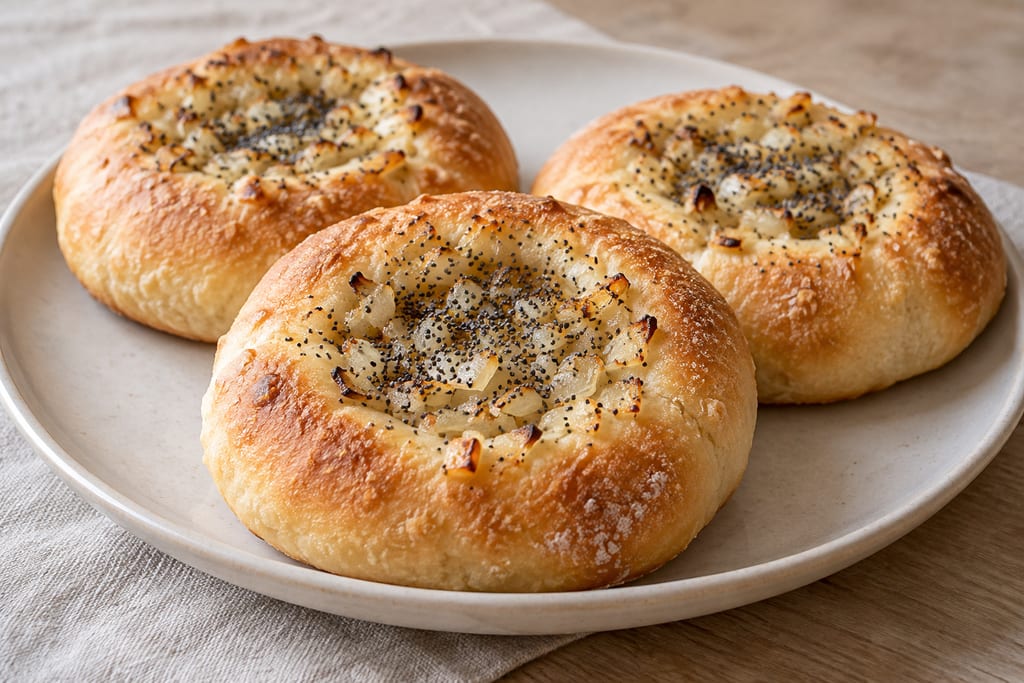
Bialys are soft, yeasted wheat rolls baked without boiling, each shaped with an onion-filled central depression instead of a hole.
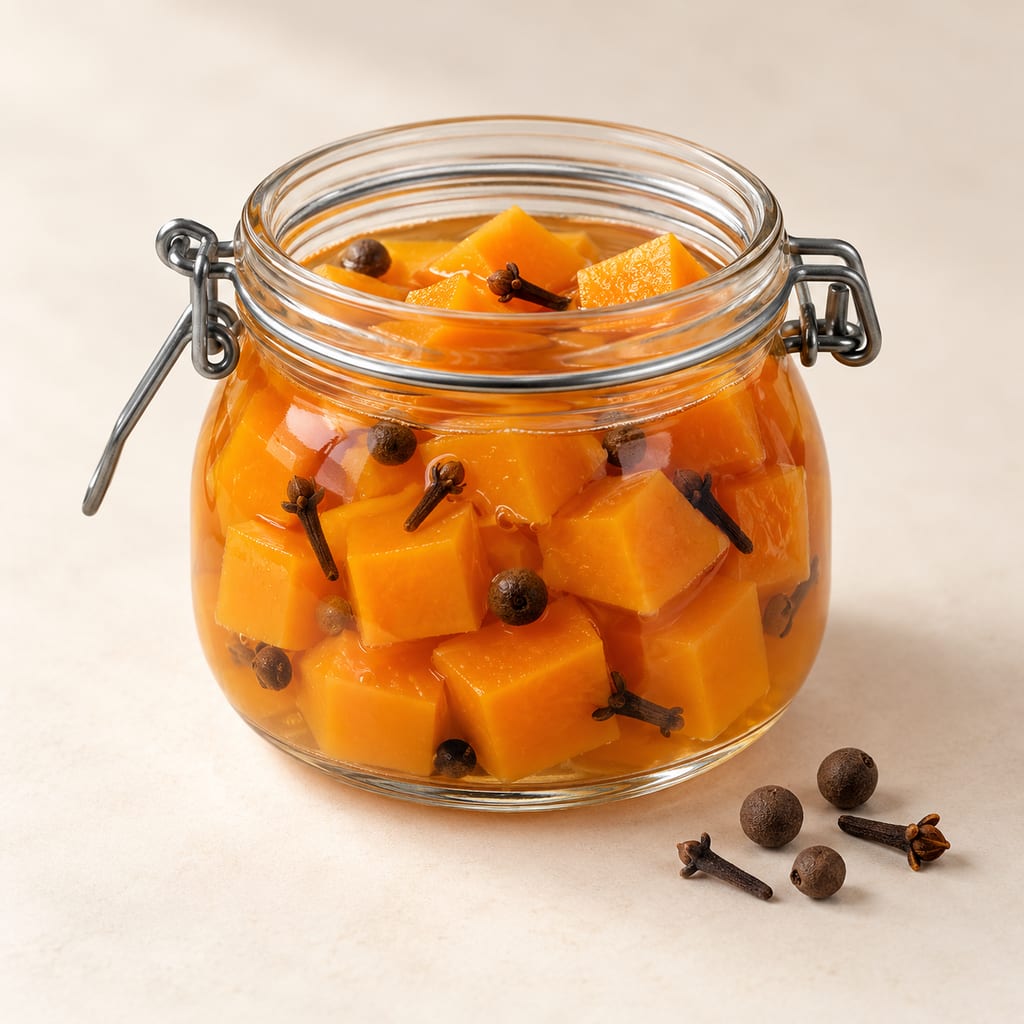
Dynia marynowana: Freeze for winter; small fresh portion refrigerated up to 48 hours.
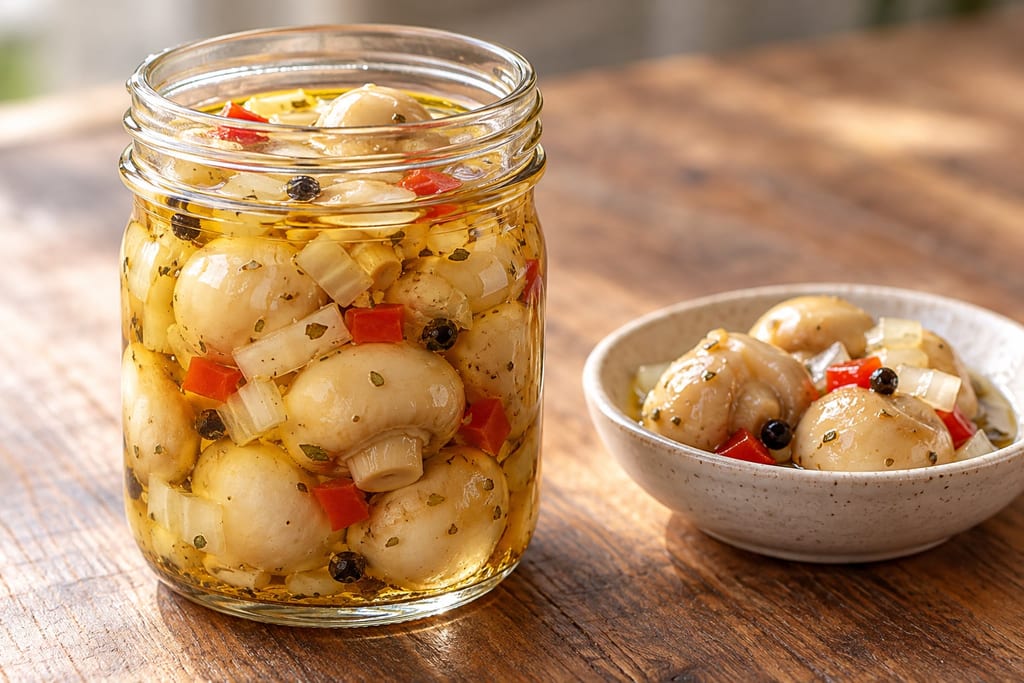
Small edible mushrooms are briefly cooked and packed in a seasoned vinegar marinade, a sweet-sour preserve served cold in Poland and neighbouring cuisines.
The original Polish barszcz: young hogweed leaves soured in warm water for a few days, then boiled into soup with egg, butter, cream or millet. Recorded from 1595, with warnings about the sap and lookalikes.

A home version of the Kraków twisted ring: yeast dough is braided, briefly dipped in boiling water, topped with seeds or salt, then baked. It is not represented as a certified PGI product.
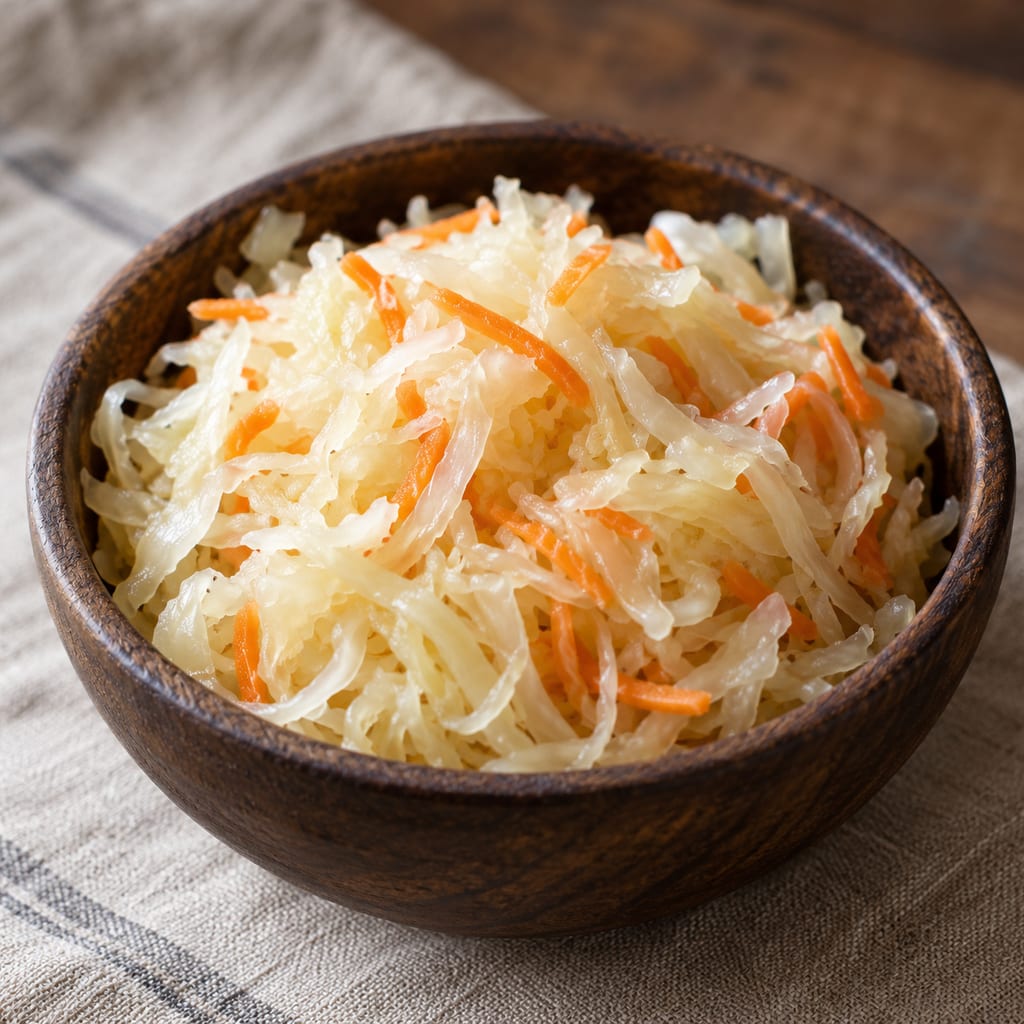
Kapusta kiszona z beczki is barrel-fermented cabbage from the Kołobrzeg area, entered on Poland’s List of Traditional Products in 2008. It is salted and fermented, with raw grated carrot added after souring.
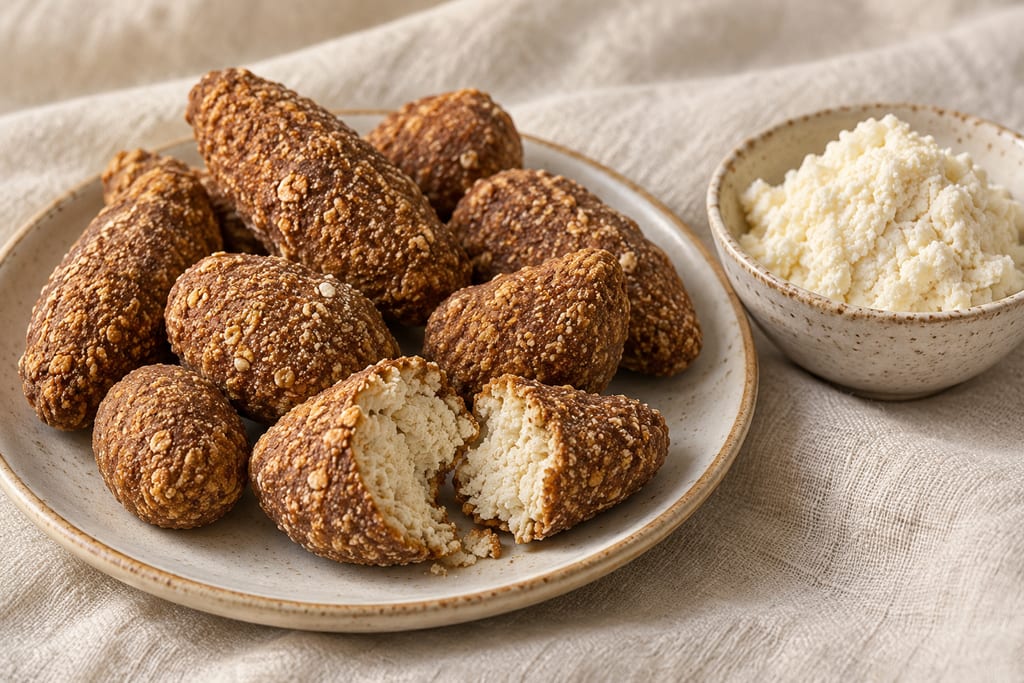
A two-stage Altai dairy preparation: sour chegen is heated into soft aarchi, then portions are drained, pressed and traditionally smoked into firm kurut.
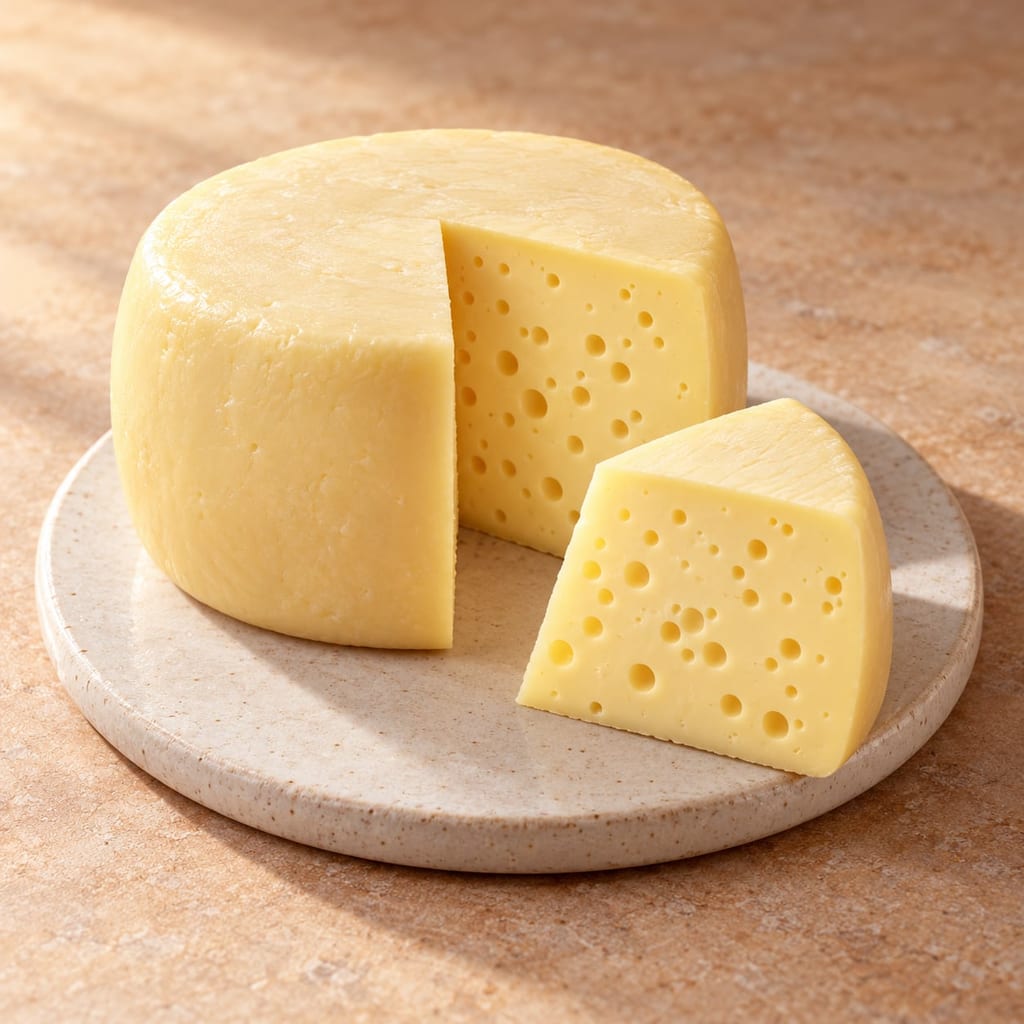
A washed-curd cheese with propionic bacteria, warmed by hot water in two steps and then held in a warm room for weeks so the bacteria can form its holes.

Beyaz peynir is a Turkish white cheese matured in brine. Sheep milk, alone or mixed with other milks, gives a close-textured cheese cut into blocks and packed in cans.
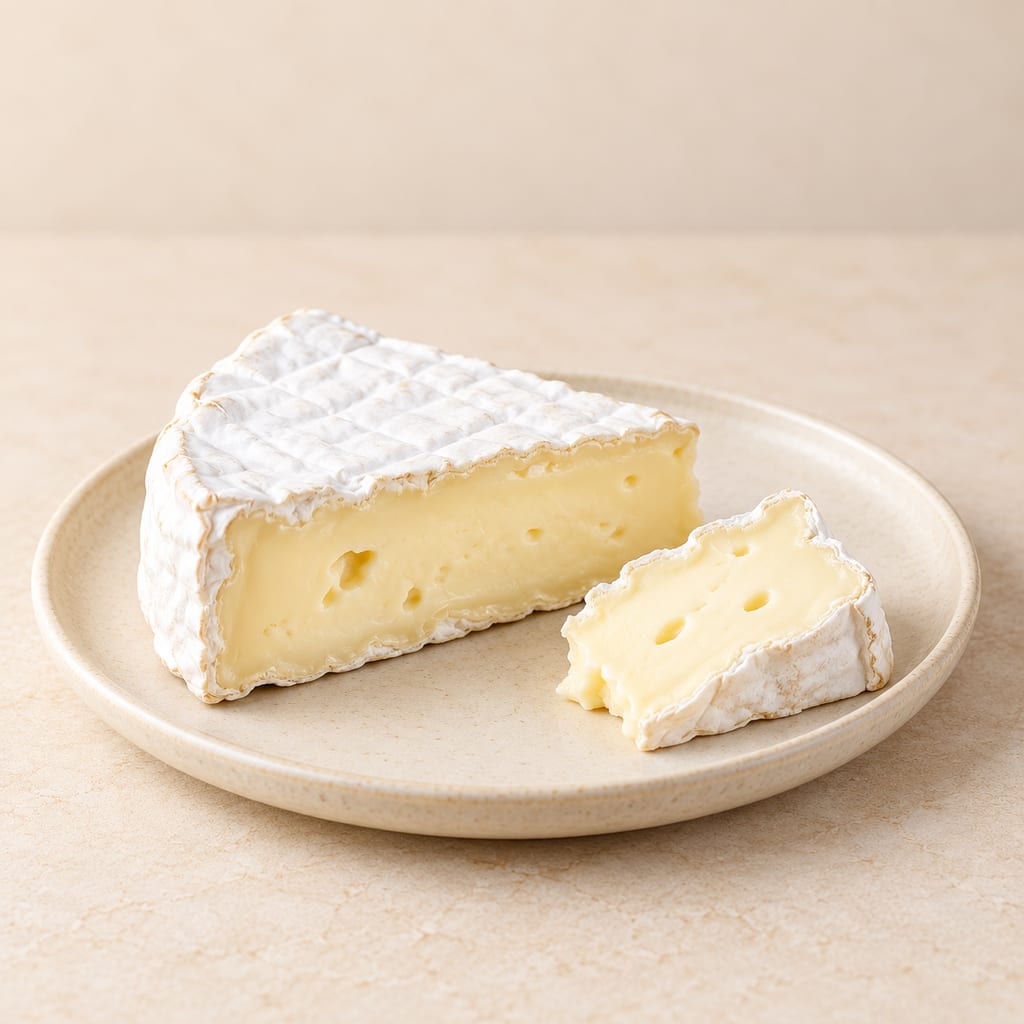
A cream-enriched Brie with a white bloomy rind and a softening center, made from pasteurized milk with lactic and surface cultures.
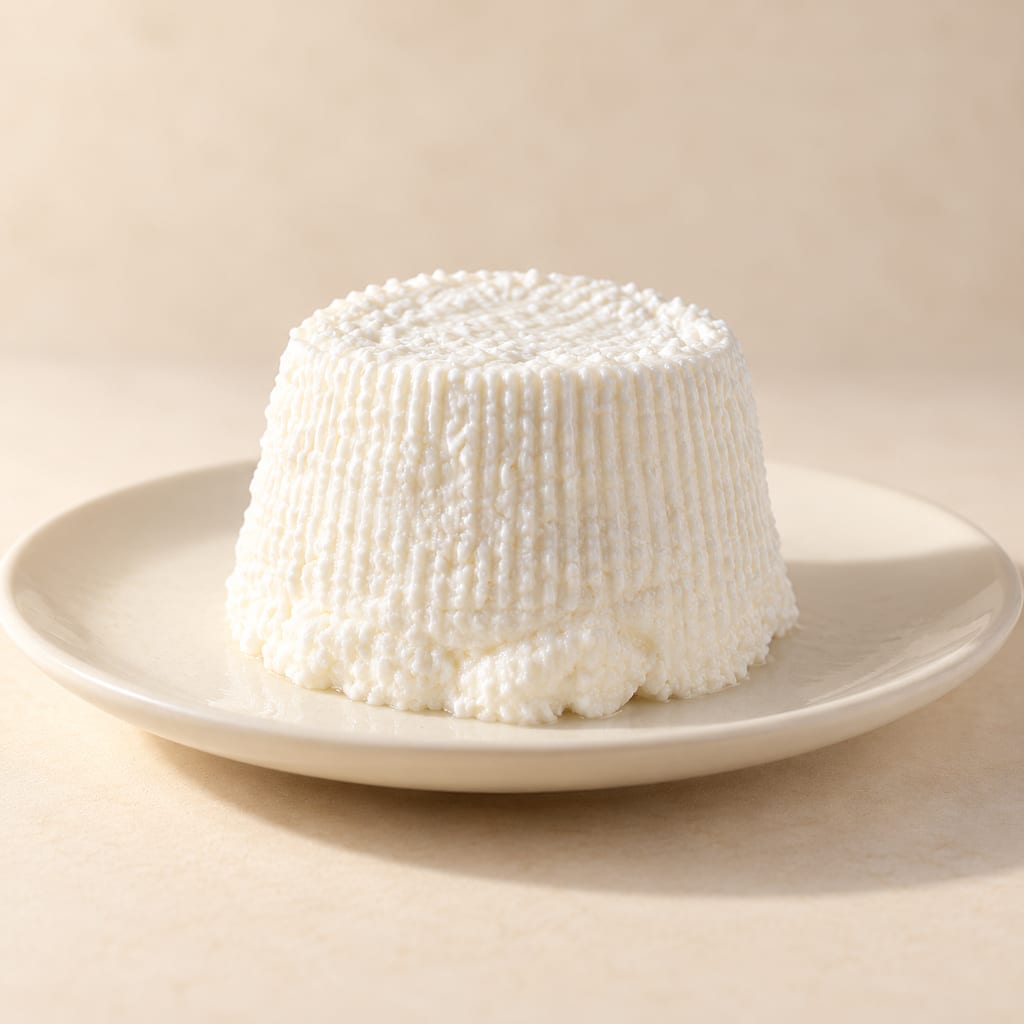
Corsican Brocciu is a whey cheese made by heating sheep's or goat's whey with whole milk and salt, then gently draining the flocculated curds. It is eaten fresh or salted and ripened as Brocciu passu.
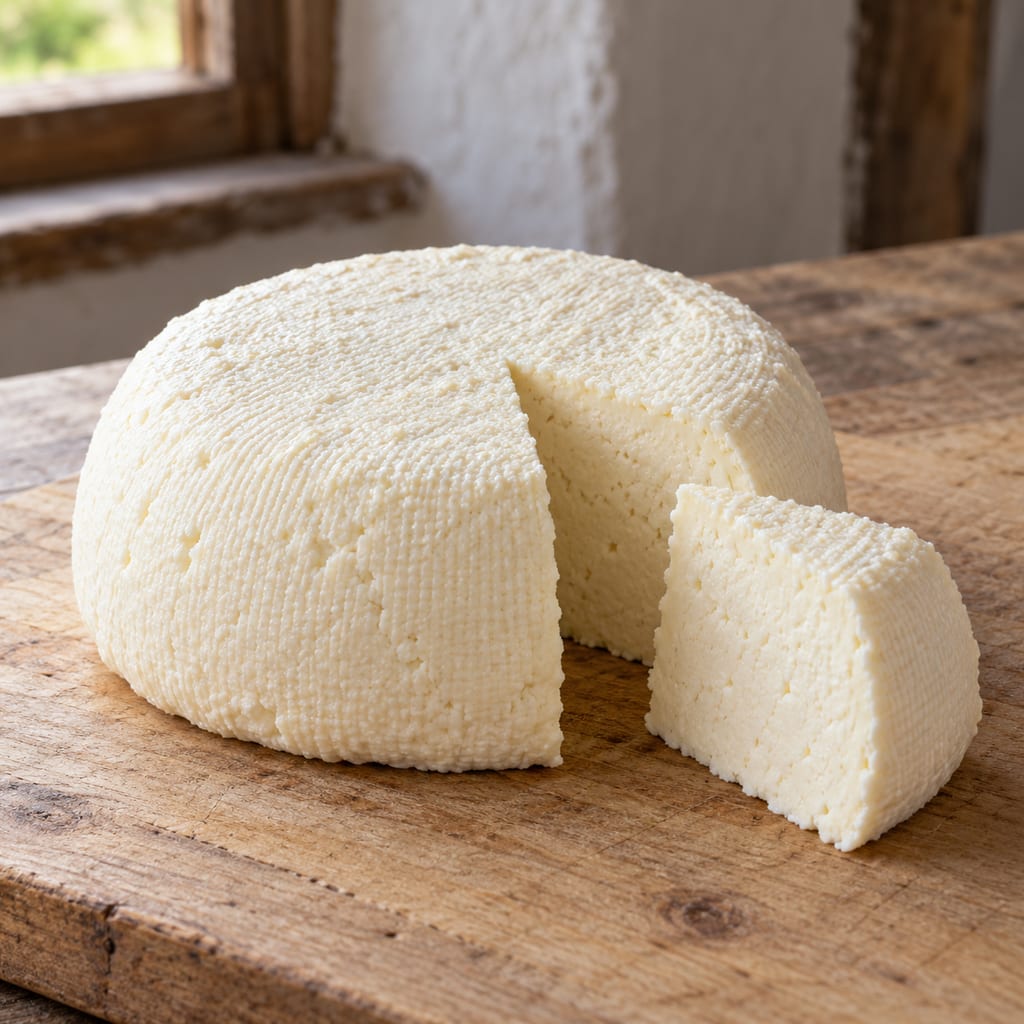
Budz is a traditional Hutsul rennet-set cheese made from sheep, cow or goat milk in the Ukrainian Carpathians, forming a fresh curd that can be eaten, smoked or processed into salted bryndza.
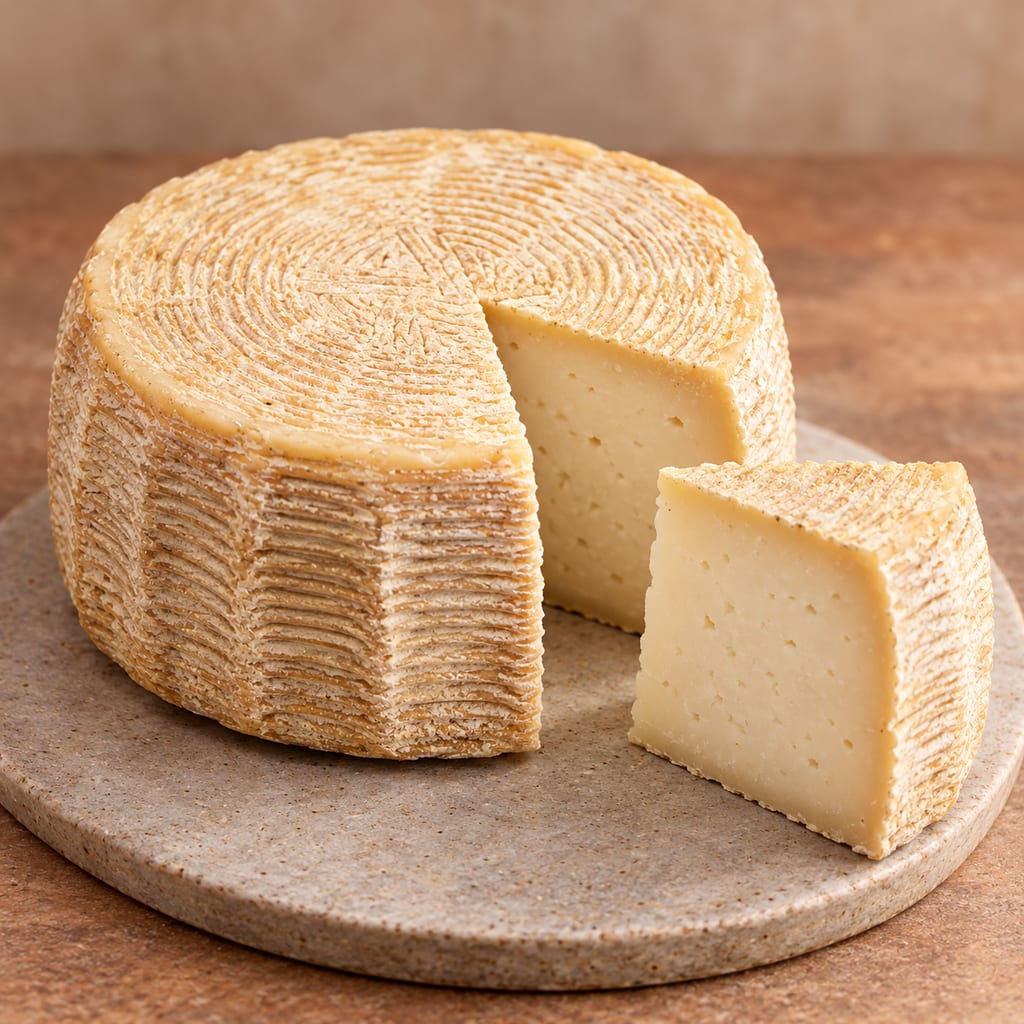
A scalded cheese moulded in baskets and re-cooked in its forms in hot whey, made alongside a ricotta from the same milk, then acidified, brined and aged for months.
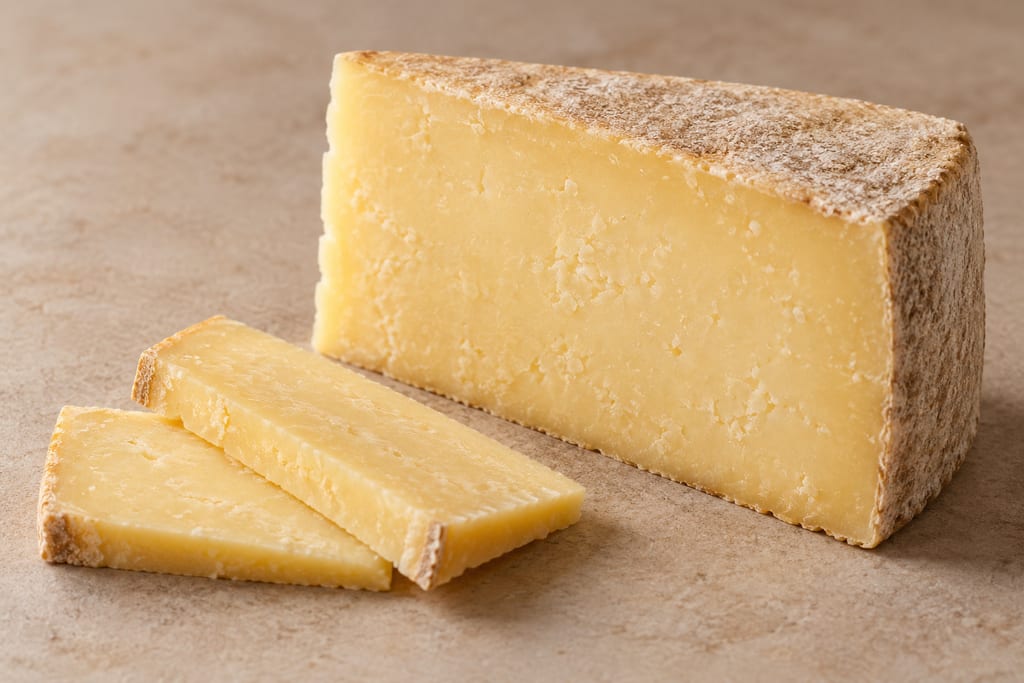
A pressed cheese whose curd is cooked slowly, then cheddared: kept warm in slabs that are turned and stacked for hours before milling, salting and pressing.
No community contributions have been published for this entry yet.
Sign in to contribute. Published comments and photos are free to read.
Weronika DomogródMethod
Twaróg domowy jak zrobić samemu1 L store milk and half a lemon; warming without boiling
Curd and yellow whey separate; sieve drain of several hours
Radish, chives, two tablespoons yogurt or sour cream, pinch of salt and pepper
Gotuj z MaszkąMethod
Twaróg lepszy niż ze sklepu!!! TYLKO 2 SKŁADNIKI1 L milk, lemon juice with no amount given, heating and lowering the heat, covered rest, straining and cooling
Ministry of Agriculture and Rural Development, PolandHistory
Twaróg tradycyjnyTraditional twaróg starts with souring milk before warming to separate whey
U.S. Centers for Disease Control and PreventionSafety
How Listeria Spread: Soft Cheeses and Raw MilkSoft cheese and raw milk carry Listeria risk; pasteurised dairy recommended