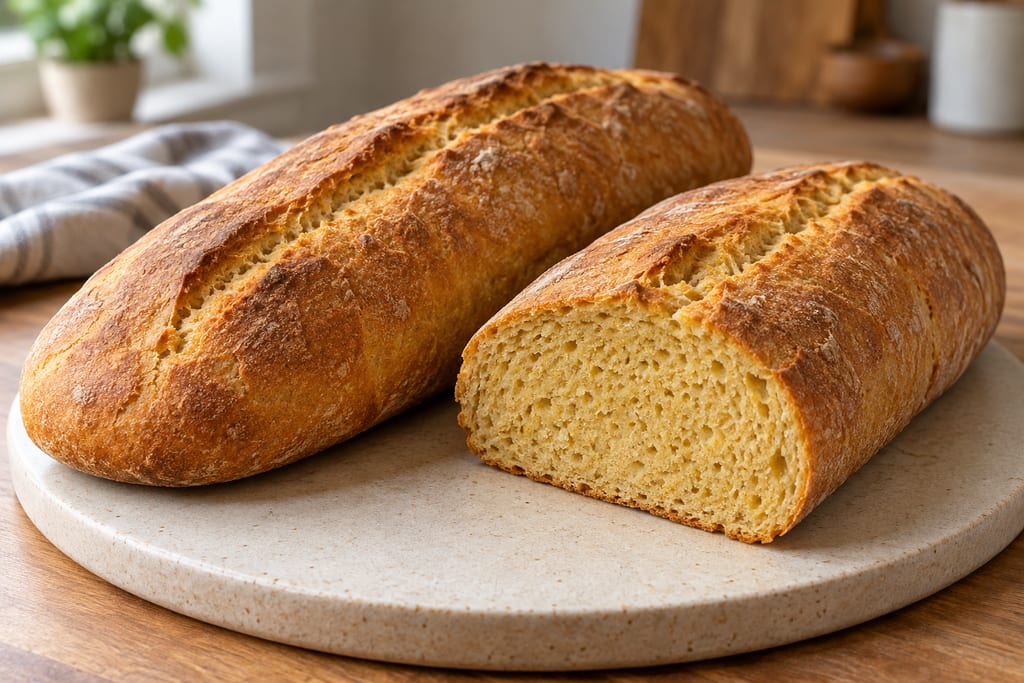
Tapalapa (four-flour home-oven version)
An elongated West African bread with a mixed-flour home-oven formula documented as one version; flour blends and traditional bakery methods vary by place.
 FermenteaWhere food goes to change
Nététou · netetu · néré condiment
Nététou is a Senegalese condiment of fermented African locust bean cotyledons. Casamance accounts describe staged cooking, dehulling and 48–72 hours of fermentation; these are not validated household safety limits.
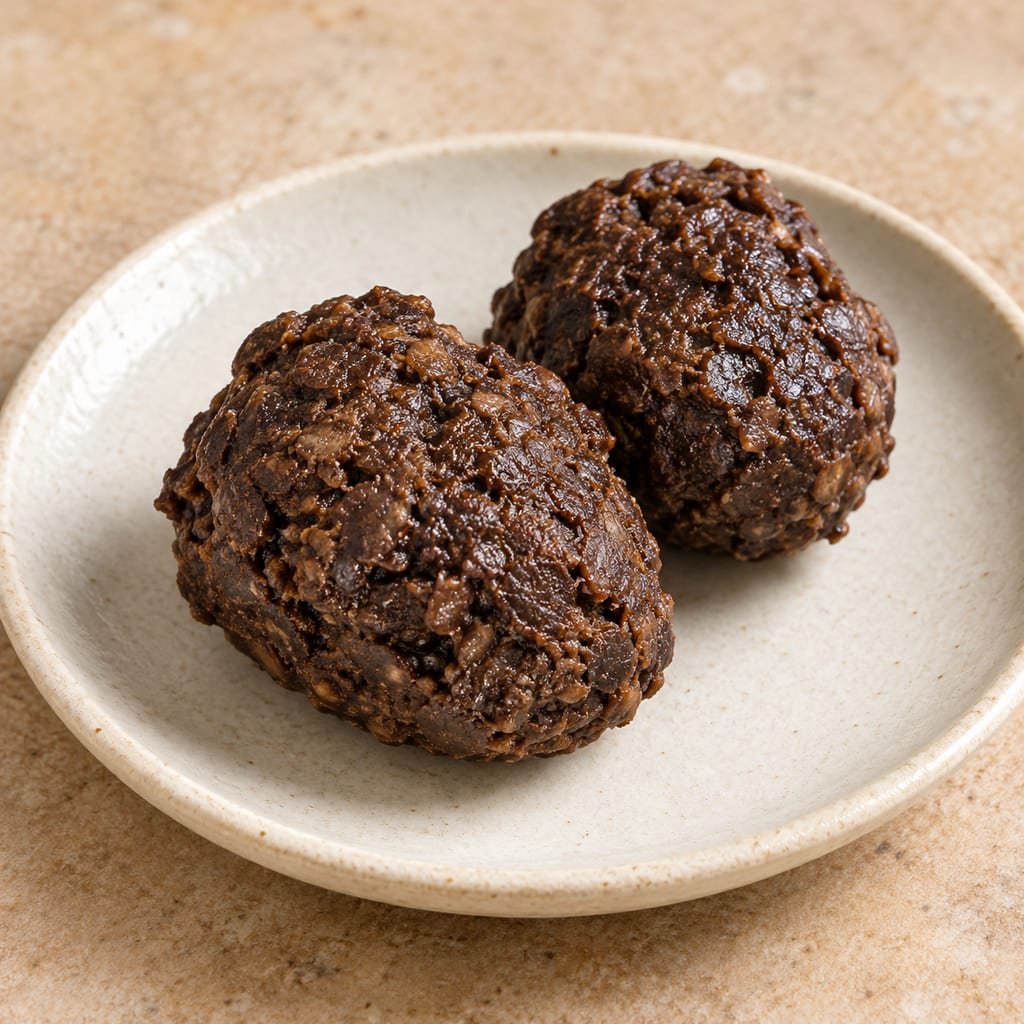
Nététou, also written netetu, is a fermented condiment made from the seeds of African locust bean, Parkia biglobosa. The seed cotyledons are cooked, dehulled, washed, recooked and fermented. Senegalese sources describe the product as a seasoning for meals and document it in Casamance production and Dakar markets.
Nététou belongs to a wider West African family of fermented Parkia seed condiments known by names including iru, dawadawa and soumbala. Shared ingredients do not make the local preparations interchangeable. This record covers the Senegalese account; it does not apply the separate Beninese Iru process with iku-iru or the other named regional methods.
A 1996 account describes producer groups in Kagnarou, north of Bignona in Basse Casamance, and trade from Casamance to Dakar. It reports that the work was organized largely through women's groups and that seeds could be collected locally or brought from Guinea. A 2020 study of Kagnobon and Mangagoulack separately reports household seed fermentation into condiment. These are named places and study settings, not evidence that production is restricted to them.
One account places pod collection in April–June. The 1996 market-chain source describes a production campaign from December to June, reflecting that seeds may be processed after harvest and traded. The dates refer to different stages in the chain and should not be reduced to a single national harvest calendar.
One Senegalese process account describes boiling the seeds for 12–24 hours, pounding to loosen the coats, washing the cotyledons, cooking them again for about three hours and fermenting them for 48–72 hours. It then reports salting and partial drying. A 1999 study record describes microbial-quality sampling at eight stages; its indexed abstract summary gives a 12-hour first boil and a 48-hour fermentation. These accounts overlap but do not establish one controlled household method.
The available material does not establish a reliable household starting mass, water ratio, salt quantity, fermentation temperature, dry-matter endpoint, yield or storage life. The 48–72-hour range describes reported practice. It is not a validated safety limit. The final product is reported in ball form in Senegal; other shapes described for Mali or northern Cameroon belong to those source contexts.
The 1999 study focuses on microbial quality and contamination across stages of traditional production. Its full text was not available in the sources inspected here, so this record does not claim specific organism counts or a validated critical-control plan. The process reports also do not establish household critical limits for cooking, fermentation, drying, or storage.
Do not infer safety from the strong aroma, colour, ammonia odour or visible changes associated with fermentation. A validated household safety schedule and storage guidance remain open research needs; the available process descriptions should be read as historical and technical observations, not as proof that a home batch is safe.
Nététou is documented as a Senegalese fermented néré condiment in a 1996 account of Casamance producer groups and trade, and in a 1999 process study. These sources document the practice at those dates; they do not establish when it began.
Scaling: source batch only
A study of the traditional process specifically assessed microbial quality and contamination at multiple process stages, while the available summaries do not establish a validated household control schedule. Long cooking and a reported 48–72-hour fermentation are process descriptions, not proof of safety.
Hazard sourceThe reported times are descriptions of studied or documented practice, not validated critical limits. The sources reviewed do not establish household controls for temperature, pH, water activity, drying or storage.
Do not use smell, taste, colour, ammonia odour or visible fermentation as proof that a batch is safe.
A 1999 process study is available here through its bibliographic record and summary, not its full text; its detailed findings and any proposed critical control points remain unverified.
Country-level association; inspected process and market accounts focus on Casamance and Dakar, not every Senegalese region.
The 1996 account identifies producer groups around Kagnarou north of Bignona; the 2020 study covers Kagnobon and Mangagoulack. This does not establish an exclusive origin.
An elongated West African bread with a mixed-flour home-oven formula documented as one version; flour blends and traditional bakery methods vary by place.
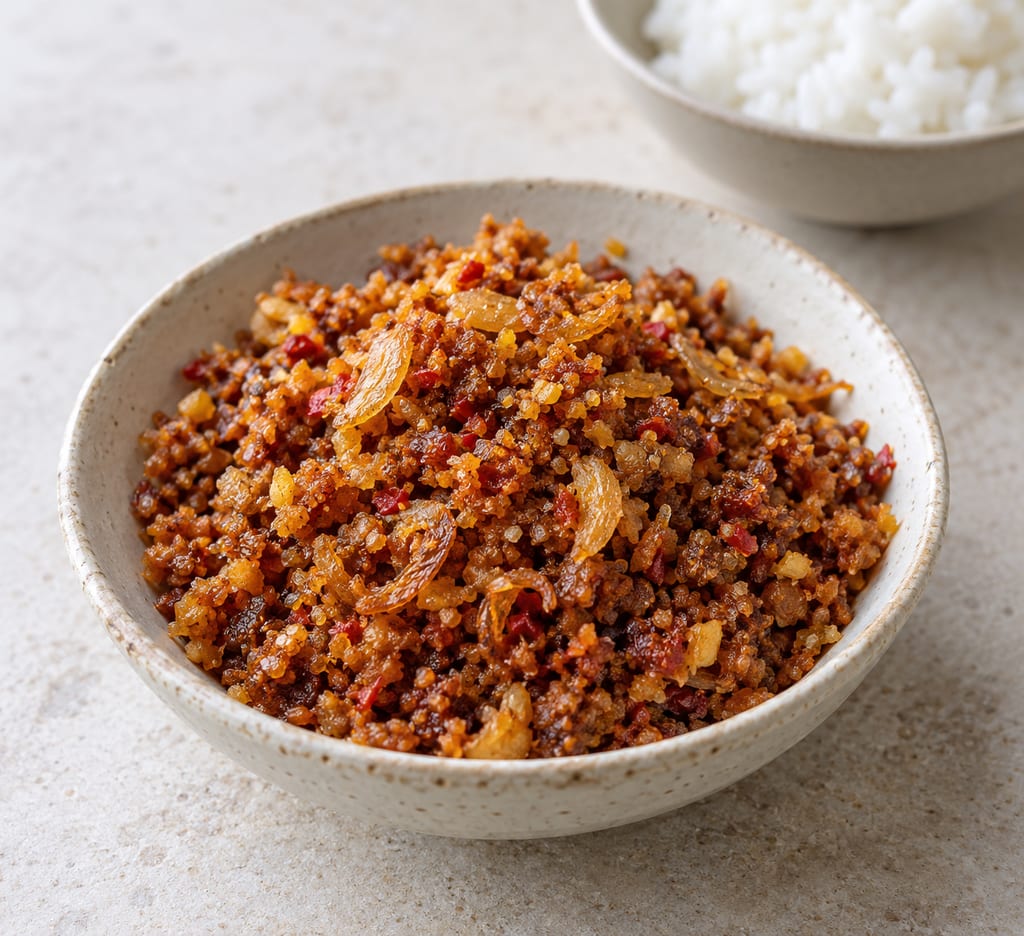
A Myanmar relish of dried shrimp, fried eschalot and garlic, chilli, turmeric, tamarind and ngapi. Naomi Duguid’s published recipe makes about 1 cup; it contains crustacean shellfish.
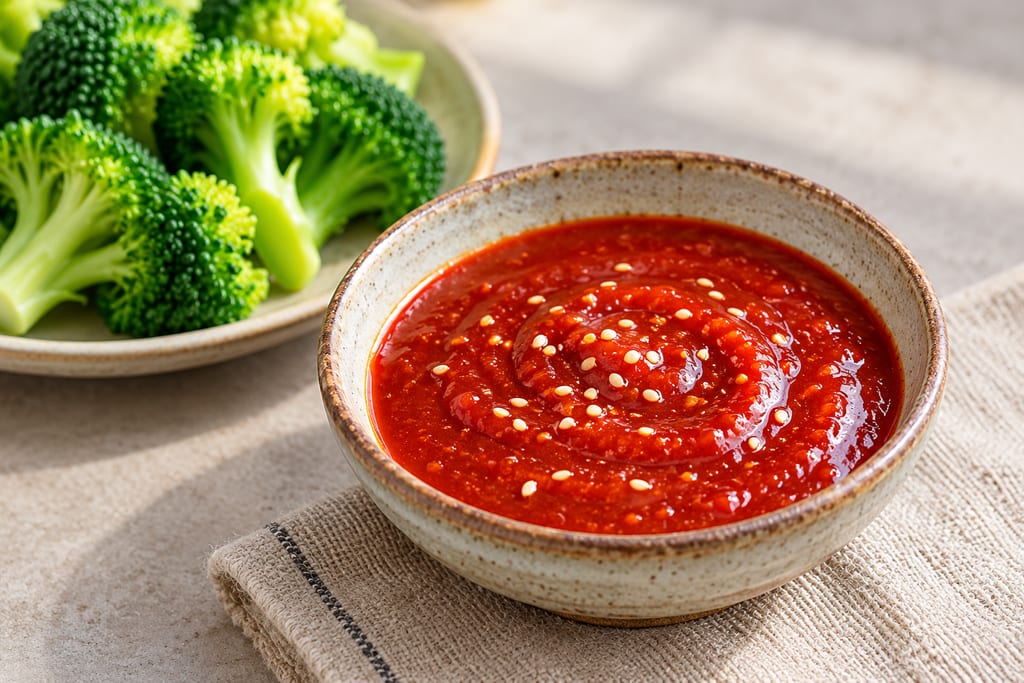
Chogochujang is a Korean sweet-sour sauce made by seasoning gochujang with vinegar and sugar. This development batch adds water and toasted sesame seeds, with optional garlic for the portion being served.
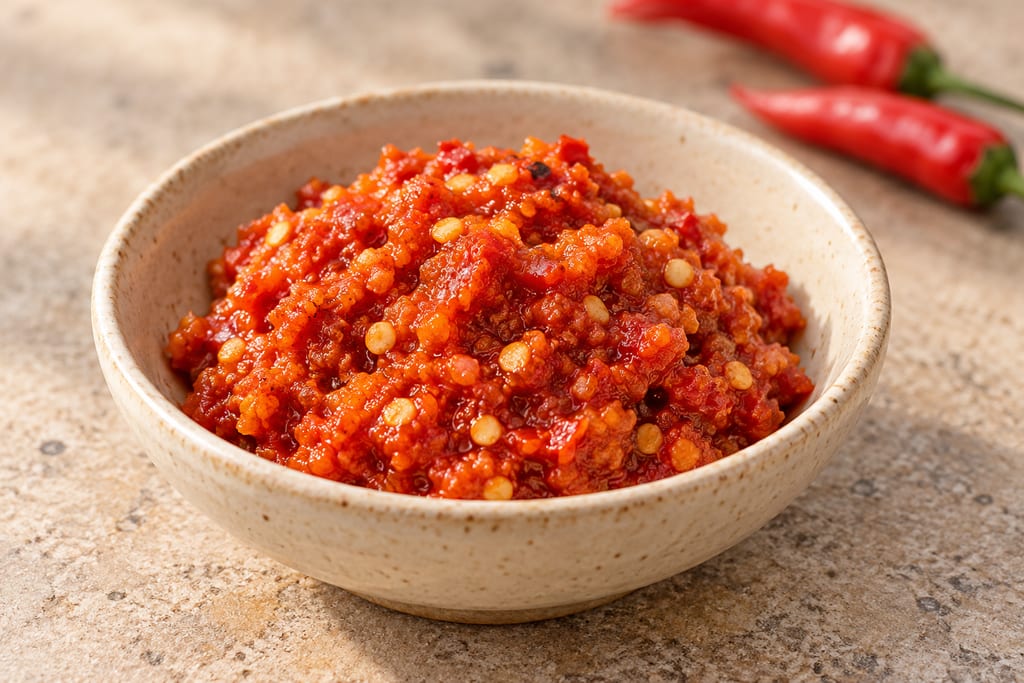
Dinanche, or donne' dinanche, is a Chamorro hot pepper paste of crushed chillies that Guam cooks use on its own or stir into fina'denne'. Its versions range from pepper alone to ones with eggplant, miso or coconut milk.
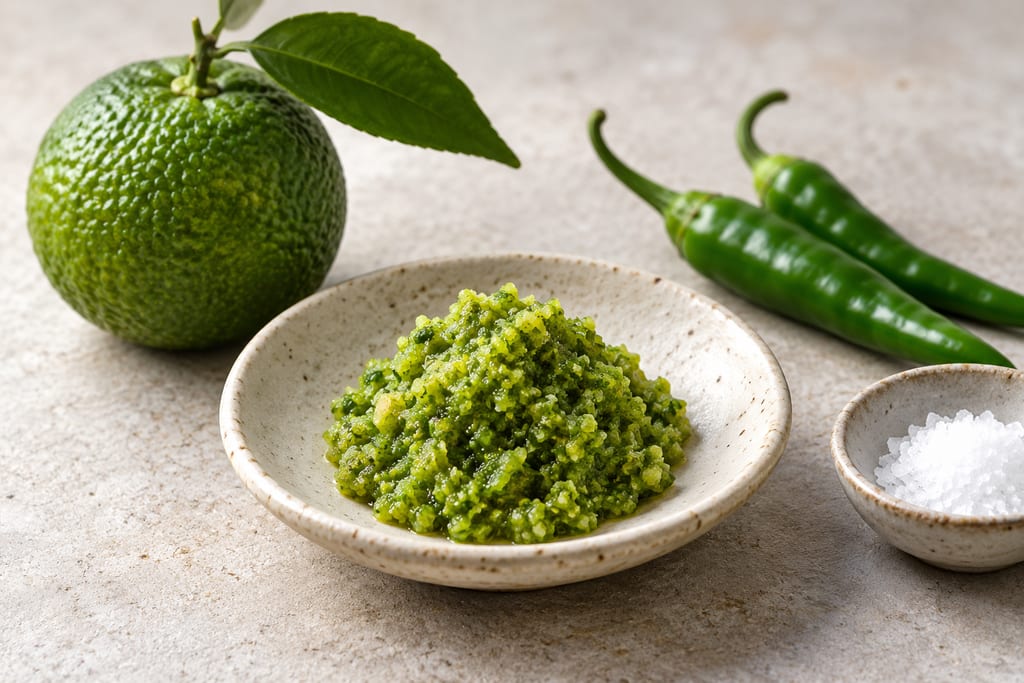
A fresh, uncooked yuzu and green chilli paste inspired by Kyushu’s yuzu kosho, made here as an untested small-batch seasoning rather than a preservation formula.
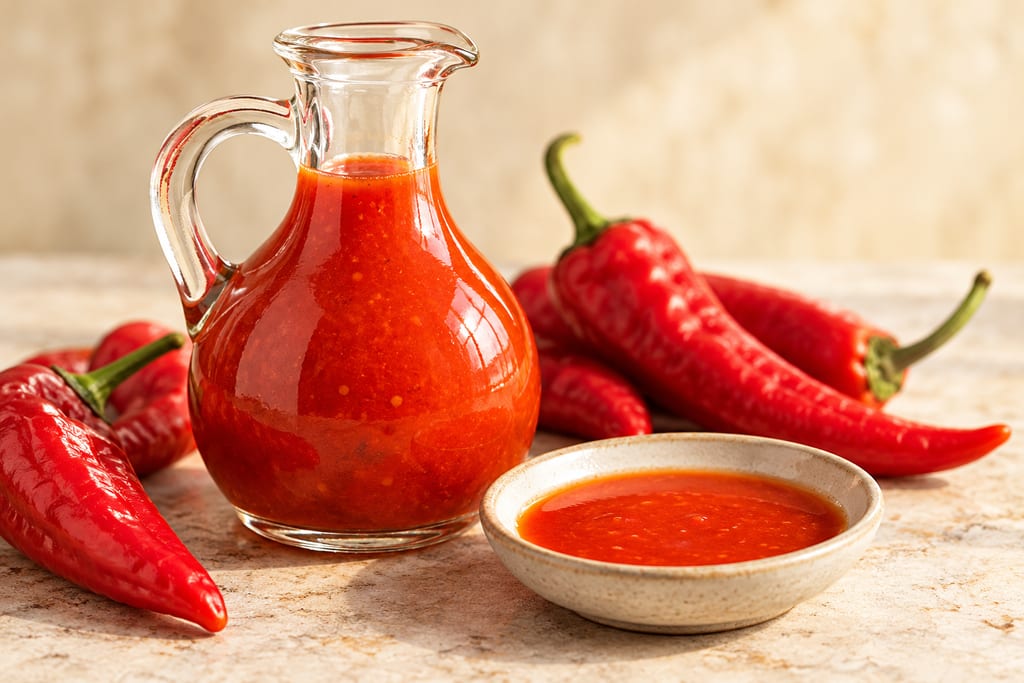
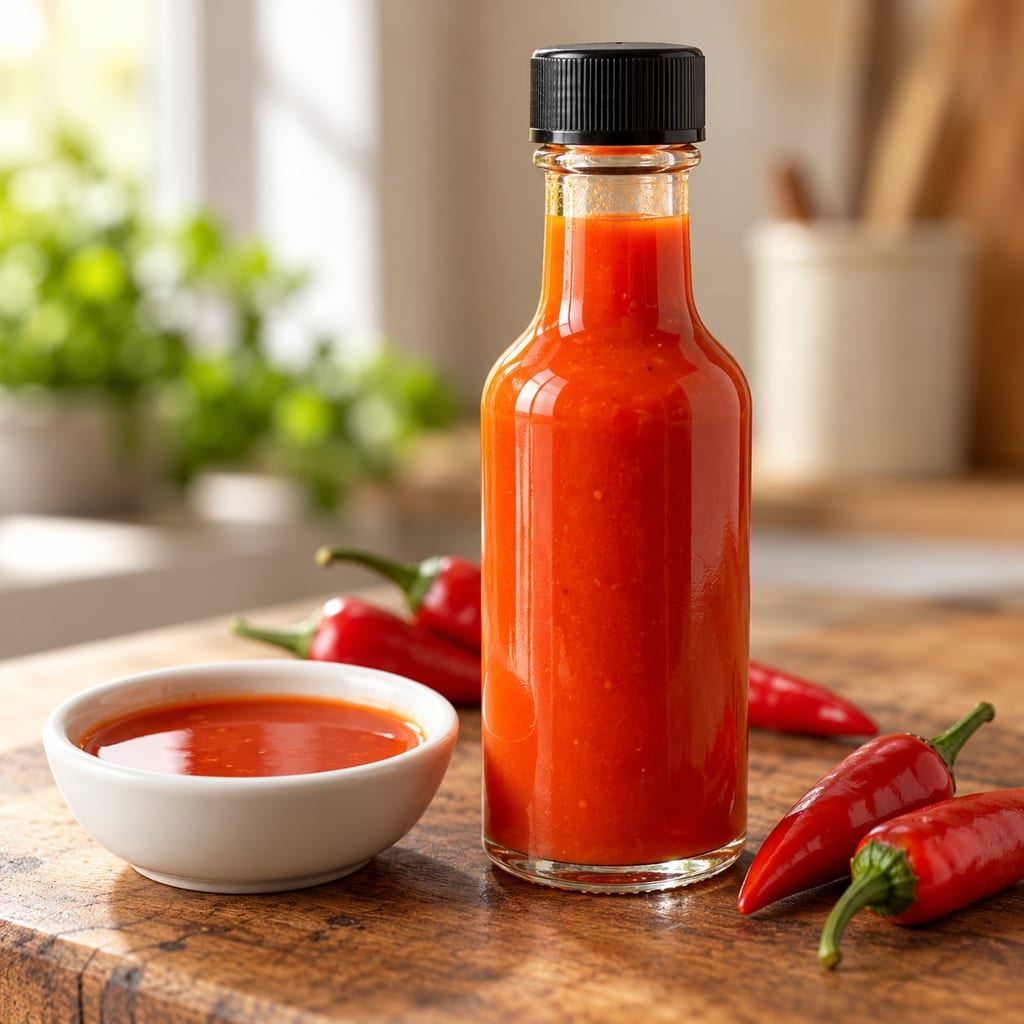
Fresh hot peppers ferment beneath a measured salt brine, then become a bright, tangy sauce blended from the peppers and their liquor.
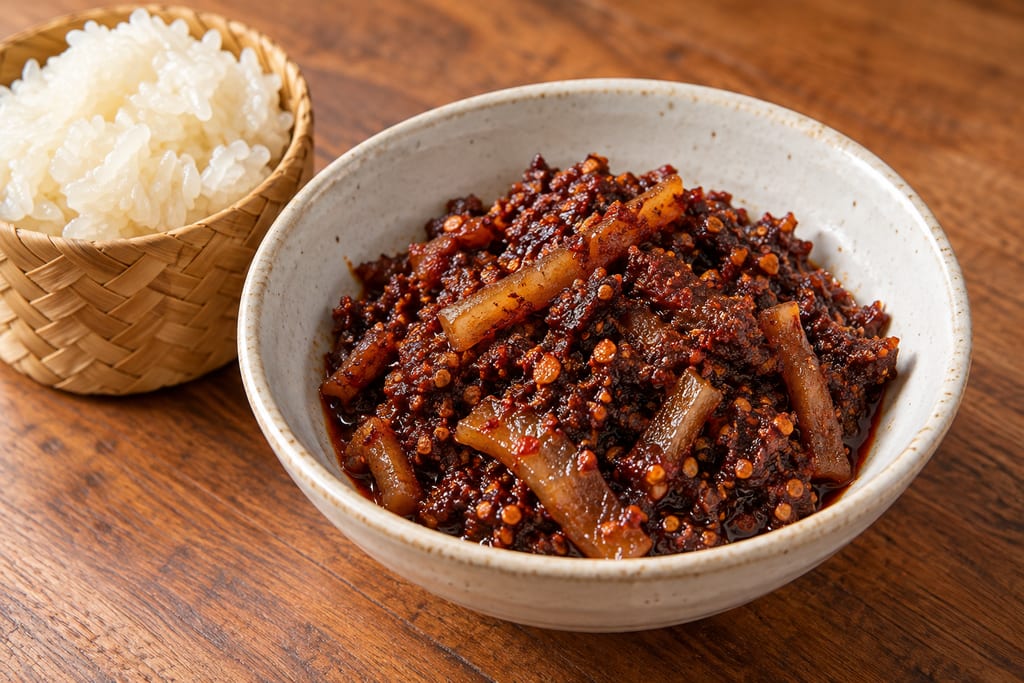
Jeow bong is a Lao paste of dried chilli, shallot, garlic and galangal cooked with buffalo or cow skin, a Luang Prabang specialty eaten with sticky rice and grilled meat.

A modern tomato condiment sharpened with the spicy, savoury tang associated with kimchi; this measured version whisk-mixes prepared ketchup and commercial kimchi seasoning.
Documentary account of Louisiana pepper sauces, using TABASCO's published barrel-aged commercial process as one specific example; the source does not provide a validated home recipe.

Soft, spreadable Calabrian pork sausage made with a great deal of red chilli and fatty pork, stuffed into natural casings, sometimes smoked and matured while staying soft.

A way to add independent temperature logging to an existing food dehydrator without changing its built-in controls or protections. It is a monitoring method, not a rewiring plan.

Pleurotus cystidiosus is the abalone mushroom, a cultivated oyster-type fungus with dark brown caps that grows more slowly and is more demanding than other Pleurotus species.

A dark, balanced vinegar from Emilia-Romagna made by combining cooked or concentrated grape must with wine vinegar, then acetifying and refining it in wood under a protected specification.

A living dairy inoculum that starts controlled cream fermentation, developing acidity and aroma before sour cream or cultured butter is finished.

A small electric incubator holds jars at a selected temperature for yogurt and other documented warm food preparations. Controls, capacity and vessel arrangement vary by model.

Adygean salt is a seasoned table salt associated with Adygea and the wider North Caucasian culinary tradition. Salt is blended with garlic and a variable selection of herbs and spices; the exact mix depends on the named style and maker.

The African Caesar-group mushroom, Amanita masasiensis, is a wild ectomycorrhizal species of central and southern African woodlands, eaten locally. The genus contains deadly poisonous species, so identification needs care.
No community contributions have been published for this entry yet.
Sign in to contribute. Published comments and photos are free to read.
Nadia Chalabi; DPH/Ritimo, drawing on CIRAD-SAR/ALTERSYAL work (August 1996)History · Geography · Use · Trade
La filière nététou au SénégalThe record documents Nététou production and marketing in Senegal, including eleven producer groups in Kagnarou north of Bignona, mainly composed of women.
It describes locally collected or traded néré seeds and sales to Dakar; it does not give a full household process.
Cited in: A Senegalese Parkia condiment; Casamance production and trade
Afrik.com, republished article attributed to CIRAD-derived 1996 reportingIdentity · Method · Geography
Le nététou, condiment traditionnel d’Afrique de l’Ouest, entre dans la modernitéThe article reports seed cooking for 12–24 hours, pounding and washing to remove coats, a second cooking of about three hours, fermentation for 48–72 hours, then salting and partial drying.
It says ball forms are used in Senegal and distinguishes other shapes in Mali and northern Cameroon; those other forms are not assigned to this Senegal preparation.
Cited in: A Senegalese Parkia condiment; Casamance production and trade; Reported process, with unresolved variation; Food safety and open evidence
N'Dir et al.; Cerevisia 24(4):45–50 (1999); bibliographic record supplied by University of Liège to FAO AGRISMethod · Microbiology · Safety
Microbiological quality levels of the traditional netetu process / Procédé traditionnel de fabrication du netetu: composition microbienne et détermination des points critiques de contrôleThe record identifies a Senegalese Parkia biglobosa fermentation process and a study of microbial quality across eight stages.
The associated abstract summary reports an initial 12-hour boil and 48-hour fermentation. Full paper text was not inspected, so its detailed results and safety recommendations are not asserted.
Cited in: Reported process, with unresolved variation; Food safety and open evidence
Diatta et al.; Afrique SCIENCE 17(4):1–17 (2020)Identity · Geography · Use
Importance socio-économique de Parkia biglobosa (Jacq) R. Br. Ex G. Don (néré) dans le système agroforestier en Basse Casamance, SénégalA two-village Basse Casamance study distinguishes fruit pulp from seeds and reports seed fermentation into condiment in the surveyed households.
Its local findings identify Kagnobon and Mangagoulack and should not be generalized to all Senegal.
Cited in: A Senegalese Parkia condiment; Casamance production and trade
Ndir et al.; Biotechnologie, Agronomie, Société et Environnement 4(2):101–105 (2000)Identity · Use
Composition chimique du nététu, condiment alimentaire produit par fermentation des graines du caroubier africain Parkia biglobosa (Jacq.) Benth.The paper identifies Nététou as a food condiment made by fermentation of Parkia biglobosa seeds and analyzes samples of differing origins available in Senegalese markets.
It is a composition study, not a fermentation trial or household safety validation.
Cited in: A Senegalese Parkia condiment