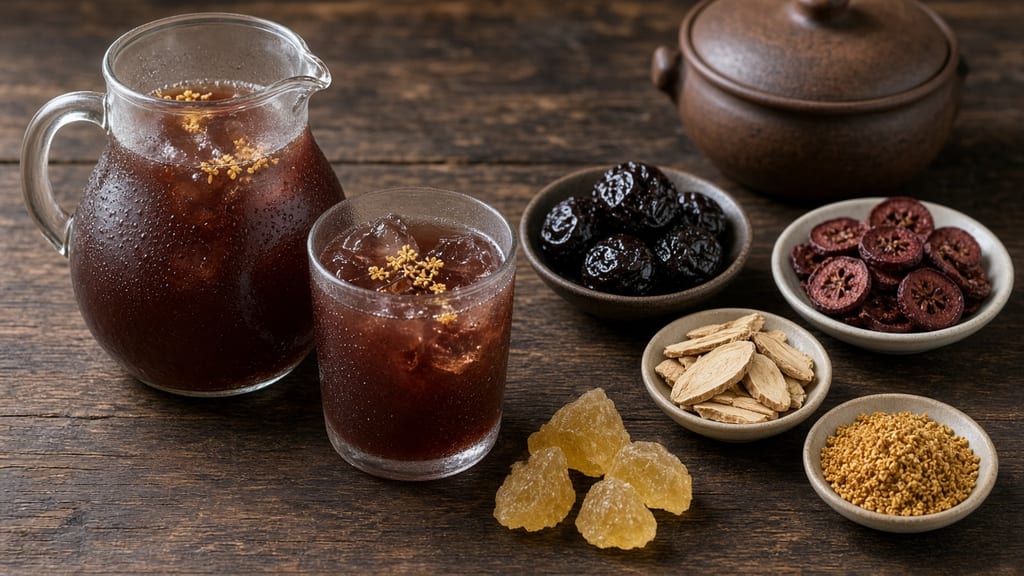
Suanmeitang: Beijing smoked plum drink, 1906 and today
Beijing's smoked-plum summer drink in two parts: the 1906 Yanjing almanac entry quoted in full, then a modern double-decoction recipe and a Taiwanese roselle version, kept cold.
 FermenteaWhere food goes to change
烏梅 · Wumei · Black plum · Smoked plum · 乌梅 · Mume Fructus
Wumei, China's smoke-blackened mume plums: the Qimin Yaoshu method quoted in full, Li Shizhen's lye-steam trick, how producers dry them now, and what safety authorities say about drying plums.
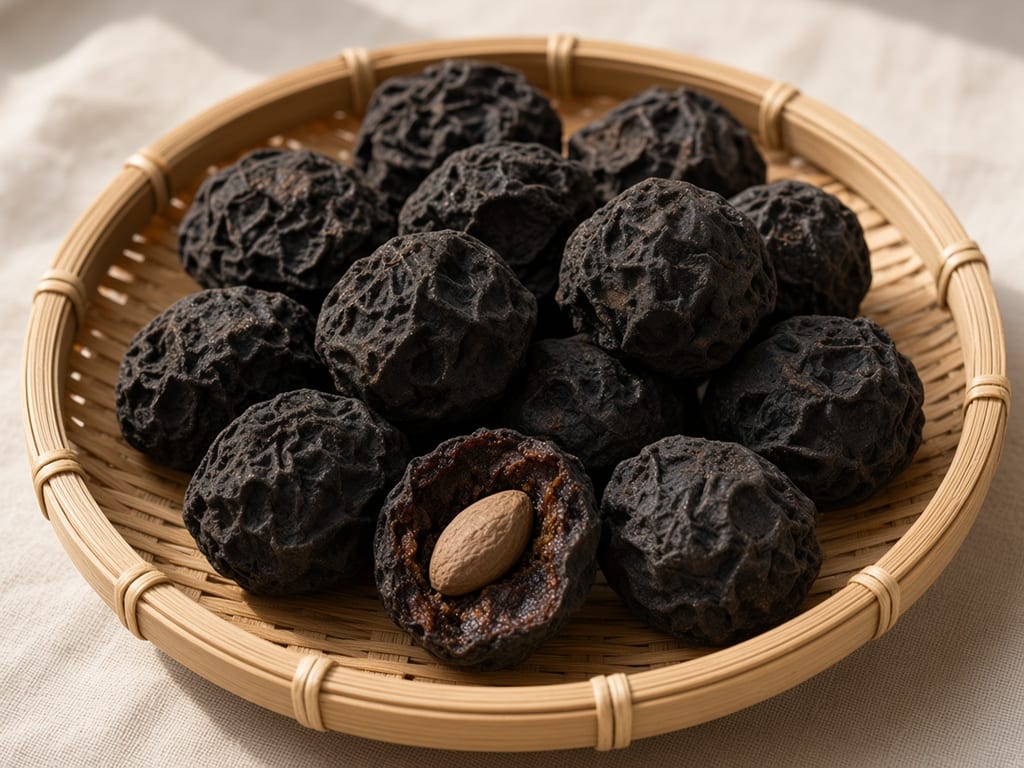
Wumei, written 烏梅 or 乌梅 and meaning black plum, is the fruit of Prunus mume picked before it is fully ripe and then dried with heat, and often smoke, until it turns black. It is the sour, smoky base of Beijing's summer drink suanmeitang.
This page covers how wumei is made: first the oldest written method we found, from the Qimin Yaoshu, quoted in full with Li Shizhen's later notes; then the way producers in China describe the work today; then what home food safety authorities say about drying plums. We did not find a tested home method for black wumei, and we say so where it matters.
A 2024 group standard from the China Nutrition and Health Food Association defines wumei as the dried, nearly ripe fruit of Prunus mume, harvested in summer, dried at low temperature and then closed up until it turns black. The fruit should be round or slightly flattened, 1.5 to 3 cm across, black or brown-black and wrinkled, with a hard stone and a very sour taste.
The same standard sets numbers a buyer can use. Moisture must be no more than 16 per cent, citric acid at least 12 per cent of the dry weight, and lead no more than 5 mg per kilogram, with mycotoxins held to China's national limits. Zhongyi Baodian, a Chinese materia medica site, adds a burnt-sour smell and a very sour, astringent taste.
The Qimin Yaoshu, a farming manual compiled by Jia Sixie under the Later Wei, gives three short methods for preserving mei in its fourth book, in the chapter on planting mei and apricots. We quote them in full, from the Wikisource text, with our translation.
作烏梅法:亦以梅子核初成時摘取,籠盛,於突上熏之,令乾,即成矣。烏梅入藥,不任調食也。 To make black plums: likewise pick the mei when the stone has just formed, put them in a basket, smoke them over the stove flue and let them dry, and they are done. Black plums go into medicine and are not fit for seasoning food.
作烏梅欲令不蠹法:濃燒穰,以湯沃之,取汁,以梅投中,使澤。乃出蒸之。 To keep black plums from being eaten by insects: burn plenty of straw, pour hot water over the ash and take the liquid; drop the plums into it so they are moistened, then take them out and steam them.
作白梅法:梅子酸、核初成時摘取,夜以鹽汁漬之,晝則日曝。凡作十宿、十浸、十曝,便成矣。調鼎和兗,所在多入也。 To make white plums: pick the mei when they are sour and the stone has just formed; soak them in brine by night and dry them in the sun by day. Ten nights, ten soakings and ten sunnings, and they are done. They go into many dishes as seasoning.
Jia Sixie was careful to separate mei from apricot, and the difference matters to anyone buying fruit for wumei. Mei, he says, flowers early and white, apricot late and red; mei fruit is small and sour with a finely patterned stone, apricot fruit large and sweet with a plain one. White mei suits seasoning, and apricot does not. People who say the two are one thing, he adds, are far from the truth.
He also quotes an older commentary on the Book of Songs. Mei, it says, is of the apricot kind, with fruit redder than apricot and sour, and can be eaten raw. Boiled and sun-dried, it goes into soups and relishes; it can be held in the mouth to sweeten the breath; and it can be kept in honey.
Another work he cites, the Guangzhi, says that in Shu, today's Sichuan, a large mei the size of a wild goose egg had its own name, that both mei and apricot could be made into oil and dried fruit, and that yellow mei were made from the ripe ones.
The word to watch is 突, the flue or chimney of a cooking stove. The black plum was made with the smoke and heat that rose from the kitchen fire, in a basket set over it, so the colour came from smoke as well as from drying. The white plum, by contrast, was salted and sun-dried and never smoked.
Jia also records a line that surprises a modern reader: black plums went into medicine and were not used to season food. Salted white plums were the cook's plum. Today wumei is the base of drinks such as suanmeitang, so the split he describes has changed.
The insect-proofing method is a lye bath. Water poured through the ash of burnt straw takes up alkali; the plums are wetted with it and then steamed. Li Shizhen describes the same step centuries later.
Li Shizhen's Bencao Gangmu, the Ming materia medica, repeats and refines the method under mei. Quoting the older Mingyi Bielu, it says mei fruit grows in the mountain valleys of Hanzhong and is picked in the fifth month and dried by fire. Li adds that fruit picked half-yellow and smoked becomes black plum, while green fruit salted and sun-dried becomes white plum, and ripe fruit pressed and sun-dried becomes mei paste.
Under the processing of black plums he writes: 造法取青梅籃盛於突上熏黑,若以稻灰淋汁潤濕蒸過則肥澤不蠧. To make them, take green mei in a basket and smoke them black over the flue; if they are moistened with lye from rice straw ash and steamed, they stay plump and glossy and are not eaten by insects.
Li also notes that mei paste can be mixed into water in summer to quench thirst. That is the drink side of the same fruit, and the line that leads to suanmeitang.
Modern accounts keep the heat and darkness and drop the stove. Zhongyi Baodian gives the main producing areas as Sichuan, Zhejiang, Hunan, Guangdong, Guizhou and Fujian, with Sichuan and Zhejiang as the classic regions. The fruit is picked in May and June, when it is yellow-white or green-yellow and nearly ripe.
The fruit is dried slowly over a low, smokeless fire, or in a drying kiln where coarse husks or straw are burnt to smoke it black. The temperature is held at about 40 C. When the fruit is about sixty per cent dry it is turned gently so it heats evenly. After two to three days and nights the flesh is yellow-brown and wrinkled. The fruit is then closed up for two to three days more, and in that time it turns black. The test is simple: squeeze a handful into a ball; if it falls apart when tossed, it is done.
The same source describes a second method without fire. The fresh fruit is steamed on a bed of straw until soft to the touch, then layered with straw in baskets to sweat for two days, sunned until the skins wrinkle, sweated again for four or five days and then sun-dried.
One local practice keeps an echo of the old ash bath. In Qiyang county, Yongzhou, in southern Hunan, the Maigoo guide says the fruit is picked unripe in mid-May, mixed with charcoal ash from fir wood and then dried over a charcoal fire to make wumei. Ripe fruit from the same trees is sold fresh or turned into preserves, jam, wine and vinegar.
The county grows two groups of mei, according to the same guide. Green mei, which includes peach mei and medicine mei, is green when unripe and still green-yellow when ripe. Red mei, which includes duck-egg mei and plum mei, reddens on the side that faces the sun as it ripens.
The guide also records decline and recovery. Xiamadu district once had tens of thousands of trees producing more than a thousand dan a year, but changes in forest ownership damaged the orchards and output fell; local authorities are now supporting replanting. Maigoo lists Qiyang among ten well-known wumei areas of China, with Dachuan in Sichuan, Shanghang and Yongtai in Fujian, and Changxing in Zhejiang.
No home food safety authority we found gives a method for black wumei. The nearest tested guidance is for drying plums. Colorado State University Extension says to use firm fruit with no decay or mould, leave small plums whole and crack their skins by dipping them in boiling water for one to two minutes and then in ice water, and dry them at 140 F (60 C) in an oven or dehydrator until leathery and pliable.
The National Center for Home Food Preservation then calls for conditioning, which looks much like the Chinese closing-up step: cool the fruit completely, pack it loosely in closed jars for seven to ten days, shake the jars daily, and return the fruit to the dryer if condensation appears. Store it in a cool, dry, dark place; most dried fruit keeps about a year at 60 F and six months at 80 F. Throw out anything mouldy.
The gap matters. Producers dry wumei at about 40 C, well below the 60 C the extension service gives for plums. If you dry mume at home, follow the 60 C guidance; we have no source that says whether fruit dried that way will turn as black as bought wumei. For drinks, bought wumei from a herbal or grocery shop is the practical choice.
Bought wumei should look like the standard describes: black or brown-black, wrinkled, round or a little flattened and 1.5 to 3 cm across, with a hard stone inside and a very sour taste. Zhongyi Baodian gives two kitchen preparations. For clean wumei, pick out any debris, rinse the fruit quickly and dry it. For wumei flesh, soften the fruit by sprinkling it with water or steaming it, let it cool a little, break it open, take out the stone and peel off the flesh, then dry it.
Keep wumei as you would any dried fruit. The National Center for Home Food Preservation advises clean, dry, closed containers, a cool, dry, dark place and regular checks for moisture; glass jars make condensation easy to see. Fruit that has picked up moisture but has not spoiled should be used at once or dried again. Mouldy fruit should be thrown away.
In drinks, wumei is simmered. The Beijing recipe we use for suanmeitang starts with 50 g of wumei, rinsed, together with smoked jujube, hawthorn, cardamom, liquorice and osmanthus in 5 litres of water. A Taiwanese version uses 6 to 8 wumei for about 2 litres of drink. Our suanmeitang page gives both in full.
The drink itself is older in print than either recipe. The Yanjing Suishi Ji, an almanac of Beijing customs published in 1906, describes suanmeitang as sour plums boiled with rock sugar, mixed with rose, osmanthus and ice water, so cold it made the teeth ache.
Ripeness: the Qimin Yaoshu picks when the stone has just formed; Li Shizhen picks half-yellow fruit; the 2024 standard and Zhongyi Baodian pick nearly ripe fruit; Qiyang picks unripe fruit in mid-May.
Smoke: the old texts smoke the fruit over the stove flue; Zhongyi Baodian allows a smokeless low fire or a husk-smoked kiln; the 2024 standard says only low-temperature drying.
Temperature: producers dry at about 40 C; Colorado State University Extension gives 60 C for drying plums at home.
Qimin Yaoshu book 4 gives the method for black plums; Bencao Gangmu repeats and extends it; modern producer accounts and a 2024 standard describe current practice.
Scaling: linear
Warm or under-dried fruit can sweat and allow mould to grow.
Hazard sourceProducers dry at about 40 C; the extension guidance for drying plums at home is 60 C.
Hazard sourceThe 2024 standard limits lead to 5.0 mg/kg and holds mycotoxins to national limits.
Hazard sourceDry plums at home at 140 F (60 C) until leathery and pliable.
Control sourceCondition in closed jars 7 to 10 days, shaking daily; redry if condensation appears.
Control sourceStore cool, dry and dark; discard mouldy fruit.
Control sourceNo home food safety authority gives a tested method for black wumei.
Discard any fruit with mould or off odours.
Qimin Yaoshu method for black plums.
Bencao Gangmu: mei from the valleys of Hanzhong, picked in the fifth month.
Classic producing regions.
Unripe fruit mixed with fir charcoal ash and dried over charcoal.
Beijing's smoked-plum summer drink in two parts: the 1906 Yanjing almanac entry quoted in full, then a modern double-decoction recipe and a Taiwanese roselle version, kept cold.
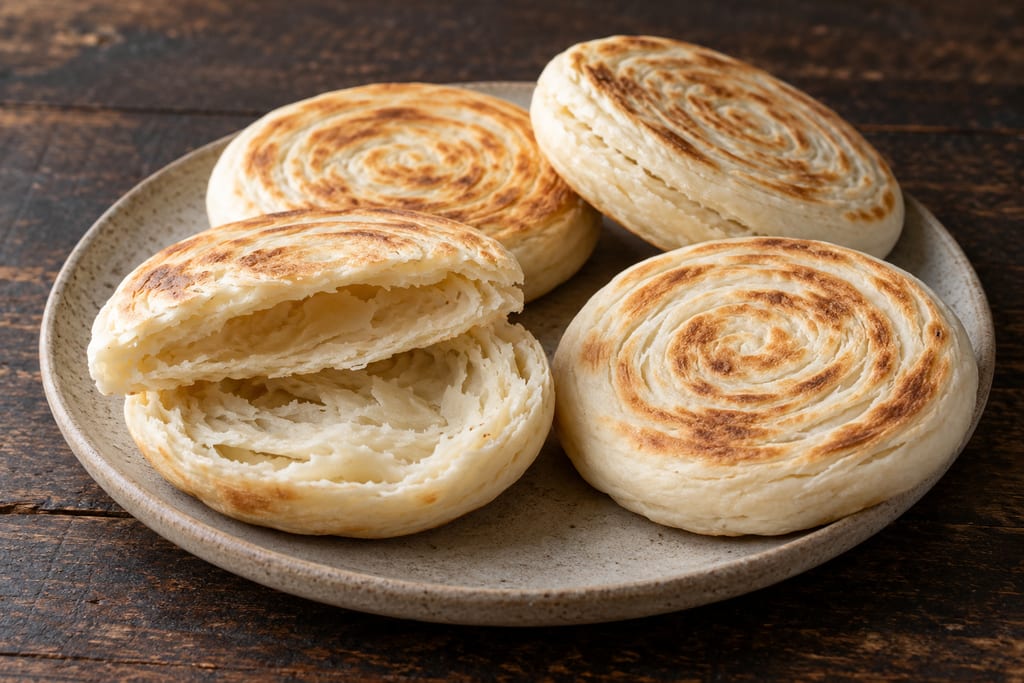
This Shaanxi-associated yeast flatbread uses a simple water dough, coiled shaping and a skillet bake. It is the bread used in roujiamo, not the filled meat dish.
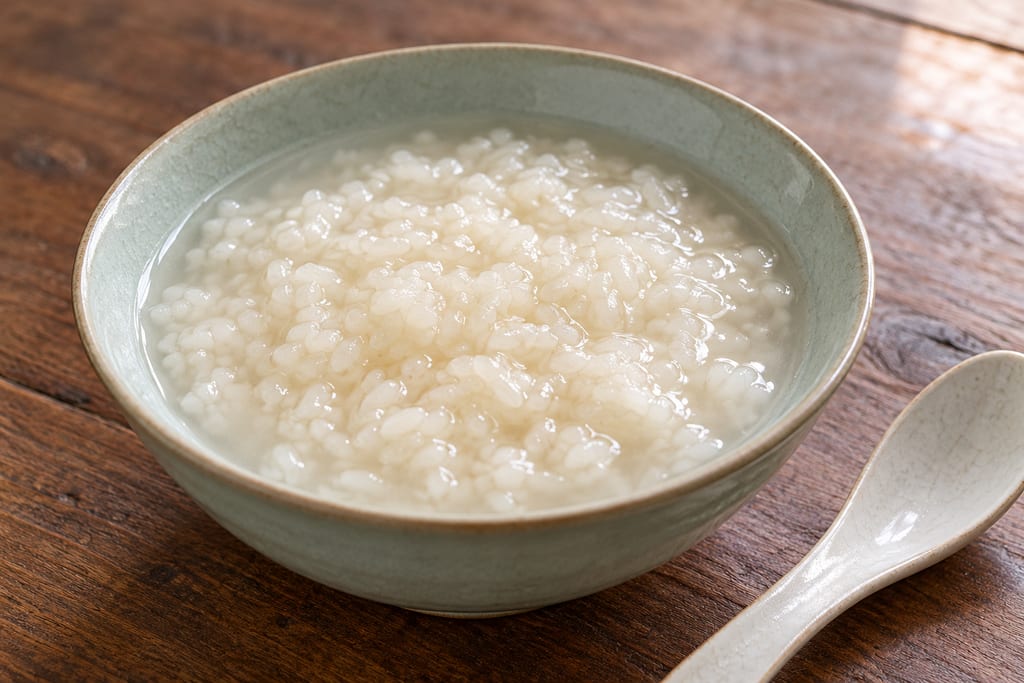
Chinese sweet fermented glutinous rice: steamed rice and a mixed jiuqu starter, where mould enzymes release sugar and yeast makes a little alcohol, eaten with its sweet liquid.
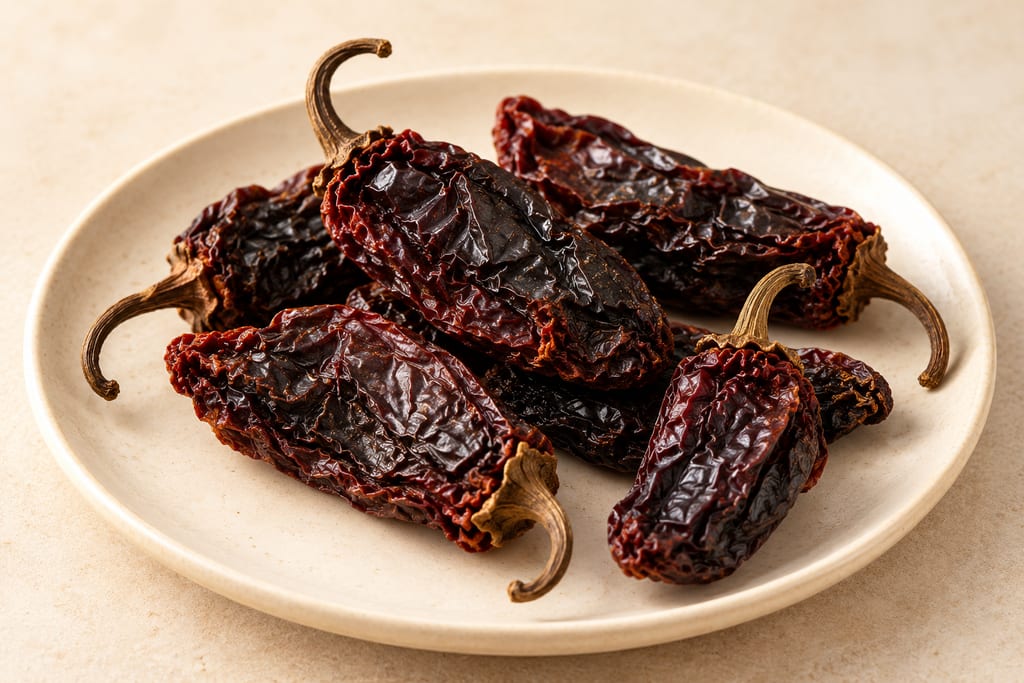
Chipotle is a ripe jalapeño pepper smoke-dried in a wood-fired cocedor. Camargo, Chihuahua, documents a large-scale version of the process; its source accounts do not establish a complete home batch or validated safety endpoint.
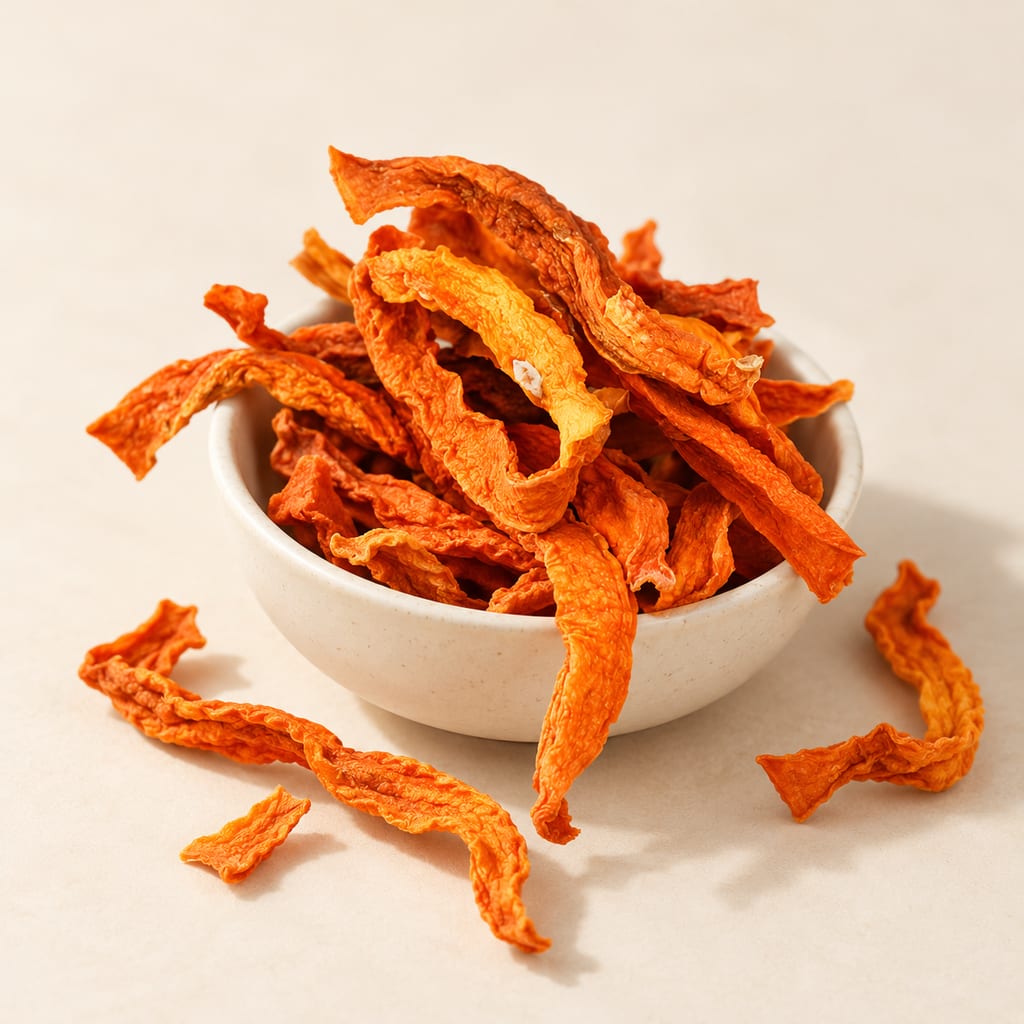
Steam-blanched pumpkin dried until brittle, kept as pieces or ground into powder, with pumpkin-specific packaging and quality guidance.
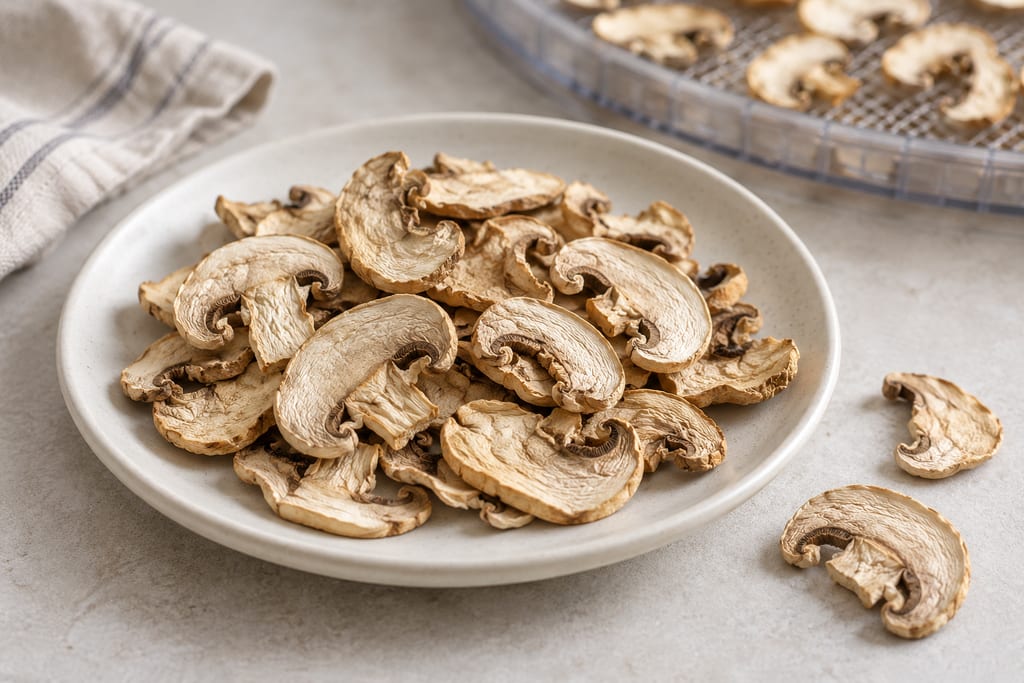
Hot-air dehydrated mushrooms are sliced mushrooms dried in a dehydrator or dryer with heated, moving air; a 2011 study dried button mushroom slices at 60 °C and compared them with microwave-vacuum and freeze-drying.
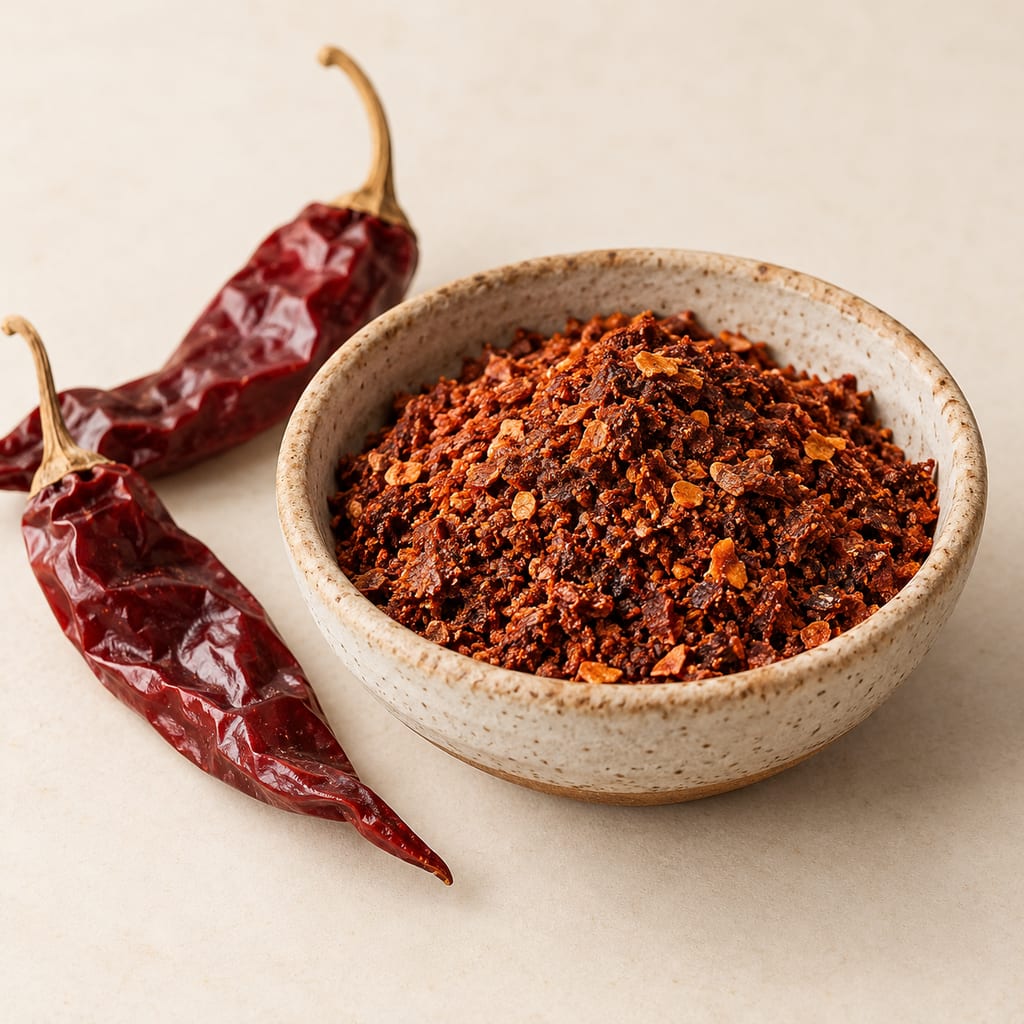
Merkén is the Mapuche seasoning of dried, smoked and ground ají cacho de cabra chile, sometimes with toasted coriander seed and salt, made in the Maule and La Araucanía regions of Chile.
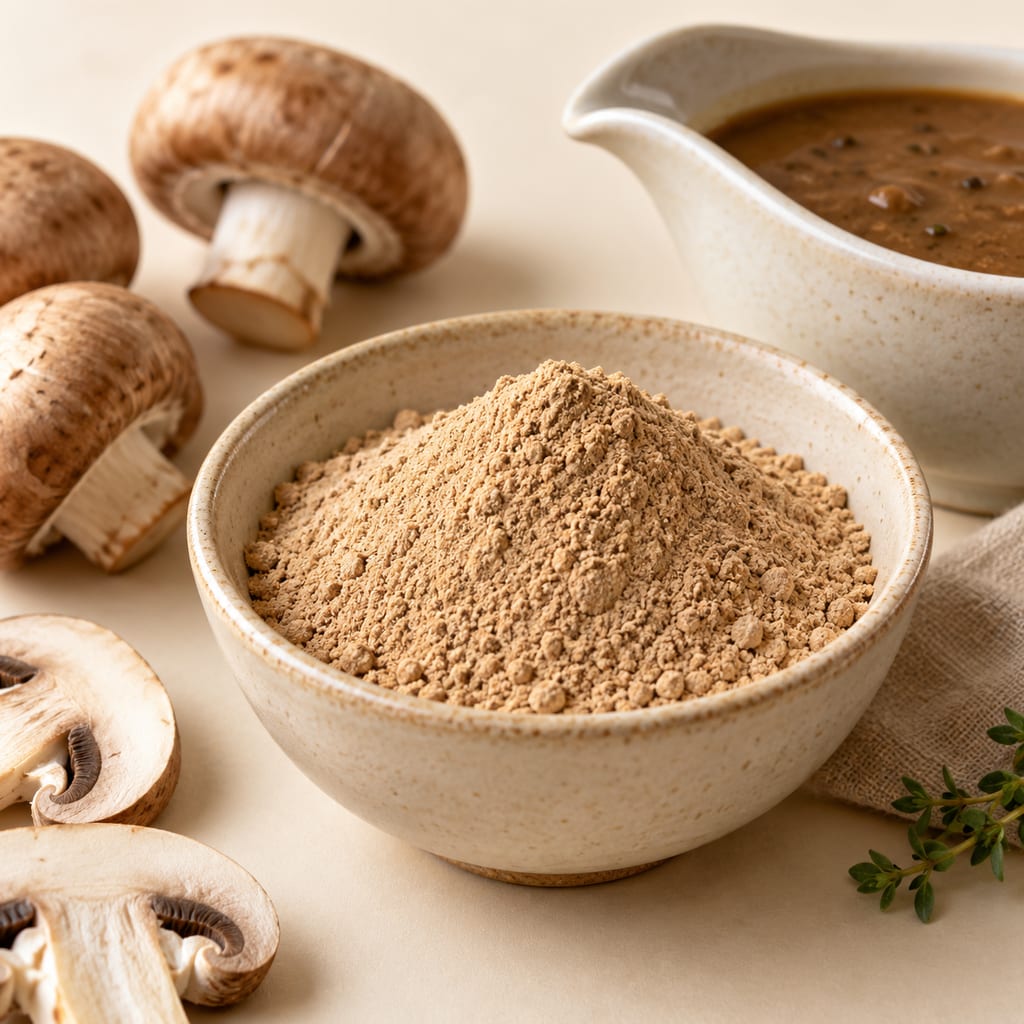
Mushroom powder is dried mushroom tissue ground to a fine powder and added to gravies and sauces. Victorian cooks made it from fresh cultivated mushrooms when fresh ones were not to hand.
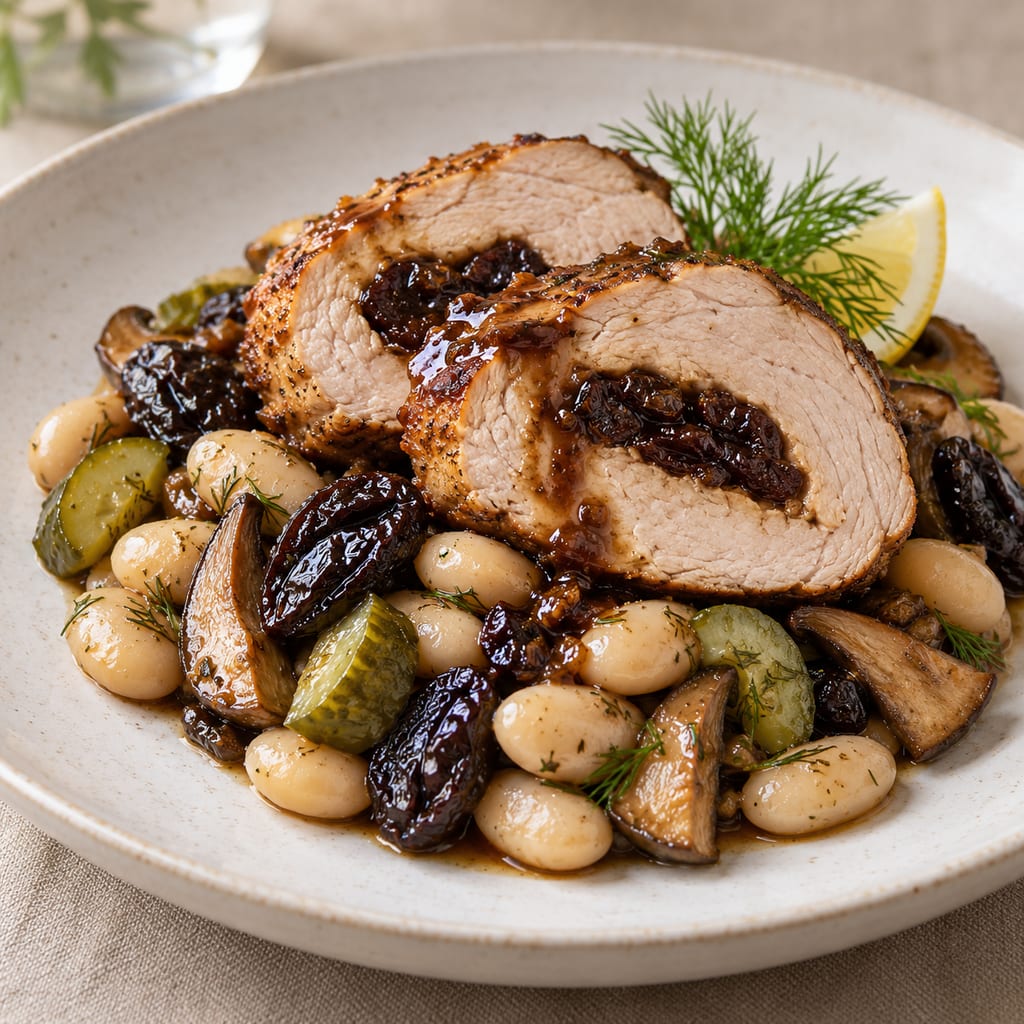
This Polish competition recipe stuffs pork loin with suska and serves it with a bean salad containing more smoked-and-dried plums.
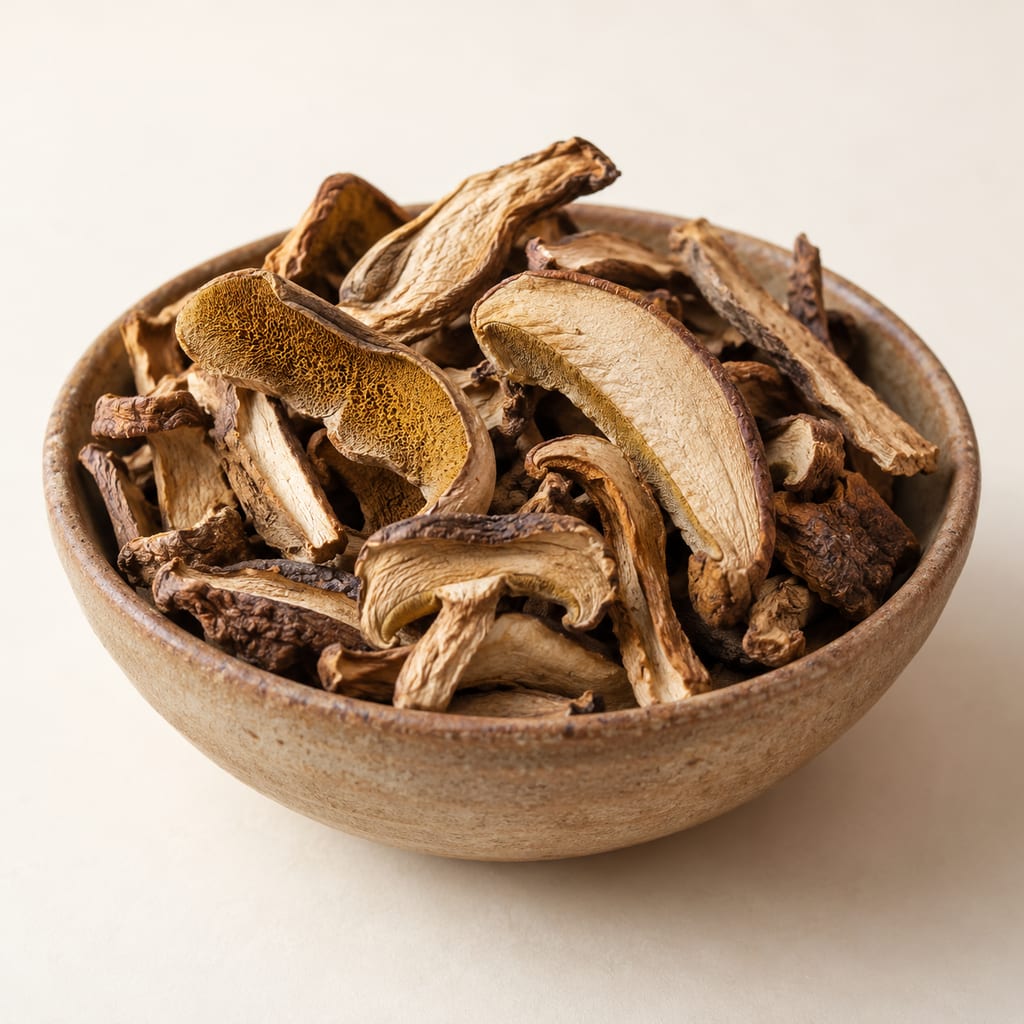
Protected solar-dried mushrooms are slices of wild Suillus luteus dried under a shade cover, a fitotoldo, rather than in open sun, as tested in an experimental study from Apurímac, Peru.
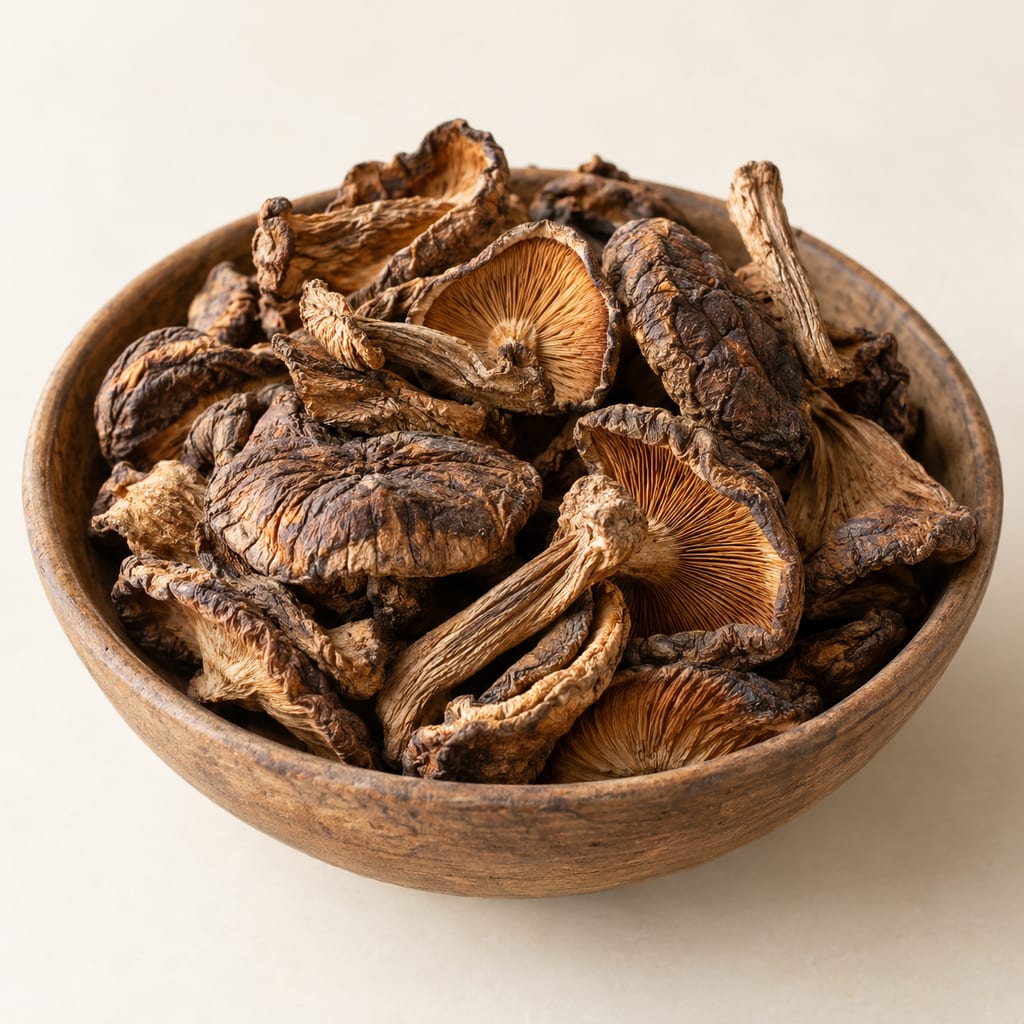
Hearth-dried mushrooms are dried on shelves above a cooking fire, so heat and smoke reach them. Tanzanian records describe the method; a Vietnamese study tested smoke-dried shiitake for fuel-dependent contaminants.
Protected Italian vinegar made only from cooked grape must, fermented and aged in a battery of wooden barrels for at least 12 years: sweet, sharp and syrupy.
Airag is Mongolia’s fermented mare’s-milk drink, traditionally churned with saved starter in a reusable cowhide khokhuur.
Appam, or hoppers, are South Indian and Sri Lankan rice pancakes made from a fermented coconut-and-rice batter and cooked in a curved pan to a crisp lacy rim and a soft, spongy centre.
Auricularia tremellosa is a wood ear fungus of the genus that supplies most dried wood ear sold in China; its own food record is thin, and the culinary practice described here comes from the closely related wood ear species.
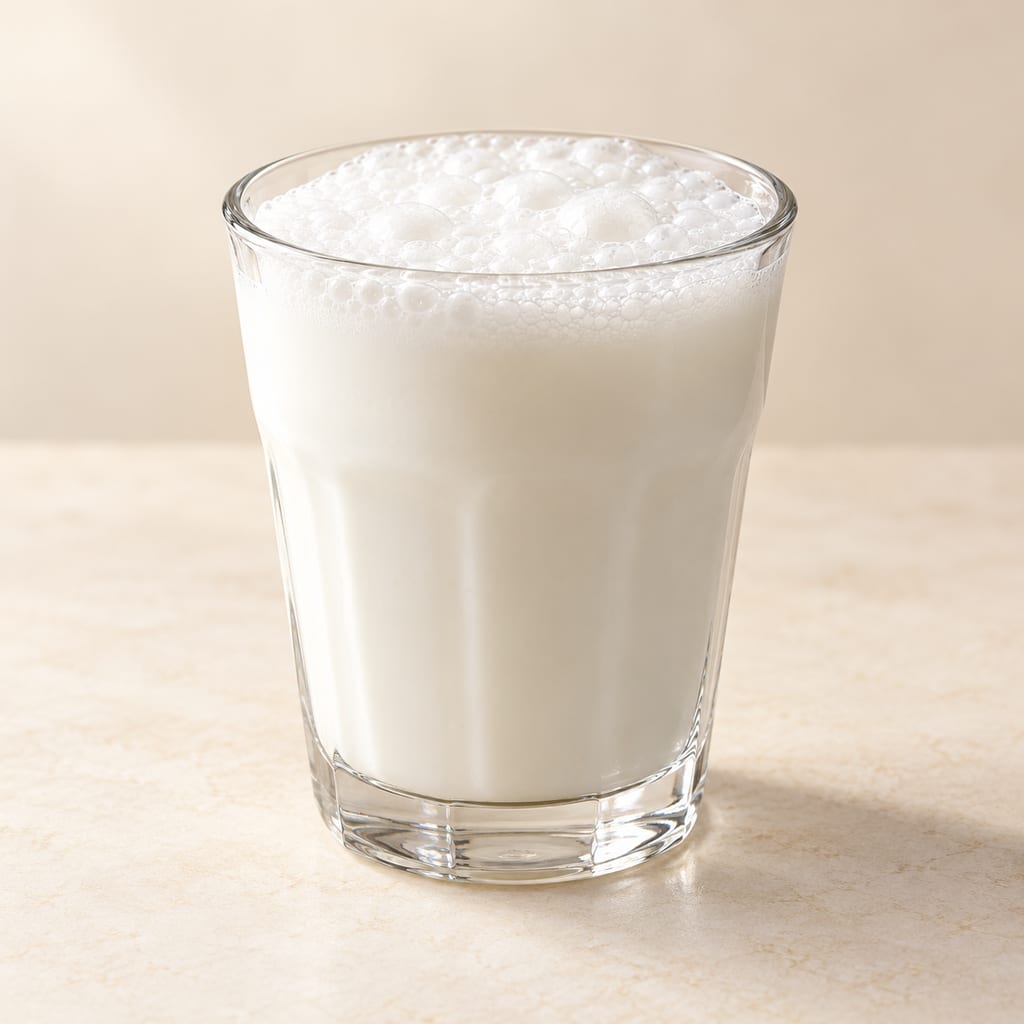
Ayran is Turkey’s cold, savoury yogurt drink: plain yogurt is loosened with water and lightly salted, then whisked smooth or aerated into a soft cap of foam.
A thin stone griddle used over an open hearth. Norwegian archaeology documents the established tradition from the early Middle Ages; a Viking-period origin is only a cautious suggestion linked to Shetland.
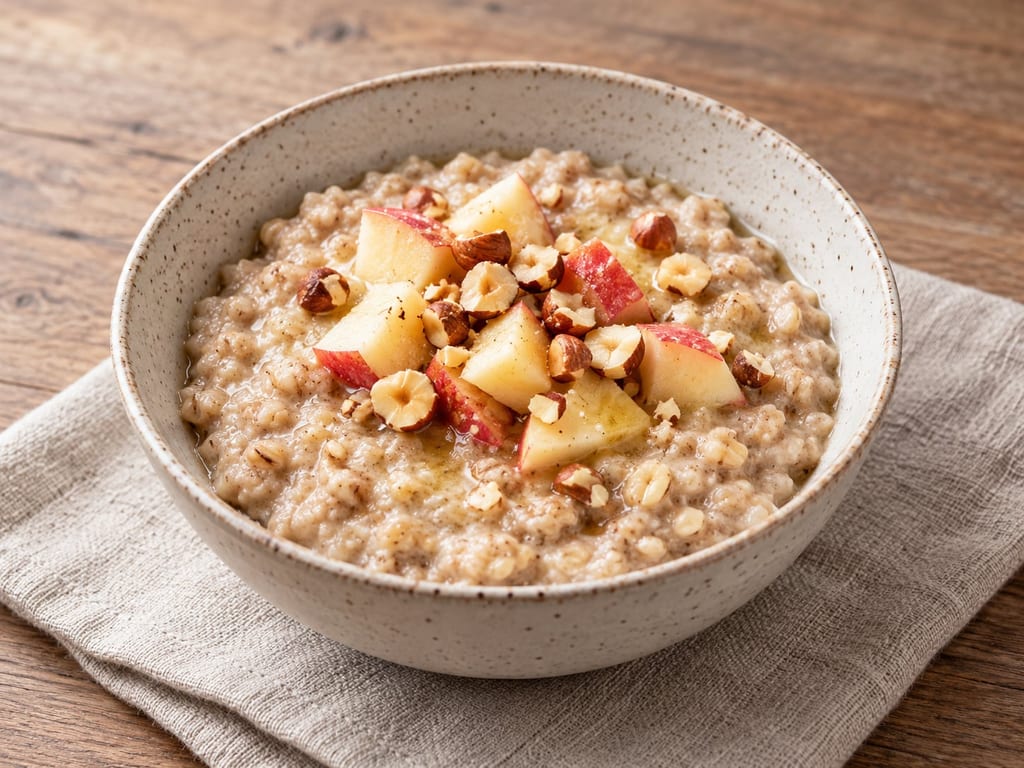
Crushed or milled barley cooked in water until the starch softens and the mixture thickens, the plainest way a northern household turned stored grain into a meal, here with apple and hazelnut.
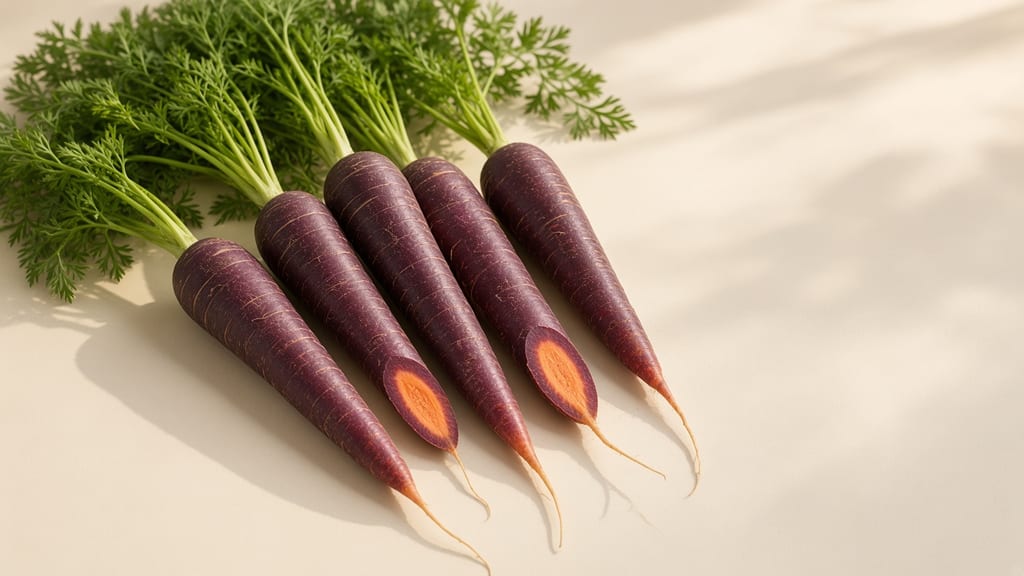
Black carrot is the anthocyanin-pigmented Eastern carrot (Daucus carota var. atrorubens), the purple root that preceded orange types and still colours kanji and şalgam.
No community contributions have been published for this entry yet.
Sign in to contribute. Published comments and photos are free to read.
Wikisource (Chinese)
齊民要術 卷第四 (Qimin Yaoshu, book 4), 種梅杏第三十六White plum and black plum methods; lye-and-steam insect proofing; mei versus apricot; Guangzhi and Book of Songs commentary quotes.
Cited in: Part one: the Qimin Yaoshu method; Mei, not apricot; Reading the old text; Where the sources disagree
Wikisource (Chinese), Siku Quanshu text
本草綱目 卷二十九 (Bencao Gangmu, book 29), 梅Hanzhong mei fire-dried in the fifth month; half-yellow fruit smoked for black plum; green salted for white plum; mei paste in water in summer; lye-and-steam method.
Cited in: Reading the old text; Li Shizhen's notes; Where the sources disagree
中医宝典 Zhongyi Baodian
乌梅产地加工 (Producing-area processing of wumei)Producing areas; harvest May to June, nearly ripe.
Dry over low smokeless fire or husk-smoked kiln at about 40 C, turning at 60 per cent dry, 2 to 3 days and nights; close up 2 to 3 days until black; ball test.
Steam-and-sun method; clean wumei and wumei flesh; product description.
Cited in: What this recipe is; What the finished fruit looks like; Part two: how producers make wumei now; Buying and preparing wumei; Where the sources disagree
Maigoo
祁阳乌梅 (Qiyang wumei)Qiyang, Yongzhou, Hunan: green and red mei; picked unripe mid-May, mixed with fir charcoal ash, dried over charcoal.
Past output, decline and replanting; list of ten wumei areas.
Cited in: Qiyang, Hunan; Where the sources disagree
China Nutrition and Health Food Association, 2024
T/CNHFA 111.123-2024 保健食品用原料 乌梅 (Raw materials for health food: Mume Fructus)Definition: dried nearly ripe Prunus mume fruit, low-temperature dried then closed up until black.
Appearance 1.5 to 3 cm, black, wrinkled, very sour; moisture at most 16 per cent; citric acid at least 12 per cent; lead at most 5.0 mg/kg; mycotoxins per GB 2761.
Cited in: What this recipe is; What the finished fruit looks like; Part two: how producers make wumei now; Buying and preparing wumei; Where the sources disagree
Colorado State University Extension
Preserve Smart: Drying plums and prunesFirm fruit without mould; crack skins of whole plums in boiling water 1 to 2 minutes; dry at 140 F (60 C) until leathery; condition; store cool, dry, dark, 6 to 12 months; discard mouldy fruit.
Cited in: Making it at home: what the authorities say; Where the sources disagree
National Center for Home Food Preservation, University of Georgia
Packaging and Storing Dried FoodsCool before packing; condition 7 to 10 days, redry if condensation; store cool, dry, dark; about 1 year at 60 F, 6 months at 80 F; discard mouldy food.
Cited in: Making it at home: what the authorities say; Buying and preparing wumei
Jiangxi Caipu
正宗老北京桂花酸梅汤 (Old Beijing osmanthus suanmeitang)50 g wumei with smoked jujube, hawthorn, cardamom, liquorice and osmanthus in 5 litres water; rinse first.
Cited in: Using wumei in drinks
Wikisource (Chinese)
燕京歲時記 (Annual Customs of Yanjing), entry 酸梅湯Suanmeitang: sour plums boiled with rock sugar, mixed with rose, osmanthus and ice water.
Cited in: Using wumei in drinks
HeroHerb, Taiwan
酸梅湯怎麼做?烏梅、山楂、洛神比例與煮法 5 步驟6 to 8 wumei for about 2,000 ml of drink.
Cited in: Using wumei in drinks