Equipment
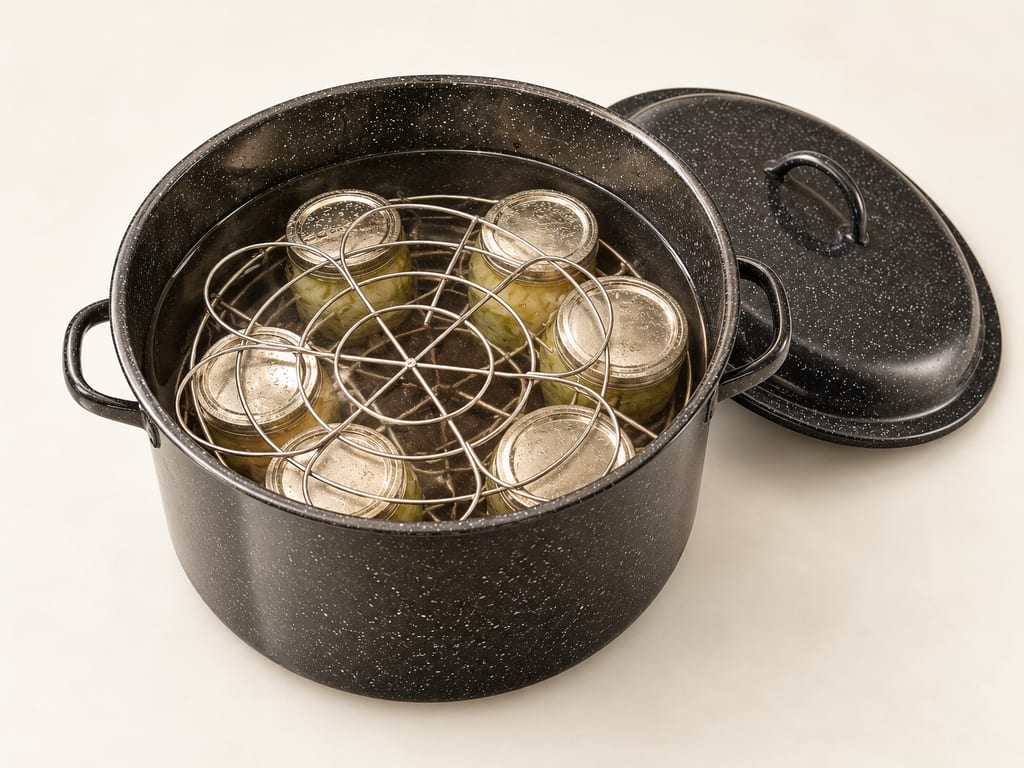
Boiling-water canner
A deep, lidded pot with a removable rack processes jars beneath boiling water. It is intended for foods with tested boiling-water processes; low-acid foods require pressure canning.
 FermenteaWhere food goes to change
626 sourced equipment pages: vessels, tools, appliances and built structures.
A deep, lidded pot with a removable rack processes jars beneath boiling water. It is intended for foods with tested boiling-water processes; low-acid foods require pressure canning.
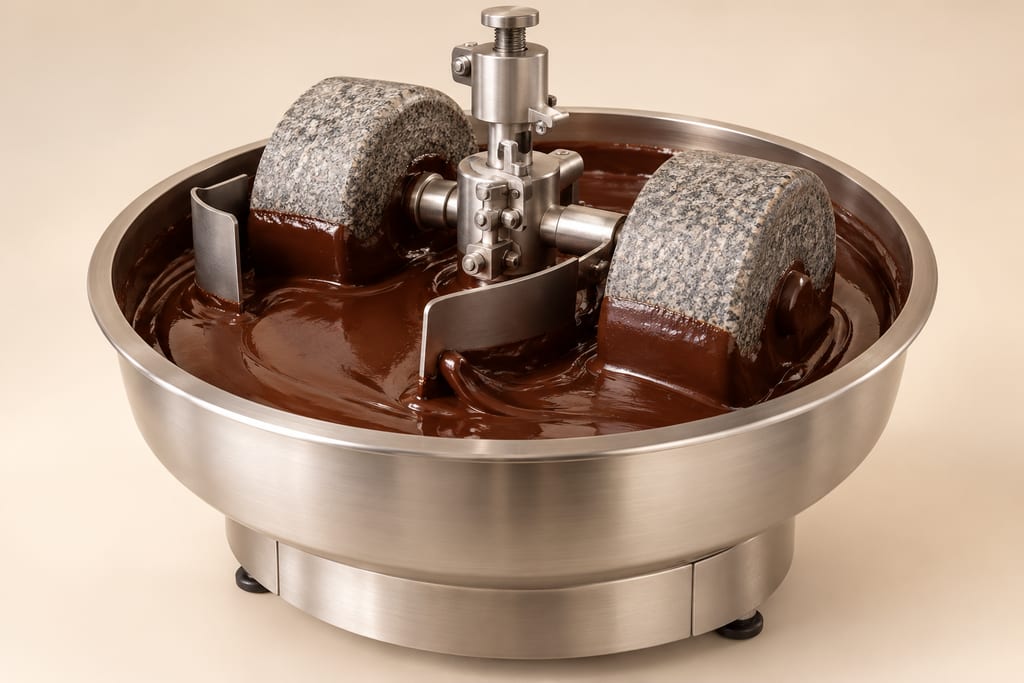
A chocolate refiner or melanger uses powered rotation and stone rollers to refine cocoa mass. Some models also process nut and seed pastes; design, material and operating limits vary.
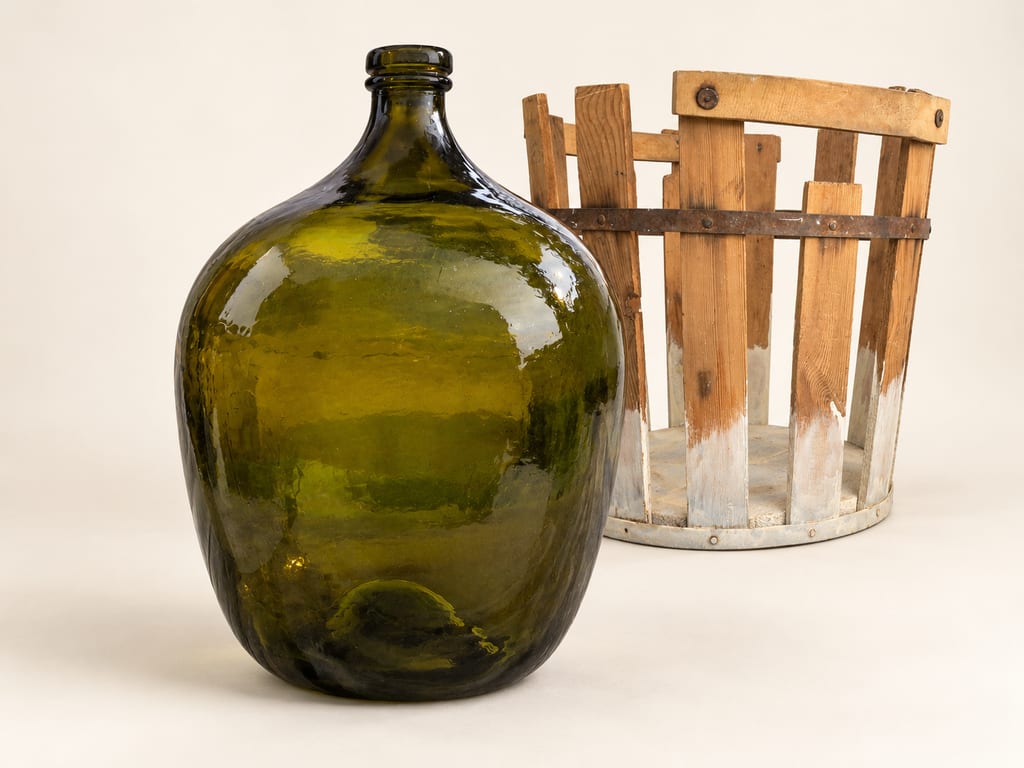
A glass demijohn or carboy is a stout, usually rounded bottle with a narrow neck, used for beverage fermentation, maturation, storage or transport. Its glass body, closure and any protective carrier are distinct parts of the vessel system.
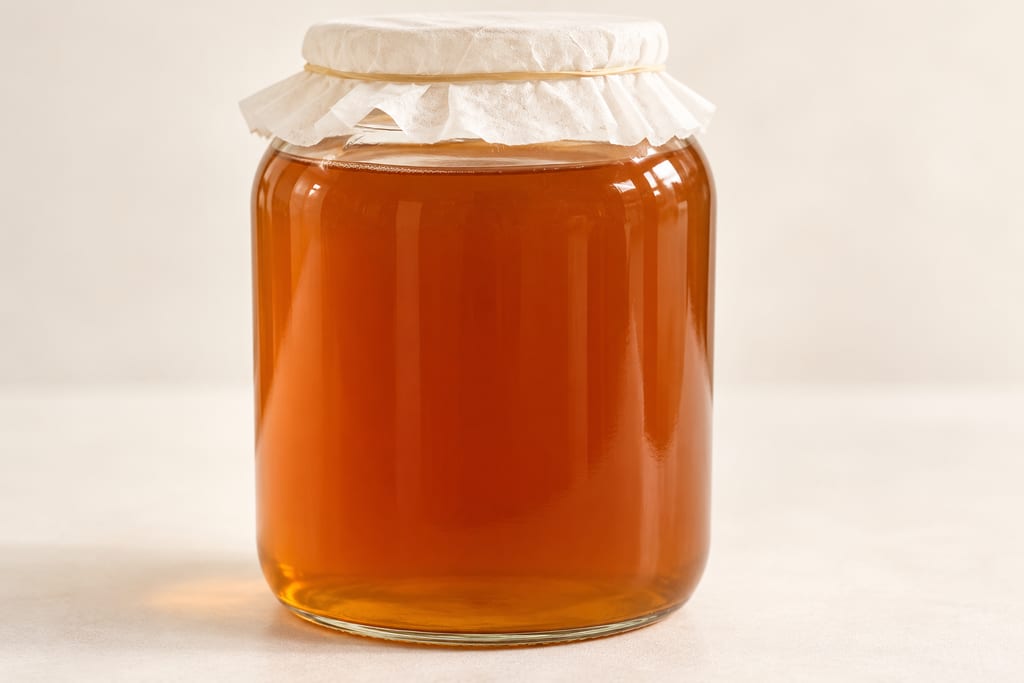
A wide-mouth jar or broader tank holds sweetened tea beneath a breathable cover as kombucha acidifies at an oxygen-accessible surface. Surface area relative to liquid volume can change oxygen transfer and fermentation.
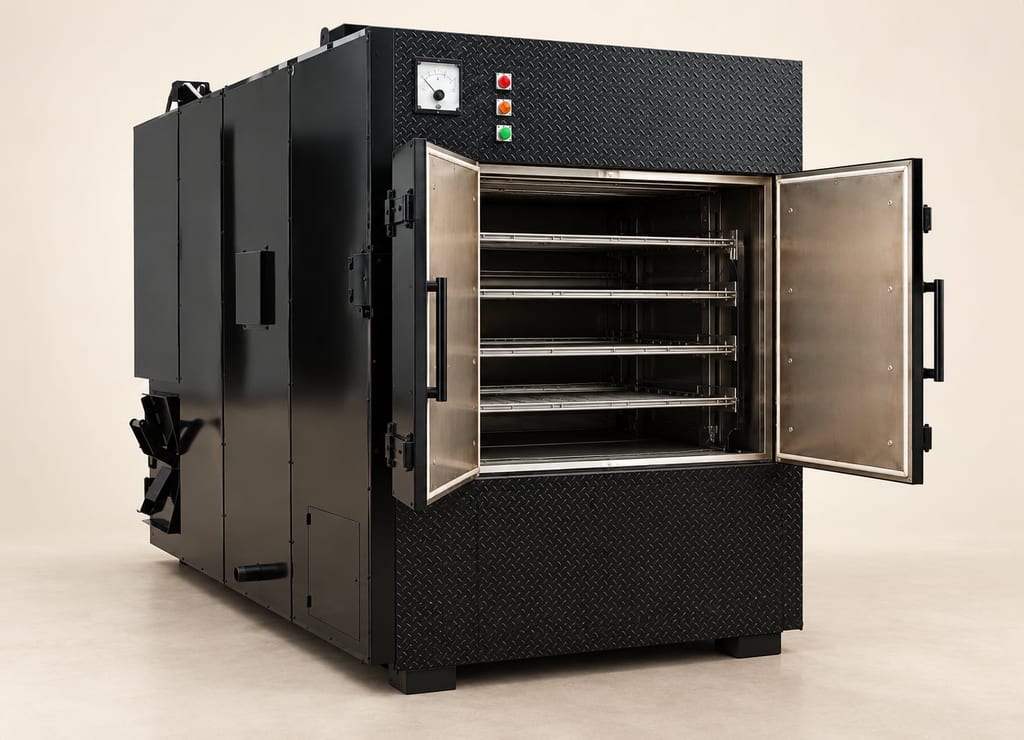
A large, wood-fired commercial smoker with thermostatically controlled rotating racks. J&R lists 18 racks, 1,000 lb maximum meat load, and a 56 × 104 × 79 inch body.
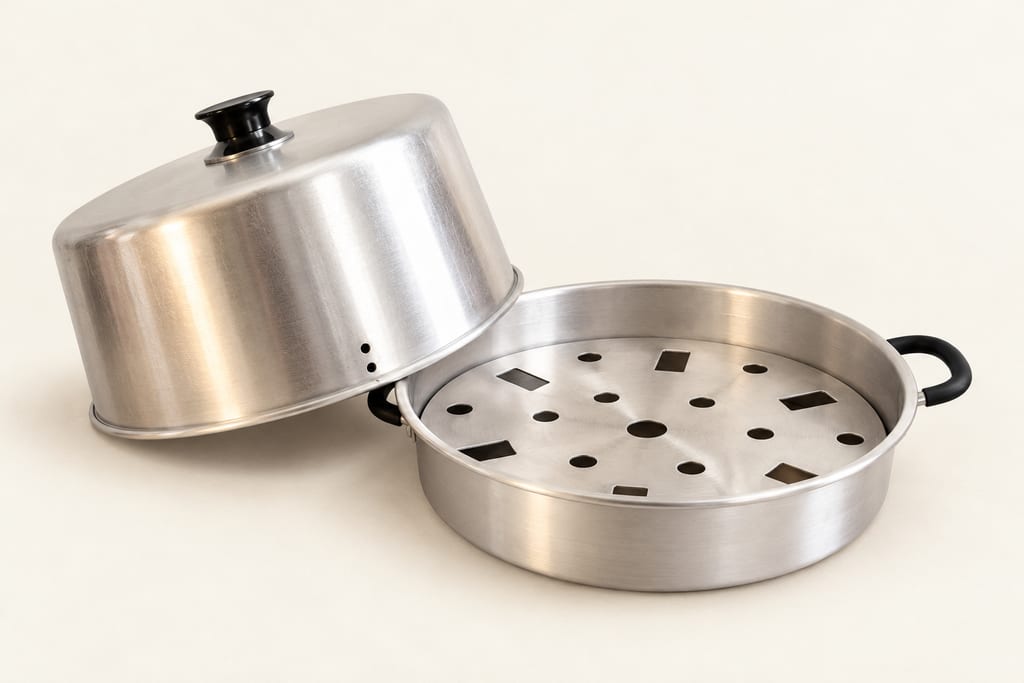
A shallow rack base and tall vented cover process jars in atmospheric steam. NCHFP limits the method to tested high-acid or acidified recipes requiring no more than 45 minutes, including altitude adjustment; this is not pressure canning.
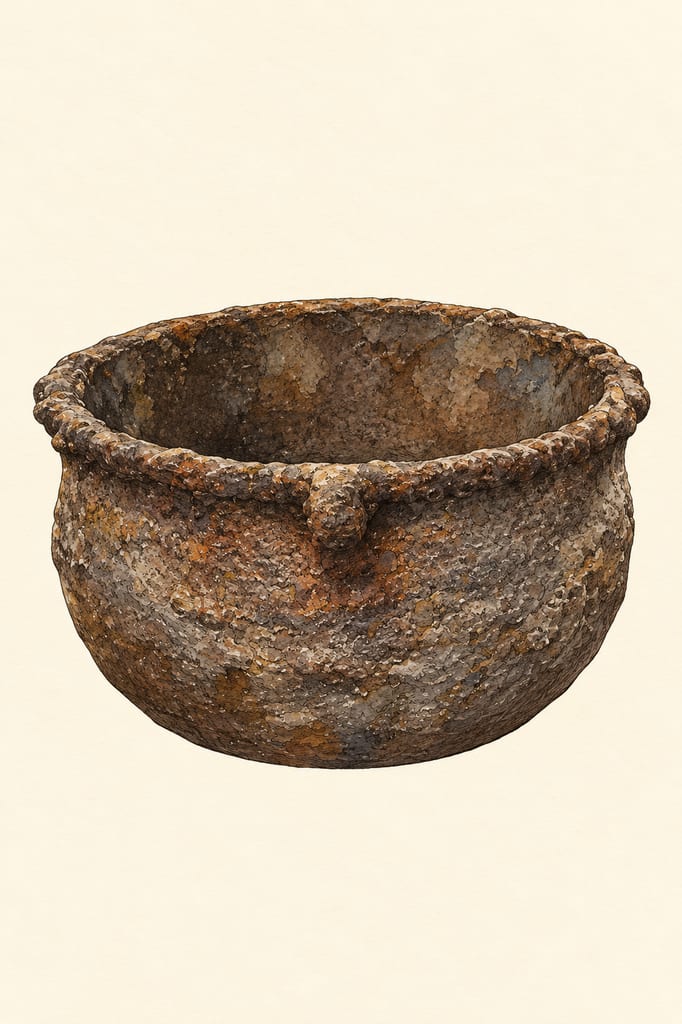
A heavy cast-iron cauldron used aboard whaling ships to render blubber; James Macrae also records Hawaiian chiefs distilling ti-root liquor in iron try-pots in 1825.
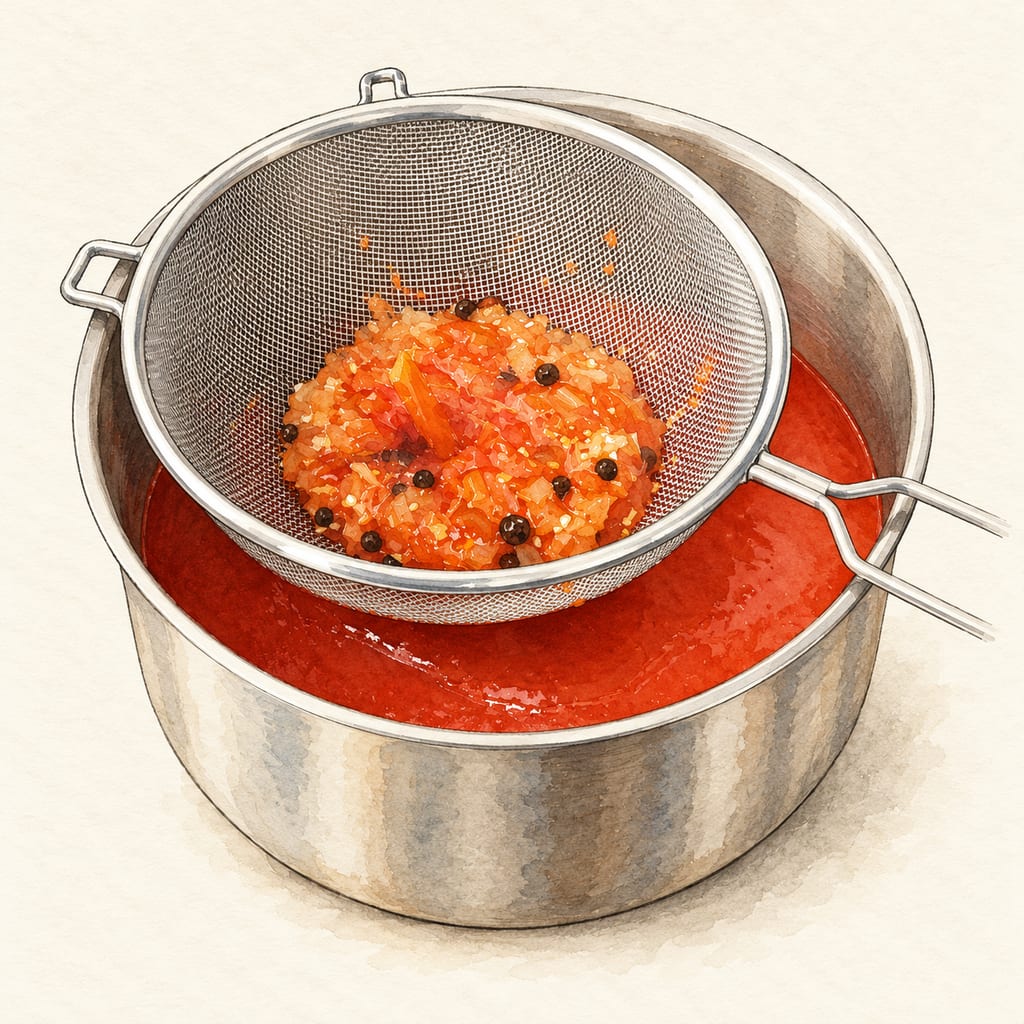
A fine-mesh kitchen sieve separates small solid particles from a sauce or paste. It can smooth tomato ketchup or mustard, but each use retains some pulp or seed material instead of letting it pass through.
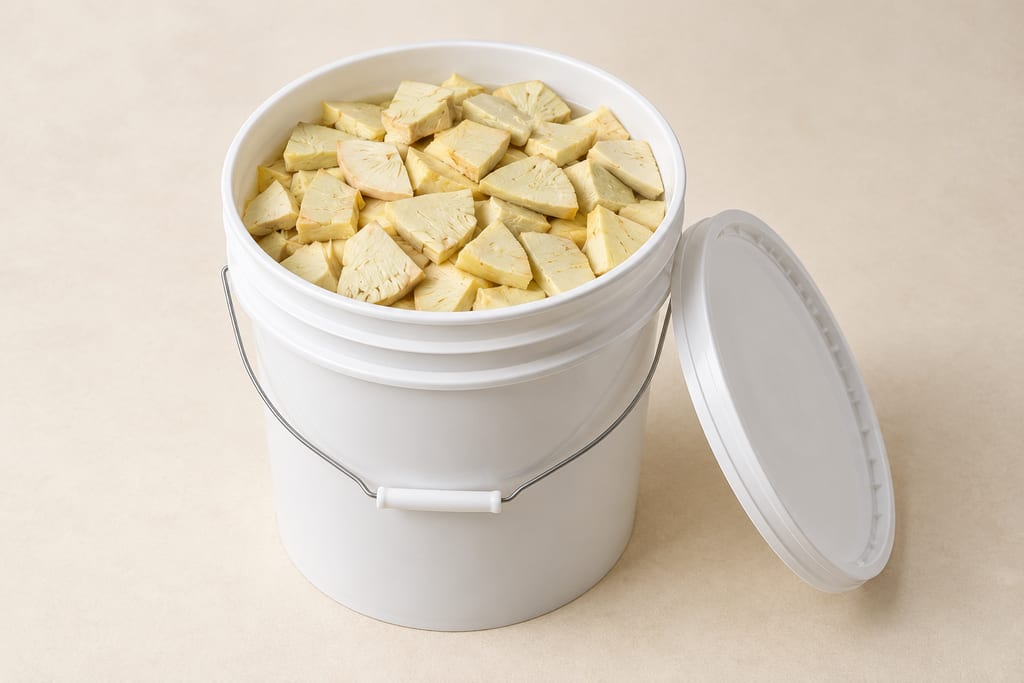
A contemporary household enclosure for preparing mā, fermented breadfruit, documented in Hawai‘i using food-safe buckets, coolers or large sealable bags in place of a pit.
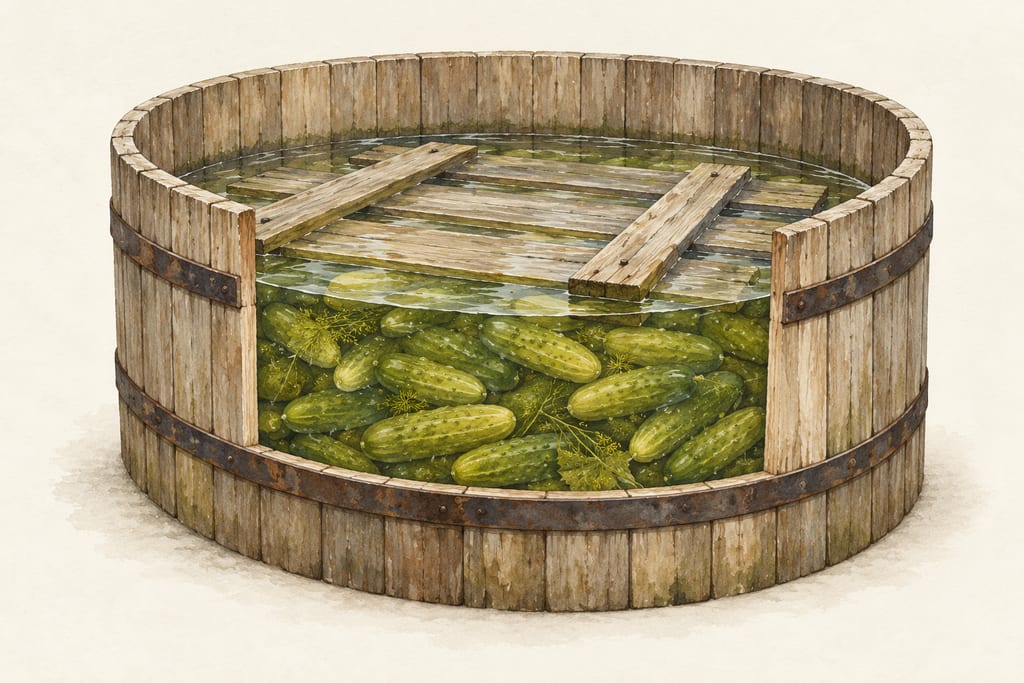
A bulk brining vat holds cucumbers and other vegetables under cover brine for fermentation and storage. North Carolina sources document a mid-century wooden tank yard and later outdoor fiberglass systems.
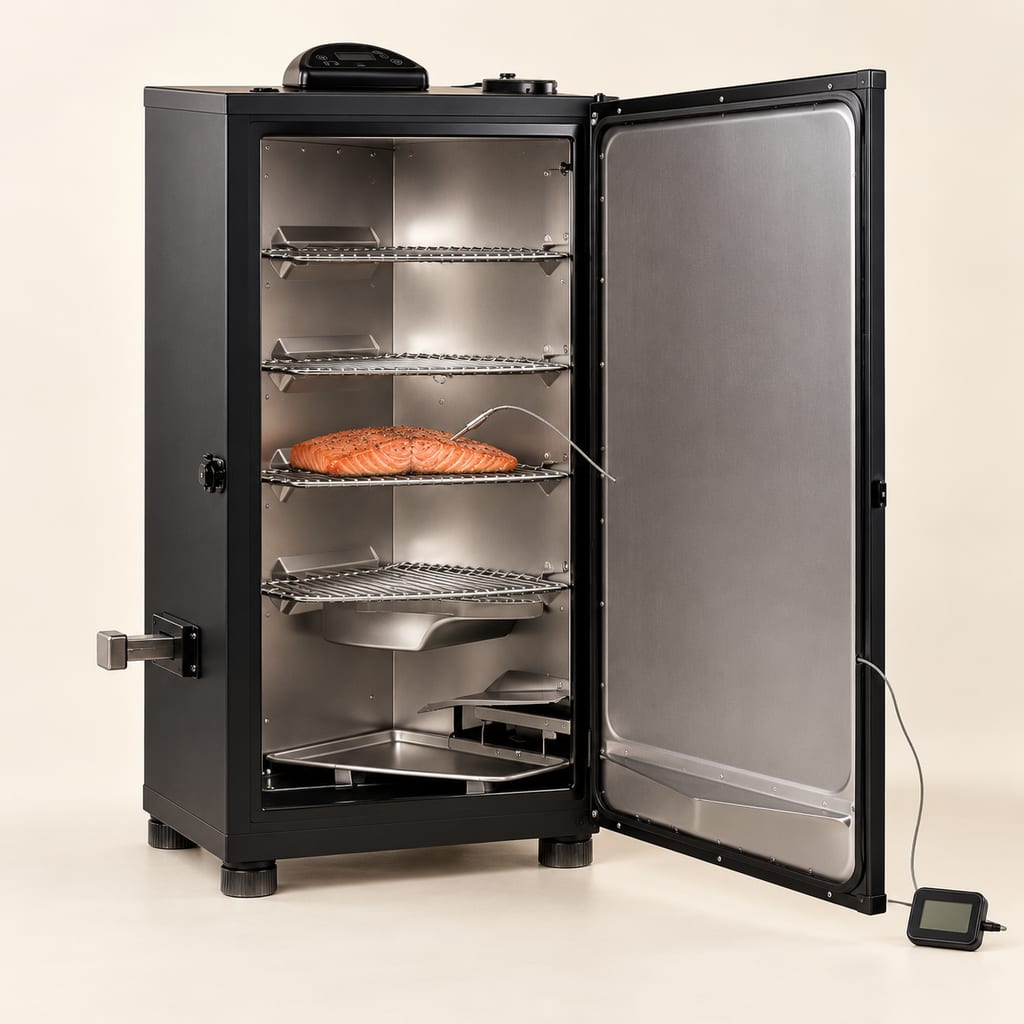
An electric smoker heats an enclosed cabinet while wood chips make smoke. A thermostat controls chamber heat; a separate thermometer checks the fish. Models vary, and smoking does not make lightly salted fish shelf-stable.
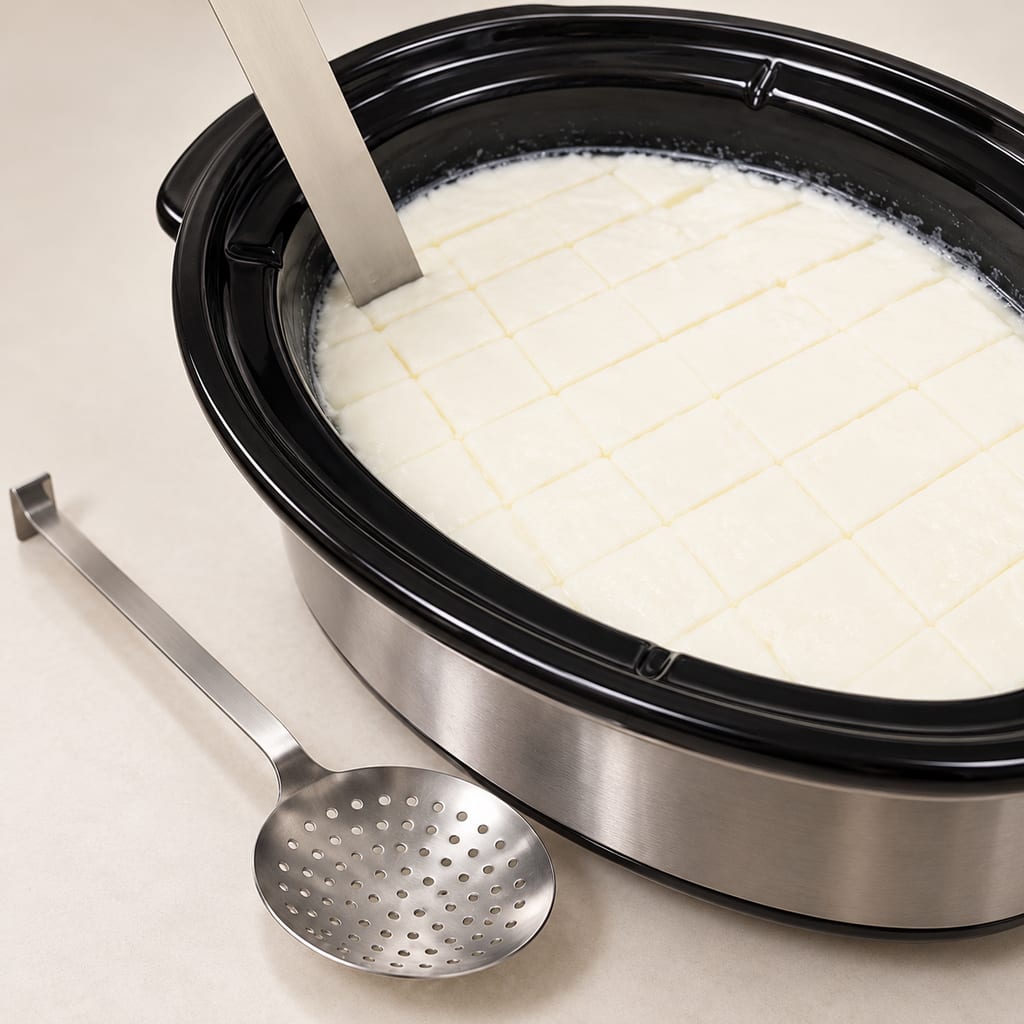
A curd knife cuts set milk into recipe-sized pieces; a perforated ladle lifts and moves curd while whey drains. The hand tools work at different moments in an open cheesemaking vessel.
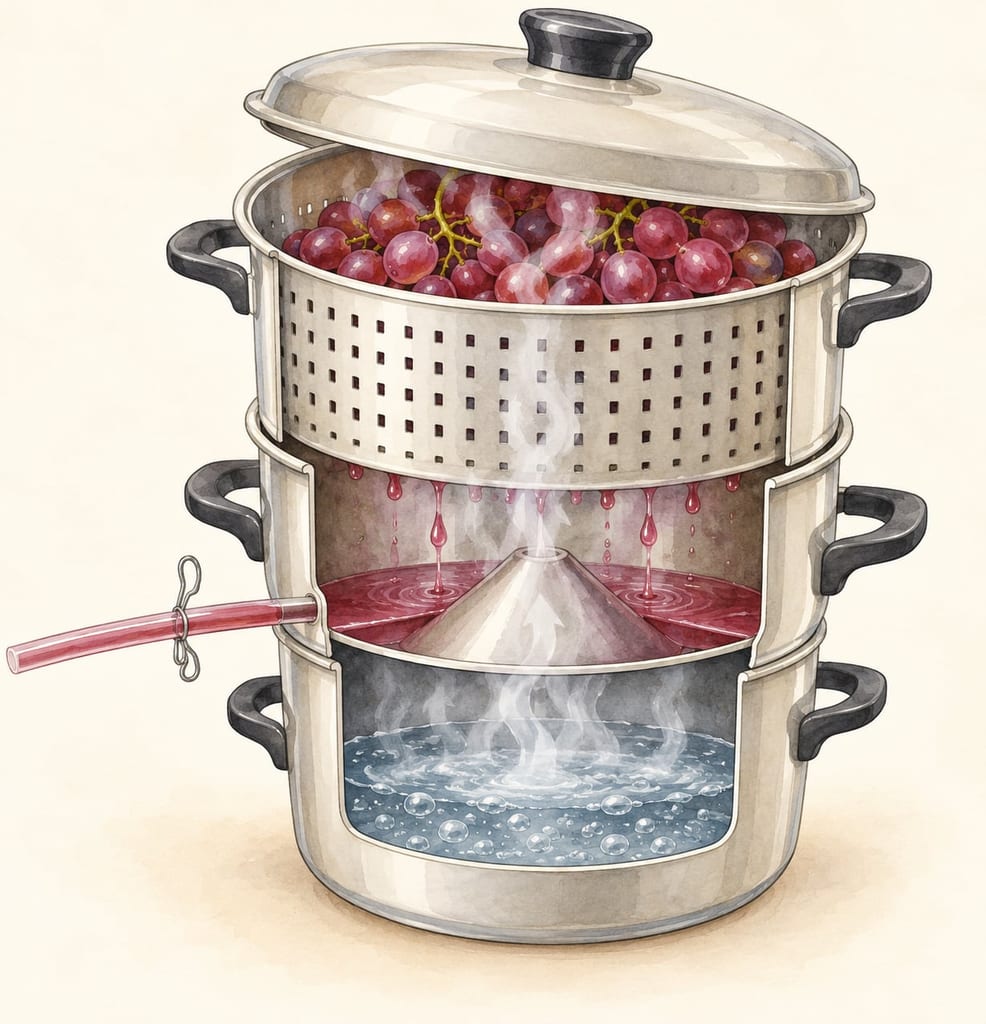
A steam juicer stacks a water pan, juice collector and perforated fruit basket so steam releases juice that drains through an outlet hose. It extracts juice; it does not itself concentrate or preserve it.
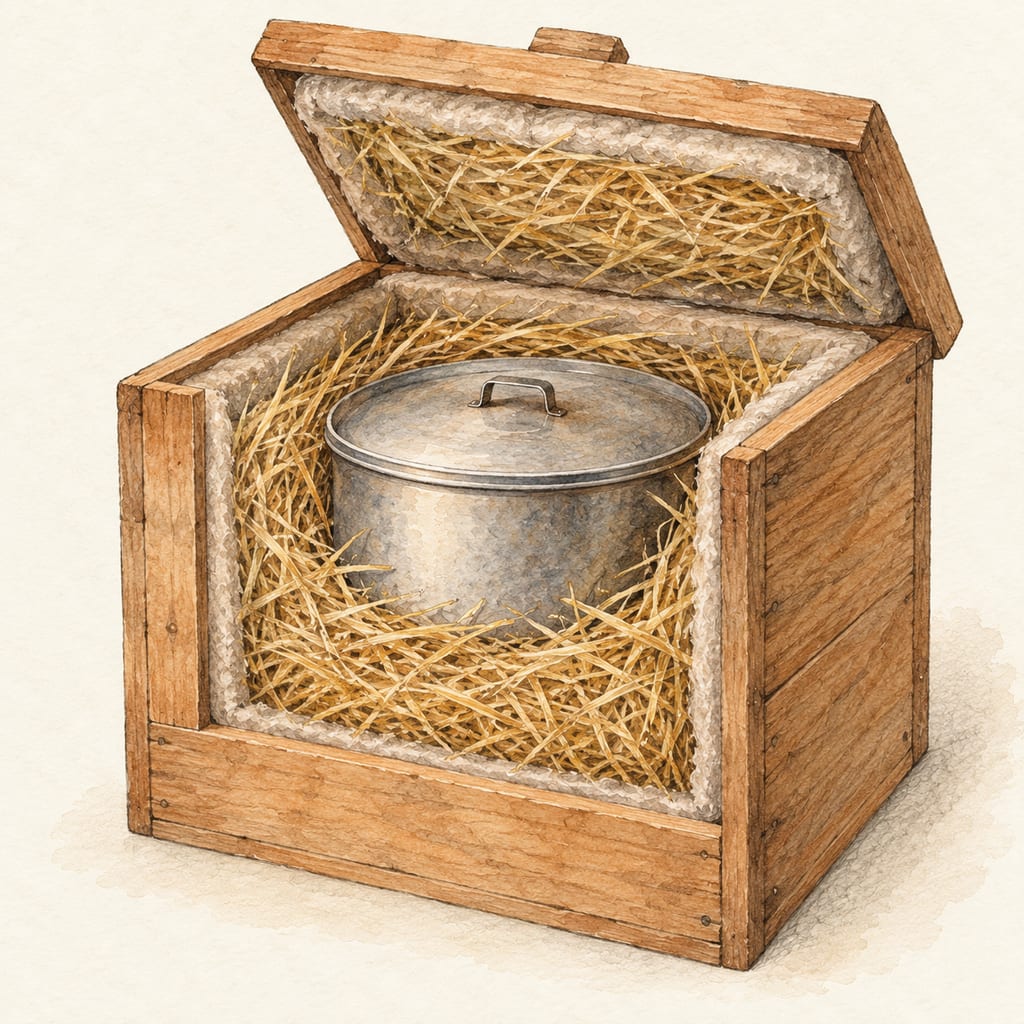
A haybox, also called a fireless or retained-heat cooker, is an insulated enclosure that lets a lidded pot finish cooking in heat already stored in the food after it leaves a stove. It generates no heat and is not a preservation method.
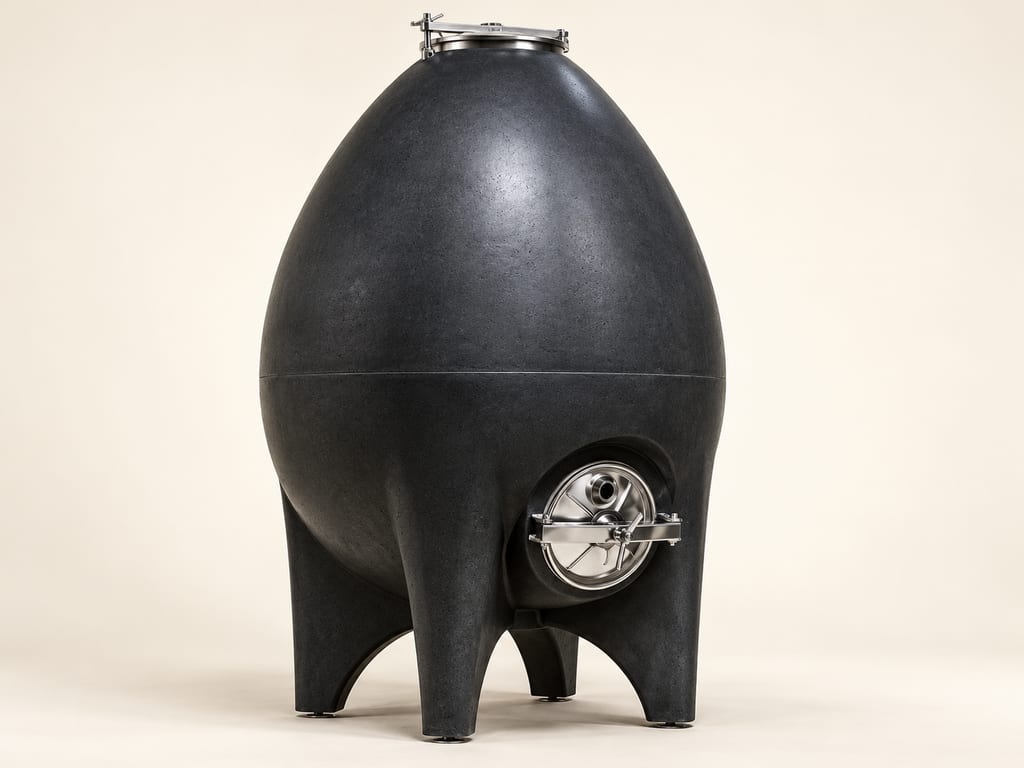
A modern ovoid concrete wine vat with smooth curved walls, made in several sizes and fitted according to model. Used for wine fermentation and maturation; support, access, cooling and interior treatment vary.
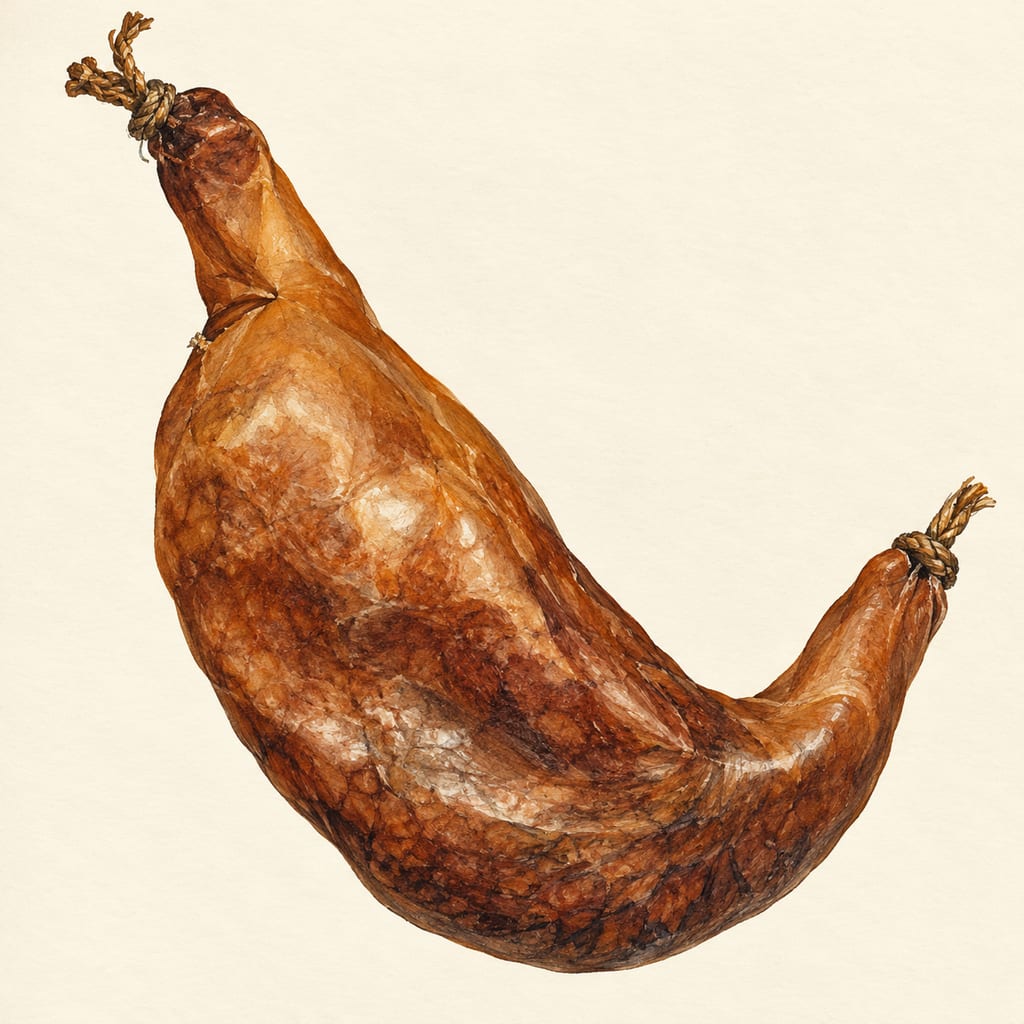
An Alutiiq household container made from a seal stomach held summer foods such as berries, greens, oil and fish eggs. Its flexible, lashed ends contained stored foods and could also hold blubber while it released oil.
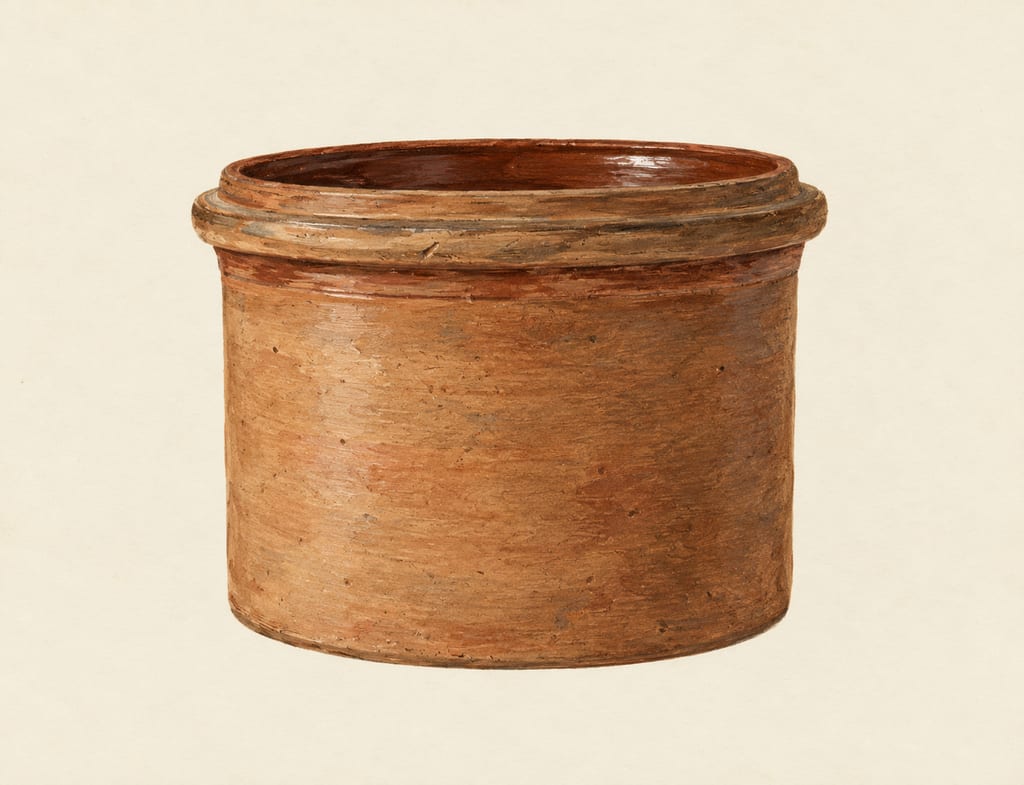
An earthenware storage pot named in an 1855 Pennsylvania German apple-butter account; later pottery writing describes a heavy-rimmed, internally glazed form.
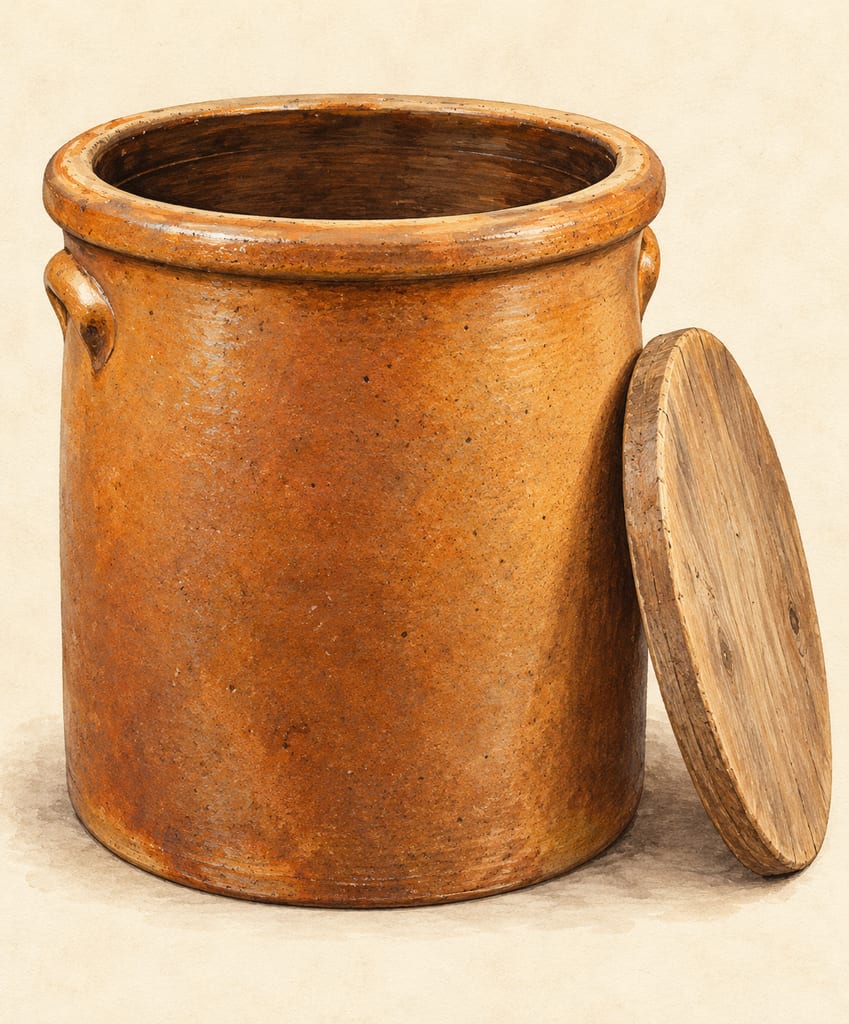
Containers for salt-curing fish and meat range from broad-mouthed stoneware crocks to tubs, cut-down barrels and chests. Their material, depth, cover and ability to retain or drain liquid shape how the food sits in salt or brine.
A Miwok parching basket is a shallow, broad coiled basket used to toss seeds with live coals. One documented plate-form example is 71 mm high; a Southern Miwok specimen is separately identified as a parching basket.
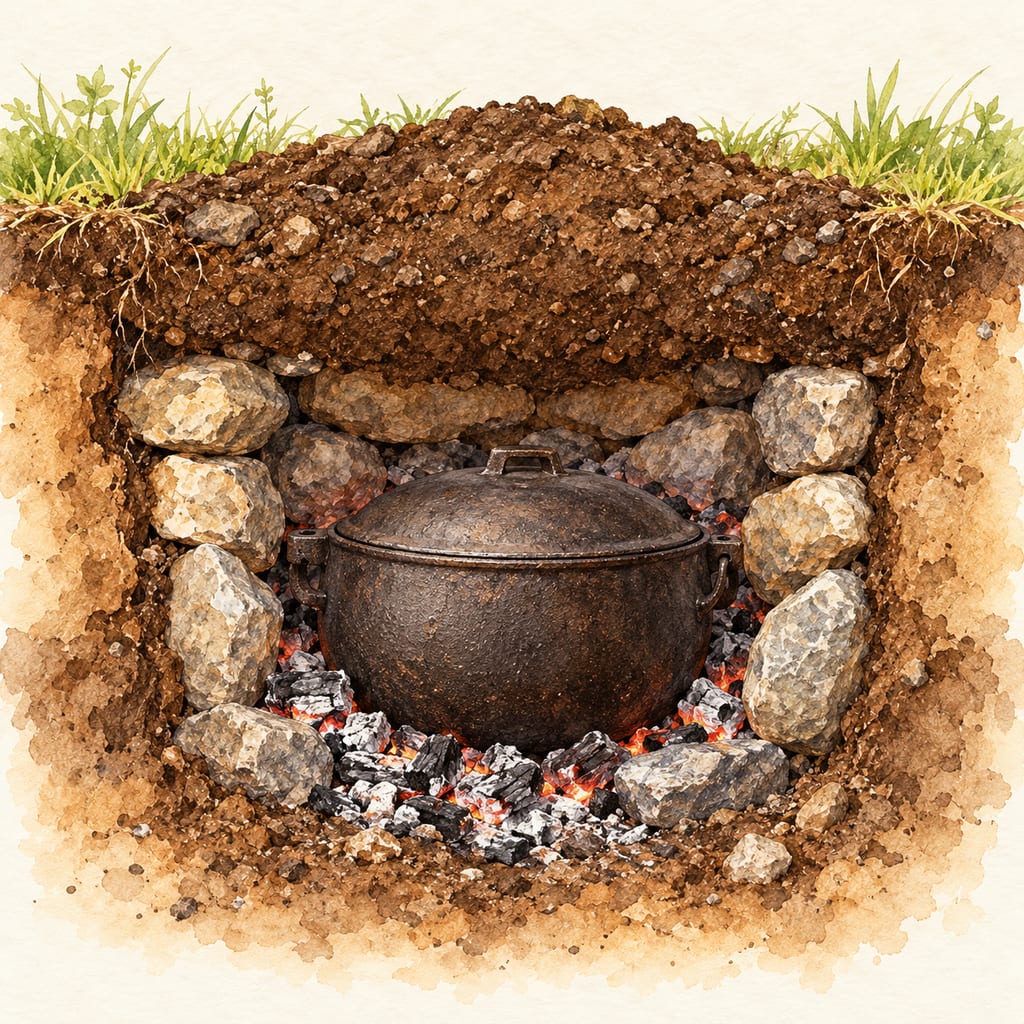
A covered iron vessel used in Maine bean-hole cooking, set into a preheated stone-lined pit and buried for a slow cook.
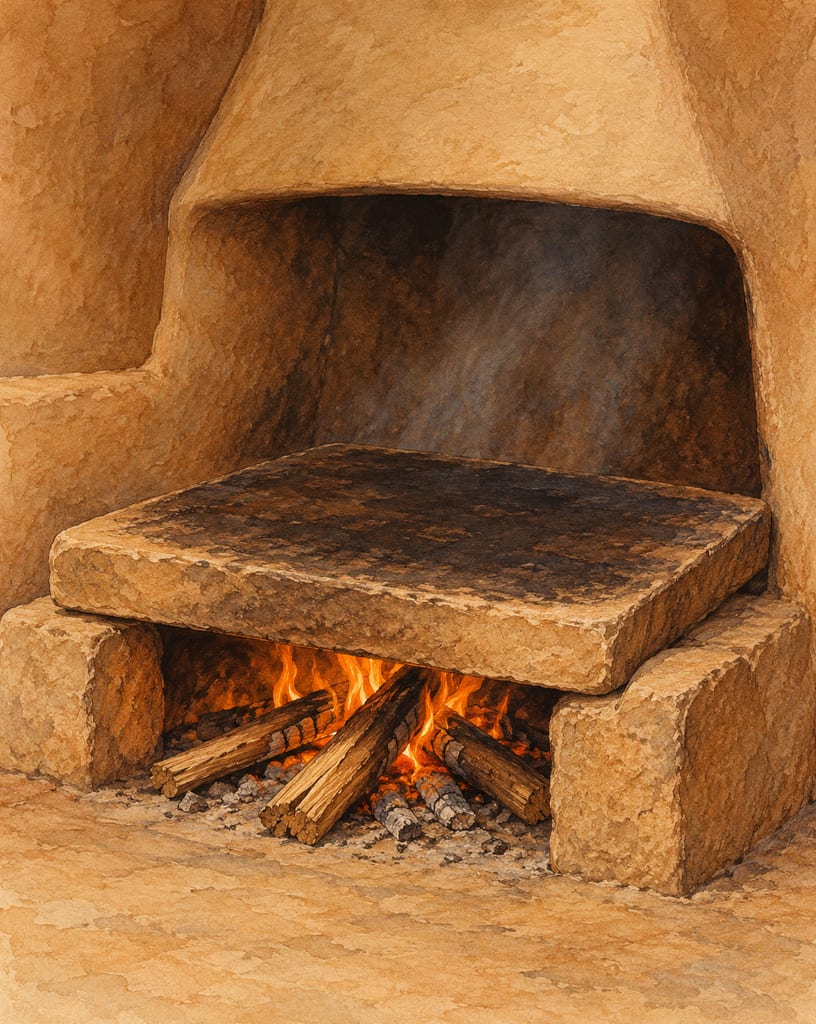
A carefully smoothed sandstone slab used by Hopi piki makers as a heated cooking surface, set above a fire in a dedicated piki-making space.
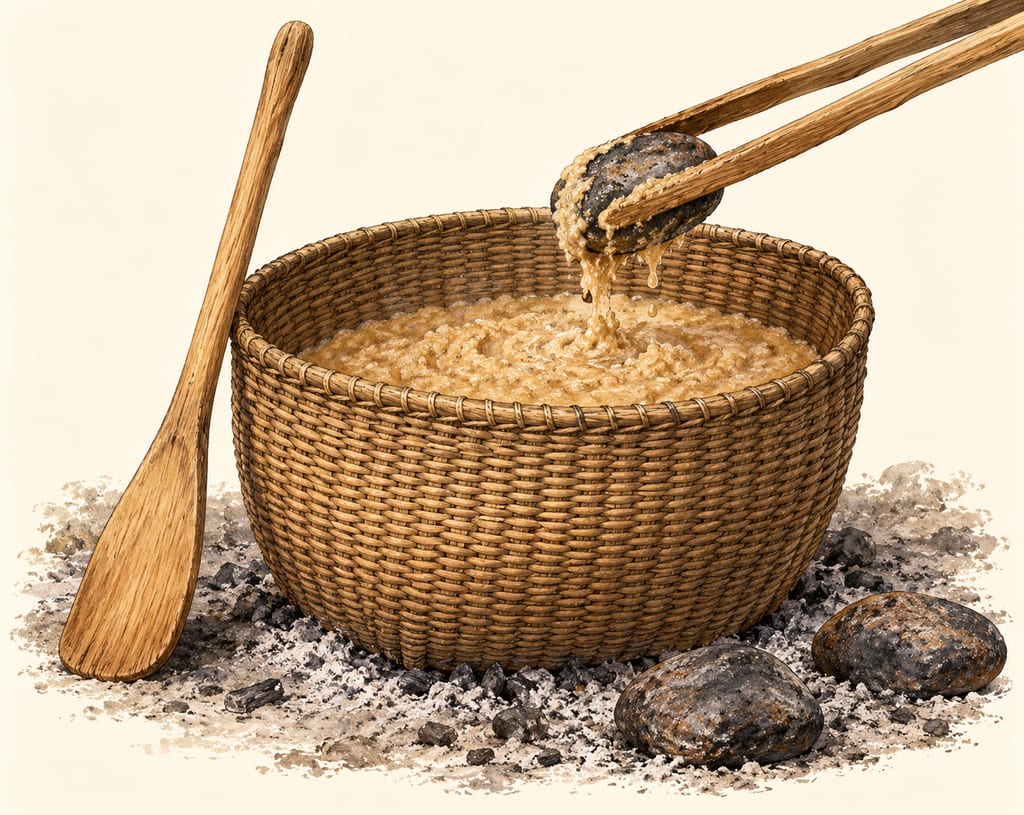
A closely woven, watertight basket used in Yosemite-area Miwok cooking to boil acorn mush with heated stones. The basket holds water and meal while stones transfer heat.