Articles

Source-linked articles on foods, ingredients, traditions and equipment.

14 articlesClear

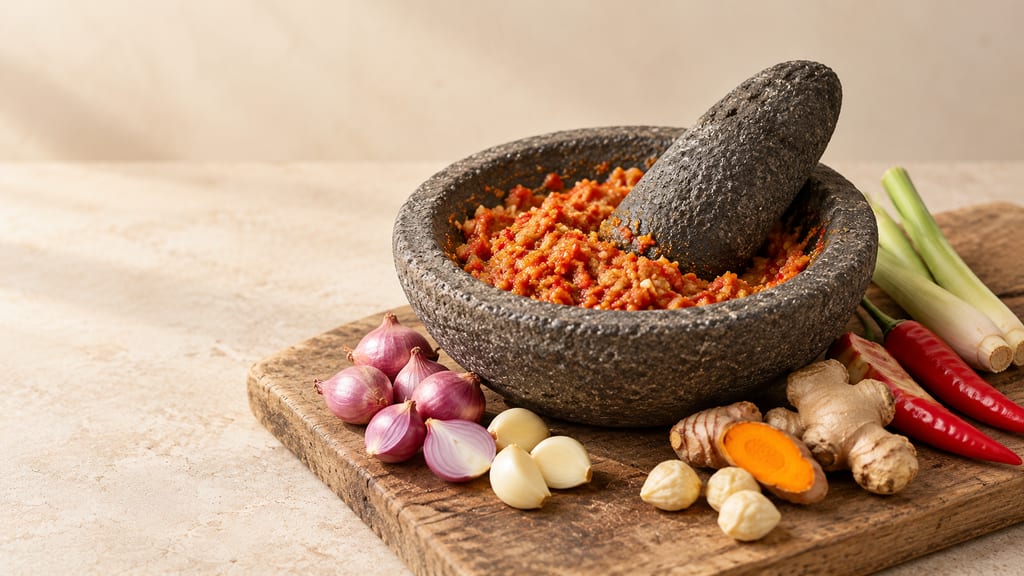
Coarse orange-red rempah in a grey stone mortar with a stone pestle, surrounded by fresh aromatics and candlenuts on a wooden board.
Programme

The paste that starts the pot

Before a Malay, Indonesian or Peranakan dish gets its liquid, a cook pounds and fries a wet spice paste. Four home recipes, a dictionary and a food writer show what goes in, why the oil must return, and where fermentation enters.
· 8 min read
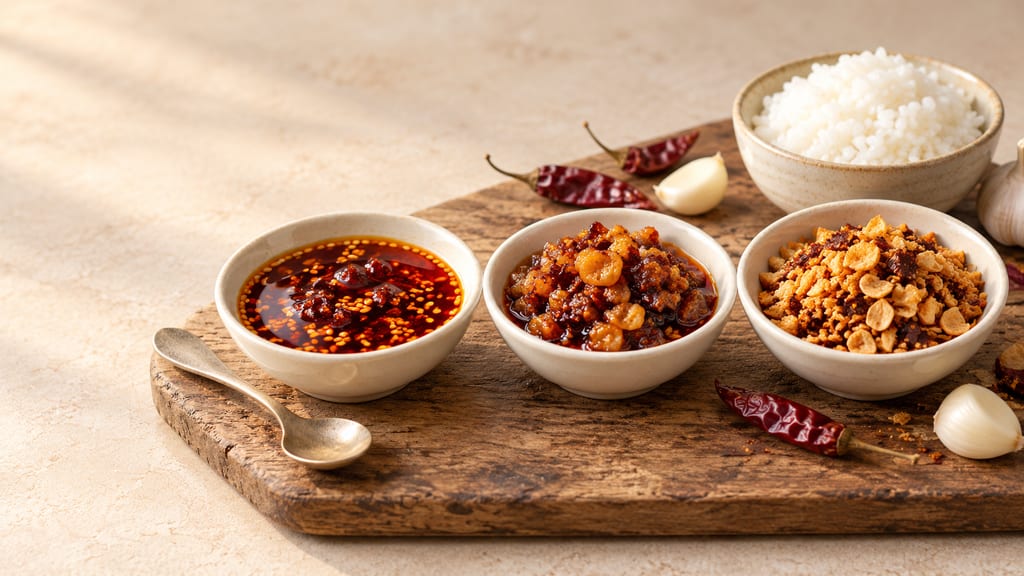
Three ceramic dishes of red chili oil, chunky garlic-and-chili sauce and flaky chili crisp sit on a wooden board beside white rice, dried chilies and garlic.
Programme

Pour, fry, spoon: three ways to put chili in oil

Sichuan hongyou, Chiu Chow chili sauce and Japanese rayu all put chili in oil, by different methods. Fermented beans sit behind some jars, and botulism rules for garlic in oil decide how long any of them keeps.

· 8 min read
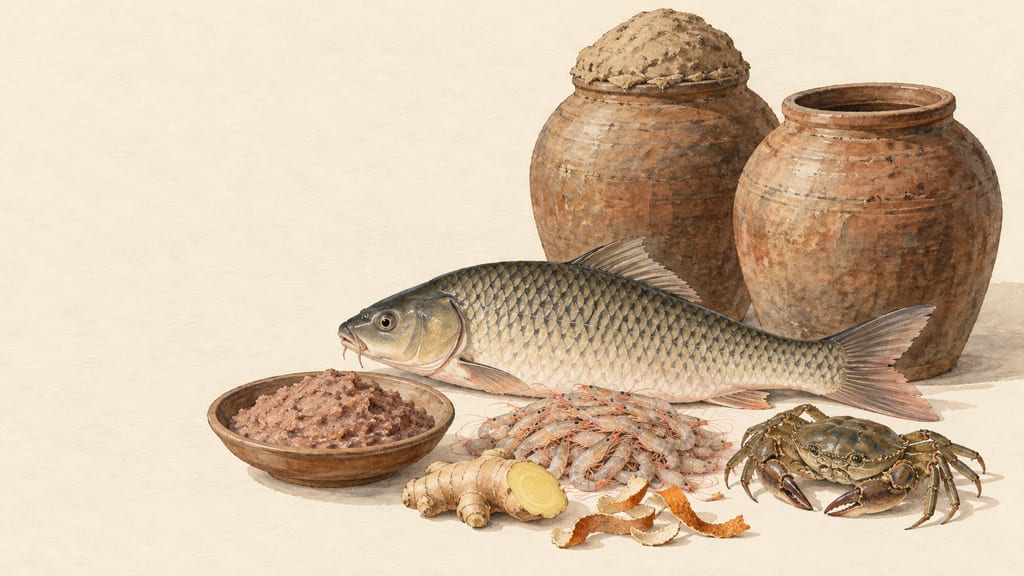
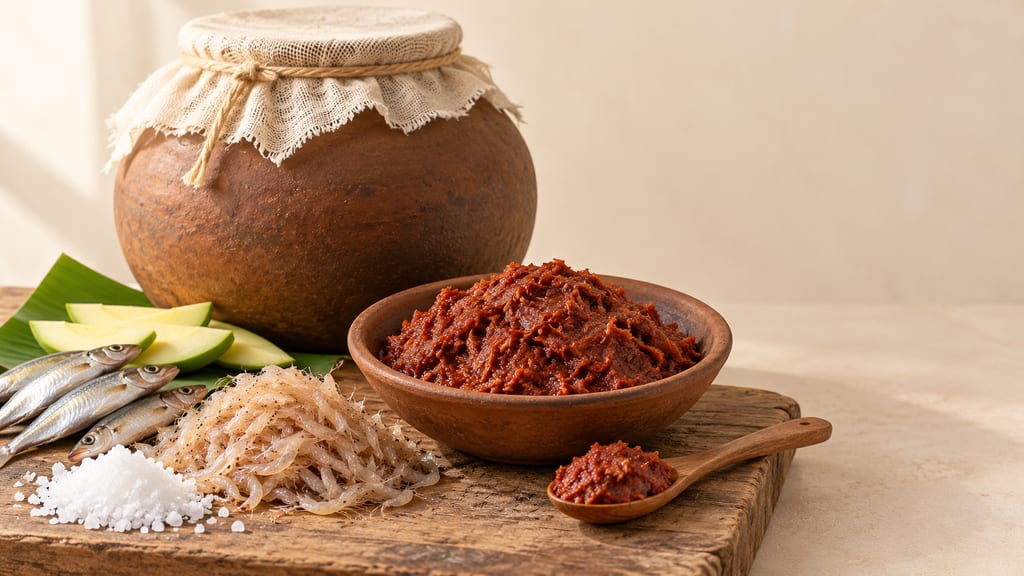
Reddish-brown bagoong in a clay bowl beside a cheesecloth-covered earthenware jar, tiny shrimp, silvery fish, coarse salt and green mango on a wooden board.
Programme

Bagoong has no standard recipe, and the numbers show it

Philippine fish and shrimp pastes are salted at 1:3 or 2:5 and ripened for anything from 30 days to six months or more. Each source describes one batch, not a rule, and the pH figures do not even agree.

· 7 min read
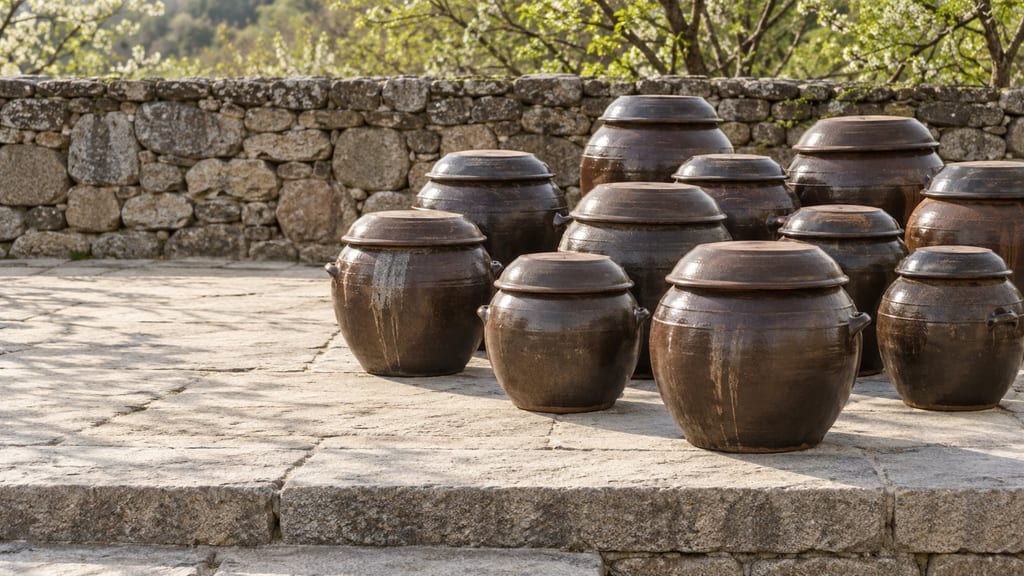
Dark brown Korean onggi jars of varied sizes stand on a raised stone terrace beside an open area, with a fieldstone wall and green branches behind.
Programme

A wedding list from 683, and the sauce it never describes

A Silla king’s bride was sent 135 loads of provisions, jang among them. The chronicle that says so was written 462 years later and never says what the jang was. What the record can carry, and what Korea added.

· 6 min read
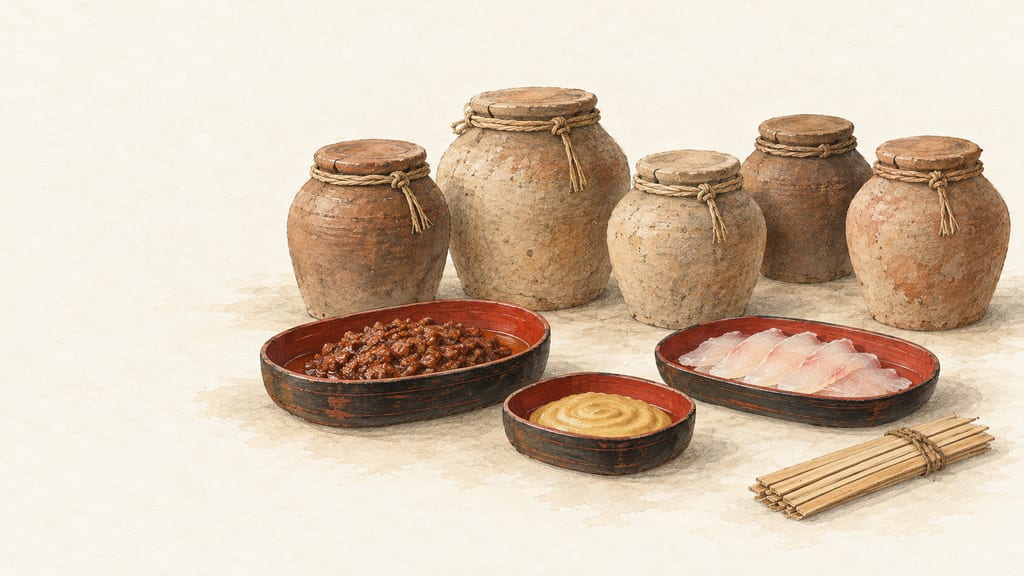
Watercolour of five cord-secured earthenware jars behind red-and-black lacquer dishes of meat sauce, mustard jiang and sliced raw fish, with blank bamboo slips.
Programme

A hundred and twenty jars of jiang for the king's table

Chinese texts were counting jars of jiang, pairing it with raw fish and venison, and making it largely from meat long before anyone wrote down soy sauce. How a whole class of sauces narrowed to a bean paste.

· 4 min read