
Aceto Balsamico Tradizionale di Reggio Emilia
Protected Italian vinegar made only from cooked grape must, fermented and aged in a battery of wooden barrels for at least 12 years: sweet, sharp and syrupy.
 FermenteaWhere food goes to change
Cooked wine · Saba · Cotto · Vino cotto
Vincotto is a dark, thick, sweet paste made by slowly cooking down unfermented grape must in rural Italy, used as a seasoning for savoury dishes and desserts.
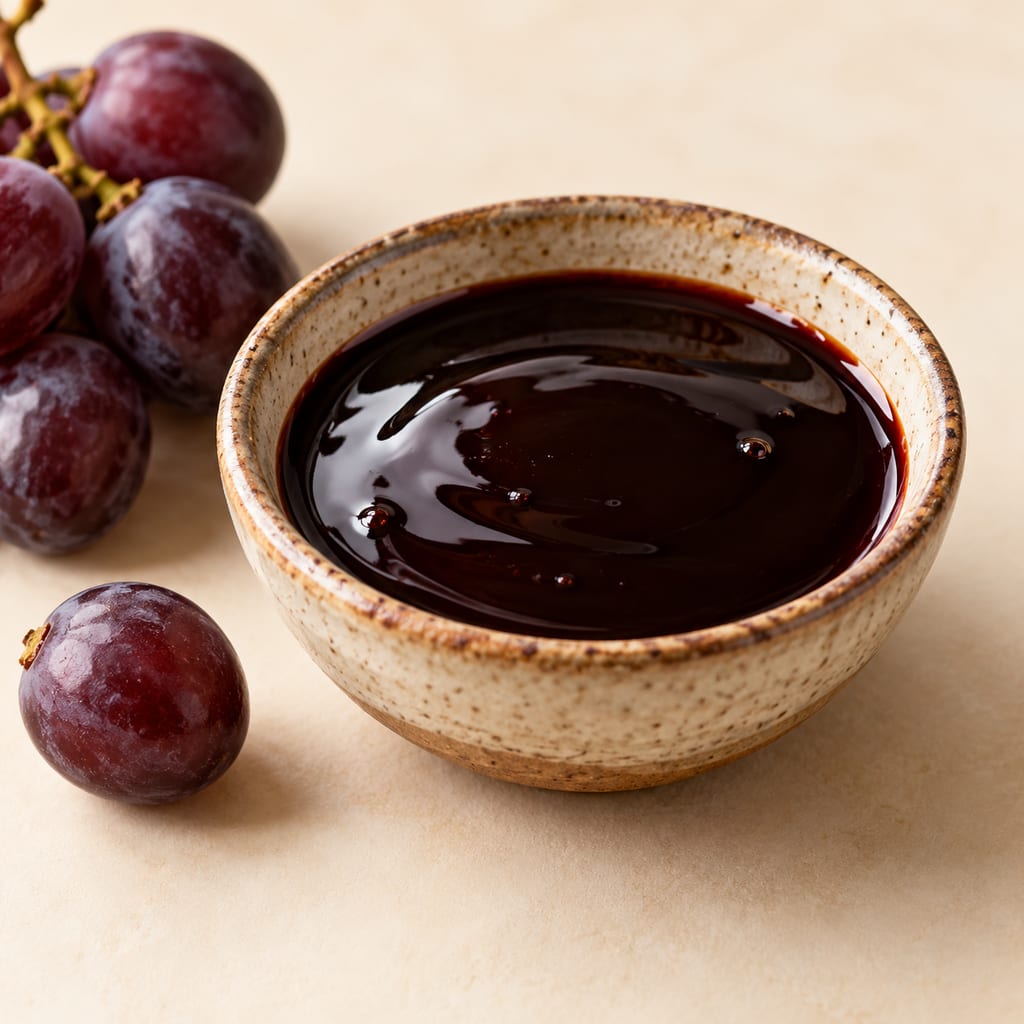
Vincotto is a dark, sweet, thick paste made in rural Italy by cooking grape must for a long time. Its name means cooked wine. It is not fermented: the must is kept from becoming wine and is reduced over hours until its sugars caramelise and it darkens.
The result is closer to a syrup or paste than to a vinegar. The product is a reduction, not a balsamic vinegar; a sweet vinegar can be made from it as a separate step.
The name and the method are linked to the Roman practice of reducing grape must to preserve and move it. The Romans called the boiled grape syrup sapa, and the Greek word was epsima. Related boiled-down grape products were defrutum and carenum. The article reports this tradition, but gives no dated attestation for vincotto itself, so the link is recorded here as a tradition.
Local red grape varieties are used. The article records that the grapes may be left to wither on the vine for about thirty days before harvest, which concentrates their sugars. The must is then cooked slowly, over many hours, until it is reduced to about a fifth of its original volume. The article names Basilicata and the Salento region of Apulia as its places.
In Basilicata and Salento, a second method blends cooked must with wine that has begun to sour, then reduces the blend to a dense, non-alcoholic syrup. This is a different product from a must reduction alone and should be recorded as its own variant.
Vincotto is used as a seasoning or sweetener. In Basilicata it is a key ingredient in lagana chiapputa, a pasta dish with walnuts, almonds, pine nuts and raisins, and it appears in pan minisc', a dessert made with flour, sugar and spices. The article also shows it served with ricotta. The article gives no shelf life or storage advice, and none is given here.
Vincotto is said to derive from the Roman practice of reducing must to preserve and transport it. Roman names for the grape reduction were sapa in Latin and epsima in Greek, and the related products defrutum and carenum were boiled-down grape preparations.
The article names Basilicata with the Salento area of Apulia for the blend of cooked must and soured wine. The dates of this practice are not given.
Salento, in Apulia, is named in the same practice as Basilicata. The article gives no date.
Protected Italian vinegar made only from cooked grape must, fermented and aged in a battery of wooden barrels for at least 12 years: sweet, sharp and syrupy.

A warm dip of garlic, anchovy and olive oil, often enriched with butter, that Piedmont serves over a flame with raw and cooked vegetables and bread.
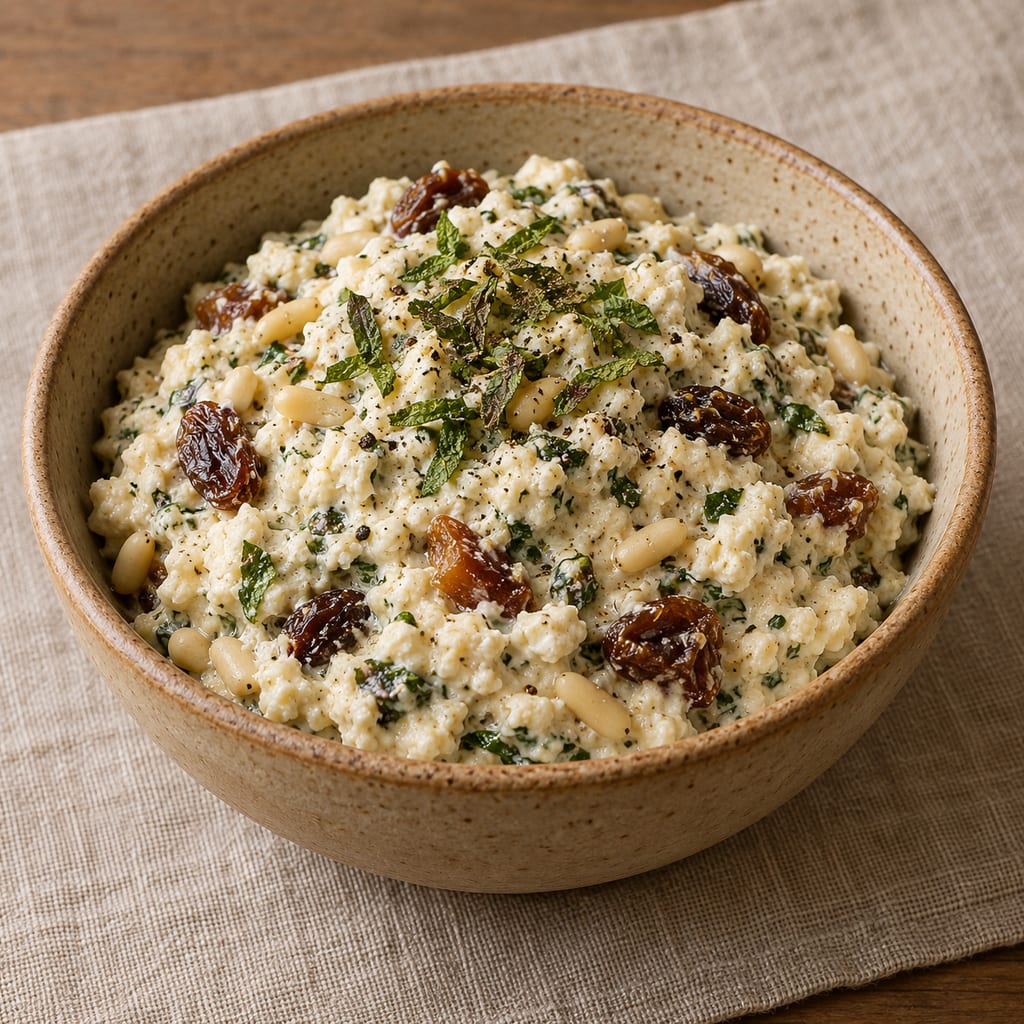
Hypotrimma was a Roman condiment in Apicius's cookery book, a mixture of ground pepper, herbs, nuts, dried fruit, cheese, honey and fish sauce.
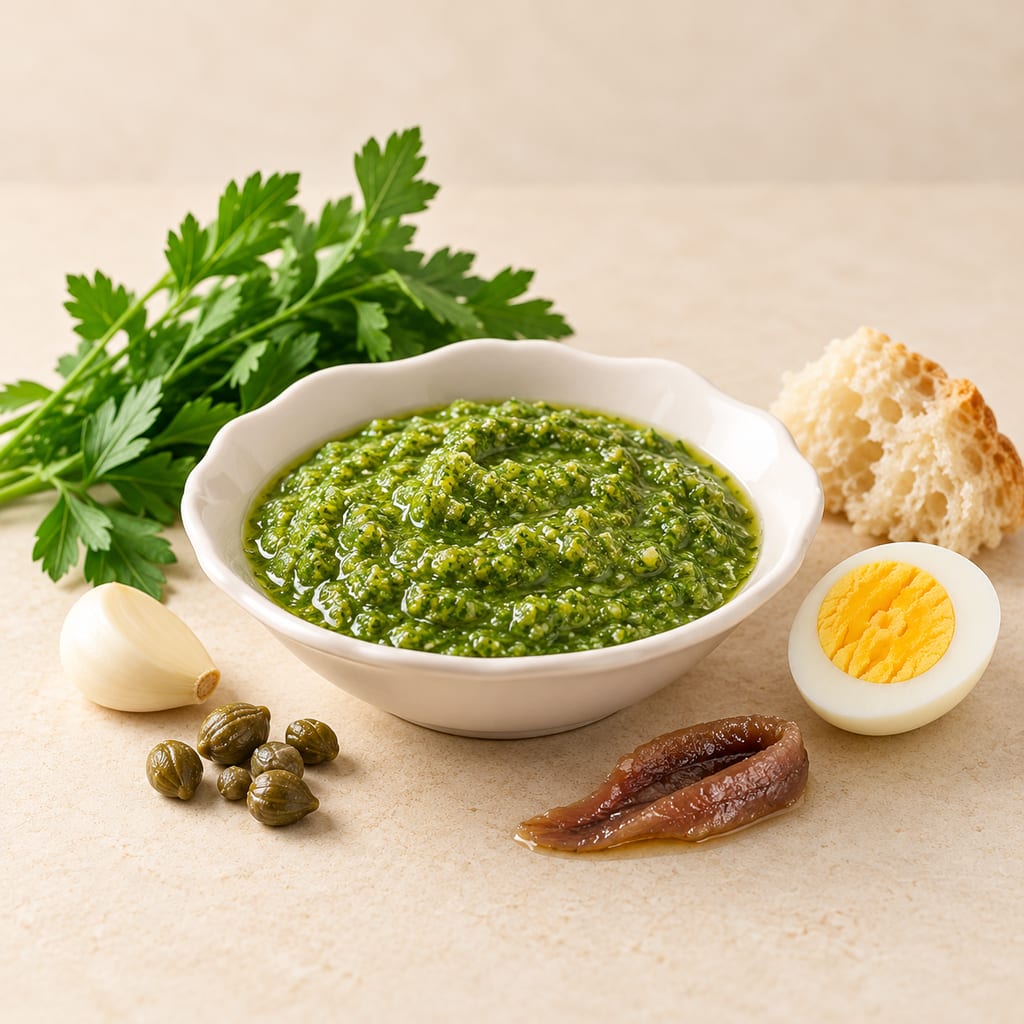
A cold parsley sauce of capers, anchovy, garlic, olive oil and vinegar, with bread or egg in some regional versions, served across Italy with boiled meats and fish.
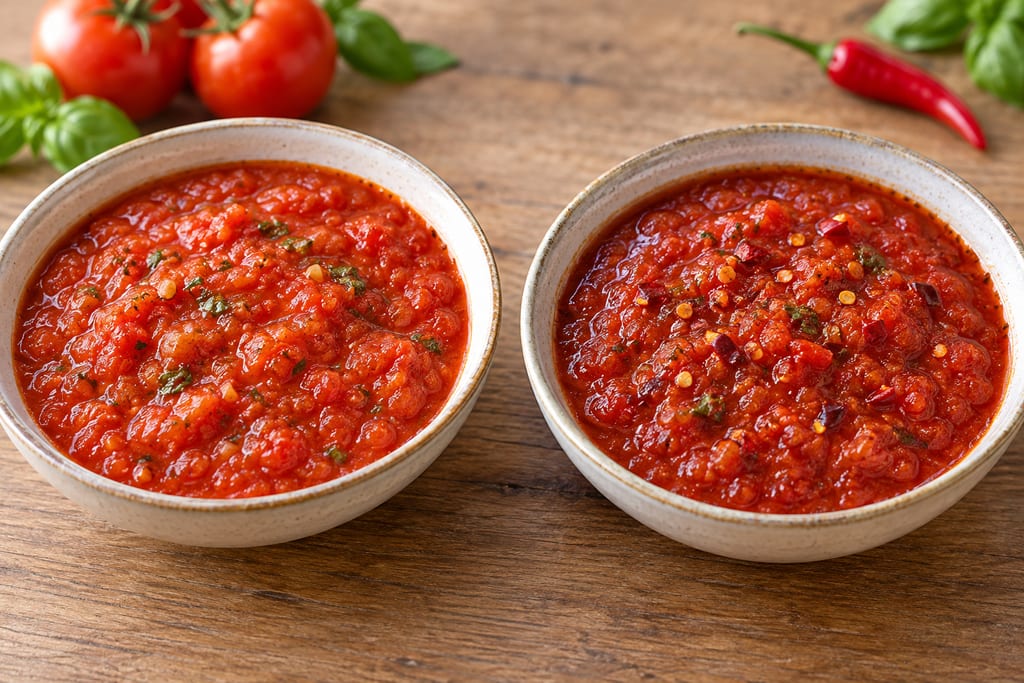
Marinara is a quick Italian-American tomato sauce; arrabbiata is a distinct Roman tomato sauce with red chilli. They share a simple cooked tomato-and-garlic base but are not the same sauce.
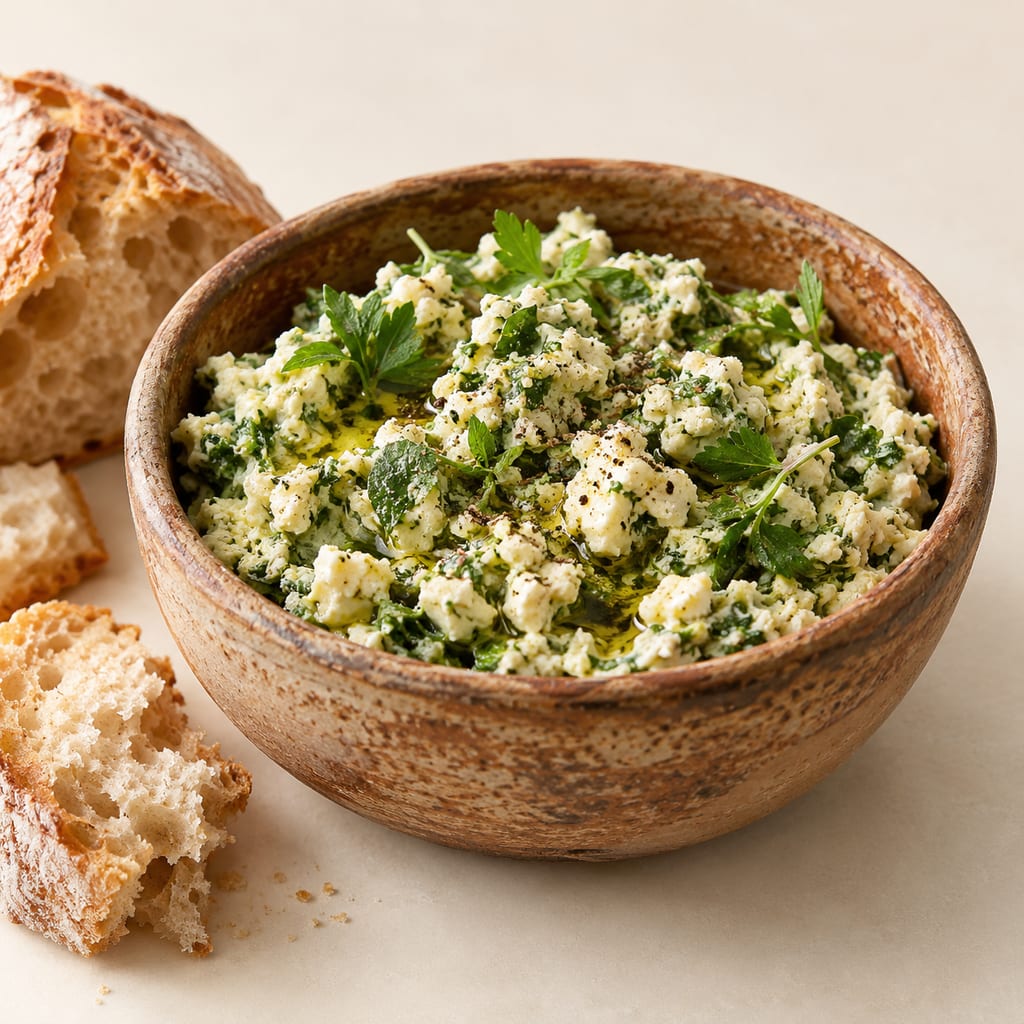
Moretum was a pounded herb and cheese spread of ancient Rome, eaten with bread and named for the mortar in which it was made.
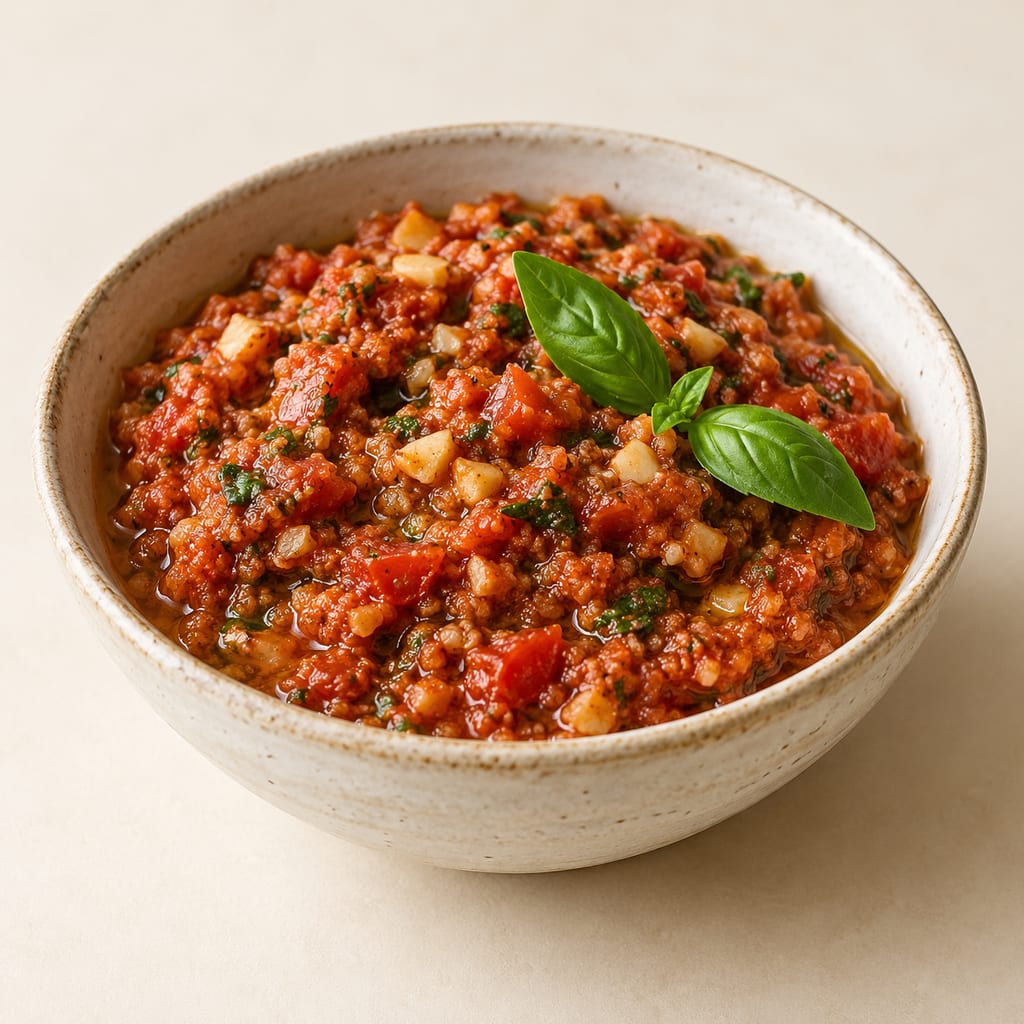
Pesto alla trapanese is a Sicilian sauce of fresh tomato and almonds pounded with basil, a red counterpart to Genoese pesto.
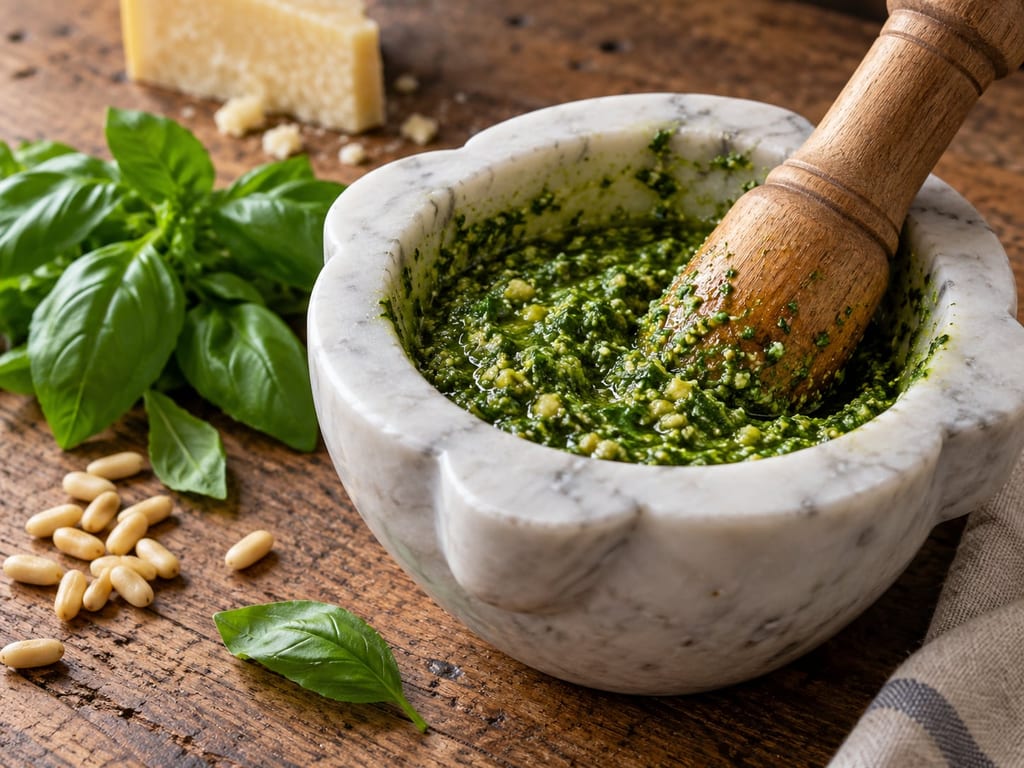
Pesto Genovese is a Ligurian uncooked basil sauce pounded with garlic, pine nuts, salt, hard cheeses and olive oil, traditionally made in a mortar.

Ajvar is a cooked Balkan pepper preserve built around roasted red peppers, peeled, drained, ground and slowly fried with oil and seasoning. Leskovac’s protected version is a pepper specialty; regional versions vary.

Amlou is a nutty, lightly sweet Moroccan spread of roasted almonds, culinary argan oil and honey. The almonds are ground first, then loosened with oil and sweetened; the balance can range from a thick spread to a dip.

Apple sauce for goose and pork is a plain English accompaniment: cooked apples pulped with water, then sweetened with sugar and finished with a little butter.

A sweet-hot table sauce of ripe banana simmered with vinegar, sugar, onion, garlic and fresh chilli, in the manner of Philippine banana ketchup. An untested development batch of about 500 g.

A Georgian walnut sauce of ground walnuts, garlic, vinegar and spices, thinned with water or broth. It is served with poultry, vegetables and bread, and is the sauce of the dish satsivi.

A pourable dessert sauce of brown sugar, butter and cream, with a little corn syrup and salt. It is the sauce form of the butterscotch confection and is made without water, unlike caramel.

Byzantine murrī is a cooked imitation of murrī from the medieval Arabic repertoire, made from scorched honey, toasted bread, walnuts, quince, carob and spices rather than from a long grain fermentation.

Caribbean browning is a dark liquid of deeply caramelised sugar, used in small amounts for colour and a smoky, bitter-sweet flavour in stews and black cake.

At North Abydos in Egypt, a fixed early Dynastic brewery comprised parallel semi-subterranean installations with rows of ceramic mash vats; excavation reports revise their number, scale and estimated batch capacity.

Ají amarillo is the orange-yellow Peruvian chilli cultivar group of Capsicum baccatum, used to colour and season huancaína sauce and ají de gallina. Published heat estimates do not establish one range for the named cultivar.

Toasted almonds are whole sweet almond kernels dry-roasted until golden to brown. Heat replaces their marzipan note with a roasted, nutty one; they thicken and flavour romesco.

Kodiak salmon, halibut and cod cut as seg'aq and hung on an initaq rack to become tamuuq, with kac'amaasaq and kupcuunaq named as different results.

Aniseed is the dried ripe fruit of Pimpinella anisum, an aromatic Apiaceae spice commonly called a seed. It adds a sweet, warm aroma to breads such as Moroccan krachel and South African mosbolletjies, and is distinct from star anise.

A fixed Late Chalcolithic installation in Areni-1 cave combined a shallow clay pressing basin with a large jar set into the cave floor and storage vessels nearby.

Ripe avocado flesh is the soft, buttery, fat-rich pulp of Persea americana, eaten raw. It is low in acid, so it is a fresh ingredient that needs care in chilled dishes.

A portable dome and pan used over a hearth, with embers on the lid and heat from below. Regional peka and saç forms share this principle while differing in materials, pan shape and how the food is cooked.
No community contributions have been published for this entry yet.
Sign in to contribute. Published comments and photos are free to read.
WikipediaDefinition · Method · History · Uses
VincottoDark, sweet, thick paste from unfermented grape must reduced to about one fifth of its volume until sugars caramelise.
Local red varieties: Primitivo, Negroamaro and Malvasia Nera; grapes may be left to wither on the vine for about thirty days before harvest.
Basilicata and Salento: cooked must blended with soured wine and reduced to a dense, non-alcoholic syrup.
Roman names sapa and epsima; related defrutum and carenum.
Vinegar of vincotto is a sweet vinegar made from it; vincotto itself is not a vinegar.
Uses: lagana chiapputa in Basilicata; pan minisc' dessert; served with ricotta.