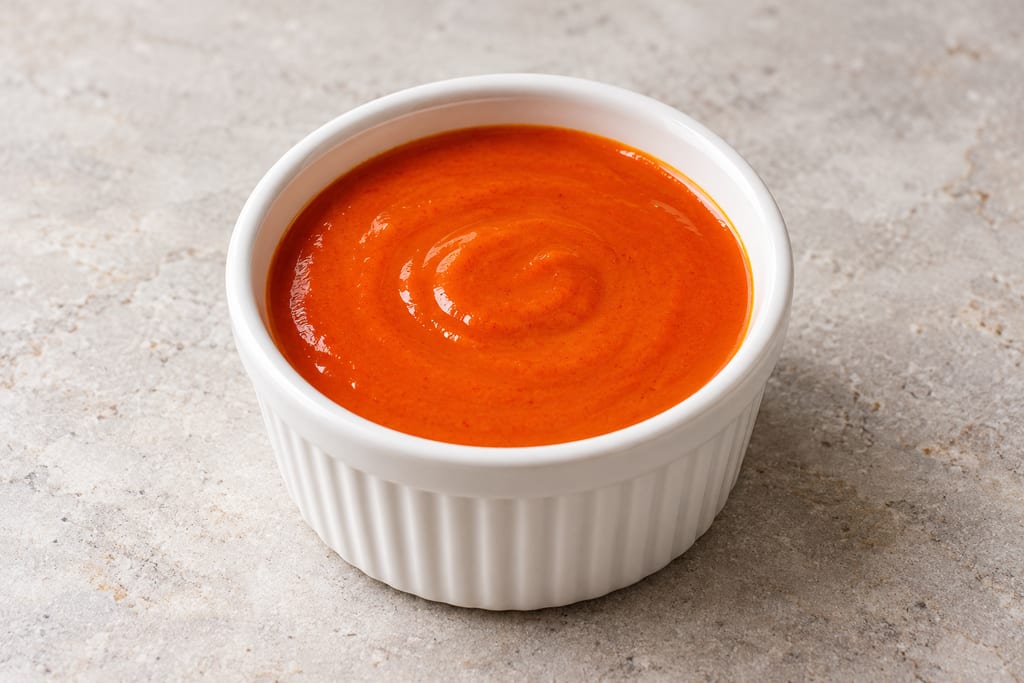
Buffalo sauce
A warm, buttery cayenne sauce made by melting butter into a hot pepper sauce, first tossed onto fried chicken wings in Buffalo, New York.
 FermenteaWhere food goes to change
Thousand Islands dressing
Thousand Island dressing is a pink, sweet-savoury dressing of mayonnaise, tomato condiment and chopped pickle relish, named for the Thousand Islands region on the St. Lawrence River, where its origin is placed.
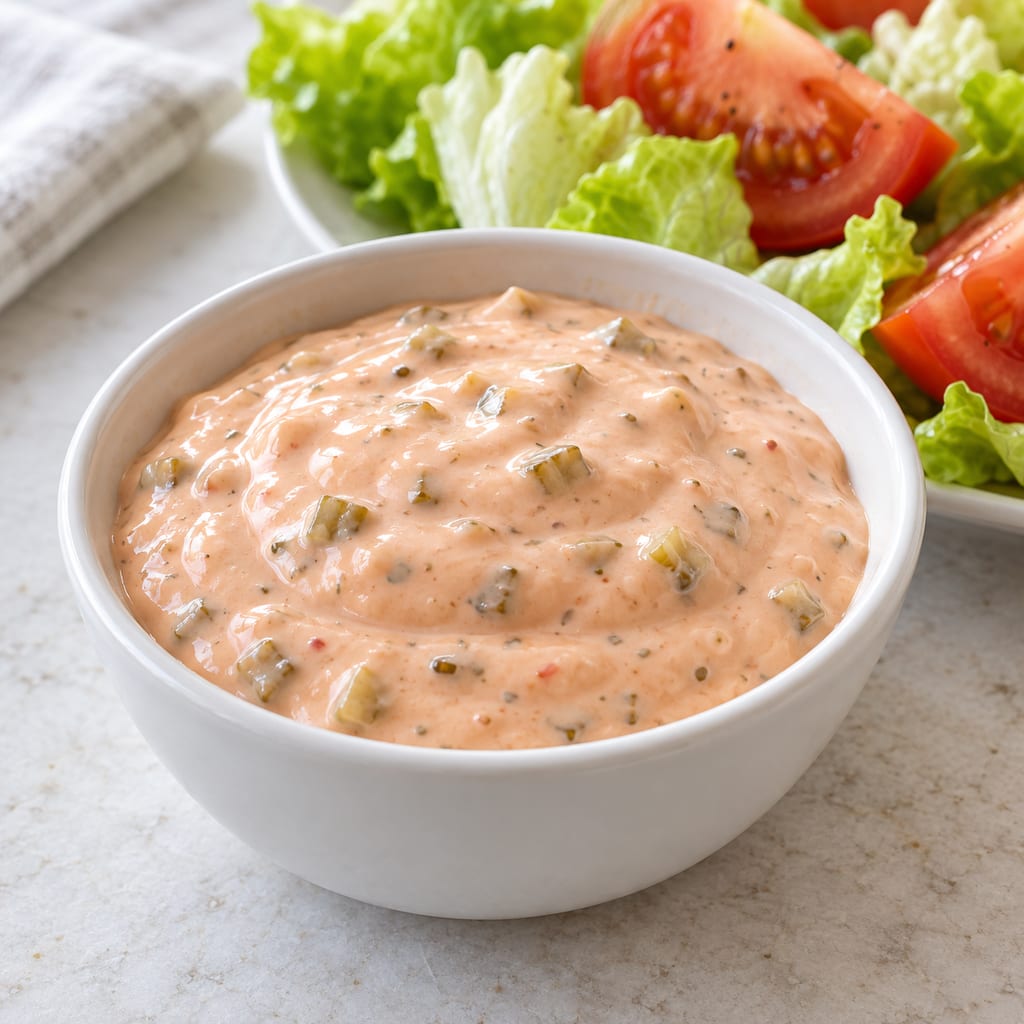
Thousand Island dressing is a mayonnaise-based dressing coloured pink by tomato condiment and studded with chopped pickle relish. It is sweet, tangy and mild, and it is the dressing of the classic chopped salad and the Reuben sandwich.
Its flavour structure is different from Caesar or ranch: the sweetness of tomato and relish is the defining note, not garlic, cheese or dairy tang.
The dressing takes its name from the Thousand Islands, a cluster of islands on the St. Lawrence River on the border of the United States and Canada. Some sources say the name refers to the islands; another theory says the pickle bits resemble tiny islands in the dressing. Wikipedia records that the origin of the name is unknown.
The Boldt story is the best known. It credits George Boldt, owner of the Waldorf-Astoria, and his chef, and says the dressing was served at the hotel after the name came from Boldt's summer home in the islands. Some researchers doubt it.
The Clayton story credits Sophia Lelonde, who made the dressing at the Herald Hotel in Clayton, New York, for her fisherman husband. The Thousand Islands Inn owners say a recipe card supports it. The 1912 Kansas City Star article credits a chef at Chicago's Drake Hotel, Theo Rooms. No source here settles the question, and the record reports each account as its sources give it.
Mayonnaise is combined with a tomato condiment and chopped pickle relish, and the dressing is seasoned to taste and chilled. The sources give no proportions, and home and restaurant versions differ in sweetness, relish and spice.
The dressing spread across North America in the early twentieth century, and it is now made from scratch or bought ready-made. Its method is simple, so the choice of tomato condiment and relish decides the character of the result.
The inventor is not established. The name's origin is unknown according to Wikipedia. Proportions and the storage limit are not given by the sources used for this record.
Every account places the origin in the Thousand Islands, on the St. Lawrence River between New York and Ontario. The best-known story credits George Boldt, owner of the Waldorf-Astoria, and his chef, and links the name to Boldt's summer home. Thousand Islands Inn owners tell a different story, of innkeeper Sophia Lelonde who made the dressing at the Herald Hotel in Clayton, New York, for her fisherman husband. A 1912 Kansas City Star article credits a chef at Chicago's Drake Hotel, Theo Rooms, and the Oxford English Dictionary cites that article as an early printed use of the name. A University of Wisconsin study found that the story differed among villages and islands. Wikipedia says the origin of the name is unknown.
Scaling: quantities are not established by the sources.
Every account places the origin in the Thousand Islands region, but the sources disagree on the inventor and the hotel.
A warm, buttery cayenne sauce made by melting butter into a hot pepper sauce, first tossed onto fried chicken wings in Buffalo, New York.

A yeast-raised wheat ring shaped from a firm dough, briefly boiled and baked. This source-batch formula gives a gently malted crust and a chewy crumb.
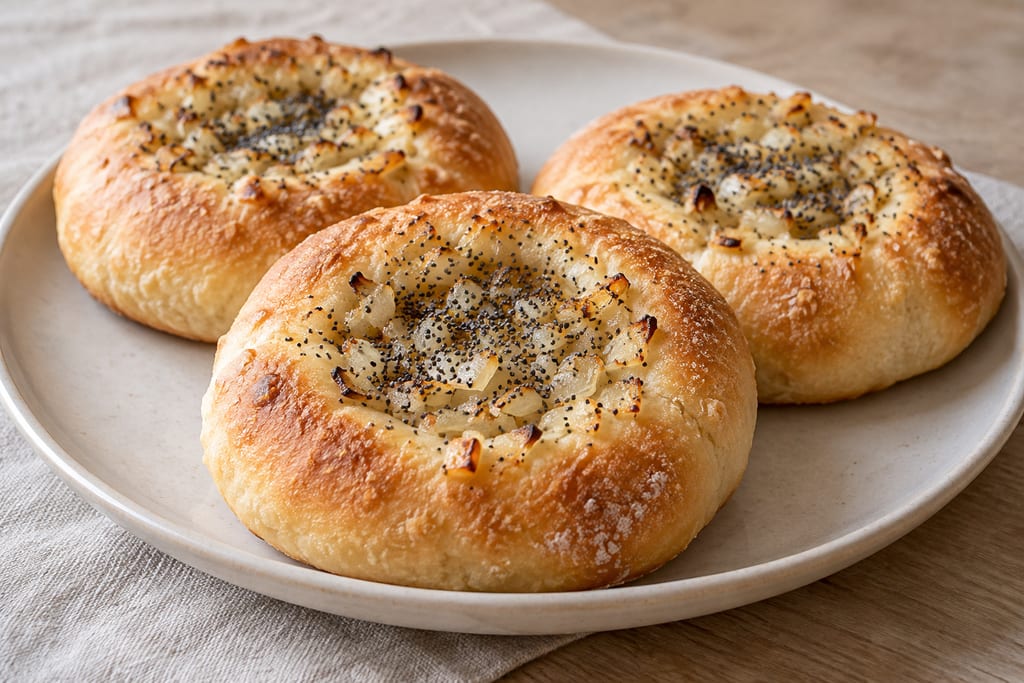
Bialys are soft, yeasted wheat rolls baked without boiling, each shaped with an onion-filled central depression instead of a hole.
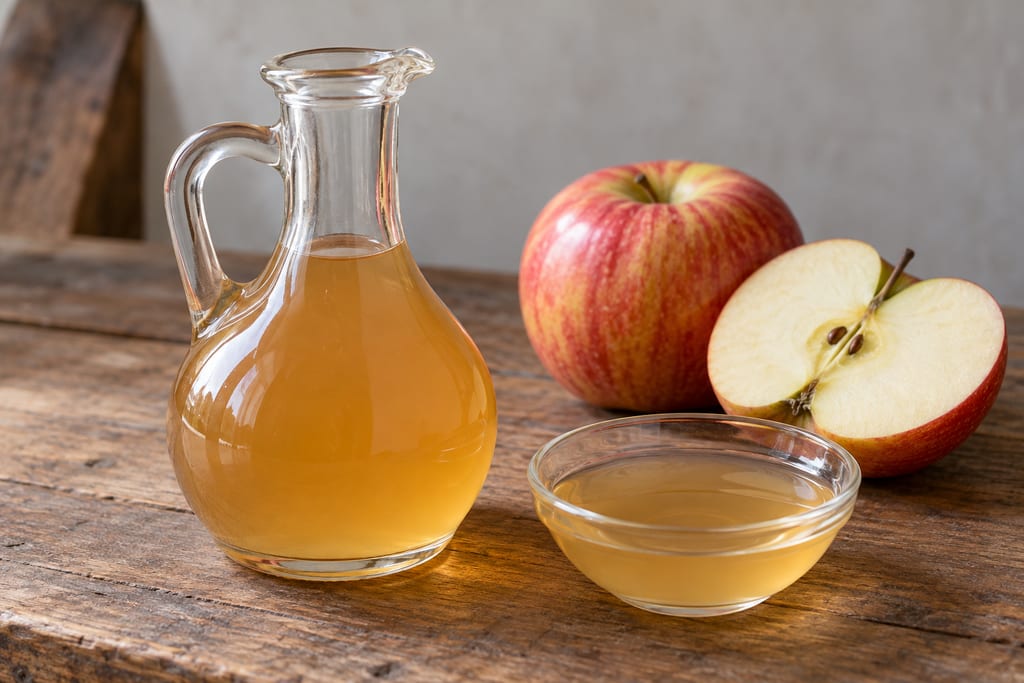
Cider vinegar is made when acetic-acid bacteria use oxygen to turn the alcohol in dry apple cider into acetic acid. This historical cask method begins with fermented cider and differs from apple-scrap vinegar made with sugar and water.
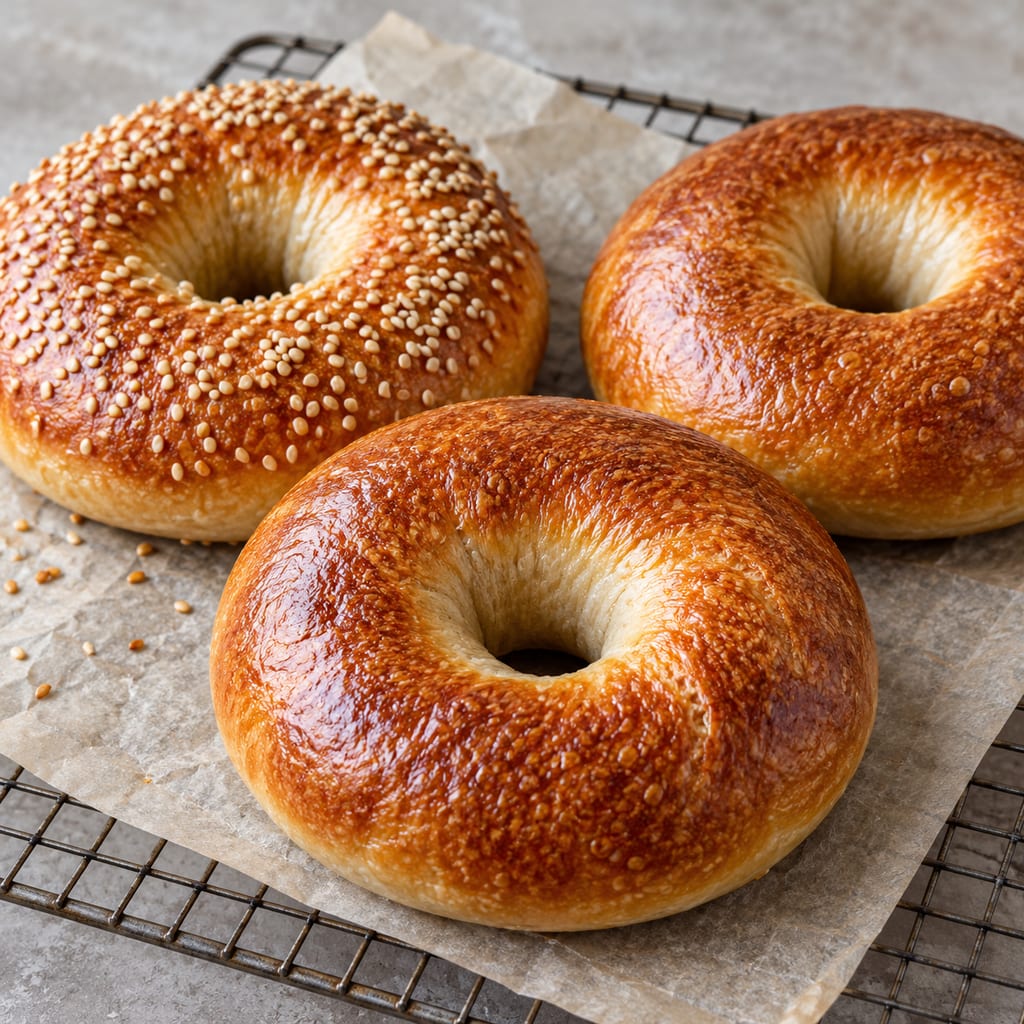
A firm bread-flour dough with barley malt is shaped into rings, refrigerated for 8–14 hours, poached below a boil, then baked hot with steam.
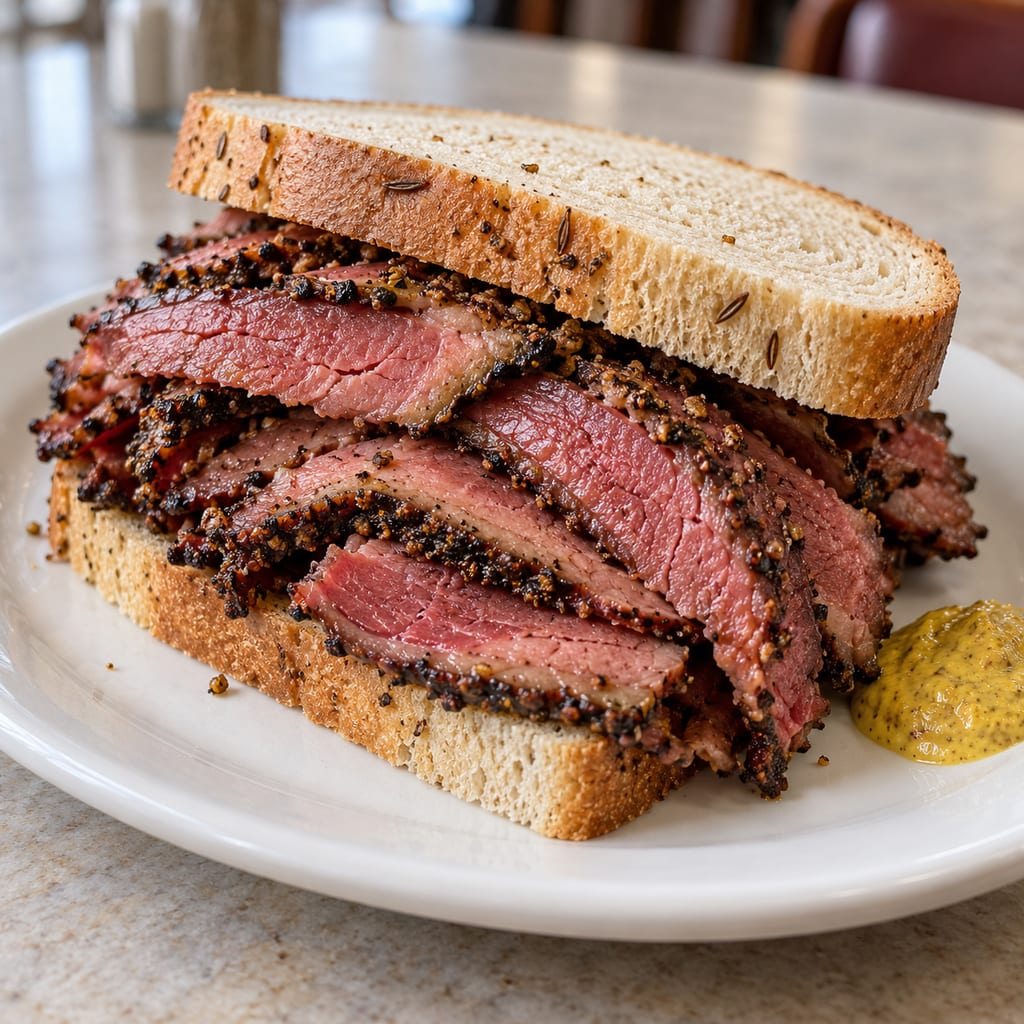
Pastrami is beef brined, rubbed with spices, smoked and steamed, the New York Jewish deli meat served hot and hand-carved on rye. Its origin is argued between competing accounts.
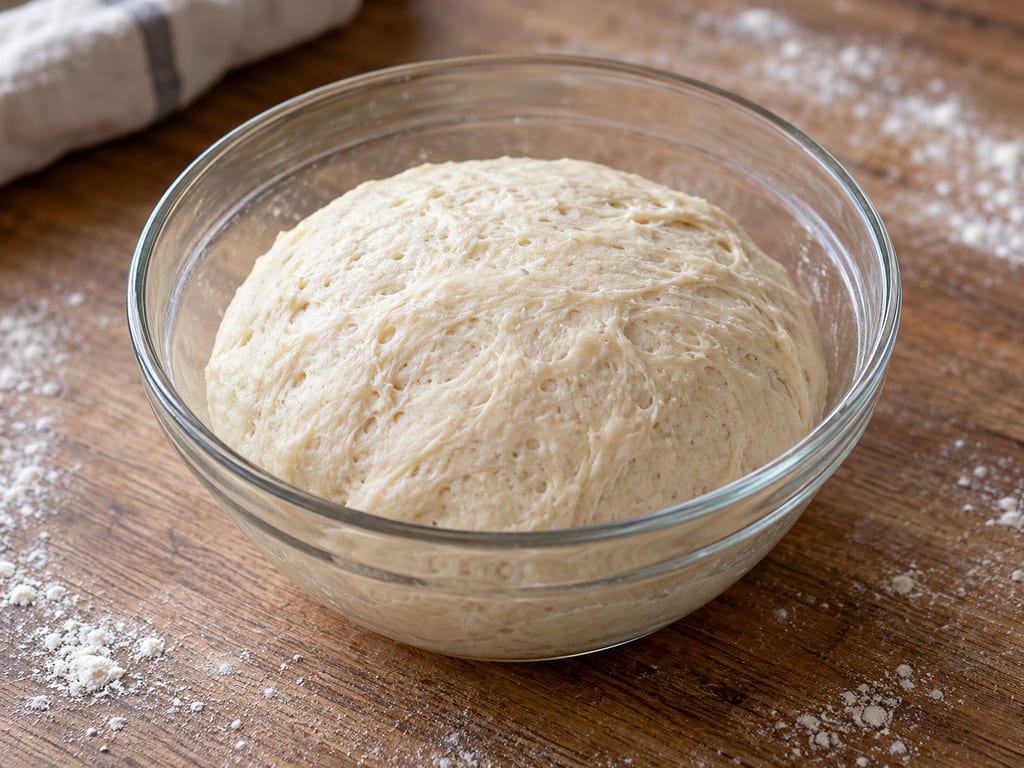
Pâte fermentée is a bread preferment made from salted, yeasted dough set aside to ferment and mixed into a later batch, carrying developed dough and fermentation products with it.
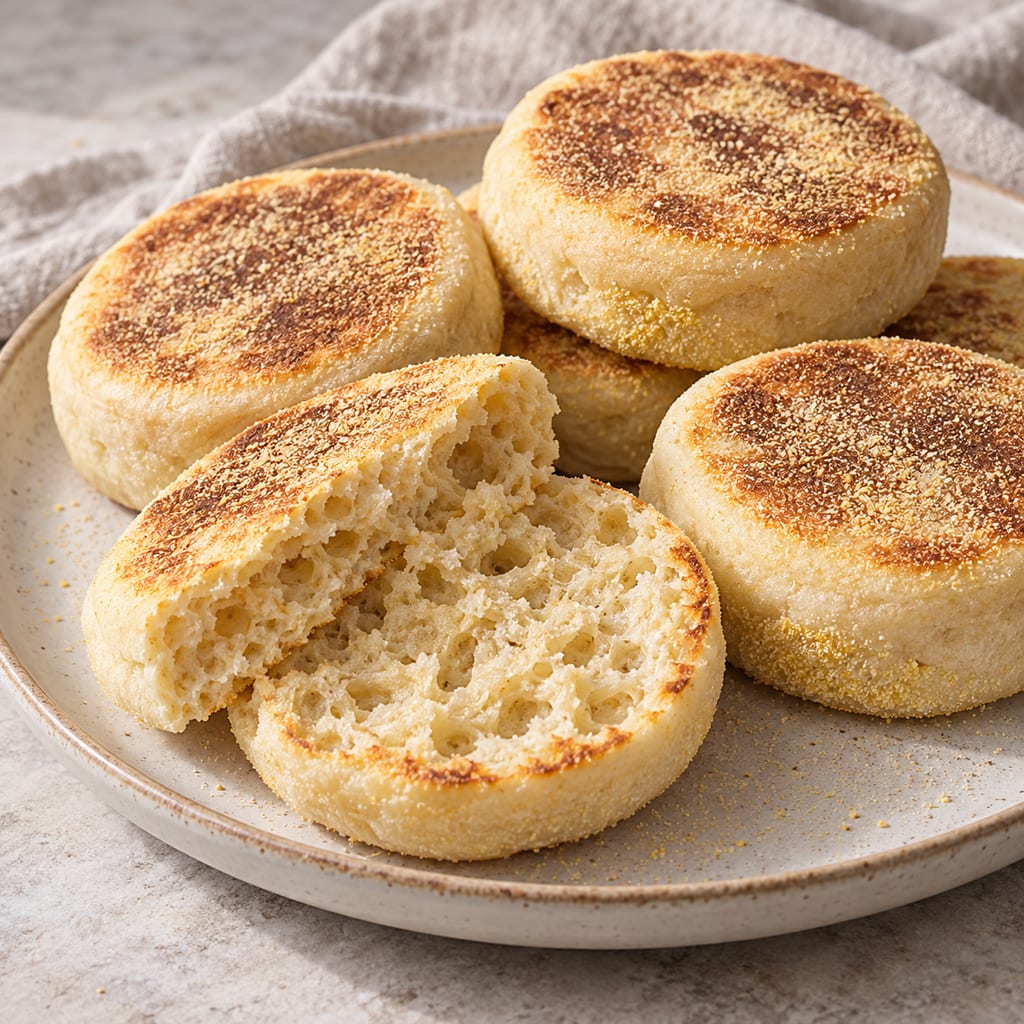
A soft English muffin dough combines sourdough starter with baker’s yeast, then rises, is cut into rounds and cooks on a griddle. The starter adds tang; the added yeast helps it rise.
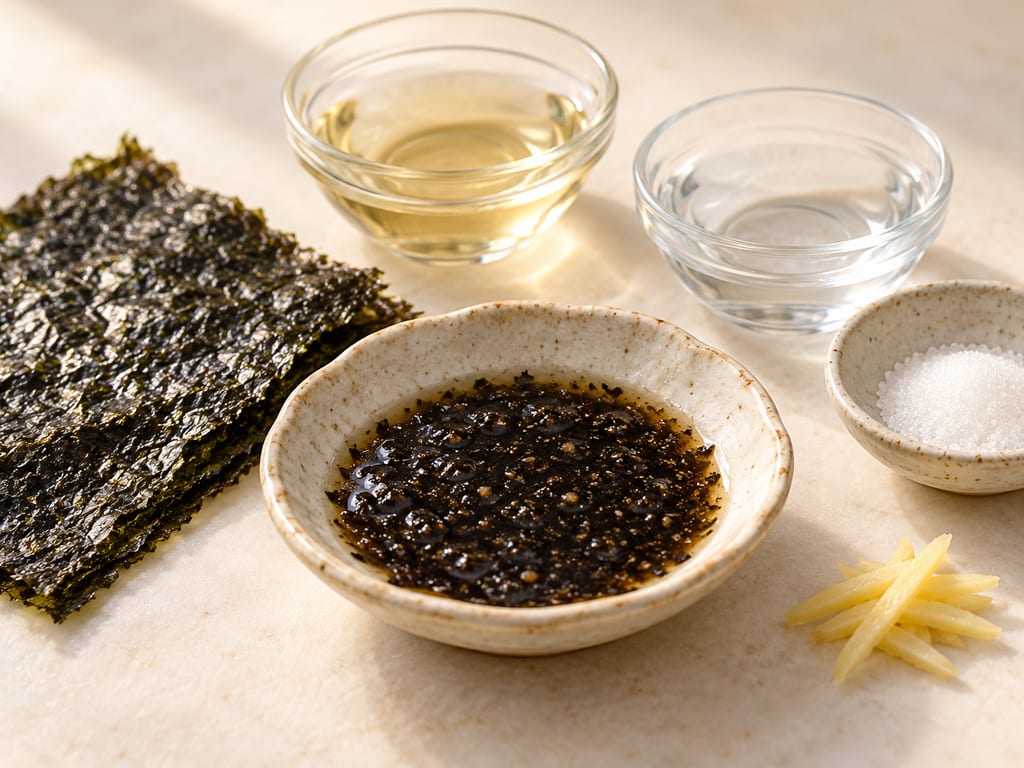
A fresh condiment in which crumbled nori softens in lightly sweetened vinegar and water. It is not vinegar fermented from seaweed.
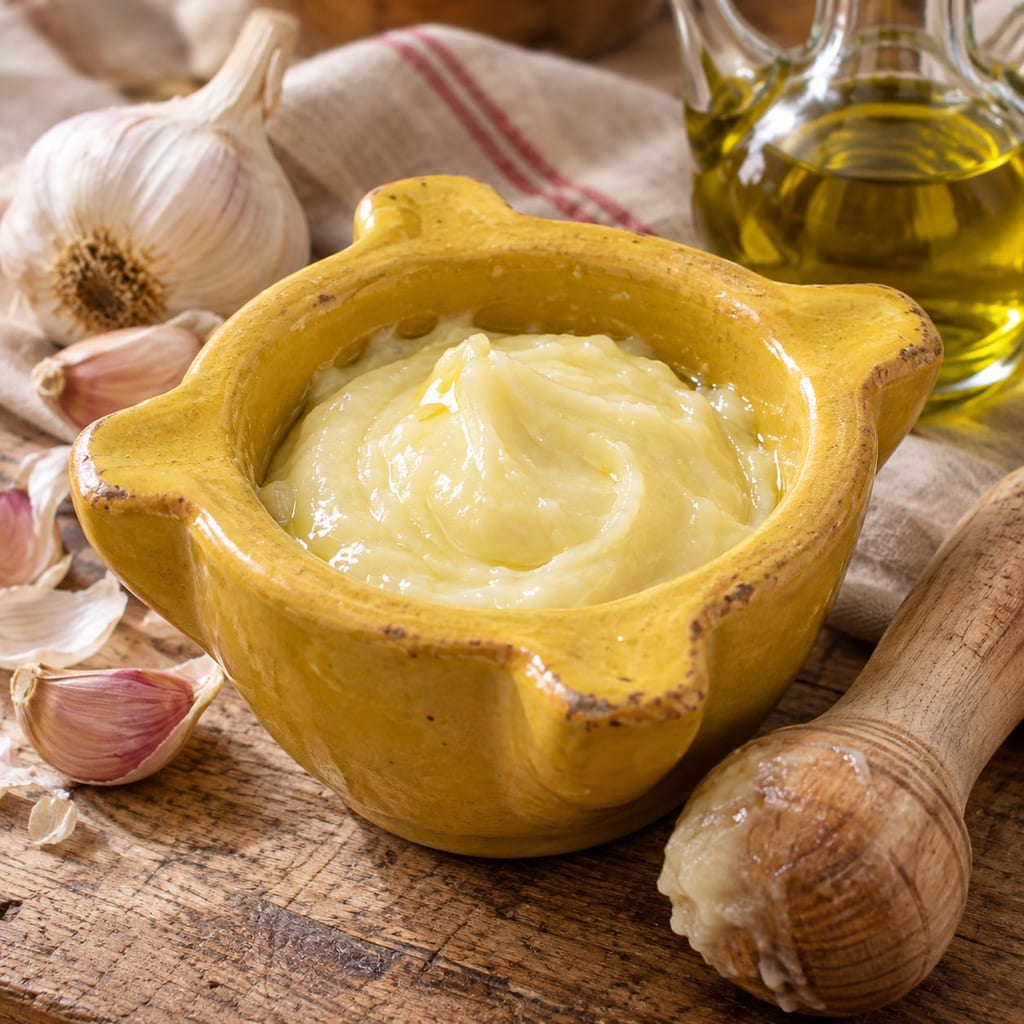
Traditional Catalan allioli is a dense emulsion of garlic, olive oil and salt made slowly in a mortar. This measured Barcelona-style version keeps egg-based garlic mayonnaise distinct.
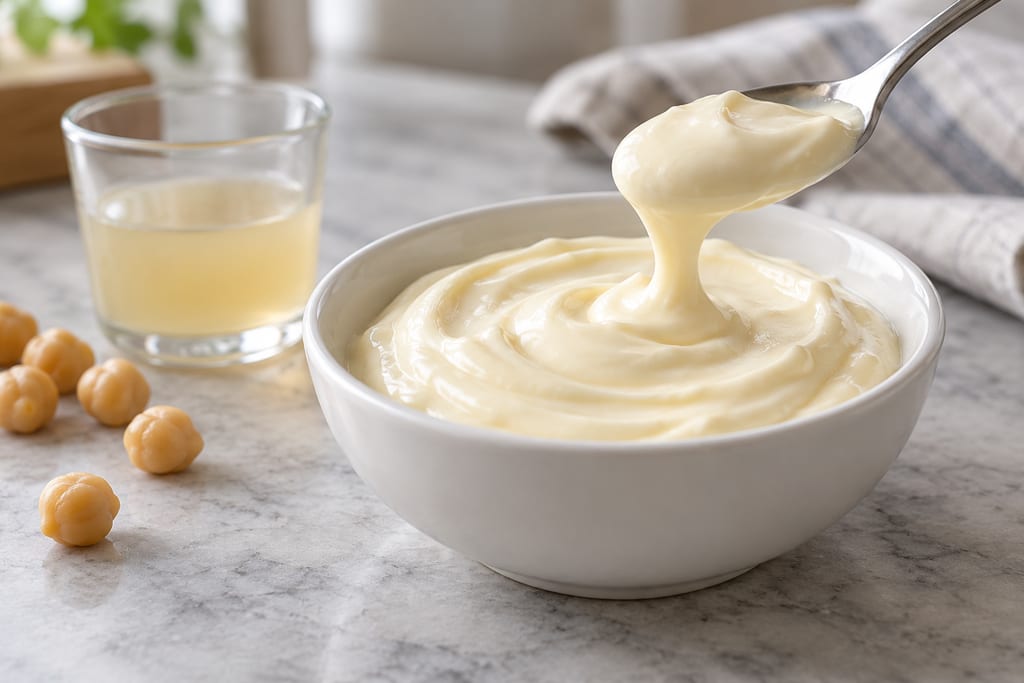
An eggless, untested emulsion made with canned chickpea liquid. Nominal yield 255 g.
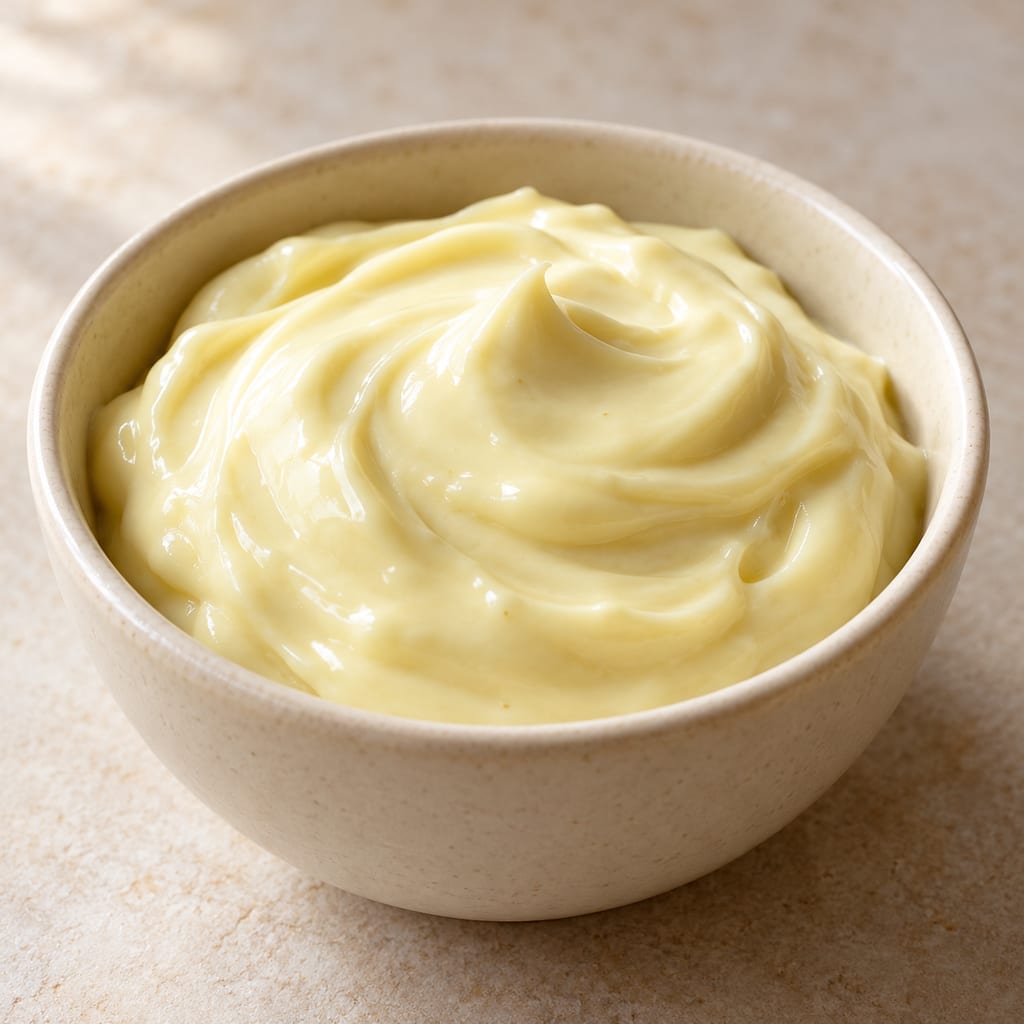
Avocado-oil mayonnaise is an ordinary egg-and-oil emulsion in which avocado oil supplies the oil phase. The oil changes flavour and colour, and it does not preserve the sauce.

Bechamel is a white sauce of milk thickened with a butter and flour roux, one of the French mother sauces, and the base from which Mornay and other cheese and cream sauces are made.
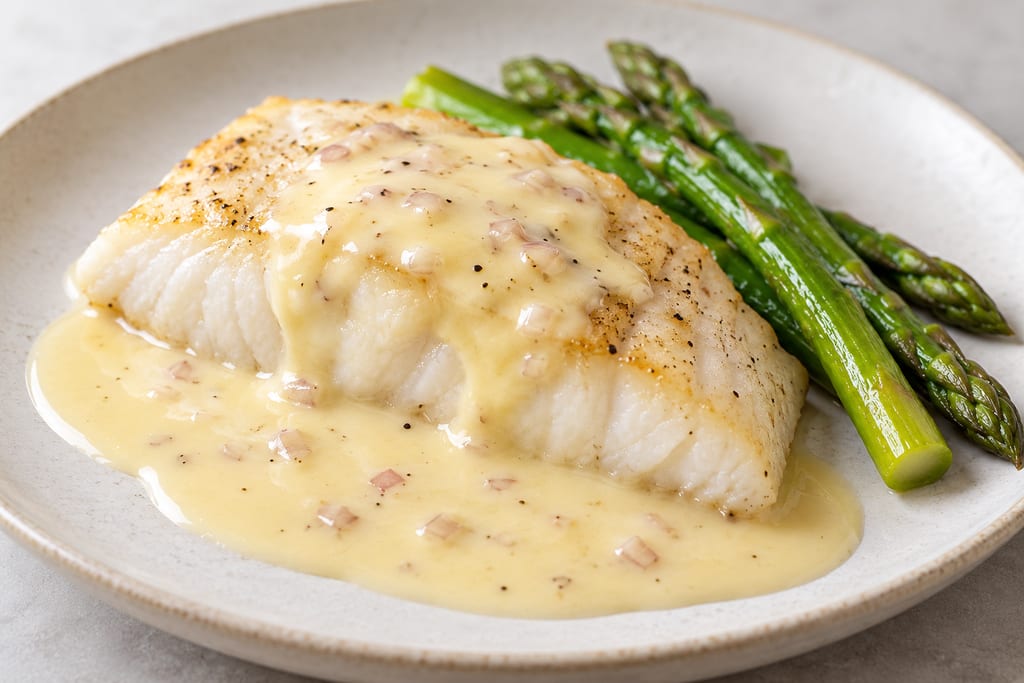
Beurre blanc is a warm emulsion of cold butter whisked into a reduction of white wine, vinegar or lemon juice and shallot, a sauce from the Loire Valley and its red-wine version, beurre rouge.
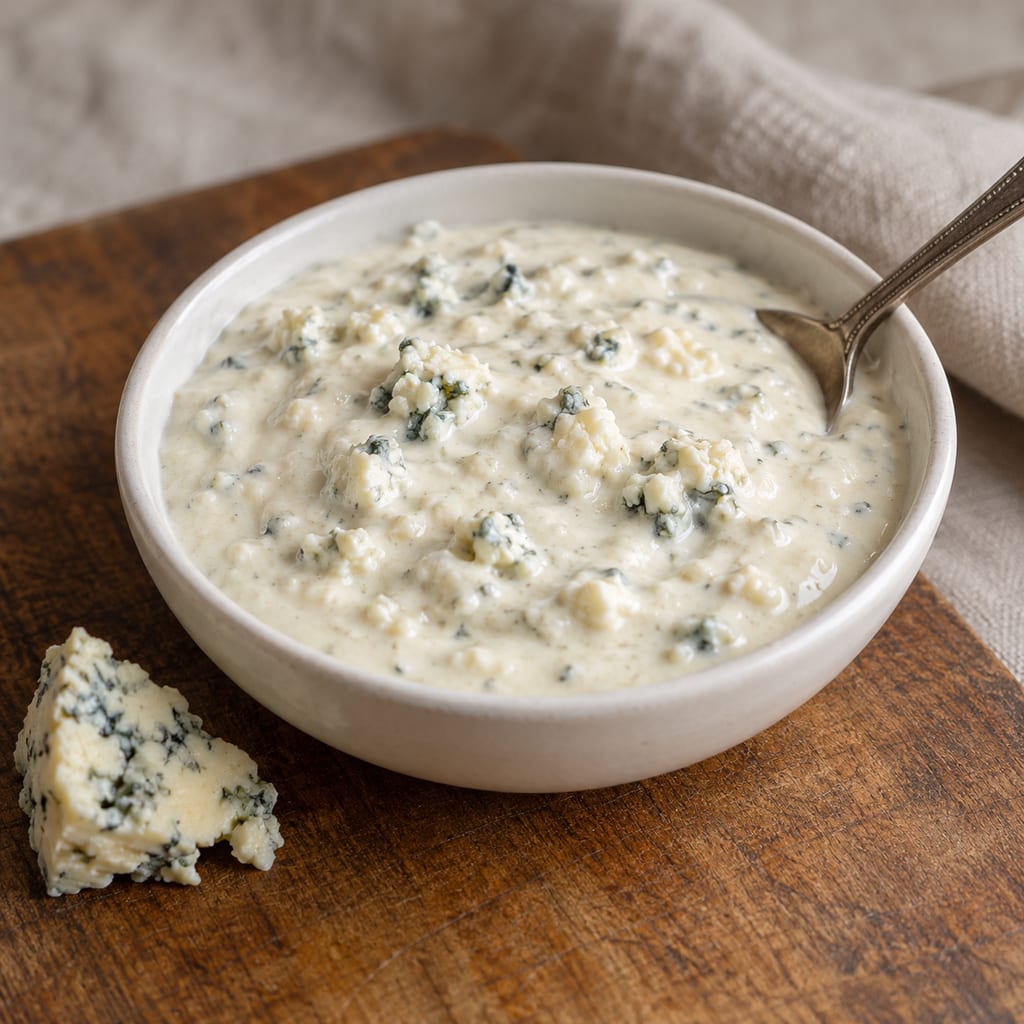
Blue cheese dressing is a creamy dressing built on crumbled blue cheese mashed into buttermilk, with sour cream, mayonnaise, vinegar and seasoning, and kept cold for up to two weeks.
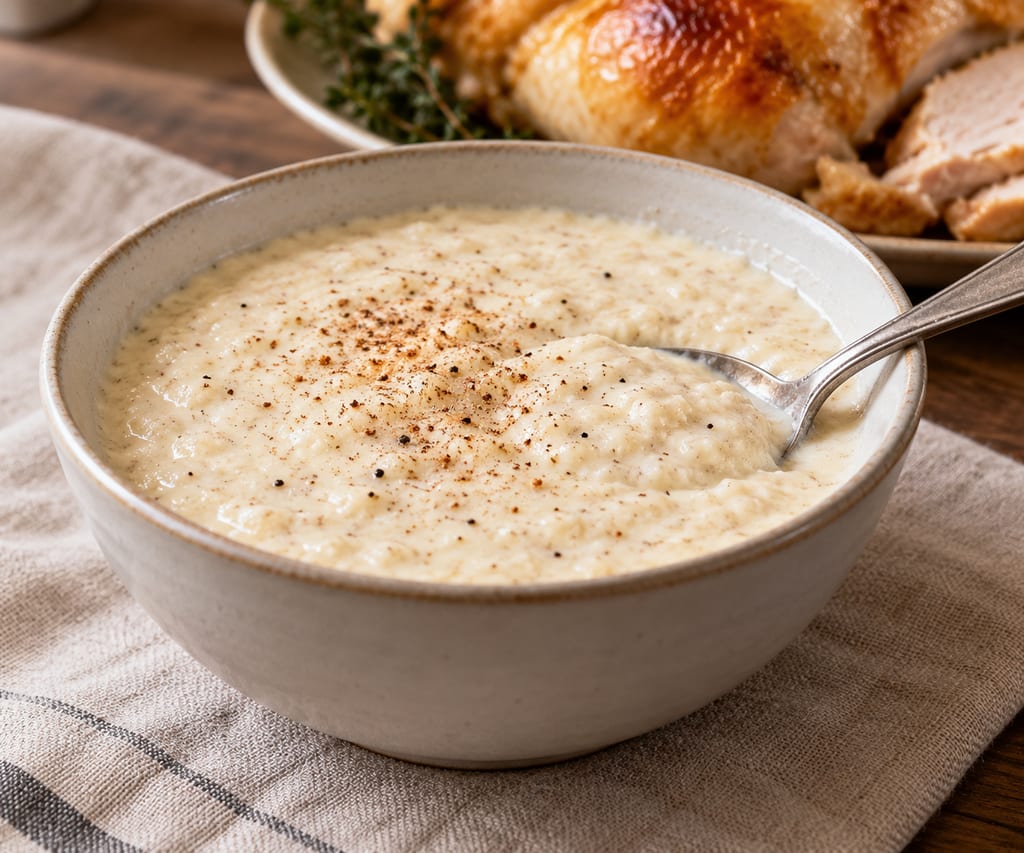
Bread sauce is a British sauce of milk infused with onion, clove and bay, thickened with stale breadcrumbs and finished with butter, served with roast chicken or turkey.

A Cap-Pelé boucanière is an Acadian herring-smoking building. The documented Willie Niles example is a one-storey wood-frame structure with a ridge smoke vent and interior bays for hanging fish-bearing cannes.

Achcharu is a family of Sri Lankan vinegar pickles made with mixed vegetables or seasonal fruit and a piquant spice dressing. This version is a quick, refrigerated, non-fermented mixed-vegetable pickle.

The acocote is a long, hollowed and dried gourd used to draw aguamiel from a mature maguey. It is a harvesting tool: the sap is transferred to a separate vessel before it ferments into pulque.

Adrak murabba preserves young ginger in sugar syrup, a sweet South Asian preparation recorded in Indian cookery and food-processing sources.

Parkia biglobosa seeds are fermented into regional West African seasonings, including nététou, iru, dawadawa and soumbala. The yellow fruit pulp is a separate food, and names and methods vary by place.

Japanese reddish-brown vinegar from sake lees matured about three years, turned to vinegar by acetic bacteria; the vinegar of Handa and Edomae sushi rice.

A refined common-wheat flour blended for a broad range of baking; its protein and behavior vary with wheat, milling and market.

The almond mushroom, Agaricus subrufescens, was cultivated in eastern North America in the 1800s, lost its market, and returned as a cultivated mushroom from Brazil, where it is grown under several names.
No community contributions have been published for this entry yet.
Sign in to contribute. Published comments and photos are free to read.
WikipediaHistory · Method
Thousand Island dressingThe origin of the name is unknown; the dressing is a mayonnaise and tomato condiment dressing with pickle relish.
Cited in: What it is; Where the name comes from; Competing origin stories; Making it; Notes
NPR (The Salt)History
Thousand Islands: two tales, who really invented that dressingCompeting origin stories: Boldt and the Waldorf-Astoria; Sophia Lelonde and the Herald Hotel in Clayton; the 1912 Chicago Drake Hotel claim.
Cited in: Competing origin stories