Equipment

626 sourced equipment pages: vessels, tools, appliances and built structures.

Sites and structures

124 items

What is made in place. Every type here belongs to a `build` item: it has a site, a ground and a climate, and moving it means rebuilding it.

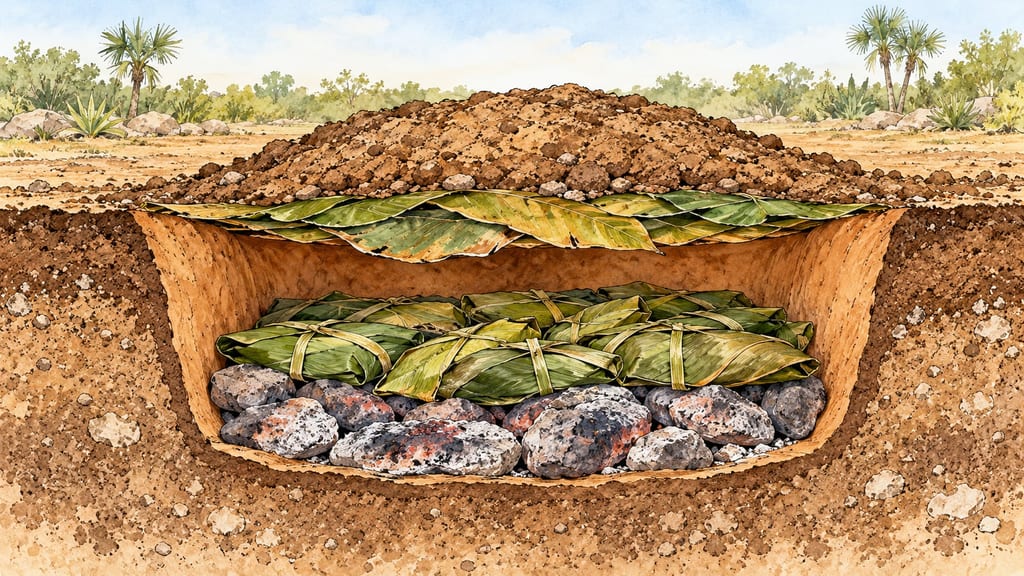
Hand-painted cutaway illustration of a Yucatecan Maya píib, showing an earth pit below ground with heated stones, wrapped food and a partial leaf-and-earth cover.
Built structures

Píib (Maya earth oven)

An in-ground Yucatecan Maya oven that uses fire-heated stones and a covered pit to cook food slowly. Documented pit depth, coverings and loading sequence vary; this page presents sourced examples rather than one standard design.
Pits and cavities
Yucatán
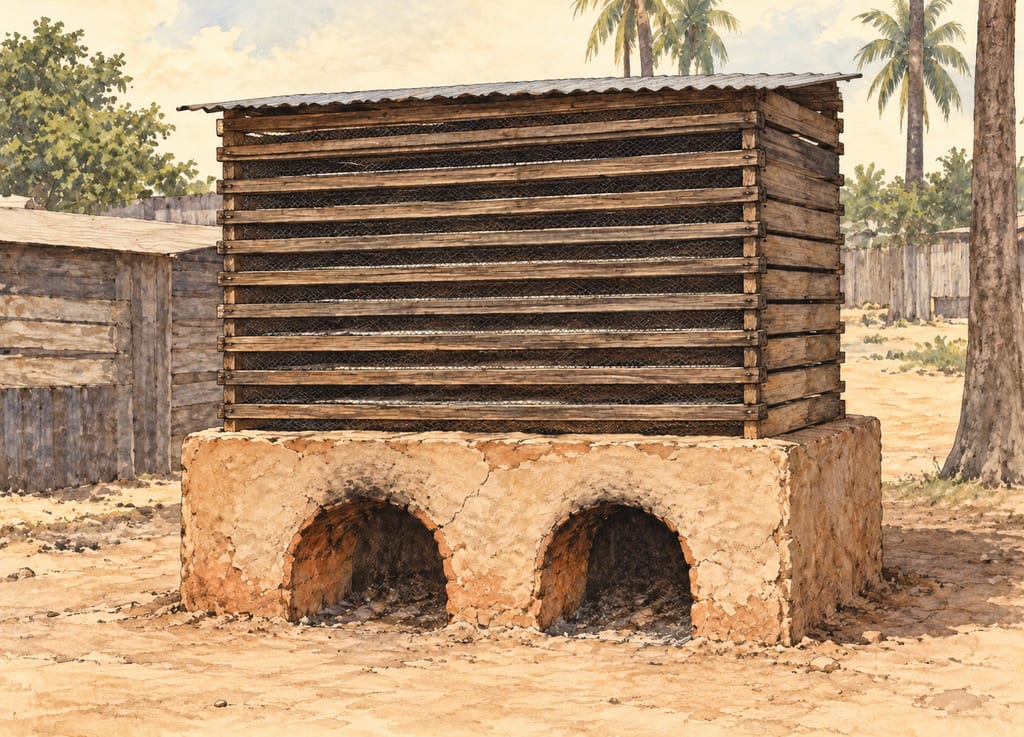
Illustration of the Chorkor smoker: a rectangular mud/clay oven base with two front openings and a tall stack of wooden-framed wire-mesh trays under a flat sheet-metal cover.
Built structures

Chorkor smoker

The Chorkor, also called the Kagan smoker in early FAO documentation, pairs a low rectangular mud/clay oven with stacked removable wooden-frame, wire-mesh trays. FAO records its use at Chorkor, Ghana, from 1971.

Masonry smoking ovens
Chorkor, Accra, Ghana
Built structures

Sundarbans bamboo shrimp-smoking kiln

A 2003 study describes a bamboo smoking kiln near the Sundarbans, with a sloping golpata roof, raised reed-and-bamboo platform and multiple fireplaces.

smoking-sheds
Sundarbans
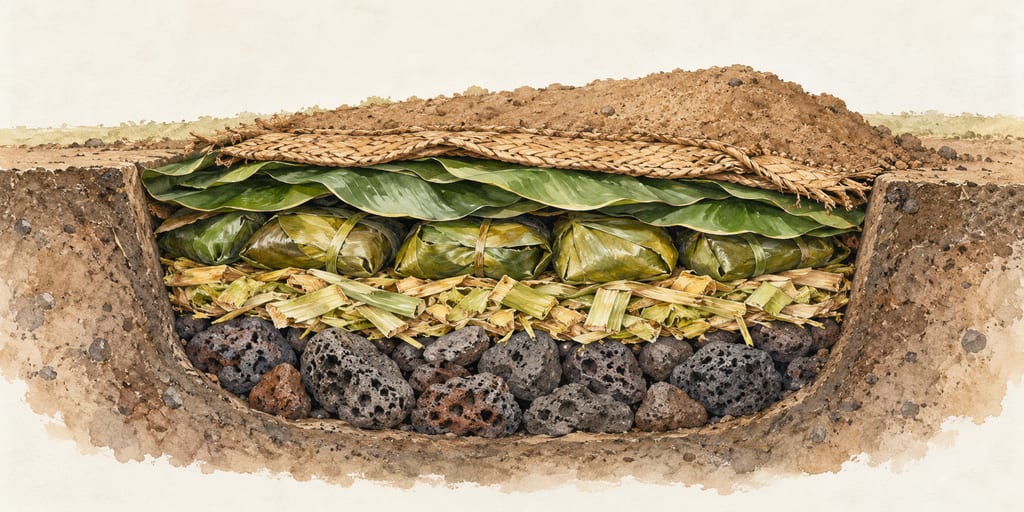
Watercolor cutaway of a Tahitian ahimā‘a pit in the ground, showing porous volcanic stones, crushed banana stalks, leaf-wrapped food, leaves, a woven-fibre mat and an earth covering.
Built structures

Ahimā‘a

The Tahitian ahimā‘a is a ground oven built in a pit, where hot volcanic stones and layered leaves and earth cook food slowly.

Pits and cavities
Tahiti
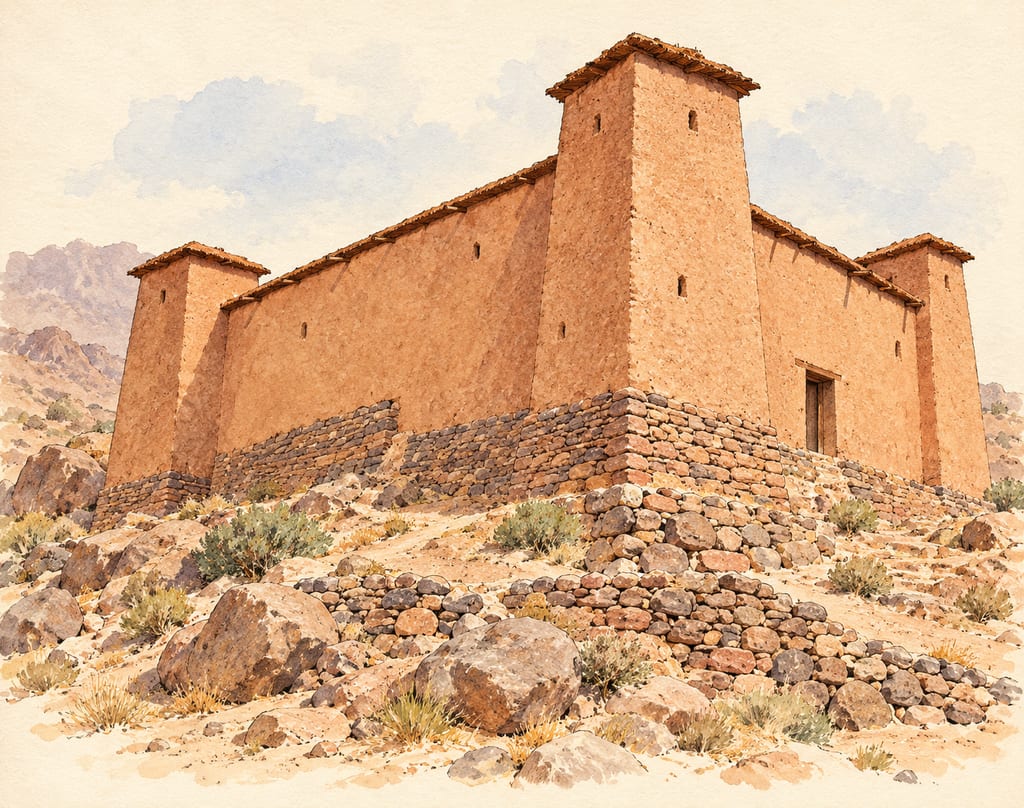
Interpretive watercolor-and-ink illustration of an Amazigh fortified granary with earth-colored walls, raised sections and a rough stone base on rocky ground.
Built structures

Agadir (igoudar, Amazigh collective granary)

An agadir (plural igoudar) is a fixed Amazigh communal storehouse in Morocco for harvests and other valuables. Layout, materials and community rules vary by site; no single plan describes every granary.

collective-granary
Souss
Built structures

Bangladesh shrimp-smoking shed

A 2007 training manual records one covered shrimp-smoking shed in coastal Bangladesh, with bamboo racks above fires and a site-specific 15 × 45 ft footprint.

smoking-sheds
Patuakhali
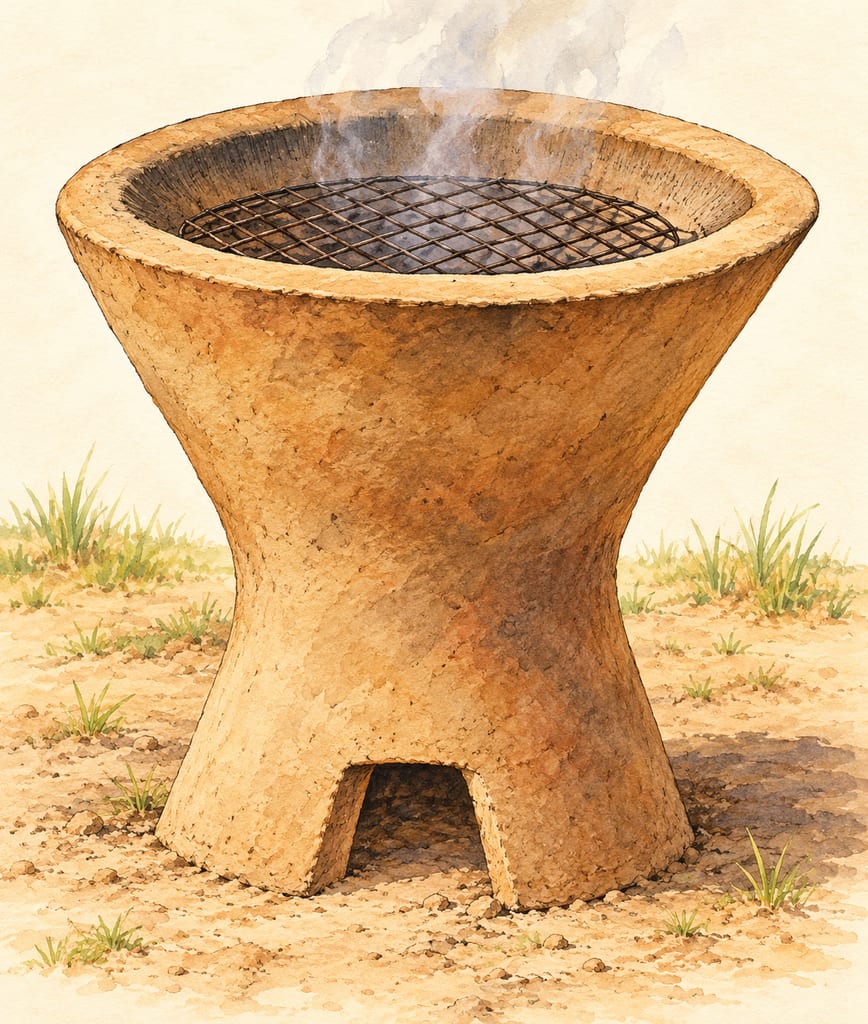
Editorial watercolor illustration based on FAO Figure 3: an hourglass-shaped mud smoking oven with a mesh support spanning its broad top and a small opening at the base.
Built structures

Kainji Lake earthen smoking kiln

A 1974 FAO report describes varied mud fish-smoking ovens around Nigeria’s Kainji Lake basin, including an hourglass form in its northern parts. It documents the form and broad use, but gives no dimensions or construction sequence.

Masonry smoking ovens
Kainji Lake basin, western Nigeria
Built structures

Buried manioc store (Omagua flood storage)

A flood-season pit store described for Omagua communities along the Amazon: manioc tubers were buried before inundation and recovered as waters receded. Its shape and lining are not recorded.

Pits and cavities
Omagua islands, Amazon River floodplain
Built structures

Swazi cattle-kraal grain pit (ingungu)

A Swazi ingungu is an underground grain store beneath a homestead cattle kraal in Eswatini; stored grain could ferment slightly, while pest protection was the stated primary benefit.

Pits and cavities
Eswatini
Built structures

Bwiru pit

A small household pit dug into sandy ground on Namu Atoll to ferment breadfruit as bwiru. Nancy J. Pollock's 1968 field account describes its lagoon-side setting, leaf lining and stone-covered opening.

Pits and cavities
Majkin, Namu Atoll
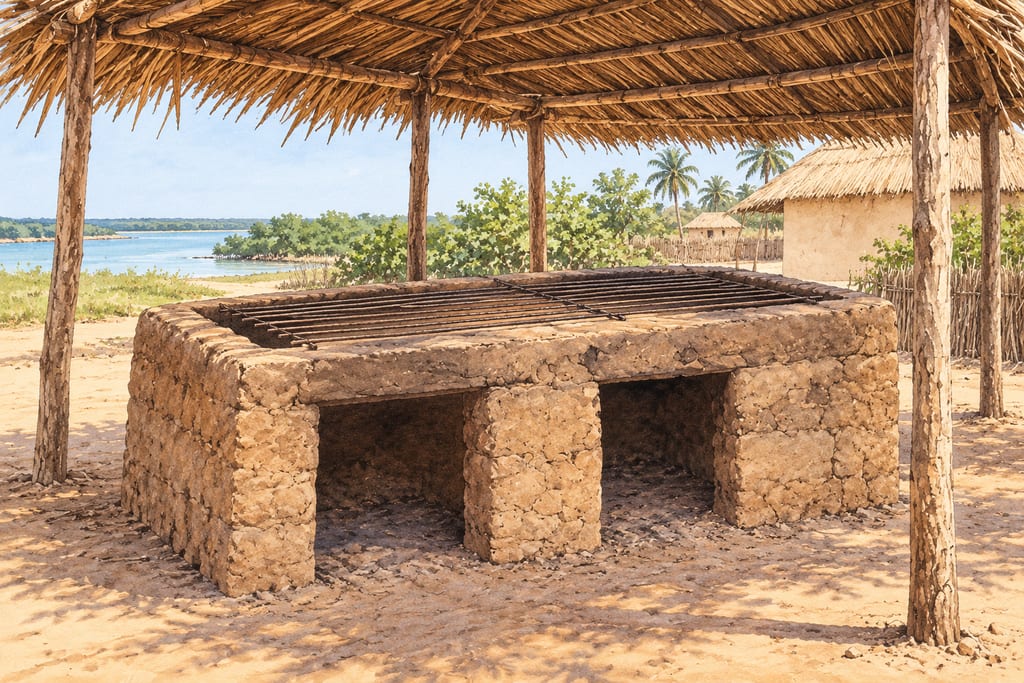
Editorial illustration of a closed mud-block Banda oven, showing a fixed earthen body, front fuel openings and an empty grill beneath a thatched shelter.
Built structures

Closed Banda oven

A closed Banda is a fixed fish-smoking oven with enclosing mud-block or compacted-clay walls around a rectangular fire and a grill or wire-mesh platform. Its regional forms are not one standardized plan.

Masonry smoking ovens
Senegal
Built structures

Alutiiq clay-lined subfloor pit

A large clay-lined depression built beneath some Alutiiq house floors in the Kodiak region, documented in Koniag contexts for food storage and possibly fermentation.

Pits and cavities
Afognak Island
Built structures

Below-ground fish-fermentation tank (Senegal)

A concrete fermentation tank installed below ground at a Senegalese fish-processing site was documented as an adaptation that emulated the older practice of burying fish during fermentation.

Floors, basins and masonry tanks
Senegal
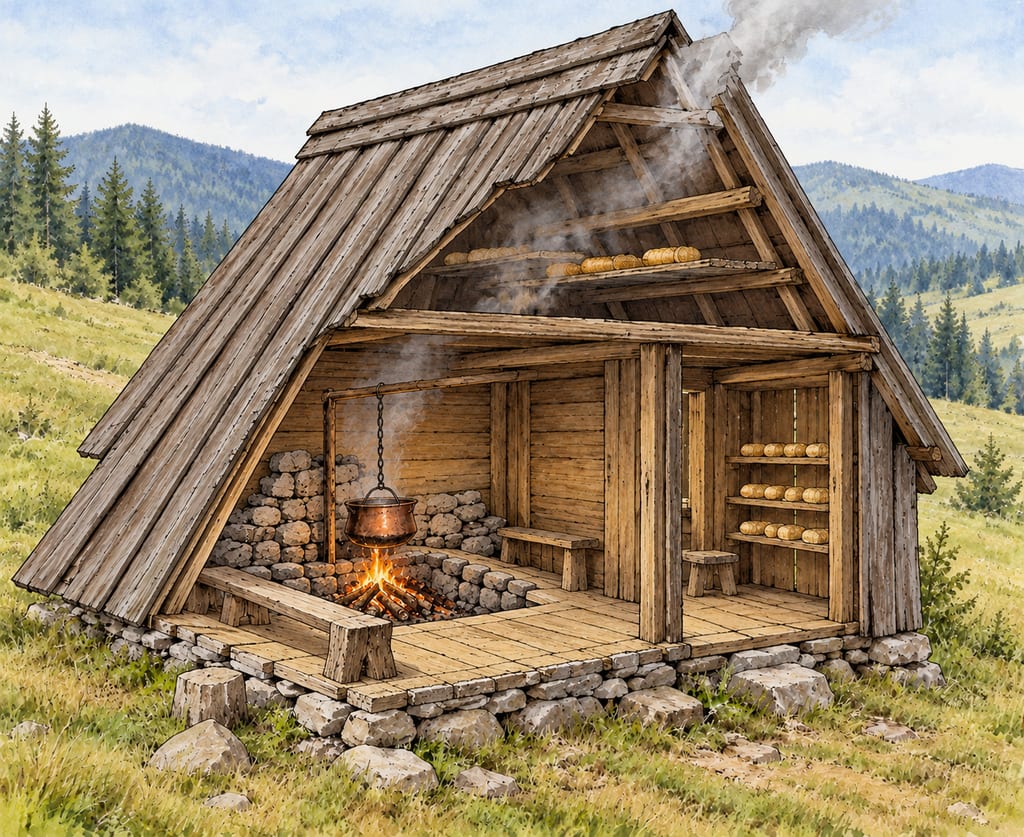
Historical cutaway illustration of a timber Carpathian shepherd hut with two work rooms, a sunken stone-protected hearth and cheese shelves beneath the roof.
Built structures

Bacówka (Carpathian shepherd hut)

A bacówka is a seasonal shepherd’s hut built in place in the Polish Carpathians. Its documented hearth, cheese rooms and roof-space smoking link it to pastoral work; sources do not define one universal plan.

Pastoral huts
Polish Carpathians
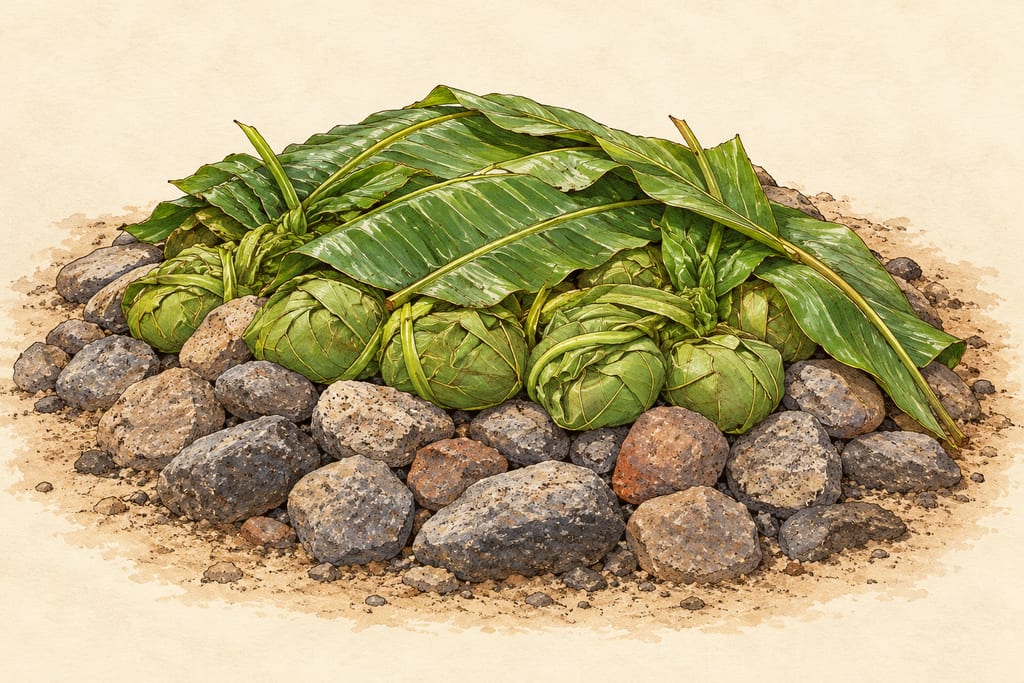
An above-ground bed of hot stones supports leaf-wrapped food beneath a partial leaf covering.
Built structures

Above-ground stone oven

A fire-heated stone bed or mound holds food arranged on the stones and covered with leaves. The Samoan umu is one documented regional instance, not a universal blueprint.

above-ground-stone-ovens
Samoa
Built structures

Buried industrial olive-fermenter installation

An industrial fermentation patio places factory-made fiberglass-reinforced polyester olive tanks below floor level, with drainage and transfer infrastructure arranged around the buried vessels.

Pits and cavities
Spain
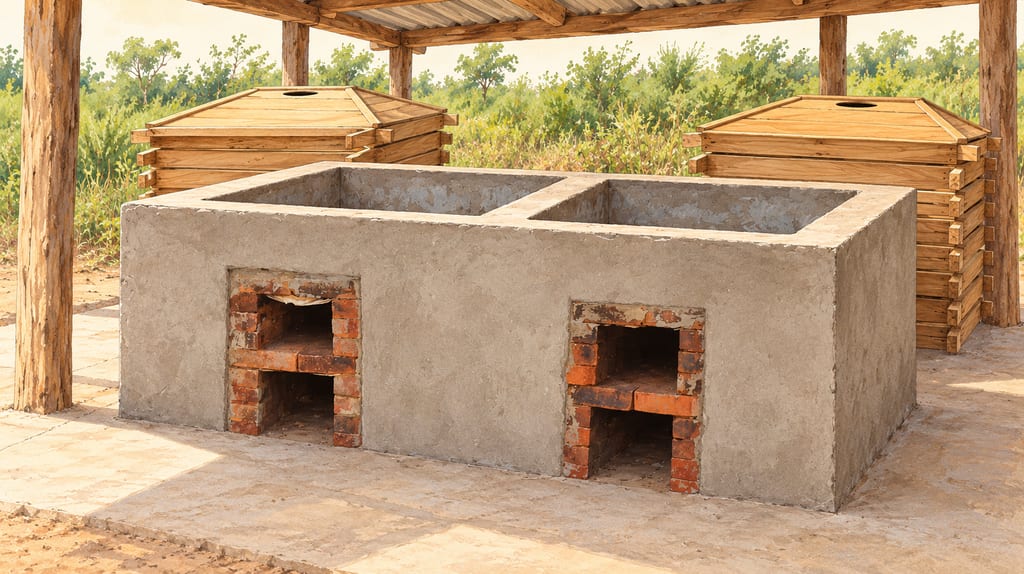
Editorial illustration of a Ghanaian Ahotor oven: a fixed cement masonry body with paired brick-lined fire openings and removable wooden smoking trays.
Built structures

Ahotor oven

The Ahotor is a modern fixed masonry fish-smoking oven developed in Ghana as an improved alternative to traditional smokers such as the Chorkor.

Masonry smoking ovens
Ghana
Built structures

Camas earth oven

A temporary, in-place earthen oven used to cook camas with heat retained by fire-heated stones. The dimensions described here belong to one Kalispel-supervised reconstruction, not a universal form.

Pits and cavities
Weippe Prairie
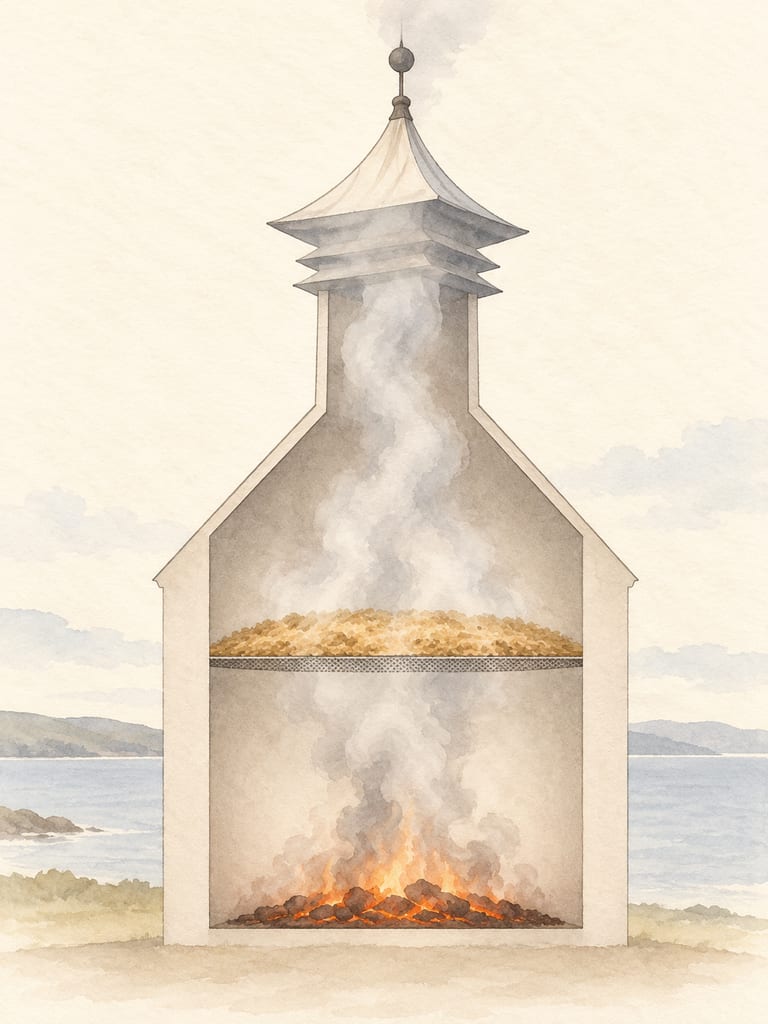
Watercolor cutaway of the Laphroaig peat malt kiln, showing smoke rising from a peat fire through a perforated malt floor beneath its pagoda chimney.
Built structures · Place

Peat-fired malt kiln

A fixed malt-drying kiln at Laphroaig on Islay, where peat smoke passes through damp malt before it is fully dried.

Show on map
malt-kiln-buildings
Laphroaig distillery, Islay
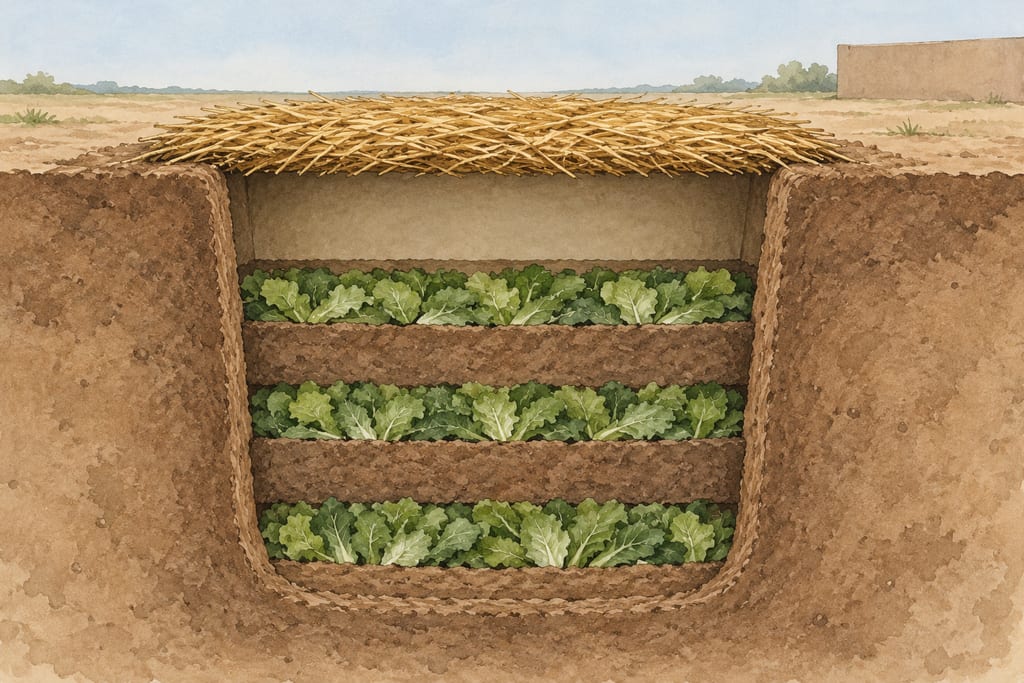
Editorial cutaway illustration of an earthen pit with alternate rows of leafy vegetables and soil beneath a straw cover, with open space below the rim.
Built structures

Fresh-vegetable storage pit in the Qimin yaoshu

A sixth-century Chinese agricultural text describes a seasonal earthen pit for keeping fresh vegetables through winter, with vegetable kinds separated by alternating rows of produce and soil under a thick straw cover.

Pits and cavities
China
Built structures

Banana ripening pit (urwina)

The Rwandan urwina is a conical, leaf-lined earth pit that warms green brewing bananas before they are peeled, crushed for juice and fermented separately.

Pits and cavities
Rwanda
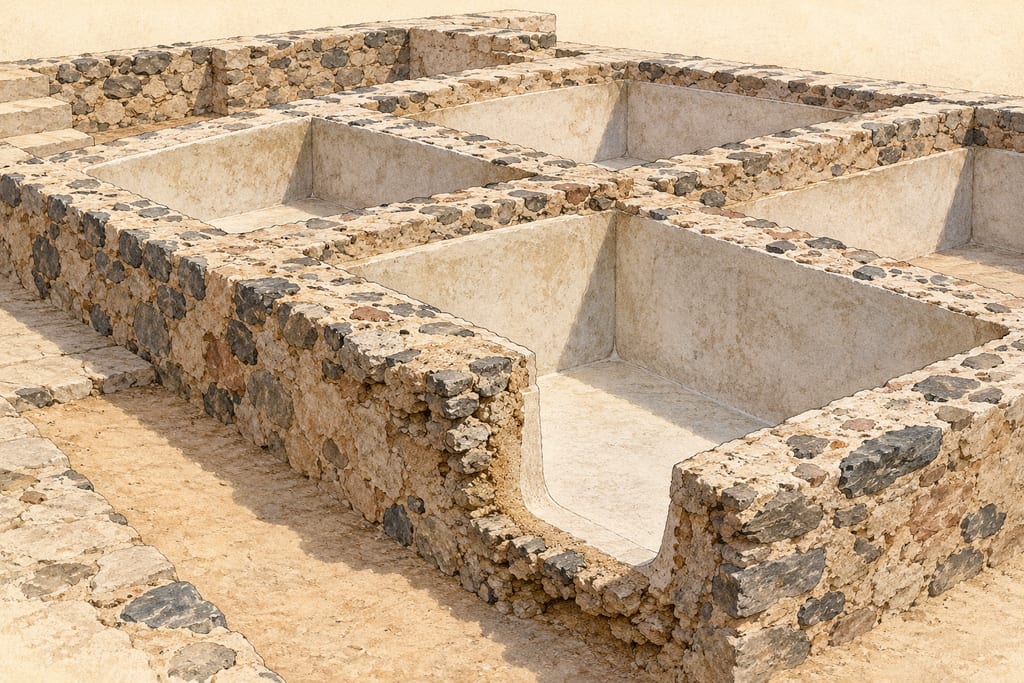
Interpretive illustration of Roman masonry vats with rough stone walls and smooth pale lining.
Built structures

Roman cetaria: masonry fish-salting vats

A cetaria is a fixed masonry basin in a Roman fish-processing installation. Examples at Baelo Claudia, Tróia and Monte Molião show varied forms, not one universal design.

Floors, basins and masonry tanks
Baelo Claudia, Tarifa
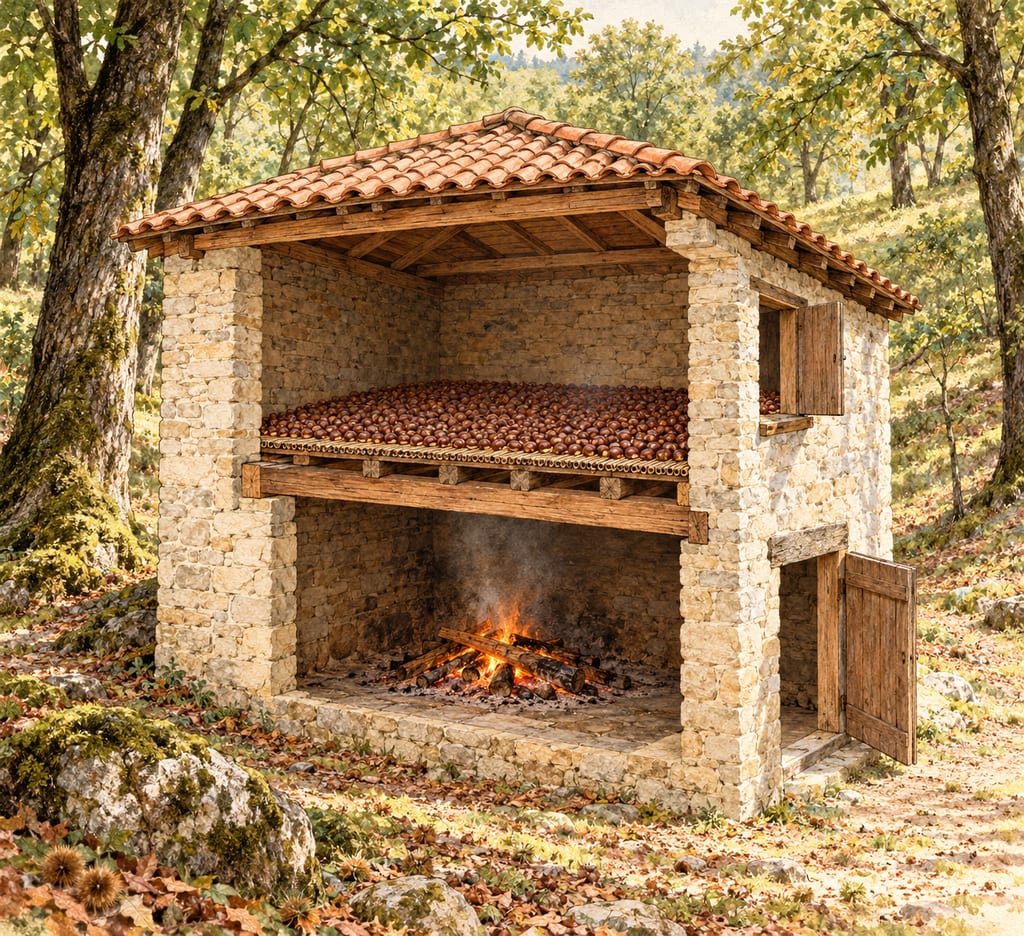
Interpretive watercolor cutaway of a Tuscan metato, with chestnuts on a timber-and-cannicci drying floor above a small fire in the lower stone chamber; not a measured plan.
Built structures

Chestnut metato

A metato is a small chestnut-drying building found in parts of Italy, with a slow fire below and an open timber floor above where chestnuts dry.

Cellars, caves and ripening rooms
Gallicano
Interpretive cutaway illustration of the Areni-1 cave installation: a clay basin at the cave floor and a large clay jar set into the ground nearby.
Built structures · Place

Areni-1 wine-production installation

A fixed Late Chalcolithic installation in Areni-1 cave combined a shallow clay pressing basin with a large jar set into the cave floor and storage vessels nearby.

Show on map
Floors, basins and masonry tanks
Areni-1 Cave