Built structures
Granite lagar
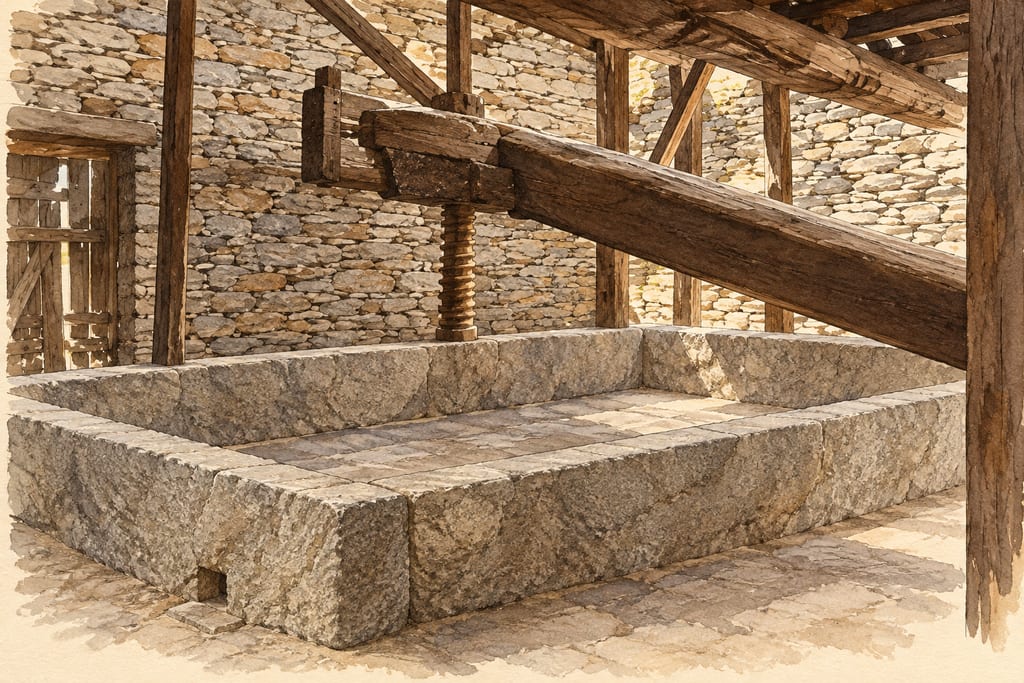
A lagar is a fixed stone tank used to tread grapes in some Douro wineries. Granite examples sit in winery rooms where gravity can carry must to vats below; the sizes, layouts and surviving uses vary by estate.
 FermenteaWhere food goes to change
626 sourced equipment pages: vessels, tools, appliances and built structures.
What is made in place. Every type here belongs to a `build` item: it has a site, a ground and a climate, and moving it means rebuilding it.
A lagar is a fixed stone tank used to tread grapes in some Douro wineries. Granite examples sit in winery rooms where gravity can carry must to vats below; the sizes, layouts and surviving uses vary by estate.
In Burkina Faso, processors bury whole shea fruits in fosse pits before extracting nuts. Field research records varied pit sizes, coverings, durations and handling; it does not establish one standard design.
A project-supported underground crop cellar built in Sughd Province, Tajikistan, from 2011. Its 4-ton design uses managed ventilation for storing apples and potatoes.
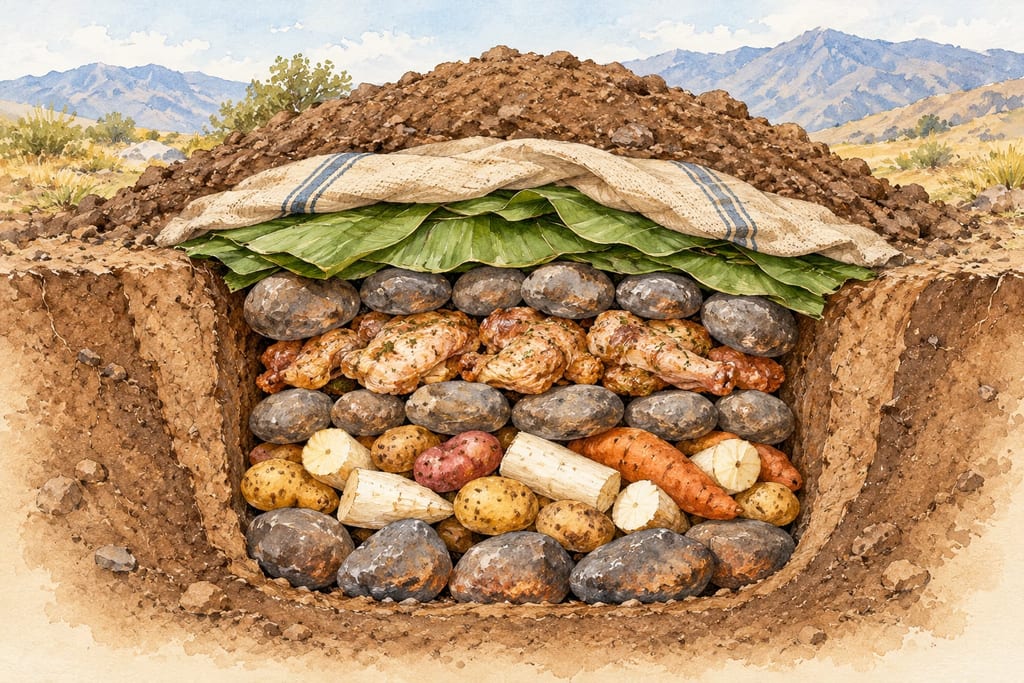
The Huánuco pachamanca is a temporary ground oven: firewood heats stones, which enclose layers of tubers and seasoned meat in an excavated pit. Banana leaves, blankets and earth seal the cooking cavity.
A sardāb is a deep cellar in Iranian vernacular houses, used in summer to keep perishable food cool. Sources describe varied depths and ventilation, so this is not one fixed design.
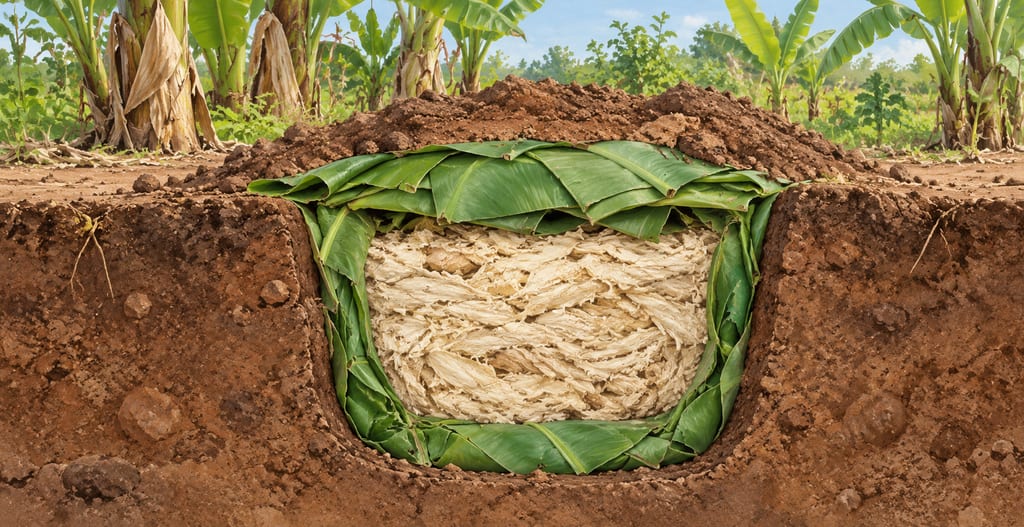
A fixed earthen pit used to ferment and store kocho, lined and covered with broad leaves of enset. Published accounts document the form in Ethiopia but do not establish one universal shape or size.
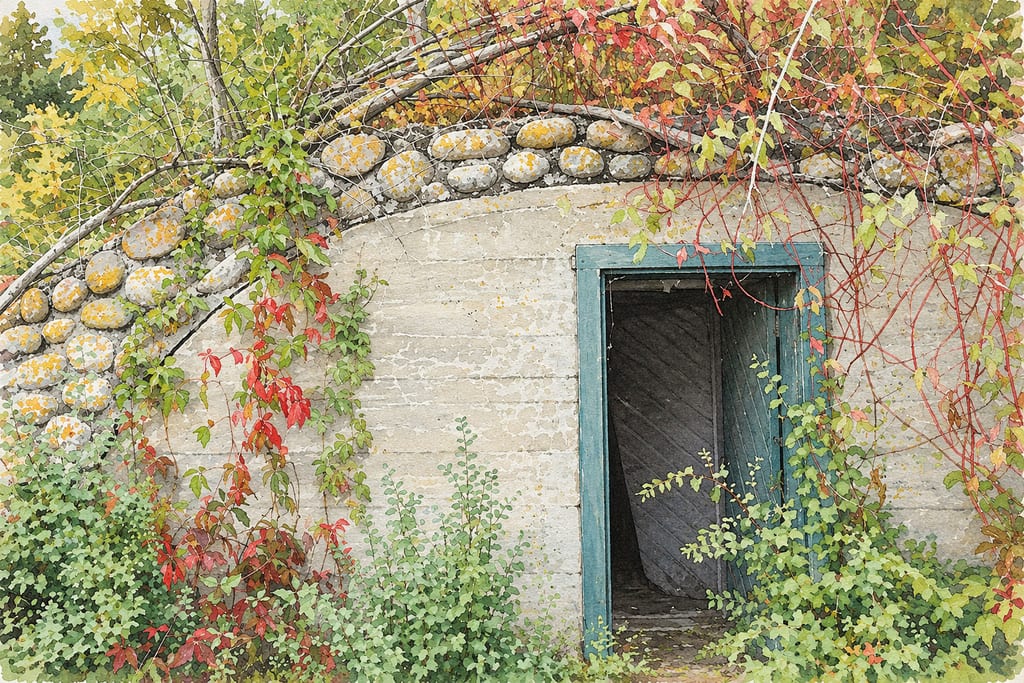
A documented root cellar at Minnesota’s Joyce Estate was built into a hillside near the kitchen to store garden produce. Its exposed east wall is concrete trimmed with fieldstone.
Show on map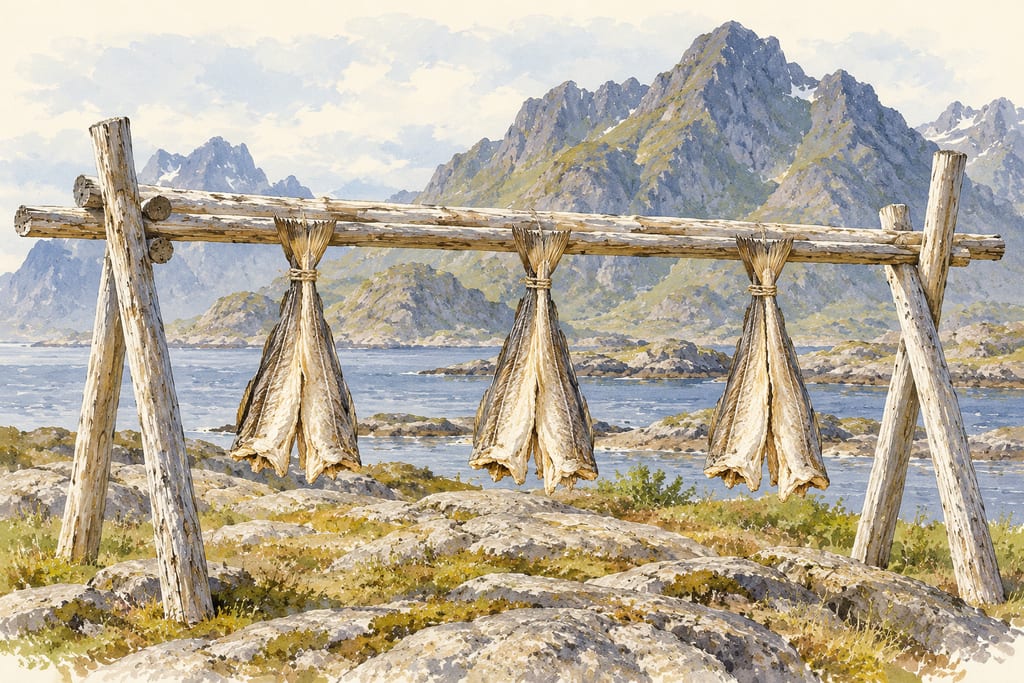
A Lofoten hjell is a large outdoor wooden rack for drying stockfish in the region’s moving coastal air. Flat racks and piles are recorded in the product specification; the archive also describes horizontal and tall triangular arrangements.
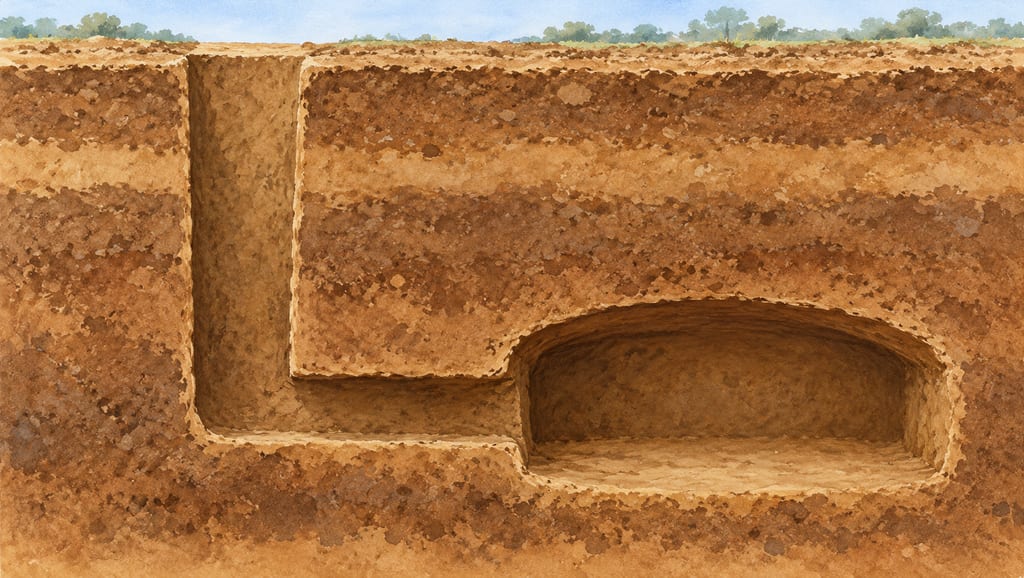
A source-bounded account of Edo’s subterranean kōji chambers: shafts led through narrow passages to low rooms cut into Kantō loam for cultivating kōji. Excavated examples vary by site.
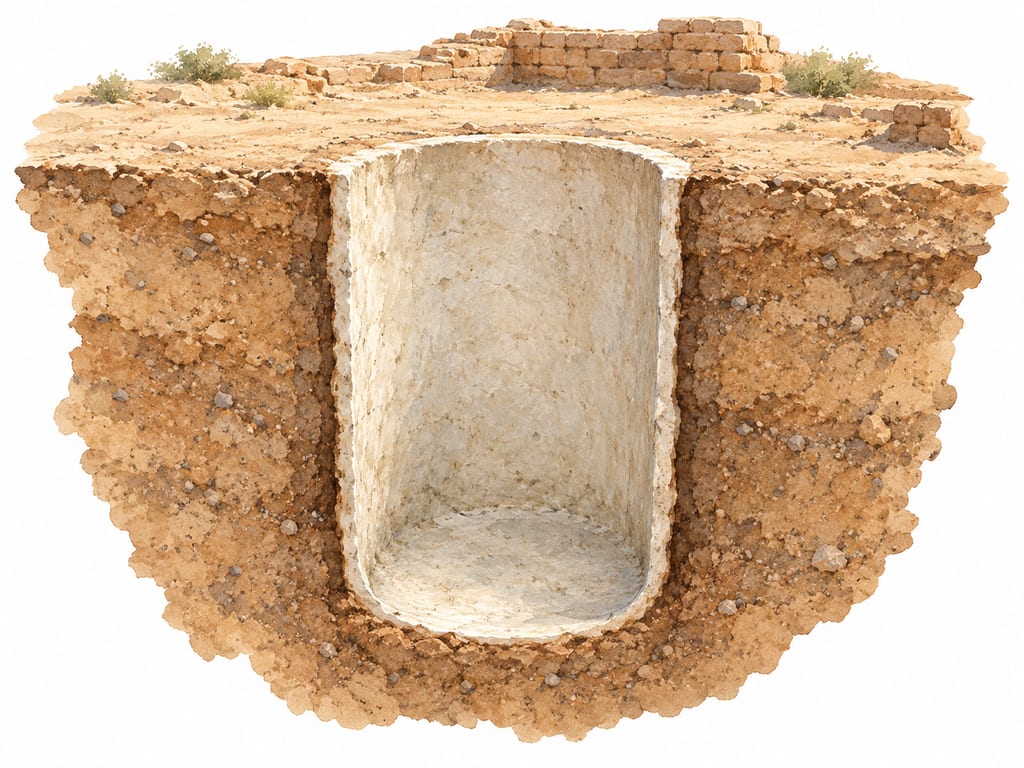
Kalibangan Period I preserves distinct lime-plastered pits and underground ovens. Grain storage is one interpretation of the pits; an earlier excavation account suggests water storage.
Show on map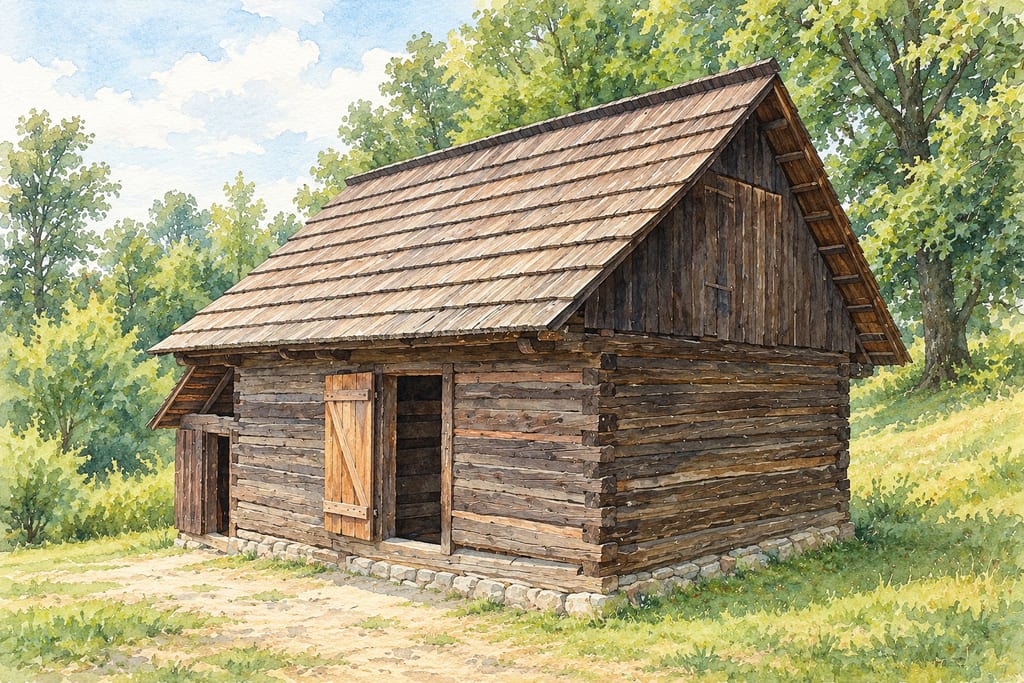
A late-19th-century log-built fruit-drying house from Seninka, south of Vsetín. Its documented interior had a firebox, oven body and a section for inserting wooden fruit racks.
Show on map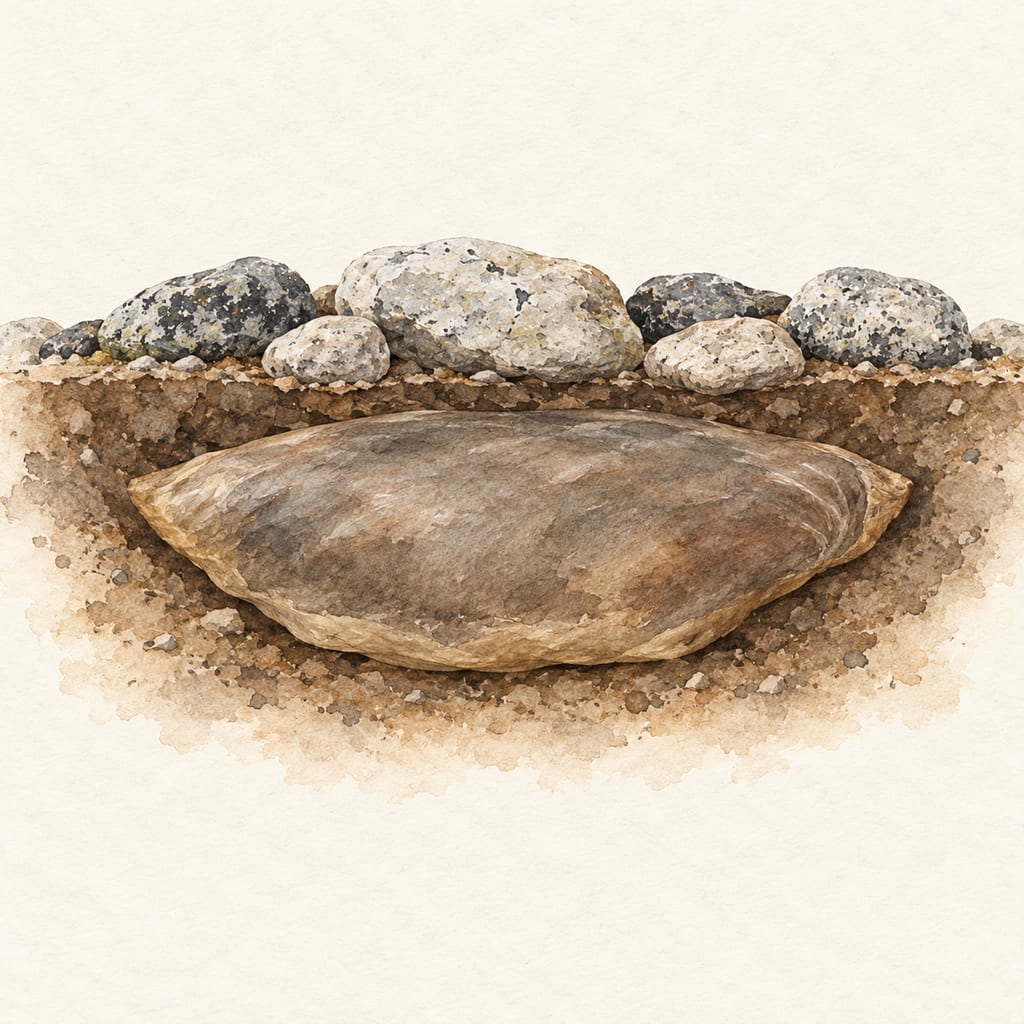
A shallow ground feature documented in Siorapaluk for holding a filled kiviaq hide pouch beneath stones; the accounts give no measurements or fixed construction design.
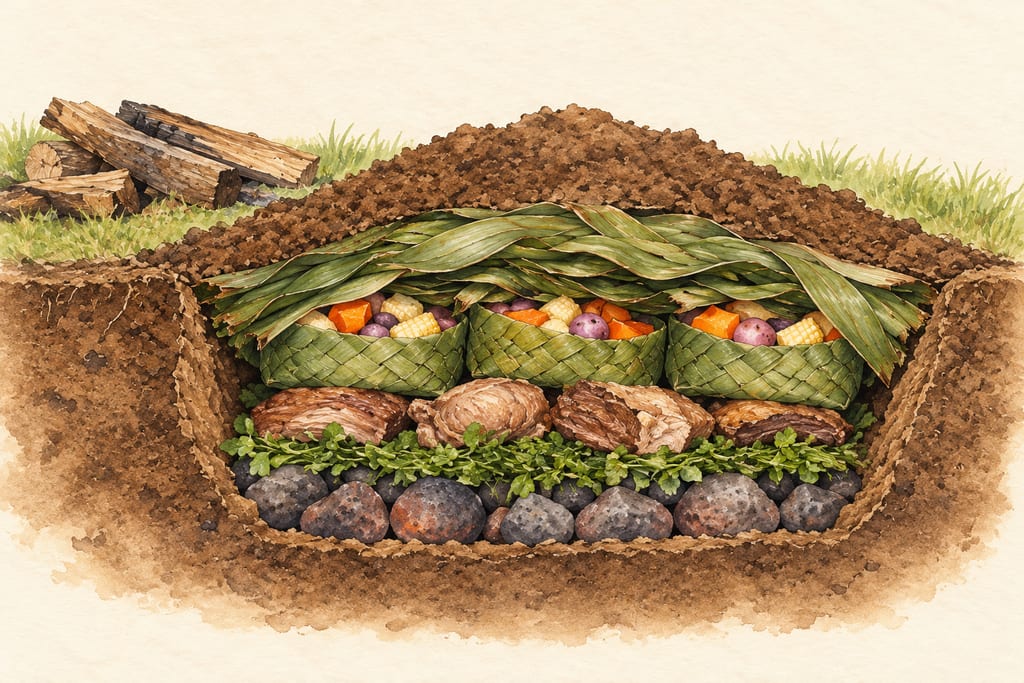
A source-specific account of the shallow earth oven used by a Ngāi Tahu family at Arowhenua Marae, with its hot stones, woven rourou and earth cover.
An excavated Kanka cellar in Uzbekistan records a 7th–8th-century below-ground storage form, with a small chamber, wall niches and stepped passage.
Show on map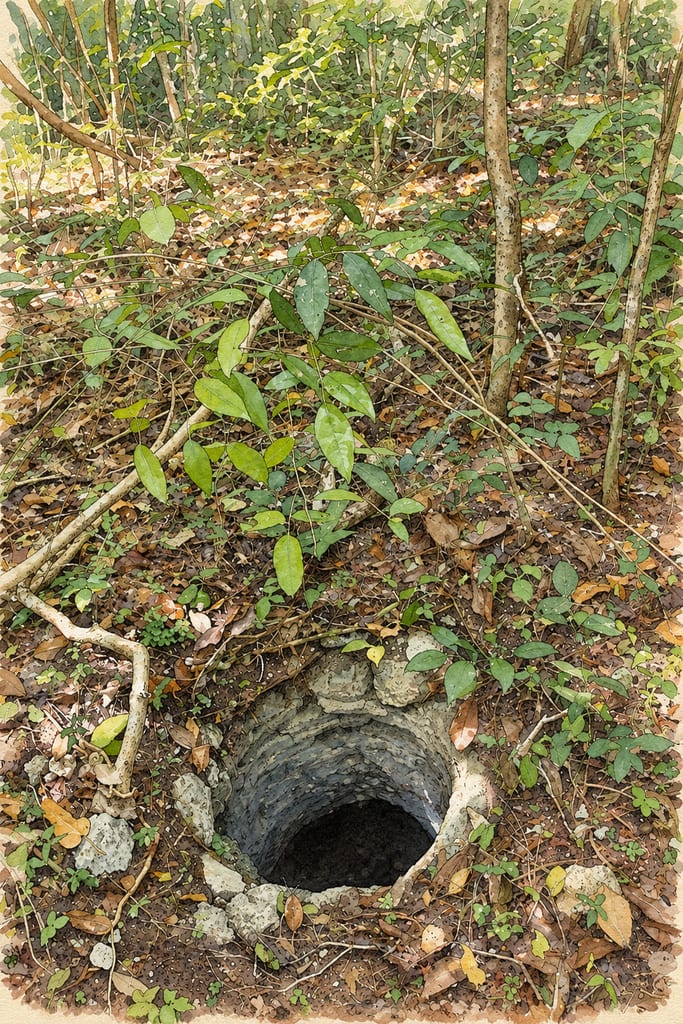
A chultun is an underground cavity cut into bedrock at Maya sites. Archaeological studies document varied forms and uses; a proposed food-preservation role for some southern lowland examples remains a hypothesis.
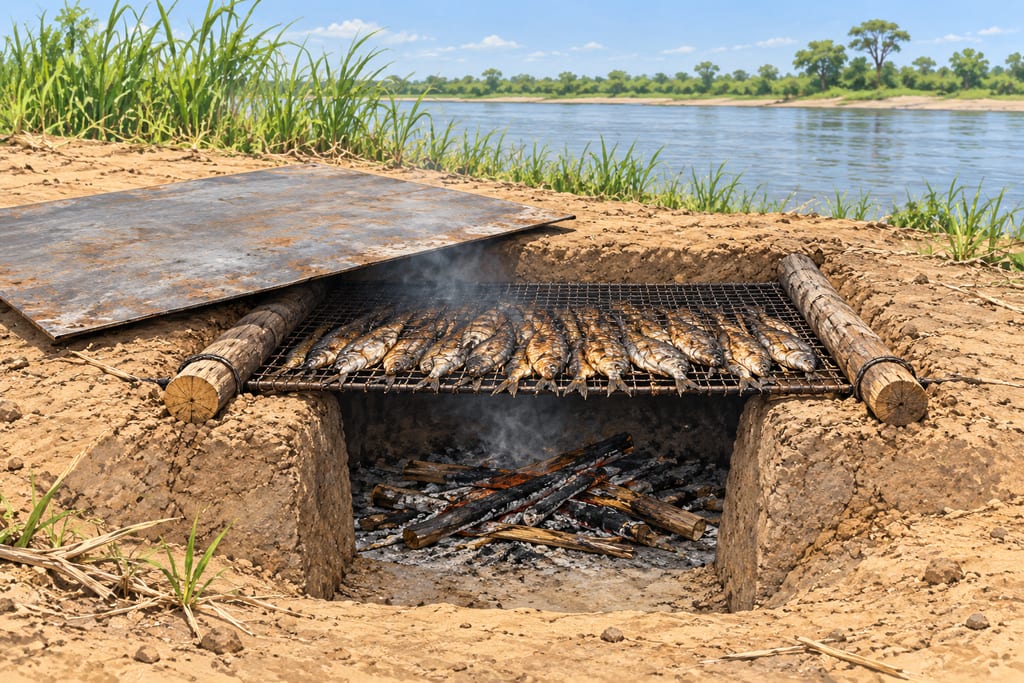
A customary fish-smoking pit described at Terekeka in a 2018 field study: an earthen cavity, logs supporting wire mesh, and a flat iron cover. The dimensions and trial results belong to that study setting.
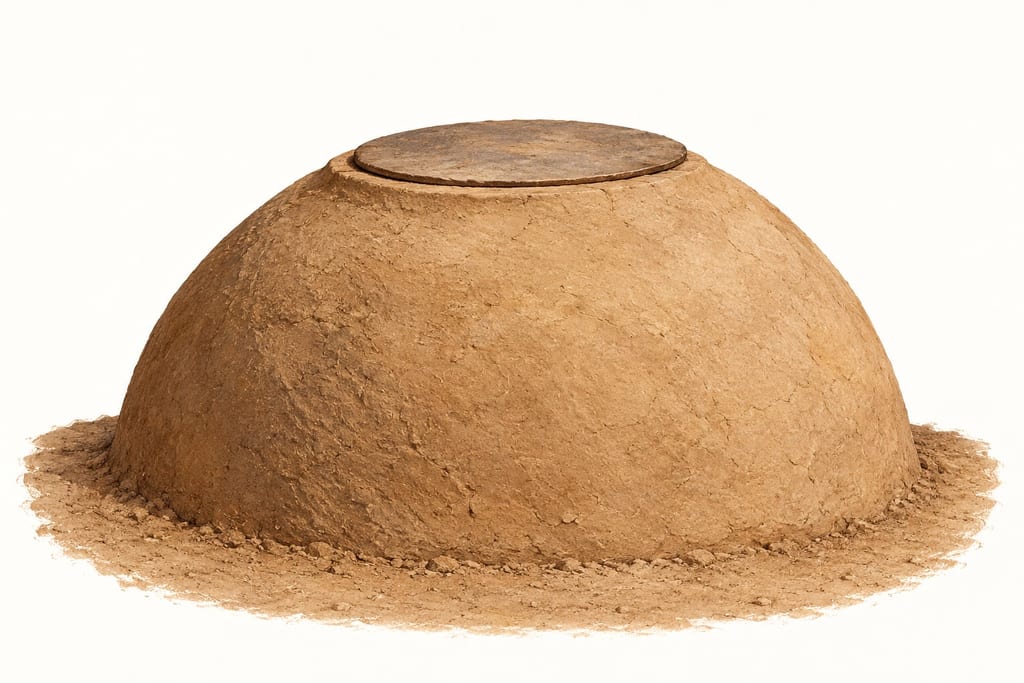
A Palestinian fixed clay bread oven, broad and low rather than tall, with a closeable top opening and a heated floor; sources distinguish pebble-floor baking from wall-baking in the tannur.
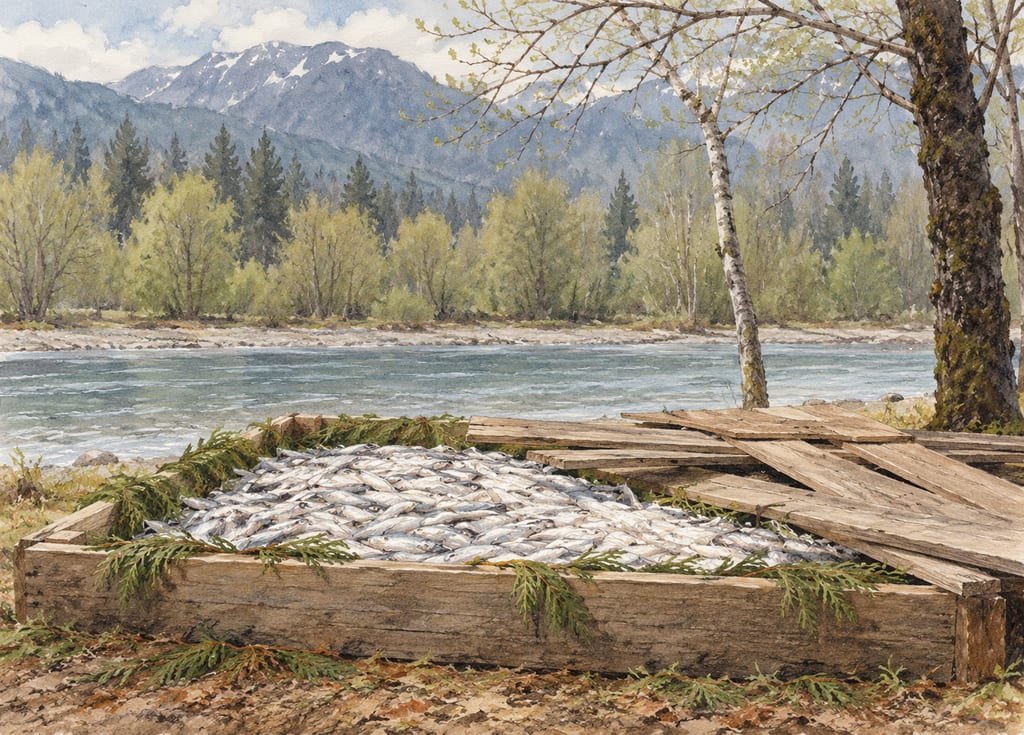
A 2022 study describes Nuxalk families using large, covered cedar-plank bins lined with western redcedar boughs to ripen eulachon beside the river. The later grease-rendering box is a separate structure.
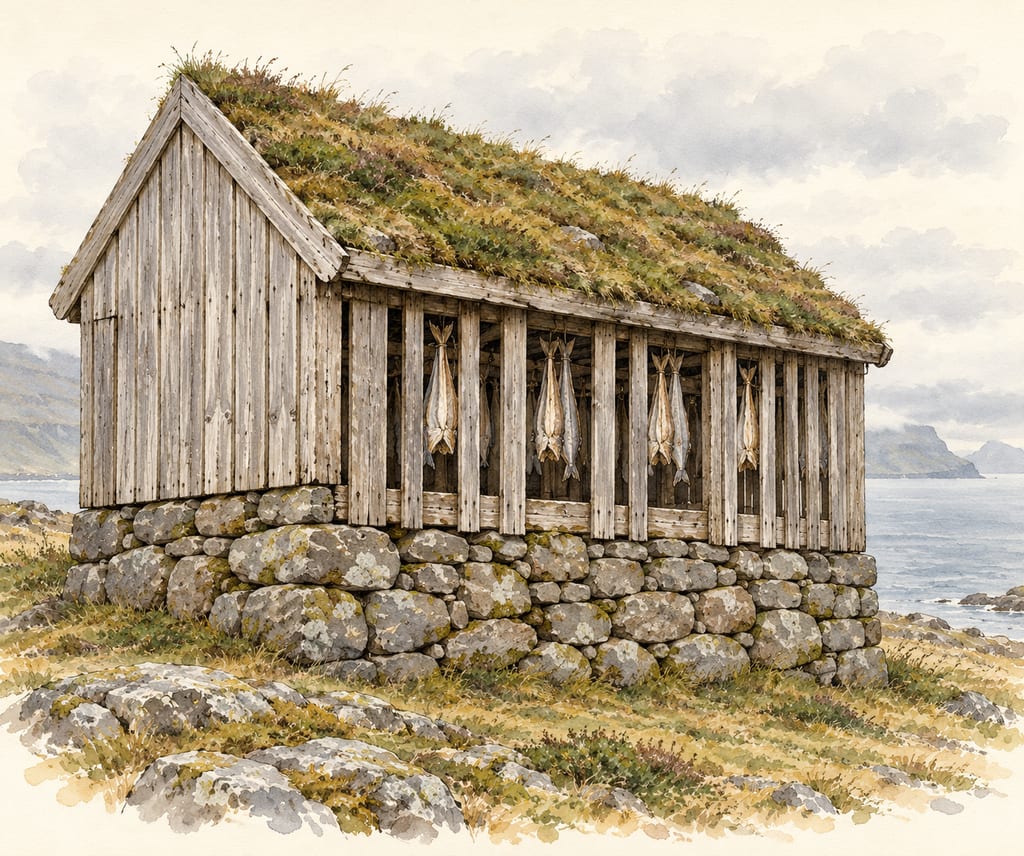
A hjallur is a Faroese food-drying and storage house built to admit the islands’ wind. Its slatted walls and varied stone-and-timber forms distinguish it from an open drying rack.
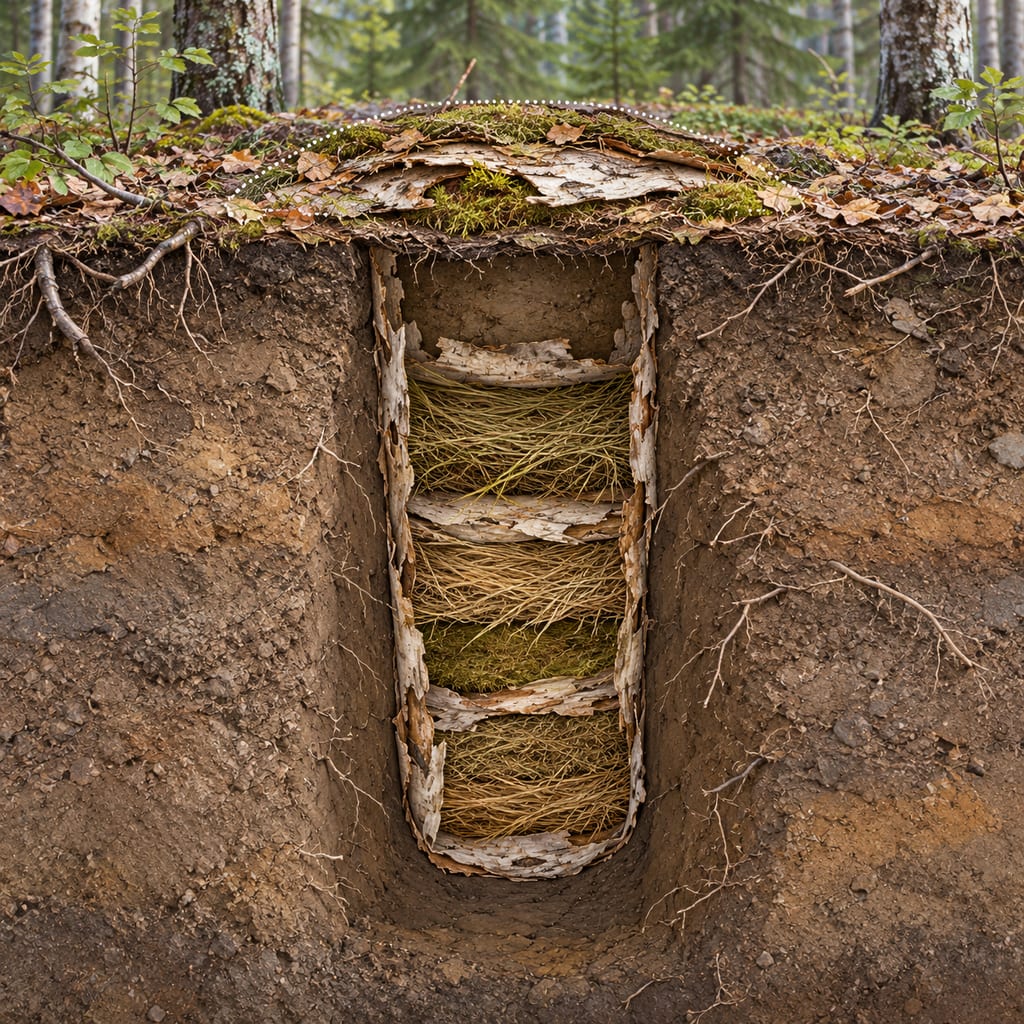
A Dene cache pit at Upper Cook Inlet, Alaska, initially dated to around 1,000 years ago. JBER documents a below-ground feature lined with birch bark and grasses; exact contents and construction details remain under study.
Show on map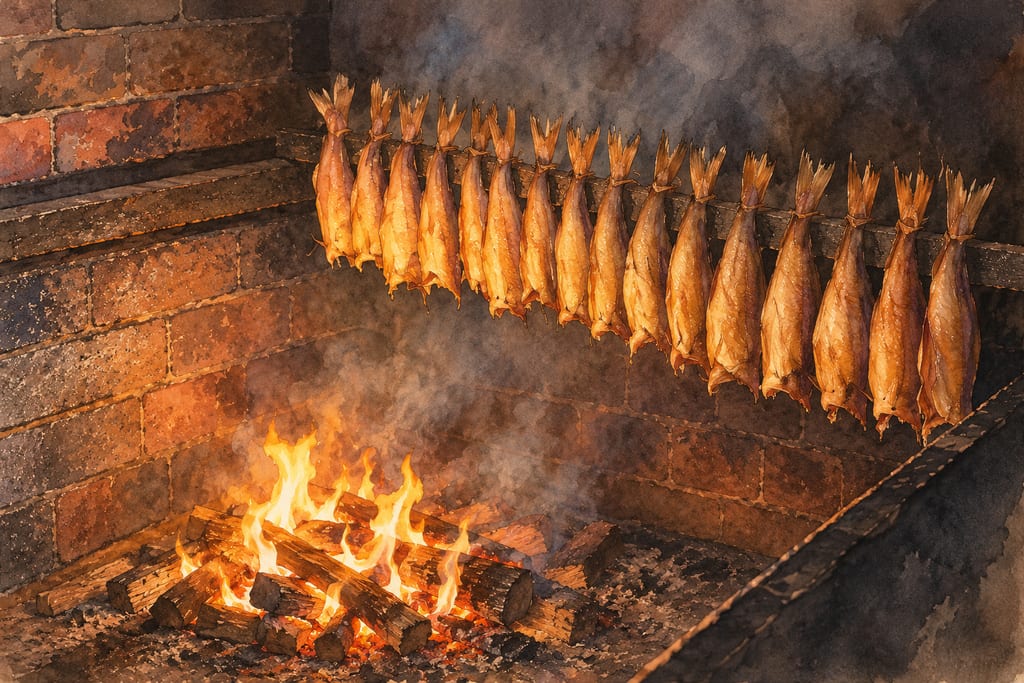
The Arbroath “barrel” is a hardwood-fired smoking pit with triangular rails and a cover. Its documented form belongs to the traditional hot-smoking of haddock around Arbroath and Auchmithie, Scotland.
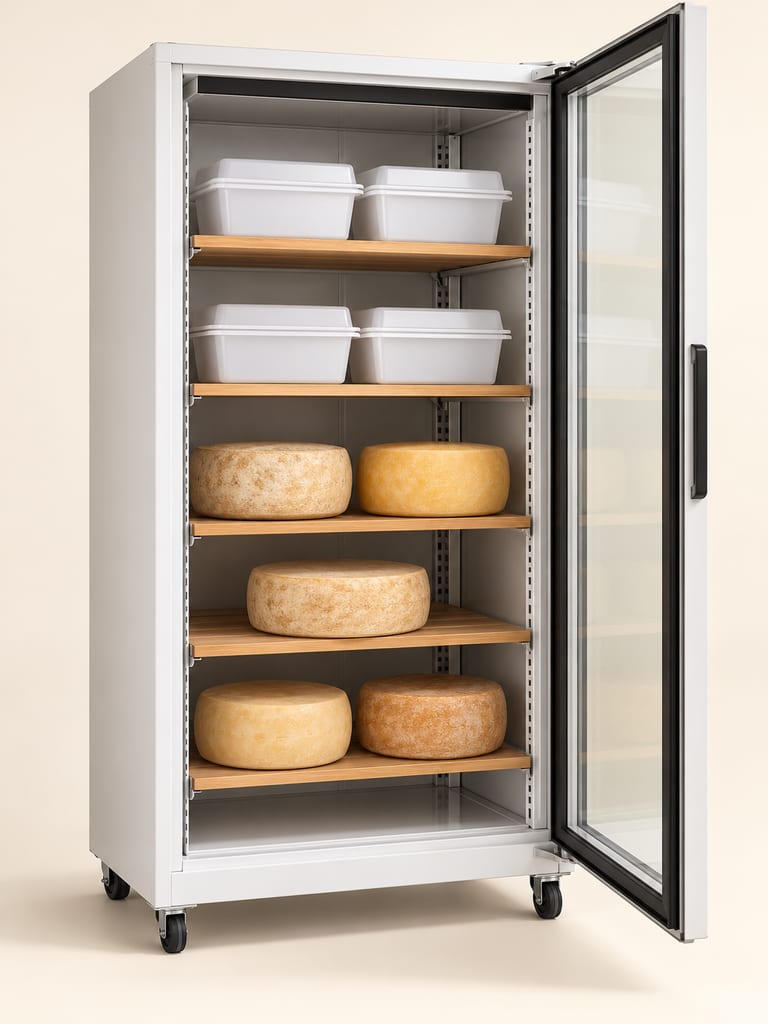
A modern cheese-ripening space made by controlling the temperature of a refrigerator or display cabinet and managing each cheese in its own covered container. It is an appliance conversion, not a natural cave or a traditional structure.
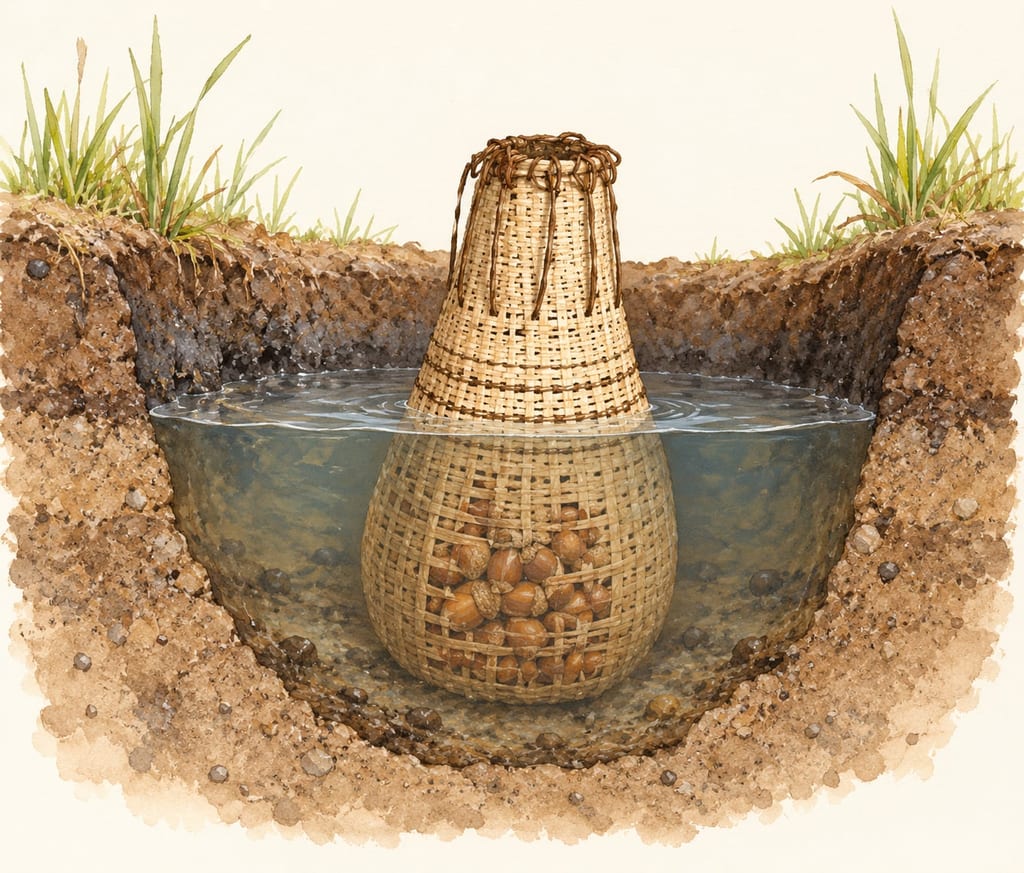
At Higashimyo in Saga, 155 round Early Jōmon storage pits were about 40–70 cm wide and 1 m deep. More than 700 baskets were recovered; Saga City interprets acorn soaking as a possible use, not a documented arrangement.
Show on map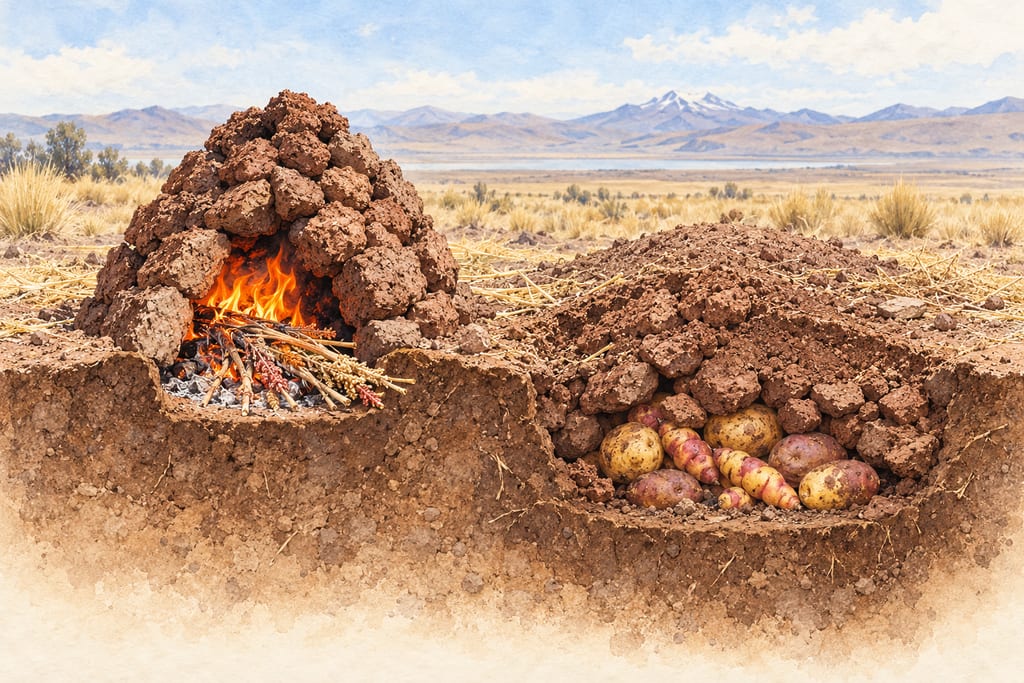
This Tiwanaku huatia is a temporary oven made from compact earth clods, fired with crop stalks, then collapsed over tubers and insulated with soil.
A large cask set into the pantry floor at Hofstaðir was used to store food in whey.
Show on map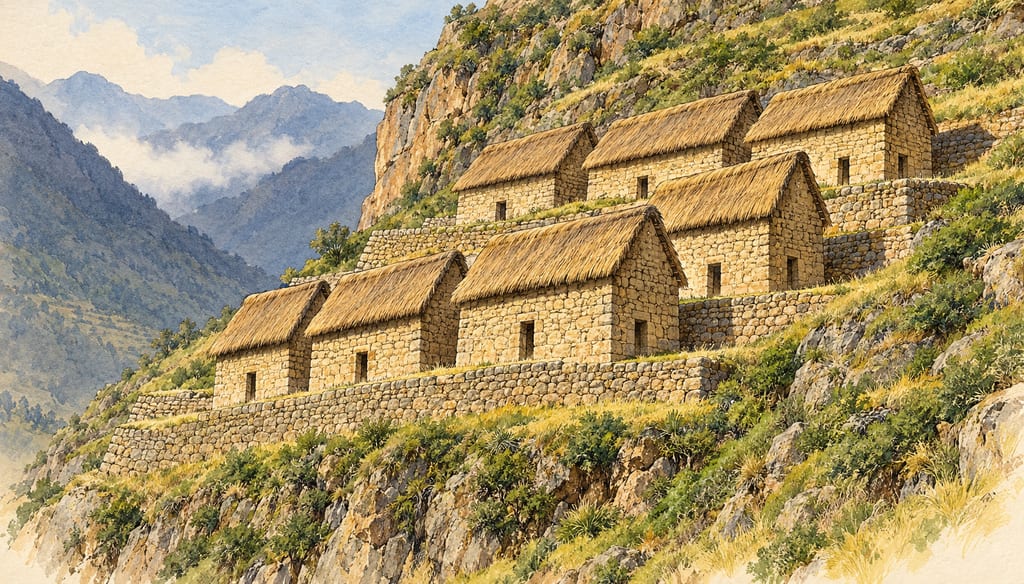
Qollqas (also called colcas) were fixed Inca state storehouses built in Andean networks. Their forms, locations and stored goods varied by site; Xauxa archaeology documents a large regional system.
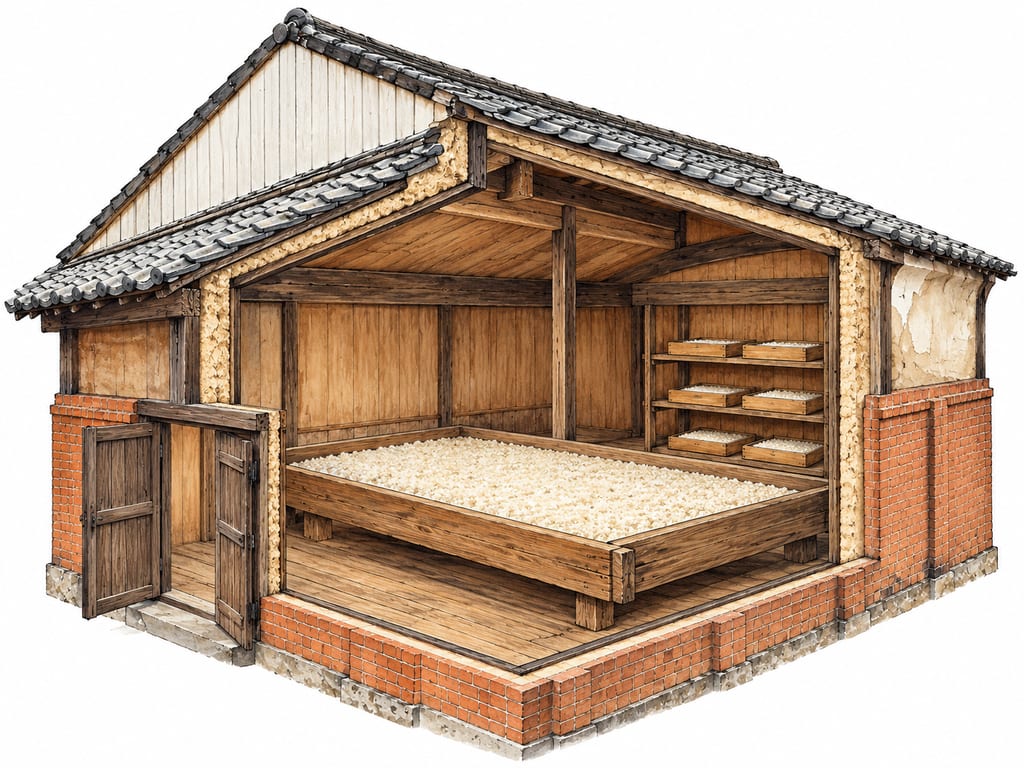
A Japanese koji-making work area may combine a broad toko bed, tana shelves for trays and an insulated koji-muro room. The terms describe distinct scales; sources document more than one working arrangement.
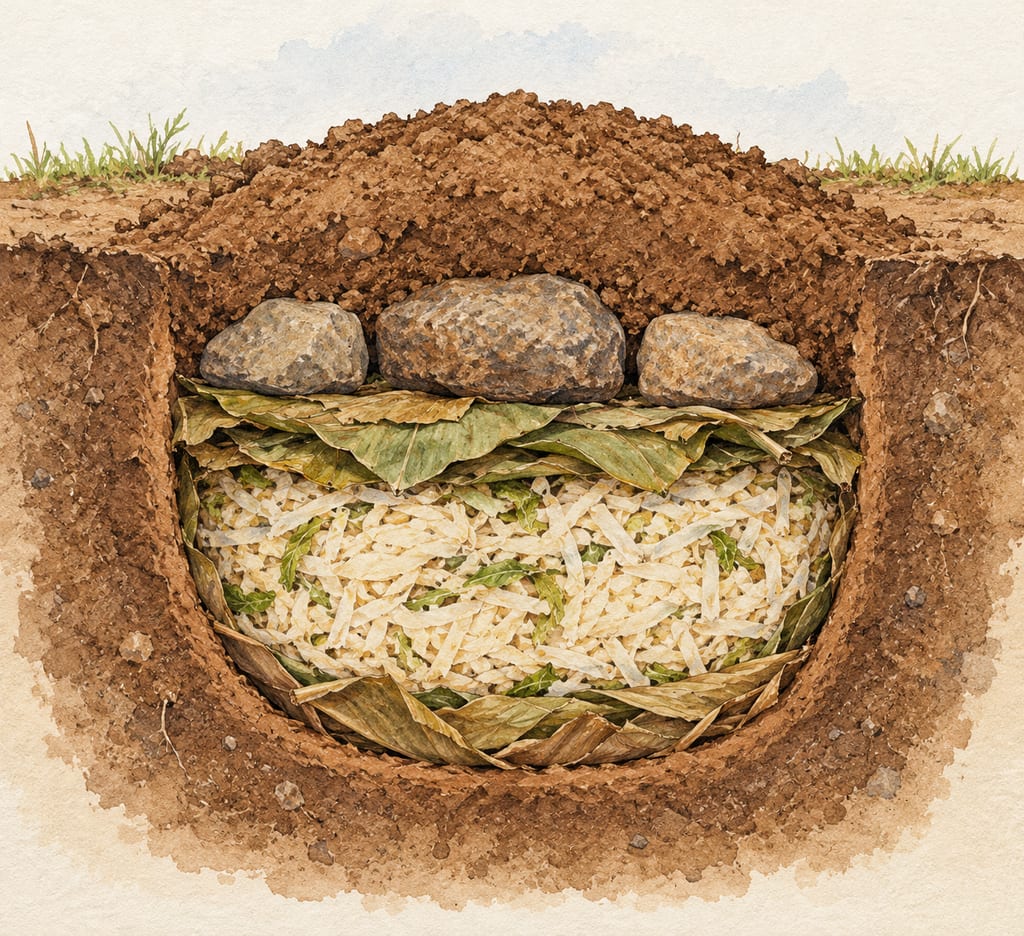
A leaf-lined earthen pit used in documented Himalayan sinki preparation; construction materials and timings vary by source and household.
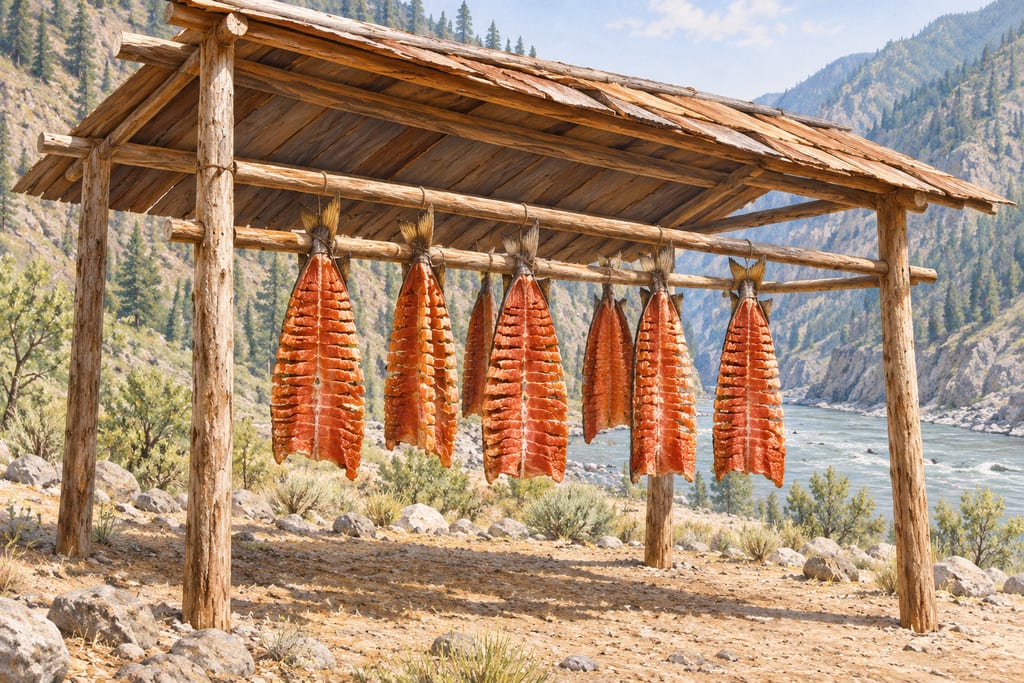
Stó:lō teaching materials describe roofed racks in the exposed Fraser Canyon for wind-drying salmon. Xwísten describes a separate living St’át’imc practice at Bridge River; these sources do not establish one shared rack design.
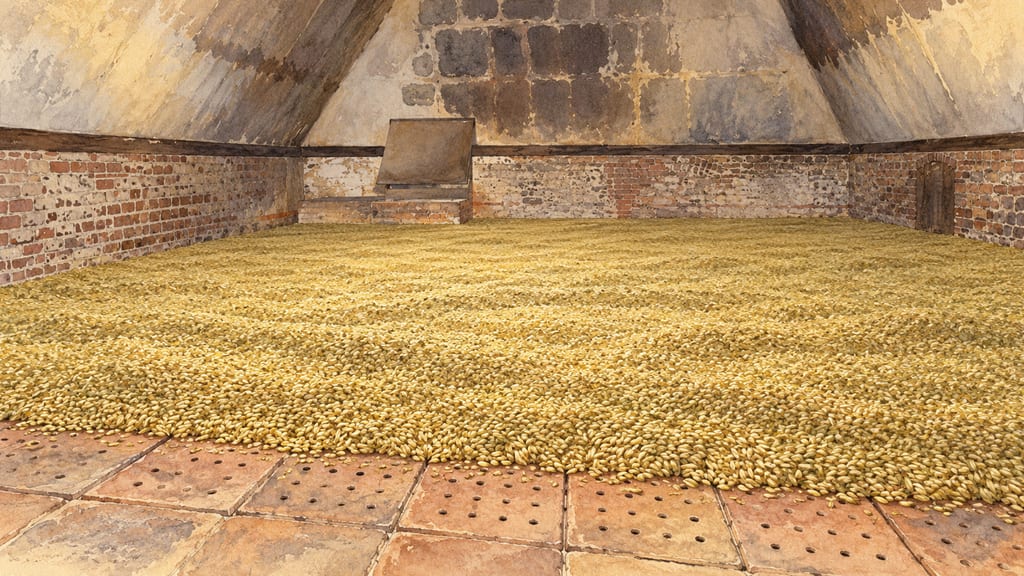
A Tuckers Maltings kiln floor in Newton Abbot: the 1900 complex grew from two kilns to four. A 2010 photo shows wire mesh; the original floor used perforated ceramic blocks.
Show on map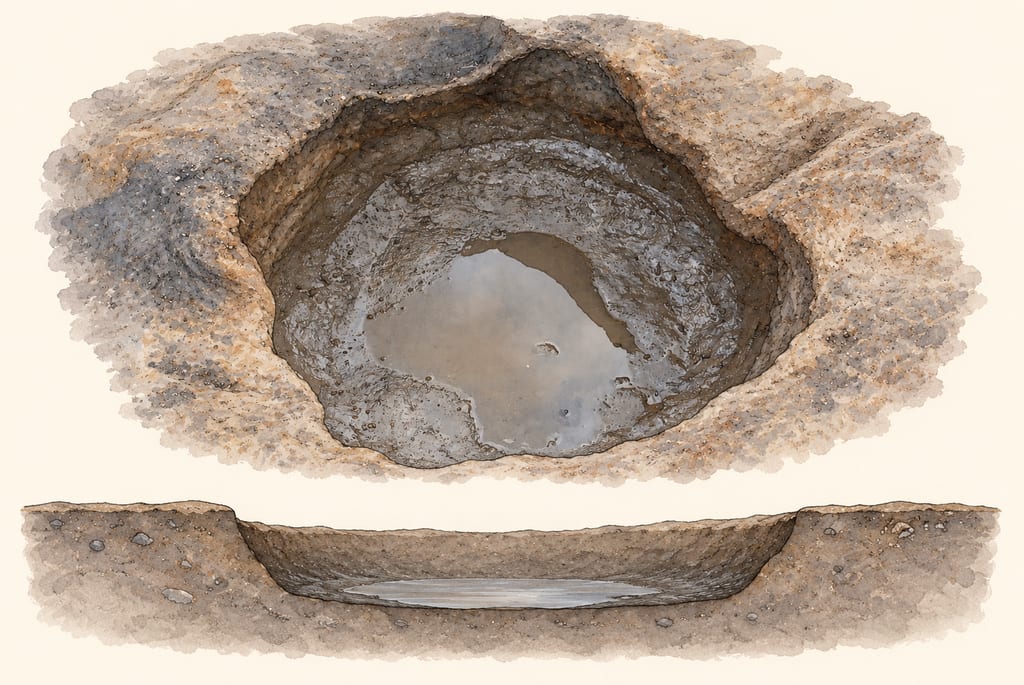
At Maeda Site in Aira, southern Kyushu, a late Middle Jōmon wetland held 72 pits associated with more than 100,000 acorns. The pits were dug in a groundwater-fed valley; their use may have included storage or soaking and sorting.
Show on map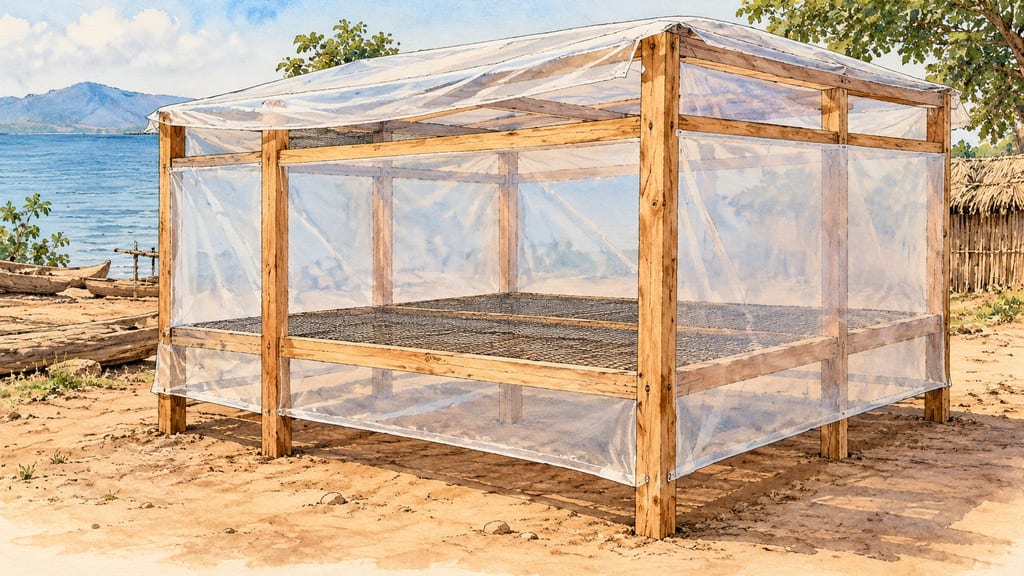
A UV-treated polythene sheet over a wooden frame shelters internal drying racks, with low inlets and high side vents for natural airflow during fish drying.
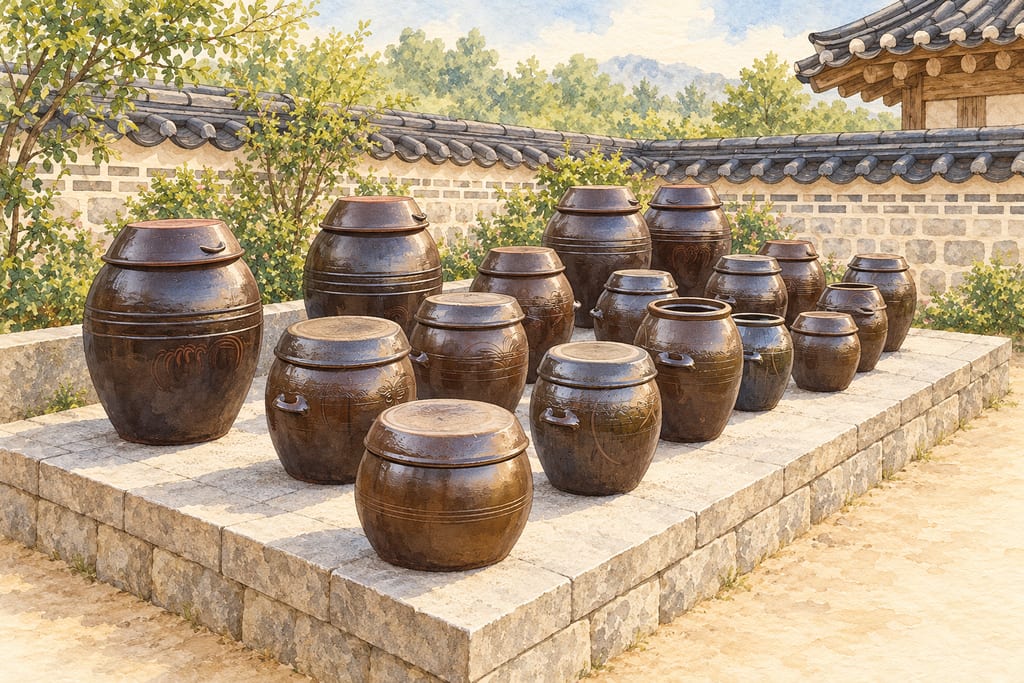
An outdoor platform where households arrange onggi jars for fermenting, aging and storing Korean jang sauces. Platform materials and layouts vary; no single standard design is established.
A Rama cultural account distinguishes a small kitchen tapesco from a larger courtyard rack covered with bijagua leaves and placed over firewood. It records a particular smoking arrangement, not a standard design.
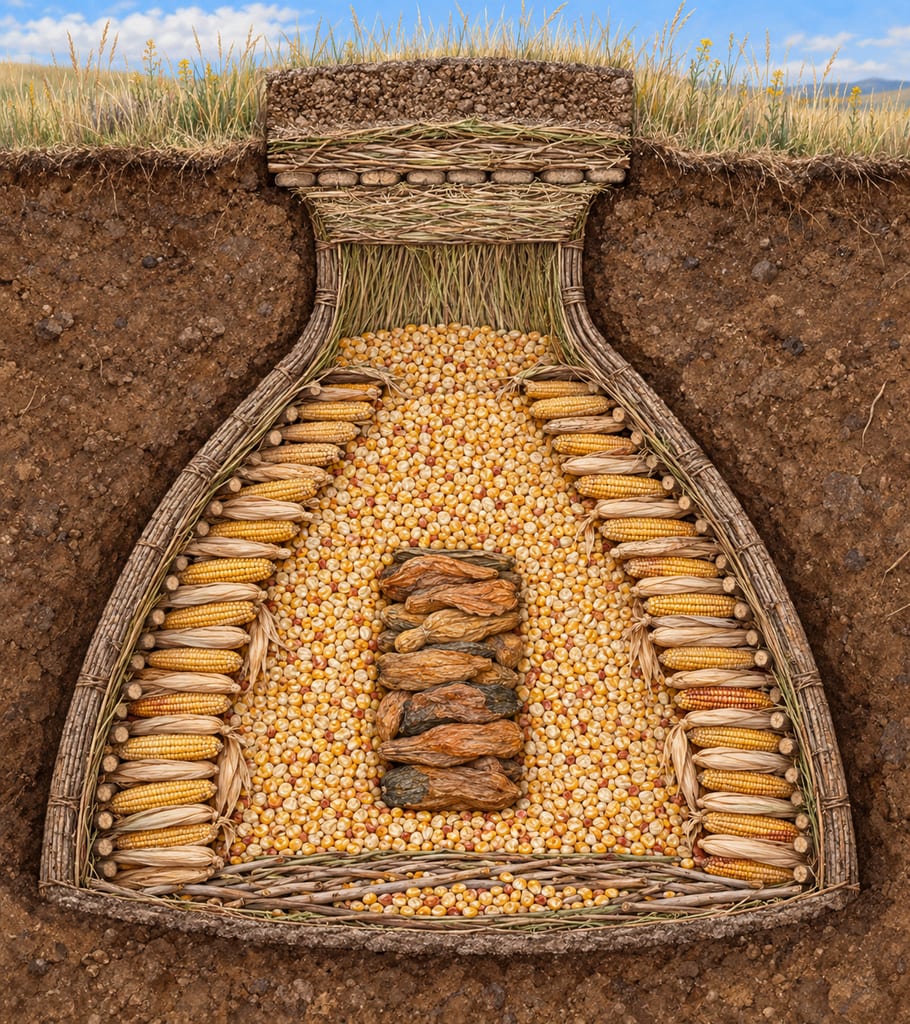
A Hidatsa underground storage chamber described by Buffalo Bird Woman in a first-person account published in 1917: a narrow-necked, jug-shaped pit lined with dry willow and grass, used to protect stored crops and other provisions.
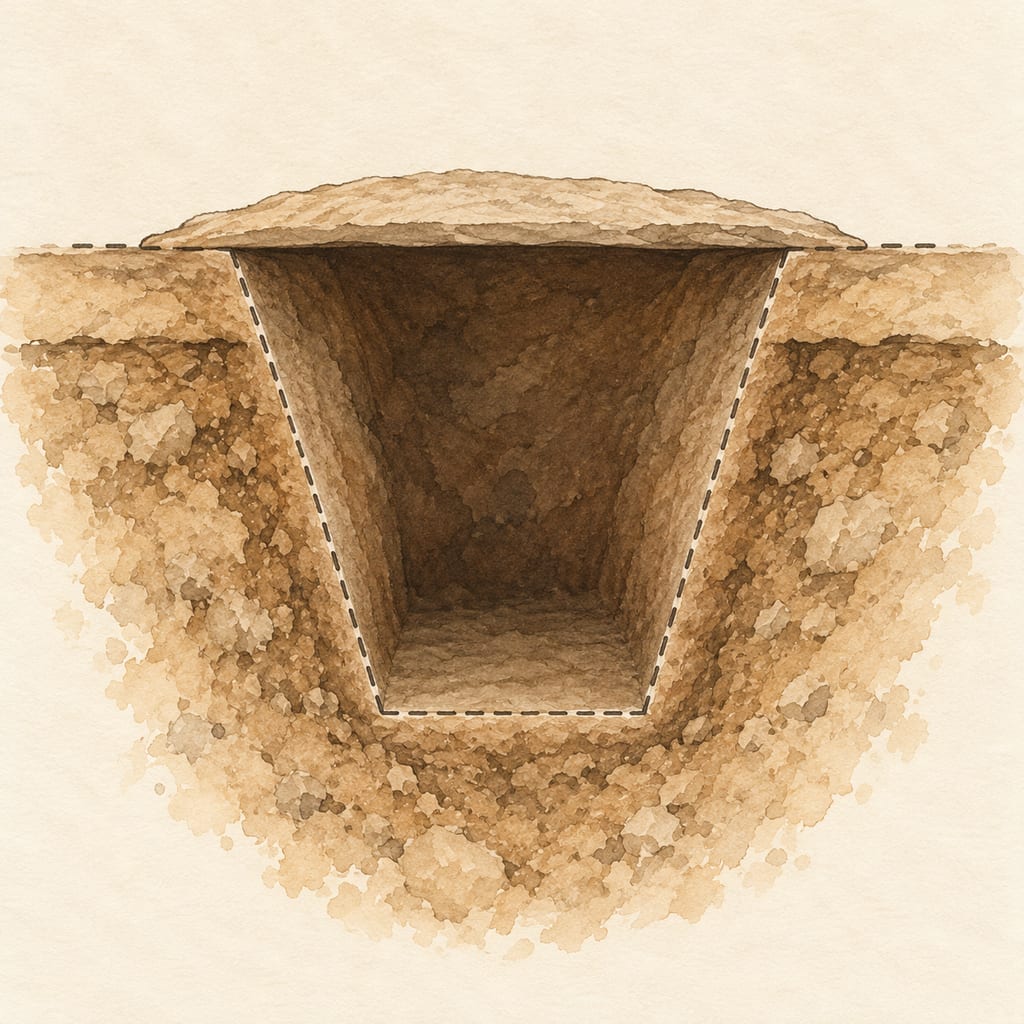
A madfan is a covered underground grain chamber documented in Yemen, excavated in rock or firm earth. Sources do not establish one universal shape, locality or performance.
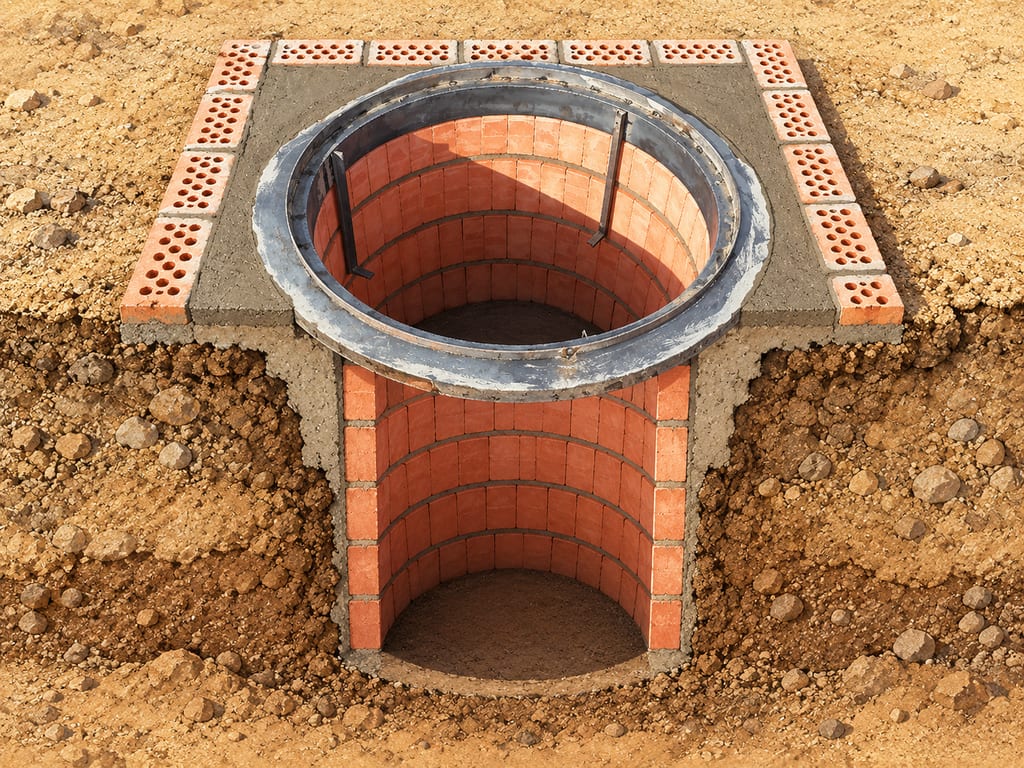
Mandi ovens are ground-built pits for cooking a regional dish. A 2024 Seiyun report describes wood-fired pits dug into the earth; Saudi sources describe separate clay or iron restaurant pits and a tannour form.
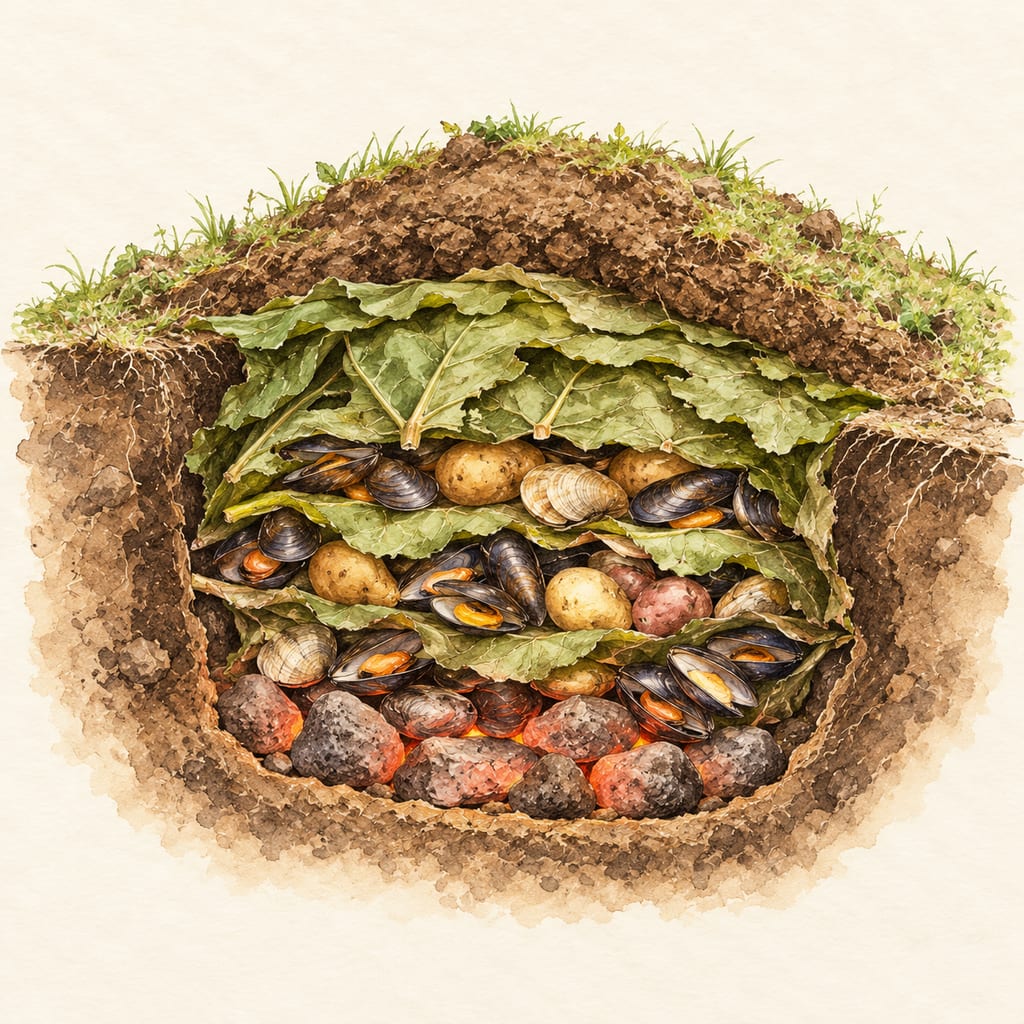
The Chiloé curanto en hoyo is a fixed outdoor cooking pit heated with stones and covered with nalca leaves and earth or turf. It is distinct from curanto cooked in a pot; ingredients and layer order vary by household and occasion.
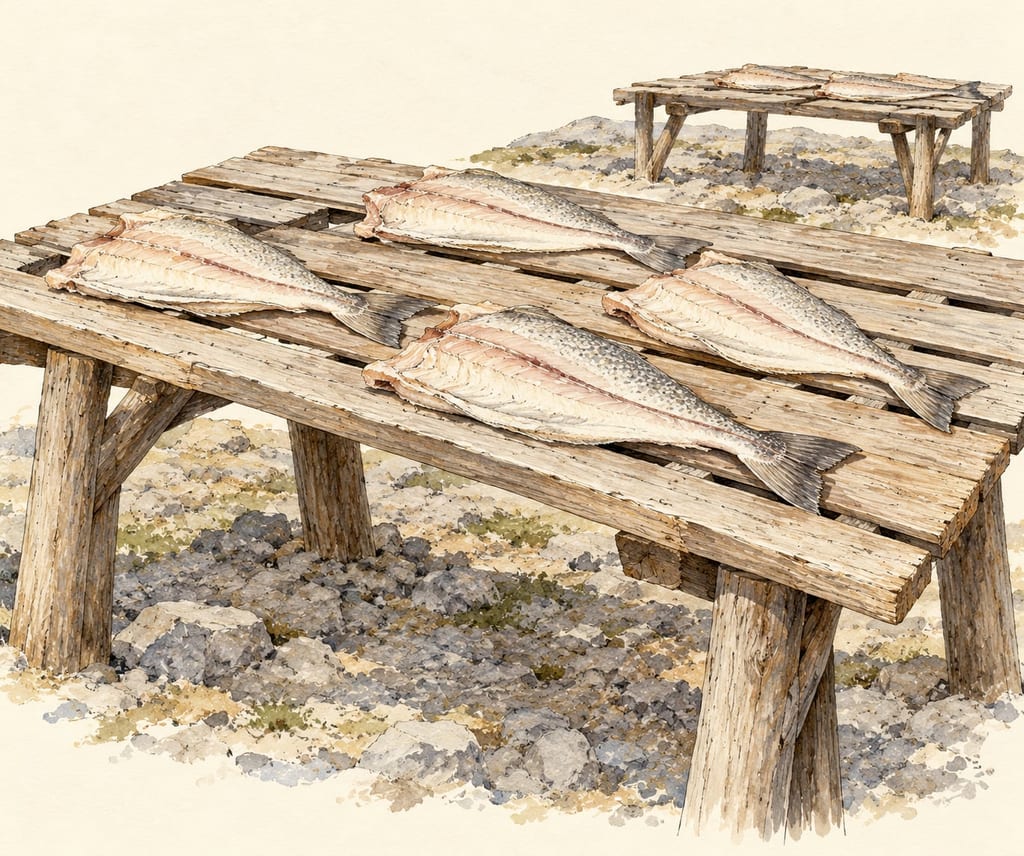
A Newfoundland flake was an open wooden platform where split, salted cod was laid in the sun to dry. It belongs to the historic coastal fishery, not to smokehouses.
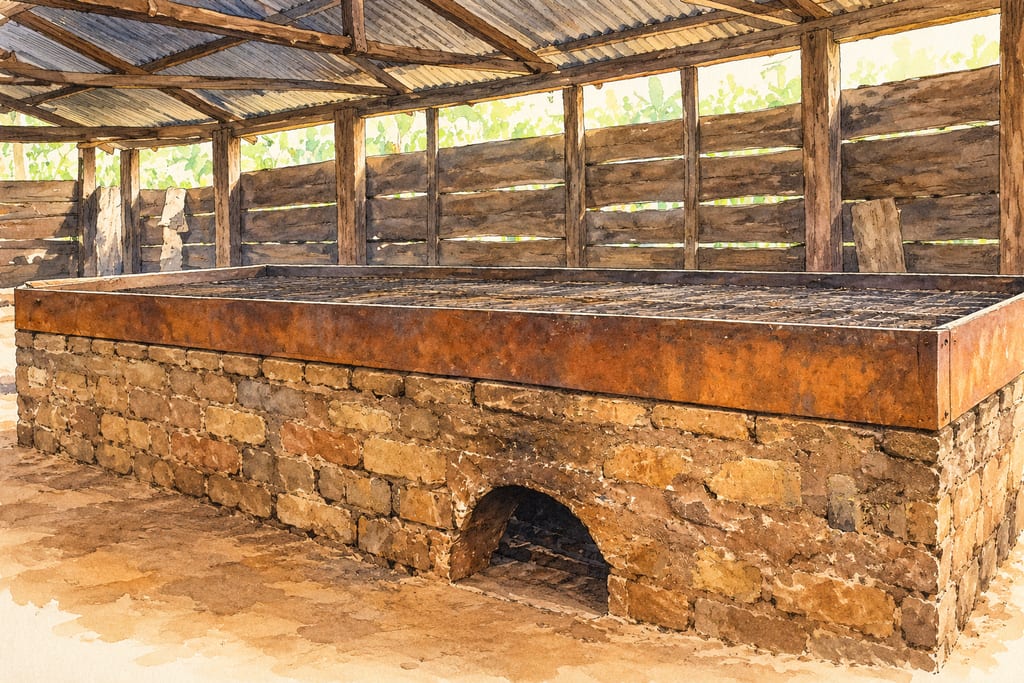
Manoka's fish smoking takes place on pole racks inside airy houses; local partners later tested earth-brick and insulated metal prototypes to reduce wood use and processing time.
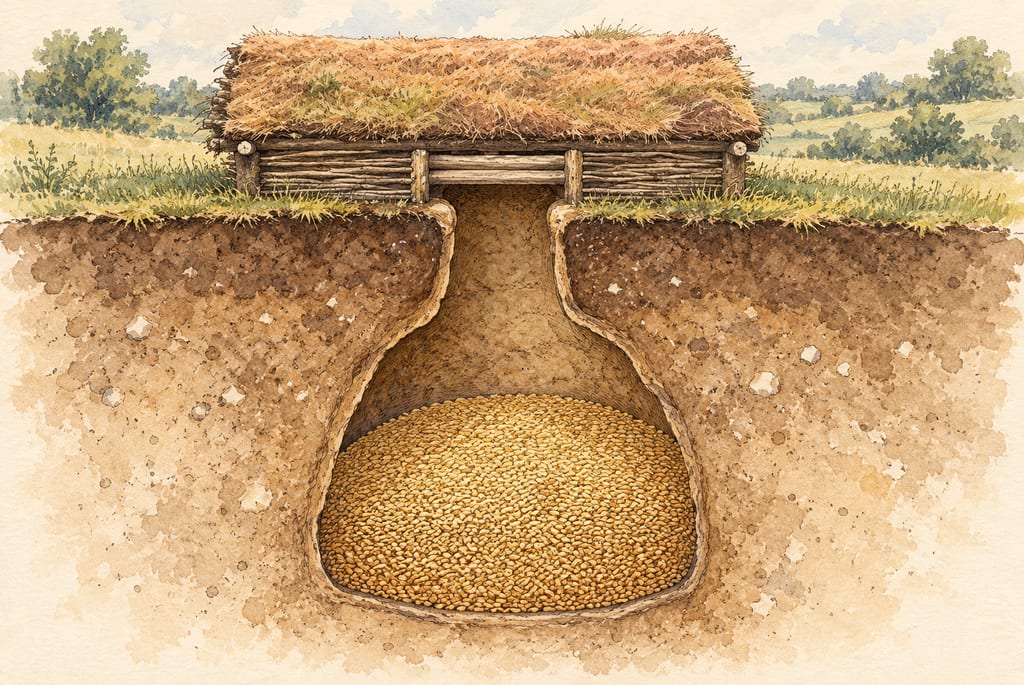
An underground grain-storage pit is a dug cavity for keeping dry grain, distinct from raised granaries and portable silos. Iron Age British examples are archaeological interpretations; experimental forms and results varied.
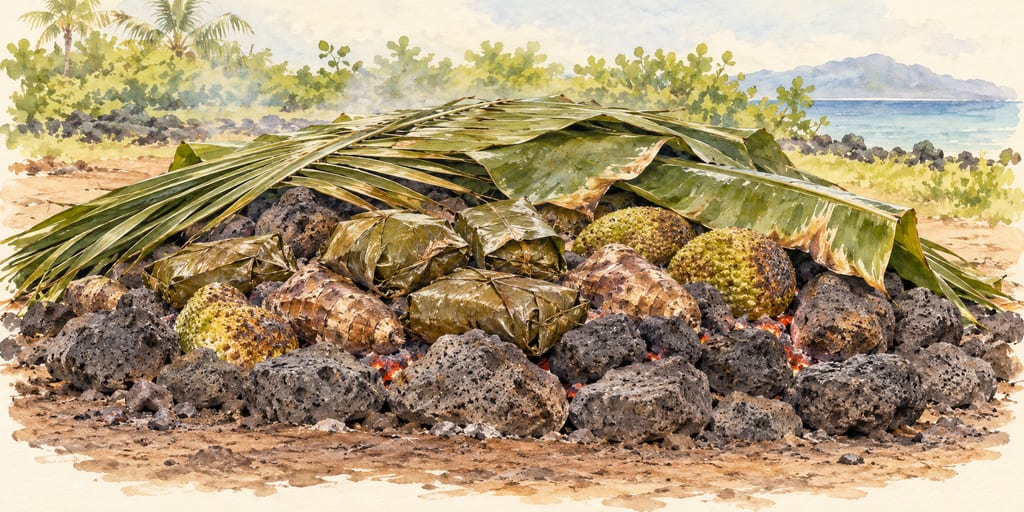
The Samoan umu is an above-ground cooking build in which a fire heats volcanic stones, and foods cook on the surface beneath leaf coverings.
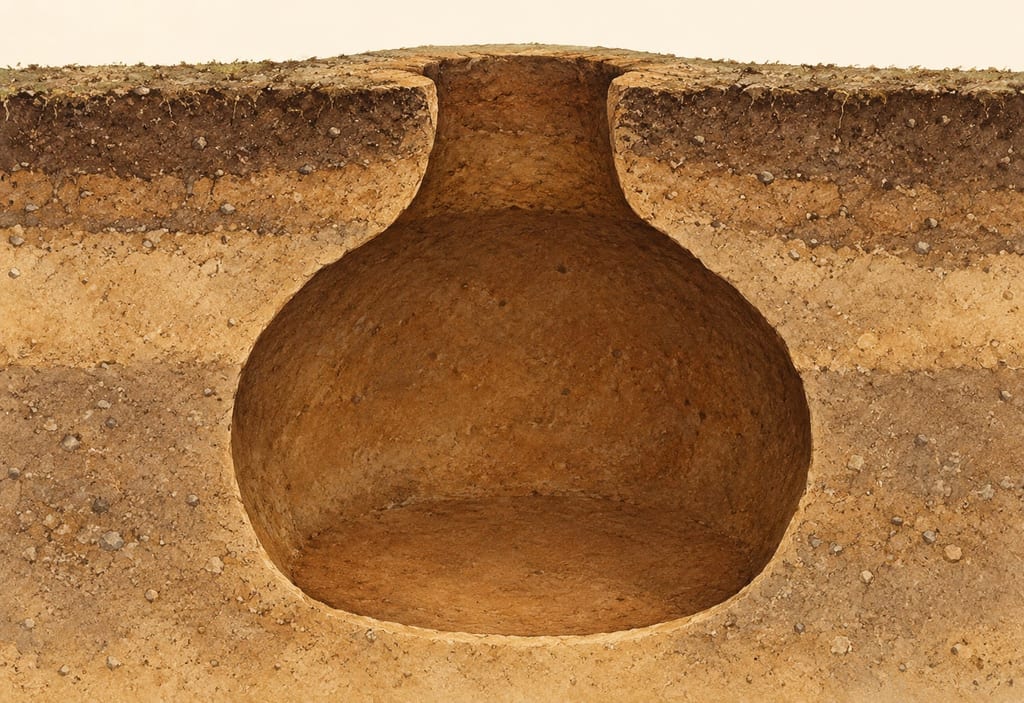
At Sannai Maruyama in Aomori, some Jōmon storage pits had a narrow mouth and broad floor, with larger examples reaching two metres deep; nuts or chestnuts are the proposed stores.
Show on map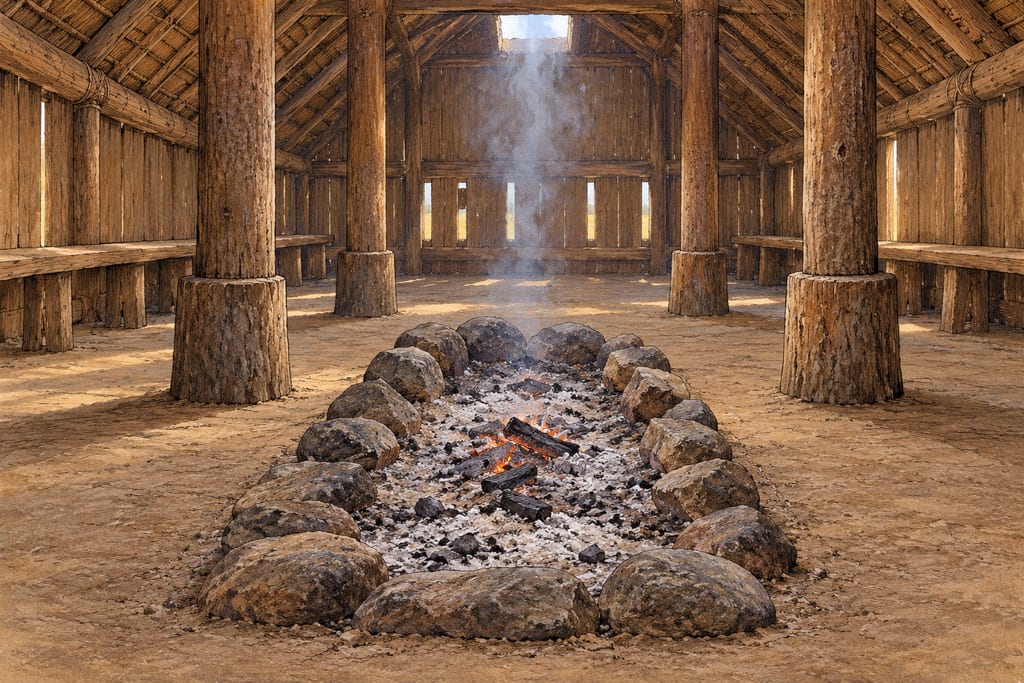
The Danish National Museum describes an oblong central long-fire inside Viking-Age longhouses, used for cooking while smoke escaped through a roof opening.
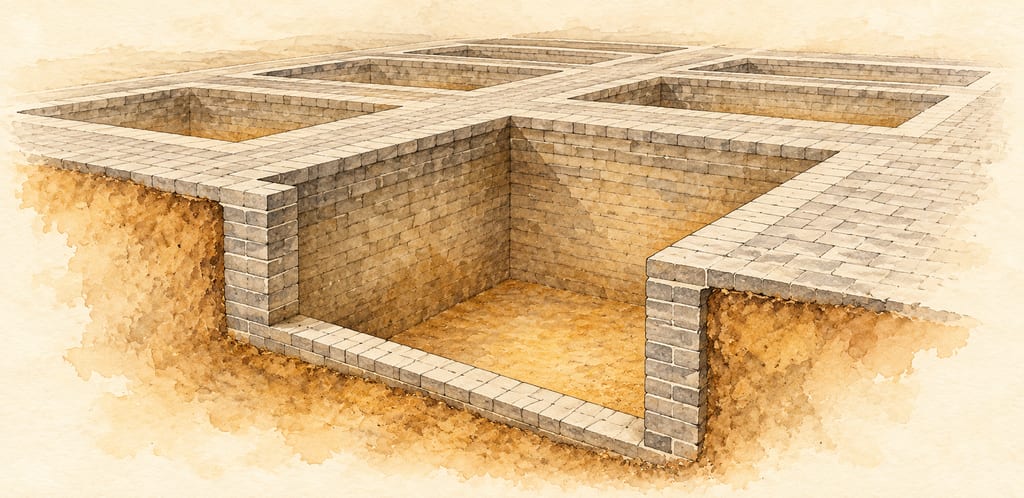
Fixed rectangular brick-lined fermentation pools at the Liu Ling Zui distillery in Xushui, Hebei. Heritage accounts disagree on their date and total number.
Show on map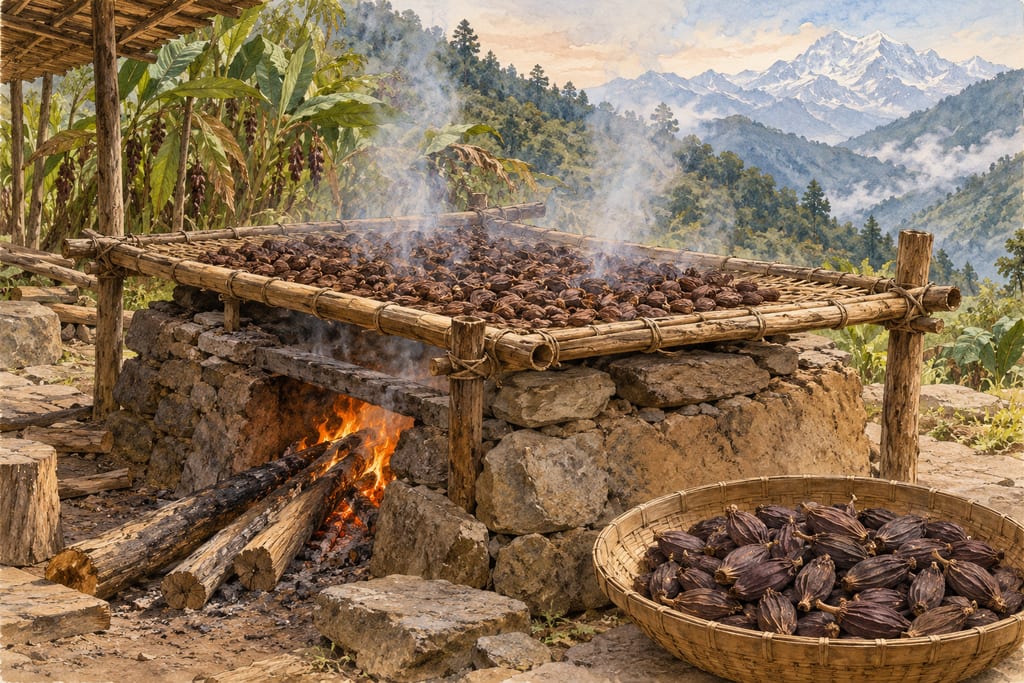
A traditional Sikkim large-cardamom bhatti is a fixed, field-side curing structure: a stone or earth-sided fire chamber supports a raised bamboo-mat drying bed, where capsules are exposed to direct heat and smoke.
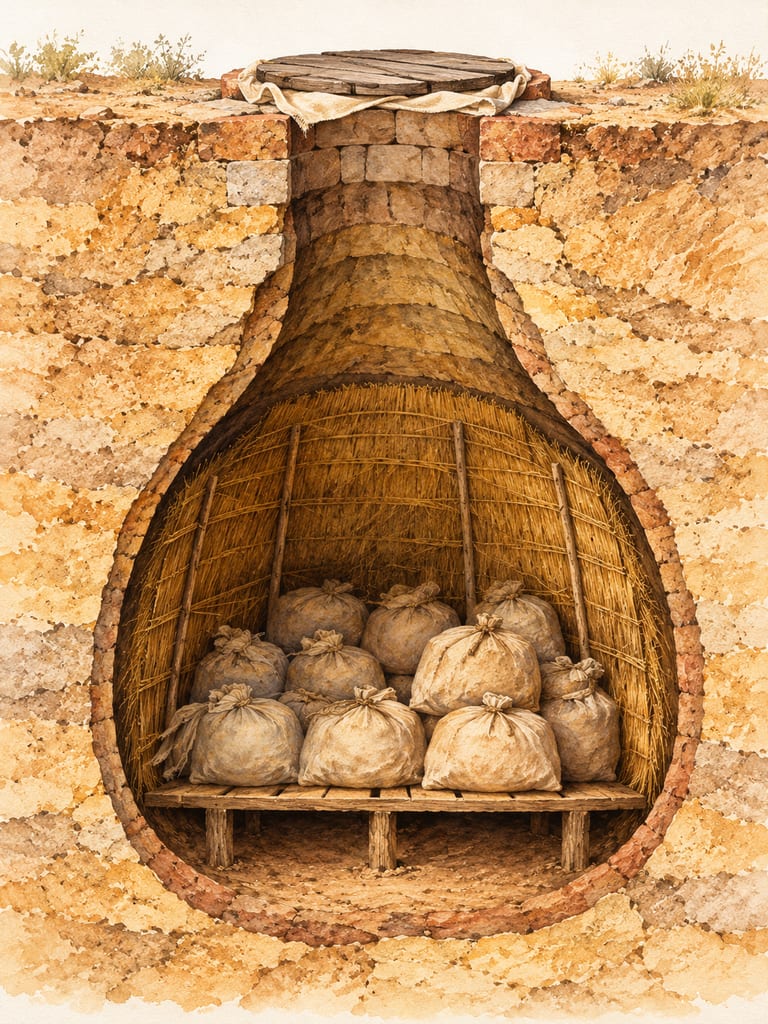
A sandstone pit near Sogliano al Rubicone finishes the ripening of already-made cheese. Sources describe flask-like forms, straw lining and sealed wooden lids, but no universal excavation plan.
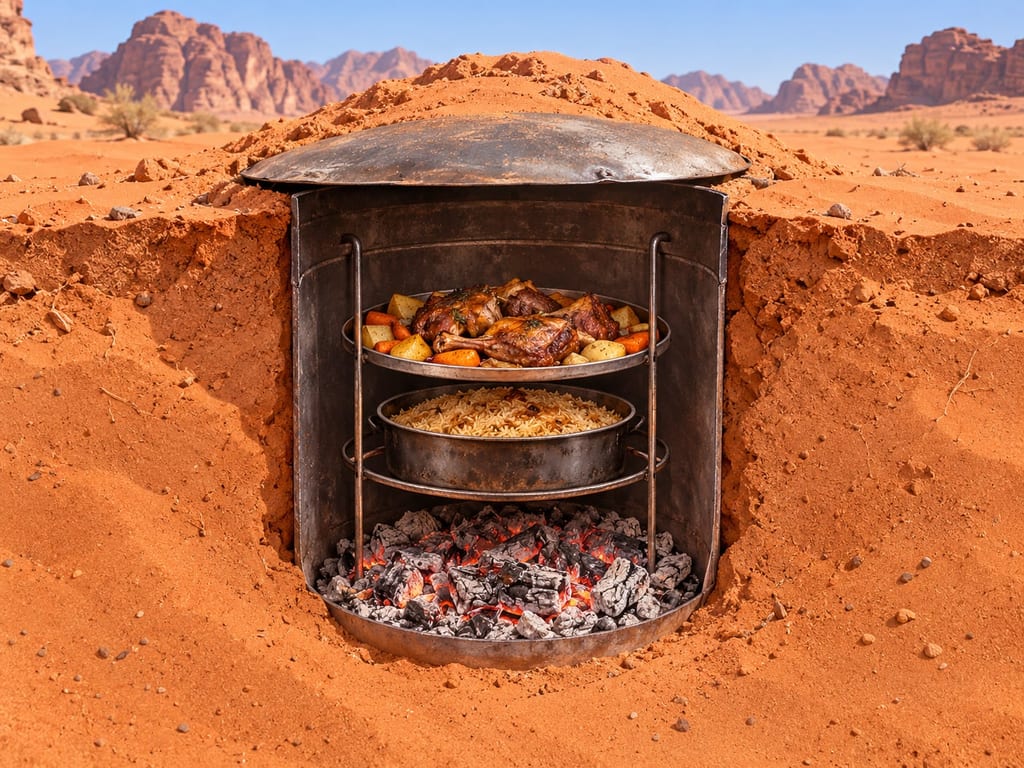
The zarb is a ground-built oven used by Bedouin cooks in Jordan. A fire heats the bottom of a broad pit; food is then lowered on a rack, covered and slow-cooked with the surrounding earth helping retain heat.
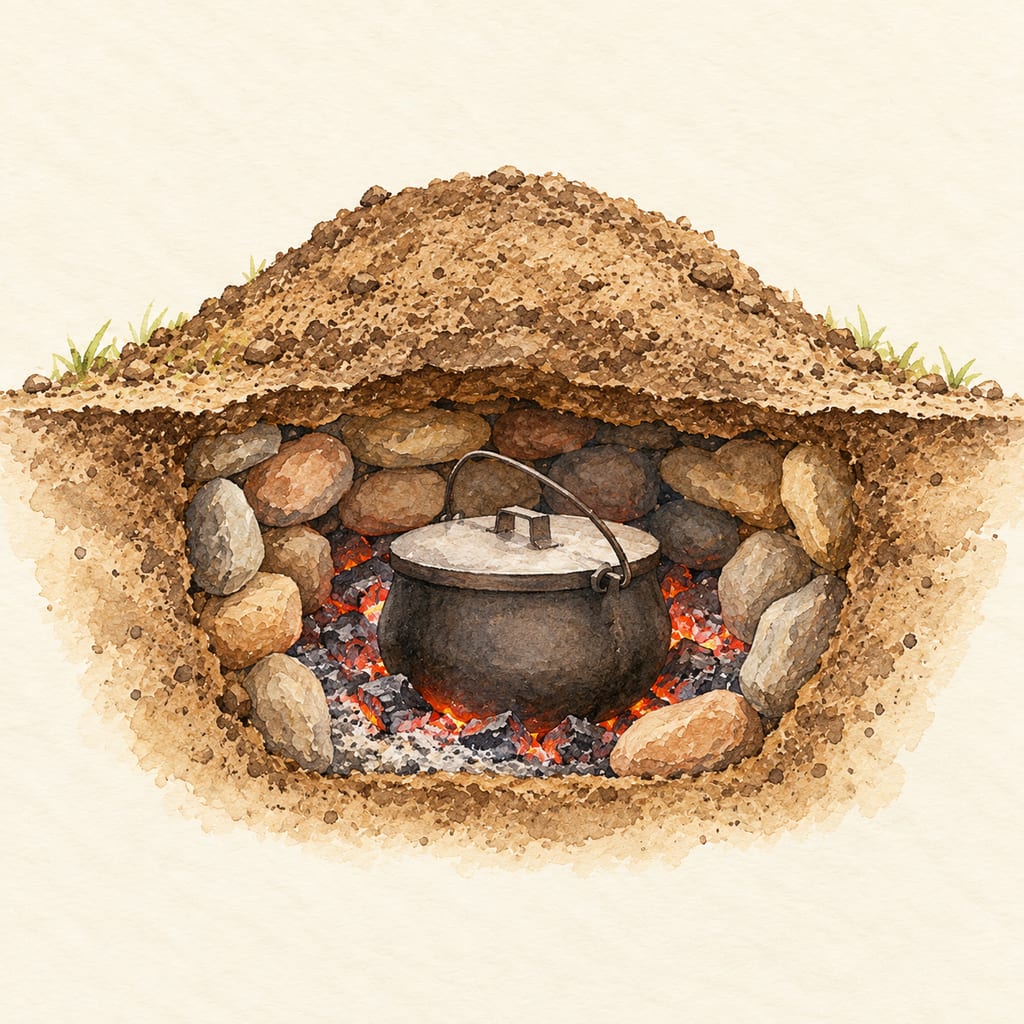
A Maine bean hole is a fixed, stone-lined pit that holds a covered iron pot among coals beneath earth. Logging-camp testimony and present-day demonstrations document related local practices.
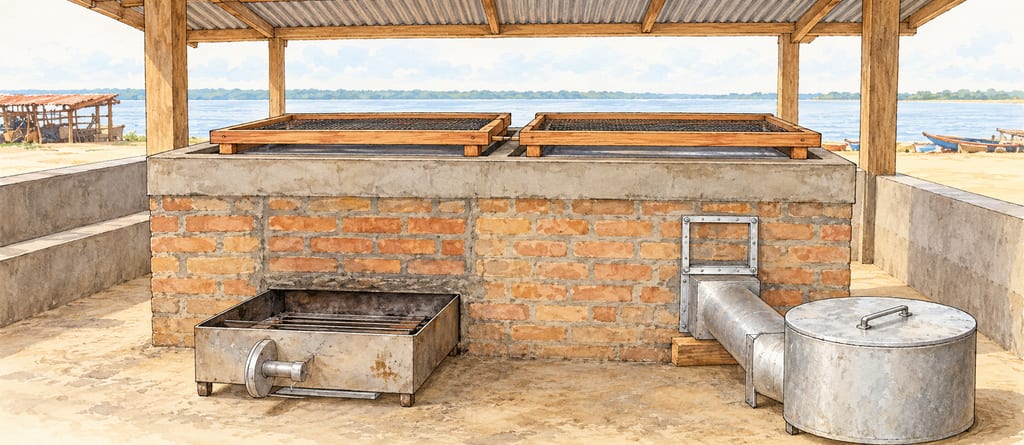
The FAO-Thiaroye Processing Technique separates fish cooking from smoke flavouring. A heat-retaining cooking unit, fat collector, filtered smoke generator and smoking chamber reduce direct smoke and fat contact; installations vary by place.