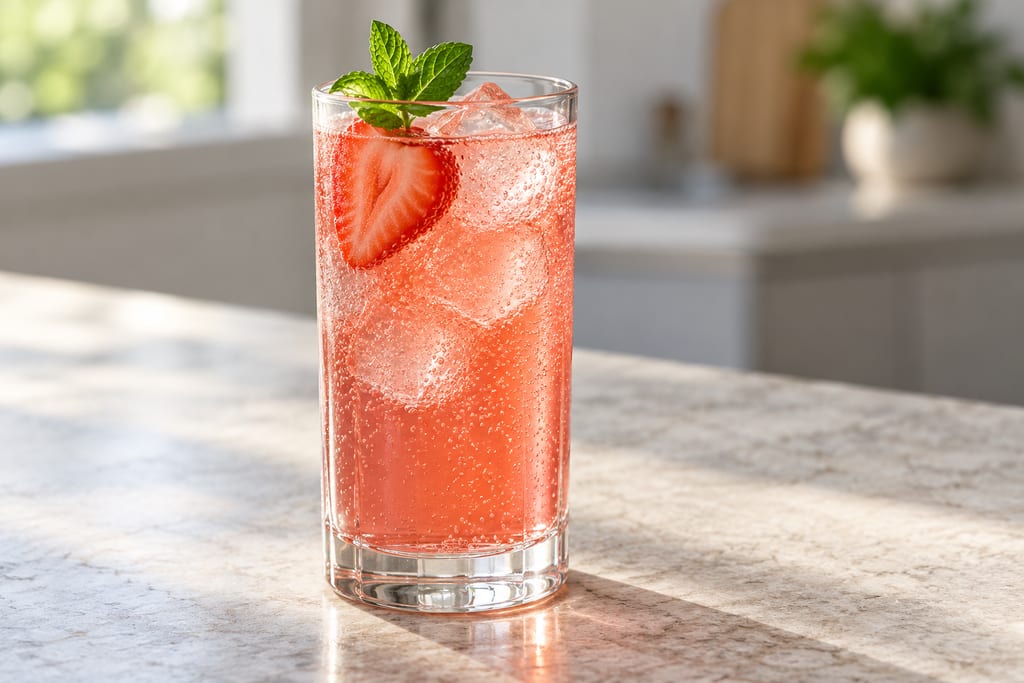
Carbonated cordial, shrub or juice
A cold finished drink charged with carbon dioxide in a home carbonator that accepts liquids other than water. Carbonating is not fermentation and does not preserve the drink.
 FermenteaWhere food goes to change
Rose hip syrup · Rose-hip syrup · Syrop z owocow rozy
Wartime British rose hip syrup from The Hedgerow Harvest (1943) in full, then a small modern fridge batch: hips boiled, dripped twice through cloth, sweetened. With Polish Konskowola syrup and Swedish rosehip puree.
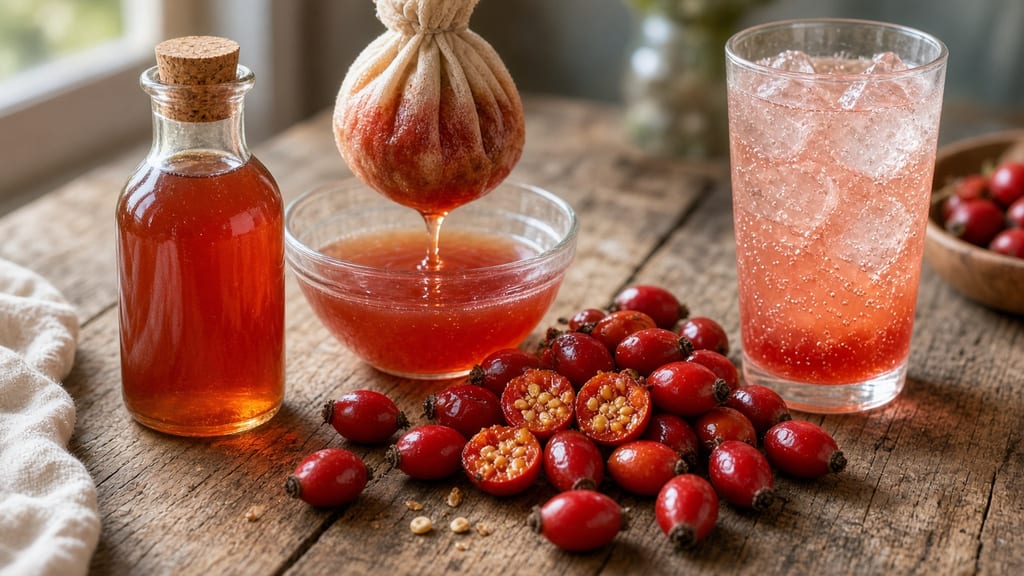
Rosehip syrup is the hedgerow syrup of wartime Britain: the red fruit of wild roses, boiled, dripped through a cloth bag twice to catch the hairs around the seeds, then sweetened and bottled. A spoonful went to children for vitamin C. Today it is a bright, tart syrup that is very good in fizzy water.
This page is in two parts. Part one is the Ministry of Food method of 1943, from the leaflet The Hedgerow Harvest, given in full as it has been transcribed. Part two is a small modern batch, based on the University of Alaska Fairbanks Cooperative Extension, made for the refrigerator. After that come two cousins from other countries that use the same double extraction: the traditional rose syrup of Konskowola in Poland, and the Swedish rosehip puree of the 1950s.
In September 1941 The Times announced a national week for collecting rose hips to be made into syrup. The Ministry of Health and the Department of Health for Scotland said the hips were twenty times as rich in vitamin C as oranges, at a time when oranges had largely stopped arriving. Schools, scouts, guides, the women's institutes and the Scottish women's rural institutes organised the picking. The hips had to be ripe and free of stalks and leaves. Haws, the red berries of hawthorn, were not wanted, and the season ran to the end of October.
Firms paid two shillings for fourteen pounds of hips. In January 1942 the paper reported the result: about 200 tons, or 134 million hips, had been collected and turned into 600,000 bottles of national rose hip syrup, to be sold in chemists' shops from the first of February. It was meant for young children only. A teaspoonful a day, The Times said, would supply half a child's vitamin C, taken neat or diluted with water.
These reports are quoted by the food historian Janet Clarkson, who writes as The Old Foodie. The factory syrup was one thing; the Ministry of Food also told households how to make their own, and that is the recipe that follows.
This is the Ministry of Food method from The Hedgerow Harvest (1943), as transcribed in 2011 by the East Essex Smallholders group, with their metric figures in brackets. The original leaflet has not been seen for this page.
Quantity: the directions are for 2 pounds (900 g) of hips.
Boil 3 pints (1.7 litres) of water. Mince the hips in a coarse mincer and put them immediately into the boiling water. Bring to the boil and then place aside for 15 minutes.
Pour into a flannel or linen crash jelly bag and allow to drip until the bulk of the liquid has come through. Return the residue to the saucepan, add 1 1/2 pints (852 ml) of boiling water, stir and allow to stand for 10 minutes. Pour back into the jelly bag and allow to drip.
To make sure all the sharp hairs are removed, put back the first half cupful of liquid and allow it to drip through again.
Put the mixed juice into a clean saucepan and boil down until the juice measures about 1 1/2 pints (852 ml), then add 1 1/4 (560 g) of sugar and boil for a further 5 minutes. Pour into hot sterile bottles and seal at once.
Hints given with the recipe: if corks are used, boil them just beforehand and, after putting them in, coat them with melted paraffin wax. Use small bottles, as the syrup will not keep for more than a week or two once a bottle is opened. Store in a dark cupboard. The syrup can flavour milk puddings, ice cream or almost any sweet, or be diluted as a drink.
The transcription leaves out the unit for the sugar. It reads 1 1/4 with 560 g in brackets, and 560 g is about one and a quarter pounds, so pounds is the likely reading. That is roughly 560 g of sugar to 852 ml of reduced juice.
Several things in the wartime method still make sense. Mincing the hips opens them so that hot water can reach the flesh. Two extractions get more juice out of the pulp. And the advice to pour the first cloudy half cup back through the bag is the oldest form of the double straining that every modern recipe repeats. The corks and paraffin wax belong to their time; the warning that an opened bottle lasts only a week or two is worth keeping in mind.
If you want to taste the 1943 syrup, make it exactly as written, then keep it as you would the modern version below: in the refrigerator, in small bottles, and used within the month.
This version is a small batch from Alaska. The juice method comes from the University of Alaska Fairbanks Cooperative Extension, and the proportions from a syrup made and published on the Alaska Master Gardener blog: 4 cups of rose hips, 2 cups of water and 1 cup of sugar, for about 2 cups of syrup.
Wash the hips and remove the stems and the blossom ends. Boil the hips in the water for about 20 minutes. The Extension's juice method brings the hips quickly to the boil, then cooks them slowly for about 15 minutes, and either timing gives soft fruit.
Drip the juice through a jelly bag or a few layers of cheesecloth set in a colander. For clear juice the Extension says not to twist or press the bag. Then strain the juice a second time through a clean cloth, because the hairs on the seeds can irritate the throat and stomach.
Add the sugar to the juice and boil for about 5 minutes, until the sugar has dissolved and the syrup has thickened slightly. Pour it into a sterilised bottle or jar, label and date it, and keep it in the refrigerator. The University of Maine Cooperative Extension gives one month in the refrigerator for homemade flavoured syrups.
Rose hips are the red fruit of the wild rose. In Alaska the Extension says they can be collected from August through winter, when they are firm but red and ripe, and that picking after the first frost is often recommended; the riper the hips, the sweeter they are. In Britain the Woodland Trust gives September and October for dog rose, whose hips are oval, red and 15 to 20 mm long, in small clusters, each with many hairy seeds.
Many wild roses look alike and are hard to tell apart, and garden roses have escaped into the hedges, the Woodland Trust notes. The Extension mentions smaller oblong hips on Alaska's wild roses and larger round hips on Rosa rugosa, and the 1955 Swedish preserving book says that among garden roses only Rosa rugosa Regeliana is suited to preserving, with wild hips the most flavourful.
Pick hips that have not been exposed to chemicals, car exhaust or excessive dust. Clean them soon after picking: the Extension says cleaned hips keep covered in the refrigerator for a week, and properly frozen hips last up to two years, so you can gather in autumn and make syrup later.
Inside each hip the seeds are covered in fine hairs. The Woodland Trust says they are an irritant, used to make itching powder. The Alaska Master Gardener blog warns that they can irritate the throat and stomach, and the Extension says the seeds and blossom ends should be removed or the fruit strained through a fine strainer.
So every recipe here strains through cloth. The Ministry of Food used flannel or linen crash and poured the first half cup back through. The Polish producers use dense cloth. The modern recipe strains twice. Do not squeeze the bag; let it drip.
In 2015 the Polish Ministry of Agriculture entered syrop z owocow rozy, rose fruit syrup, on its List of Traditional Products for the Lubelskie region. It comes from the commune of Konskowola, known for its rose nurseries and called the Rozana Kraina, the Rose Land. Residents interviewed for the entry remember every house laying in stores for winter, and in theirs it was syrup from the rose that grew by the house.
The method is the same family as the British one. The hips are picked by hand when their colour is deepest, cleaned of calyx and stalk and washed, then covered with boiling water and left about 15 minutes until soft. The juice is drained through dense cloth. The fruit is covered again with acidified water and heated, and drained again. The two juices are combined, sugar is added, and the whole is brought to the boil. The entry gives no quantities, so none are given here.
The finished syrup is intensely orange, thick, sticky and very sweet. In Konskowola it is served at shared teas and, above all, stirred into hot water for children on cold days.
The Swedish preserving book makes rose hips into puree, and the extraction is close to the British double drip. Hemkonservering, the home preserving handbook of the Wezata test kitchen and the Swedish Institute for Preserving Research, gives it in its 1955 edition. The hips are rinsed and topped and tailed, cooked with water and passed through a sieve or mill. With a household machine, it says, cook them covered for an hour with 3 dl of water per kilo, pass them, then boil the residue with 1 to 2 dl of water per kilo and pass it again.
The puree was kept by mixing it with sugar to taste and sterilising it in jars at 90 degrees for 30 minutes, or by freezing. It is a thicker product than syrup, but it shows the same habit of a second extraction from the pulp.
The Ministry of Food suggested diluting the syrup as a drink, and the wartime factory syrup could be taken neat or with water. For sparkling water, start with a tablespoon or two in a glass and top up, adding more to taste. The Alaska Extension's own rose hip drink is simply juice with a little honey and a few drops of lemon, and the same few drops of lemon can go into a glass of the syrup.
Hairs: strain through cloth, twice, and do not press the bag.
Storage: keep homemade syrup in sterilised bottles in the refrigerator and use it within one month, following the University of Maine Cooperative Extension. The 1943 recipe already warned that an opened bottle lasts only a week or two. Discard any bottle that grows mould. For longer keeping, freeze the hips or the strained juice, as the Alaska Extension advises, and make syrup in small batches.
Picking: use hips away from roads and sprayed ground. Haws are not rose hips; the 1941 collectors were told to leave them out.
Sugar: the 1943 recipe uses about 560 g of sugar to 852 ml of juice; the Alaska blog uses 1 cup of sugar for about 2 cups of syrup; the Polish entry gives no quantities.
Cooking: the Ministry of Food boils and then lets the minced hips stand for 15 minutes; the Polish method steeps whole hips in boiling water for 15 minutes; the Alaska recipes cook the hips for 15 to 20 minutes; the Swedish puree cooks for an hour.
Acid: only the Polish method acidifies the second extraction water, and it does not say with what.
Keeping: the 1943 recipe says a week or two after opening; the University of Maine says one month in the refrigerator for homemade syrups; the Polish syrup was kept in the pantry. This page follows the refrigerator and the month.
Ministry of Food, The Hedgerow Harvest (1943), via a 2011 transcription; The Times, 1941 and 1942, quoted by The Old Foodie; Polish List of Traditional Products, 2015.
Yield 2 cup · Scaling: linear
Hairs on rose hip seeds can irritate the throat and stomach.
Hazard sourceHomemade fruit syrups are stored in the refrigerator and used within a month.
Hazard sourceDrip through a jelly bag or cheesecloth without pressing, then strain a second time.
Control sourceStore in a sterilised, labelled and dated bottle in the refrigerator.
Control sourceStrain twice through cloth to remove seed hairs.
Refrigerate and use within a month; discard any bottle with mould.
Use hips from unsprayed places away from traffic.
Ministry of Food household recipe, 1943, and national collection of 1941.
Extension juice method and modern syrup.
Syrop z owocow rozy, Polish List of Traditional Products, 2015.
A cold finished drink charged with carbon dioxide in a home carbonator that accepts liquids other than water. Carbonating is not fermentation and does not preserve the drink.
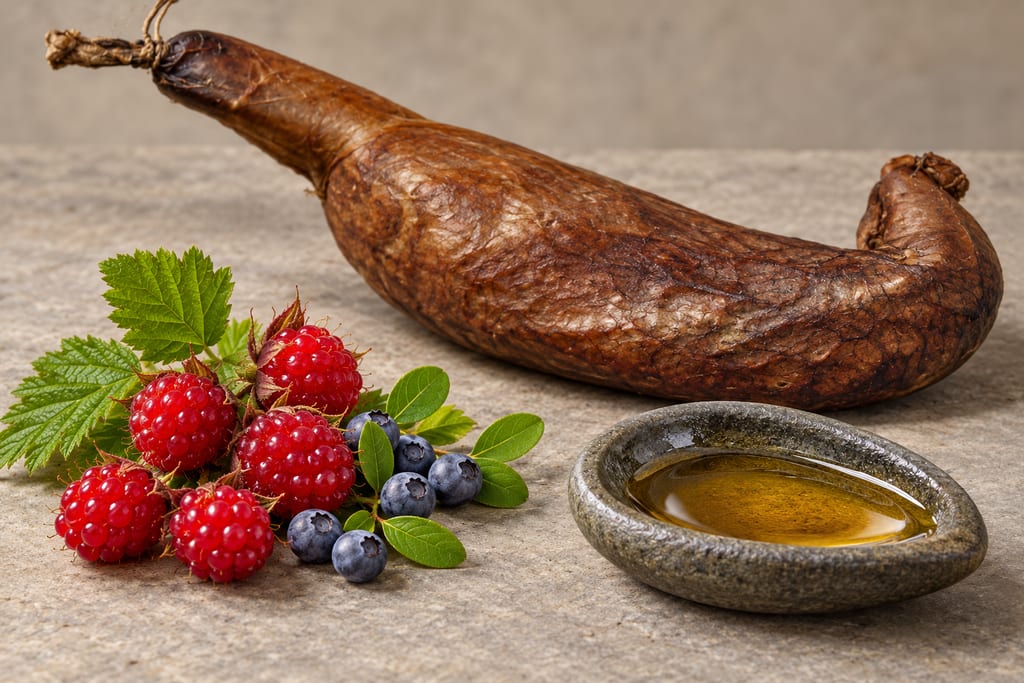
Berries, greens and fish eggs were kept in seal oil by Indigenous Alaskan communities. The oil seals the food from air, and the result depends on preparation and the surrounding conditions.
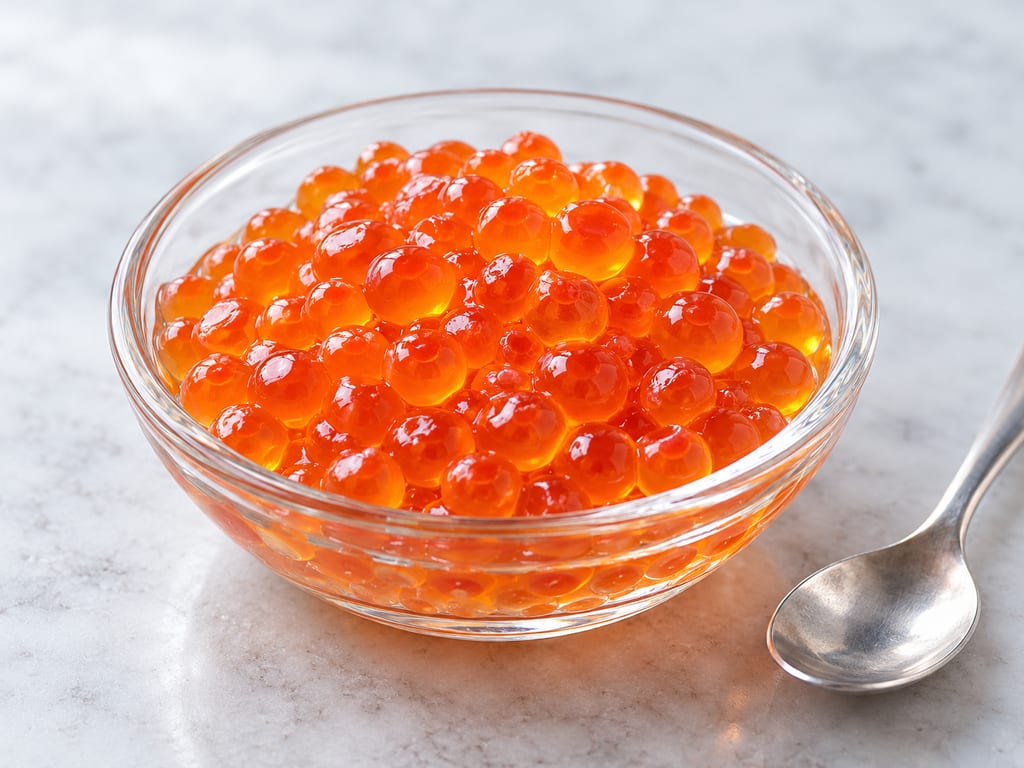
Salmon roe is separated from skeins and treated in two salt-water stages using a University of Alaska Extension formula.
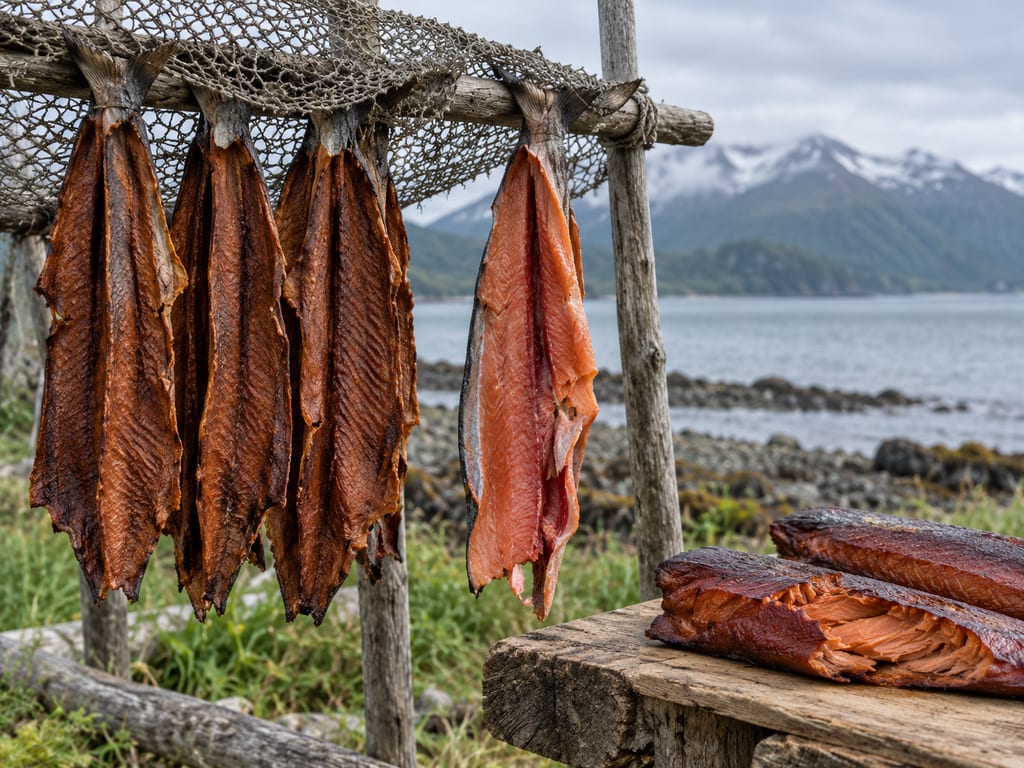
Kodiak salmon, halibut and cod cut as seg'aq and hung on an initaq rack to become tamuuq, with kac'amaasaq and kupcuunaq named as different results.
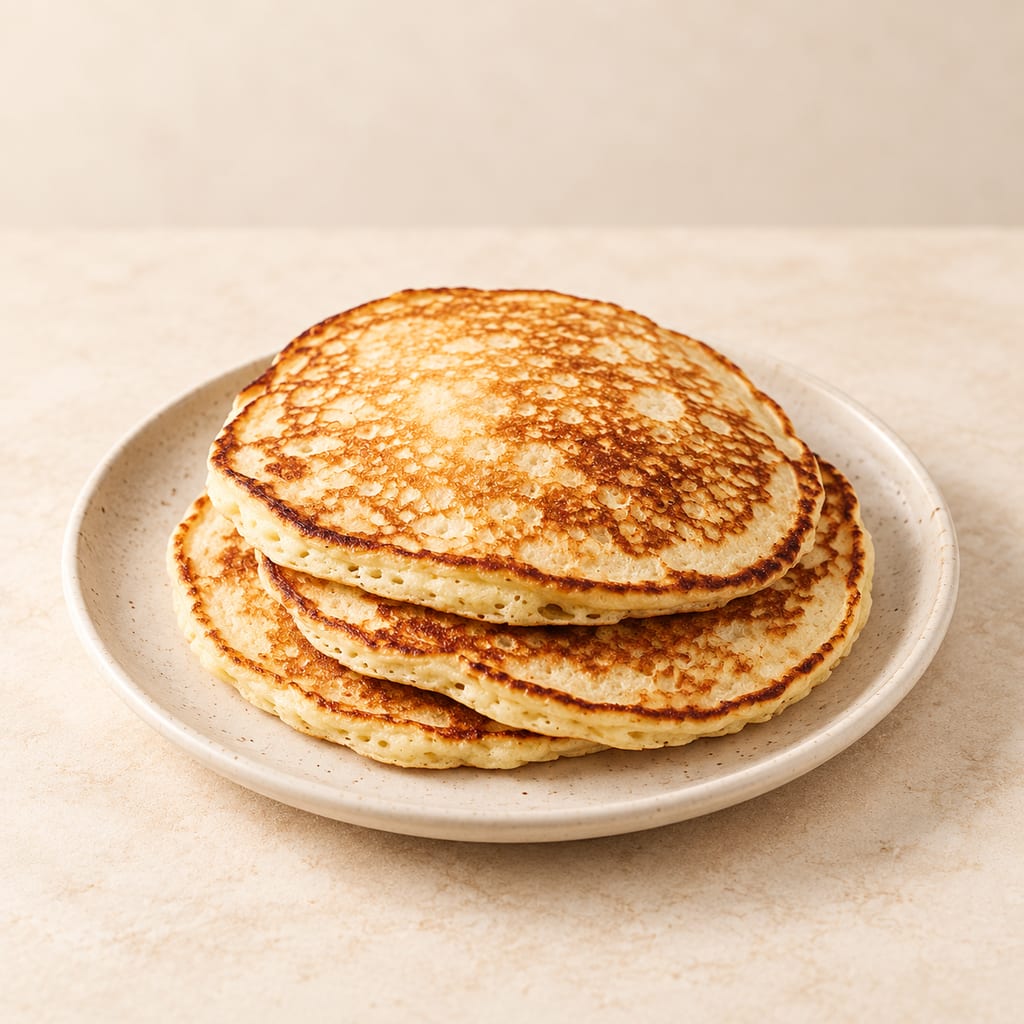
Buttermilk, flour and sourdough discard rest overnight before eggs and baking soda turn the sponge into a griddle batter. The finished pancakes are tender and lightly tangy.
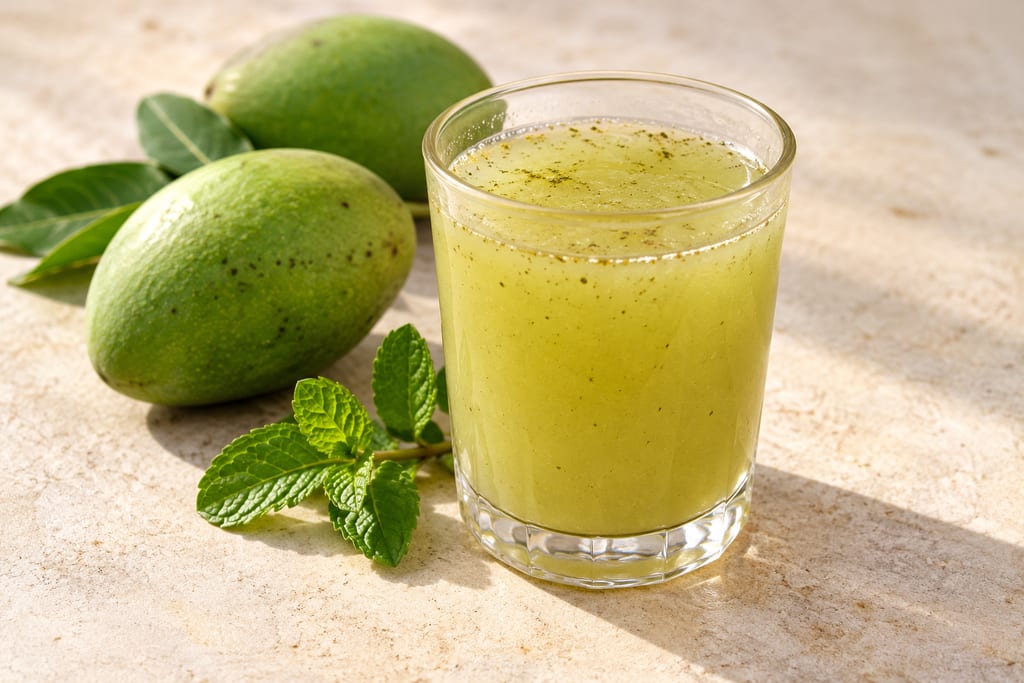
Aam panna is a tart Indian summer drink made by cooking unripe green mango until its flesh softens, then blending the pulp with sweetener, salt and spices and diluting it with water.
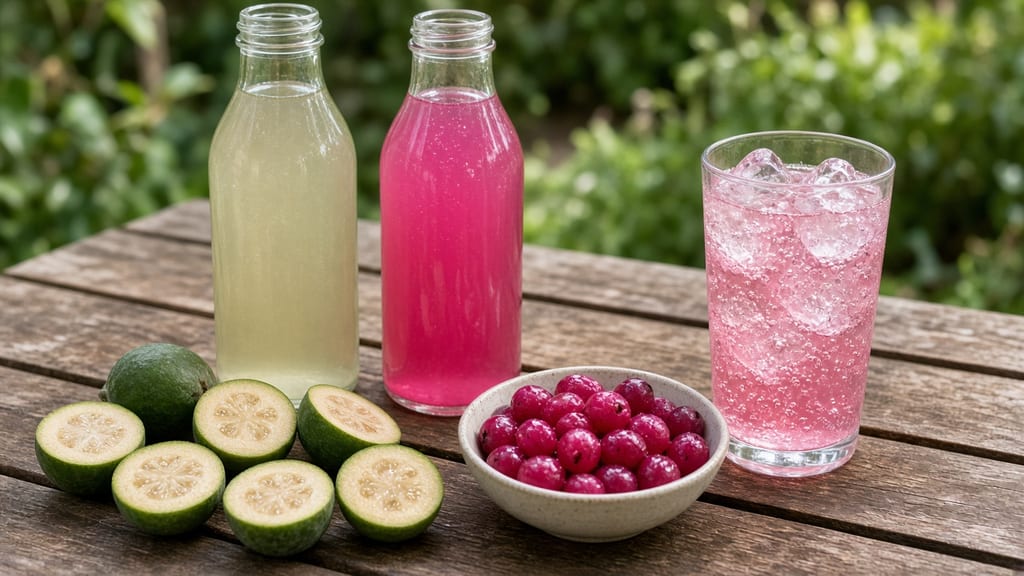
New Zealand feijoa cordial, from the flesh or just the skins, and Australian lilly pilly cordial: fruit, water and sugar heated briefly, strained, and sharpened with lemon and tartaric or citric acid.
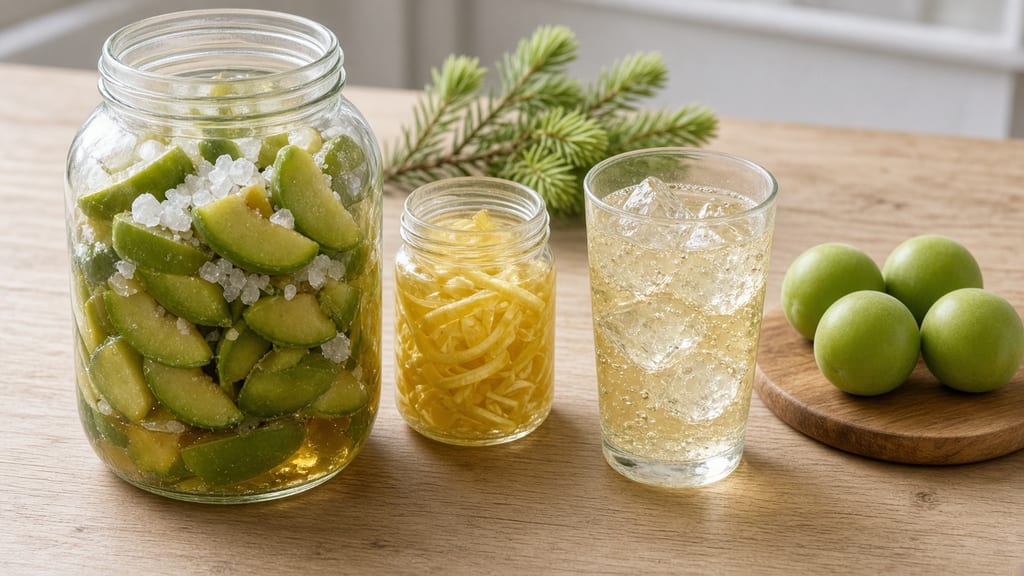
Syrups made without heat by packing fruit or shoots in sugar: Korean maesil-cheong with the ministry's stone-removal steps, frozen Japanese ume syrup, yuja-cheong and Polish pine-shoot syrup.
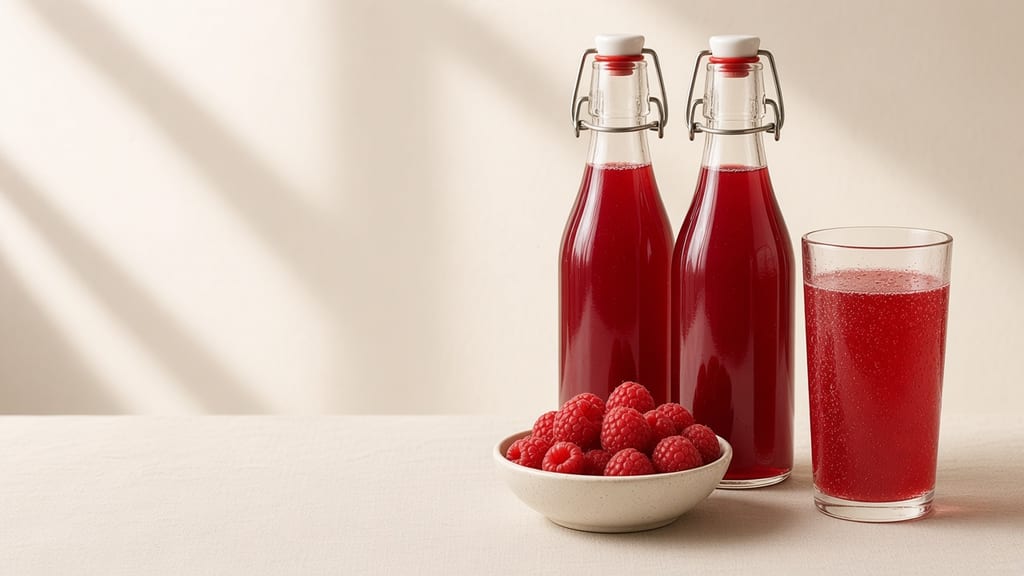
Clear fruit syrup from cooked, dripped berry juice boiled with sugar and canned in a water bath; one tested method for raspberry, strawberry, blueberry, cherry, grape and blackberry.
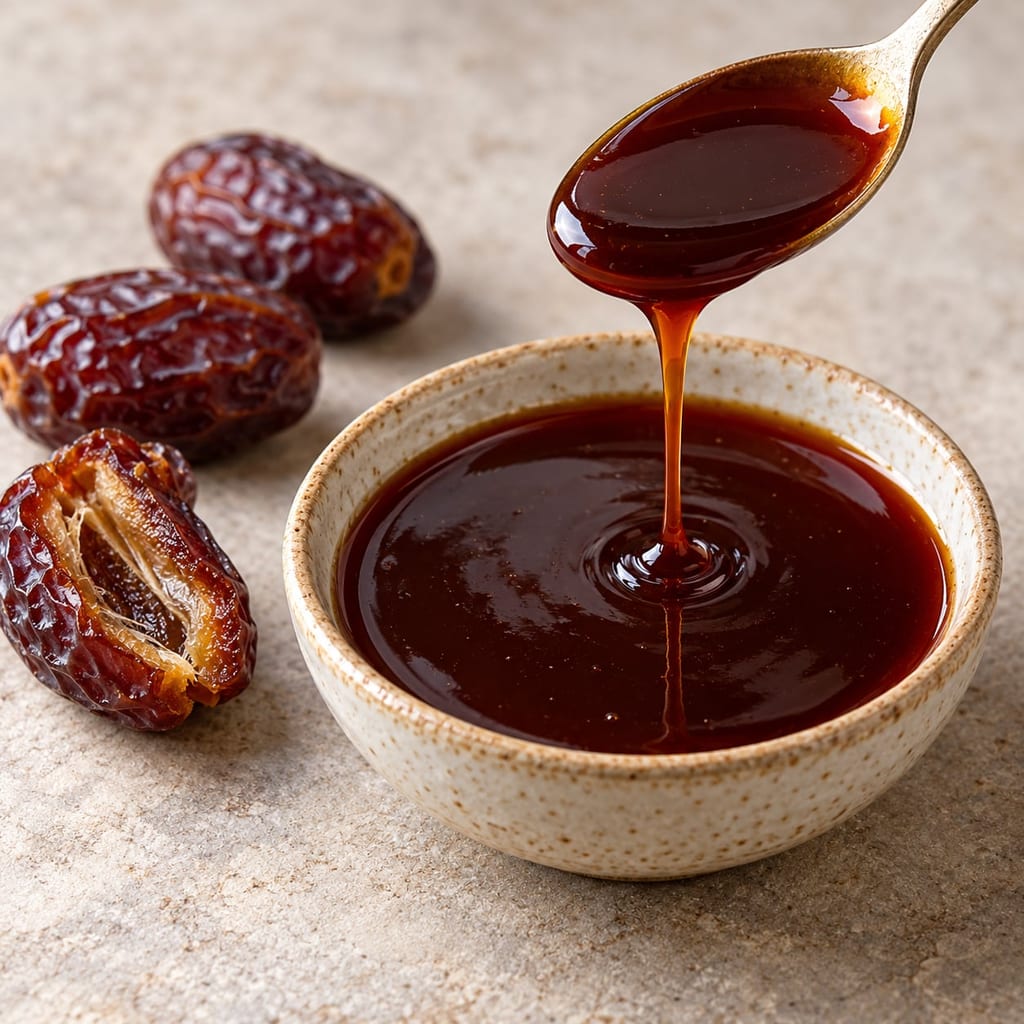
A thick, dark, very sweet syrup made from dates, known as dibs, rub, silan or date molasses. It sweetens tahini and desserts and glazes or sauces savoury dishes across the Middle East and North Africa.
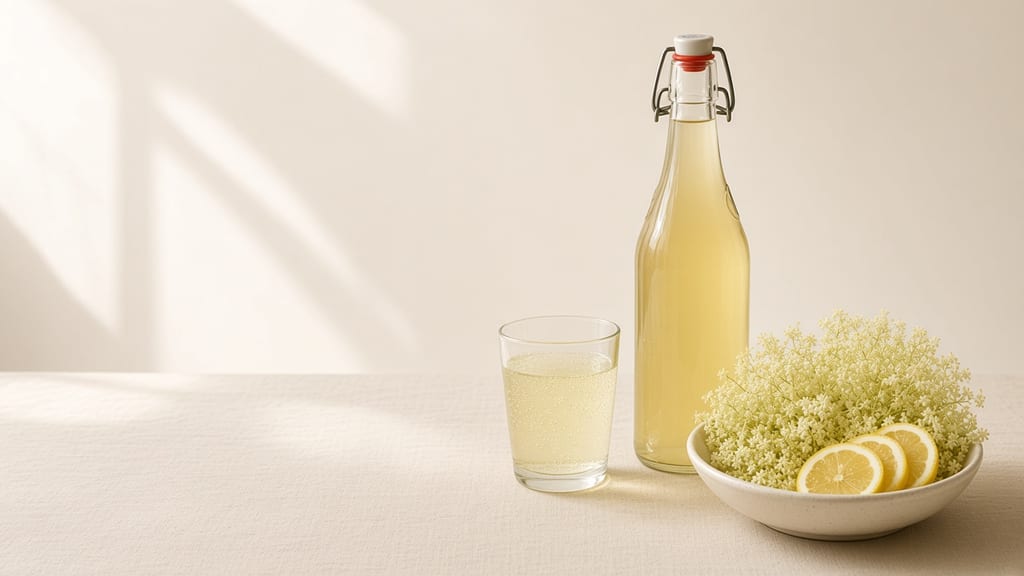
Elderflower heads steeped for one to three days in a lemony sugar syrup, strained and kept cold; the same infusion method flavours syrups with mint, basil, thyme and other herbs.
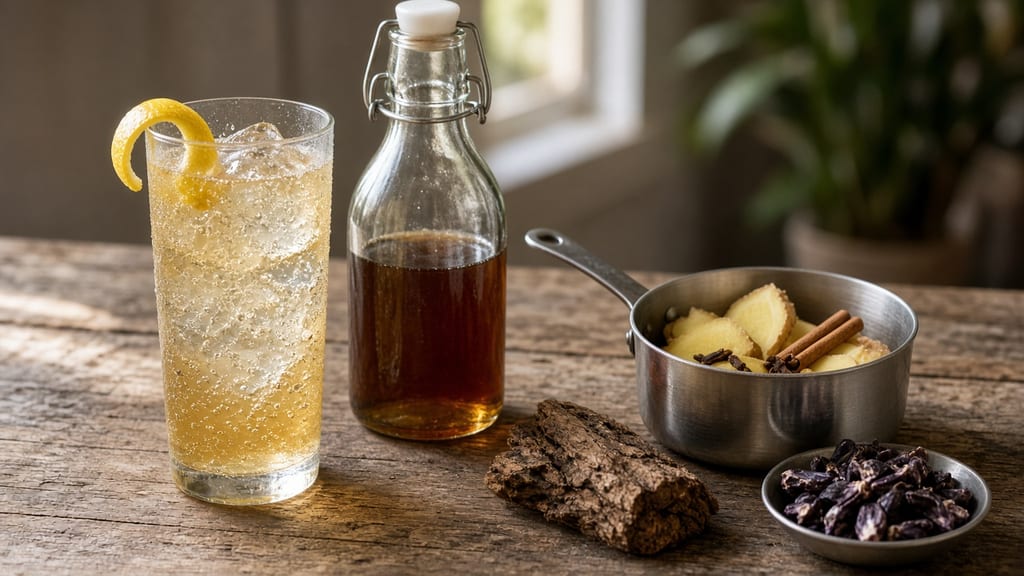
Boiled syrups from hard ingredients: a refrigerated ginger syrup, Trinidad mauby from tree bark, Tamil nannari root syrup, Peruvian purple-corn concentrate and a Turkish spiced sherbet.
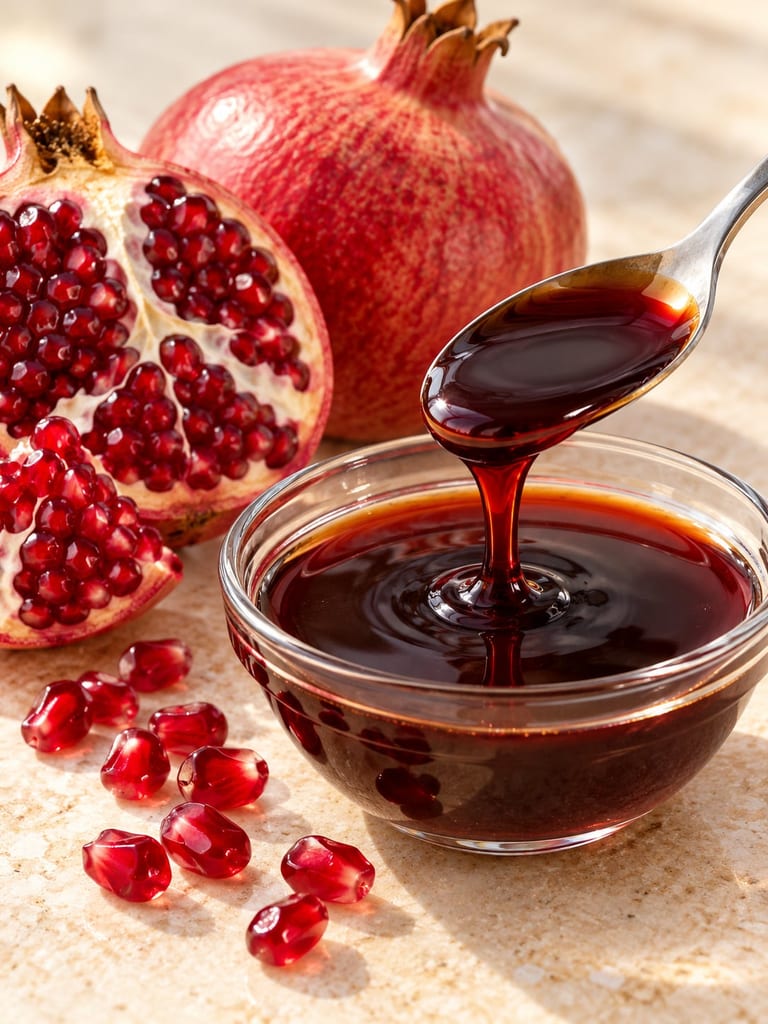
The registered Hatay method presses pomegranate arils and slowly concentrates the strained juice. Its 100 kg source batch and experienced-producer endpoint are retained; no home-scale time or shelf-life is inferred.
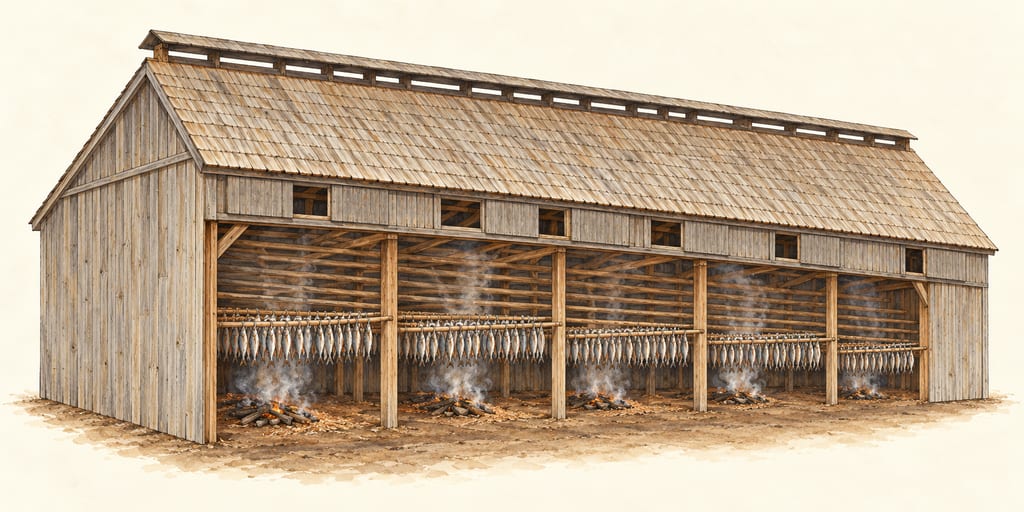
A Cap-Pelé boucanière is an Acadian herring-smoking building. The documented Willie Niles example is a one-storey wood-frame structure with a ridge smoke vent and interior bays for hanging fish-bearing cannes.
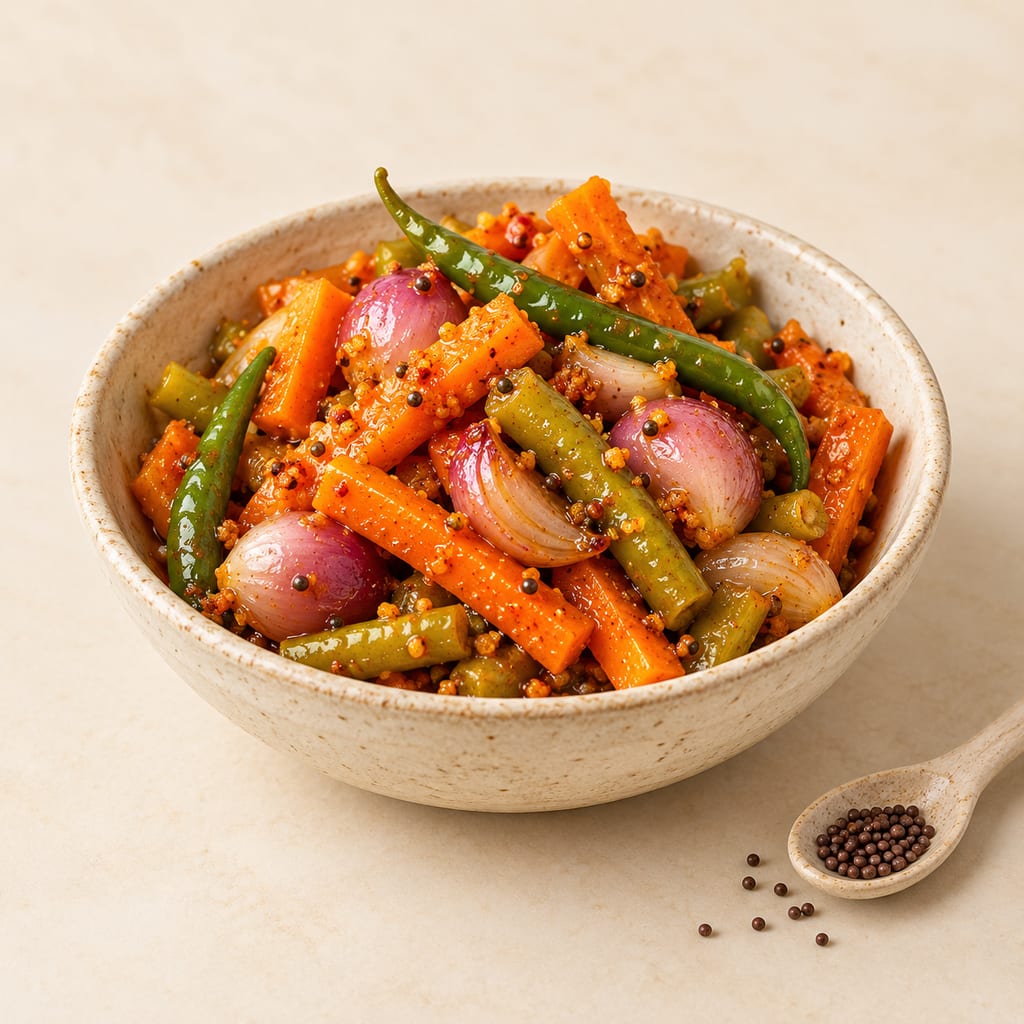
Achcharu is a family of Sri Lankan vinegar pickles made with mixed vegetables or seasonal fruit and a piquant spice dressing. This version is a quick, refrigerated, non-fermented mixed-vegetable pickle.
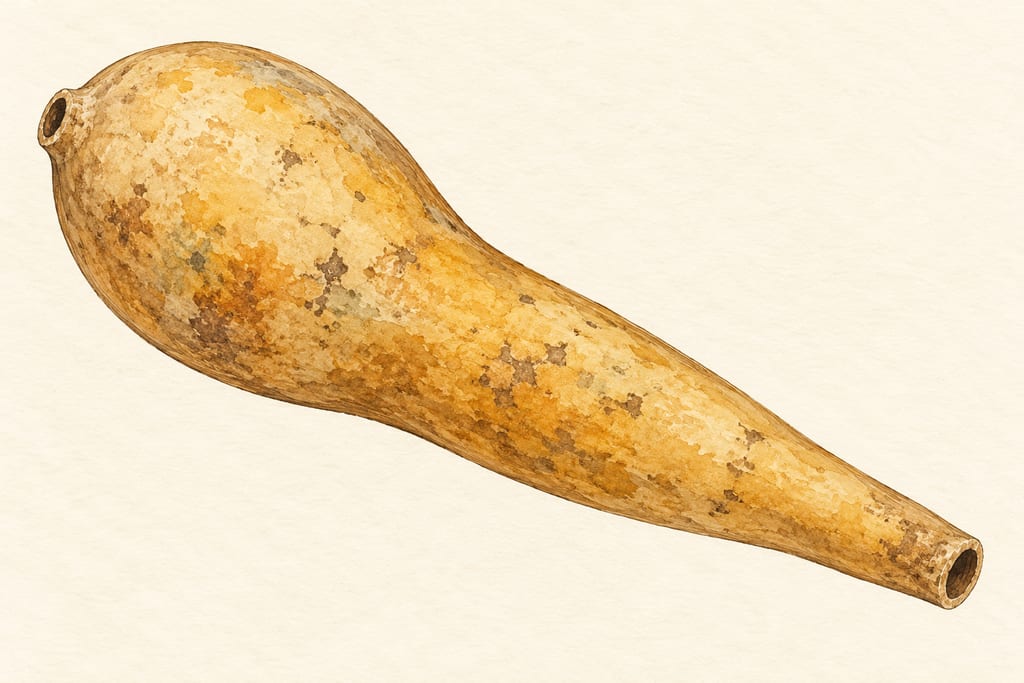
The acocote is a long, hollowed and dried gourd used to draw aguamiel from a mature maguey. It is a harvesting tool: the sap is transferred to a separate vessel before it ferments into pulque.
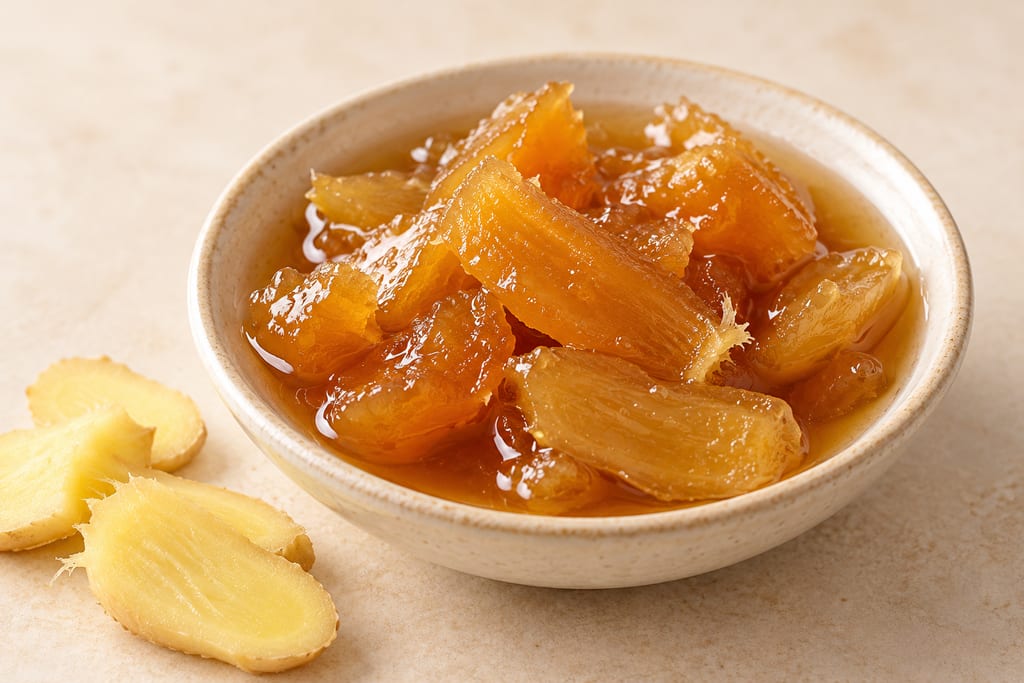
Adrak murabba preserves young ginger in sugar syrup, a sweet South Asian preparation recorded in Indian cookery and food-processing sources.
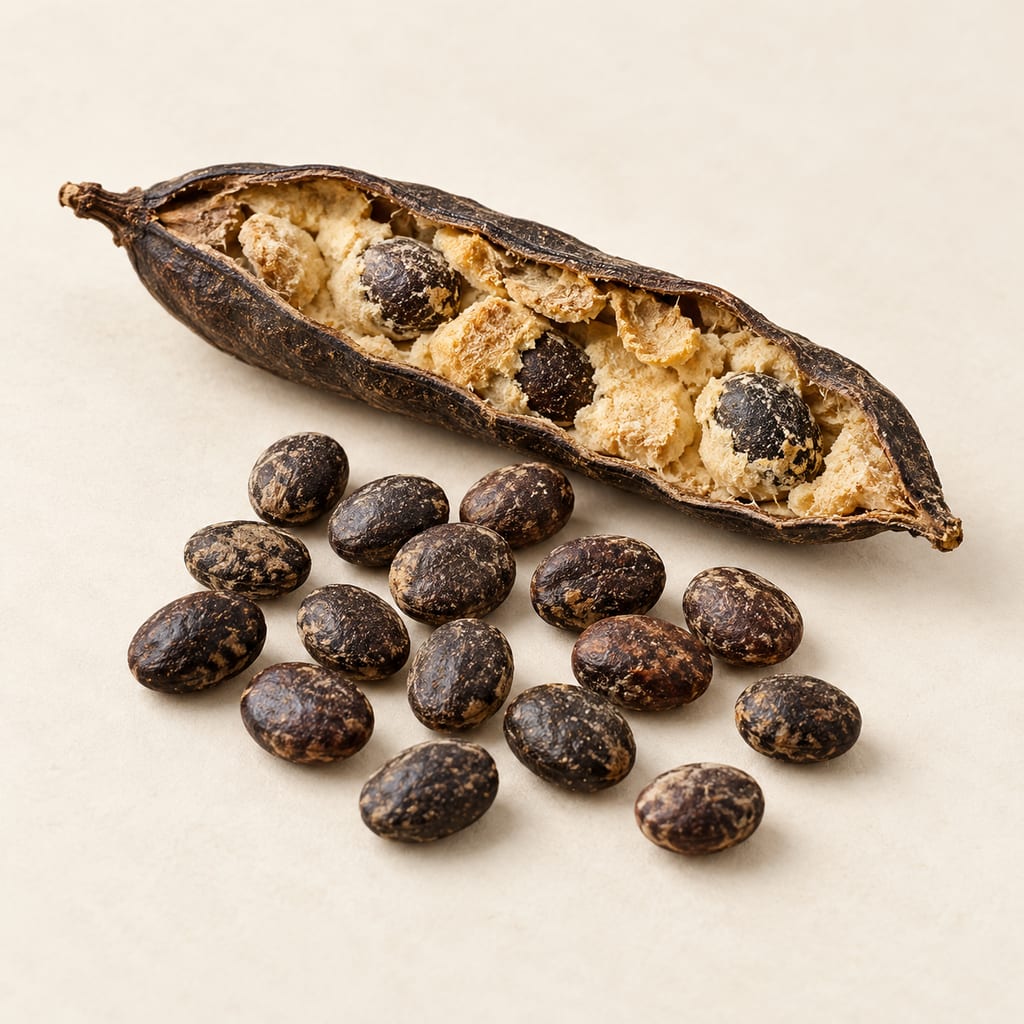
Parkia biglobosa seeds are fermented into regional West African seasonings, including nététou, iru, dawadawa and soumbala. The yellow fruit pulp is a separate food, and names and methods vary by place.
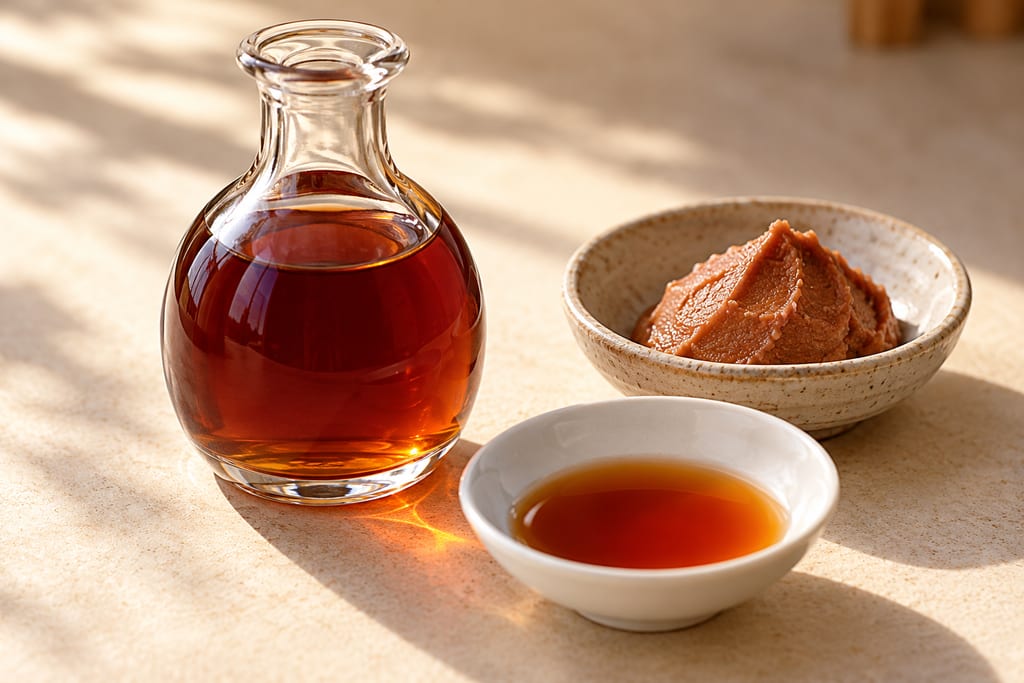
Japanese reddish-brown vinegar from sake lees matured about three years, turned to vinegar by acetic bacteria; the vinegar of Handa and Edomae sushi rice.
A refined common-wheat flour blended for a broad range of baking; its protein and behavior vary with wheat, milling and market.
The almond mushroom, Agaricus subrufescens, was cultivated in eastern North America in the 1800s, lost its market, and returned as a cultivated mushroom from Brazil, where it is grown under several names.
No community contributions have been published for this entry yet.
Sign in to contribute. Published comments and photos are free to read.
East Essex Smallholders Chitchat, 22 August 2011, transcribing The Hedgerow Harvest (Ministry of Food, 1943)Method · History
Ministry of Food Recipe for Rosehip Syrup 1943!For 2 pounds (900 g) of hips: boil 3 pints (1.7 litres) of water; mince the hips in a coarse mincer and put them at once into the boiling water; bring to the boil and set aside 15 minutes.
Pour into a flannel or linen crash jelly bag and let it drip; return the residue to the pan with 1 1/2 pints (852 ml) of boiling water, stir, stand 10 minutes, and drip again.
Put back the first half cupful of liquid and let it drip through again to make sure all the sharp hairs are removed.
Boil the mixed juice down to about 1 1/2 pints, add 1 1/4 (560 g) of sugar, boil 5 minutes, pour into hot sterile bottles and seal at once.
Corks should be boiled just before use and coated with melted paraffin wax after insertion; use small bottles, as the syrup will not keep more than a week or two once opened; store in a dark cupboard.
The syrup can flavour milk puddings, ice cream or almost any sweet, or be diluted as a drink.
Cited in: What this recipe is; Part one: Ministry of Food rose hip syrup, 1943; Reading the 1943 recipe; Why the double straining matters; In fizzy water; Problems and safety; Where the sources disagree
The Old Foodie (Janet Clarkson), 28 May 2014, quoting The Times of 22 September 1941 and 15 January 1942History
The Rose Hip Collection Campaign (WW II)The Times, 22 September 1941: a national week for collecting rose hips for syrup; the Ministry of Health and the Department of Health for Scotland said the hips were 20 times as rich in vitamin C as oranges.
Collecting was organised through schools, scouts, guides, women's institutes and Scottish women's rural institutes; hips had to be ripe and free of stems and leaves; haws were not wanted; the season ran to the end of October.
Firms paid 2s. for 14 lb of hips.
The Times, 15 January 1942: national rose hip syrup on sale in chemists from 1 February; about 200 tons, or 134,000,000 hips, were collected and made into 600,000 bottles.
The syrup was intended for young children; a teaspoonful a day supplied half a child's vitamin C need; it could be taken neat or diluted with water.
Cited in: A national harvest, 1941 and 1942; In fizzy water; Problems and safety
University of Alaska Fairbanks Cooperative Extension Service, Leslie Shallcross and Julie CascioMethod · Safety · Identification
Wild Roses (FNH-00114)Rose hips may be collected from August through winter, when firm but red and ripe; collecting after the first frost is often recommended; the riper, the sweeter.
The stem, blossom end and seeds should be removed before eating; strain through a fine strainer.
Use hips not exposed to chemicals, car exhaust or excessive dust.
Clean hips soon after picking; they keep covered in the refrigerator one week; frozen hips last up to two years.
To extract juice: 6 cups hips and 3 cups water, boil, then cook slowly about 15 minutes; drip through a jelly bag or cheesecloth; do not twist or press for clear juice; yield 2 cups; for long-term storage freeze or can the juice.
Rose hip drink: rose hip juice with a little honey and a few drops of lemon.
Cited in: What this recipe is; Part two: modern rose hip syrup; Picking and preparing hips; Why the double straining matters; In fizzy water; Problems and safety
Alaska Master Gardener Blog, UAF Cooperative Extension community site, 2 December 2018Method
Rose Hip Syrup To Cure Your Winter Woes4 cups rose hips with stems removed, 2 cups water, 1 cup sugar; boil the hips in the water about 20 minutes; strain through cheesecloth.
Little hairs on the seeds can cause throat and stomach irritation; some recipes strain twice.
Add sugar and boil 5 minutes until dissolved and thickened; makes about 2 cups.
Cited in: What this recipe is; Part two: modern rose hip syrup; Why the double straining matters; Problems and safety; Where the sources disagree
University of Maine Cooperative ExtensionSafety
Drinks from the GardenFlavoured simple syrup: label, date and store in a sterilised jar in the refrigerator for up to 1 month.
Cited in: Reading the 1943 recipe; Part two: modern rose hip syrup; Problems and safety; Where the sources disagree
Woodland TrustIdentification
Dog rose (Rosa canina)Dog rose hips are striking red, oval, 15 to 20 mm, in small clusters, each with many hairy seeds; fruit ripens around September and October.
Many wild roses in the UK are very similar and hard to identify; garden roses have escaped into the wild.
The hairs inside the hips are an irritant and have been used to make itching powder.
Cited in: Picking and preparing hips; Why the double straining matters
Ministerstwo Rolnictwa i Rozwoju Wsi (Polish Ministry of Agriculture), List of Traditional Products, entered 31 March 2015, LubelskieMethod · History
Syrop z owocow rozyKonskowola, in Lubelskie, is known for rose growing and called the Rose Land.
Hips are picked by hand at their most intense colour, cleaned of calyx and stalk, washed, covered with boiling water and left about 15 minutes until soft.
The juice is drained through dense cloth; the fruit is covered again with acidified water and heated; both juices are combined, sugar added, and heated to the boil.
The syrup is intensely orange, thick and very sweet; bottled and kept in the pantry; served at shared teas and with hot water for children in cold weather.
Cited in: What this recipe is; Why the double straining matters; Poland: syrop z owocow rozy from Konskowola; Where the sources disagree
Wezata provkok with Svenska institutet for konserveringsforskning, Goteborg, 20th edition, via Project RunebergMethod
Hemkonservering (1955), page 87: NyponpureRinse and top and tail the hips; cook with water and pass through a sieve or mill.
With a household machine: 3 dl water per kg hips, cooked covered one hour; pass; boil the residue with 1 to 2 dl water per kg and pass again.
Keep the puree by mixing with sugar to taste and sterilising in jars at 90 degrees for 30 minutes, or by freezing.
Cited in: What this recipe is; Picking and preparing hips; Sweden: nyponpure, 1955; Where the sources disagree
