Equipment · Historical object
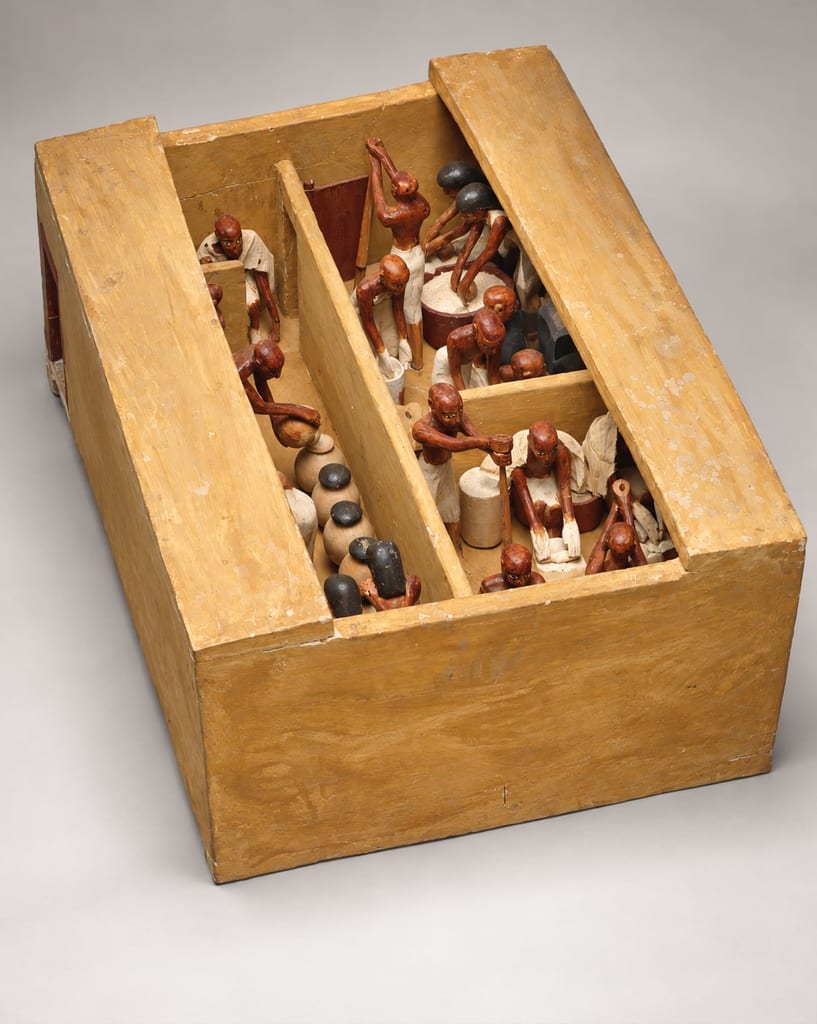
Egyptian brewery basins and beer jars (Meketre model)
The Meketre tomb model depicts brewing at Thebes: a mixing vat, fermenting crocks and round jugs for the finished beer.
Show on map FermenteaWhere food goes to change
626 sourced equipment pages: vessels, tools, appliances and built structures.
The Meketre tomb model depicts brewing at Thebes: a mixing vat, fermenting crocks and round jugs for the finished beer.
Show on map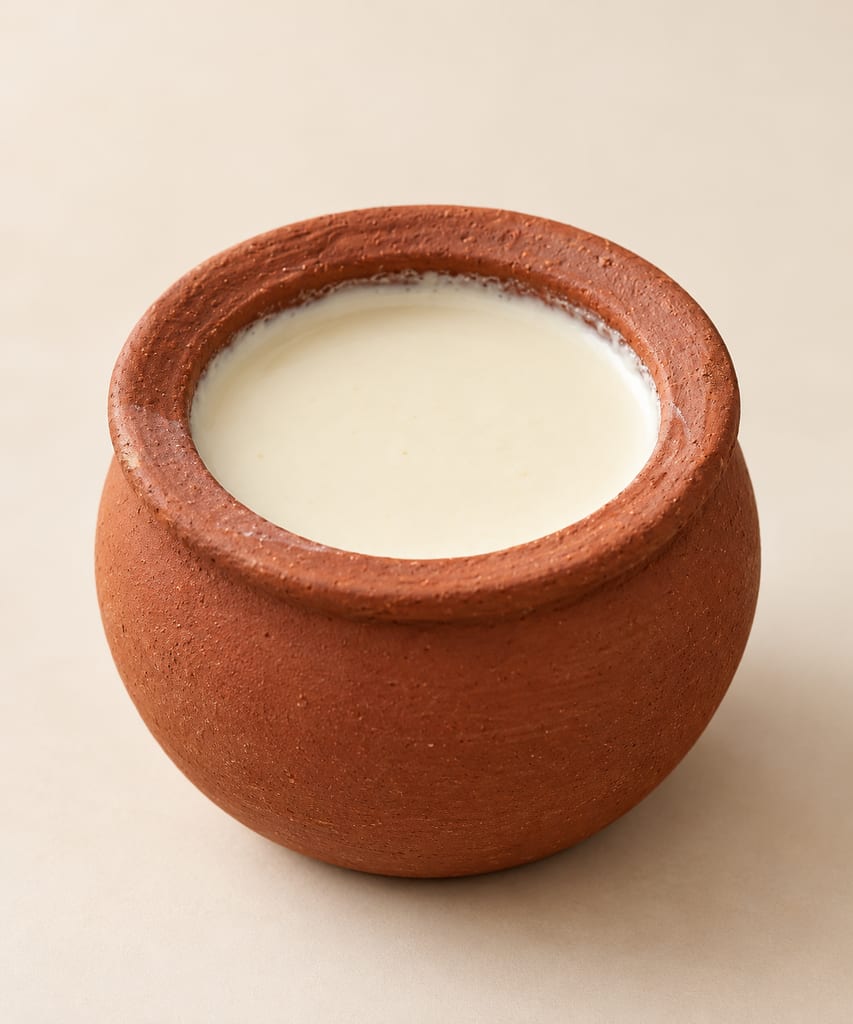
Unglazed earthen pots are used to set and often serve dahi and Bengali mishti doi. Documented forms range from small cups to shallow, broad vessels; no standard size or capacity is established.
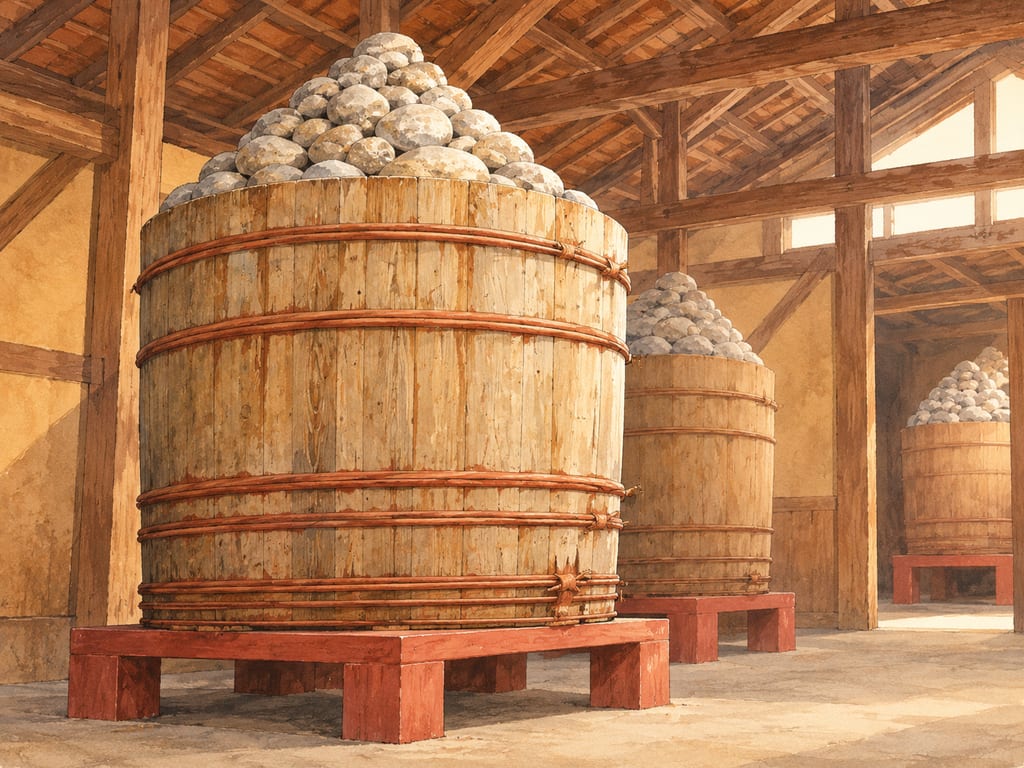
A coopered wooden kioke used by Kakukyu in Okazaki for Hatcho miso: a broad vat capped with a carefully stacked pyramid of river stones during maturation lasting more than two years.

The acocote is a long, hollowed and dried gourd used to draw aguamiel from a mature maguey. It is a harvesting tool: the sap is transferred to a separate vessel before it ferments into pulque.
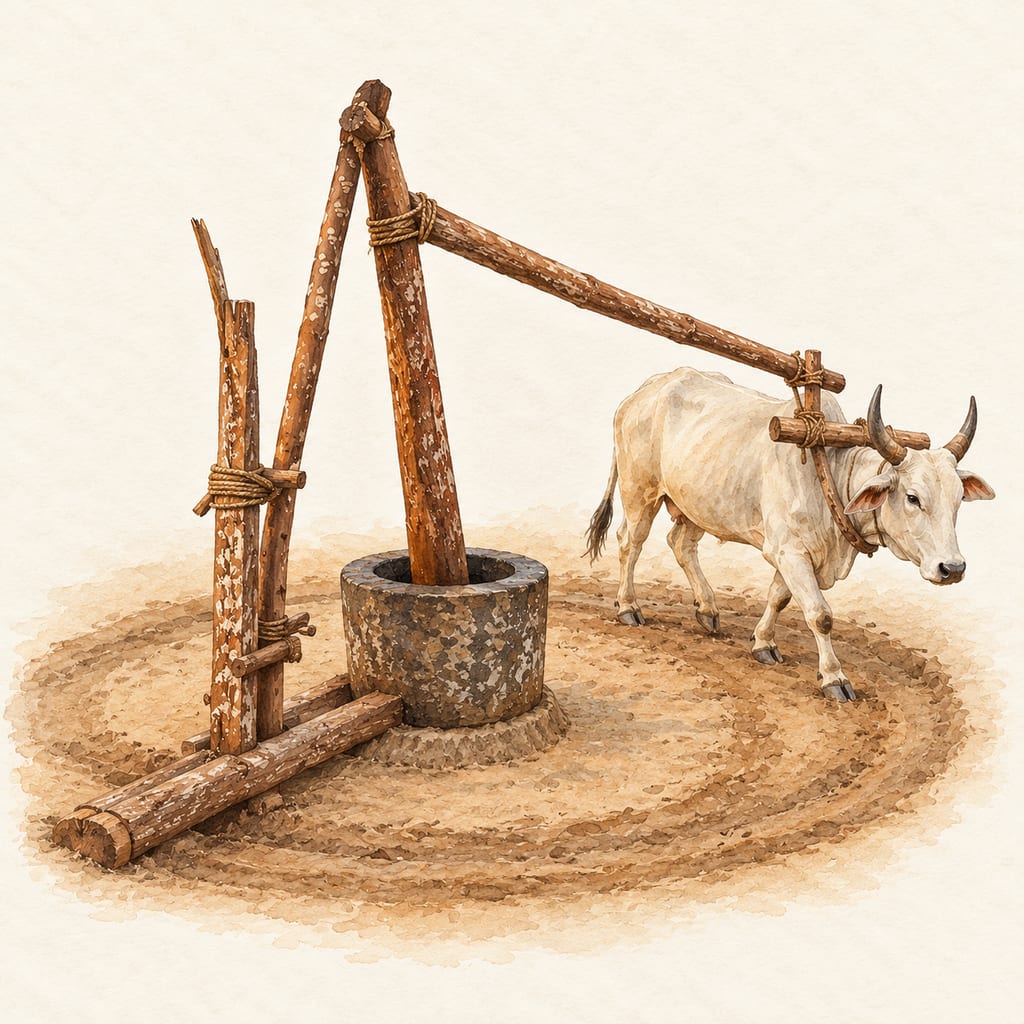
A traditional Indian oil press built around a circular mortar and upright pestle, turned by an animal through a weighted beam; regional versions differ in materials, scale and drive.
A balata gobi is a natural-rubber mother vessel documented in Wapishana parakari production in Guyana. It holds cassava mash for the second fermentation after the leaf-covered Rhizopus stage.
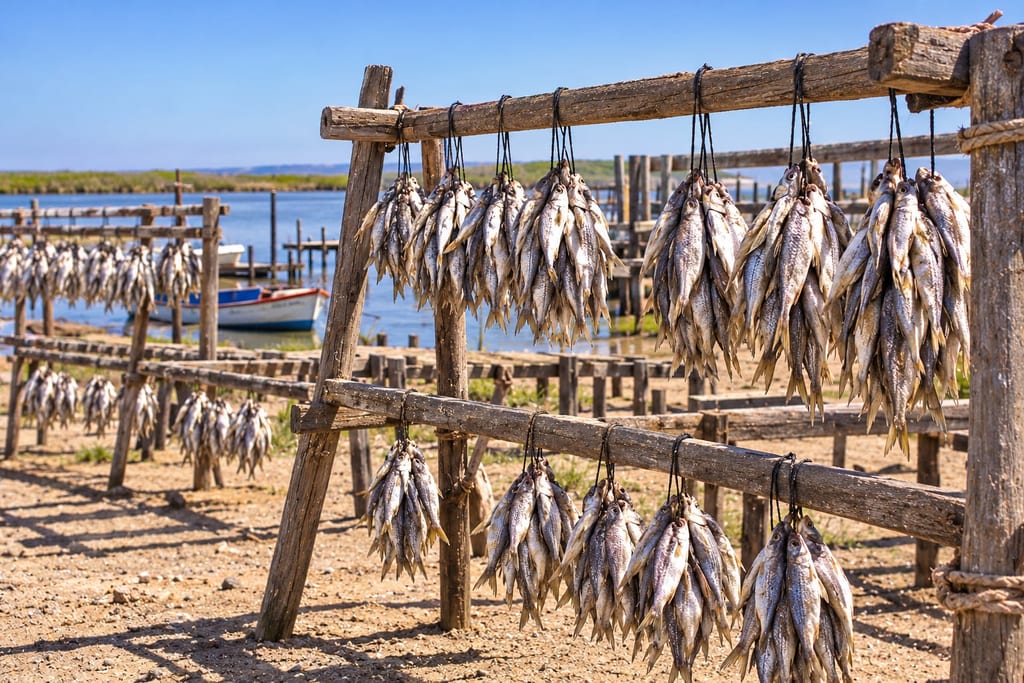
In Velddrif, makers hang whole harders in threaded bunches on lines and beams, moving them between outdoor air and fish-house drying spaces. Reported drying times vary with season and weather.
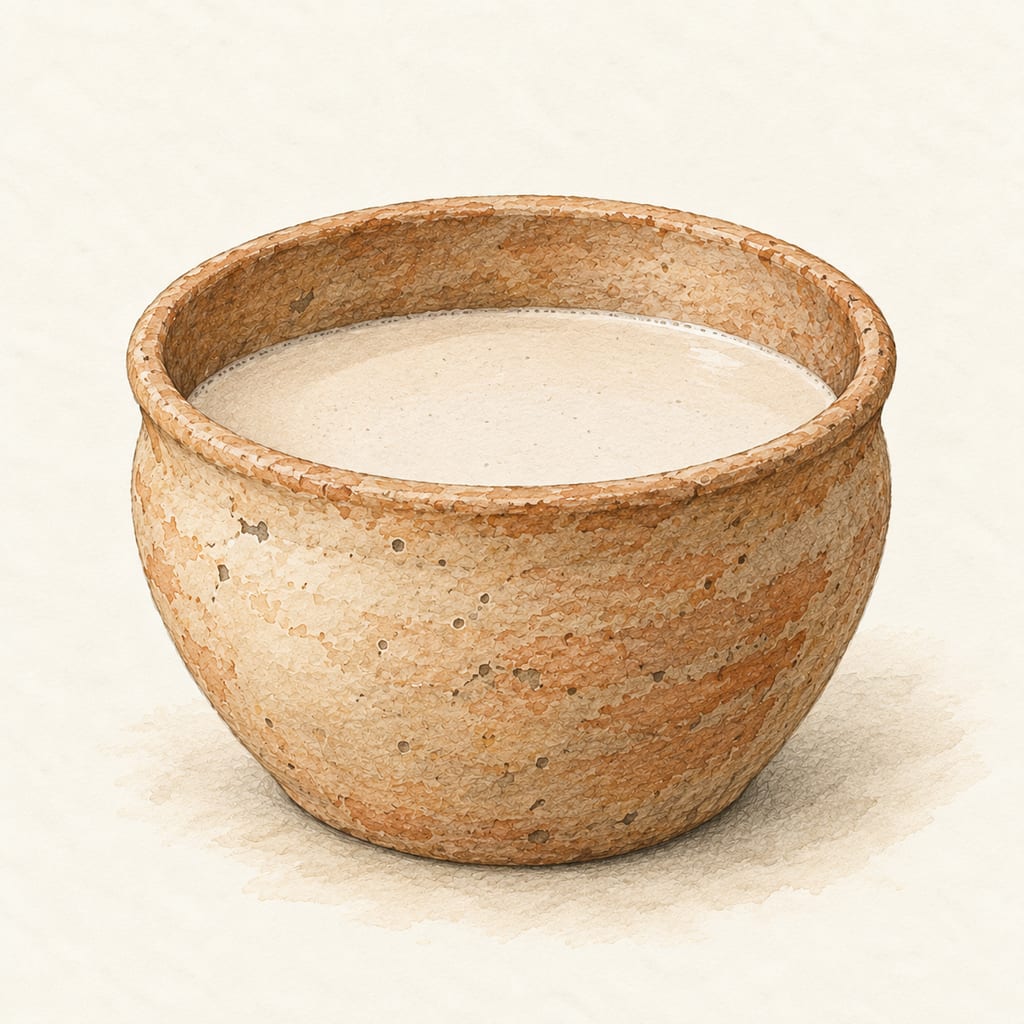
A wide-access vessel holds injera batter through successive fermentation stages. Ethiopian accounts describe clay vessels historically and metal, wood or plastic containers in contemporary kitchens.
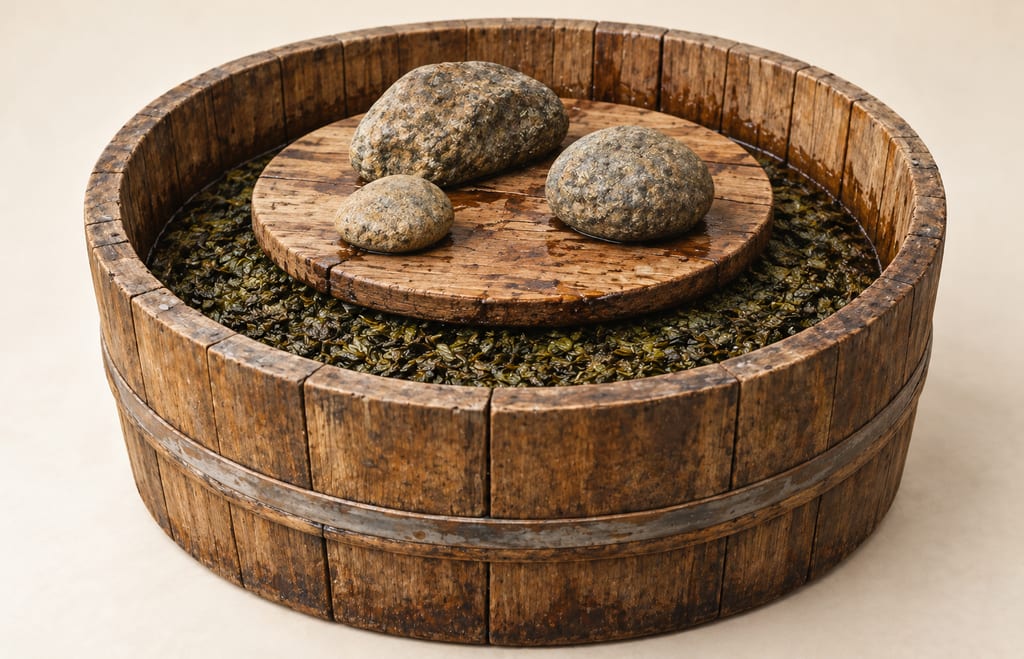
A large wooden tub used in Tokushima to ferment heated, worked Awabancha leaves with their cooking liquor. Its size and construction details are not specified in the sources.
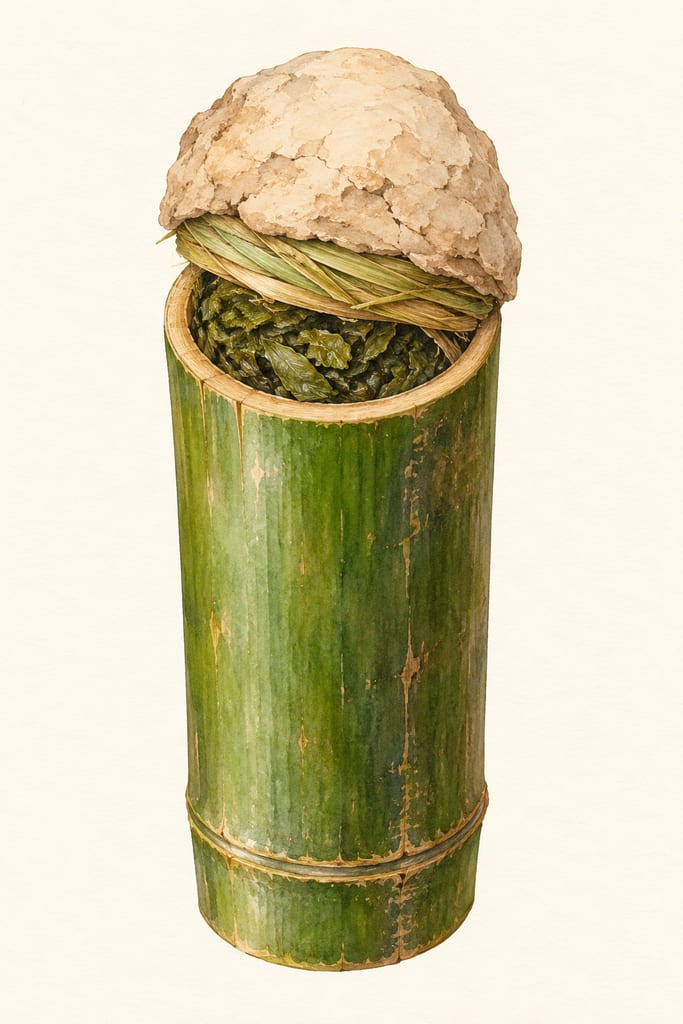
A cleaned bamboo internode holds compressed steamed tea leaves during the Luar miang fermentation practiced in north-western Laos.
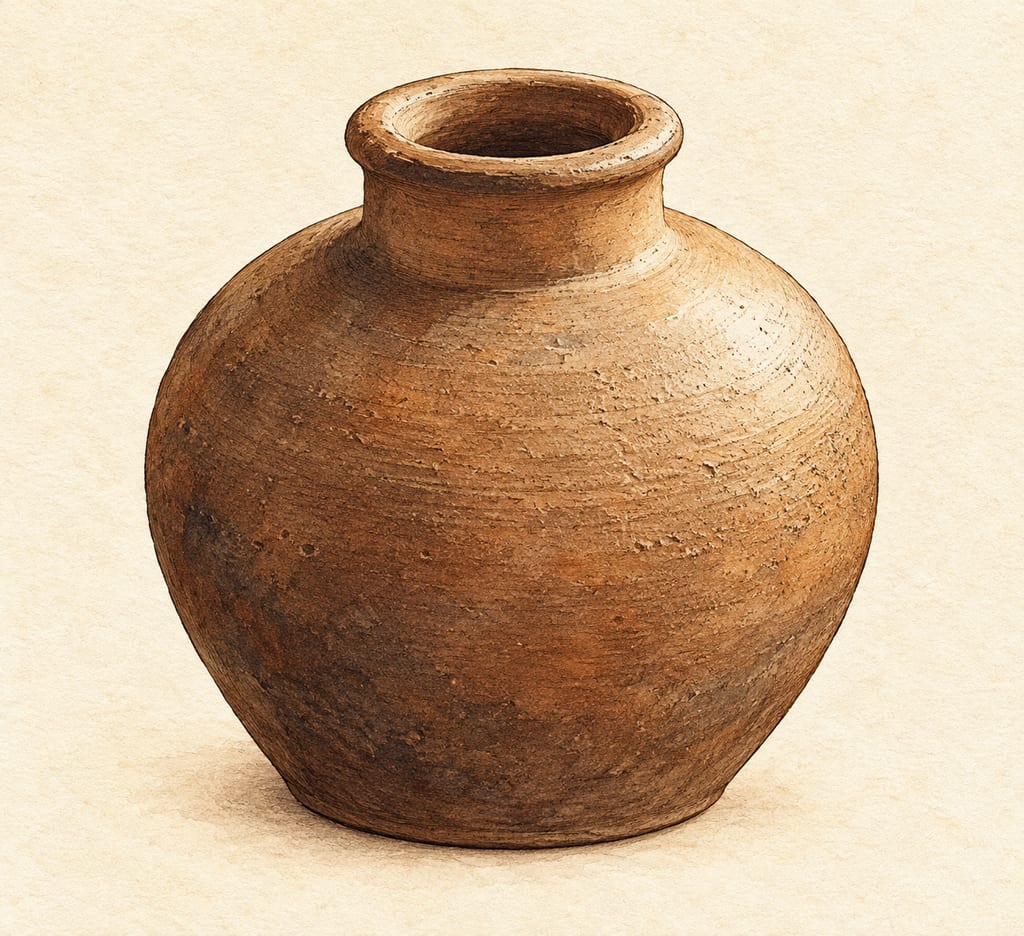
A burnay is a wide-bodied, narrow-mouthed stoneware jar made in Vigan, Ilocos Sur. Ilokano households and producers have used these sturdy vessels for water, food, basi, vinegar and other fermented condiments.
A thin stone griddle used over an open hearth. Norwegian archaeology documents the established tradition from the early Middle Ages; a Viking-period origin is only a cautious suggestion linked to Shetland.
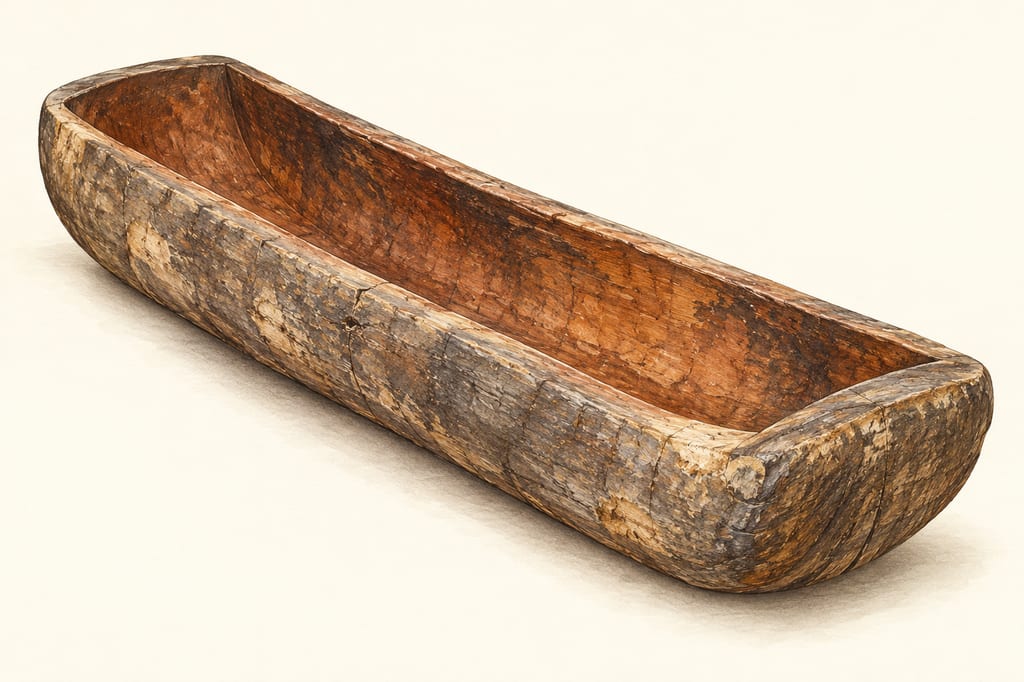
A long, low wooden trough used in parts of East Africa for extracting juice from ripe bananas and, in many documented practices, fermenting banana beer under banana leaves. Plastic barrels are a documented Burundi alternative.

A portable dome and pan used over a hearth, with embers on the lid and heat from below. Regional peka and saç forms share this principle while differing in materials, pan shape and how the food is cooked.
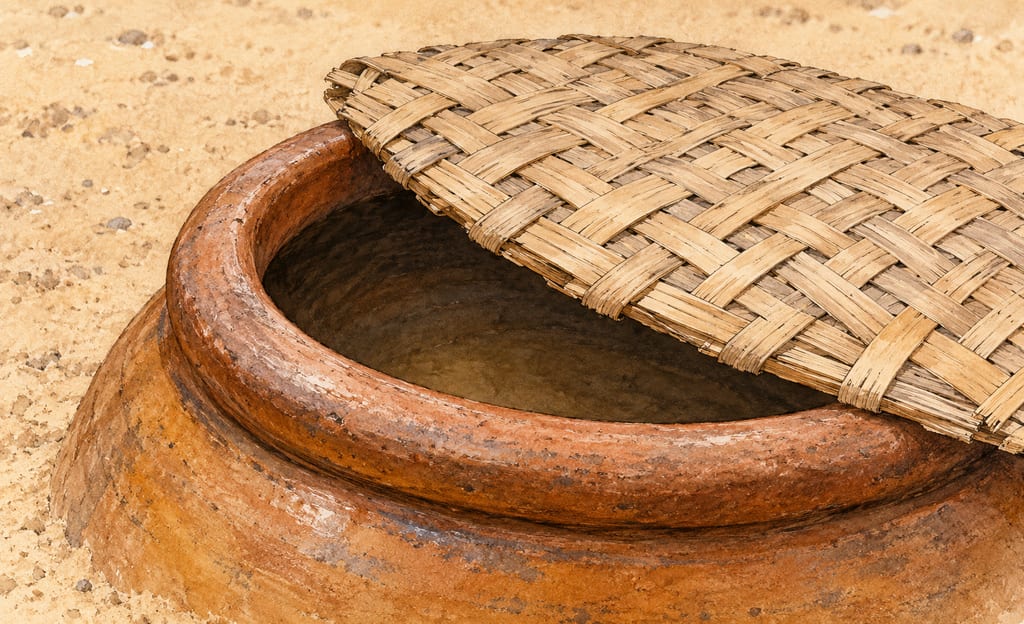
Earthenware jars hold salted fish while budu matures. Southern Thai accounts document bamboo mat, plastic and aluminum, and wood-board covers in different production settings.
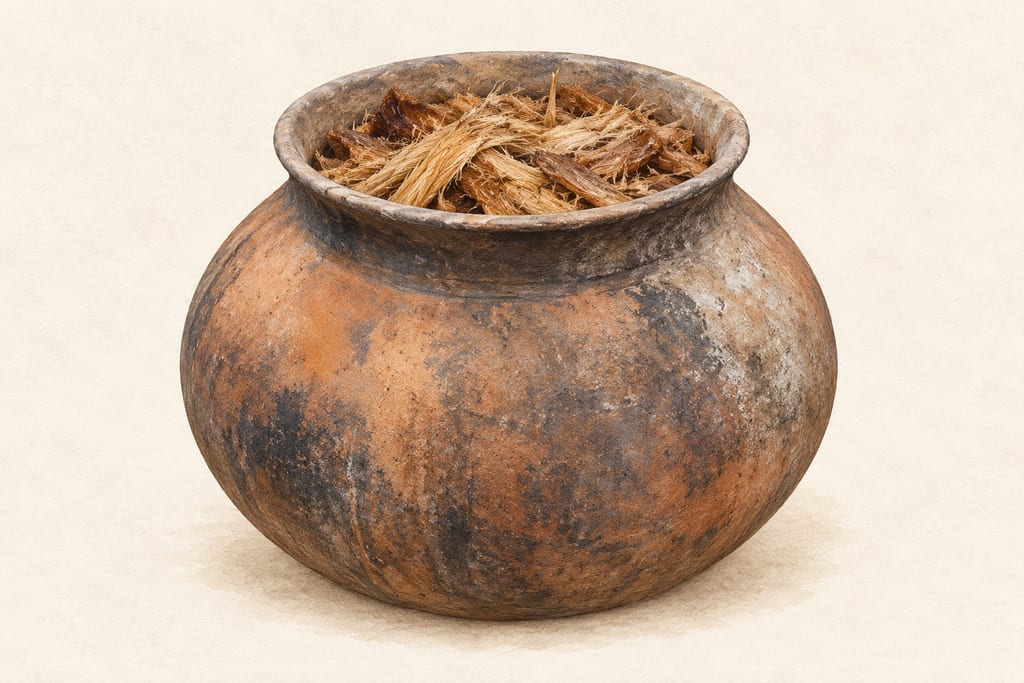
An open earthenware vessel for fermenting cooked agave mash before distillation, documented in Mexican mezcal production. It is distinct from the clay pot still used to distil the fermented mash.
A dhumashi is a raised rack used in the Maldives to smoke cooked fish before it is dried in the sun. Traditional racks use dried coconut-palm stalks; metal is a more recent variant.
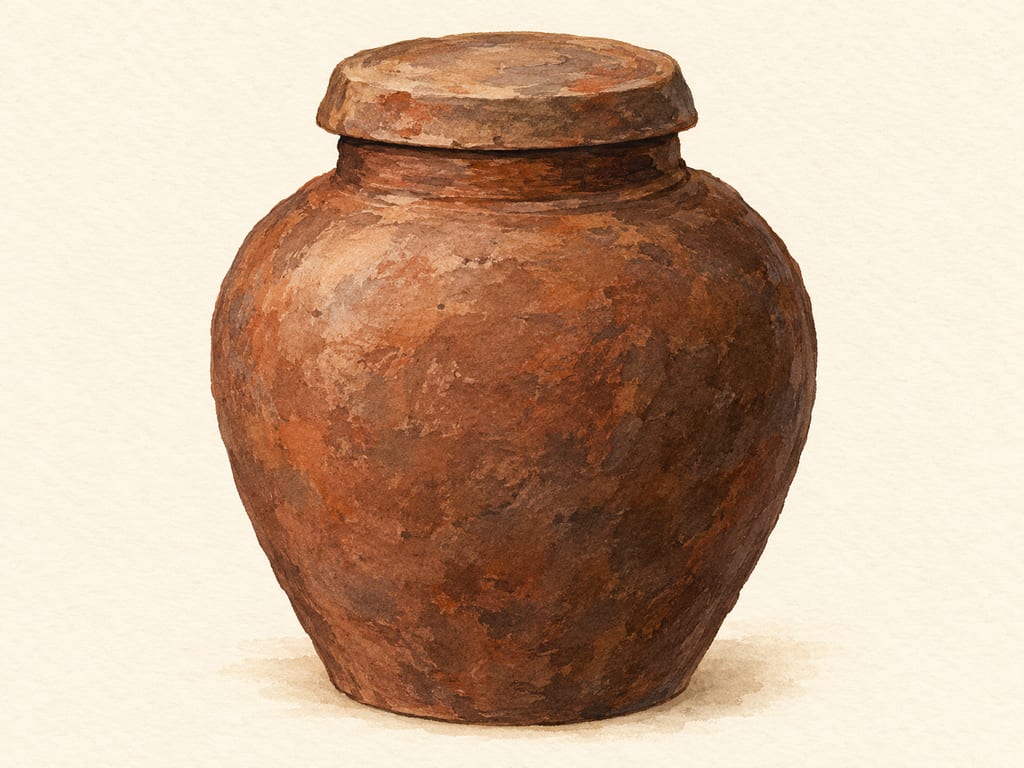
A ceramic jar used in Okinawa to store and mature distilled awamori into kusu; it holds the finished spirit after distillation rather than fermenting the rice mash.
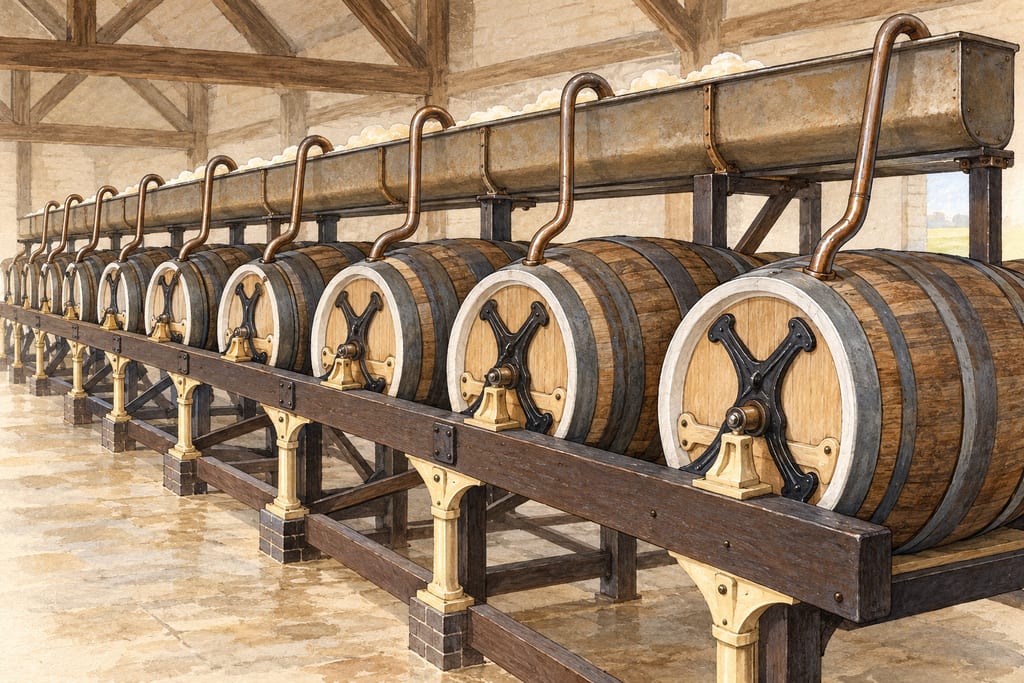
A Burton Union is a connected set of horizontal wooden beer casks, swan-neck pipes and shared troughs. Fermentation lifts yeast-rich foam into the trough; beer drains back to the casks, leaving yeast behind.
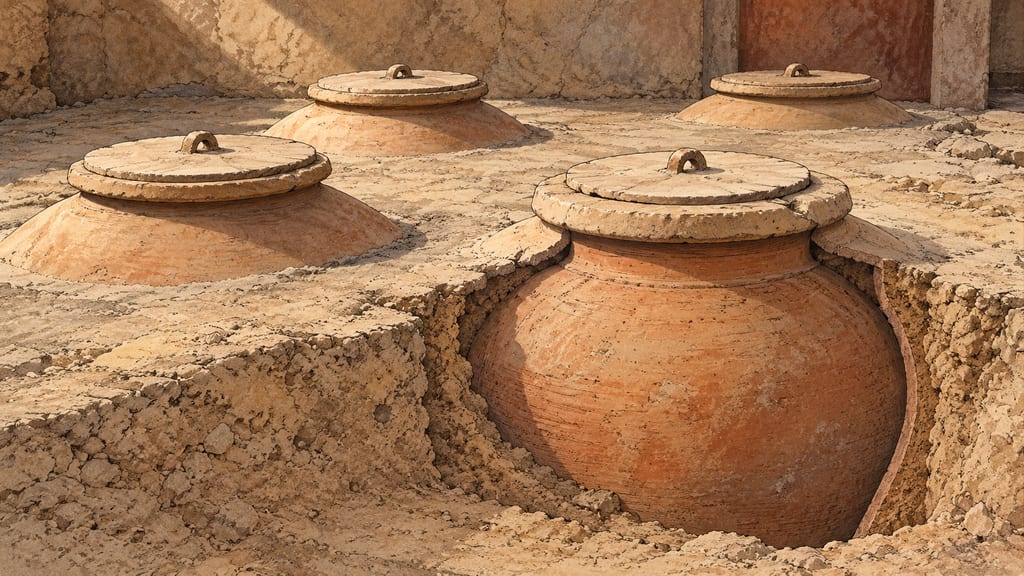
A Roman dolium was a very large ceramic storage and processing jar. In some wineries its heavy body was set partly into the ground; Pompeian evidence also documents dolia used for fish sauce.
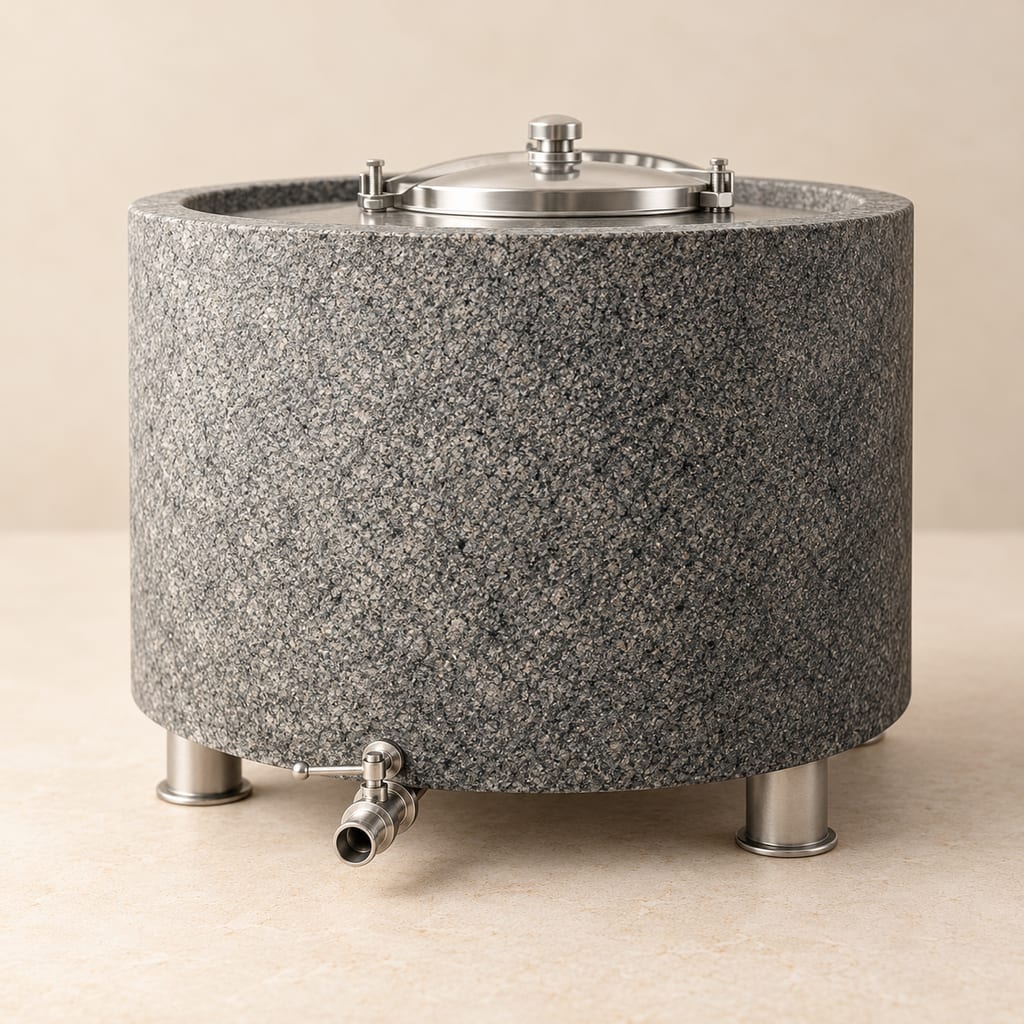
A wine fermentation and maturation tank carved from a single granite block, with a thick mineral shell and fitted metal closures and taps.
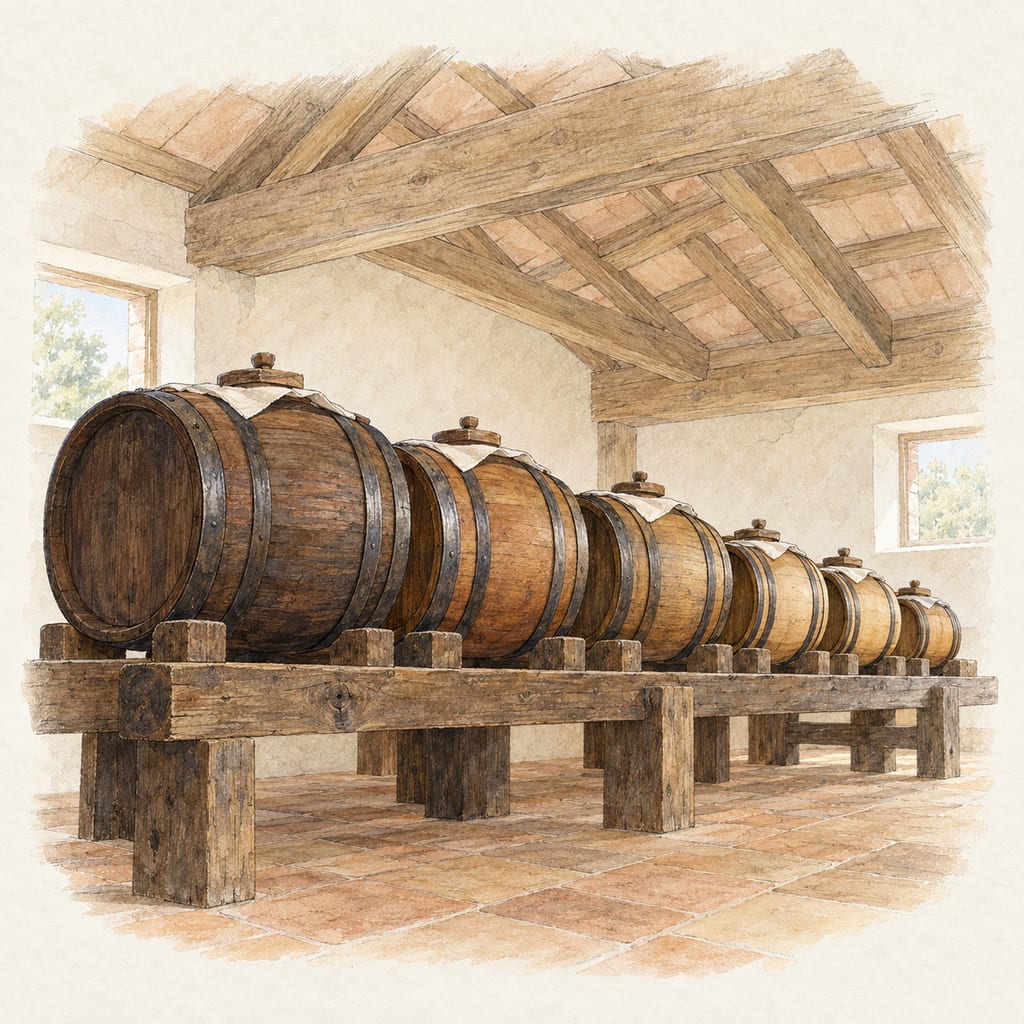
A balsamic batteria is a graduated set of wooden casks for traditional vinegar in Modena and Reggio Emilia. Transfers, evaporation, seasonal conditions and wood contact make the battery work as one system.
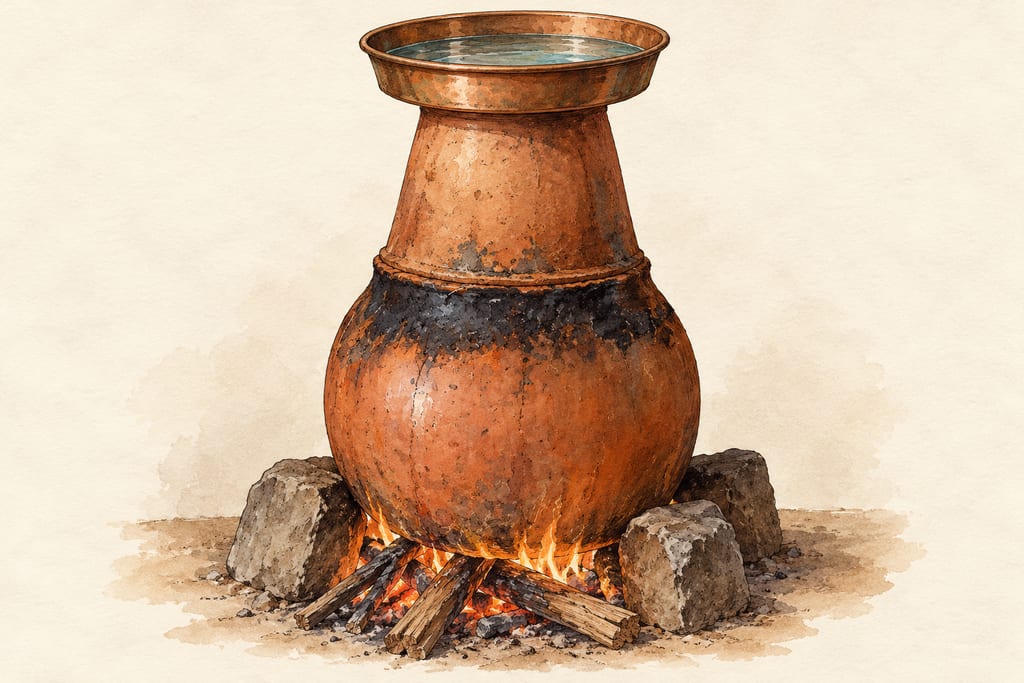
A fired-clay vessel assembly used to distil fermented agave must in several Mexican mezcal traditions. Its arrangement varies by region and producer; the sources document both clay or wooden vapour passages and particular cooling vessels.
A rectangular beef-salting trough made from saw-cut Penrhyn slate slabs, bolted together and sealed along the joints. Museum Wales records a height of 64 cm and length of 76 cm.
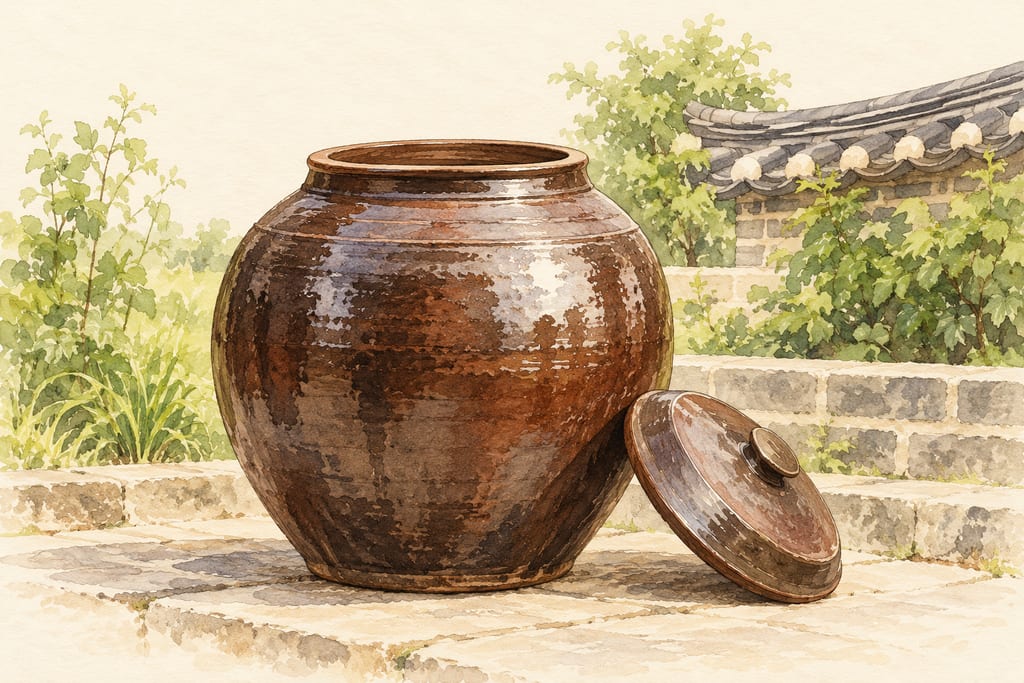
Korean earthenware jars, glazed or unglazed, used to ferment and store kimchi, soy sauces and pastes. Their form and wall properties vary with the potter, firing and intended use.
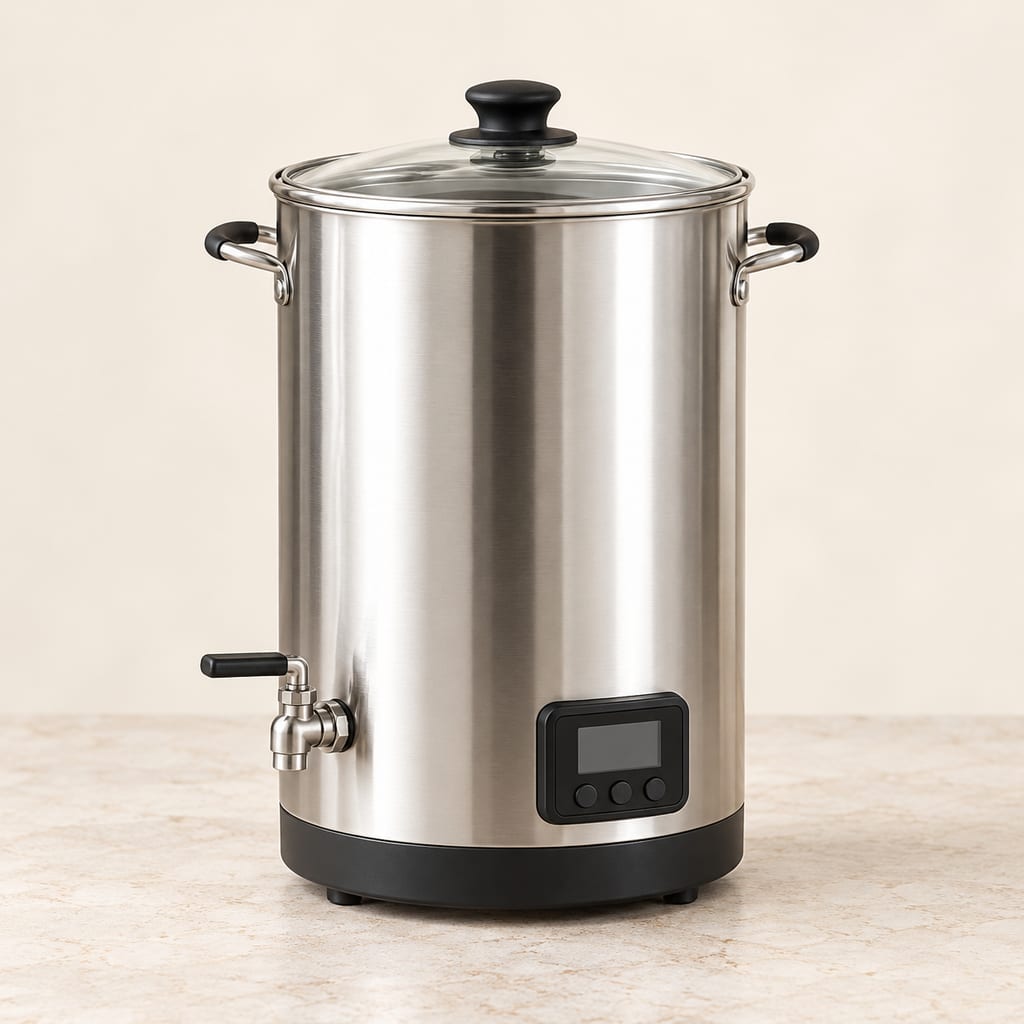
An electric brewing vessel that combines controlled heating with a removable grain basket and, on the documented models, a recirculation pump for mashing and boiling wort.