Equipment
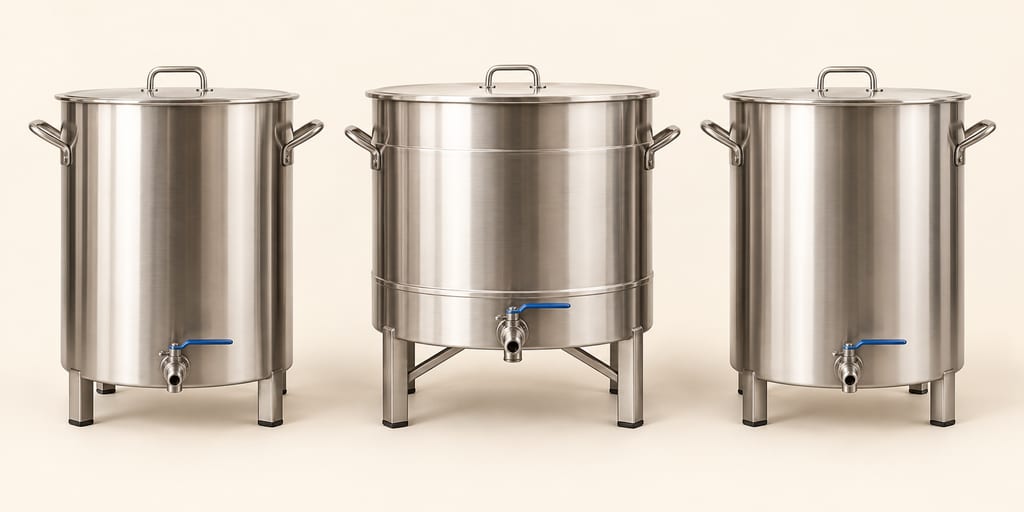
Three-vessel all-grain homebrewing system
A three-vessel all-grain setup separates heated water, mashing and lautering, and wort boiling into an HLT, mash/lauter tun, and boil kettle. Other methods may combine vessels.
 FermenteaWhere food goes to change
626 sourced equipment pages: vessels, tools, appliances and built structures.
A three-vessel all-grain setup separates heated water, mashing and lautering, and wort boiling into an HLT, mash/lauter tun, and boil kettle. Other methods may combine vessels.
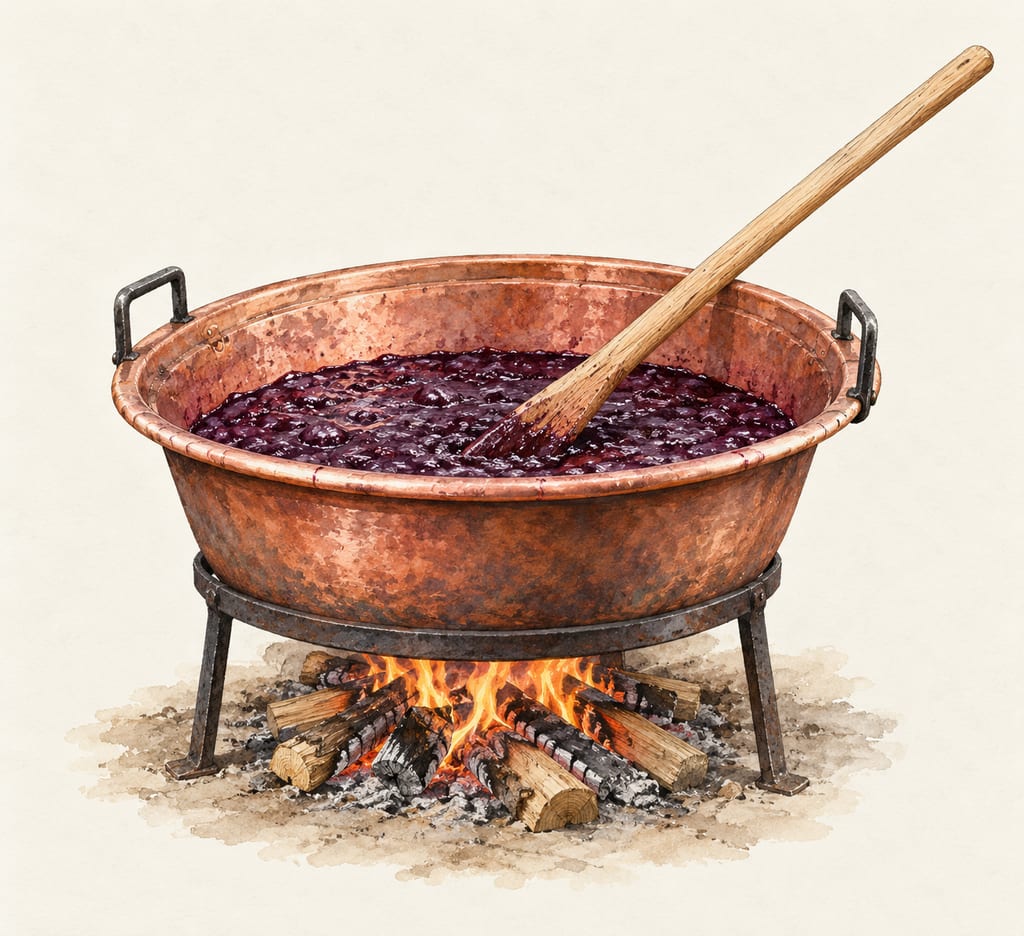
A large copper cauldron and long wooden bocian paddle were used to cook Lower Vistula plum powidła over an open fire. The vessel and stirrer form a regional equipment pair.
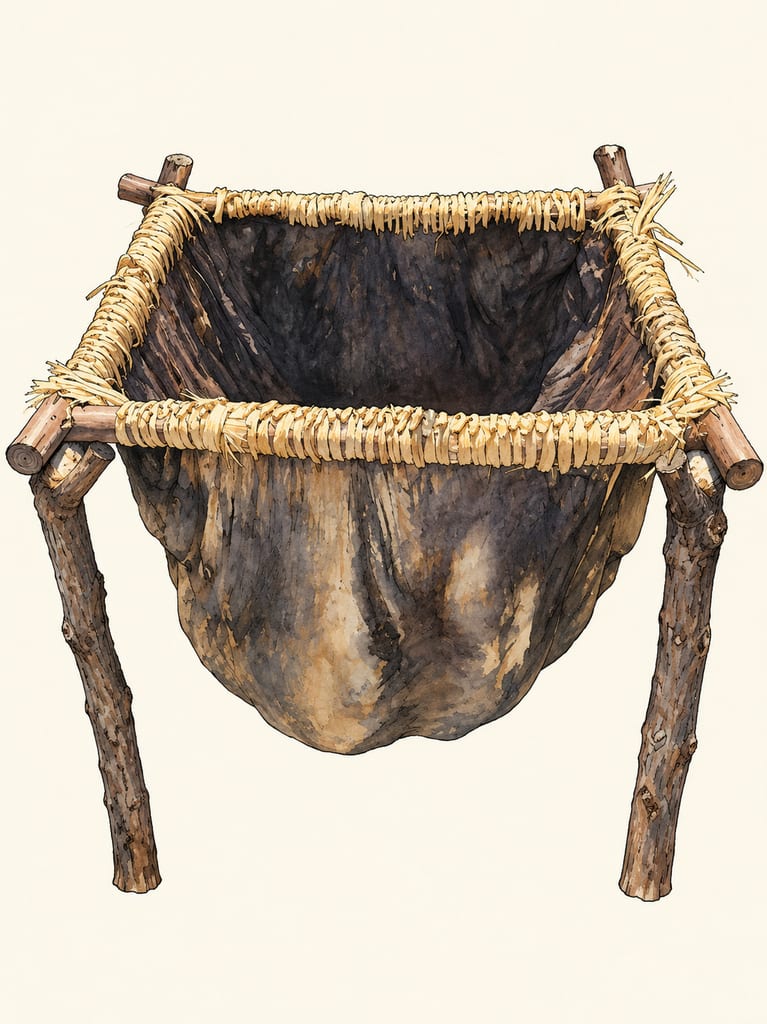
A hide stretched over a timber support forms an open, hanging basin for agave fermentation. Contemporary accounts document examples in Puebla and Oaxaca; the sources do not establish the form's pre-contact chronology.
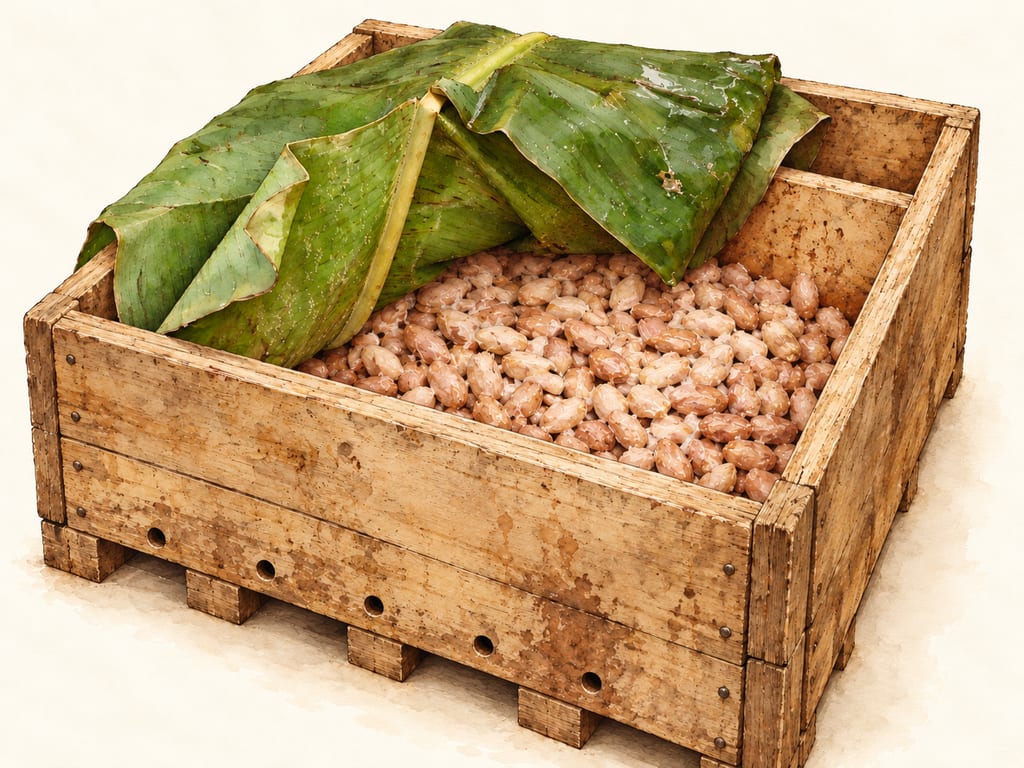
A wooden box for fermenting wet cacao, with a perforated floor for drainage, a raised position above the drain and a leaf cover; designs and batch sizes vary by place.
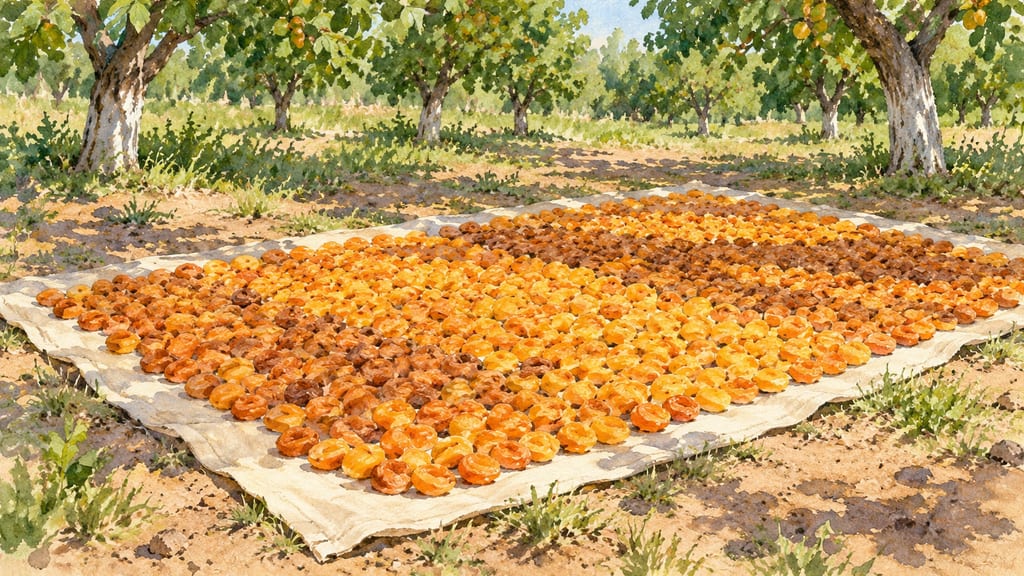
Traditional Tajik apricot drying used open ground, roofs and flexible surfaces such as reed mats and fabric. These distinct open-air surfaces leave fruit exposed to weather and surroundings.
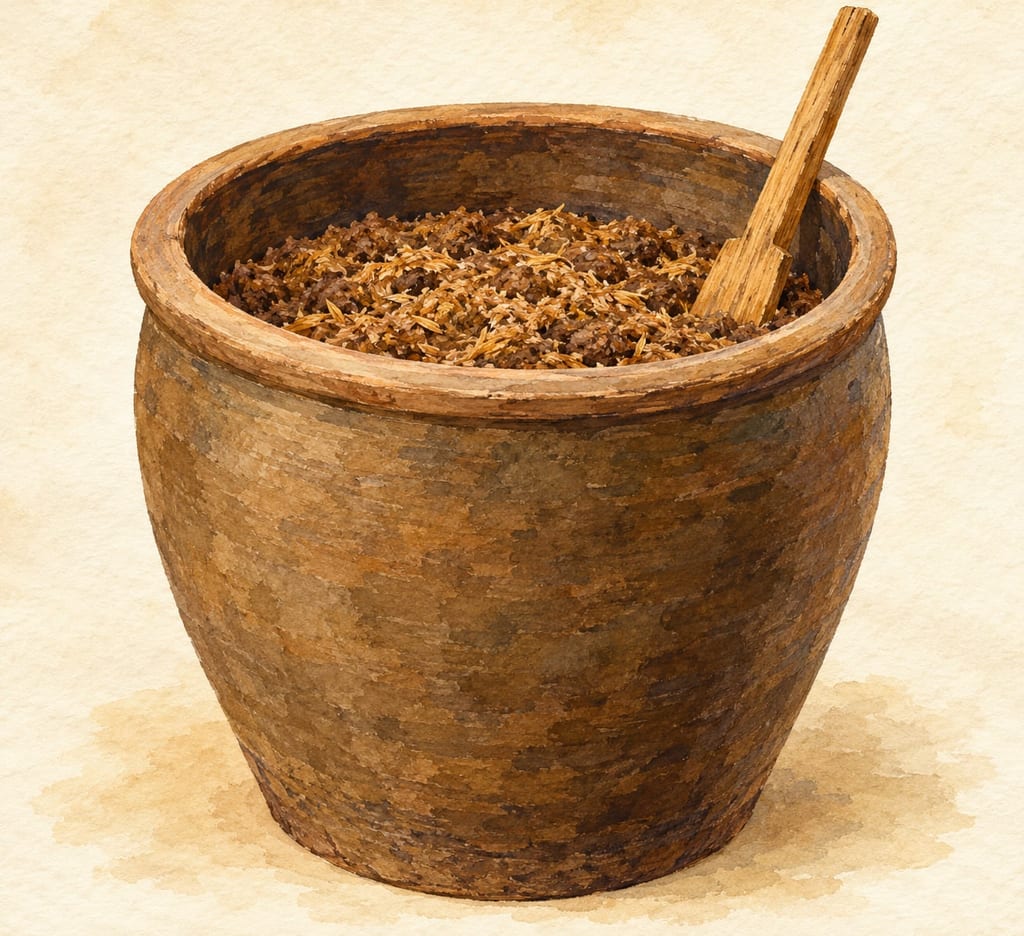
An open ceramic vat holds the moist solid mash, or vinegar pei, during Shanxi aged vinegar’s aerobic acetic fermentation. A 2025 study records a Taiyuan example about 1 m wide and 1.2 m high.
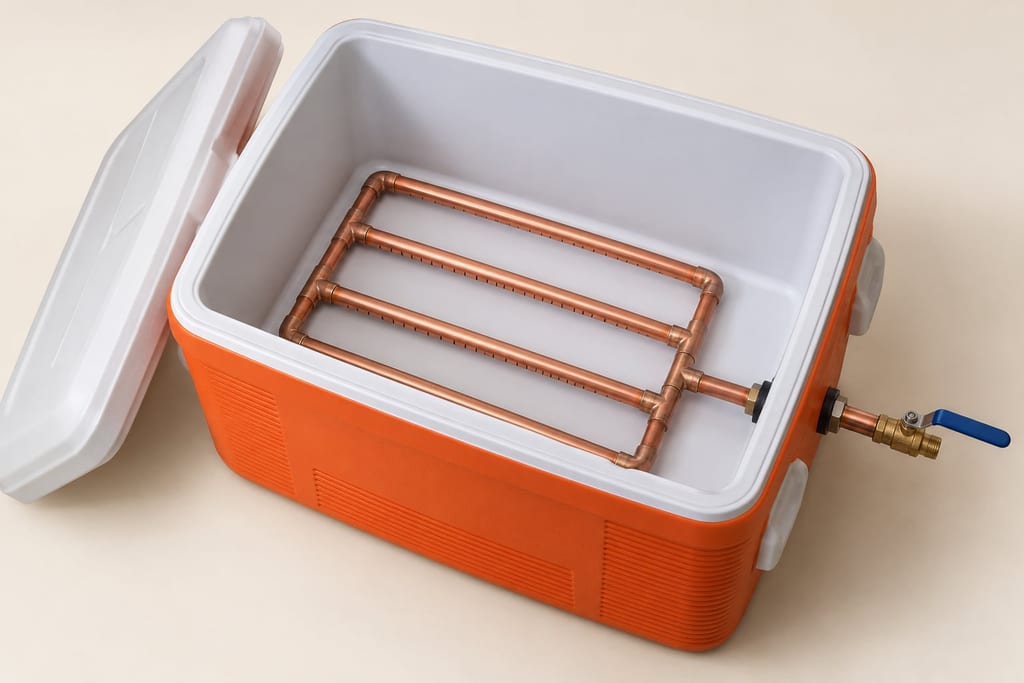
An insulated drink cooler adapted to hold a grain mash and drain wort through a filter into a separate kettle.
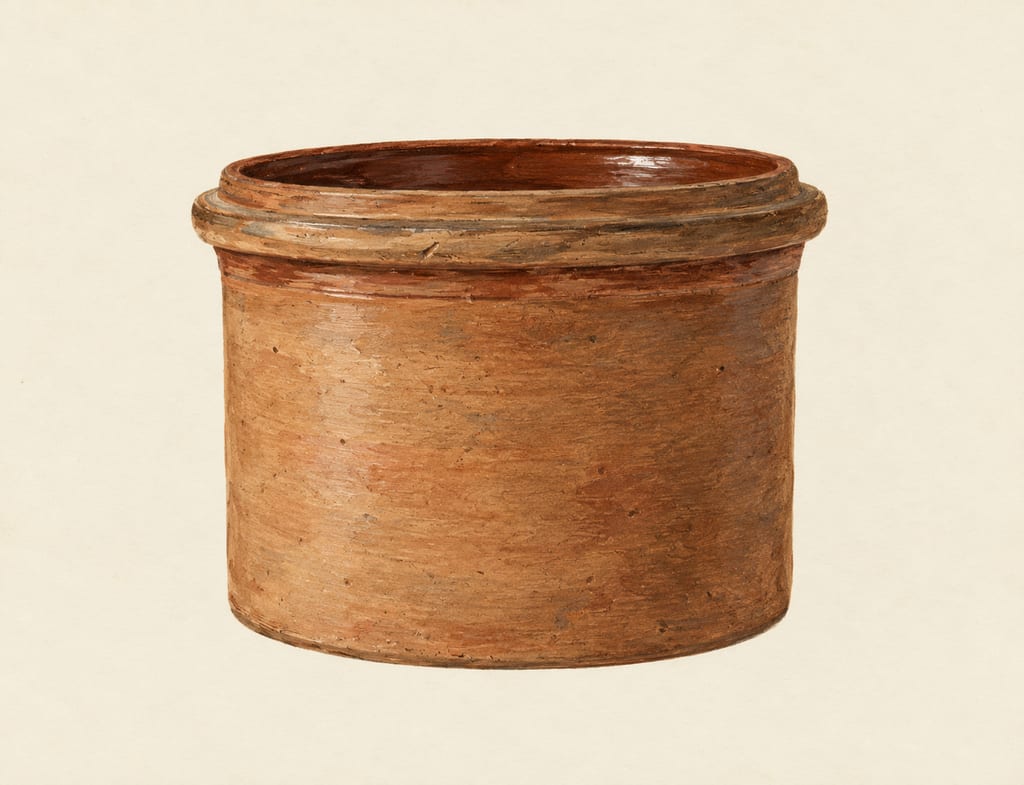
An earthenware storage pot named in an 1855 Pennsylvania German apple-butter account; later pottery writing describes a heavy-rimmed, internally glazed form.
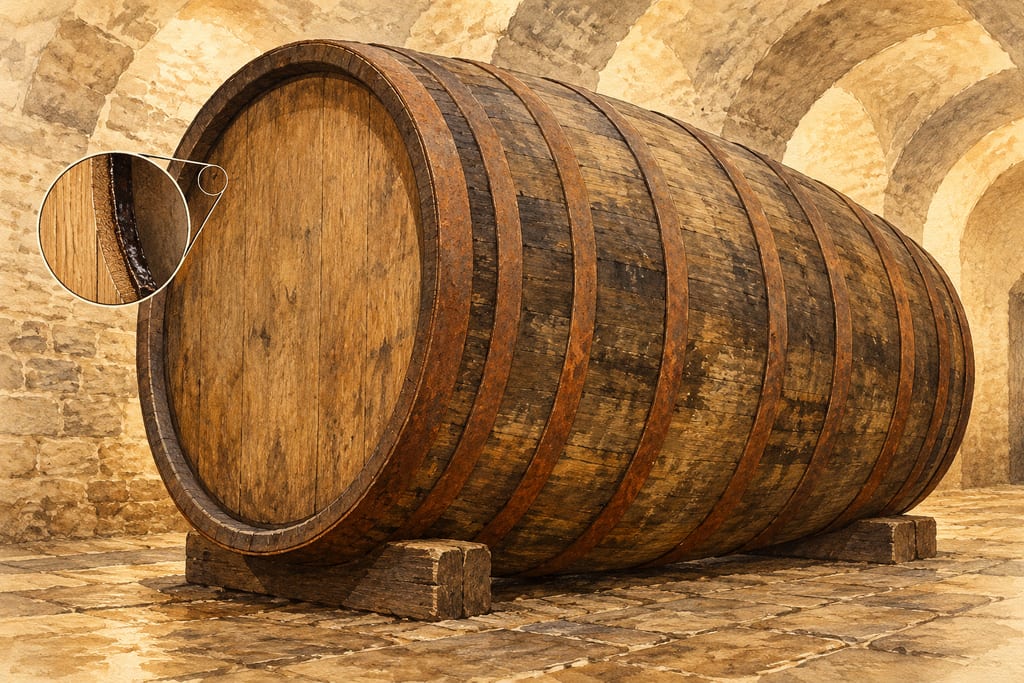
A massive oak lagering cask maintained by Plzeňský Prazdroj’s coopers. Its inner pitch lining keeps the beer from direct contact with the oak during Pilsner Urquell’s small-batch cellar maturation.
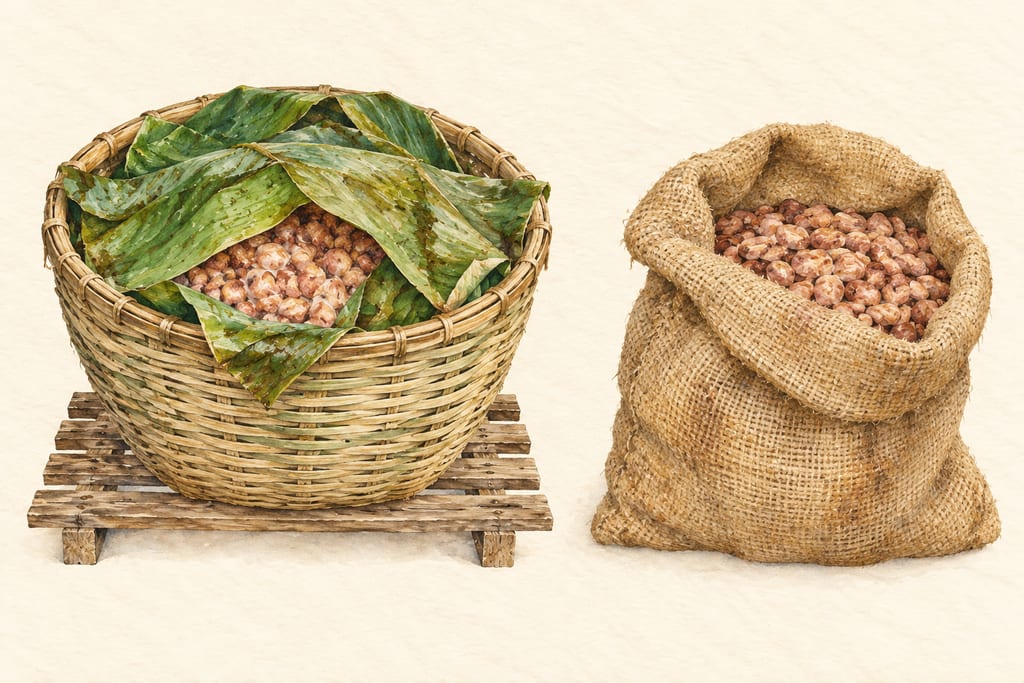
In Liberia, wet cacao is fermented in a leaf-lined woven basket; an Ecuador study documents jute sacks. These vessels differ in form and in the practices documented around them.

A marble-stoppered bottle is a glass carbonated-drink bottle sealed by a glass marble pressed against a rubber washer. Its Codd neck holds the marble at the mouth when sealed and gives it a side pinch after opening.
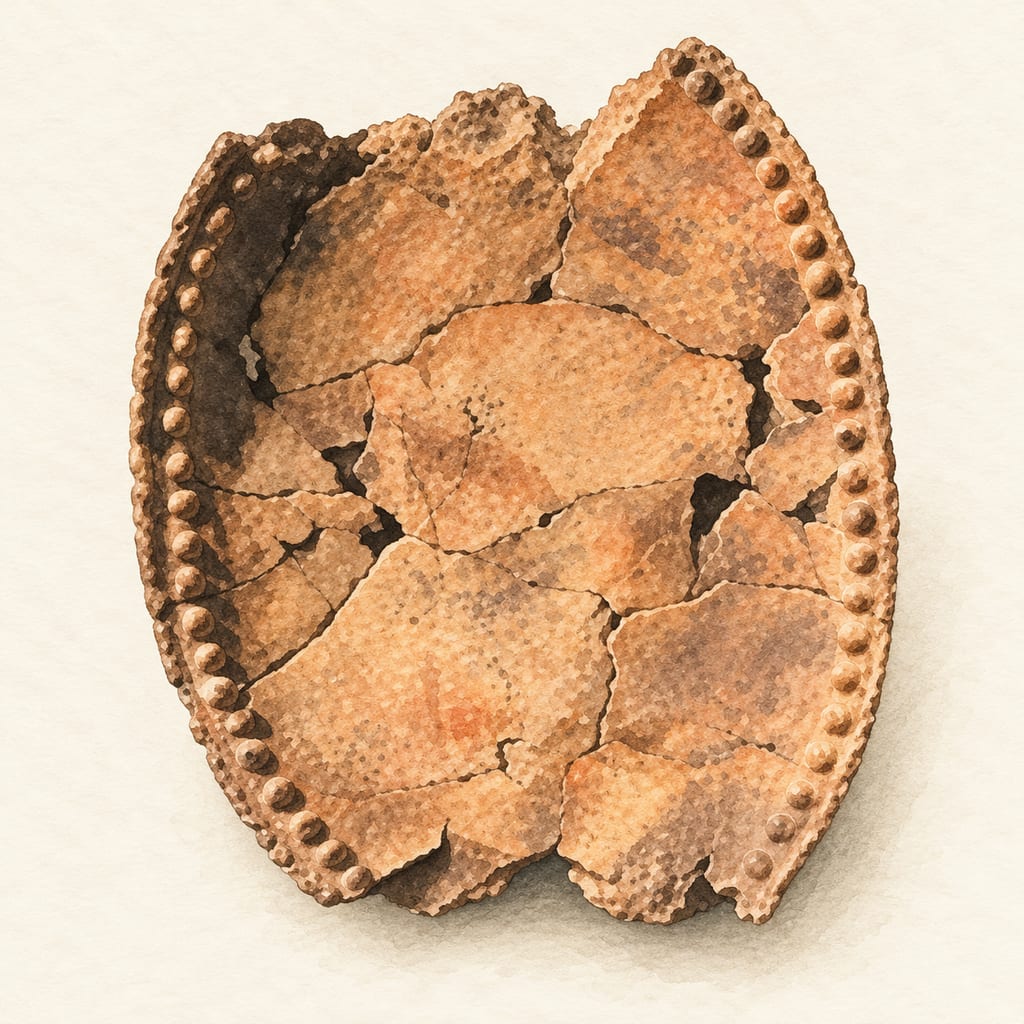
A Rocky Cree clay lamp dated approximately 1200–1500 is recorded from Southern Indian Lake, northern Manitoba. The Manitoba Museum links this lamp tradition to cooking, drying, heating and lighting lodges.
Show on map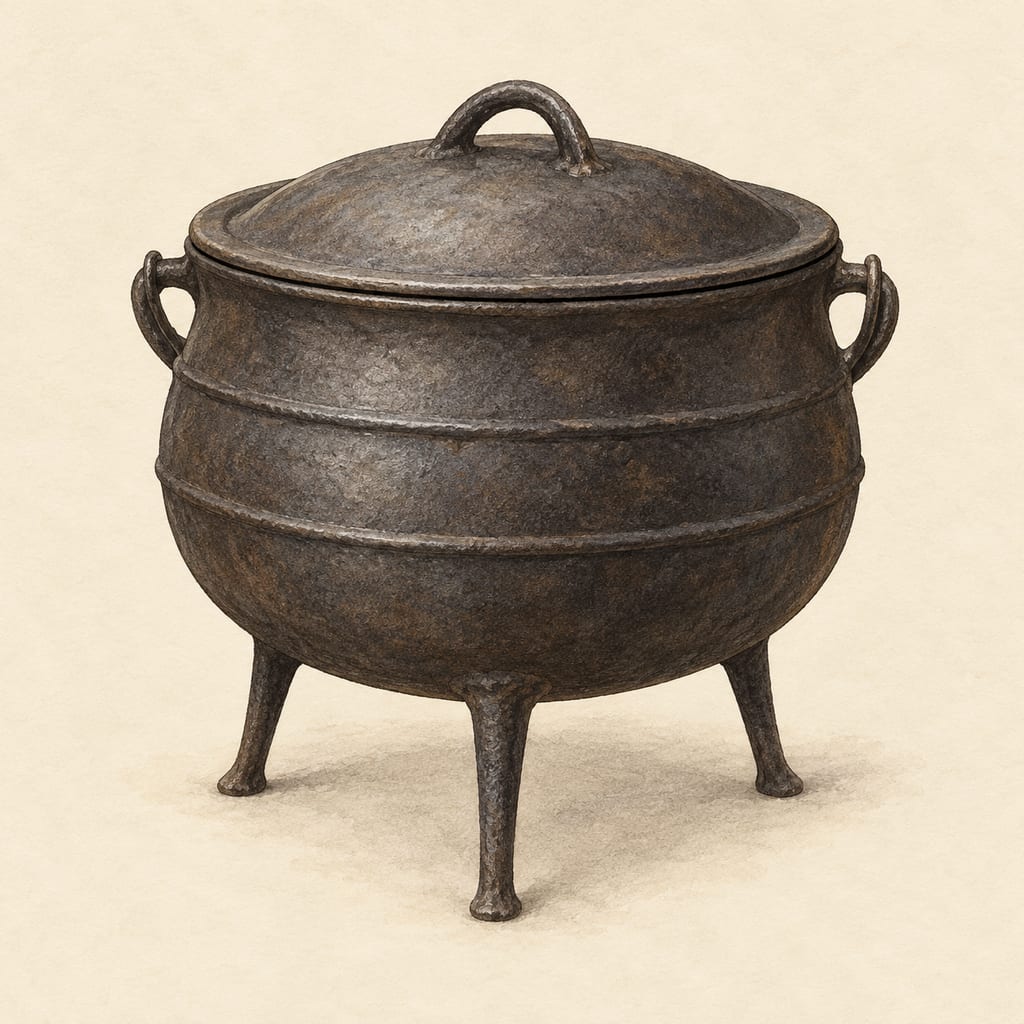
A lidded, rounded cast-iron pot with three legs, used over open fires and embers across southern Africa. Its African history belongs to the vessel's adoption and use, not a claim of European invention.
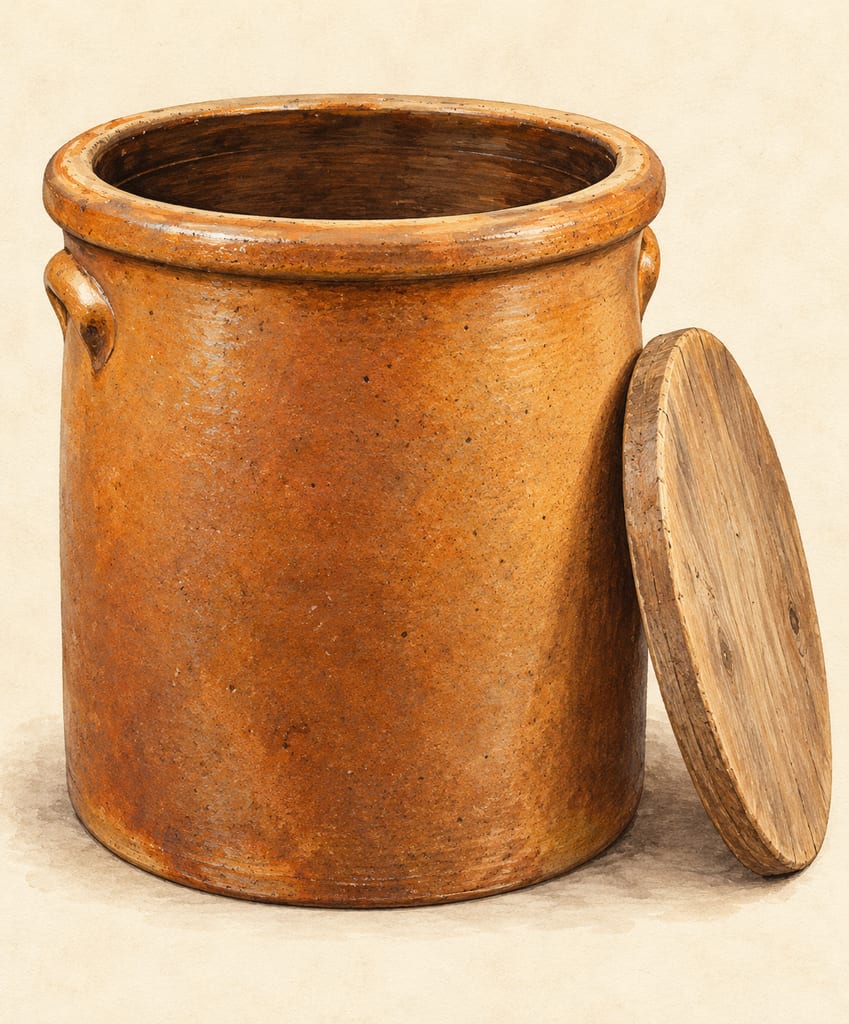
Containers for salt-curing fish and meat range from broad-mouthed stoneware crocks to tubs, cut-down barrels and chests. Their material, depth, cover and ability to retain or drain liquid shape how the food sits in salt or brine.
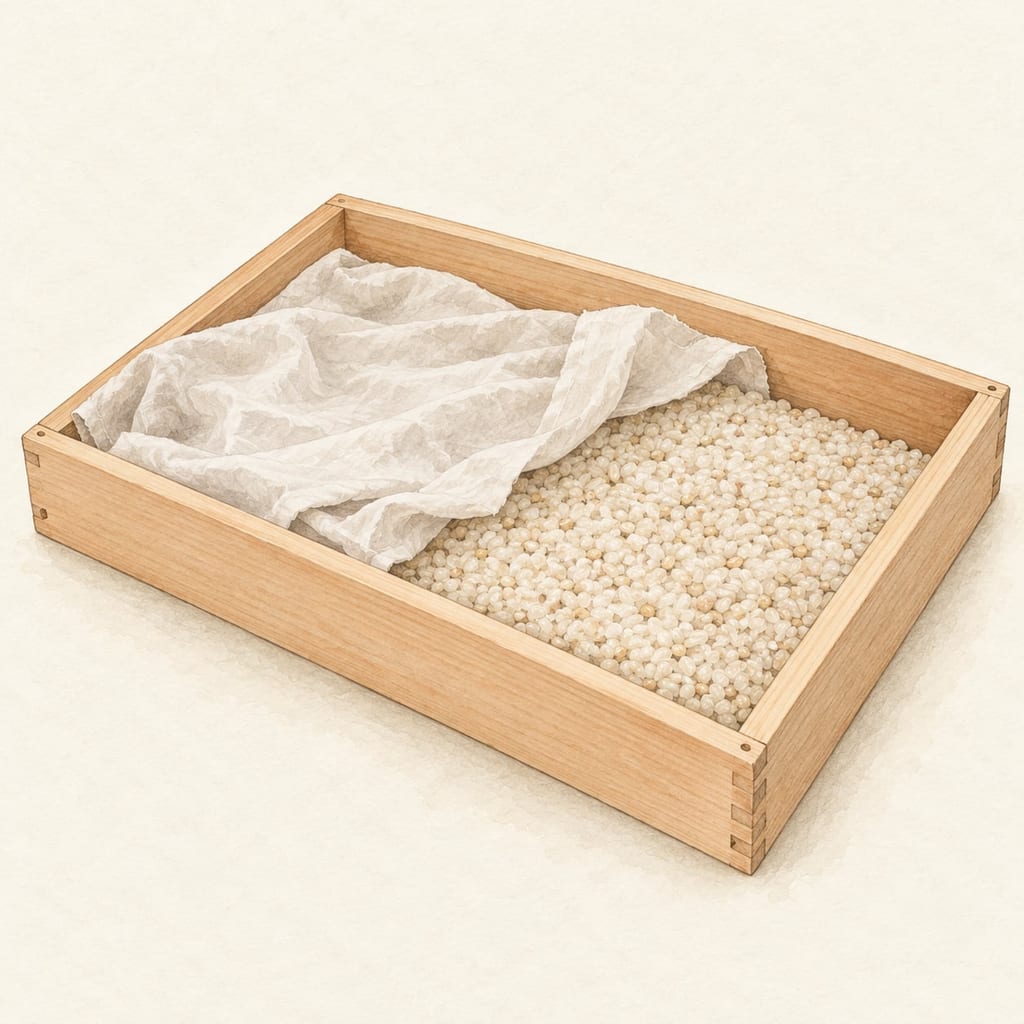
A koji-buta is a shallow wooden tray for spreading grain as it grows into koji. Japanese sources document a traditional form, while modern methods also use cloth-lined or steel trays; size and construction vary.
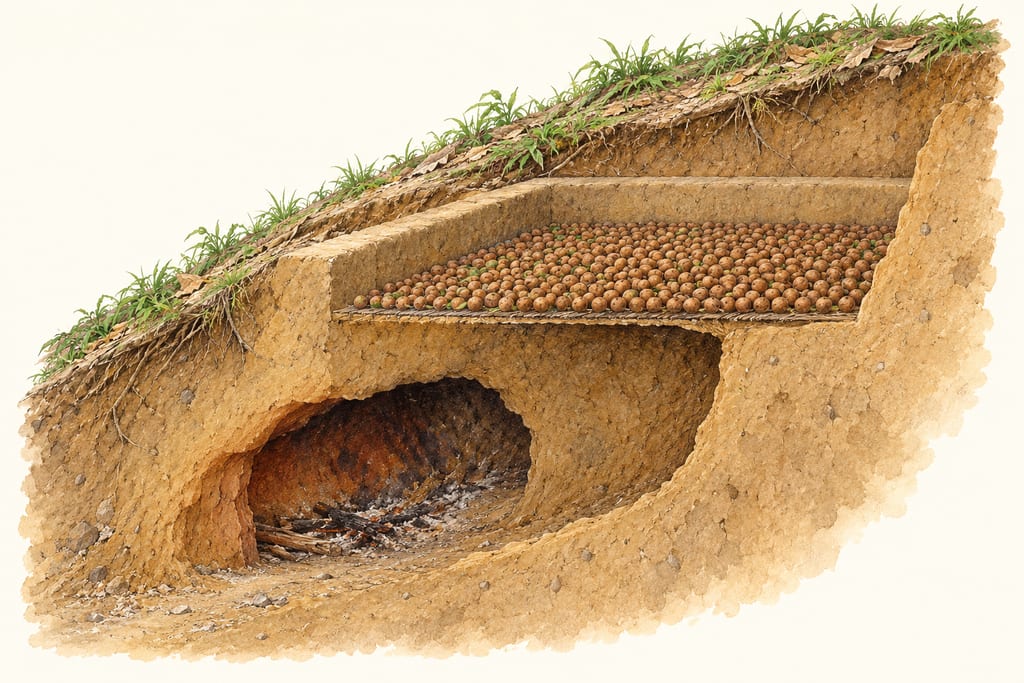
Traditional longan-drying kilns documented in Dongshan, Tainan, include distinct hillside earth-pit and built masonry forms. A roasting bed sits above the fire space; longan wood fuels a slow roast over several days.
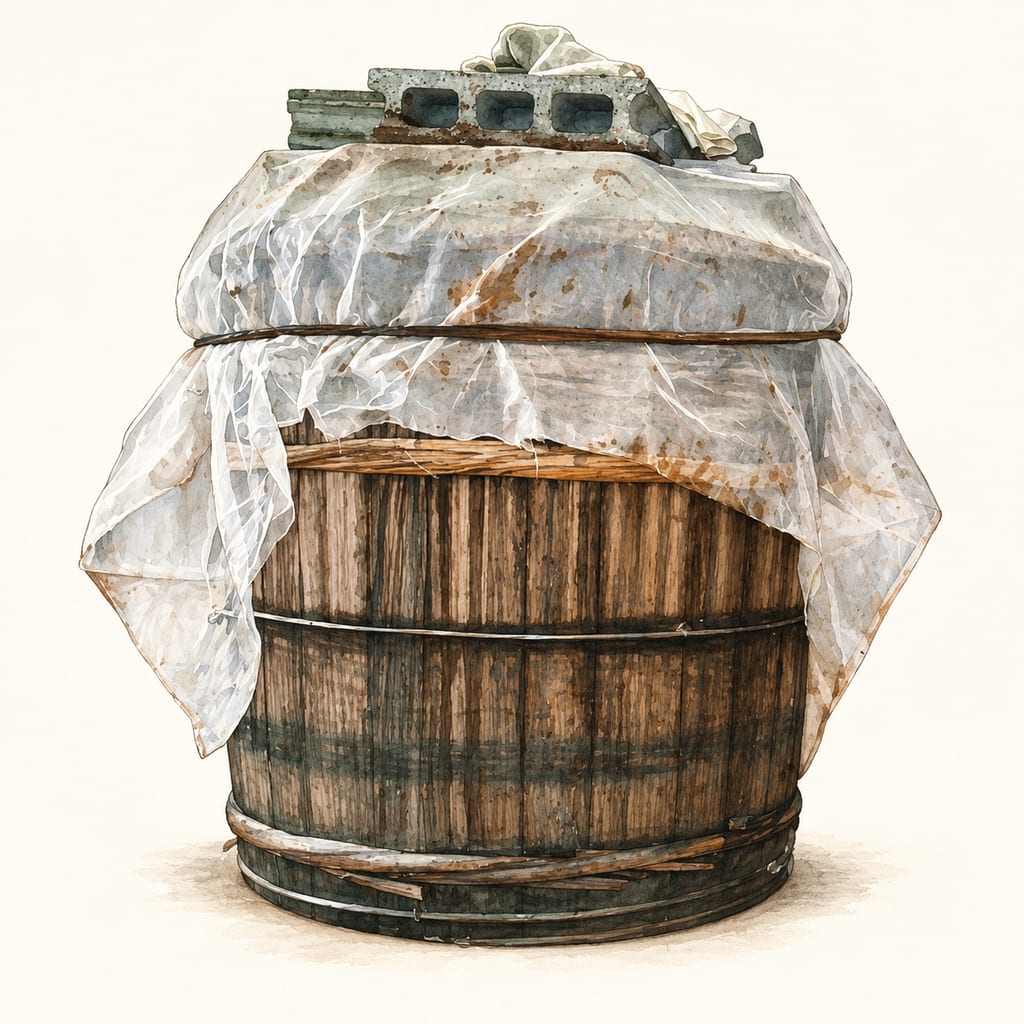
A Goishicha weighted tub holds tea leaves and steaming liquor during the second, wet fermentation stage in Ōtoyo, Kōchi. A current producer photograph documents one covered wooden tub under concrete-block weight.
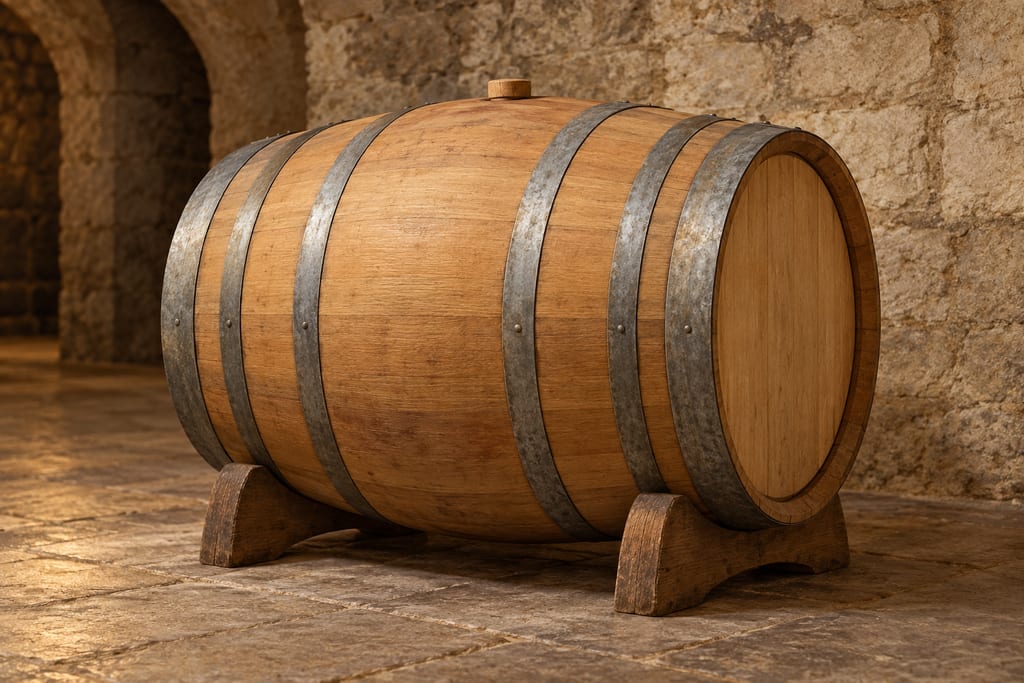
Coopered vessels use shaped staves and hoops, but portable barrels, large foeders and upright wooden vats serve different roles. Materials and uses vary by place and process.
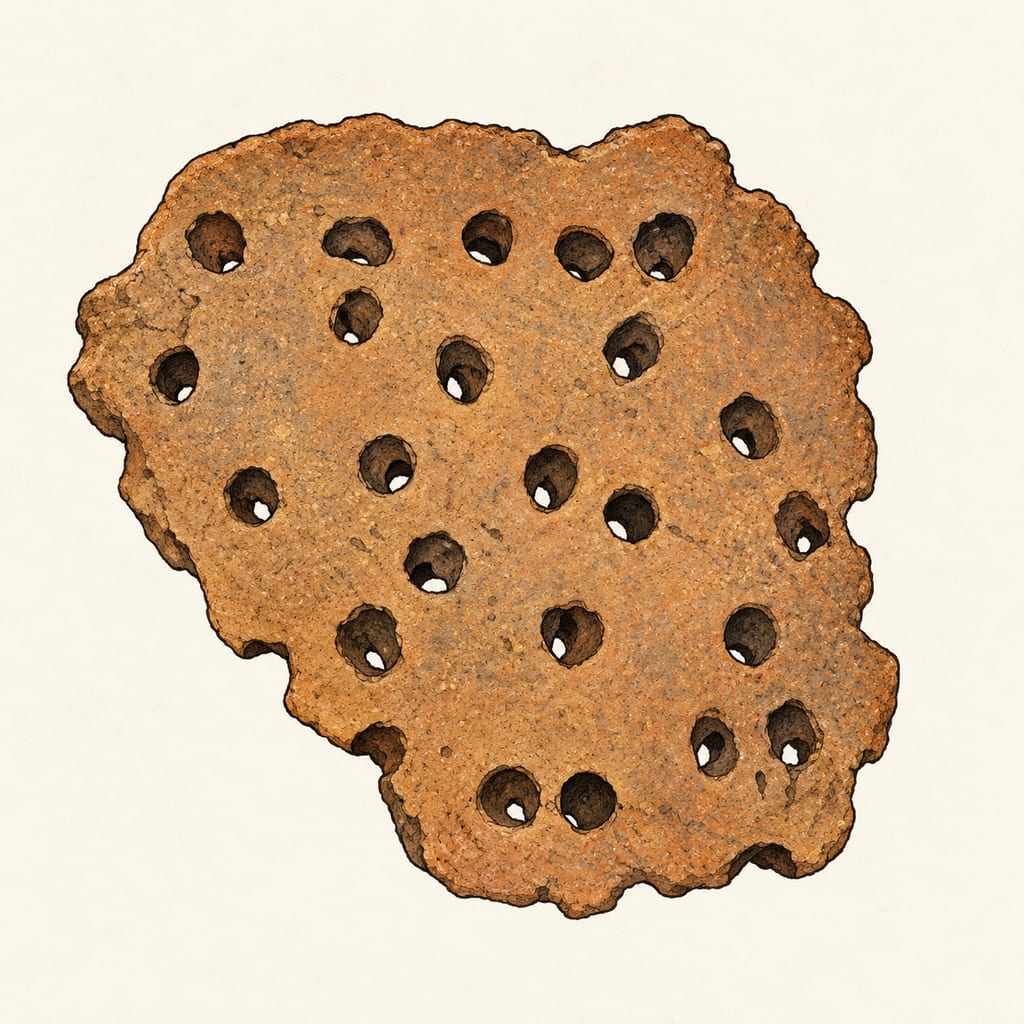
An unglazed, hole-pierced ceramic fragment from Neolithic Kuyavia, interpreted as a cheese strainer through its form and milk-fat residues; no standard complete shape is established.
Show on map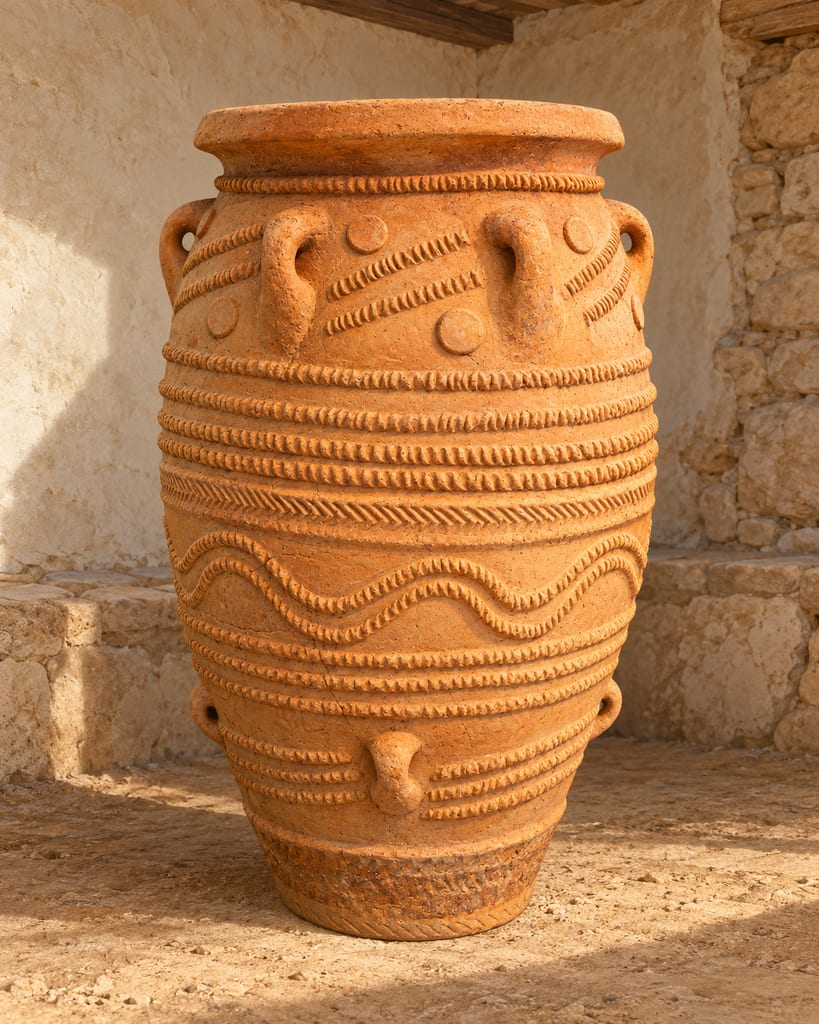
A pithos is a large ceramic storage jar documented in Minoan palatial storerooms and later Aegean settings. Its clay body, broad shoulder and high capacity suited bulk storage, while individual forms and uses varied by place and period.
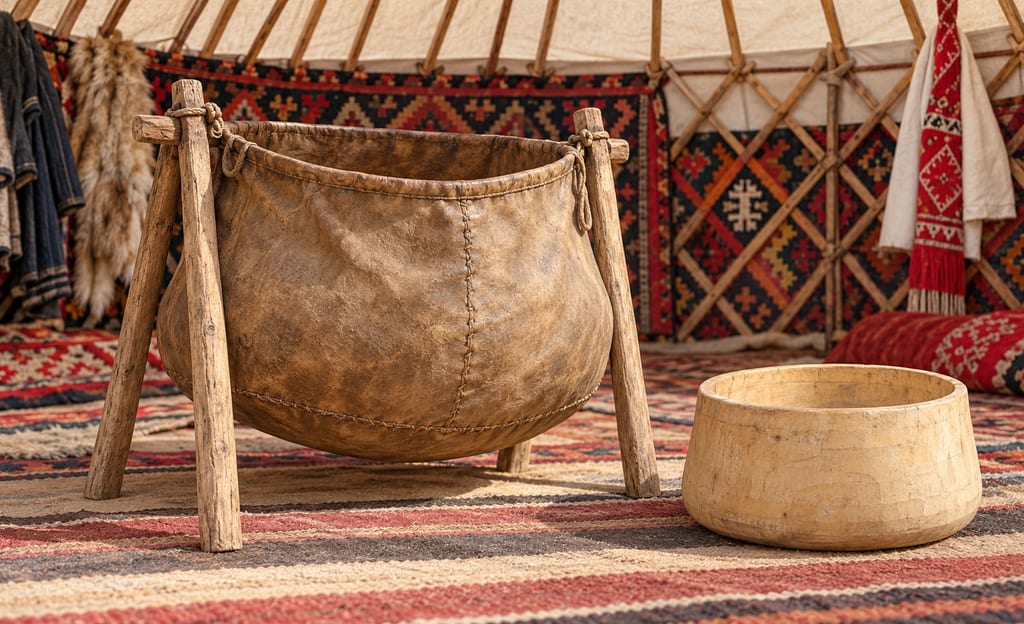
A Bashkir household account describes a large leather һаба for kumys, with one or two limewood tubs as alternatives; exact vessel dimensions and schedule are unspecified.
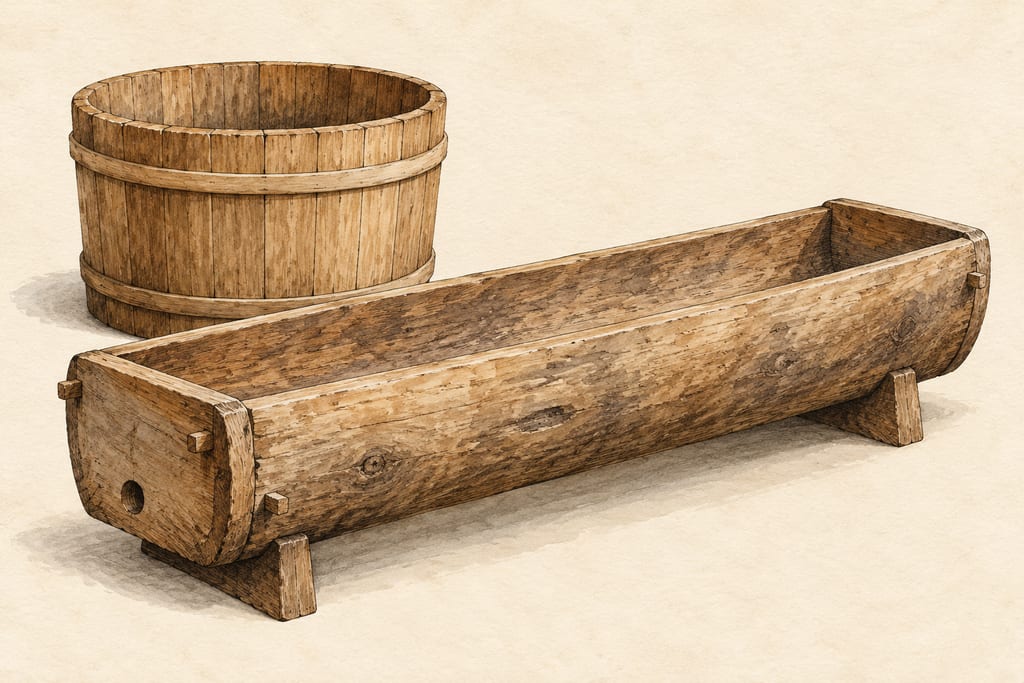
A Finnish sahti kuurna is a long trough for straining mash into wort. It is distinct from the wooden mash tub; historic wooden forms include a hollowed log.
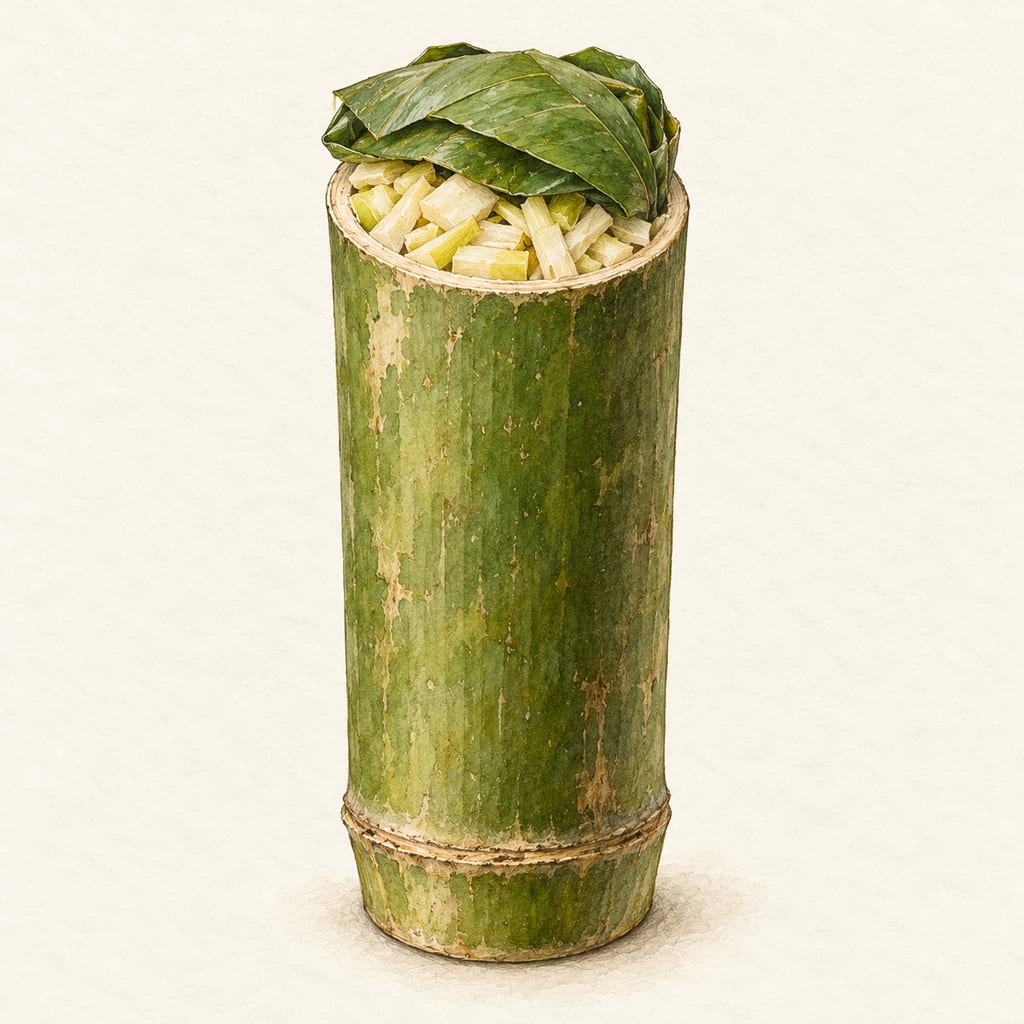
A green hollow bamboo stem holds tightly packed Mesu shoots, with leaves covering the open end during fermentation. The source documents the arrangement, but not a standard size or capacity.
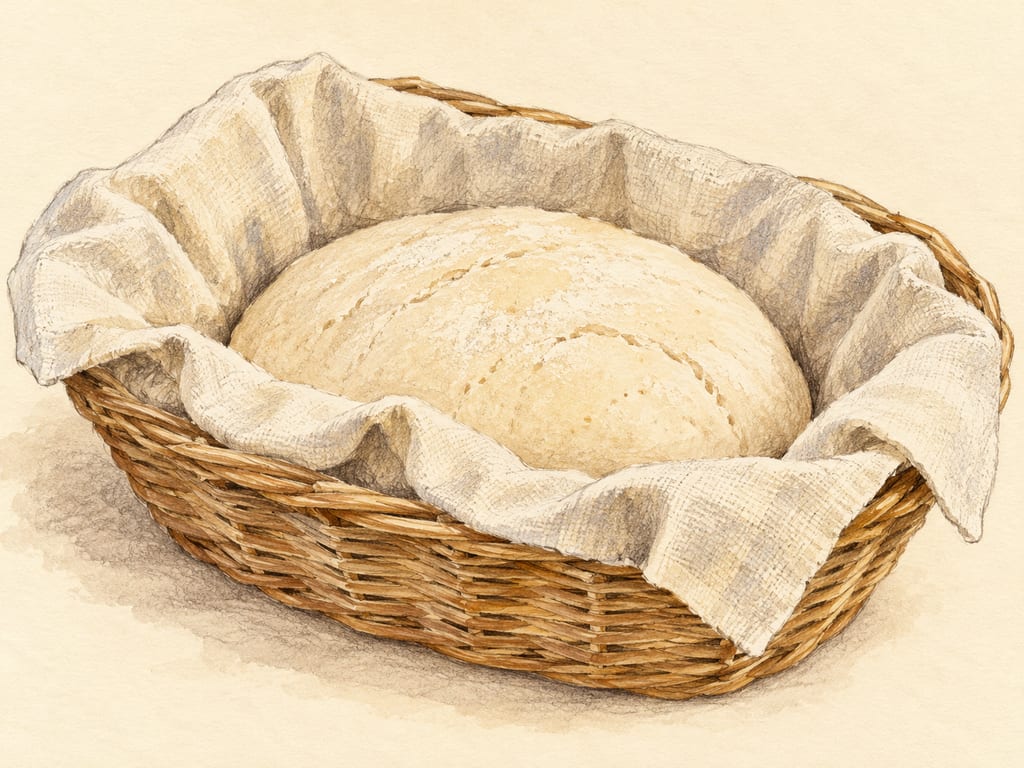
A paillas (also called paillât) is a basket used in the Massif des Bauges for a shaped loaf’s second rise before baking. Local examples include baskets made from blâche, straw or osier, sometimes lined with cloth; the inventory also records a wooden version.
A Miwok parching basket is a shallow, broad coiled basket used to toss seeds with live coals. One documented plate-form example is 71 mm high; a Southern Miwok specimen is separately identified as a parching basket.
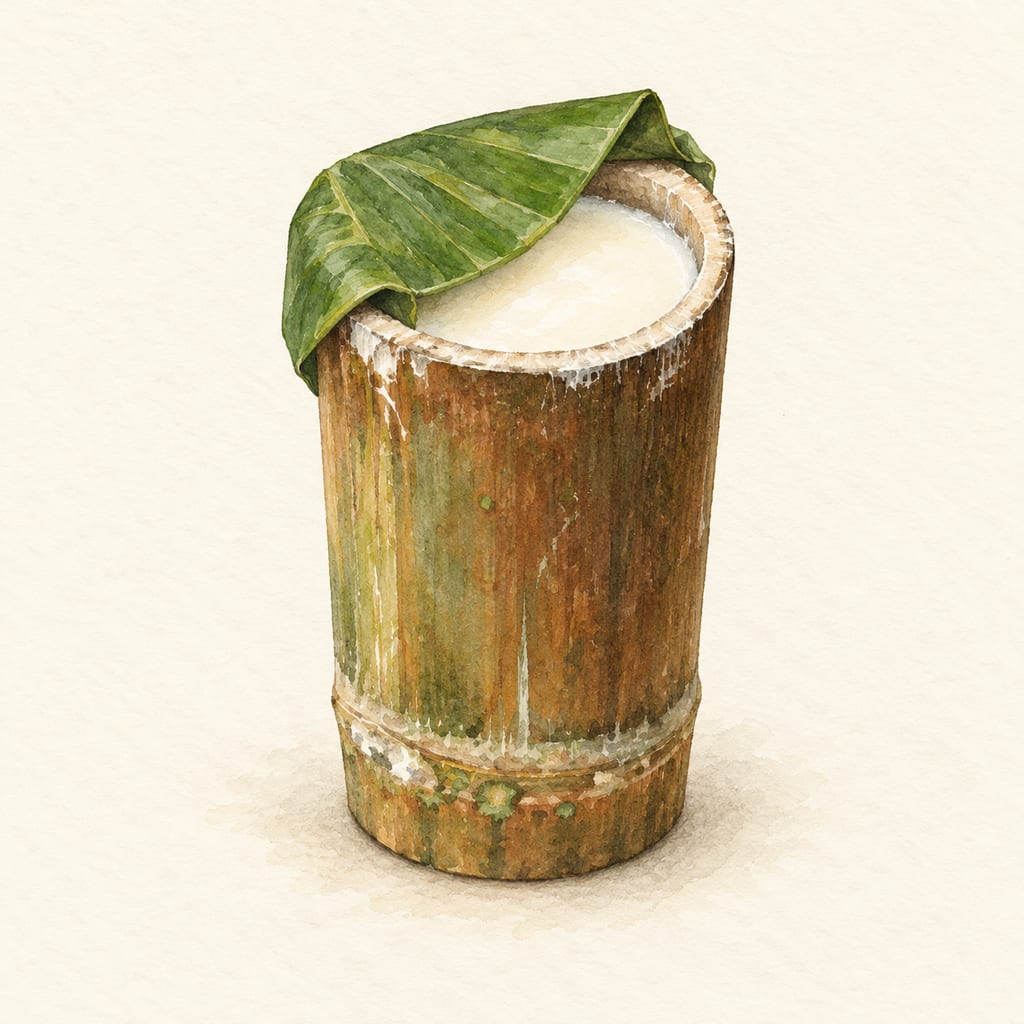
A short, open-topped segment of bamboo holds buffalo milk while it ferments into dadih, a Minangkabau food of West Sumatra. Its natural lower node forms a closed base; banana leaf often covers the mouth.
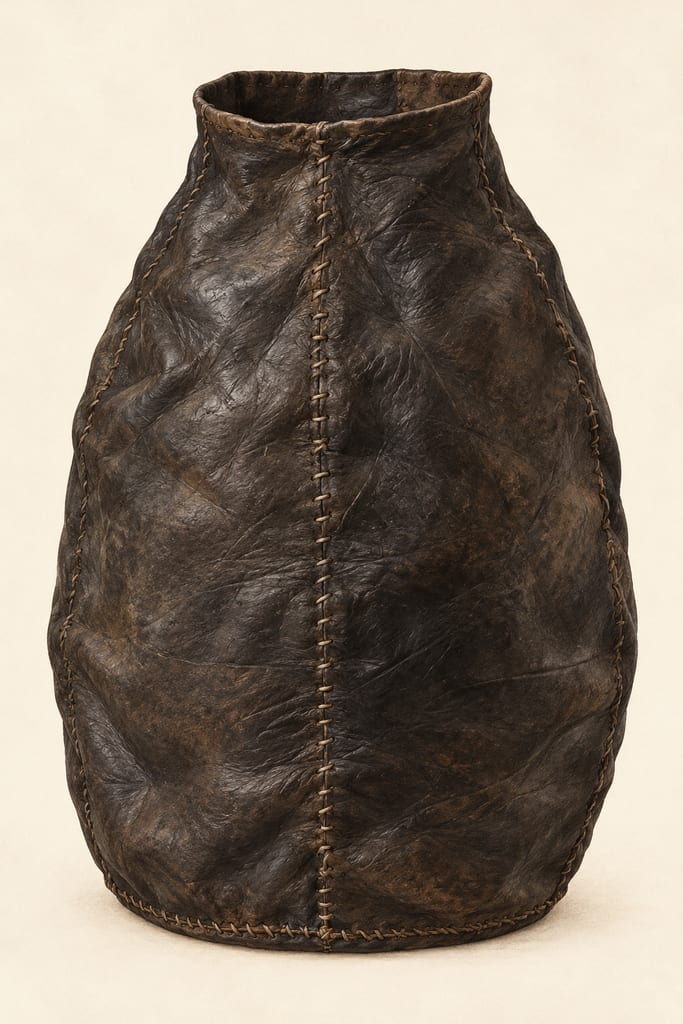
Arkhyt is a traditional Altai sewn-hide vessel used to hold and periodically mix chegen. Sources describe a very large vessel, but do not establish one standard shape, measured capacity, or dimensions.
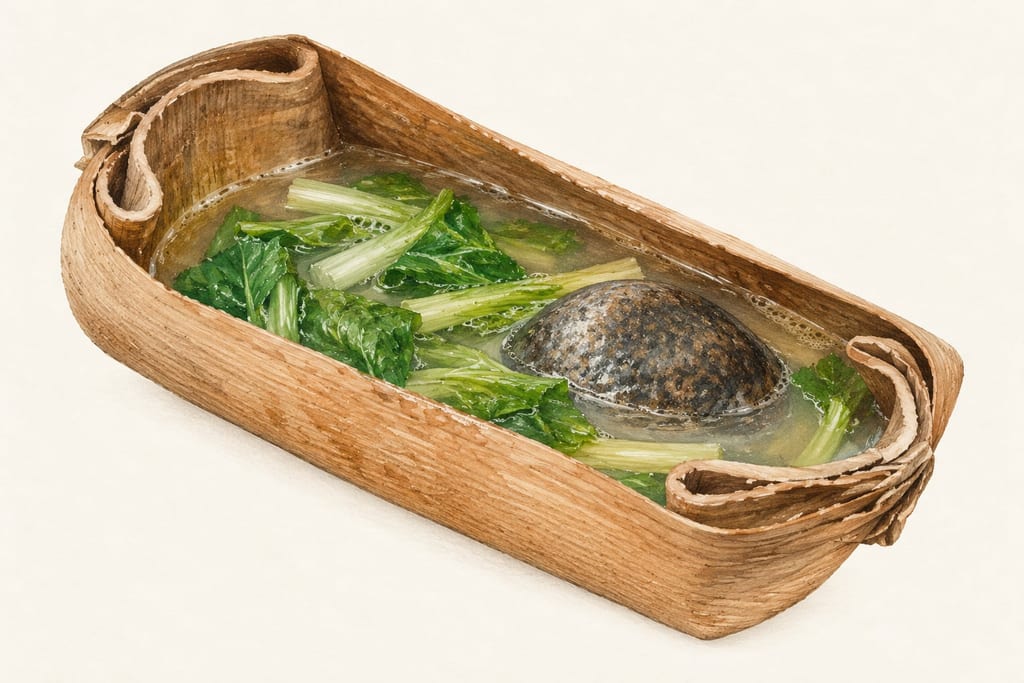
Stone boiling heats food in a vessel with stones warmed separately in a fire. Amis leaf sheaths, Chinantec jícaras and Northwest Coast cooking baskets are distinct regional forms, not one universal pot.
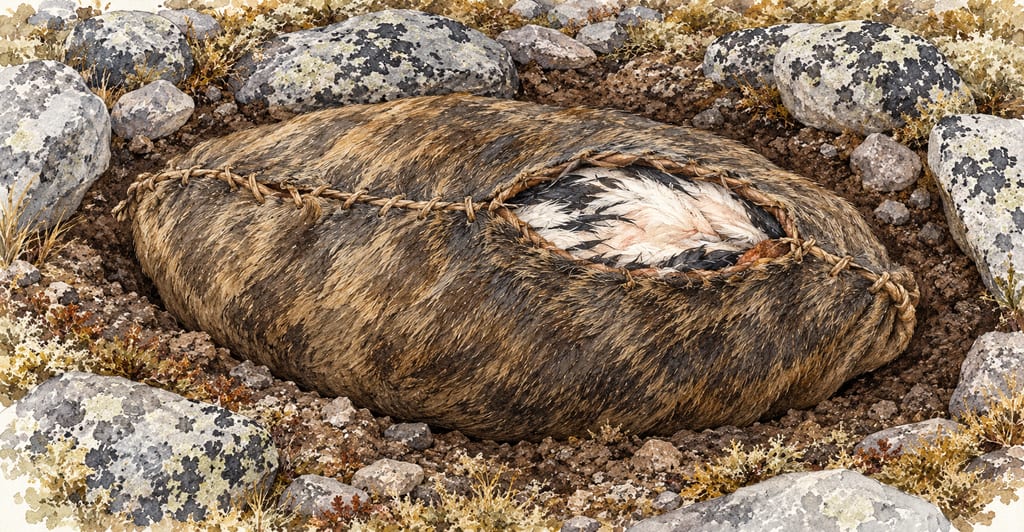
At Siorapaluk in northwestern Greenland, a seal hide is documented as a flexible, sewn vessel for kiviaq. Local accounts show the pouch made from a whole skin and buried beneath stones; its dimensions and capacity are not recorded.
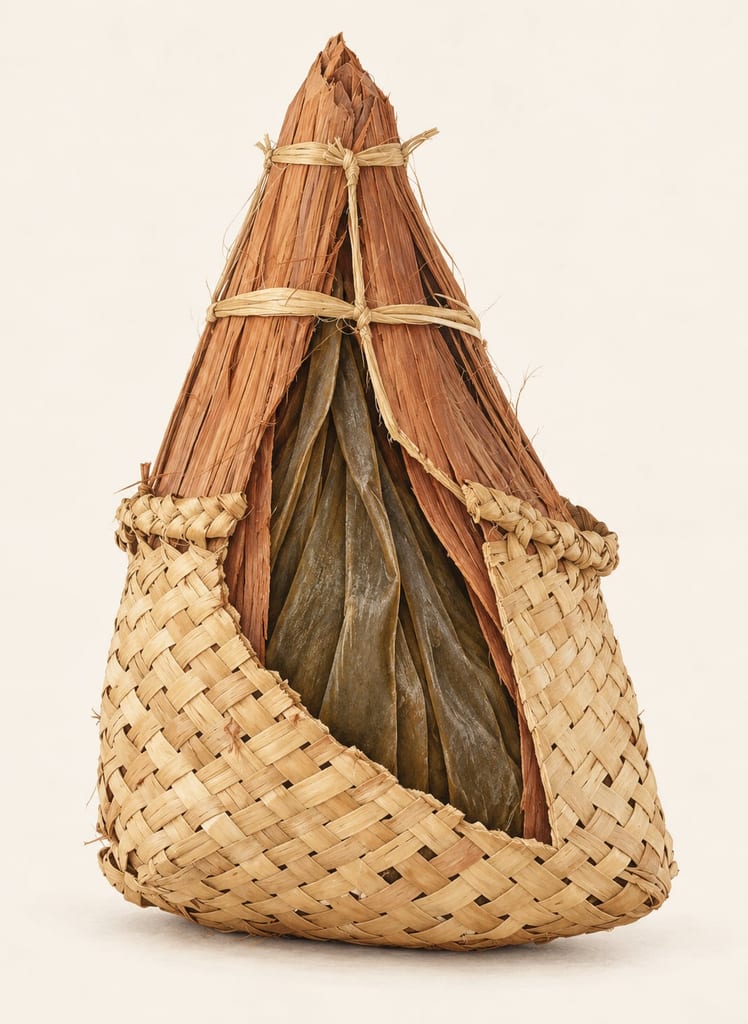
Pōhā are traditional southern Māori storage bags made from bull kelp. Ngāi Tahu accounts describe tītī stored in the kelp bag, with bark and a woven kete protecting some documented examples during transport.
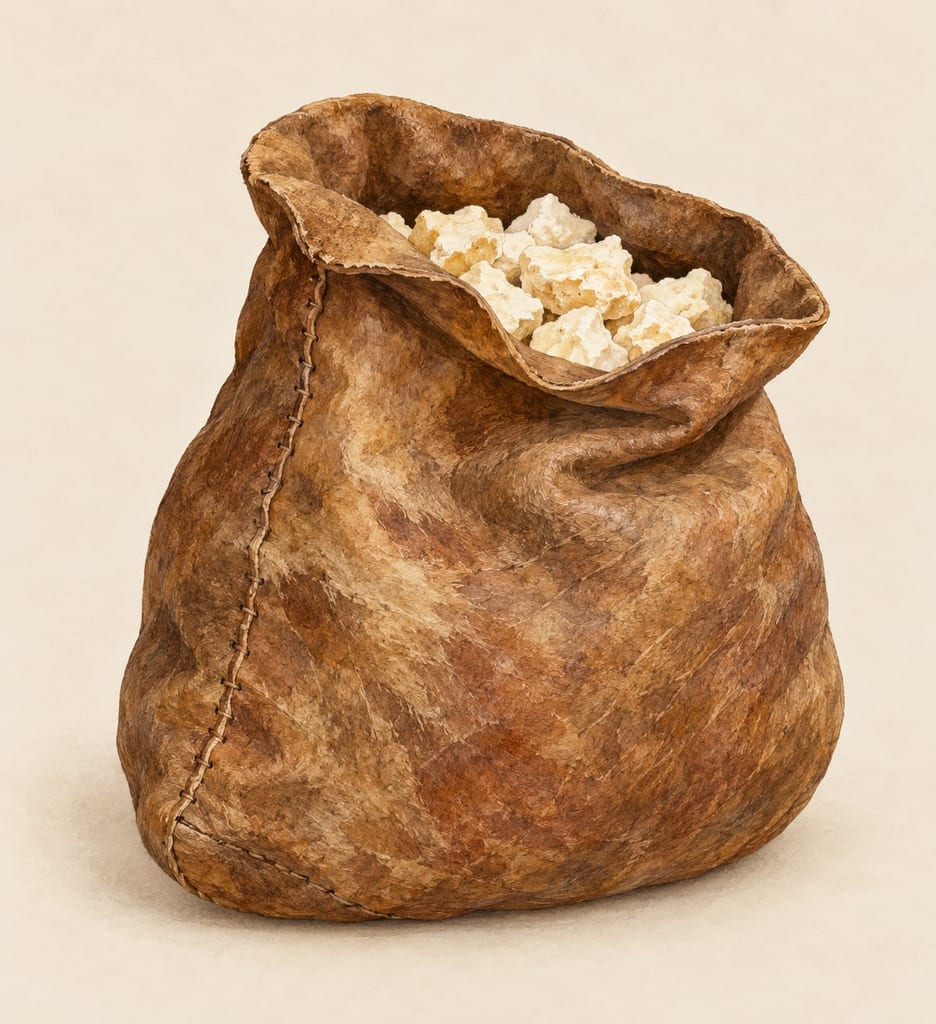
In Altai, dried aarchy was traditionally stored in bags sewn from animal hides. The surviving description establishes the material and use, but not a standard shape or present-day practice.
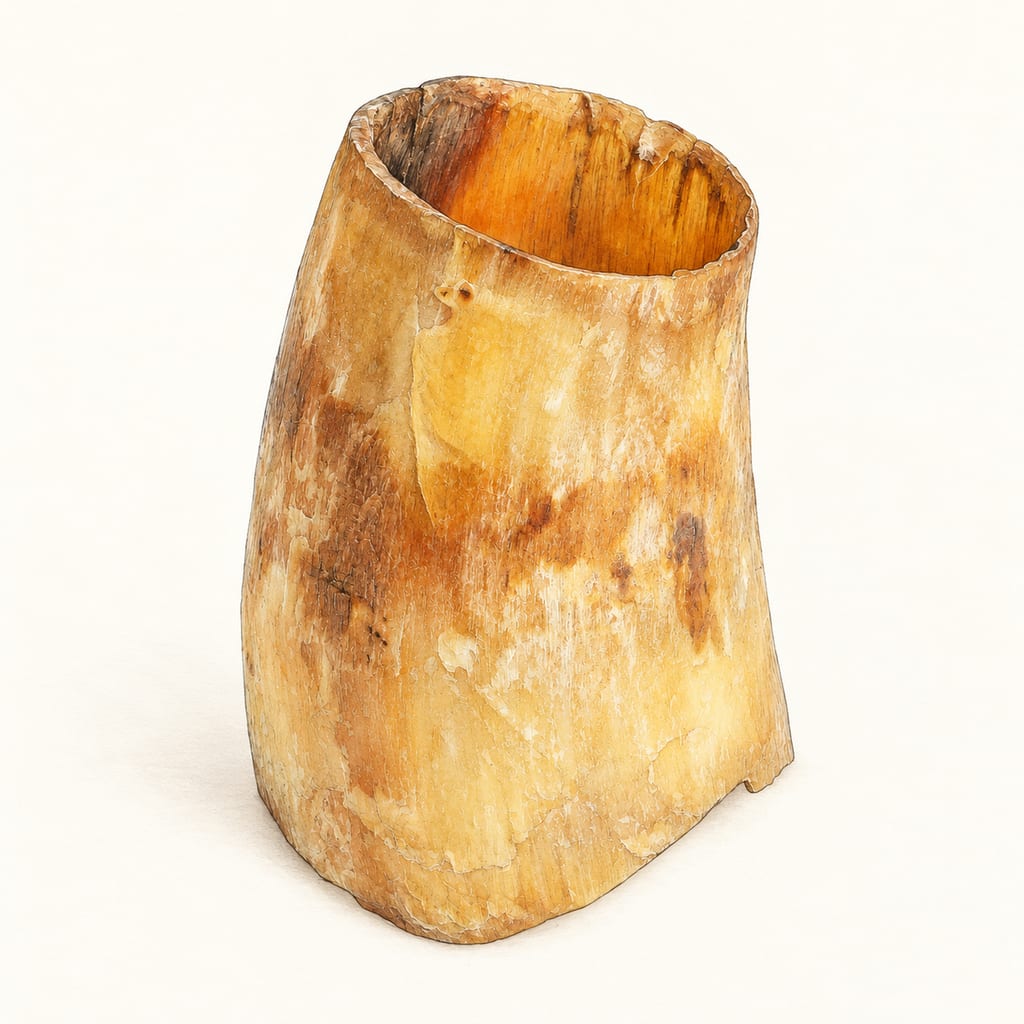
A korvhorn is a cow-horn sausage-stuffing tool used to hold a natural casing open as it is filled. Swedish folklore and museum records preserve the horn form, while modern sausage stuffers may use metal.
A Museums Victoria catalogue documents a Wangkangurru lukomb or kowapp, a rabbit-skin bag used to carry water around Lake Eyre. Its account describes skin preparation and tanning, while dating and image rights require care.
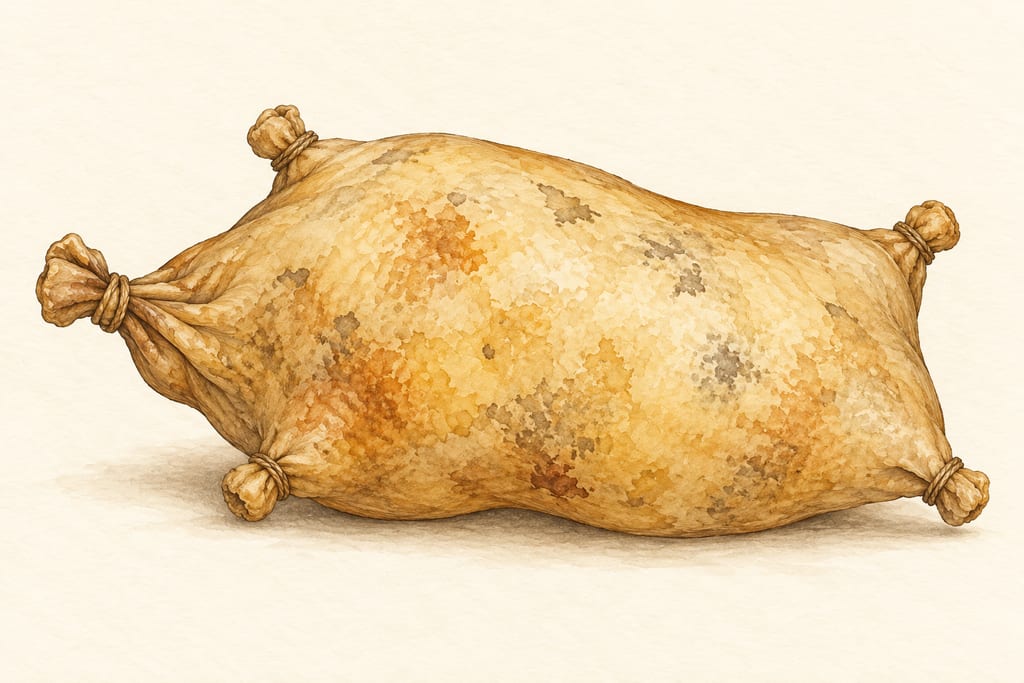
A whole lambskin, prepared as a flexible sack, holds densely packed cheese for ripening as sir iz mišine. The Croatian record locates the tradition in Dalmatia, Velebit and Lika, while its beginnings remain uncertain.
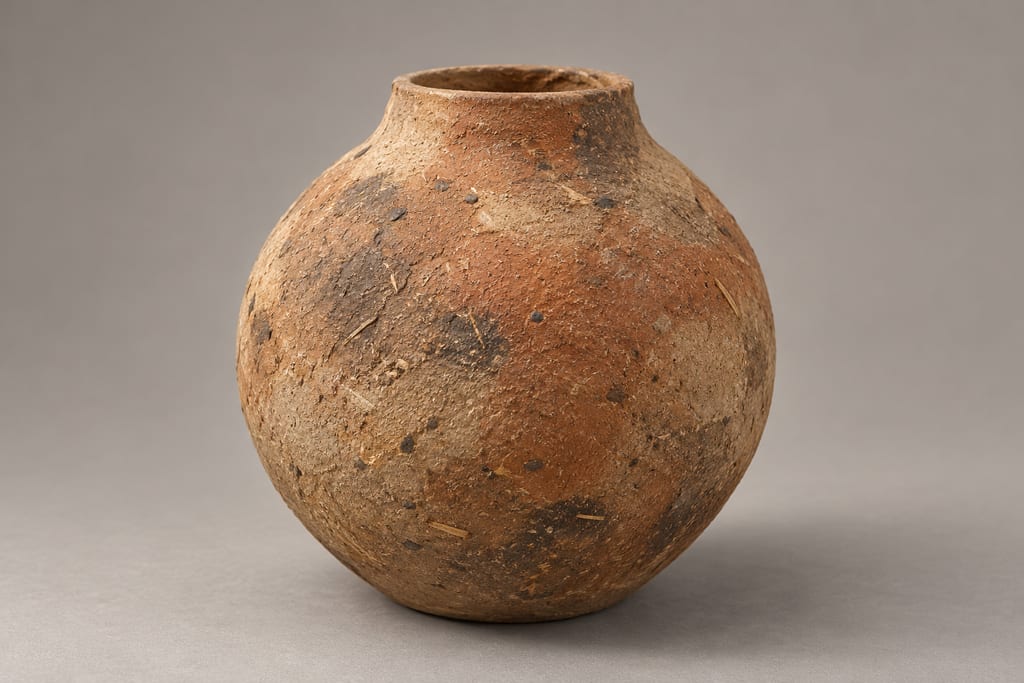
A small-mouth globular pottery jar from early Shangshan, ca. 10,000–9,000 cal BP. Residue study supports its possible use in rice-beverage fermentation, while leaving individual vessel functions uncertain.
Show on map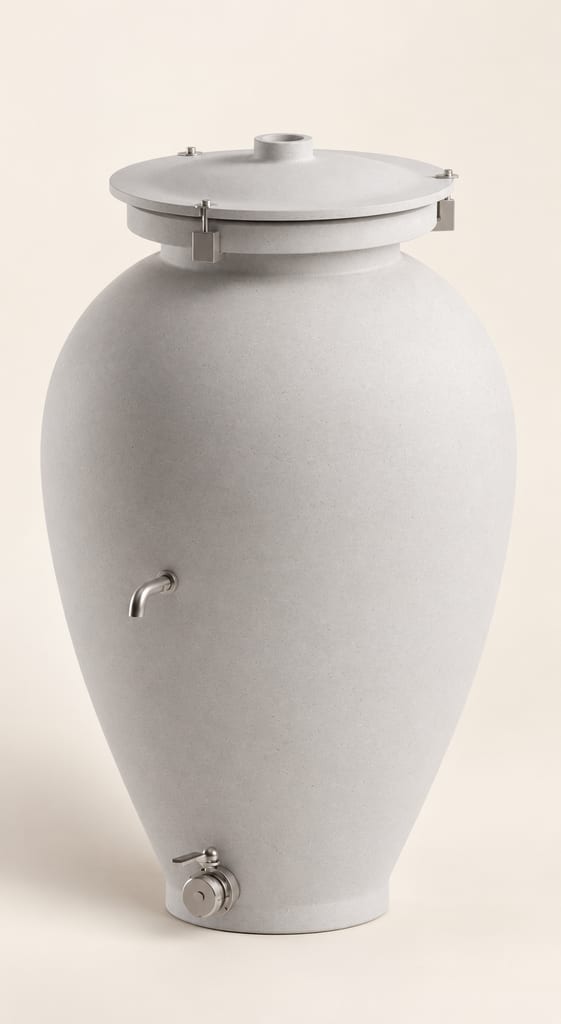
Factory-made ceramic wine jars are contemporary winery equipment. Biopythos documents a 120 L cast stoneware jar with specified dimensions and optional fittings; stoneware and porcelain are distinct materials, not one universal vessel.
A historical animal-skin container for Btana, described in southern Algerian accounts as clean sheepskin or old goatskin; sources distinguish it from later cloth and plastic bags.
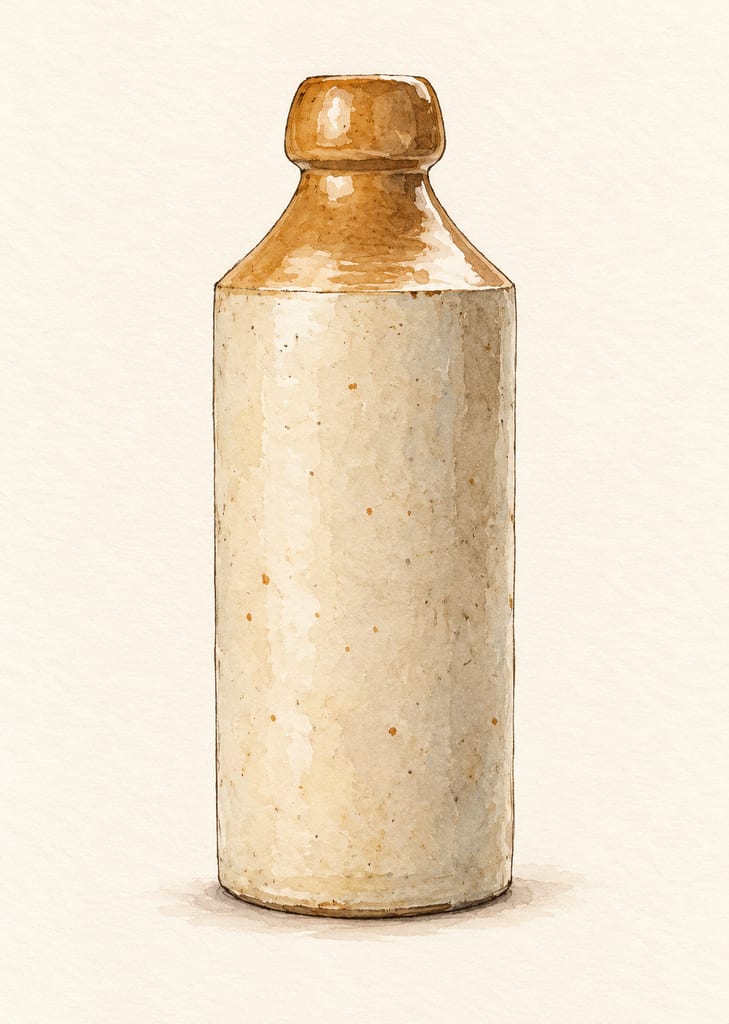
A late nineteenth-century stoneware bottle for ginger beer, represented by an Aberdeen museum object dated 1850–1899. It documents beverage packaging, not a fermentation vessel or a universal bottle design.
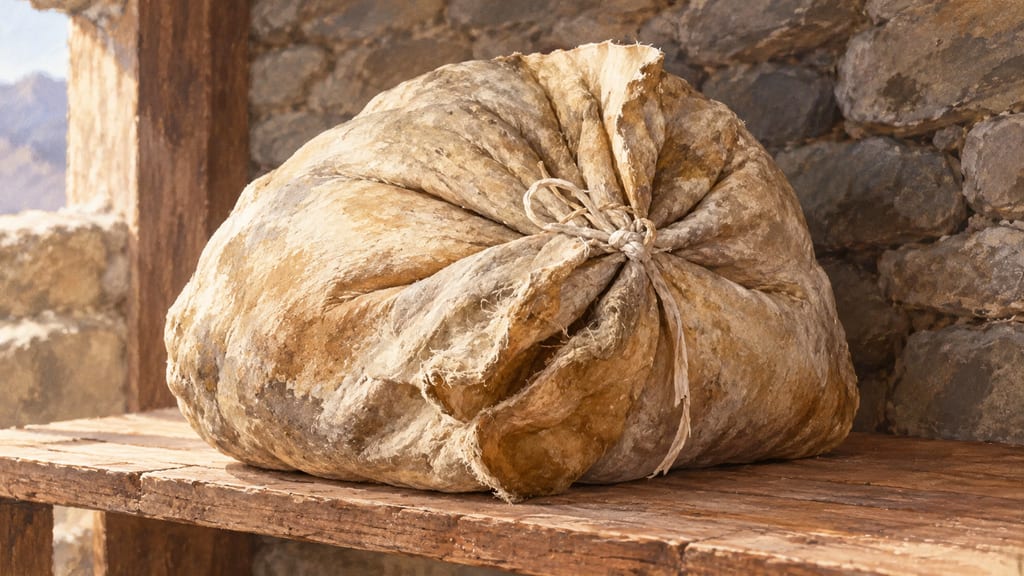
A Guda is the hide sack used to mature Tushetian cheese. The evidence supports its traditional material and role but leaves standard dimensions and detailed construction open.
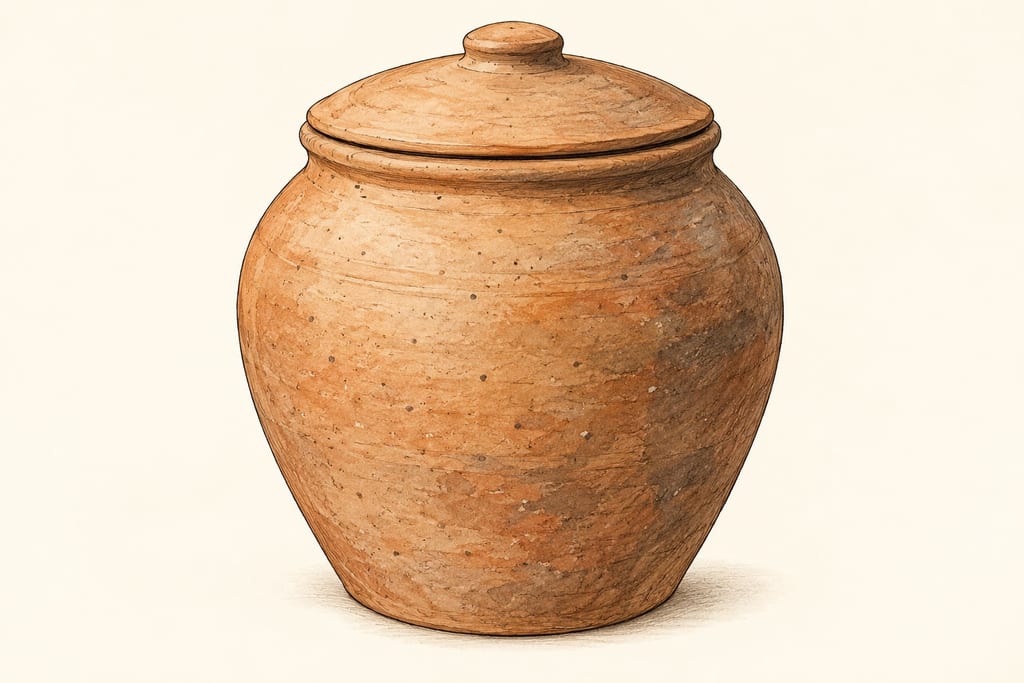
A closed earthen jar documented for fermenting tai-plaa, the salted fish-viscera product of southern Thailand. The sources do not establish one standard jar shape, capacity, lid, or date of first use.
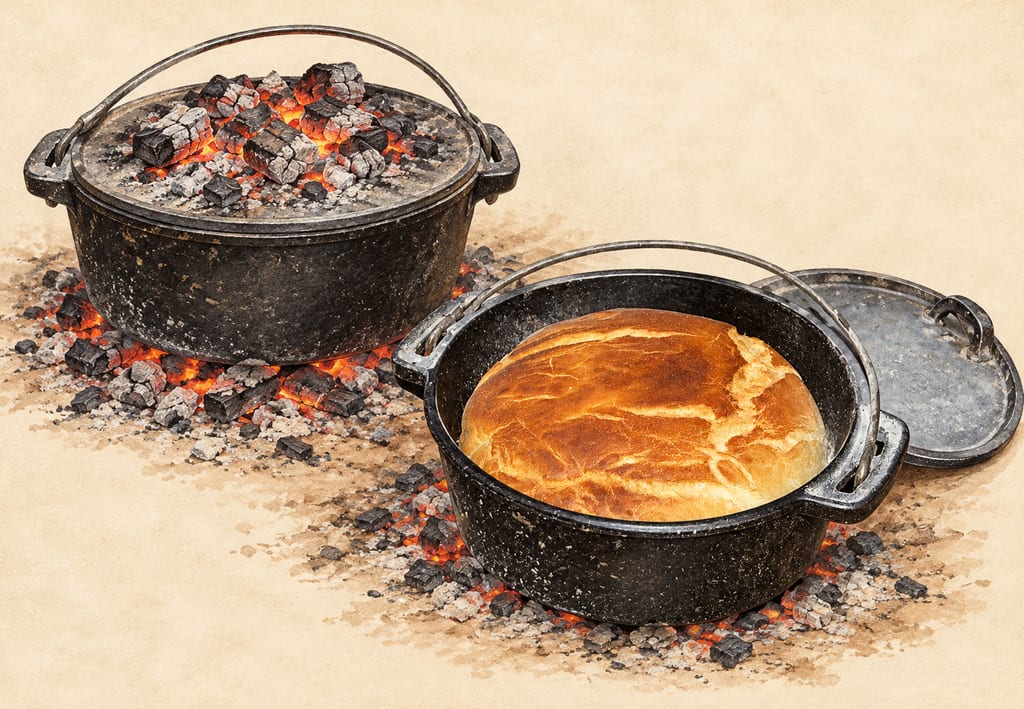
A closed cast-iron pot used to bake potbrood with heat from the hearth or embers; documented in South African English by 1883 and in a contemporary Namibian recipe.
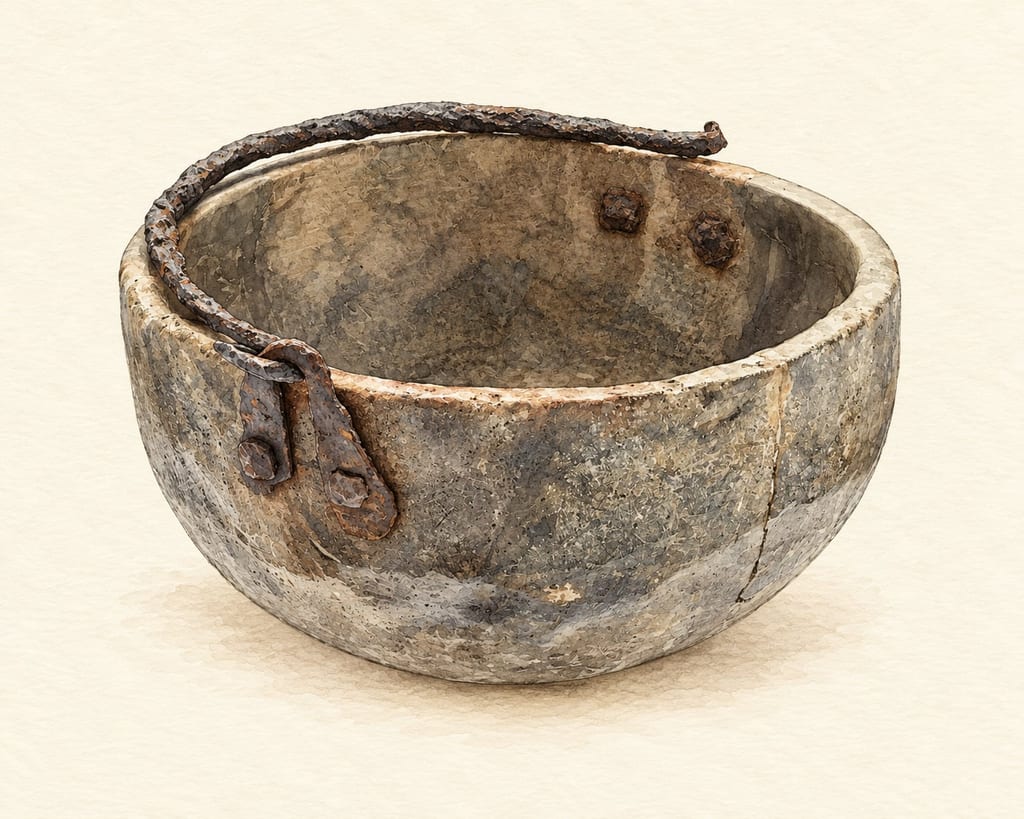
A Viking Age cooking pot carved from soapstone, exemplified by a partly reconstructed Birka grave find with iron handle fittings. Similar vessels were used across Scandinavia, but their forms and later handles changed over time.
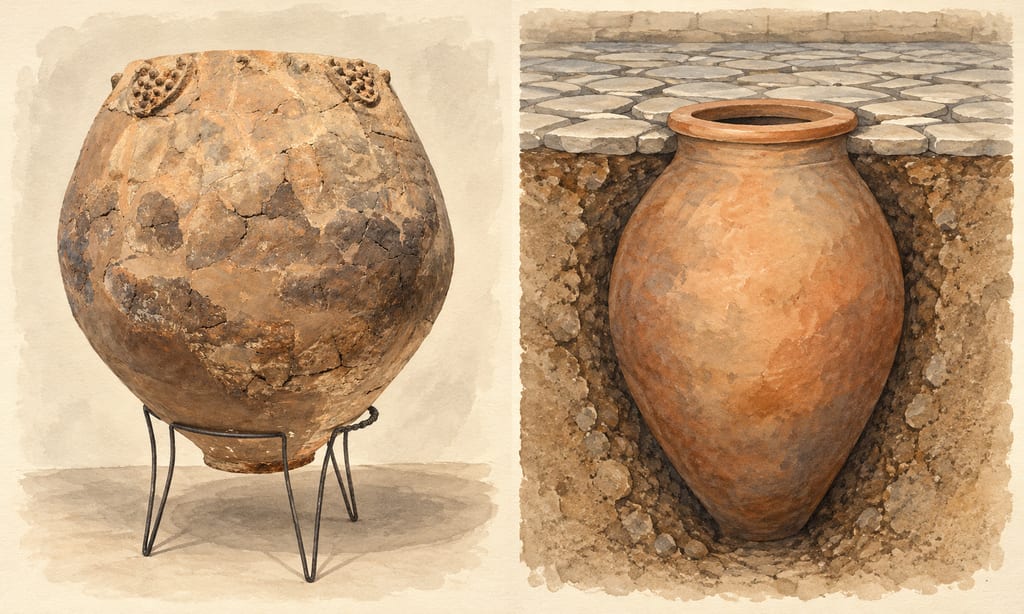
Very large early Neolithic pottery jars from Georgia carry the earliest biomolecular evidence for grape wine in the Near East. Their probable wine role is documented; their burial and exact relationship to modern qvevri are not.
Show on map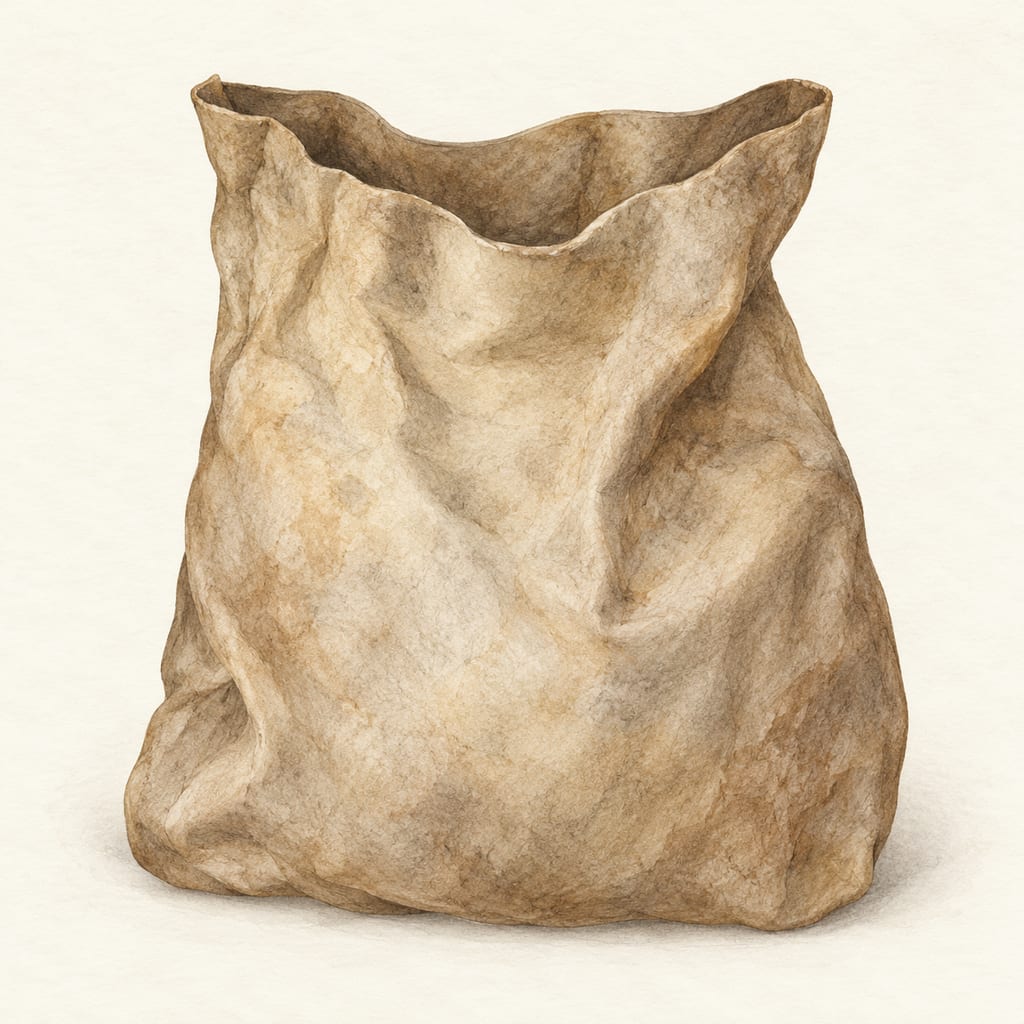
A Kalmyk interview describes dried sheep meat packed into calfskin bags for winter. The account identifies the material and storage use, but not the bag’s construction or dimensions.
An Ethiopian earthenware vessel used for stages of tella, a traditional cereal-based fermented drink. Sources describe clay insira jars alongside modern plastic alternatives and document washing and smoke preparation before brewing.
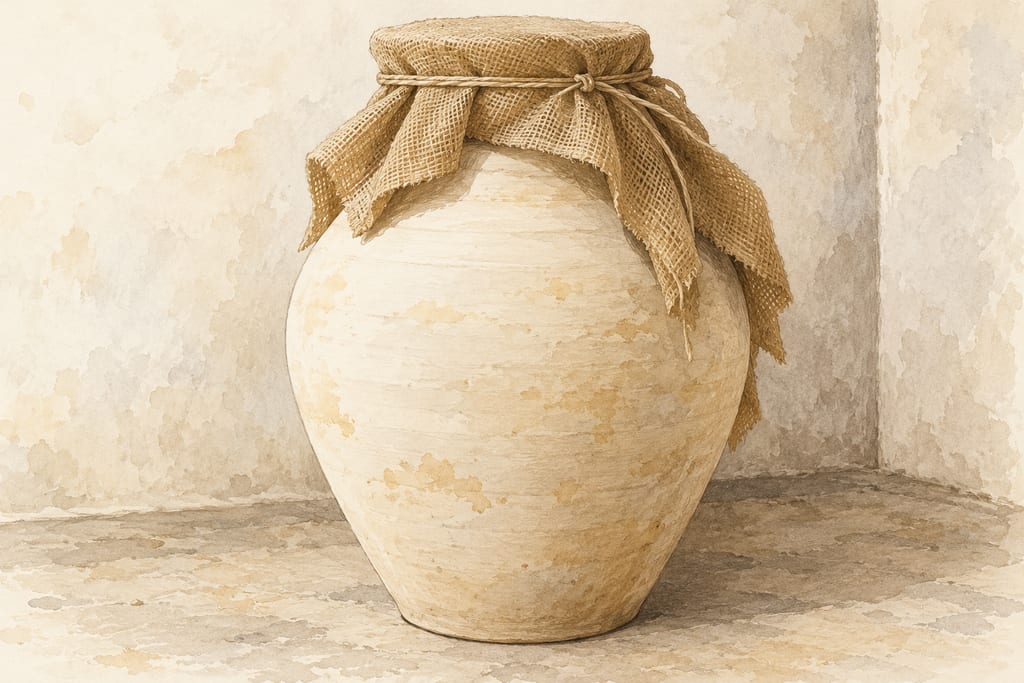
Clay amphorae mature some Levantine arak. Muaddi in Palestine documents 12 months in clay; Château Ksara specifies two years for Ksarak in clay jars. Both are producer-specific storage practices.
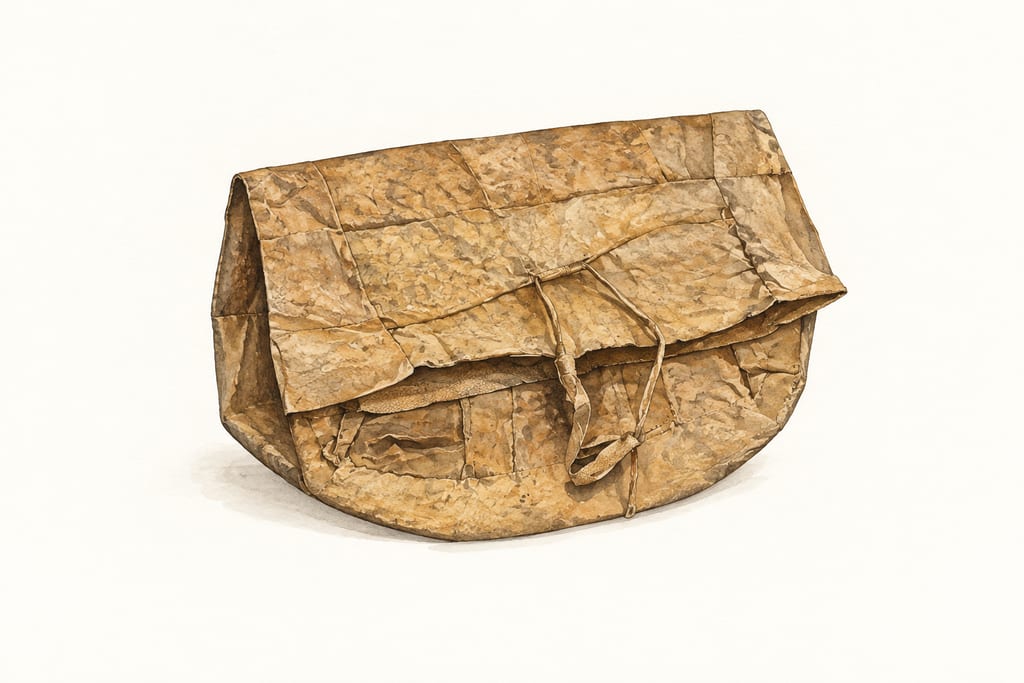
An Enets account records fish meal called porsa stored in burbot-skin bags. Museum records from the Yenisei and Ob regions document related fish-skin sacks, while keeping each community’s object and use distinct.
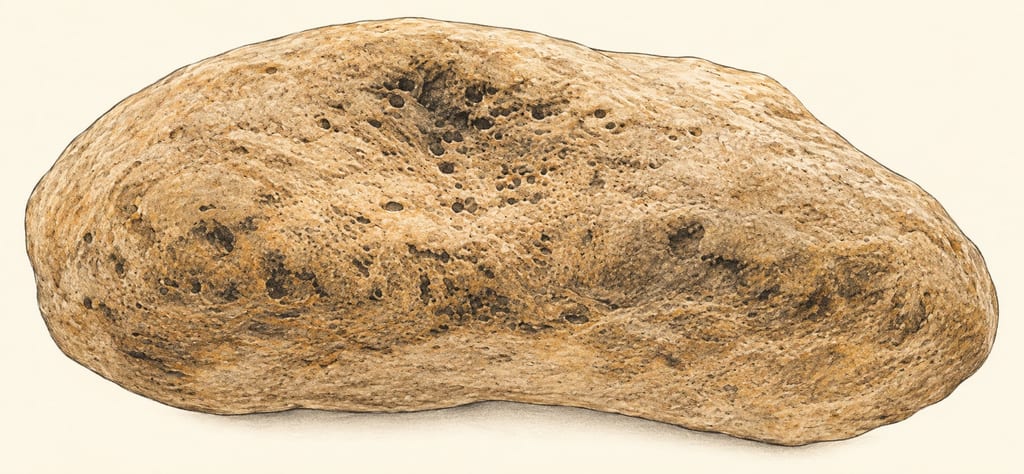
A pitted stone is a percussive artifact with one or more impact depressions. At Gesher Benot Ya‘aqov, nut cracking is a supported but not specimen-by-specimen proven interpretation; newer residue work confirms broader plant-food processing.
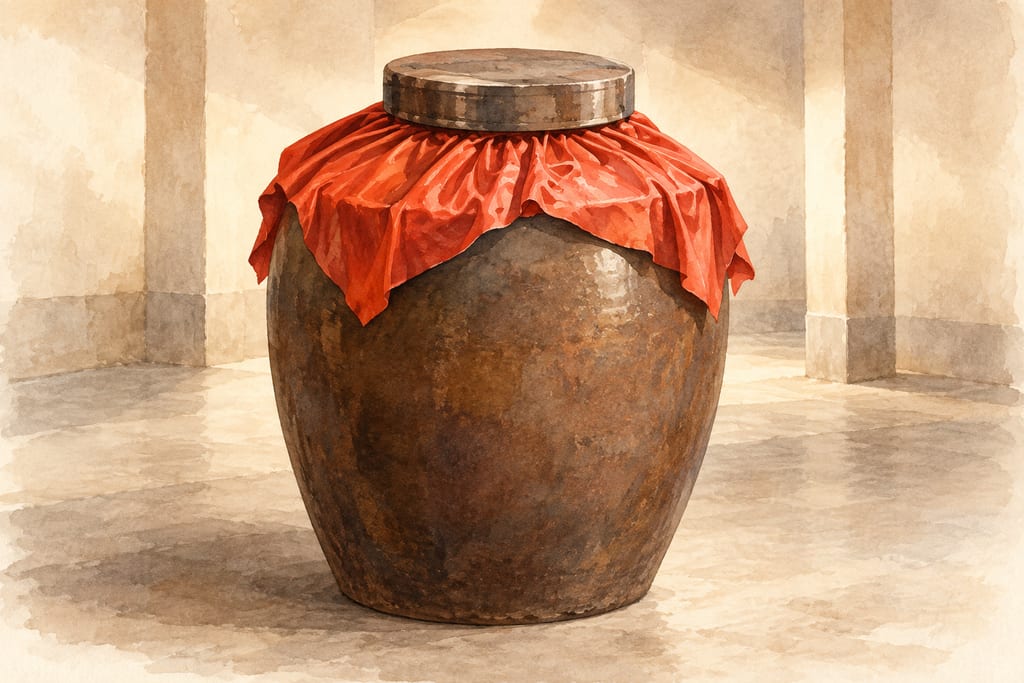
Large ceramic jars hold distilled baijiu during maturation. Fenjiu documents rows of aging jars in Shanxi, including specially specified unglazed earthenware; available sources do not establish one universal shape, volume or closure.
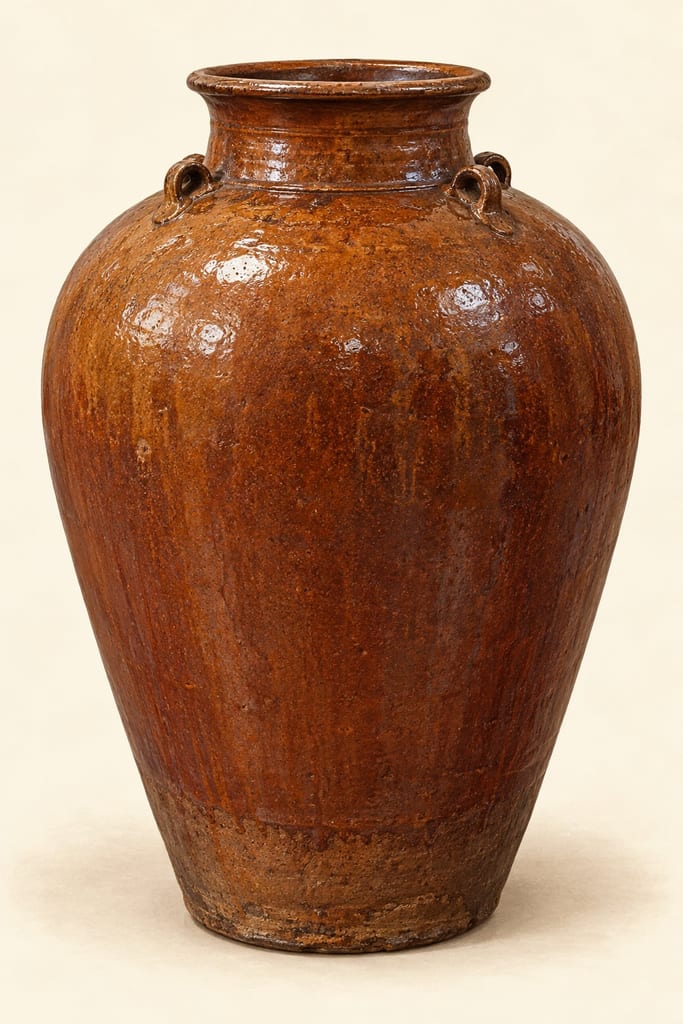
A large glazed stoneware jar used in documented Sarawak contexts for storage and fermenting tuak, while also serving as a valued Iban heirloom.