Equipment

626 sourced equipment pages: vessels, tools, appliances and built structures.

Everything

626 items

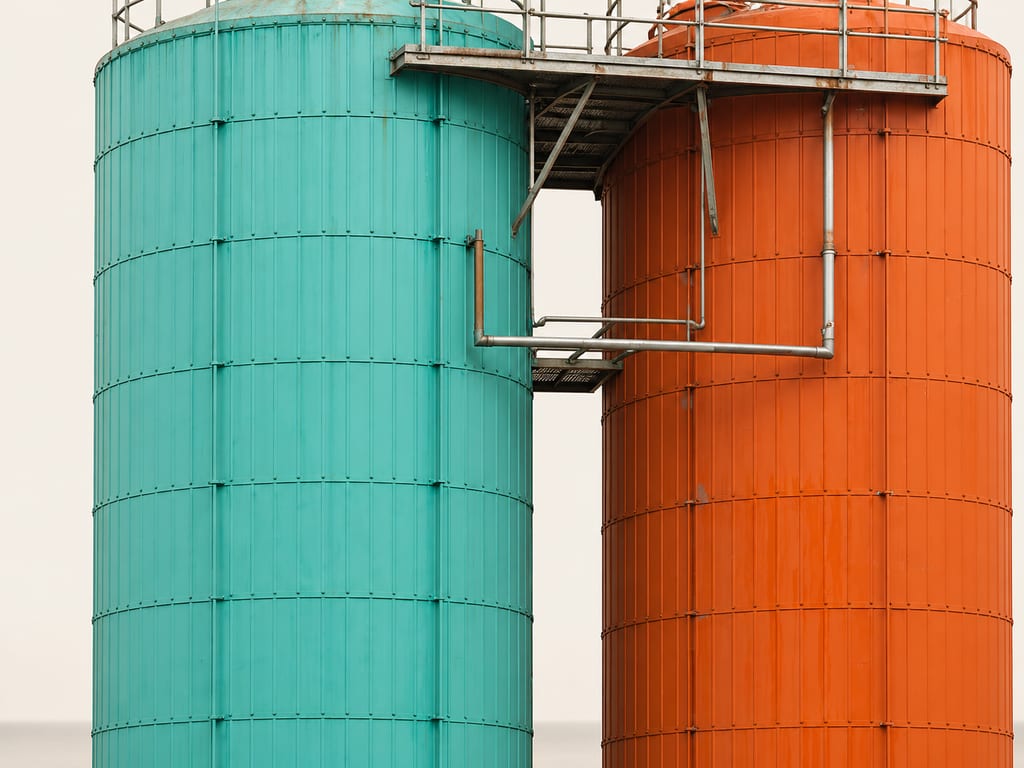
Close exterior view of two turquoise and orange cylindrical FRP soy-sauce fermentation tanks with pipework and an access platform.
Equipment

Kimlan soy-sauce fermentation tanks and koji-room equipment

A Kimlan-specific equipment sequence at Daxi separates koji-room apparatus, outdoor FRP fermentation tanks and pressing equipment. The record does not describe the site-built room or a universal Taiwanese design.
Industrial and laboratory plant
Daxi District
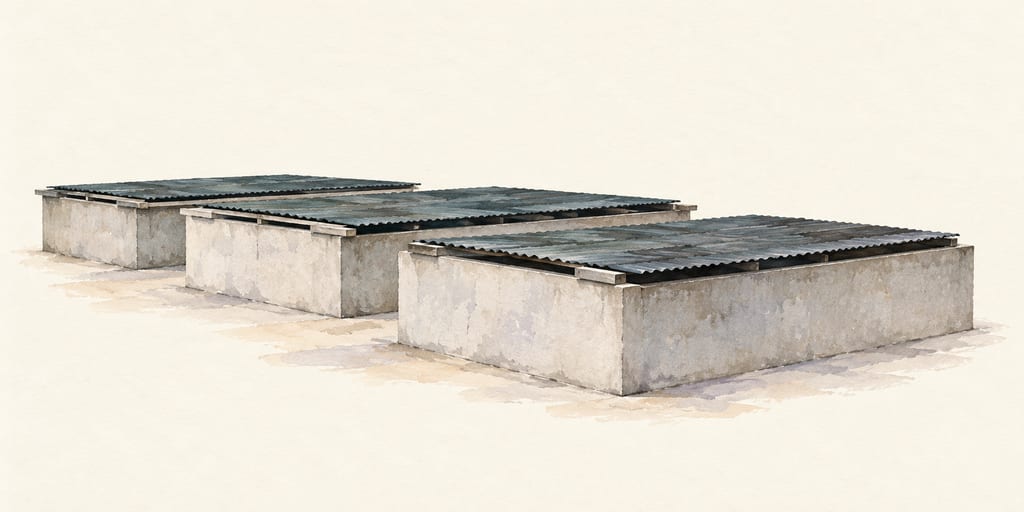
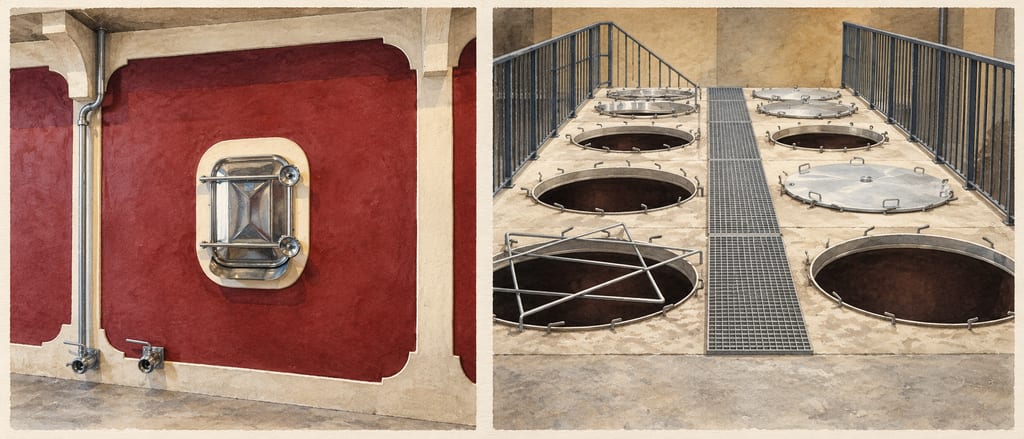
Watercolor comparison of a rectangular concrete wine tank with a stainless access door and a row of open-top concrete fermentors with broad rims.
Equipment

Concrete wine tank

Concrete wine tanks are heavy, fixed vessels in rectangular, cylindrical and tapered forms. Their thermal response and wine contact depend on mix, wall construction and interior finish.

Tanks and vats
Igualada
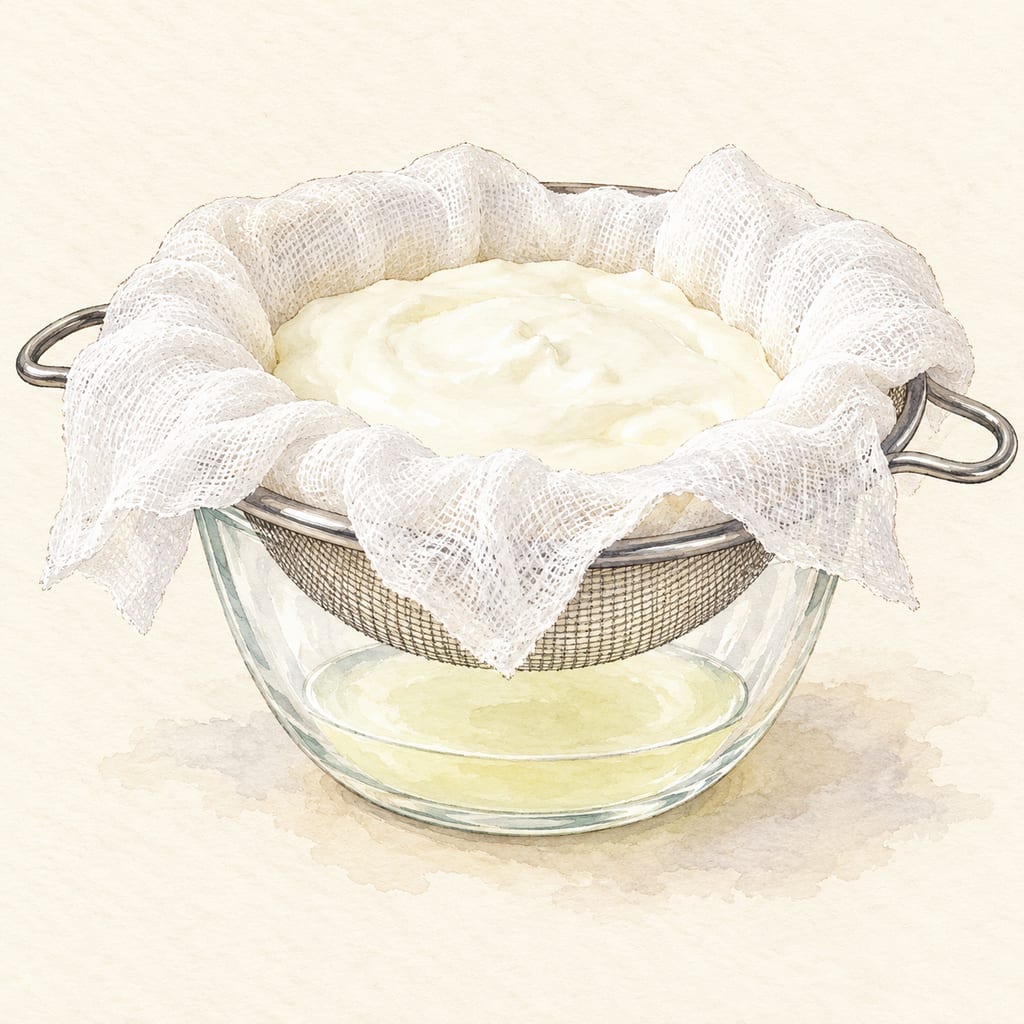
Watercolor illustration of a contemporary fine-mesh strainer lined with cheesecloth over a bowl, holding soft cultured dairy as whey drains.
Equipment

Cheesecloth-lined strainer

A kitchen strainer lined with cloth holds soft curd while whey passes through into a bowl. It is a modern, general-purpose setup; Sakha sources record strained suorat but do not specify this tool or its materials.

Strainers, moulds and hoops
Sakha Republic (Yakutia)
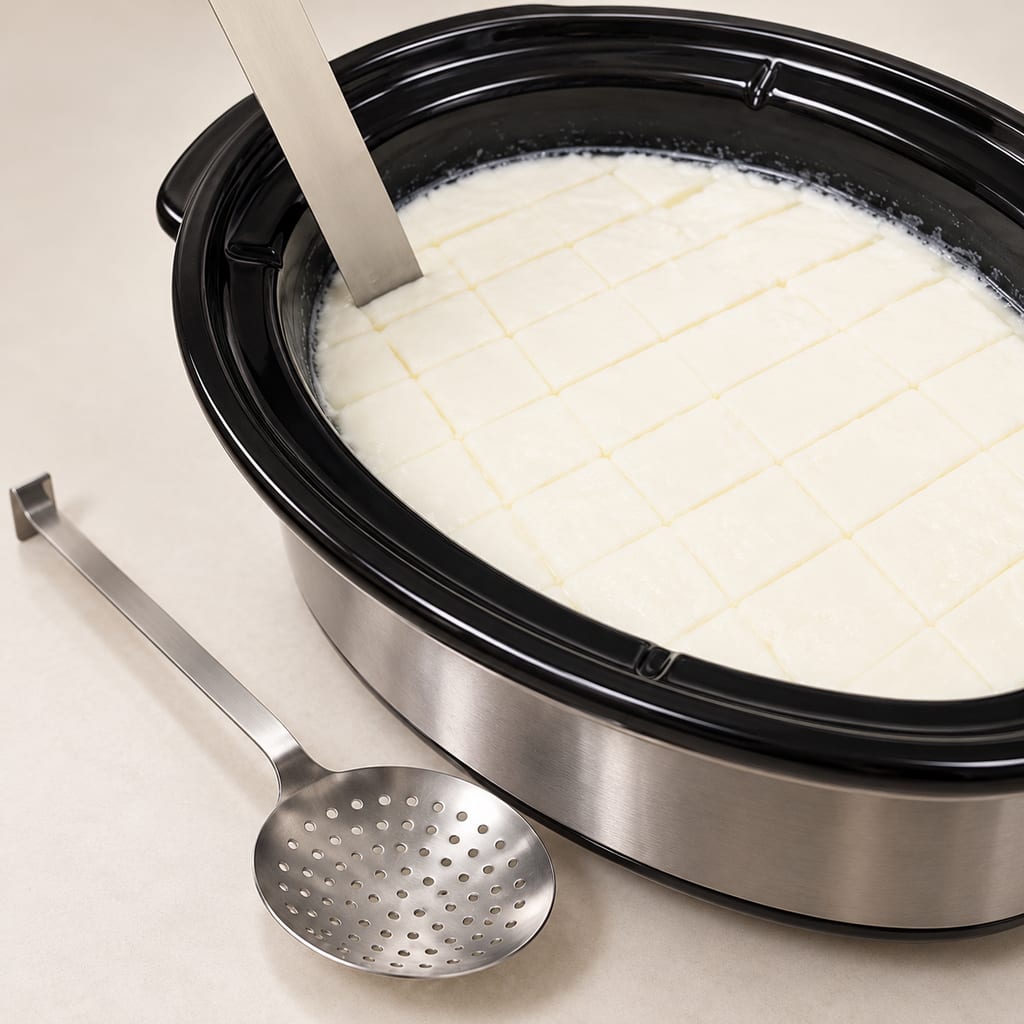
A long flat curd knife scores set curd in a dark open crock; a separate perforated stainless-steel skimmer ladle rests beside it.
Equipment

Curd knife and slotted ladle

A curd knife cuts set milk into recipe-sized pieces; a perforated ladle lifts and moves curd while whey drains. The hand tools work at different moments in an open cheesemaking vessel.

Curd-cutting and ladling tools
East Africa
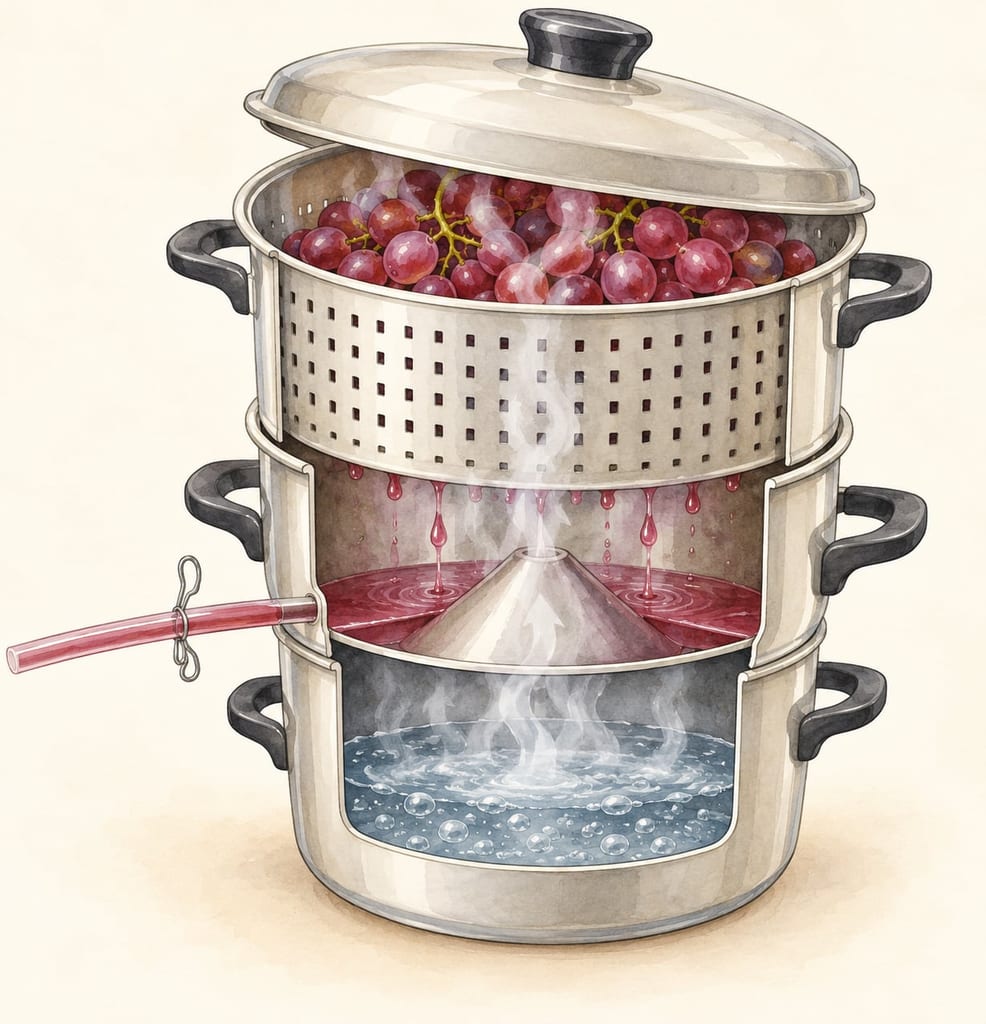
Editorial cutaway illustration of a steam juicer, showing fruit in a perforated top basket, juice collecting in the middle tier, and steam rising from water in the lower pan.
Equipment

Steam juicer

A steam juicer stacks a water pan, juice collector and perforated fruit basket so steam releases juice that drains through an outlet hose. It extracts juice; it does not itself concentrate or preserve it.

Steam juicers
United States
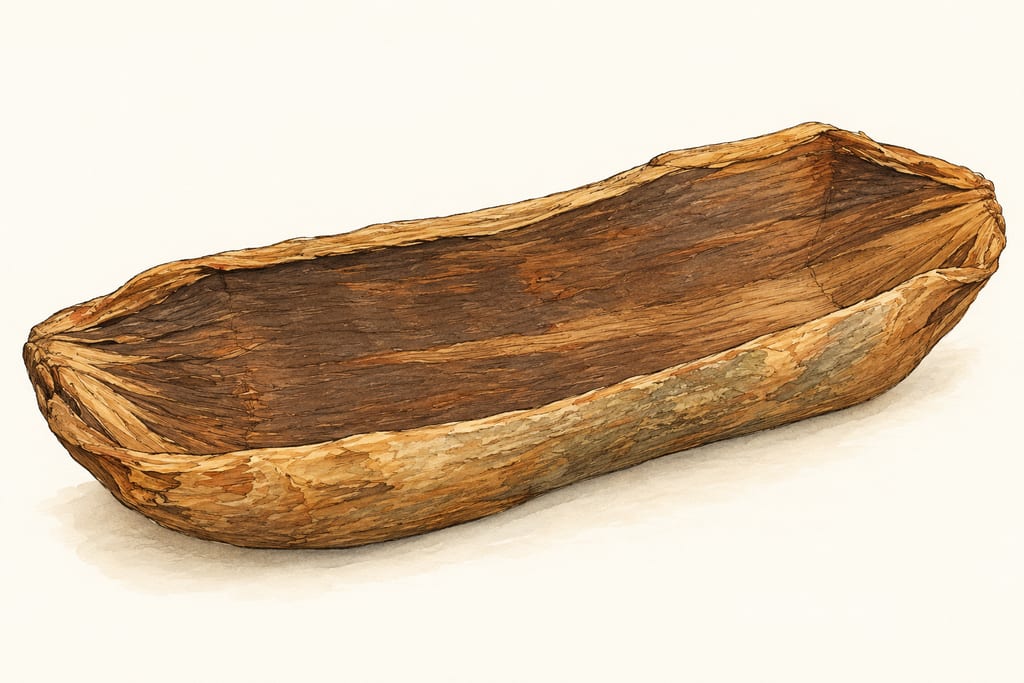
Hand-drawn illustration of one empty, shallow wooden coolamon in an elongated trough form. It represents one documented functional form, not a specific community's artwork or a universal design.
Equipment

Coolamon

A wooden carrying dish used in Aboriginal food, water and seed work. Western Desert examples are called piti or ngurti; the general term does not imply one uniform form or fermentation use.

Gourds, calabashes and carved bowls
Western Desert
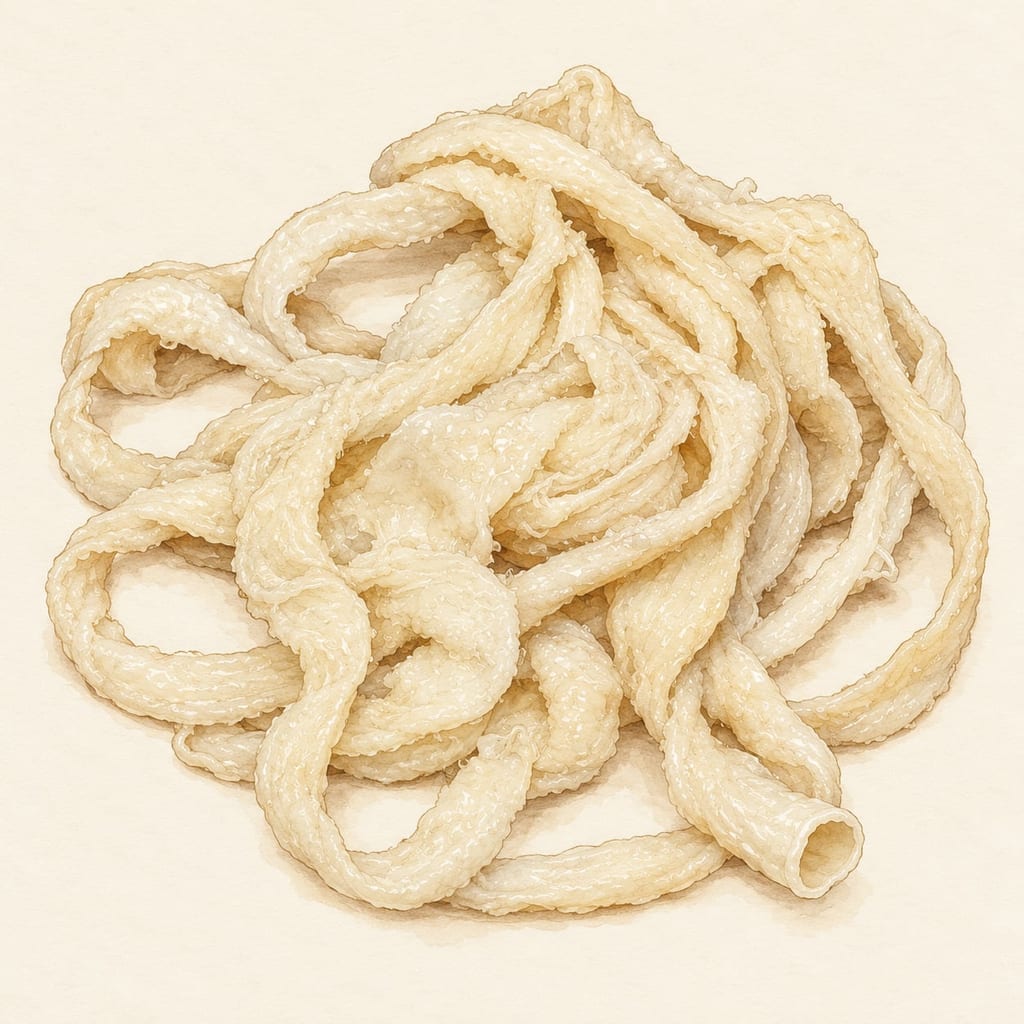
Warm-ivory watercolor illustration of a loose coil of pale natural intestine casing, showing the flexible hollow tube form.
Equipment

Natural sausage casing

A natural sausage casing is a cleaned animal intestine or, for some products, another prepared organ used as an edible envelope. Its anatomy shapes the sausage, while diameter and material affect stuffing and drying.

Bags, sacks and casings
South Africa
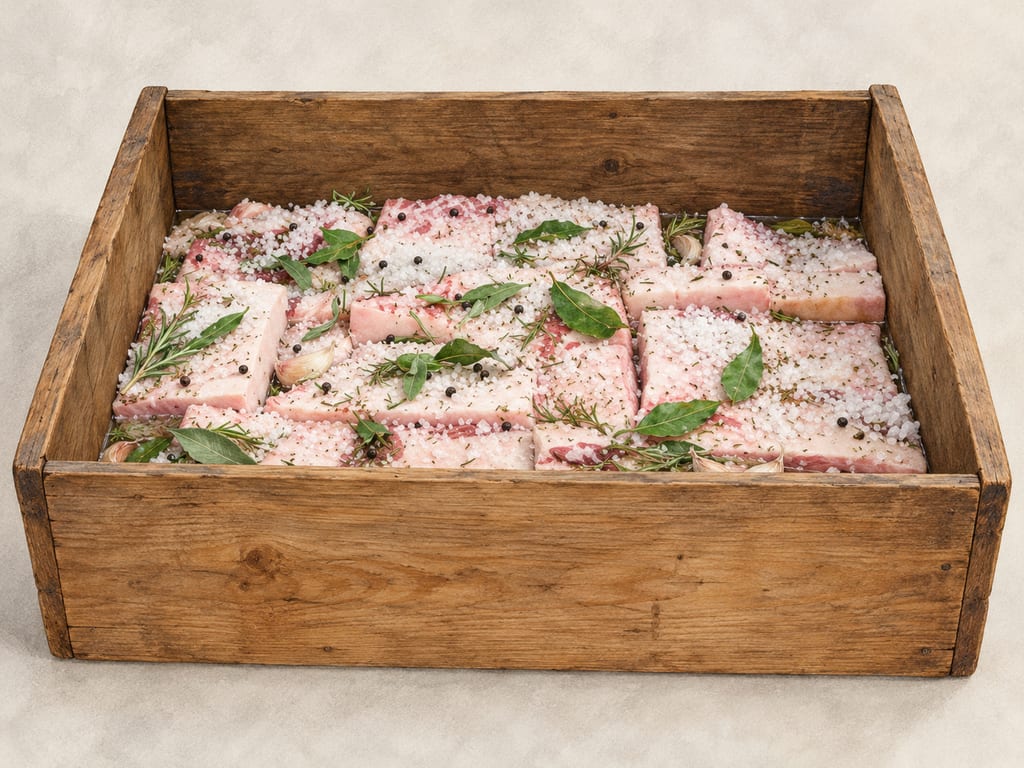
Illustration of an open rectangular wooden doil holding layered lardo with salt and mountain herbs, based on photographs of Arnad curing.
Equipment

Doil

A wooden curing vessel used for Valle d’Aosta Lard d’Arnad: 1763 records already list four old doils in Arnad Castle, and the current DOP process uses native hardwood containers.

Tanks and vats
Arnad
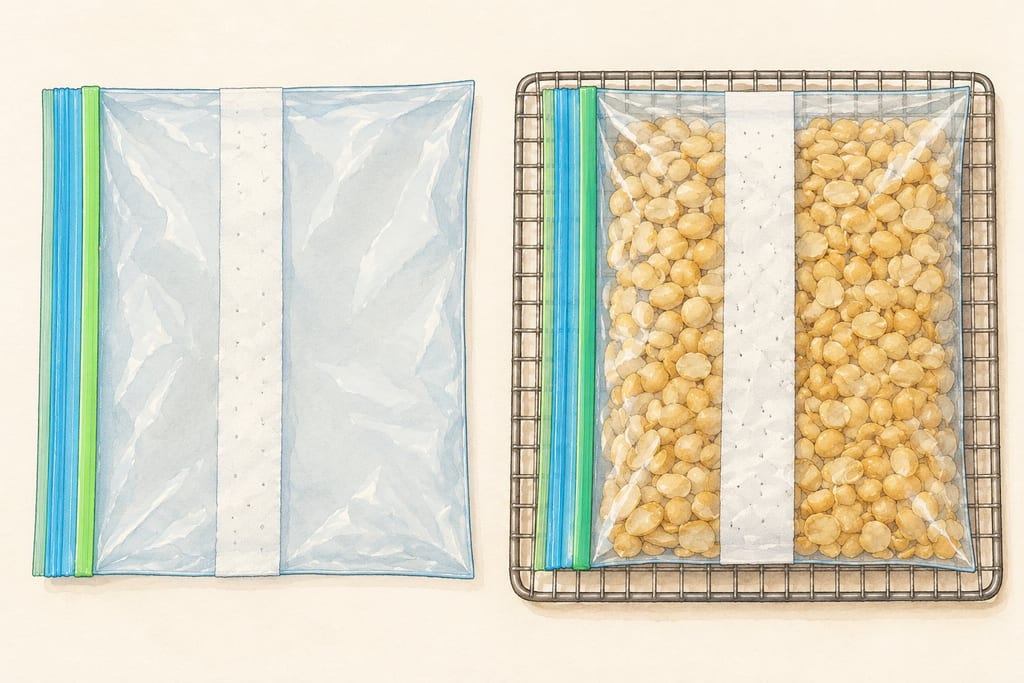
Illustration of an empty clear perforated tempeh bag beside a similar bag with loose dehulled soybean halves on a wire rack; no finished cake is shown.
Equipment

Perforated tempeh bags or ventilated containers

Perforated plastic bags and covered trays hold tempeh in a thin shape while admitting air; they are modern packaging options, distinct from the documented leaf wrapper.

Bags, sacks and casings
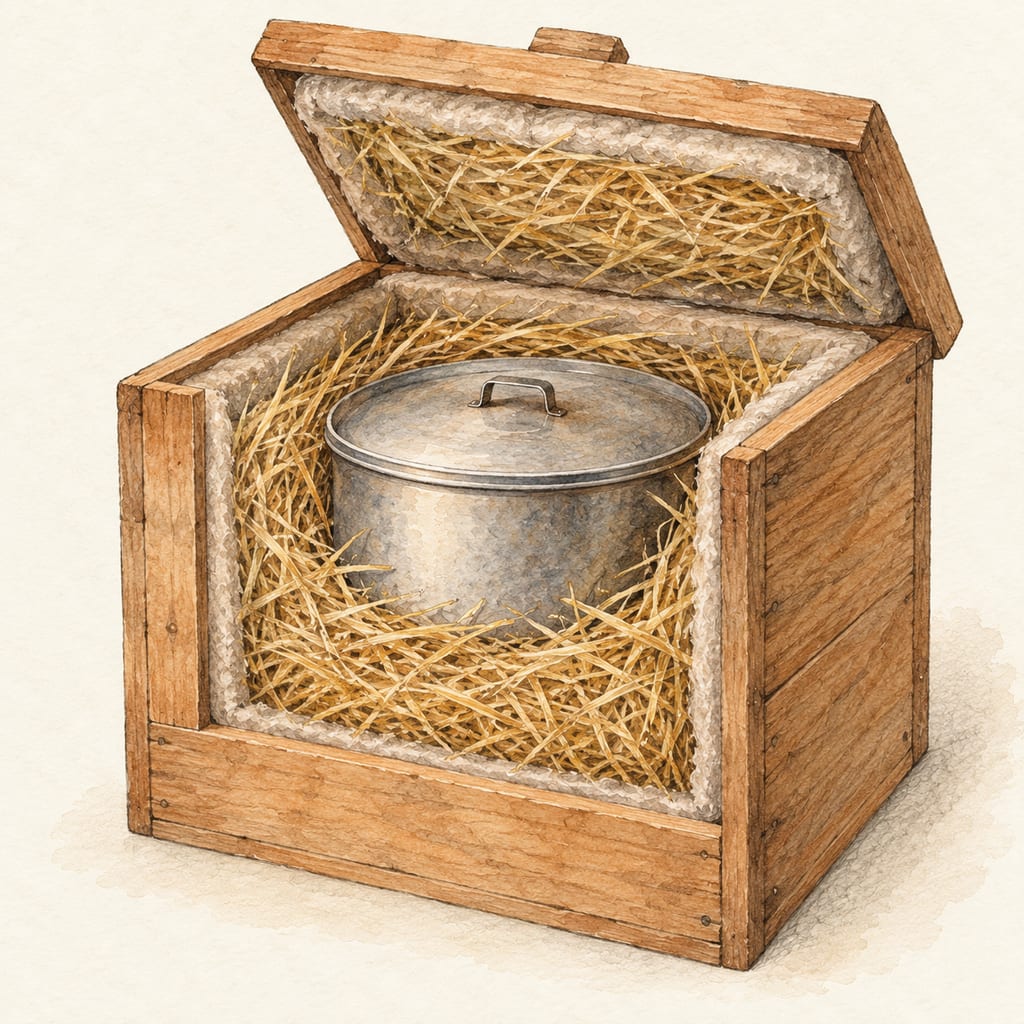
An interpretive watercolor-pencil cutaway of a wooden haybox, showing a lidded cooking pot surrounded by insulating packing and a padded lid on warm ivory paper.
Equipment

Haybox (fireless cooker)

A haybox, also called a fireless or retained-heat cooker, is an insulated enclosure that lets a lidded pot finish cooking in heat already stored in the food after it leaves a stove. It generates no heat and is not a preservation method.

Retained-heat cookers
France
Equipment

Leather bags for Tofalar plant reserves

Leather bags stored dried wild onion, sarana and kandyk for winter use in Tofalaria. The traditional plant store is documented, but the bag's shape, construction and hide species are unknown.

Bags, sacks and casings
Tofalaria, southern Nizhneudinsk District, Irkutsk Oblast
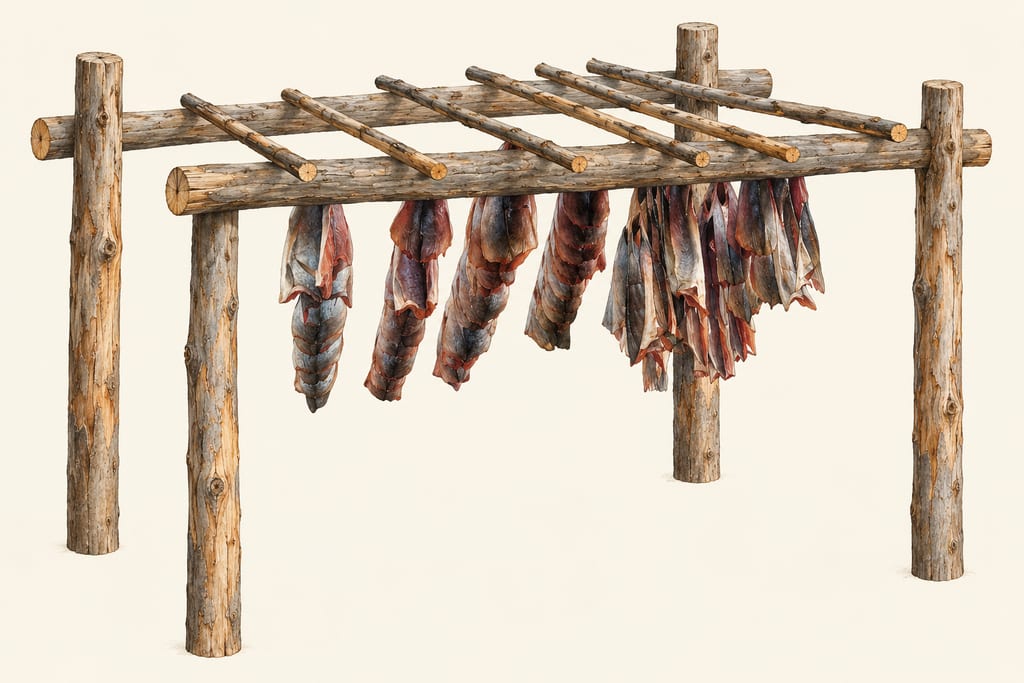
Historical-style illustration of a documented Daguma rack: a timber frame with upright posts, horizontal rails and cross-poles holding fish to dry.
Equipment

Daguma

Daguma is an Udege open-air rack for hanging fish to dry, including yukola. The documented frame has four upright posts, two rails and cross-poles; its dimensions are not recorded.

Drying poles and racks
Primorsky Krai
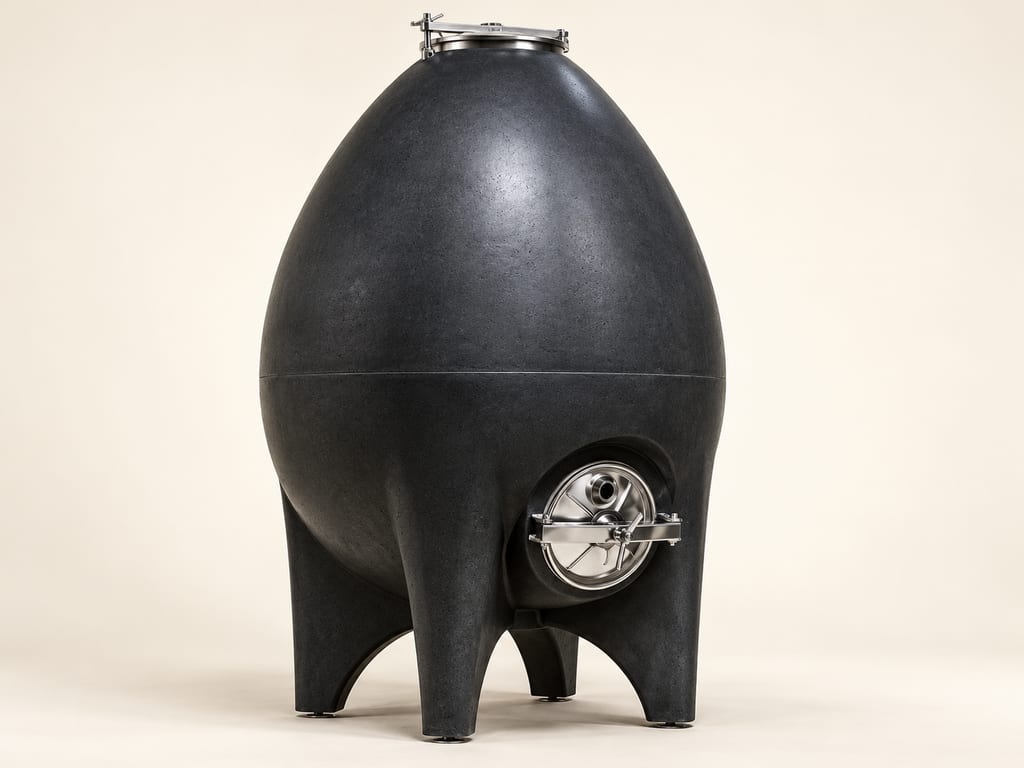
Photorealistic illustration of one dark concrete egg wine vat with a top hatch, lower stainless access fitting and stable integrated feet, on a warm ivory studio background.
Equipment

Concrete egg

A modern ovoid concrete wine vat with smooth curved walls, made in several sizes and fitted according to model. Used for wine fermentation and maturation; support, access, cooling and interior treatment vary.

Tanks and vats
Burgundy
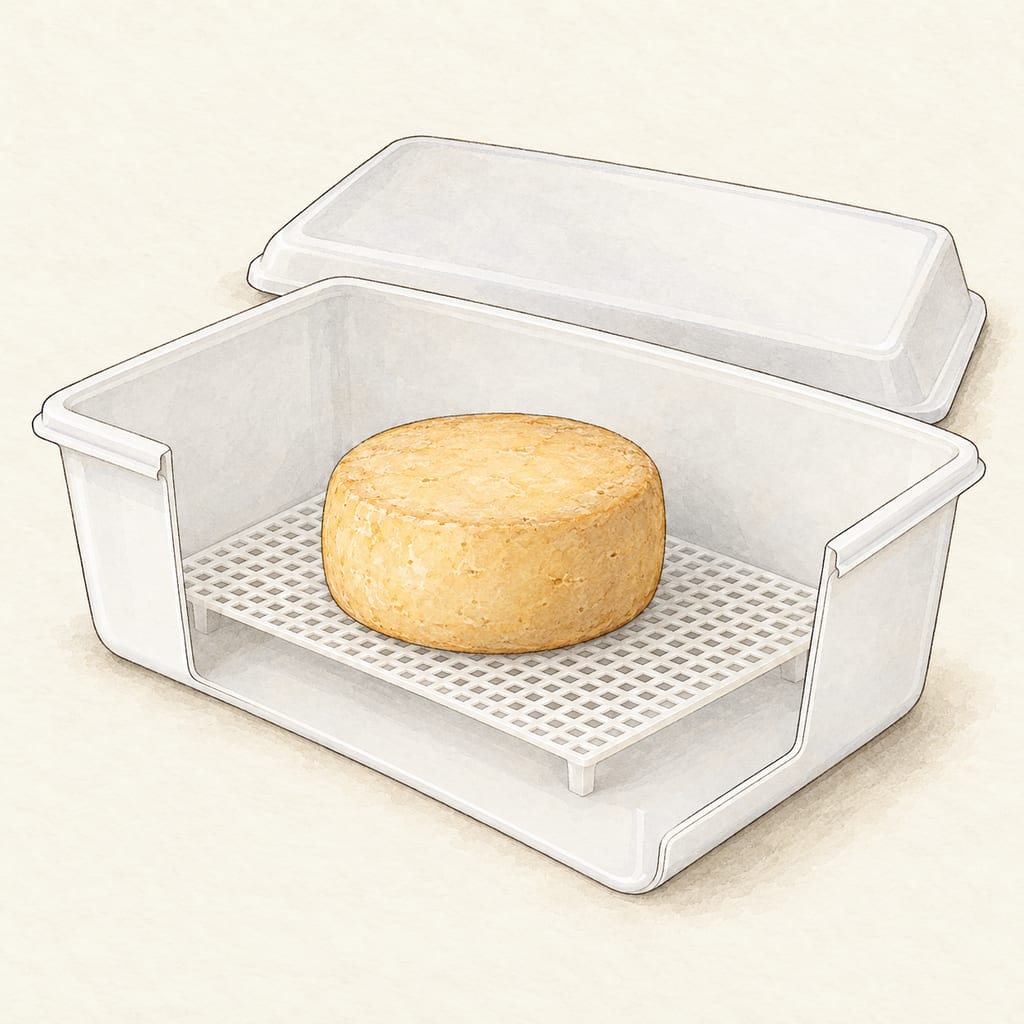
Watercolor illustration of a modern white lidded cheese-ripening box opened to show a cheese wheel raised on an open-grid mat.
Equipment

Cheese ripening box with raised mat

A lidded box used inside a cheese cave or cool cellar to create a small humid ripening space. A raised mat keeps cheese off the base so its underside can breathe and drain.

Boxes and cases
New Zealand
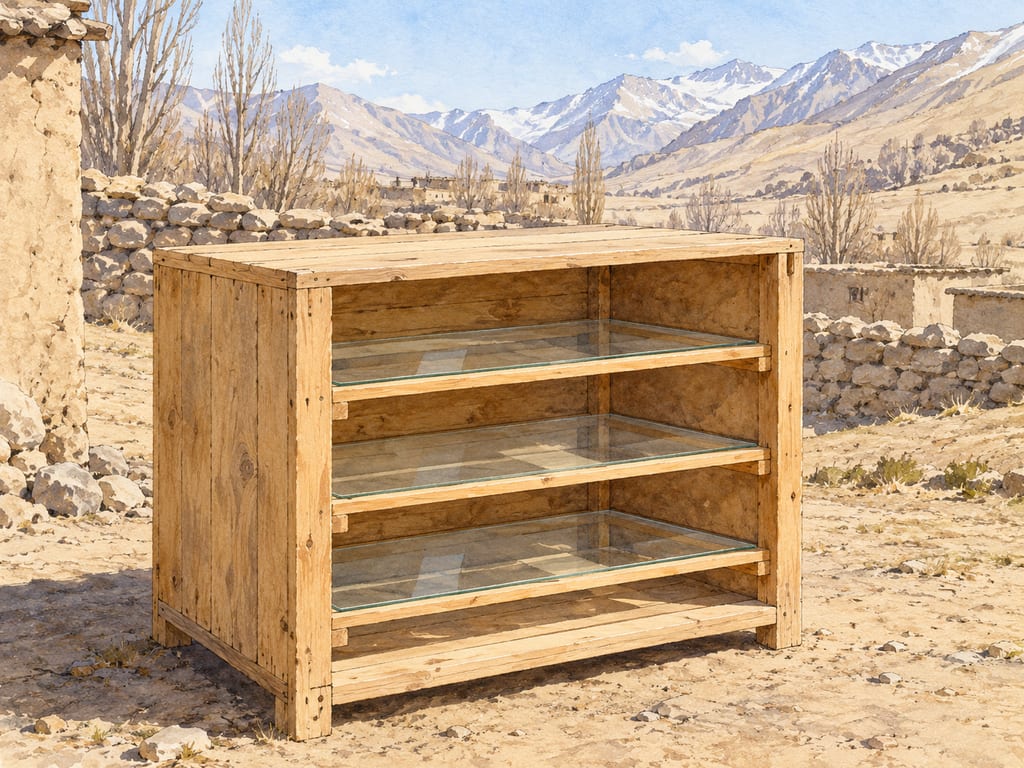
Illustration of a simple wooden box solar fruit dryer with glass-covered shelves, based on the documented 2017 Nisur workshop design.
Equipment

Protected apricot dryers

Tajik apricot growers use protected dryers to shield fruit from insects and weather. Documented equipment includes cabinet and portable tent designs; fixed greenhouse units are site installations.

Drying kilns and dryers
Tajikistan
Equipment

Oval coopered pig-salting trough

An open sycamore trough bound with iron hoops, recorded in use for salting pork at Penally, Wales, between 1850 and 1900.

Barrels and casks
Penally
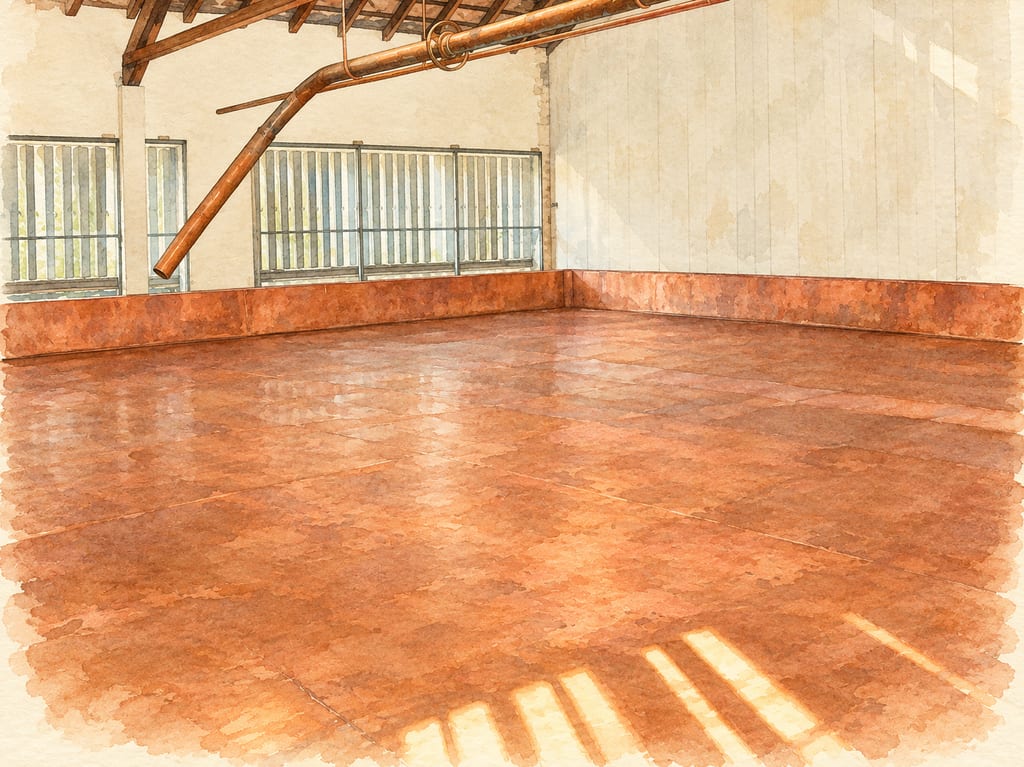
Watercolor illustration of an empty, broad, shallow copper-lined coolship beneath louvred brewery windows, with a gravity feed pipe overhead.
Equipment

Coolship

A coolship (Dutch koelschip) is a broad, shallow, open vessel that cools hot wort before fermentation. In Belgian lambic brewing, its open surface exposes wort to the brewhouse environment; materials and results vary.
Tanks and vats
Senne River Valley
Hand-painted editorial illustration of covered rectangular cement fish-sauce fermentation vats, following a documented Thai producer example.
Equipment

Thai fish-sauce tank and jar

Thai nam pla ferments fish and salt in more than one kind of vessel. Sources document earthenware jars alongside larger wooden or cement tanks; no single shape, capacity or construction detail applies to every maker.

Tanks and vats
Thailand
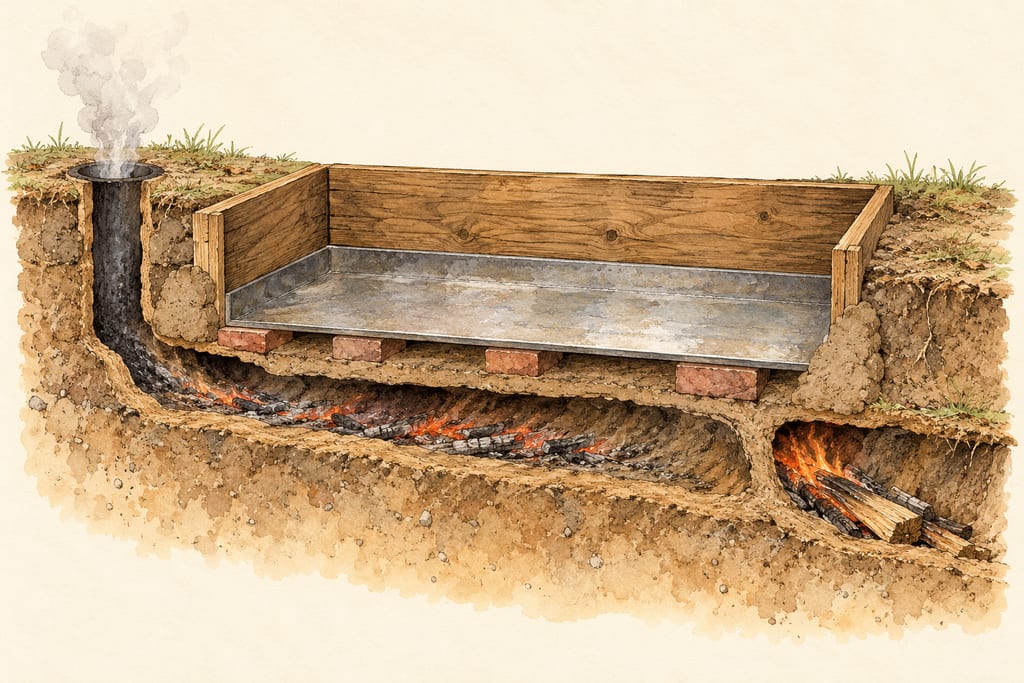
Cutaway illustration of a wooden Nuxalk eulachon rendering box with a metal bottom above its documented fire trench.
Equipment

Eulachon rendering box

A separate cooking box heats ripened eulachon so grease rises for skimming. Nuxalk sources describe wooden or cedar sides, a metal bottom and, in one setup, a fire trench beneath the box.

Kettles, coppers and boilers
Bella Coola River
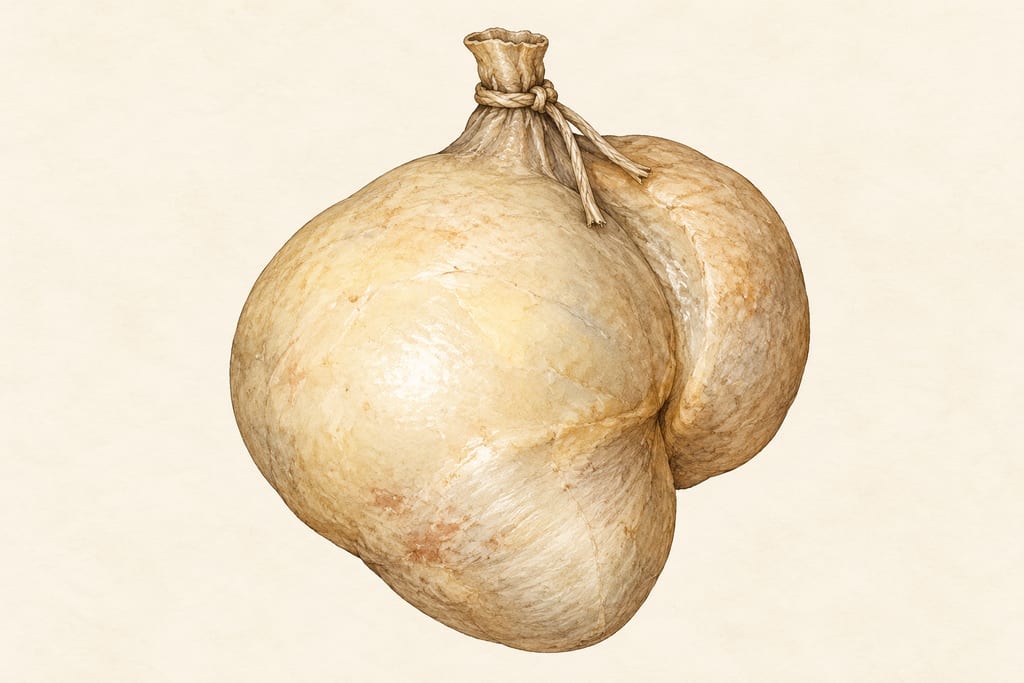
Archival watercolor illustration of a rounded animal-stomach qaryn pouch tied closed for butter storage.
Equipment

Qaryn butter stomach

A prepared animal-stomach pouch holds butter in Kazakh and Kyrgyz traditions. Field images document empty and filled qarın in southern Kyrgyzstan, while a Kazakh tutorial distinguishes animal-specific qaryn forms.

Bags, sacks and casings
Pamir-Alai, southern Kyrgyzstan
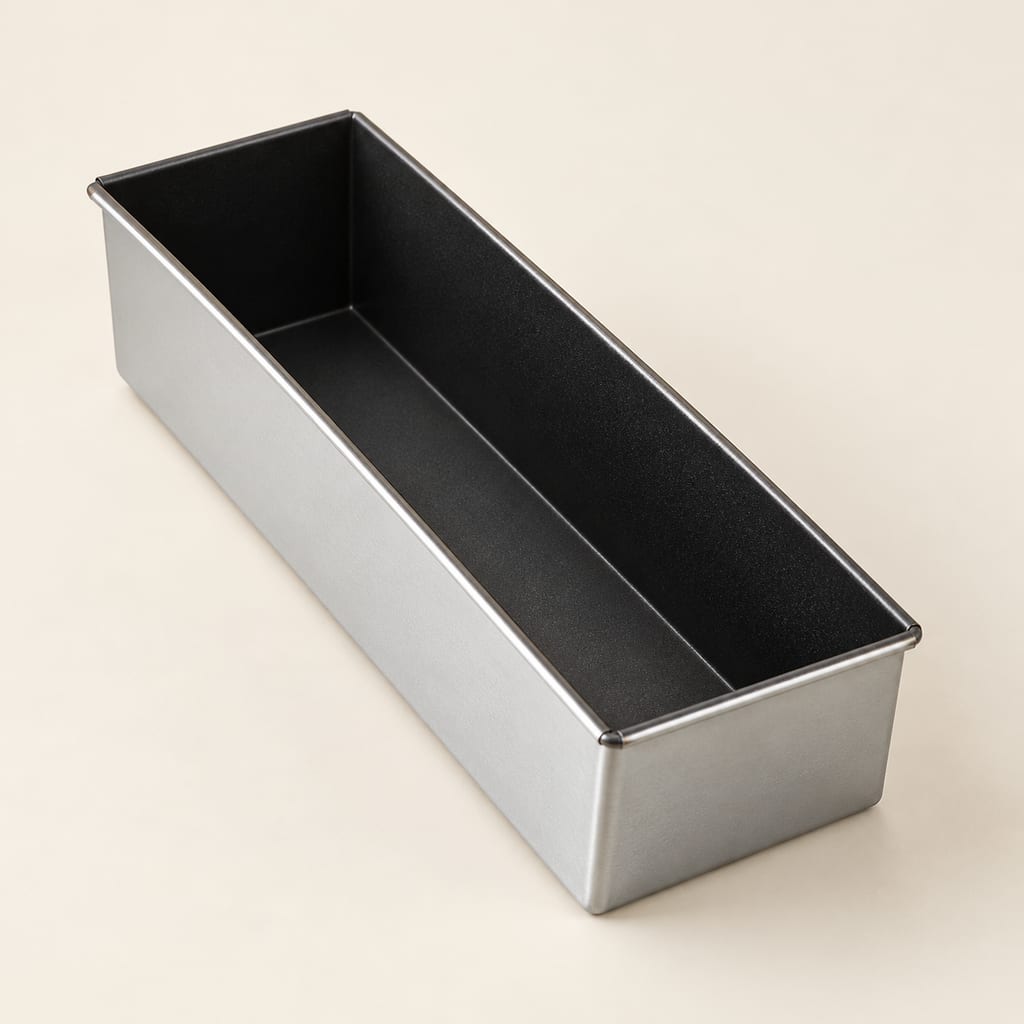
Photorealistic editorial image of one empty contemporary coated-metal Danish rye-bread tin, with a long rectangular shape and dark interior. Its material and form are not attributed to the pans in the 1995 family recipe.
Equipment

Greased rye-bread tin

A greased rye-bread tin holds rugbrød dough while it proofs and bakes. Denmark’s National Museum documents a family recipe using three tins, but does not specify their material, shape or capacity.

Baking pans and tins
Denmark
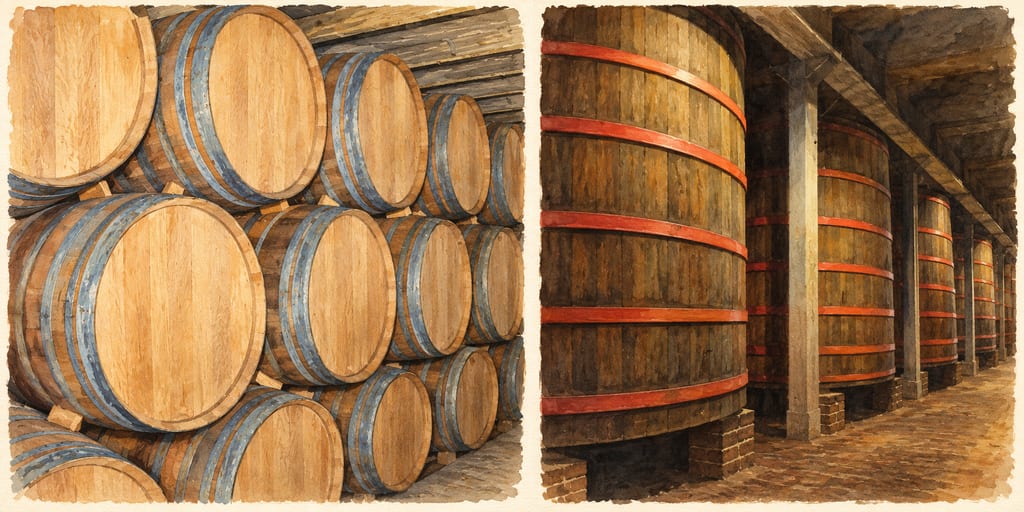
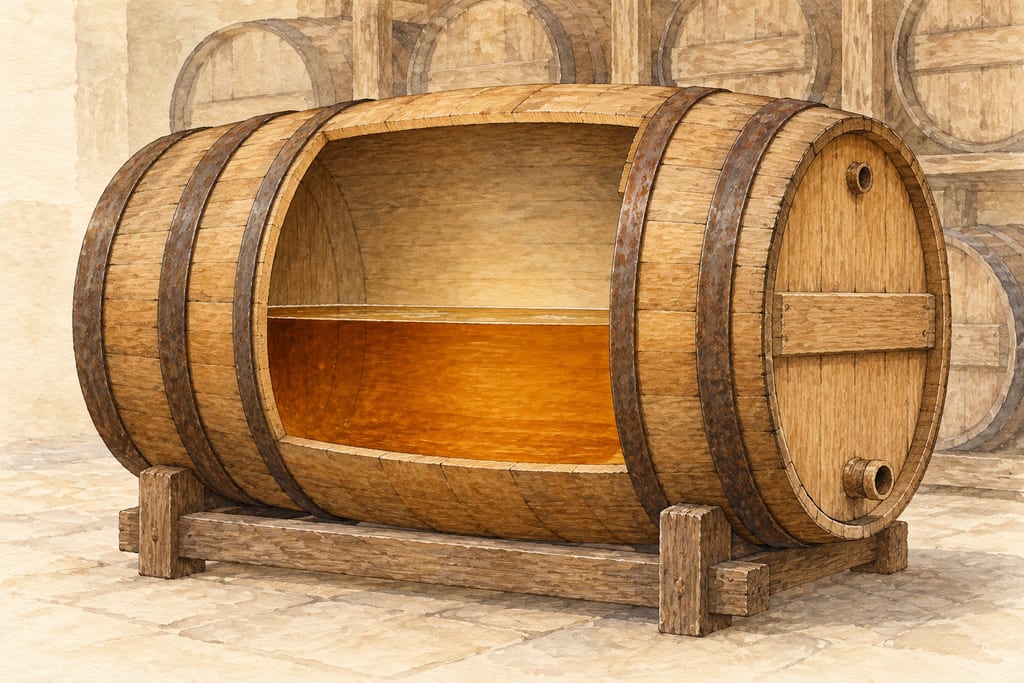
Watercolor illustration contrasting horizontal Lambic casks with monumental upright Flemish red-beer foeders.
Equipment

Lambic barrel and Flemish red-beer foeder

Lambic ferments and matures in reused horizontal wooden casks; West Flemish red-brown beer uses much larger upright oak foeders. They share coopered wood, but differ in orientation, scale and brewing use.

Barrels and casks
Senne River valley
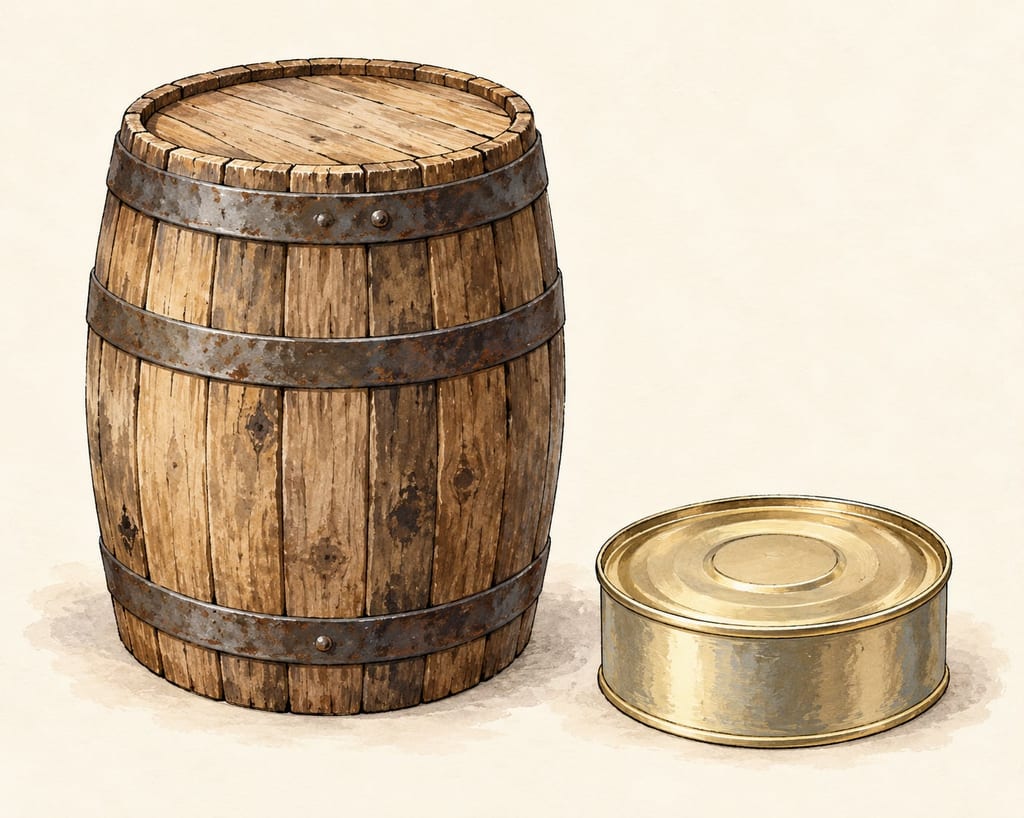
Editorial illustration of an upright wooden surströmming fermentation barrel beside a low, wide sealed metal can.
Equipment

Surströmming barrel and can

Surströmming production moves from short open brining to closed barrel fermentation, then into tightly sealed low, wide consumer cans where fermentation can continue.

Barrels and casks
Sweden
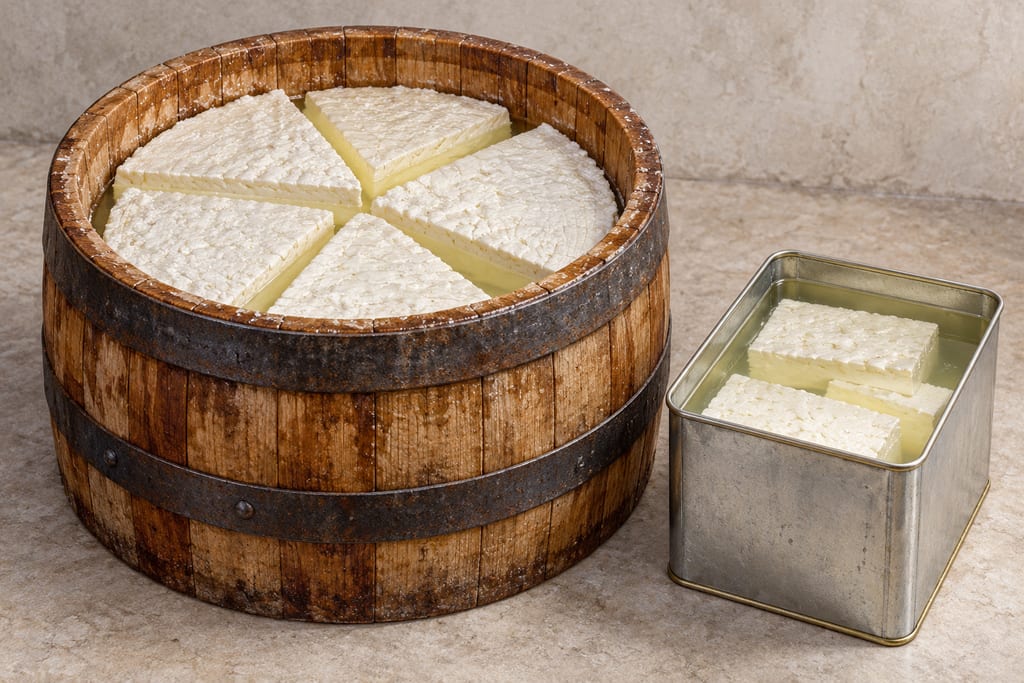
Editorial illustration comparing a coopered wooden feta barrel, shown as the primary traditional form, with a separate rectangular metal brine tin; producer-specific examples, not a universal blueprint.
Equipment

Feta ripening barrel and metal tin

Two portable vessels documented for feta maturation: a coopered wooden barrel used with salted cheese and brine, and a rectangular metal tin used with cheese in brine. They differ in construction and packing.

Barrels and casks
Kalavryta
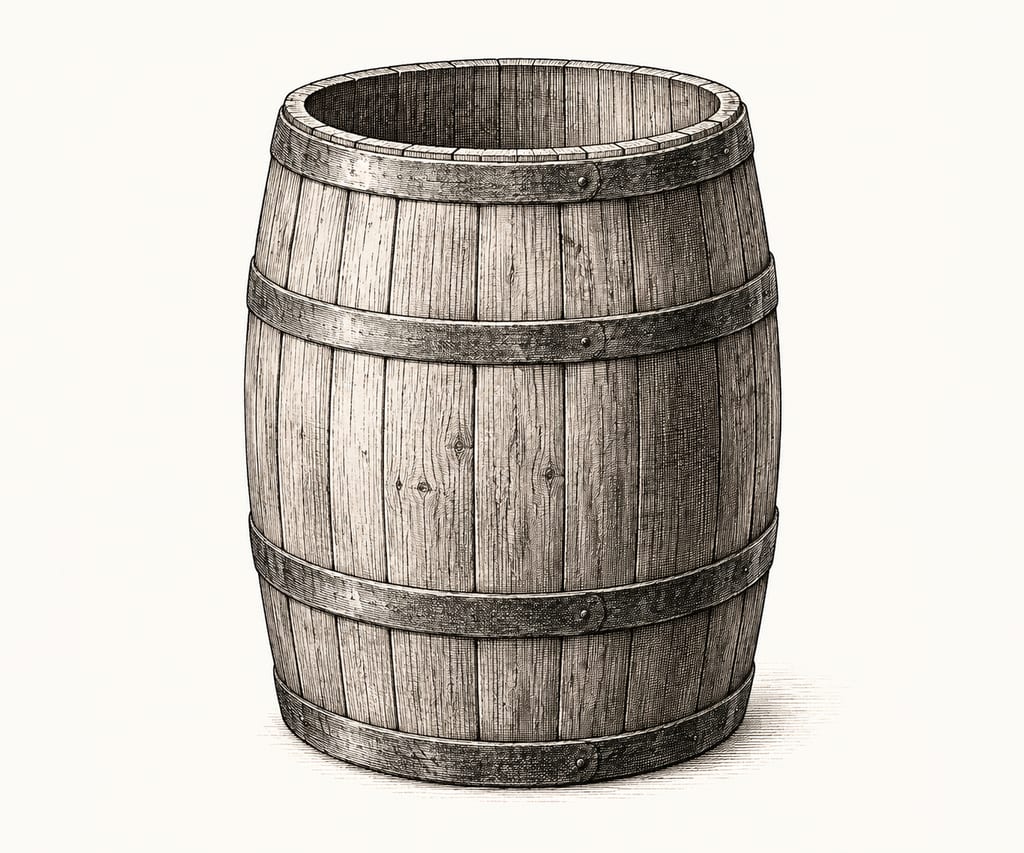
Interpretive illustration of a single open coopered wooden herring barrel, guided by a 1792 print; not an identified artifact or exact reconstruction.
Equipment

Herring salting barrel

A coopered wooden barrel held herring and salt during northern European curing. Siglufjörður's early-20th-century station is one documented setting; barrel forms and processes varied.

Barrels and casks
Siglufjörður
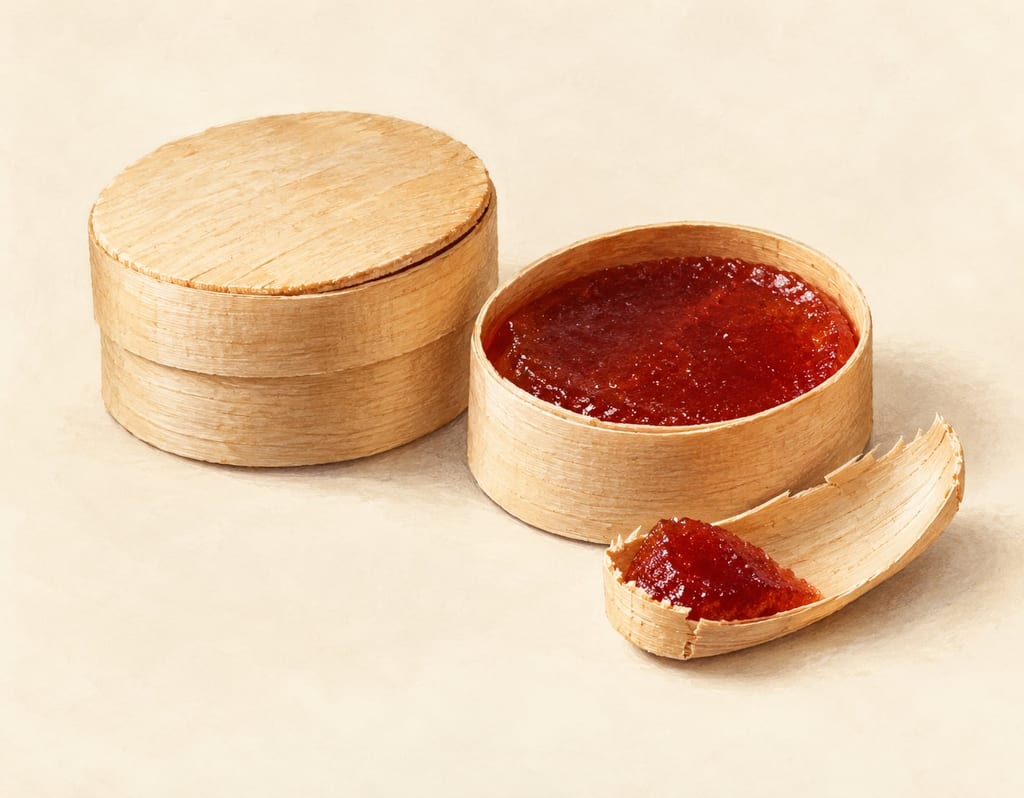
Illustration of two round spruce boxes for Cotignac d’Orléans: one closed, one open with red quince confection; a broken lid piece serves as a spoon.
Equipment

Small spruce-bark boxes

The small round spruce box, or friponne, is the traditional presentation package for Cotignac d'Orléans; the lid can serve as a spoon. Its form is not a fermentation vessel.

Boxes and cases
Orléans
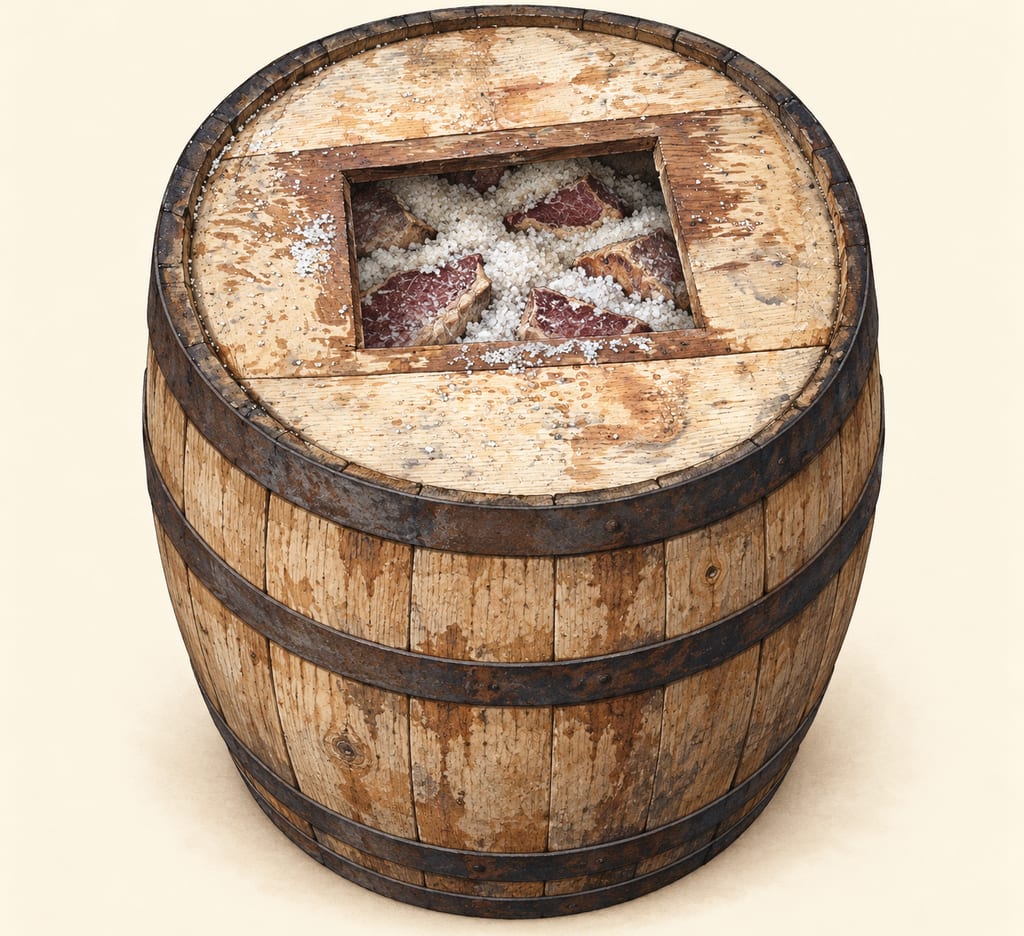
Historical editorial illustration of a wooden salted-meat barrel with beef and salt visible through its head opening, based on a modern experimental reconstruction rather than a surviving seventeenth-century artifact.
Equipment

Salt-meat barrel

A coopered cask for curing and carrying salted meat, documented in seventeenth-century English shipboard writing. A modern reconstruction illustrates its use, not a surviving period artifact.

Barrels and casks
England
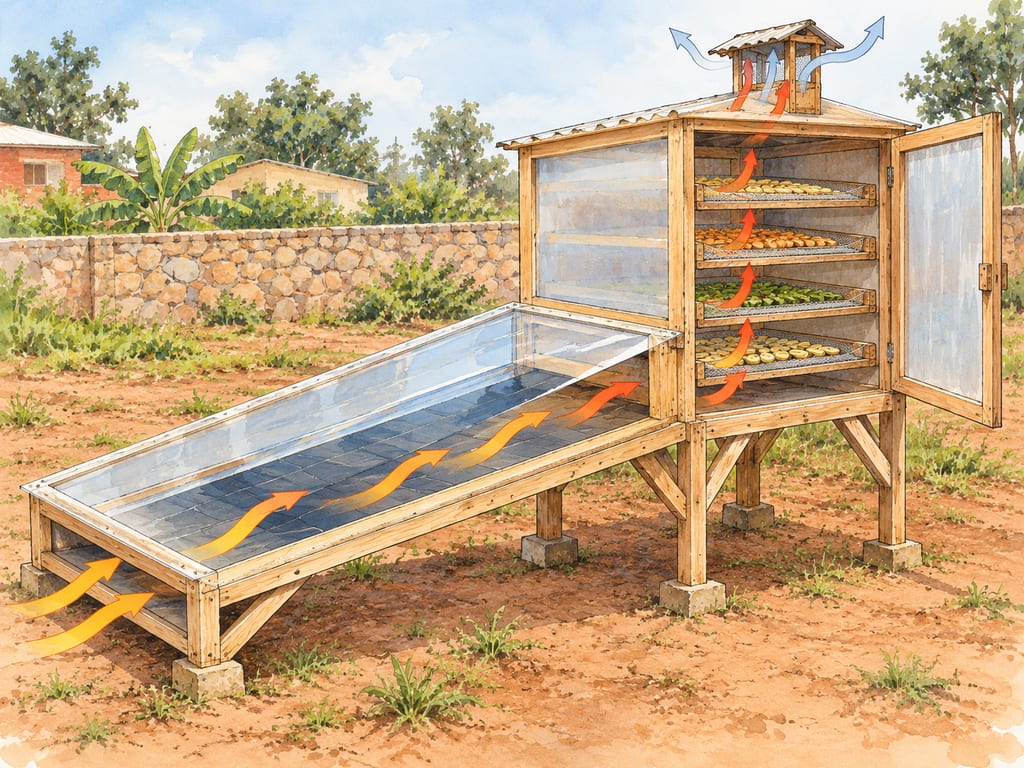
Illustration of a timber indirect solar dryer: a glazed collector warms air that rises through food trays in a separate cabinet.
Equipment

Indirect solar dryer

An indirect solar dryer heats air in a separate collector, then moves it through a covered food chamber. Designs vary in size, materials and airflow.

Drying kilns and dryers
Uganda
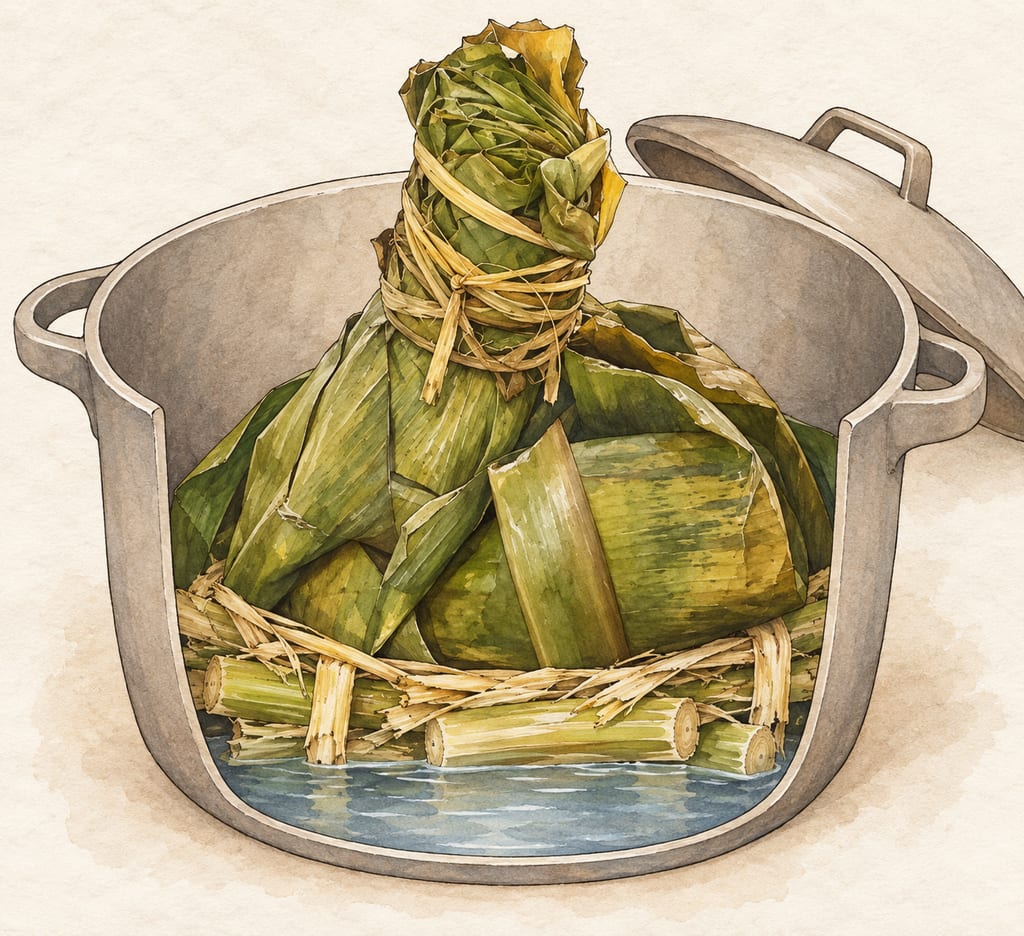
Interpretive cutaway illustration of a leaf steamer: a tied banana-leaf parcel rests on stalks above water inside a plain pot.
Equipment

Leaf steamer

A temporary leaf-and-stalk support inside a cooking pot keeps leaf-wrapped food above boiling water.

Leaf steamer
Uganda
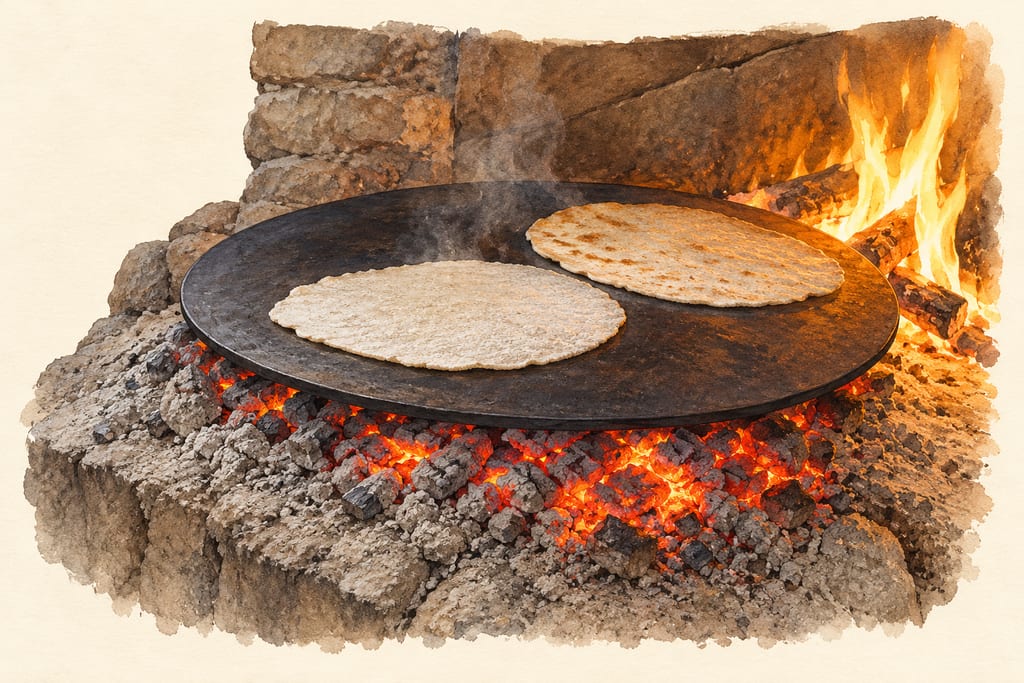
Watercolor-and-ink illustration of a traditional iron takke over glowing hearth embers, baking thin Norwegian flatbread.
Equipment

Hot dry griddle

A heated iron or stone plate for fat-free baking of thin breads. Norwegian sources document the takke and stone bakstehelle, from wood-fired hearths to modern electric models.

Baking surfaces and griddles
Norway
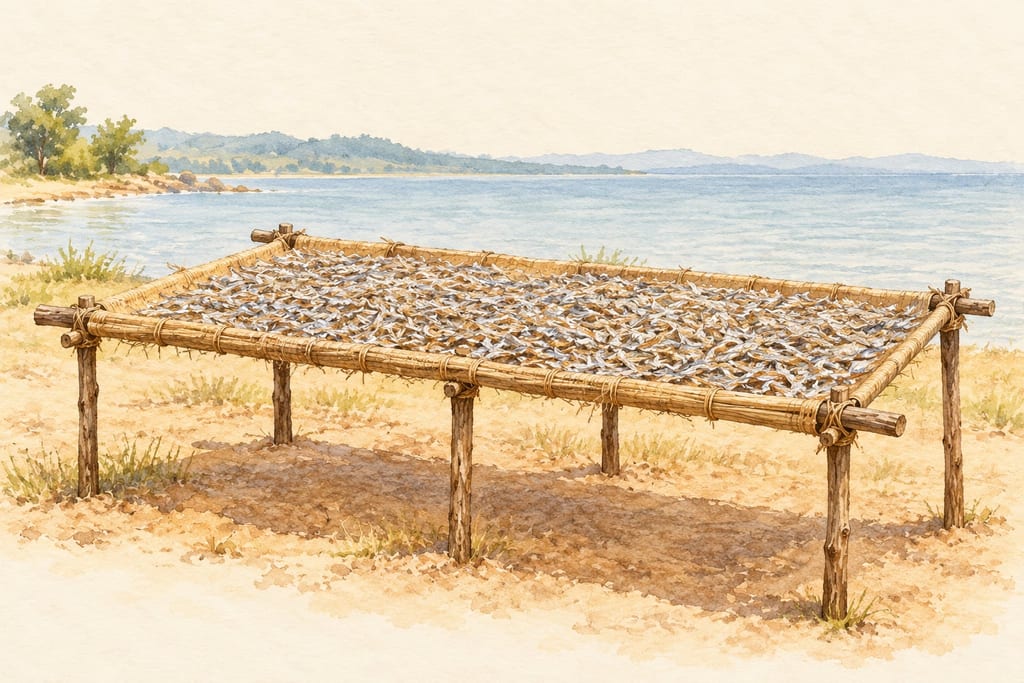
Interpretive warm-ivory illustration of a modest raised reed-and-stick crib carrying small fish to dry, grounded in a Lake Victoria rack photograph; exact rack construction is not claimed.
Equipment

Raised fish-drying rack

A low-cost raised bed for sun-drying small fish, documented in Lake Victoria communities in Tanzania in wood-and-reed and improved mesh forms.

Baskets, trays and beds
Mwanza Region
Historical gouache and pencil illustration of an empty Alutiiq seal-stomach food pouch with both ends tied, on a warm ivory background.
Equipment

Seal-stomach food container

An Alutiiq household container made from a seal stomach held summer foods such as berries, greens, oil and fish eggs. Its flexible, lashed ends contained stored foods and could also hold blubber while it released oil.

Bags, sacks and casings
Alutiiq/Sugpiaq Alaska
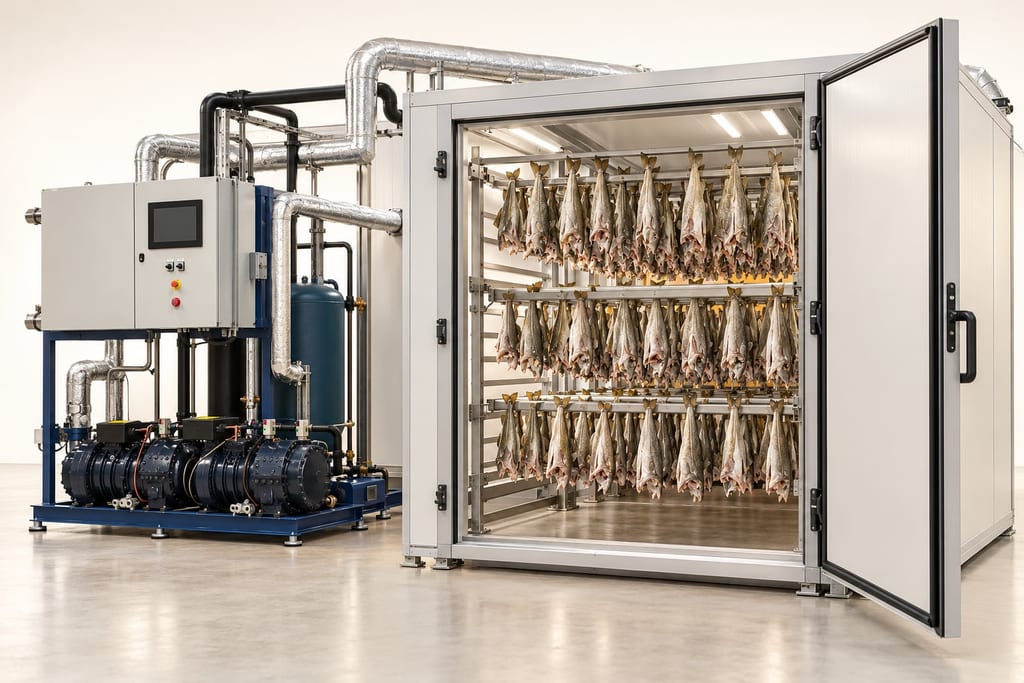
Editorial depiction of a modern industrial heat-pump drying chamber for stockfish, with hanging cod racks and connected dehumidification equipment.
Equipment

Heat-pump drying cabinet (indoor stockfish)

A modern industrial system for controlled indoor drying of stockfish. Documented Norwegian examples combine a drying chamber or duct with heat-pump dehumidification and process monitoring; the evidence does not describe a household cabinet.

Drying kilns and dryers
Ås
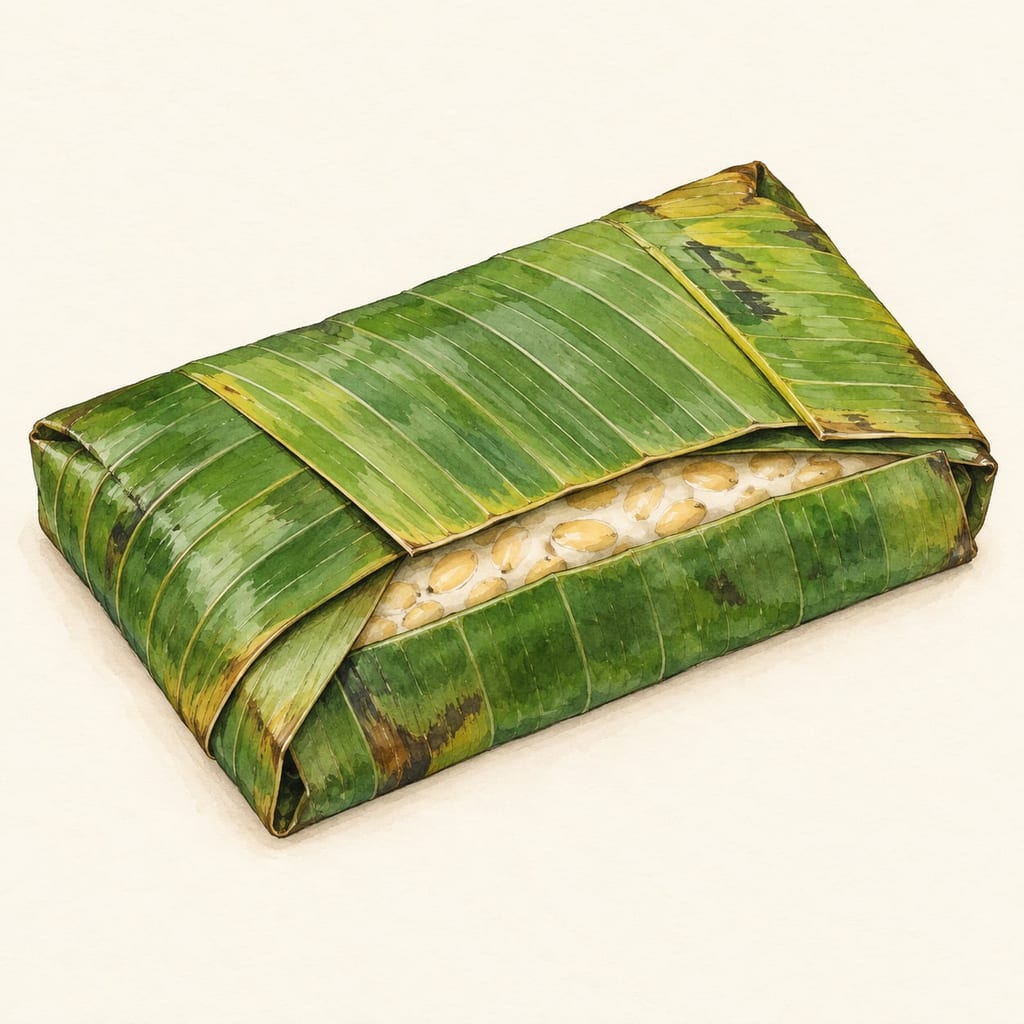
Warm-ivory watercolor-and-ink illustration of a low rectangular tempeh packet folded from broad banana leaves, with soybeans partly visible along one overlapping edge.
Equipment

Tempe leaf packet

A broad banana leaf folded around beans forms the flat packet in which tempeh ferments. It shapes the cake while allowing air exchange; Indonesian producers also use plastic wraps.

Bamboo, leaf and wraps
Indonesia
Watercolor cutaway of a horizontal Orléans vinegar cask, showing its air chamber above a partly filled barrel.
Equipment

Orléans vinegar barrel

A coopered cask used horizontally for Orléans wine vinegar, with an air chamber and openings that support surface acetification. The method depends on oxygen at the liquid surface; a full, airtight storage cask is a different vessel in use.

Barrels and casks
Orléans
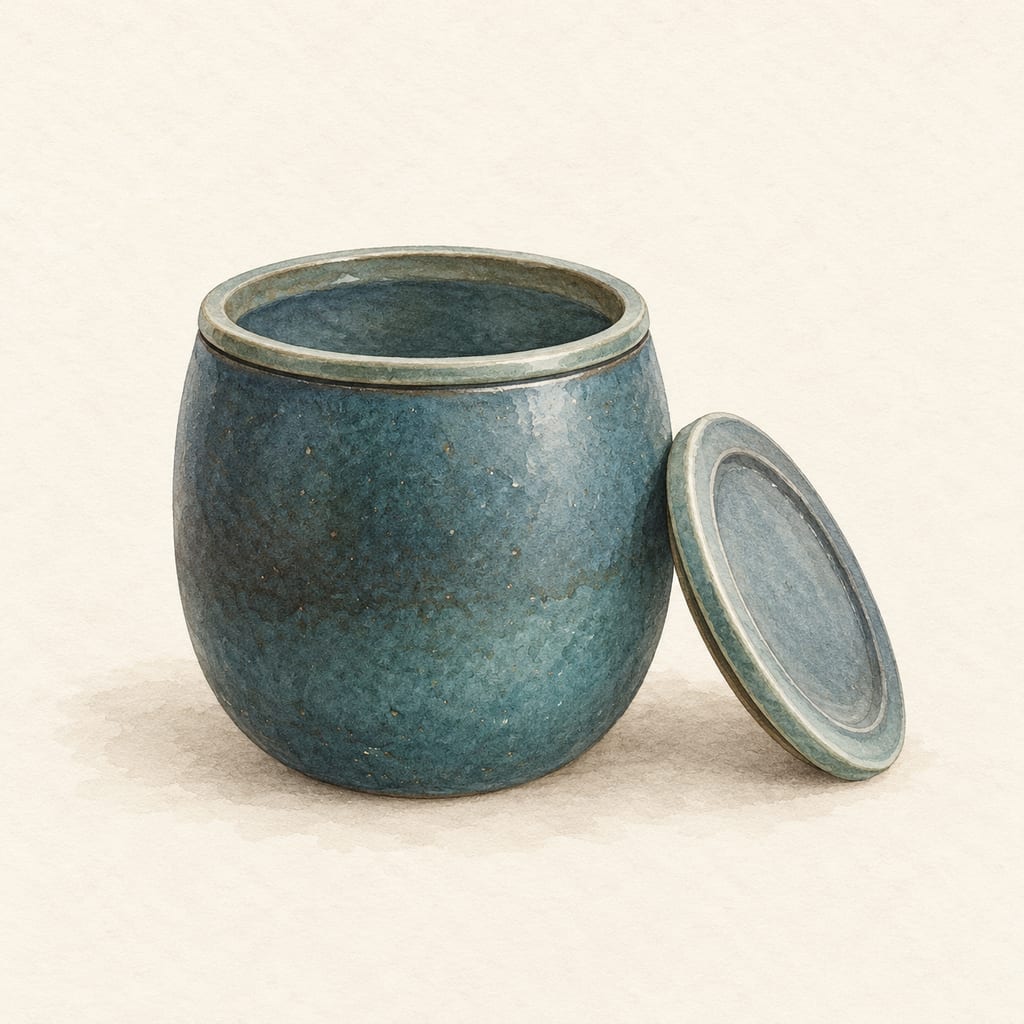
Hand-painted illustration of an empty rounded ceramic nukadoko jar with its fitted pottery lid beside it.
Equipment

Nukadoko jar and container

A nukadoko container holds the moist rice-bran bed in which vegetables are repeatedly pickled. Japanese households have maintained these beds in ceramic jars, while contemporary options also include compact ceramic and enamel designs.

Jars, pots and crocks
Japan
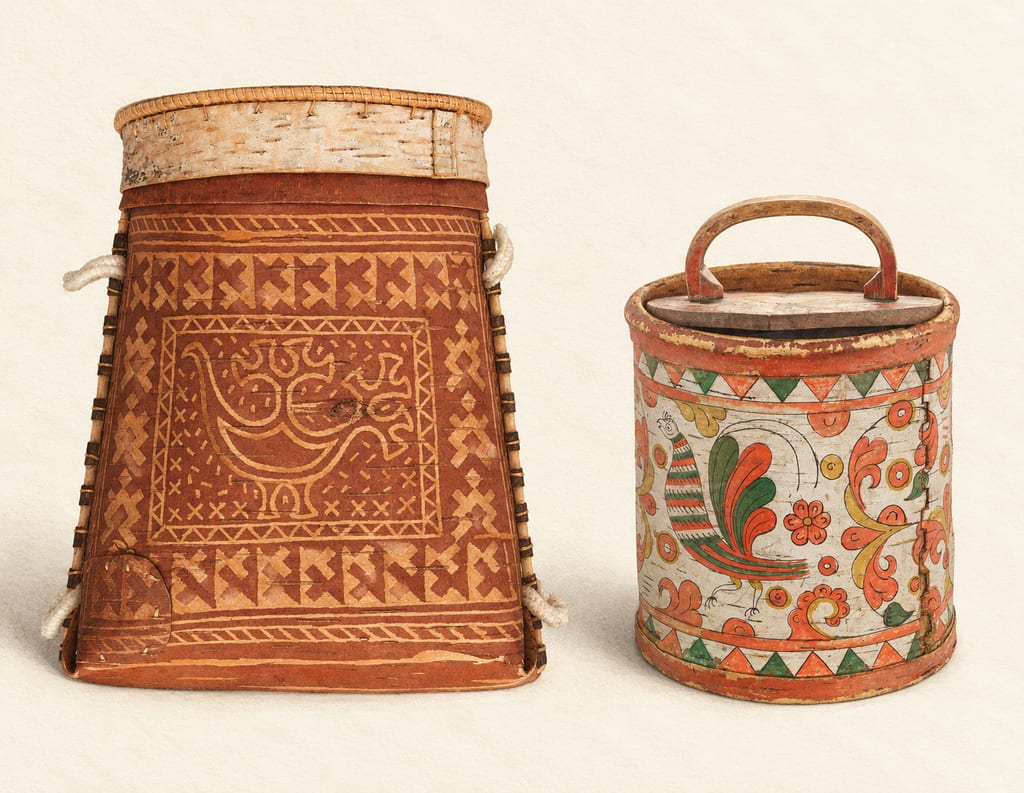
Historical illustration of two distinct birch-bark tuyes forms: a tall box-like Khanty example and a painted cylindrical Northern Dvina example, each based on a documented museum object.
Equipment

Birch-bark containers

Ket sources describe frozen lingonberries in birch-bark containers; Shor sources describe salted wild garlic in birch-bark tuyes. Their exact forms are not documented.

Bark vessels
Central Siberia (Ket communities)
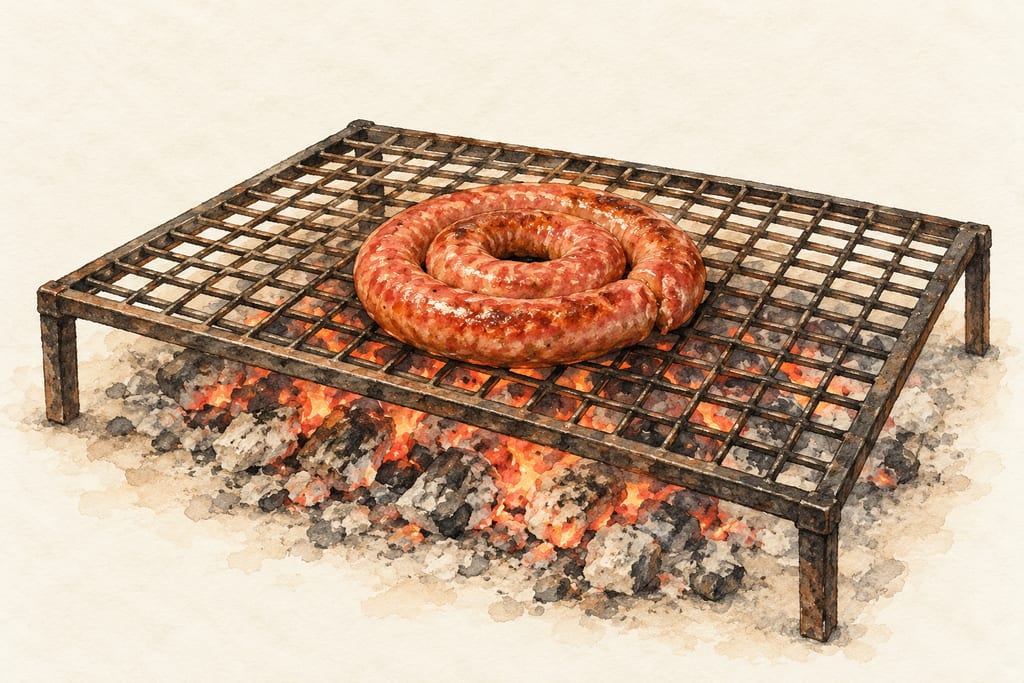
A metal braai cooking grid above glowing coals with one fresh coiled sausage cooking, in watercolor-pencil illustration on warm ivory paper.
Equipment

Braai

A braai is a South African open-fire cooking practice. This record focuses on the movable cooking grid over coals shown in a documented photograph; sources do not establish one standard grill design or size.

Open-fire grills
South Africa
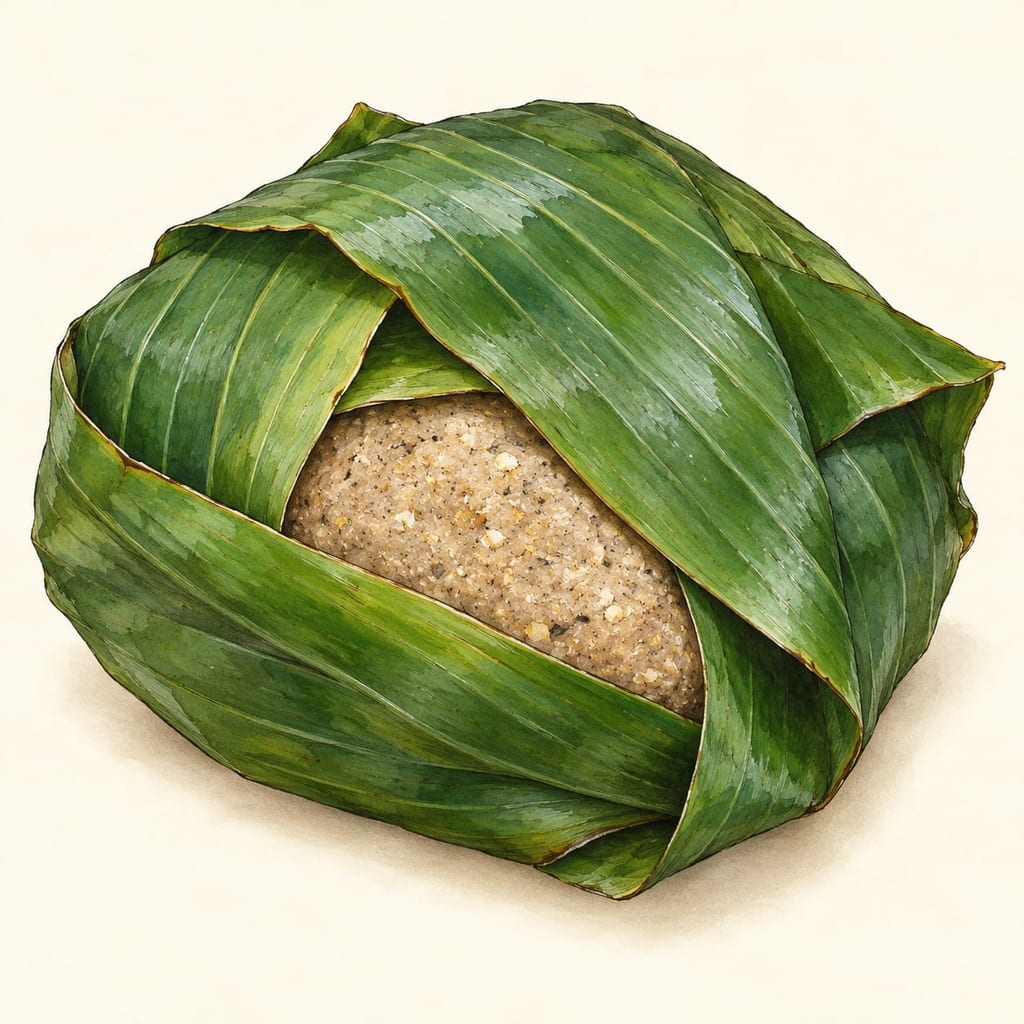
Warm-ivory ink-and-watercolor illustration of pozol nixtamalized maize dough enclosed by broad overlapping plantain leaves, an interpretive depiction of the documented fermentation wrapper.
Equipment

Pozol leaf package

Plantain leaves wrap pozol’s nixtamalized maize dough during fermentation, limiting drying and keeping portions portable in southeastern Mexico.

Bamboo, leaf and wraps
Southeastern Mexico
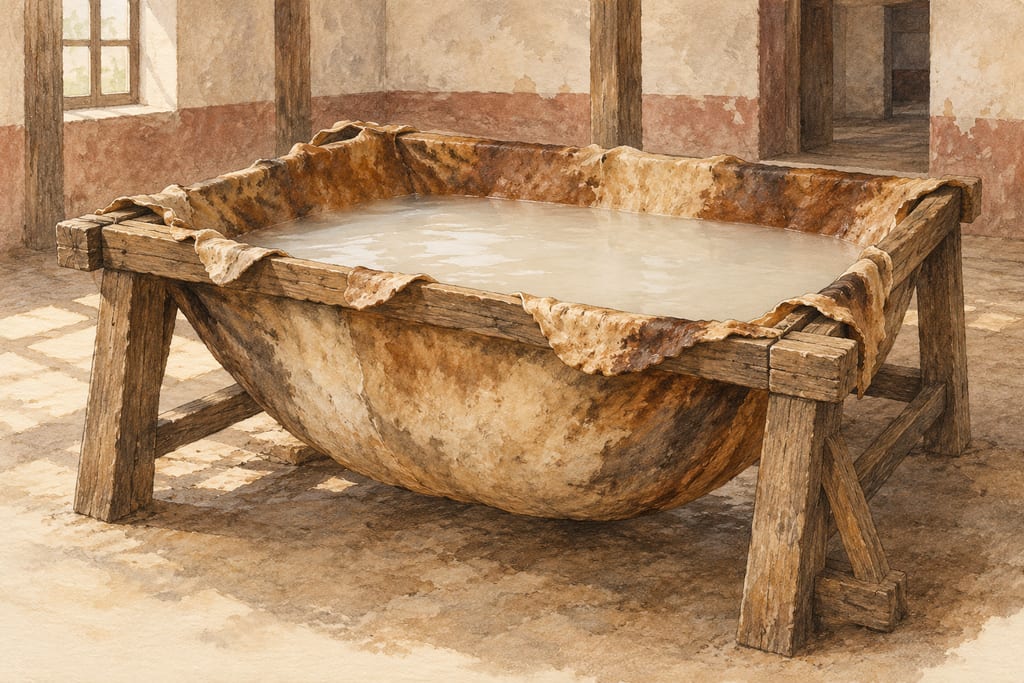
Archival illustration of a cattle-hide pulque vat sagging into a timber frame over wooden trestles, shown holding cloudy pulque.
Equipment

Framed hide vat for pulque

A framed hide vat is cattle hide fixed around a timber frame and sagging into a basin. In a tinacal it holds aguamiel and its ferment as they become pulque; it is distinct from the room, the acocote and a carrying skin.

Skins and bladders
Central Mexico
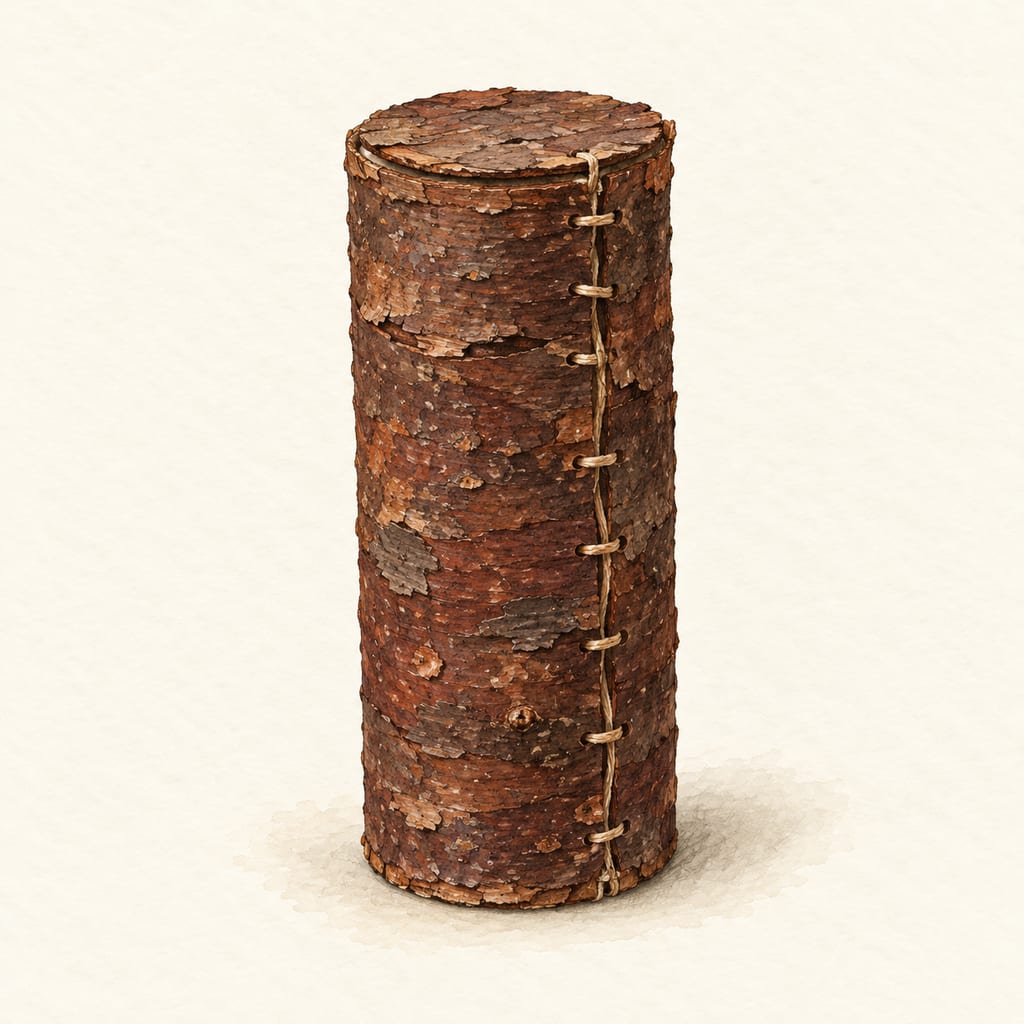
Watercolor illustration of the closed fir-bark cheese cylinder with a fitted bark end disk and hand-sewn seam.
Equipment

Fir-bark cheese cylinder

A sewn fir- or pine-bark casing used for one documented Bucegi Mountains form of brânză de burduf, shaped as a cylinder and closed with bark disks while the cheese matures.

Strainers, moulds and hoops
Bucegi Mountains
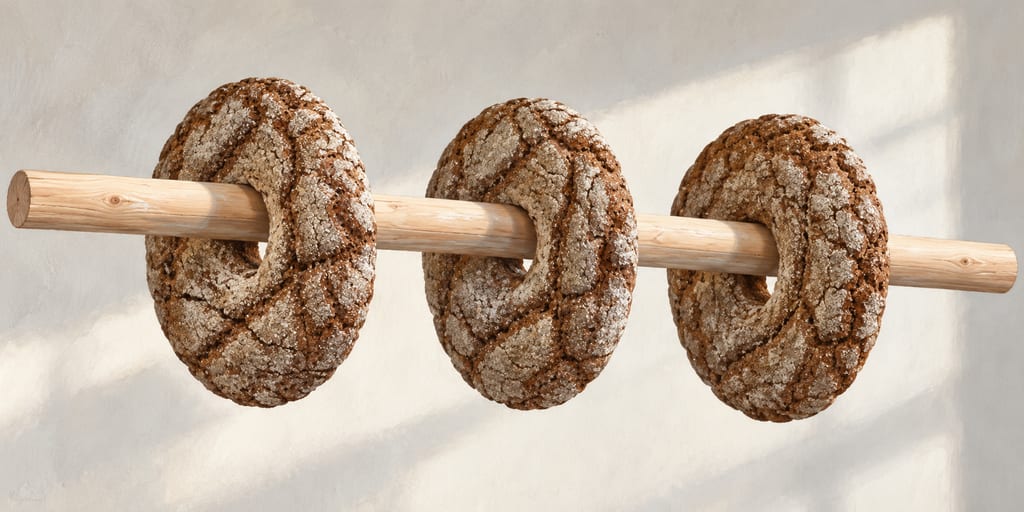
Historical editorial illustration of several ring-shaped rye loaves threaded through their central holes on a simple wooden pole.
Equipment

Bread-hanging pole for reikäleipä

A simple wooden pole stores Finnish ring-shaped rye loaves by passing the pole through each loaf’s central hole. Finnish accounts describe the poles as ceiling-suspended and connect the hole-shaped loaf with a tradition of drying bread.

Drying poles and racks
Finland
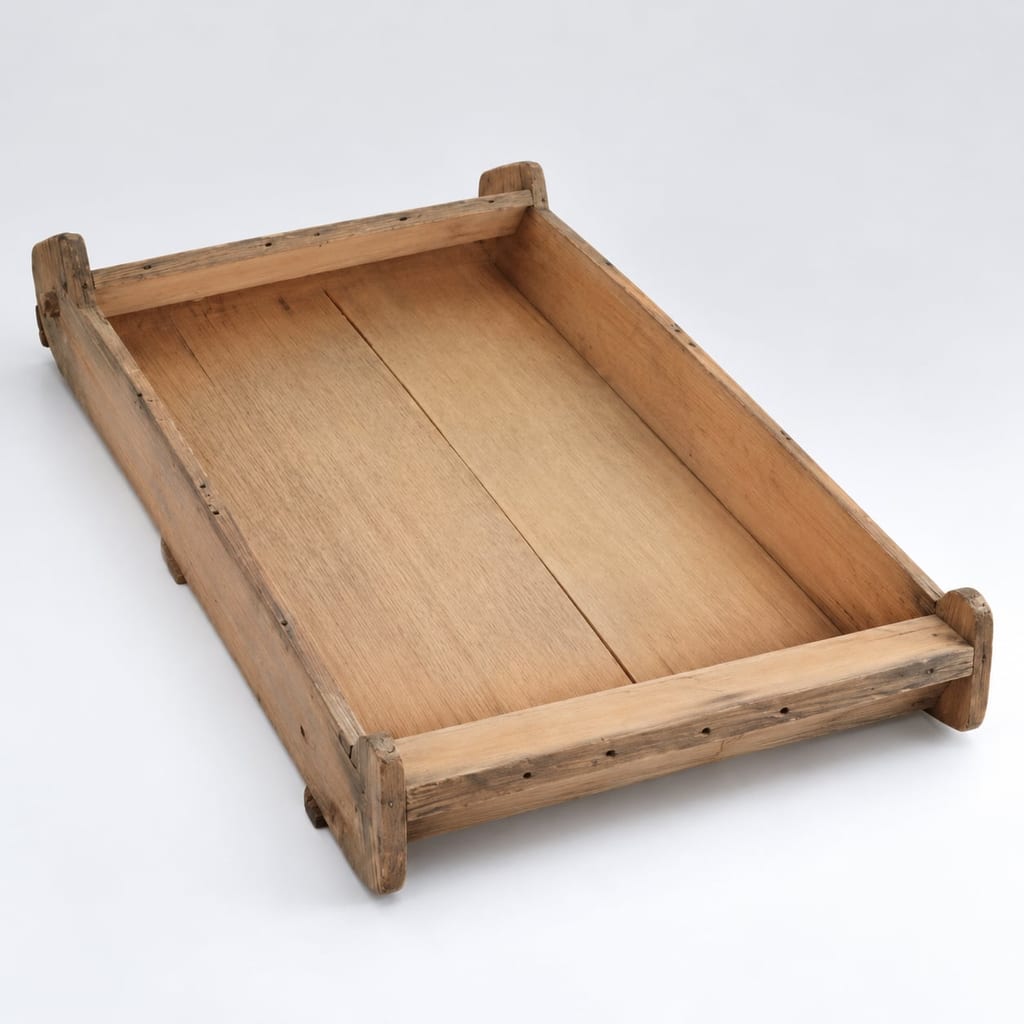
Illustrative view of an empty Japanese wooden koji-buta tray, one documented form within the broader tray-and-basket category.
Equipment

Shallow solid-state cultivation tray or basket

A shallow tray or basket carries grain or another solid food material during a mold-growing stage. Japanese koji trays and Southeast Asian bamboo trays share a broad function, but have distinct forms, histories and local uses.

Baskets, trays and beds
Japan
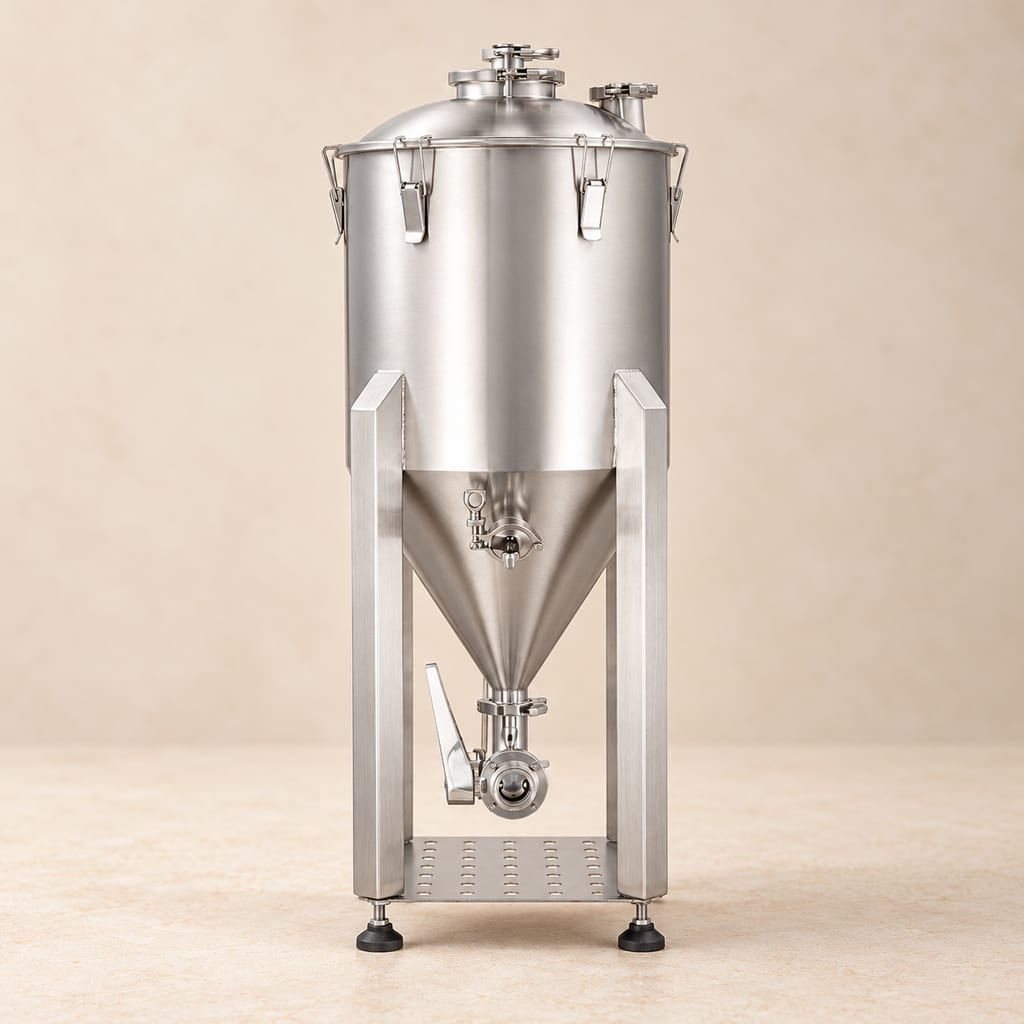
An empty brushed stainless cylindroconical fermenter with a domed clamped lid, cylindrical body, steep cone and four-leg frame on a warm ivory studio floor.
Equipment

Stainless cylindroconical fermenter

A stainless fermentation tank with a cylindrical upper body and a conical bottom, used to collect sediment at the low point; fittings, temperature control and pressure rating vary by model.

Tanks and vats
Modern and global
Equipment

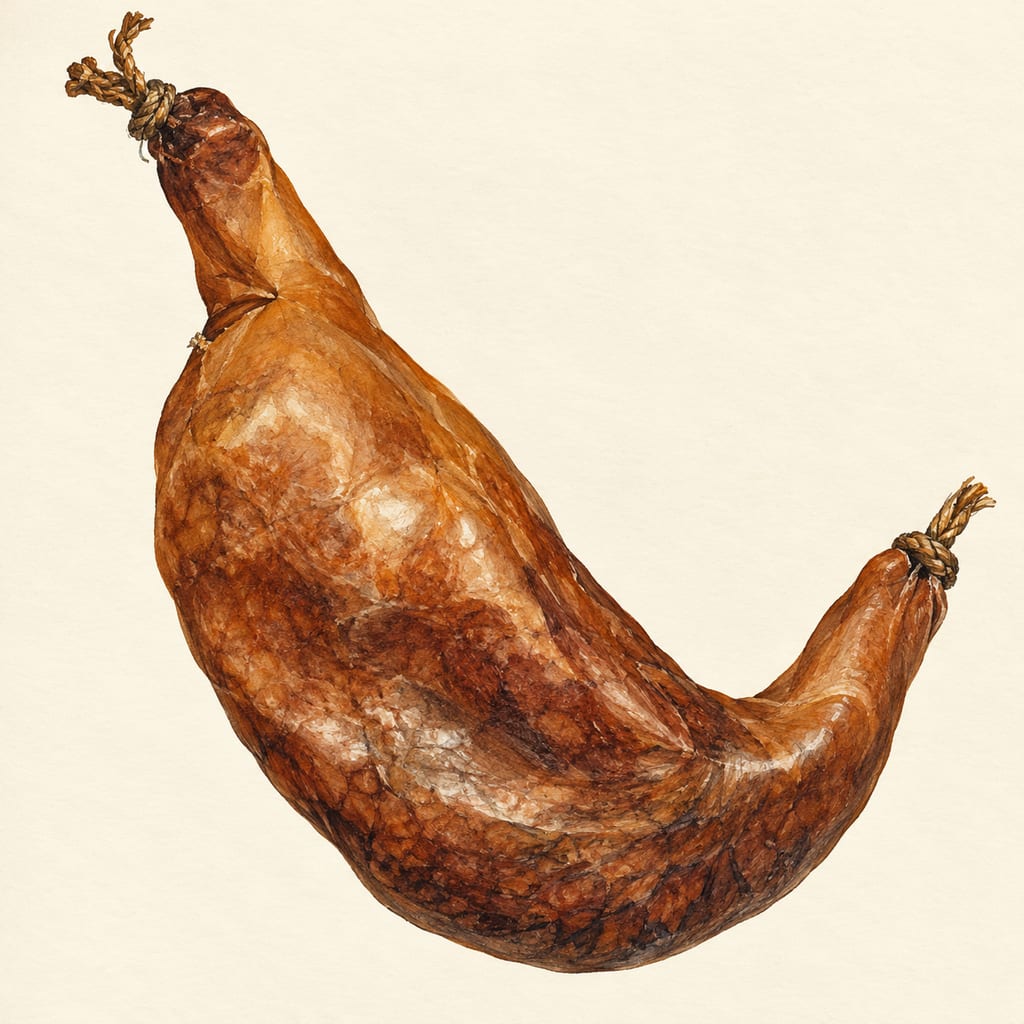
Smoked sheep stomach

A cleaned sheep stomach, inflated and briefly smoked, served as a light, one-use Tuvan container for carrying and storing chökpek. Sources describe its form and use in Tuva, but give no standard size or modern reuse guidance.

Bags, sacks and casings
Tuva
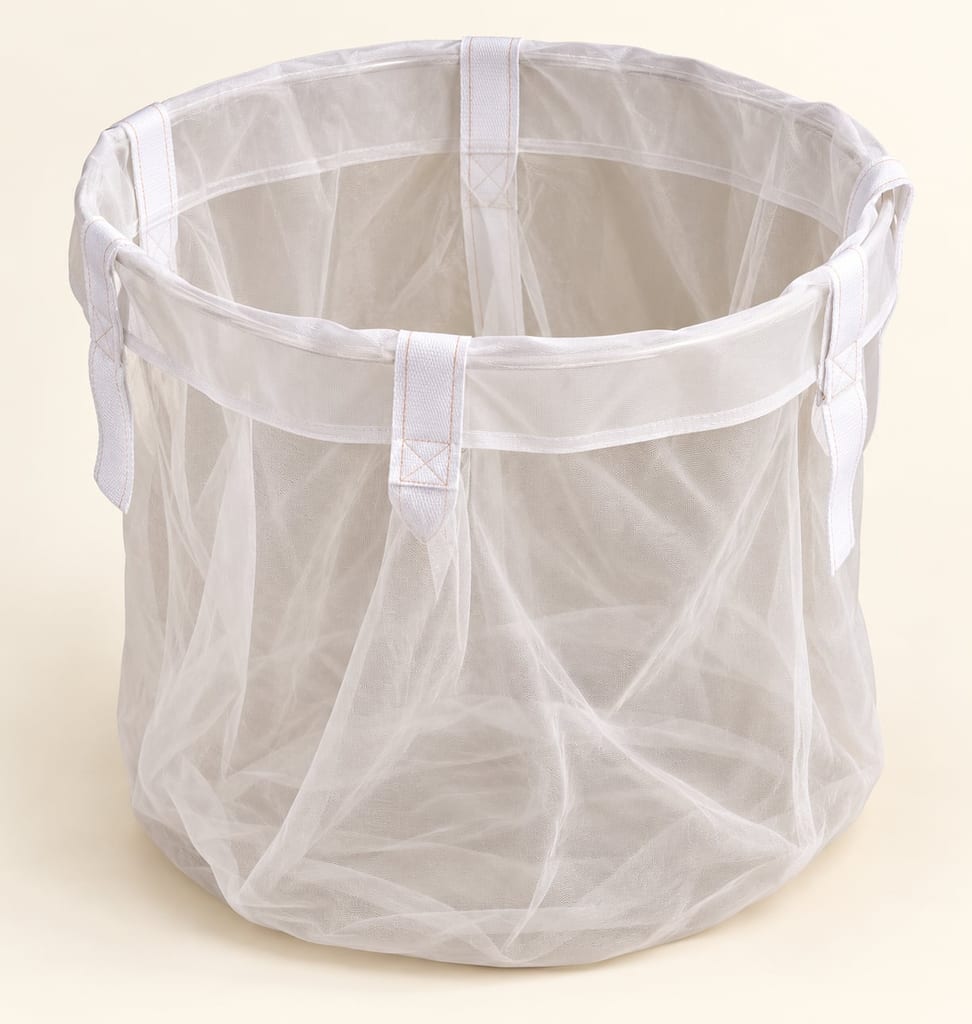
An empty pale mesh brew-in-a-bag mash bag stands open, showing its sewn rim and lifting tabs.
Equipment

Brew-in-a-bag mash bag

A reusable fabric filter bag holds crushed malt inside a brew kettle during the mash, then lifts out to separate grain from wort.

Bags, sacks and casings
Modern and global
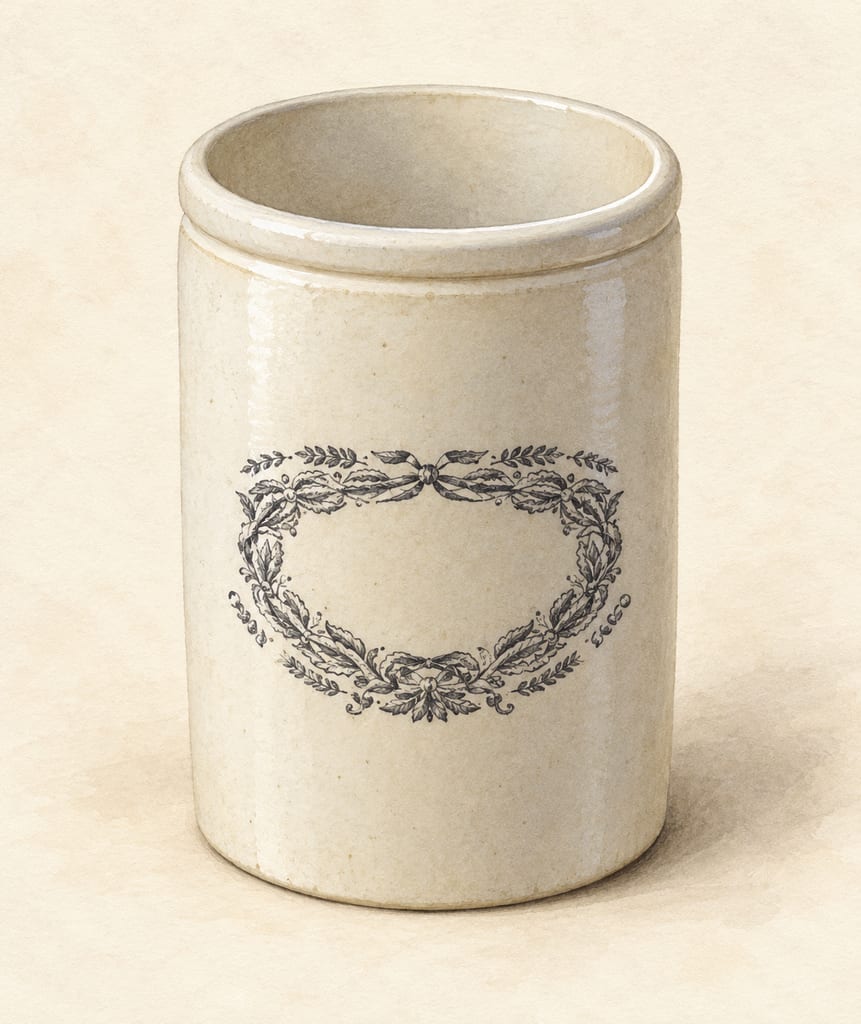
Historical illustration of a pale cylindrical Keiller stoneware marmalade jar with a dark ornamental transfer-printed cartouche and open rim.
Equipment

Keiller nineteenth-century stoneware jars

Keiller-branded stoneware jars were commercial packages for Dundee marmalade. Collections show cylindrical forms with printed marks; sources distinguish the Dundee brand from documented Maling manufacture in Newcastle.

Jars, pots and crocks
Dundee
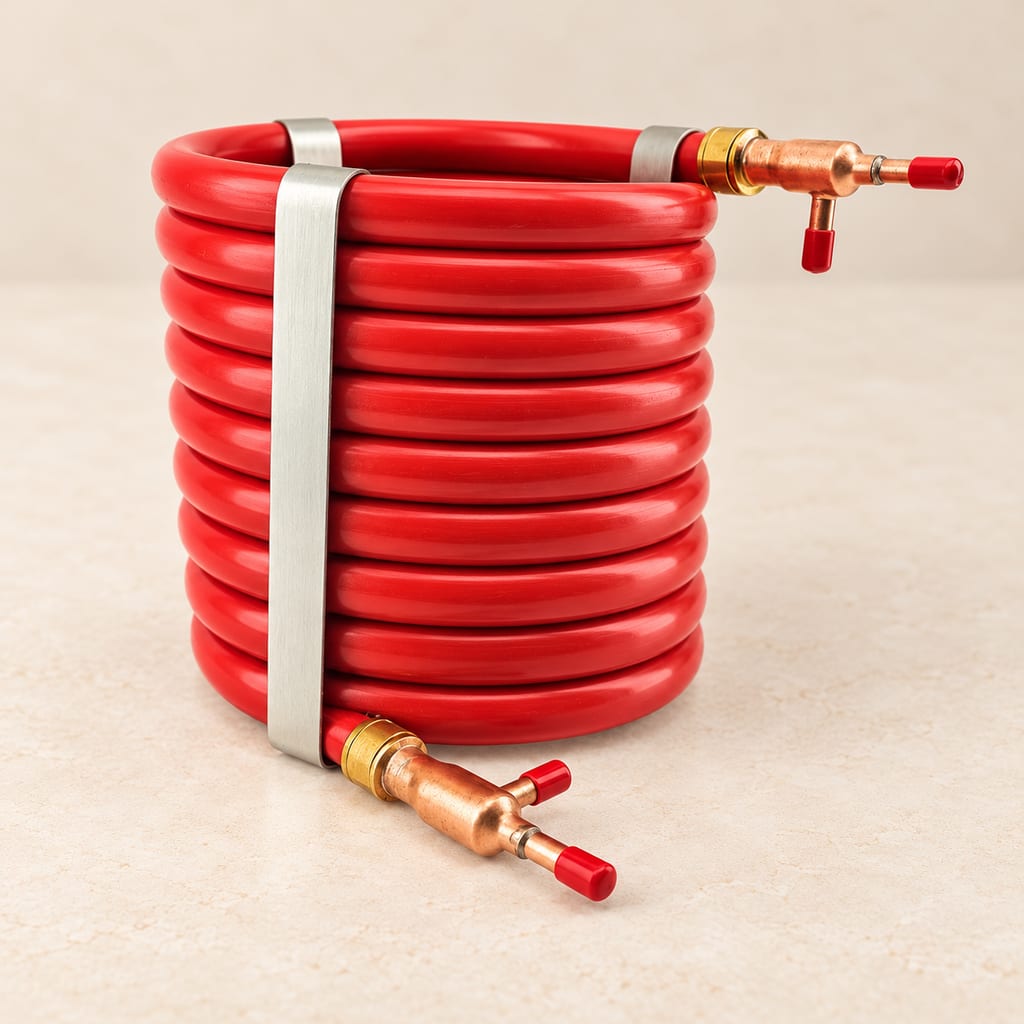
AI-generated editorial product depiction of a red jacketed counterflow wort chiller coil with copper connections on a warm ivory background.
Equipment

Counterflow wort chiller

A counterflow wort chiller cools hot wort through separate, counter-moving coolant passages. Tube-in-tube and coil-in-jacket designs vary by materials and fittings; capacity and performance are model-specific.

wort-chiller
Modern and global
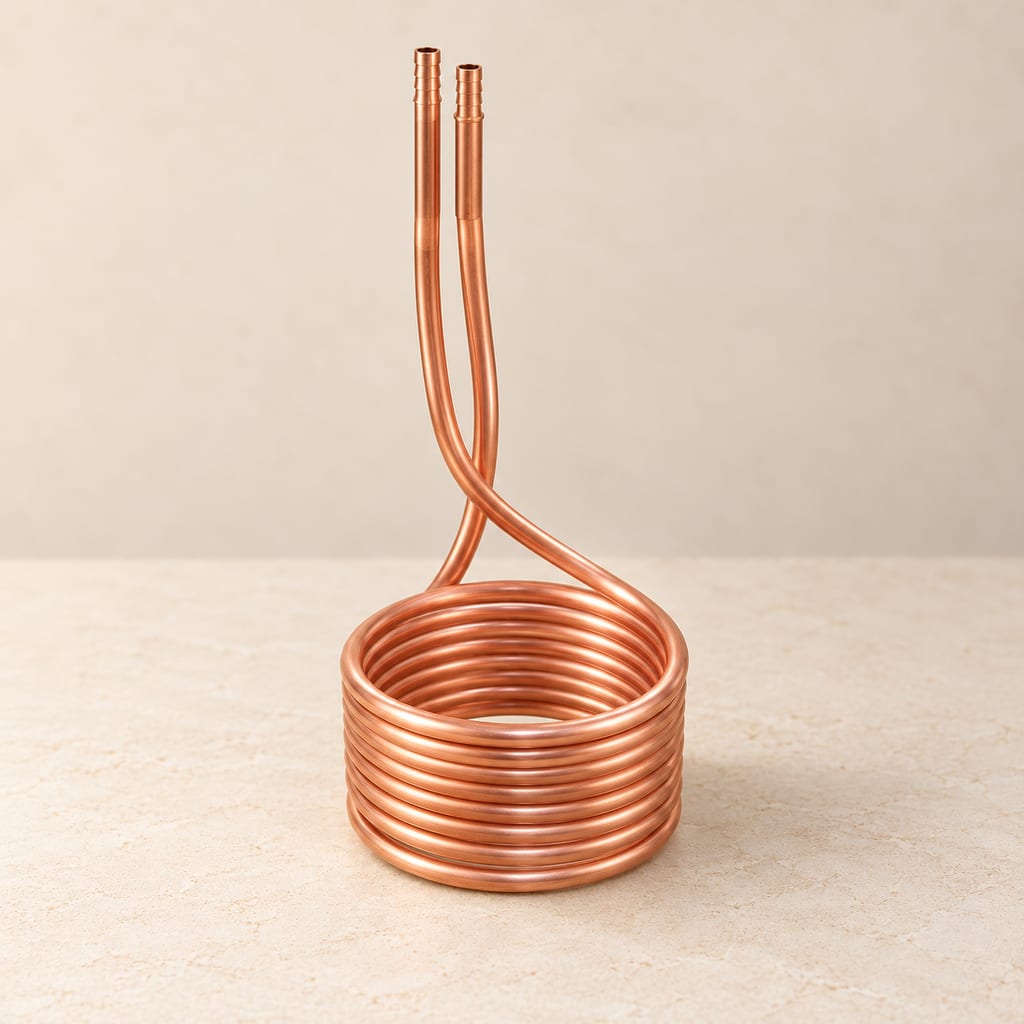
AI-generated editorial product depiction of an empty copper immersion wort chiller with two rising connections on a warm ivory background.
Equipment

Immersion wort chiller

An immersion wort chiller is a manufactured coil heat exchanger placed directly in hot wort; cooling water flows through the coil while the wort stays in its kettle. Cooling depends on the chiller, water supply and wort conditions, so no single time or batch capacity describes the whole type.

wort-chiller
Modern and global
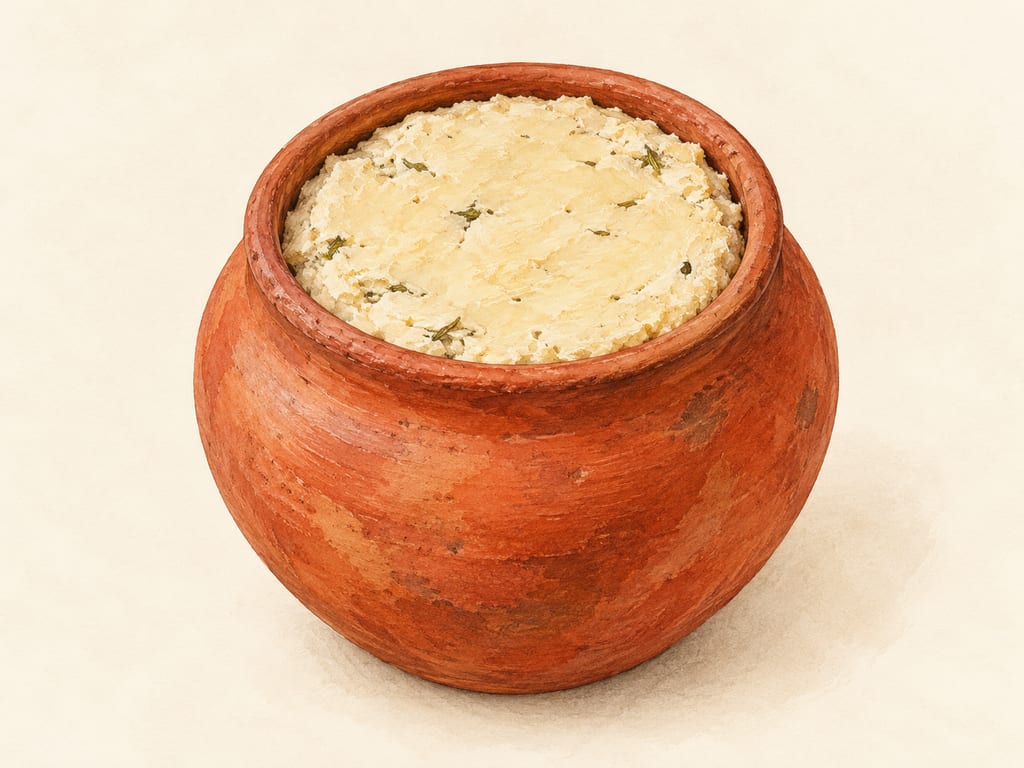
Watercolor-and-ink illustration of a handmade red terracotta motal pot, its opening filled with compacted herb-flecked cheese.
Equipment

Terracotta motal vessel

A handmade terracotta pot used to mature Armenian Gegharkunik motal: herb-seasoned goat curd is packed inside, rested upside down in wood ash, and sealed with beeswax.

Jars, pots and crocks
Gegharkunik