

















































High risk
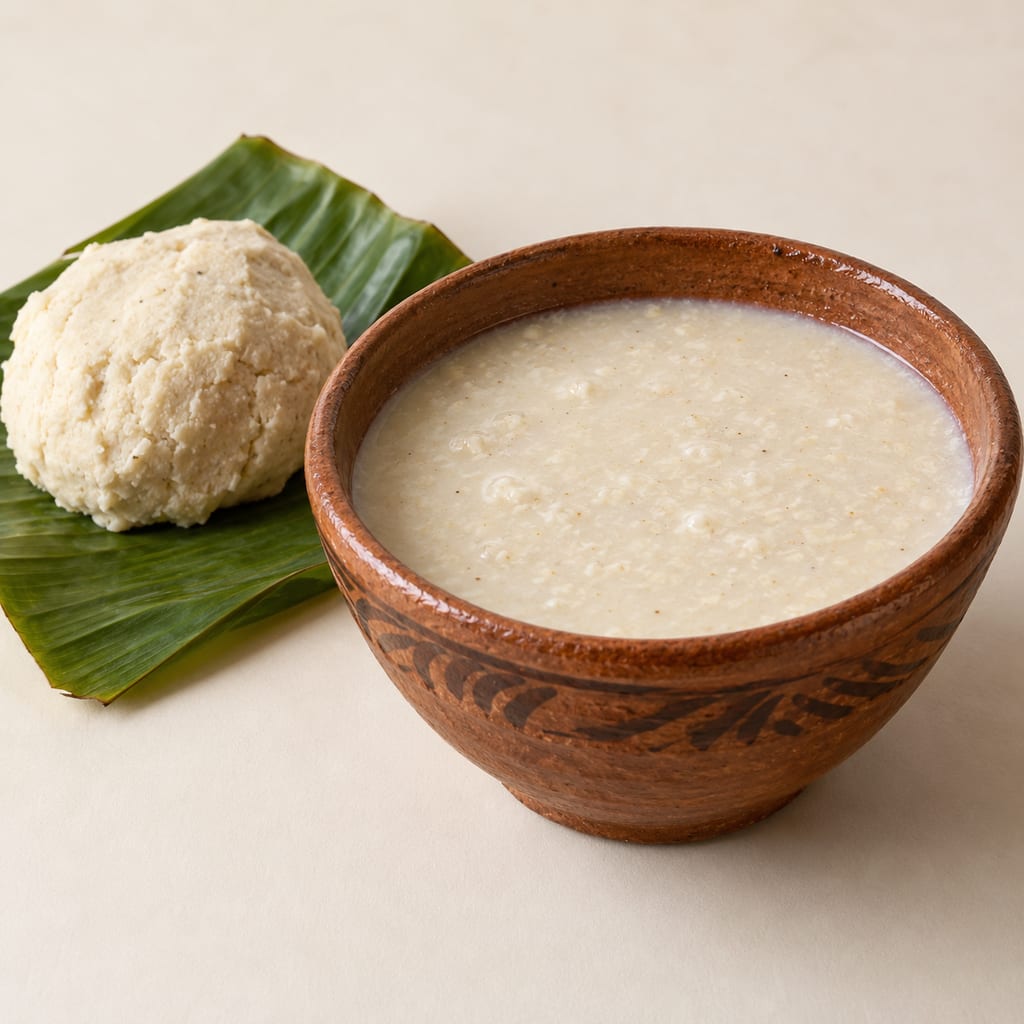
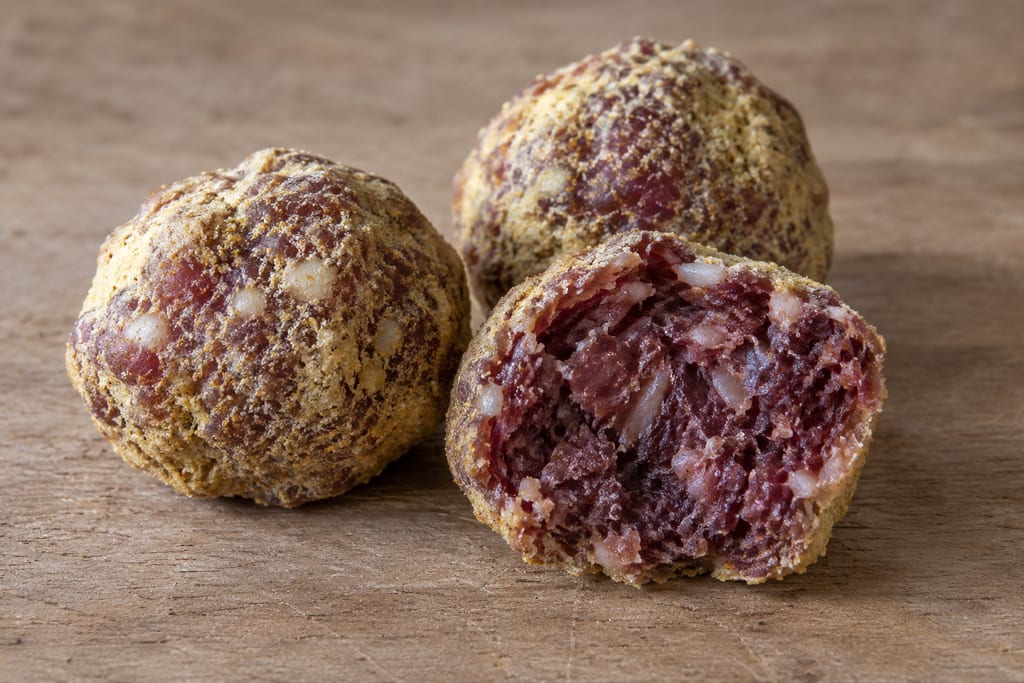
Hákarl
A documentary account of Icelandic hákarl, fermented and dried Greenland shark. It describes cultural context and one production study, not a home preparation method.
 FermenteaWhere food goes to change
1504 records with their sources, across 11 categories.
 Fermented, enzyme-ripened and mixed seasonings328
 Fruit preserves10
 Legume, seed and plant-protein ferments10
 Garum and fish sauces8
 Adjacent and excluded7
 Koji, mold starters and mold-ripened ferments4
 Acid and oil pickles3
 Fermented fruit and fruit-derived foods3
 Vegetable lactic3
 Dairy ferments2
 Smoked salted and dried foods2
 Cheese1
 Not yet classified1
A documentary account of Icelandic hákarl, fermented and dried Greenland shark. It describes cultural context and one production study, not a home preparation method.
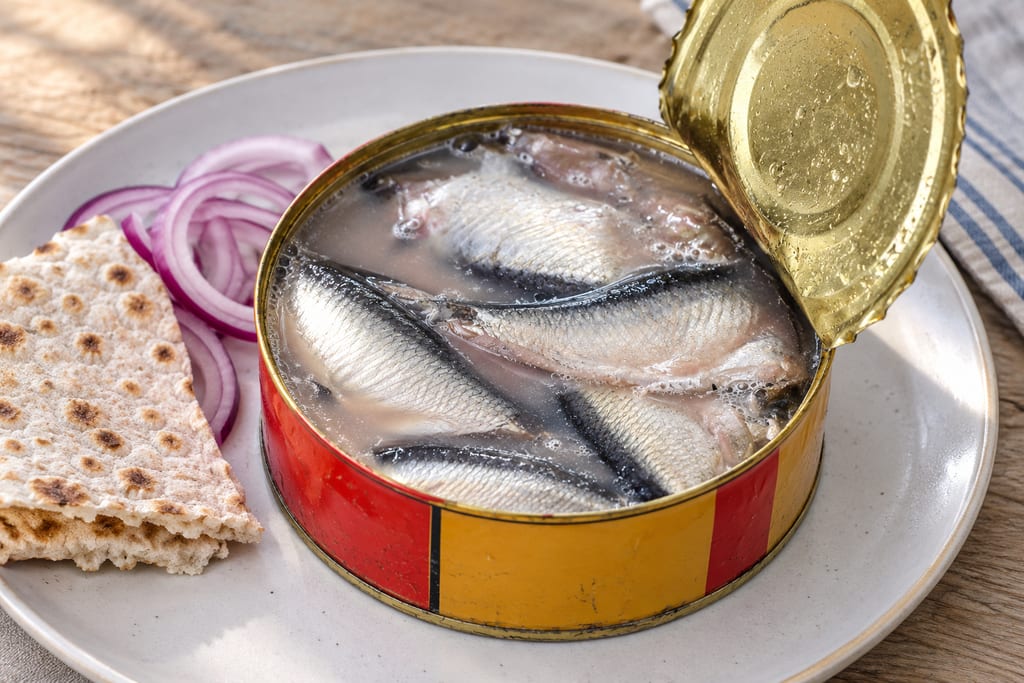
Salted, barrel-fermented Baltic herring from Sweden, surströmming is packed in shallow tins where fermentation may continue. Its traditional production is a specialist commercial process, not a household formula.
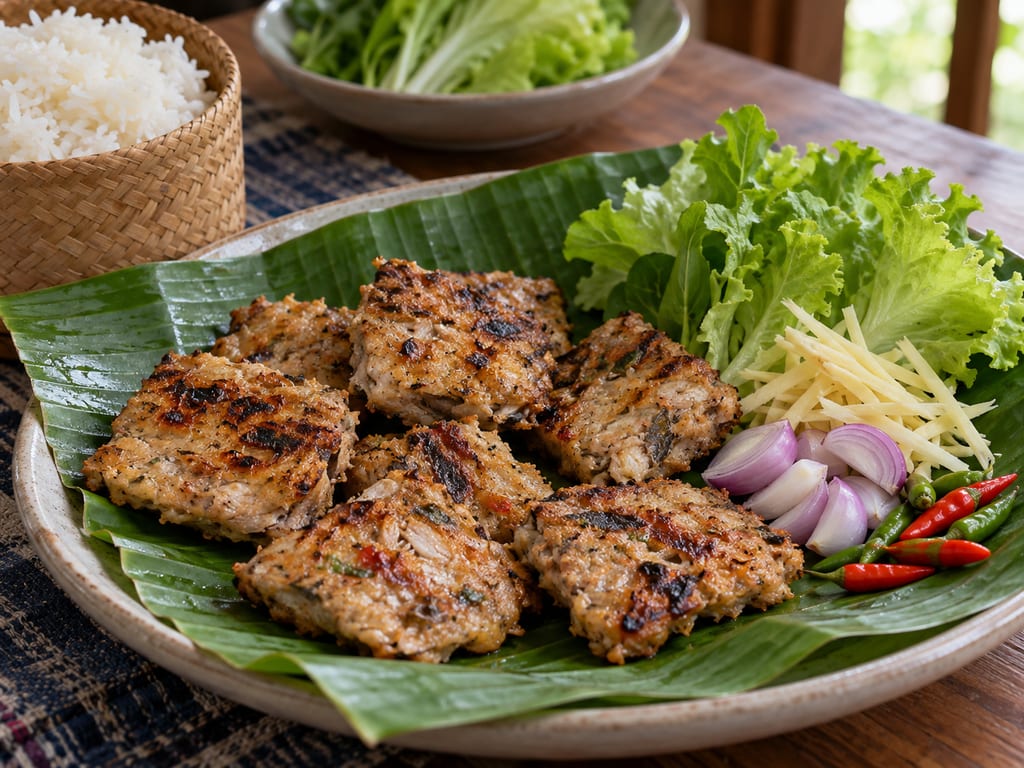
Som-fak is a Thai fermented freshwater-fish cake. JIRCAS records its ingredients, proportions, wrapping and 3–5-day fermentation, but does not validate a safe household process or endpoint.
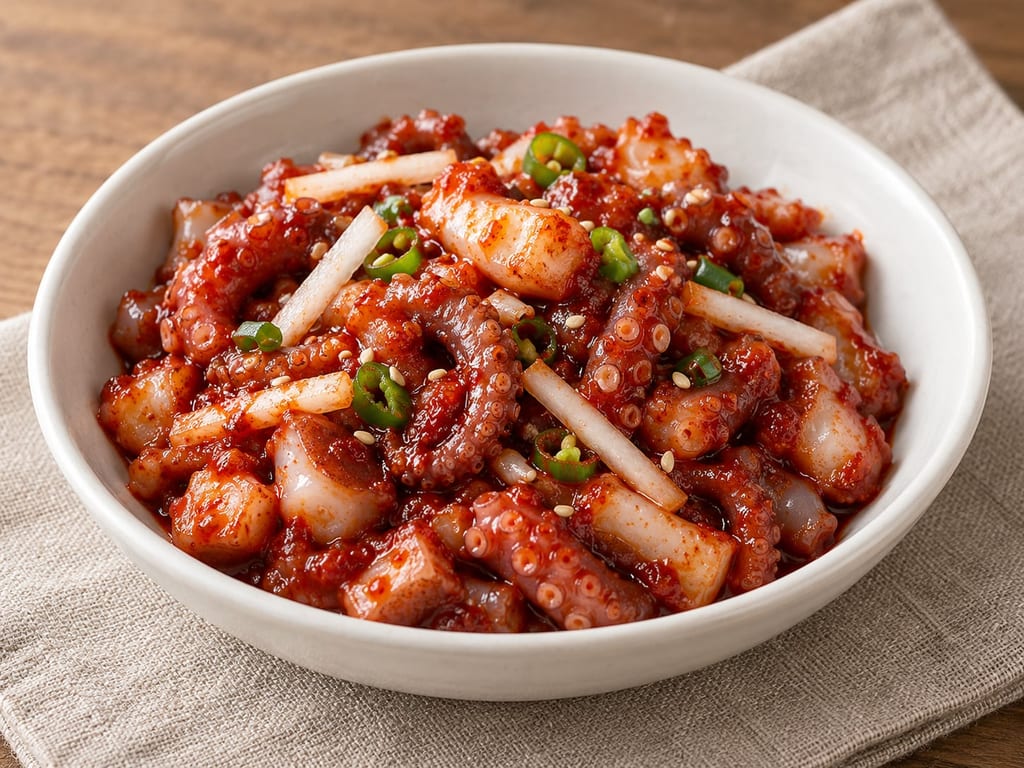
Nakji jeotgal is Korean salted octopus, served among jeotgal varieties with rice. This entry documents the dish and one creator’s quick-home version; it does not provide a household preparation method.
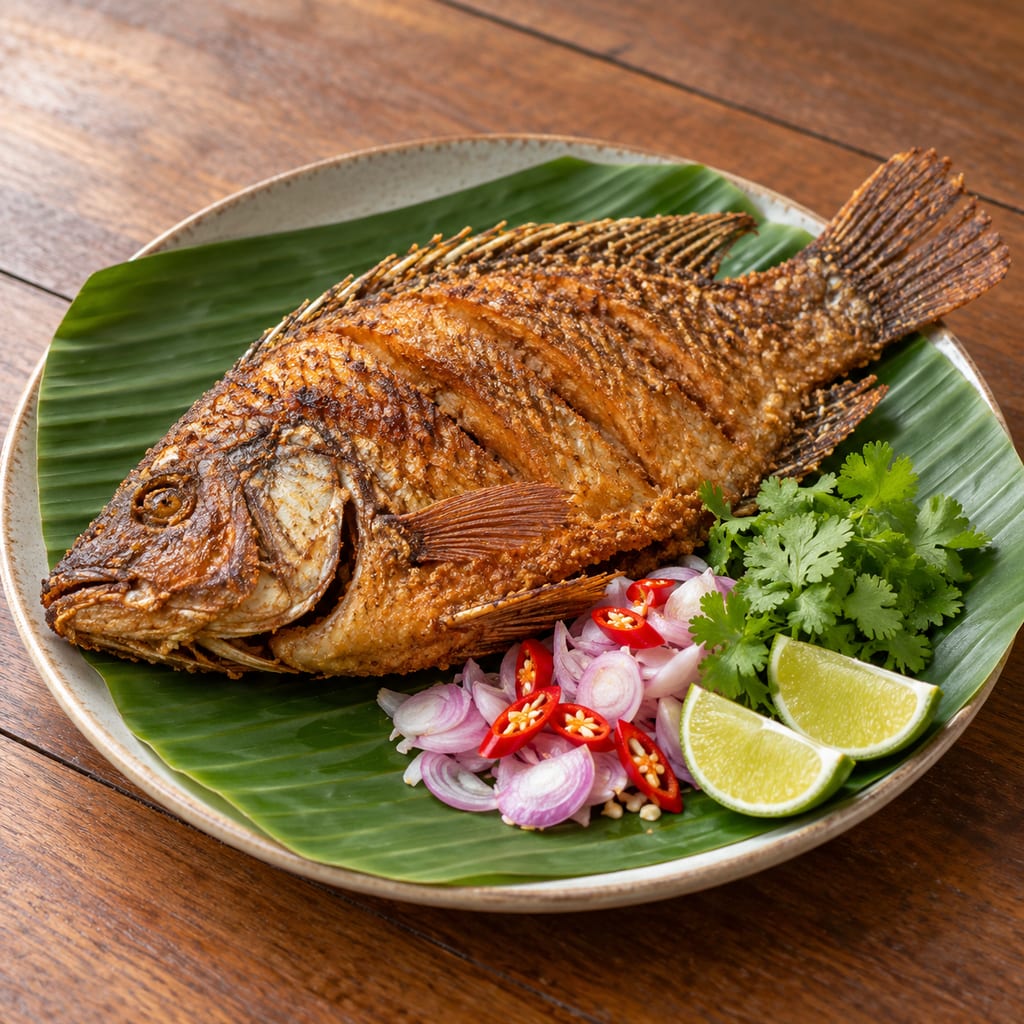
Thai pla som made from tilapia salted, filled with sticky rice and garlic, bagged and held at room temperature for about three to four days.
Rakfisk is a Norwegian preserved fish: cleaned trout or char, salted, packed under pressure and matured cold, usually for about three months, before it is eaten sliced.
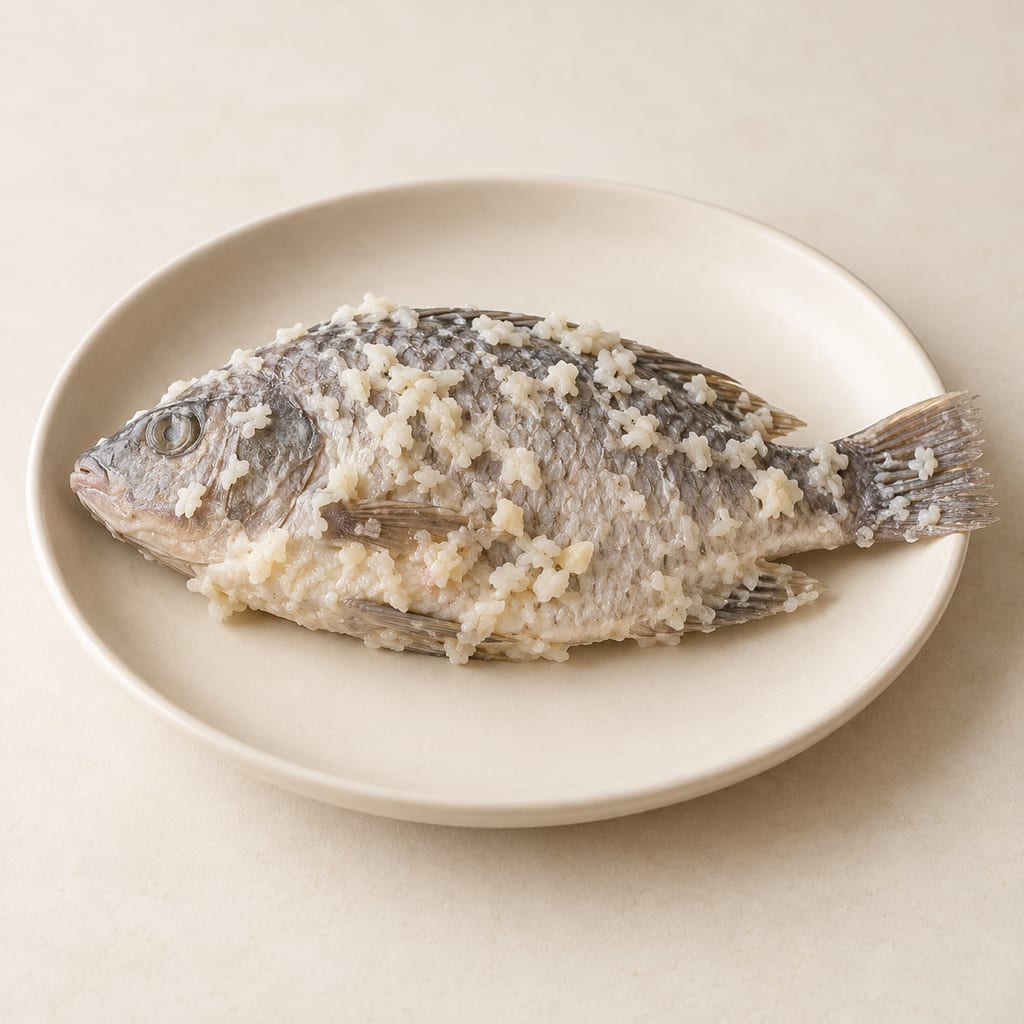
Plaa-som is a Thai sour fish: freshwater fish salted overnight, then mixed with cooked rice and garlic and fermented for about five to seven days at ambient temperature.
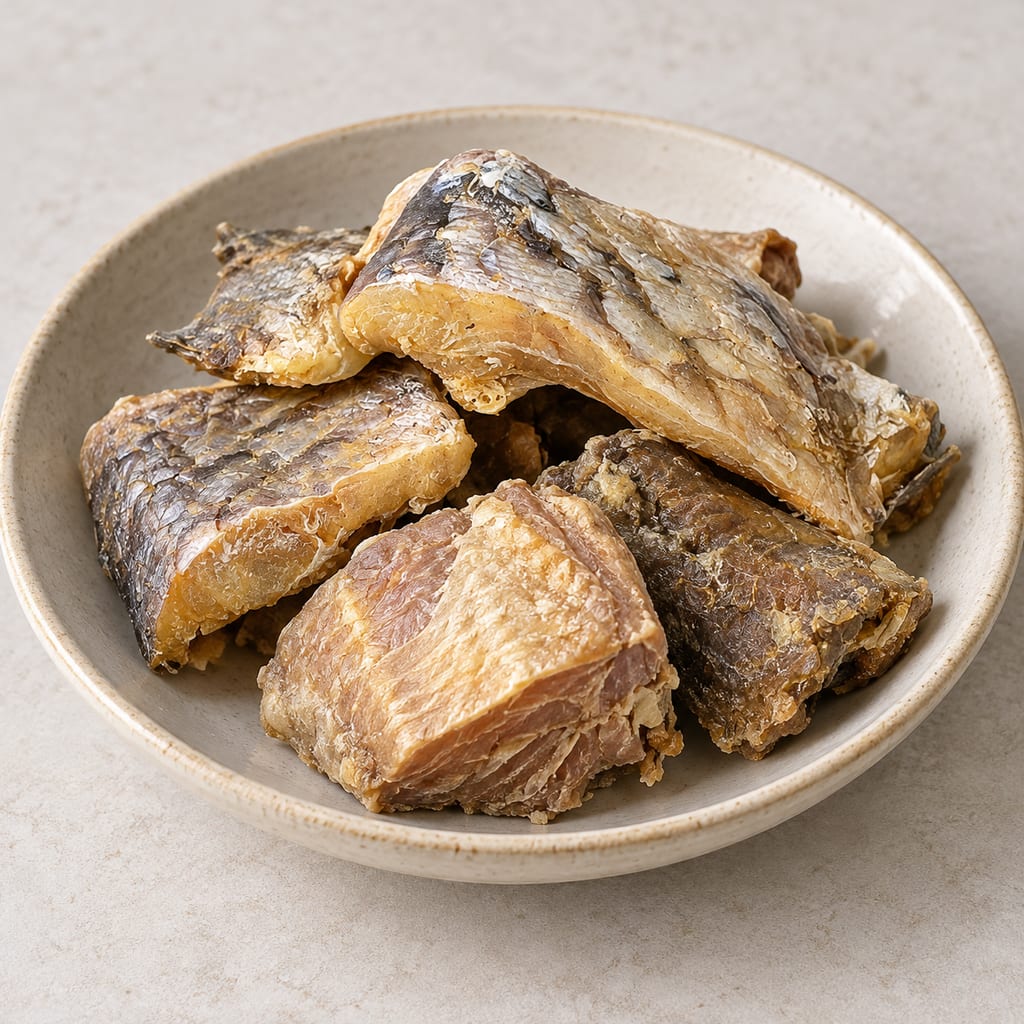
Momone is a Ghanaian salted and fermented fish condiment made from varied marine fish. Historical surveys describe both semi-dried and drier products, with salting and drying methods differing across coastal communities.
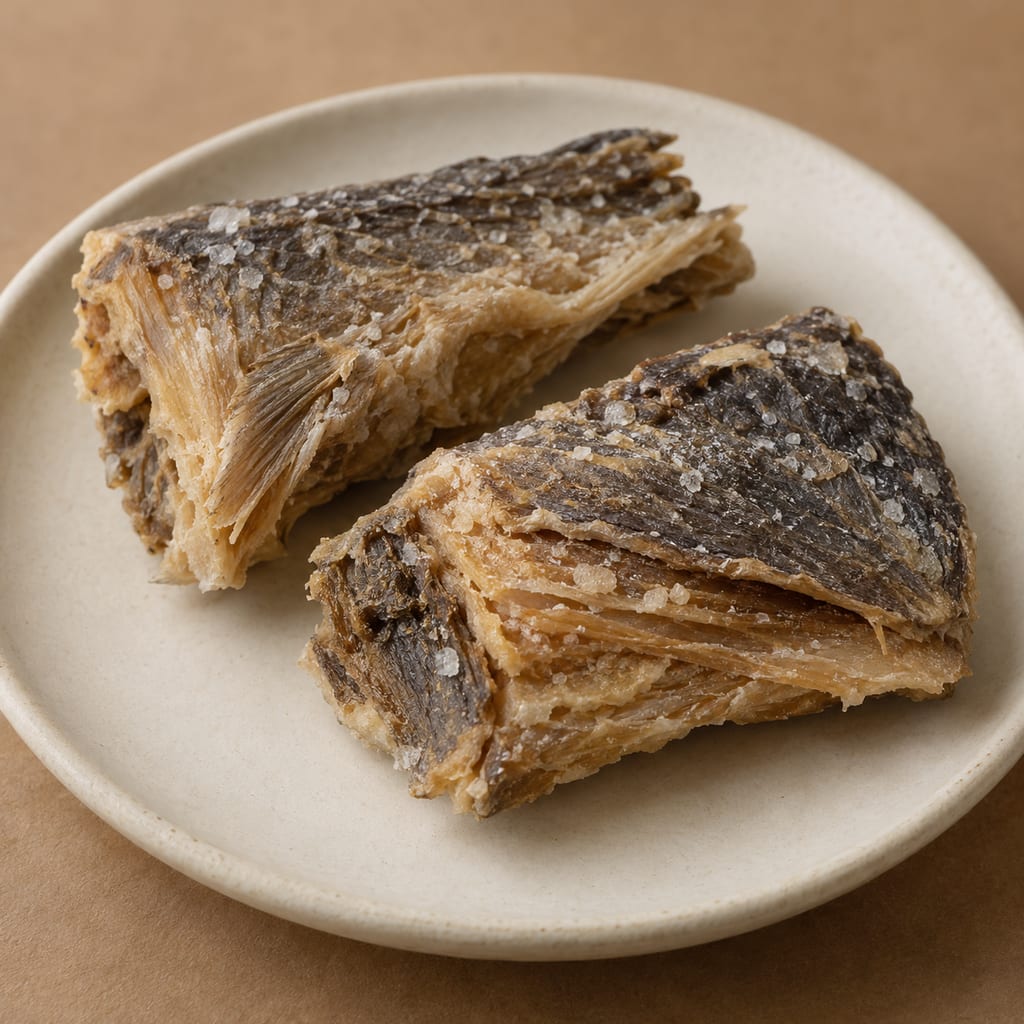
Lanhouin is a strongly flavoured fermented fish condiment documented in coastal West Africa, including southern Benin. This page records one published research reproduction as evidence, not as a validated home-preservation recipe.
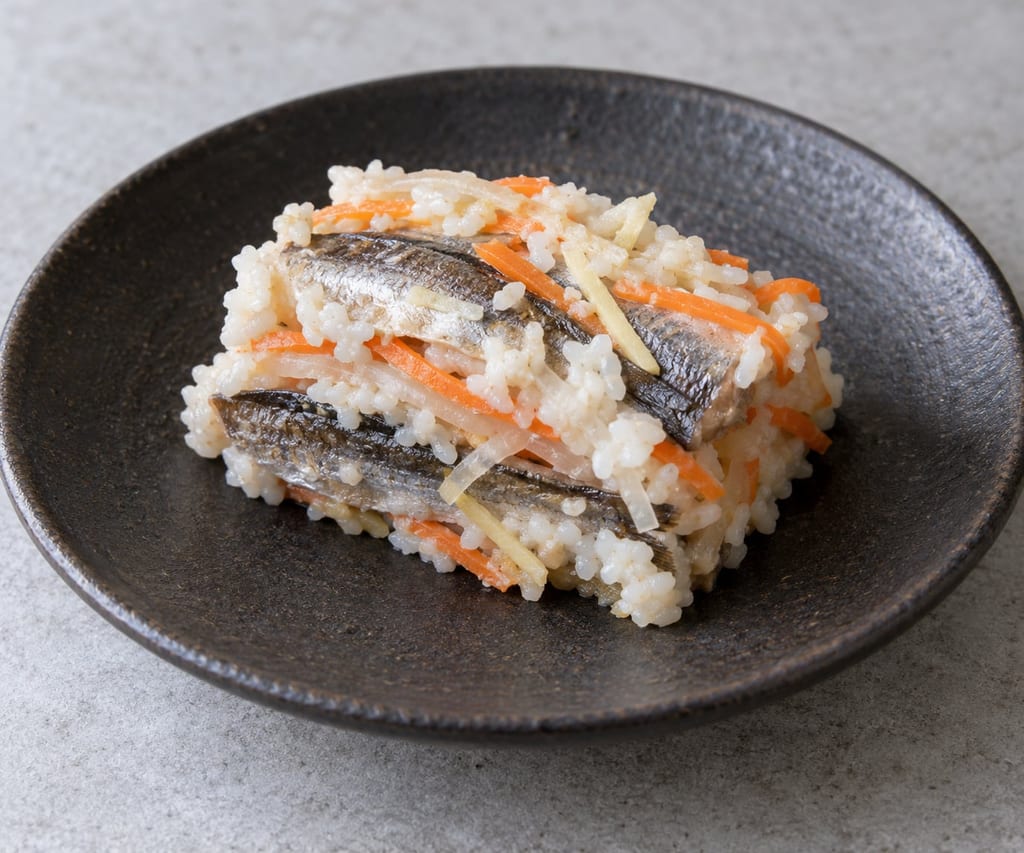
Hokkaido izushi layers fish, vegetables, rice and kōji for cold-season lactic fermentation. This MAFF recipe uses small hatahata with a vinegar pretreatment; it is one regional household formula, not a universal izushi method.
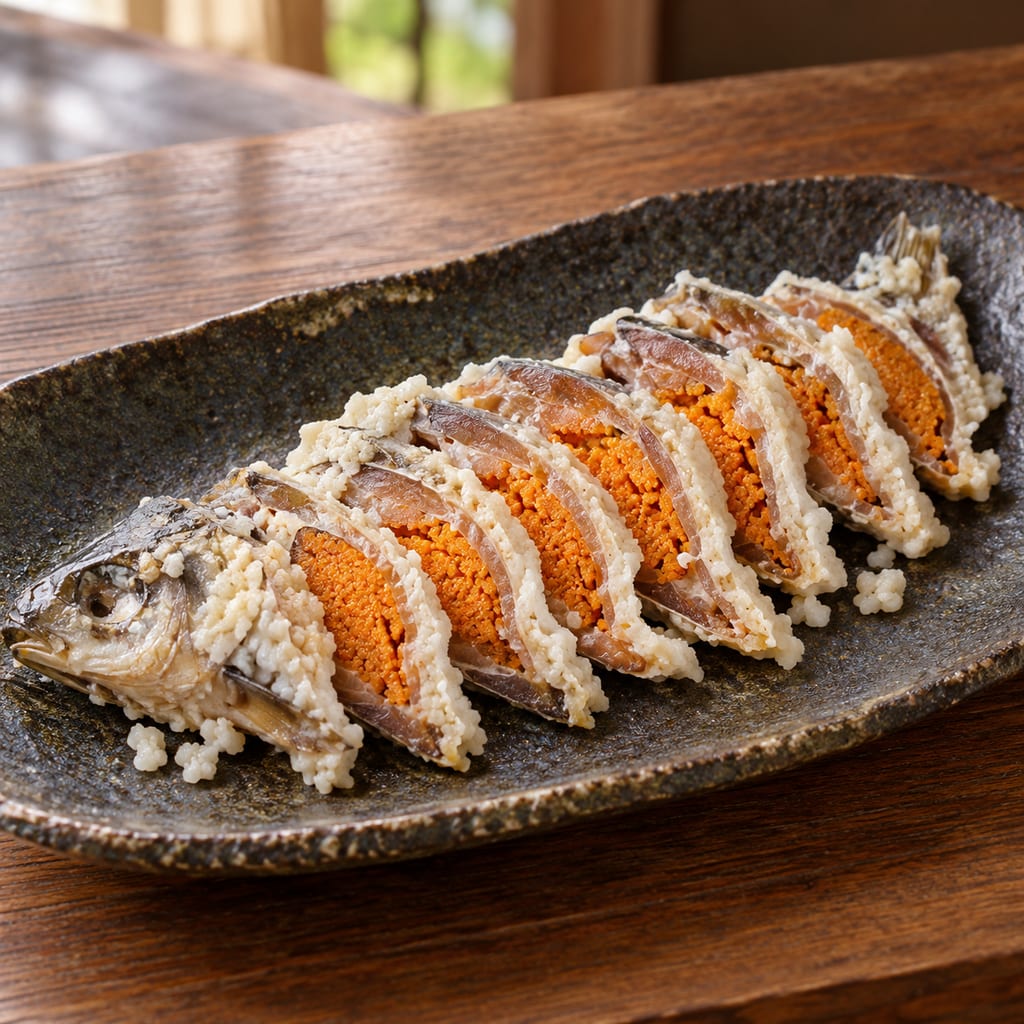
A documentary account of funazushi, Shiga’s long-ripened narezushi associated with Lake Biwa and roe-bearing nigorobuna. It preserves regional, historical and cultural context; it is not a household preparation guide.
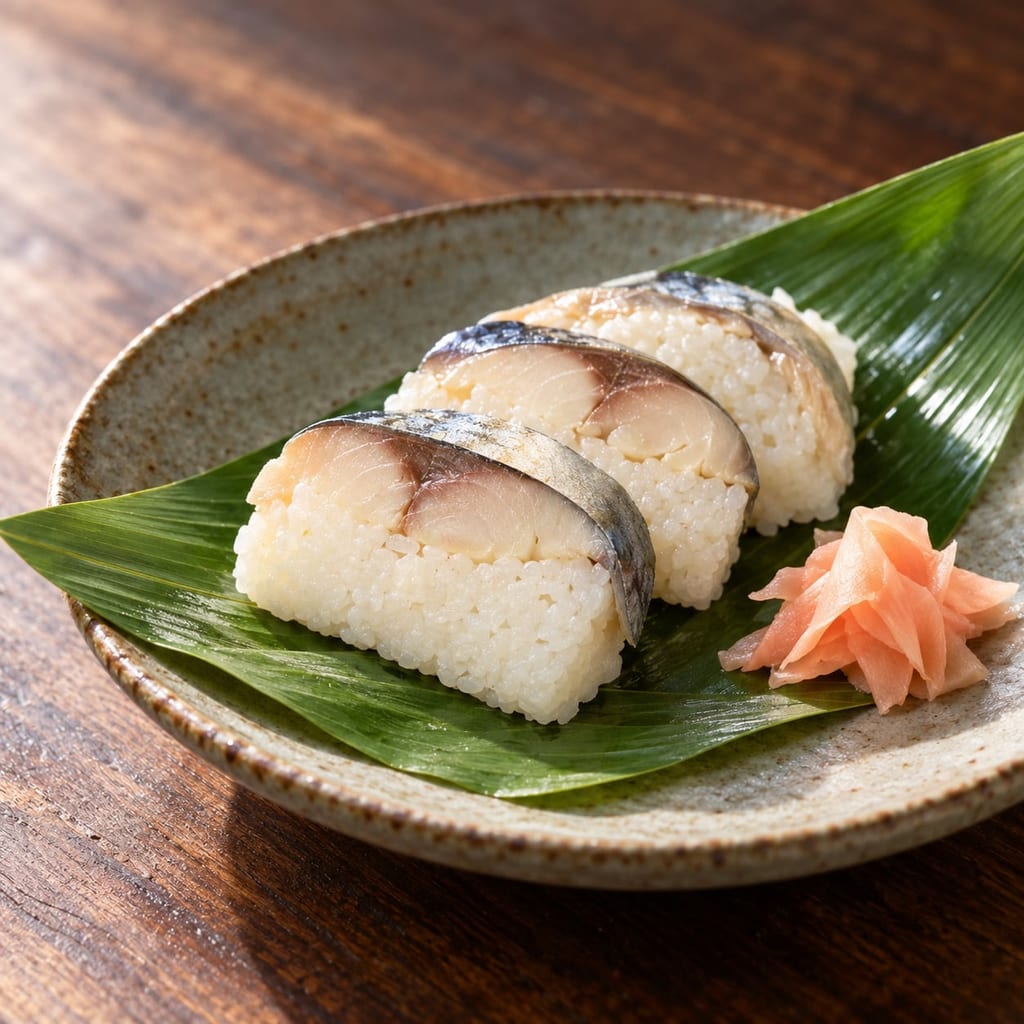
A documentary account of Japanese narezushi, a family of salted-fish and rice ferments. This entry preserves the East Kishu (Mie) source’s identity and regional context without providing a household preparation method.
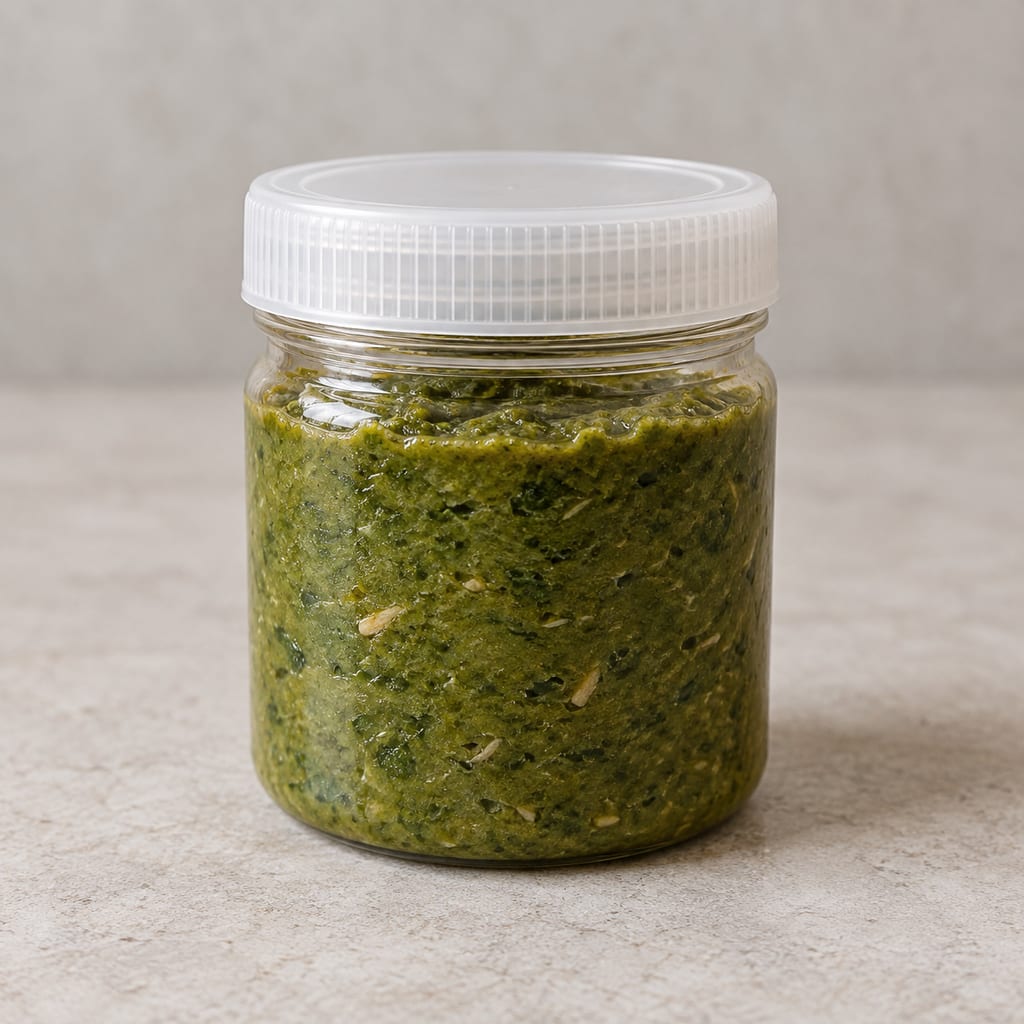
Dixon's 2007 thesis records ten toroi study batches, five with puha and five with watercress, each from 2 kg of shell-on green-lipped mussels and about 600 g of greens. Its method is a laboratory one.
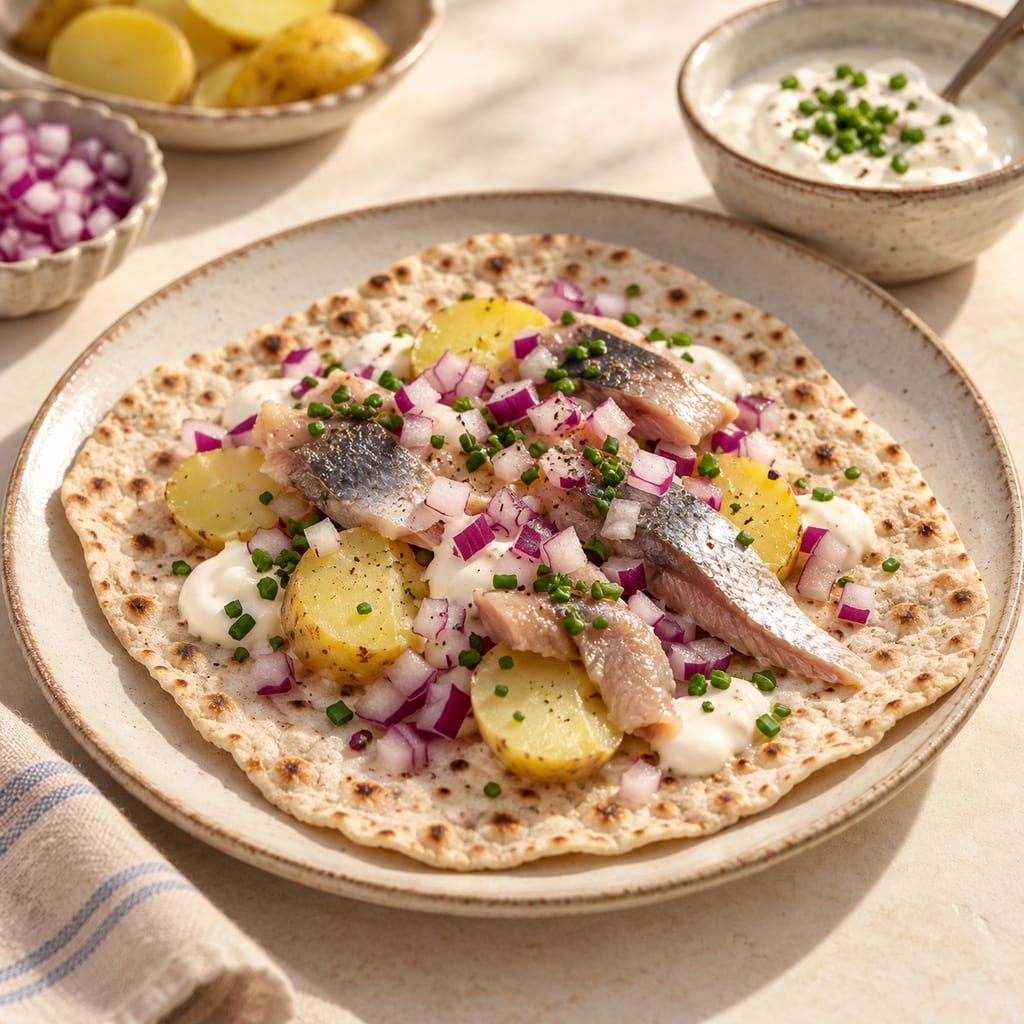
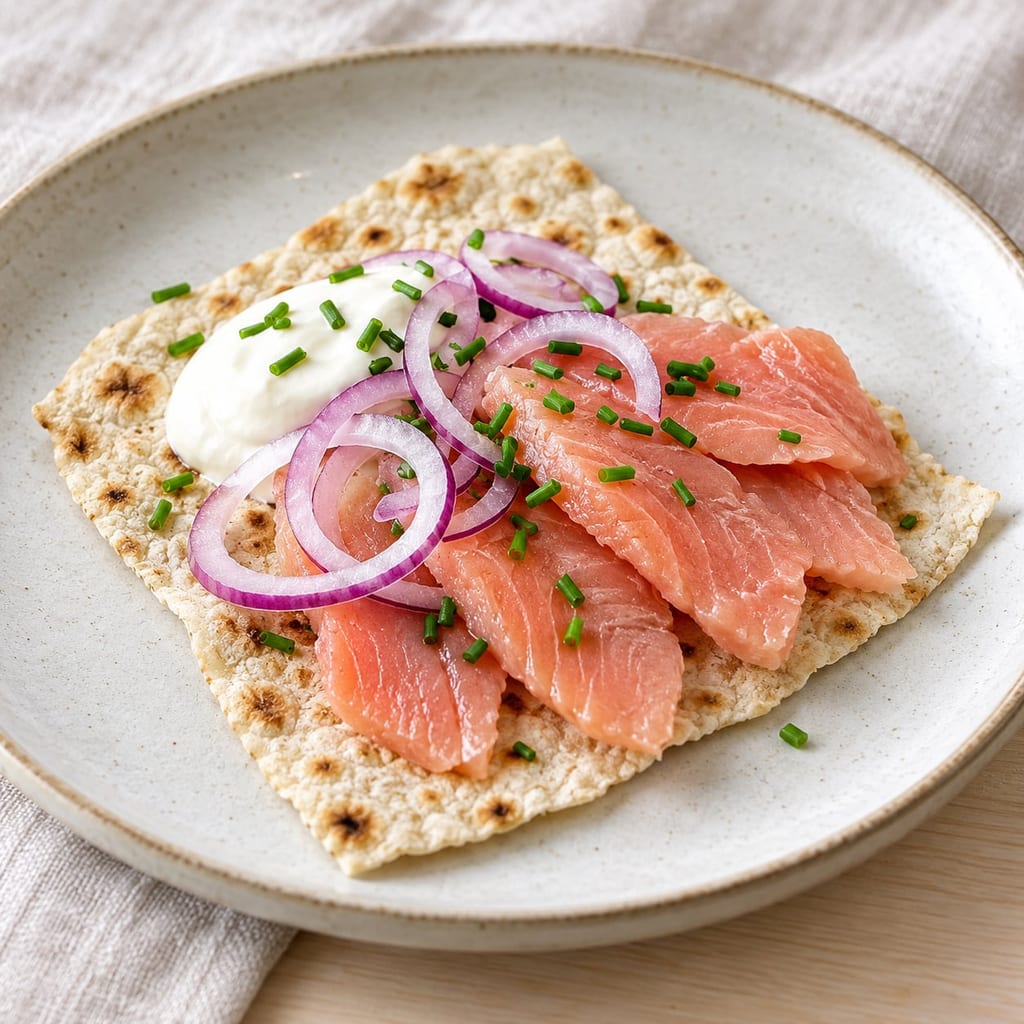
A Swedish late-summer meal of commercially prepared surströmming, tunnbröd, potatoes, onion and cultured cream. This is a serving preparation; the specialist fish fermentation is not made at home here.
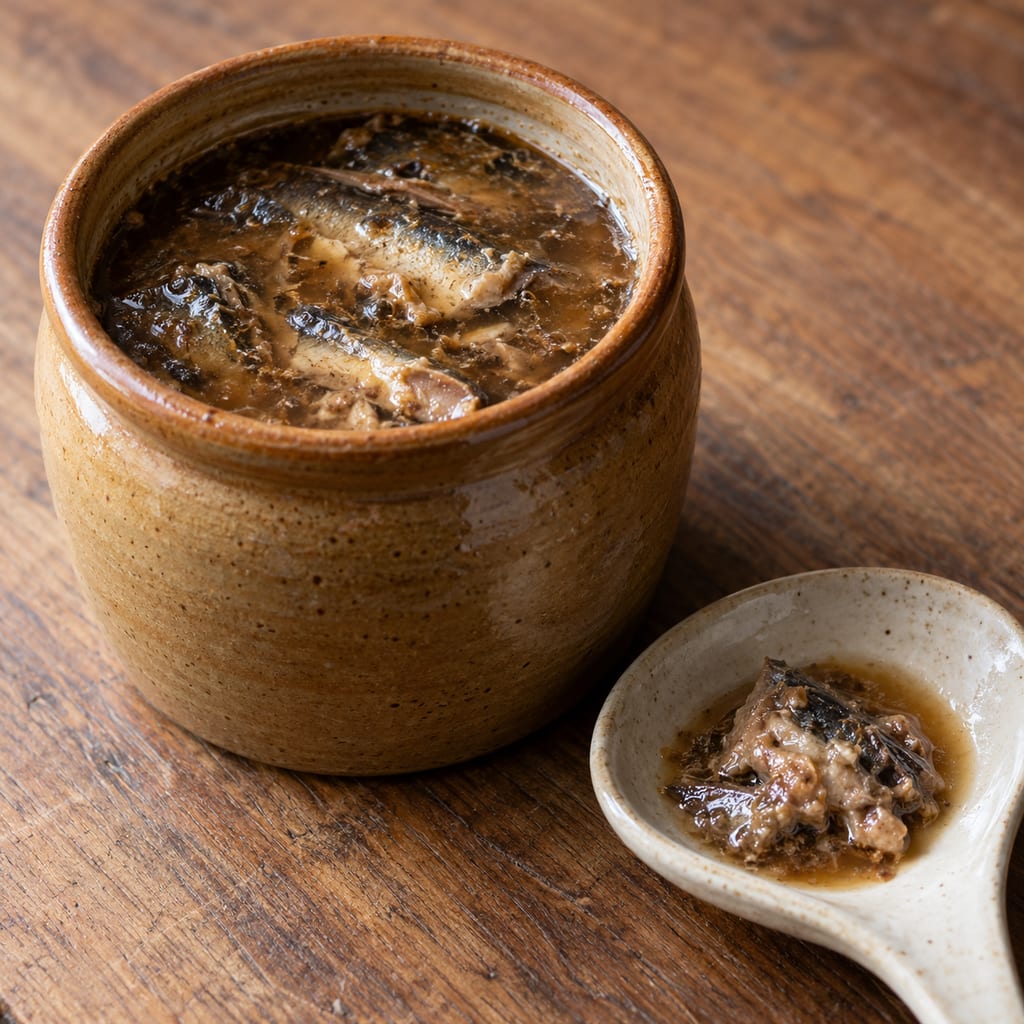
A fish batch is washed, mixed with 800 g salt per about 5 kg fish, and packed with an unresolved roasted-grain addition; cleaning weight and storage duration are unclear.
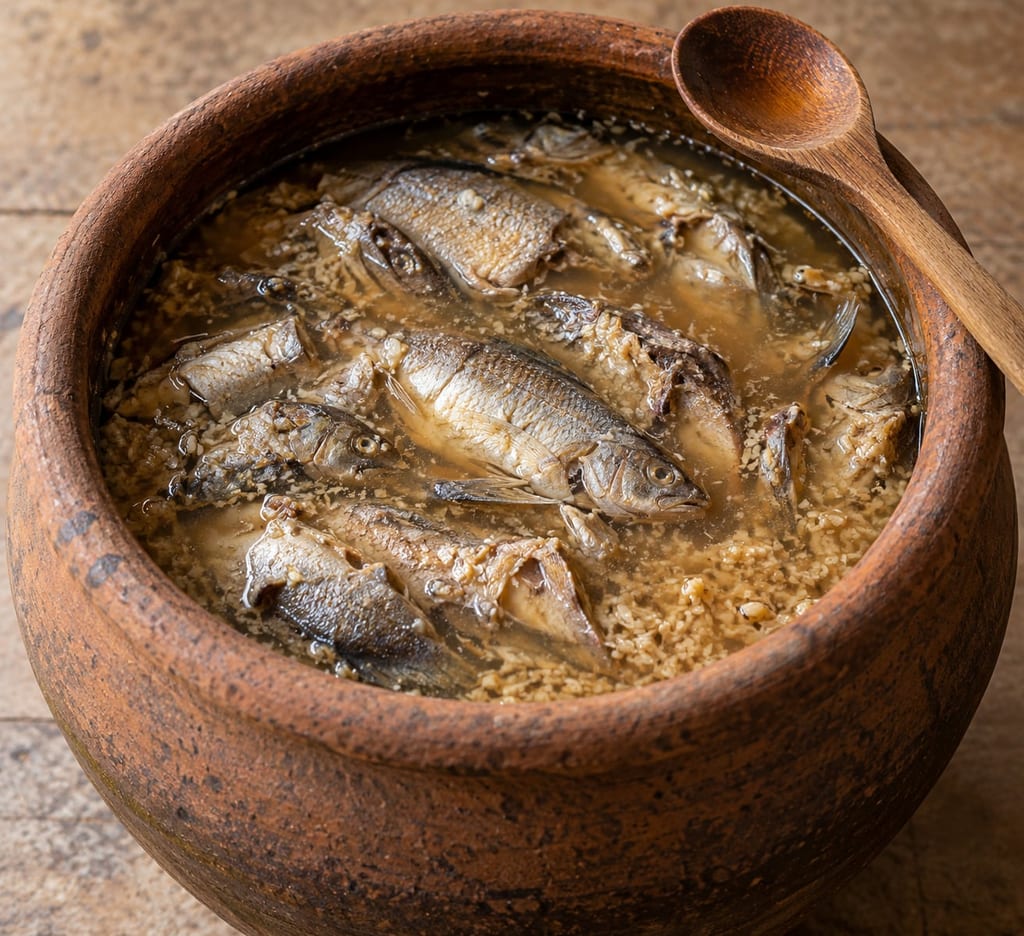
Mixed freshwater fish are soaked, repeatedly washed, salted and packed with toasted ground paddy rice; the creator gives a 1.5 kg fish batch and an unmeasured ladle dose.
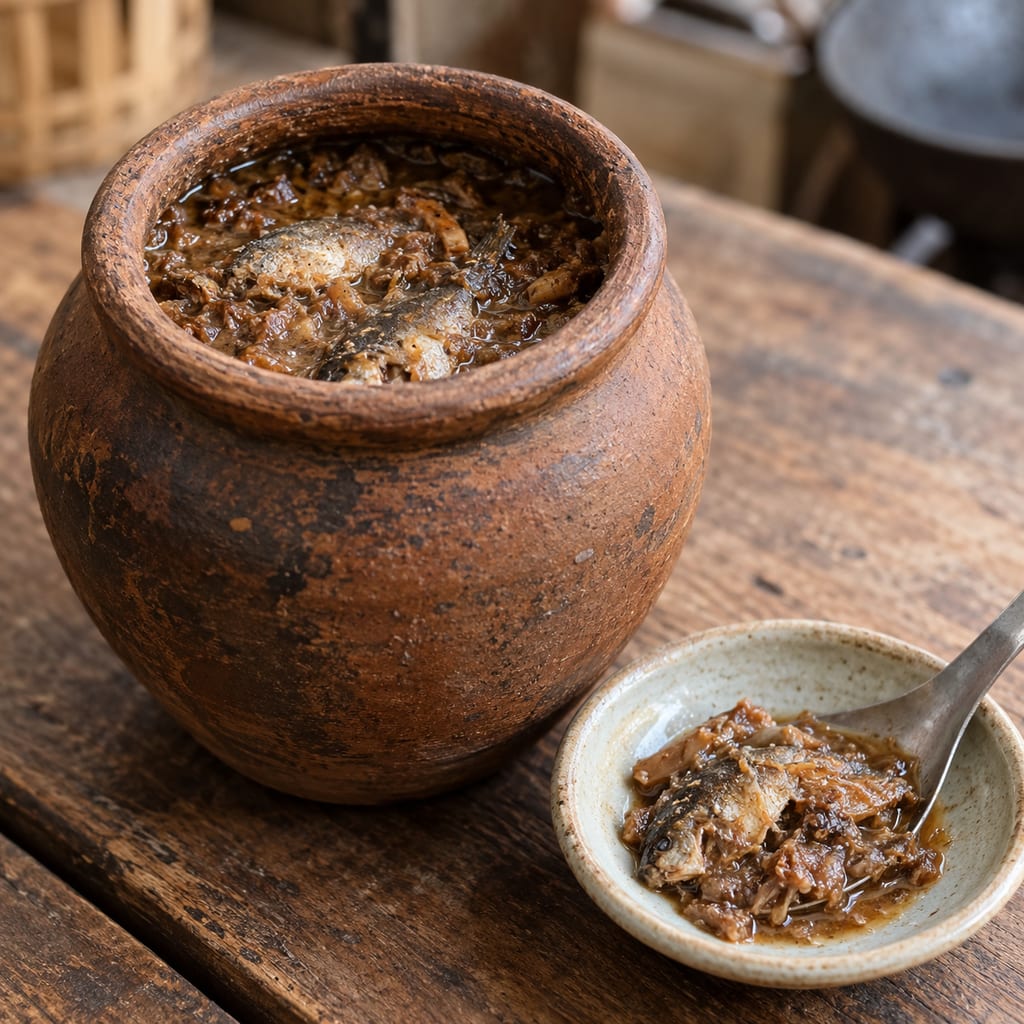
Pla soi and pla koom are salted with coarse sea salt, held in bags and packed with later grain additions; the source leaves salt basis, bran dose and part of the sequence unclear.