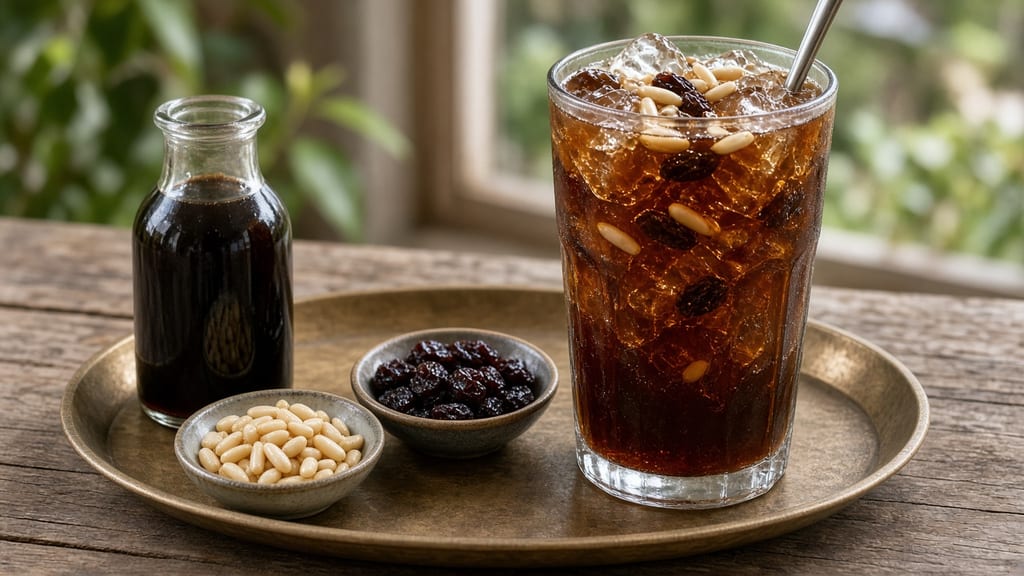
Jallab: smoked grape and date molasses syrup
The Levant's Ramadan syrup: grape and date molasses blended into a sugar syrup in 5 minutes, smoked with mastic or cinnamon, finished with rose water and served over ice with pine nuts and raisins.
 FermenteaWhere food goes to change
گلاب · rosewater · Golab · Gulab · Ma' al-ward · ماء الورد
Rose water (golab) as al-Kindi distilled it in the ninth century, quoted in full, then the copper-pot method still used in Qamsar near Kashan, and a home pot distillation built on Iranian food and drug laboratory advice.
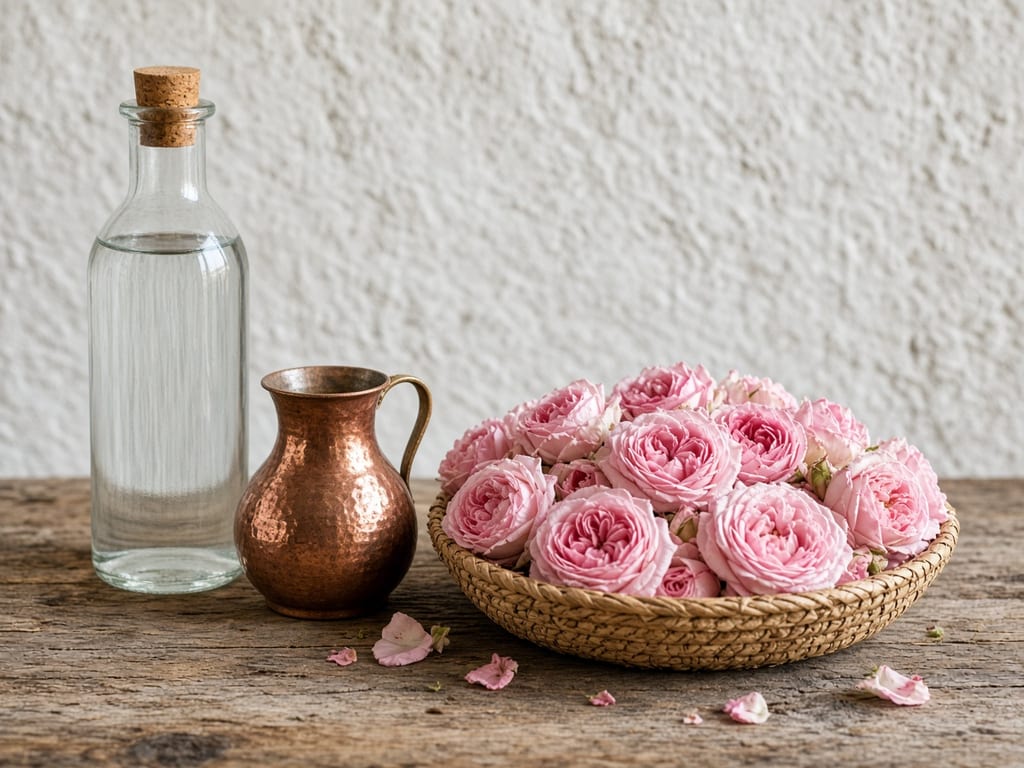
Rose water is the water that comes over when fresh rose petals are boiled in a closed still and the steam is cooled. In Persian it is golab, from gol, rose, and ab, water; in Arabic it is ma' al-ward. In Iran it scents sharbat, paludeh and ice cream, and in the Levant it goes into jallab.
It is distilled, and it sits in this series because sharbats and jallab call for it. This page gives the oldest full method we found, from al-Kindi in the ninth century, quoted in full; then the copper-pot method still worked in Qamsar near Kashan, with the quantities producers give; then the regional pot stills recorded in Persian folk culture; and last a home method built on advice from Iran's food and drug control laboratory.
Ya'qub ibn Ishaq al-Kindi wrote a book on perfume and distillation, the Kitab Kimiya' al-'Itr wa-'l-Tas'idat. Takatomo Inoue translated its rose water passage into English in the journal Orient in 2017. We quote that translation in full.
"You take a red rose which you want. You remove the stem. I mean, a fresh and juicy red rose and the center of the petal. And leave it for a while. Then, fill it in the cucurbit through the neck. Alembic is set and is distilled in the moisture (fi ruTuba). If you want to make your own rose water, this (rose water), descending from alembic, can be dyed red like the rose. When you pour on a man, it dyes his clothes. Whenever it drys up, the redness on the clothes will be gone. At the point when all of it is dried up completely, its red color is gone from the clothes and the white clothes return to the condition which it was, and the fragrance remained in the clothes."
"When the cucurbit is filled with rose petals, fill it well and also fill the alembic with rose petals. The alembic is set on the cucurbit. After that distil it in the moisture. Then, it will make red water descend like what we described. We can operate it more than one time. If you want to make it red with the color as the blood of a gazelle, You take a twig of 'aqir samqa or anchusa (sankar) which is good, not rotten. Moisten it with water for an hour. Then wrap it in cotton. The cotton is inserted from the entrance into the delivery tube of the alembic, which is not difficult, but do not make the insertion of the cotton tight."
"Then the alembic is set on the cucurbit and distil it in the moisture as we said. Just after rose water passed this cotton, it receives the red tincture (sibgh) from it, and red rose water will descend. Its effect on the clothes, when it is poured to the clothes, is like the first one. If you wrap the piece of the inside of the herb called amaranth (bustan aburuz), that performs the effect of redness. If you make the strings of saffron (za'faran) in this cotton, (rose) water will pull out yellow color. If you make the leaf of crushed alfalfa (raTba) in this cotton, (rose) water will pull out green color. It works like the red (case) in the clothes. Like that, the yellow (case) works too. These are the very elegant sections of the operation of rose water."
Three vessels are at work. The cucurbit is the pot that holds the petals; the alembic is the head that sits on it, catches the steam and sends the condensed water down a spout; and a receiver collects what drips. Distilling "in the moisture" means the cucurbit is heated in a water bath, a gentler heat than standing it on coals, which al-Kindi calls distilling "in the dryness".
Inoue notes that the same equipment appears in other Arabic texts of the period. Al-Razi lists cucurbit, alembic and receiver, says the water in the bath pot should stand as high as the material in the cucurbit, and warns that pouring cold water into the hot pot can break the glass. Al-Khwarizmi's handbook for secretaries calls cucurbit and alembic "the instruments of rose water manufacturer", and al-Razi says the same in another treatise.
Most of al-Kindi's passage is about colour. A wad of cotton in the spout, wrapped round anchusa root, amaranth, saffron or crushed alfalfa, tints the rose water red, yellow or green as it passes, and the colour washes out of cloth as it dries while the scent stays.
Qamsar, part of Kashan county, is called the world centre of rose water making by the Kashan office of cultural heritage. The office says the season runs from the middle of Ordibehesht to the middle of Khordad, roughly early May to early June, and that the pickers go out before sunrise to gather Damask roses, gol-e mohammadi, in gardens and on the hillsides. Before work starts, roses and pots are taken to the riverside and prayers are said.
The office lists the equipment as a large copper pot, a pair of tubes, a jug or carboy, a copper lid called a taghar, a water channel or pool and a stove; it says the pots are usually copper or aluminium and made by Kashan coppersmiths and local people. Petals and water go into the pot, the lid goes on, and the gap between lid and rim is sealed with bread dough or spent petals. A weight on the lid controls the pressure of the steam.
The tubes run from the lid to jugs standing in running water or a channel. Once the pot boils, steam travels down the tubes, condenses in the cold jug and collects as rose water. A very thin film of oil floats on top; that is the rose essential oil, and it is lifted off with a syringe. A run lasts four to seven hours.
A Qamsar producer, Salehian, gives working quantities. A pot takes 12 to 20 kg of flowers for light rose water or 30 to 40 kg for heavy, covered with 50 to 60 litres of clean qanat water. The heat should be gentle and even, about 95 C by their account, so the flowers do not scorch. The pot comes to the boil after about ten minutes, and in four to five hours a run gives about 40 litres. On average a kilogram of roses yields 1 to 1.5 litres of first-grade rose water.
The strongest grade, do-atasheh or "two-fire", is distilled twice. Salehian describes a first run of 20 kg of roses in 60 litres of water, then a second run in which 20 kg of fresh roses go into the pot with the 40 litres of rose water from the first run and a little more water. The filled jugs are emptied into 20-litre containers that have first been rinsed with rose water, because, the producer says, a drop of water or dirt can turn the rose water sour.
Iran's national standard for rose water, ISIRI 1525, grades it by how much essential oil it carries. As reported by Iranco, heavy rose water must hold at least 35 mg of oil per 100 mL and light rose water at least 15 mg, while do-atasheh runs from 60 to 100 mg. The weak last water of a run, the pasab, falls below 15 mg, and selling it as rose water breaks the standard. The same report gives the methanol limit as 100 mg per litre.
The Encyclopaedia of Iranian Folk Culture, in its article on araq-giri, the making of plant distillates, describes a family of home and village stills. The old learned apparatus had three parts: qar', where the material was heated; anbiq, where the vapour turned to liquid; and qabila, where the liquid was collected. In Kashan the same work is done with the copper pot, its lid, two aluminium tubes called nicheh and a copper jug set in a stream.
In Sarvestan near Shiraz, people use two methods. For araq-chekeh, drip distillate, a three- or four-legged stand goes inside the pot with a dish on it. A little cold water is poured onto the deep lid and the pot's openings are closed. Steam from the boiling liquid meets the cold lid, turns to drops and falls into the dish. The first distillate made this way is counted pure and very valuable. In the steam method, the openings are closed with a round cloth cover instead.
In Kerman and Birjand the still is called dig-e nicheh. A copper pot 40 to 80 cm across the base is half filled with flowers and some water. On it sits a second copper vessel, the nicheh, with a hollow base filled with cold water; condensate runs down the sloping underside into a groove and out through a thin pipe. A tap lets the warmed water out so cold water can be added. In Sirjan and Kerman the article says distilling is the housewife's work and the dig-e nicheh is a basic item of a bride's dowry.
In Babol, for orange blossom water, a brick or tall vessel stands inside the pot with a copper bowl on top; the lid is a copper basin of cold water, and the rim is sealed with twisted cloth or clay. The bowl is emptied each time it fills and the pot is run up to three times. The first water is called sarab and the last pasab.
The same article traces distillates through the travellers. The traveller Chardin described bidmeshk and willow distillates and the method of making rose water, saw scented distillates served to guests at court, and reported that plant distillates were Persia's most important export to India. Under the Qajars, clove, willow, cinnamon, bidmeshk or rose water scented sharbat.
Distillates went into sharbat, afshoreh and ice cream and flavoured paludeh. At weddings a little bidmeshk water or rose water was set on the marriage spread, and in one custom the big toes of bride and groom were tied together and washed with rose water, which was then sprinkled on the walls for the blessing of the house.
No food safety authority we found publishes a tested home method for rose water. The nearest advice comes from Iran. In May 2025 the head of the food and drug control laboratory, quoted by the Tasnim news agency, said plants contain a toxic compound, methanol, in amounts that vary with the plant, its growing conditions and stress, and that the way a distillate is made affects how much methanol ends up in it. For that reason the laboratory advises buying only distillates with a health licence.
For people who make rose water or other distillates at home, the laboratory gave these points. Clean the plants carefully before you start and, where you can, use fewer stems and branches. Keep the time the plants soak in water, and the time they boil and distil, as short as possible. Until the distillate has cooled, pour it into an open container, because leaving it open helps methanol evaporate. Some plants, camelthorn, fenugreek and chicory among them, naturally carry more methanol, so distillates of those should not be drunk in large amounts or all the time.
The pot still that fits a home kitchen is the Sarvestan araq-chekeh described above. Put a heatproof bowl on a stand in a large pot, pack cleaned petals and water around it below the rim of the bowl, turn the lid upside down, seal the rim and fill the hollow of the lid with cold water. Heat gently. Steam condenses on the cold lid and drips into the bowl. As the Kerman stills do, replace the warmed water on top with cold so the steam keeps condensing.
Lift the bowl out, pour the rose water into a wide open jug and leave it uncovered until it is completely cool. Then bottle it. Qamsar producers keep rose water in closed, sterile glass in a cool place and warn that any stray water or dirt can sour it; that is producer practice, and we found no authority guidance on how long home rose water keeps.
For drinks, licensed rose water is the safer choice, as the Iranian laboratory advises. The national standard divides it by oil content into heavy, light and do-atasheh, and Salehian describes genuine rose water as clear, colourless, free of sediment and mildly astringent in taste. Our jallab page uses rose water stirred into the cooled syrup.
Heat: al-Kindi distils in a water bath; Qamsar pots stand over a direct flame; Salehian gives about 95 C.
Time: the Kashan office gives four to seven hours a run and Salehian four to five; the Iranian laboratory wants home soaking and boiling kept as short as possible.
Colour: al-Kindi colours his rose water deliberately with anchusa, saffron or alfalfa; Salehian says genuine rose water is colourless.
Al-Kindi's rose water distillation; Persian folk-culture records of regional stills.
Scaling: linear
Iran's food and drug laboratory says plants contain methanol and that the preparation method affects how much ends up in the distillate.
Hazard sourceThe same laboratory advises against buying distillates without a health licence.
Hazard sourceClean the plants carefully and use as little stem and branch as possible.
Control sourceKeep soaking, boiling and distillation time as short as possible.
Control sourceHold the distillate in an open container until it cools, so methanol can evaporate.
Control sourceBuy rose water that carries a health licence.
Control sourceHome rose water is not tested for methanol; Iran's national standard for rose water, as reported by Iranco, allows at most 100 mg/L.
Do not drink plant distillates in large amounts every day; the laboratory names camelthorn, fenugreek and chicory as higher-methanol plants.
Copper-pot rose water distillation each May and June.
Araq-chekeh: drip distillation inside a closed pot.
Dig-e nicheh still with a cold-water cooling head.
The Levant's Ramadan syrup: grape and date molasses blended into a sugar syrup in 5 minutes, smoked with mastic or cinnamon, finished with rose water and served over ice with pine nuts and raisins.
Vinegar syrups in two parts: the 13th-century Andalusian sikanjabin quoted in full, then a modern cold fruit shrub and a mint sekanjabin kept in the refrigerator.
Two sharbats where sugar alone draws the juice: Marathi kokum syrup made in a jar, often in the sun, and Iranian sour cherry syrup drawn overnight in the fridge and boiled briefly.
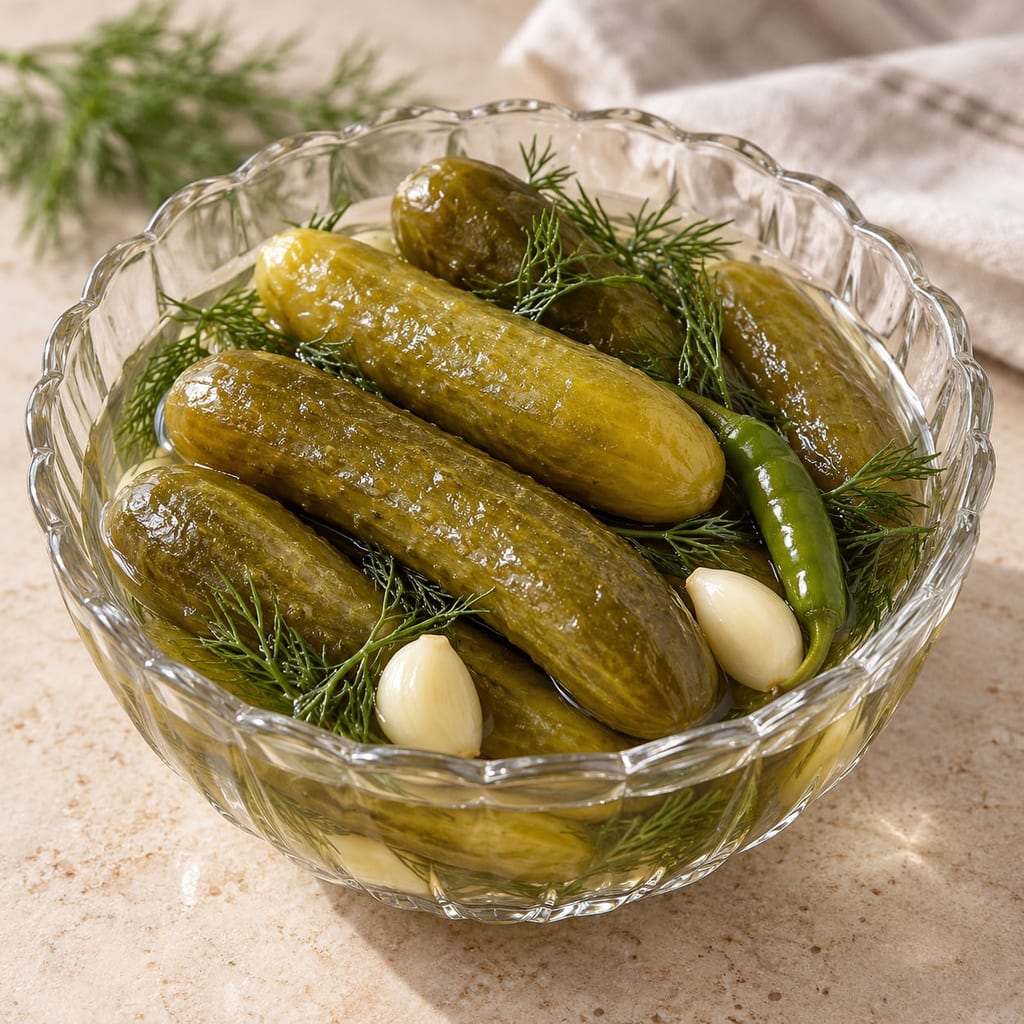
Khiyār shūr is an Iranian cucumber pickle made in several ways; one household account in salt water is set out here, while vinegar recipes and acidified laboratory brines are kept separate.
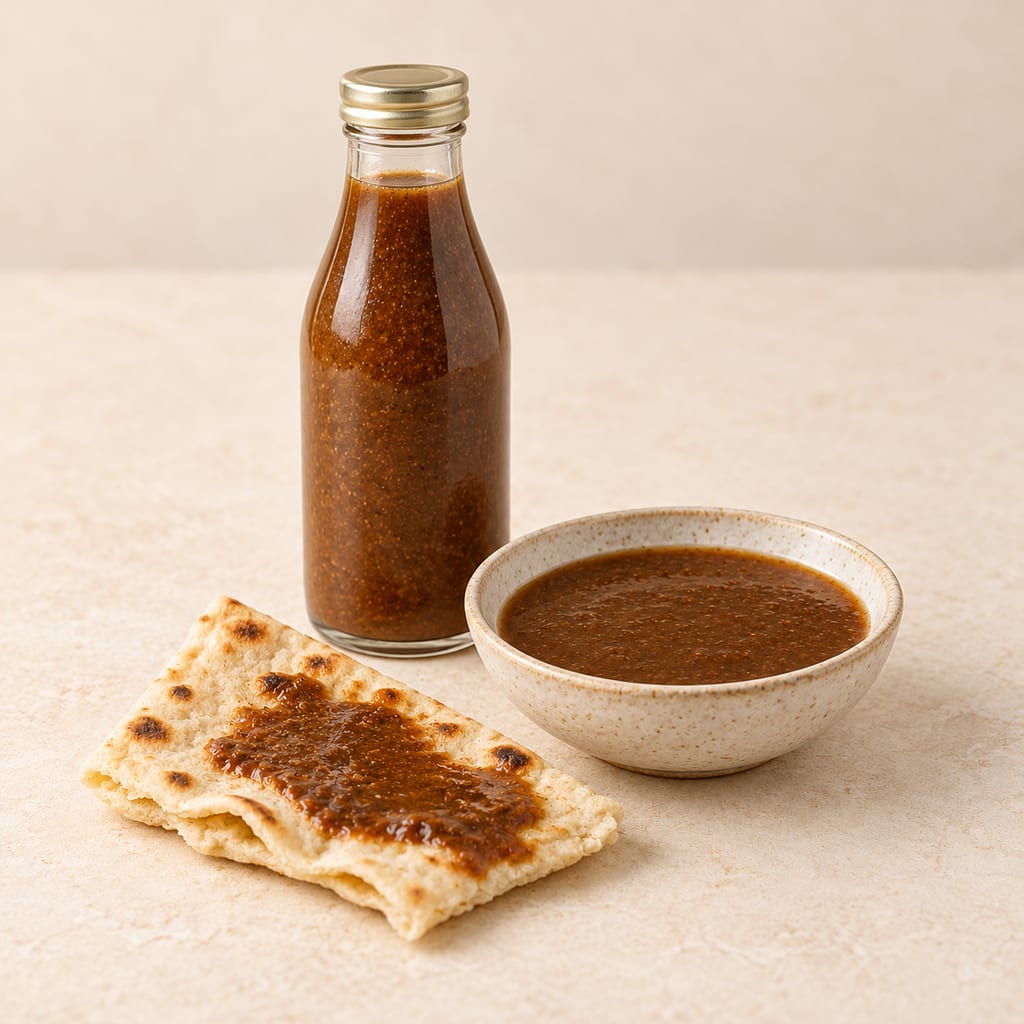
Mahyawa, also written mahyaveh, is a traditional fish sauce from southern Iran, made by salting small sardines or anchovies in water, maturing them in jars and seasoning the filtered liquid with mustard and spices.
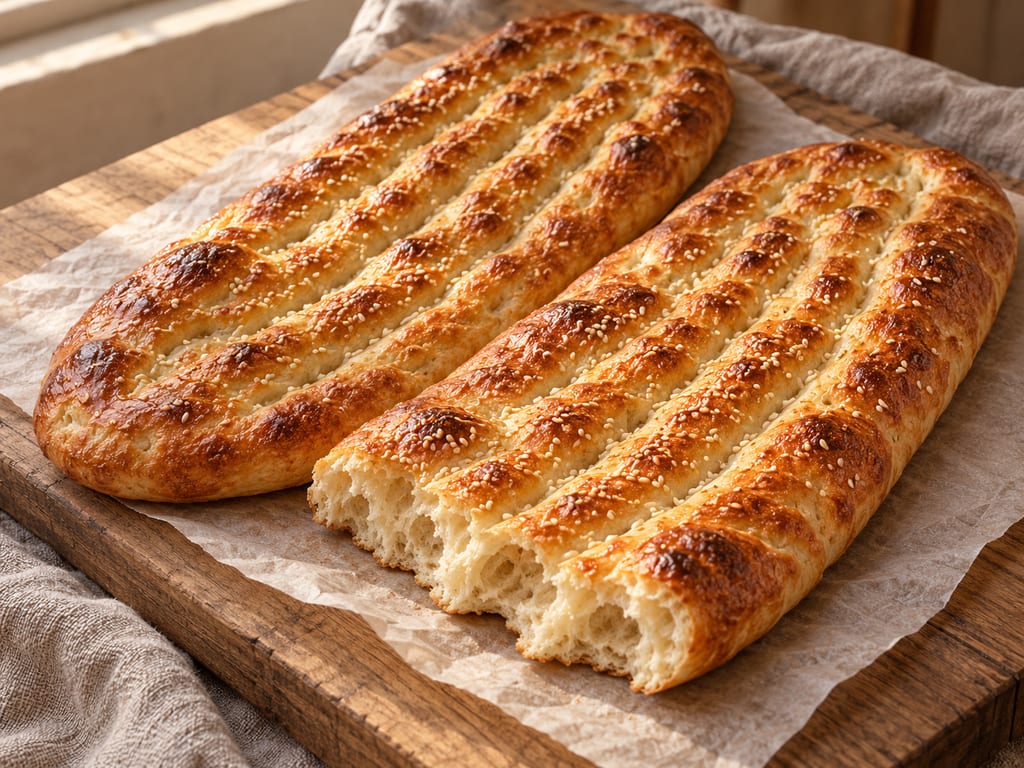
A yeast-raised Iranian flatbread with a crisp roomal-glazed crust, long grooves and a soft interior.
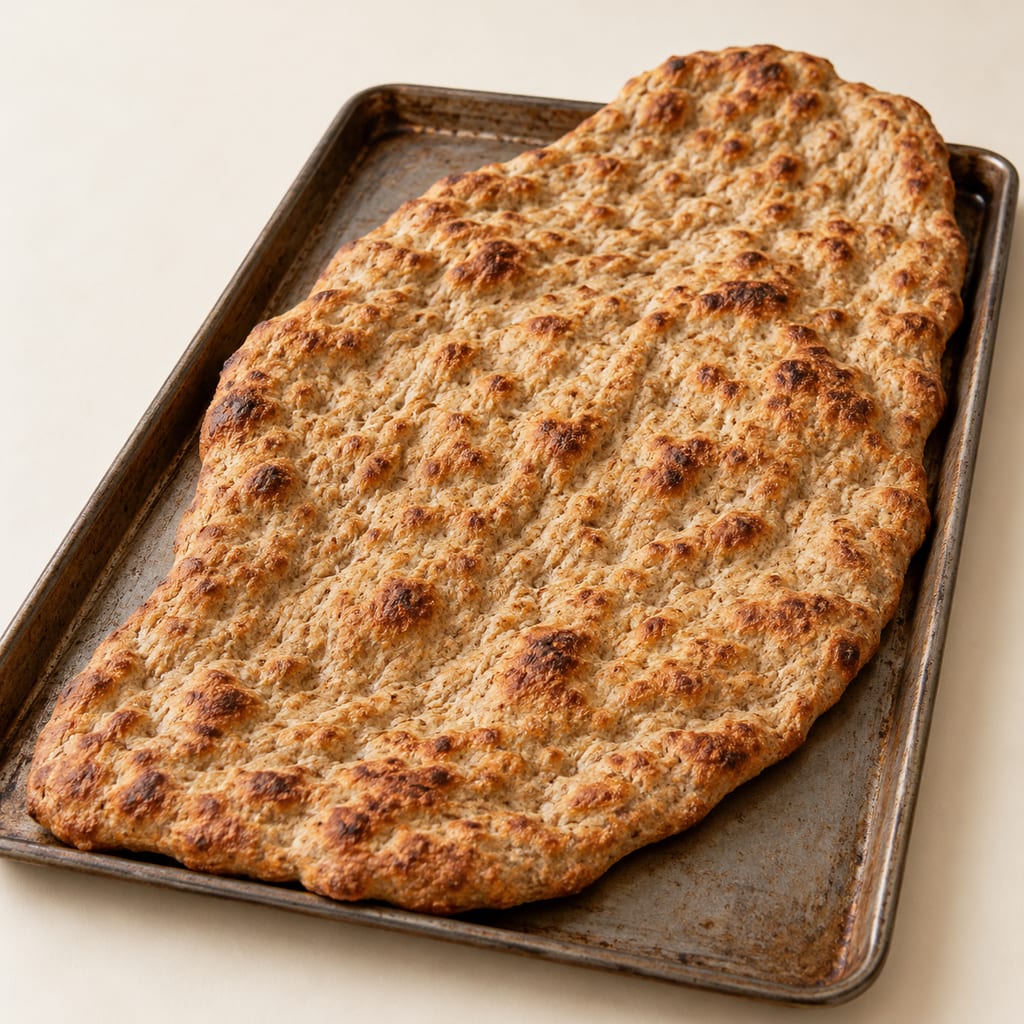
An Iranian whole-wheat sourdough flatbread adapted for a home oven and ordinary baking sheet. This method keeps the broad, dimpled hand-stretched shape but omits the traditional hot-pebble hearth and its imprint.
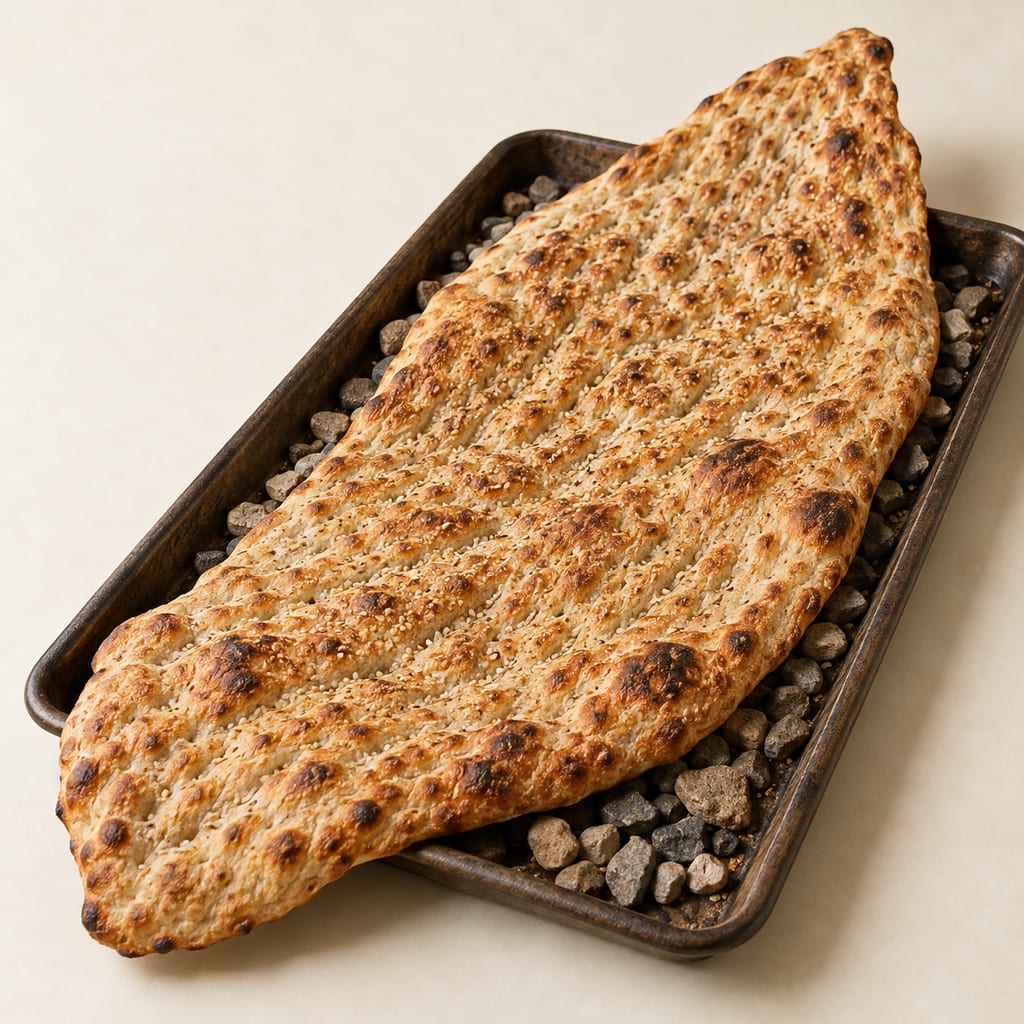
A long, irregular Persian bread baked on a tray of gravel-like stones in a hot oven. This home method uses dried yeast and a mix of wholemeal and bread flour, with an overnight rest.
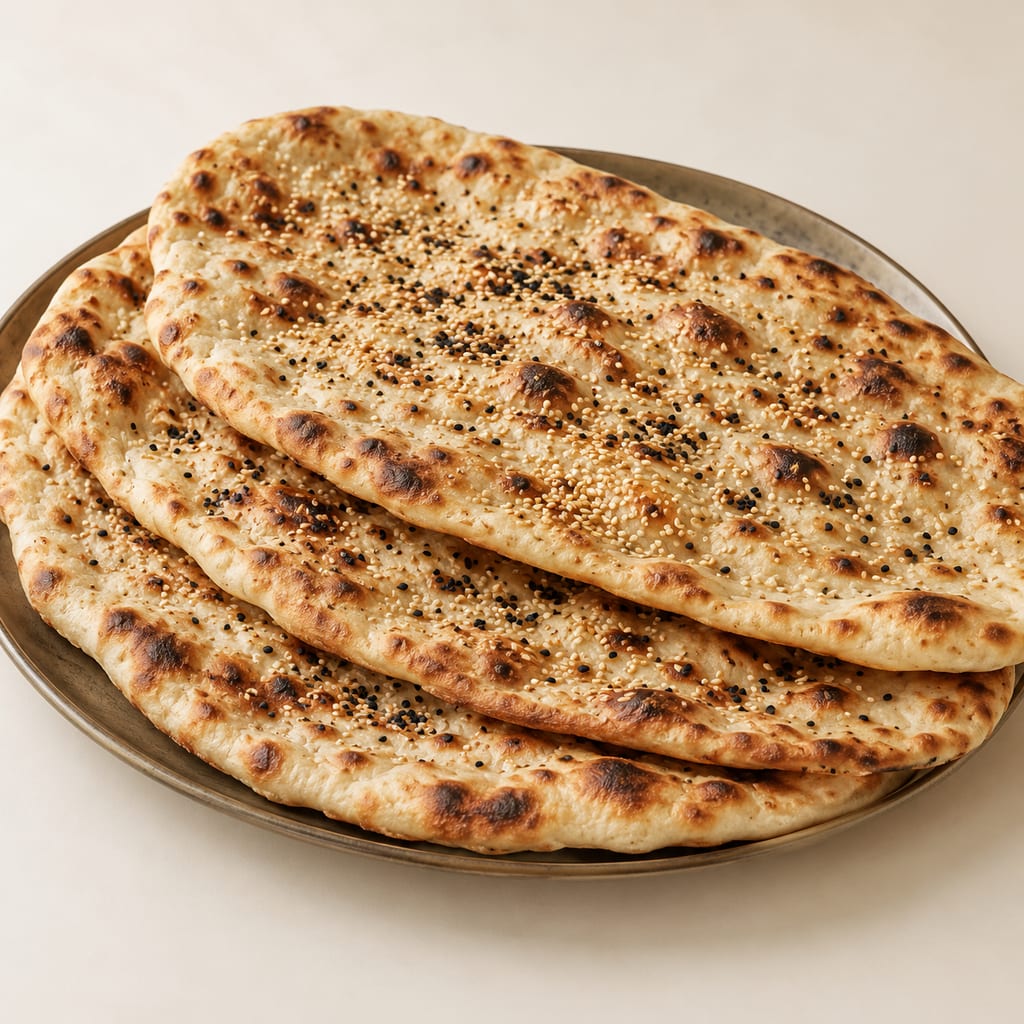
Persian yeast-raised flatbreads, rolled thin, seeded and cooked in a dry skillet.
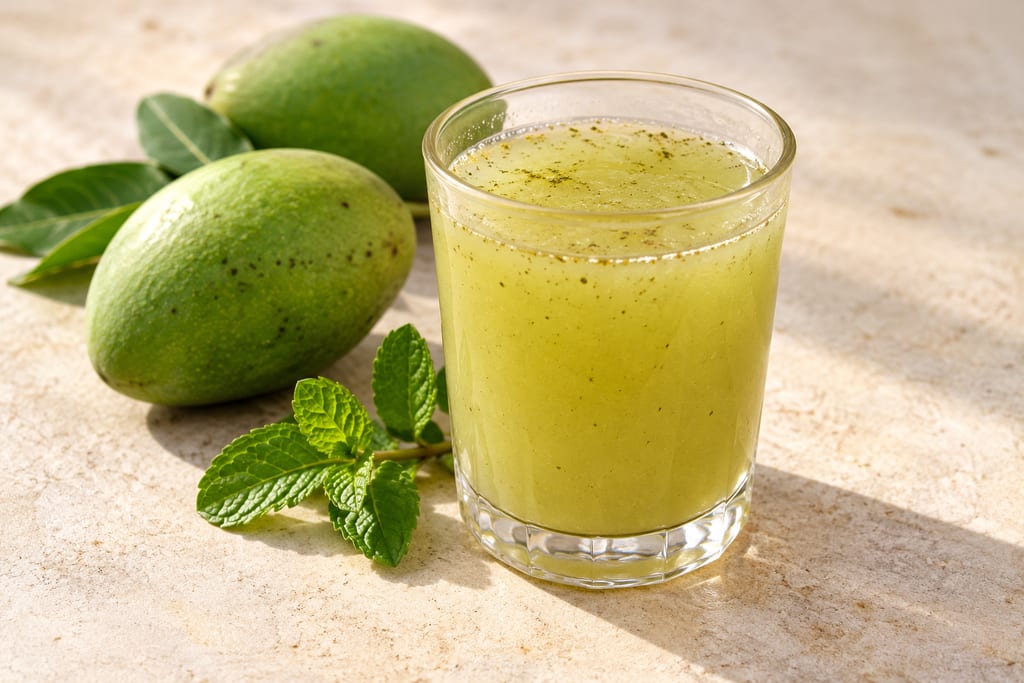
Aam panna is a tart Indian summer drink made by cooking unripe green mango until its flesh softens, then blending the pulp with sweetener, salt and spices and diluting it with water.
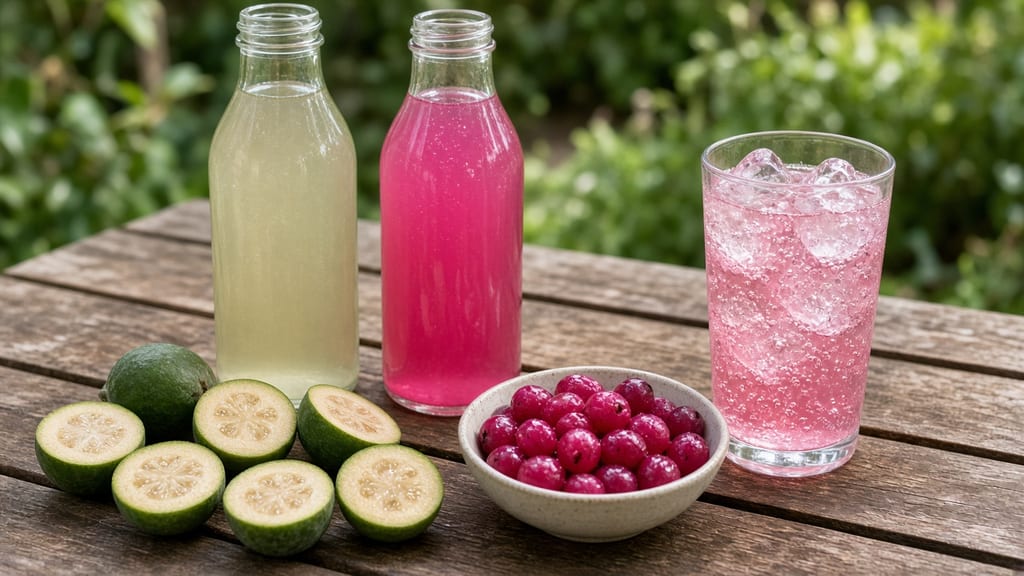
New Zealand feijoa cordial, from the flesh or just the skins, and Australian lilly pilly cordial: fruit, water and sugar heated briefly, strained, and sharpened with lemon and tartaric or citric acid.
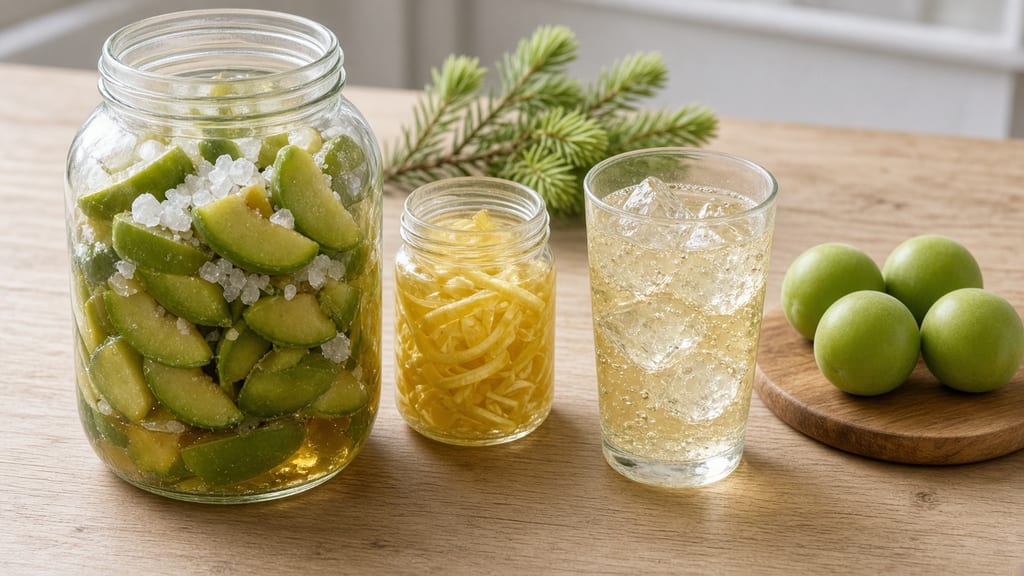
Syrups made without heat by packing fruit or shoots in sugar: Korean maesil-cheong with the ministry's stone-removal steps, frozen Japanese ume syrup, yuja-cheong and Polish pine-shoot syrup.
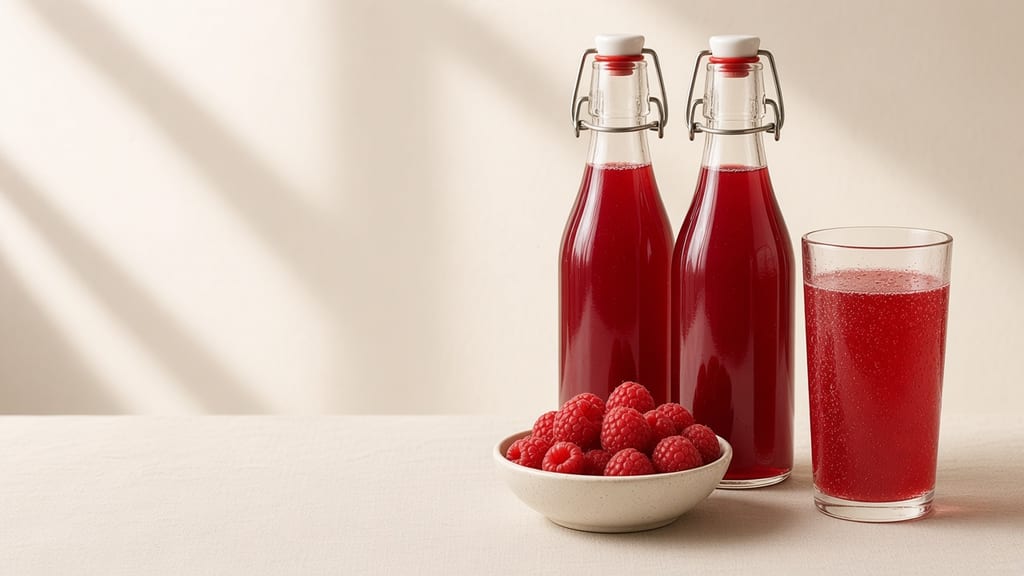
Clear fruit syrup from cooked, dripped berry juice boiled with sugar and canned in a water bath; one tested method for raspberry, strawberry, blueberry, cherry, grape and blackberry.
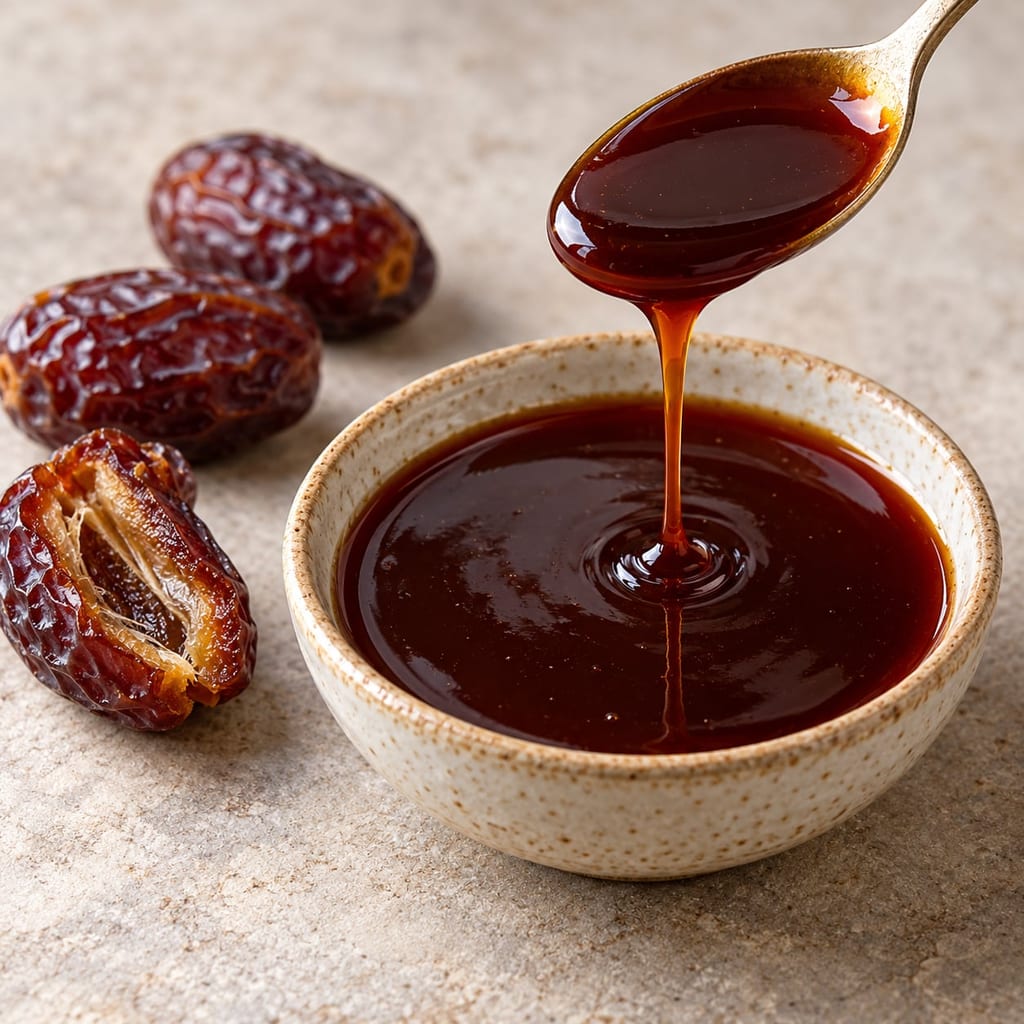
A thick, dark, very sweet syrup made from dates, known as dibs, rub, silan or date molasses. It sweetens tahini and desserts and glazes or sauces savoury dishes across the Middle East and North Africa.
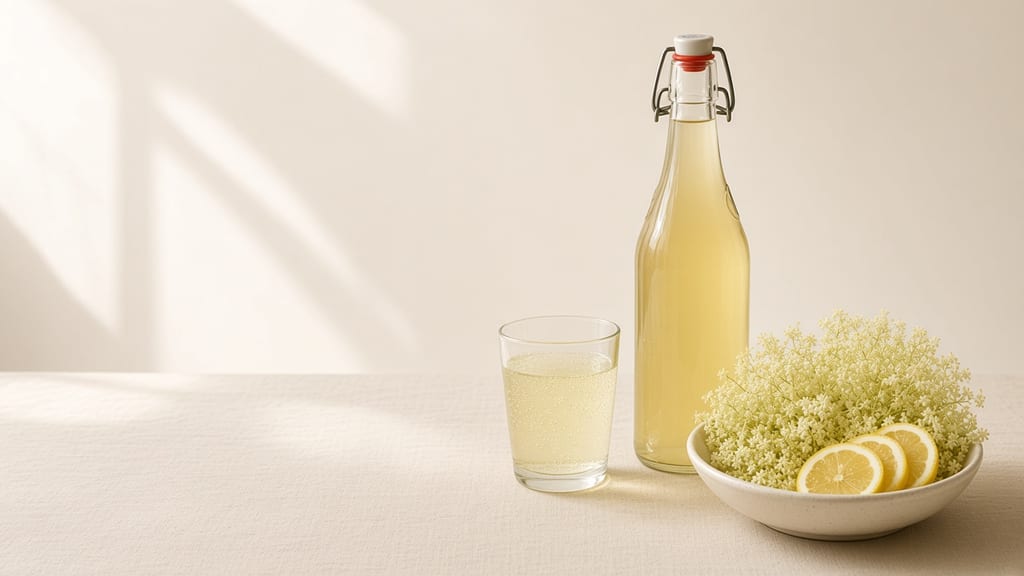
Elderflower heads steeped for one to three days in a lemony sugar syrup, strained and kept cold; the same infusion method flavours syrups with mint, basil, thyme and other herbs.
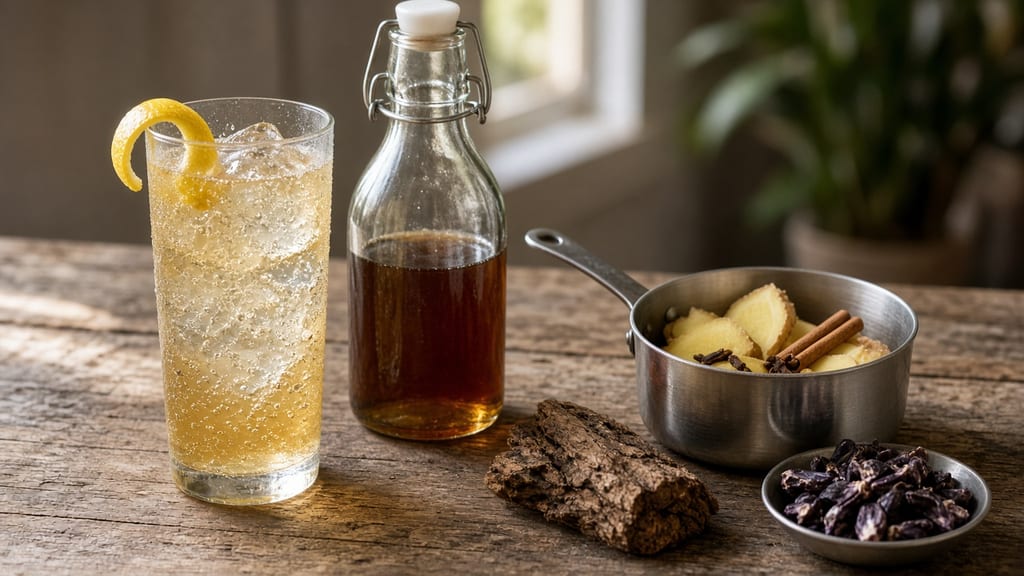
Boiled syrups from hard ingredients: a refrigerated ginger syrup, Trinidad mauby from tree bark, Tamil nannari root syrup, Peruvian purple-corn concentrate and a Turkish spiced sherbet.
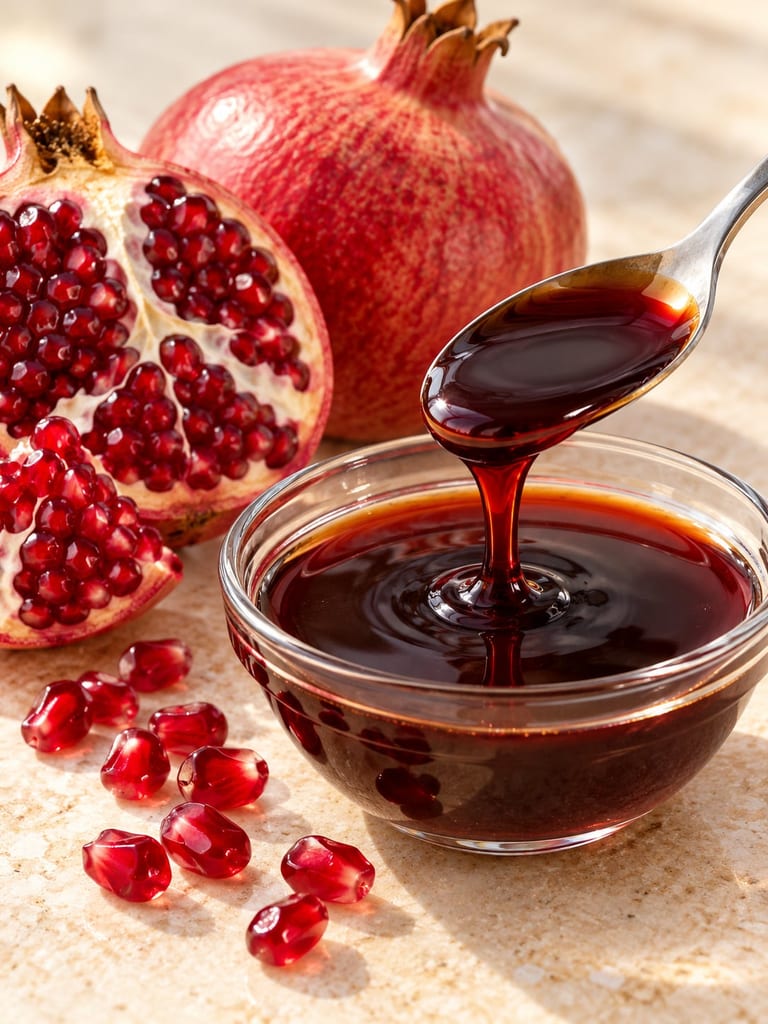
The registered Hatay method presses pomegranate arils and slowly concentrates the strained juice. Its 100 kg source batch and experienced-producer endpoint are retained; no home-scale time or shelf-life is inferred.
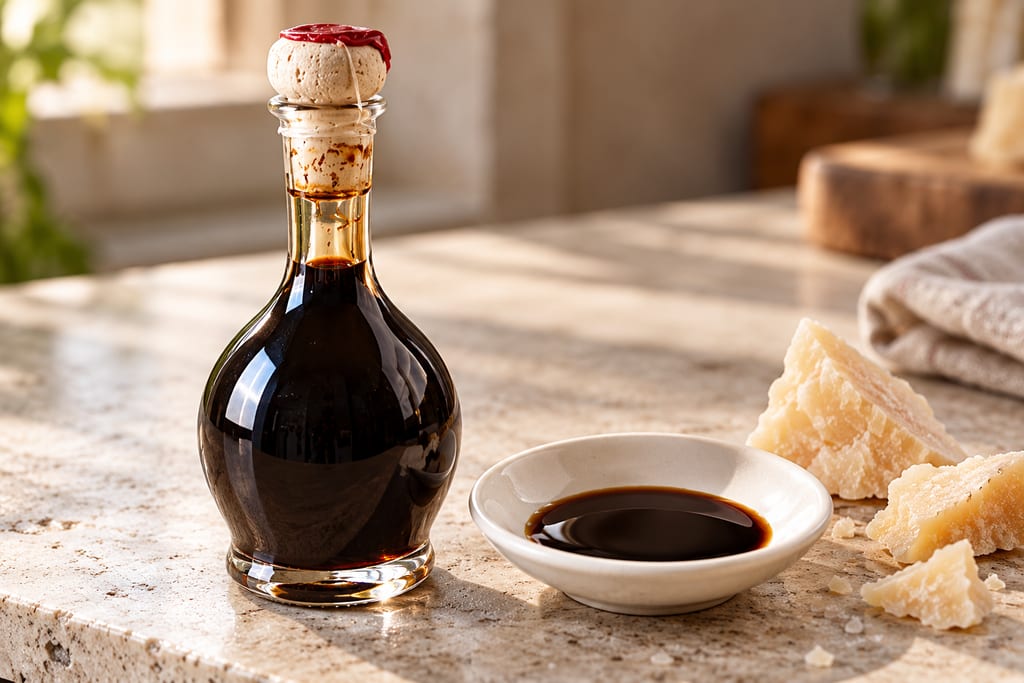
Protected Italian vinegar made only from cooked grape must, fermented and aged in a battery of wooden barrels for at least 12 years: sweet, sharp and syrupy.
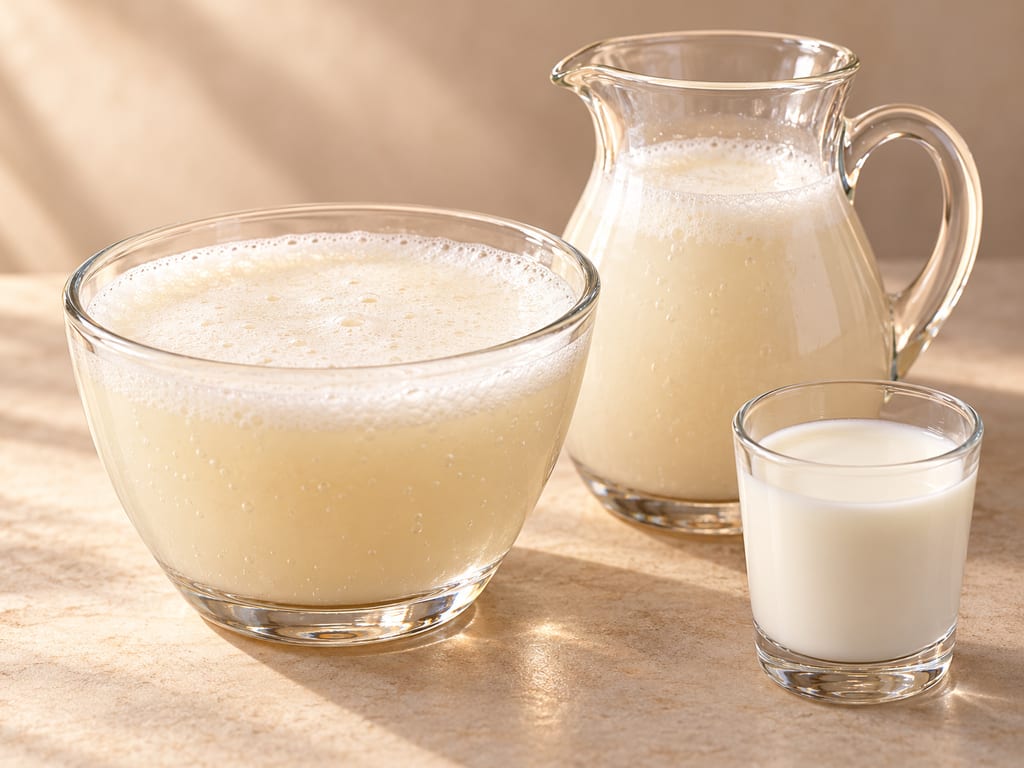
Airag is Mongolia’s fermented mare’s-milk drink, traditionally churned with saved starter in a reusable cowhide khokhuur.
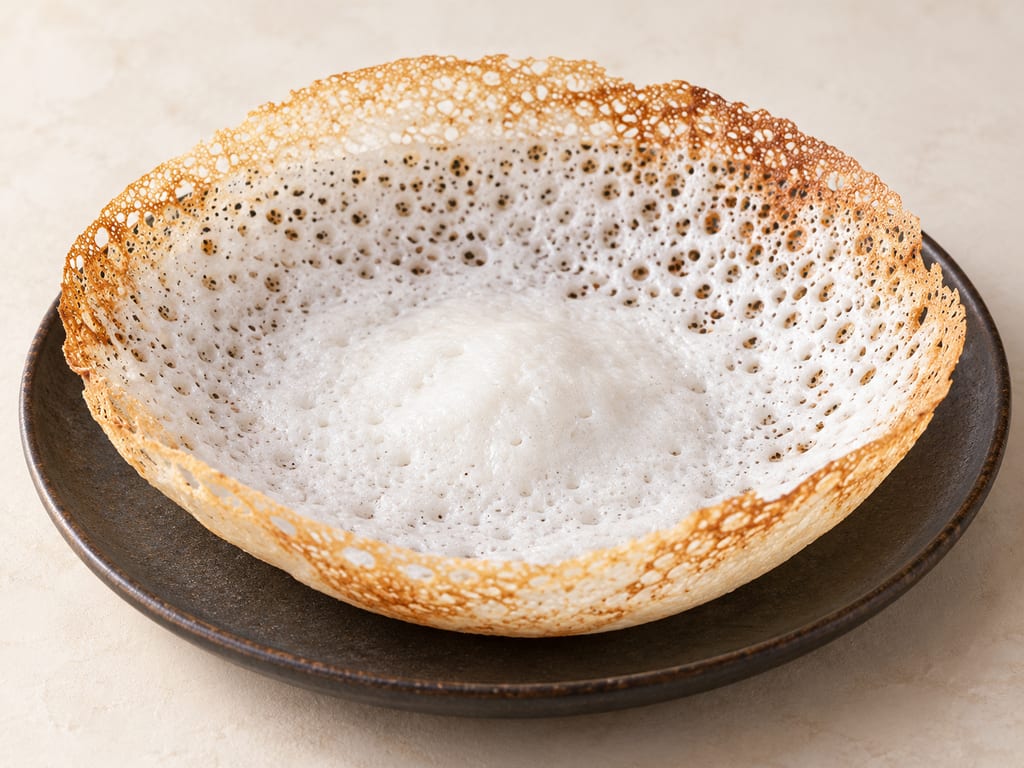
Appam, or hoppers, are South Indian and Sri Lankan rice pancakes made from a fermented coconut-and-rice batter and cooked in a curved pan to a crisp lacy rim and a soft, spongy centre.
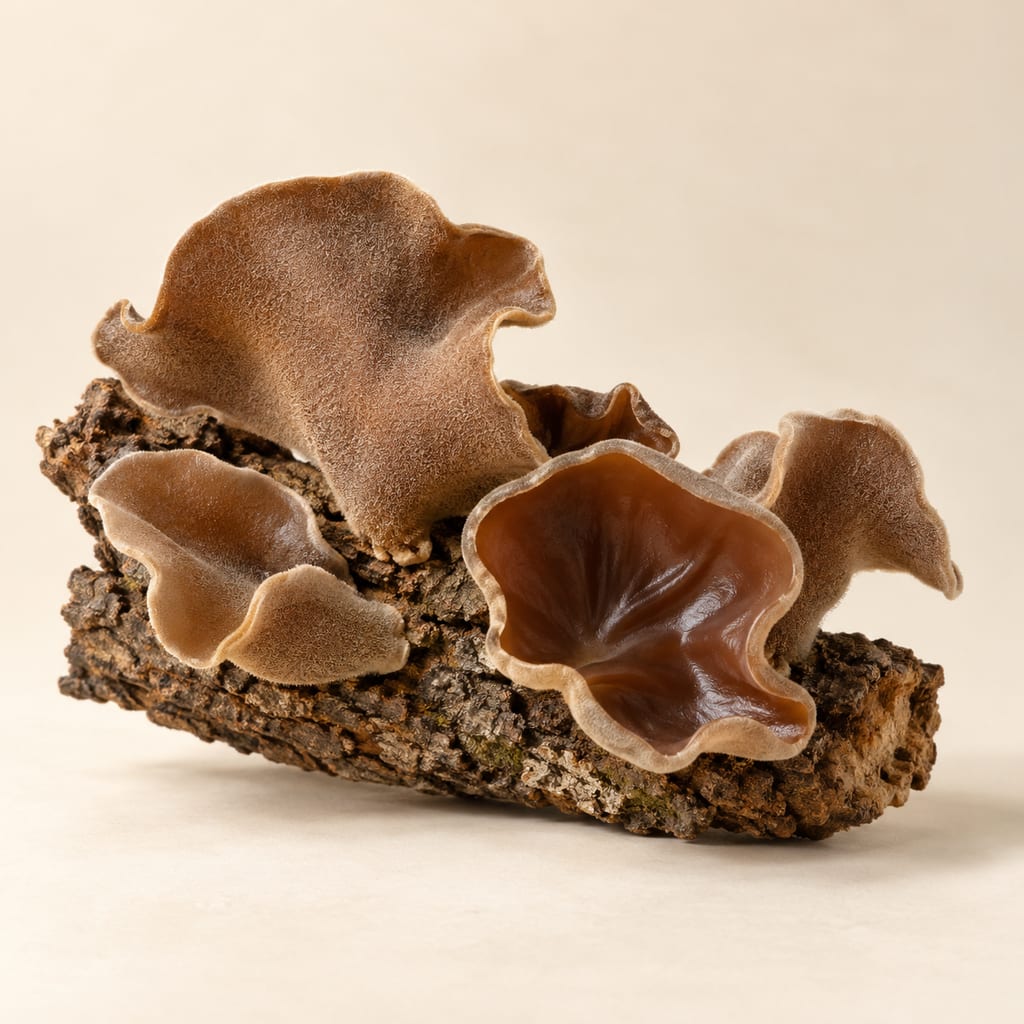
Auricularia tremellosa is a wood ear fungus of the genus that supplies most dried wood ear sold in China; its own food record is thin, and the culinary practice described here comes from the closely related wood ear species.
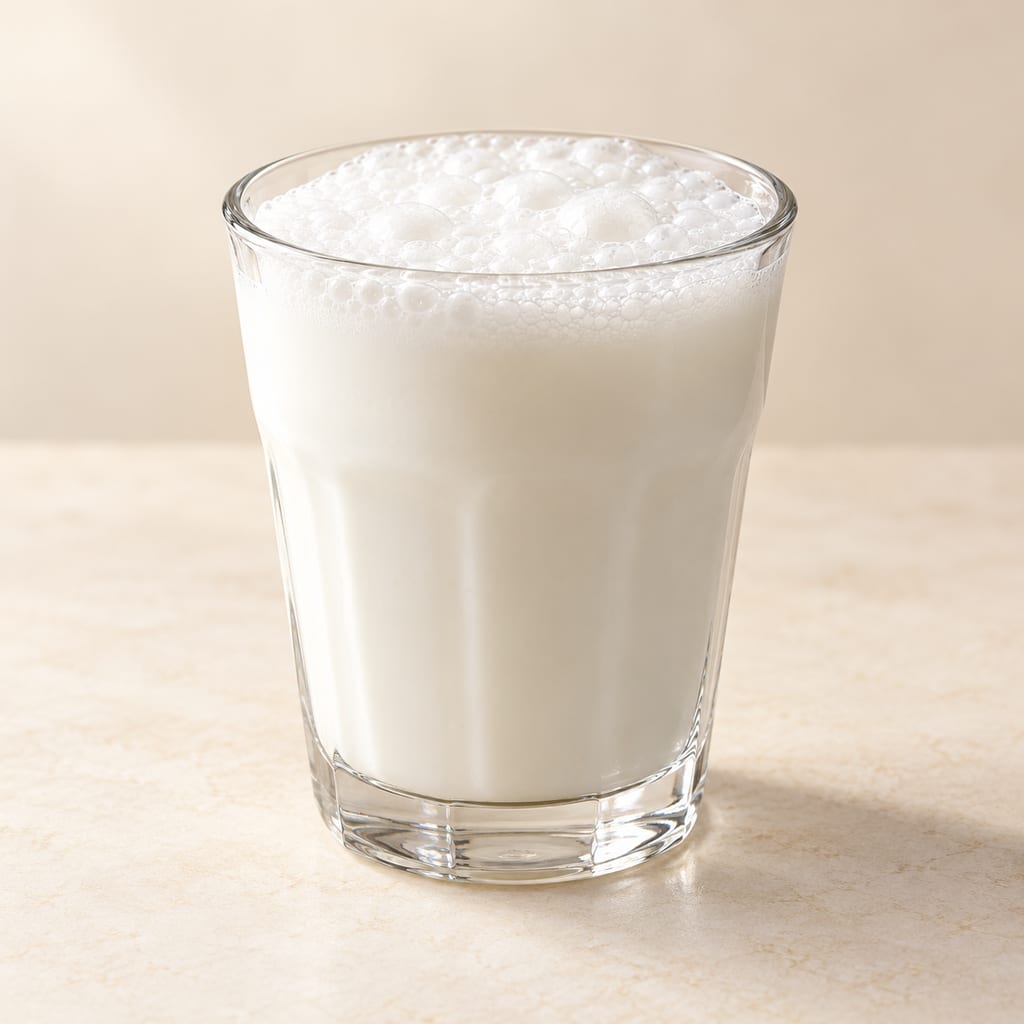
Ayran is Turkey’s cold, savoury yogurt drink: plain yogurt is loosened with water and lightly salted, then whisked smooth or aerated into a soft cap of foam.
A thin stone griddle used over an open hearth. Norwegian archaeology documents the established tradition from the early Middle Ages; a Viking-period origin is only a cautious suggestion linked to Shetland.
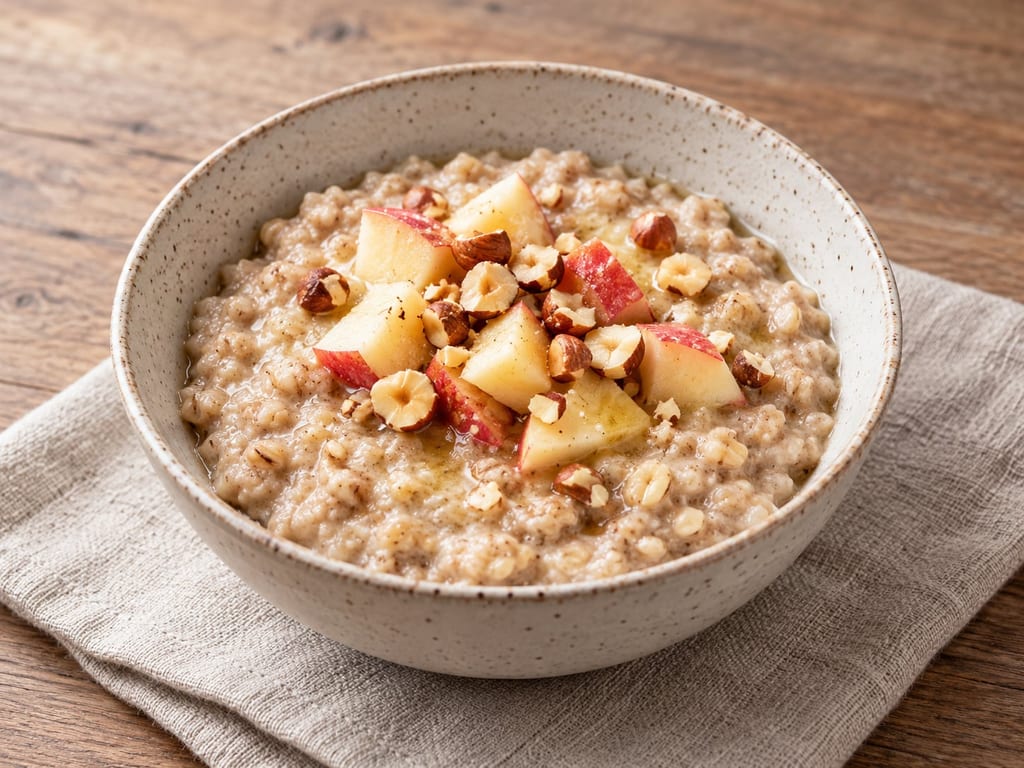
Crushed or milled barley cooked in water until the starch softens and the mixture thickens, the plainest way a northern household turned stored grain into a meal, here with apple and hazelnut.
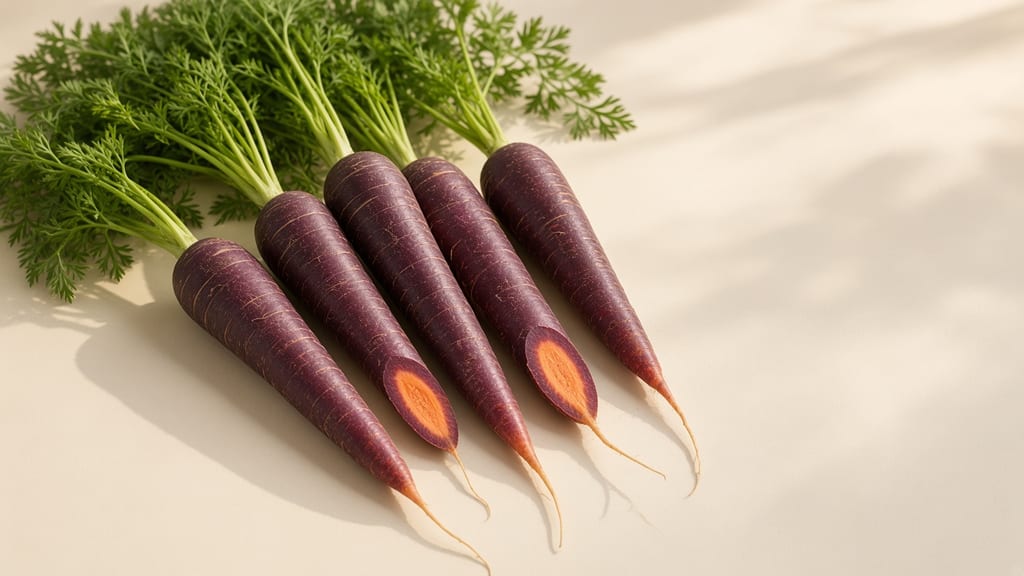
Black carrot is the anthocyanin-pigmented Eastern carrot (Daucus carota var. atrorubens), the purple root that preceded orange types and still colours kanji and şalgam.
No community contributions have been published for this entry yet.
Sign in to contribute. Published comments and photos are free to read.
Orient, vol. 52 (2017), Society for Near Eastern Studies in Japan
Al-Kindi's Attack on Alchemy and His Perfume MakingTranslation of al-Kindi's rose water passage; al-Razi and al-Khwarizmi on cucurbit and alembic.
Cited in: What this recipe is; Part one: al-Kindi's rose water; Reading al-Kindi; Where the sources disagree
Center for the Great Islamic Encyclopedia, Encyclopaedia of Iranian Folk Culture
عرق و عرقگیری (Araq and araq-giri, plant distillates)Qar', anbiq, qabila; Chardin; Qajar sharbat; regional stills in Kashan, Sarvestan, Kerman, Babol; food and wedding uses.
Cited in: What this recipe is; Stills across Iran; Rose water in Persian life; Part three: making rose water at home
Kashan Office of Cultural Heritage, Tourism and Handicrafts
مهارت گلابگیری قمصر (The skill of rose water making in Qamsar)Season, picking, equipment, seal, weight, 4 to 7 hour runs, oil skimmed.
Cited in: Part two: the copper pots of Qamsar; Where the sources disagree
Salehian, Qamsar rose water producer
طرز تولید گلاب به روش سنتی با دیگ مسی در قمصر (Traditional copper-pot rose water in Qamsar)Quantities, about 95 C, run time and yield; do-atasheh; storage; signs of genuine rose water.
Cited in: Part two: the copper pots of Qamsar; Part three: making rose water at home; Buying rose water; Where the sources disagree
Tasnim News Agency, 18 May 2025
هشدار سازمان غذا و دارو: عرقیات فاقد مجوز بهداشتی نخرید (Food and Drug Organization warning on unlicensed distillates)Methanol in plants; avoid unlicensed distillates; home distilling advice.
Cited in: Part three: making rose water at home; Buying rose water; Where the sources disagree
Iranco
کنترل کیفیت گلاب و عرقیات (Quality control of rose water and distillates, ISIRI 1525)ISIRI 1525 oil grades and methanol limit.
Cited in: Grades and the national standard; Buying rose water