
























































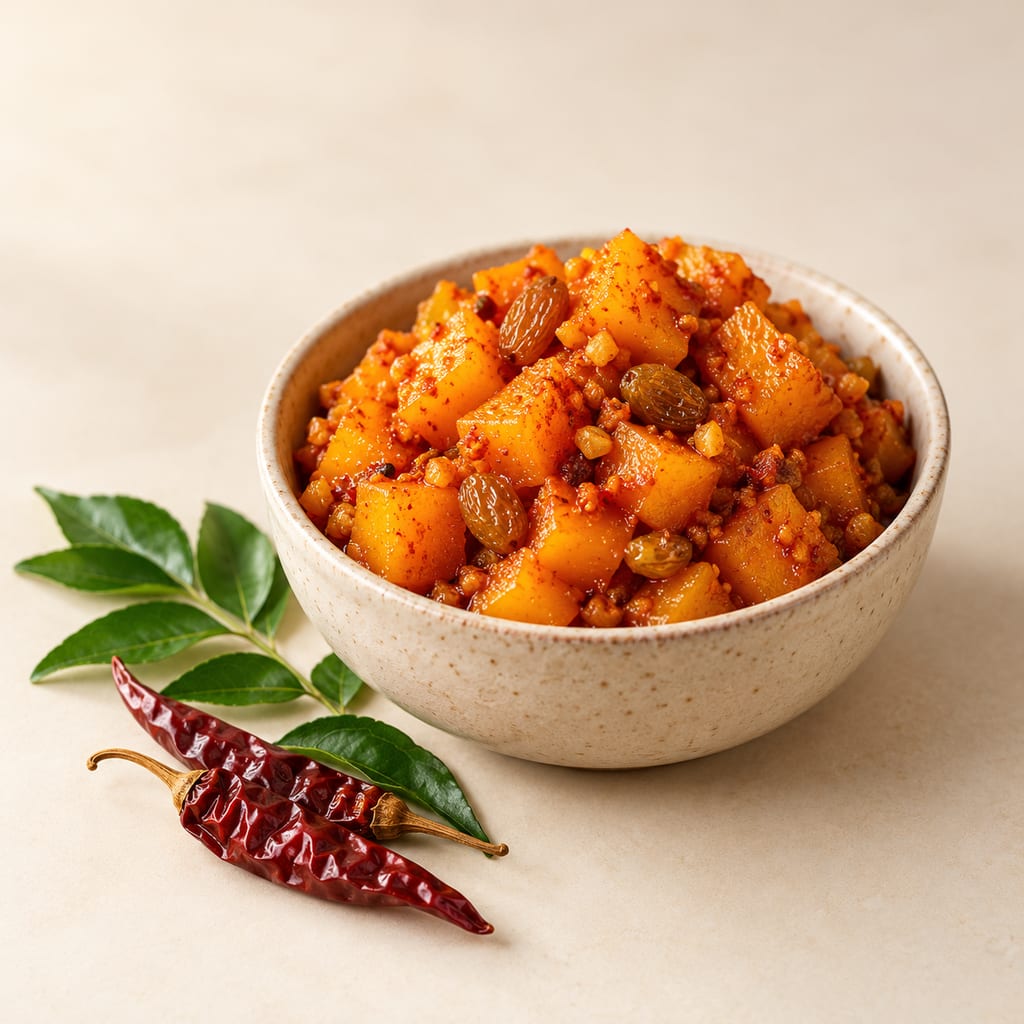
Mathanga achar: Kerala pumpkin pickle
Mathanga achar: Freeze for winter; small fresh portion refrigerated up to 48 hours.
 FermenteaWhere food goes to change
1504 records with their sources, across 11 categories.
 Fermented, enzyme-ripened and mixed seasonings328
 Fruit preserves10
 Legume, seed and plant-protein ferments10
 Garum and fish sauces8
 Adjacent and excluded7
 Koji, mold starters and mold-ripened ferments4
 Acid and oil pickles3
 Fermented fruit and fruit-derived foods3
 Vegetable lactic3
 Dairy ferments2
 Smoked salted and dried foods2
 Cheese1
 Not yet classified1
Mathanga achar: Freeze for winter; small fresh portion refrigerated up to 48 hours.
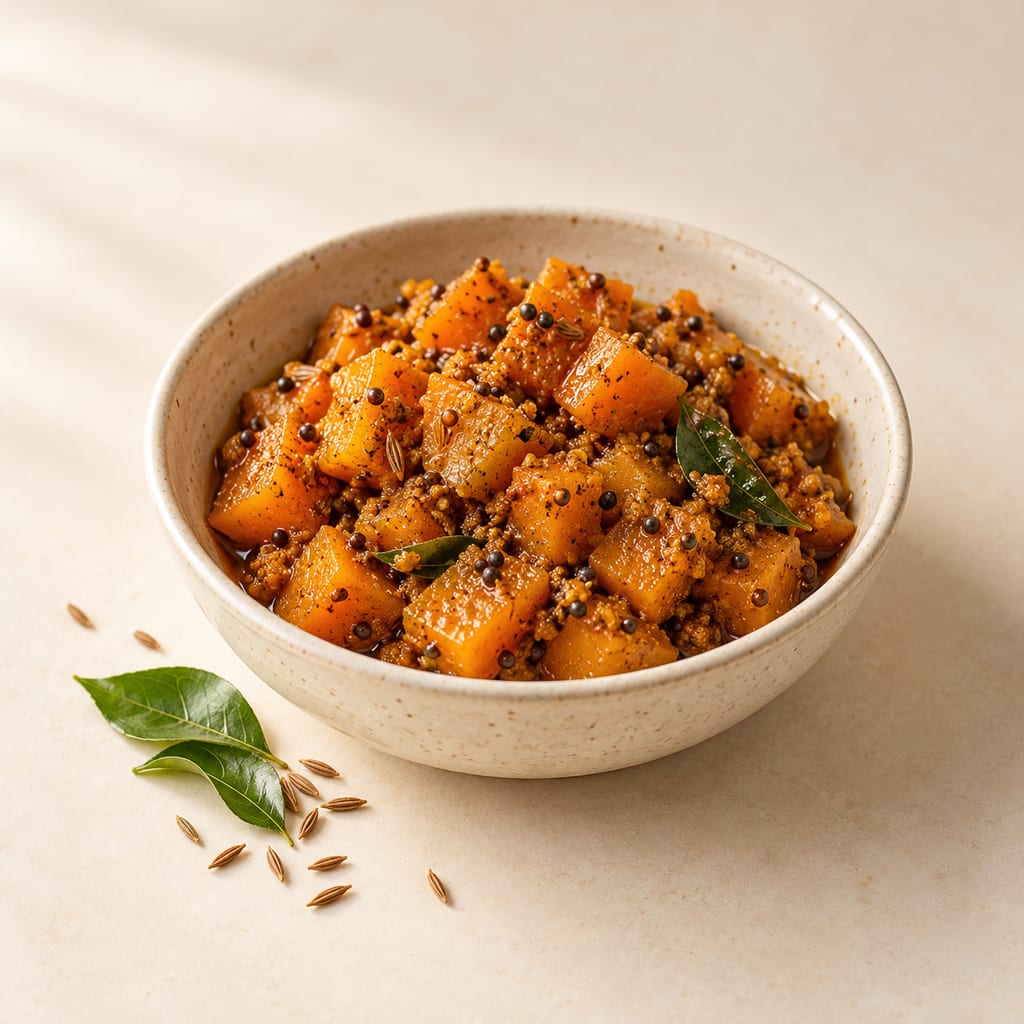
South African pumpkin atchar: Freeze for winter; refrigerated 48-hour limit includes overnight marination.
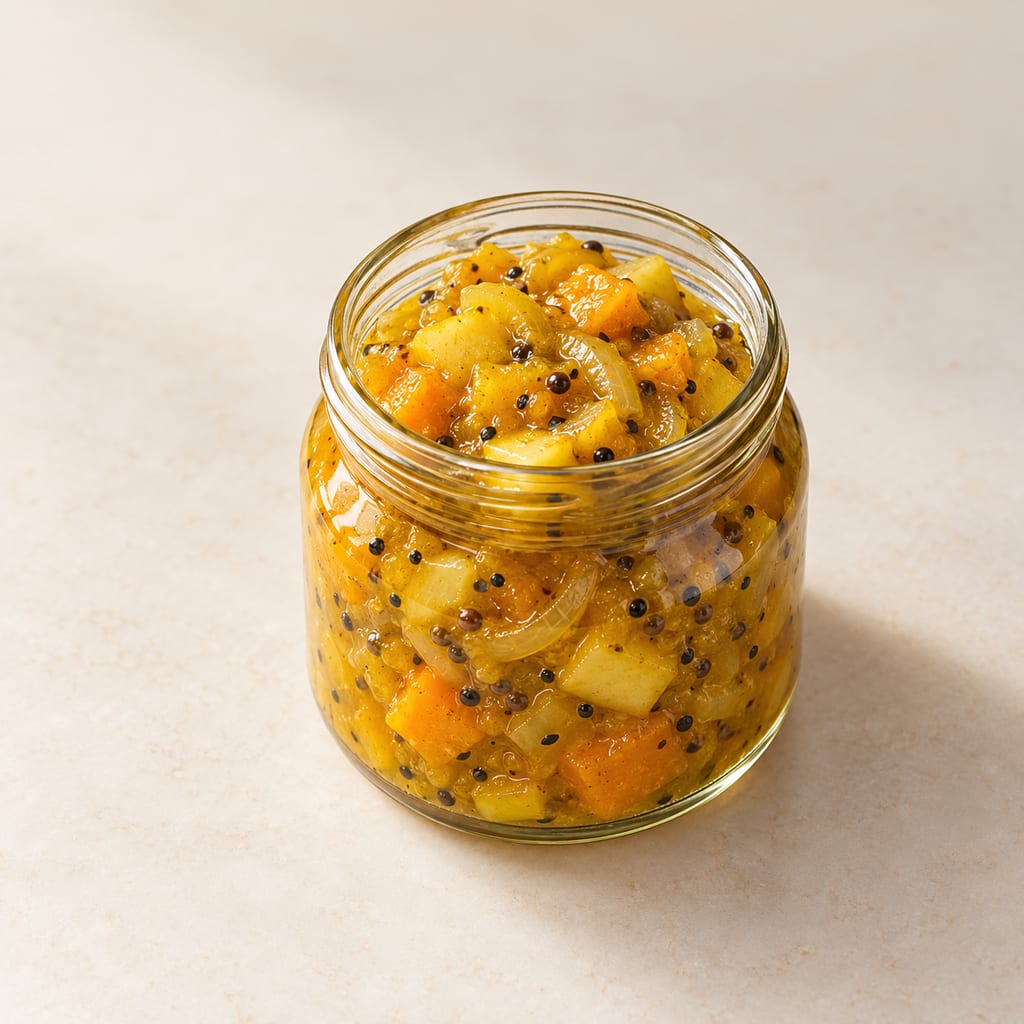
British pumpkin, apple and mustard pickle: Freeze for winter; small fresh portion refrigerated up to 48 hours.
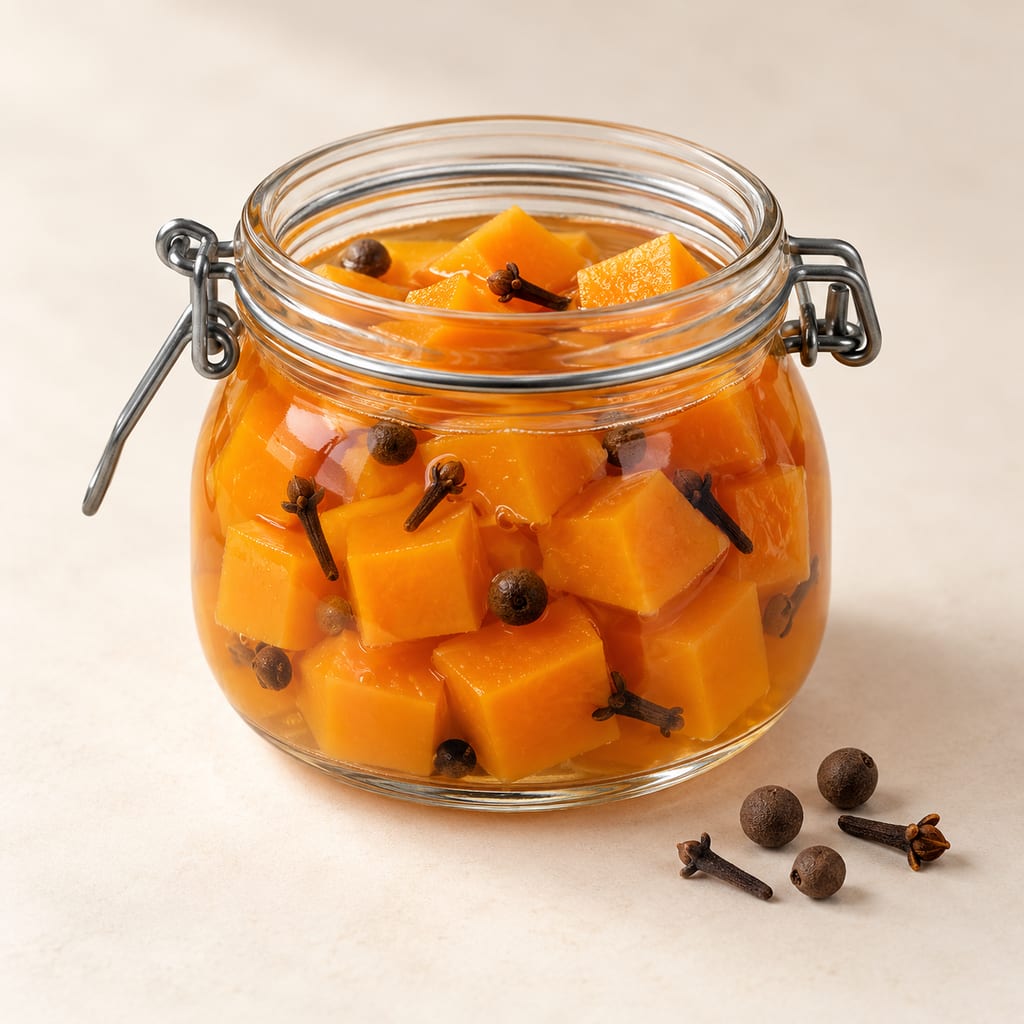
Dynia marynowana: Freeze for winter; small fresh portion refrigerated up to 48 hours.
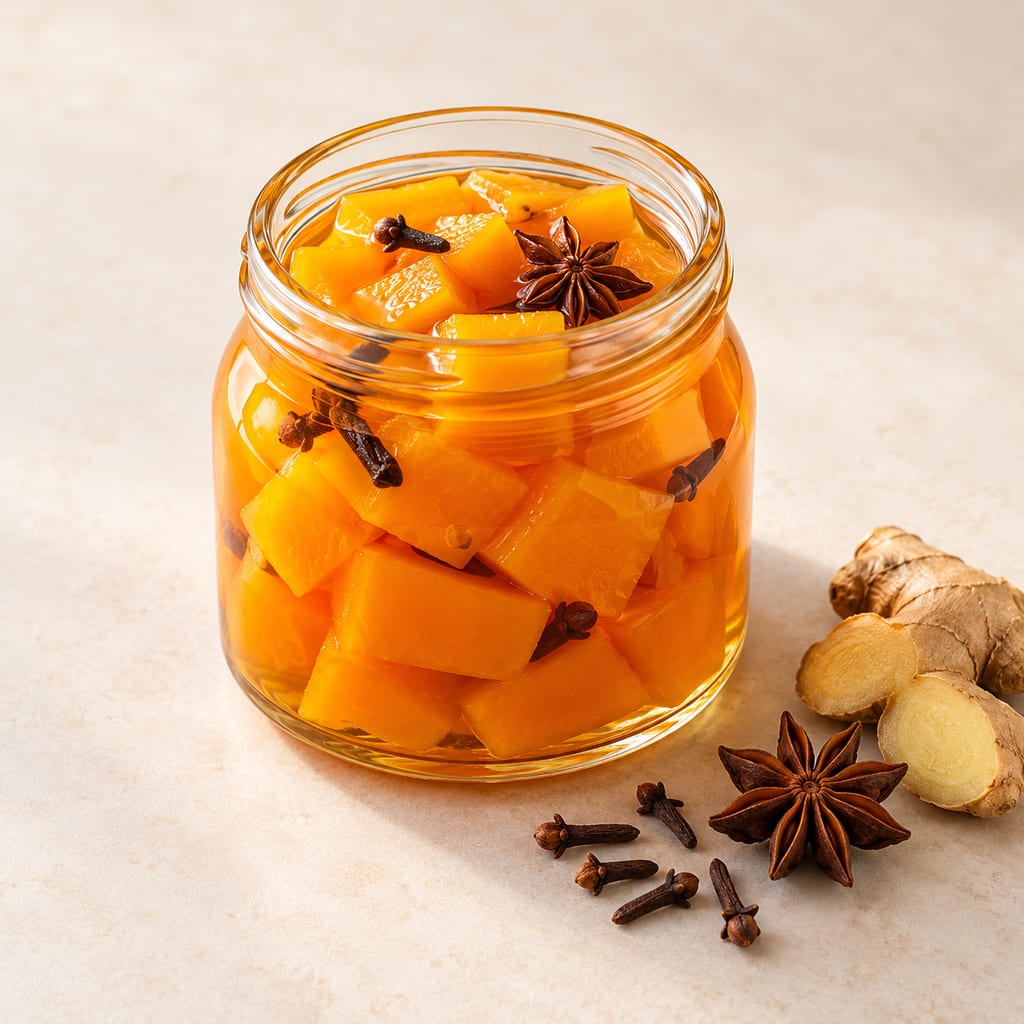
Marineeritud kõrvits: Freeze for winter; small fresh portion refrigerated up to 48 hours.
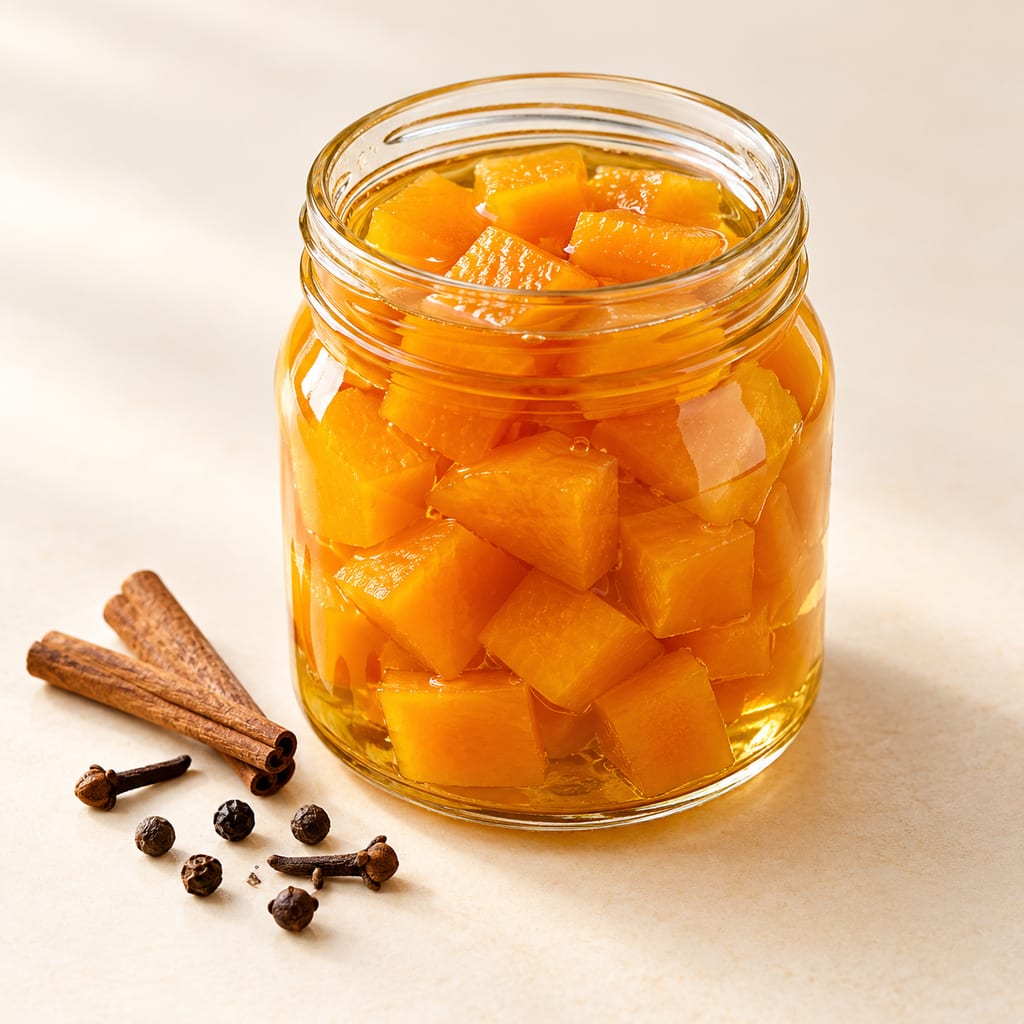
Ball sweet pumpkin pickles: Cupboard: exact published Ball formulation and water-bath process.
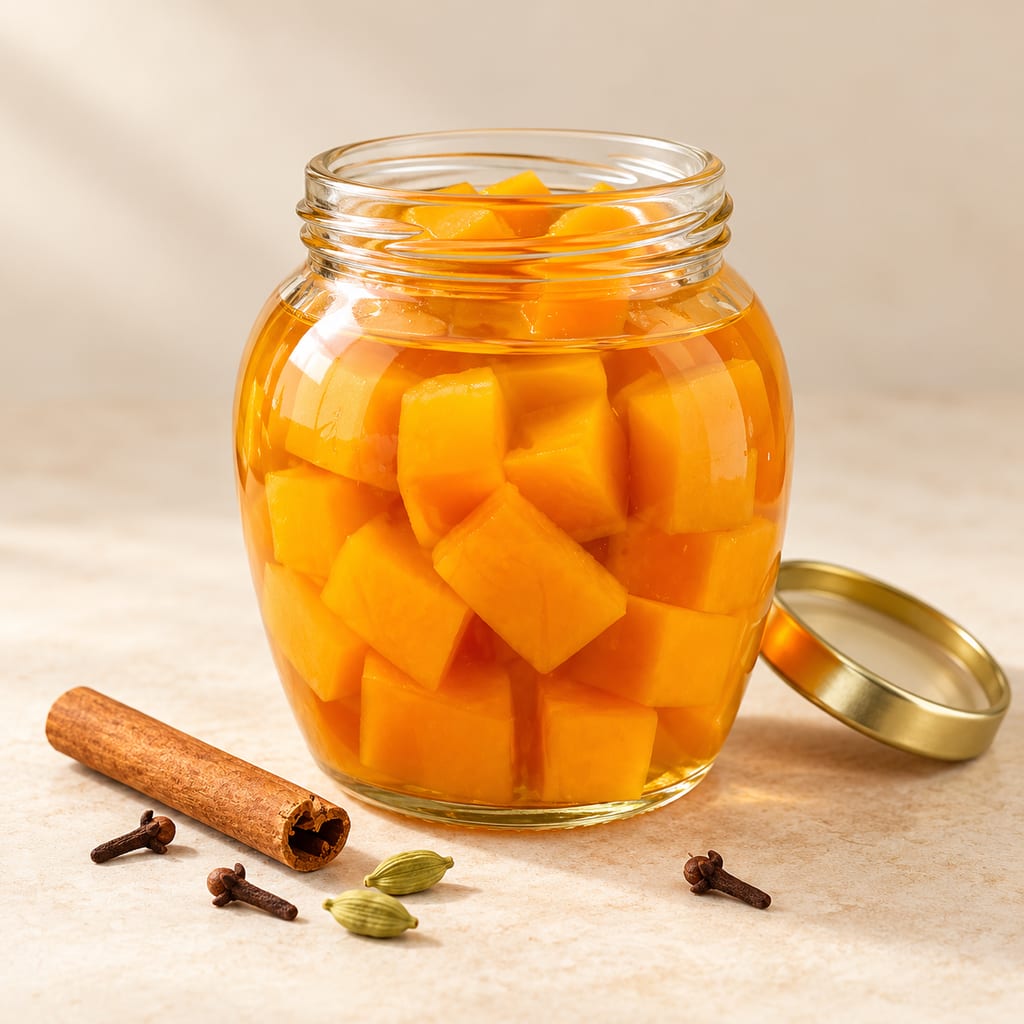
Pumpkin simmered with 5% vinegar, sugar, cinnamon, cardamom and cloves, then chilled. A sweet-sour pickle for the refrigerator.
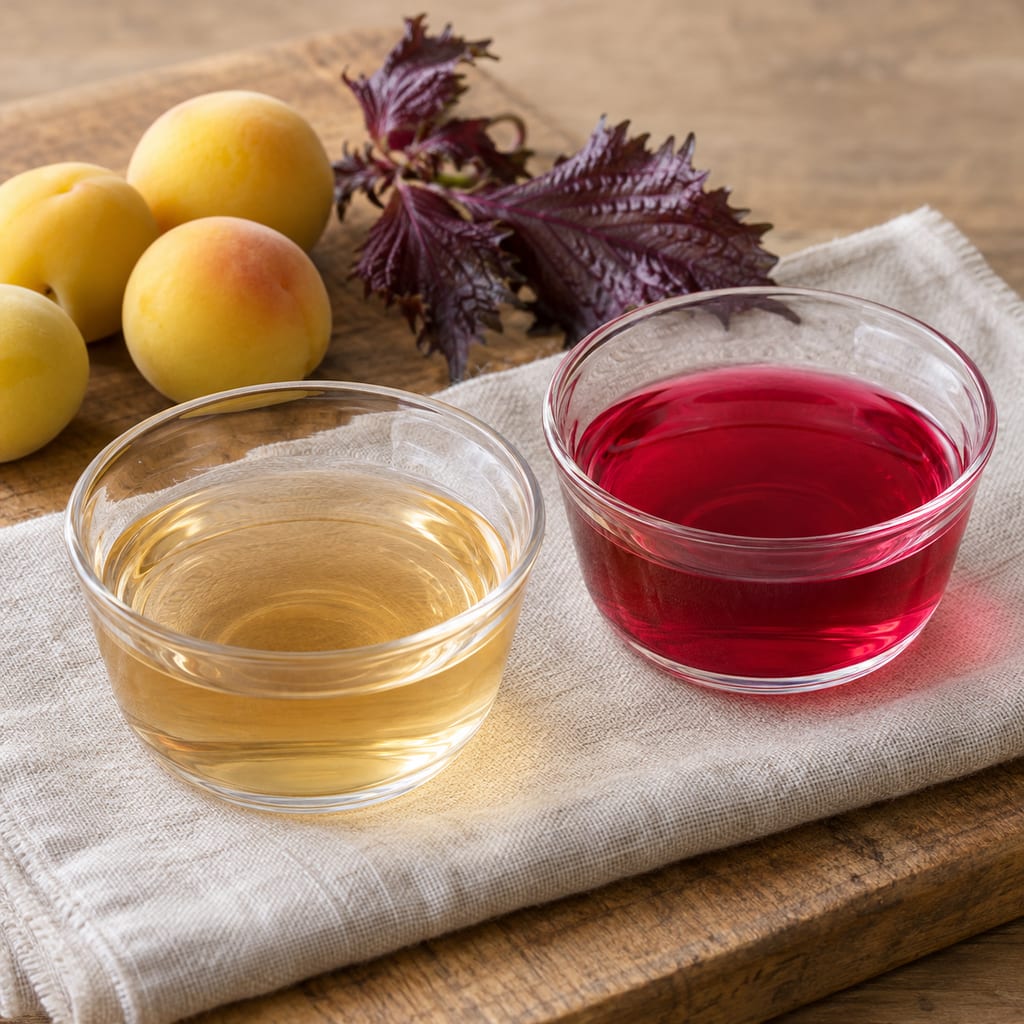
The very salty, sour liquid drawn out of Japanese ume fruit by salt during umeboshi making: acidity from the fruit's citric and malic acid, not from acetic fermentation; white, or red with shiso.
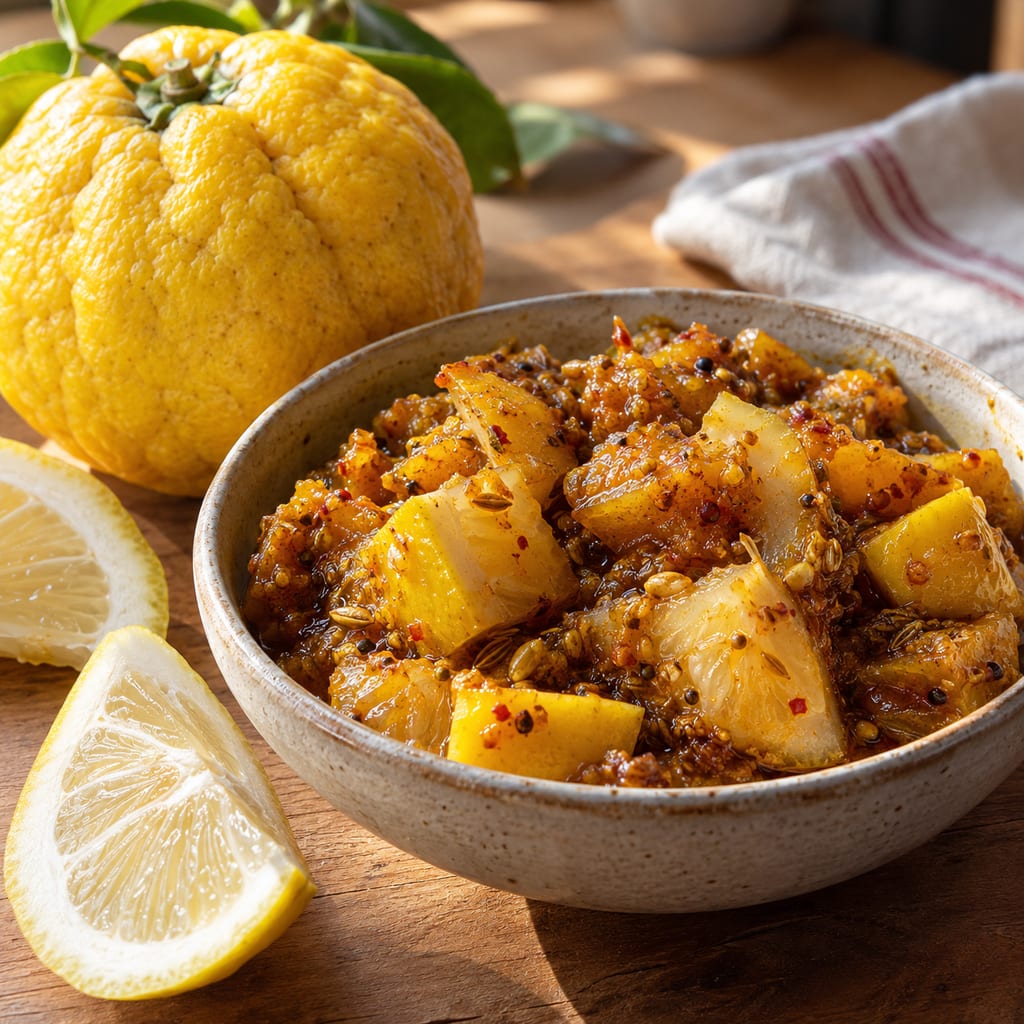
Ripe Himalayan galgal is boiled, sun-dried and cooked with mustard oil, spices and jaggery before a further rest in a ceramic jar.

Lunu dehi is Sri Lankan salted lime pickle. This version sun-dries cut, salt-stuffed ripe limes, then packs them with dried lime juice, chillies, spices and vinegar.
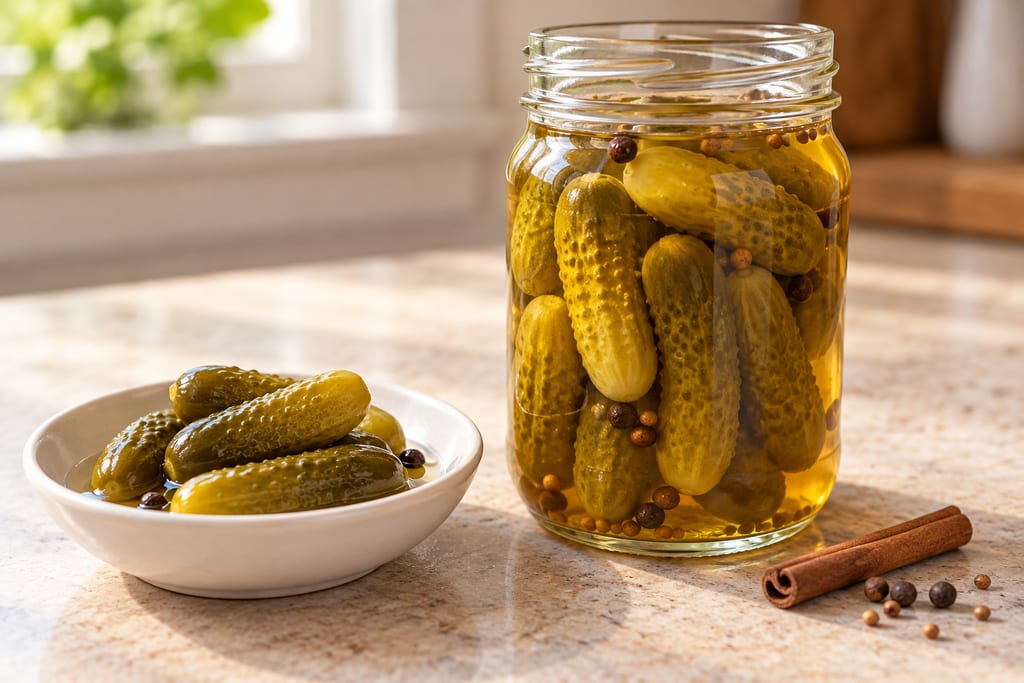
Sweet gherkin pickles are small whole cucumbers preserved in a spiced, sweet vinegar syrup. This four-day U.S. canning method uses repeated hot-water soaks, staged syrup additions, and a boiling-water process.
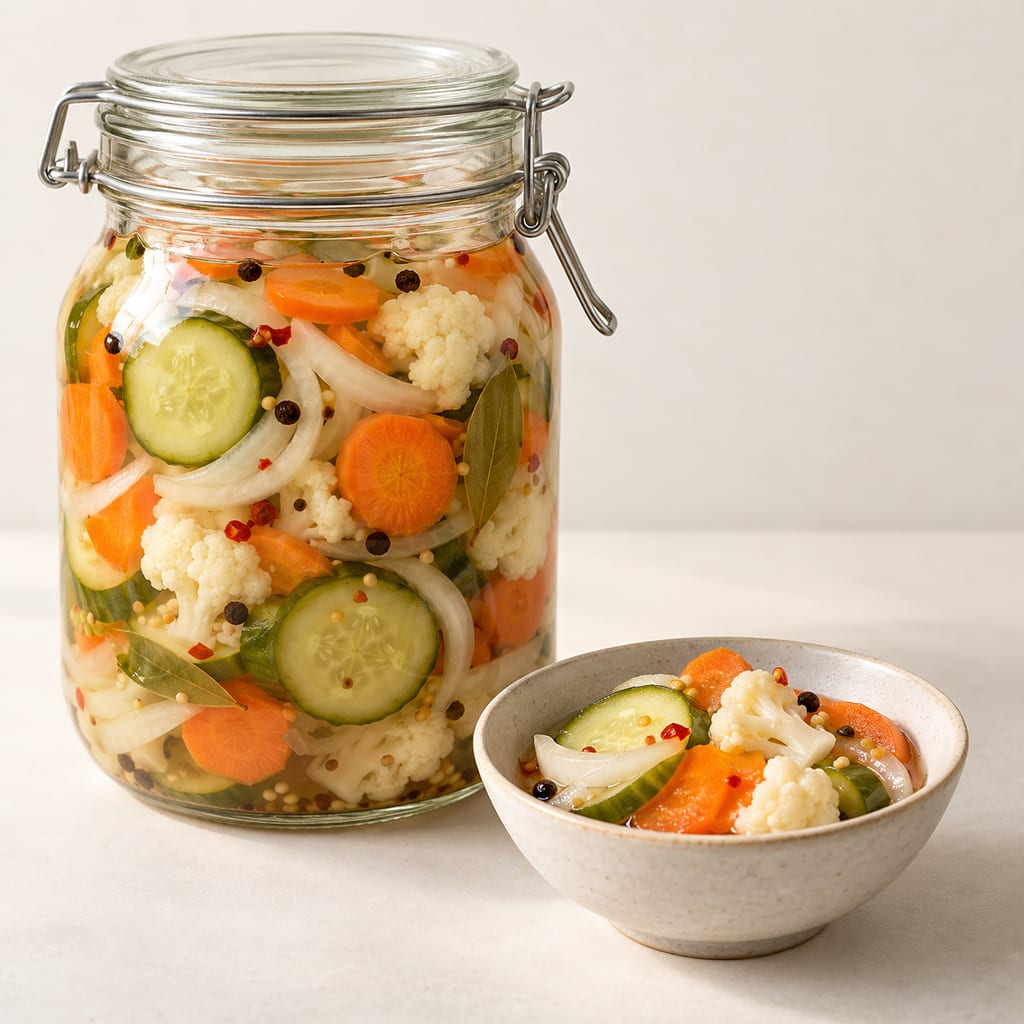
Food placed in an already acidic liquid, vinegar, so that acidity comes from the vinegar rather than from microbes; Roman texts document the practice, and later household books extended it to vegetables, fruit, fish and meat.

A preserve of pezik and other non-sugar beet stalks from Sivas Province, blanched, salted and acidified with lemon juice and vinegar, then held for one to three weeks as the registered specification directs.
Pikliz is a Haitian cabbage-and-vegetable condiment pickled with vinegar, citrus and hot peppers. It brings sharp acidity and chilli heat to rich fried foods; its history and shelf life remain unestablished here.
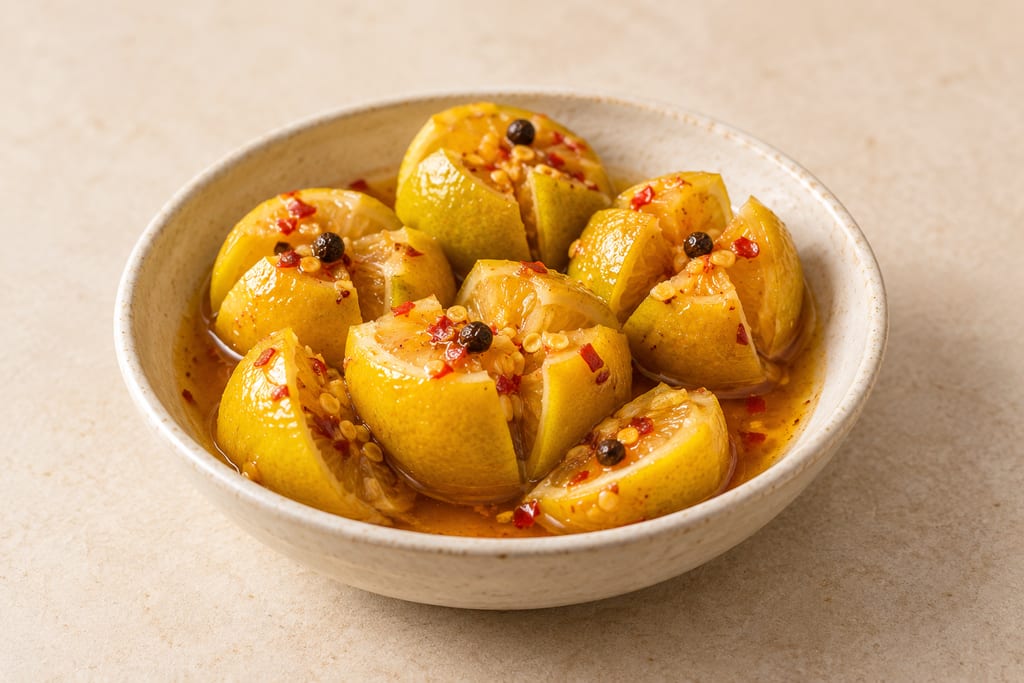
Peter Kuruvita’s published lime pickle stuffs 20 limes with rock salt, then simmers them in vinegar, sugar and chilli before a two-week rest.
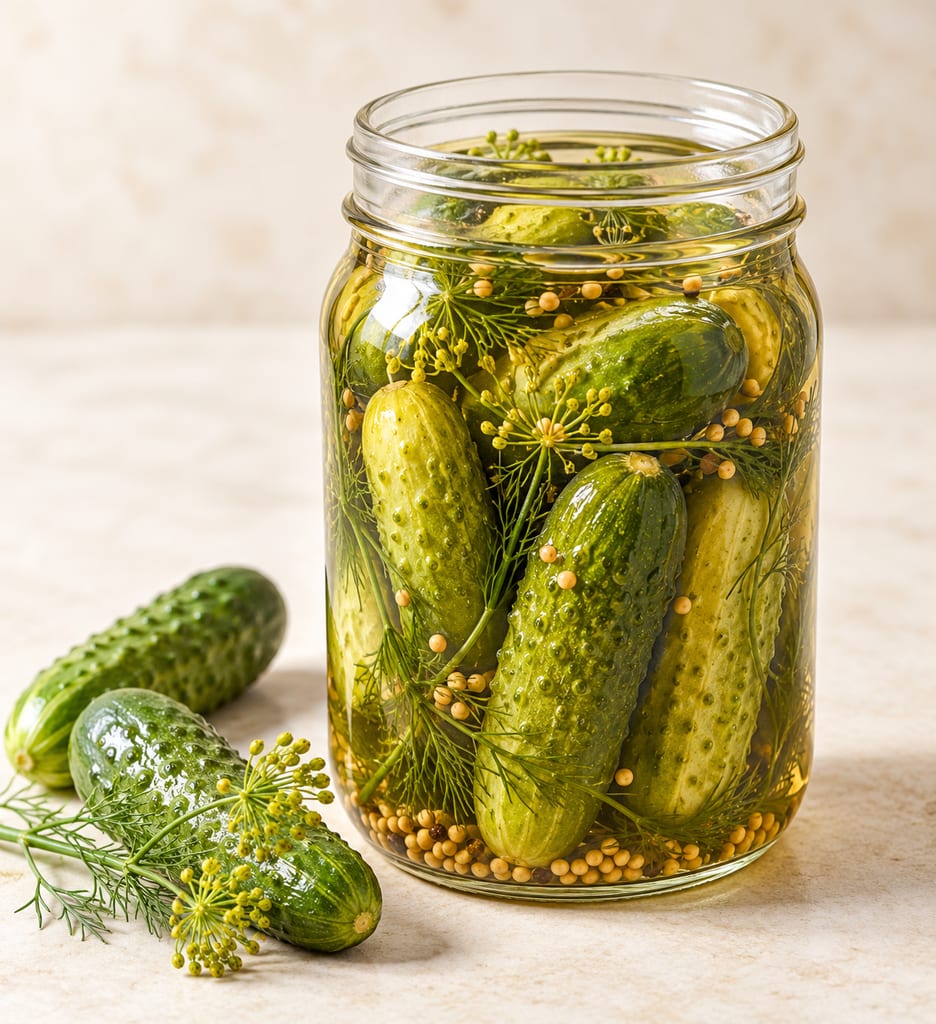
Whole small cucumbers are soaked in a measured salt solution, packed with dill and mustard seed, then covered with a boiling 5% vinegar brine and processed in a boiling-water canner.

Fried or cooked food covered in a vinegar-based preparation, the heat and the externally supplied acid working together; a family of methods whose early form is a Roman instruction for treating fried fish with hot vinegar.
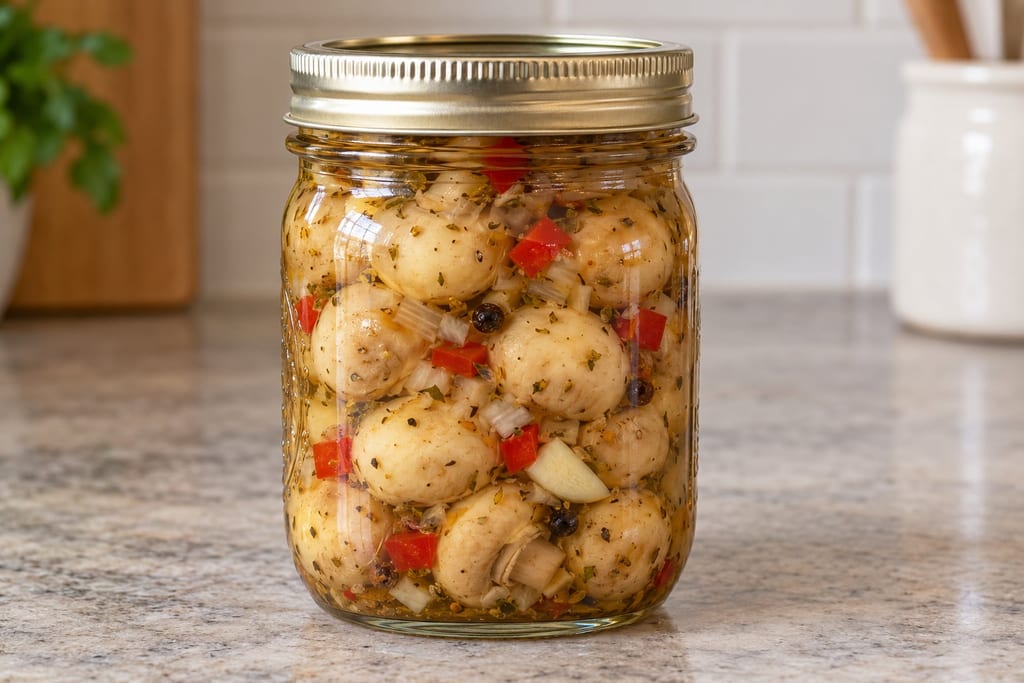
Small whole button mushrooms cooked in an acid and oil marinade and sealed in half-pint jars for shelf storage, using the tested US home-canning method.
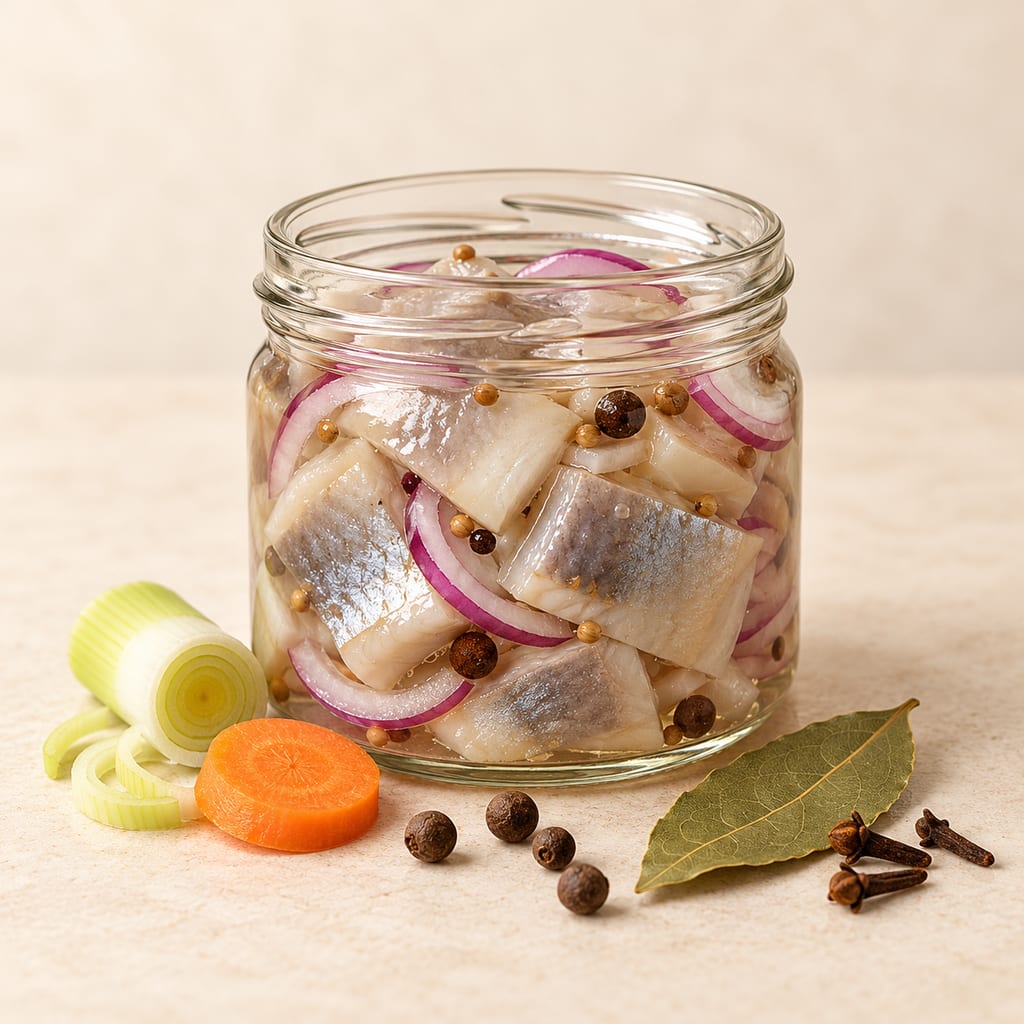
A Swedish ready-to-dress herring preparation: add the classic sliced aromatics and spices to already prepared herring, then serve or chill for fuller flavour.
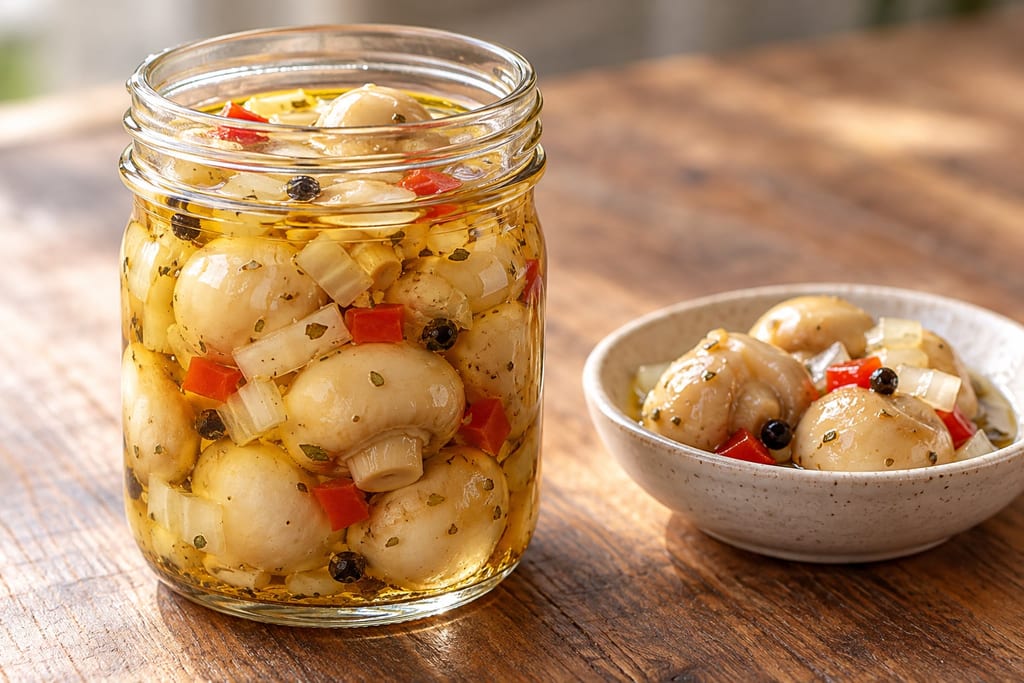
Small edible mushrooms are briefly cooked and packed in a seasoned vinegar marinade, a sweet-sour preserve served cold in Poland and neighbouring cuisines.

Achcharu is a family of Sri Lankan vinegar pickles made with mixed vegetables or seasonal fruit and a piquant spice dressing. This version is a quick, refrigerated, non-fermented mixed-vegetable pickle.