

















Recipes

1504 records with their sources, across 11 categories.

All meat25Smoked salted and dried foods16Fermented sausage and meat6Adjacent and excluded1Condiments and enzymatic seasonings1Not yet classified1
Filtered to

Recipes

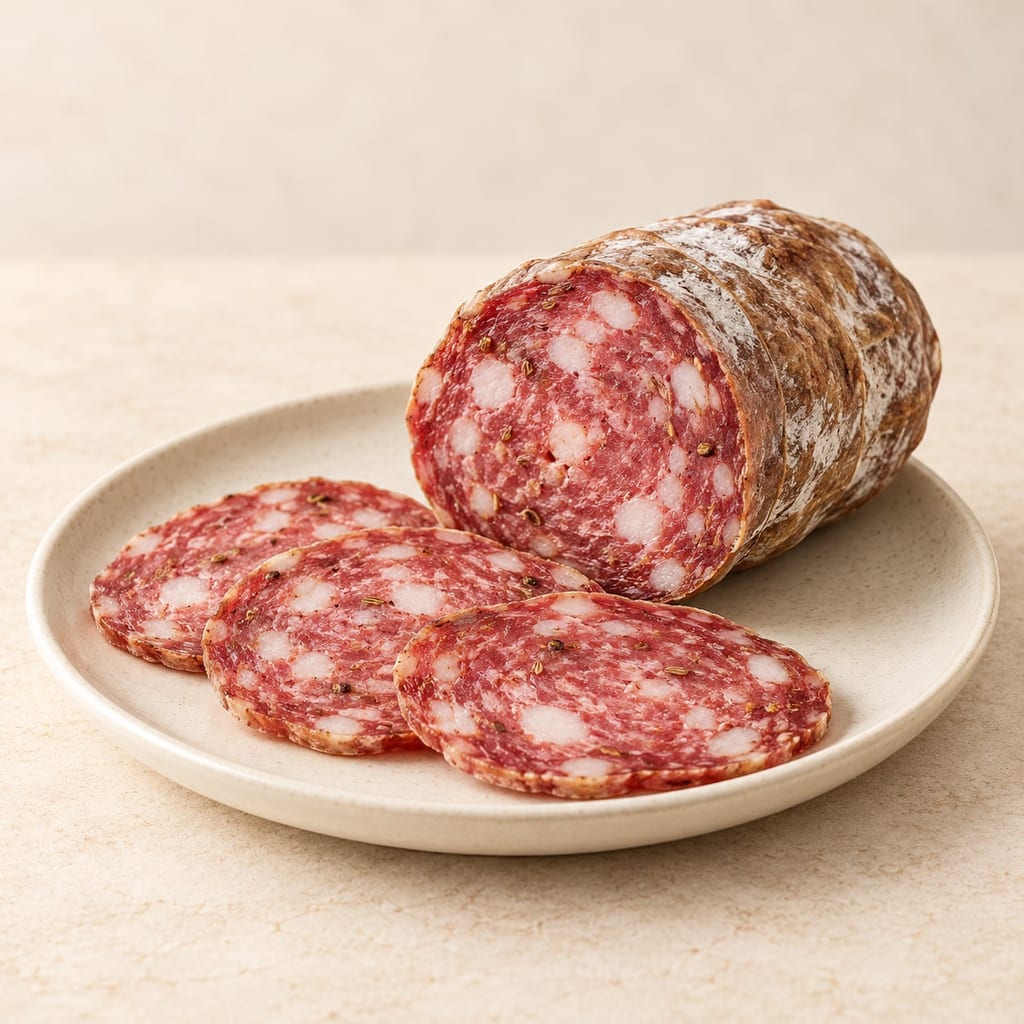
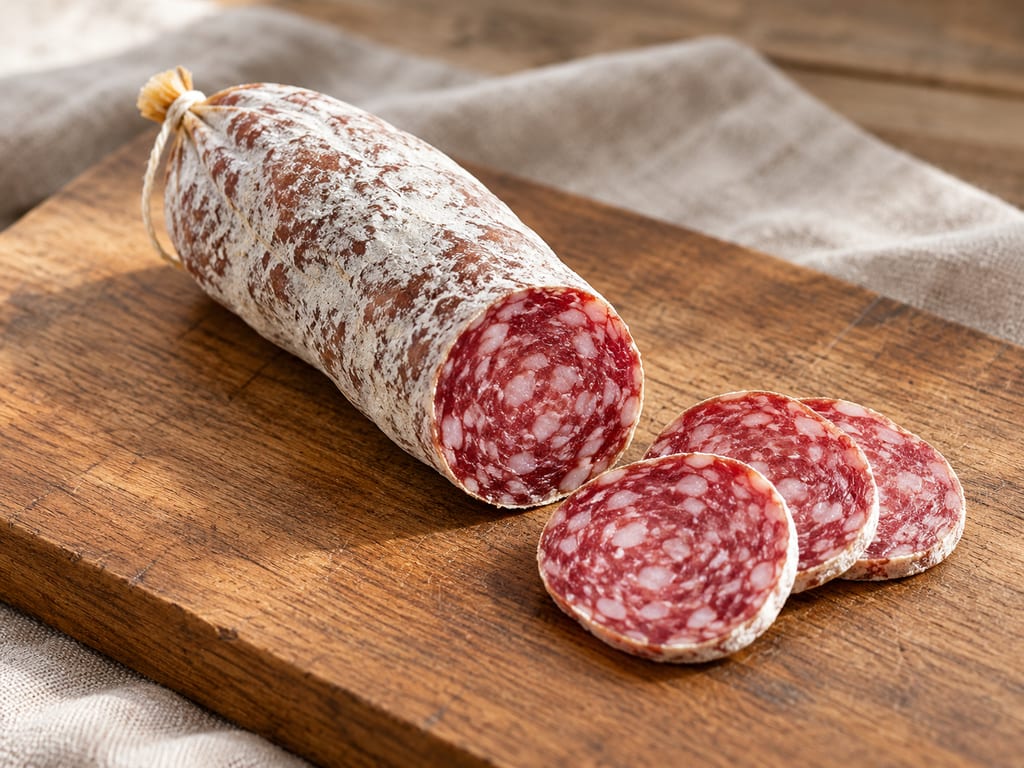
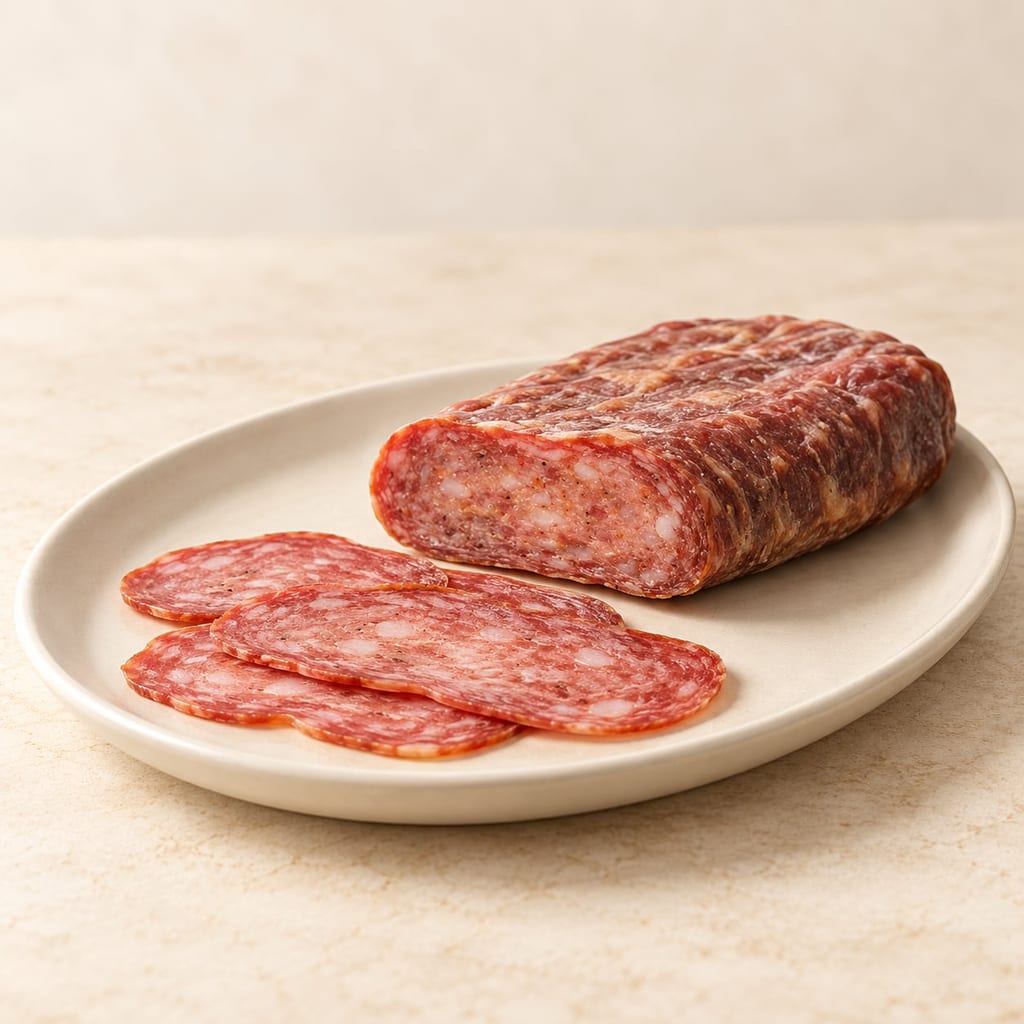
Flattened soppressata section and thin slices on an ivory plate.
High risk

Soppressata di Calabria, starter-cultured

Calabrian soppressata is a flattened pork salami seasoned with pepper and wine. This entry documents a modern starter-cultured adaptation, not household instructions; the process lacks matched pathogen-reduction validation.
Calabria · Modern adaptation
Meat
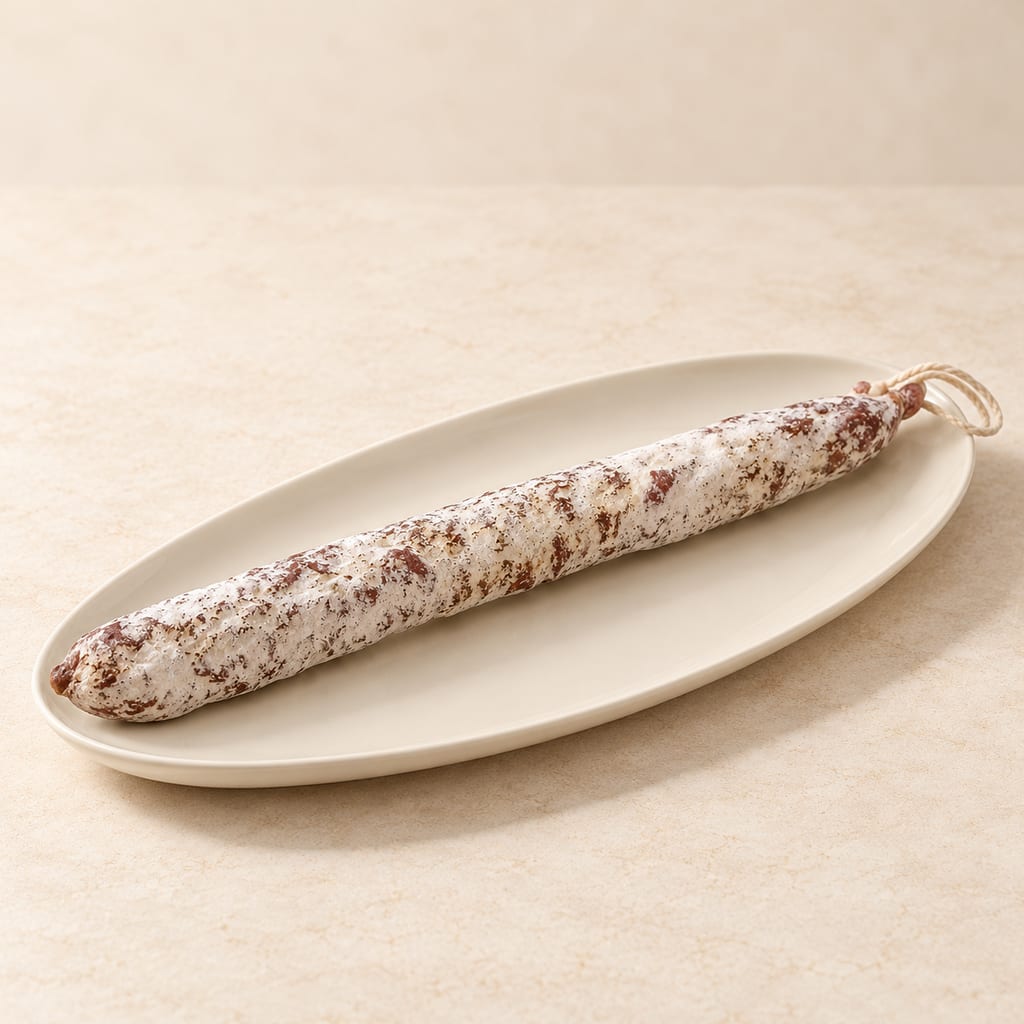
Whole slender fuet with a patchy white surface bloom on an ivory platter.
High risk

Fuet, starter-cultured

A documentary account of a modern starter-cultured Fuet formula and its place in Catalan sausage culture. The cited raw-pork process lacks matched safety validation, so this page does not present it as a household recipe.

Catalonia, Spain · Modern adaptation
Meat
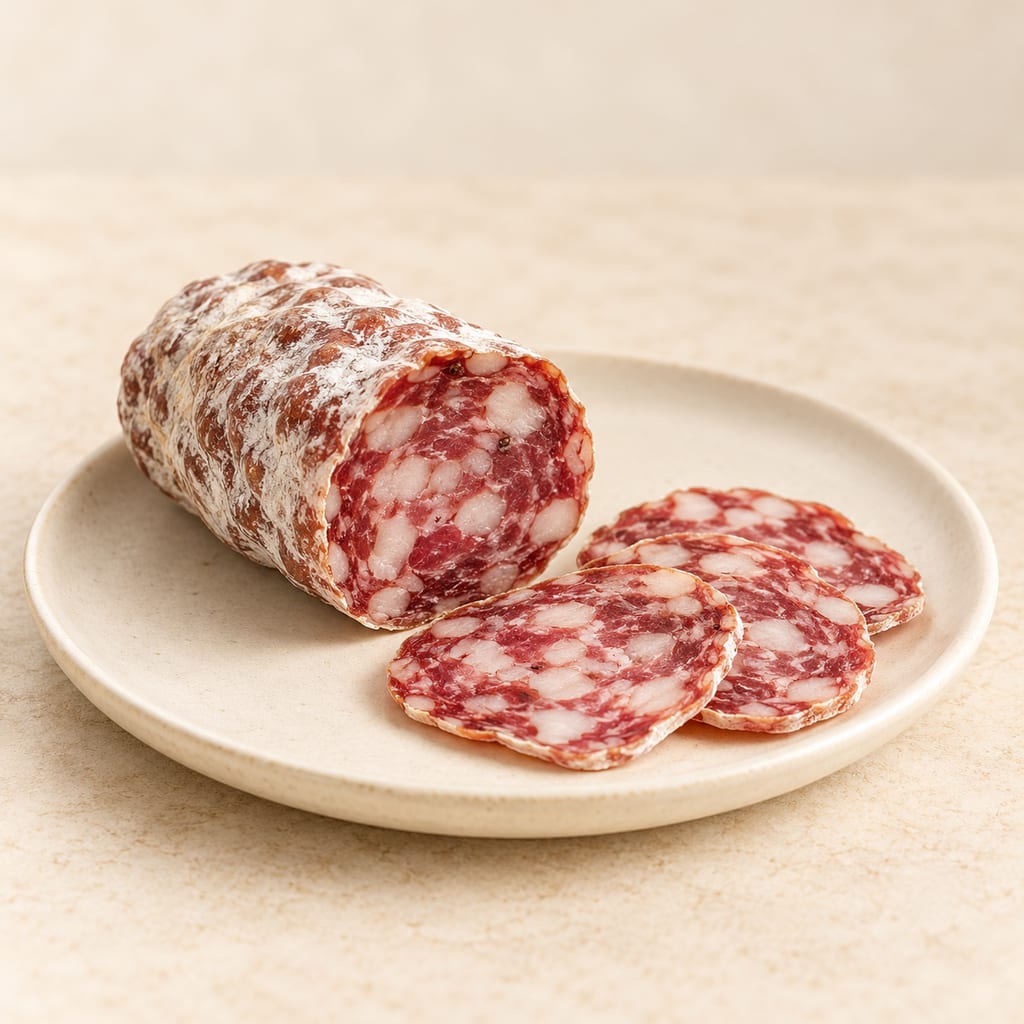
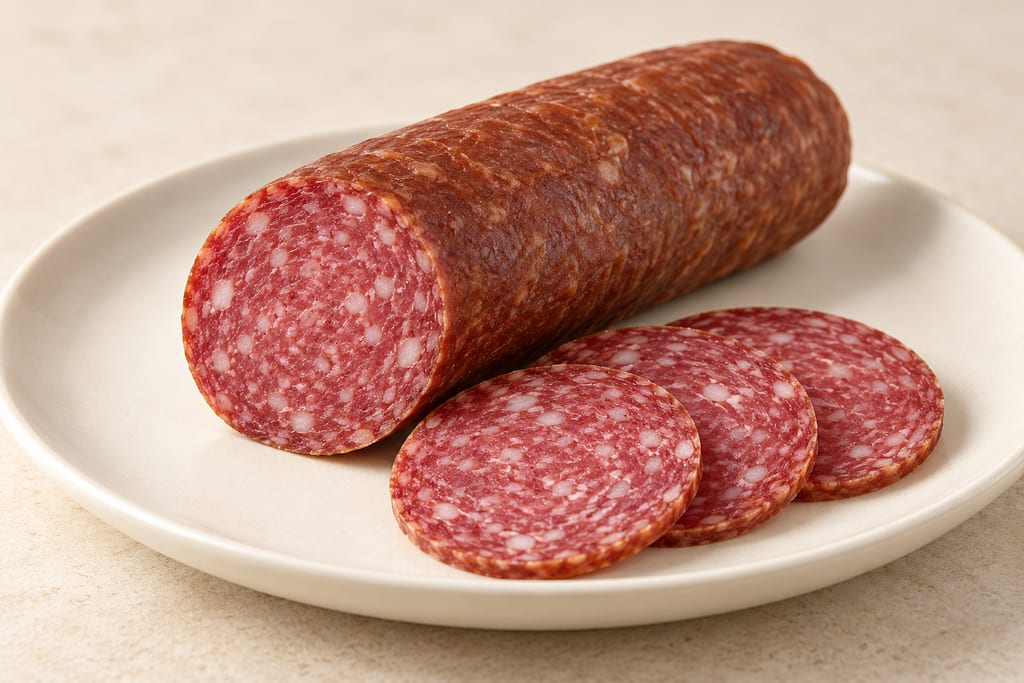
Generic dry-cured sausage with a cut face and several slices on an ivory plate; illustrative, not a process validation.
High risk

Fermented dry sausage

A family of salted minced-meat sausages fermented in casings, then dried and sometimes smoked. This description is not a validated household method; critical safety limits are not established.


· Meat
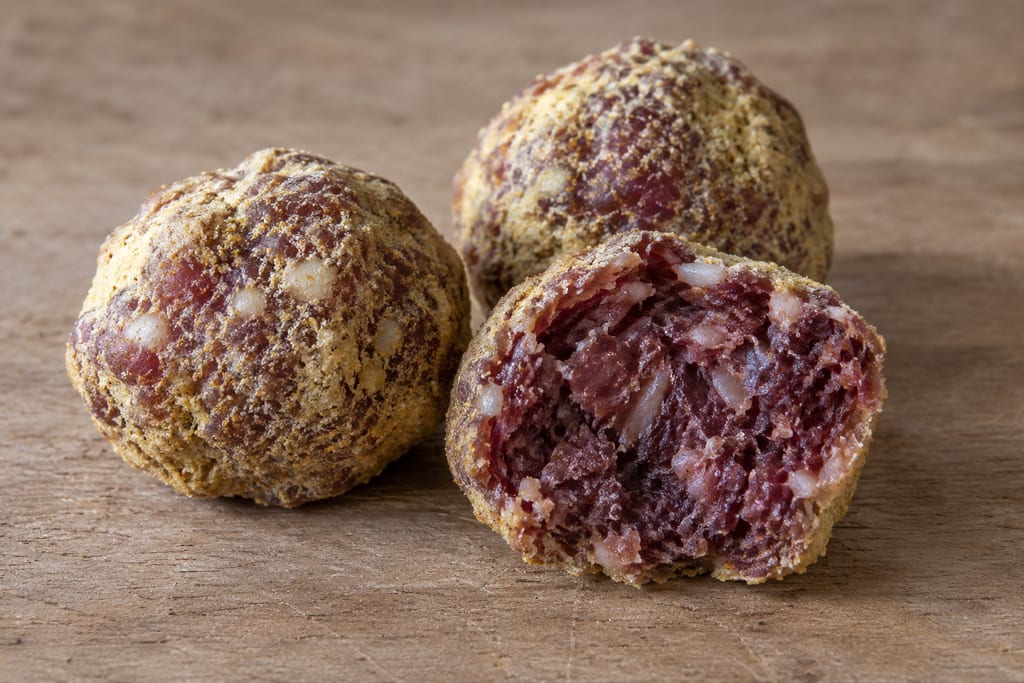
Illustrative documentary image of maize-coated, smoke-dried Pitina-inspired pork-and-lamb balls described in the cited home video; not a validated product, safe-to-eat endpoint, or Pitina IGP item.
High risk

Pitina-inspired pork and lamb meatballs

Small maize-coated meatballs in a modern pork-and-lamb variant associated with Pitina; this is a documentary account, not a validated method or a claim of Pitina IGP.

Friuli Venezia Giulia
Meat
Photograph of Sukuti.
Elevated risk

Sukuti

Sukuti is Nepali dried meat, most often buffalo, cut into thin strips, seasoned with spices, dried over smoke or in the sun, and later fried or roasted before eating.

Nepal
Meat
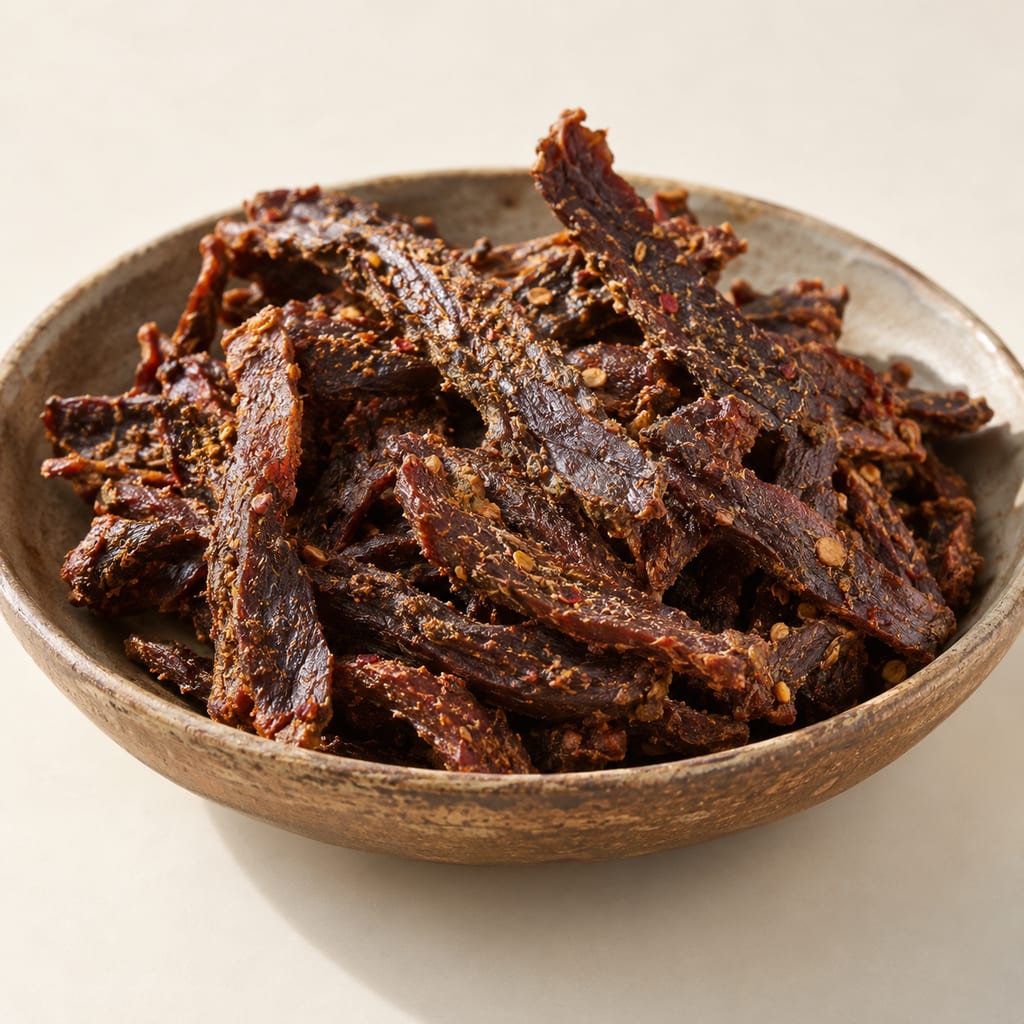
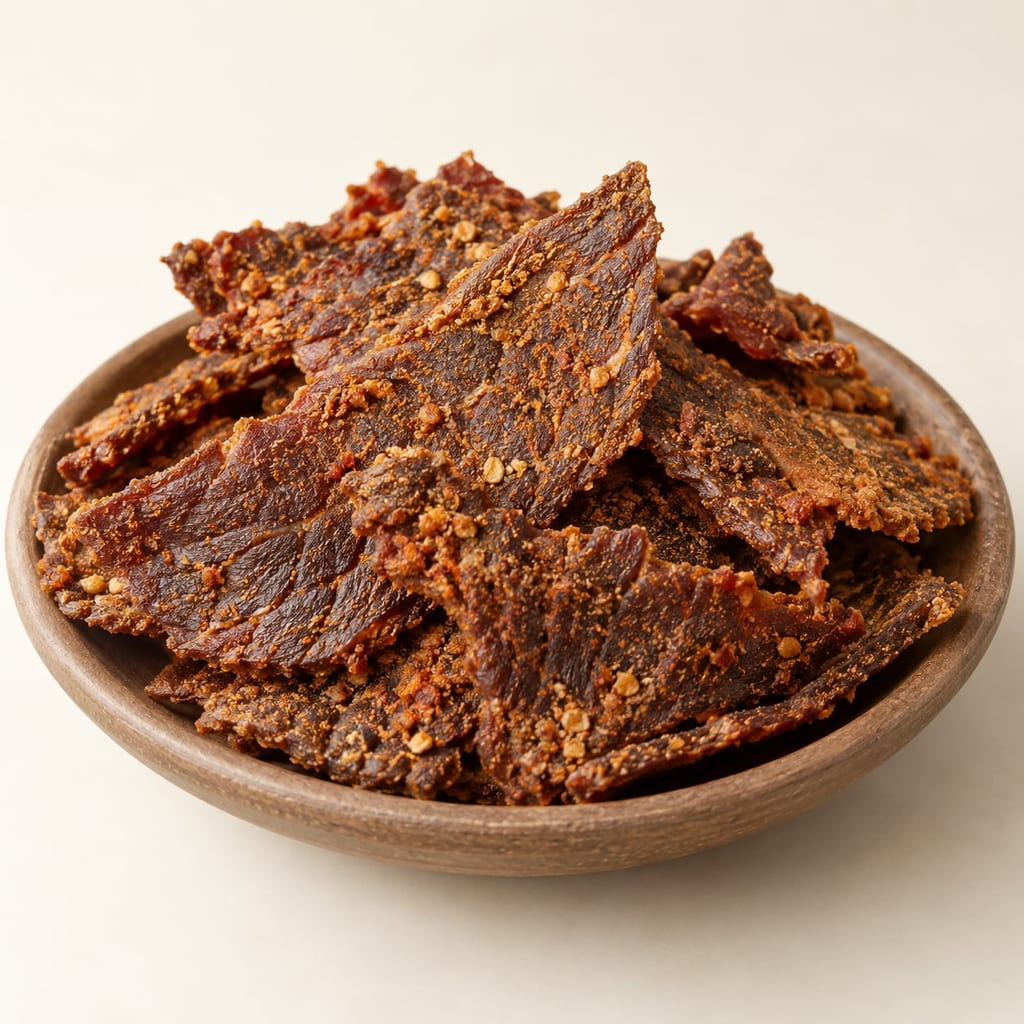
Illustrative still life of finished dried meat strips on a plain ceramic plate; a generic visual that does not depict a particular tradition or validated process.
High risk

Jerky

A documentary account of dried meat strips and their historical uses. It does not provide an operational home method for making shelf-stable jerky at home.

Indigenous Americas
Meat
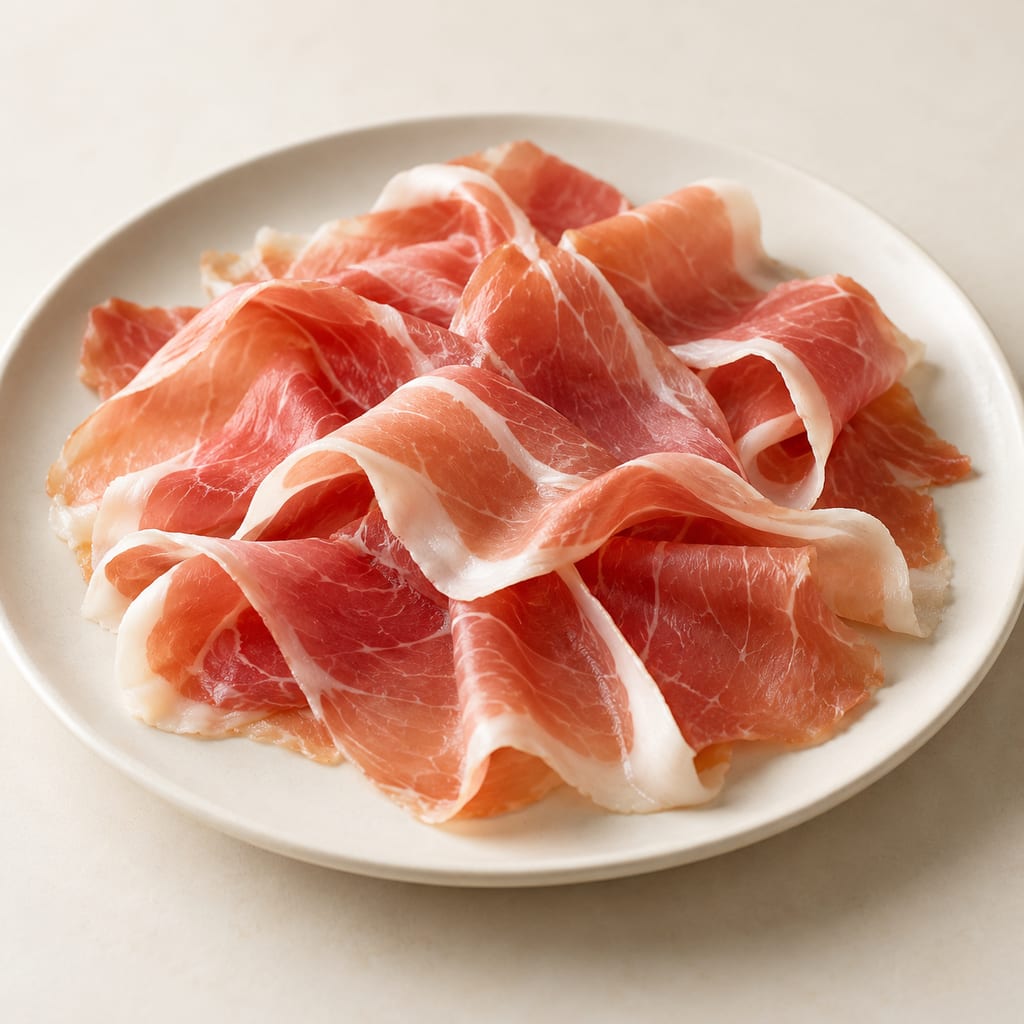
Photograph of Prosciutto di Parma.
High risk

Prosciutto di Parma

Prosciutto di Parma is a dry-cured, unsmoked ham from the Province of Parma, made from fresh pork legs salted with sea salt and matured for at least 14 months under the protected designation.

Parma · Traditional method
· Meat
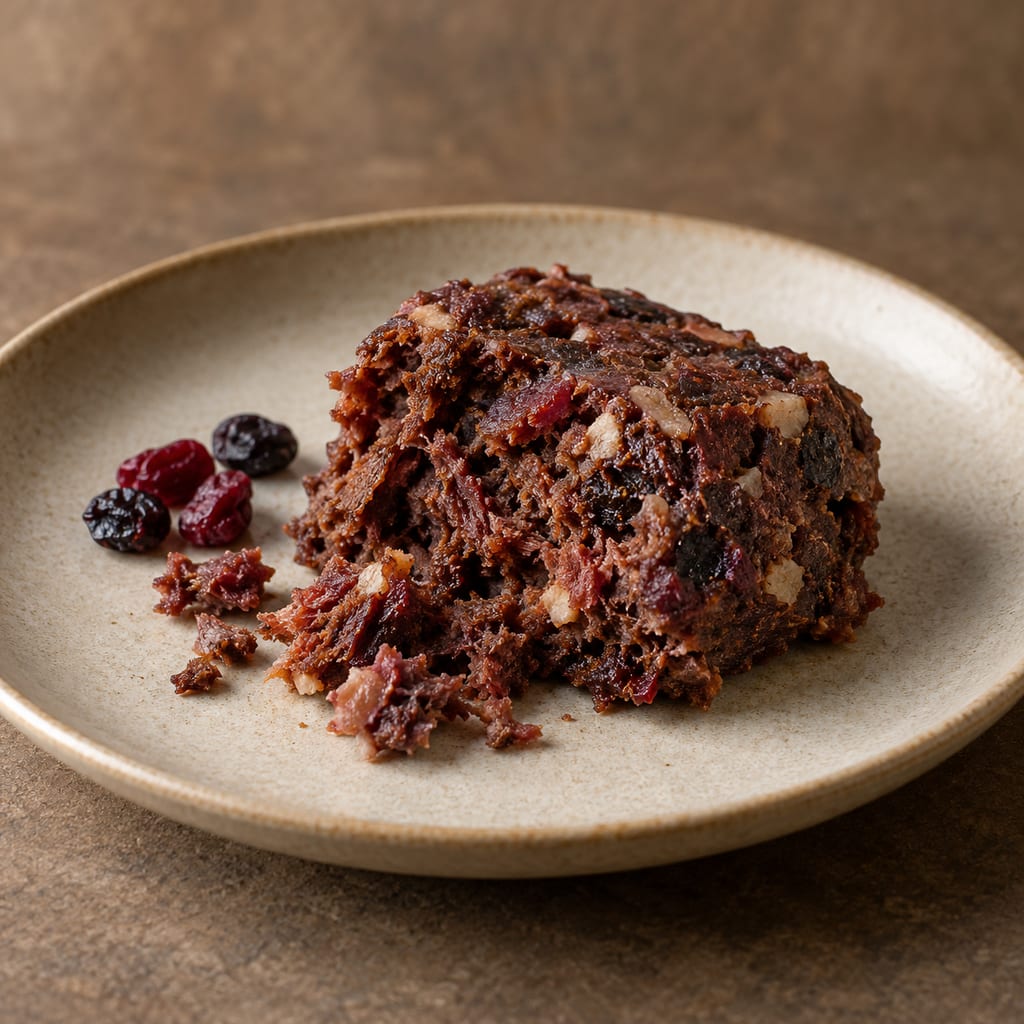
Illustrative still life of a compact, crumbly dried-meat-and-fat mixture with a few dried berries on a plain dish; it does not represent a specific historical batch or preparation method.
High risk

Pemmican

Pemmican is dried meat mixed with rendered animal fat, sometimes with berries. Sources link it to Indigenous North American food traditions and later fur-trade provisioning. This documentary entry gives no home preparation or storage method.

North America
Meat
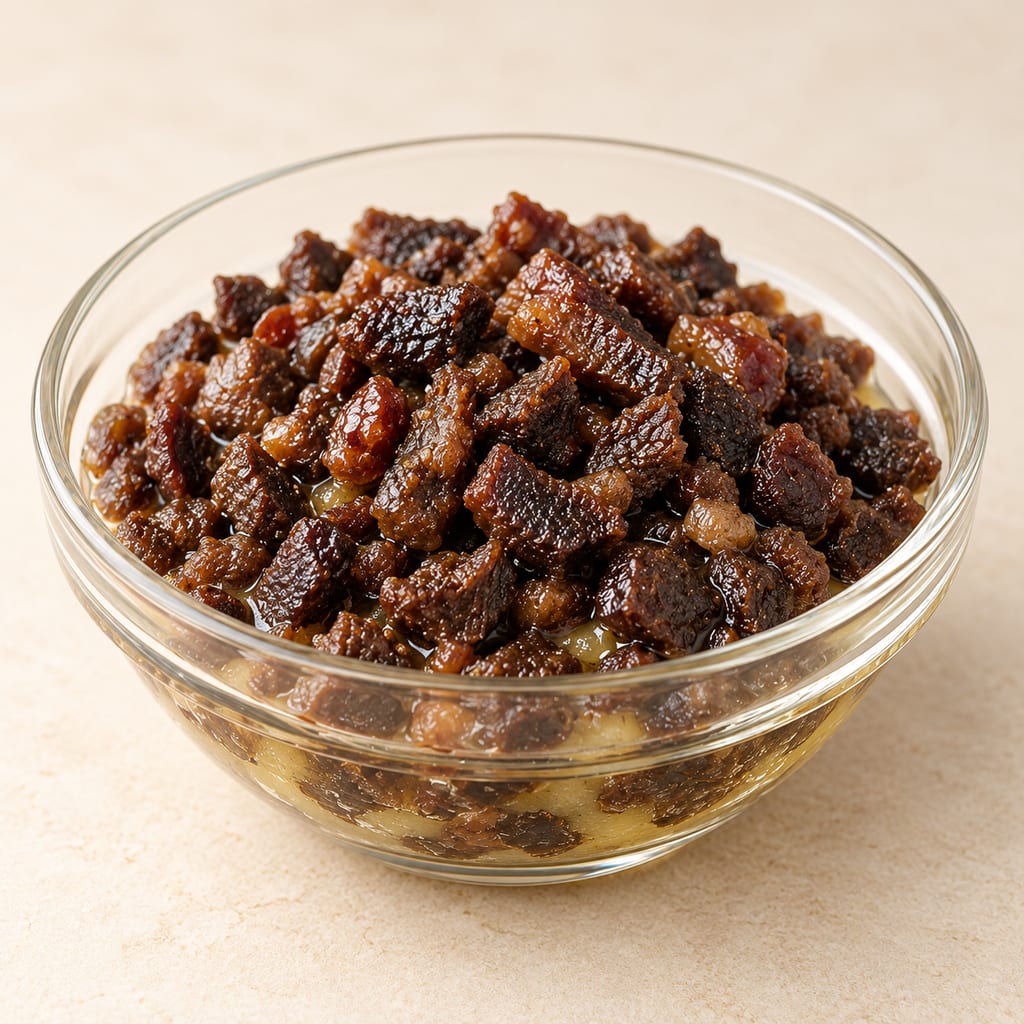
Small dark brown pieces of Somali muqmad (oodkac), the dried and fried preserved meat, lightly coated with rendered fat in a plain glass bowl.

Muqmad (oodkac)

Odka, also called muqmad, is Somali meat that is dried, cut small, fried and kept under fat. It is a dried-meat preserve whose keeping depends on the whole sequence.

Somalia
Meat
Photograph of Kilishi.
Elevated risk

Kilishi

Kilishi is a Hausa-land dried meat from northern Nigeria and southern Niger: thin slices of beef or other meat, dried, coated in a spiced groundnut paste and dried again.

Hausaland (northern Nigeria and southern Niger)
Meat
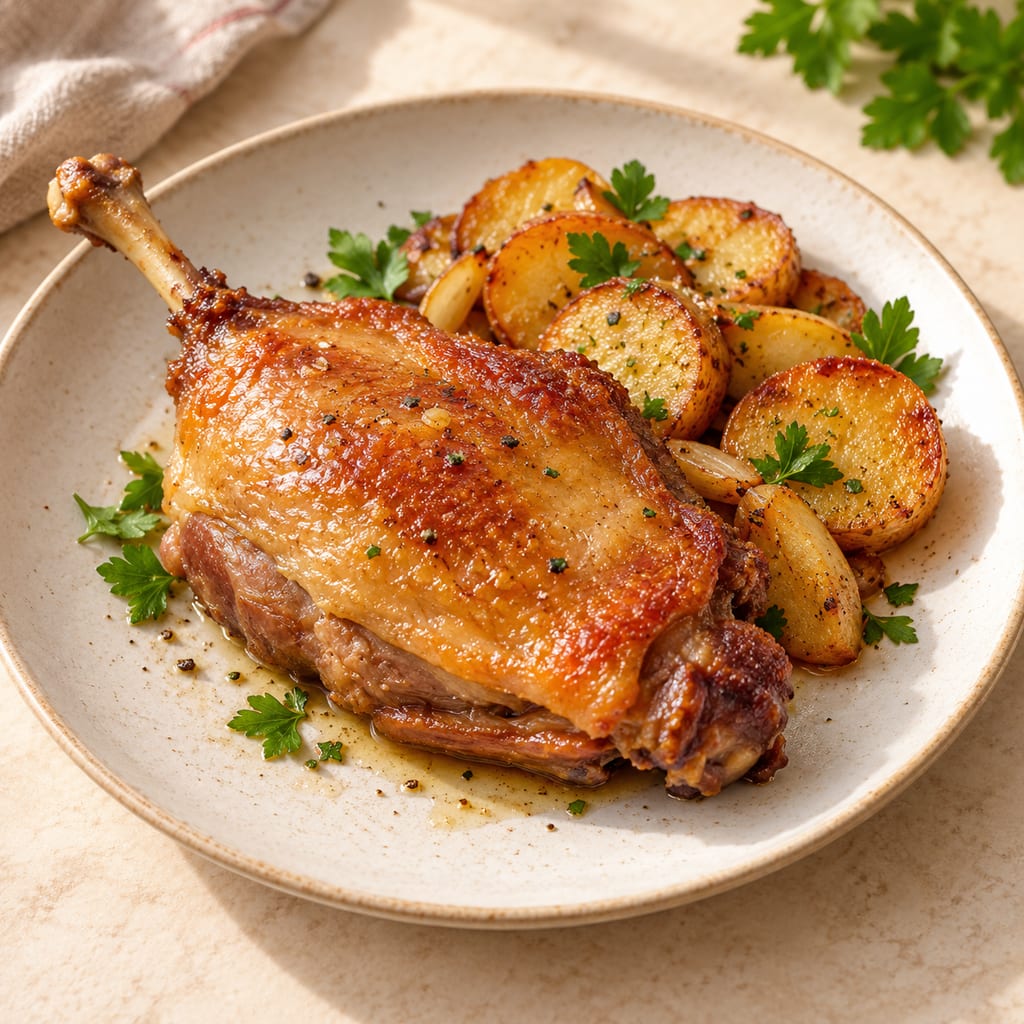
Duck confit leg with crisp golden-brown skin, served with browned potatoes and parsley on a pale ceramic plate.
Elevated risk

Confit

Meat salted, slowly cooked in its own fat and kept under a covering of that fat. The fat cap limits air but does not acidify or sterilise, so home confit needs refrigeration or freezing.

Southwestern France
· Meat
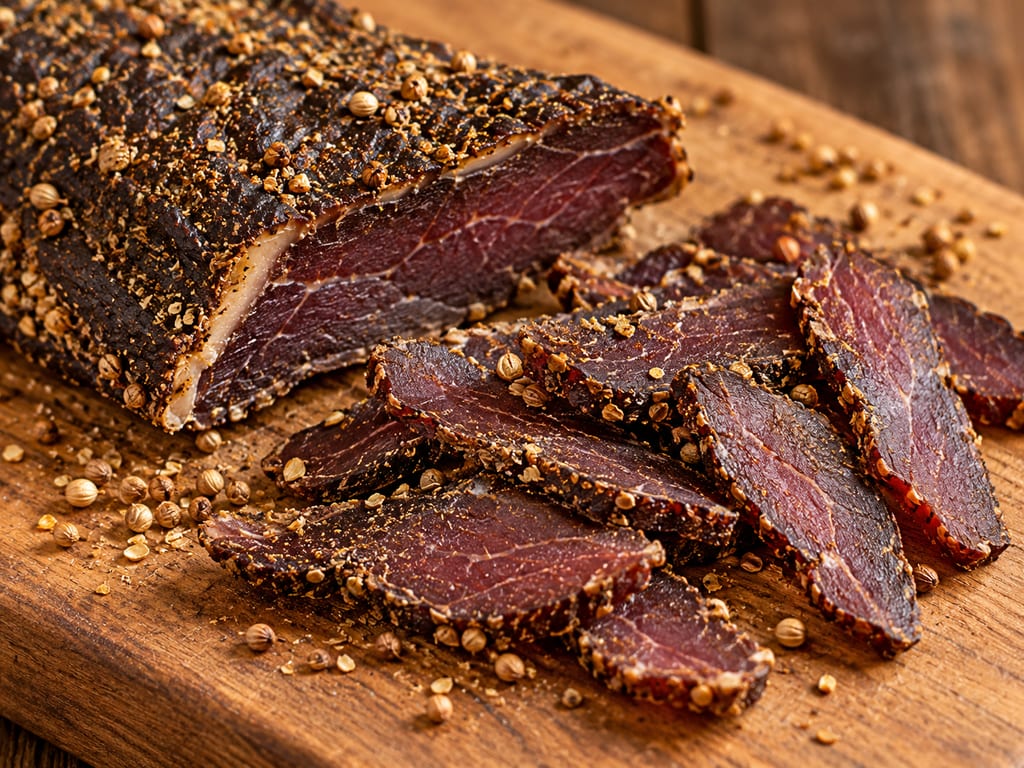
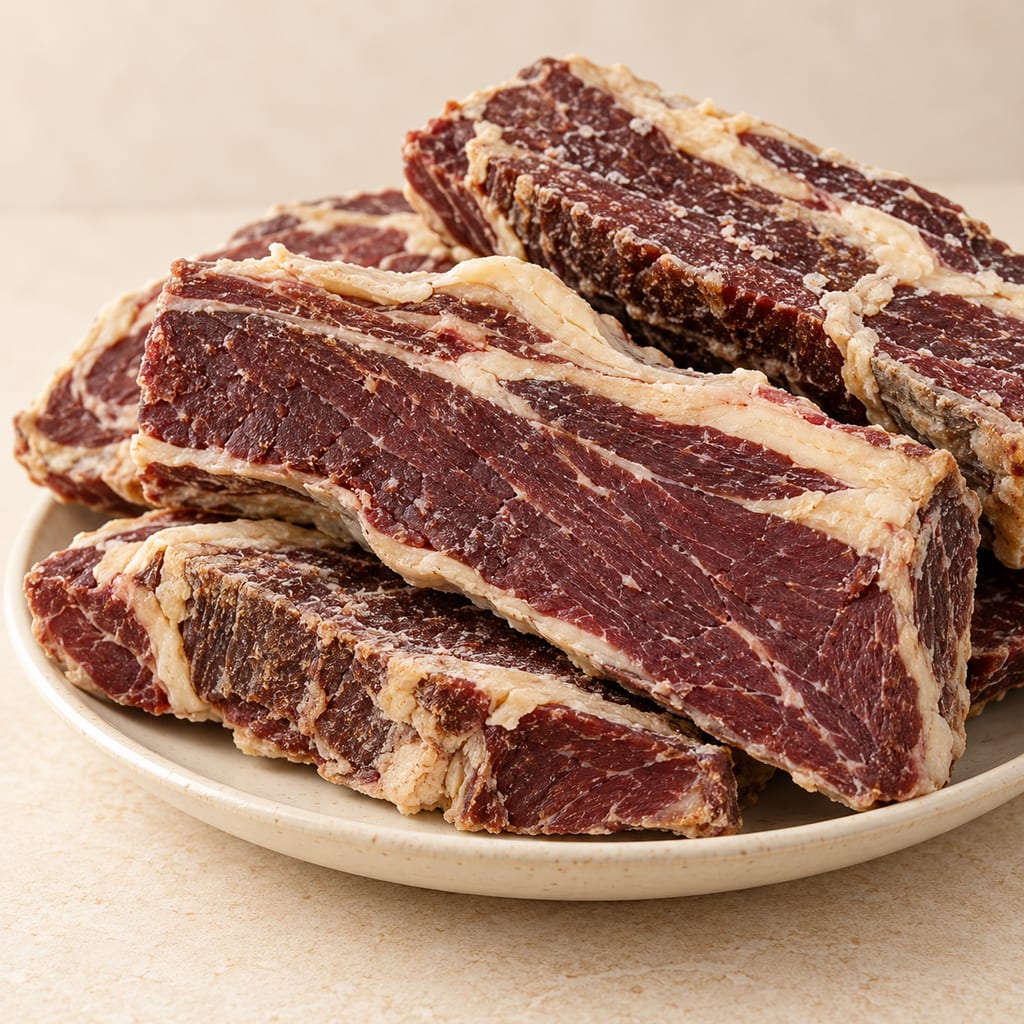
finished whole-muscle biltong
High risk

Biltong

Strips of whole-muscle beef or game seasoned with salt, vinegar, roasted coriander and pepper and air-dried without cooking, sold anywhere from soft and moist to hard and very salty.

South Africa · Traditional method
· Meat
Photograph of Portable soup.

Portable soup

Meat stock simmered, strained and reduced until a gelatin-rich mass sets, then dried into solid cakes that dissolve in water; a concentrated provision of the early modern naval period.

Europe · Traditional method
· Meat
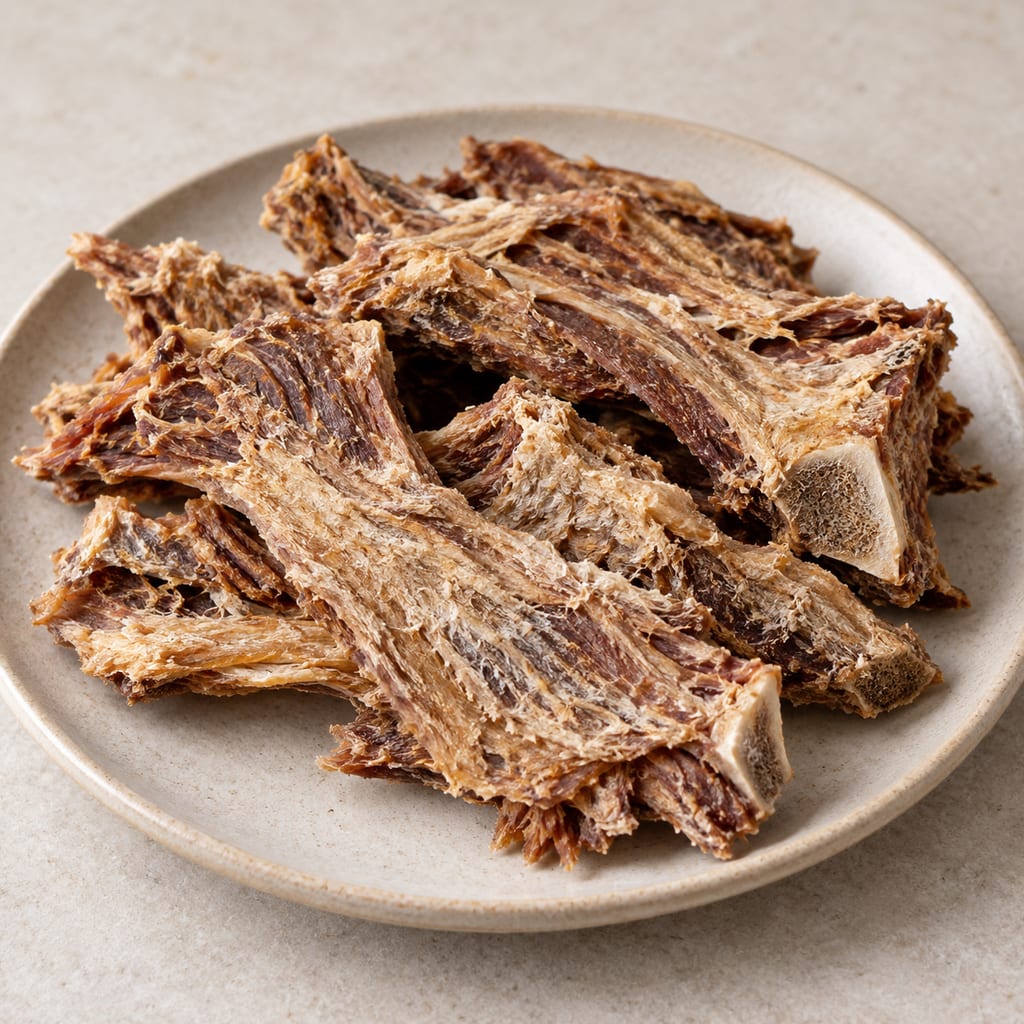
Traditional-style alpaca charqui in irregular dried pieces with bone visible.
Elevated risk

Alpaca charqui

Alpaca charqui is Andean dried meat, made from camelid meat exposed to hot sun by day and frost by night at high altitude, the ancestor of the modern word jerky.

High-altitude Andean puna
Meat
Finocchiona salami section and three slices with irregular pale fat pieces on an ivory plate.
High risk

Finocchiona, starter-cultured

A Tuscan-style fennel salami made with pork and back fat. Toasted fennel, fennel pollen and Sambuca flavor this starter-cultured preparation.

Tuscany, Italy · Modern adaptation
· Meat
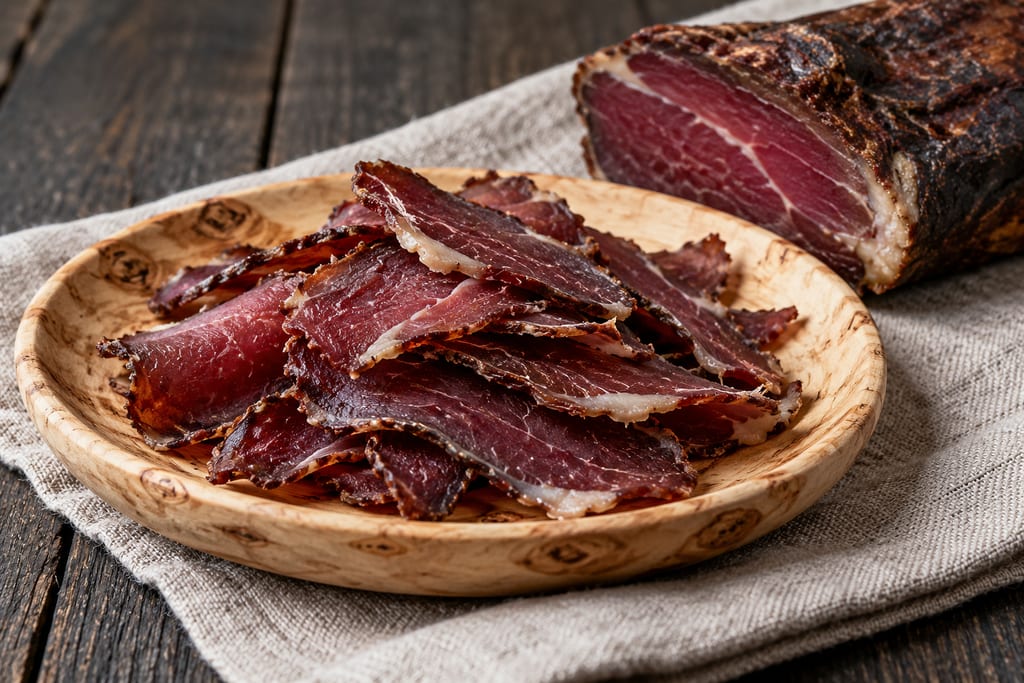
Thin slices of mahogany smoked reindeer meat on a shallow birchwood plate, with a smoked piece behind.
High risk

Suovas

Salted reindeer meat hung in the smoke of a lávvu fire over willow, birch or juniper, then cooled and in some Sámi communities dried outdoors into travelling provisions.

Sápmi · Traditional method
· Meat
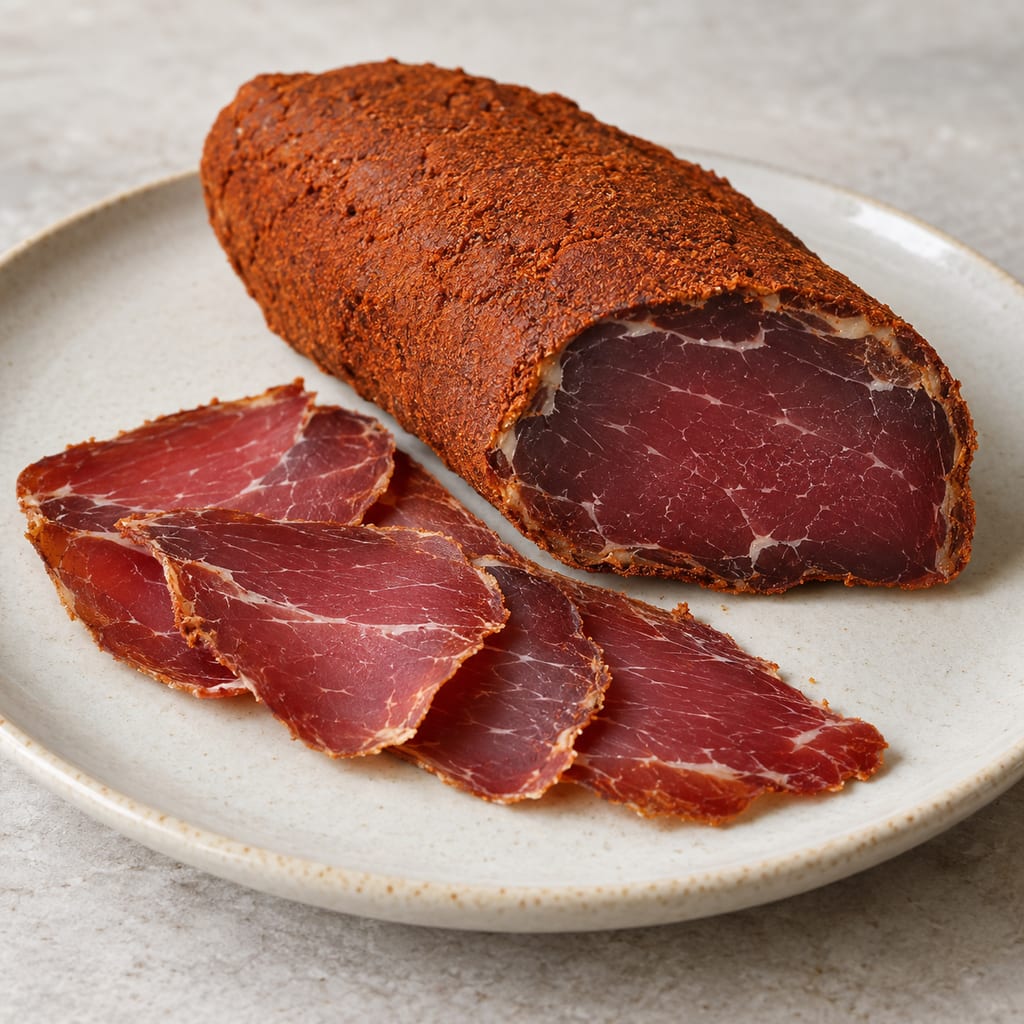
A çemen-coated whole Turkish pastırma cut open to reveal dark ruby cured beef, with thin slices beside it.

Pastırma

Dry-cured beef salted, air-dried and often coated with a spice paste called çemen before it is sold whole or sliced; a Turkish cured meat whose preservation rests on salting and drying.

Türkiye · Traditional method
· Meat
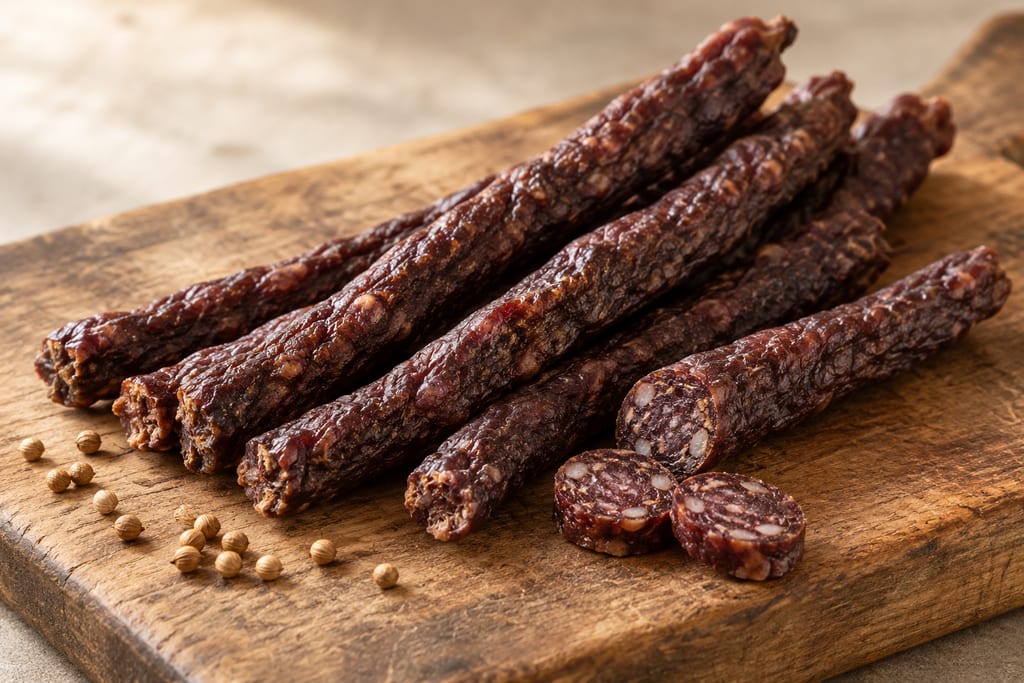
Finished droëwors sticks on a wooden board; one cut piece shows the coarse interior, with a few coriander seeds nearby.
High risk

Droëwors

South Africa's dried sausage: seasoned minced meat in narrow casings, dried until it can be eaten without cooking, which makes it a far more demanding product than fresh boerewors.

South Africa · Traditional method
· Meat
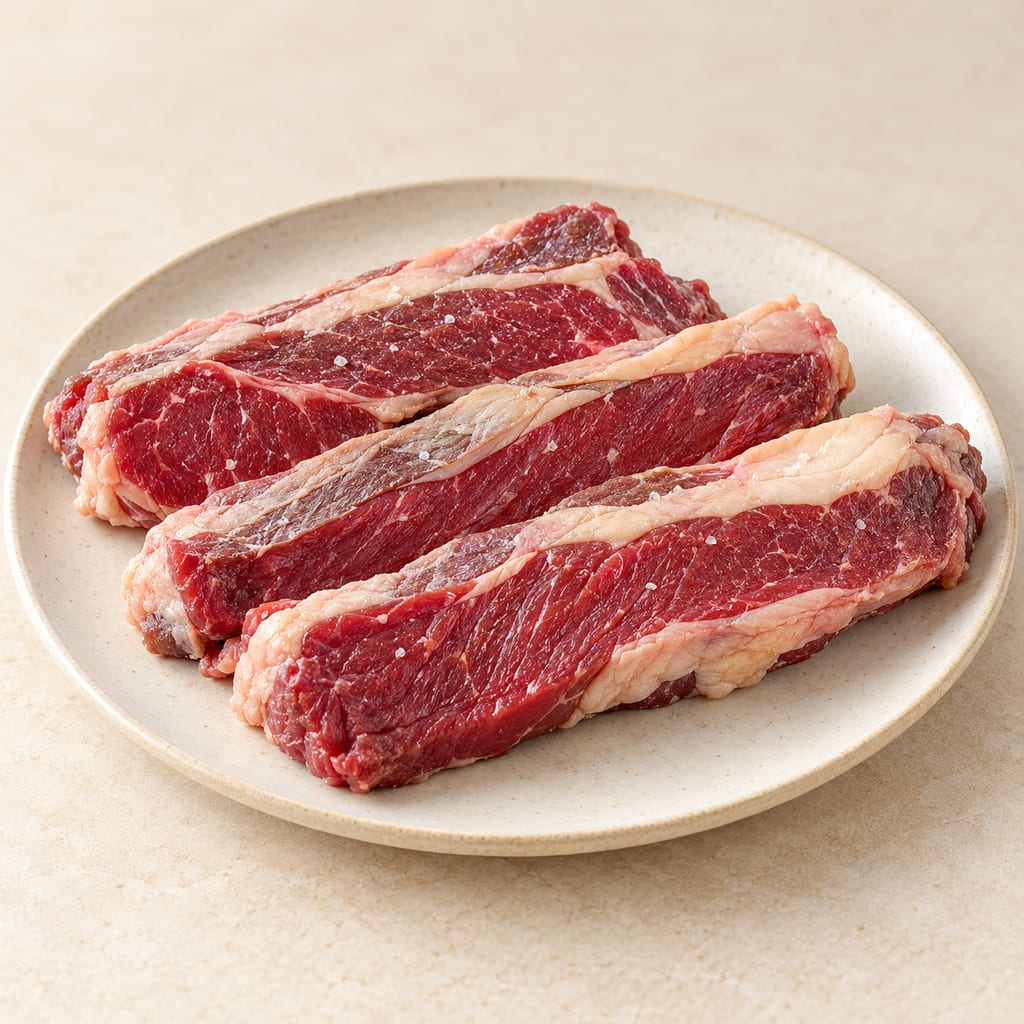
Brazilian charque, heavily salted and dried beef with a firm dark red-brown surface and pale fat seams, on a plain cream plate.

Charque

Beef salted heavily and dried into a strongly preserved ingredient that is desalted before it is cooked in stews; a Brazilian form of salt-dried meat that keeps far longer than the lightly salted carne-de-sol.

Brazil · Traditional method
· Meat
Lightly salted Brazilian carne de sol, showing a faintly dried surface and moist red interior on a plain ceramic plate.

Carne-de-sol

Beef given limited salt and partial surface drying, a short-keeping Brazilian meat that is much less durable than fully dried charque and is treated as a cold-chain product.

Brazil · Traditional method
· Meat
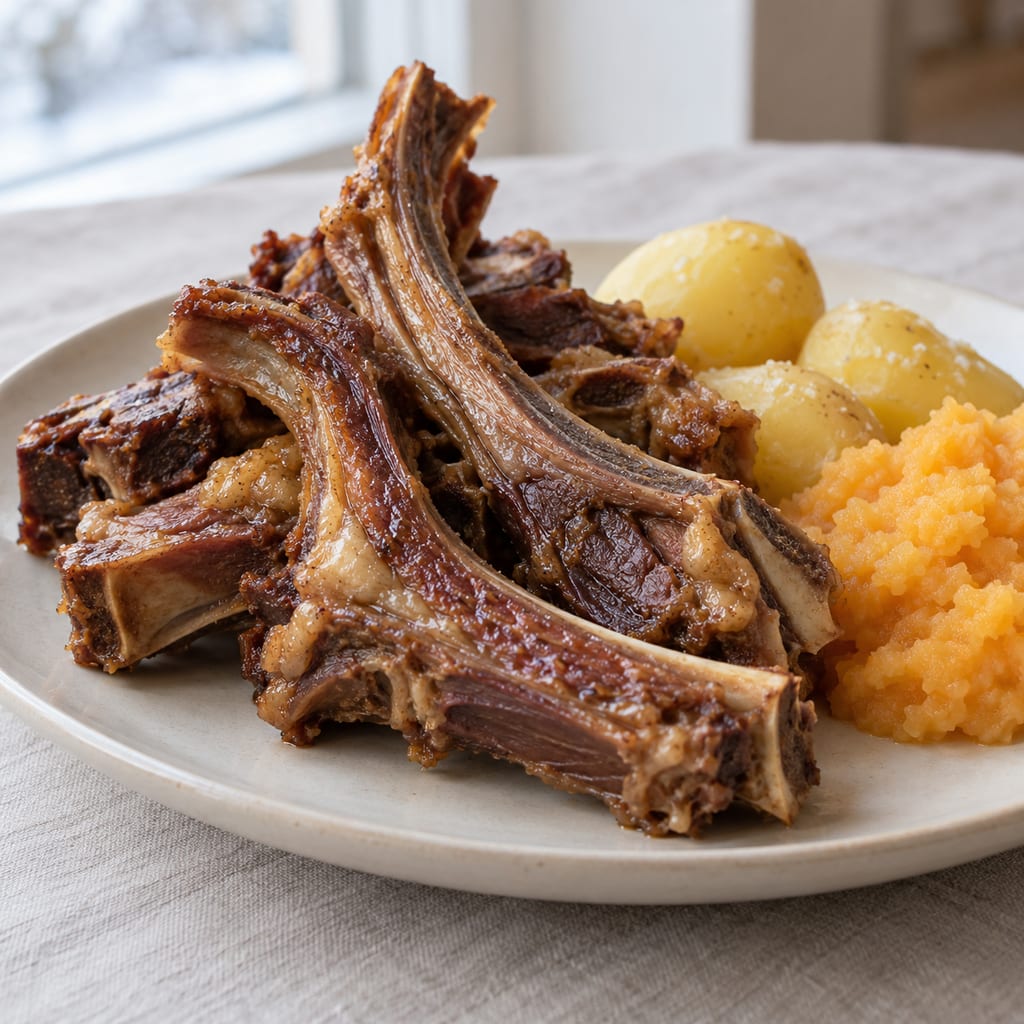
Steamed Norwegian pinnekjøtt lamb ribs with boiled potatoes and kålrotstappe on a plain ceramic plate.
Elevated risk

Norwegian pinnekjøtt

Norwegian Christmas lamb ribs, salted, matured and dried, then soaked and steamed over birch twigs. Smoked and unsmoked versions are both made.

Western Norway (Vestlandet) · Traditional method
· Meat
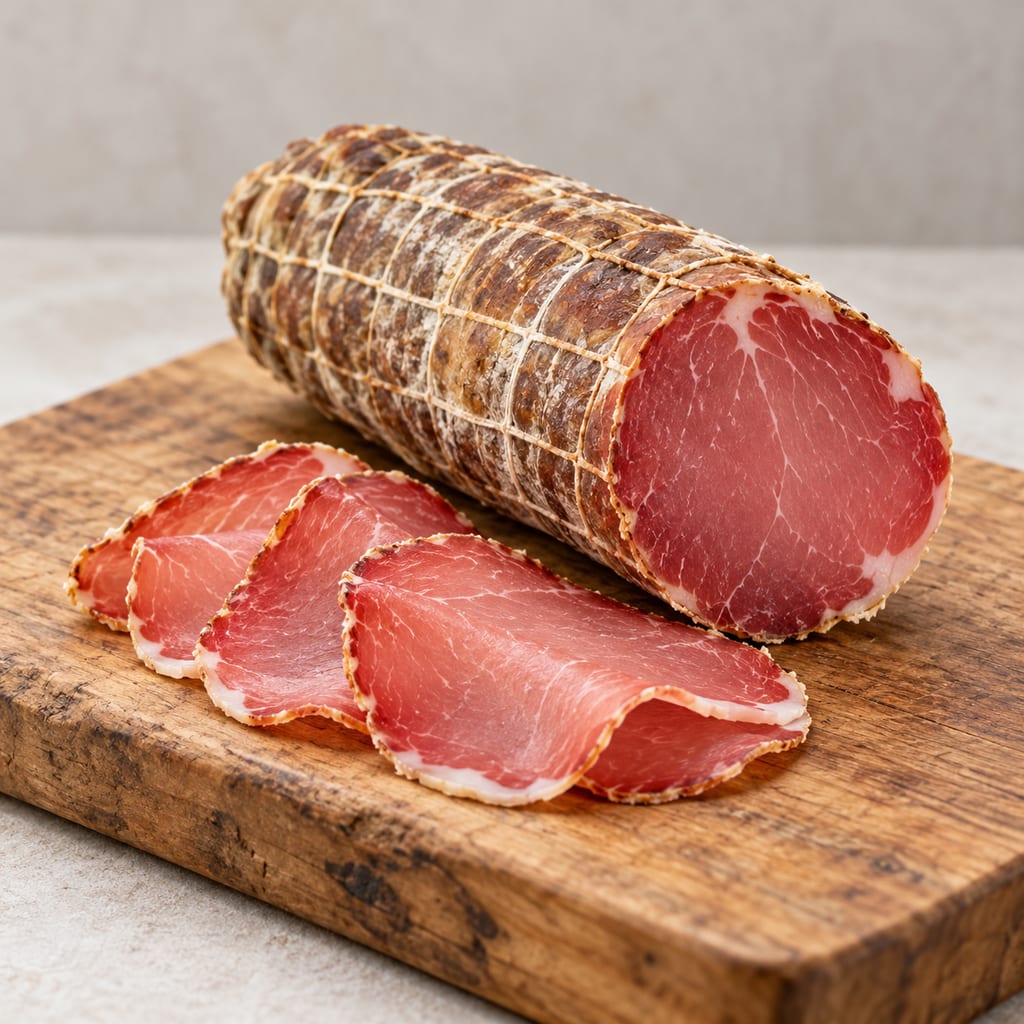
Finished lonzino cured pork loin with its cut end and thin slices on a plain wooden board.
High risk

Lonzino

Documentary account of Italian regional cured-loin traditions, including Tuscan and Marche variations; no home-cure instructions are provided because the published professional methods lack validated safety controls.

San Miniato · Traditional method
· Meat
An unbranded small Italian cacciatore-style dry-cured salami with pale casing and thin ruby-red slices on a wooden board.
High risk

Cacciatore salami

Small Italian hunter-style salami of lean pork, firm fat, salt, pepper and garlic, mildly acidified and dry-matured; protected as Salamini Italiani alla Cacciatora DOP.

Lombardy · Traditional method
· Meat
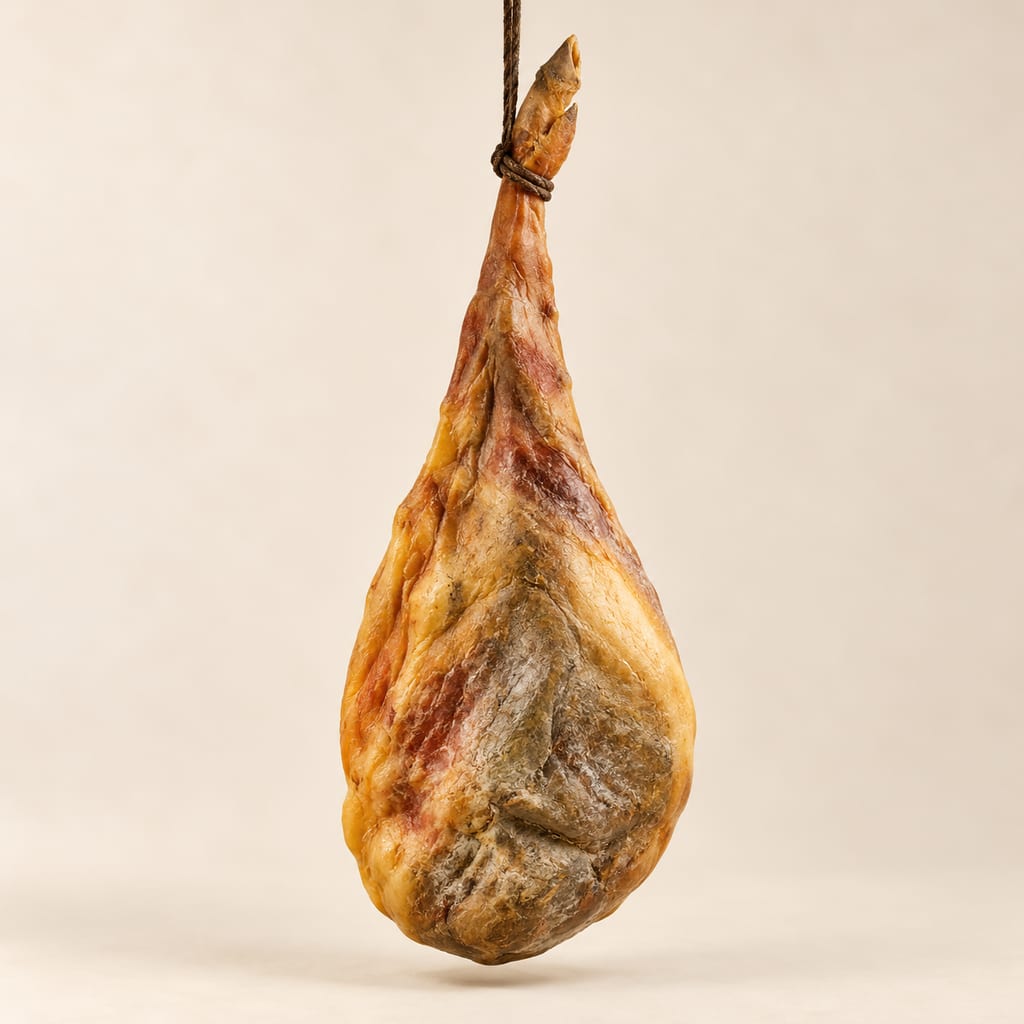
Illustrative category depiction of a whole cured ham; the source does not preserve the exact appearance of Cato's ham.
High risk

Cato’s salted ham

Cato the Elder records a second-century BCE sequence for salting, air-drying, and smoking ham. This historical account is not a validated modern curing protocol.

Historical attestation
· Meat
Cut saucisson sec and thin slices with pale fat pieces on an ivory plate.
High risk

Saucisson sec, starter-cultured

Saucisson sec is a French dry sausage of seasoned pork and fat. This version uses Flavor of Italy starter, white wine and an optional Mold 600 surface culture.

France · Modern adaptation
· Meat