








































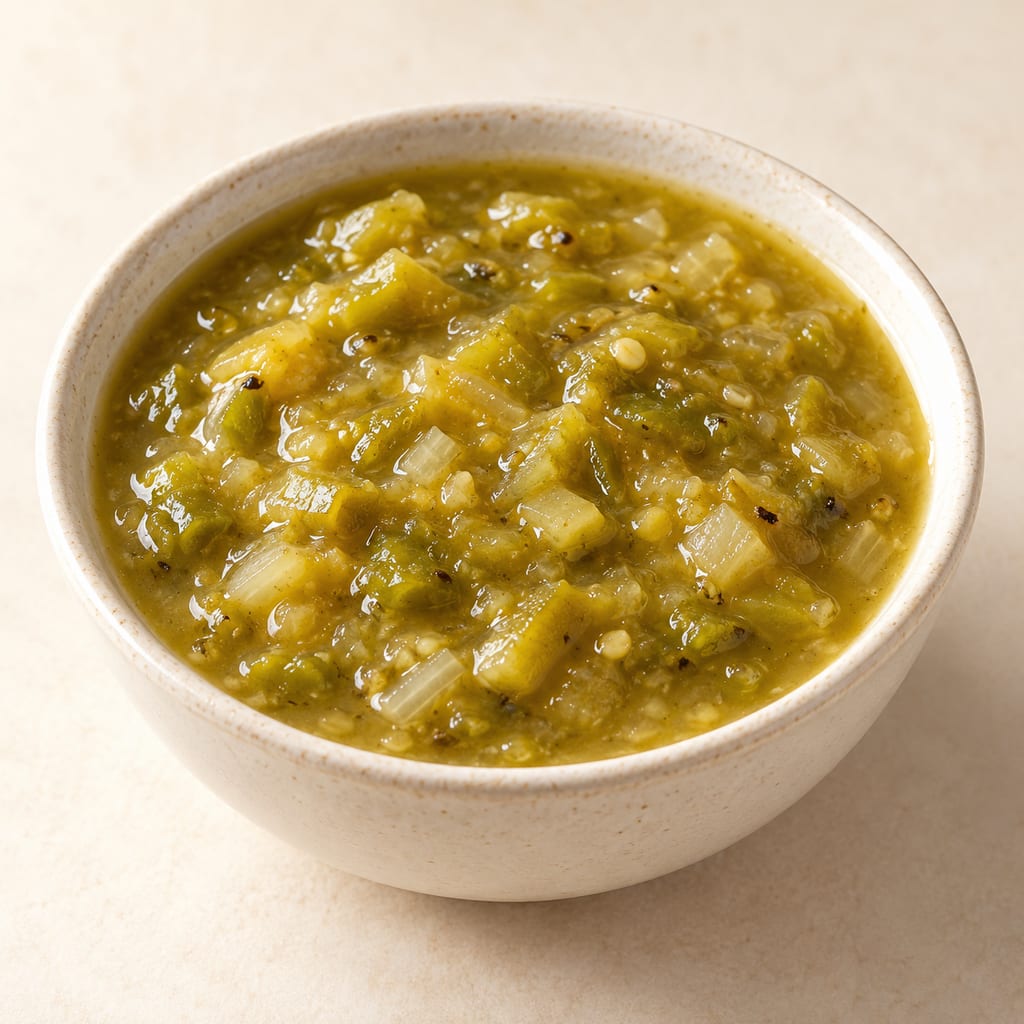
New Mexican green chile sauce
New Mexican green chile sauce is a cooked sauce of roasted fresh green chile, onion and garlic, thickened with a little flour and a 15-minute simmer in stock.
 FermenteaWhere food goes to change
1504 records with their sources, across 11 categories.
 Fermented, enzyme-ripened and mixed seasonings63
 Adjacent and excluded4
 Garum and fish sauces4
 Legume, seed and plant-protein ferments4
 Fruit preserves3
 Acid and oil pickles1
New Mexican green chile sauce is a cooked sauce of roasted fresh green chile, onion and garlic, thickened with a little flour and a 15-minute simmer in stock.
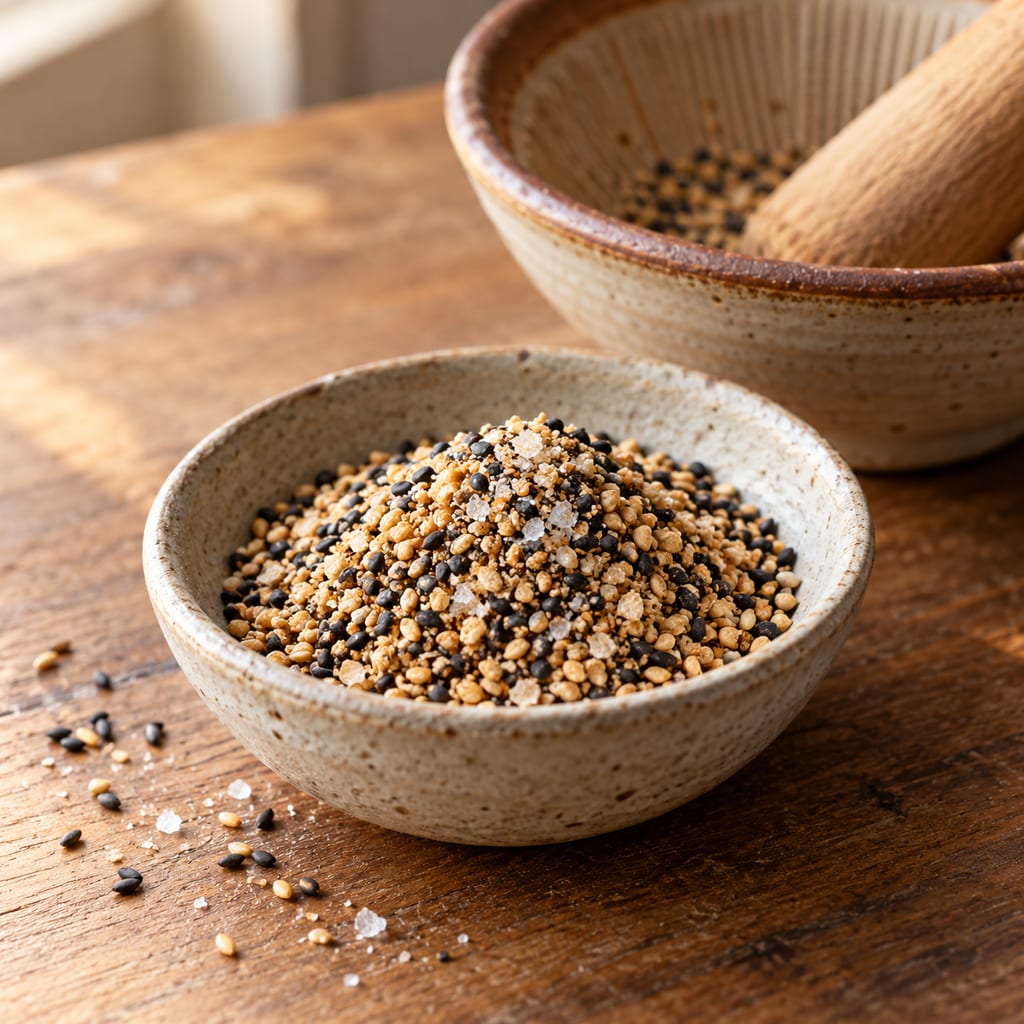
Toasted sesame seeds and sea salt are ground together into a coarse seasoning for rice. This small pan-roasted batch keeps most of the seed texture.
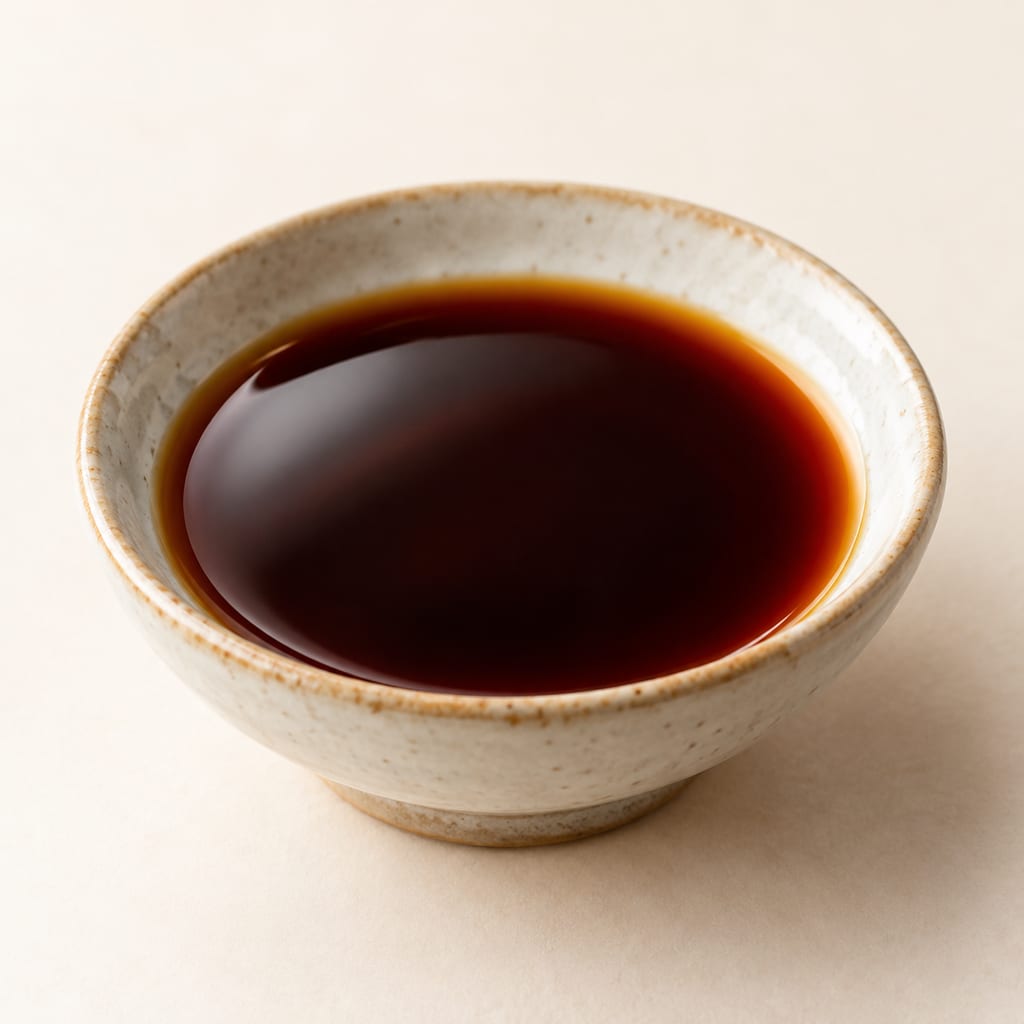
Japan's standard all-purpose soy sauce: soybeans and wheat grown over with koji mould, brined, fermented for months, pressed and usually heated into a reddish-brown, savoury liquid.
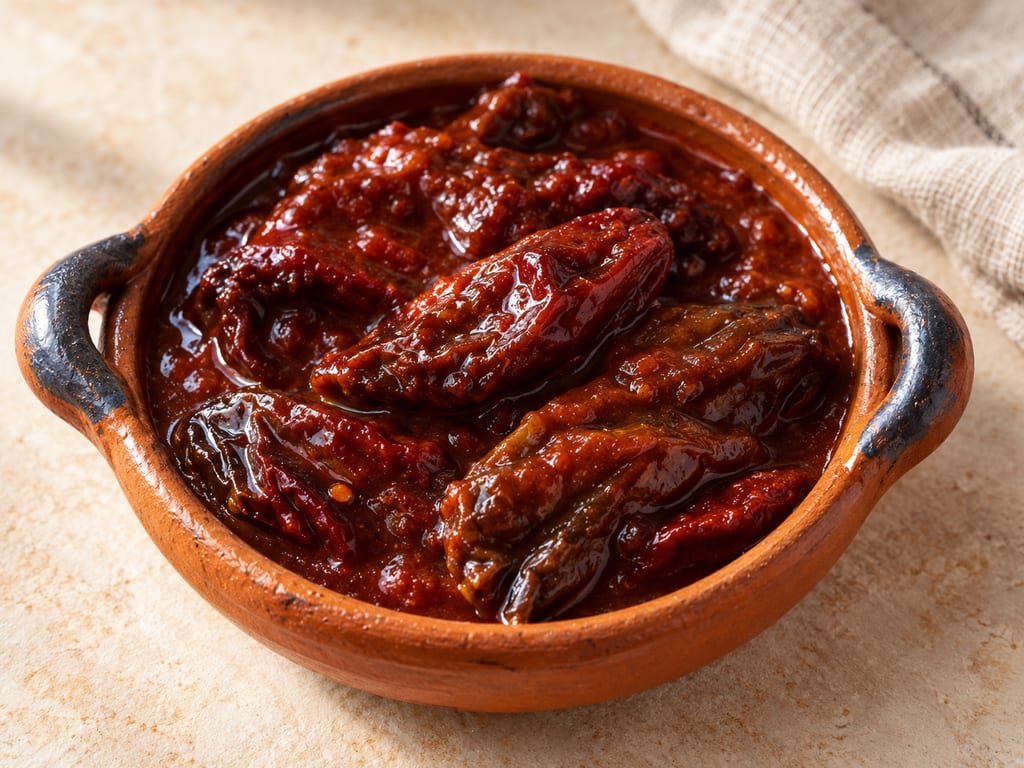
Whole smoked-dried chipotles simmer in a tomato, vinegar and spice adobo: a Mexican condiment with smoky heat and a sauce that seasons the chile as it softens.
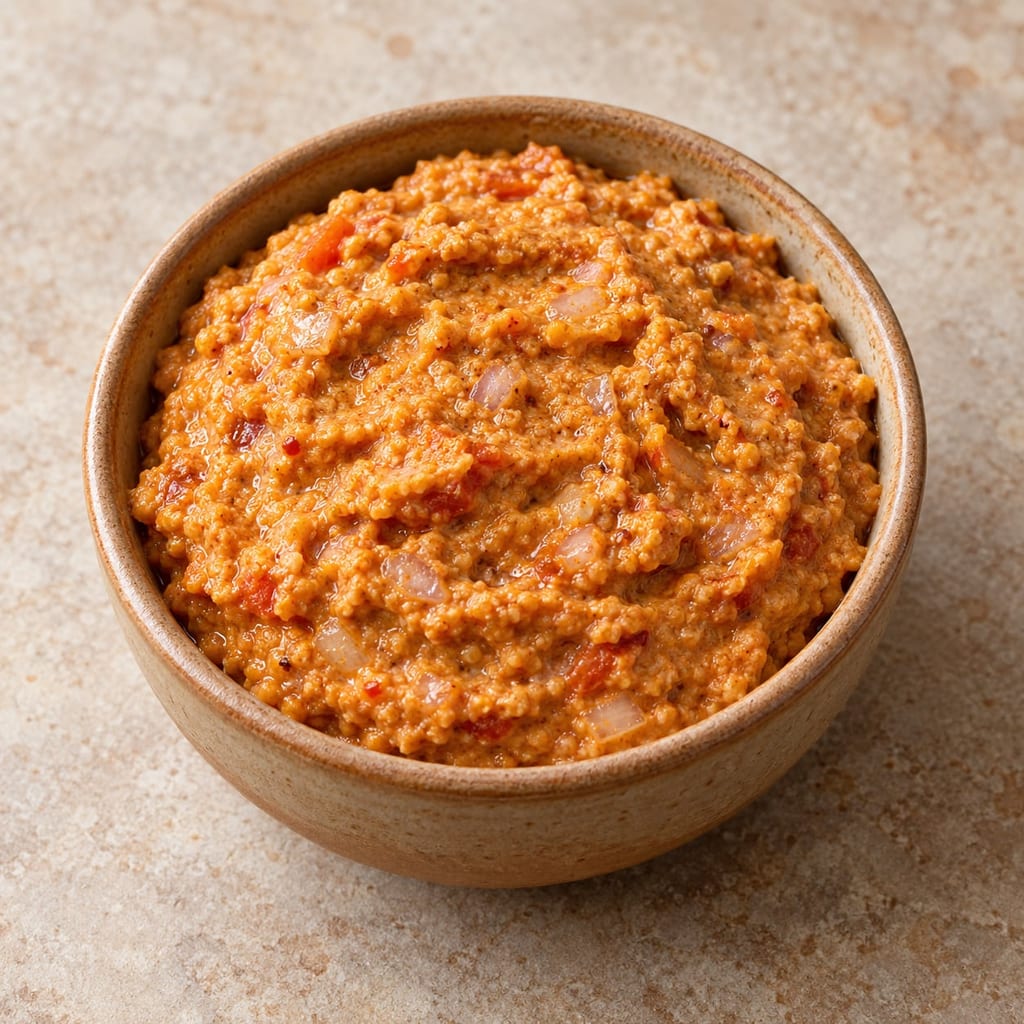
A moist Andhra peanut chutney: roasted groundnuts ground with fried dried chillies and tamarind, folded into a roasted tomato-and-spice mix with raw onion, and eaten with khichdi, attu or idli.
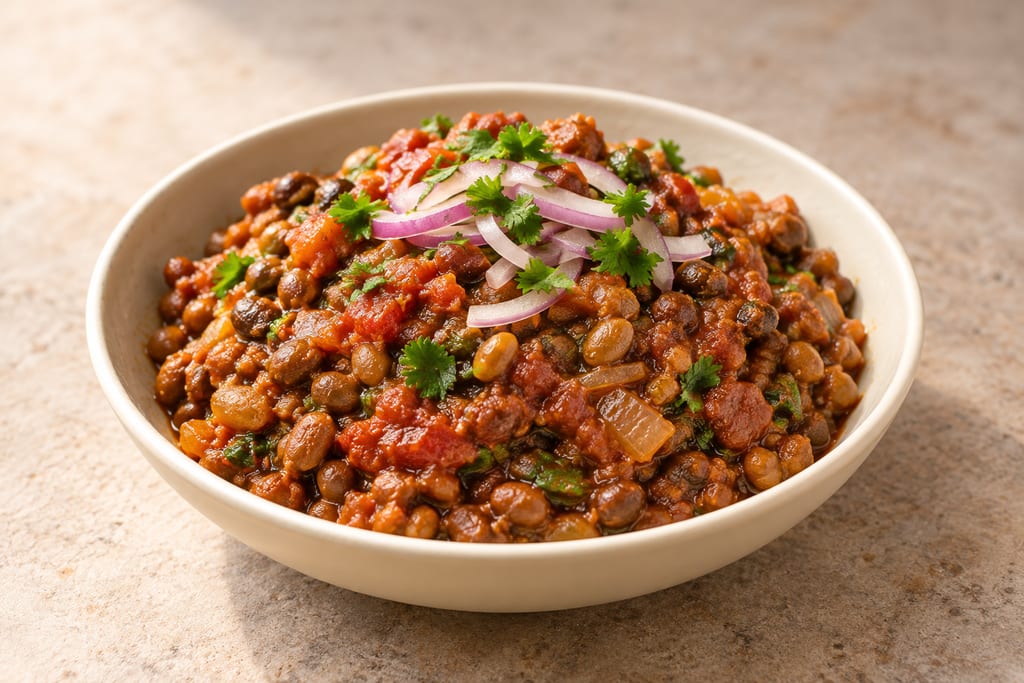
Kinema ra golbheda ko achar combines already-fermented soybean kinema with tomatoes, onion, garlic and spices, finished with sesame powder and fresh garnish, and is eaten with rice or toast.
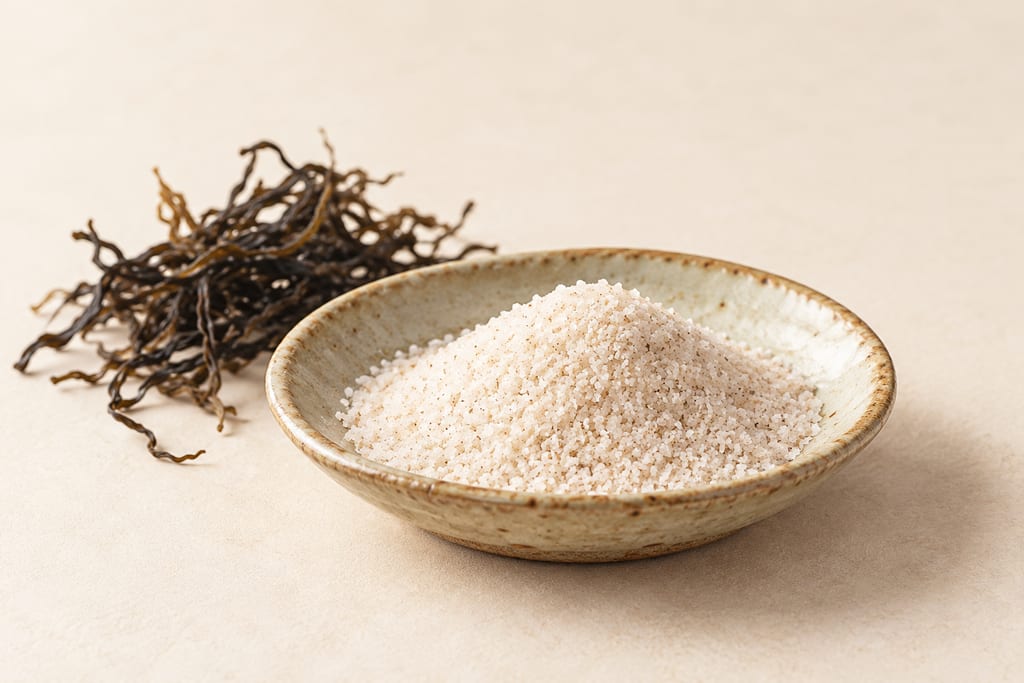
Amabito no Moshio is a modern, pale beige Japanese seaweed salt made from Seto Inland Sea water and hondawara seaweed. Its documented factory method concentrates filtered brine in kettles, then separates and dries the salt.
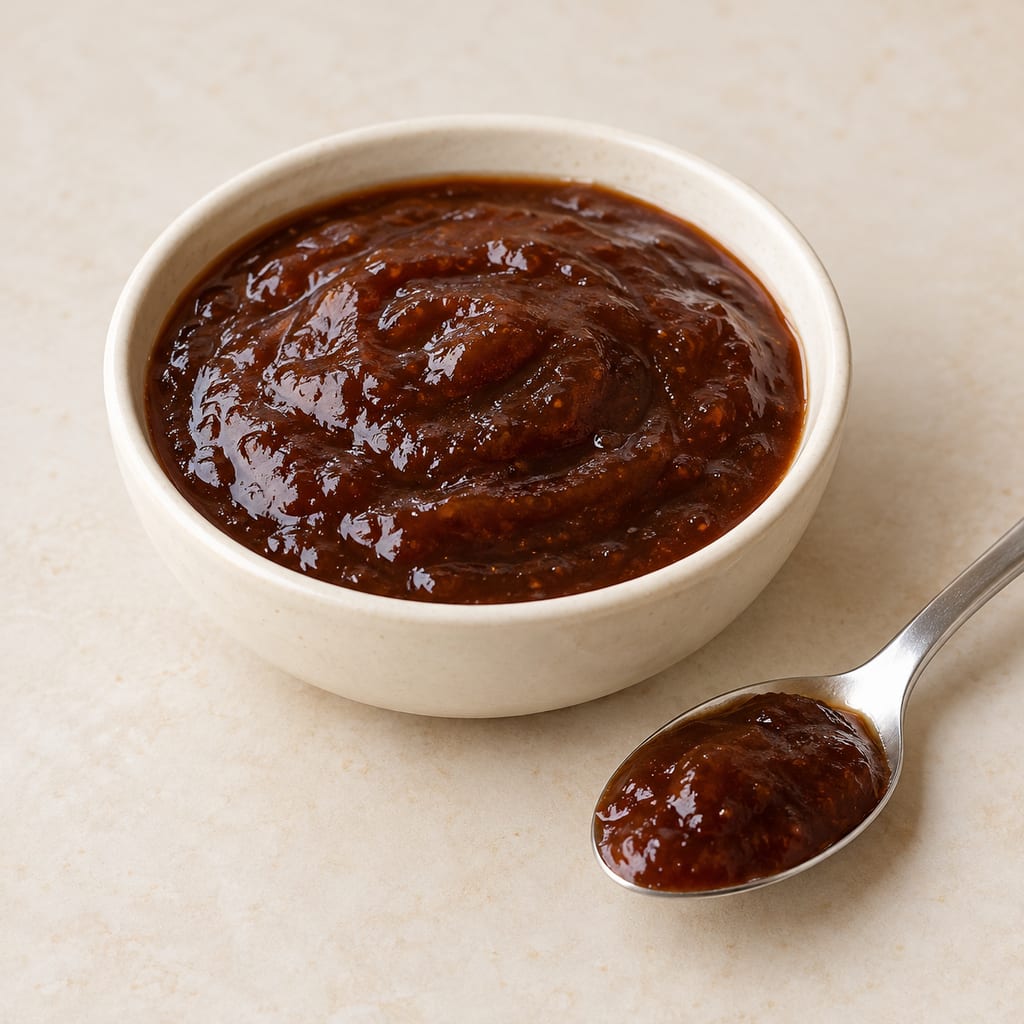
A sweet-sour cooked chutney of tamarind, dates, jaggery, ginger and roasted cumin. An untested measured batch is given beside four documented Indian formulas and their storage claims.
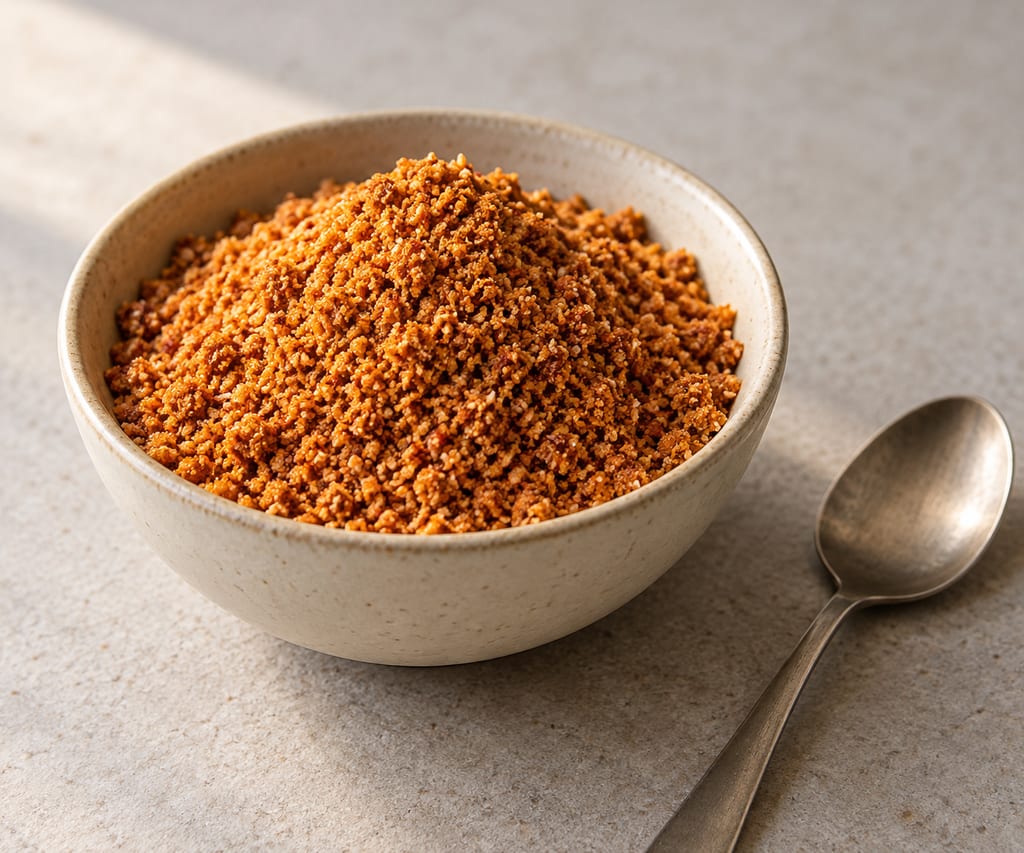
A Maharashtrian dry chutney of slowly roasted sesame and coconut ground fine with garlic, chilli powder, cumin, tamarind and sugar, kept in a bottle and eaten as a winter side.
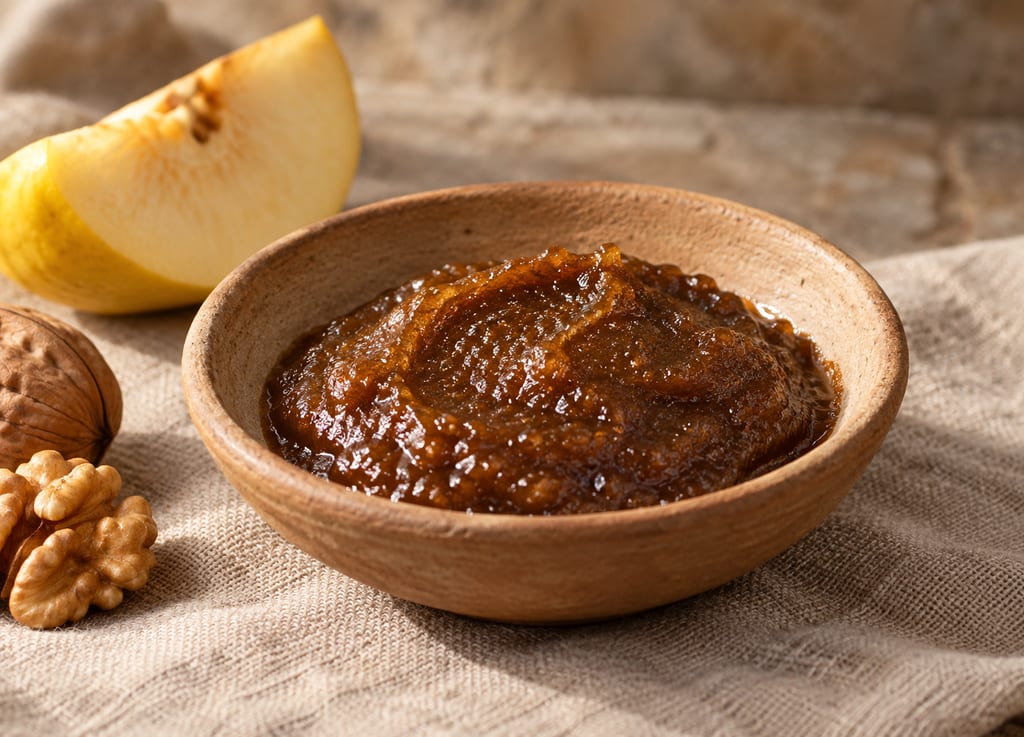
Byzantine murrī is a cooked imitation of murrī from the medieval Arabic repertoire, made from scorched honey, toasted bread, walnuts, quince, carob and spices rather than from a long grain fermentation.
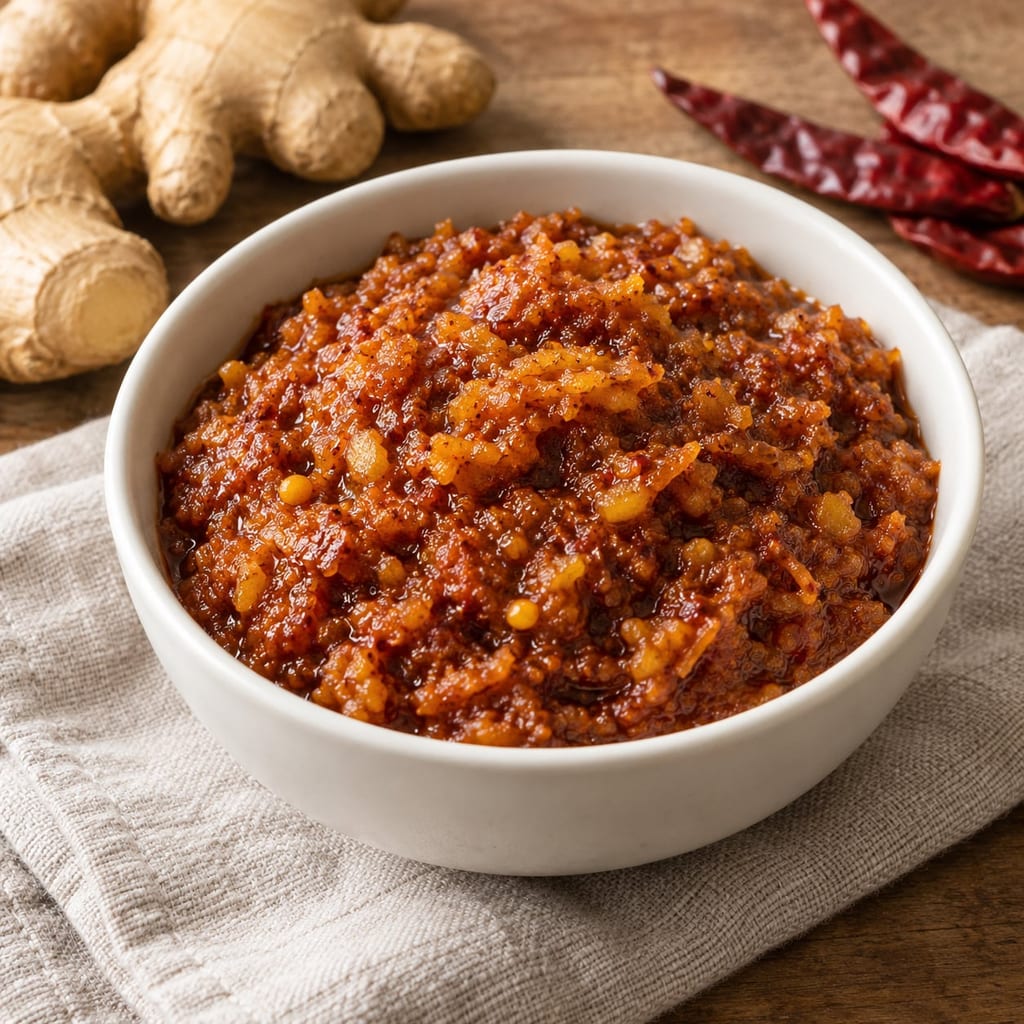
An Andhra ginger-and-urad chutney in which browned dal and briefly fried ginger and chillies are cooled, then ground with jaggery to a coarse paste.
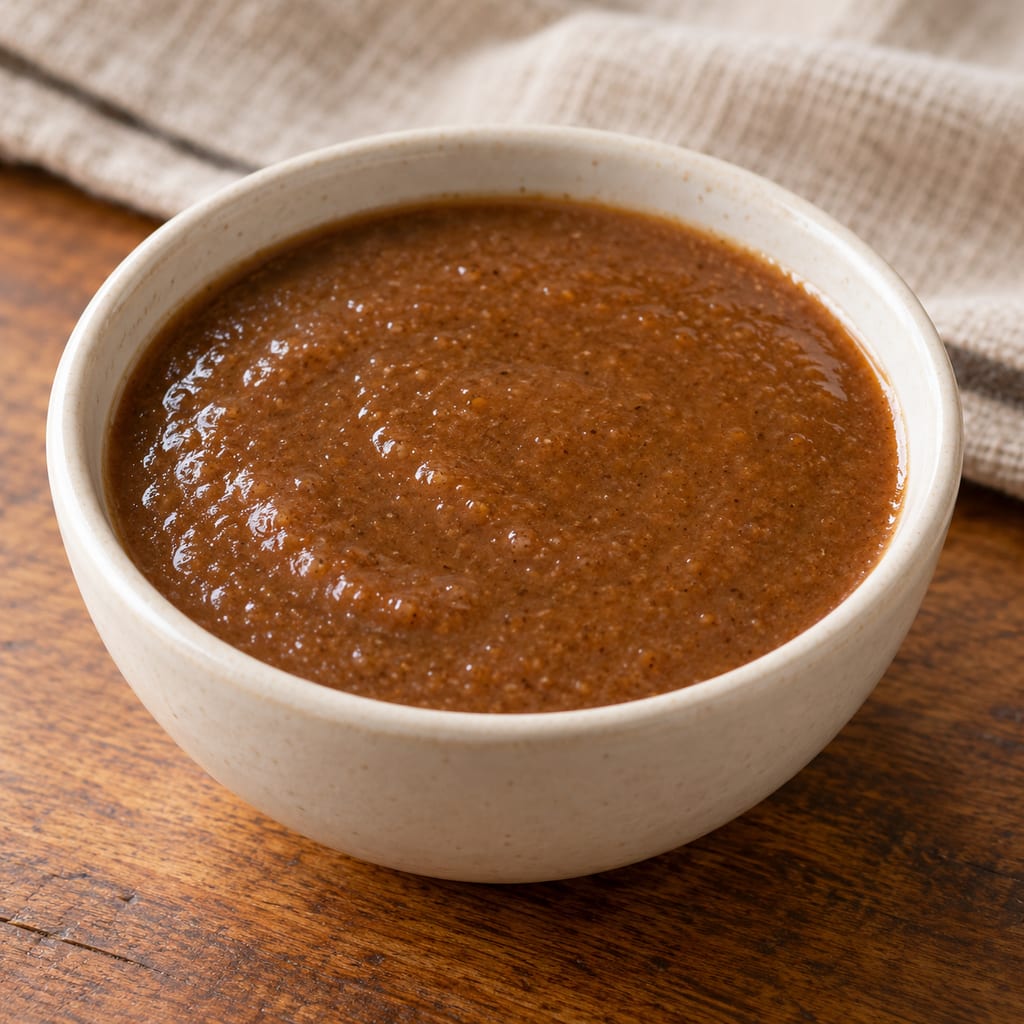
A cooked Filipino roast-meat sauce thickened from canned liver spread, vinegar, water, sugar and breadcrumbs, with browned garlic and softened onion.
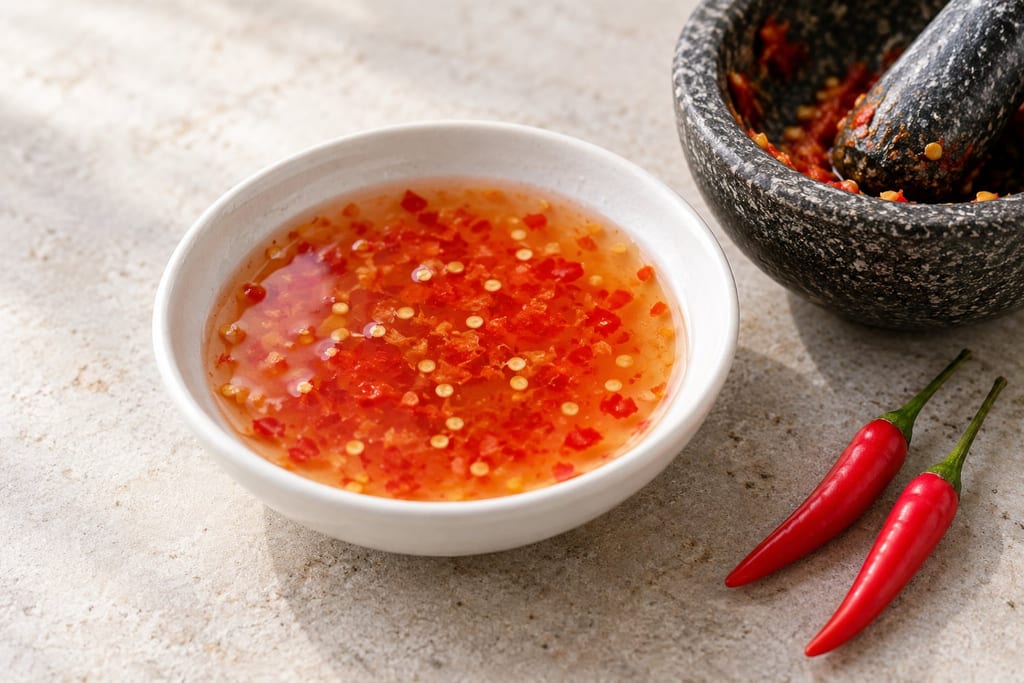
Pailin Chongchitnant's fresh prik nam som card pounds two or three Thai chillies, optionally with garlic, before stirring in white vinegar; charring is a separate optional step.
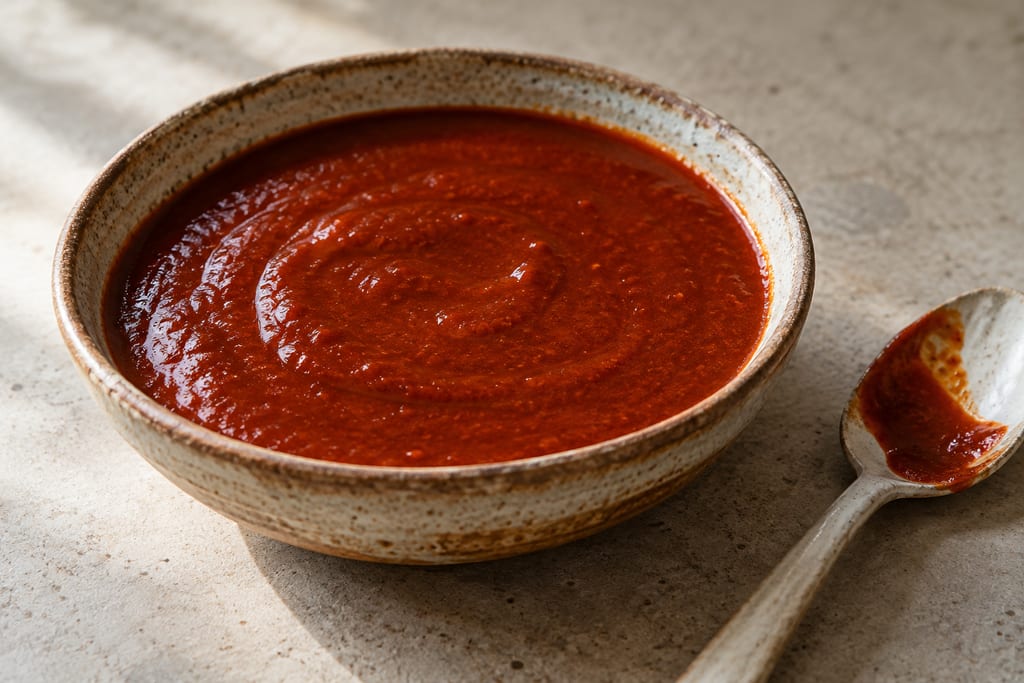
New Mexican red chile sauce is a smooth, cooked sauce of dried red chile, thickened with a little flour and loosened with water, and used to coat enchiladas and to build chile con carne.
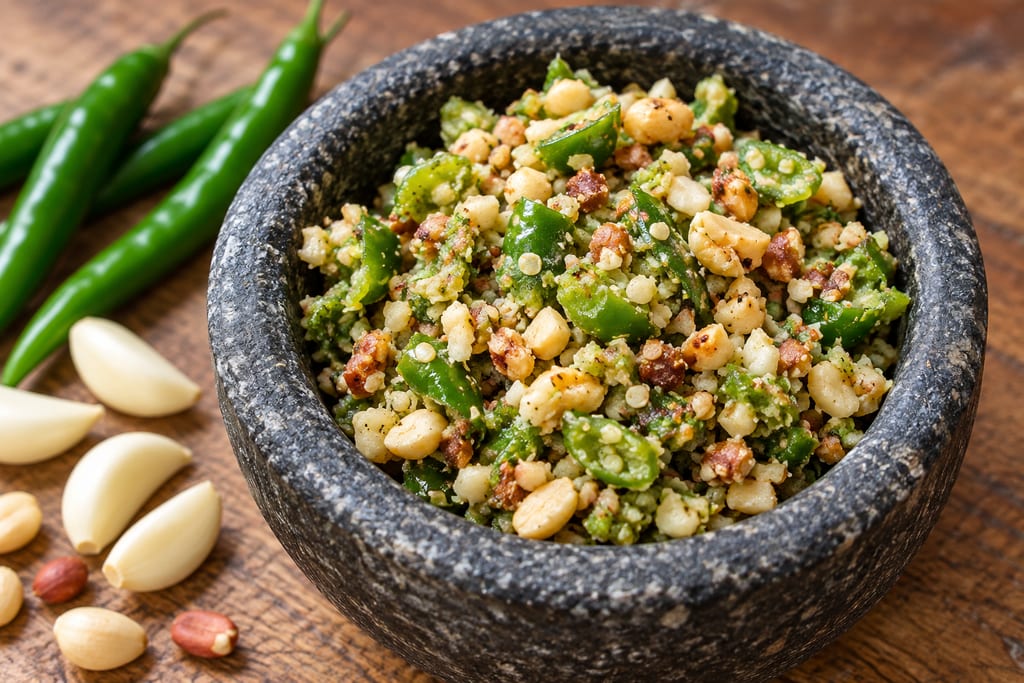
A fresh Maharashtrian thecha of green chillies, peanuts and garlic, roasted separately in the same oil and crushed with salt. Optional coriander joins the pan before grinding; serve with bhakari.
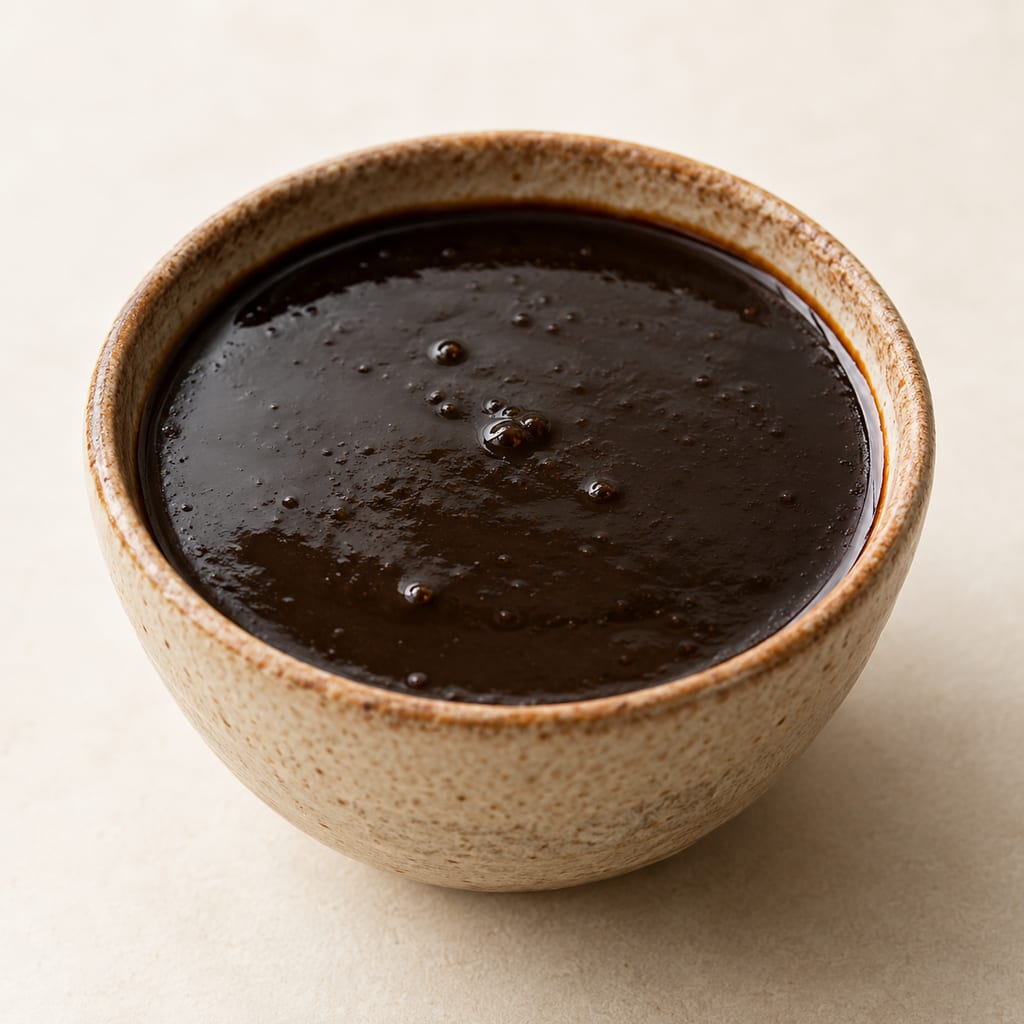
Tucupi negro is a dark, pungent sauce that Amazonian Indigenous women make by pressing bitter cassava, settling its starch and simmering the juice for hours until it thickens.
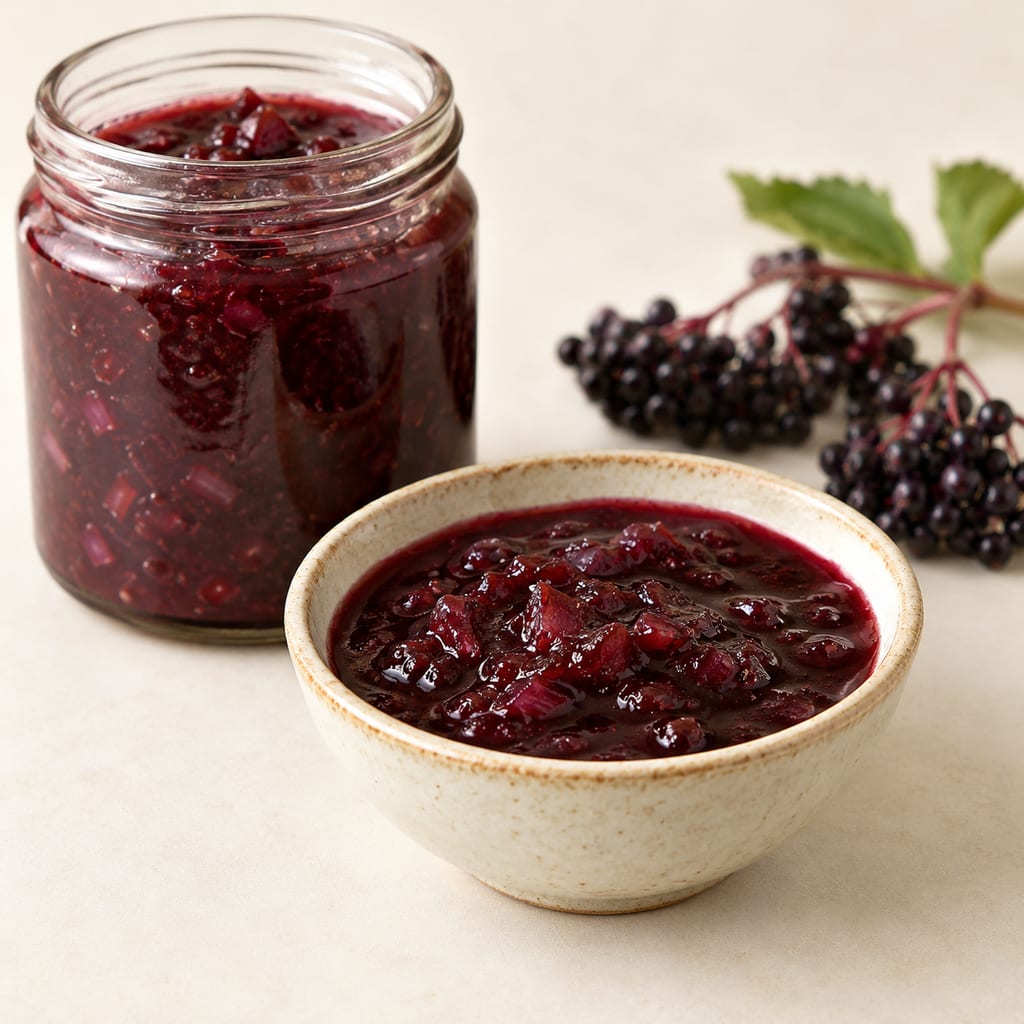
An English elderberry condiment of vinegar, shallots and warm spices, historically called a catsup and tied to Pontac's Head tavern in London.
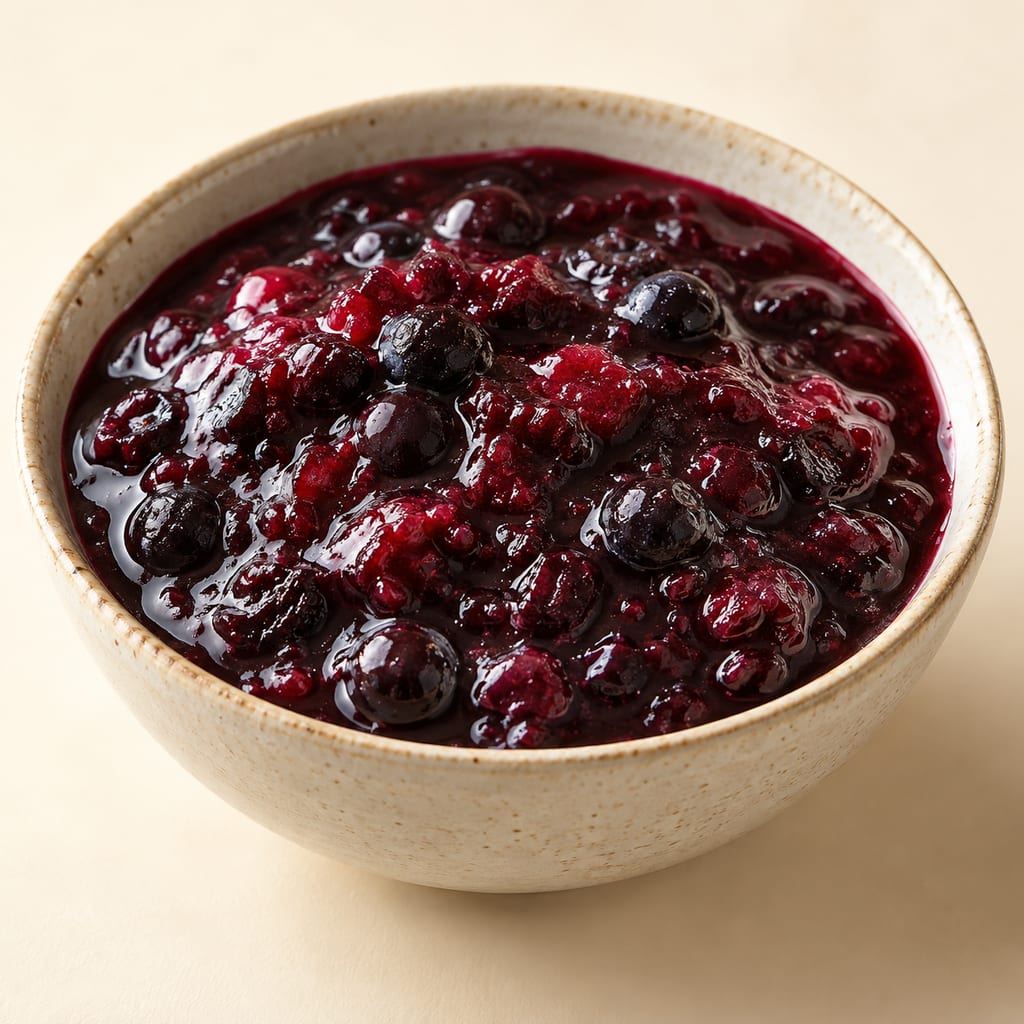
Wojapi is a cooked berry sauce of the Lakota and Dakota peoples of the Northern Plains, traditionally made from pounded chokecherries and today most often made with blueberries and a starch.

Protected Italian vinegar made only from cooked grape must, fermented and aged in a battery of wooden barrels for at least 12 years: sweet, sharp and syrupy.
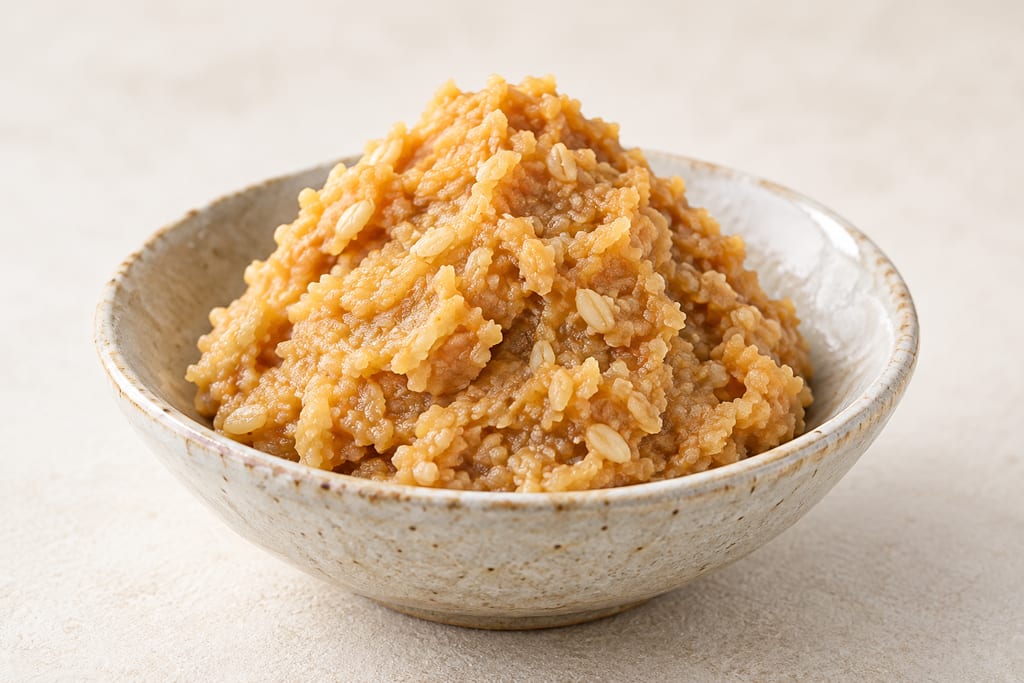
A Japanese soybean paste fermented with barley koji and salt, made mostly in Kyushu, Shikoku and western Japan. It is sweet, savoury and grainy.
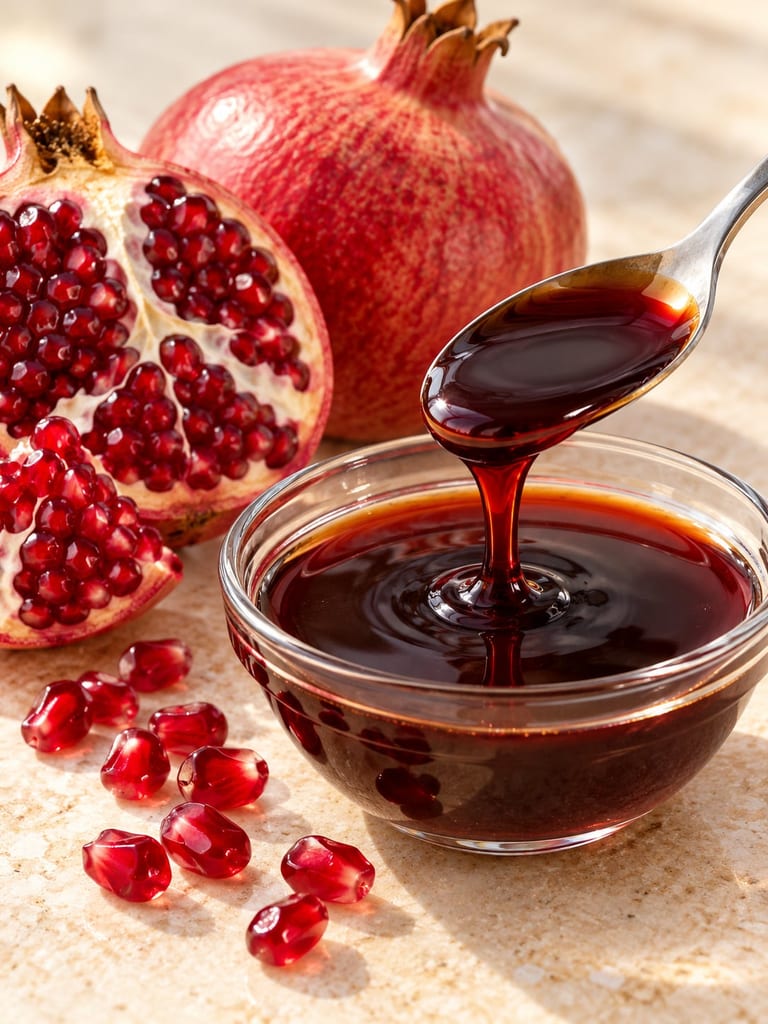
The registered Hatay method presses pomegranate arils and slowly concentrates the strained juice. Its 100 kg source batch and experienced-producer endpoint are retained; no home-scale time or shelf-life is inferred.
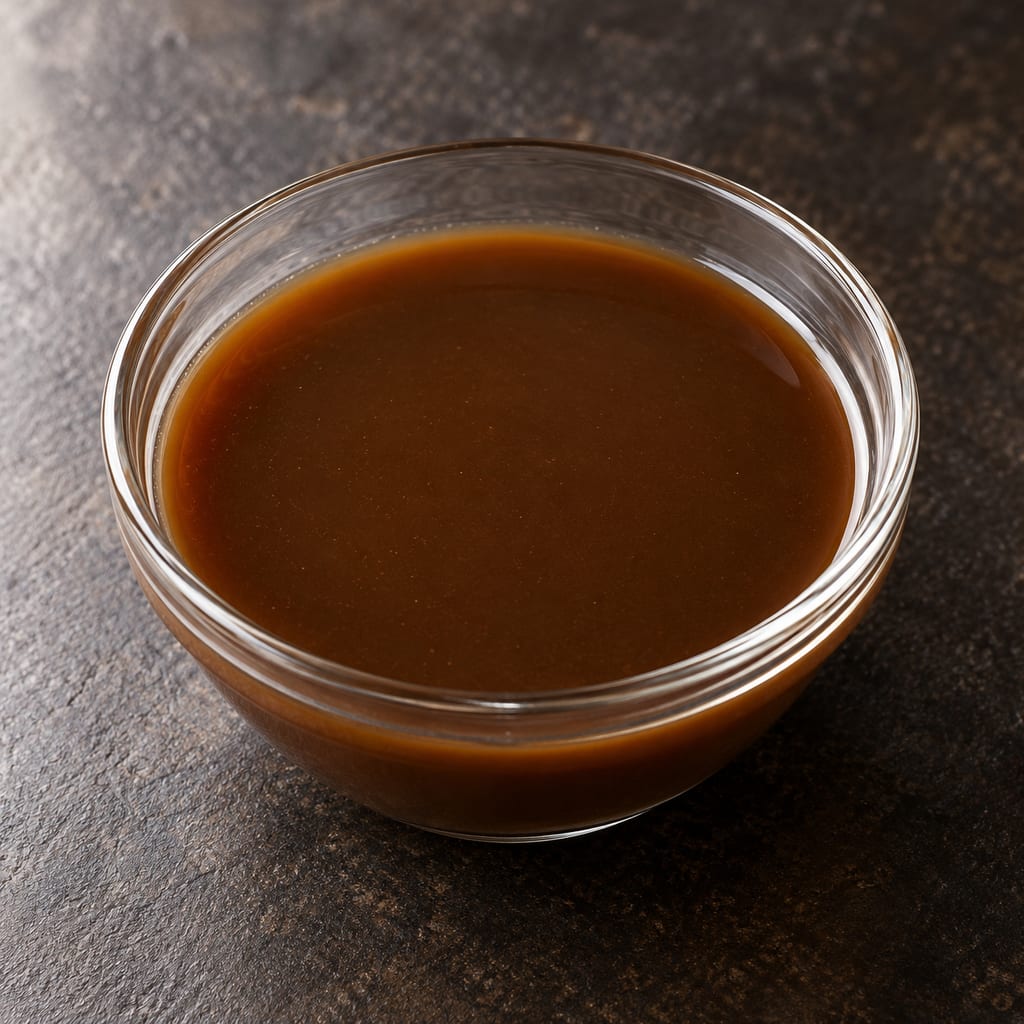
Coconut sugar starts this cooked sauce, followed by shrimp paste, garlic brine and pieces, two distinct pla-ra inputs, mulberry leaves, water and later seasonings.
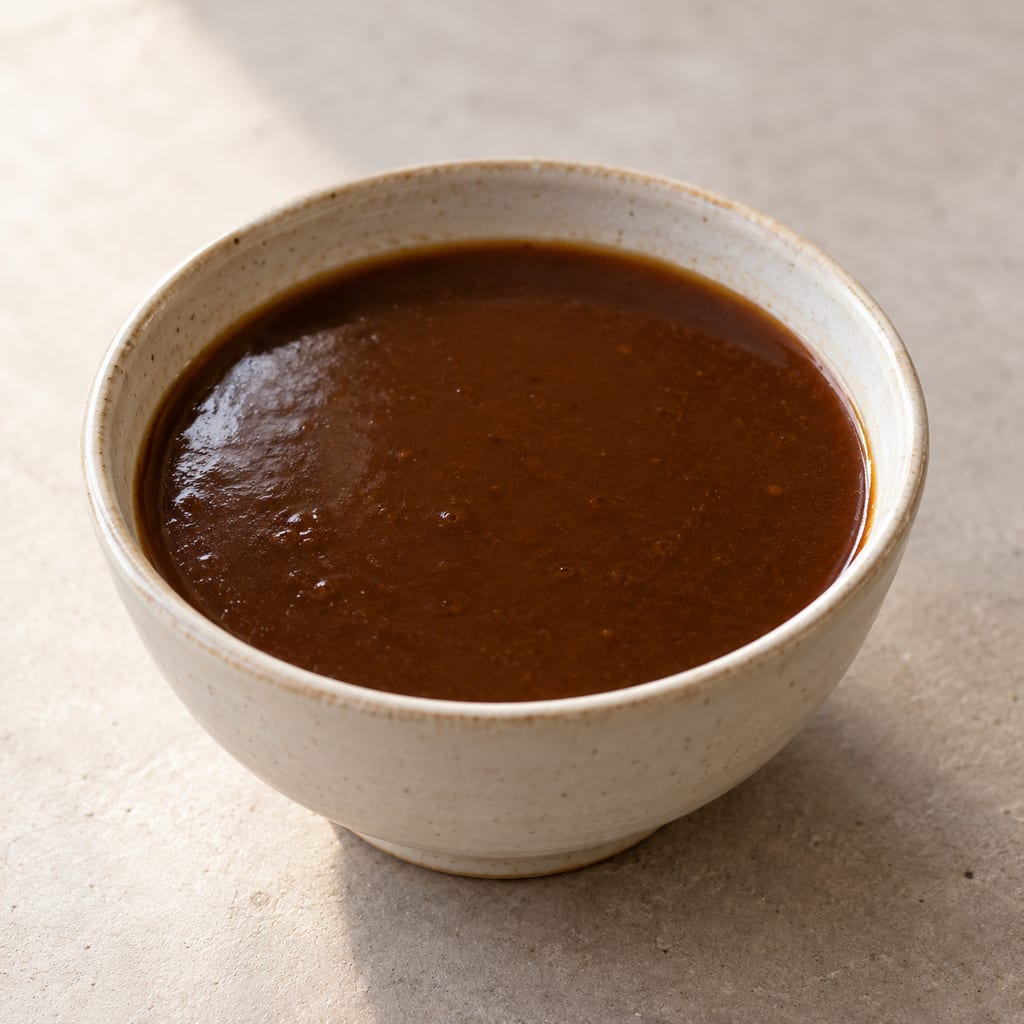
Concentrated pla-ra liquid and pla-ra ton are combined with shrimp paste, sugar and seasonings, simmered for about 30 minutes, strained and cooled.
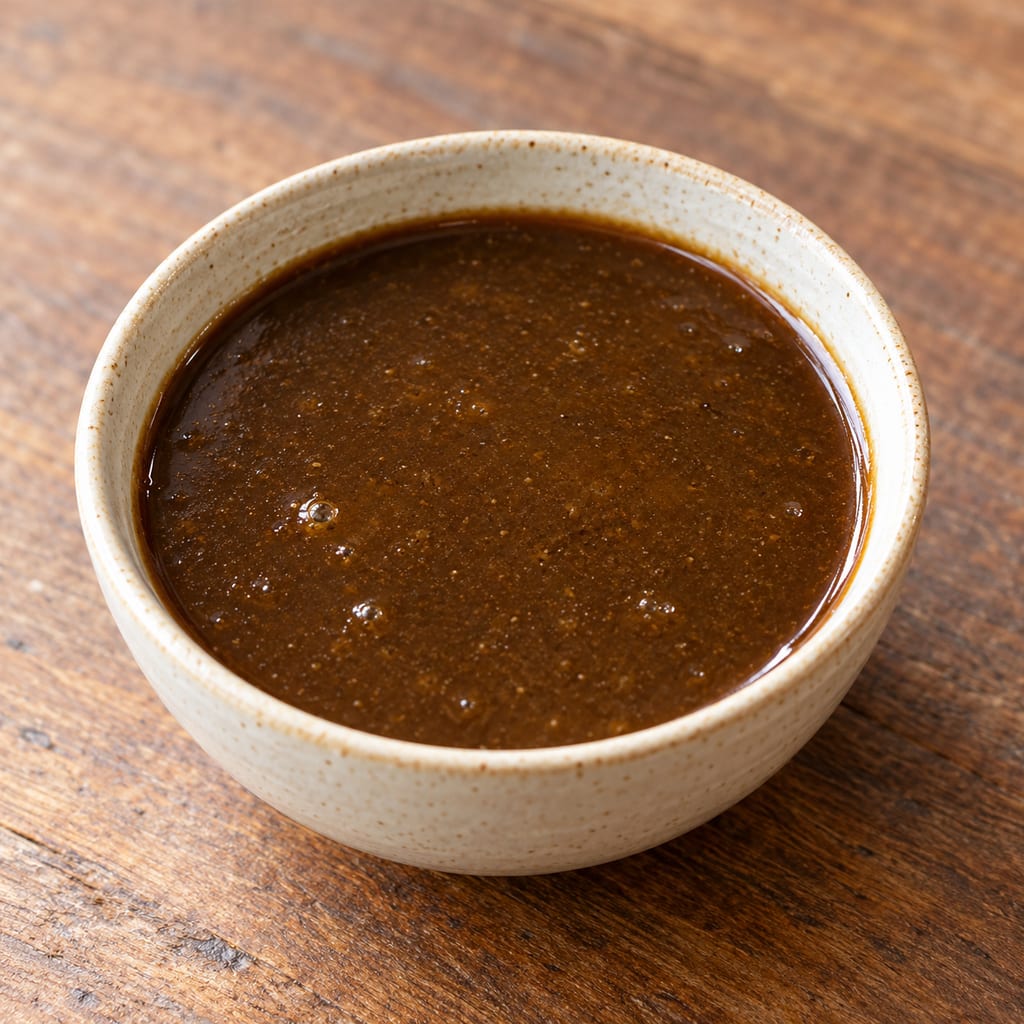
Purchased pla ra is boiled with pickled-garlic heads and water, then seasoned, boiled again, cooled and transferred; several captioned ingredient names or amounts remain unresolved.
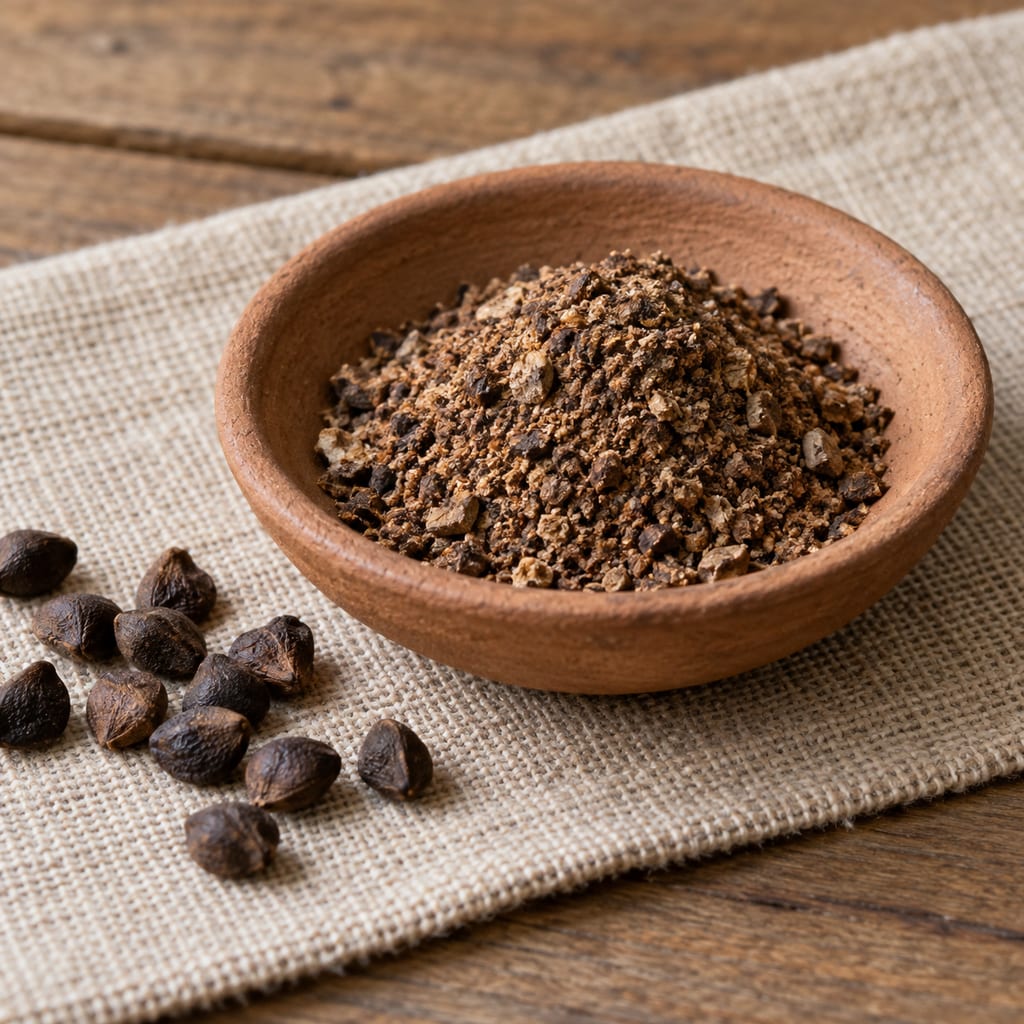
A traditional Beninese inoculum made from fermented roselle, cotton or baobab seeds, rich in bacterial spores, added to cooked African locust beans to speed up fermentation and soften them into sonru.
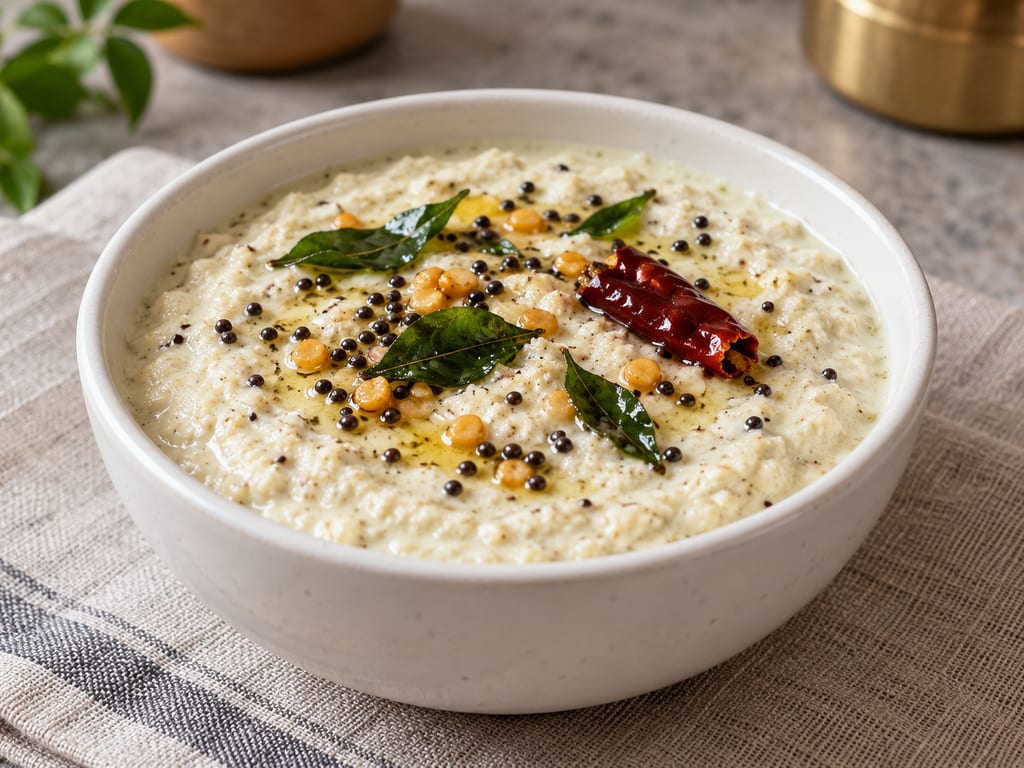
A coconut chutney whose ground base is finished with a separate oil tempering of mustard, urad dal, curry leaves and spices; the author pairs it with South Indian breakfast foods and snacks.
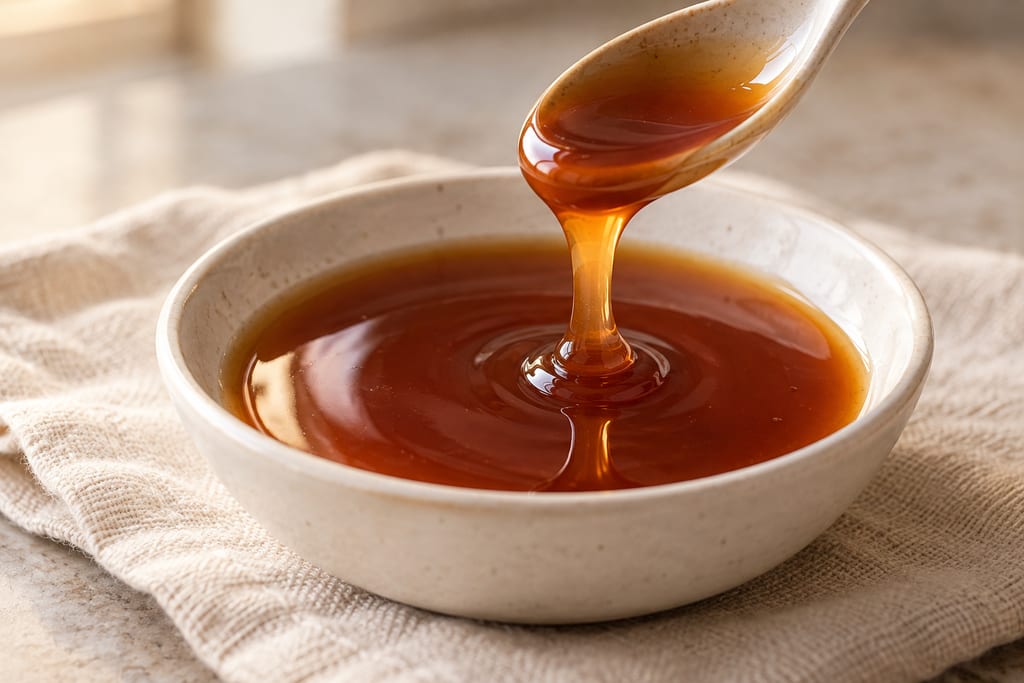
A glossy Japanese glaze thickened with starch, sugar, soy sauce and mirin. Spoon it over cooked rice dumplings while the glaze is still fluid.
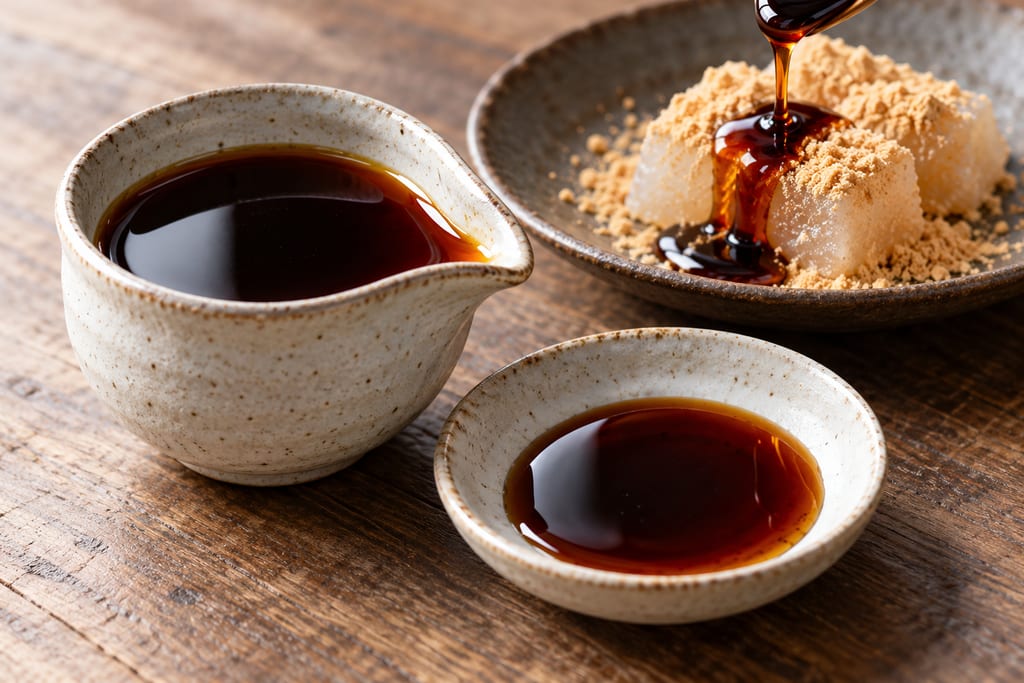
A dark Japanese syrup made by simmering black sugar with water and optional extra sugar. Drizzle it over mochi, ice cream or other desserts.
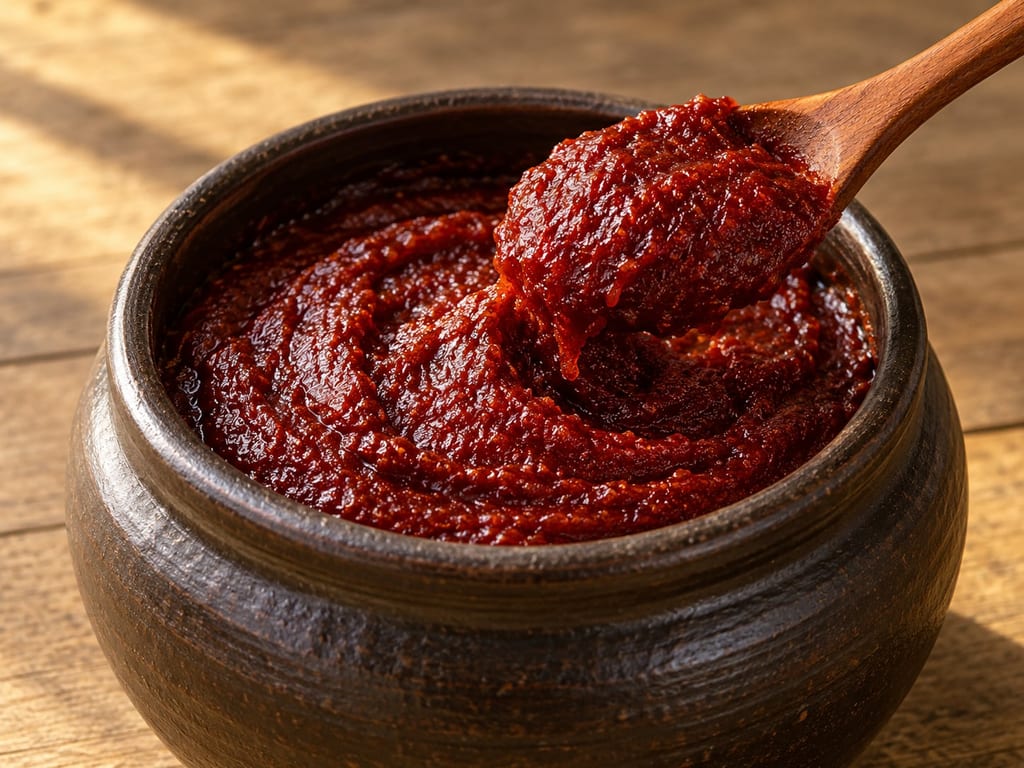
Korea’s sweet, savoury and fiery red paste of glutinous rice, barley-malt enzymes, fermented soybean meju powder and chilli powder, matured in earthenware.