

























































Tofuyo
An Okinawan fermented tofu: dried tofu cubes matured in rice koji, awamori and salt, traditionally with red Monascus koji, until the curd turns smooth and intensely savoury.
 FermenteaWhere food goes to change
1504 records with their sources, across 11 categories.
 Fermented, enzyme-ripened and mixed seasonings328
 Fruit preserves10
 Legume, seed and plant-protein ferments10
 Garum and fish sauces8
 Adjacent and excluded7
 Koji, mold starters and mold-ripened ferments4
 Acid and oil pickles3
 Fermented fruit and fruit-derived foods3
 Vegetable lactic3
 Dairy ferments2
 Smoked salted and dried foods2
 Cheese1
 Not yet classified1
An Okinawan fermented tofu: dried tofu cubes matured in rice koji, awamori and salt, traditionally with red Monascus koji, until the curd turns smooth and intensely savoury.
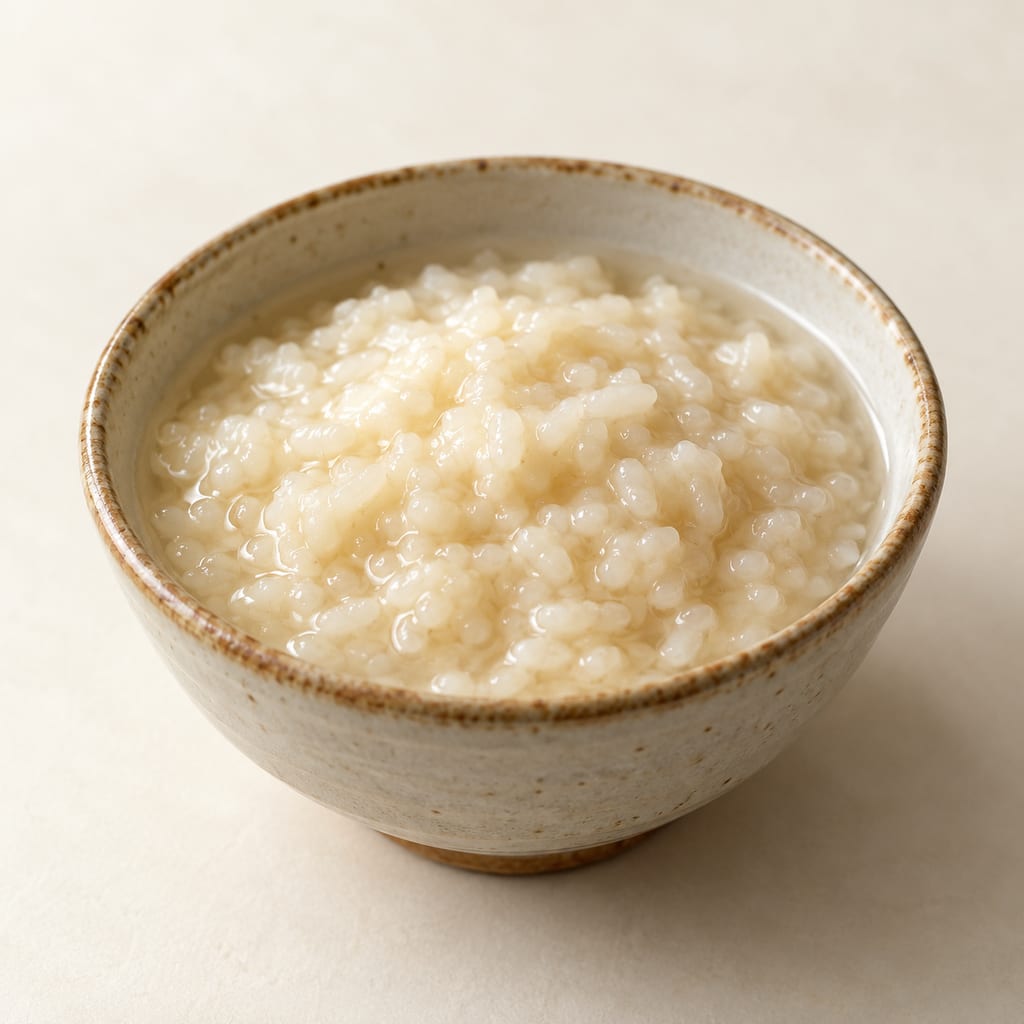
Shio-koji is a Japanese seasoning of rice koji, salt and water, left at room temperature until the grains soften and turn sweet and the mixture thickens.
A thick, naturally sweet rice-and-koji preparation used to add body and sweetness to marinades, dressings and sauces. This method follows a published Marukome home recipe and is an enzyme-conversion hold, not a way to grow koji mould.
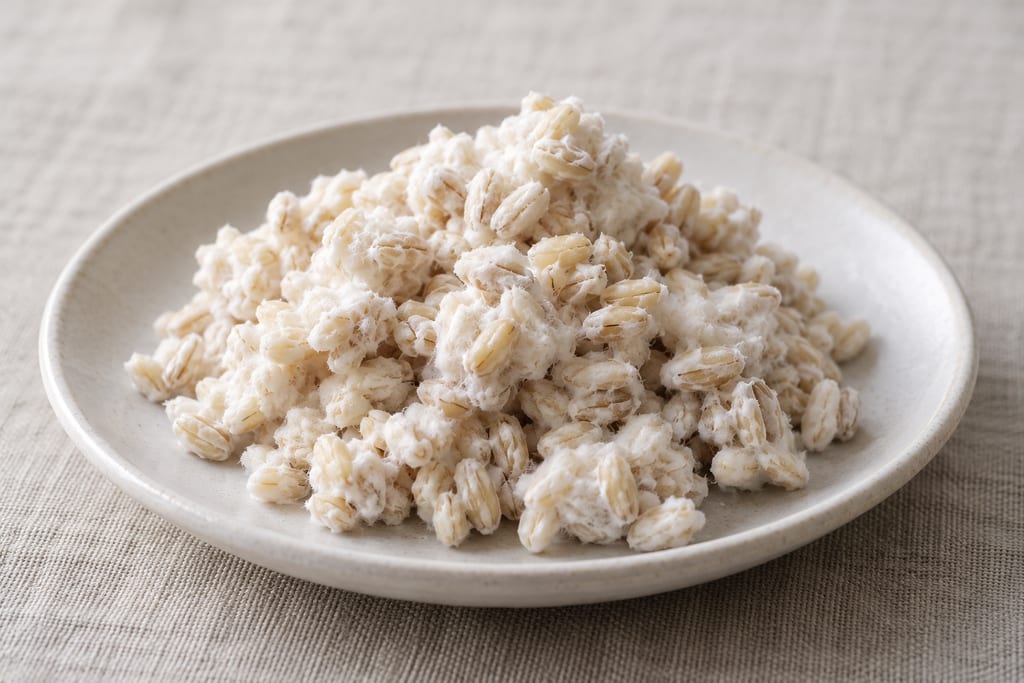
Steamed pearled barley grown into a white koji cake with Aspergillus oryzae over about 36 hours in a 30 °C chamber, turned three times under a damp cloth.

Rice koji is steamed white rice through which koji mold has grown. It carries the enzymes that turn rice starch into sugar, and it is the starting point of sake, sweet miso, amazake and shio koji.
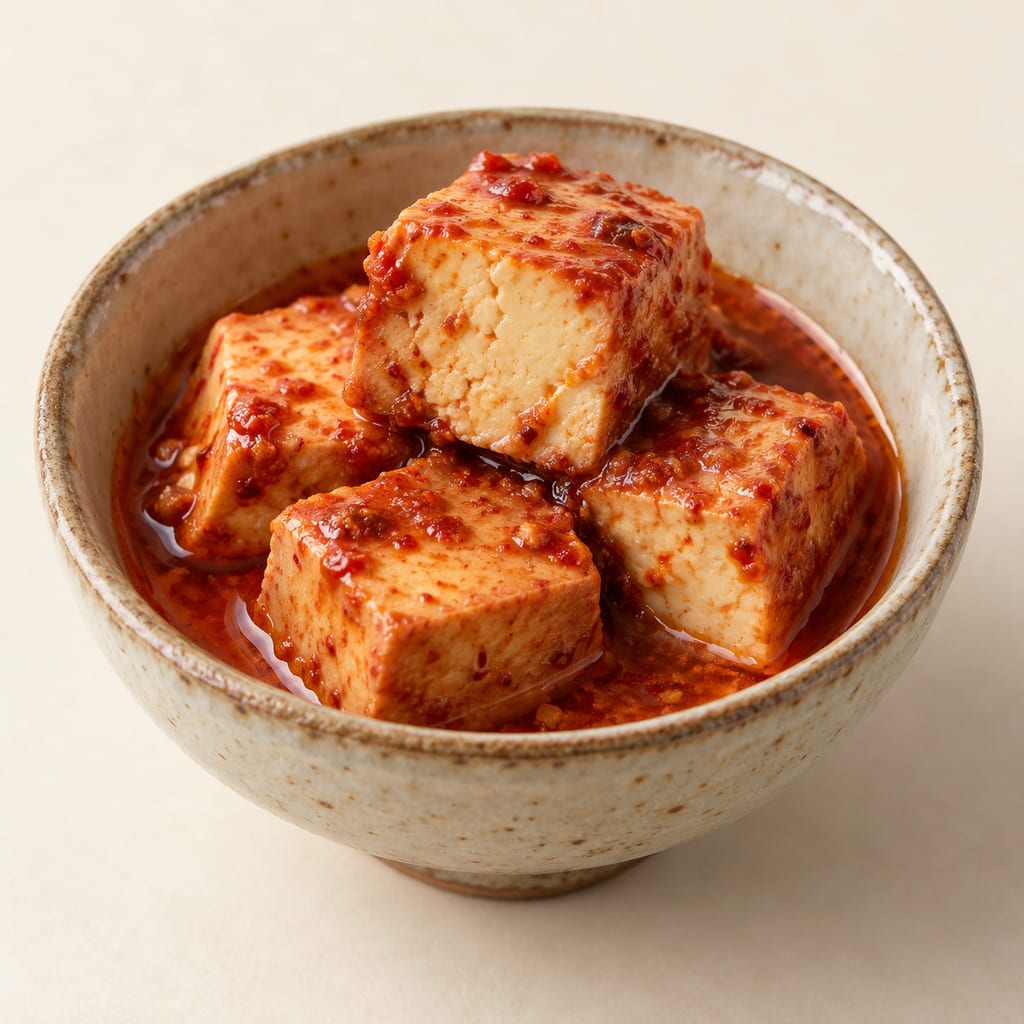
Sufu, or furu, is Chinese fermented tofu: bean curd is salted and ripened, often after a mould stage, into a soft, creamy, intensely savoury condiment.
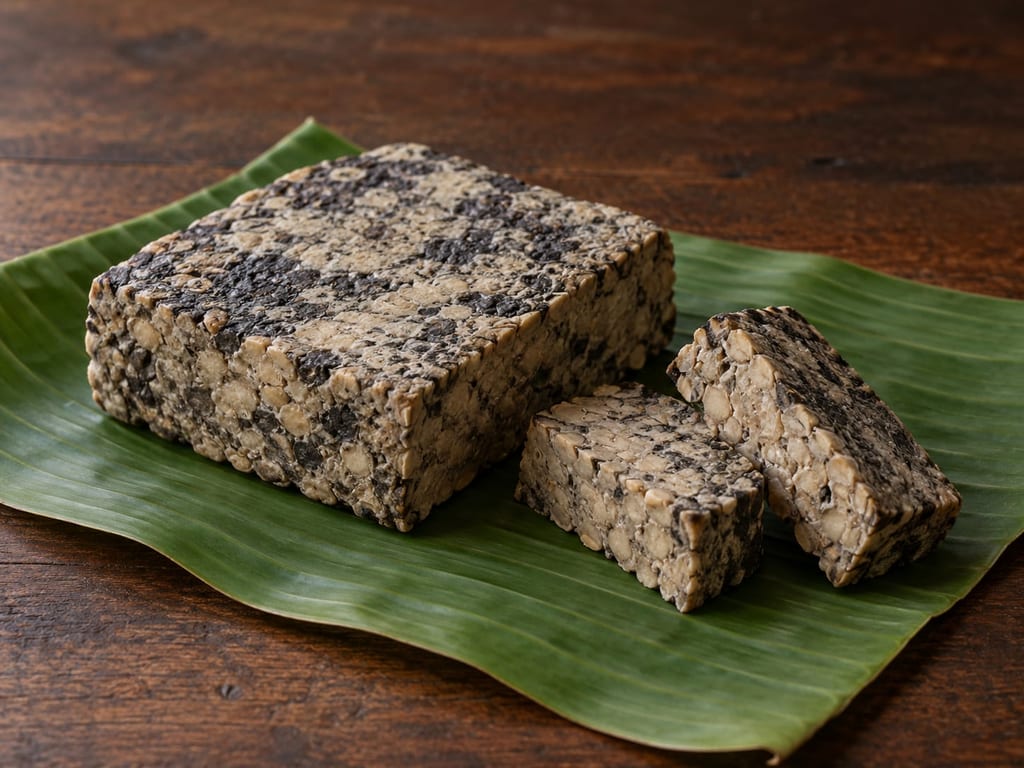
Black oncom is a mould-fermented cake made from defatted peanut cake, pressed to about 2 cm, steamed and then incubated for a day at ambient temperature.
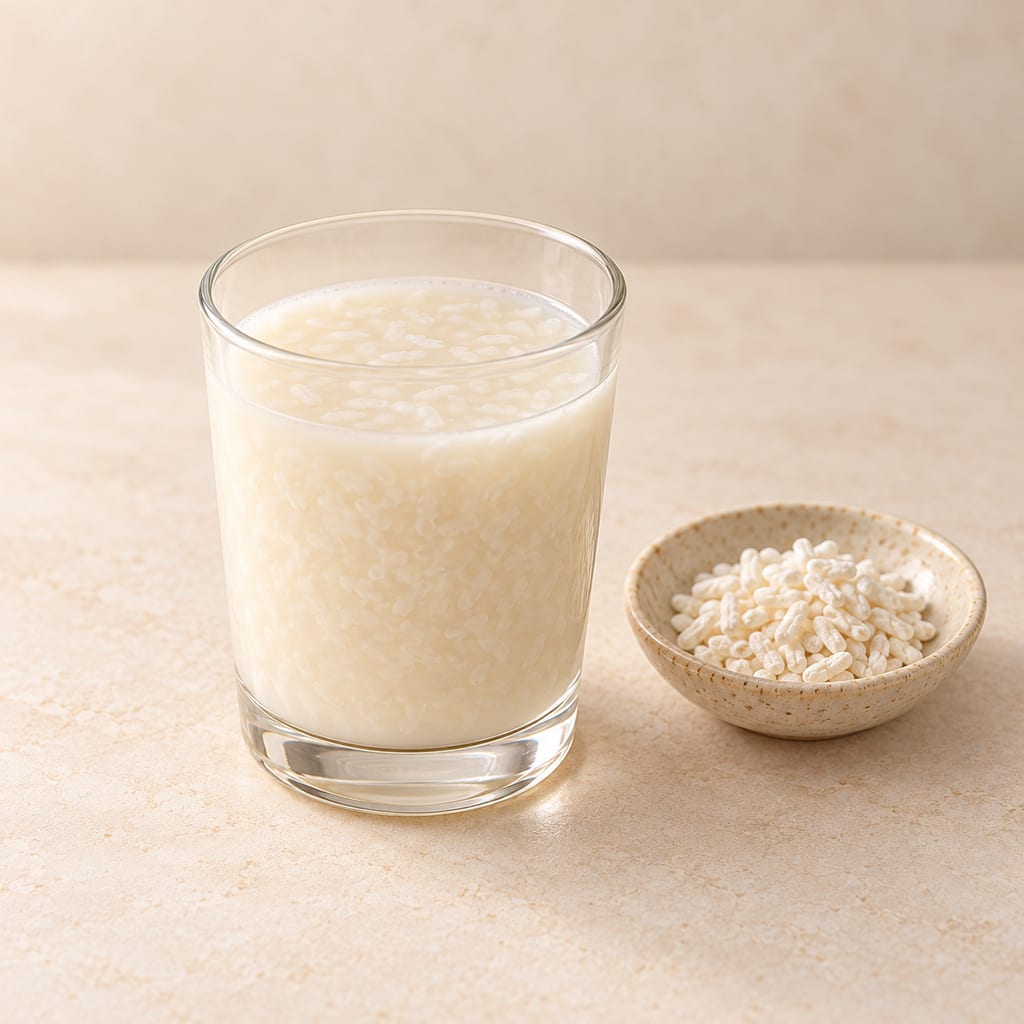
Cooked rice, rice koji and water are held warm for hours so koji enzymes turn the rice starch to sugars, giving a naturally sweet Japanese drink with no added sugar and no second fermentation.
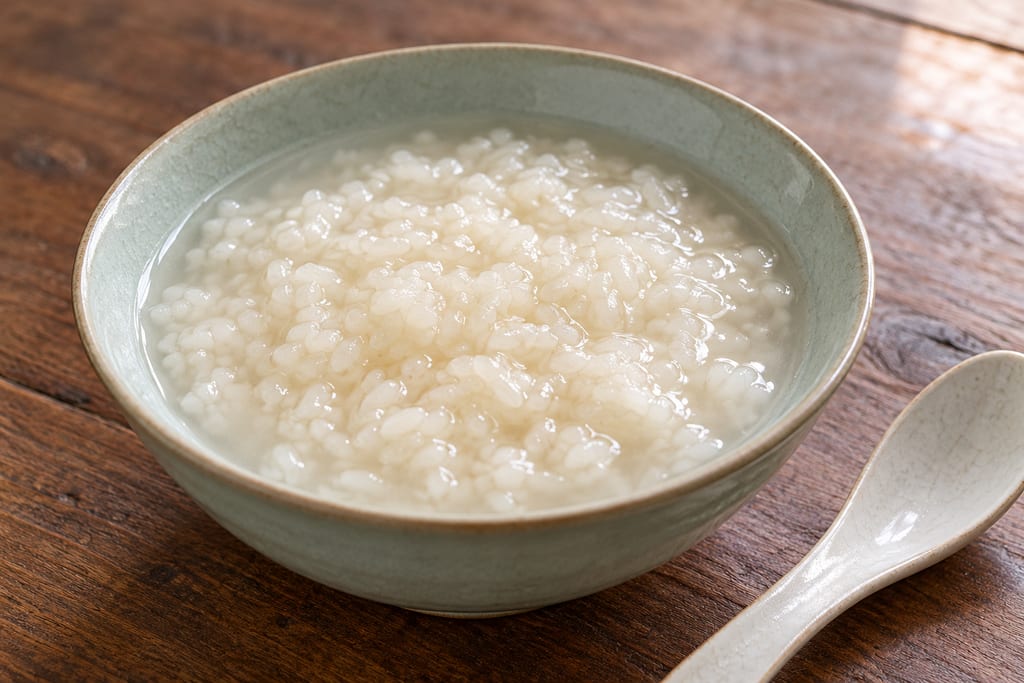
Chinese sweet fermented glutinous rice: steamed rice and a mixed jiuqu starter, where mould enzymes release sugar and yeast makes a little alcohol, eaten with its sweet liquid.
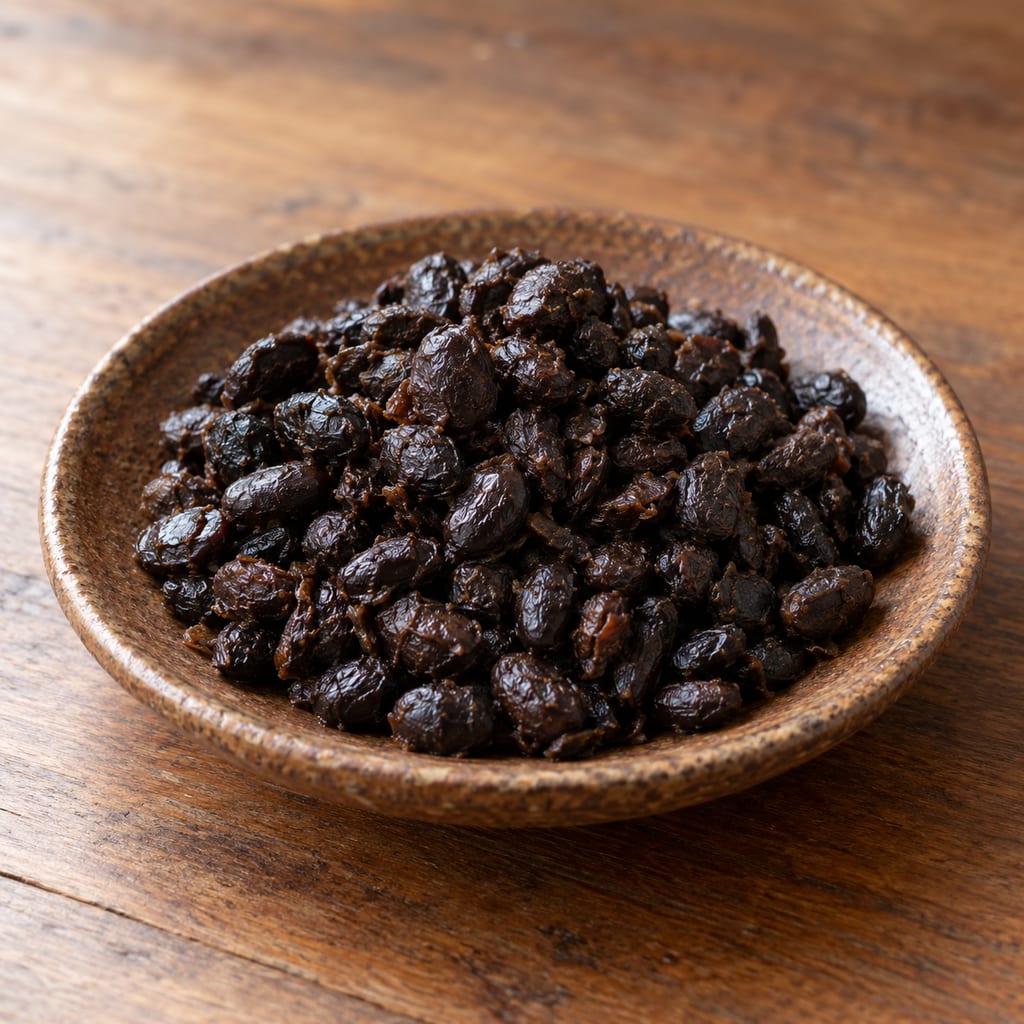
A Chinese fermented soybean condiment from Chongqing and Sichuan, made by growing Mucor-type mould on cooked beans, then salting and maturing them into dark, savoury, soft beans with a concentrated aroma.

An ethnographic record of marcha (murcha), a dry starter cake used in Eastern Himalayan cereal fermentations. This page documents source-specific community knowledge and is not a recipe for making or storing starter.
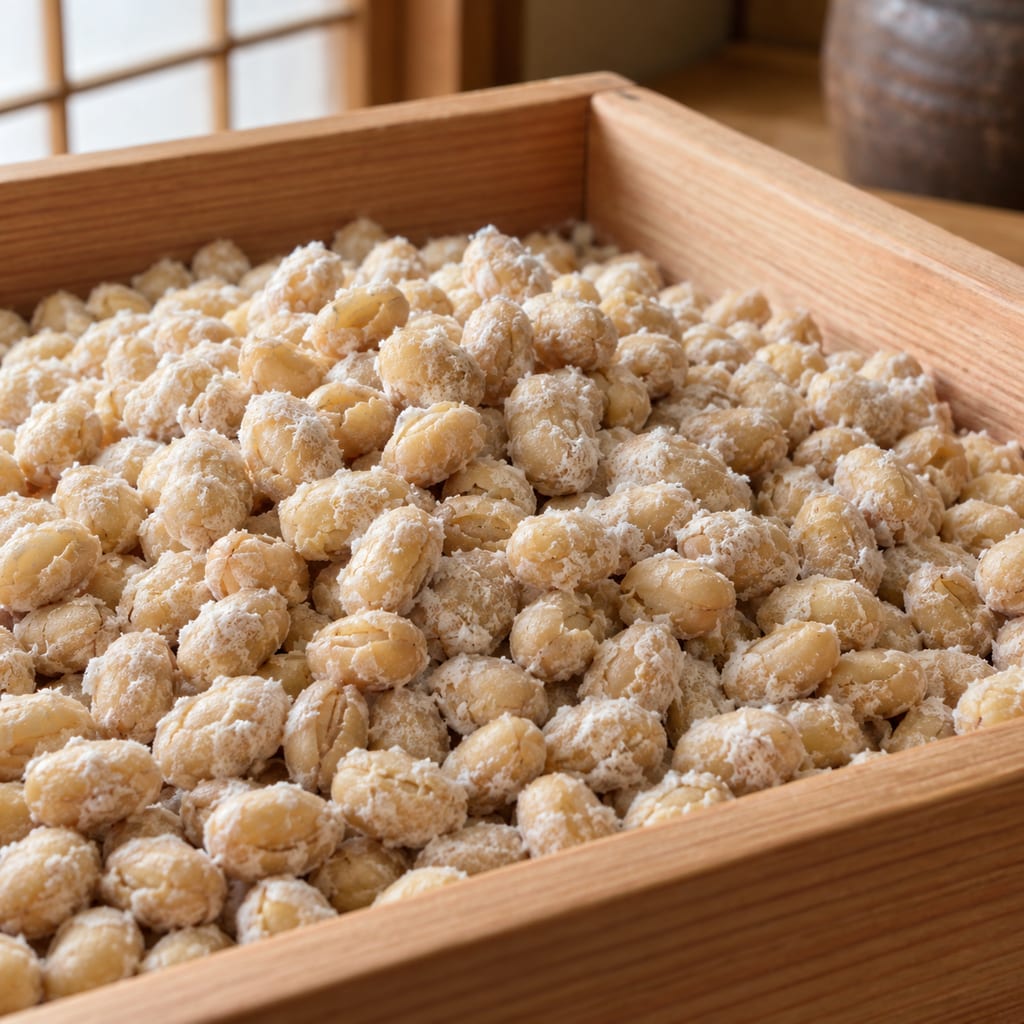
Japanese soybean koji: steamed soybeans, loose or formed into balls, grown over with Aspergillus mould to make the enzymes for mame-miso, tamari and regional soybean condiments.
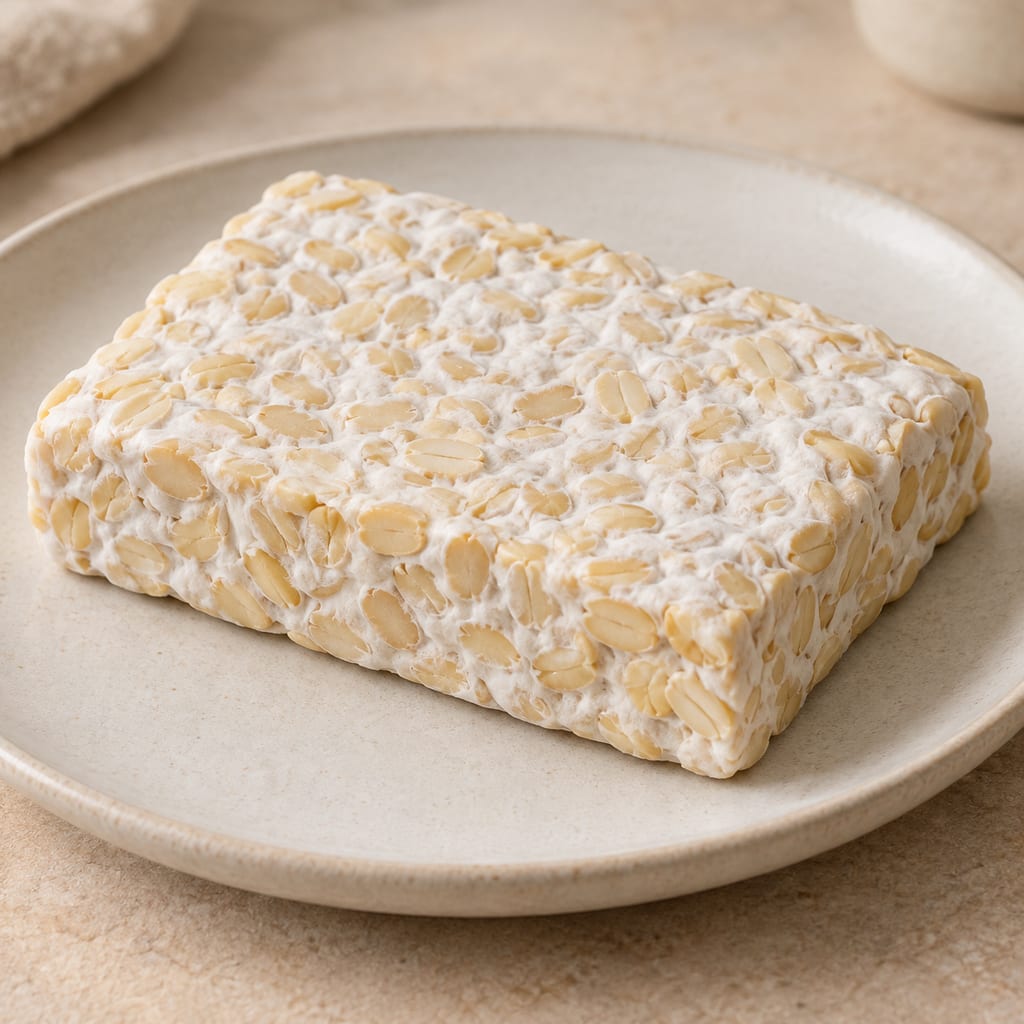
A two-cup soybean batch uses one Cultures for Health tempeh starter packet and vinegar. The supplier describes dehulling, a thin vented layer, controlled early incubation and attention to self-heating; it is not a validated home process.
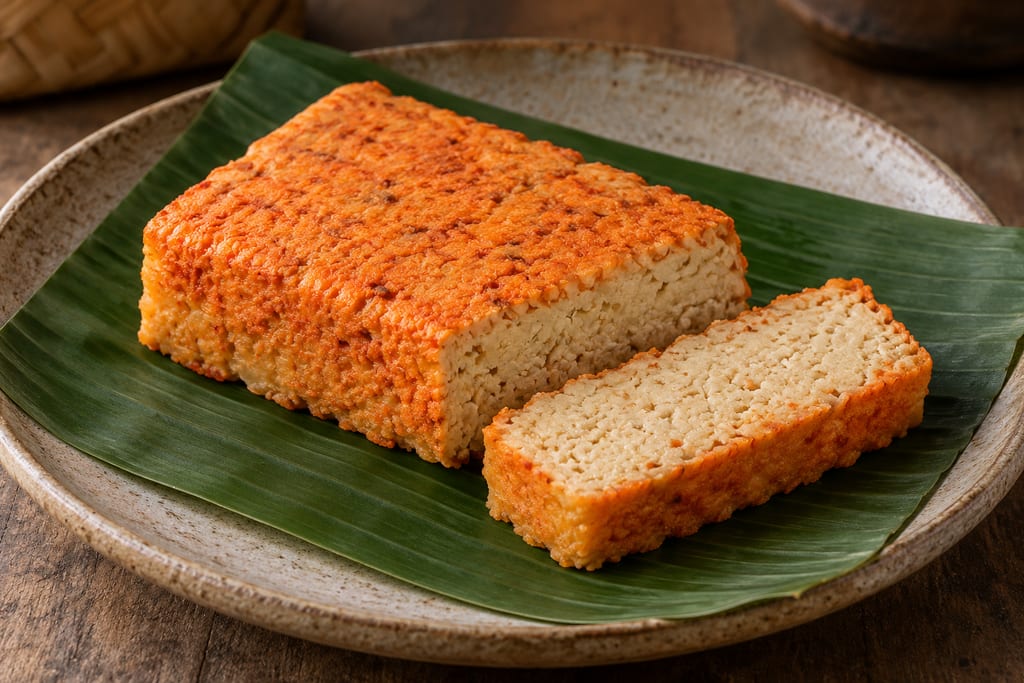
Red oncom is a West Javanese cake fermented from pressed soy pulp with a Neurospora starter, a little tapioca starch and vinegar. It is a different food from black oncom, made on another substrate with another mould.
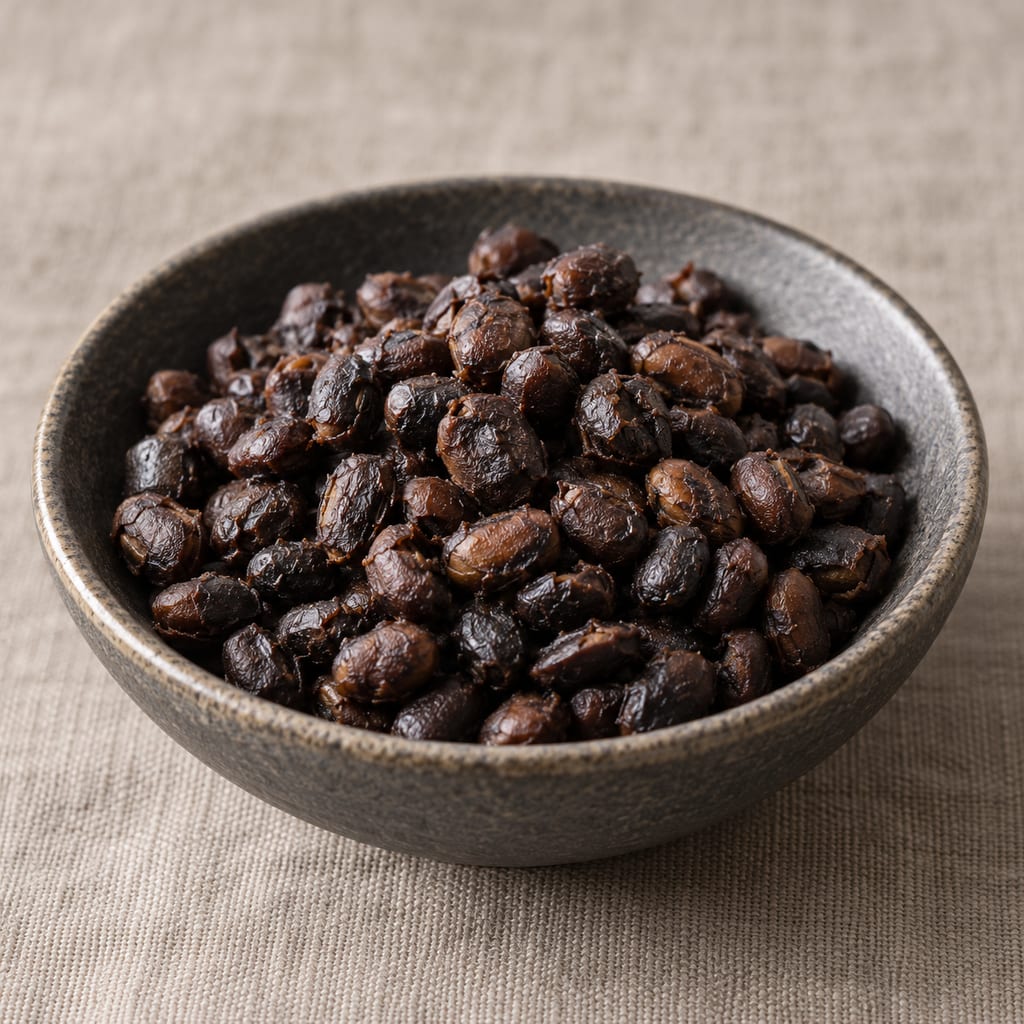
This controlled study protocol makes Aspergillus koji from soybeans and then ferments it with 4% salt. It uses a 150 g jar batch and a defined moisture target; the research method is not a validated home process.
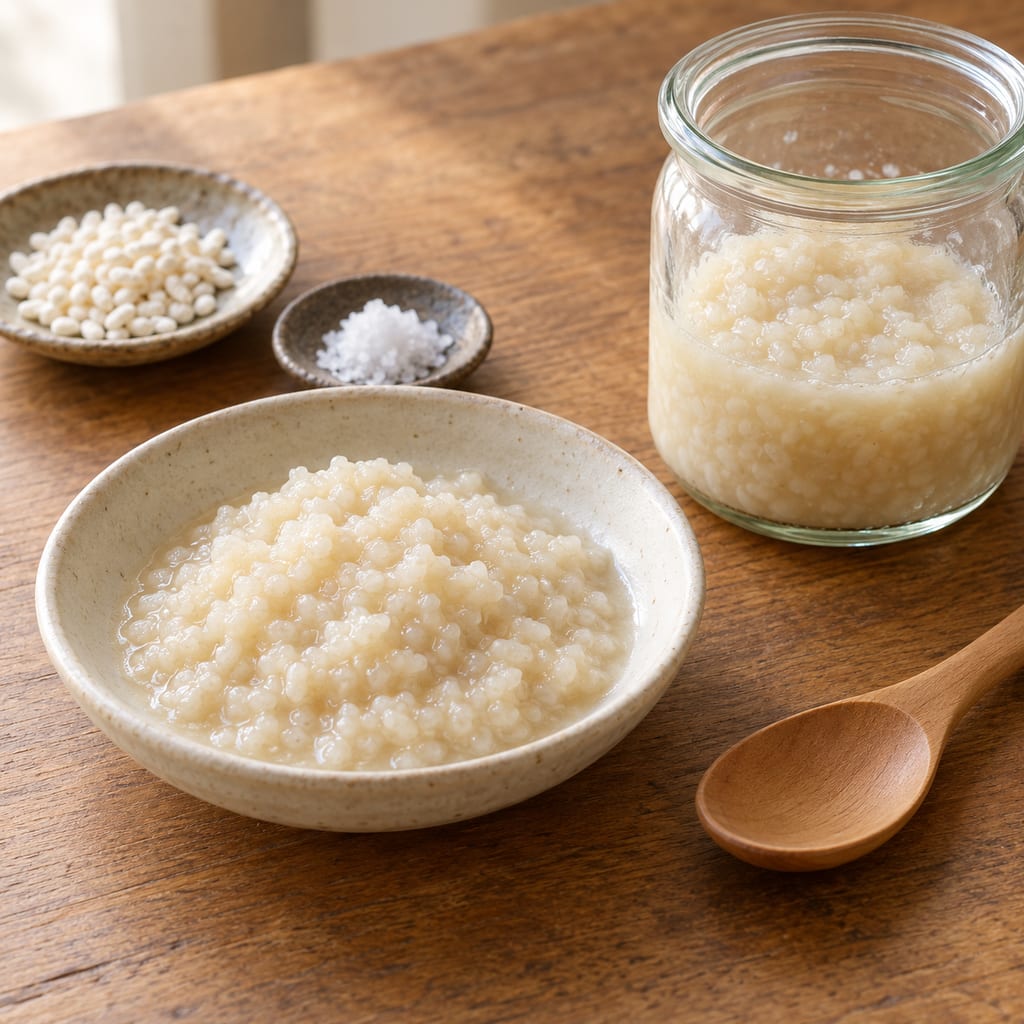
A Japanese seasoning of rice koji, salt and water, left at room temperature until the koji's enzymes and its microbes turn it into a savoury, salty paste for marinades and dressings.