Recipes

1504 records with their sources, across 11 categories.

Filtered to

Recipes

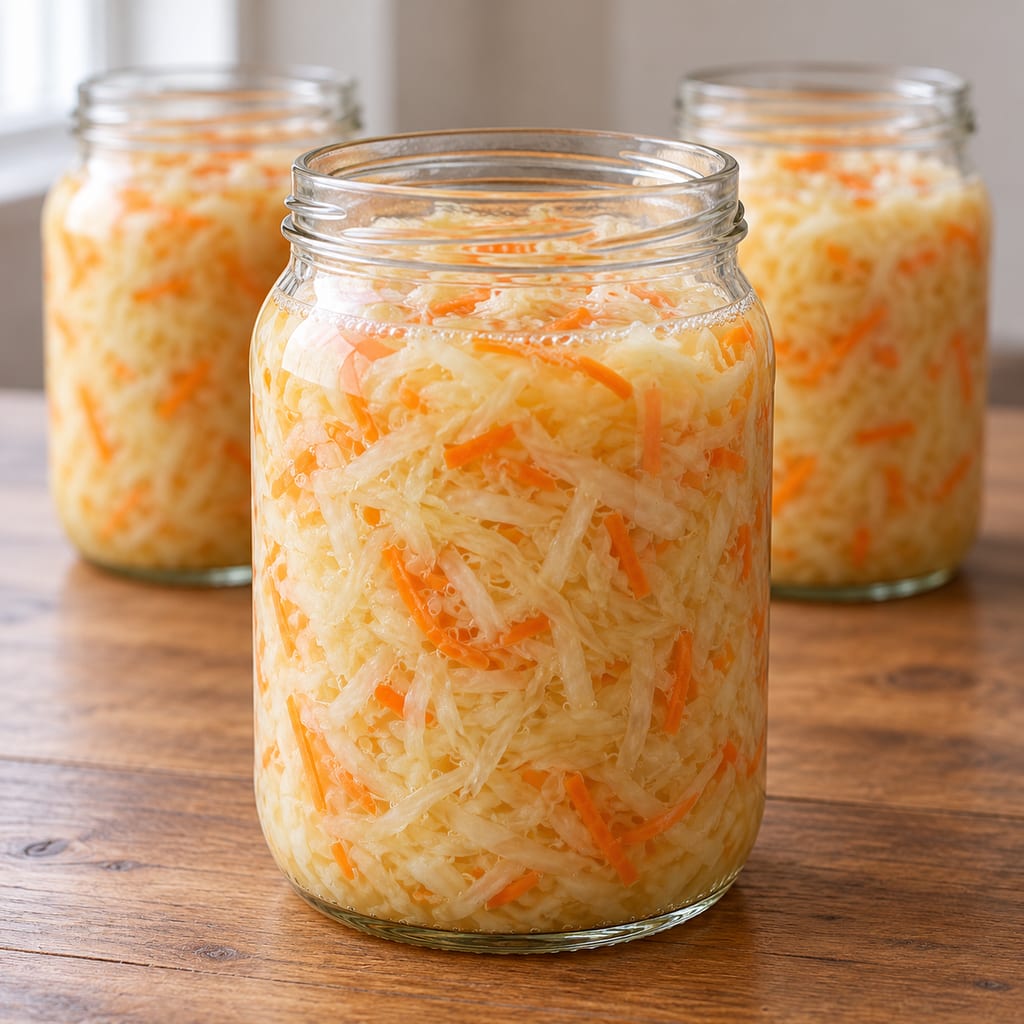
A clear glass jar of shredded cabbage-and-carrot sauerkraut, with two filled jars behind it.
Elevated risk

Jar sauerkraut with carrot

Shredded cabbage and grated carrot are salted to 20 g/kg, rested, packed into three jars and monitored during a creator-reported eight-day fermentation; measured temperature is not given.

Modern method
· Vegetables
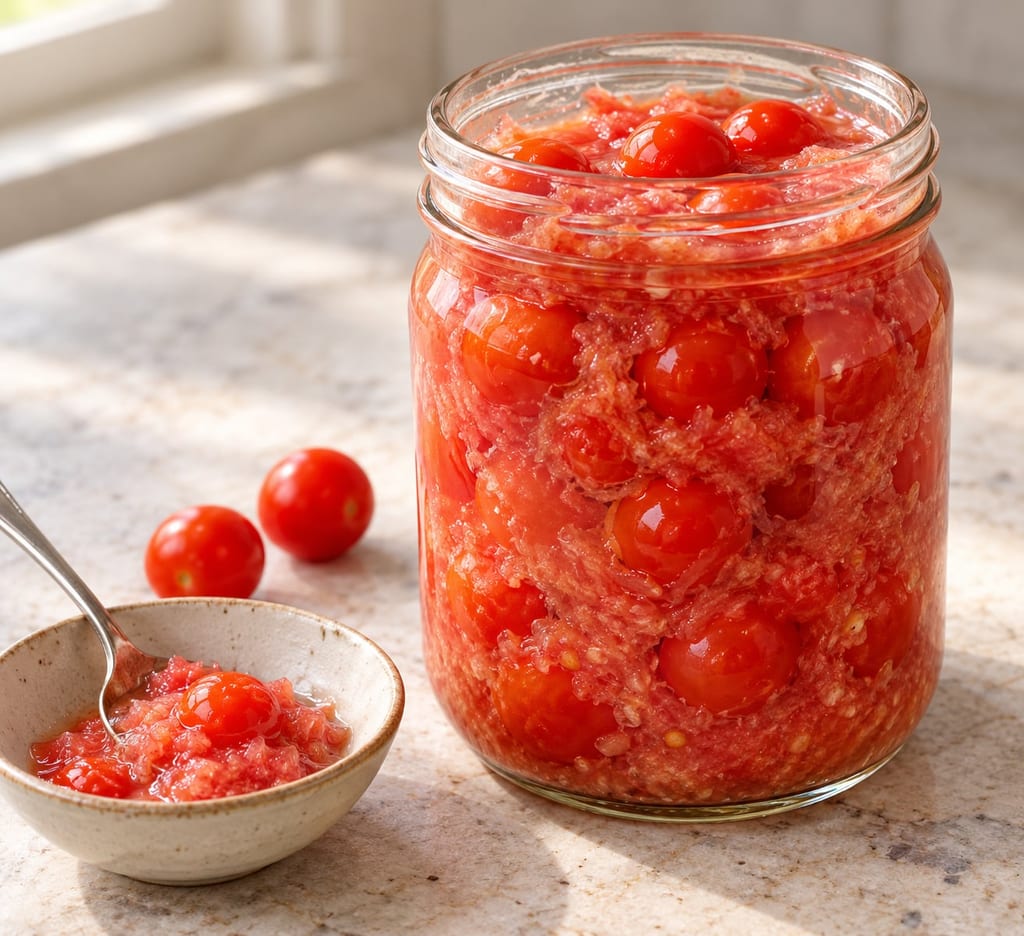
Whole lacto-fermented cherry tomatoes submerged in salted grated tomato pulp in a clear glass jar.

Lacto-fermented cherry tomatoes

Cherry tomatoes sit beneath a salted grated-tomato layer for a five-to-seven-day room-temperature fermentation.
Modern method
· Vegetables
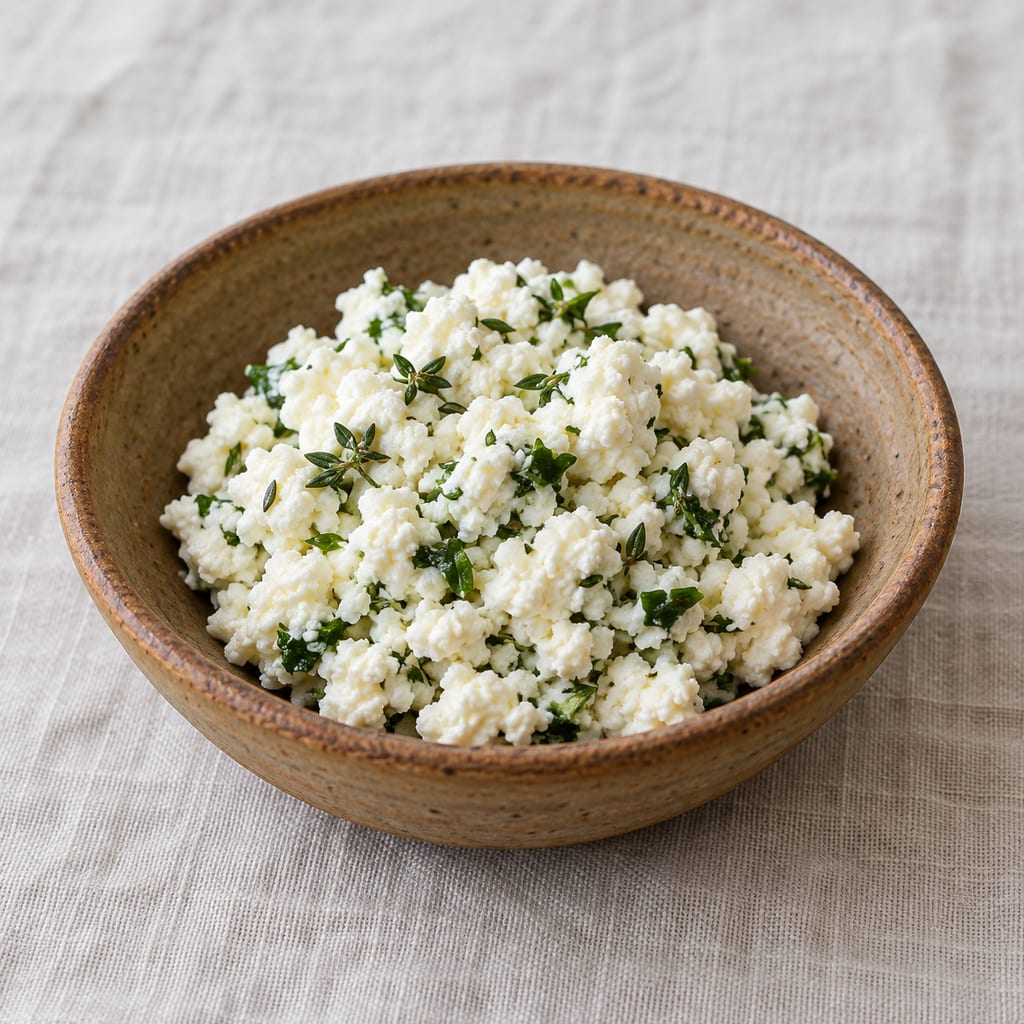
Illustrative modern fresh cultured-milk curd with chopped herbs, inspired by the Ribe museum adaptation; not a recovered Viking-age cheese or skyr.

Viking Age cheese and curds

Soft fresh curd made by draining whey from milk already thickened by bacterial acidification, the simplest point in a northern dairy tradition that also produced skyr, ymer and whey itself.
Iceland · Modern adaptation
· Dairy
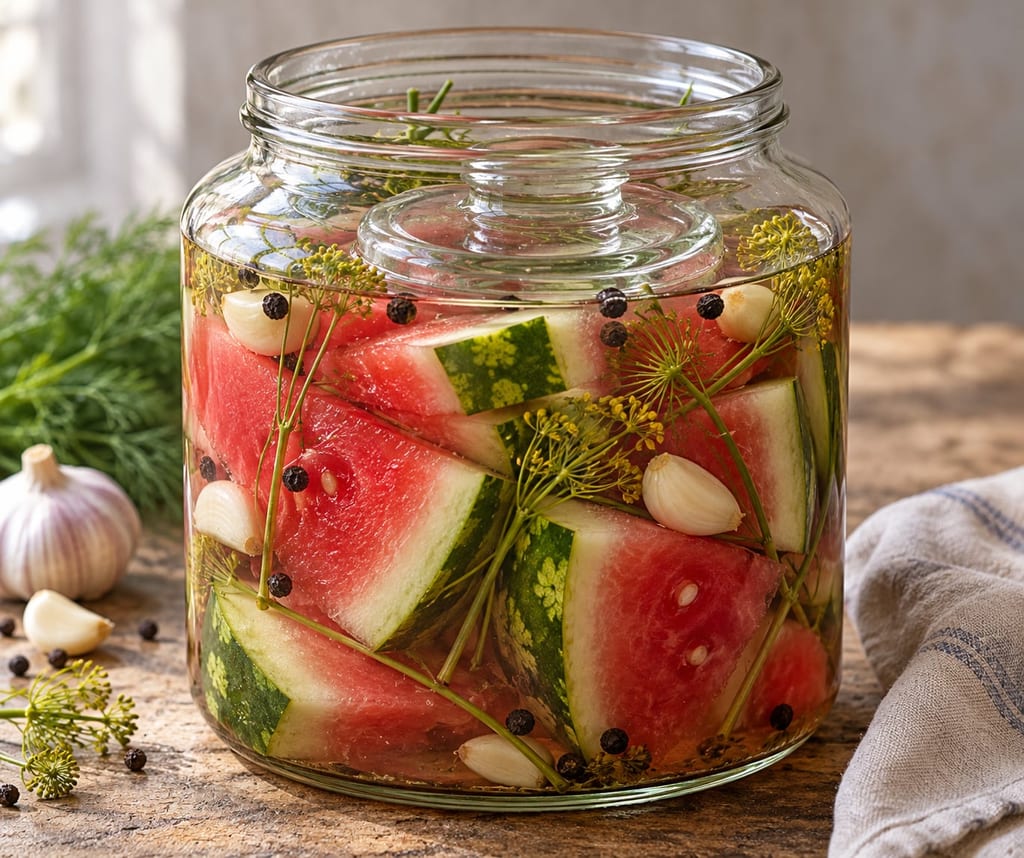
Watermelon wedges with rind, garlic, peppercorns and dill submerged in pale brine in a glass crock.

Kislyi arbuz (fermented watermelon)

Watermelon pieces with rind ferment in a dill, garlic and pepper brine in a family preparation linked to Kishinev, Moldova.
Kishinev, Moldova · Traditional method
· Fruit
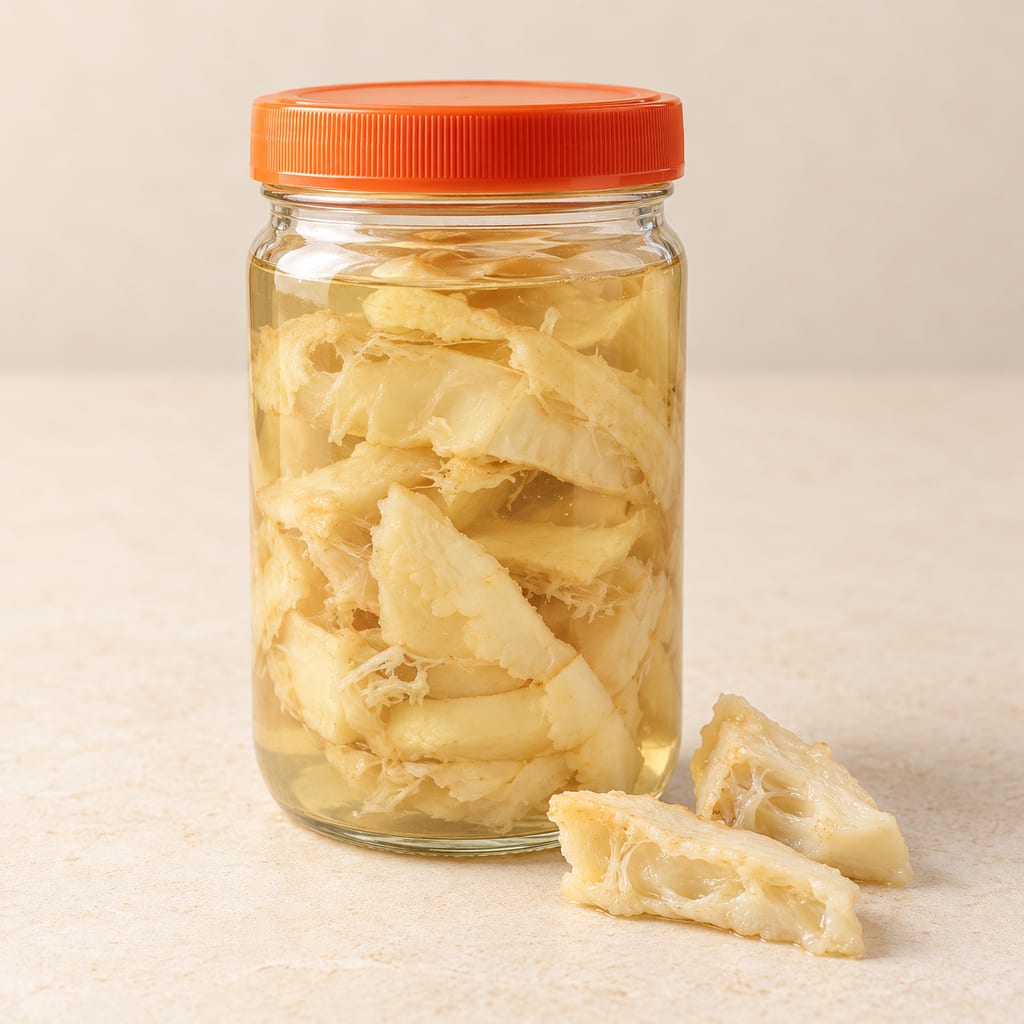
Jar of pale cempedak inner-rind pieces preserved in liquid, with two pieces outside; editorial image, not a photograph of a specific batch.

Mandai (fermented cempedak rind)

Cempedak inner rind is cut, salted and submerged in water for a short spontaneous fermentation used in Kalimantan home cooking.
Kalimantan, Indonesia · Modern method
· Fruit
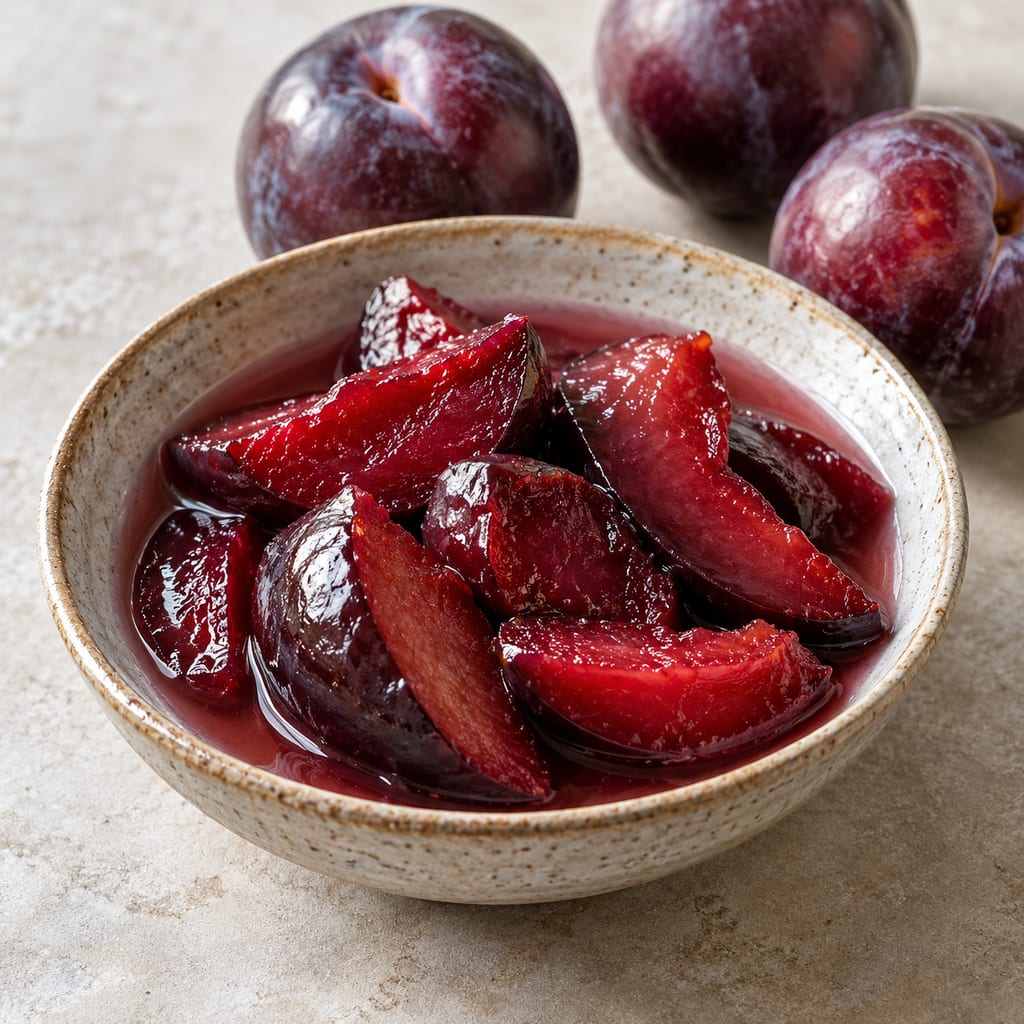
A shallow ceramic bowl of glossy, softened deep-purple plum wedges in their natural ruby brine, representing finished salt-fermented plums.

Salt-fermented plums

Pitted ripe plums release their own juice under a 2% salt cure, then ferment while weighted below the liquid.
Modern method
· Fruit
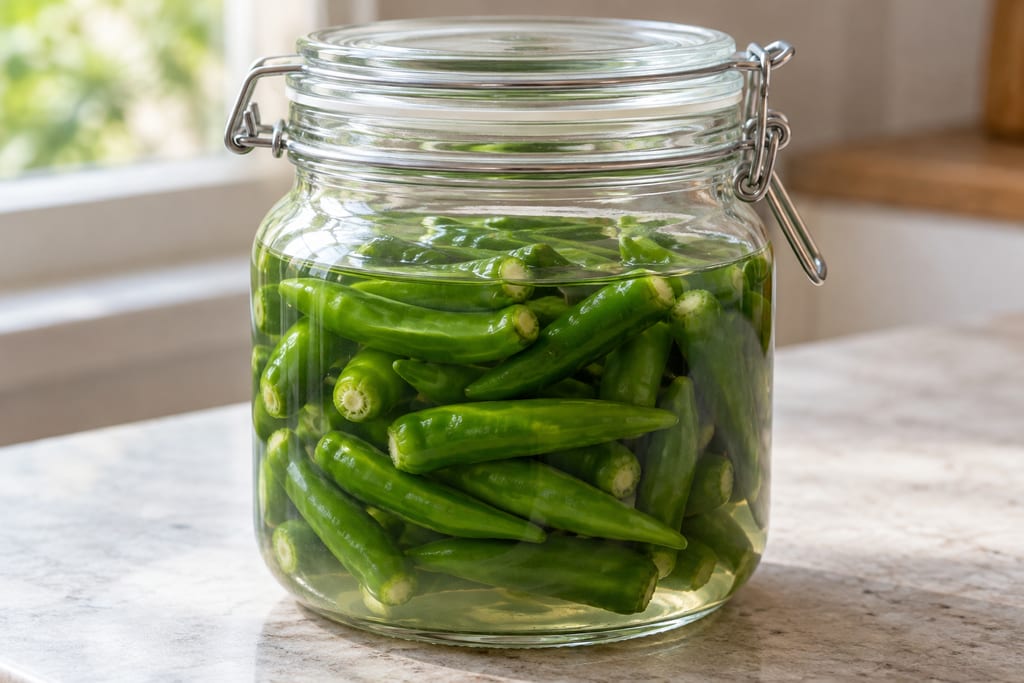
Finished salt-brined green chiles, pao-lajiao style: whole green peppers submerged in clear brine in a glass jar.

Salt-brined green chiles, pao-lajiao style

Whole green chiles are blanched briefly, then fermented in 3% salt brine with sake in a modern Japanese presentation of a wider Asian preparation.
China · Modern method
· Vegetables
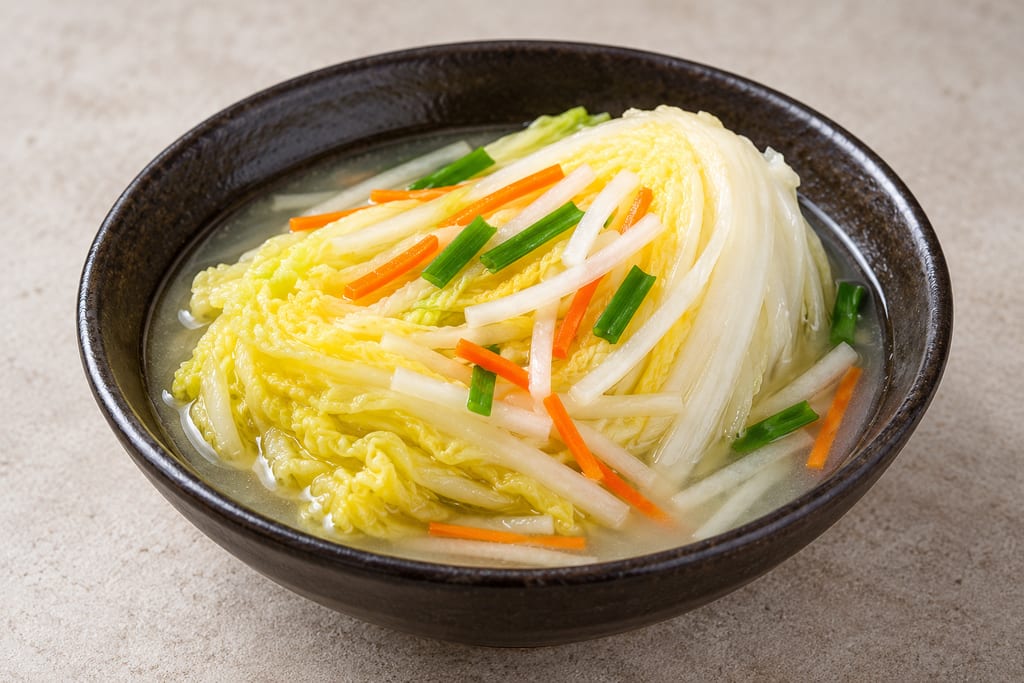
Finished baek-kimchi cabbage with radish, carrot and green onion in pale brine.

Baek-kimchi (white napa-cabbage kimchi)

Napa cabbage is brined and filled with pear, radish, alliums, chives and fruit; this Korean kimchi omits red pepper flakes.
Korea · Traditional method
· Vegetables
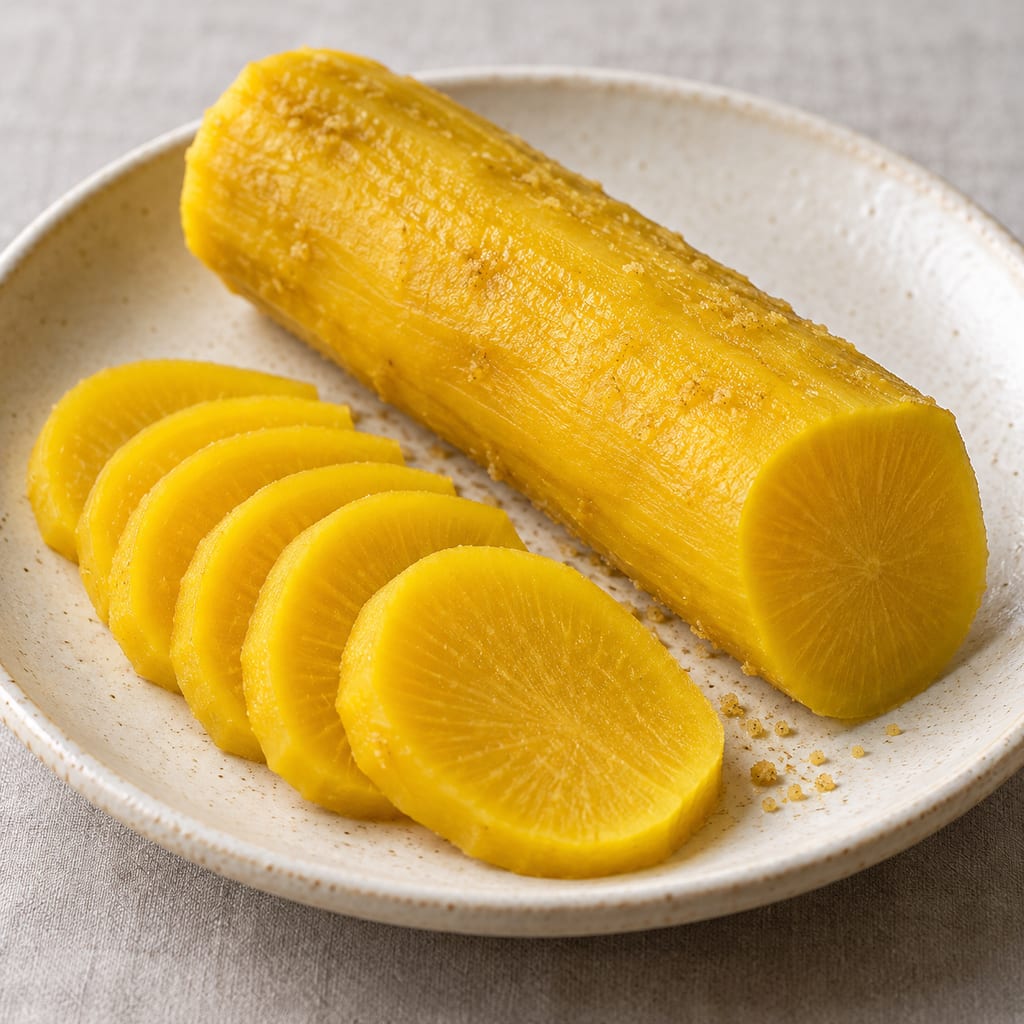
Illustrative finished turmeric-seasoned takuan-zuke, with a firm yellow rice-bran-pickled daikon and several thin slices on a plain ceramic plate.

Takuan (rice-bran fermented daikon)

Daikon is dried until pliable, then layered in seasoned rice bran and pressed for a long fermentation.
Japan · Modern method
· Vegetables
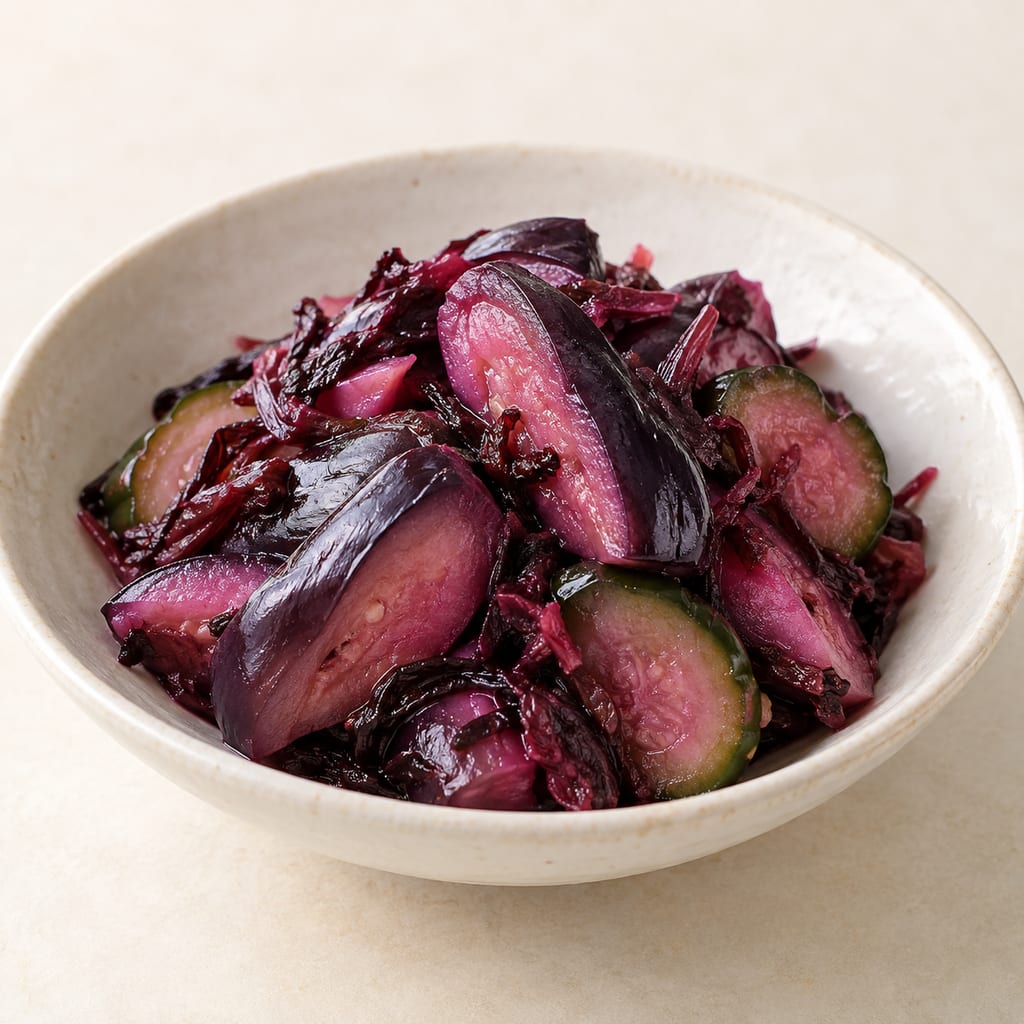
Traditional Kyoto shibazuke: purple perilla-stained eggplant pickle with cucumber in a plain ceramic bowl.

Shibazuke (Kyoto eggplant and perilla pickle)

Eggplant and perilla are layered with cucumber, myoga and chiles, pressed with salt and left to mature into Kyoto’s sour purple pickle.
Kyoto City, Japan · Traditional method
· Vegetables
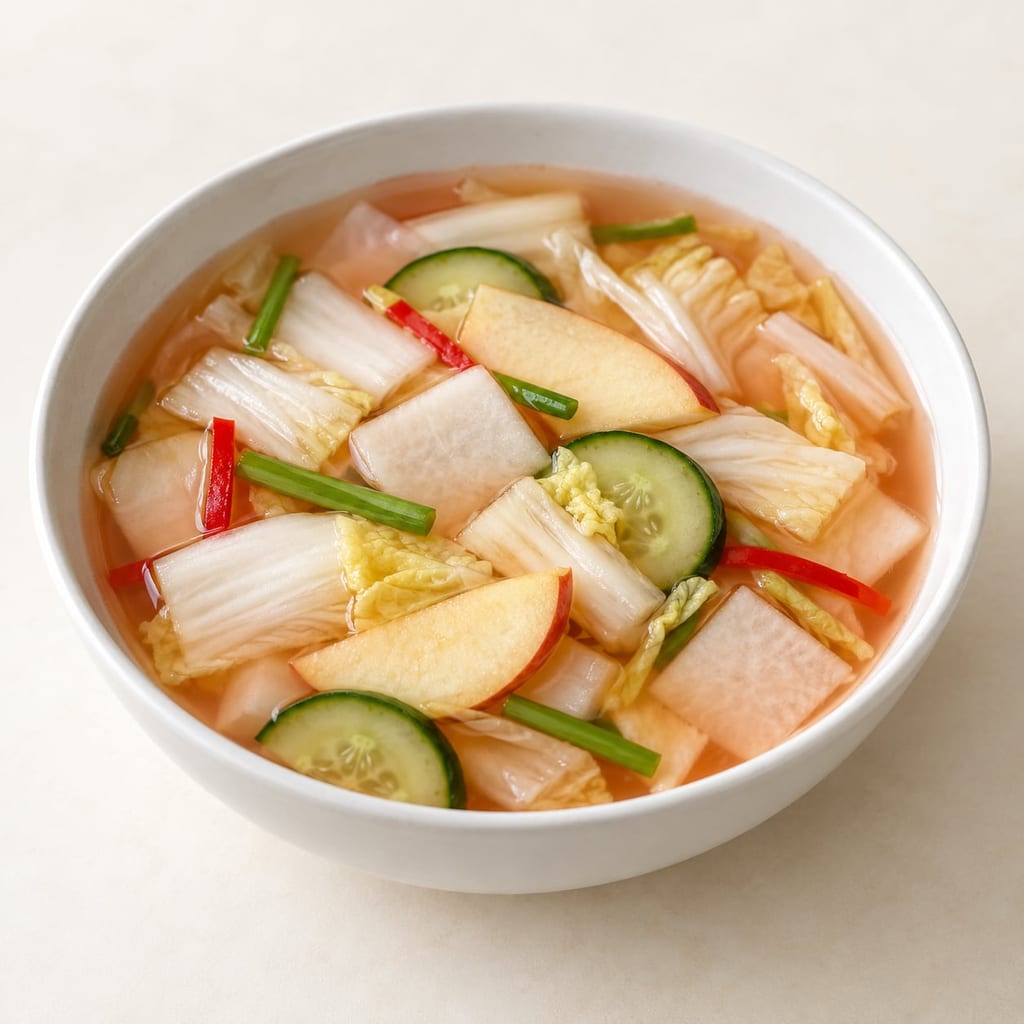
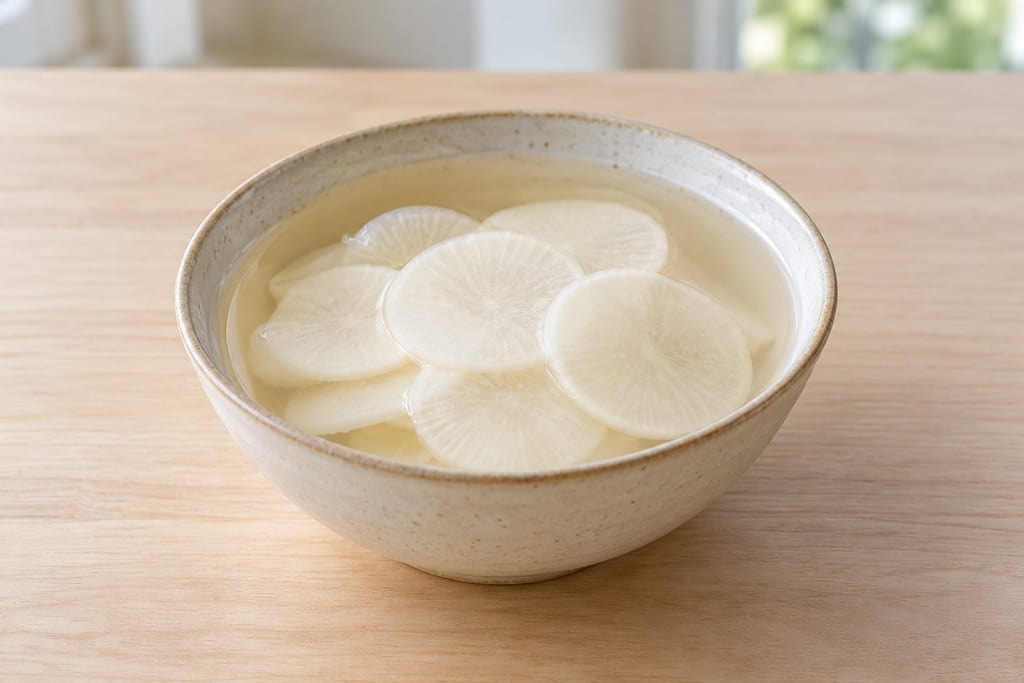
Illustrative serving of quick Dongchimi: thin Korean radish discs in chilled, pale apple-onion broth. Not a photograph of a particular fermentation batch or a validated safety endpoint.

Quick dongchimi with apple broth

A modern broth-forward radish-water kimchi cooks apples and onion into the fermentation liquid.
Korea · Modern method
· Vegetables
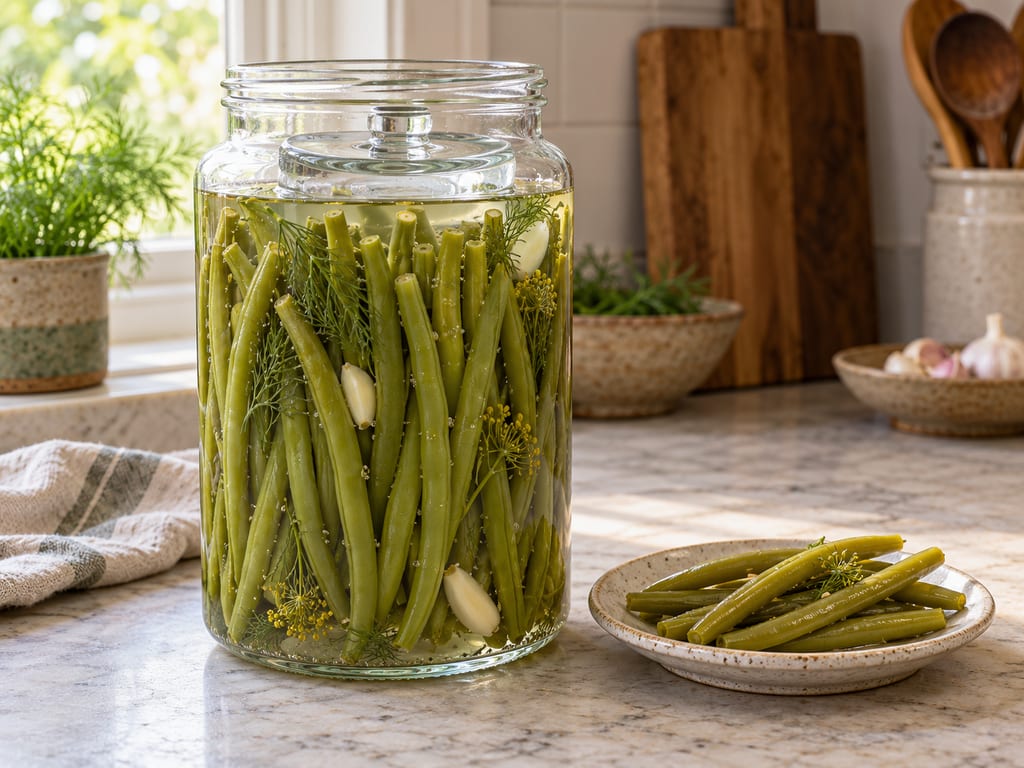
Whole lacto-fermented green beans submerged in a clear glass jar of pale brine, with optional dill and garlic.
Elevated risk

Lacto-fermented green beans

Whole green beans fermented in a salt brine, with dill and garlic as optional seasonings, staying crisp as they sour.
Modern method
· Vegetables
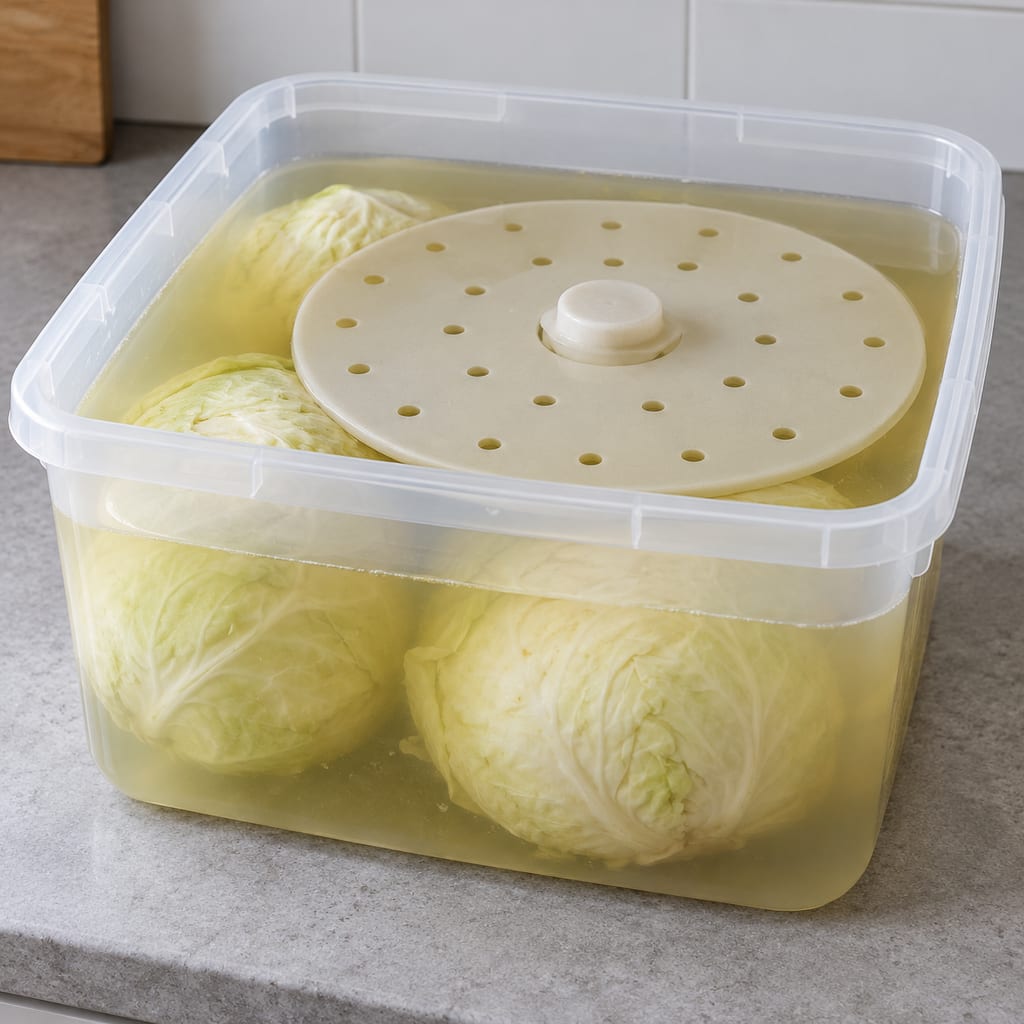
Whole cabbage heads submerged in plain brine under a fitted weight in a clean fermenting tub; an illustrative depiction of the FAO method.

Whole-head brined sauerkraut

Cored cabbage heads ferment intact or halved under measured brine, with repeated surface checks over six weeks.
Modern method
· Vegetables
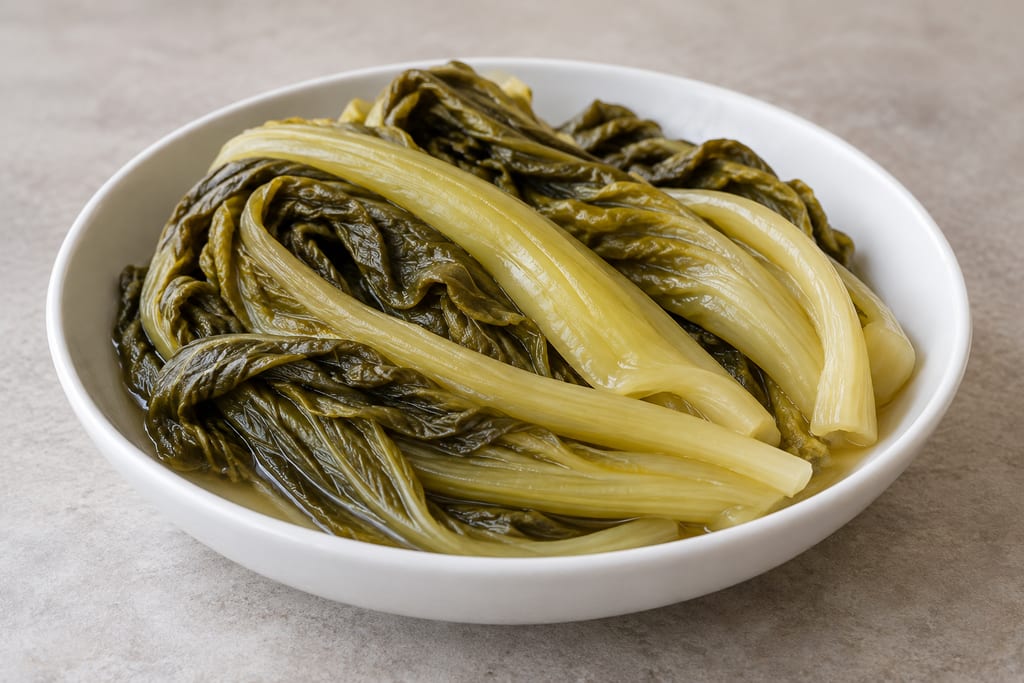
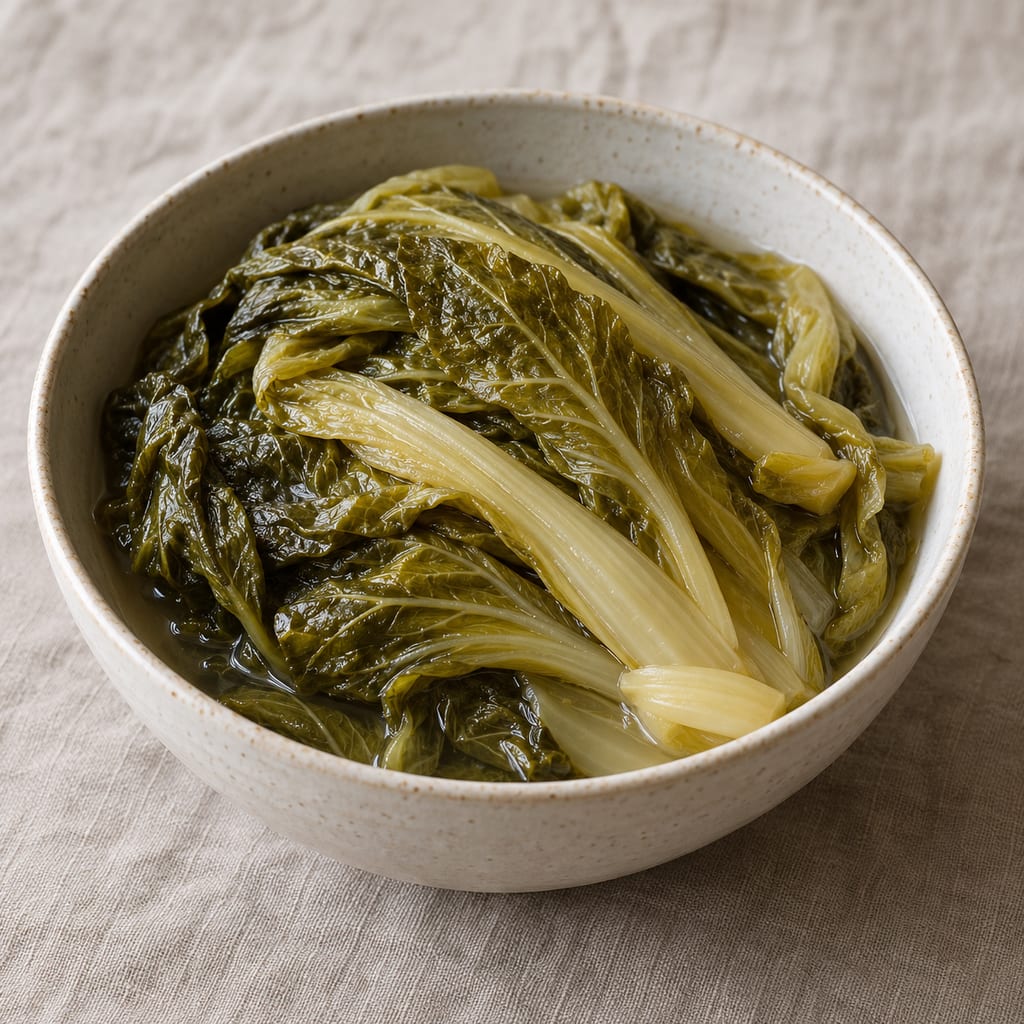
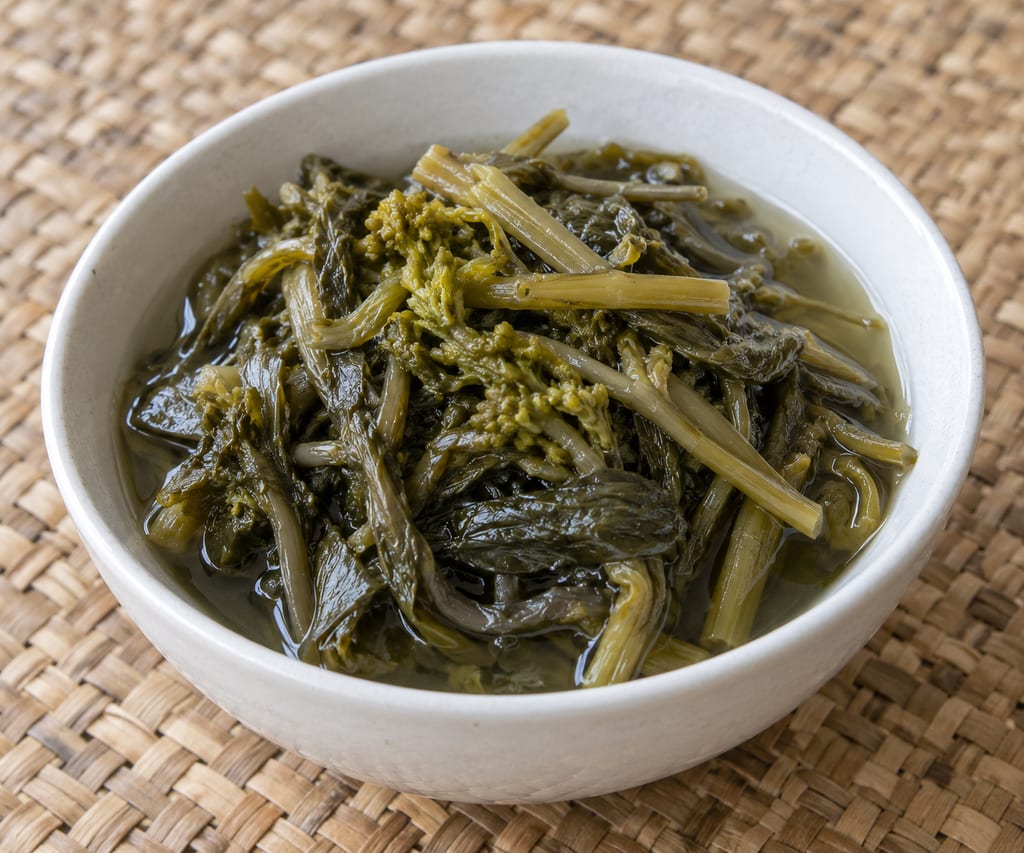
Indonesian sayur asin: olive-green fermented mustard leaves and intact pale stems in a shallow white bowl.

Sayur asin

Indonesian salted mustard cabbage, wilted, rubbed with 2.5 to 5% salt by weight, and fermented covered in boiled-rice liquid.
Indonesia · Traditional method
· Vegetables
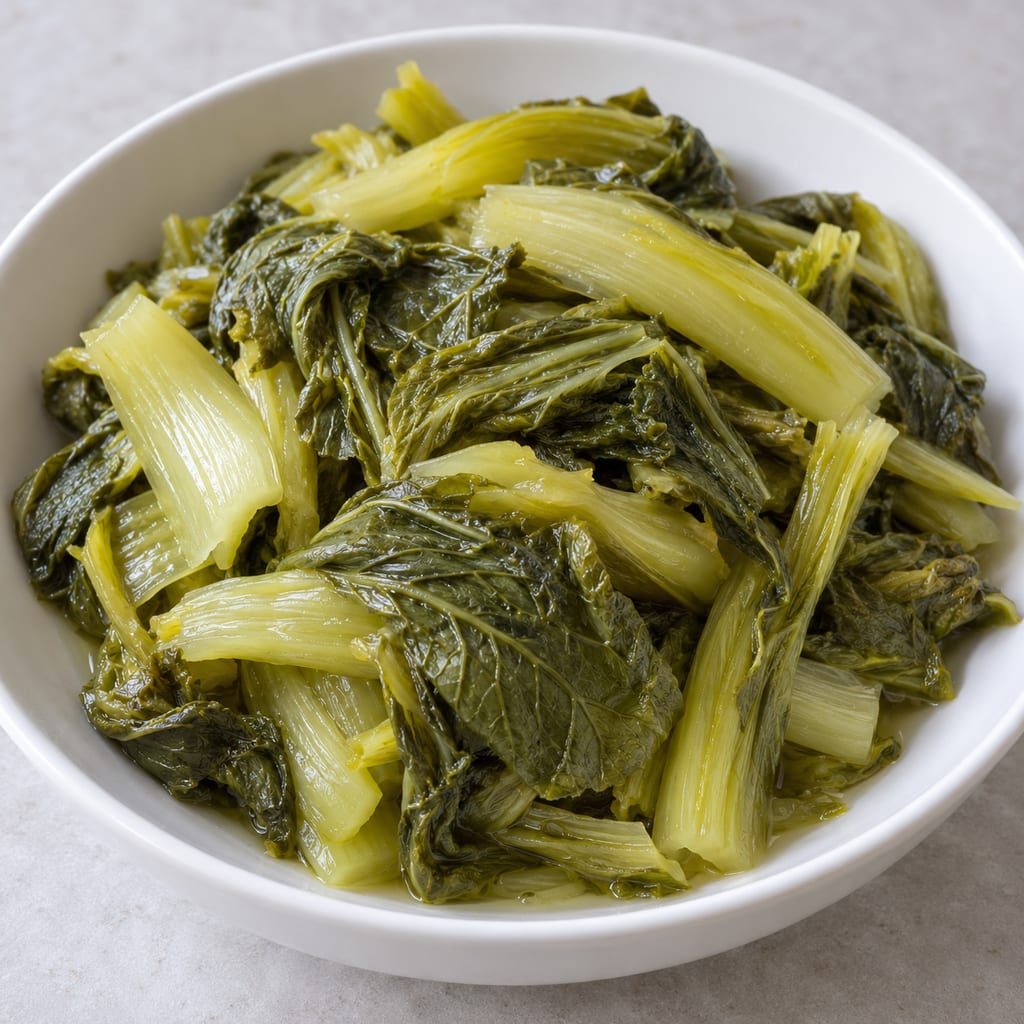
A small white bowl of dark olive-green pickled spiderflower greens in their brine.

Pak-sian-dong

Young spider-flower greens packed with salt and cooked rice and left to sour for a few days; a Thai leafy-vegetable ferment eaten as a sharp side dish.
Thailand · Traditional method
· Vegetables
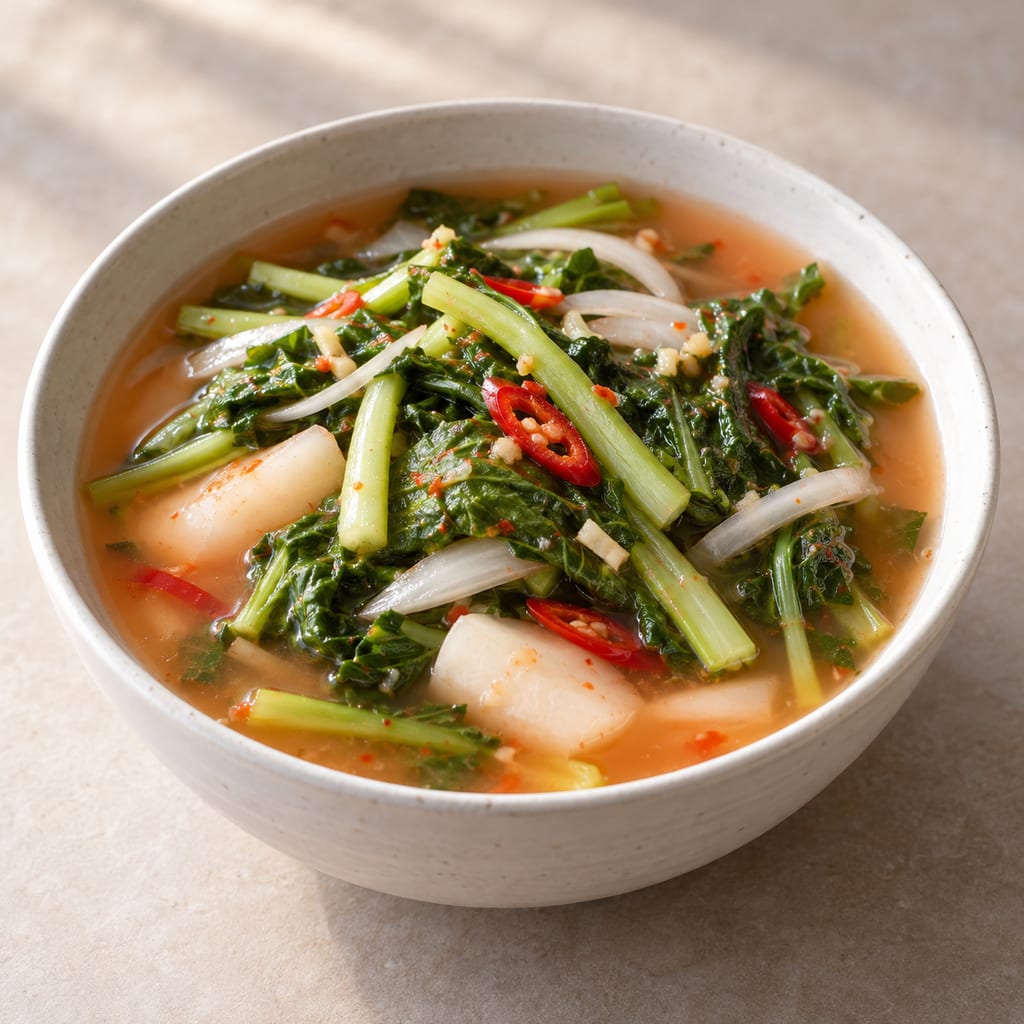
Illustrative finished pak-gard-dong: wilted, fermented mustard leaves from the documented salt-then-sugar method. This image does not establish batch safety or a preservation endpoint.

Pak-gard-dong (salt-then-sugar method)

Pak-gard-dong is a Thai mustard-green pickle salted first and drained, then fermented with sugar added to the drained greens.
Thailand · Traditional method
· Vegetables
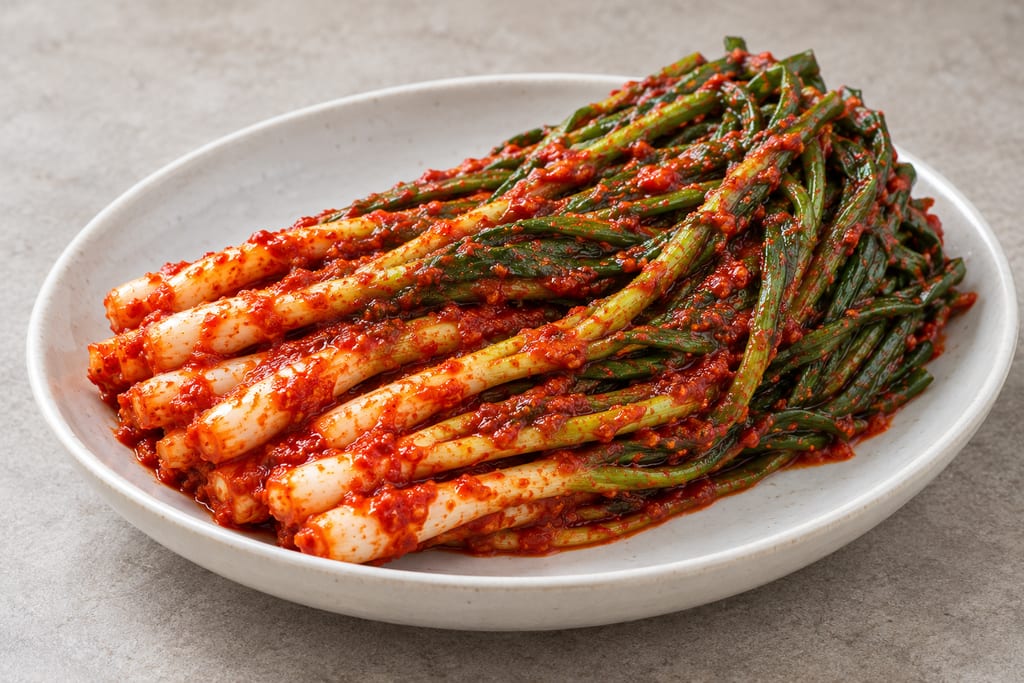
Yeolmu mulkimchi, young summer radish greens in a pale, chili-seasoned broth.

Yeolmu mulkimchi

Summer water kimchi of young radish, seasoned with fish sauce and chiles, brined in salted water with cooked flour.
Korea · Traditional method
· Vegetables
Illustrative serving of pa-kimchi: whole green onions coated in red chilli seasoning.

Pa-kimchi

Pa-kimchi is a Korean kimchi of whole green onions salted, dressed with chilli and fish sauce, and fermented until pungent and sour.

South Jeolla, Korea · Traditional method
· Vegetables

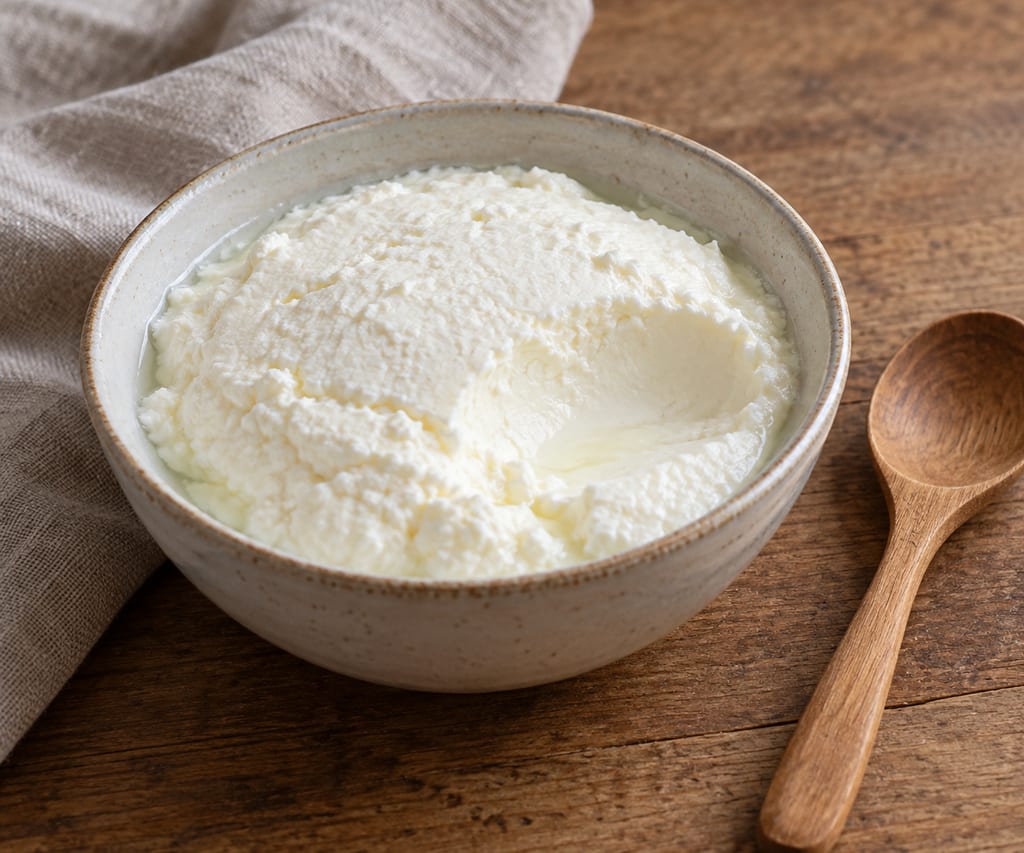
OSU measured kimchi

Kimchi of salted napa cabbage and daikon with garlic, green onion and red pepper, kept at room temperature one to four days, then refrigerated.
Korea · Traditional method
· Vegetables
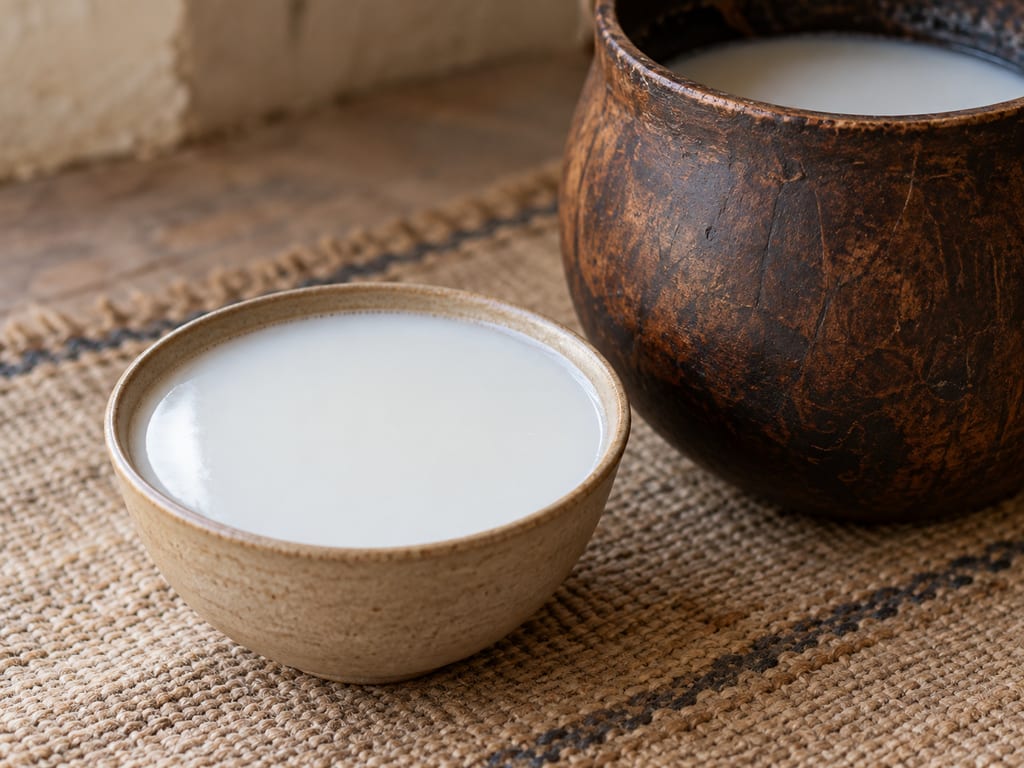
A plain, softly set bowl of tarag, Mongolian cultured milk, shown without toppings.

Tarag (Mongolian yoghurt)

Tarag is a traditional Mongolian fermented milk made by culturing heated cow, yak, sheep or goat milk with a retained starter into a sour, softly set or drinkable yoghurt.
Mongolia · Traditional method
· Dairy
An illustrative serving of thin white Suusac beside an understated darkened vessel; not a documentary image of a specific historical batch.
High risk

Suusac (Somali fermented camel milk)

Suusac is a traditional fermented camel-milk drink of Somali pastoral communities in Kenya and Somalia, soured spontaneously in smoke-treated vessels into a thin, acid, smoky milk.
Isiolo District · Traditional method
· Dairy
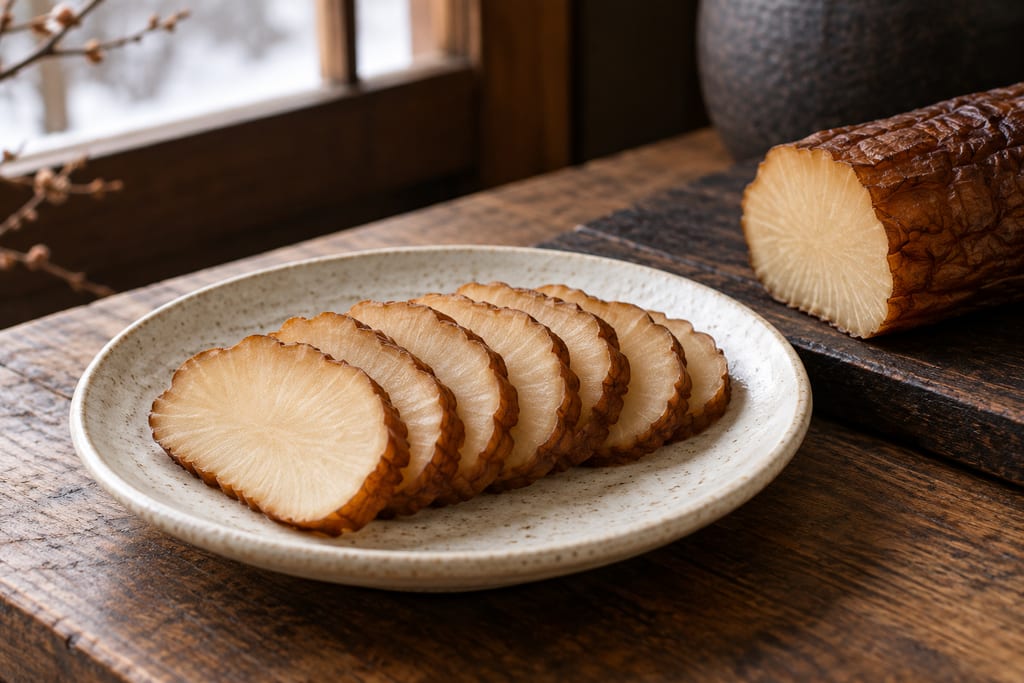
Thin slices of amber-brown smoked daikon pickle on a ceramic plate, with a whole iburigakko behind.

Iburigakko

Iburigakko is Akita pickled daikon dried with smoke before it is fermented in rice bran.
Akita Prefecture · Traditional method
Vegetables
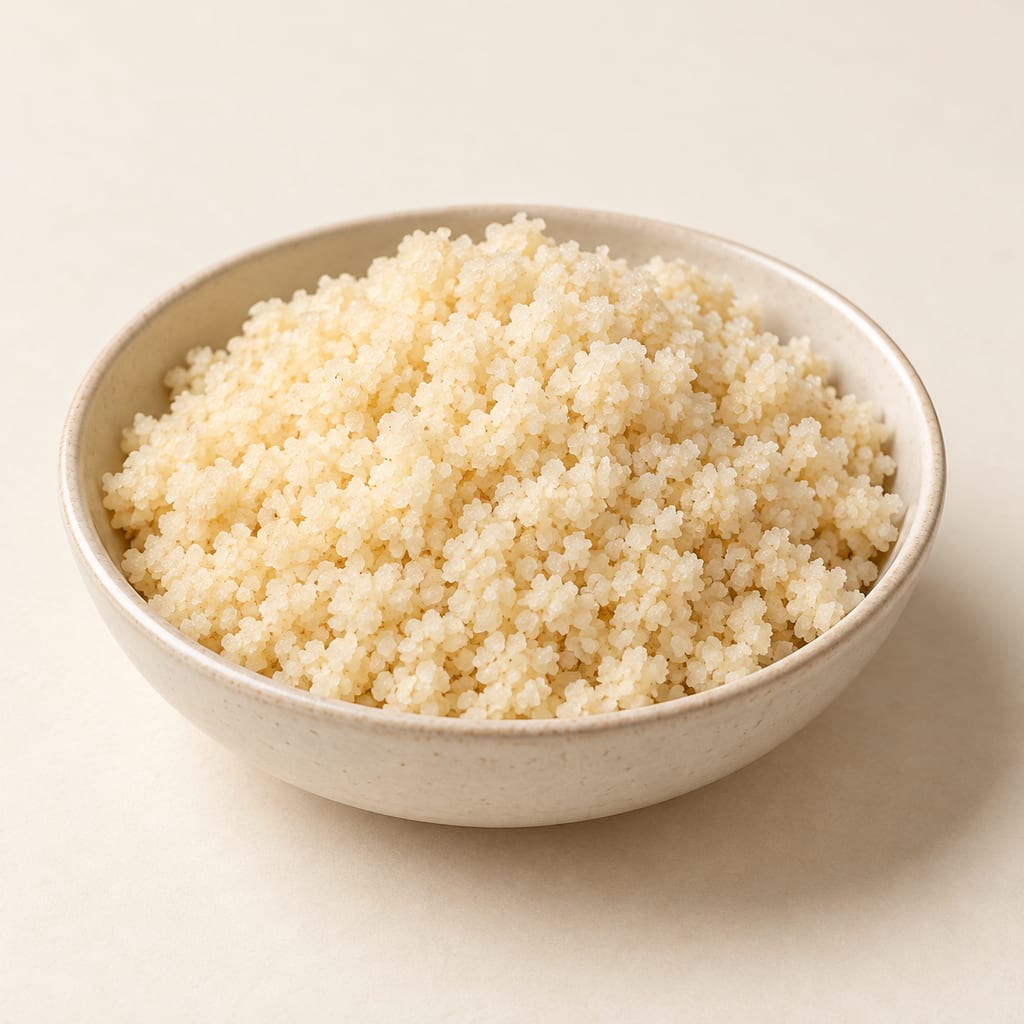
A shallow cream bowl of pale, fluffy steamed Attiéké cassava granules on a warm ivory background.
Elevated risk

Attiéké from fermented cassava pulp

Attiéké is an Ivorian staple of grated cassava fermented with a traditional inoculum, then pressed, sieved, granulated, dried and steamed into fine couscous-like grains.
Côte d’Ivoire · Modern method
· Grains and starches
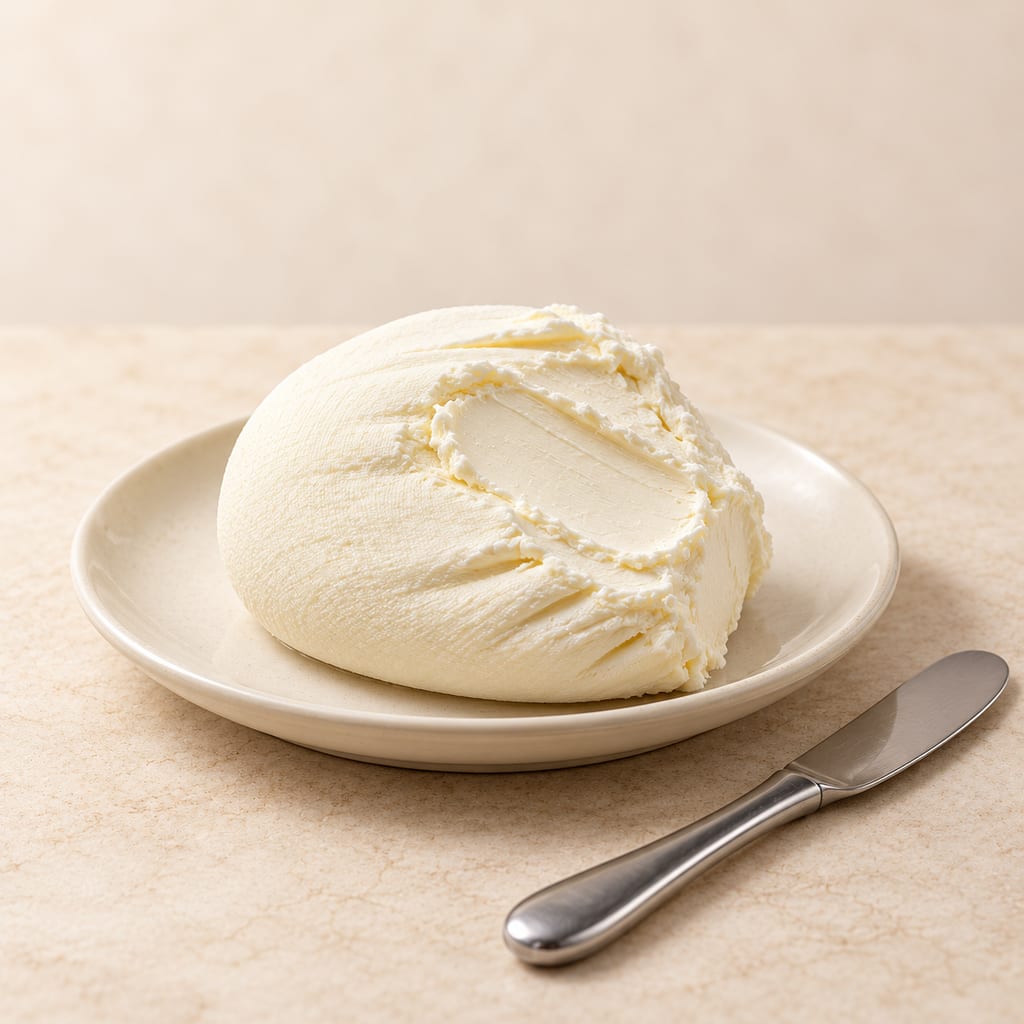
Plain fresh cream cheese on an ivory plate, with a smooth scrape and a separate butter knife.

Cream cheese

A fresh cultured-cream spread, set gently and drained in muslin in the refrigerator. This home method uses light cream and a small amount of cultured buttermilk.

Canada · Modern method
· Dairy