













































Recipes

1504 records with their sources, across 11 categories.

Filtered to

Recipes

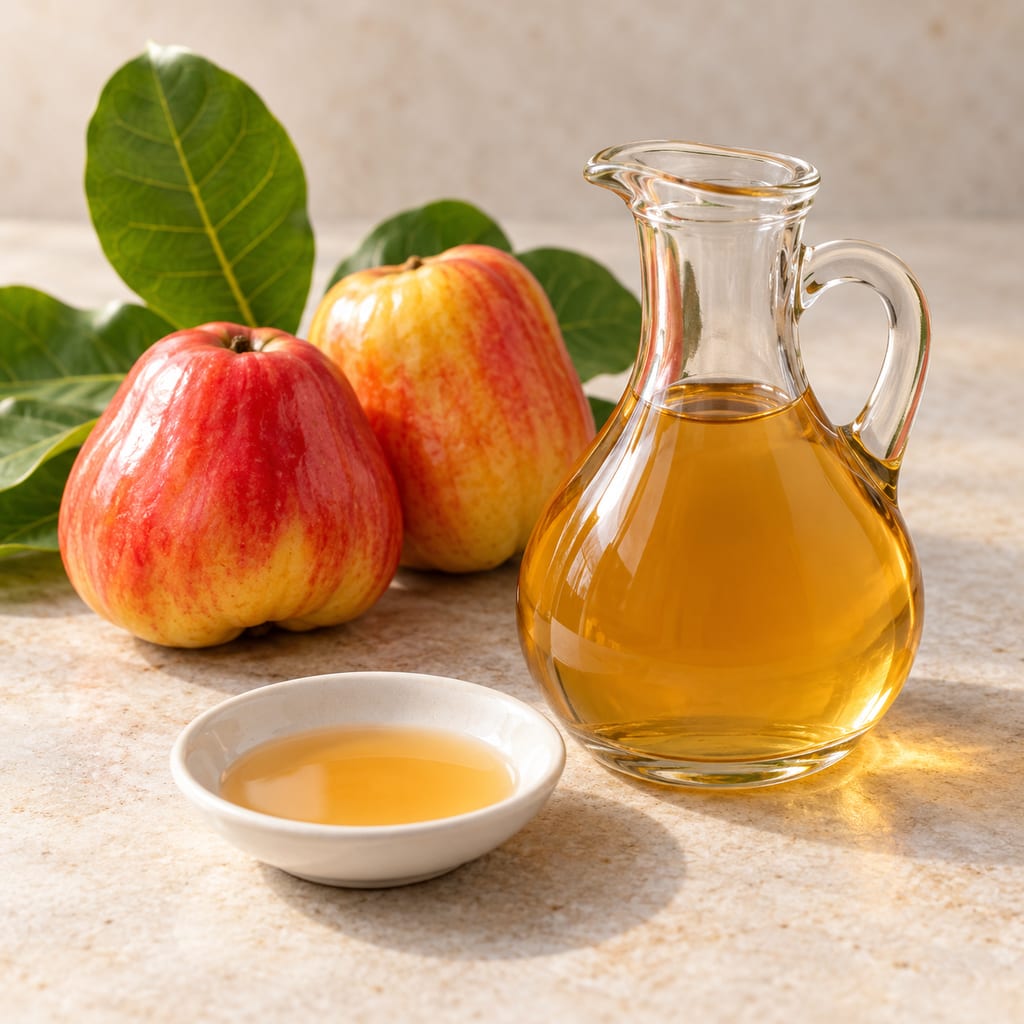
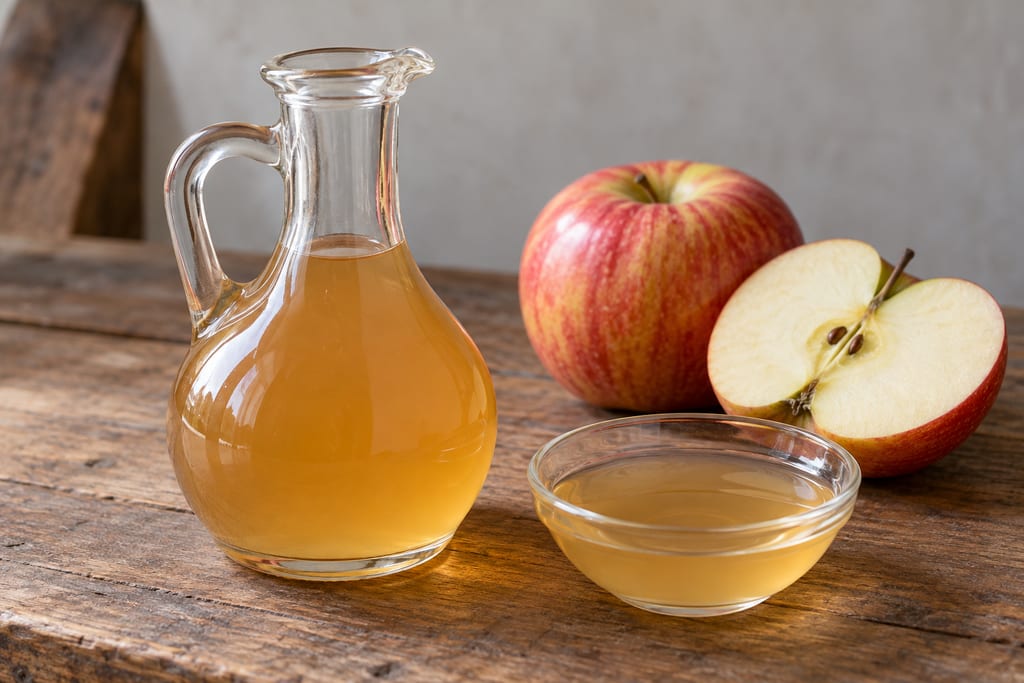
Illustrative pale amber cider vinegar in a glass cruet with a tasting dish and apples; not a measure of acidity or preservation strength.
Elevated risk

Cider vinegar

Cider vinegar is made when acetic-acid bacteria use oxygen to turn the alcohol in dry apple cider into acetic acid. This historical cask method begins with fermented cider and differs from apple-scrap vinegar made with sugar and water.
North Carolina
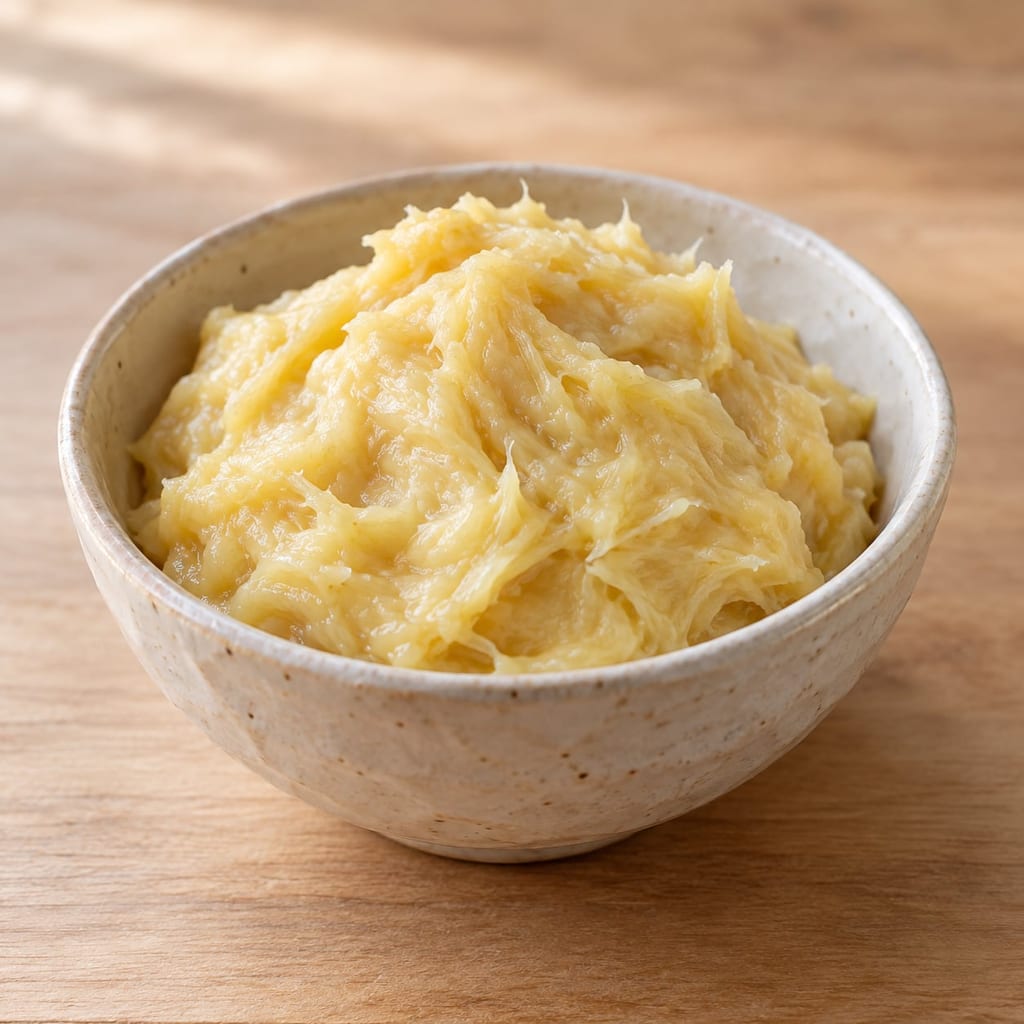
A small ivory ceramic bowl of thick pale yellow tempoyak, with a softly mashed, subtly fibrous texture, representing the fermented durian paste itself.

Tempoyak (fermented durian paste)

Durian flesh is mashed with salt and fermented in a covered container as a Malay condiment or cooking ingredient.

Indonesian Malay communities · Traditional method
· Fruit
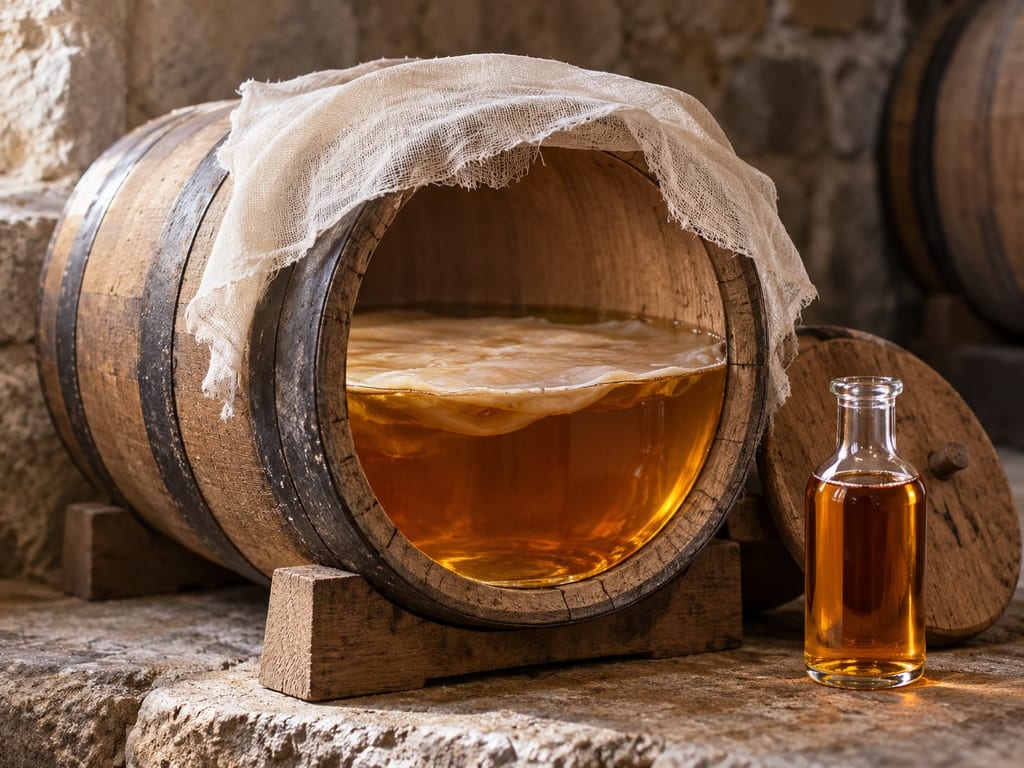
Amber fruit-wine vinegar under a floating vinegar mother in a muslin-covered oak cask; an illustrative view of the traditional Orléans method.

Fruit vinegar (Orleans method)

Fruit wine turned into vinegar by acetic acid bacteria at the surface of a half-filled, air-vented vessel. The Orleans method takes one to three months for a 9% wine.

Orleans, France · Traditional method
· Condiments
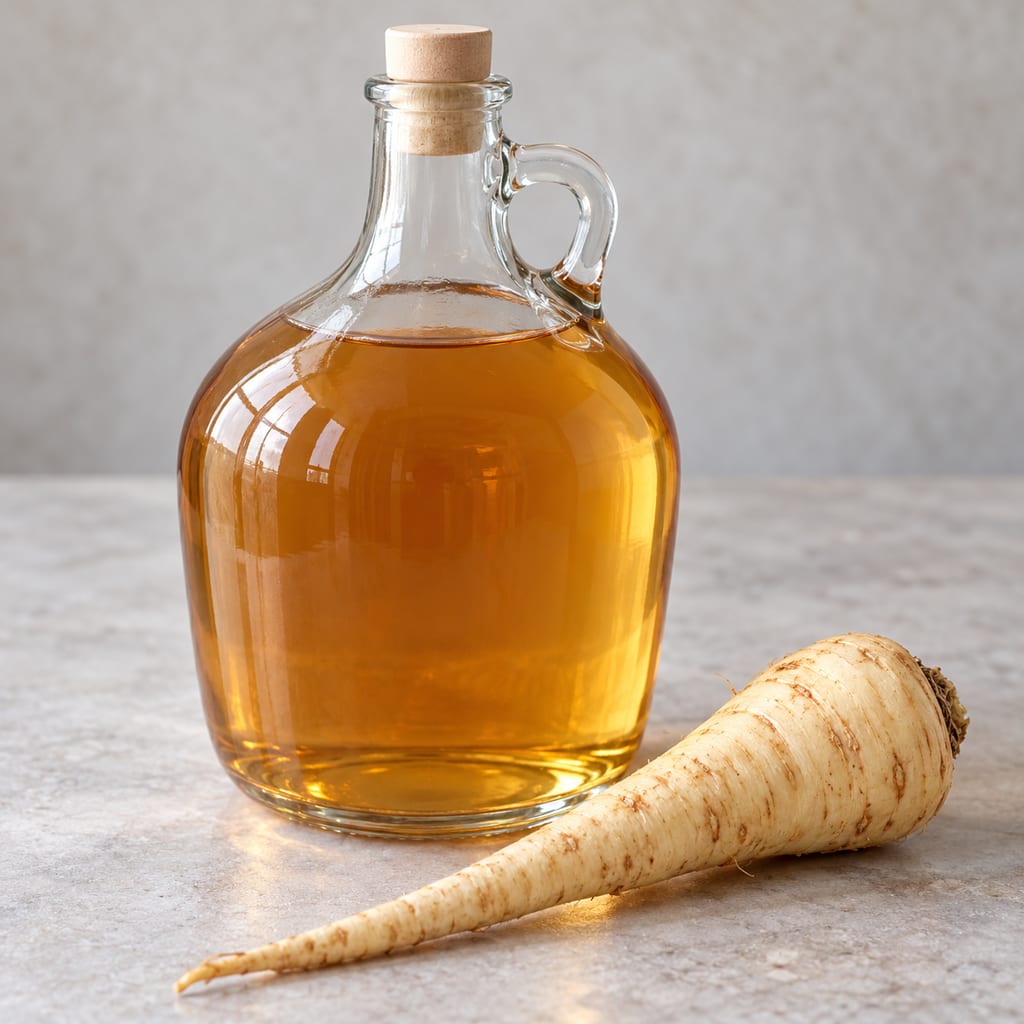
Illustrative modern parsnip wine in a glass fermenter beside a root; not a depiction of Cobbett’s 1851 brandied batch.

Parsnip wine with brandy

A root wine made from boiled parsnip liquor and lump sugar, fermented with yeast and finished with brandy before bottling.

London · Historical attestation
Drinks
Illustrative editorial image of mochenye yabloki: whole apples held beneath pale liquid with leaf layers in a plain vessel.

Mочёные яблоки

Mochenye yabloki are whole apples held under prepared liquid for several weeks. Russian sources from 1892 and 1959 describe the method. It is not the same as vinegar pickling.

Russia
Fruit
Illustrative glass of Seychellois kalou, coconut-palm toddy: pale, cloudy and lightly effervescent as described in local accounts; no measured batch or alcohol strength is represented.
Elevated risk

Kalou

Kalou is Seychellois coconut-palm toddy: sap from an unopened flower stalk is collected and ferments naturally into an alcoholic drink. Sources document the identity and tapping tradition but no validated batch or alcohol endpoint.

Seychelles · Traditional method
· Drinks
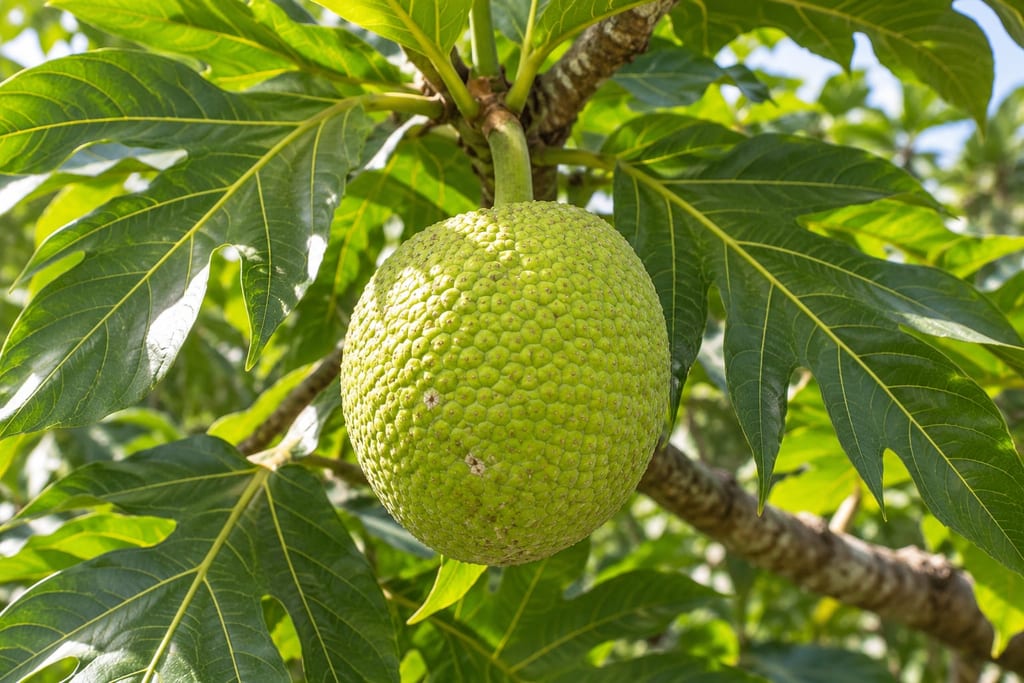
Breadfruit growing on its tree, shown as ingredient context for the documented Kosraean furo tradition; the exact appearance is not established by sources.
High risk

Furo (Kosraean preserved breadfruit)

Kosraean preserved breadfruit called furo in a 1919 ethnographic monograph. Two historical pit methods are recorded; the sources give no validated household process.

Kosrae, Federated States of Micronesia
Fruit
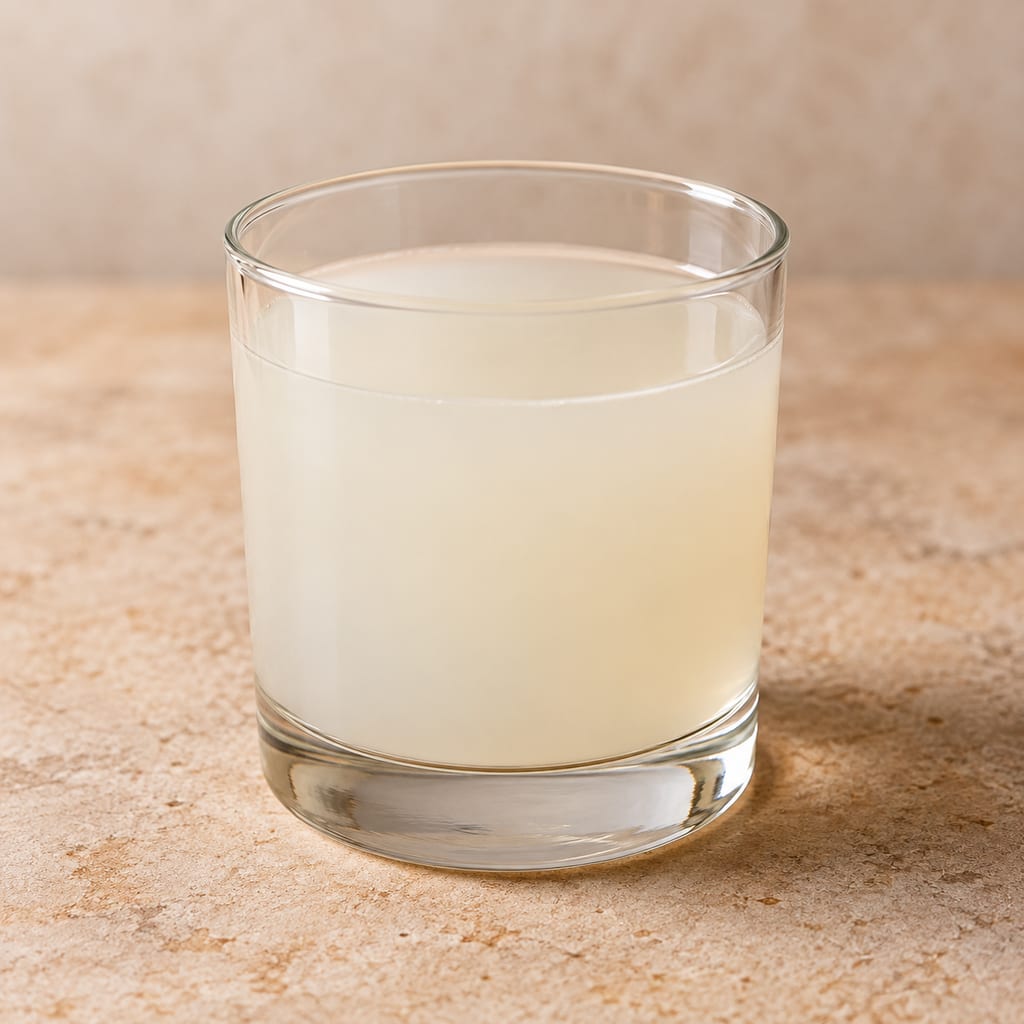
Illustrative glass of pale, cloudy palm wine. The finished Utchema appearance and serving vessel are not specified in the sources.
Elevated risk

Utchema (Mozambican Hyphaene palm wine)

Utchema is a traditional palm wine made from Hyphaene petersiana sap in Mozambique’s Banhine National Park area. Available fieldwork identifies the drink and tapping economy but does not provide a complete controlled fermentation method.

Banhine National Park · Traditional method
· Drinks
A clear glass cruet and shallow dish of glossy dark balsamic vinegar beside grapes and hard cheese on a warm ivory surface.

Aceto Balsamico di Modena IGP

A dark, balanced vinegar from Emilia-Romagna made by combining cooked or concentrated grape must with wine vinegar, then acetifying and refining it in wood under a protected specification.

Provinces of Modena and Reggio Emilia · Traditional method
· Condiments
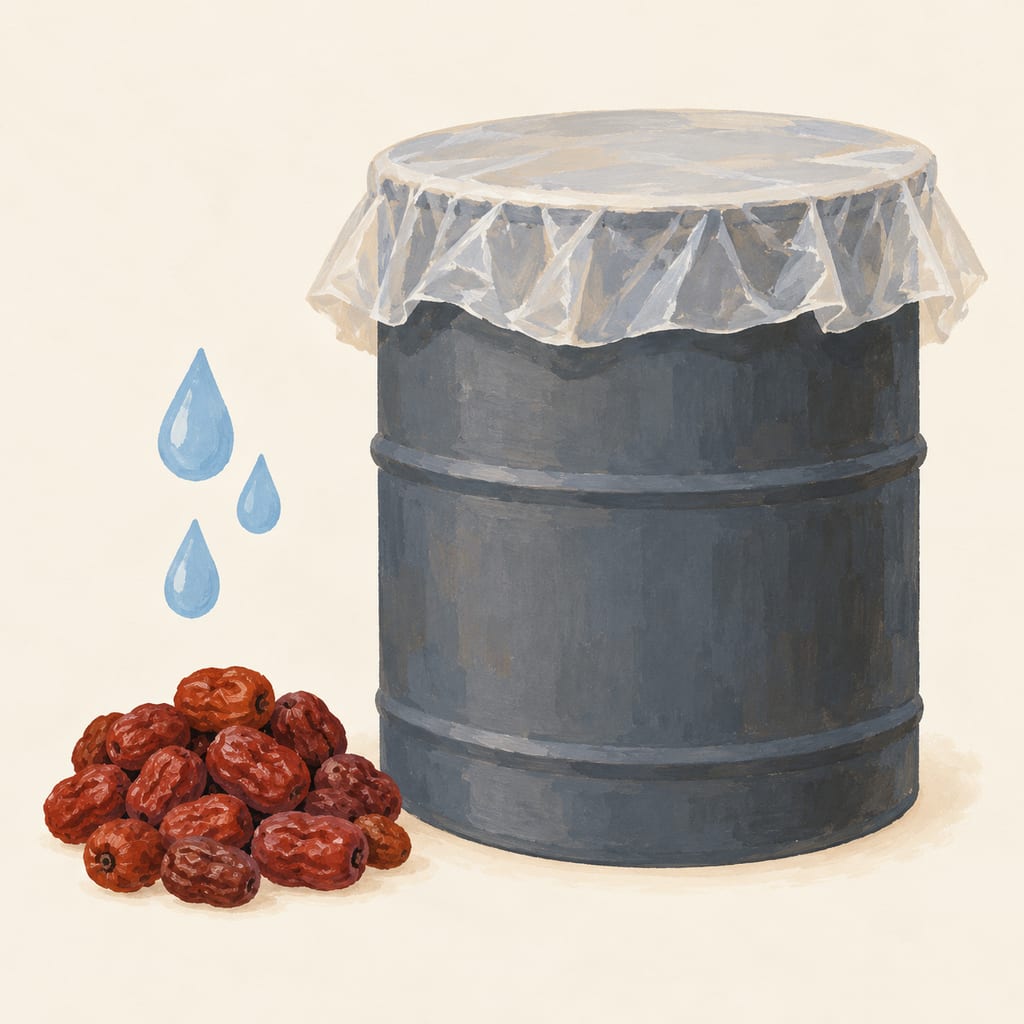
Source-based illustration of dried Masau and a plastic-sheet-covered fermentation drum; the documented fermented pulp's appearance is unknown and is not shown.
Elevated risk

Fermented masau pulp

A Zimbabwean spontaneous ferment of dried masau fruit pulp used as a kachasu distillation base; the fermented pulp itself is not consumed.

Zimbabwe · Traditional method
· Fruit
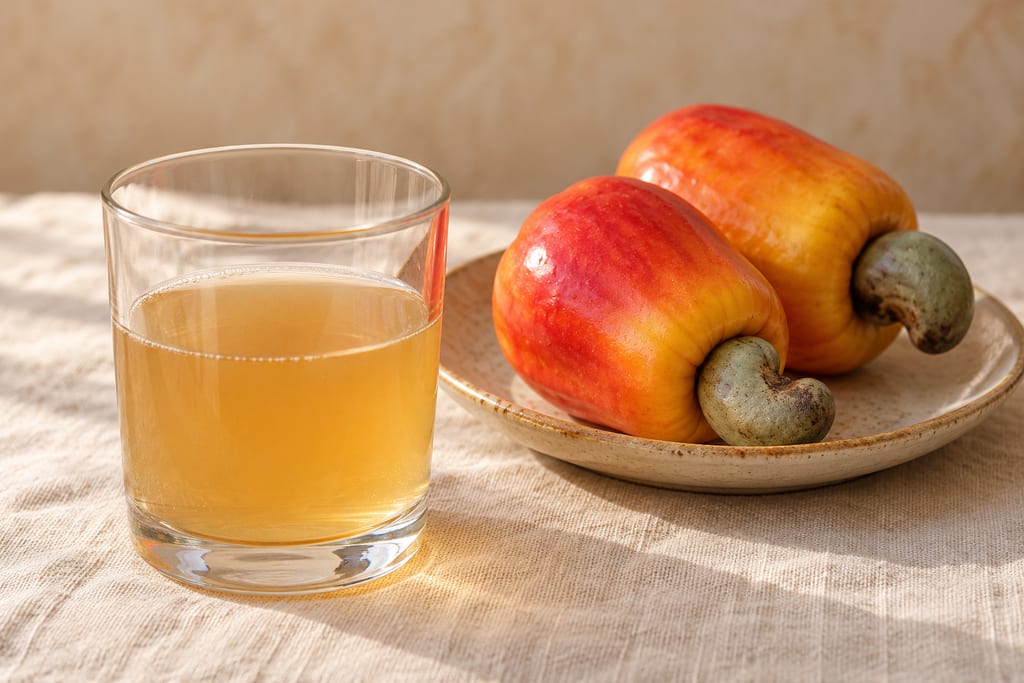
Golden-amber cashew-apple vinegar in a clear glass cruet beside ripe red and yellow cashew apples and a small tasting dish.

Cashew-apple vinegar

Vinagre de caju is made by fermenting cashew-apple juice into an alcoholic base, then aerating it so acetic bacteria can convert ethanol into acid. Brazilian guidance records the sequence, but not a complete home-scale formula.

Brazil · Modern method
· Fruit
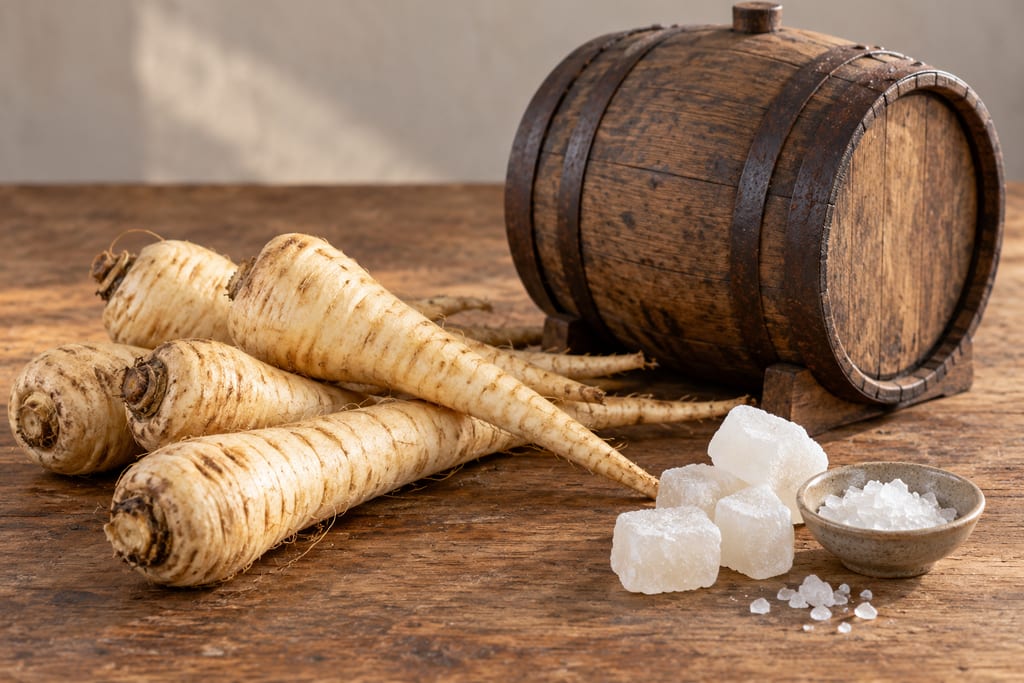
Illustrative still life of parsnips, loaf sugar and a plain wooden cask representing Cobbett’s 1851 parsnip-wine recipe; no finished wine or exact historical vessel is depicted.

Parsnip wine with crude tartar

Parsnip liquor ferments with loaf sugar, crude tartar and fresh yeast, then matures in a cask for twelve months before bottling.

London · Historical attestation
Drinks
Clear amber kakisu in an unmarked glass bottle and tasting glass, with ripe Japanese persimmons beside it.

Kakisu (persimmon vinegar)

Japanese vinegar from ripe persimmons: yeast turns the fruit sugar to alcohol and acetic bacteria turn that to acid; made at home in a month and by makers in Wakayama and Nagasaki over several years.

Japan · Traditional method
· Condiments
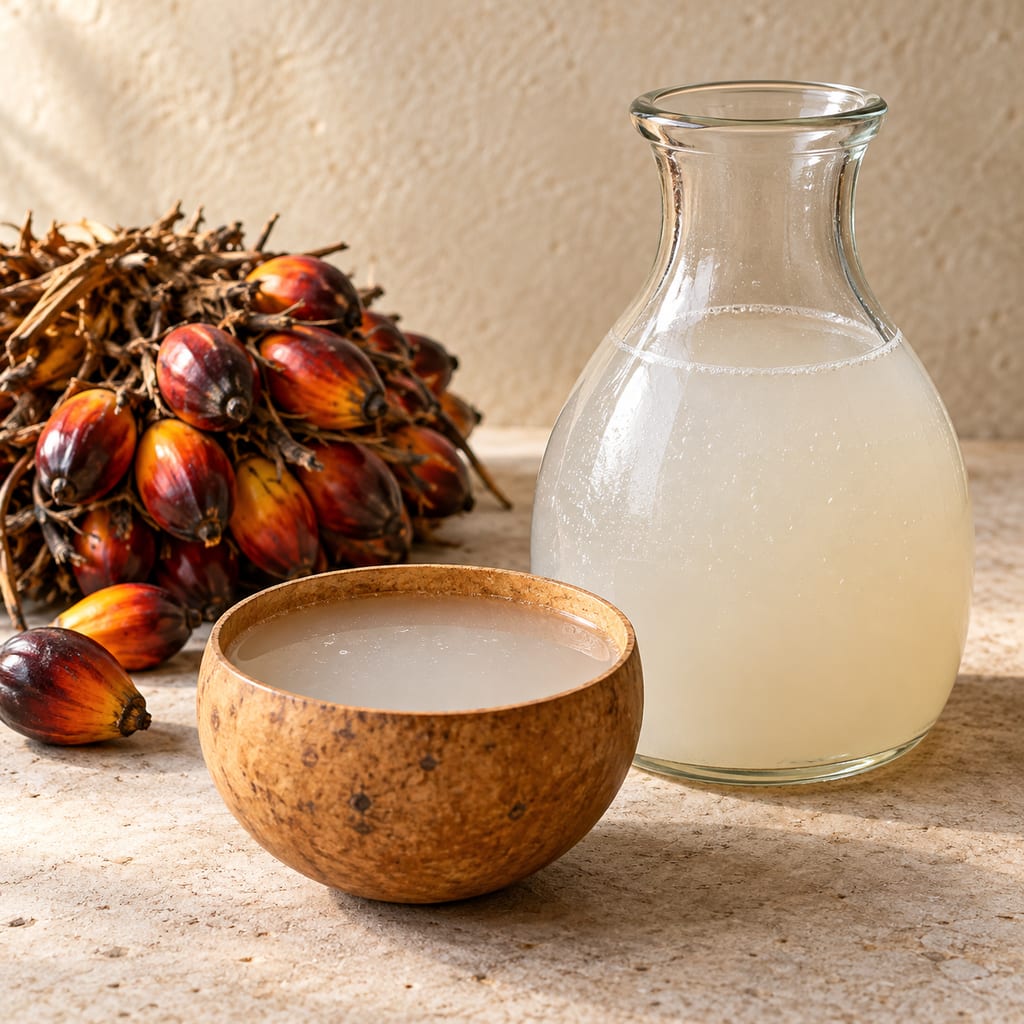
Pale, freshly fermented palm wine served in a calabash cup and glass beside palm fruit.
Elevated risk

Palm wine

Palm wine is fermented sap from several palm species. West and Central African traditions differ in palm, tapping, vessel and serving stage; this page records shared principles without claiming one universal home-scale process.

West Africa
Drinks
Pale golden cashew-apple wine in a clear glass beside ripe cashew apples with their attached nuts.

Cashew-apple wine

Vinho de caju is a seasonal alcoholic drink made from expressed cashew-apple juice. In southern Guinea-Bissau, an ethnographic account records a simple press-and-strain method, while harvest timing and local trade shape its place.

Guinea-Bissau
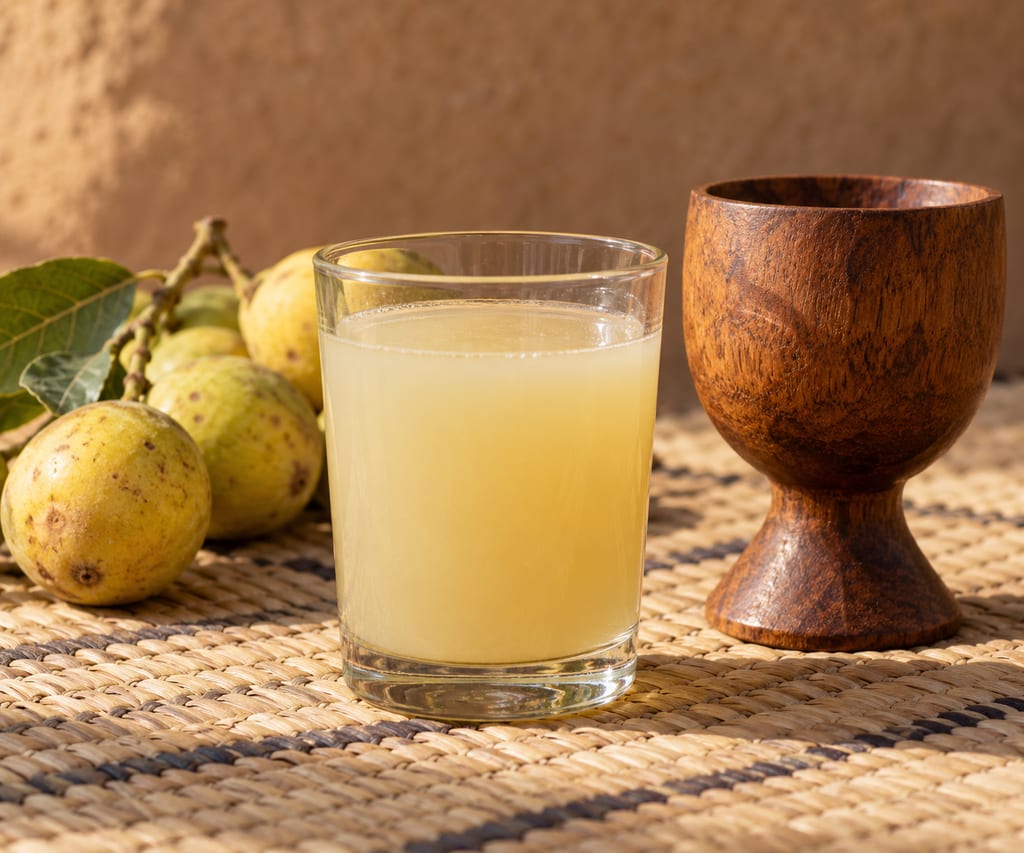
Illustrative finished Omagongo, shown as cloudy pale-yellow marula drink beside a carved wooden cup and ripe marula fruit.

Omagongo

The fermented marula drink of northern Namibia's Aawambo communities, pressed from ripe Sclerocarya birrea fruit and left to the yeasts already on it, and drunk at the Oshituthi shomagongo festival.

Northern Namibia · Traditional method
· Drinks
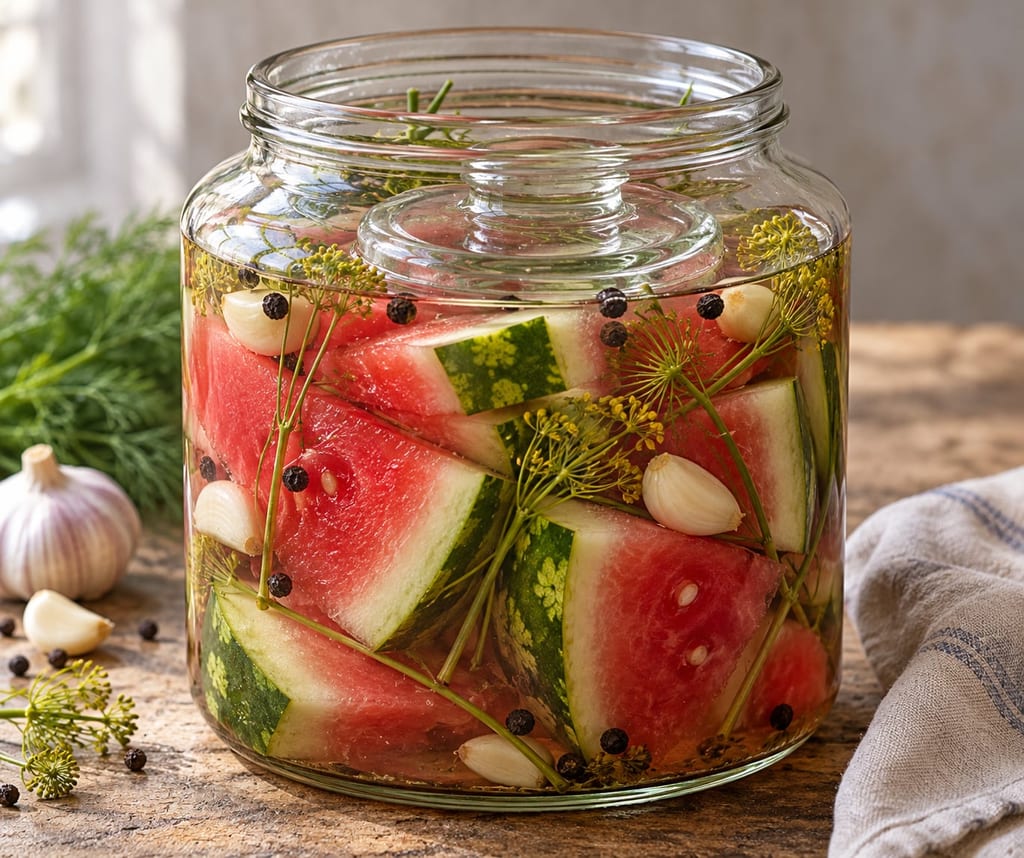
Watermelon wedges with rind, garlic, peppercorns and dill submerged in pale brine in a glass crock.

Kislyi arbuz (fermented watermelon)

Watermelon pieces with rind ferment in a dill, garlic and pepper brine in a family preparation linked to Kishinev, Moldova.

Kishinev, Moldova · Traditional method
· Fruit
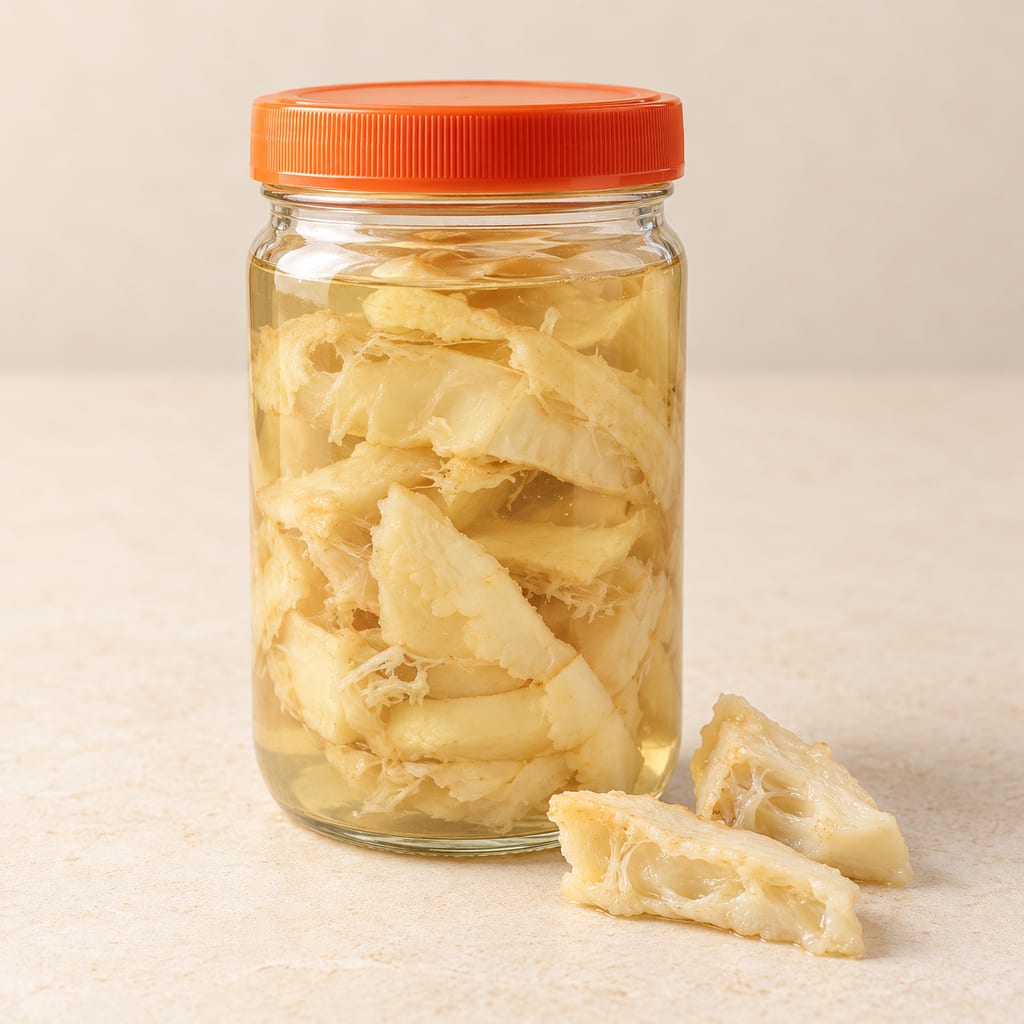
Jar of pale cempedak inner-rind pieces preserved in liquid, with two pieces outside; editorial image, not a photograph of a specific batch.

Mandai (fermented cempedak rind)

Cempedak inner rind is cut, salted and submerged in water for a short spontaneous fermentation used in Kalimantan home cooking.

Kalimantan, Indonesia · Modern method
· Fruit
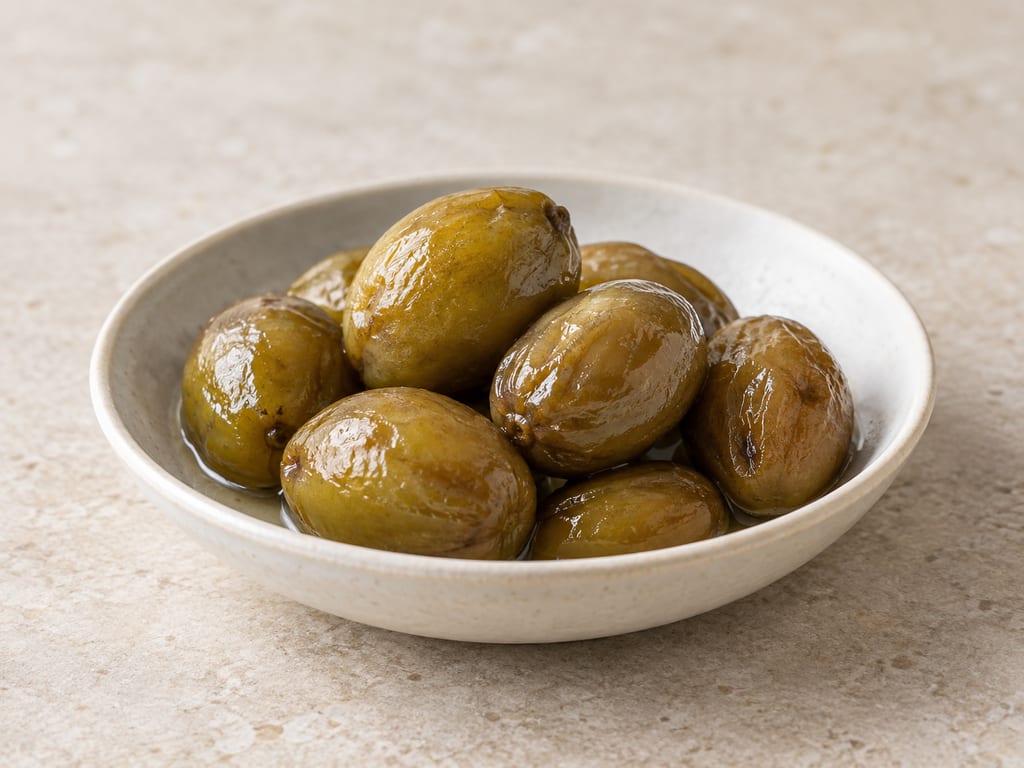
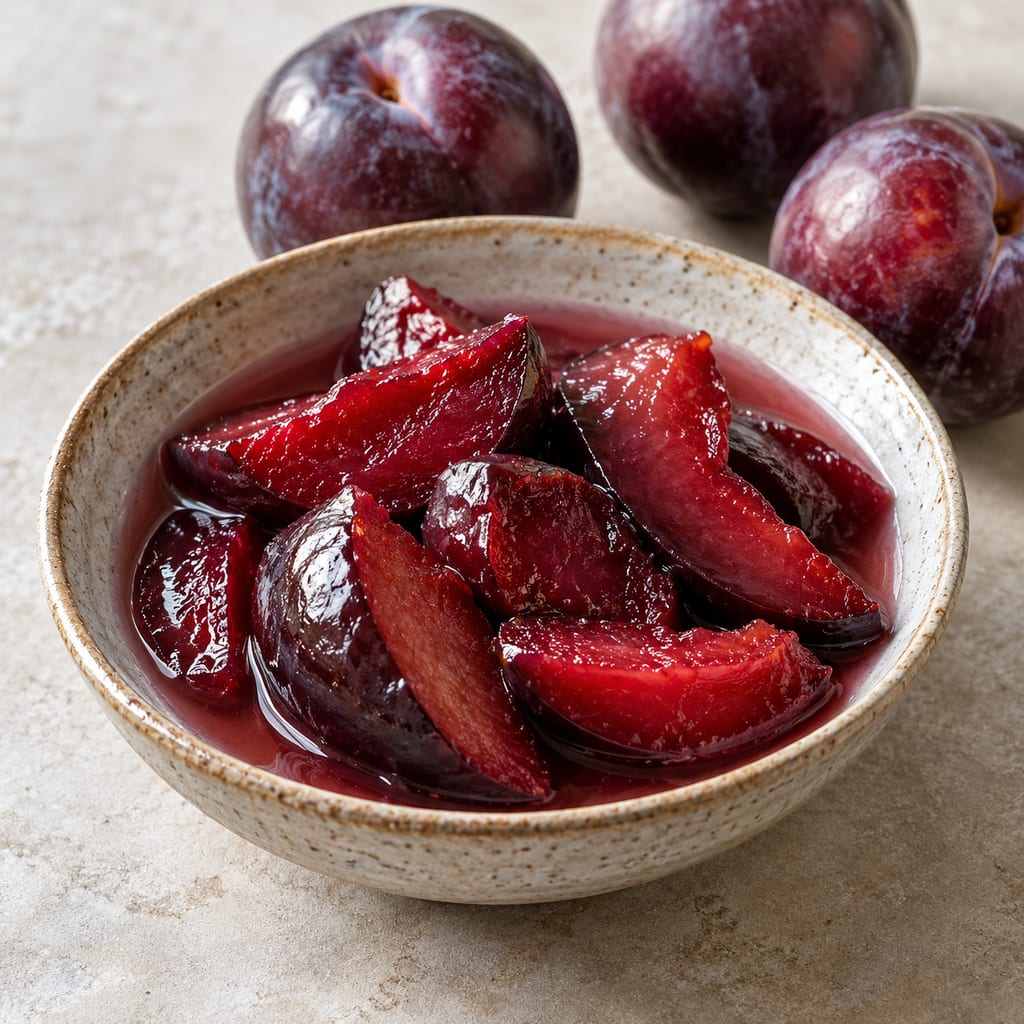
A shallow ceramic bowl of glossy, softened deep-purple plum wedges in their natural ruby brine, representing finished salt-fermented plums.

Salt-fermented plums

Pitted ripe plums release their own juice under a 2% salt cure, then ferment while weighted below the liquid.

Modern method
· Fruit