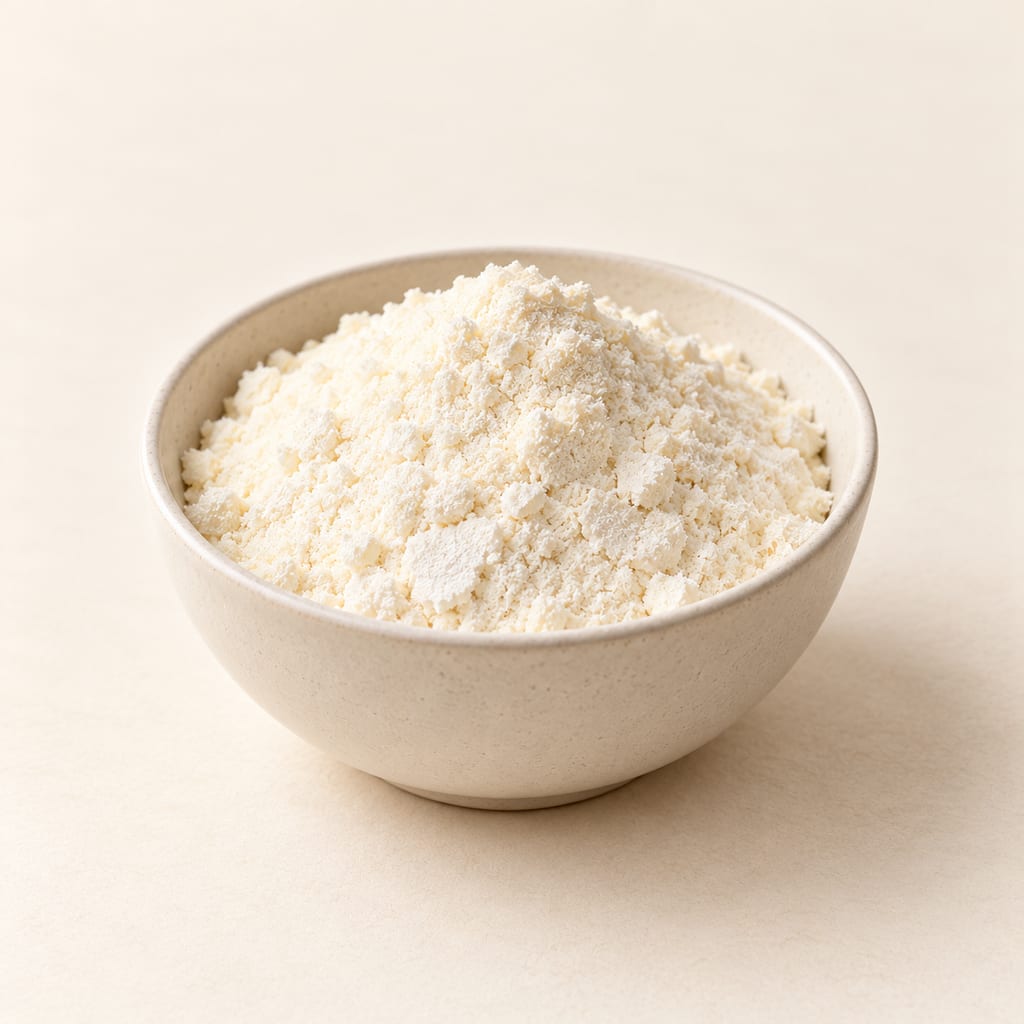



All-purpose wheat flour
A refined common-wheat flour blended for a broad range of baking; its protein and behavior vary with wheat, milling and market.
 FermenteaWhere food goes to change
1086 articles on substrates, cultures and additives.
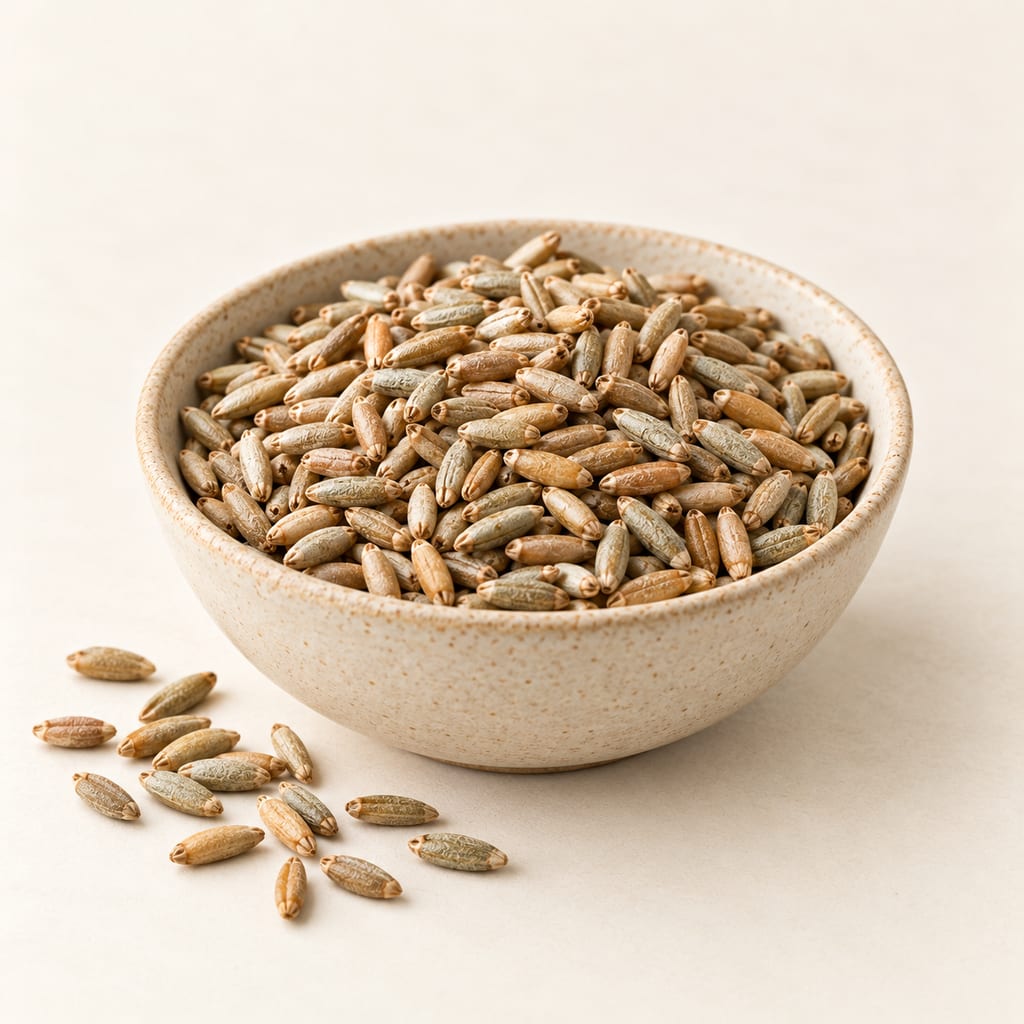 Grains, flours and brans30
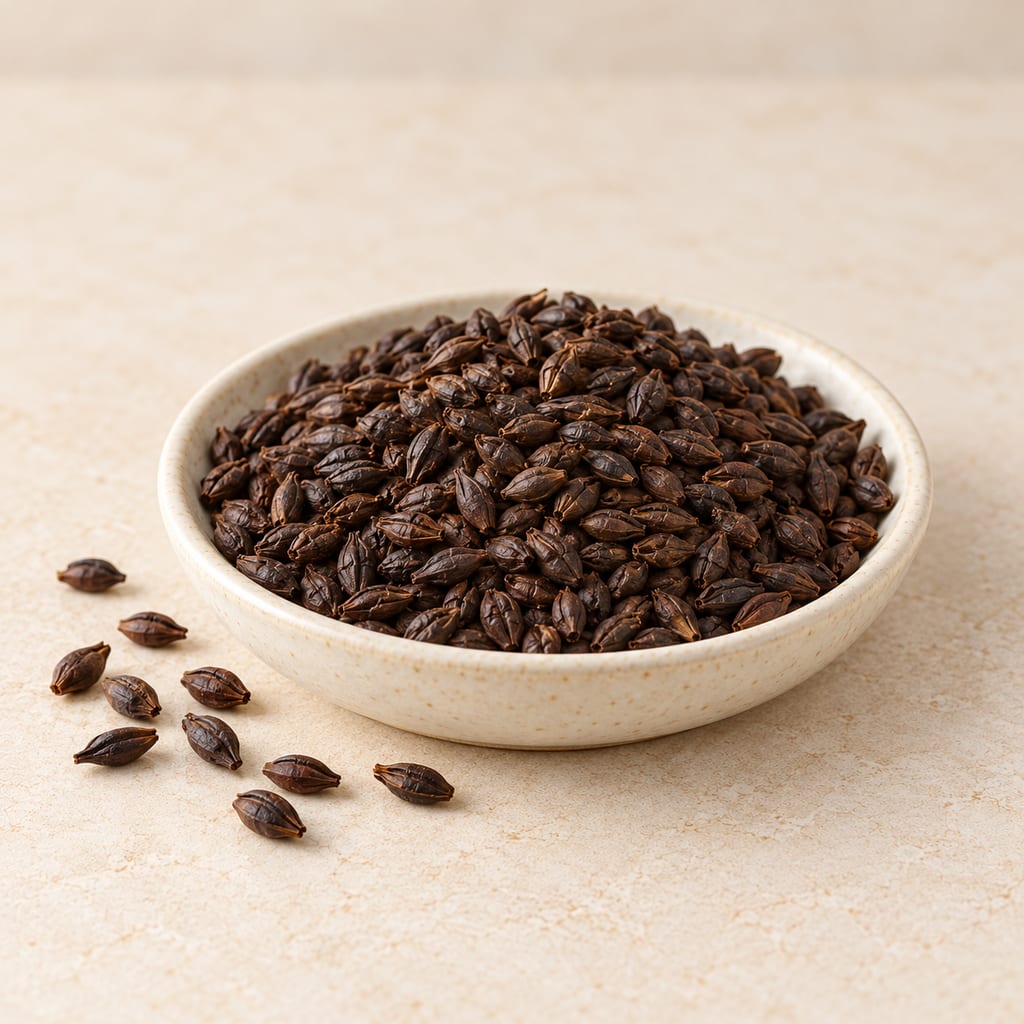 Malts and malt extracts13
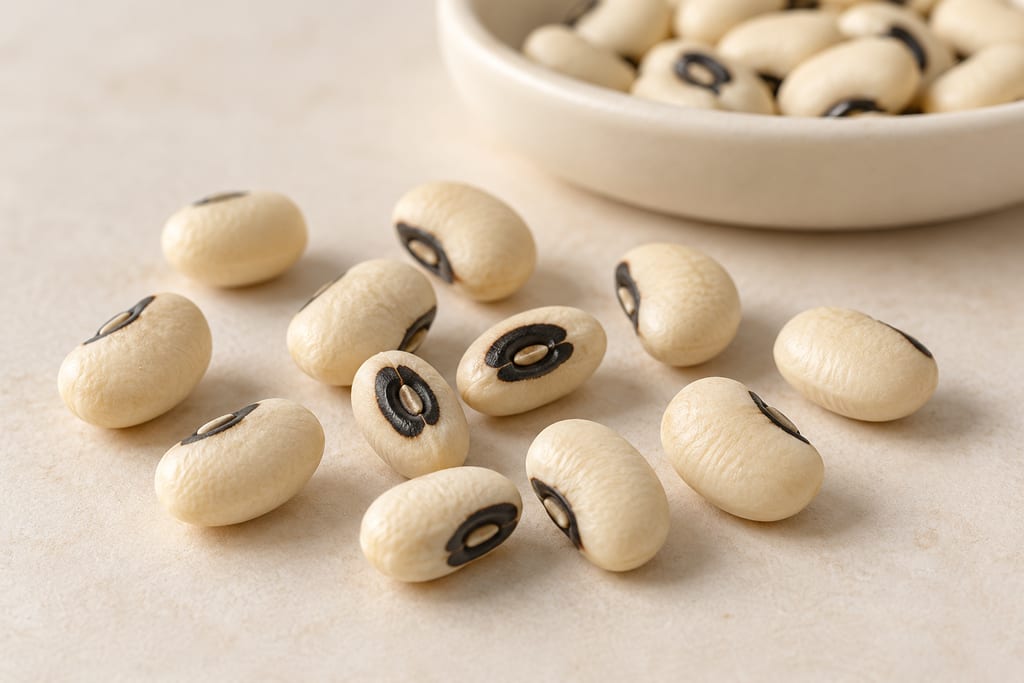 Legumes and pulses9
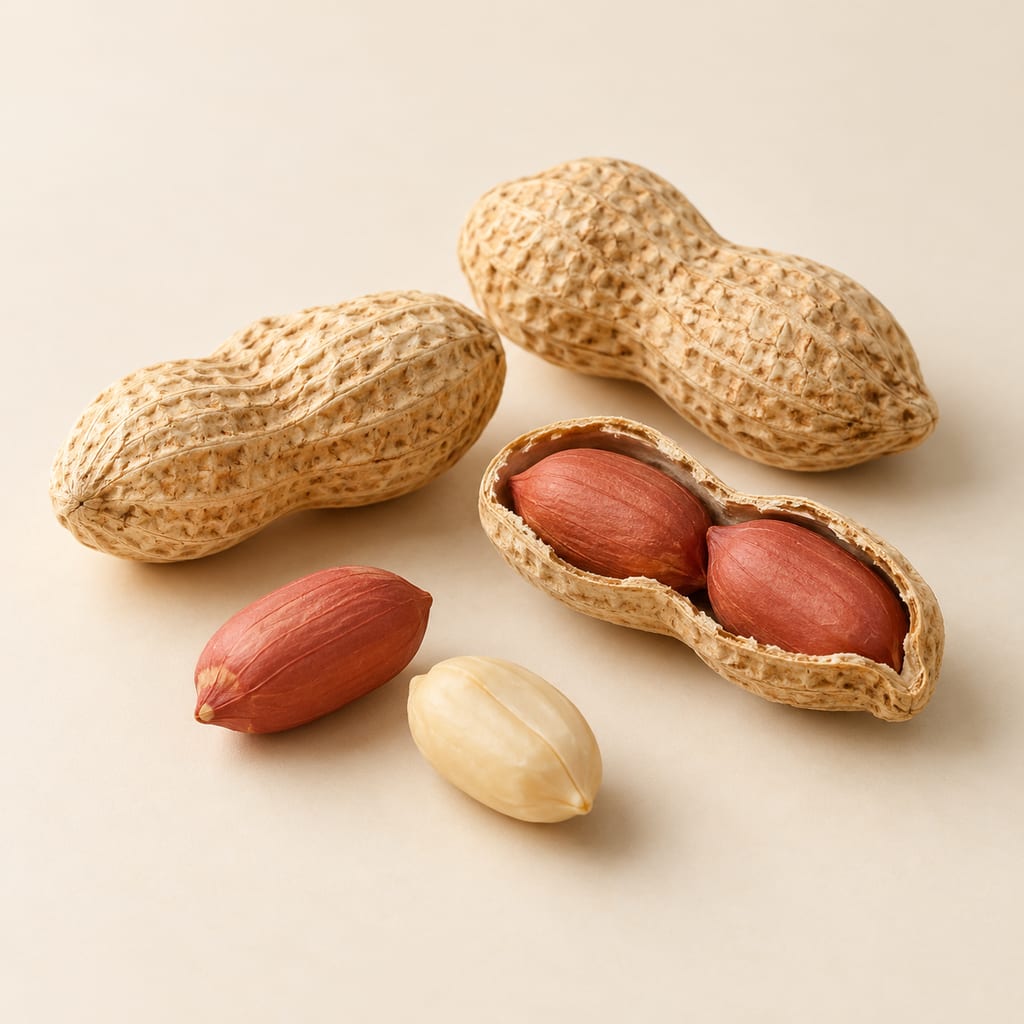 Nuts and oilseeds9
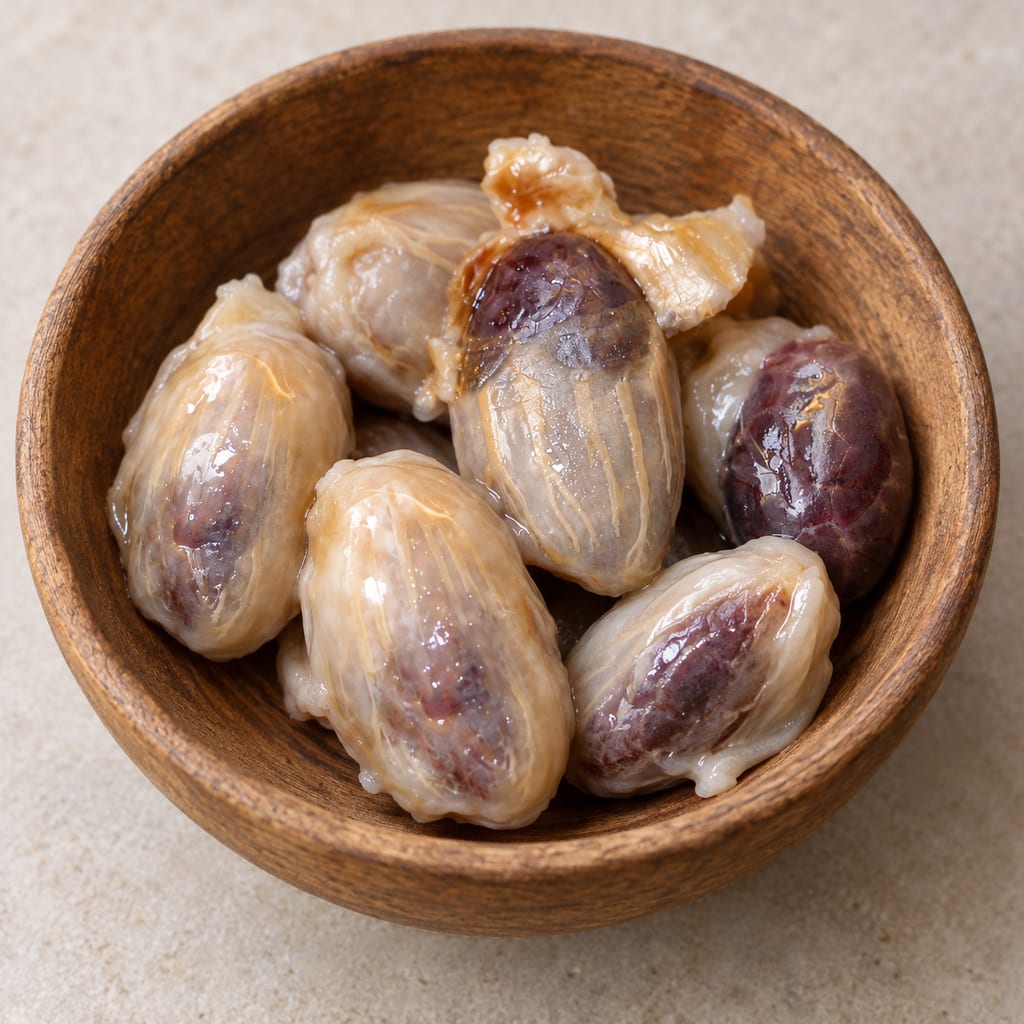 Coffee, cocoa and tea crops1
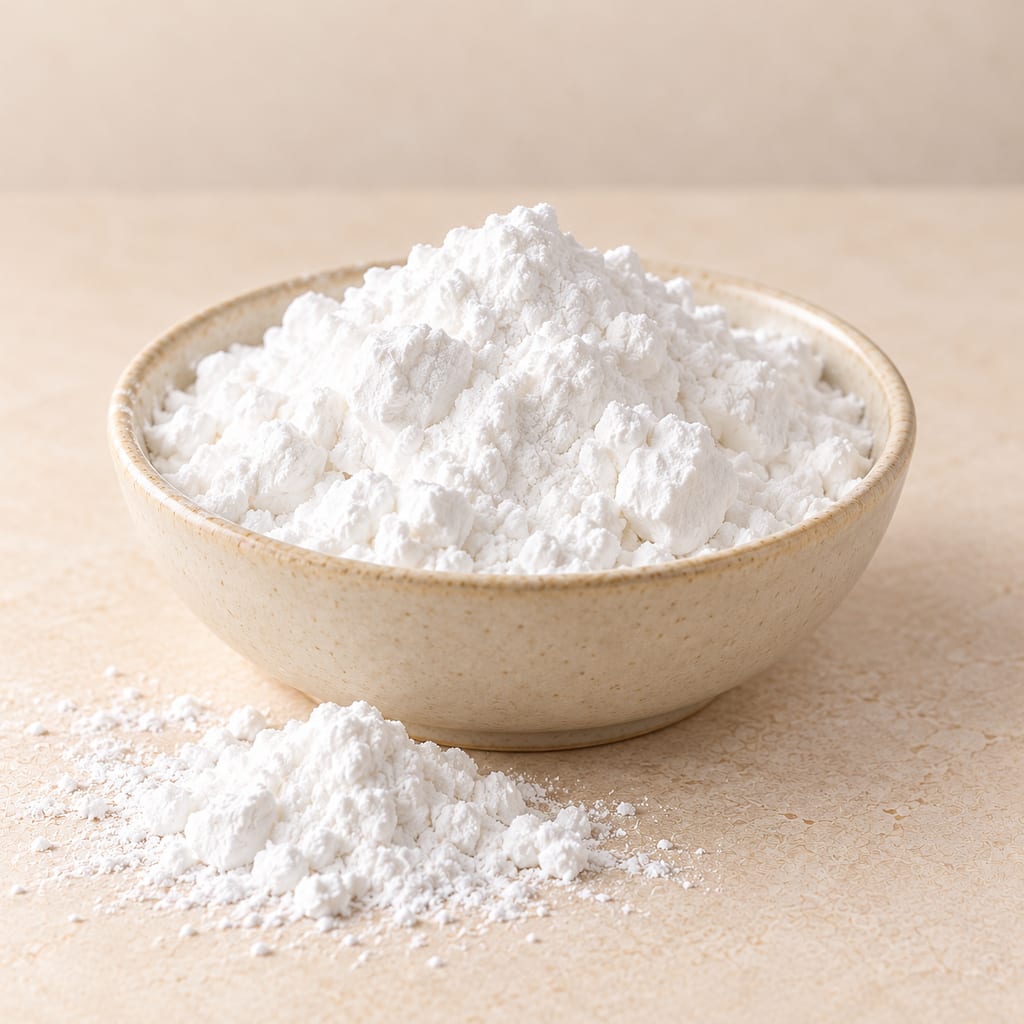 Starches1
A refined common-wheat flour blended for a broad range of baking; its protein and behavior vary with wheat, milling and market.
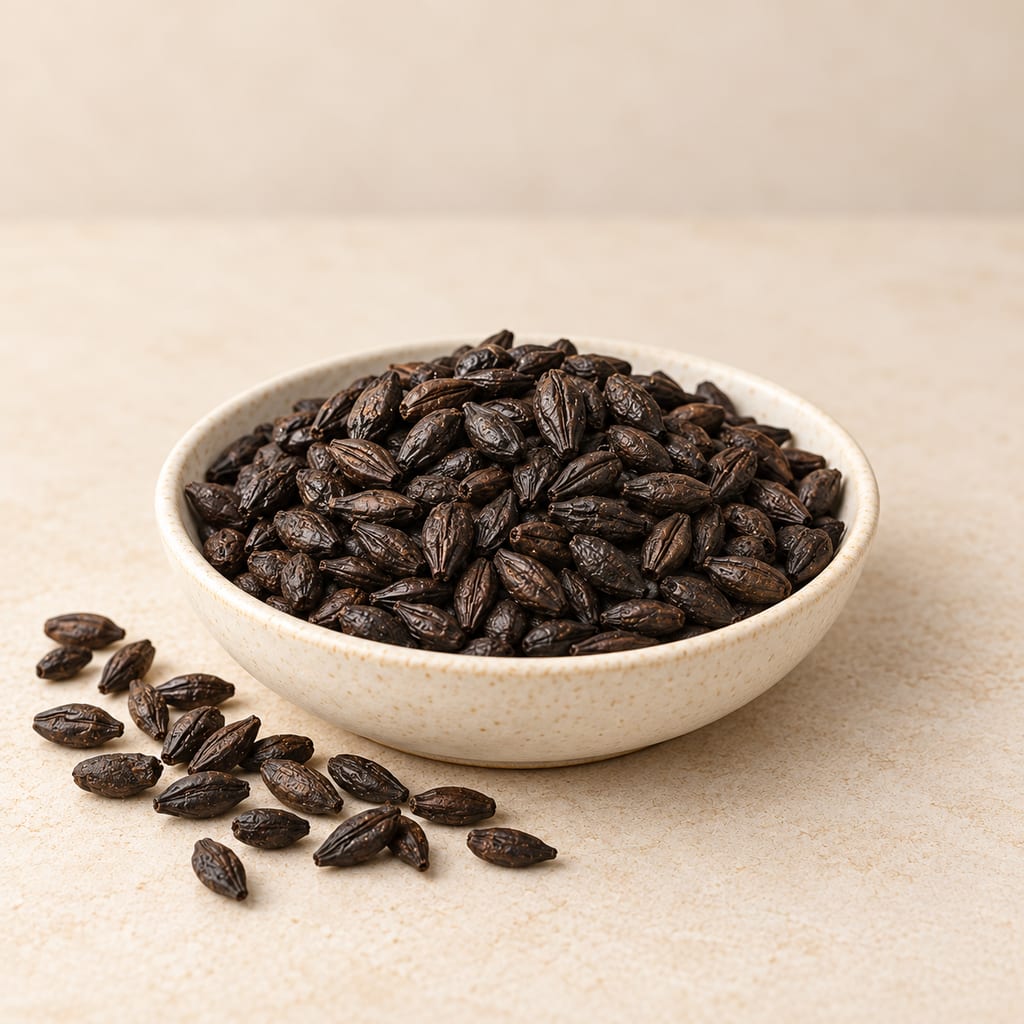
Roasted specialty malt named for coffee-like aroma, with the exact roast grade and colour varying by maltster; it is distinct from added coffee beans.
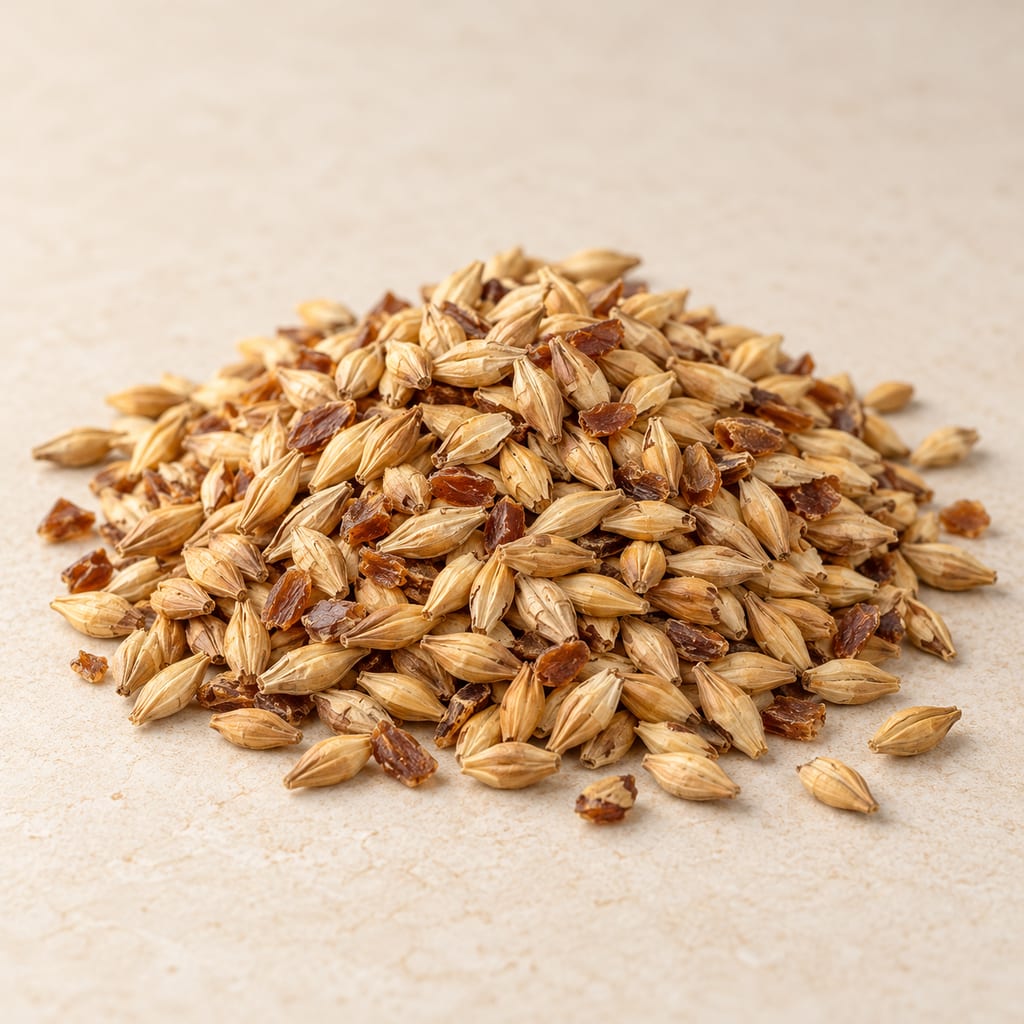
A caramel/crystal barley malt colour grade that supplies caramel-like flavour, colour and extract; producer and process refine what the 60 label means.
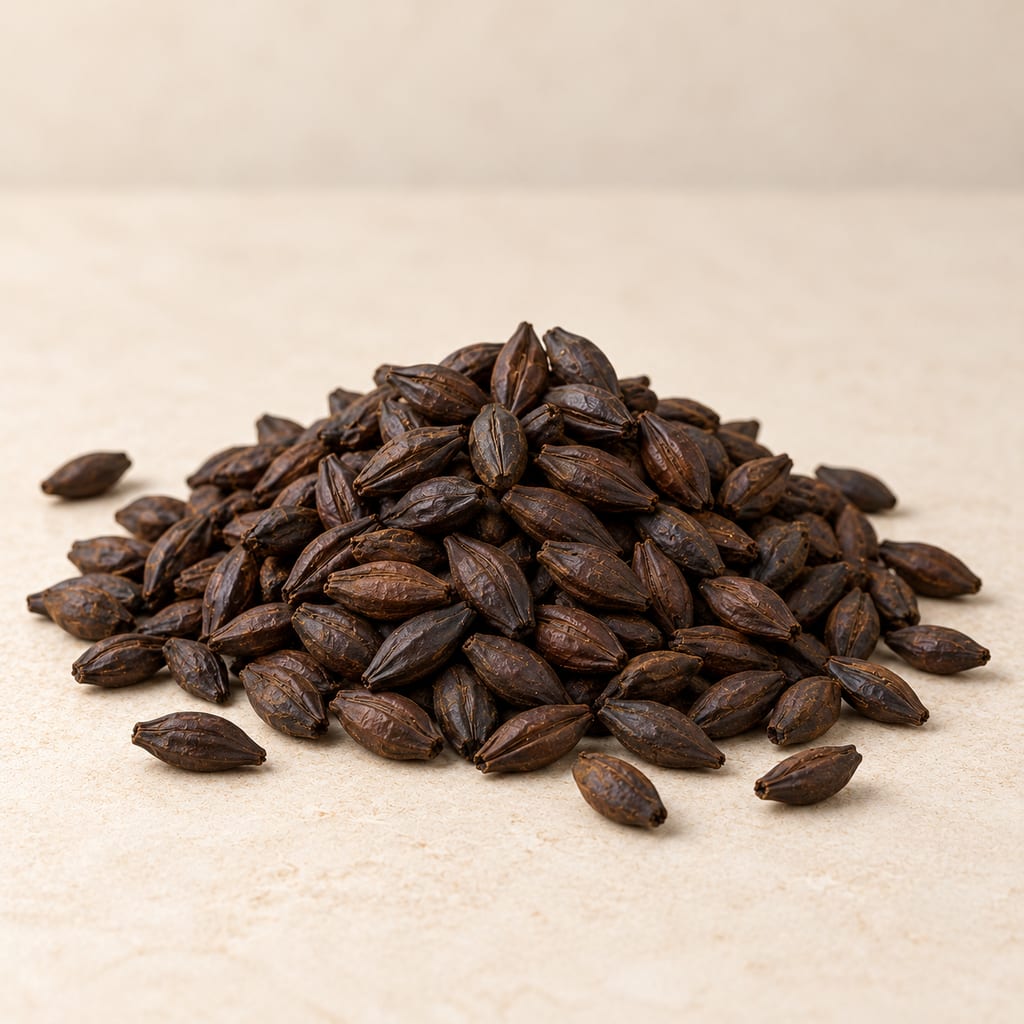
An intensely roasted malt used for dark colour and dry roasted flavour in beer, with a nineteenth-century patent name and distinct whole, milled and flour forms.
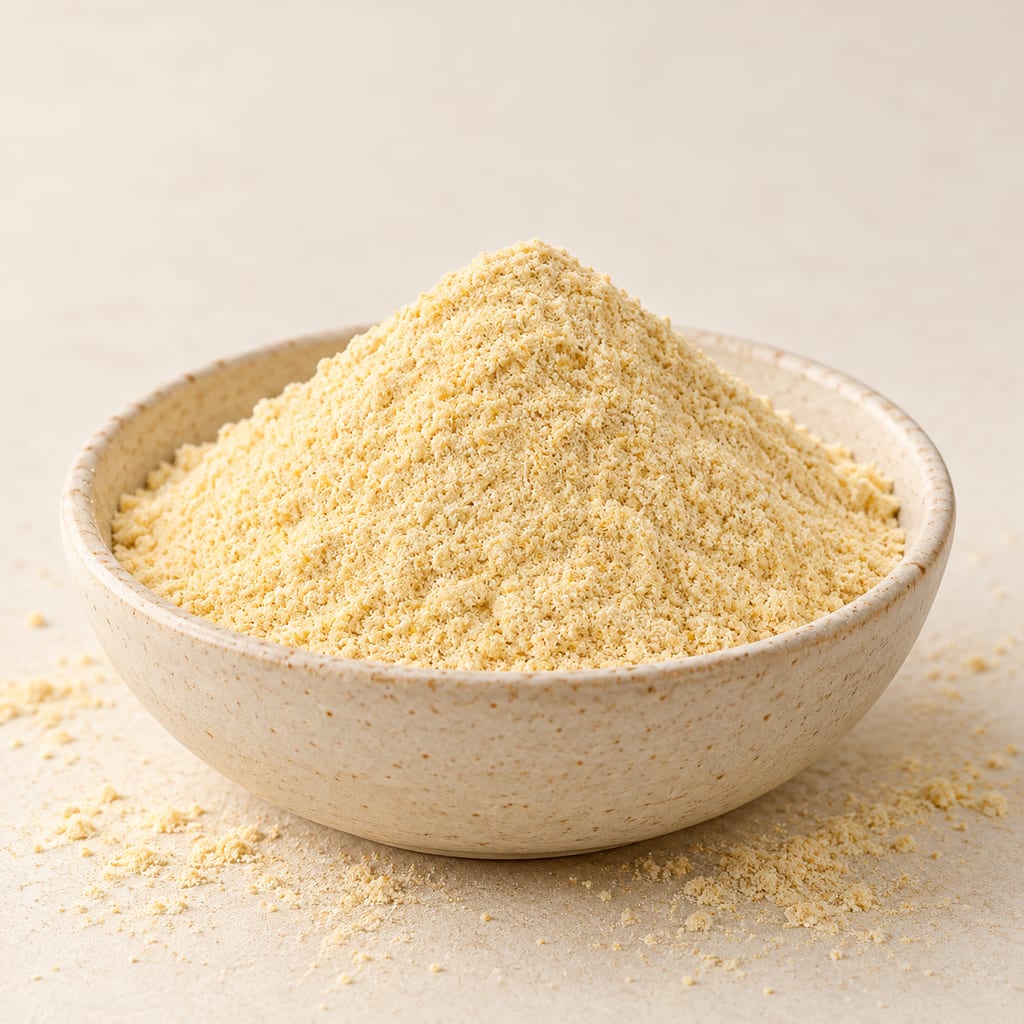
Jora flour is ground malted maize, produced by germinating, drying and milling corn kernels. It provides the enzymatic starch breakdown essential for chicha de jora.
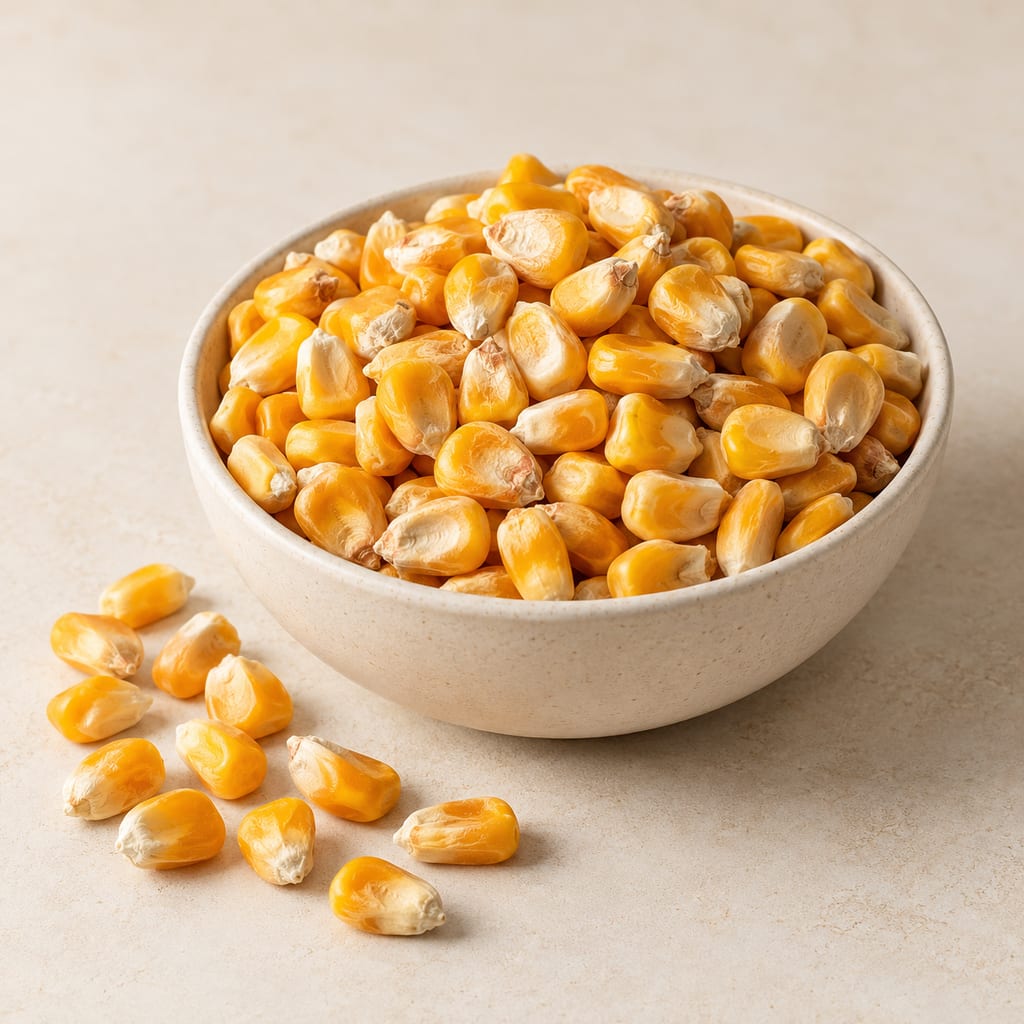
Maize is the foundational grain of Andean fermentation. Its role in brewing chicha de jora depends on germination into jora, a malted form generating enzymes and sugars necessary for alcoholic fermentation.
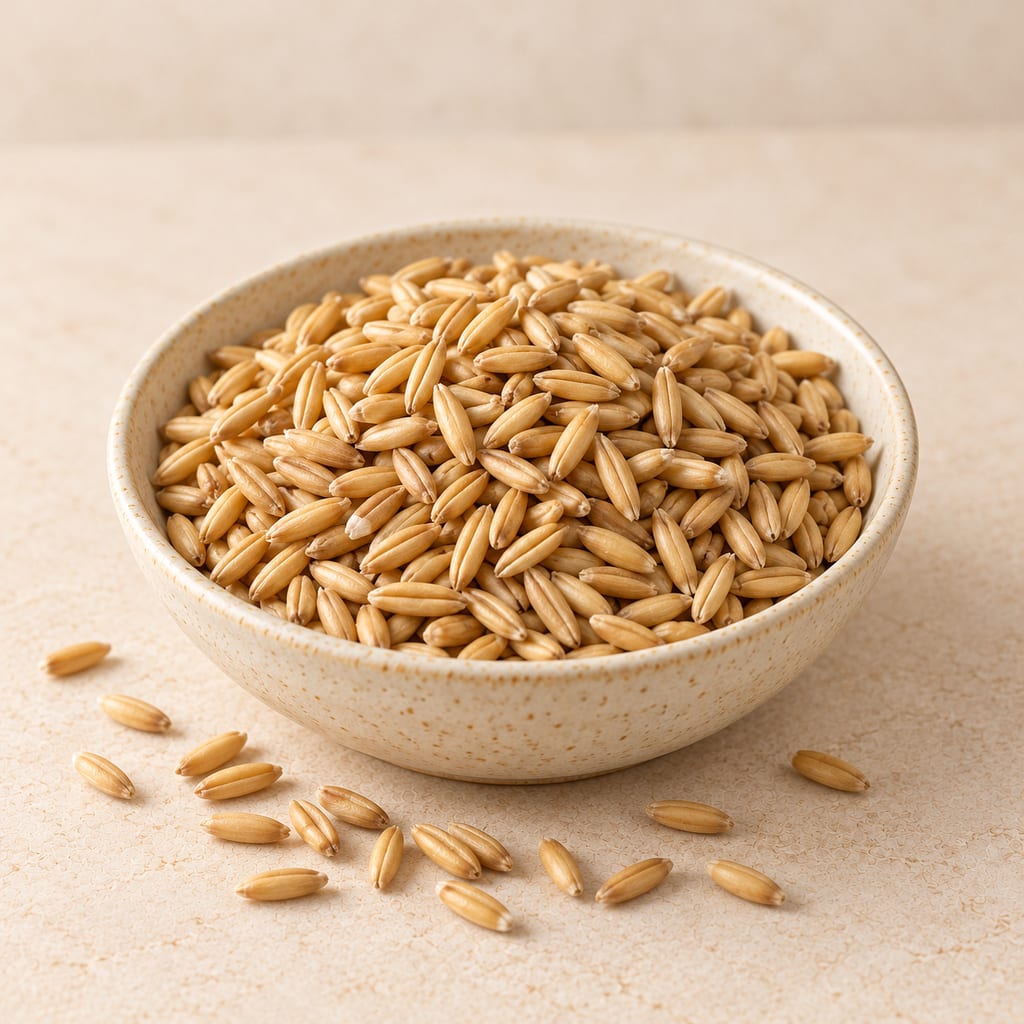
A cereal grain sold as groats, cut pieces, flakes, flour and malt. Oats shape porridge, bread and brewing differently as processing changes hydration, texture, starch, beta-glucan, protein and oil.
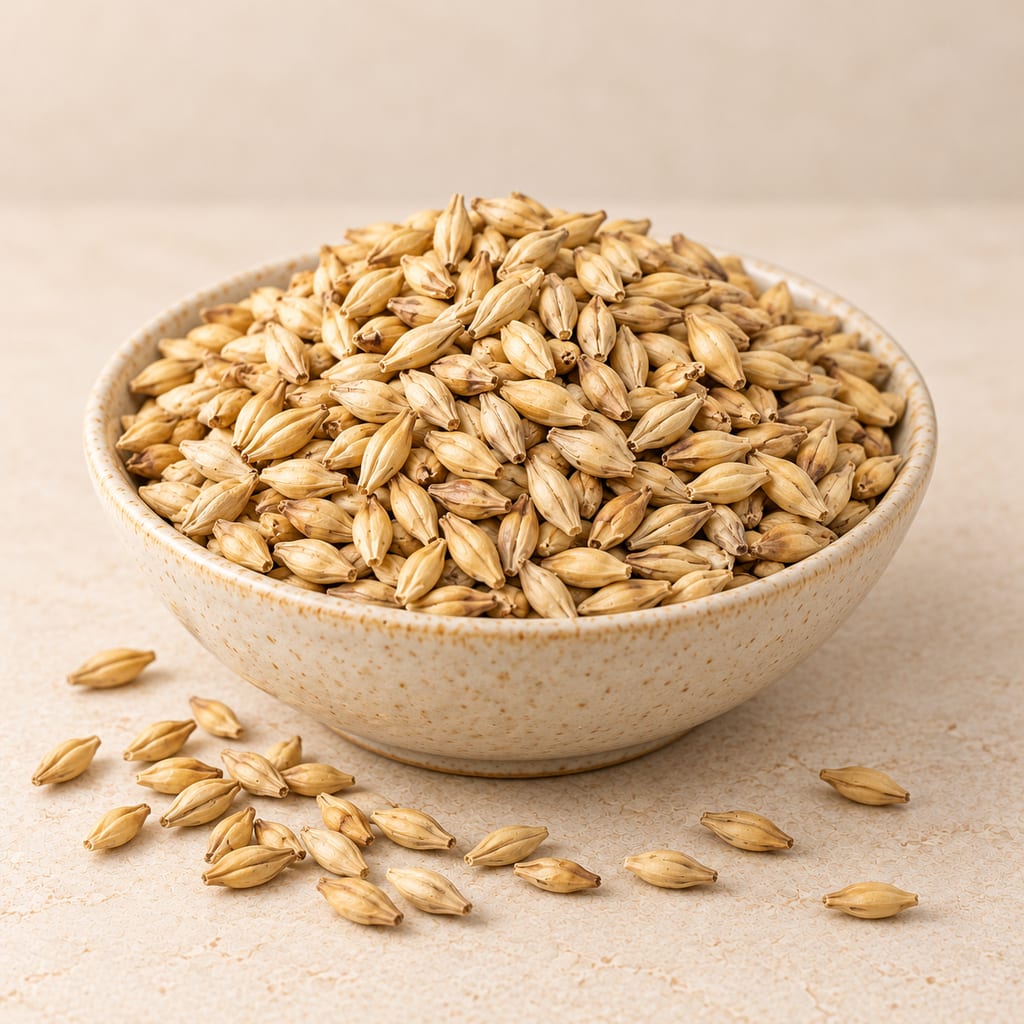
A pale, lightly kilned barley base malt that supplies wort material and brewing enzymes, with product-specific flavour, analysis and handling requirements.
A dark roasted barley malt grade used for strong colour and coffee-to-chocolate roast character; standard Type3 differs from the husk-reduced Special line.
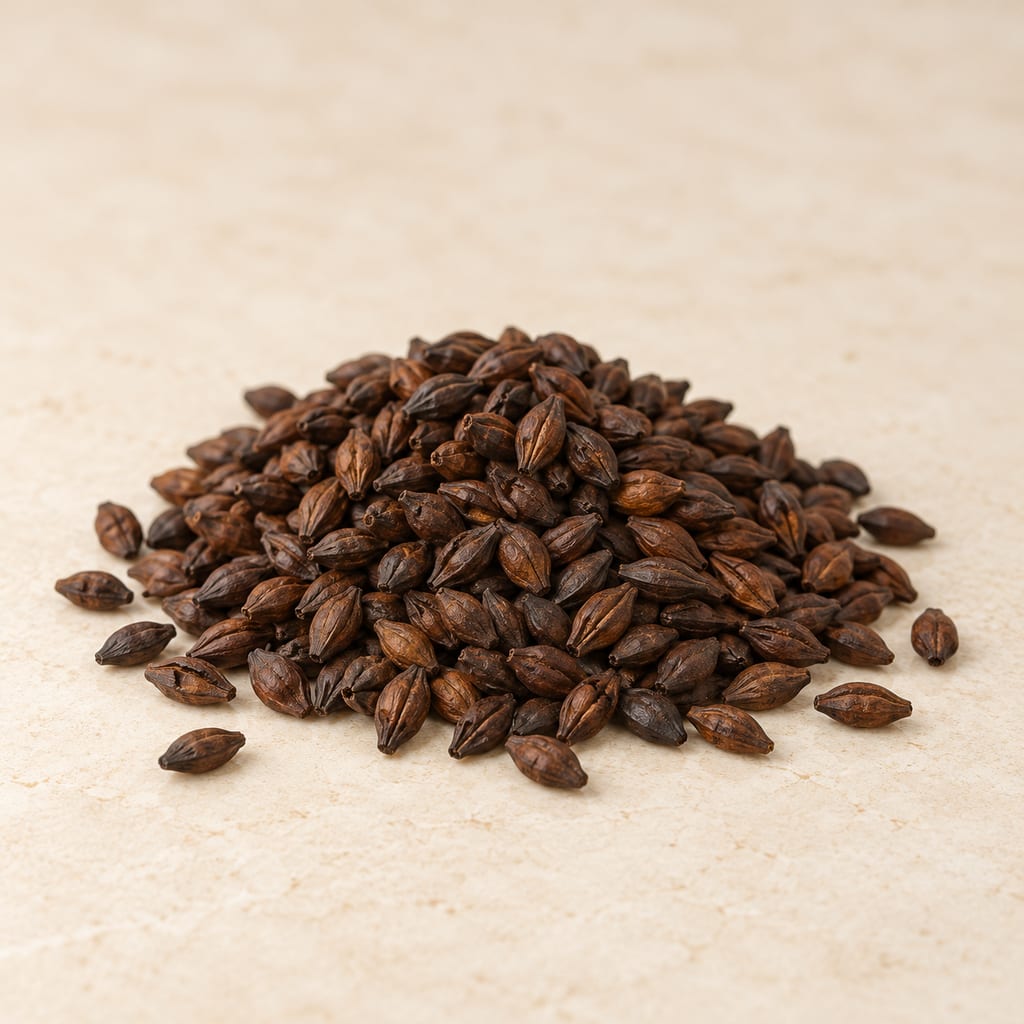
Dark-roasted unmalted barley used for colour and a dry roasted edge in stout, with other roast grades used in grain infusions and foods.
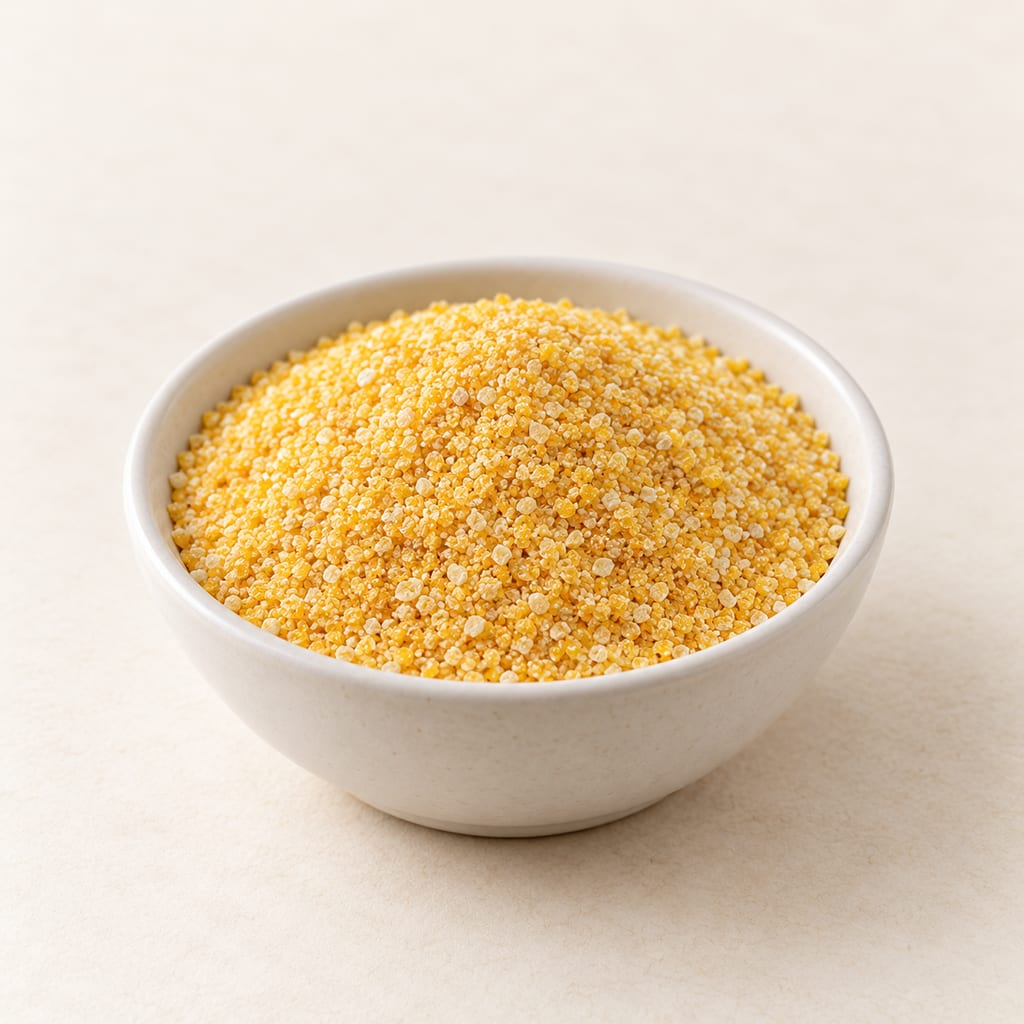
Yellow cornmeal is ground dried maize. Its particle size and milling treatment shape its texture and keeping quality; in the cited sourdough English muffin method, it is an exterior coating rather than part of the dough.
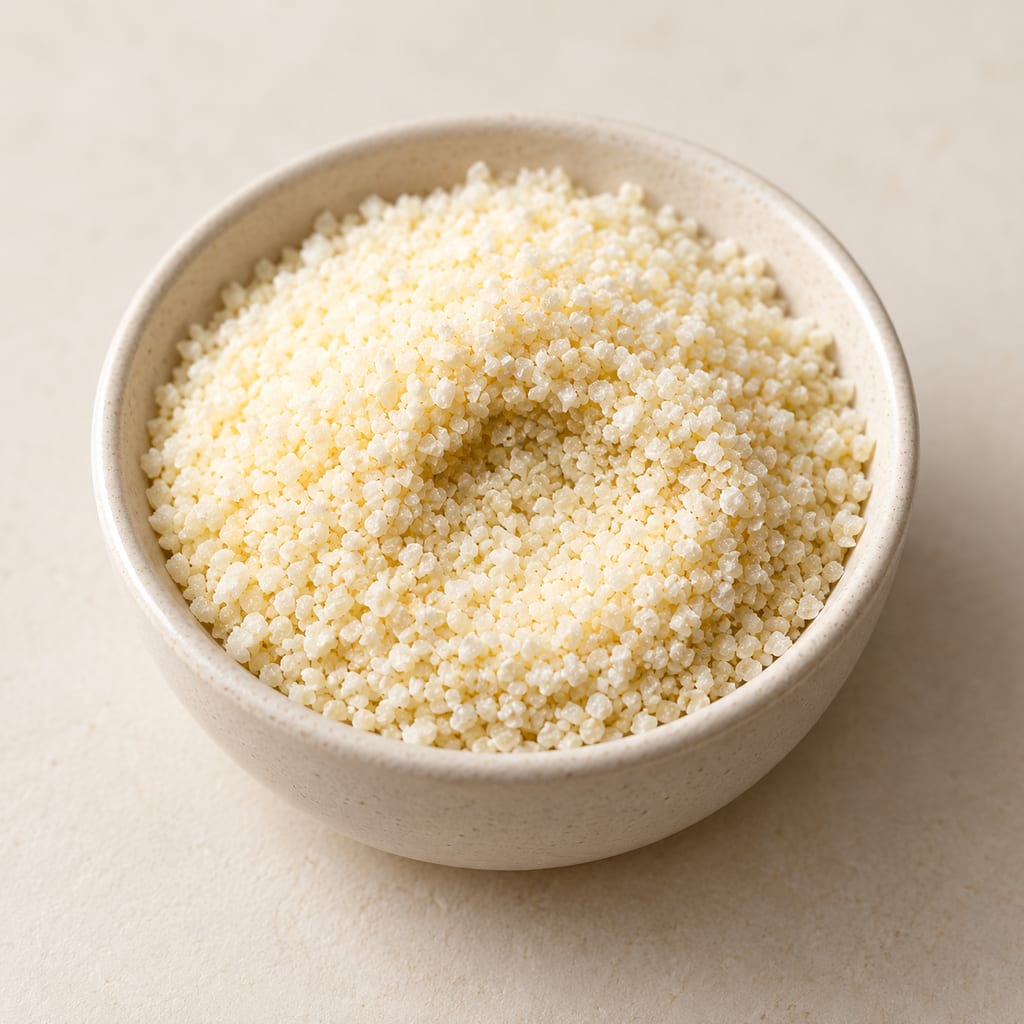
Semolina is a granular wheat milling product; in many markets it means durum, while some standards also use the name for other wheat. In sourdough English muffins, it is an optional surface coating, not the main flour.
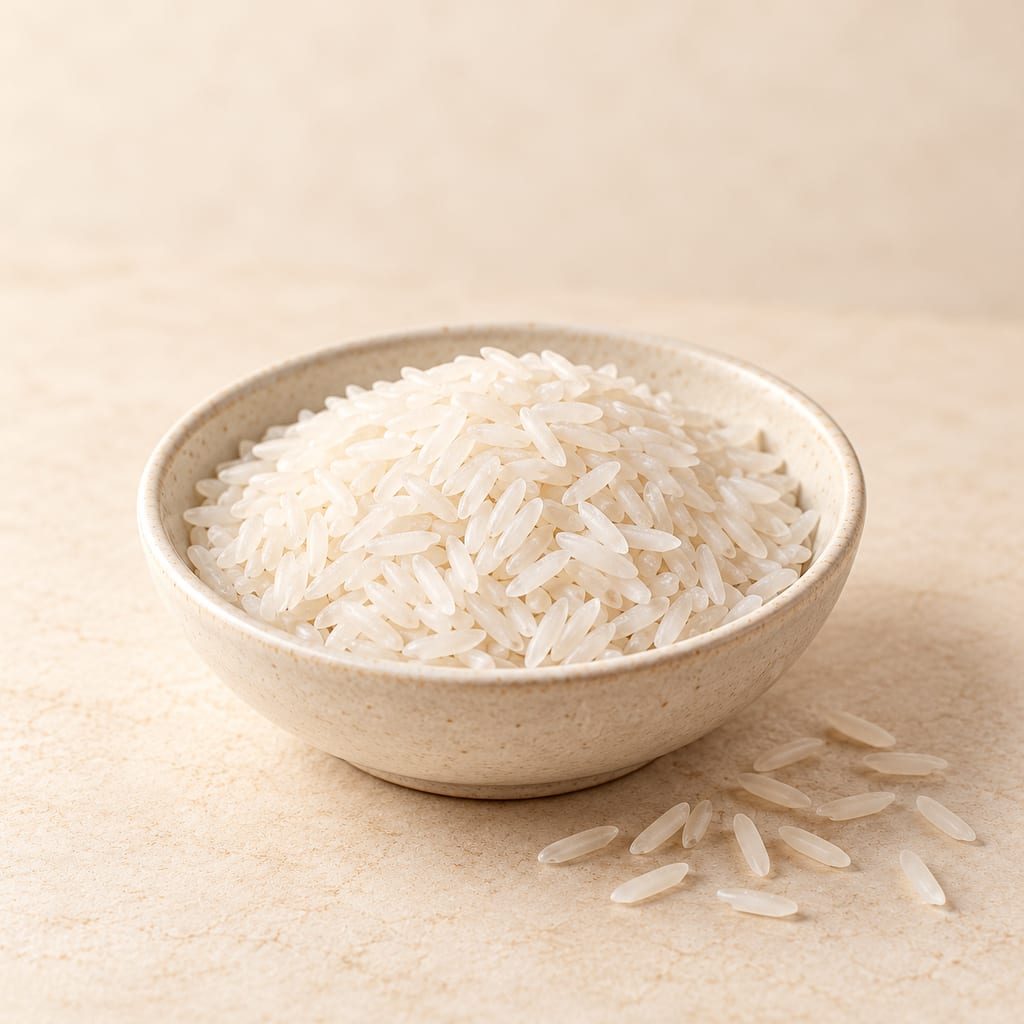
Rice contributes starch to flatbreads, steamed breads, batters and many distinct fermentations. Its species, milling and starch character shape how it cooks, binds, expands and feeds enzymes.