
Acid whey
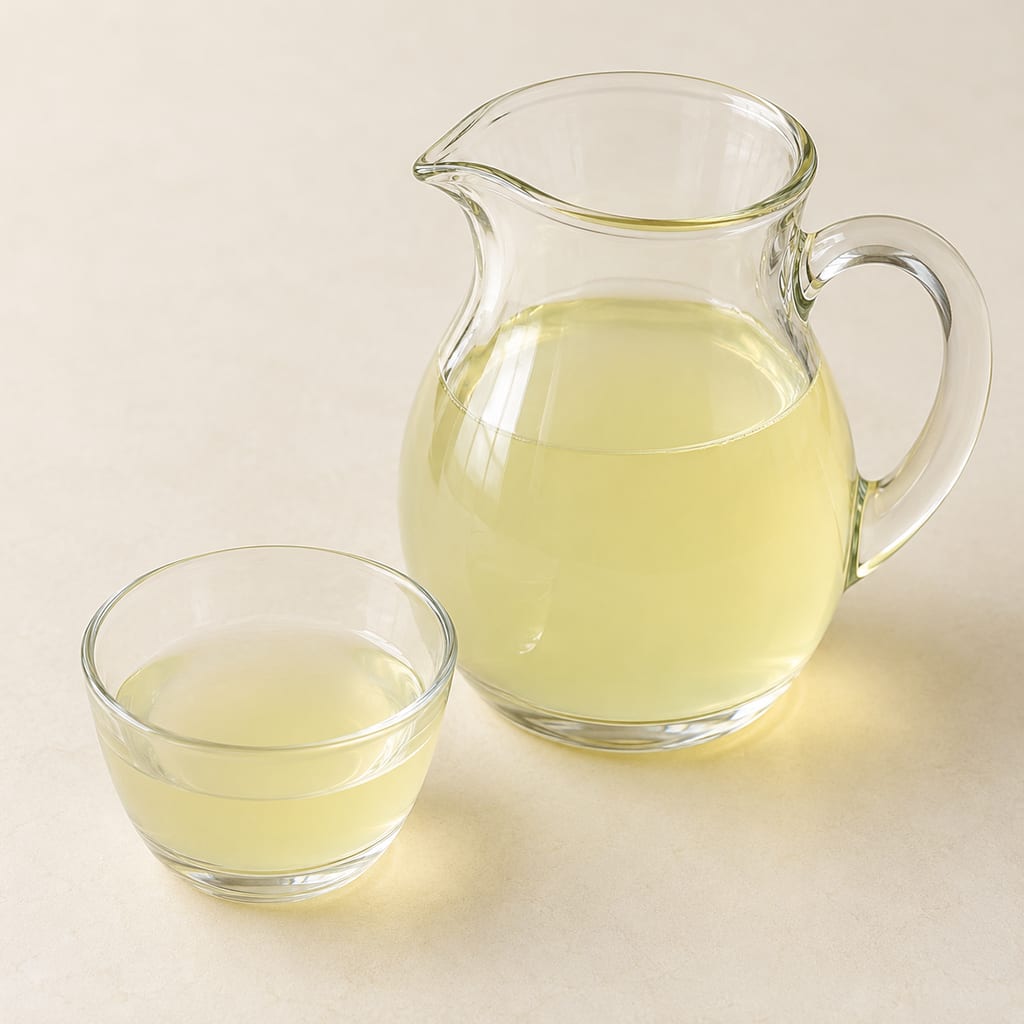
Acid whey is liquid left after acid coagulation of milk, including cultured dairy. Its composition and uses vary. Icelandic sour skyr-whey is related, but not automatically the same material.
 FermenteaWhere food goes to change
1086 articles on substrates, cultures and additives.
Acid whey is liquid left after acid coagulation of milk, including cultured dairy. Its composition and uses vary. Icelandic sour skyr-whey is related, but not automatically the same material.
Reindeer milk is milk from female reindeer (Rangifer tarandus). Sámi sources document its former use in cheese and stored foods in parts of Sápmi; one source says reindeer milking no longer occurs in its described context.
Bovine colostrum is the changing first secretion around calving, concentrated in proteins and maternal immune components; it feeds newborn calves and appears in seasonal foods and processed products.
Mare milk is milk produced by a lactating female horse. Its composition varies with breed and lactation; raw milk, pasteurized milk and fermented drinks such as airag or qymyz are distinct forms with different handling and evidence.
Goat milk is the liquid milk of domestic goats, used as a drink, a cheesemaking substrate and the base of regional dairy foods. Its composition varies among animals and farms, and its species name does not say whether it is pasteurized.
Water buffalo milk comes from Bubalus bubalis and appears in regional dairy traditions across Asia and beyond. Its richer average fat and casein profile affects processing, while composition and raw-milk risk depend on the actual supply.
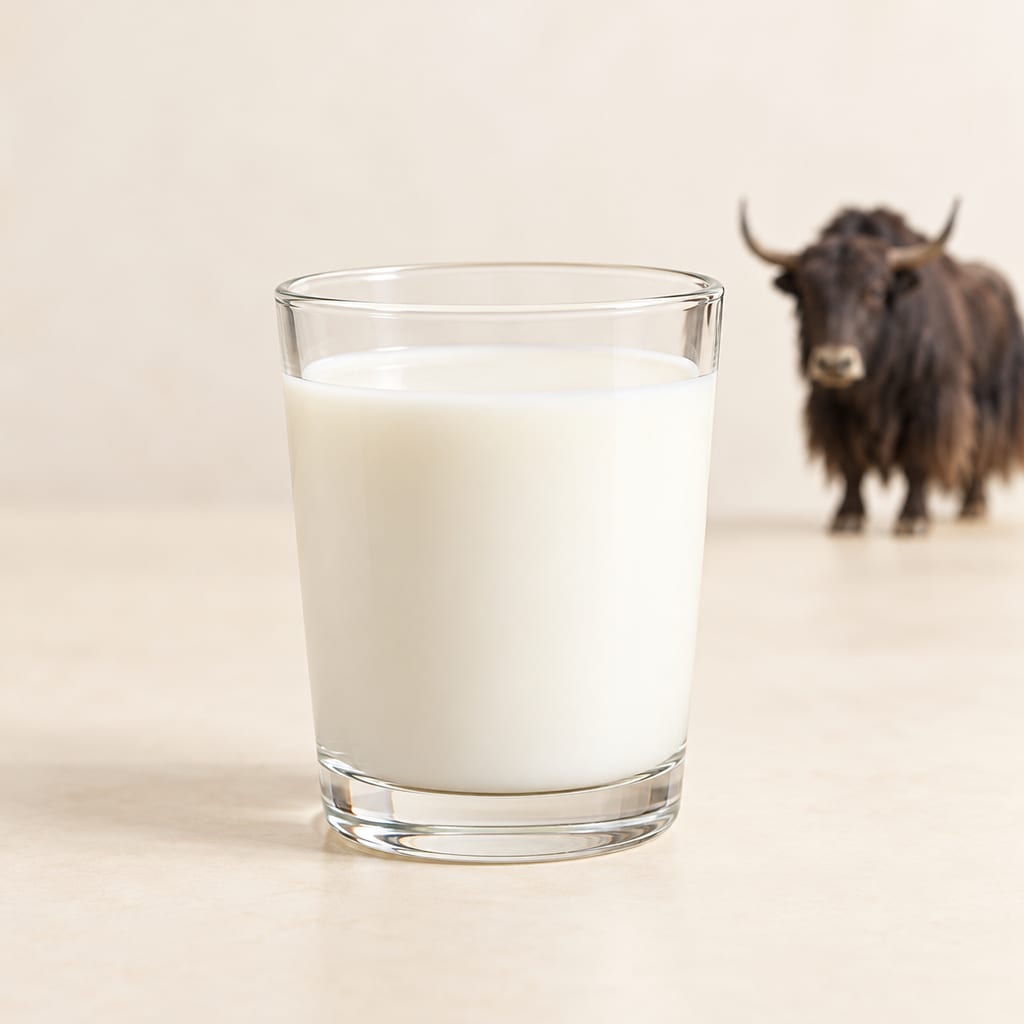
Milk from female domestic yaks is a rich, seasonal ingredient for household tea, butter, curds, and cheeses across highland pastoral systems.
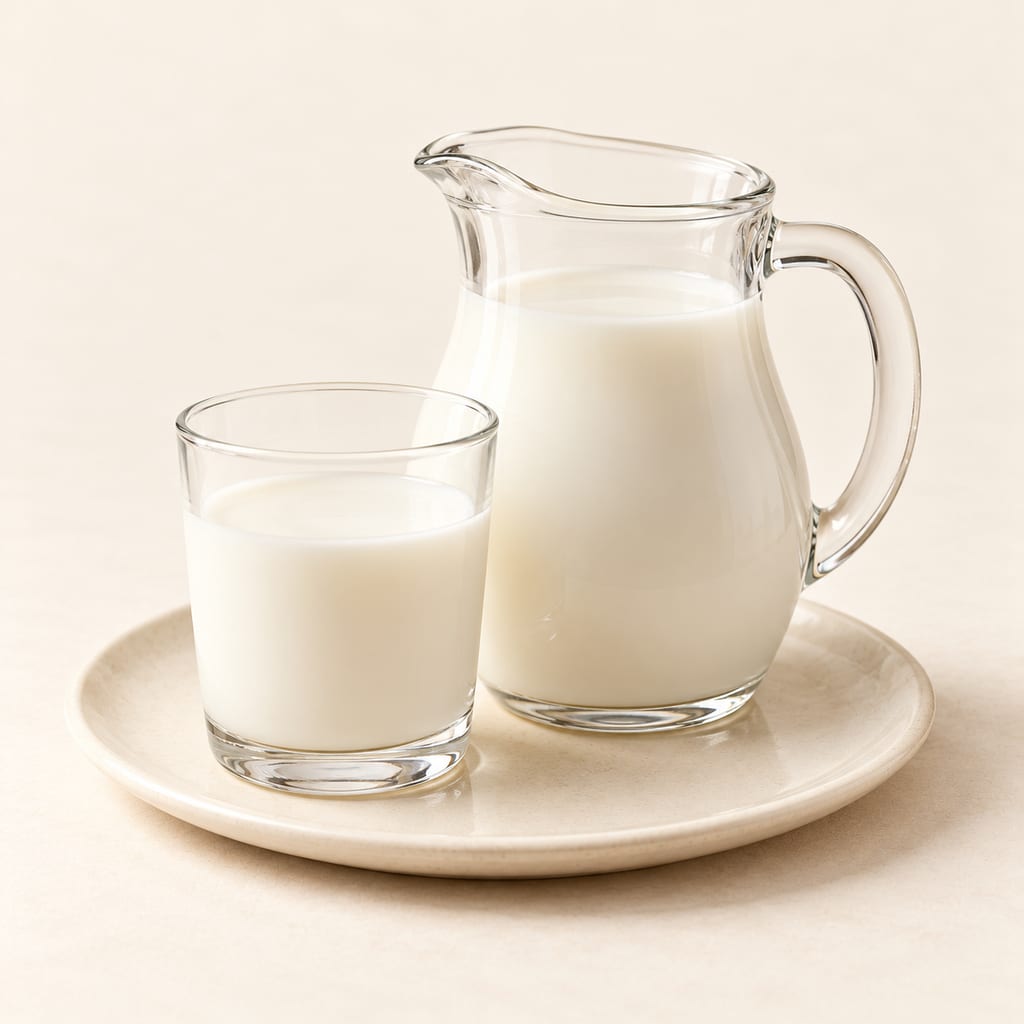
Camel milk from one- and two-humped camels supplies fresh drinks, fermented milks and specialised cheeses across pastoral food systems in Africa and Asia.
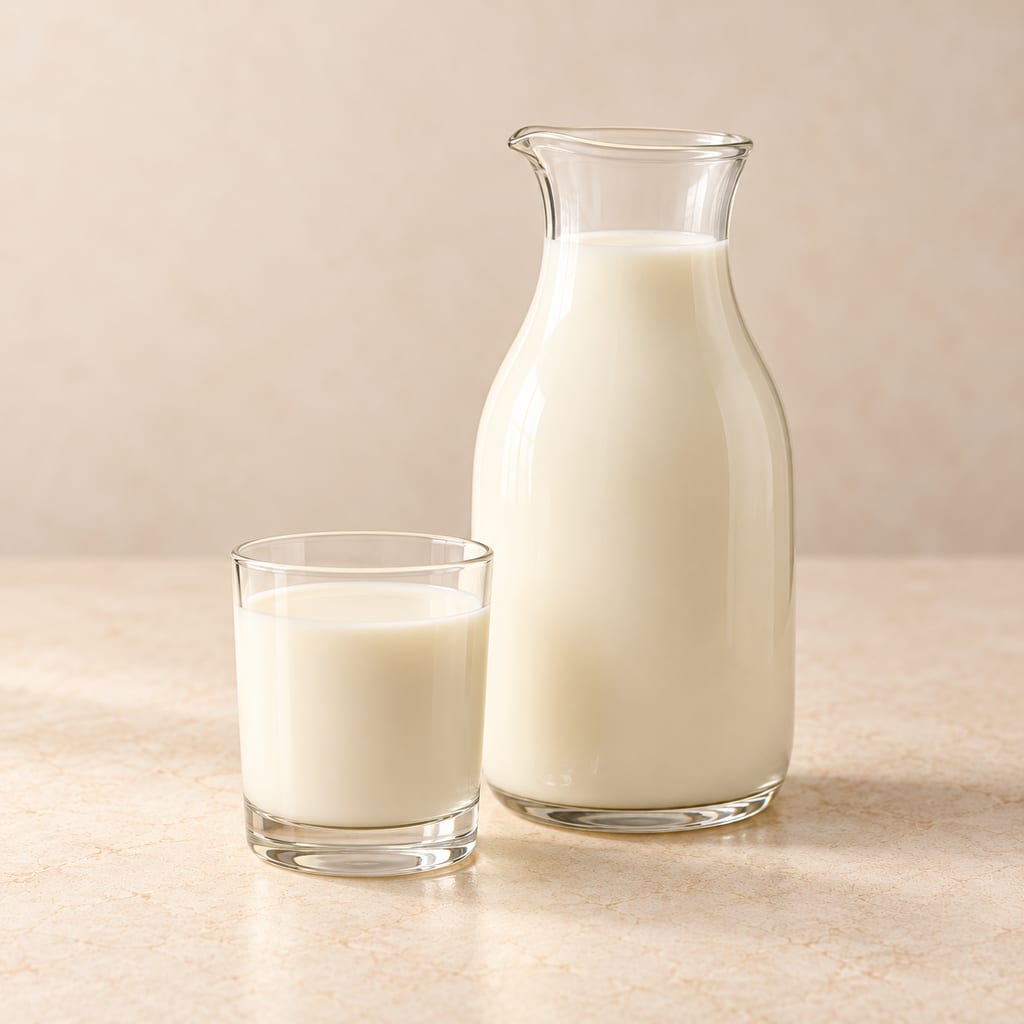
Full-fat fluid milk, available with different heat treatments and fat distributions; the linked Quark method permits homogenized or UHT forms.
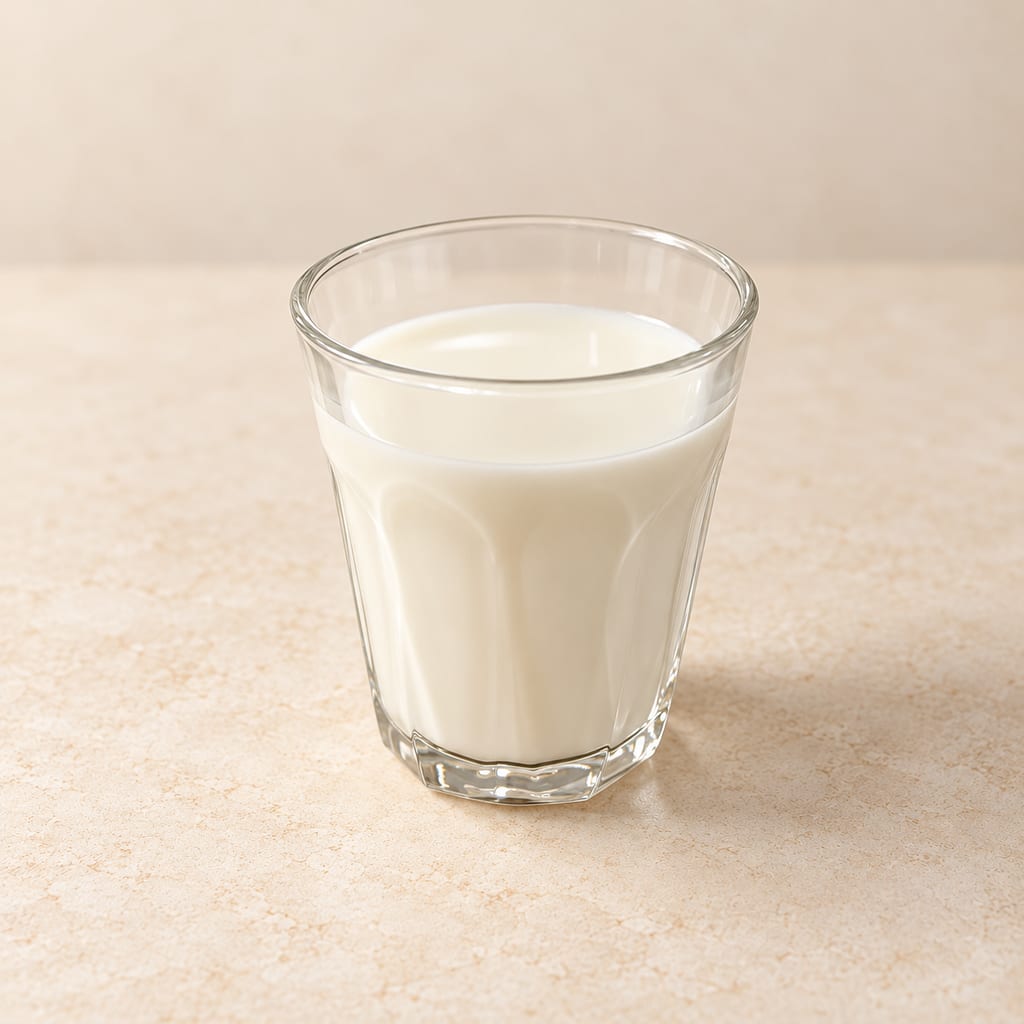
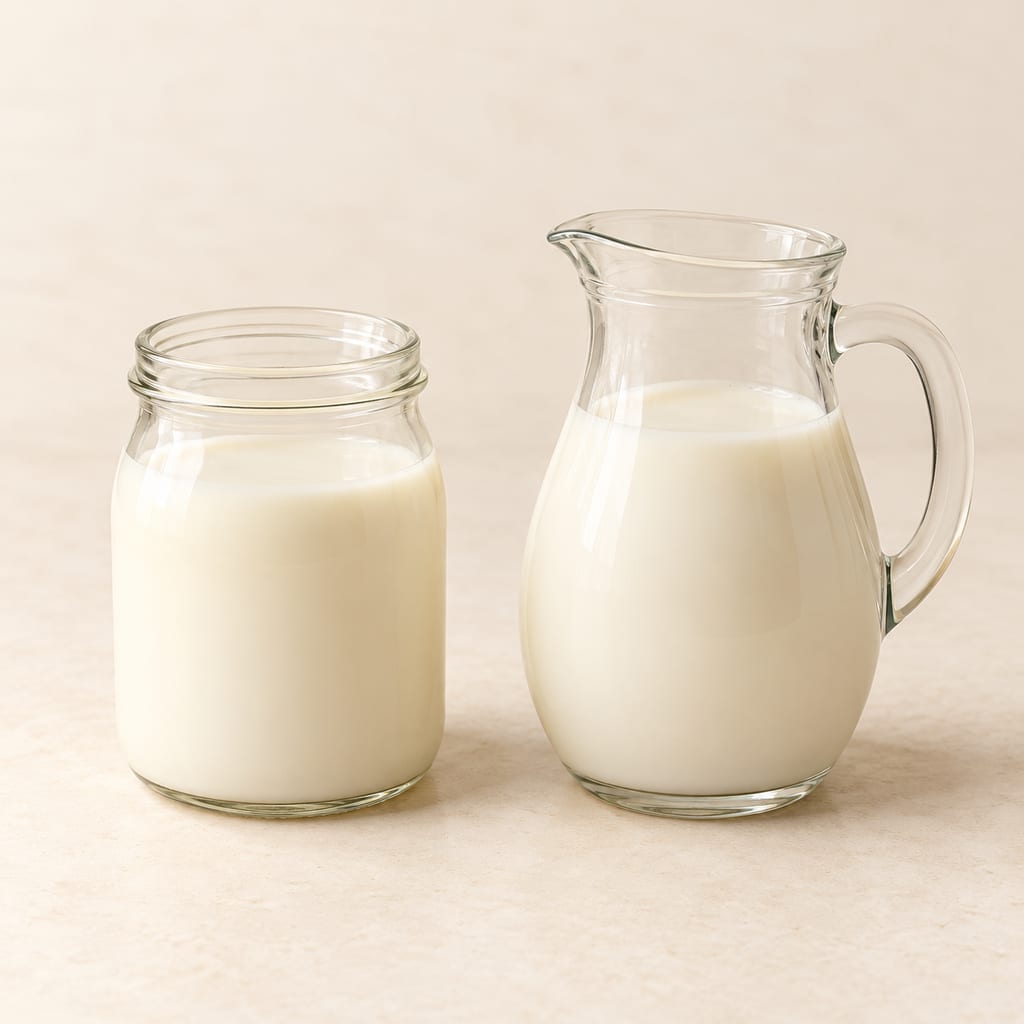
Milk supplies protein, fat and lactose for cultured drinks and cheese. Animal species, composition and processing each affect how it behaves.
Sheep and goat milk supplies the proteins, fat, lactose and minerals from which small-ruminant cheeses are made. Its proportions and composition vary; no fixed ratio is established here.
Liquid milk with most fat removed and a pasteurizing treatment applied, used as a protein-rich base for fresh curds.
Pasteurized mare milk is liquid horse milk treated before sale or fermentation. Its relatively low fat and casein and high lactose distinguish it from cow milk, with composition varying by animal and lactation.
Liquid pasteurized cream used for cultured fresh cheese, with a fat grade whose meaning differs between markets.
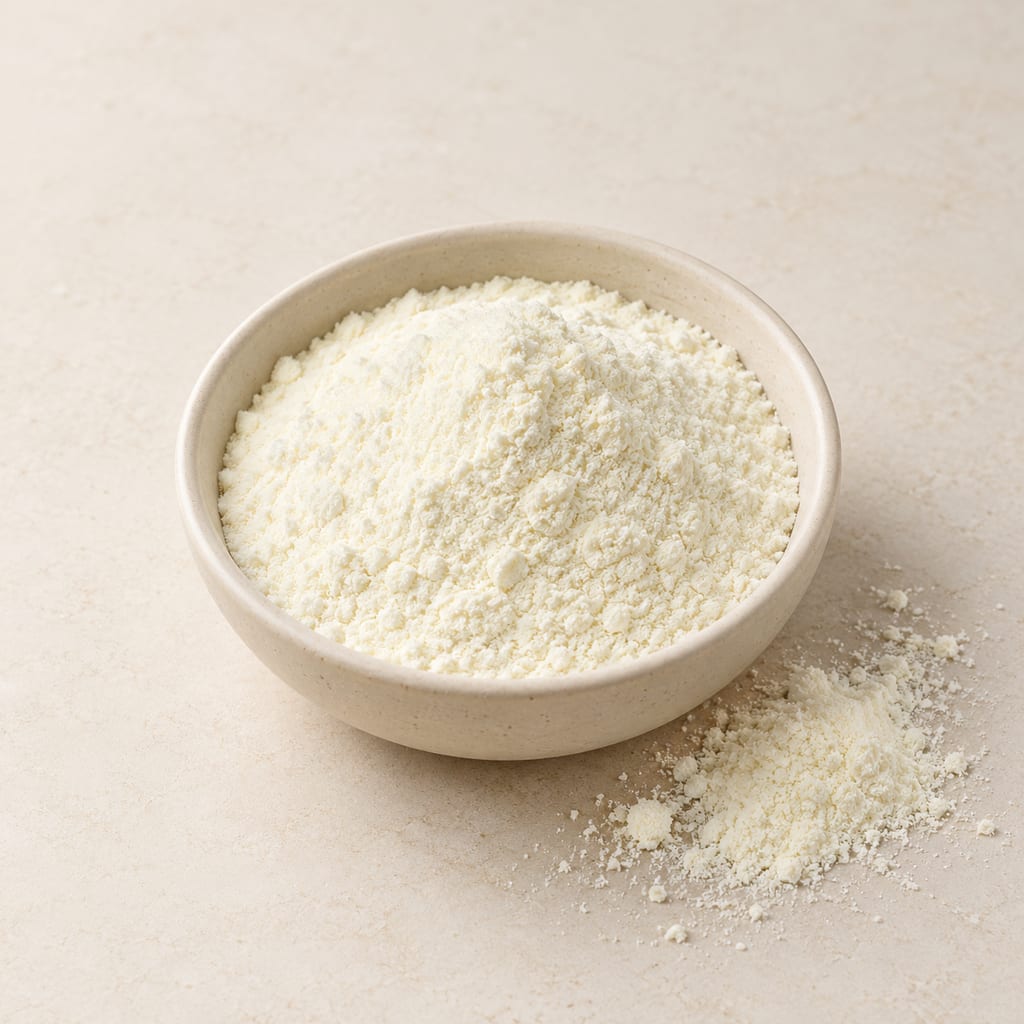
Nonfat dry milk is pasteurized skim milk dried to a pale powder. It supplies milk solids in the linked salami recipe, which names it as a binder but does not establish a measured effect.
Unpasteurized sheep milk with its natural fat retained, documented as the starting milk for Kashkaval. Seasonal composition affects curd behavior; raw status does not establish microbiological safety.
Heat-treated milk from domestic goats supplies lactose, proteins and fat for cultured dairy and cheese; its heat treatment and composition affect how it behaves in the vat.
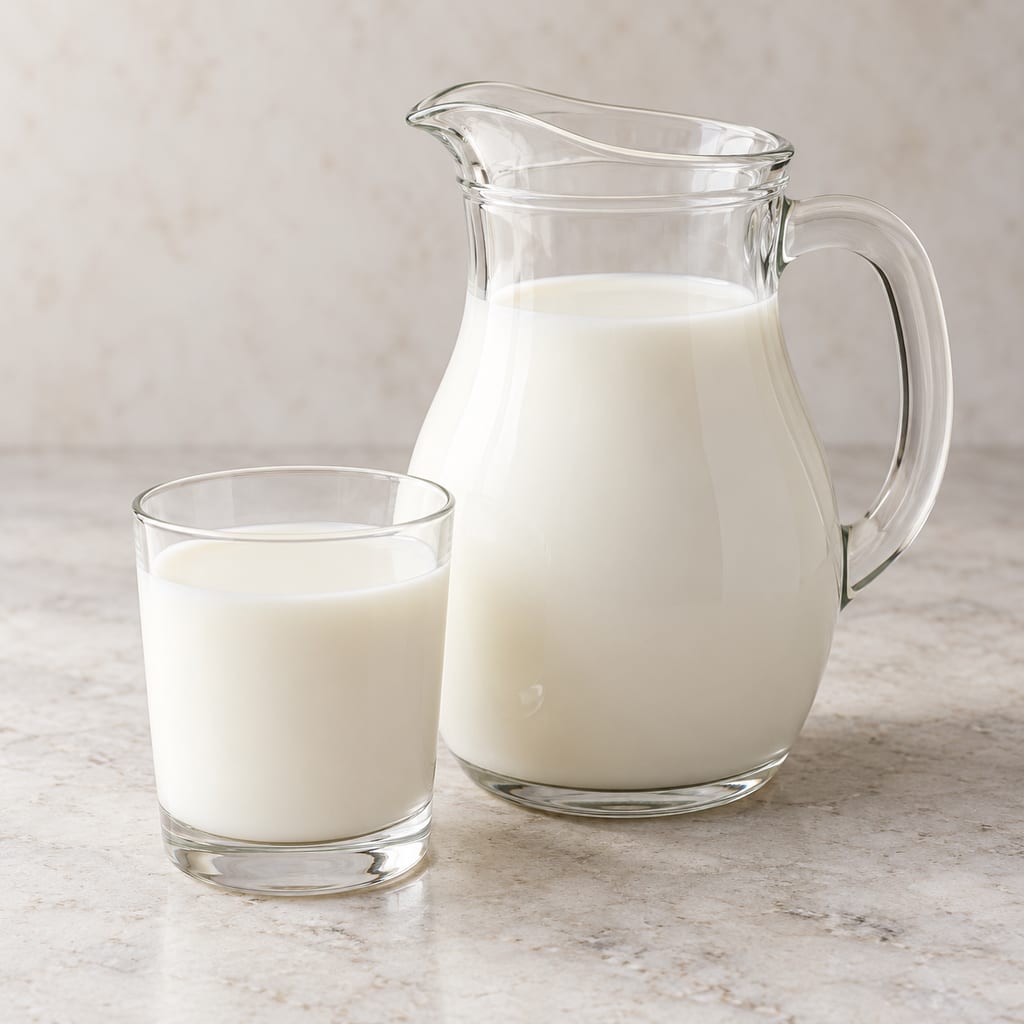
Cow milk and water-buffalo milk are distinct dairy substrates whose fat, protein and mineral balance affects cheese; this ingredient name preserves a choice rather than defining a blend.
Milk from a ewe, used in cheese and cultured dairy foods. Its protein, fat and solids vary with the animal and season; it contains lactose and milk allergens.
A fat-rich liquid separated from milk, used to enrich cheese and sauces, form whipped foams and supply fat for cultured cream and butter.
Cow milk in its whole-fat category supplies fat, proteins and lactose for cooking, cultured dairy and cheese. Heat treatment and homogenization are separate product choices.
Milk with most of its fat separated into cream, retaining lactose and proteins used in cultured curds, starter media and other dairy foods.
Heat-treated dairy cream whose fat globules have not been mechanically homogenized, retaining a form used for churning cultured and sweet-cream butter.
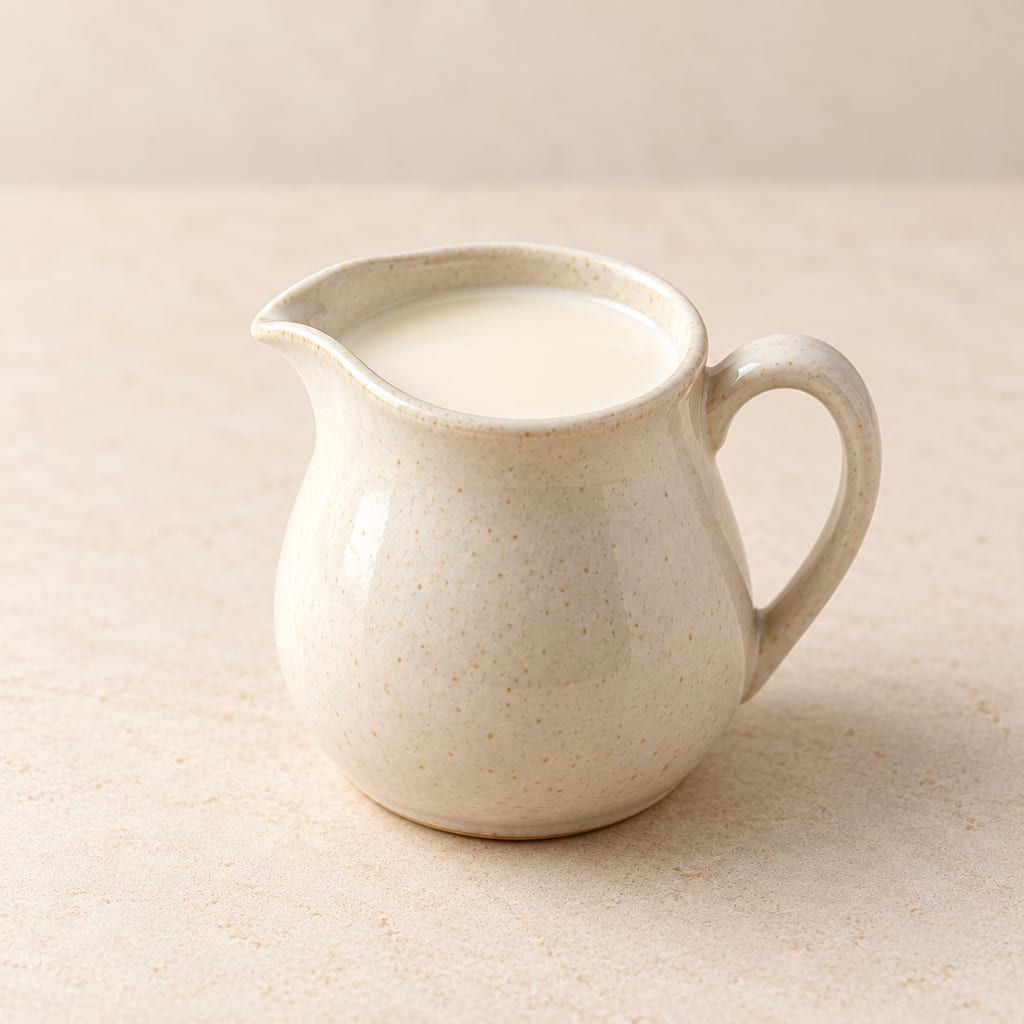
The fat-rich fraction of milk, used as a pouring ingredient, a whipped foam, a cultured dairy substrate or the starting material for butter.
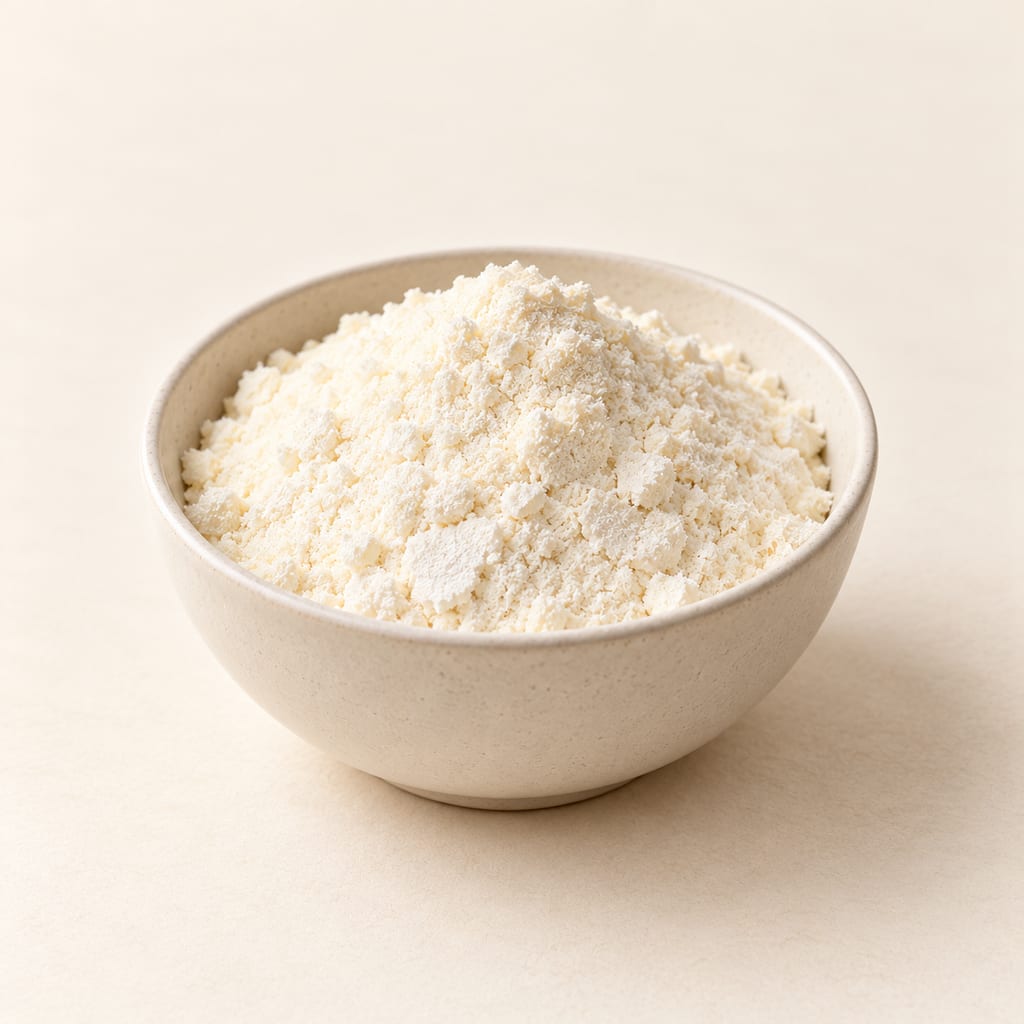
Dry milk is a family of dairy ingredients made by removing most water from milk or cream. The name includes distinct whole, partly skimmed and nonfat powders; fat level, heat treatment and particle form determine handling and use.
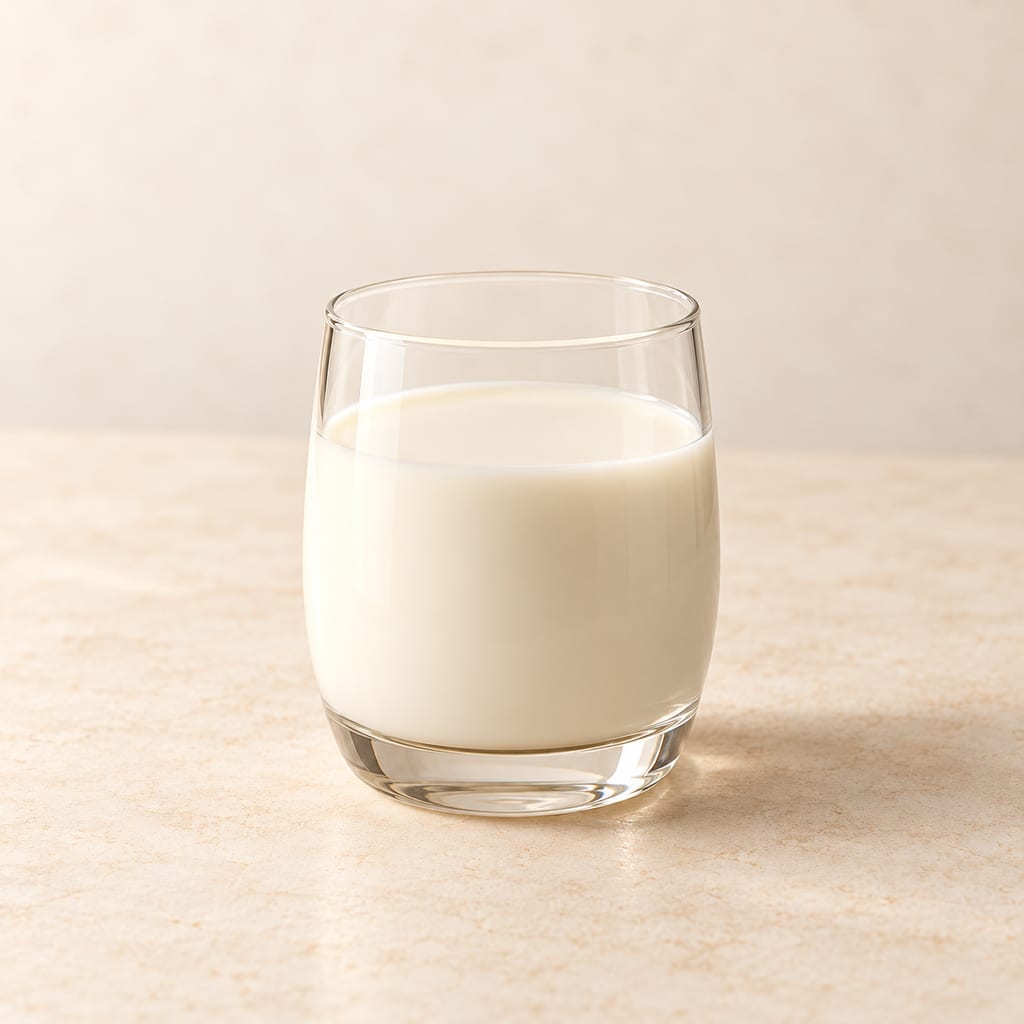
Full-fat milk given conventional pasteurization, selected in linked cultured-milk and cheese methods for its composition and treatment.
Whole milk retains its milkfat and brings fat, casein, lactose, minerals and water to the table; species and processing still shape how it tastes and sets.
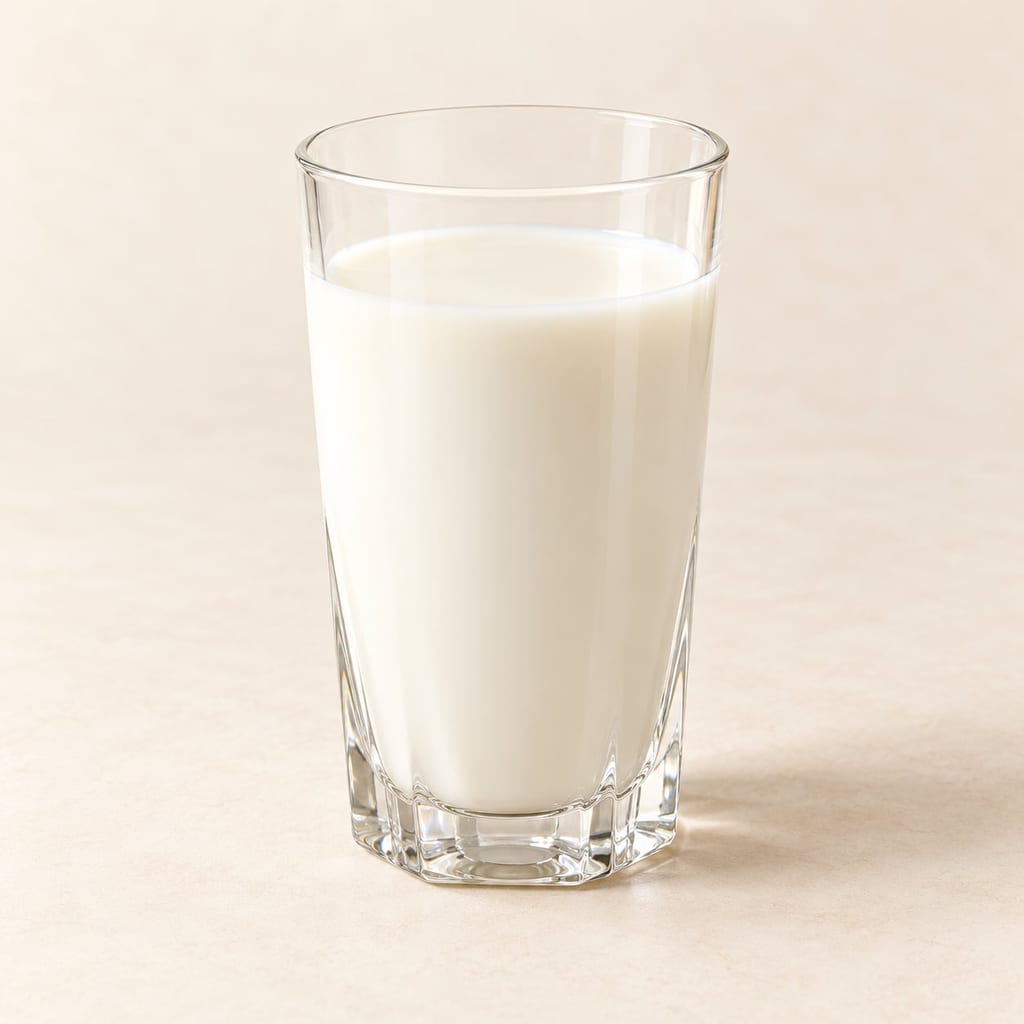
Milk is the fluid produced by dairy animals. Its species, fat level, heat treatment and handling shape the way it can be drunk, cultured or turned into curd.
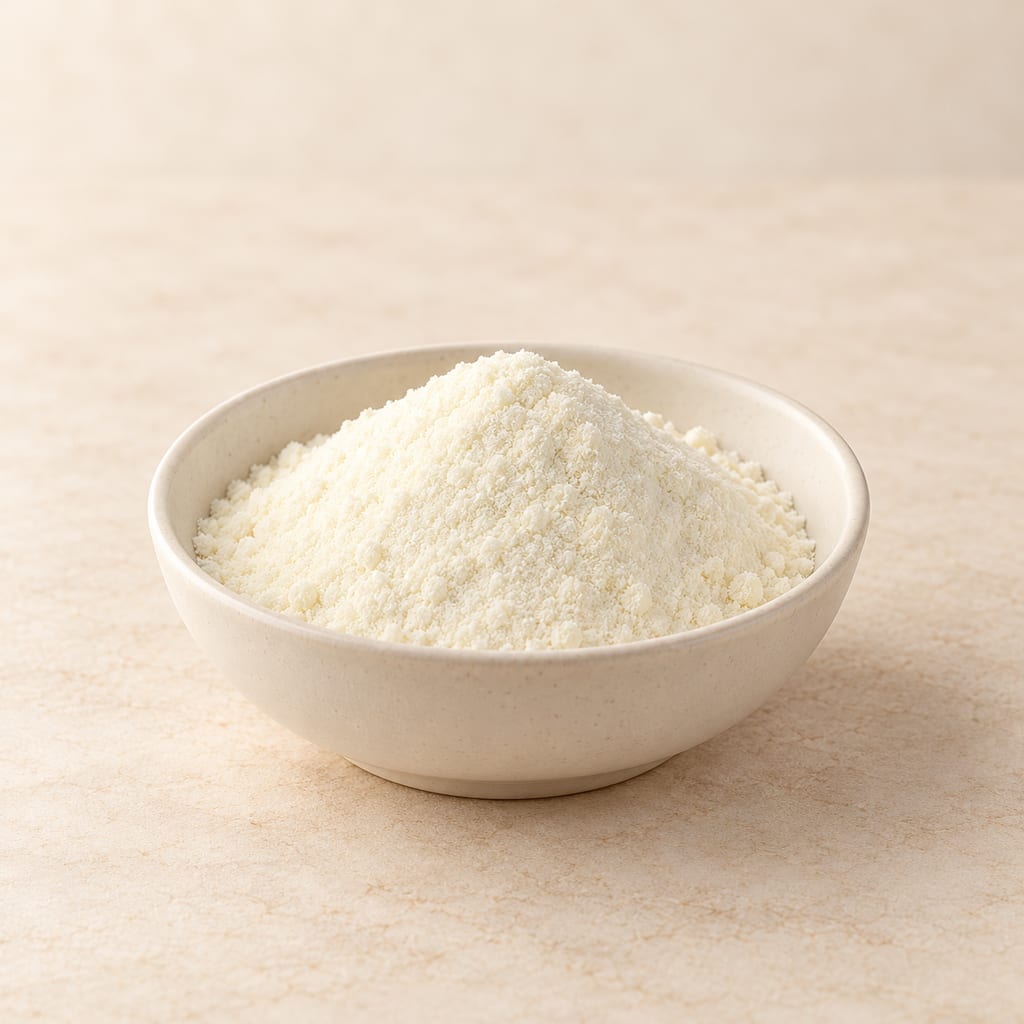
Nonfat dry milk powder is dried skim milk that adds protein, lactose and minerals without much fat. It supplies milk solids for cultured dairy, baking and frozen desserts.