



























































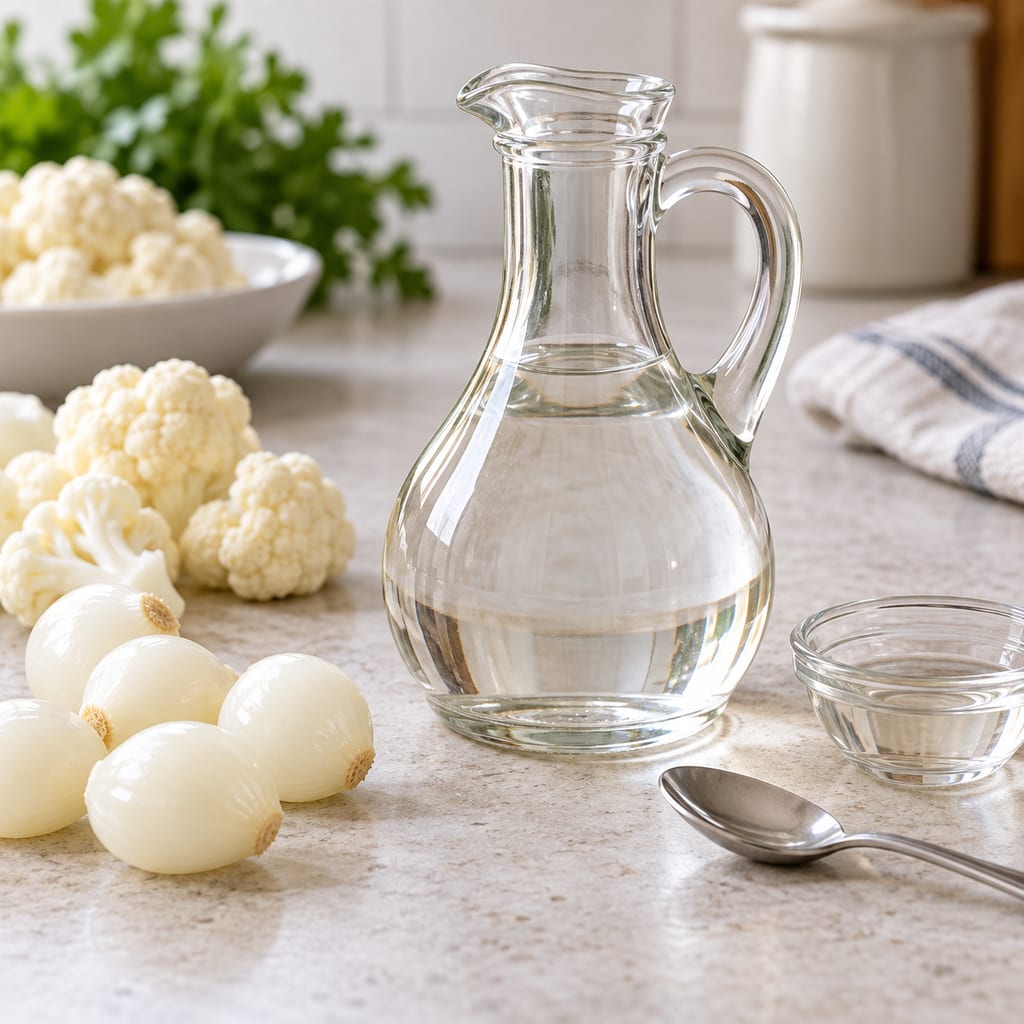
Spirit / distilled white vinegar
A clear, sharp vinegar made by acetifying alcohol. Its restrained color and aroma suit pickles, sauces and dressings where darker or more aromatic vinegars would change the result.
 FermenteaWhere food goes to change
1504 records with their sources, across 11 categories.
 Fermented, enzyme-ripened and mixed seasonings328
 Fruit preserves10
 Legume, seed and plant-protein ferments10
 Garum and fish sauces8
 Adjacent and excluded7
 Koji, mold starters and mold-ripened ferments4
 Acid and oil pickles3
 Fermented fruit and fruit-derived foods3
 Vegetable lactic3
 Dairy ferments2
 Smoked salted and dried foods2
 Cheese1
 Not yet classified1Fermented, enzyme-ripened and mixed seasonings328Fruit preserves10Legume, seed and plant-protein ferments10Garum and fish sauces8Adjacent and excluded7Koji, mold starters and mold-ripened ferments4Acid and oil pickles3Fermented fruit and fruit-derived foods3Vegetable lactic3Dairy ferments2Smoked salted and dried foods2Cheese1Not yet classified1
A clear, sharp vinegar made by acetifying alcohol. Its restrained color and aroma suit pickles, sauces and dressings where darker or more aromatic vinegars would change the result.
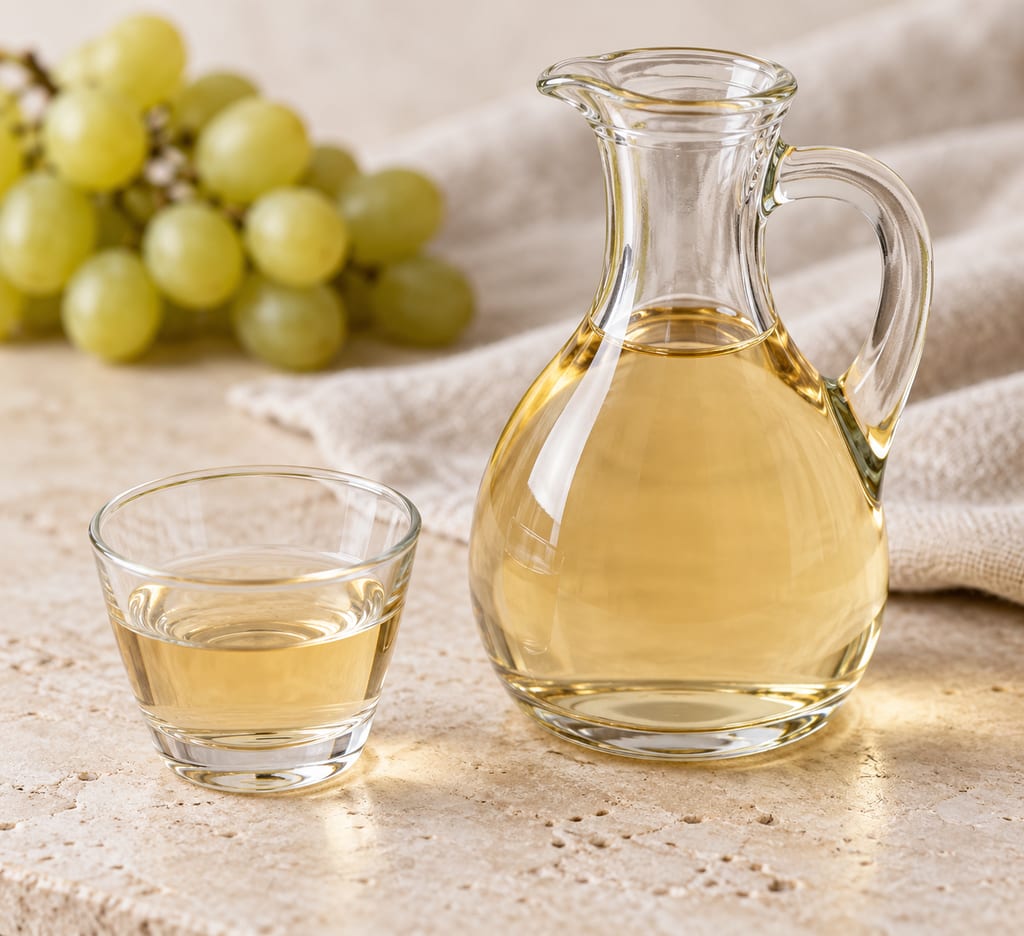
White-wine vinegar is made when acetic acid bacteria oxidise the alcohol in finished white grape wine, yielding a pale, wine-derived souring condiment for dressings, sauces and cooking.
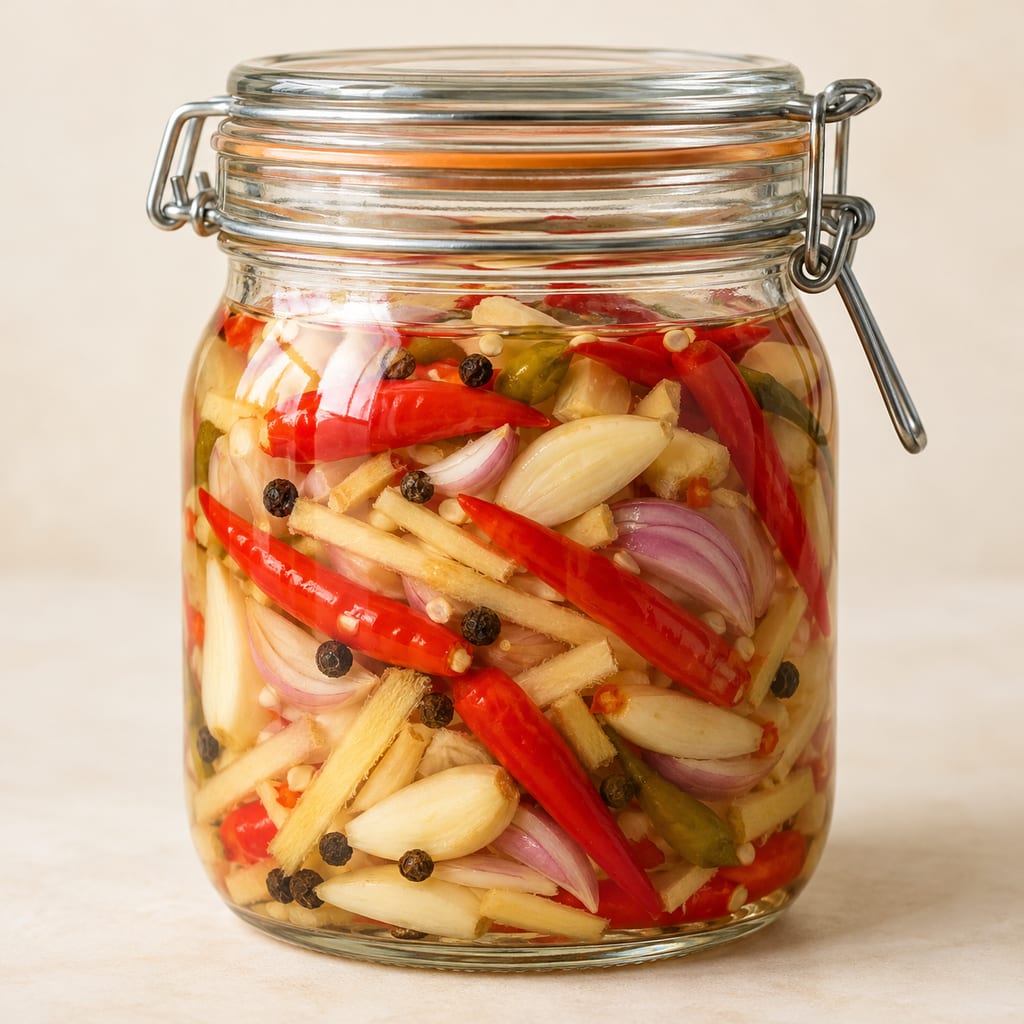
Sinamak is a Philippine spiced vinegar: white, cane or coconut vinegar steeped with chilies, ginger, garlic, onion and peppercorns for days or weeks until it is ready to use as a condiment.
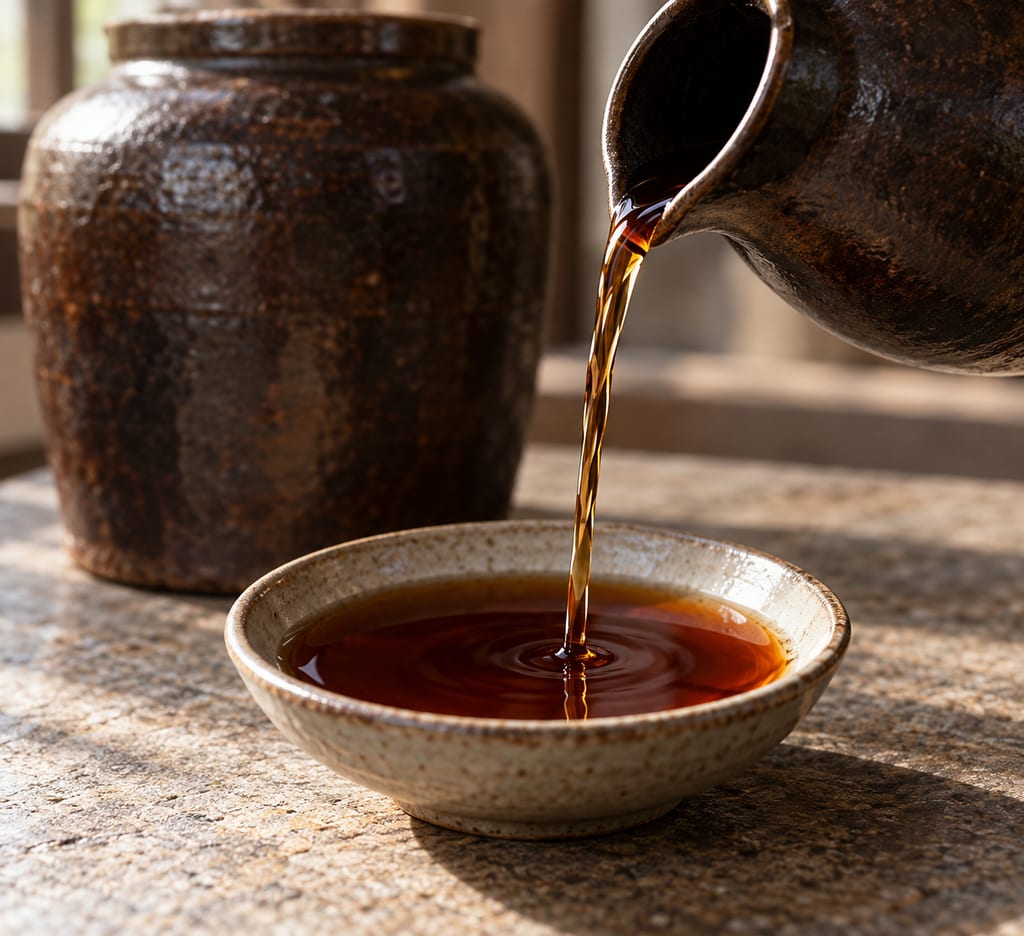
Dark Fujian rice vinegar: glutinous rice and red Monascus koji make a red rice wine, liquid acetification turns it to vinegar, and it ages at least three years.
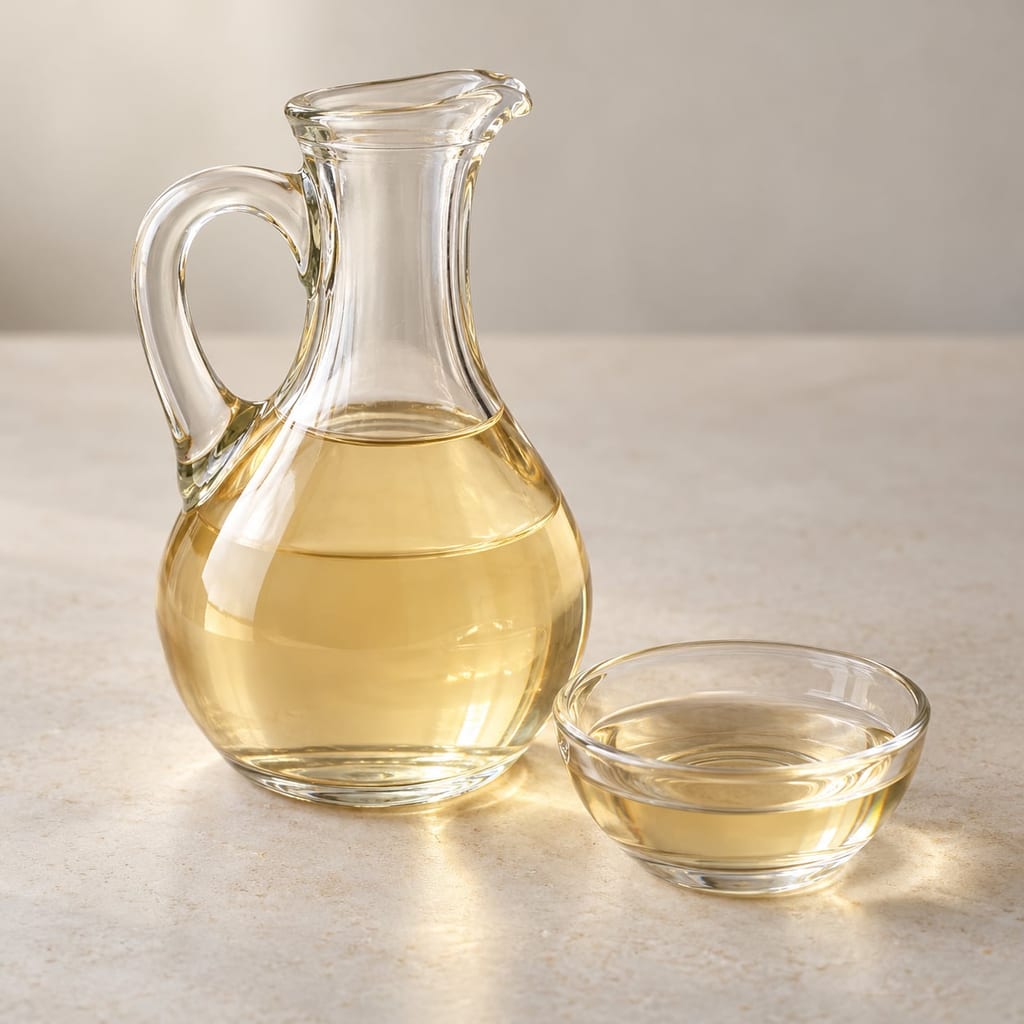
Vinegar made by fermenting the lactose of cheese whey to alcohol with a Kluyveromyces yeast and then to acetic acid; sold in Switzerland as Lactavinaigre from the 1950s.
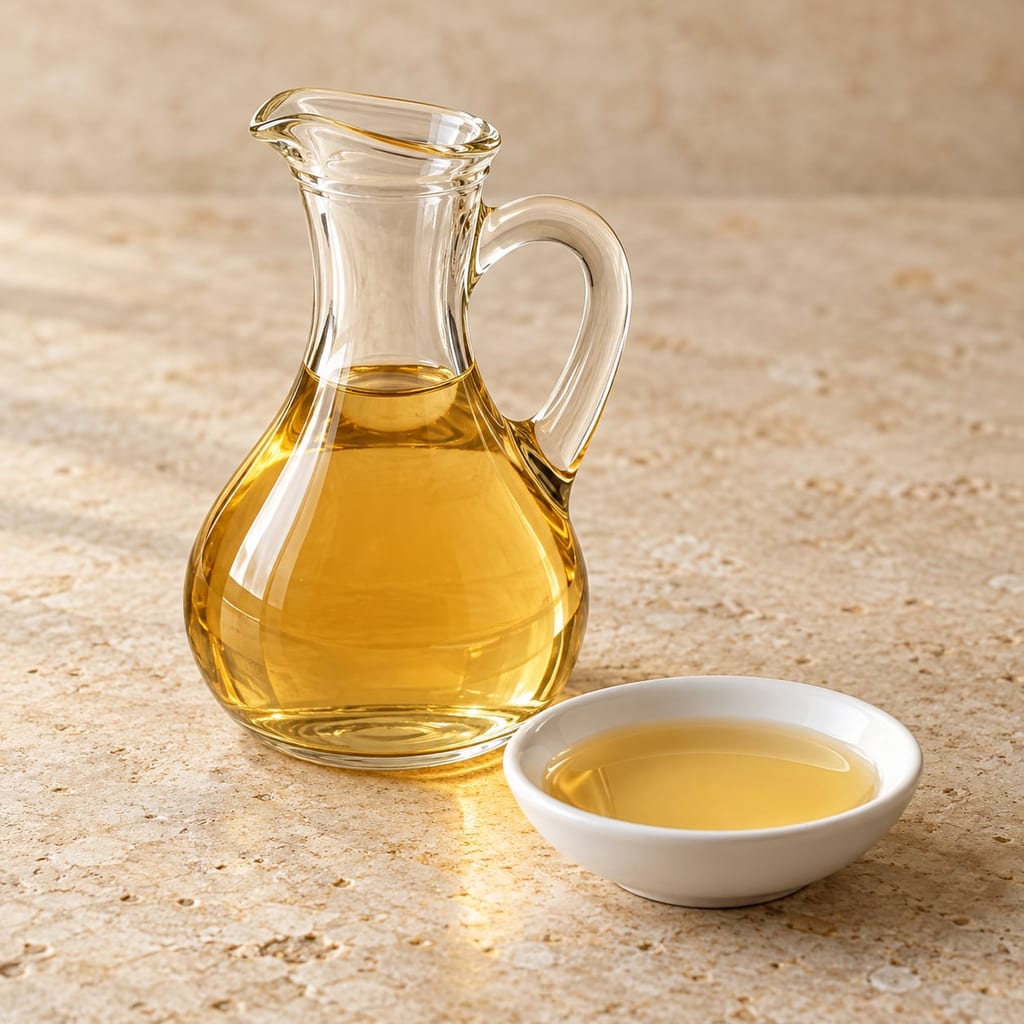
Protected Andalusian wine vinegar made by acetifying certified Montilla-Moriles wine, dry or sweetened with Pedro Ximénez or Moscatel must, and often aged in oak by solera or añada.
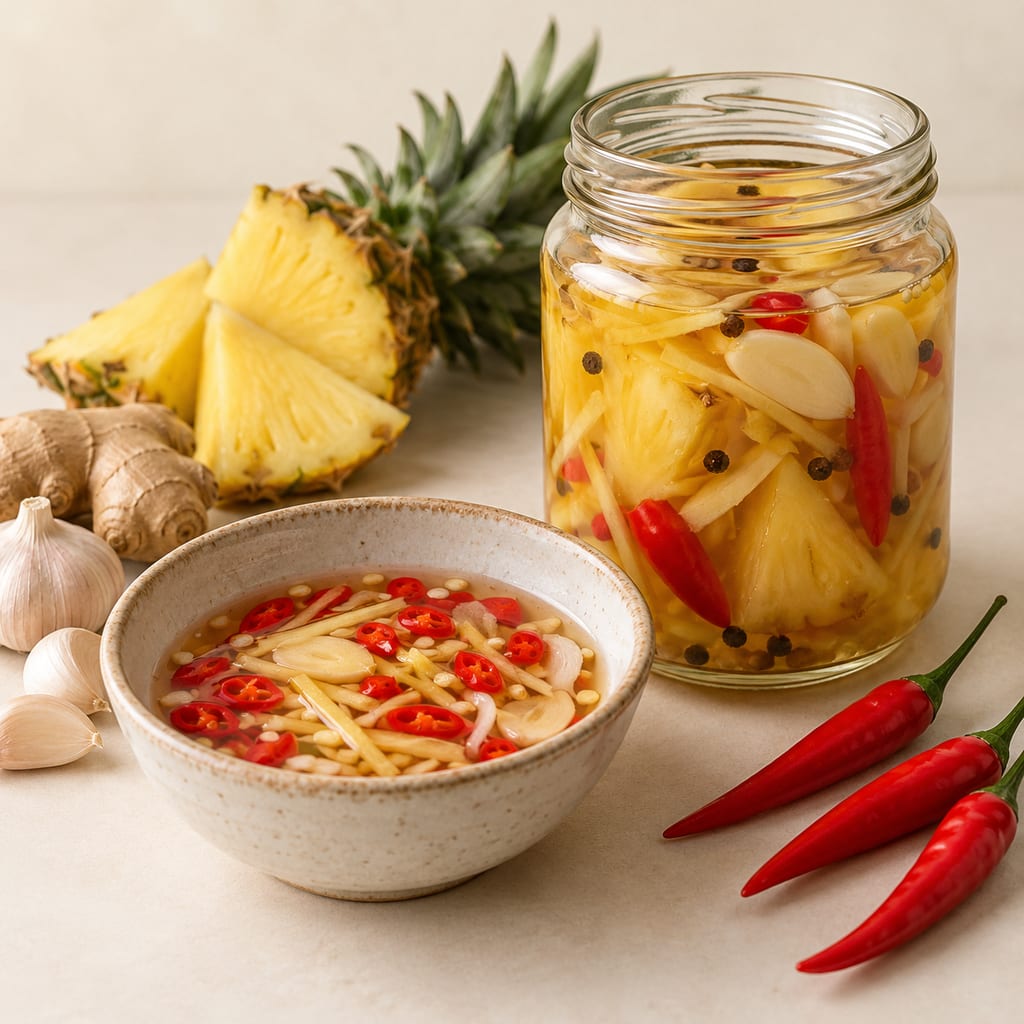
Filipino vinegar dips: vinegar steeped or mixed with chilli, garlic, ginger and other aromatics, from the pineapple sinamak of Iloilo to coconut-vinegar sawsawan. Not a single formula.
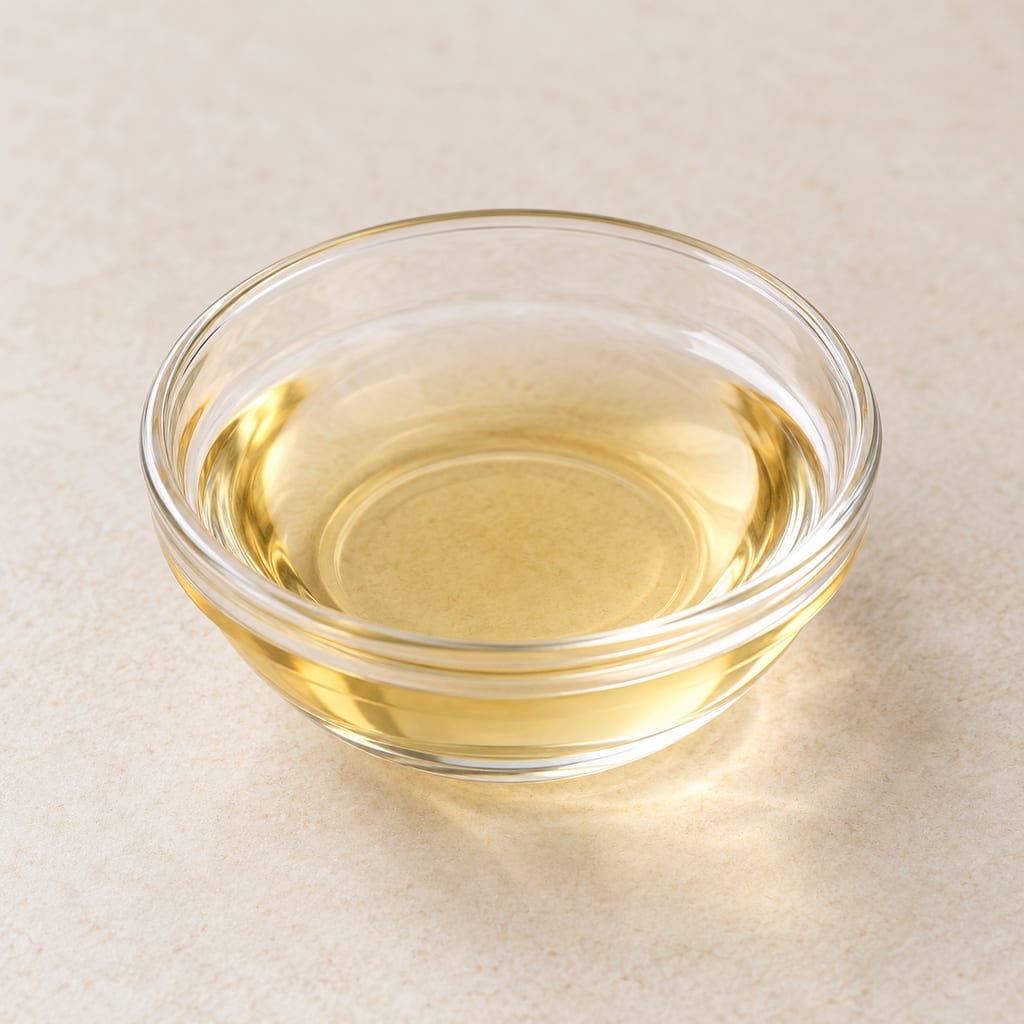
A Japanese mixed seasoning of vinegar, sugar and salt for sushi rice. Ratios vary with the rice batch and style; this version follows Marukan Vinegar's formula for two go of rice.
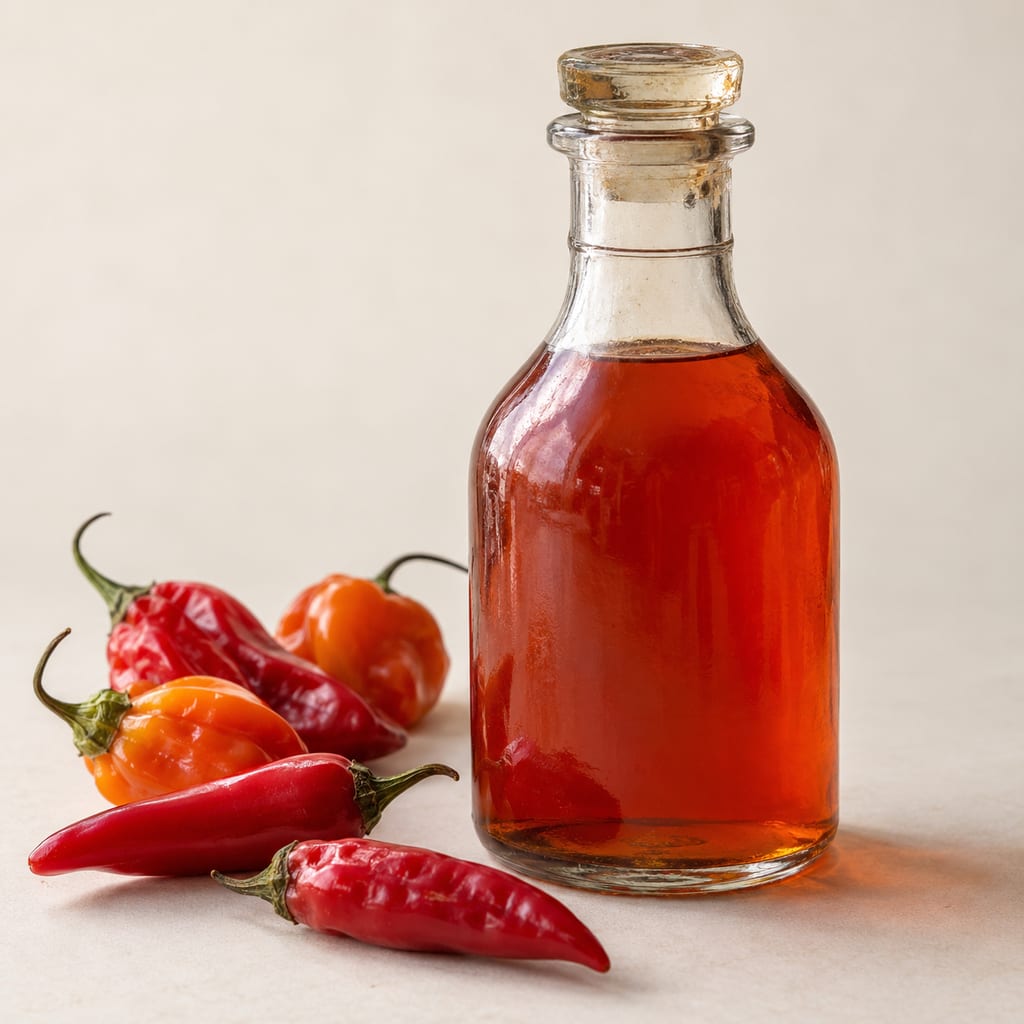
Mary Randolph's pepper vinegar: ripe pepper pods simmered in vinegar until the liquid is reduced to one quart, then strained for use in gravies and catsups. From The Virginia Housewife.

A Dominican table and seasoning condiment of sour orange juice, mixed with lime and salt and bottled raw; garlic, oregano or a hot pepper may be added for meat or a spicier bottle.
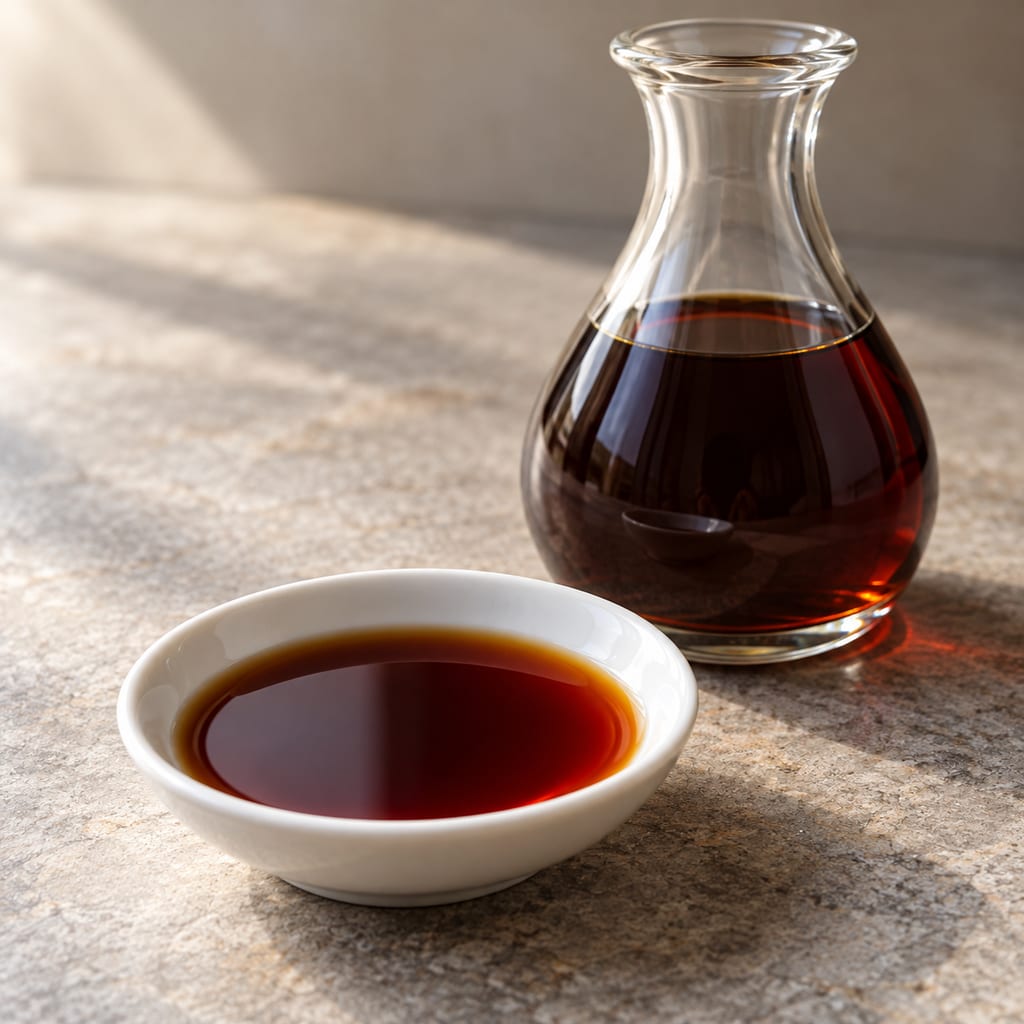
Zhenjiang black vinegar is a Chinese glutinous-rice vinegar made by mixed-culture fermentation, solid-state acetification, roasted-rice extraction and ageing, giving a dark, savoury, mildly sweet condiment.
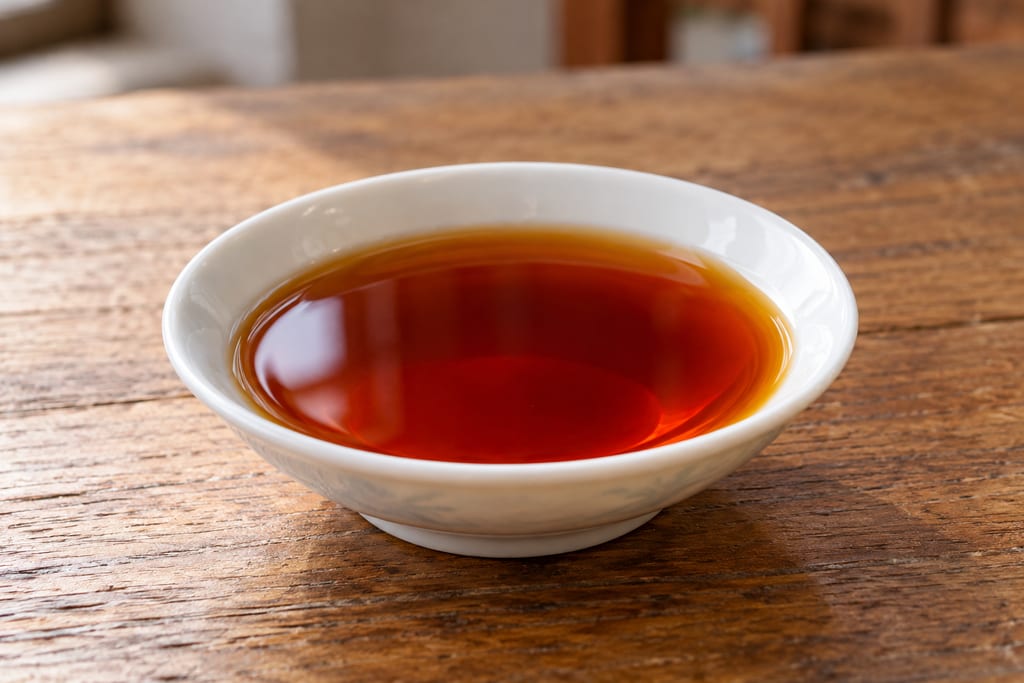
Tianjin grain vinegar of millet and sorghum made with daqu: liquid alcoholic fermentation, two-layer solid-state acetification, and at least three years of outdoor ageing of the grain mash.
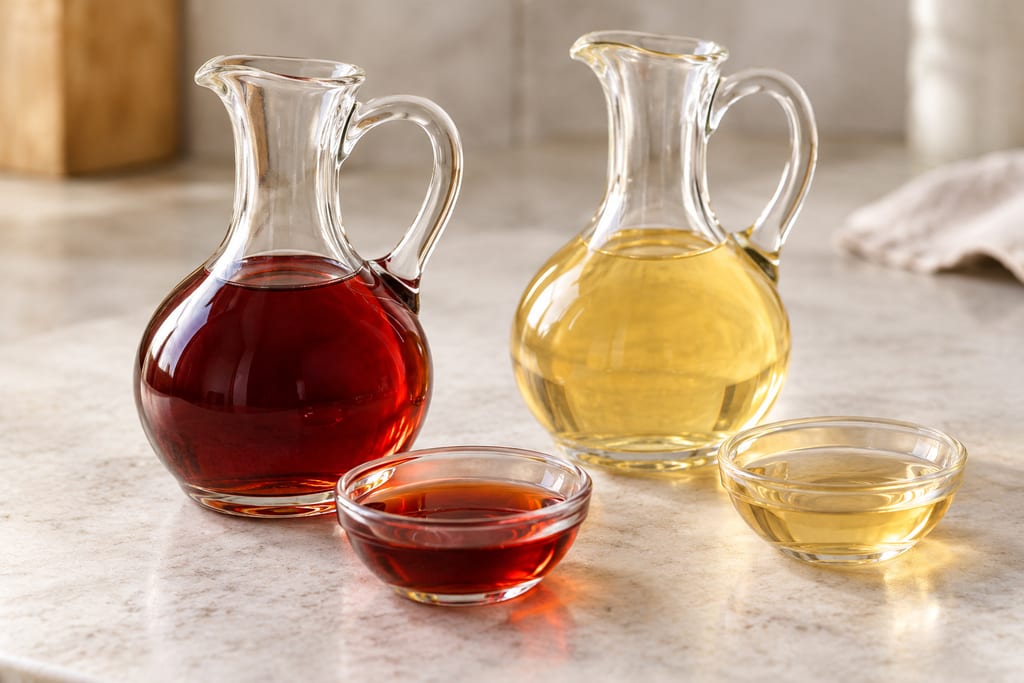
Wine vinegar is made by the aerobic oxidation of wine's alcohol into acetic acid by bacteria, producing a sour, wine-derived condiment used in dressings, sauces, marinades and preserved foods.

Protected Italian vinegar made only from cooked grape must, fermented and aged in a battery of wooden barrels for at least 12 years: sweet, sharp and syrupy.
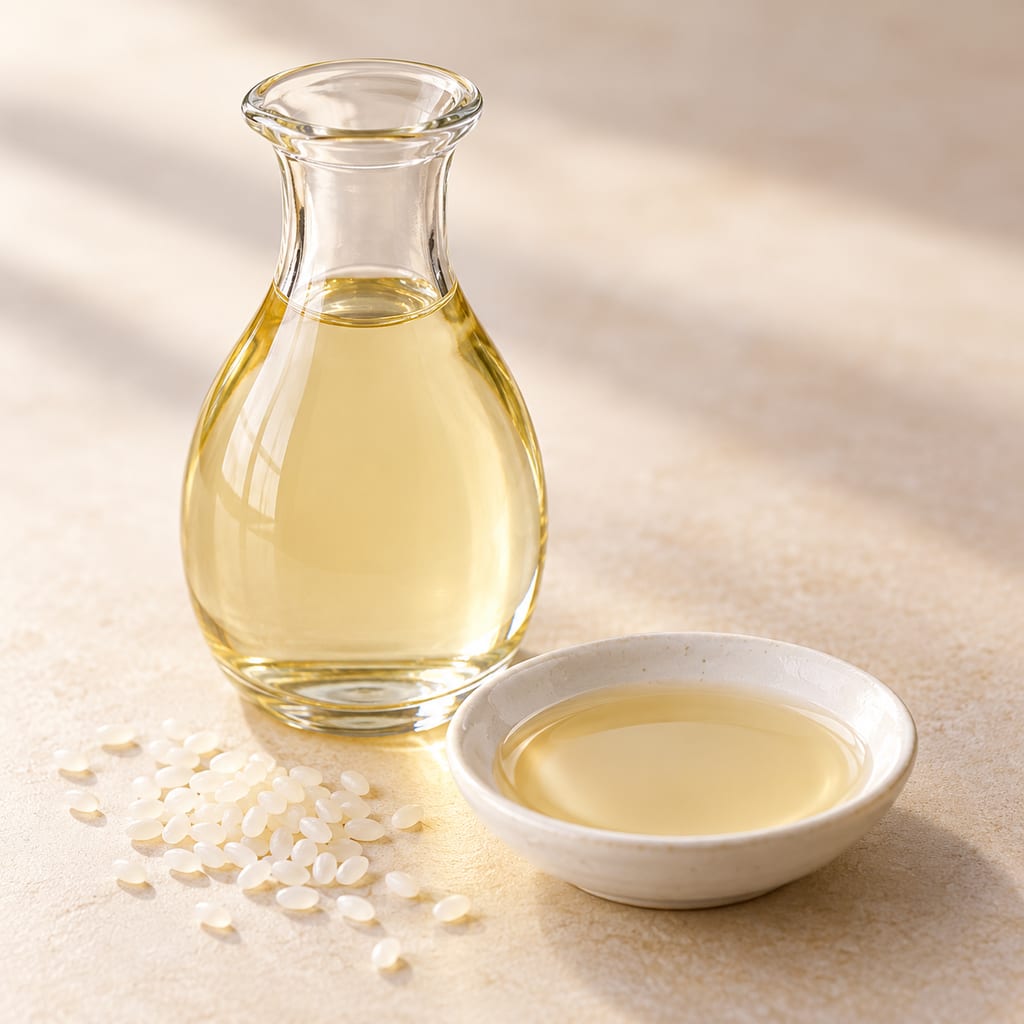
Japanese komezu is a pale, unseasoned rice vinegar made through alcoholic and acetic fermentation; rice, water, koji and yeast shape its character.
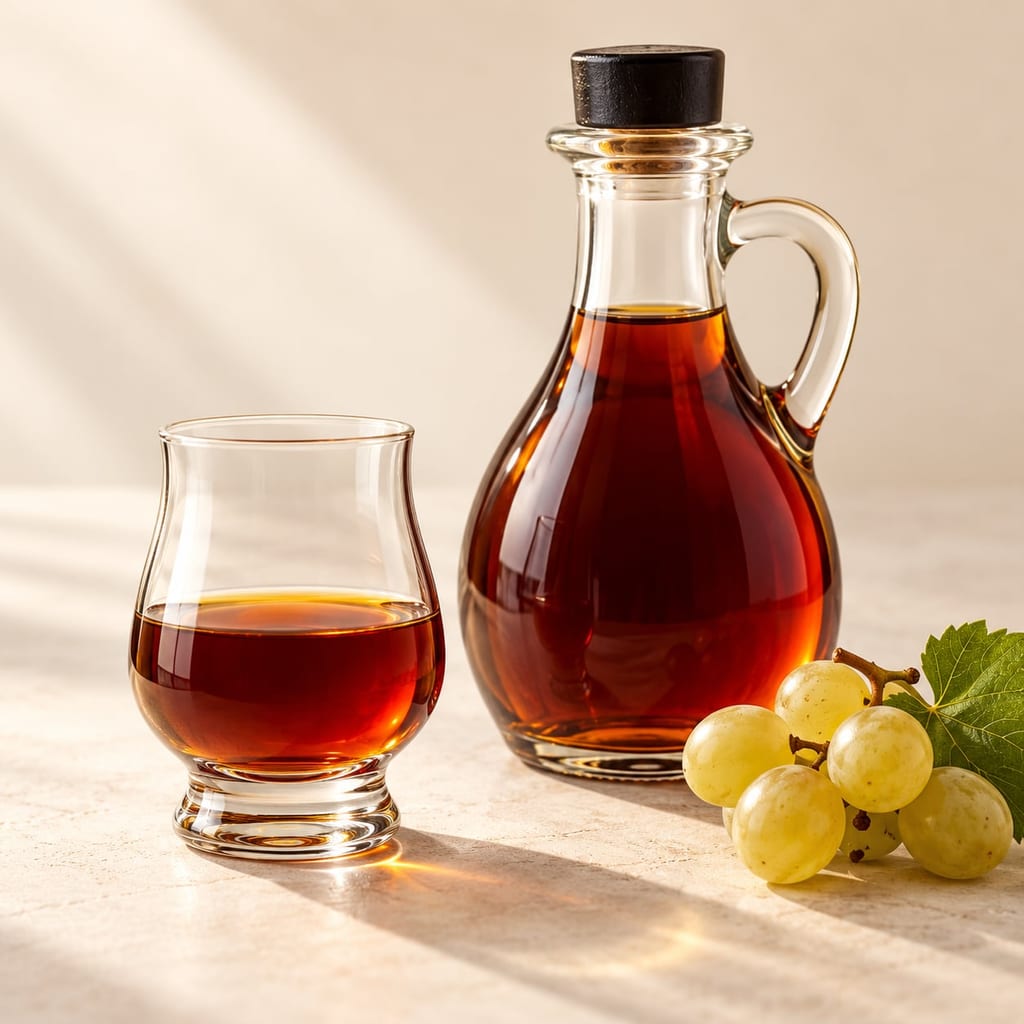
Vinagre de Jerez is made by acetifying eligible Jerez wines and ageing the vinegar in wood. Its protected name belongs to a defined Andalusian zone and a cellar tradition joining wine, oxygen, acetic bacteria and long ageing.
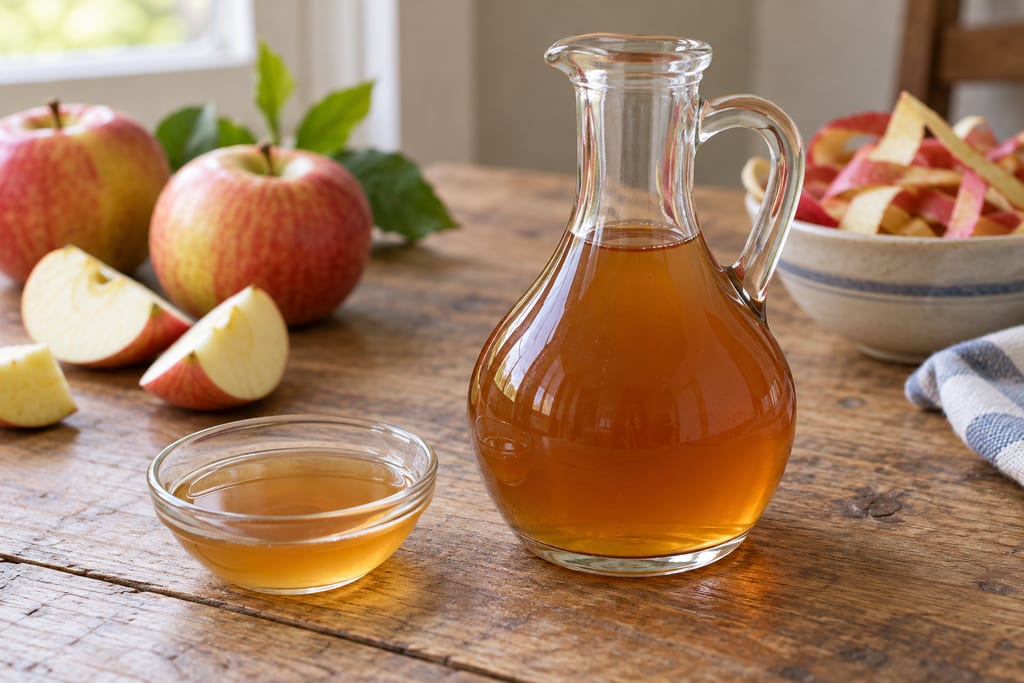
Apple vinegar made at home from whole fruit or peelings and cores, sugared and fermented first to alcohol by yeast and then to acetic acid by bacteria in open air.

Japanese reddish-brown vinegar from sake lees matured about three years, turned to vinegar by acetic bacteria; the vinegar of Handa and Edomae sushi rice.

A Swedish-style spirit vinegar made by fermenting neutral alcohol with live vinegar bacteria, with a separate guide to commercial ättika strengths.
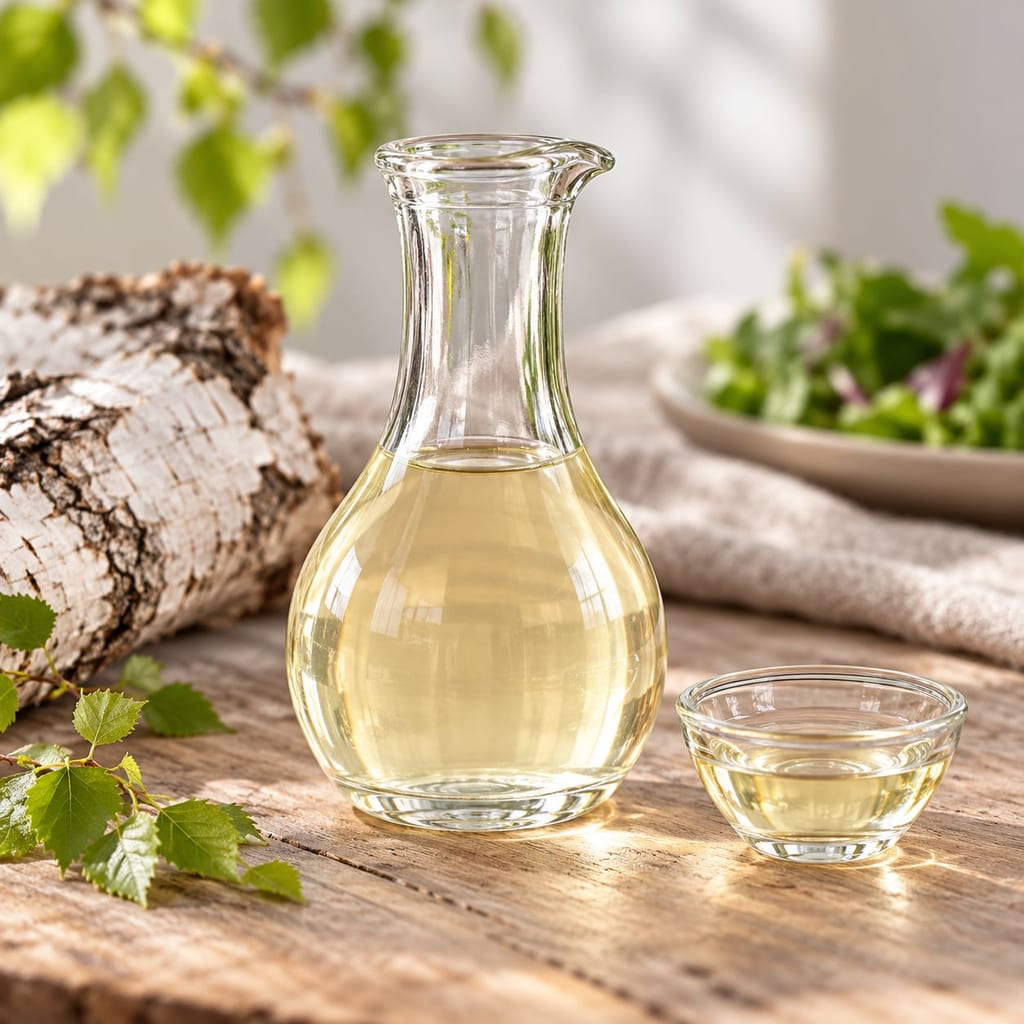
Vinegar from spring birch sap fermented to alcohol and then acetic acid, usually with added sugar or honey because the sap is so dilute; made in Sweden and described in older eastern European accounts.