Built structures
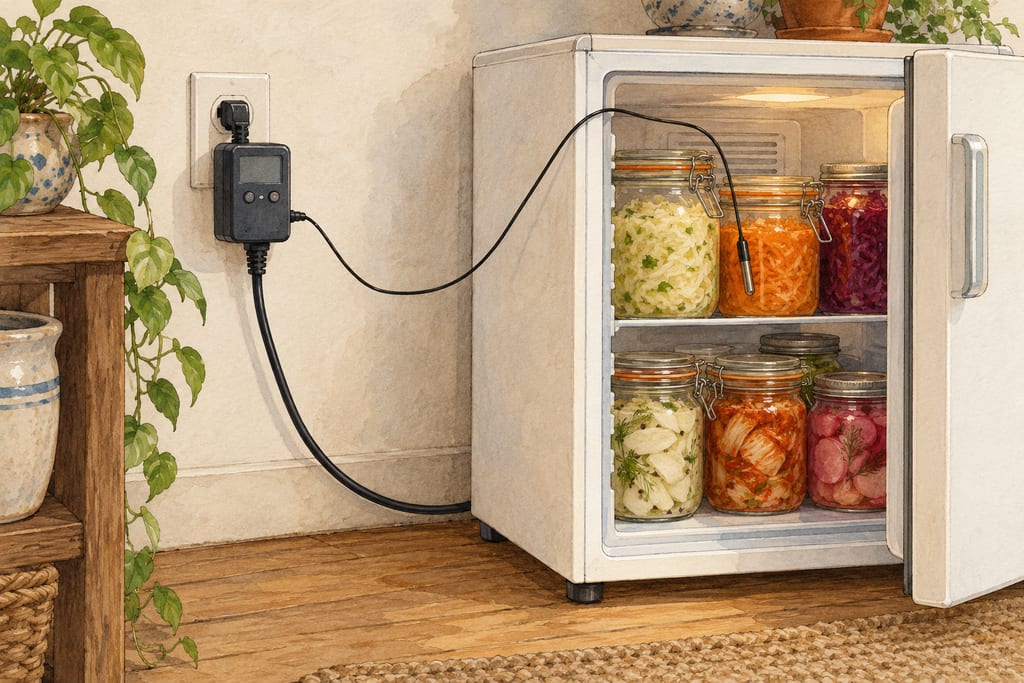
Plug-in temperature controller on an appliance
An appliance plugged into an external controller so a probe, rather than the appliance's own dial, decides when it heats or cools.
 FermenteaWhere food goes to change
626 sourced equipment pages: vessels, tools, appliances and built structures.
The small parts that decide whether a ferment stays anaerobic, moves between vessels, or is measured at all.
An appliance plugged into an external controller so a probe, rather than the appliance's own dial, decides when it heats or cools.
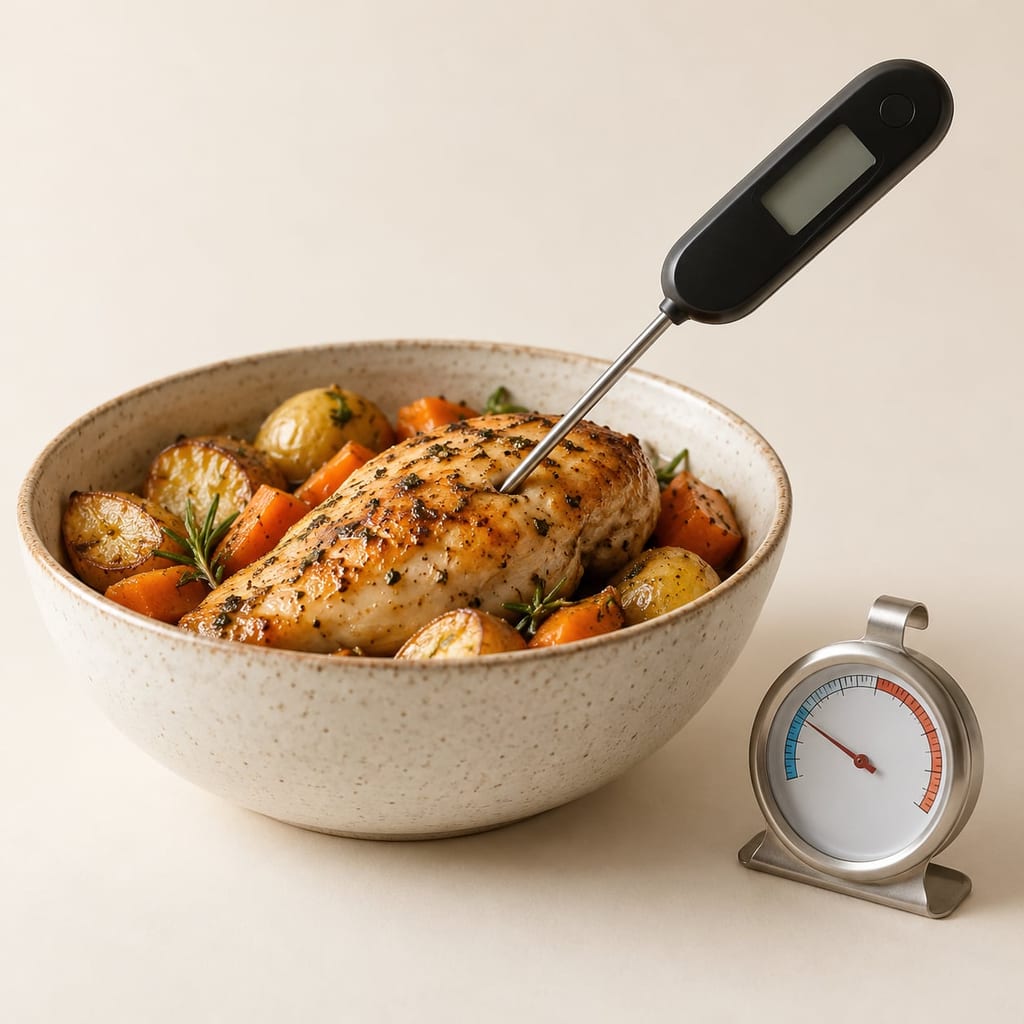
A food probe measures the temperature inside food at the probe tip; a refrigerator thermometer measures the cold storage environment. They answer different questions and cannot establish acidity or validate a preservation process.
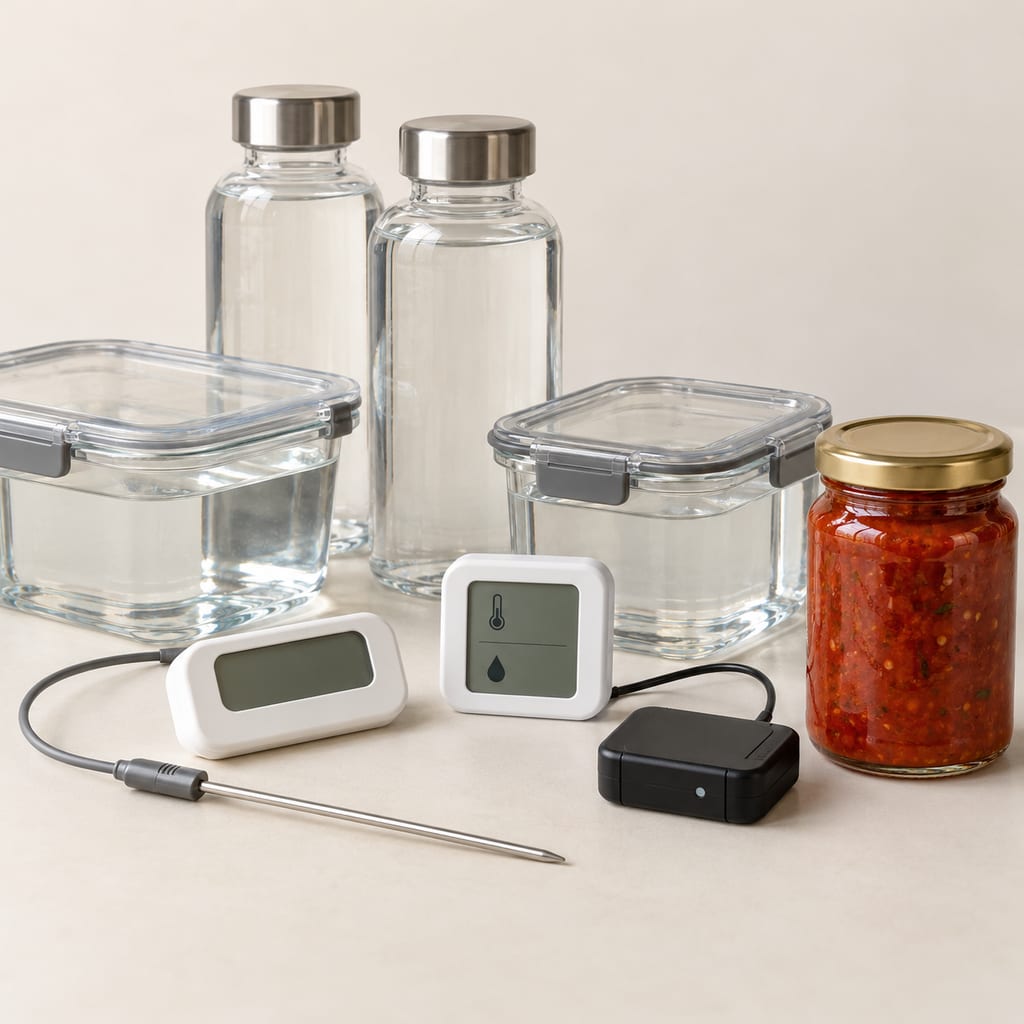
A reference thermometer and hygrometer, data logger and repeatable non-food loads used to map a food chamber before any food goes in.
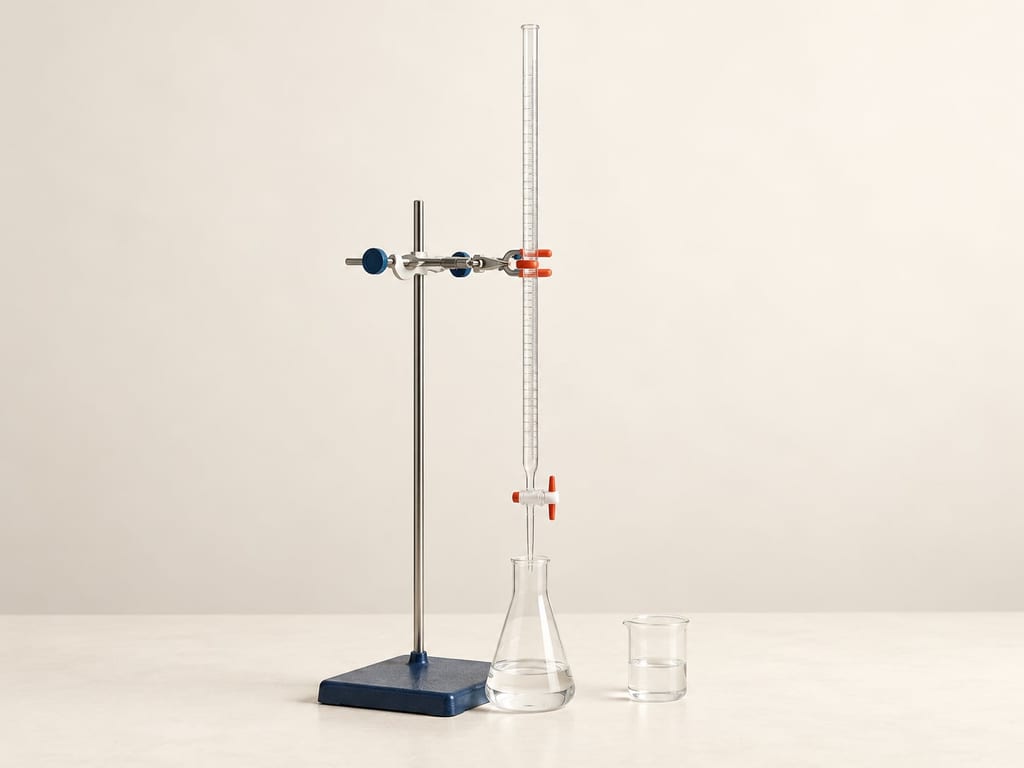
Titration equipment measures how much reagent reacts with a sample to reach a defined endpoint. Glassware, indicators and electronic endpoint detection vary; titratable acidity and pH are related but distinct measurements.
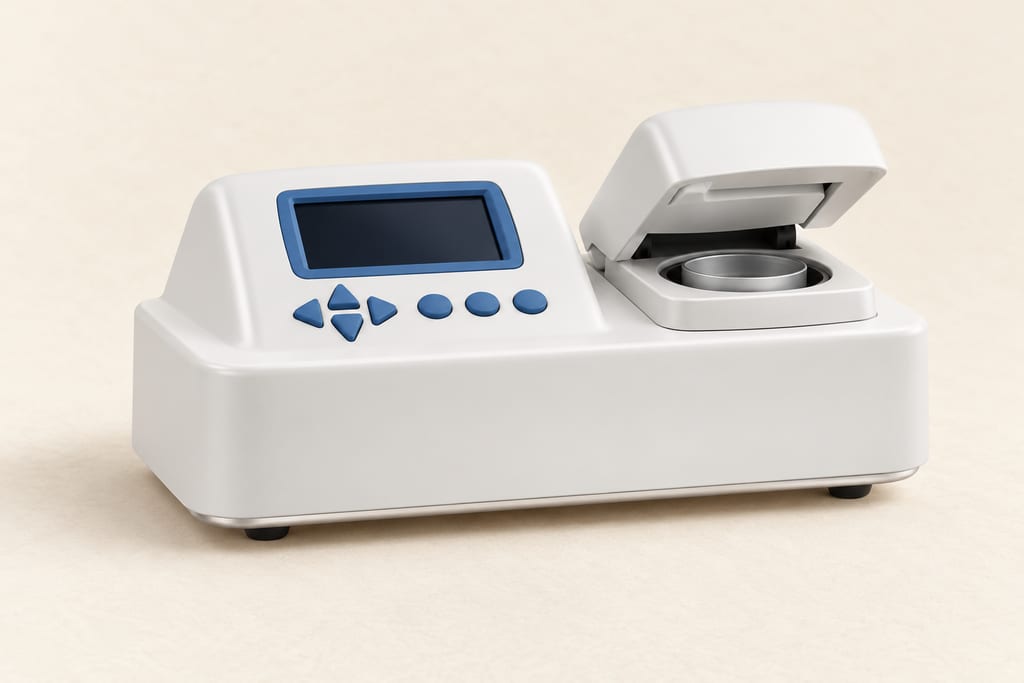
A water-activity meter measures the equilibrium water vapour above a food sample and reports how available its water is. A reading describes that specimen under stated test conditions; it does not certify the food as safe.
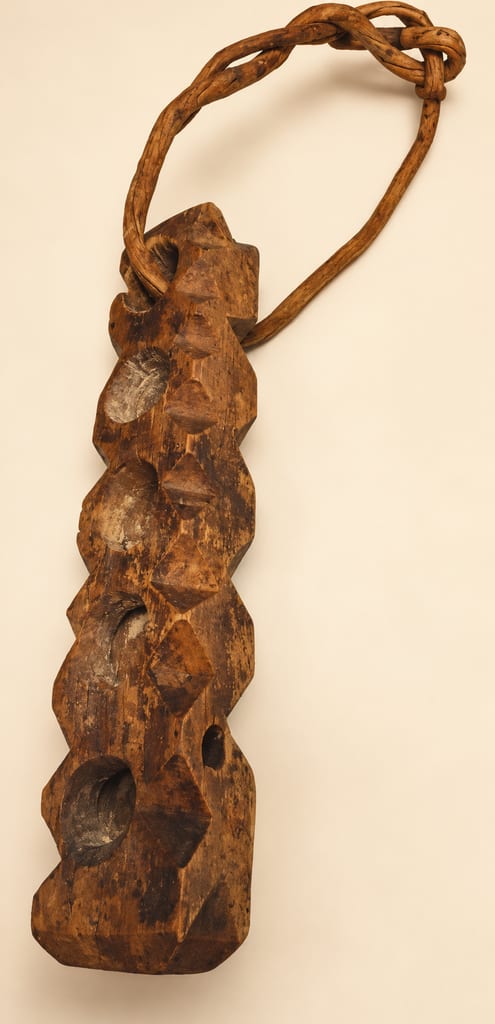
A carved wooden carrier used in Norwegian farmhouse brewing to dry and keep yeast-rich material between batches; its holes and hanging loop distinguish it from a linked wooden yeast ring.
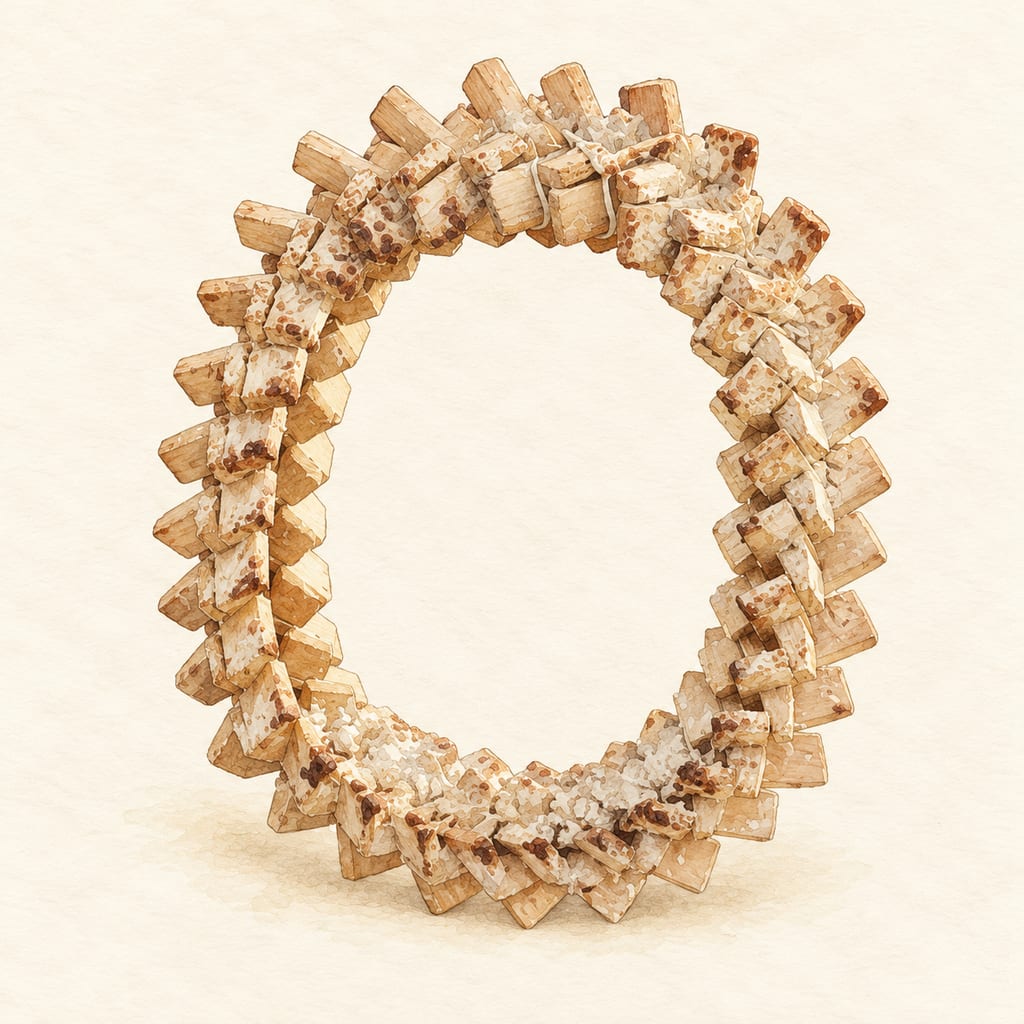
A yeast ring (Norwegian gjærkrans) is an open wooden carrier that holds yeast from a previous brew while it dries for reuse. Lars Marius Garshol documented a linked-block ring in use at a farmhouse brewery in Vestbygda outside Voss.
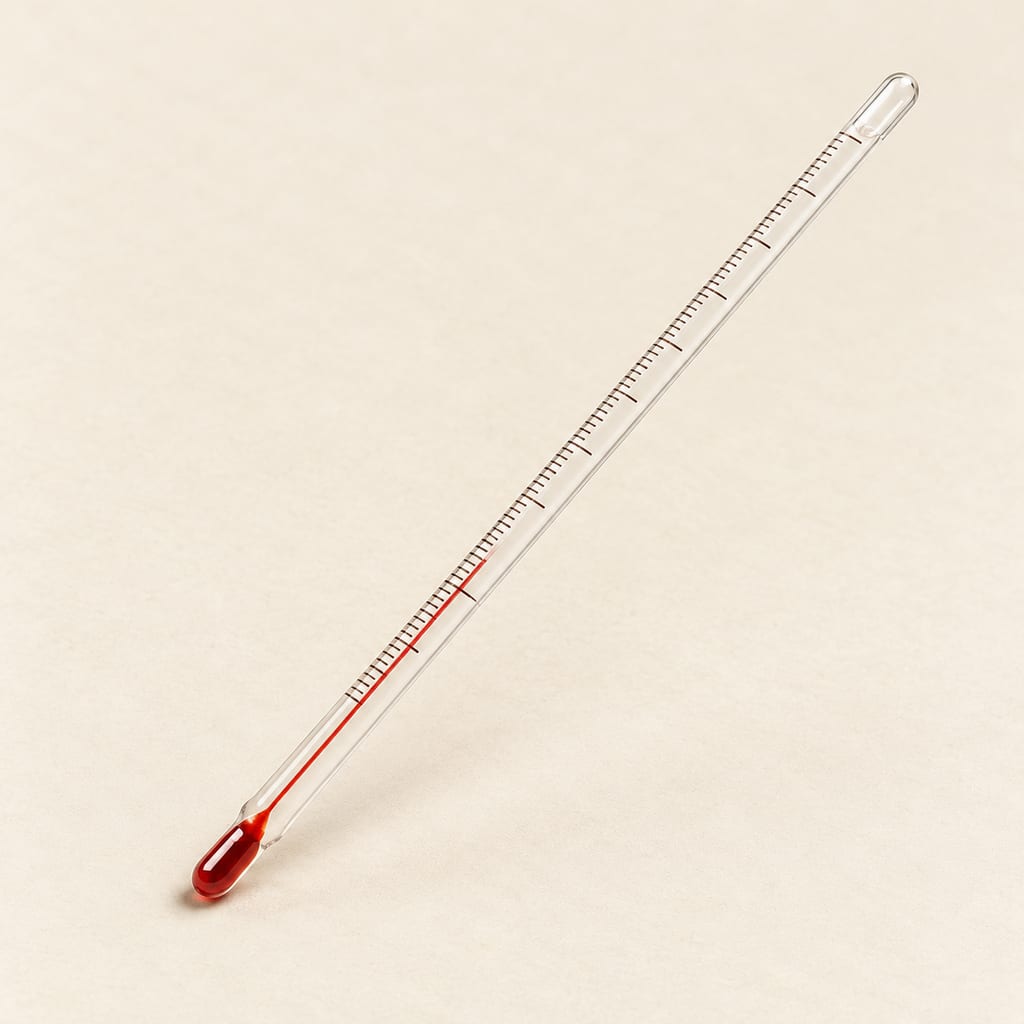
A water-bath thermometer reports the temperature of the surrounding bath, so an operator can monitor the heating medium. It does not by itself show the temperature at the centre of a thick food or paste.
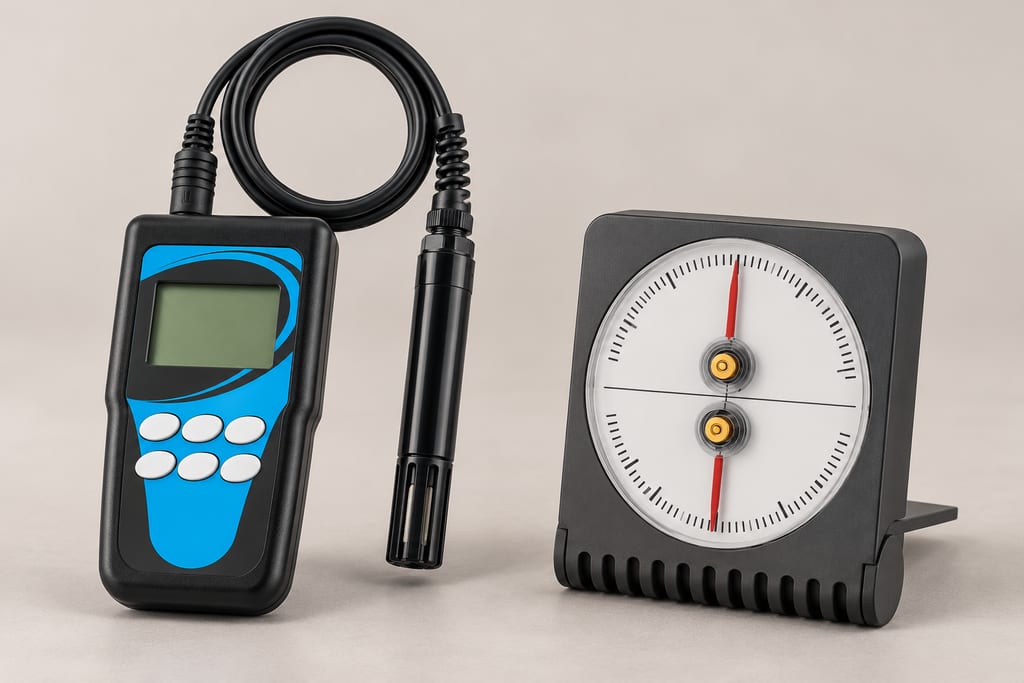
A thermo-hygrometer measures air temperature and relative humidity. It observes local conditions but does not control humidity or directly measure a food’s water activity.
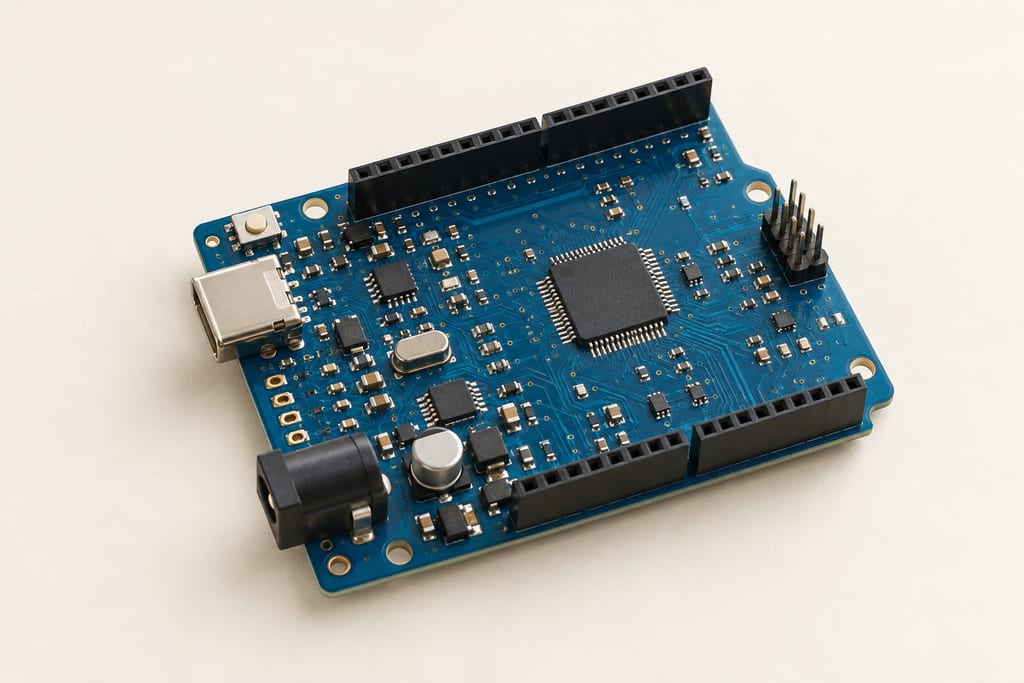
A microcontroller is a programmable chip. A development board adds connections and supporting parts; with a suitable sensor and software, it can record readings without validating their meaning.
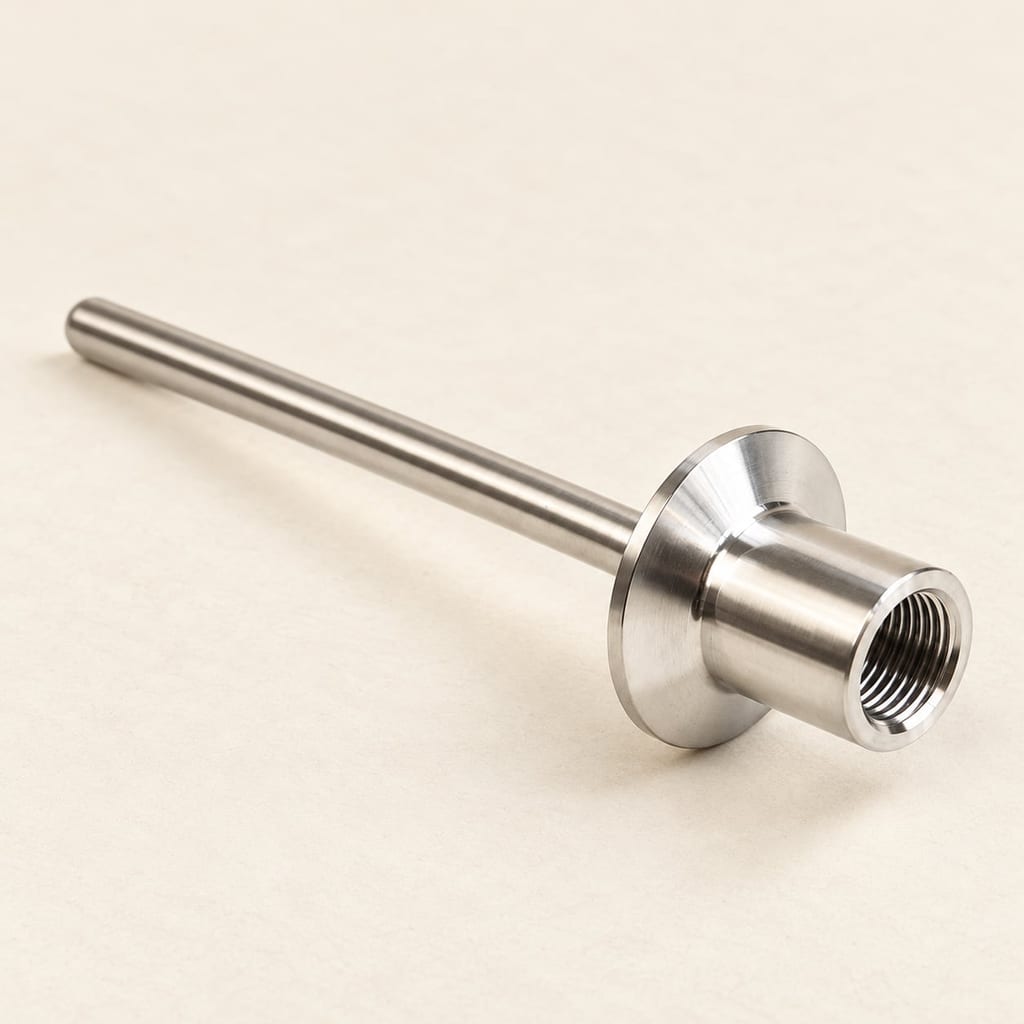
A thermowell is a passive protective sleeve that holds a separate removable temperature sensor in a tank or pipe. It neither senses temperature nor controls a heater.
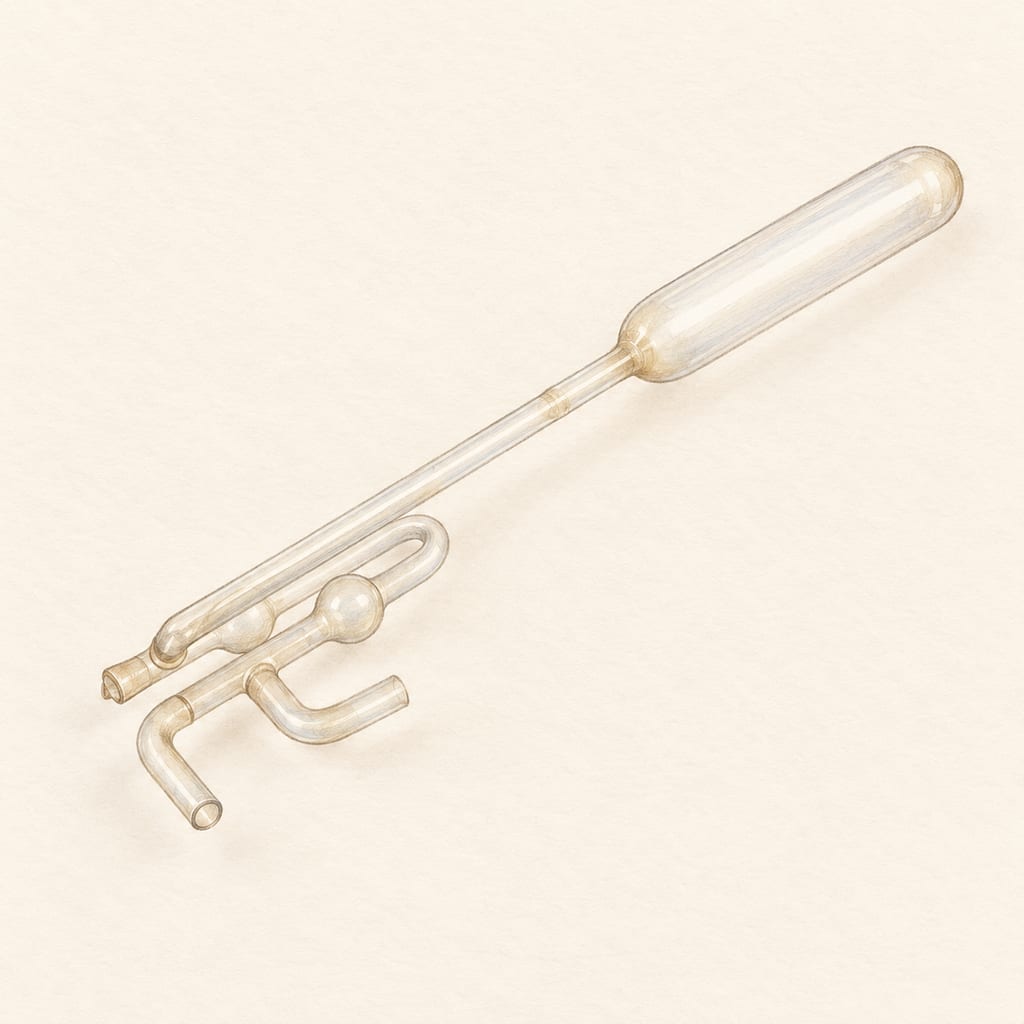
A thermostat senses temperature and regulates heating or cooling to a chosen condition. It may be built into an appliance or supplied as a separate controller; a sensor reading describes its measured point, not every part of a batch.
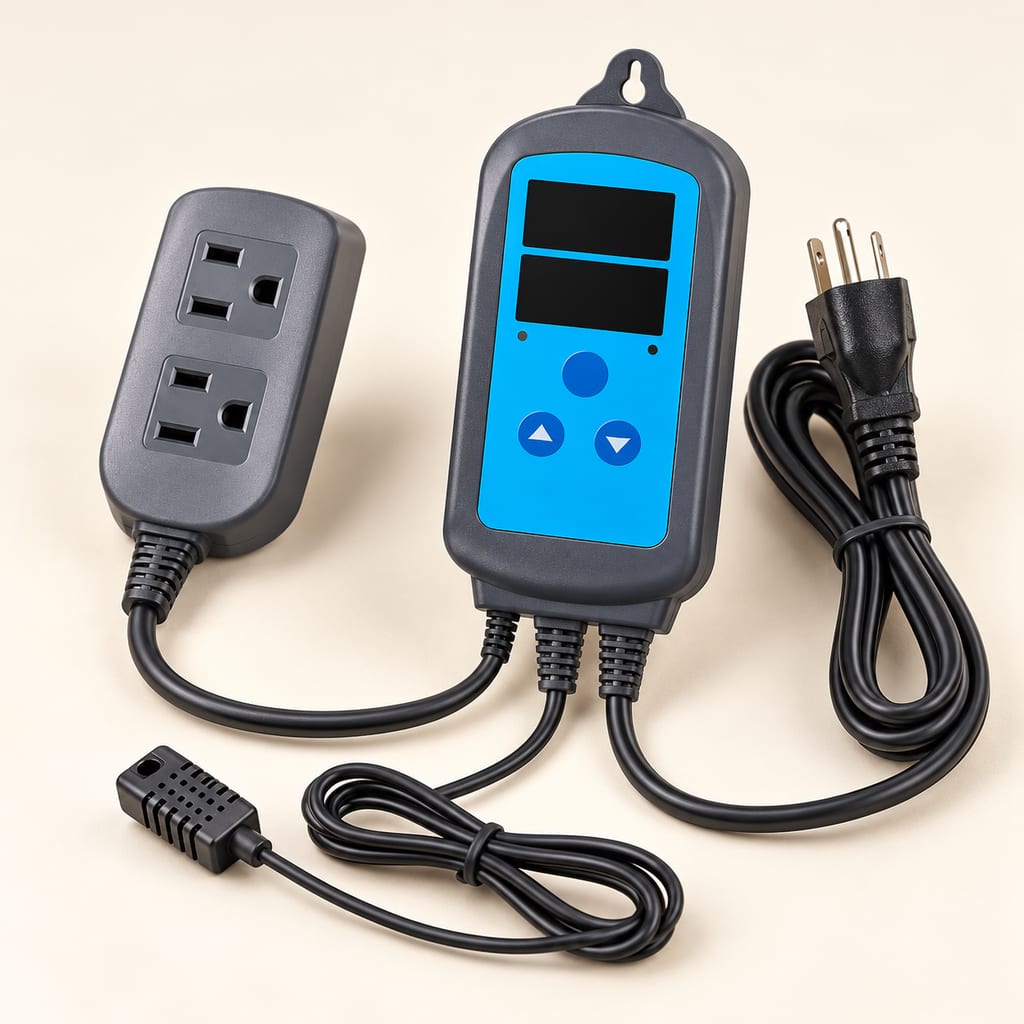
A plug-in humidity controller that reads a cabled sensor and switches separate humidifying and dehumidifying loads. It controls relative humidity, not temperature, and is distinct from the ITC-308 temperature controller.
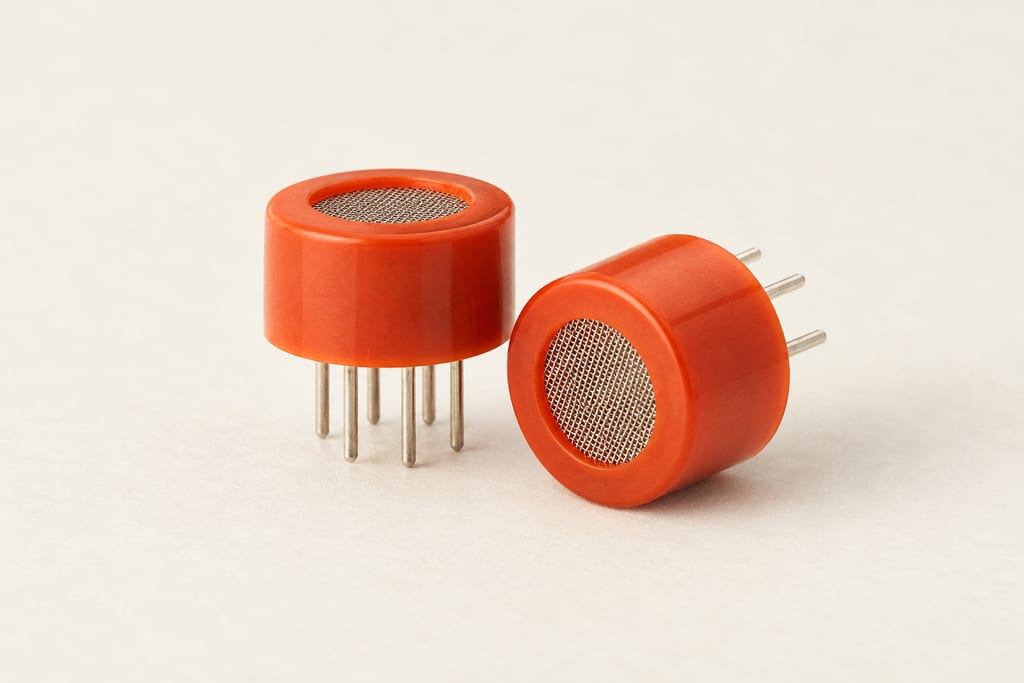
An ethanol-vapour gas sensor responds to alcohol in air, not directly to alcohol by volume in fermented liquid. Different gas sensors and bubble counters measure distinct signals.
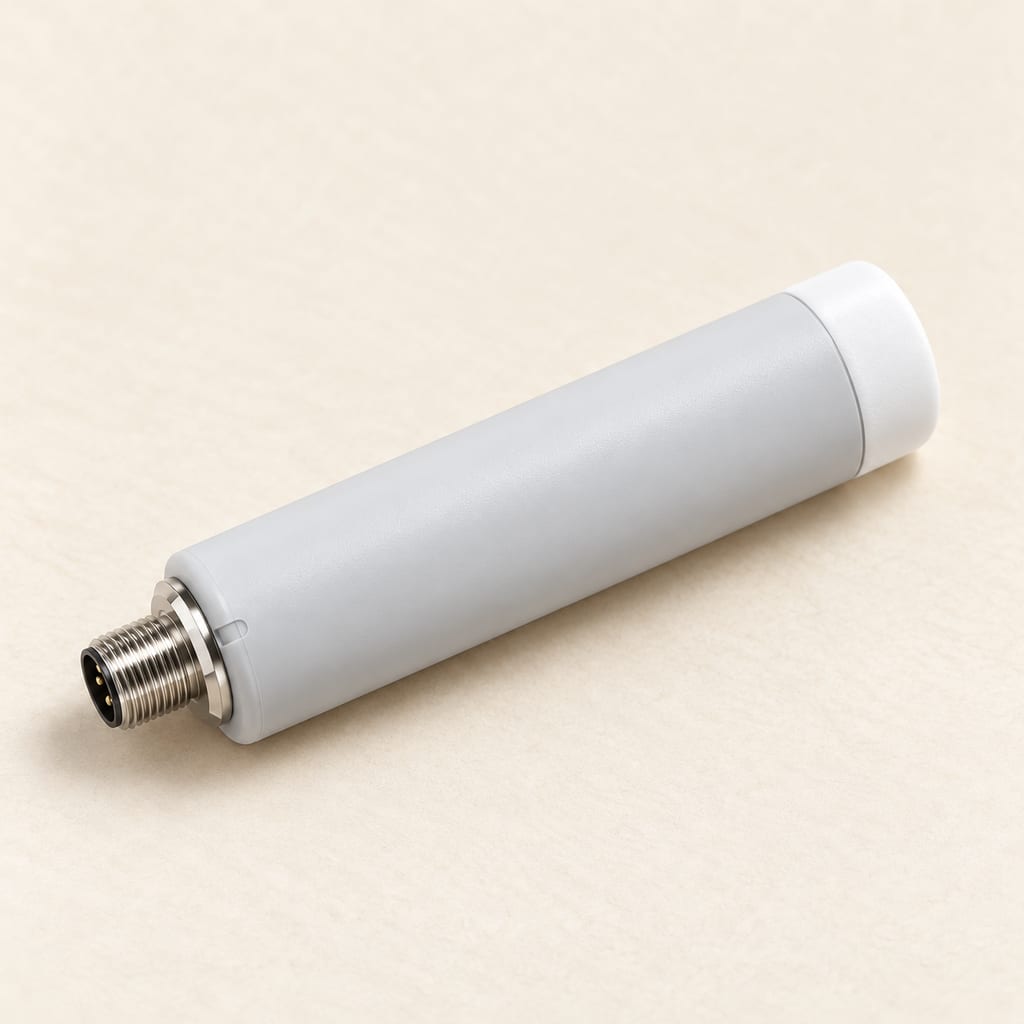
A gas-phase instrument for measuring carbon dioxide concentration. Contemporary probes such as the Vaisala GMP251 use infrared sensing; a CO₂ reading is not a bubble count or an alcohol assay.
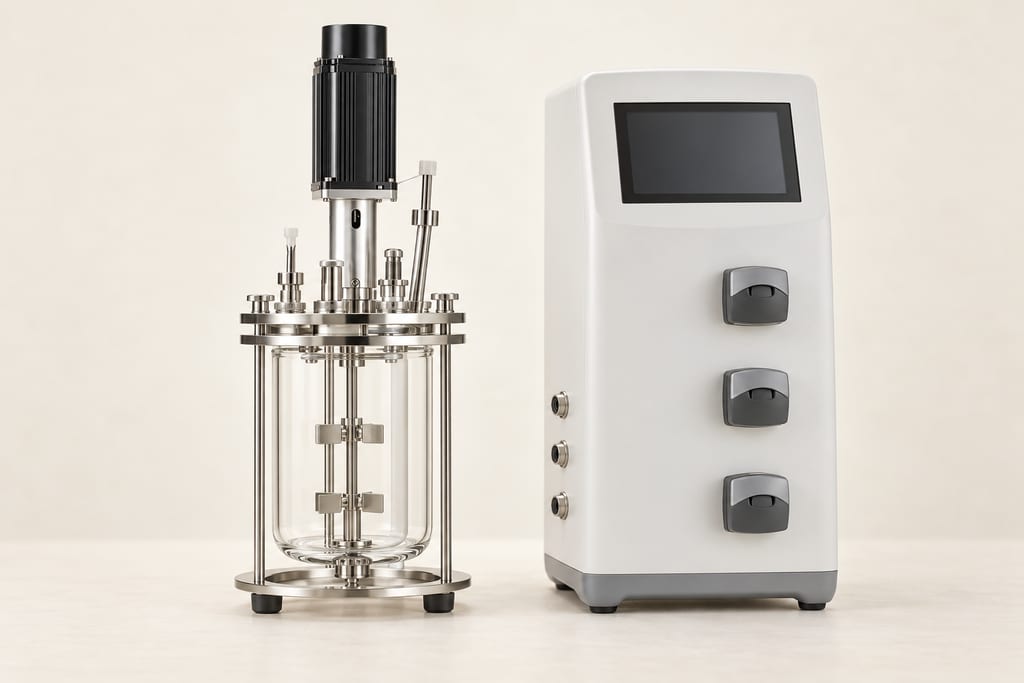
A bench-scale vessel system combines measurement and mechanical control for fermentation research. Vessel materials, fittings and control options vary; a research bioreactor is not a validated food process.
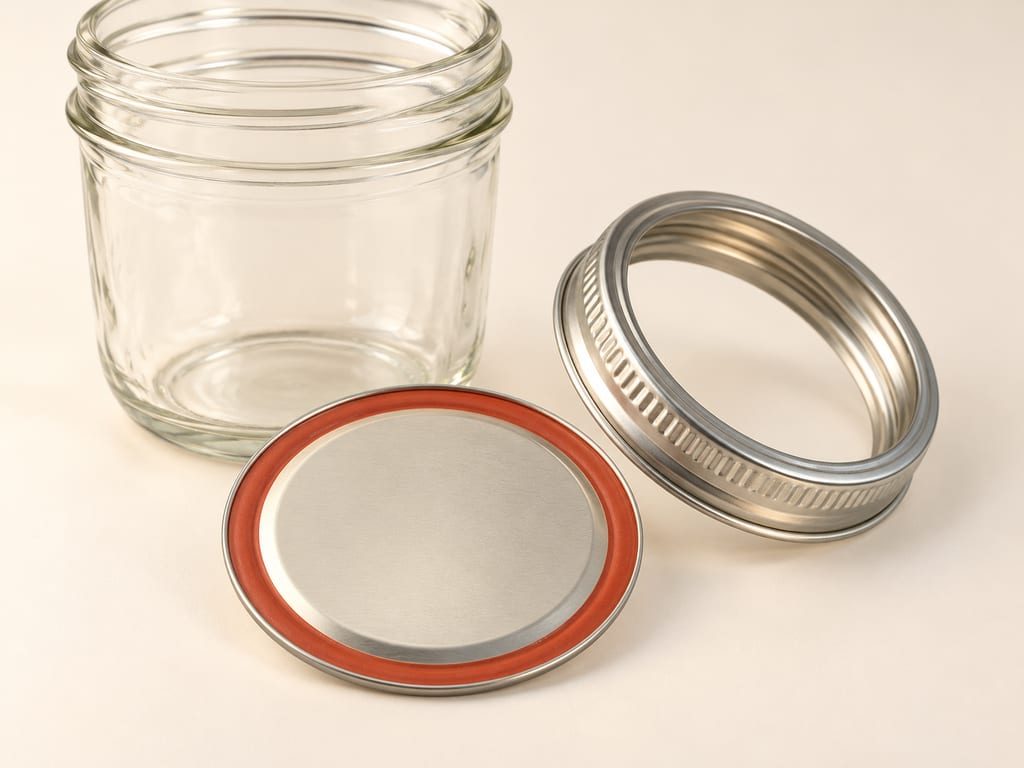
A two-piece canning lid pairs a flat metal disk, whose edge carries sealing compound, with a separate threaded screw band. The band holds the disk during processing; the disk seals against a compatible jar as it cools.
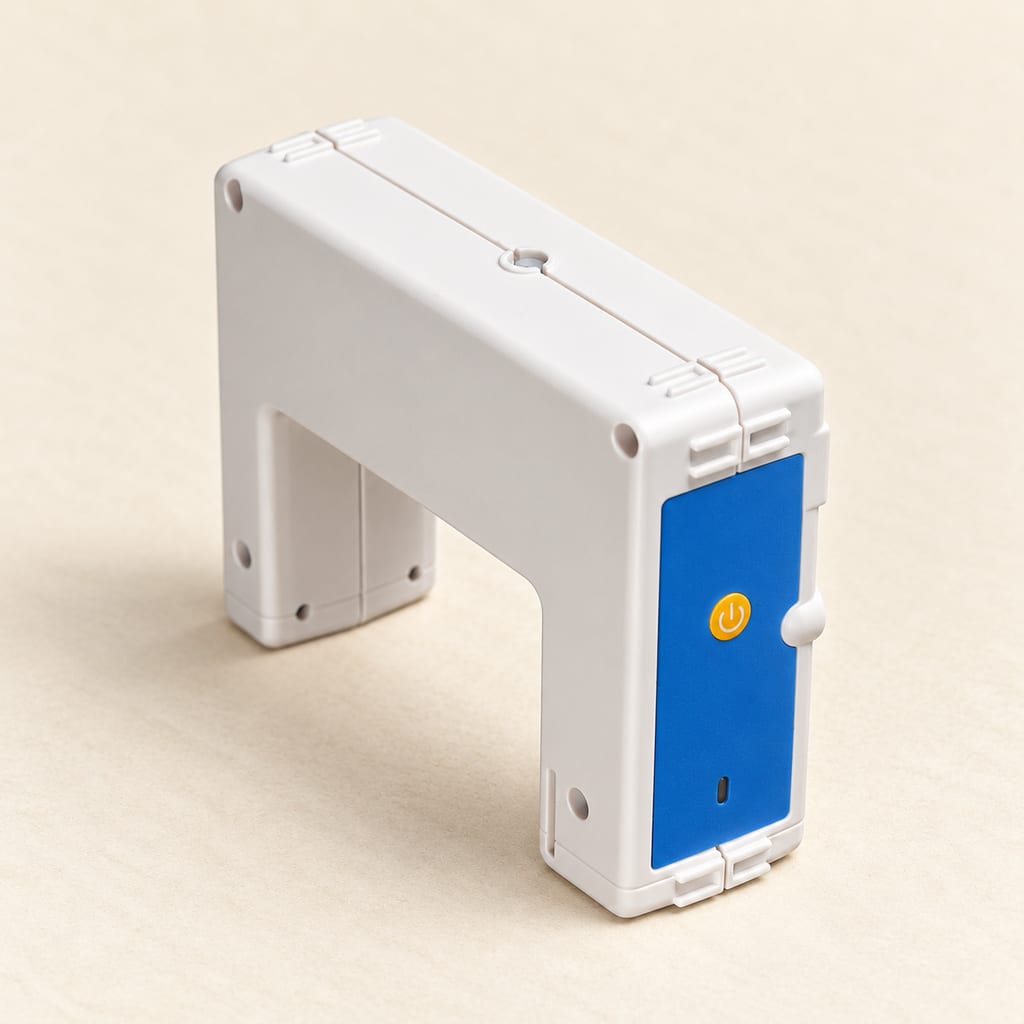
An infrared beam counter registers bubbles crossing a defined liquid column. Counts can track change over time, but do not measure gas volume or establish alcohol or residual sugar.
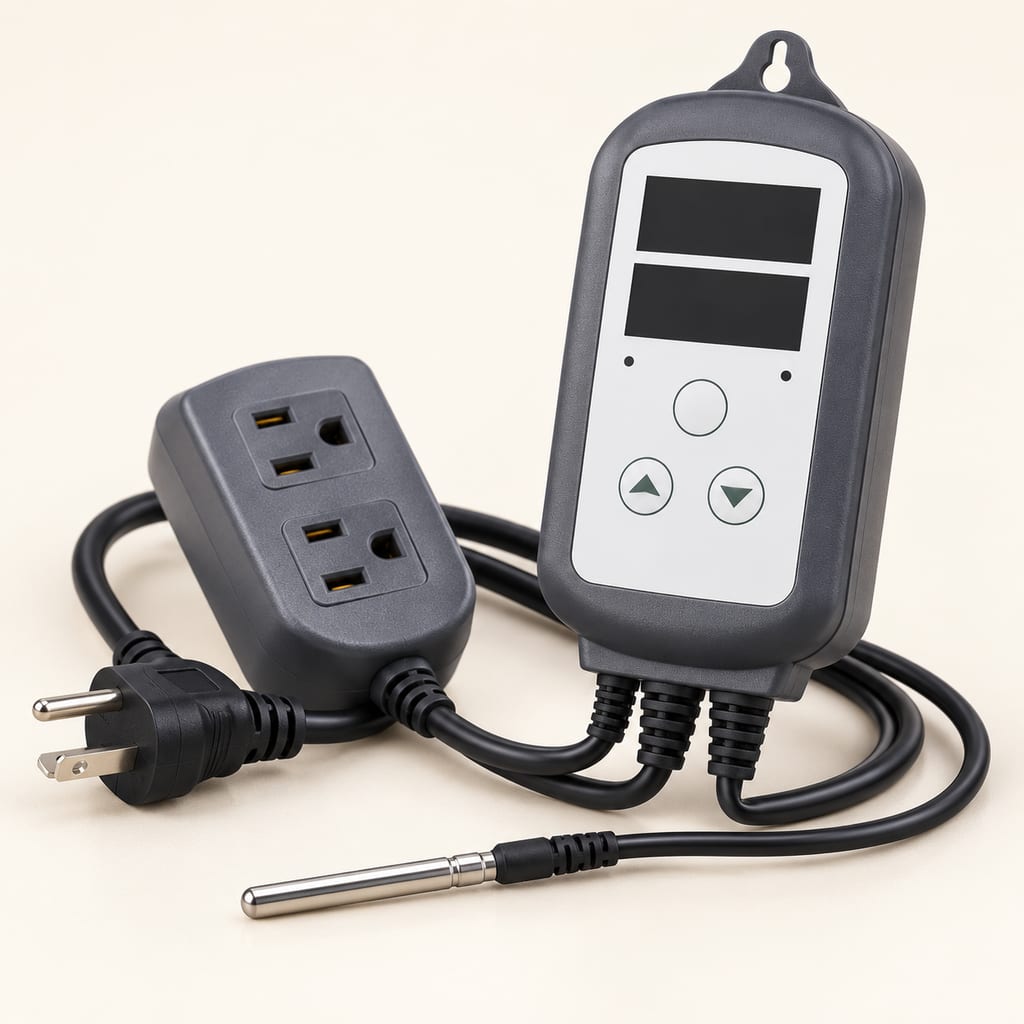
The INKBIRD ITC-308 is a plug-in, probe-led temperature controller with separate heating and cooling outputs. Its relays switch compatible appliances; they do not heat, cool or validate the food themselves.
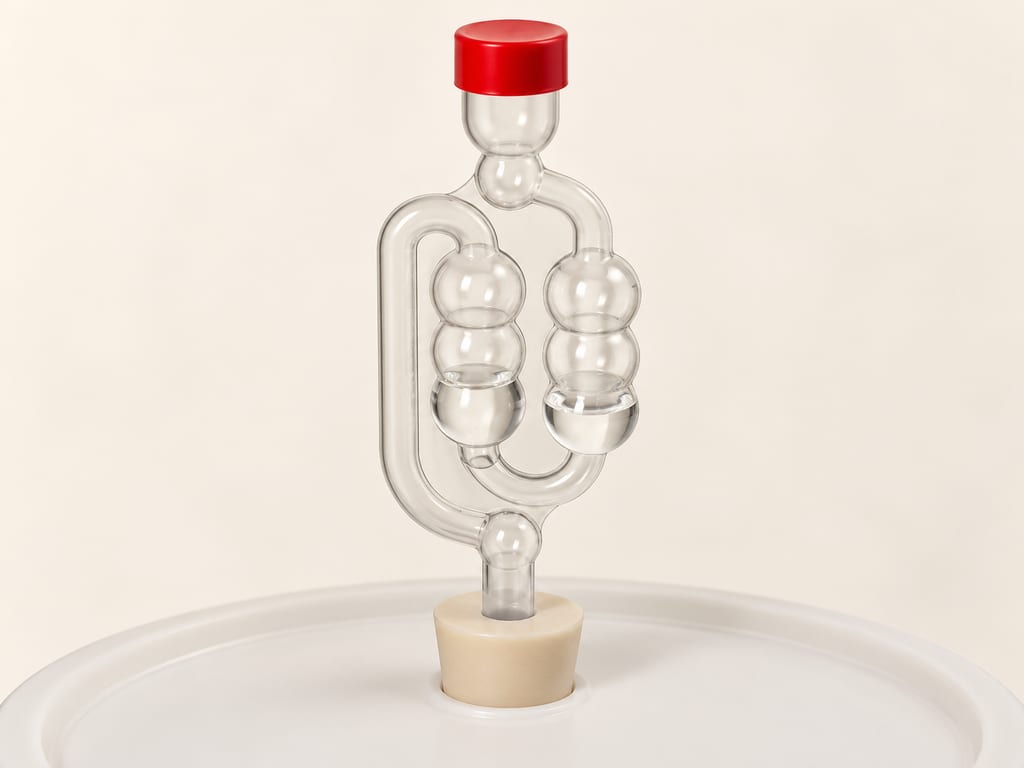
A fermentation airlock lets gas escape from a closed fermenter while its liquid seal limits air entering. It suits oxygen-limited stages, not the oxygen-dependent stage that turns alcohol into vinegar.
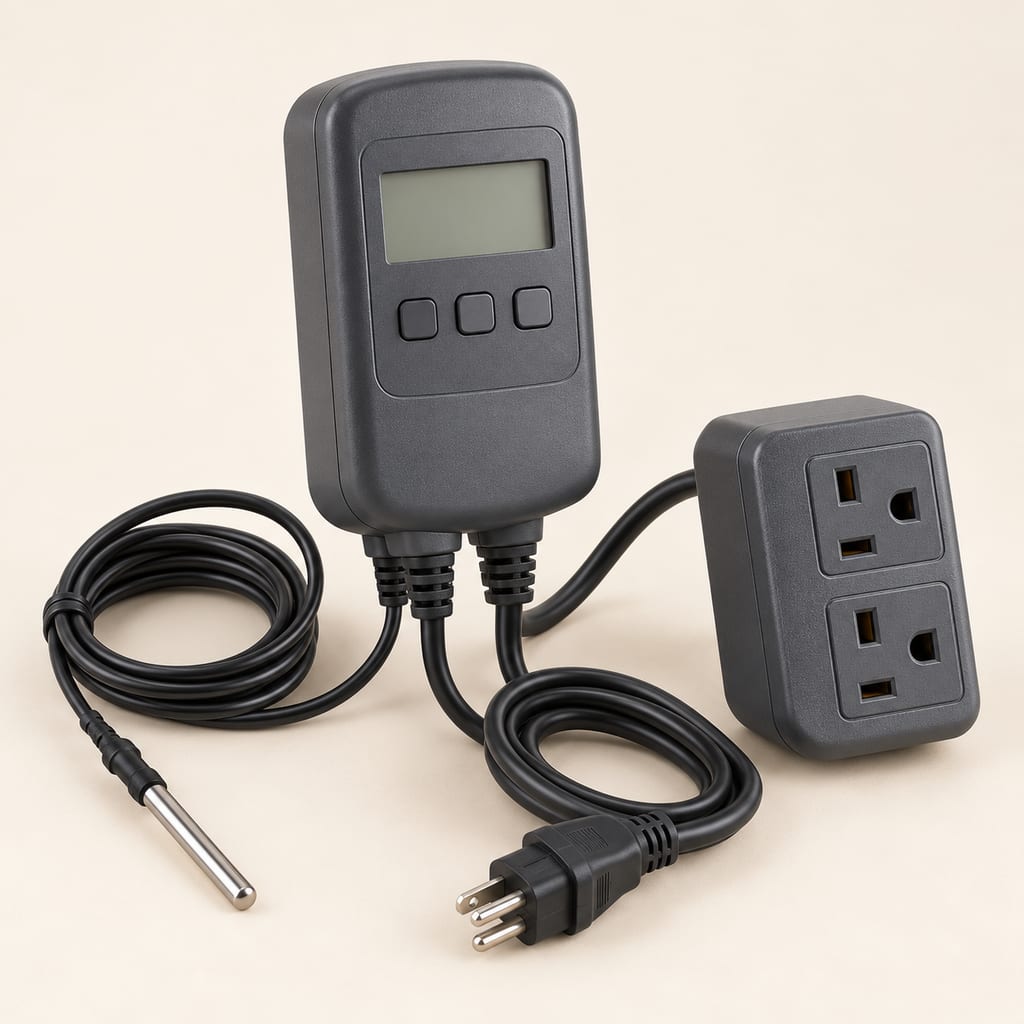
A plug-in controller reads a wired probe and switches compatible heating or cooling appliances around a setpoint. It adds feedback; it is not itself a heater, cooler or validated food process.
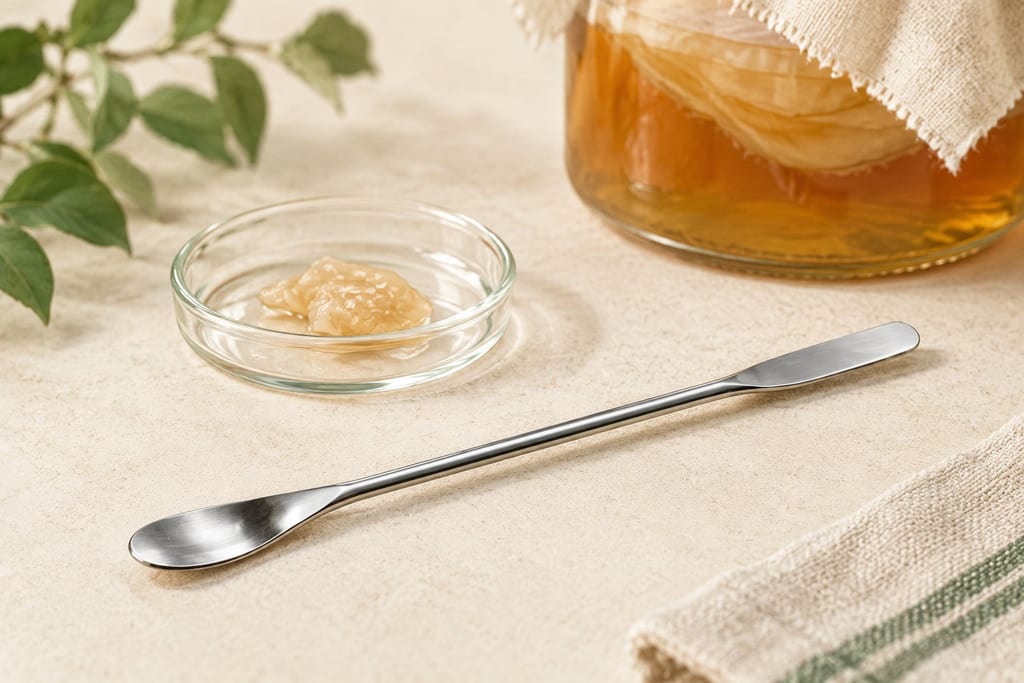
Sampling utensils remove a small portion of a ferment for checking or analysis. Their form depends on the sample and purpose; a household pH check and laboratory microbiology sample do not require the same handling.
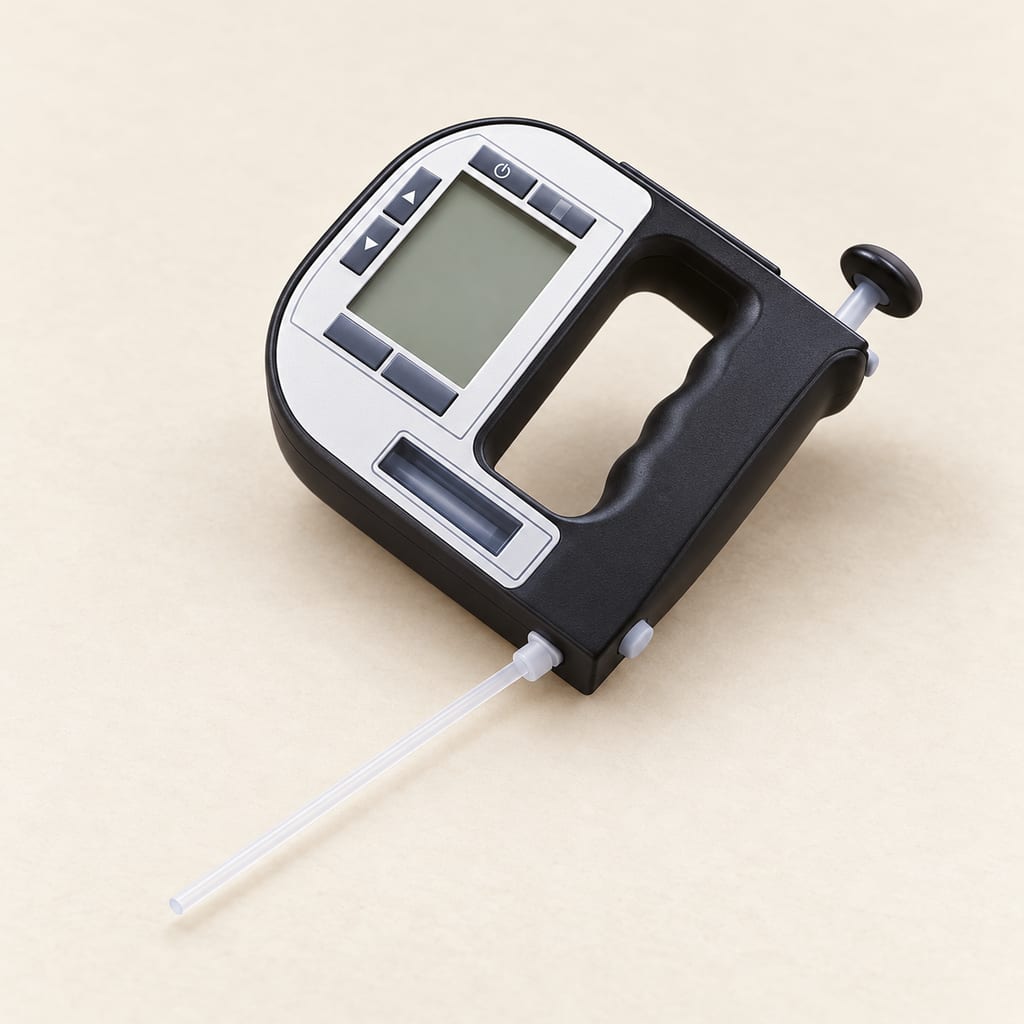
A densitometer measures density directly or through an instrument-specific cell. For kombucha alcohol analysis, TTB describes measuring specific gravity after distillation; untreated ferment density alone does not isolate alcohol.
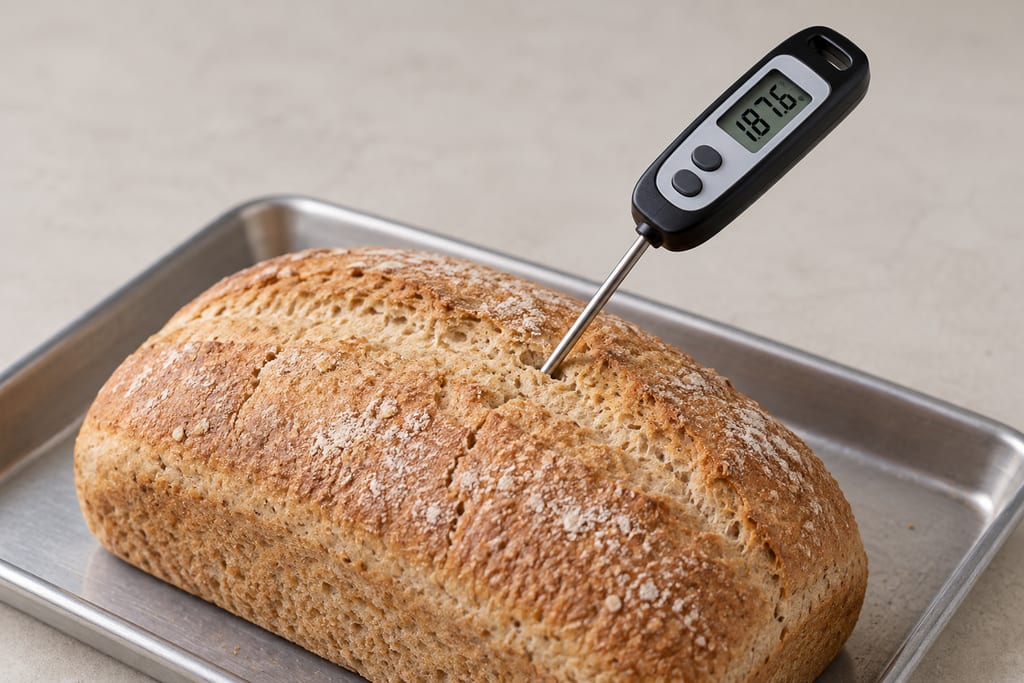
A probe thermometer measures the temperature of food at its sensing tip. It answers a different question from a kettle, oven or water-bath display, and from a pH meter.

A short length of kitchen string holds rolled bitter-orange peel in a coil during a documented Antalya preserve method. The recipe specifies string and a needle, but does not identify the fiber, construction or heat rating.
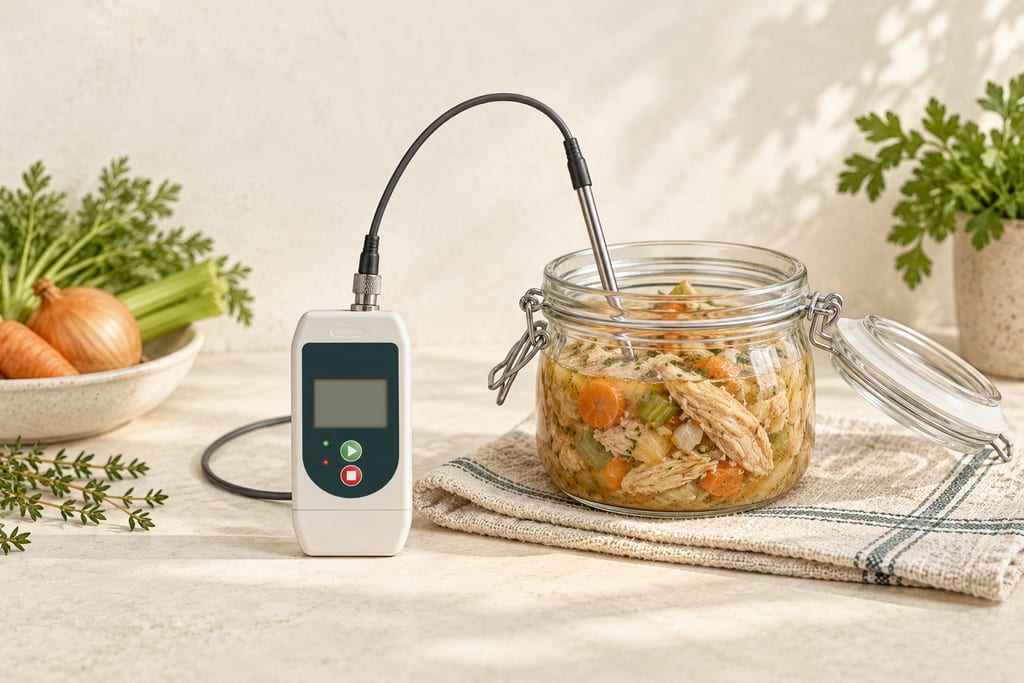
A thermometer gives a reading at its sensor; a temperature logger records readings over time. Sensor placement and context determine what that record can tell you.
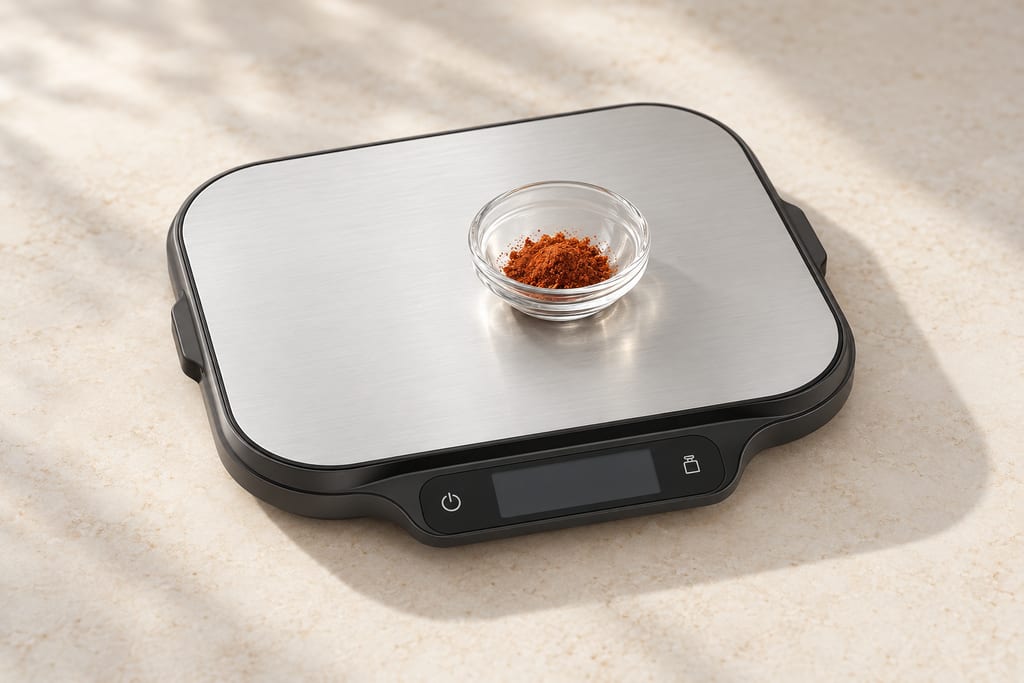
A digital kitchen scale with 0.1 g display increments helps weigh very small seasoning quantities. Its resolution is not a promise of ±0.1 g accuracy: usable range, minimum load, setup and performance depend on the model.
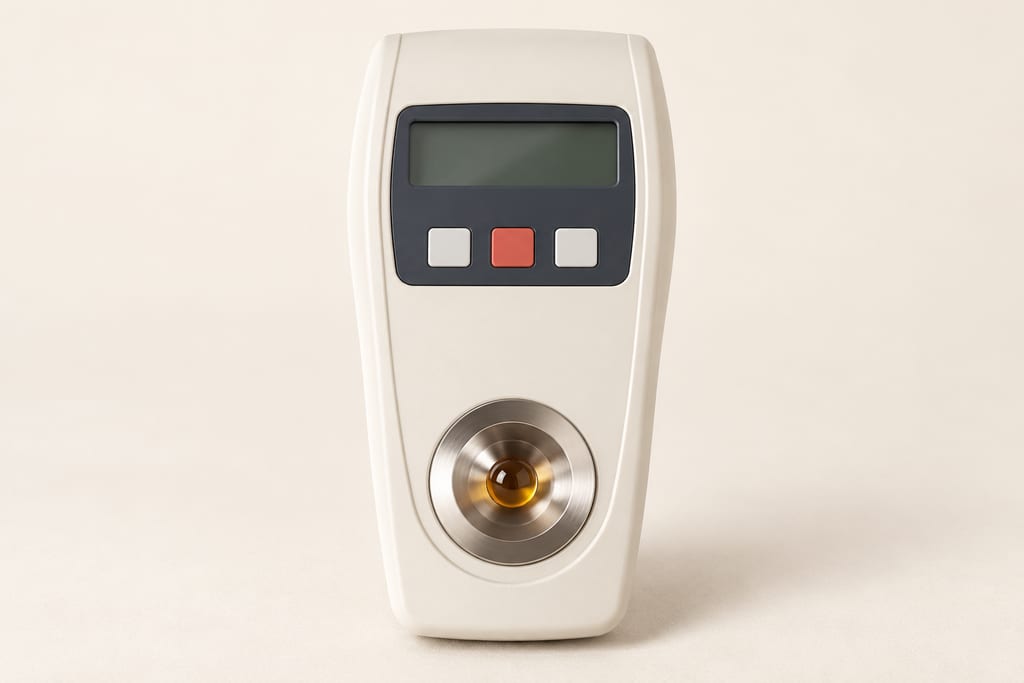
A manufactured optical instrument for measuring refractive index or a derived soluble-solids scale. °Brix helps compare suitable syrups and preserves, but in mixed foods it is not a direct measure of added sugar or a safety test.
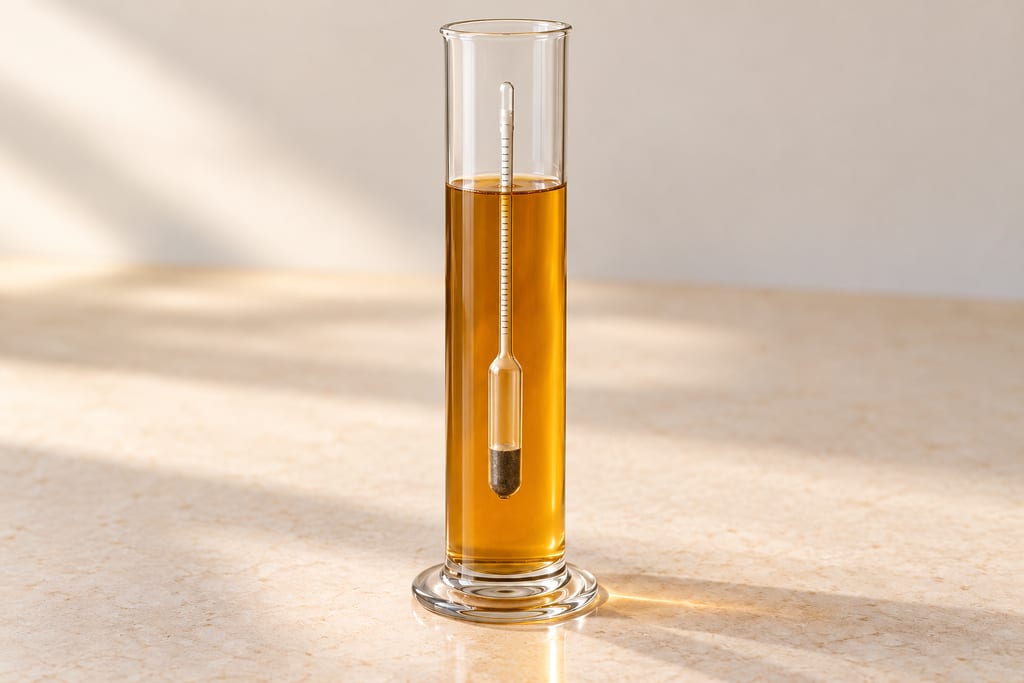
A hydrometer floats in liquid and uses its weighted body's depth to indicate density. In brewing, readings track changing gravity, not every dissolved substance or kombucha alcohol.

A clean, fine-weave cloth or towel covers an open ferment while allowing air exchange; a band or cord holds it over the vessel mouth.
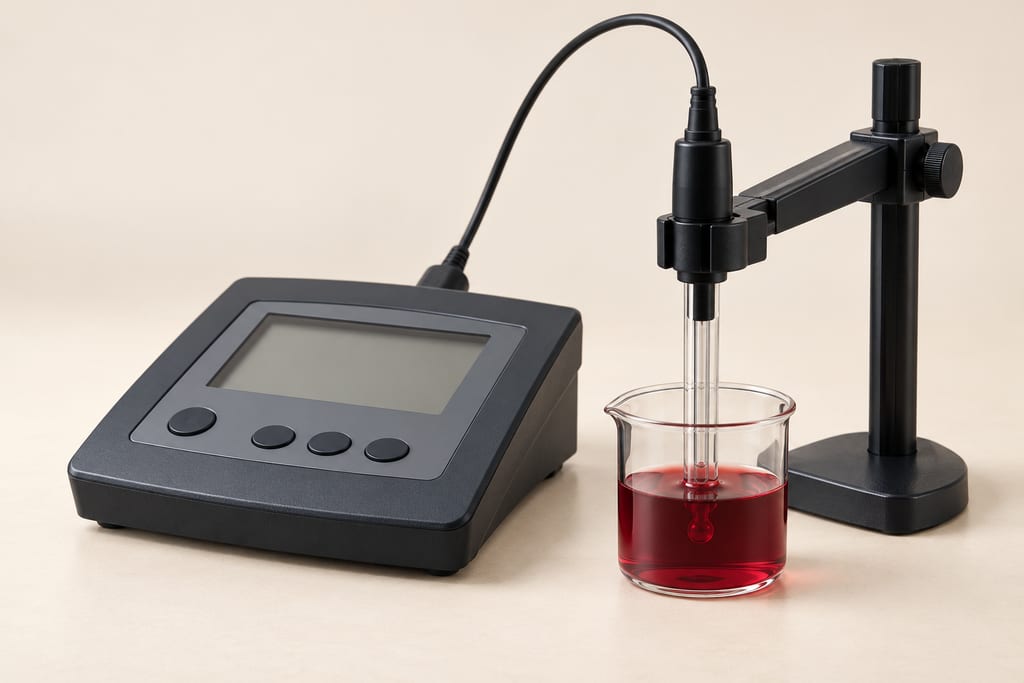
A pH meter pairs an electronic readout with a probe to measure a prepared sample. Probe choice, calibration and representative sampling affect the reading, so the model and method must fit the food.
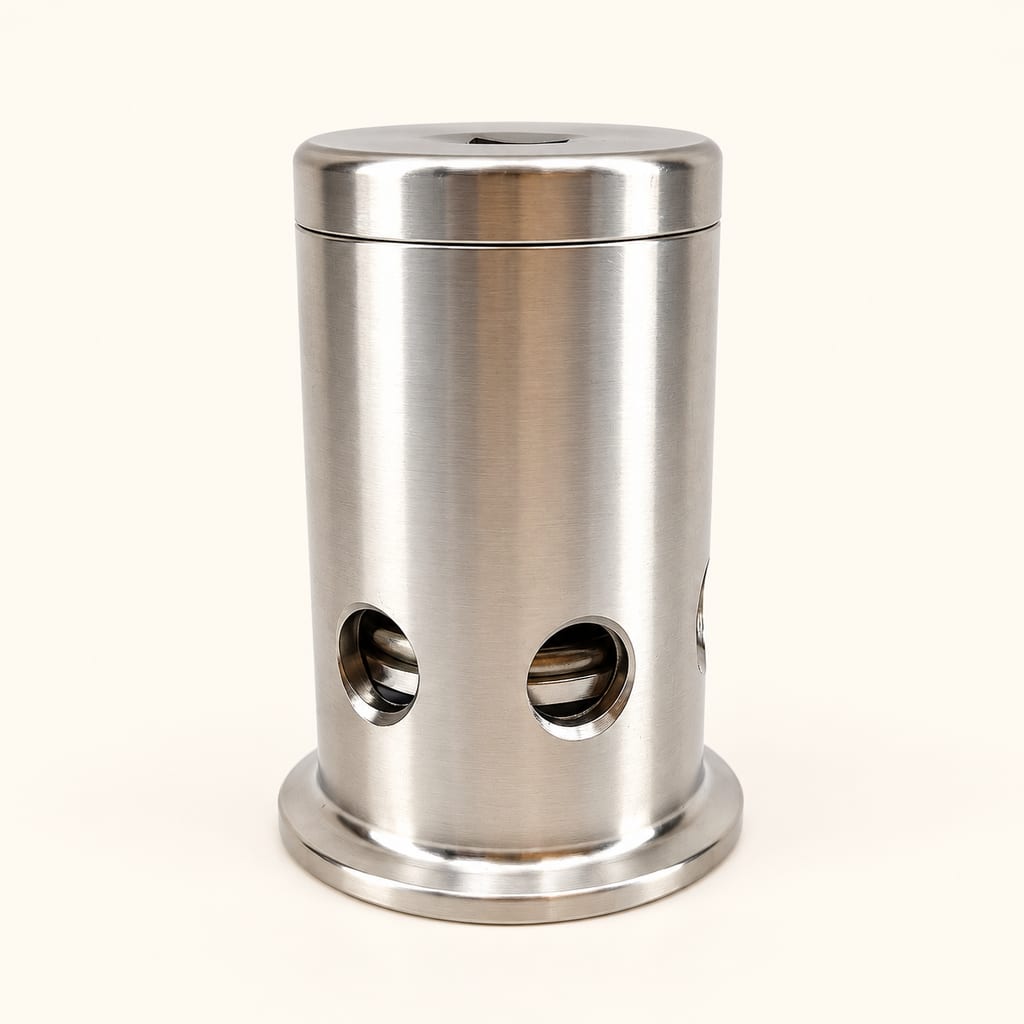
A mechanical pressure-relief valve is an automatic safety device for a pressure-capable vessel. It opens to release excess pressure at its own threshold; it is not a gauge, airlock or fermentation pressure controller.