



Recipes

1504 records with their sources, across 11 categories.

All vegetables85Lactic-fermented vegetables and shoots82Grain and starch ferments2Condiments and enzymatic seasonings1
Filtered to

Recipes

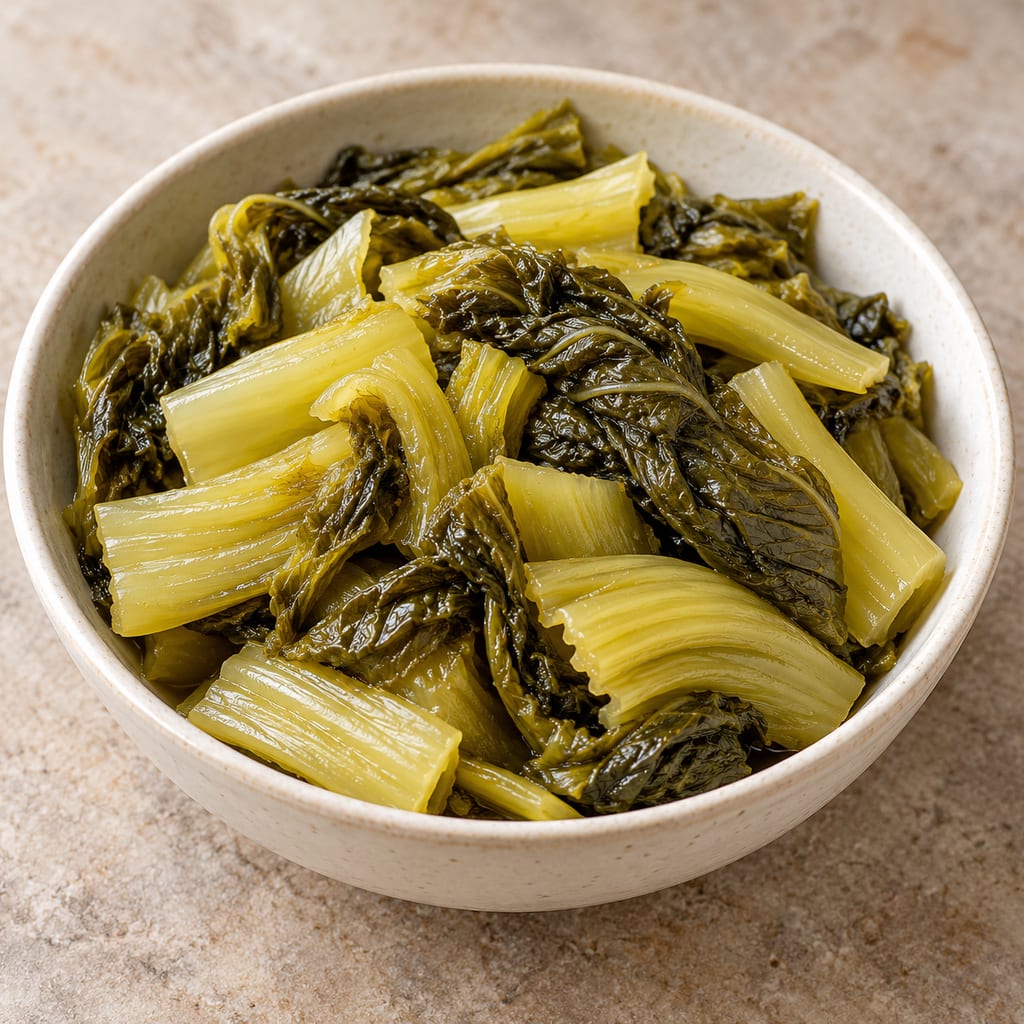
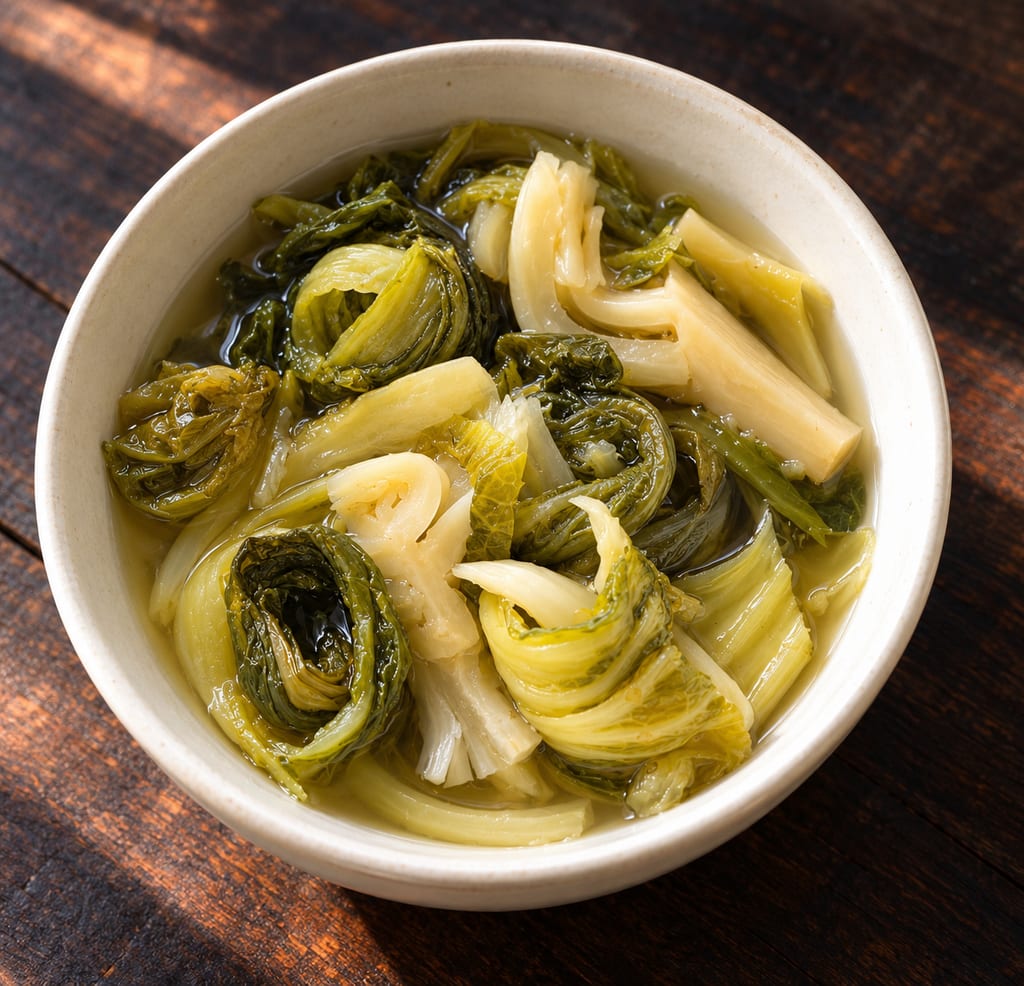
A small bowl of finished Thai pak-kaat-dorng: yellow-green wilted mustard leaves and broad stems with a slight sheen of brine.

Pak-kaat-dorng (sweet rice-wash method)

Thai sweet mustard greens wilted in sun, packed in earthenware under a salt and palm-sugar brine with rice-wash water, then sunned three to five days.

Thailand · Traditional method
· Vegetables
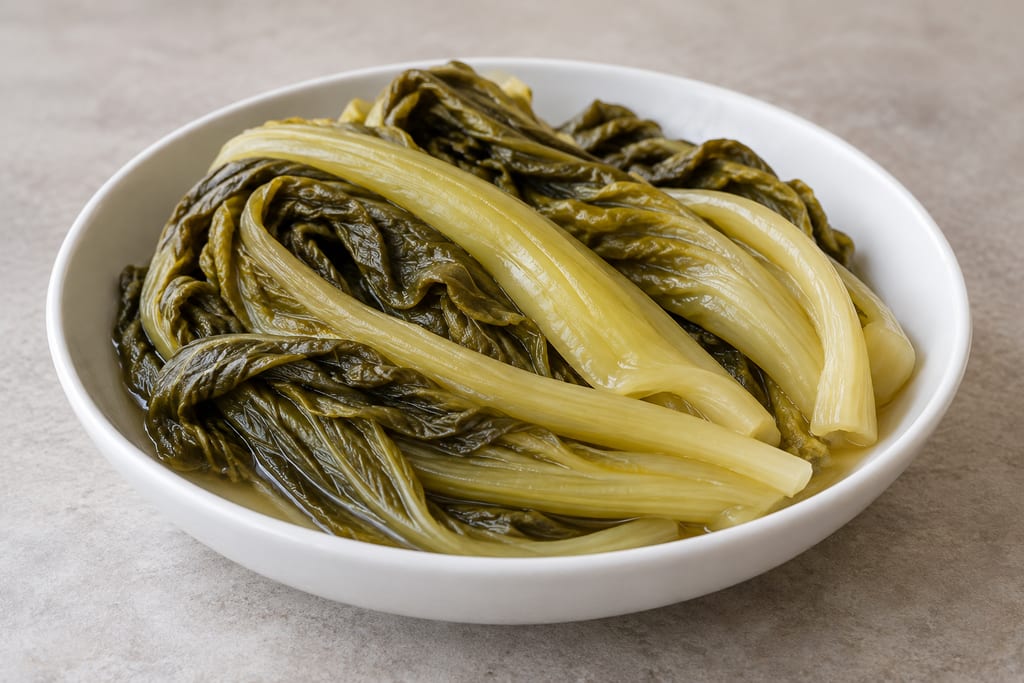
Finished Thai pak-kaat-dorng shown as yellow-green preserved mustard leaves and ribbed stalks in a small open serving bowl.

Pak-kaat-dorng (dry-salted rice method)

Pak-kaat-dorng is a Thai fermented mustard-green pickle, prepared here by dry-salting and kneading the wilted greens with cooked rice.
Thailand · Traditional method
· Vegetables
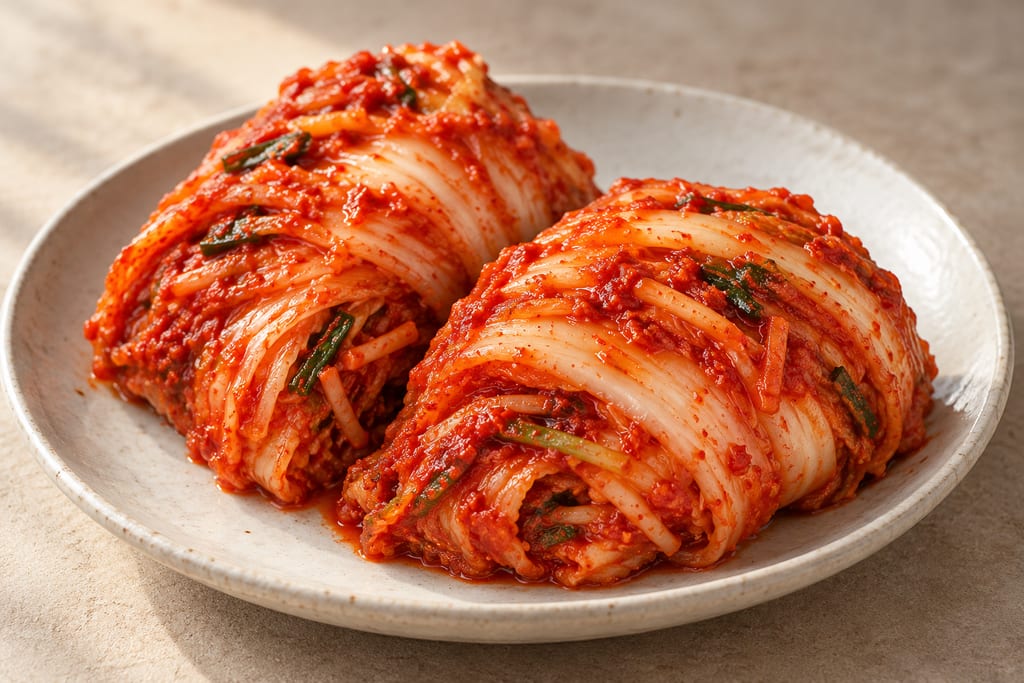
Two folded quarters of napa-cabbage kimchi, red-seasoned between the leaves and served on a pale ceramic plate

Baechu kimchi

Napa cabbage salted, seasoned with a paste of gochugaru, garlic, ginger and salted seafood, and left to sour through lactic fermentation; Korea's everyday winter preserve.
Korea · Traditional method
· Vegetables
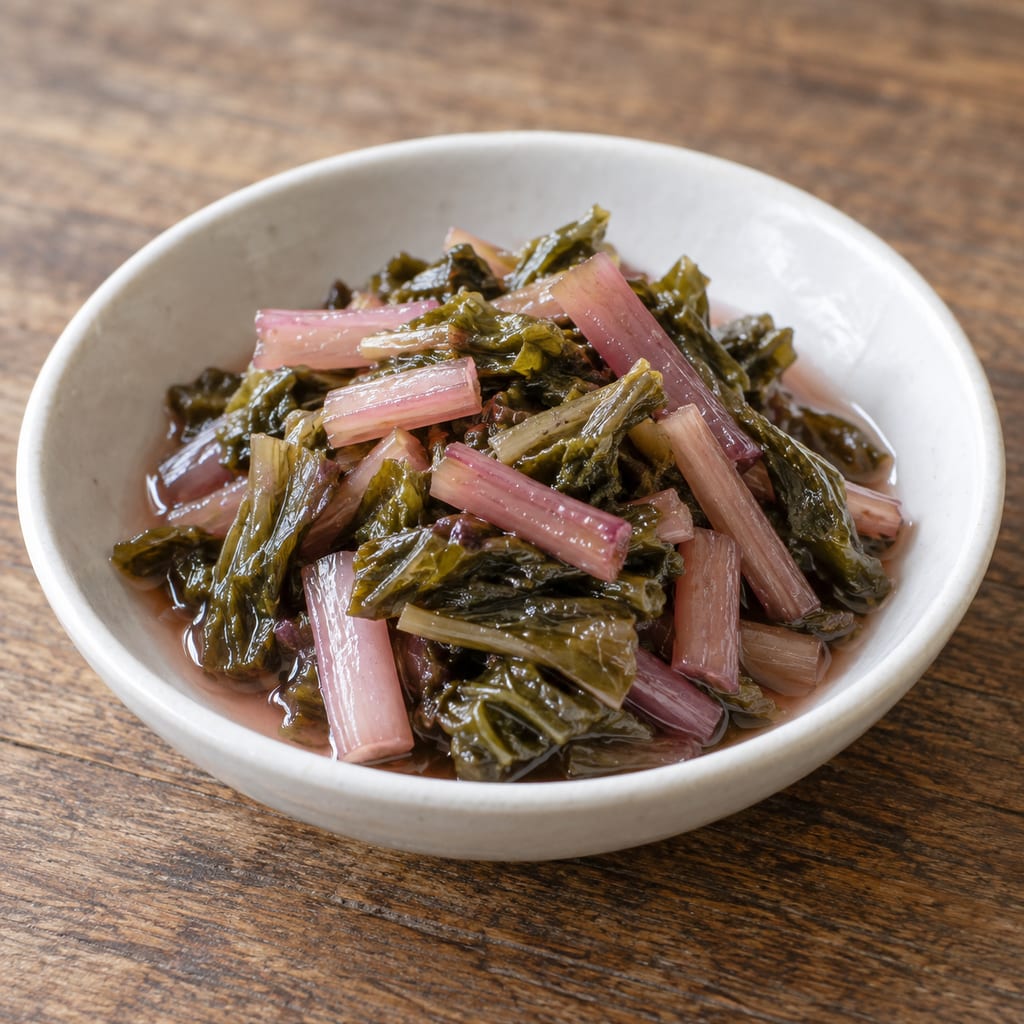
A shallow white bowl of chopped Kiso Sunki, the salt-free fermented red-turnip leaves and stems, showing olive-green leaves and muted pink-purple stem pieces.
Elevated risk

Sunki

Sunki is a salt-free pickle from Japan's Kiso valley: red-turnip leaves fermented with a retained starter from the previous year's batch.
Kiso, Nagano, Japan · Traditional method
· Vegetables
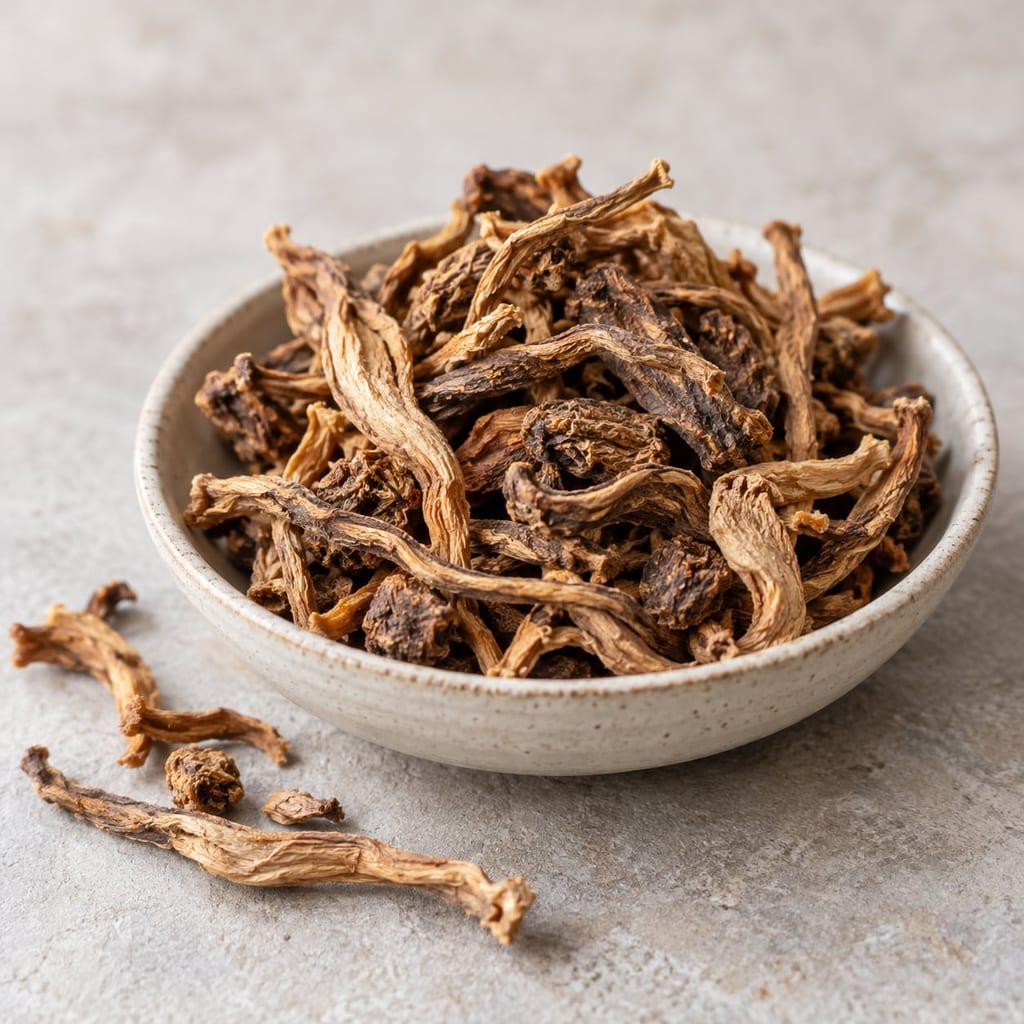
Illustrative finished Sinki, dried fermented radish-root shreds in muted tan and brown tones, loosely arranged in a plain bowl.
Elevated risk

Sinki

Sinki is a salt-free, fermented radish-taproot product dried after fermentation. Published jar and pit accounts use different conditions; neither supplies a validated home-preservation endpoint.
Himalaya, Nepal · Traditional method
· Vegetables
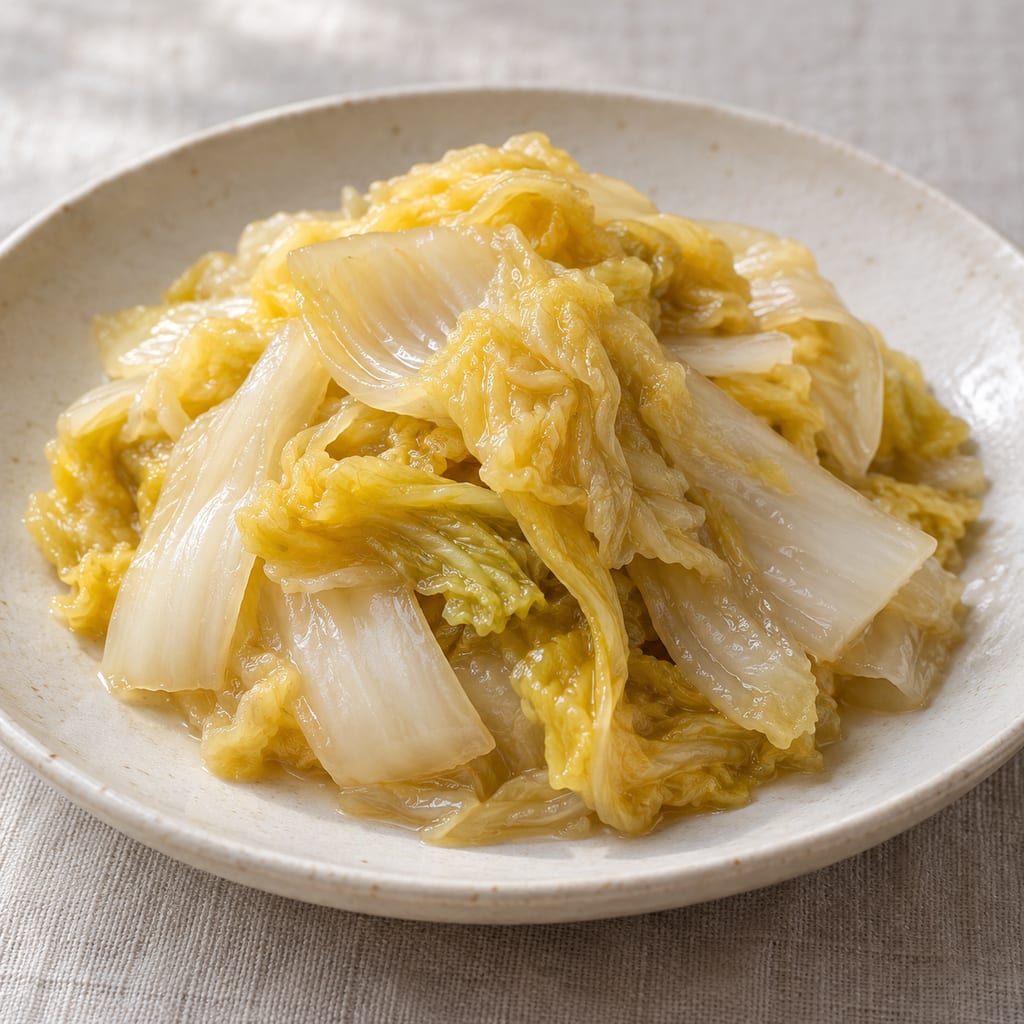
Illustrative finished Northeast Chinese suan cai made from napa cabbage, shown as soft, translucent pale golden leaves on a plain ceramic plate.
Elevated risk

Suan cai

Chinese cabbage or mustard greens salted and held under a weight until lactic fermentation turns them sour; northeastern and southern China keep distinct traditions of it.
China · Traditional method
· Vegetables
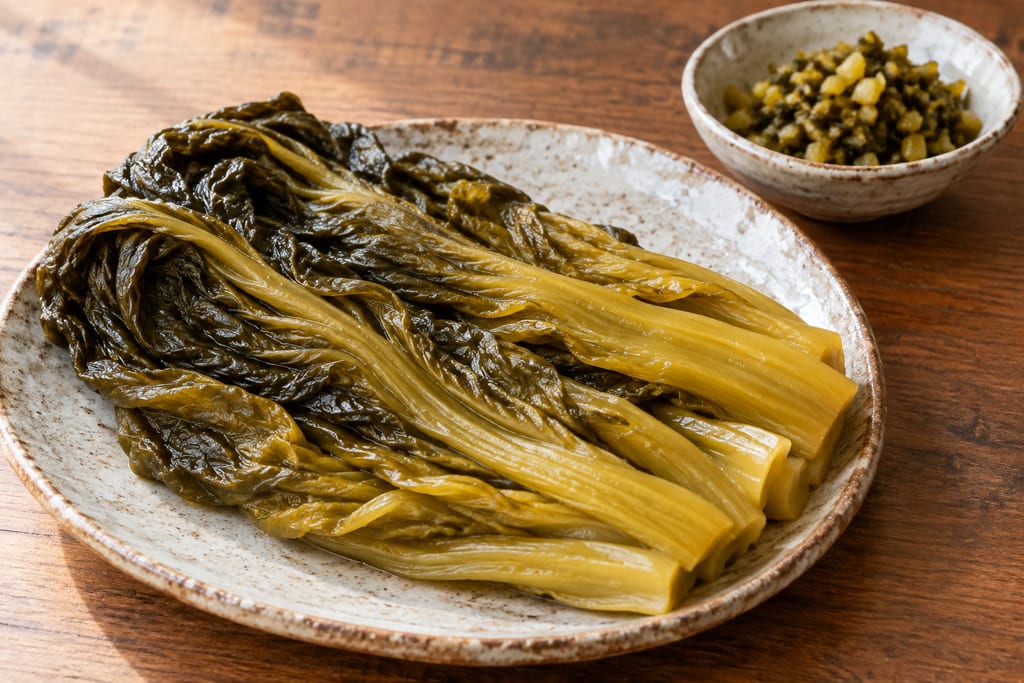
Whole olive-gold Setaka pickled takana leaves with thick stems, alongside finely chopped takana in a small bowl.

Setaka no takana-zuke

Giant red mustard leaves are dried, layered with salt and chile, pressed in a wooden tub, drained after a week and left through the rainy season.
Chikugo Region, Fukuoka, Japan · Traditional method
· Vegetables
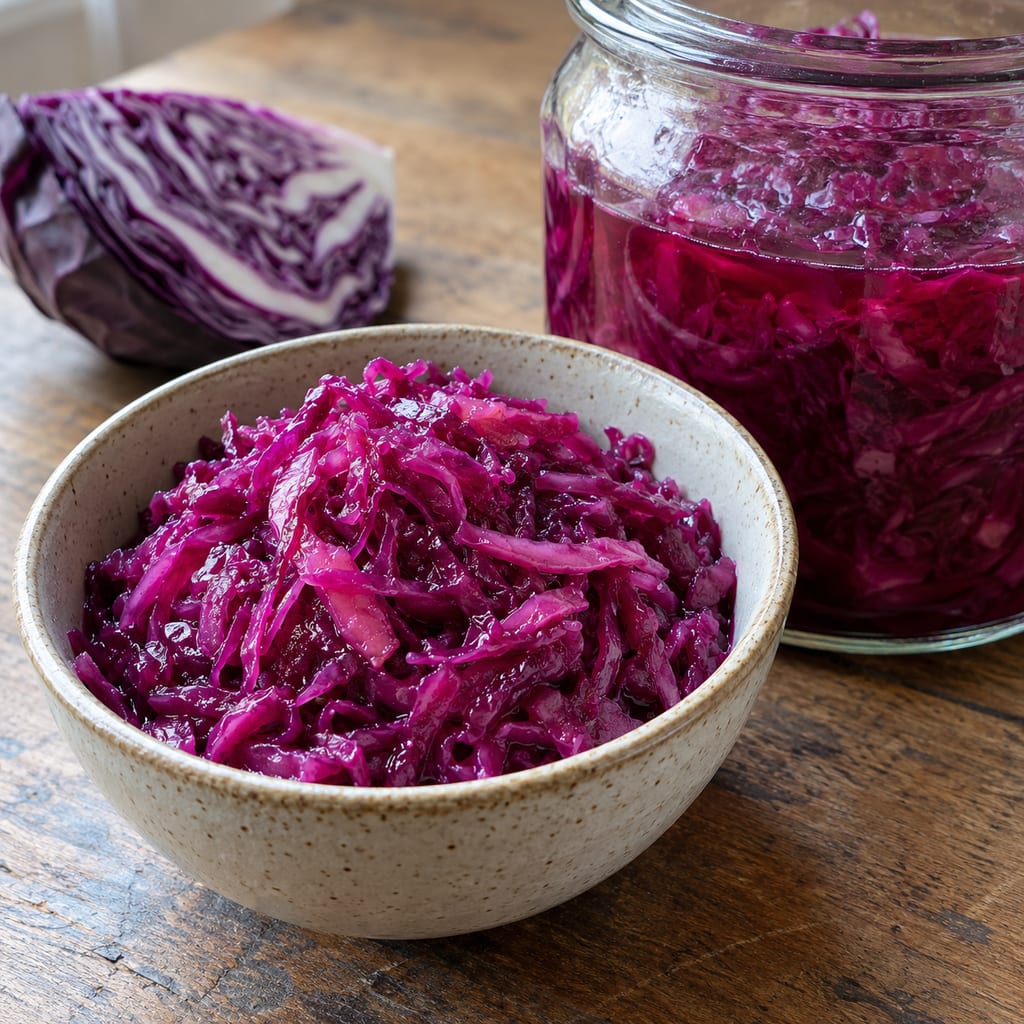
Illustrative red cabbage sauerkraut served in a ceramic bowl beside a crock of cabbage in violet brine.

Red cabbage sauerkraut

Red cabbage shredded, salted and fermented in its own brine; the pigment gives a deep violet kraut with a sharper flavour than the white-cabbage form.
Traditional method
· Vegetables
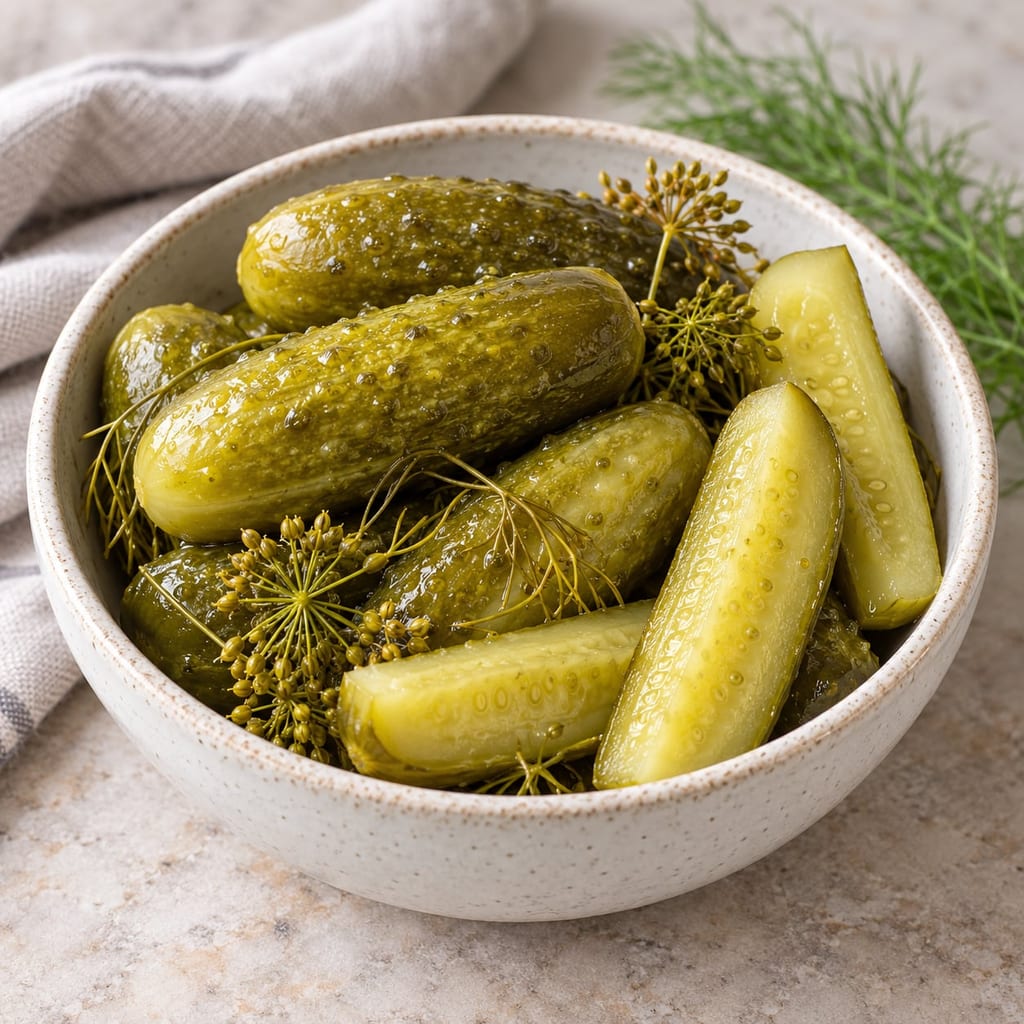
A bowl of firm fermented dill pickles and cucumber spears with dill seed.

Fermented dill pickles

Trimmed cucumbers layered with dill and covered with a salt brine containing 5% vinegar, weighted and fermented three to six weeks.
United States · Traditional method
· Vegetables
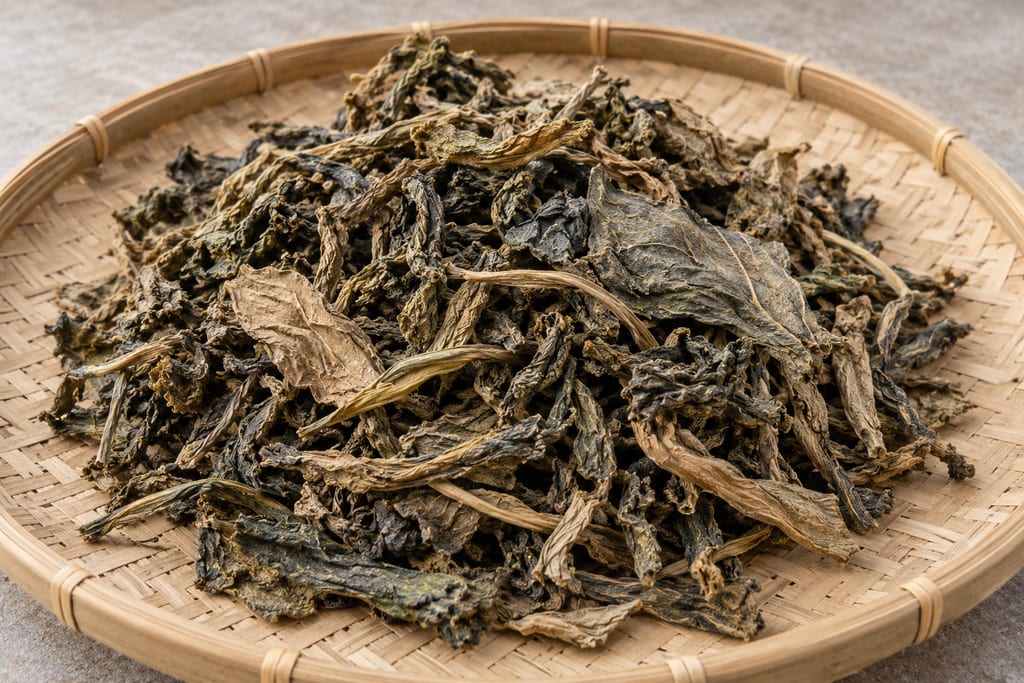
Original editorial depiction of dried Rayo-sag gundruk as dark, crinkled fermented leaves on a woven drying tray; the plant variety is not visually identifiable.
Elevated risk

Rayo-sag gundruk

Wilted and shredded Brassica rapa rayo-sag leaves, packed under warm water in earthenware, fermented five to seven days, then sun-dried as Nepali gundruk.
Himalaya, Nepal · Traditional method
· Vegetables
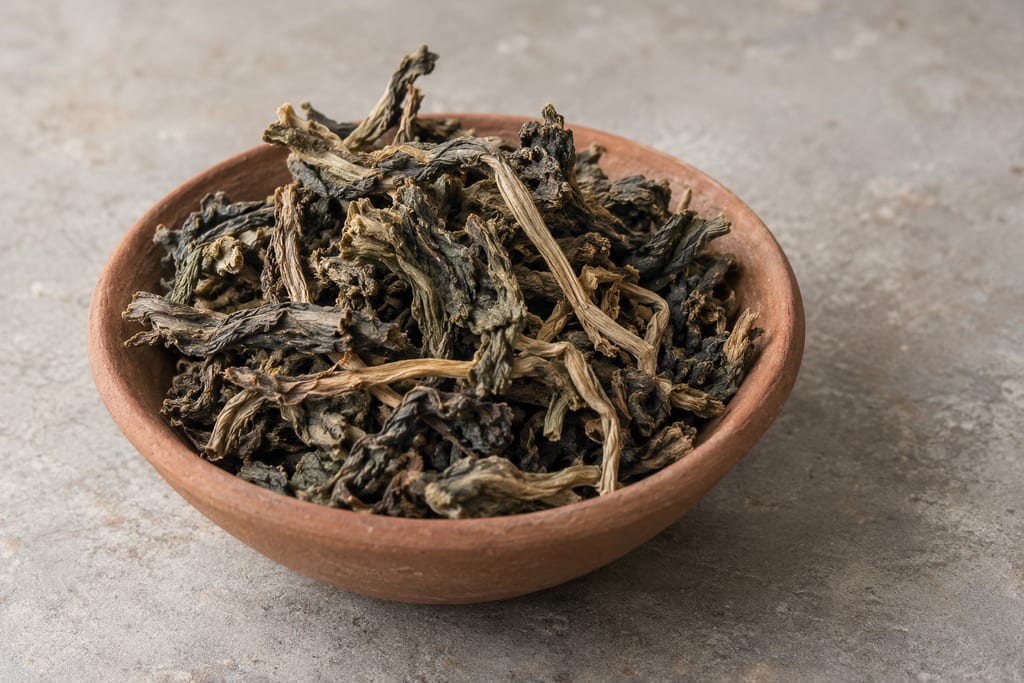
An original editorial depiction of dried radish-leaf gundruk, dark fermented greens in an earthenware bowl.
Elevated risk

Radish-leaf gundruk

Radish greens wilted, packed into an earthen pot with warm water and fermented without salt, then sun-dried into Nepal's dark, sour gundruk.
Himalaya, Nepal · Traditional method
· Vegetables
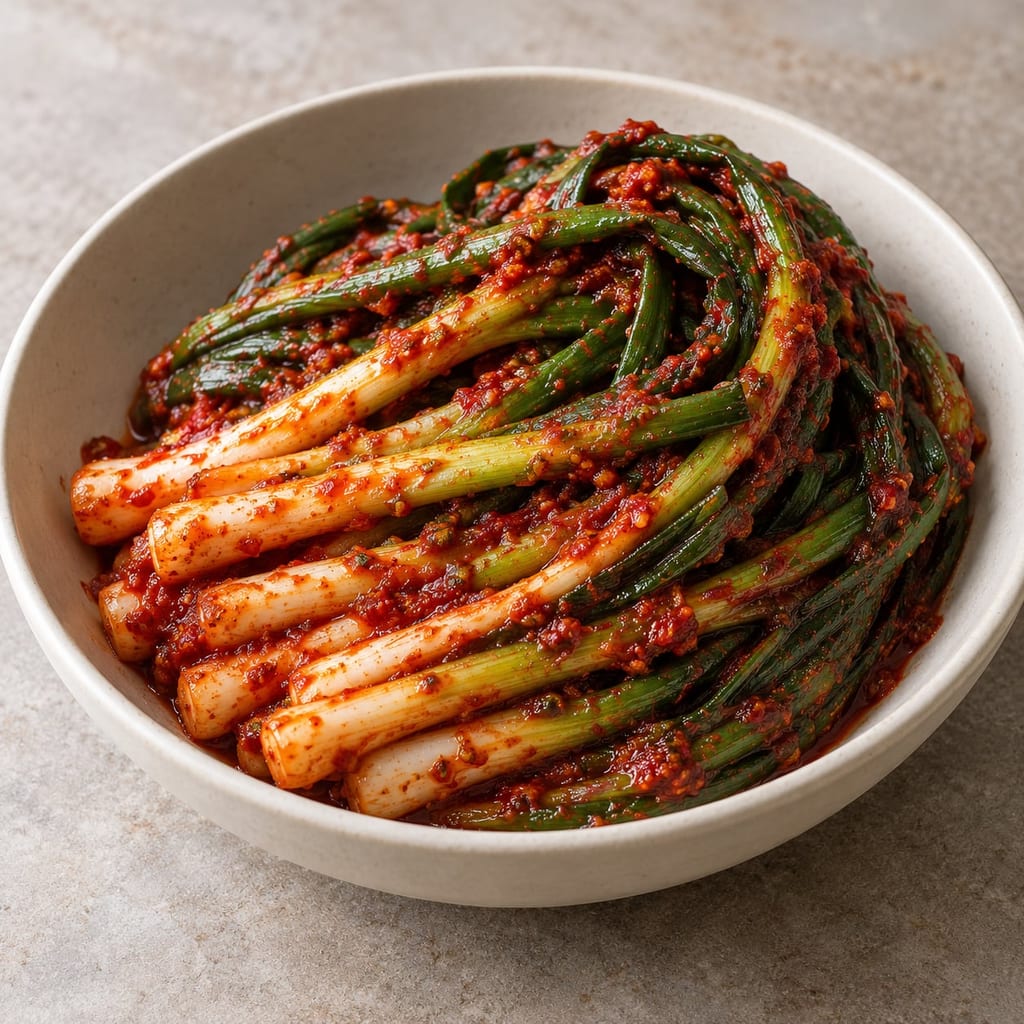
Finished Korean pa-kimchi: long intact scallions coated in red seasoning and loosely folded in an off-white ceramic bowl.
Elevated risk

Pa-kimchi with fruit and anchovy seasoning

Scallion kimchi coated with fruit, chili, rice paste and salted-seafood seasonings, following one Korean creator’s measured batch.
Chungcheong, Jeolla and Gyeongsang · Modern adaptation
Vegetables
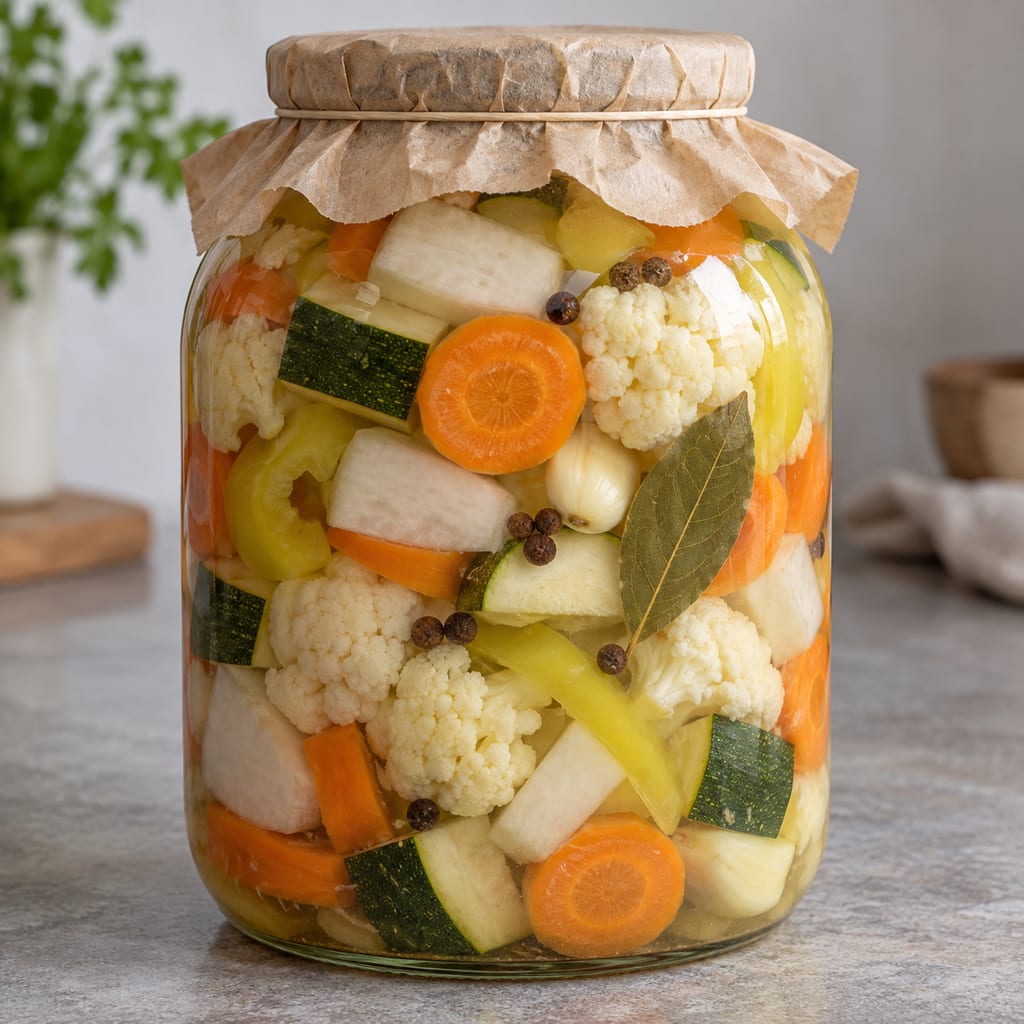
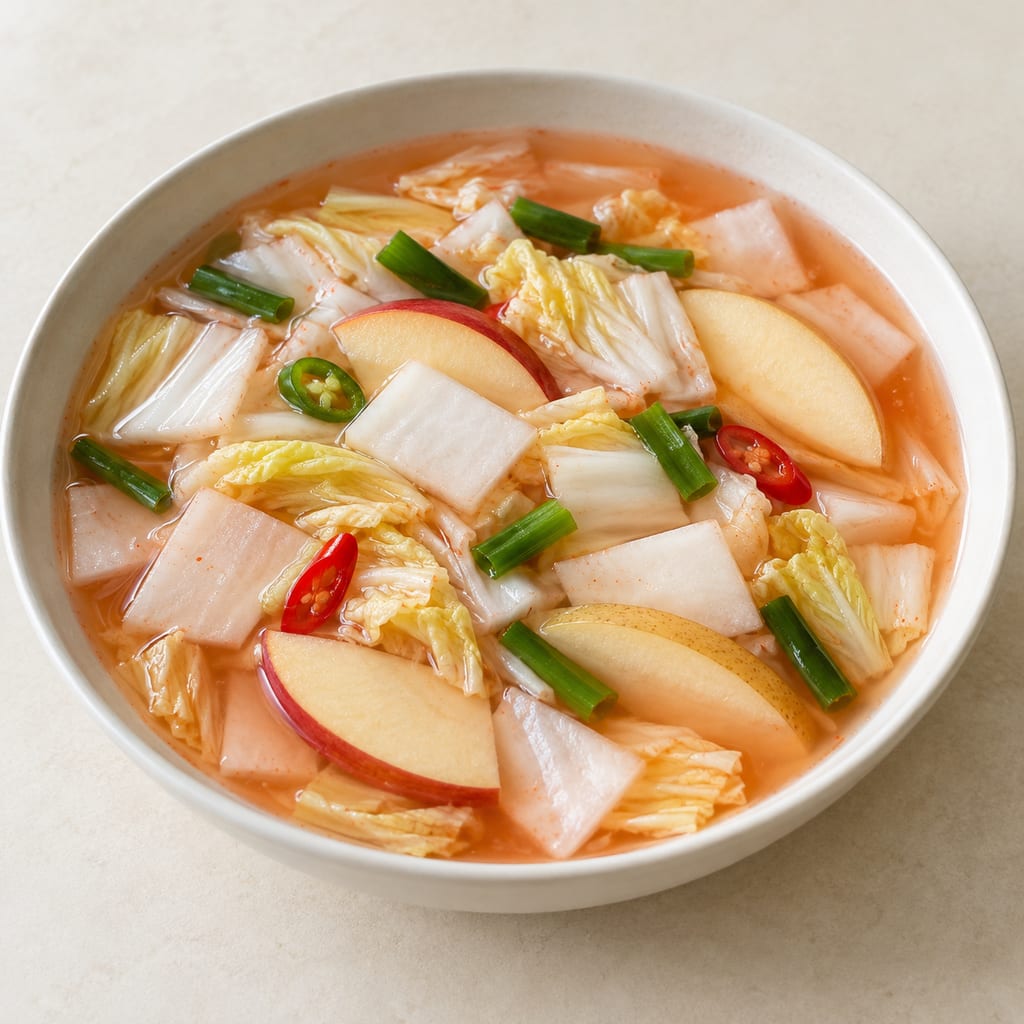
Mixed carrot, radish, cauliflower, zucchini and pepper in a cloth-covered brine jar
Elevated risk

Mixed vegetables in one-litre brine

A 2 L jar holds cut carrot, radish, cauliflower, zucchini and pepper under a one-litre salt brine with aromatics; the source gives no produce mass or qualified endpoint.
Modern method
· Vegetables
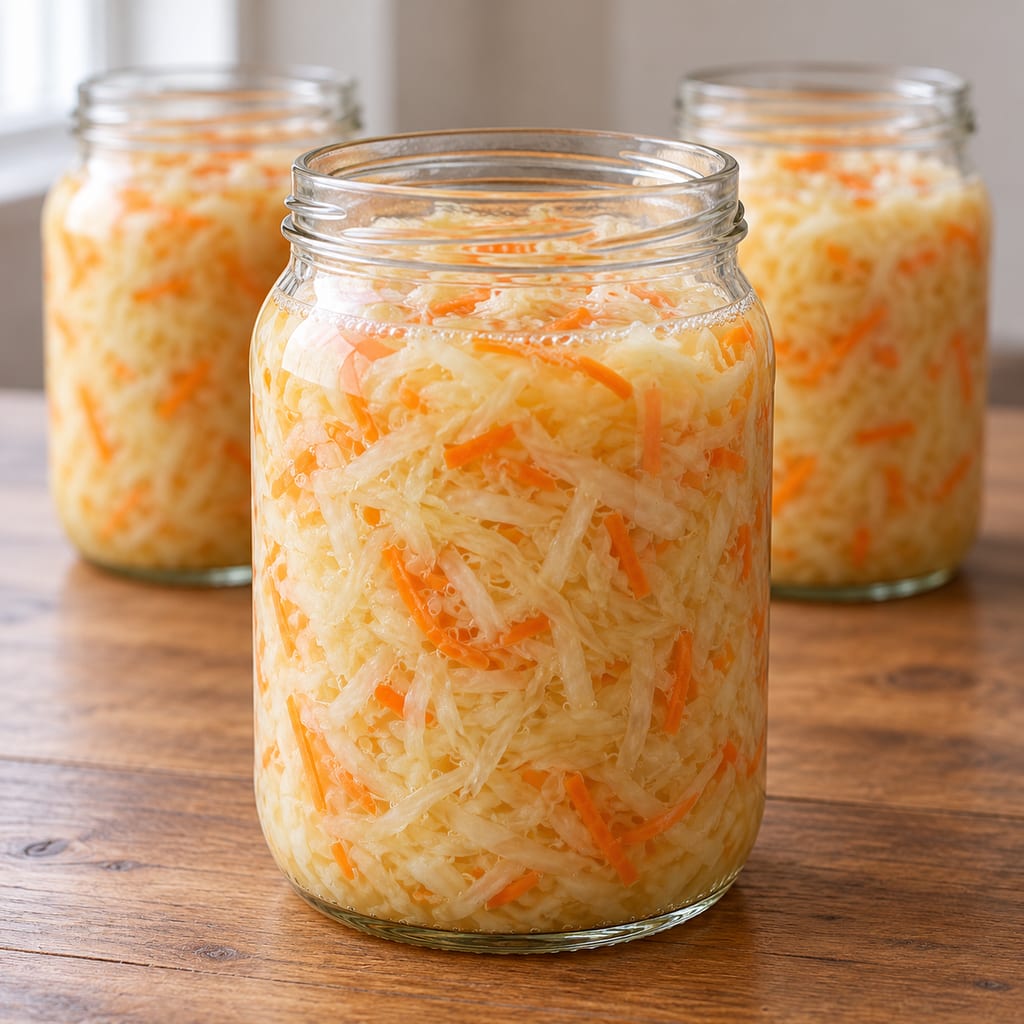
A bowl of Korean nabak-kimchi with pear, apple, cabbage, radish, scallions and chile in light rose broth.
Elevated risk

Nabak-kimchi with pear and apple

Cabbage-and-radish water kimchi with pear, apple and strained chili broth, following one Korean creator’s batch.
South Korea · Modern adaptation
Vegetables
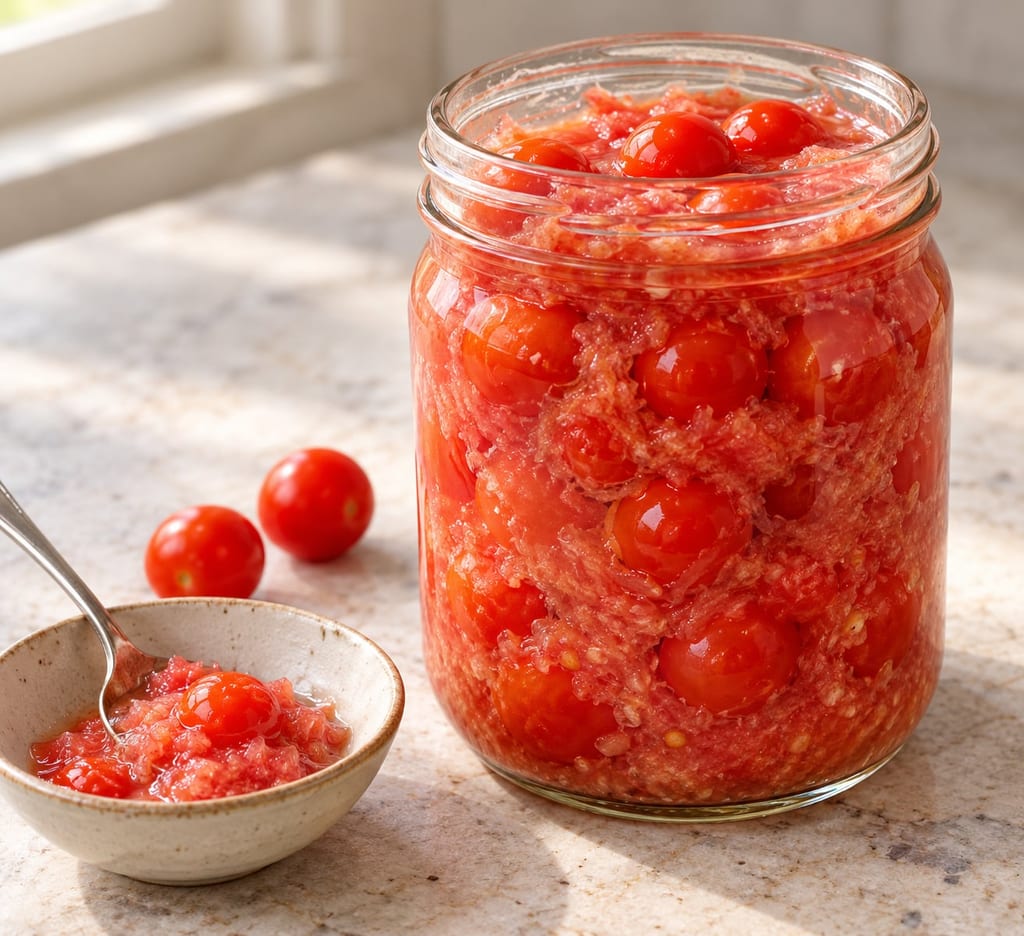
A clear glass jar of shredded cabbage-and-carrot sauerkraut, with two filled jars behind it.
Elevated risk

Jar sauerkraut with carrot

Shredded cabbage and grated carrot are salted to 20 g/kg, rested, packed into three jars and monitored during a creator-reported eight-day fermentation; measured temperature is not given.
Modern method
· Vegetables
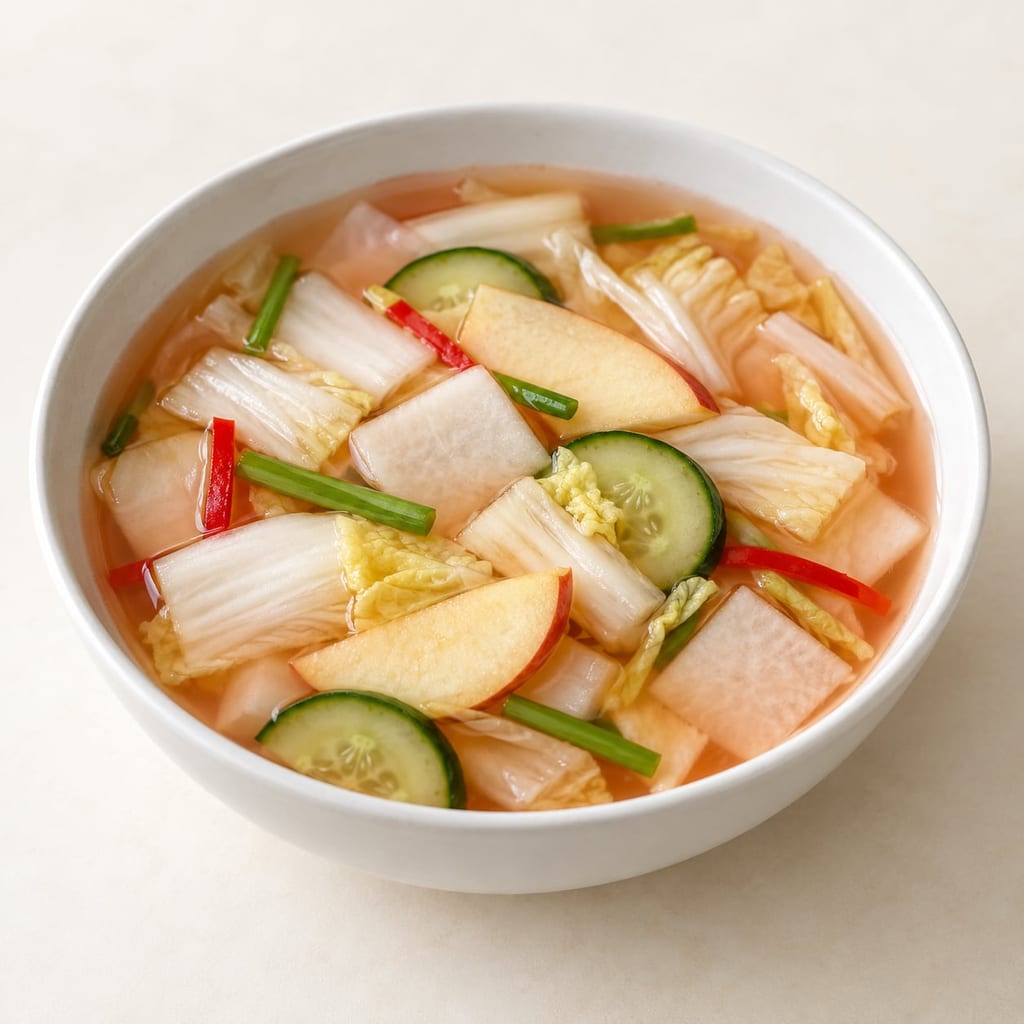
Whole lacto-fermented cherry tomatoes submerged in salted grated tomato pulp in a clear glass jar.

Lacto-fermented cherry tomatoes

Cherry tomatoes sit beneath a salted grated-tomato layer for a five-to-seven-day room-temperature fermentation.
Modern method
· Vegetables
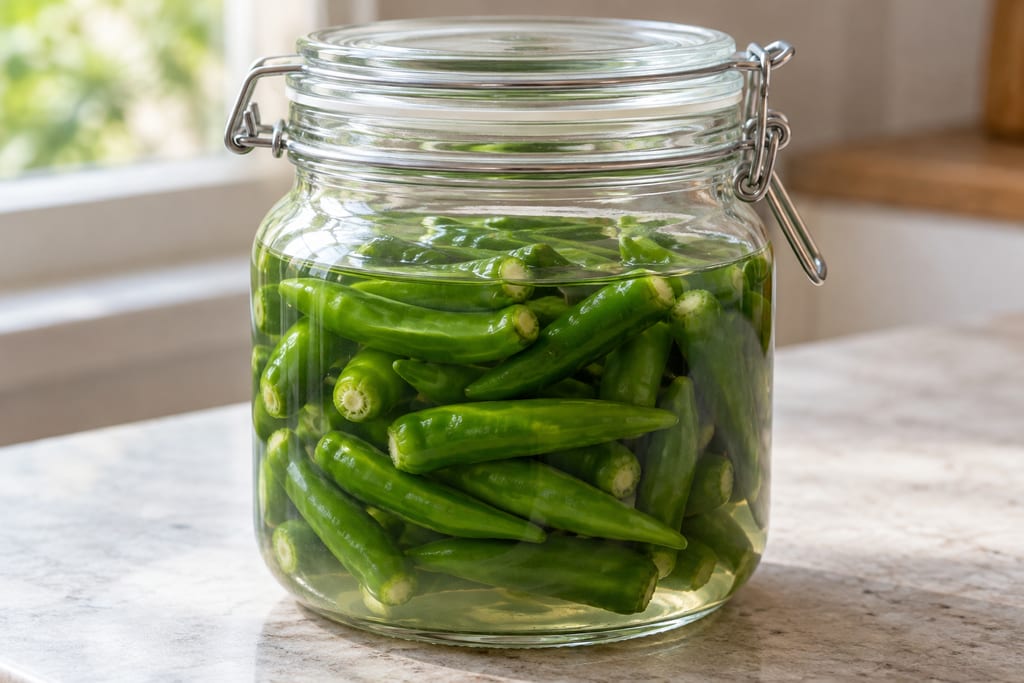
Finished salt-brined green chiles, pao-lajiao style: whole green peppers submerged in clear brine in a glass jar.

Salt-brined green chiles, pao-lajiao style

Whole green chiles are blanched briefly, then fermented in 3% salt brine with sake in a modern Japanese presentation of a wider Asian preparation.
China · Modern method
· Vegetables
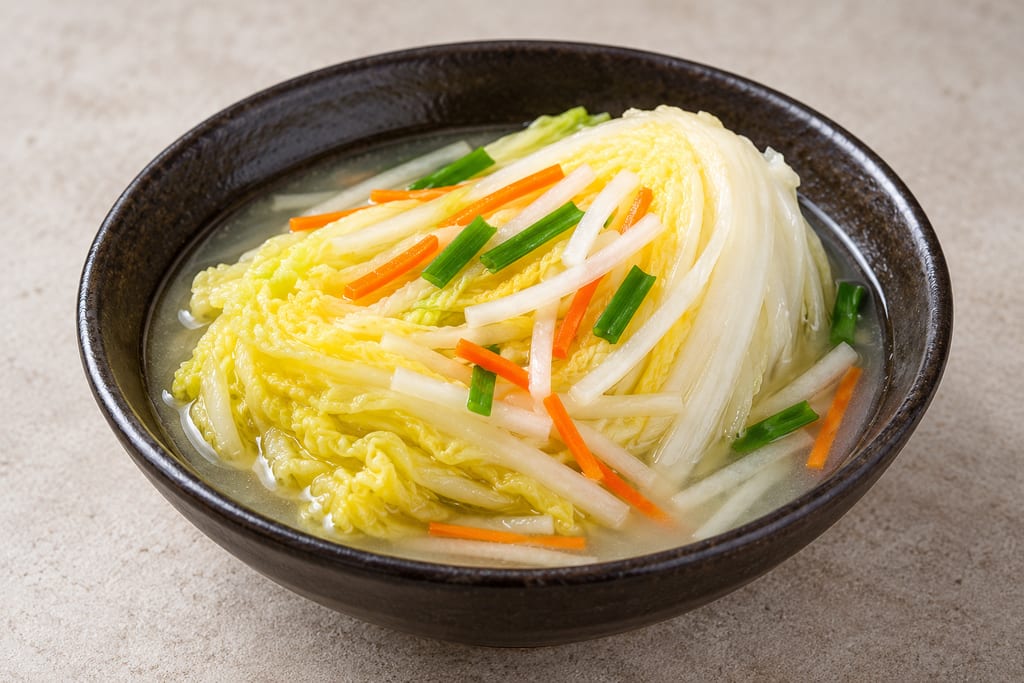
Finished baek-kimchi cabbage with radish, carrot and green onion in pale brine.

Baek-kimchi (white napa-cabbage kimchi)

Napa cabbage is brined and filled with pear, radish, alliums, chives and fruit; this Korean kimchi omits red pepper flakes.
Korea · Traditional method
· Vegetables
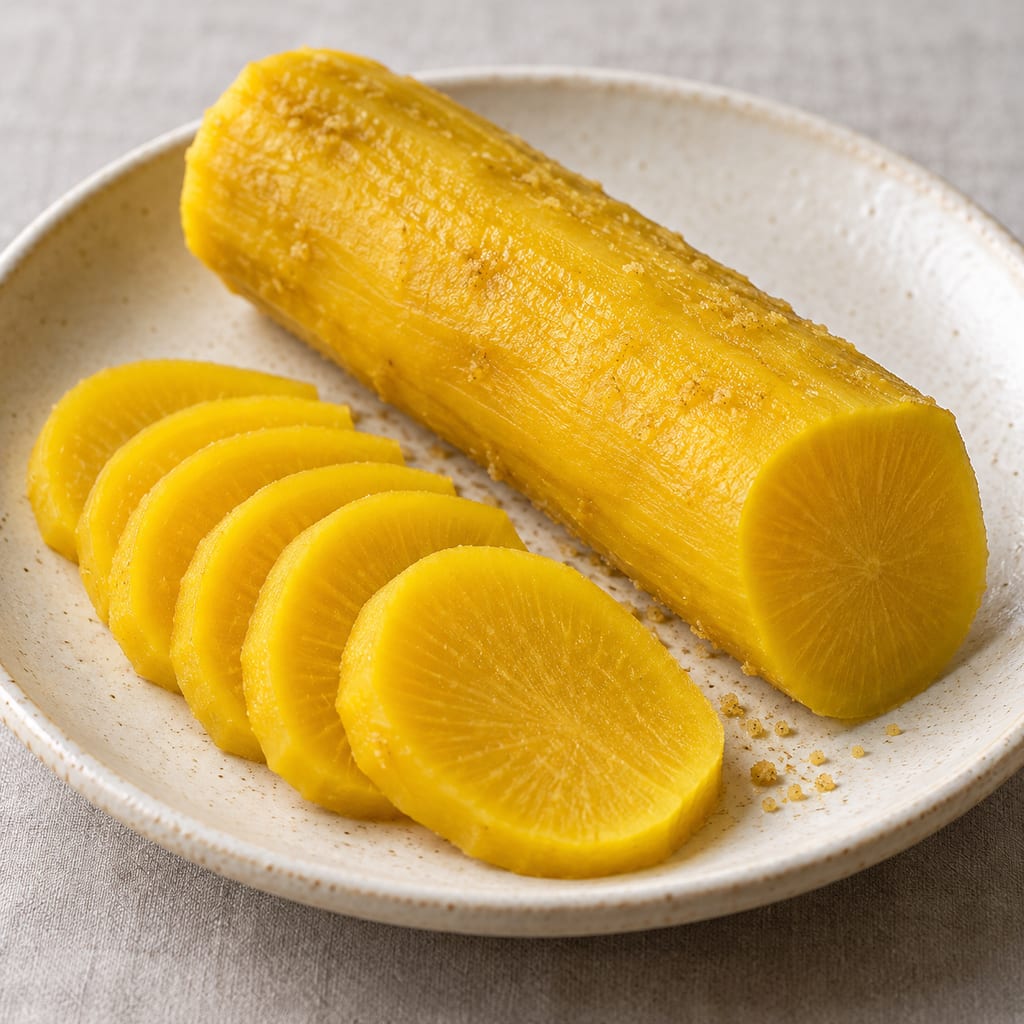
Illustrative finished turmeric-seasoned takuan-zuke, with a firm yellow rice-bran-pickled daikon and several thin slices on a plain ceramic plate.

Takuan (rice-bran fermented daikon)

Daikon is dried until pliable, then layered in seasoned rice bran and pressed for a long fermentation.
Japan · Modern method
· Vegetables
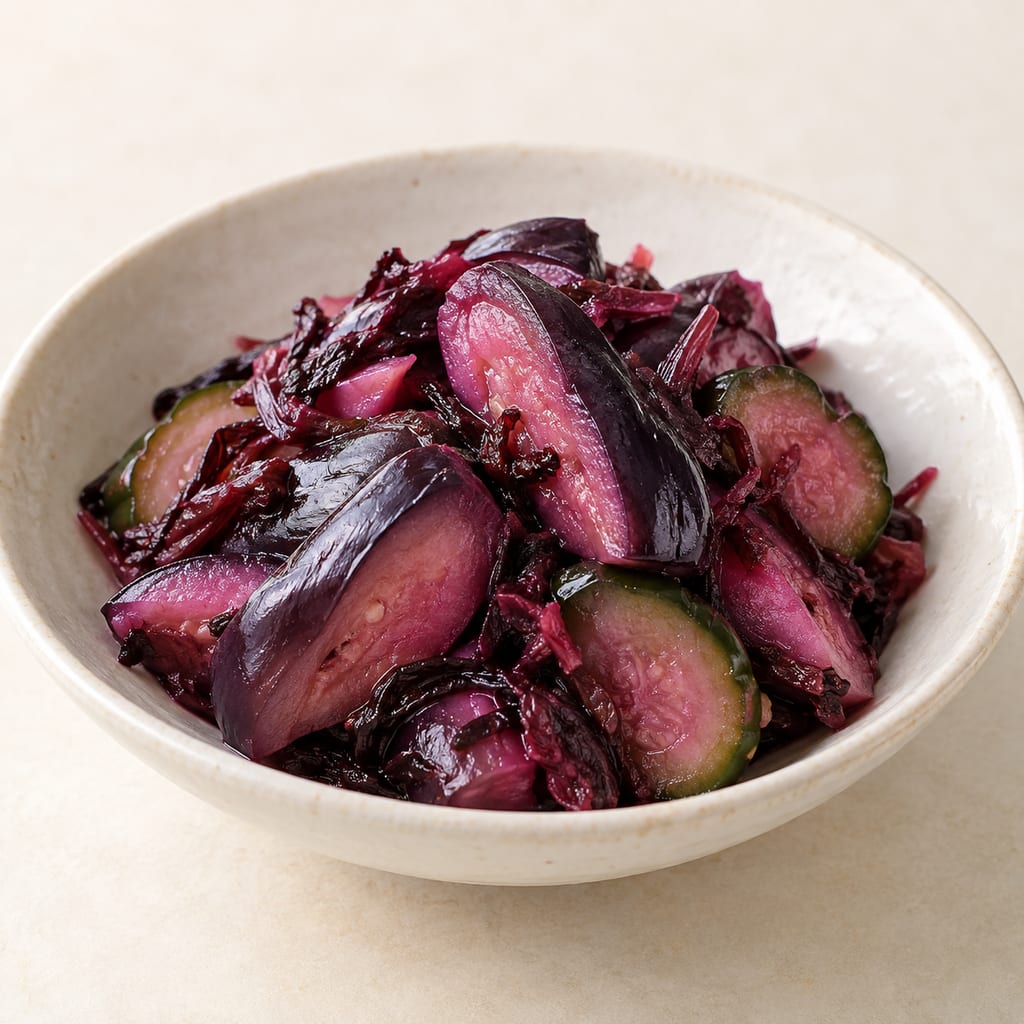
Traditional Kyoto shibazuke: purple perilla-stained eggplant pickle with cucumber in a plain ceramic bowl.

Shibazuke (Kyoto eggplant and perilla pickle)

Eggplant and perilla are layered with cucumber, myoga and chiles, pressed with salt and left to mature into Kyoto’s sour purple pickle.
Kyoto City, Japan · Traditional method
· Vegetables
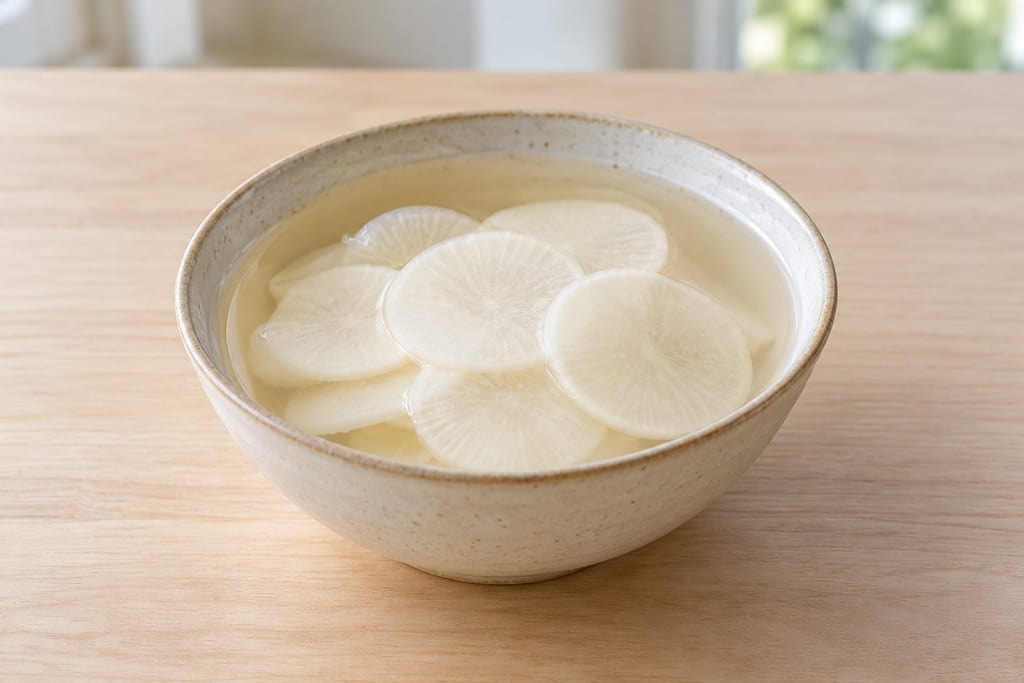
Illustrative serving of quick Dongchimi: thin Korean radish discs in chilled, pale apple-onion broth. Not a photograph of a particular fermentation batch or a validated safety endpoint.

Quick dongchimi with apple broth

A modern broth-forward radish-water kimchi cooks apples and onion into the fermentation liquid.
Korea · Modern method
· Vegetables
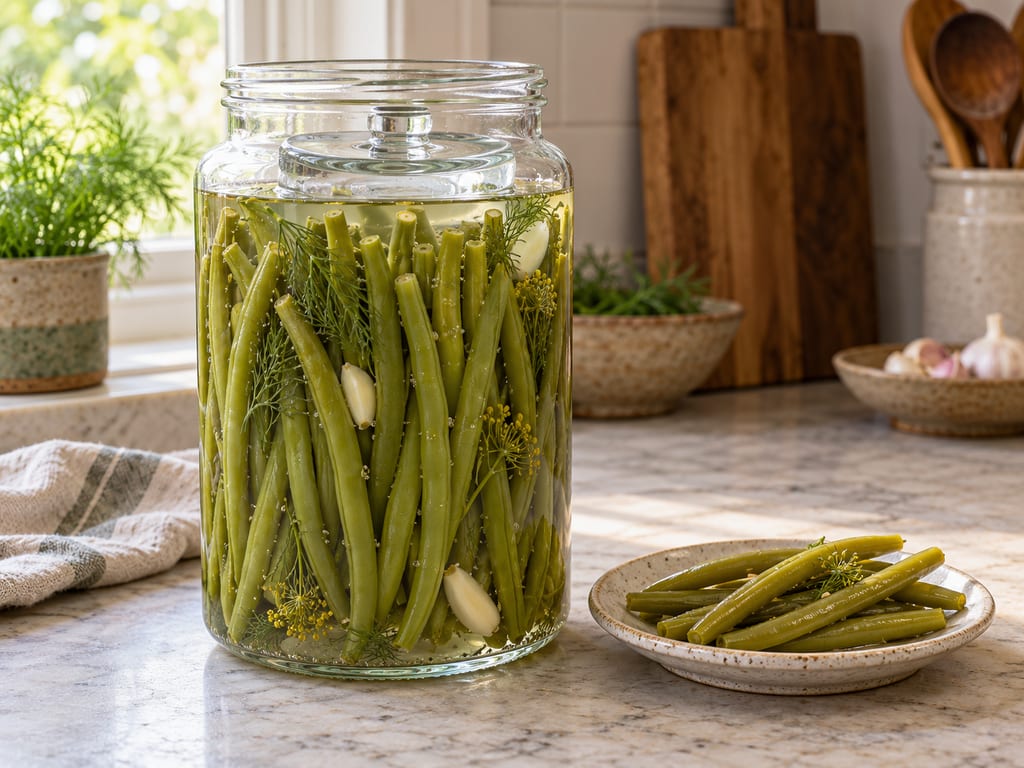
Whole lacto-fermented green beans submerged in a clear glass jar of pale brine, with optional dill and garlic.
Elevated risk

Lacto-fermented green beans

Whole green beans fermented in a salt brine, with dill and garlic as optional seasonings, staying crisp as they sour.
Modern method
· Vegetables
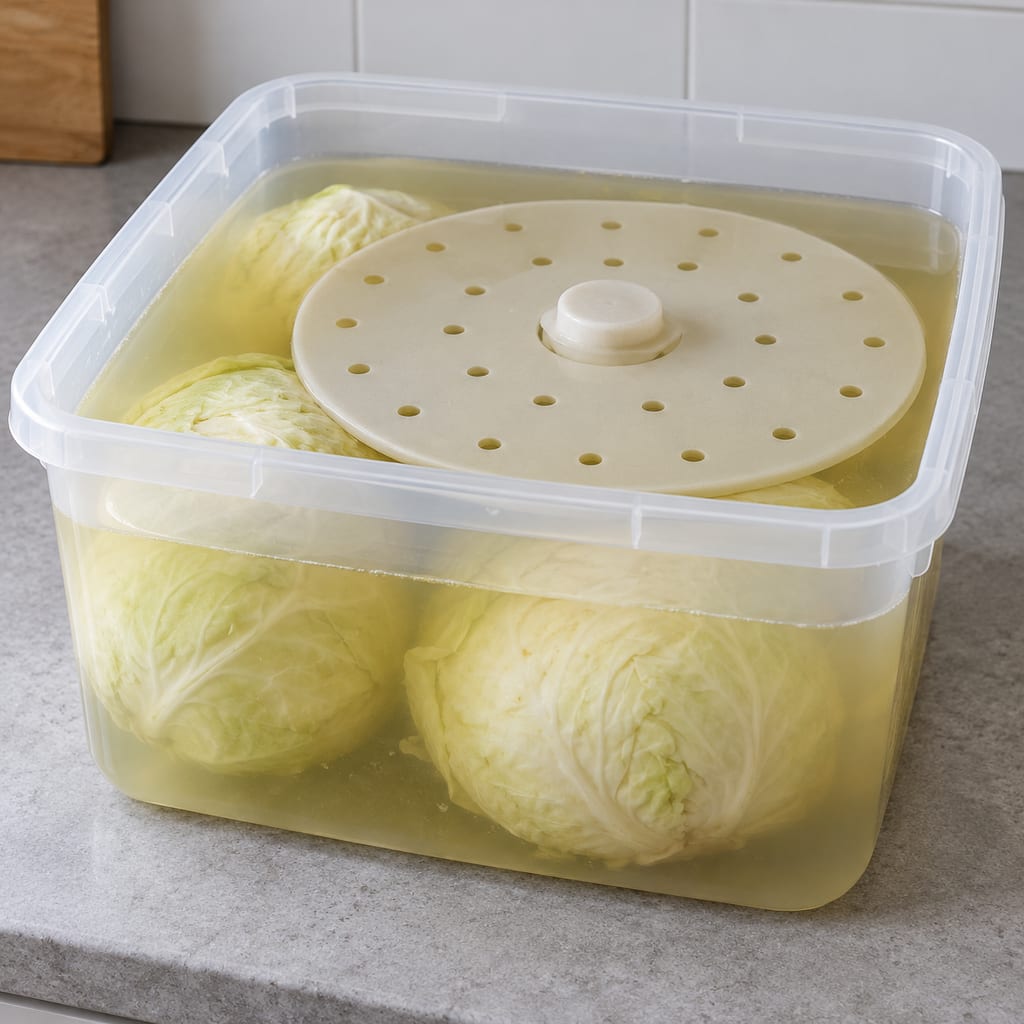
Whole cabbage heads submerged in plain brine under a fitted weight in a clean fermenting tub; an illustrative depiction of the FAO method.

Whole-head brined sauerkraut

Cored cabbage heads ferment intact or halved under measured brine, with repeated surface checks over six weeks.
Modern method
· Vegetables
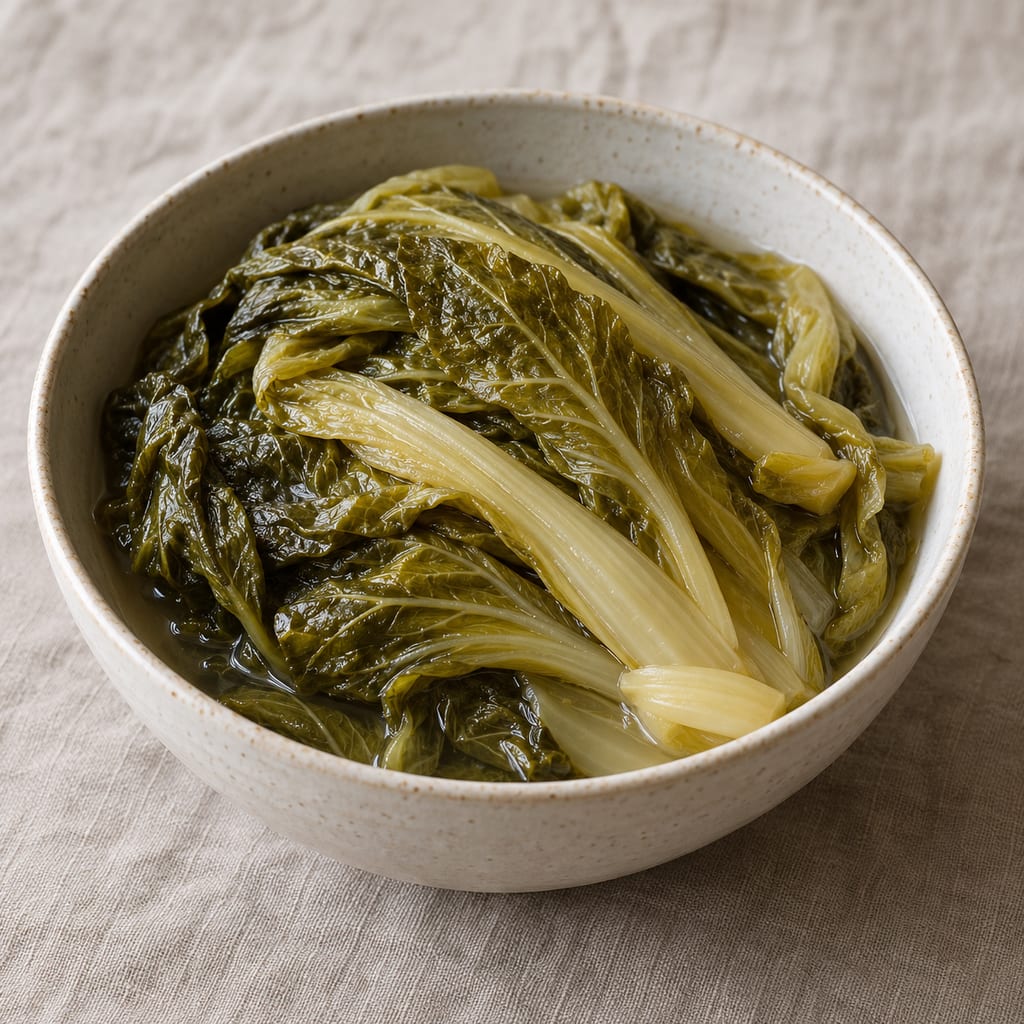
Indonesian sayur asin: olive-green fermented mustard leaves and intact pale stems in a shallow white bowl.

Sayur asin

Indonesian salted mustard cabbage, wilted, rubbed with 2.5 to 5% salt by weight, and fermented covered in boiled-rice liquid.
Indonesia · Traditional method
· Vegetables
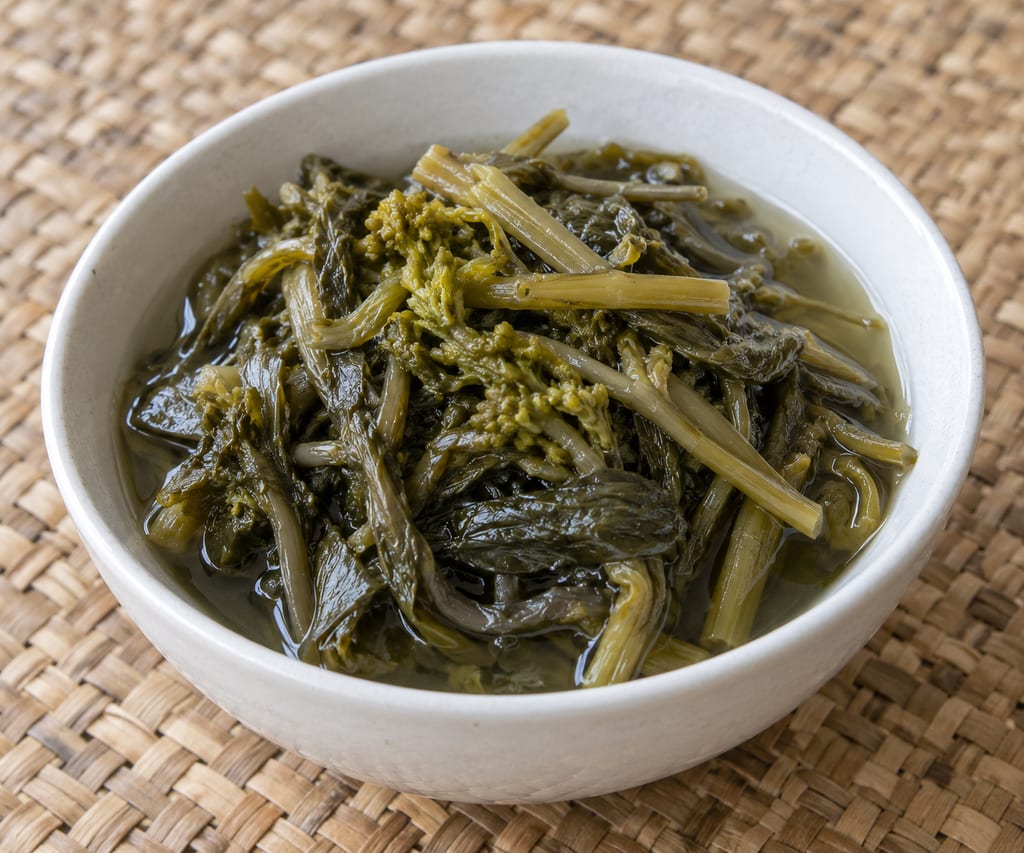
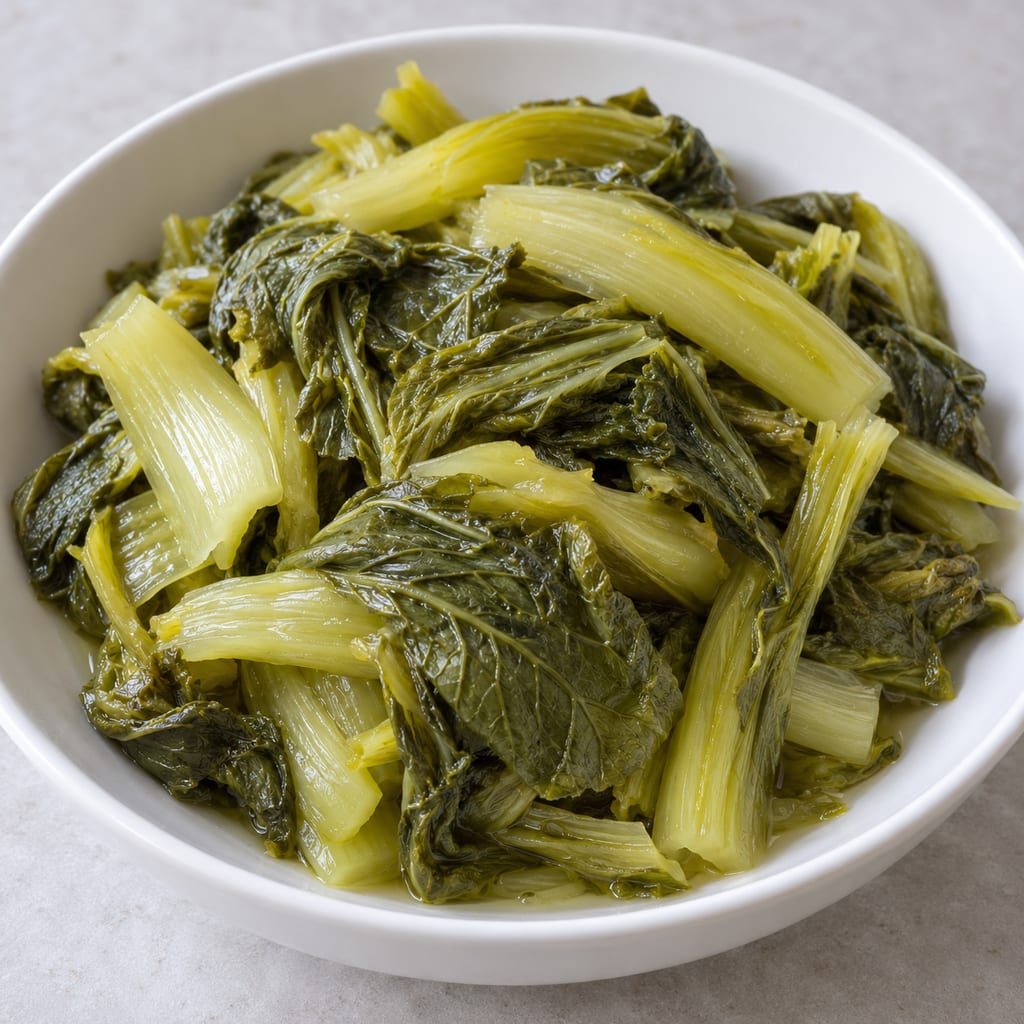
A small white bowl of dark olive-green pickled spiderflower greens in their brine.

Pak-sian-dong

Young spider-flower greens packed with salt and cooked rice and left to sour for a few days; a Thai leafy-vegetable ferment eaten as a sharp side dish.
Thailand · Traditional method
· Vegetables
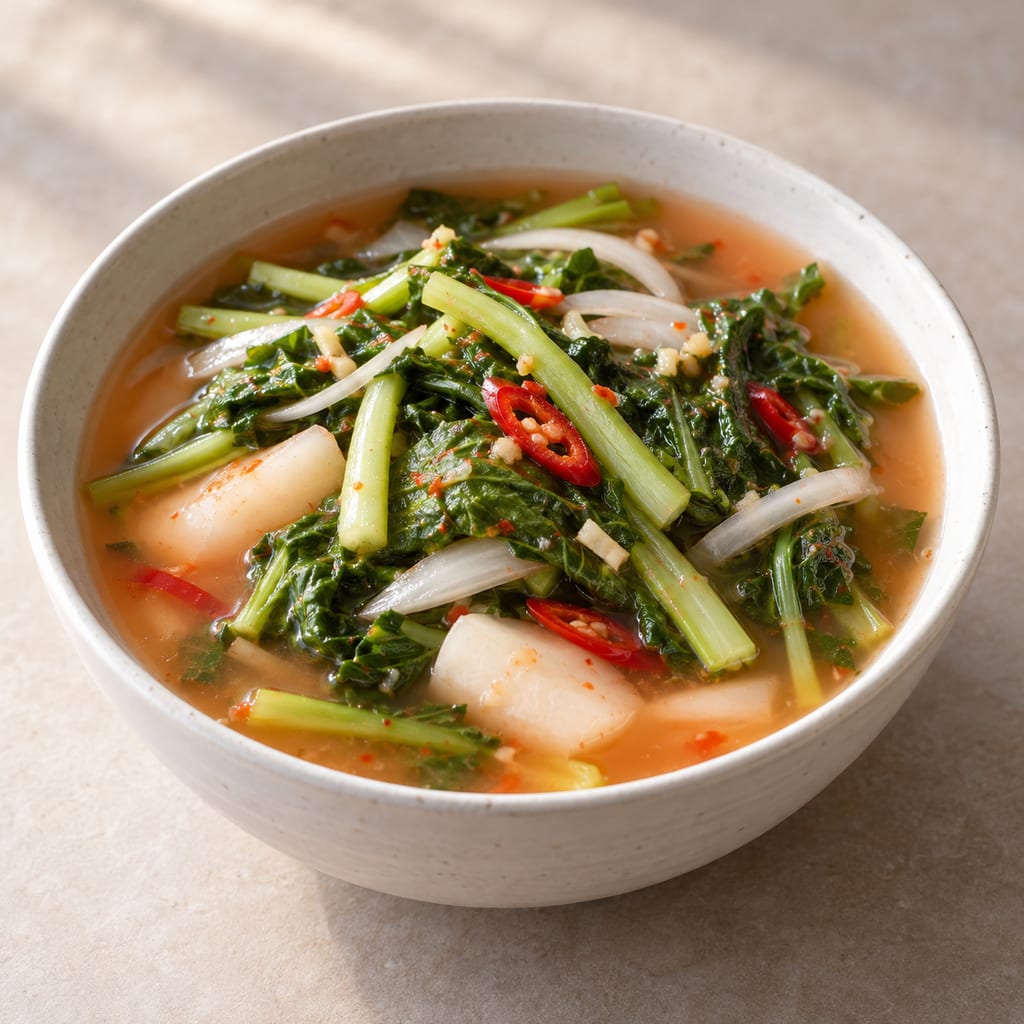
Illustrative finished pak-gard-dong: wilted, fermented mustard leaves from the documented salt-then-sugar method. This image does not establish batch safety or a preservation endpoint.

Pak-gard-dong (salt-then-sugar method)

Pak-gard-dong is a Thai mustard-green pickle salted first and drained, then fermented with sugar added to the drained greens.
Thailand · Traditional method
· Vegetables
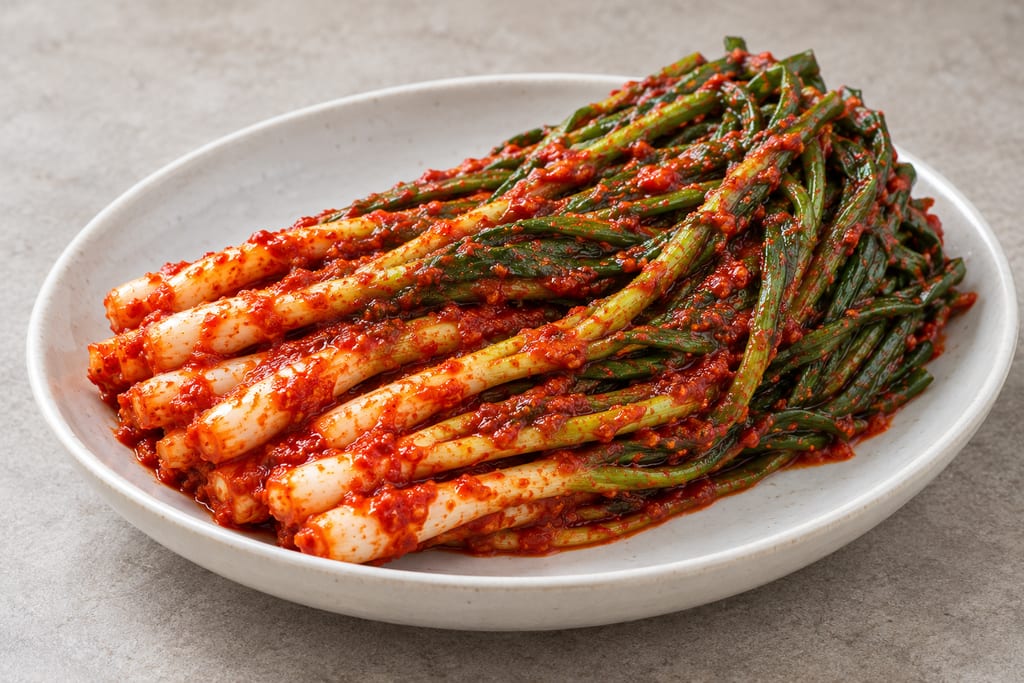
Yeolmu mulkimchi, young summer radish greens in a pale, chili-seasoned broth.

Yeolmu mulkimchi

Summer water kimchi of young radish, seasoned with fish sauce and chiles, brined in salted water with cooked flour.
Korea · Traditional method
· Vegetables
Illustrative serving of pa-kimchi: whole green onions coated in red chilli seasoning.

Pa-kimchi

Pa-kimchi is a Korean kimchi of whole green onions salted, dressed with chilli and fish sauce, and fermented until pungent and sour.

South Jeolla, Korea · Traditional method
· Vegetables

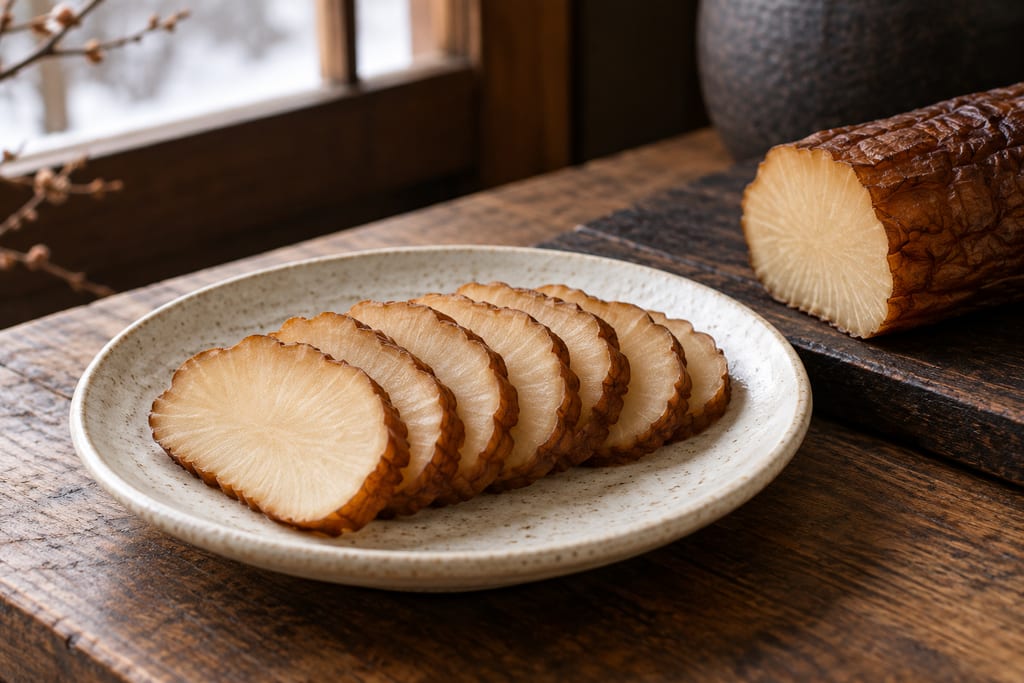
OSU measured kimchi

Kimchi of salted napa cabbage and daikon with garlic, green onion and red pepper, kept at room temperature one to four days, then refrigerated.
Korea · Traditional method
· Vegetables
Thin slices of amber-brown smoked daikon pickle on a ceramic plate, with a whole iburigakko behind.

Iburigakko

Iburigakko is Akita pickled daikon dried with smoke before it is fermented in rice bran.

Akita Prefecture · Traditional method
Vegetables