Articles

Source-linked articles on foods, ingredients, traditions and equipment.

128 articles

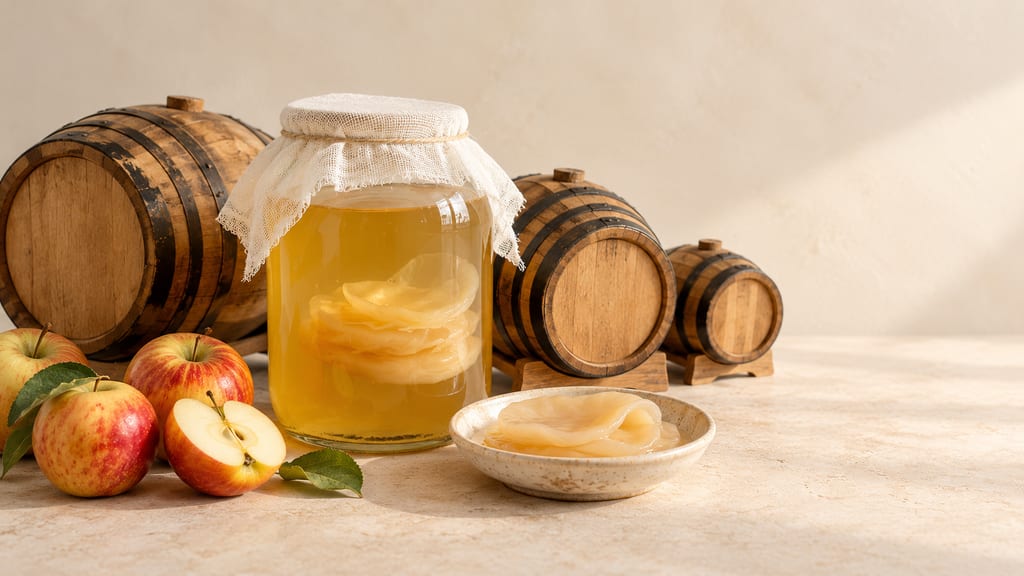
Three wooden vinegar casks of decreasing size stand beside a cloth-covered jar of cider vinegar, a dish of vinegar mother and apples on a warm ivory surface.
Vinegar intake

Vinegar: the craft of making acidity

Vinegar forms when bacteria and oxygen turn alcohol into acetic acid. This reference follows wine, fruit, grain and sap through that change, the ways of supplying oxygen, the measurements and the choices that finish a bottle.

· 17 min read

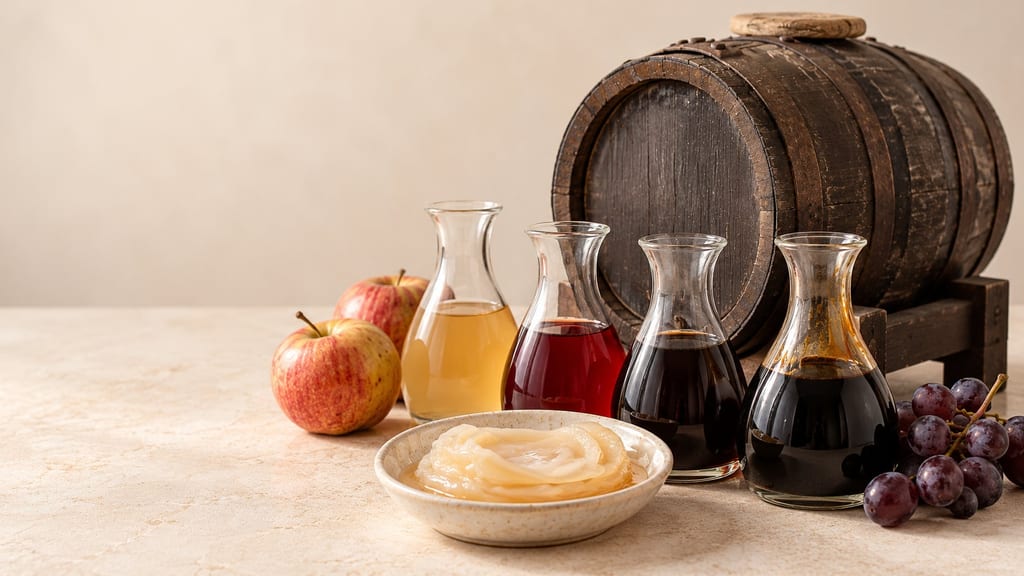
Four glass carafes of golden, ruby and dark vinegars stand before a wooden cask beside apples, grapes and a shallow dish of mother of vinegar.
Vinegar intake

A world of vinegars: what the names tell you

A bottle of vinegar can carry the flavour of wine, rice, dates, palm sap or an orchard harvest. Its name becomes useful when you can tell what was fermented, how the acid developed, and what the maker added or changed afterward.

· 18 min read

Watercolour of harvested blue-green ice blocks and a wooden sled beside a cut channel in a frozen pond, with bare trees beyond.
Preservation catalogue

Cold without winter: from pond ice to the kimchi refrigerator

Ice once came off frozen ponds and ships. Breweries, a Geelong inventor and a Munich professor built machines that replaced it, and a home refrigerator now shapes which bacteria work in a jar of kimchi.

· 6 min read

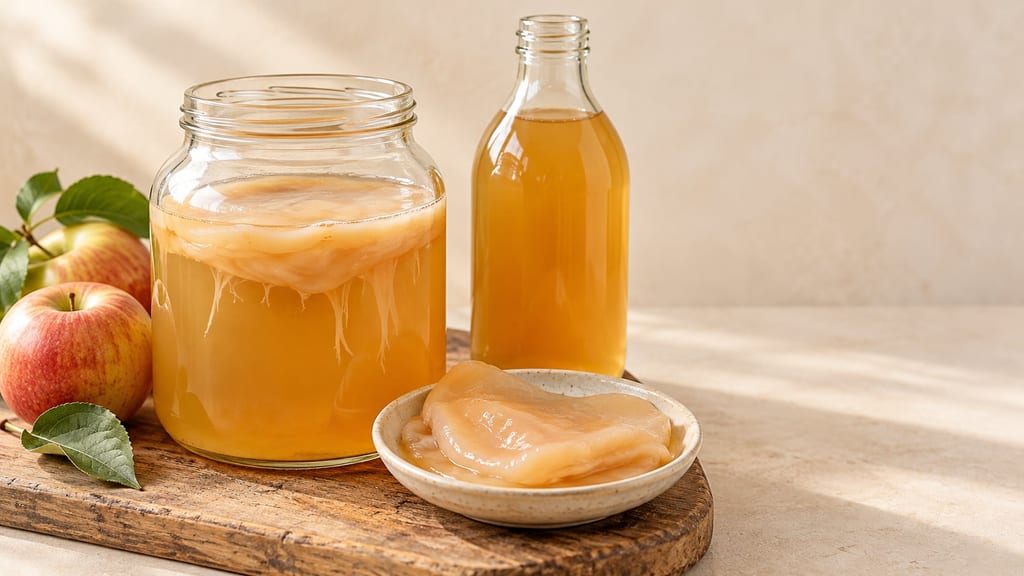
An open jar of hazy amber vinegar with a floating mother sits beside a dish of glistening vinegar mother, an unlabelled bottle and two apples on a wooden board.
Techniques

A minute without air: how a tank of bubbles makes vinegar

Cut the air to a vinegar tank for 60 seconds and acid formation stops. The story of submerged acetification: an Austrian patent, the machines built since, and why every number belongs to its own tank.

· 6 min read

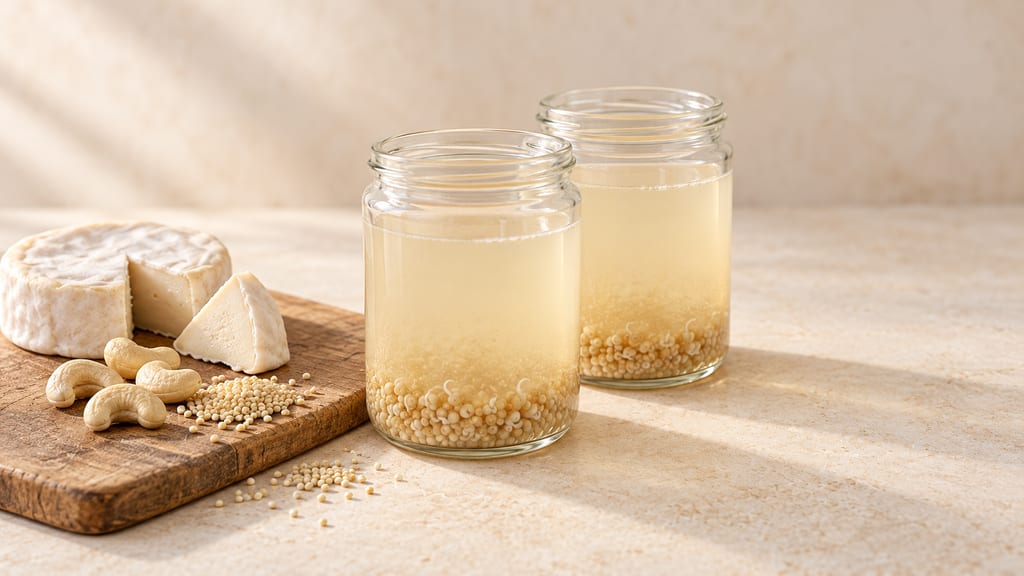
Two open jars of cloudy pale quinoa rejuvelac beside soft cashew cheese, raw cashews and dry quinoa on a wooden board in warm daylight.
Starter cultures

Two jars of rejuvelac, two different sets of bacteria

Rejuvelac is sprouted-grain water that people drink and use to start cashew cheese. Two studies of the quinoa version found almost no bacteria in common, and neither shows that a home batch is safe.

· 7 min read

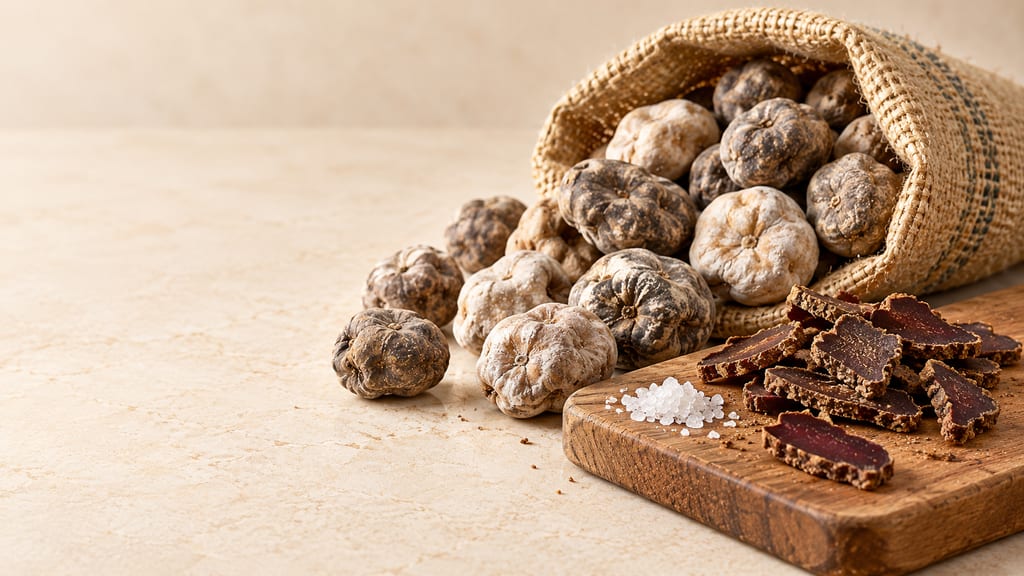
Wrinkled chuño potatoes spill from a woven bag beside dark red biltong slices and coarse salt on a wooden board against a warm ivory background.
Home equipment crafts

What an appliance cannot reproduce

A machine can supply heat, cold, airflow, pressure or a vacuum. Many traditional foods also depend on sunlight, frost and running water, months of microbial work, or a tested kill step, and these are the places where an appliance stops.

· 19 min read

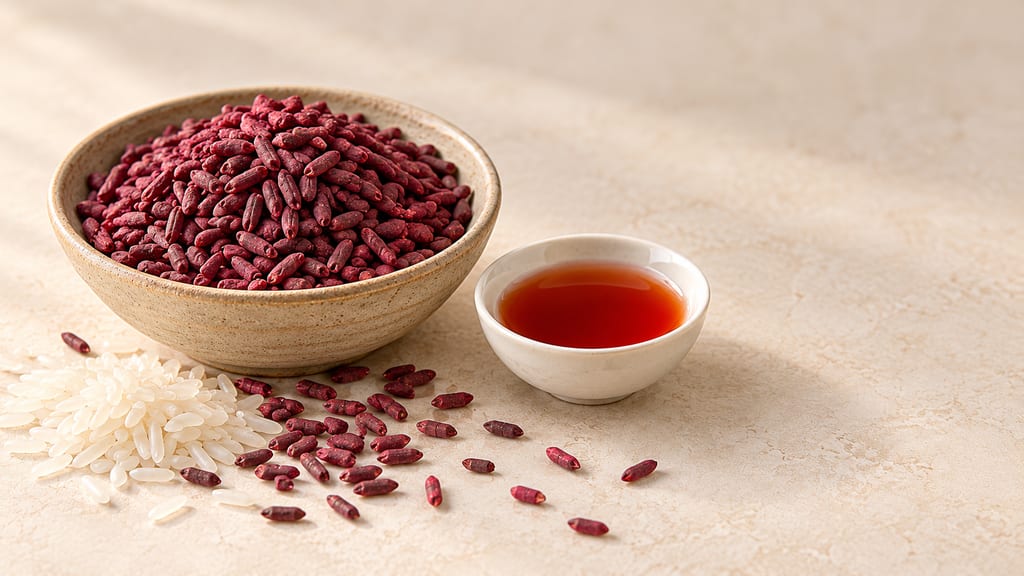
An earthenware bowl of burgundy red yeast rice beside white rice and clear amber-red rice wine on a softly lit ivory surface.
Techniques

The red mould that colours wine, tofu and capsules

Monascus has coloured rice wine and bean curd in East Asia for centuries, and it also makes a compound identical to lovastatin. Food, dye and supplement carry different risks, as a contaminated batch in Japan showed in 2024.

· 7 min read

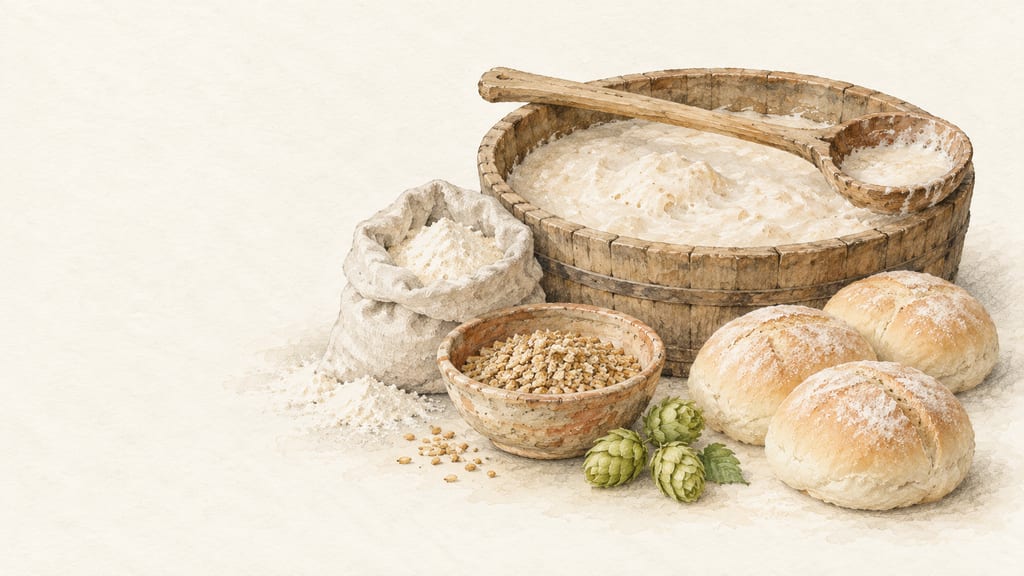
Watercolour study of a wooden tub of frothy barm with a skimming ladle, flour, crushed malt, hops and soft floury bread rolls on ivory paper.
Starter cultures

Barm: the bread leaven that was never one thing

British cooks called their leaven barm, but it was bitter brewery froth in one kitchen, a malt-and-flour ferment in a Scottish bakery and a washed paste in a Victorian larder. A history of one word and three leavens.

· 7 min read

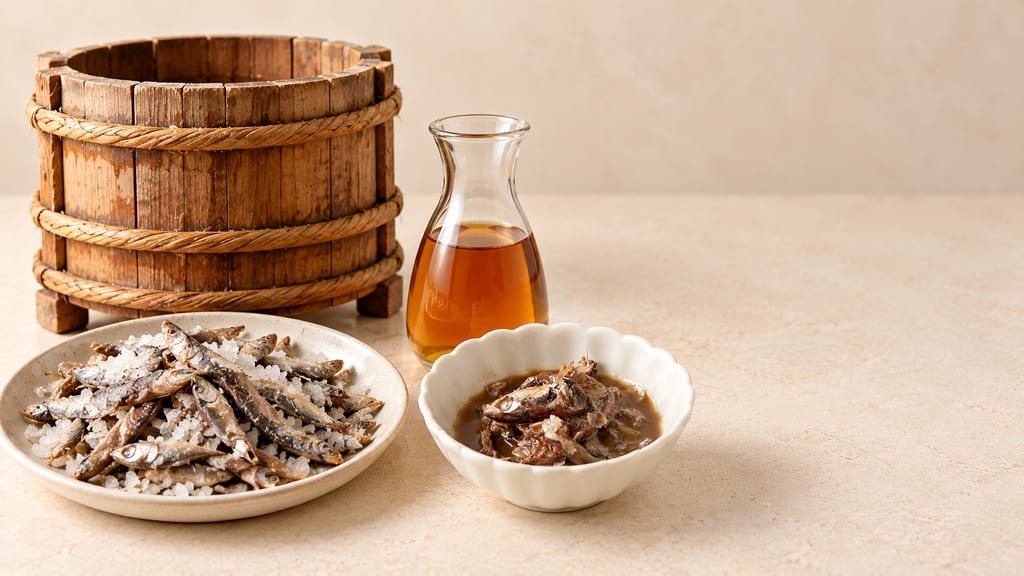
A rope-bound wooden fermentation vat, salt-layered anchovies, a bowl of myeolchijeot and a glass carafe of amber fish sauce sit on a softly lit ivory surface.
Garum intake

Comparisons that reveal the most about garum

Which comparisons with living fish sauces, grain sauces and fermented fish pastes explain how garum was made, and which ones only look alike.

· 6 min read

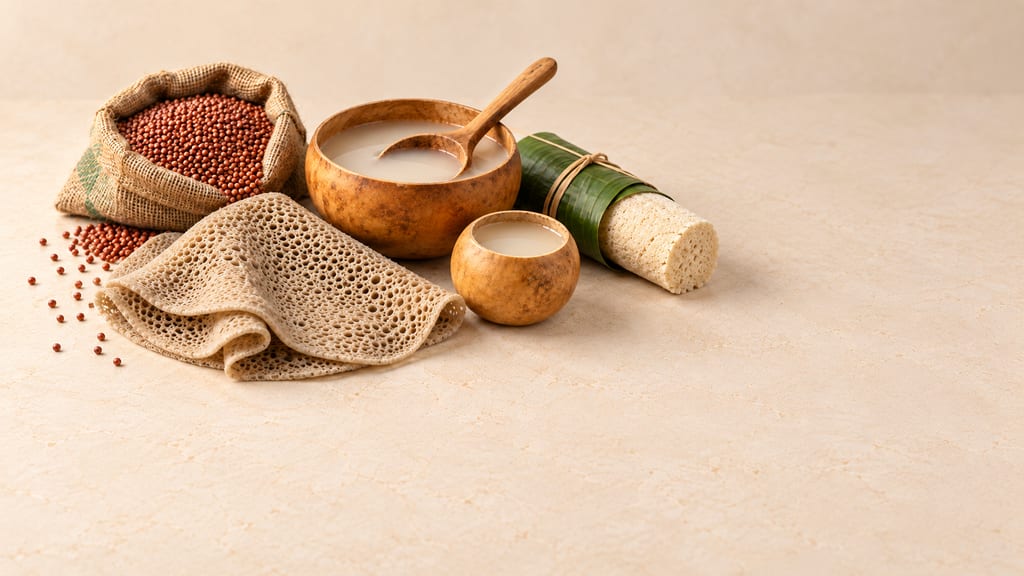
Folded injera, red sorghum grain, cloudy sorghum beer with a wooden ladle, palm wine and leaf-wrapped cassava bread arranged on a warm ivory surface.
African fermentation intake

African fermented foods, drinks and preservation

From sour breads and milk to savoury seeds, cassava staples and living beers, African fermentation follows the crop, the community and the work of transformation.

· 28 min read

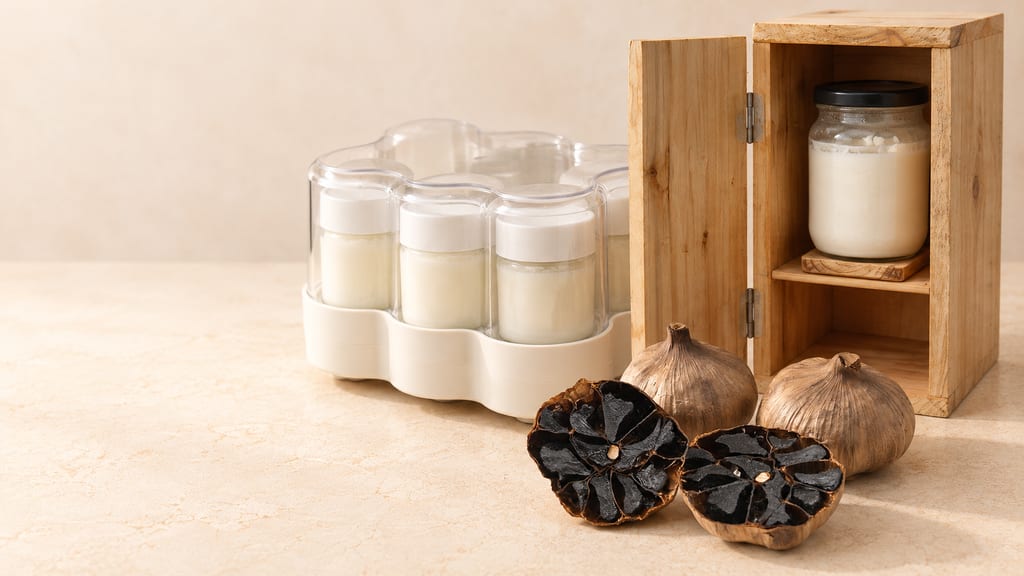
A multi-jar yoghurt maker, an open wooden warming box and split black garlic sit on a warm ivory surface in soft daylight.
Home equipment crafts

Traditional food crafts with modern home equipment

A slow cooker, a brewing kettle or a dehydrator can take over the hard part of many old food crafts, once you see each appliance as a set of physical functions and give it the right container.

· 14 min read

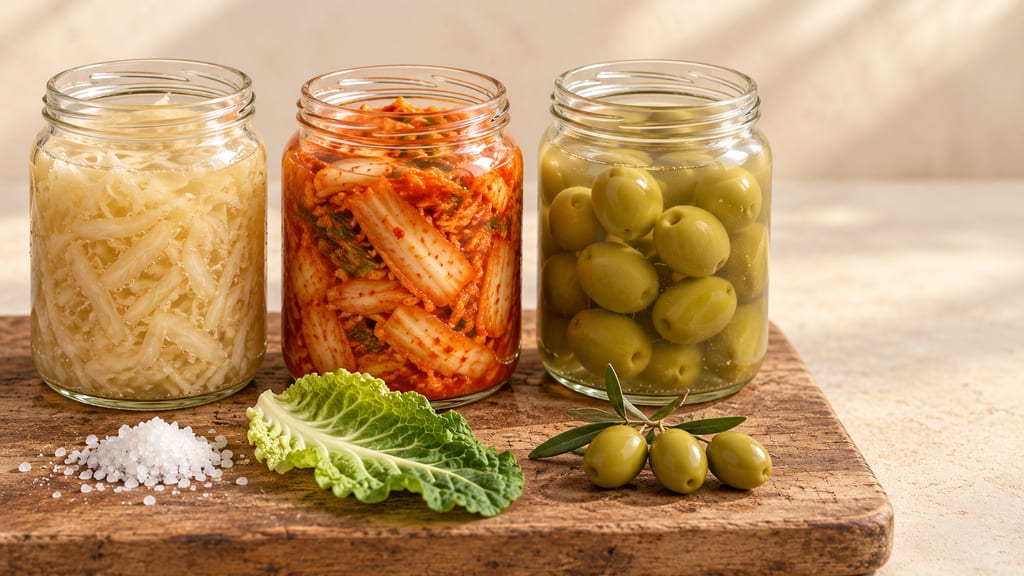
Three open glass jars of sauerkraut, baechu kimchi and green olives in brine sit behind coarse salt, a cabbage leaf and an olive twig on a wooden board.
Starter cultures

A starter for a ferment that starts itself

Cabbage, kimchi and olives ferment on bacteria they already carry. Korean kimchi makers have added a chosen strain since 2004; in some 16,000-litre olive vessels the bacteria did not last.

· 6 min read

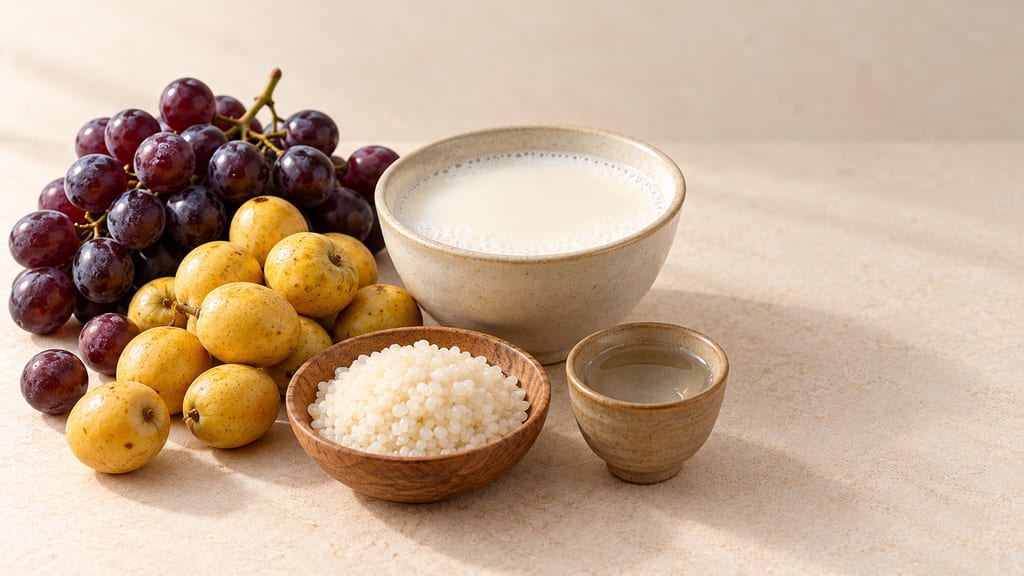
Yellow marula fruit, dark grapes, white rice, frothy airag and clear sake arranged on a warm ivory surface in soft daylight.
Alcoholic fermentation

Harvests into drinks: fruit, grain and milk

A marula harvest, a rice mash and a bowl of fermented mare’s milk reveal different ways to make alcohol, and different kinds of knowledge behind the drink.

· 8 min read

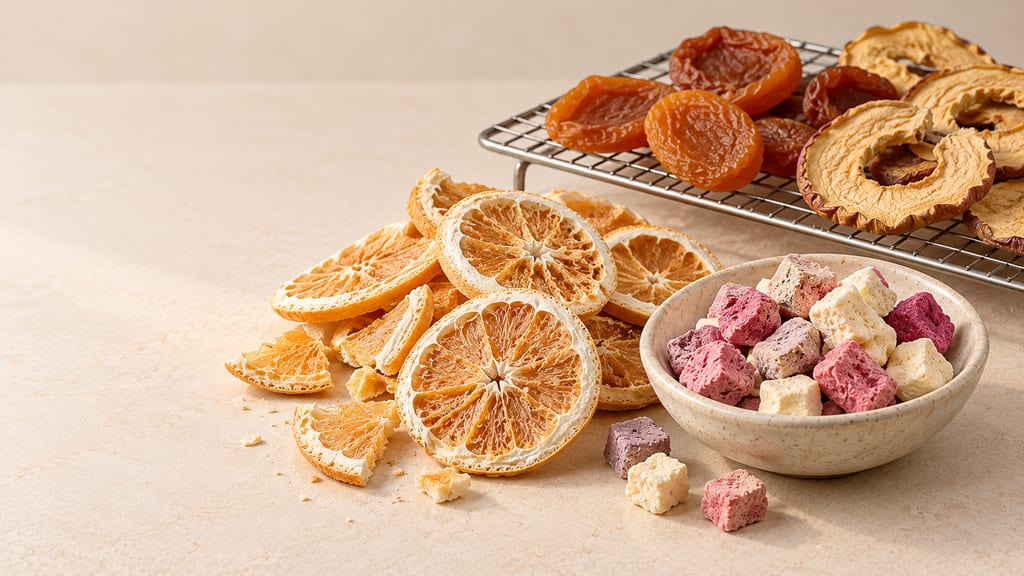
Freeze-dried orange slices and a bowl of colourful yoghurt crisps beside darker dried apricots and apple rings on a wire rack, softly lit on an ivory surface.
Home equipment crafts

Drying and freeze-drying at home

A dehydrator turns fruit purée into leather and steamed sweet potato into hoshiimo without sun or wind; a freeze dryer works differently. Both stop microbes growing by removing water, and neither replaces a step that kills them.

· 14 min read

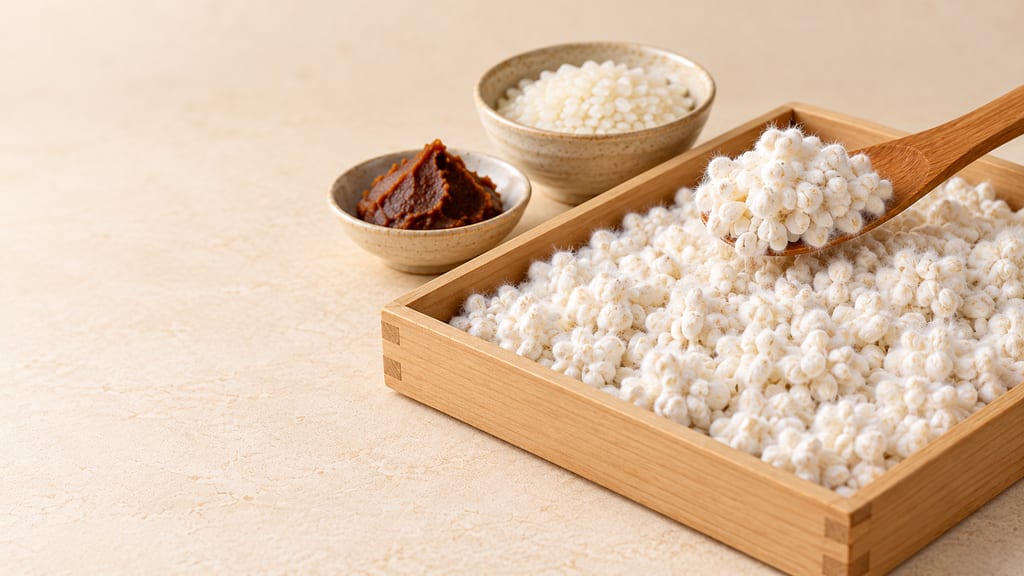
A wooden tray of white koji-covered rice with a cluster lifted on a wooden spatula, beside bowls of polished rice and dark miso on a warm ivory surface.
Koji intake

Koji: the mould, the grain and the work they do

Koji is grain or beans grown with a mould whose enzymes break food down. This guide separates the mould, the starter and the finished koji, and follows them into sake, amazake, miso, soy sauce and shio-koji.

· 16 min read

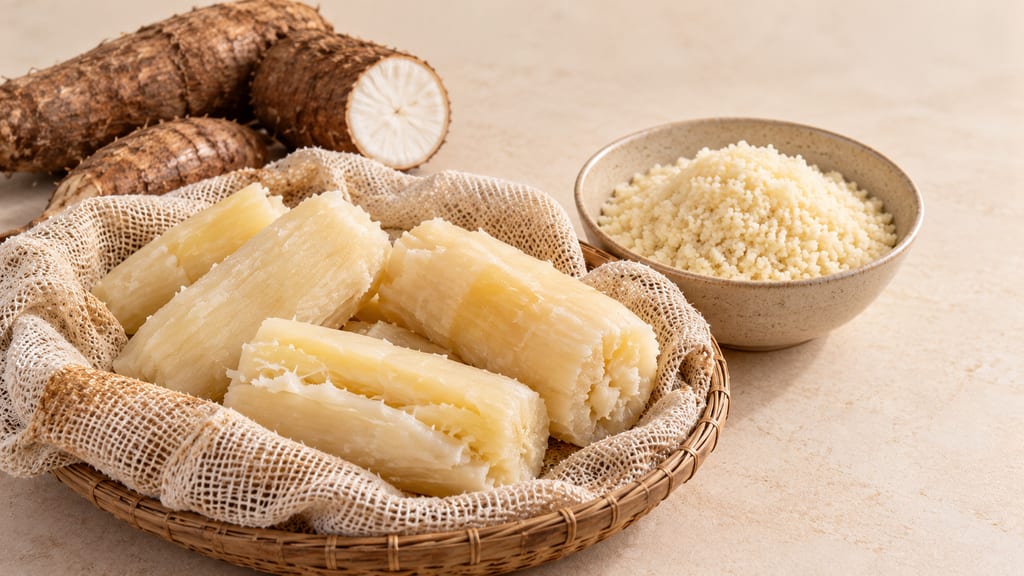
Soft boiled cassava pieces rest on a coarse net bag in a woven basket beside raw cassava roots and a bowl of fine pale attiéké.
Starter cultures

A boiled root in a well-used bag: how attiéké gets its start

Before attiéké is pressed and steamed, a boiled cassava root has to ferment in a used bag. The bacteria that grow there differ by community and by batch, and nobody has turned them into a validated recipe.

· 7 min read

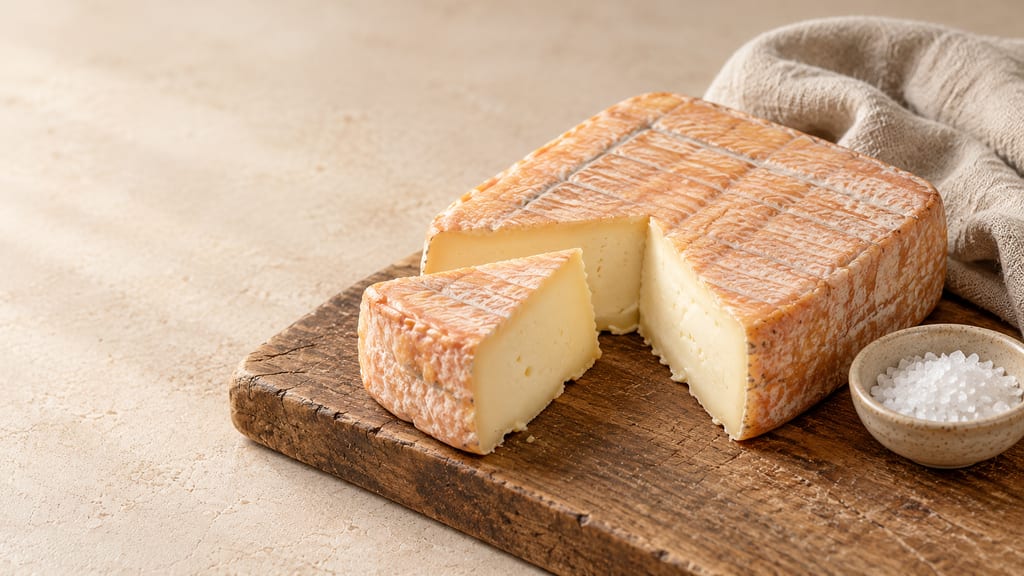
Square pink-orange washed-rind cheese with a wedge removed to reveal ivory paste, beside linen and coarse salt on a wooden board.
Techniques

A cloth soaked in salt water builds a rind

Montaigne saw cheeses wiped with salt-water linen in the 1500s. The wipe still decides which microbes settle on the rind, what the cheese smells of and what can grow on it.

· 8 min read