











Tuber latisporum
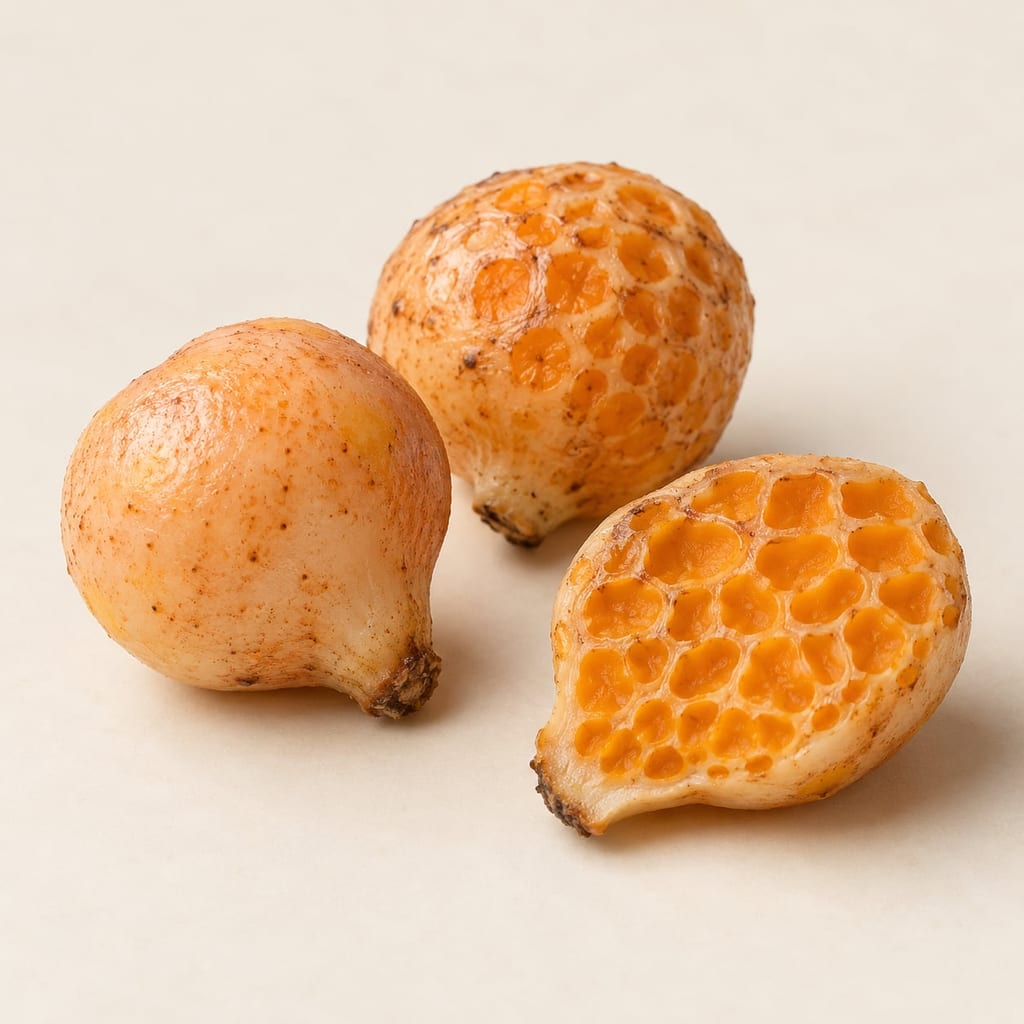
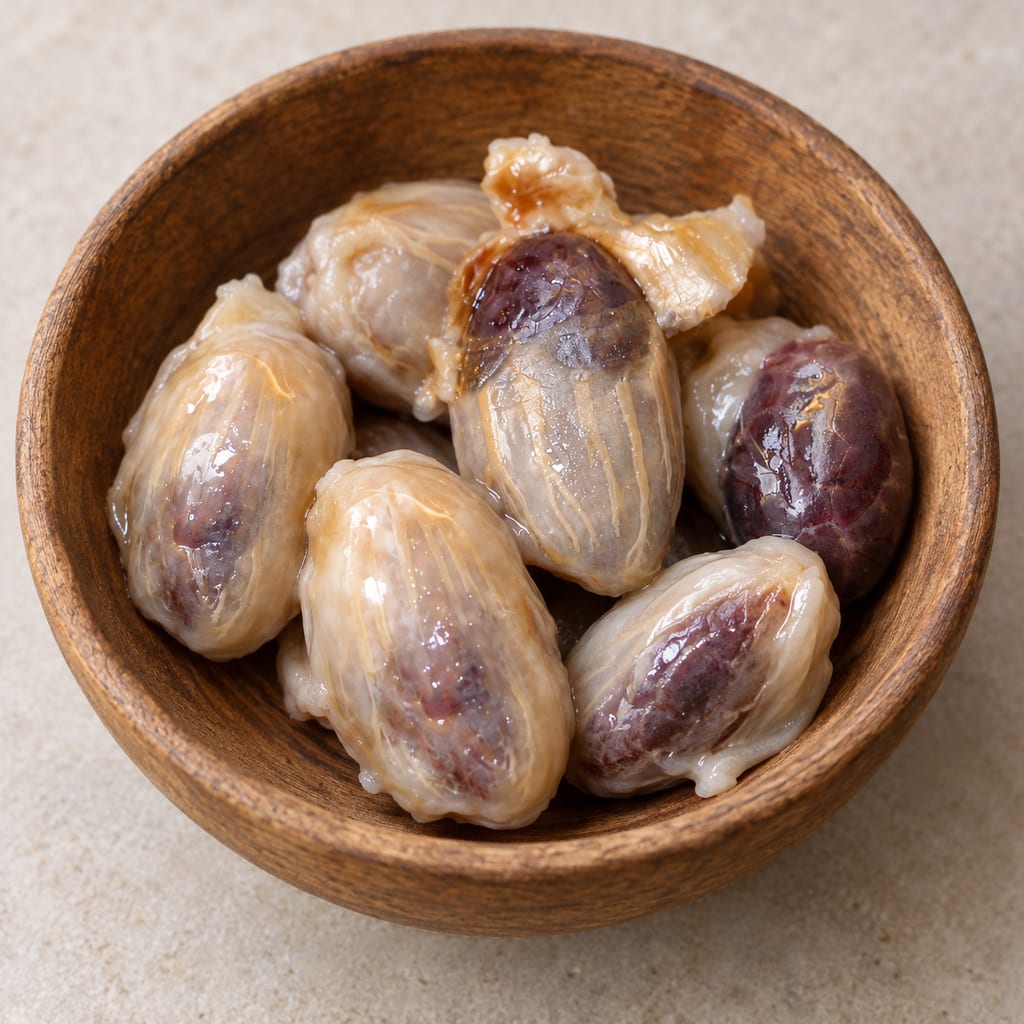
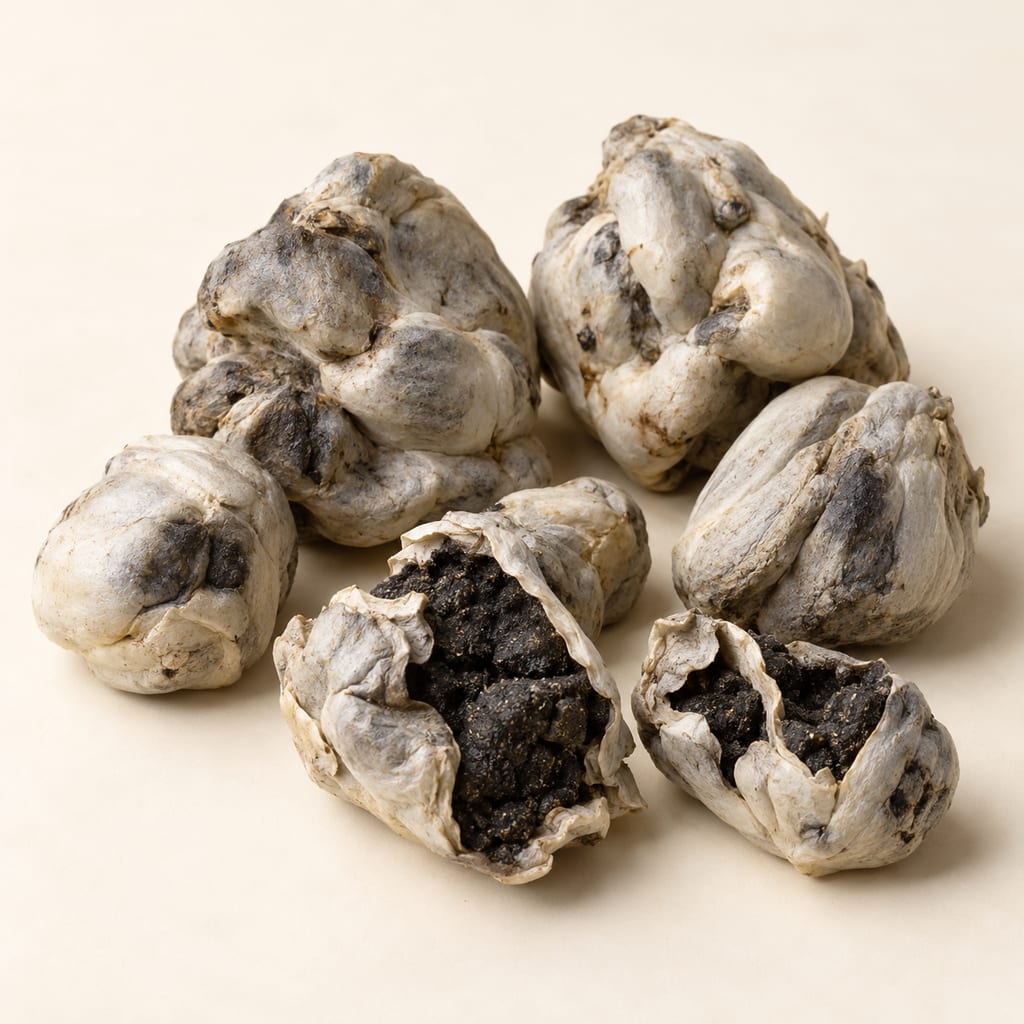
Tuber latisporum, the Chinese truffle, is a wild ectomycorrhizal truffle listed as edible in the 2026 Chinese species catalogue and sold in Chinese markets, but its culinary tradition and host are not yet documented.
 FermenteaWhere food goes to change
1086 articles on substrates, cultures and additives.
 Edible mushrooms339
 Brittlegills25
 Truffles20
 Milkcaps17
 Termite mushrooms17
 Fungi7
 Morels4
 Stinkhorn fungi4
 Lichens3
Tuber latisporum, the Chinese truffle, is a wild ectomycorrhizal truffle listed as edible in the 2026 Chinese species catalogue and sold in Chinese markets, but its culinary tradition and host are not yet documented.
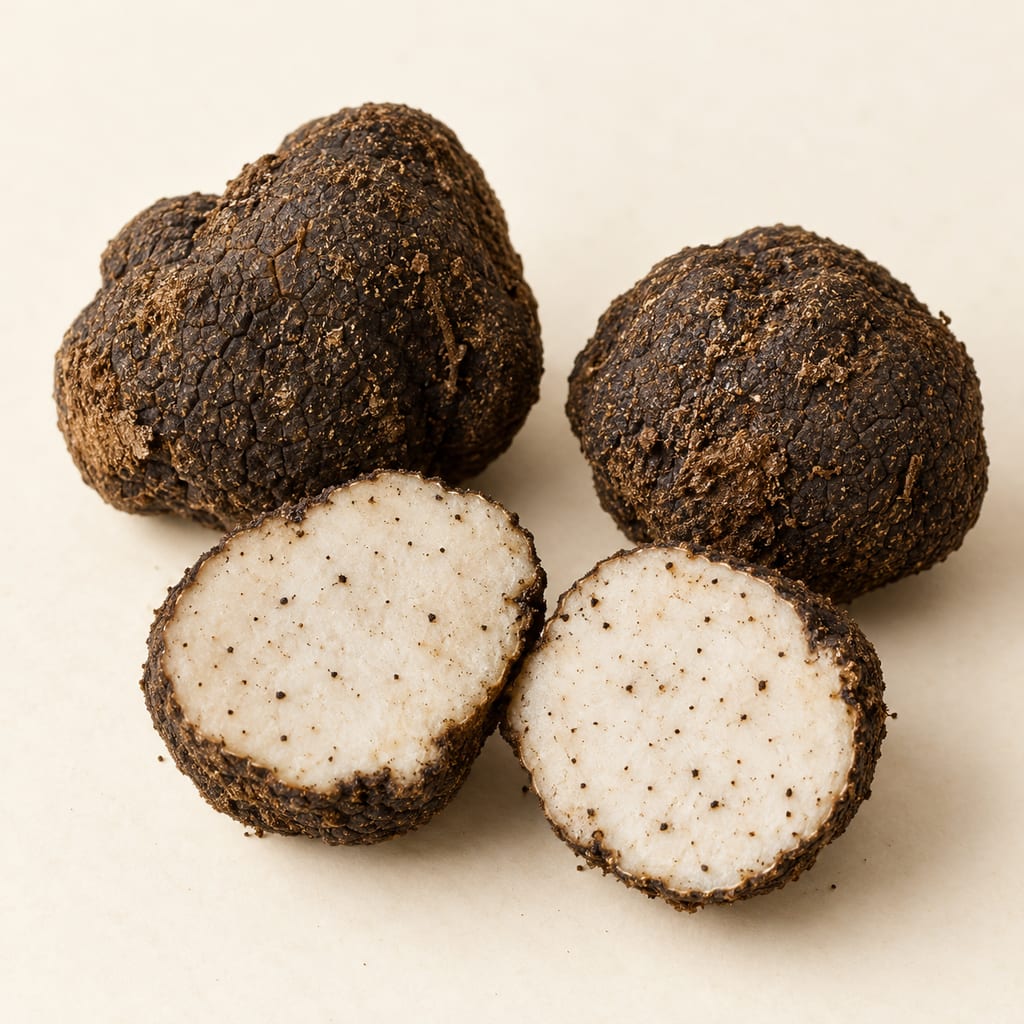
Picoa lefebvrei is a small hypogeous desert fungus of North Africa and the Middle East, called the bird truffle, whose fruiting bodies are described as edible and eaten by birds, with no food record in Africa confirmed yet.
Tuber panzhihuanense is a truffle described in 2012 from southwestern China. A 2026 Chinese species catalogue lists it as edible, but its culinary use, host association and safety are not established by the sources reviewed.
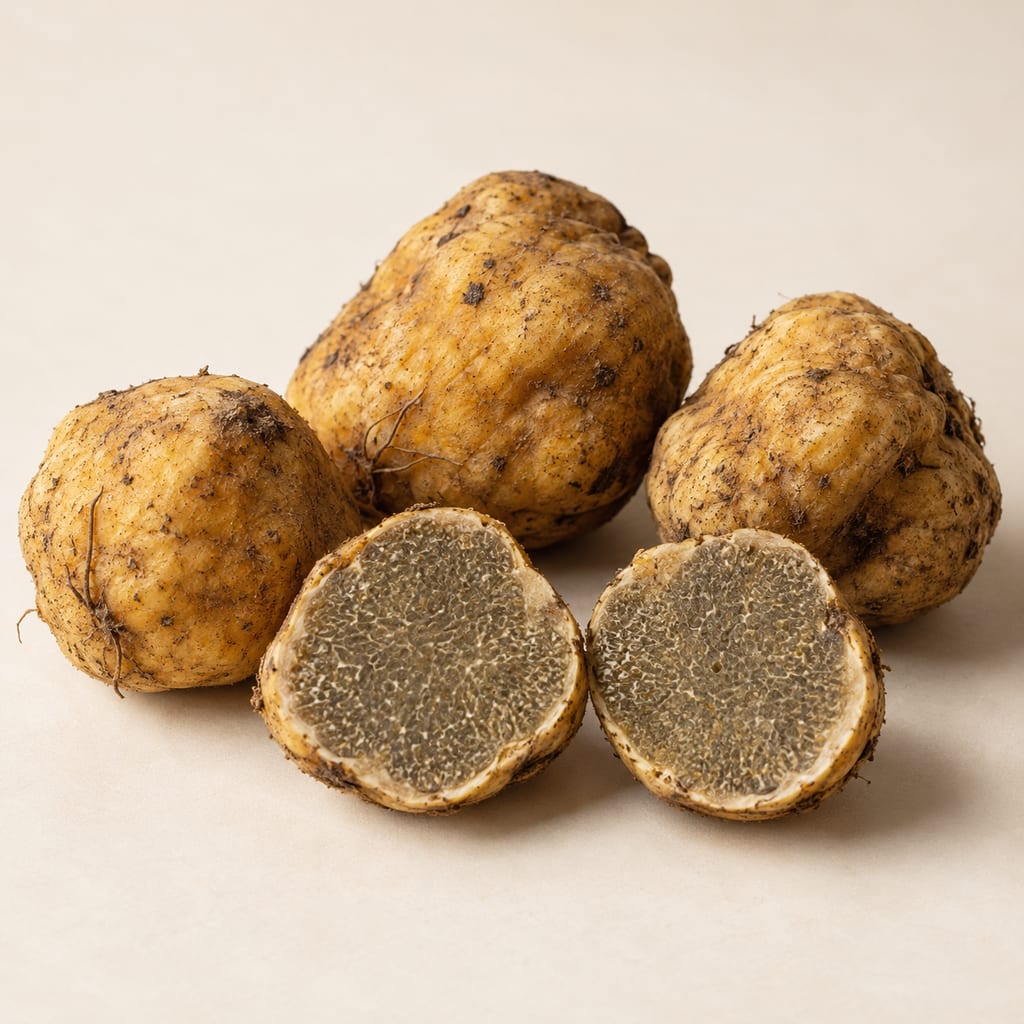
Rhizopogon luteolus, a pine-associated false truffle of Europe and introduced pine regions. Its food use is disputed, its immature stage is the one recorded as eaten, and it must not be confused with poisonous earthballs.
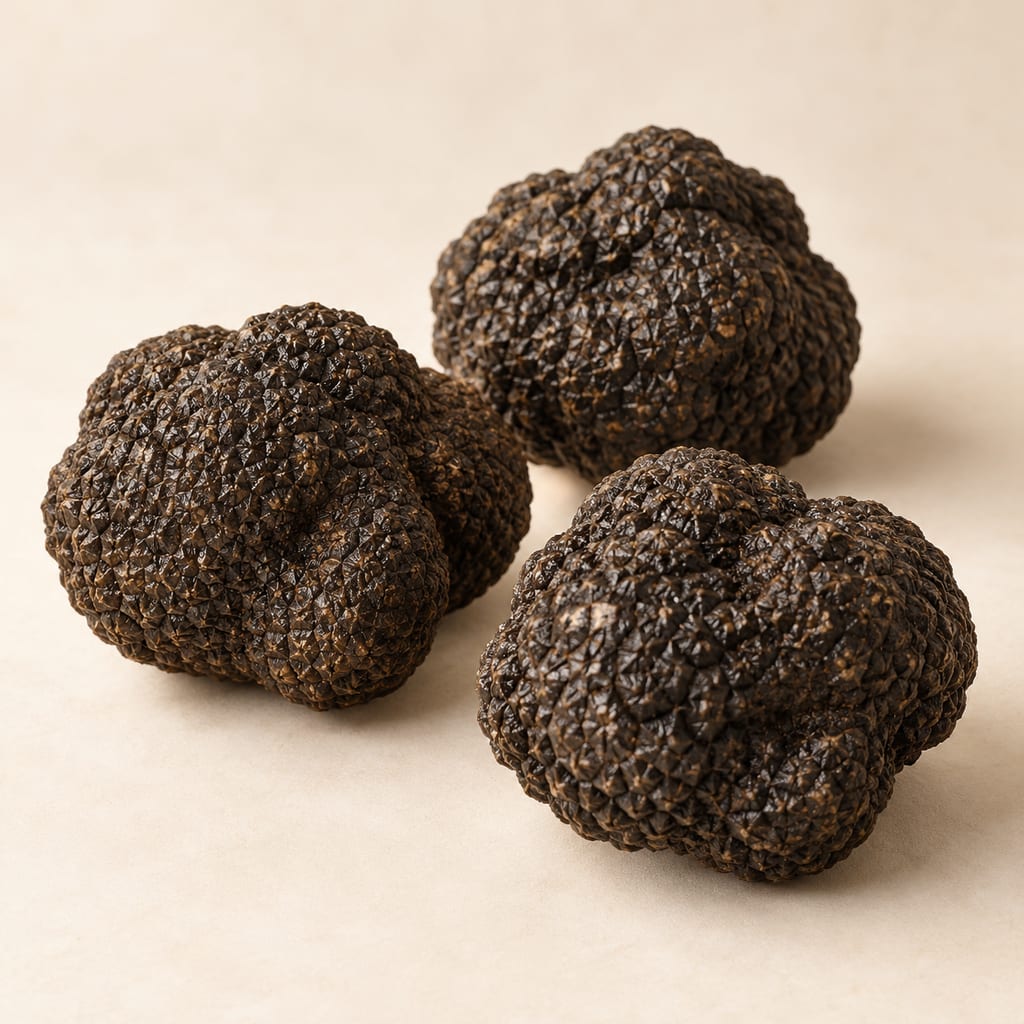
Tuber melanosporum is the Périgord black truffle, a mycorrhizal fungus of southern Europe grown in inoculated oak and hazel orchards and used as a high-value aromatic seasoning.
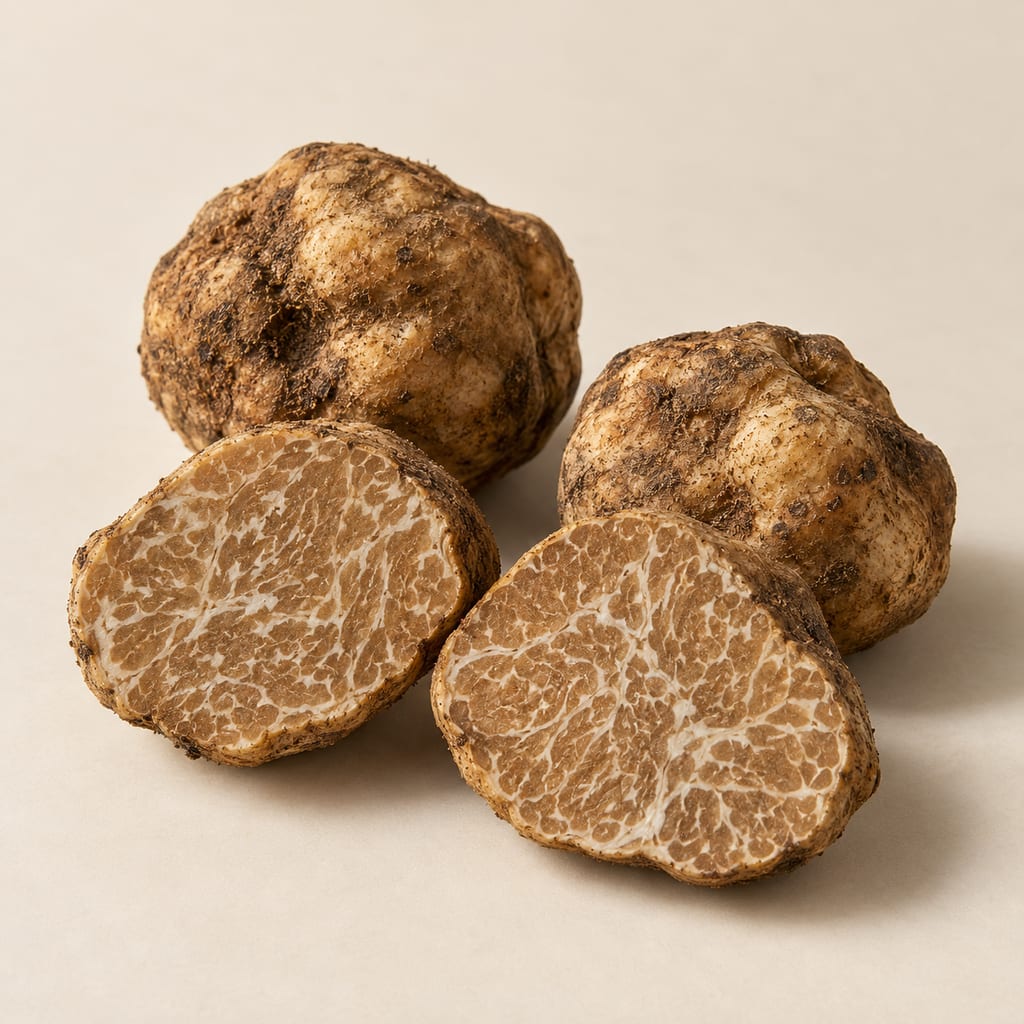
Tuber oregonense is a wild truffle of Douglas-fir forests in the Pacific Northwest, valued for its aroma and shaved raw over warm fatty food.
Pine-associated false truffle, Rhizopogon songmaodan, is a hypogeous fungus of pine forests in southwest China, sold at wild mushroom markets as a delicacy. It was described as new in 2021, and its safety has not been studied in the sources reviewed.
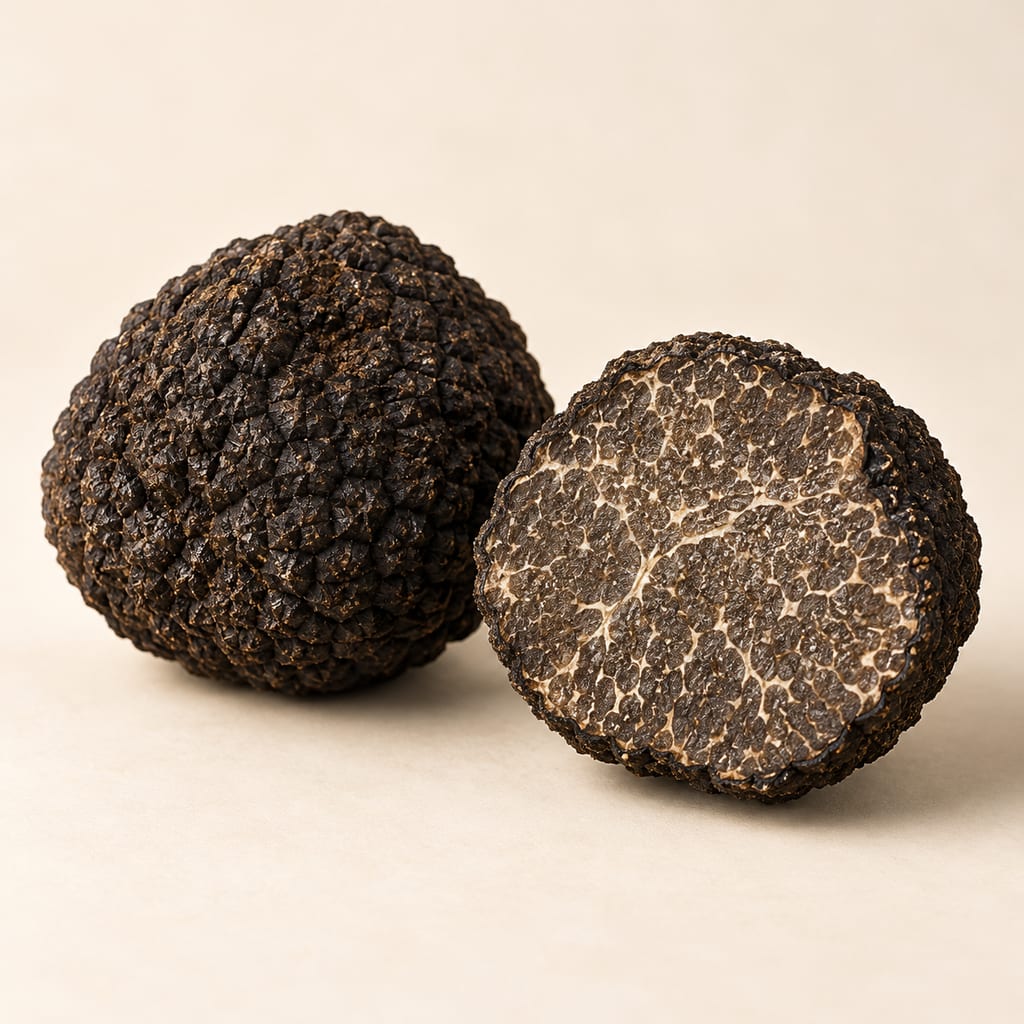
The Chinese black truffle, Tuber indicum, is a wild truffle of the Himalayas and southwest China. It is harvested in Yunnan and Sichuan, sold as a lower-priced relative of the Perigord truffle, and often sold fraudulently under its name.
Tirmania pinoyi is a desert truffle of the Terfeziaceae that grows with Helianthemum roots in arid North African and Arabian sands. It is gathered and sold locally in North Africa as a wild food.
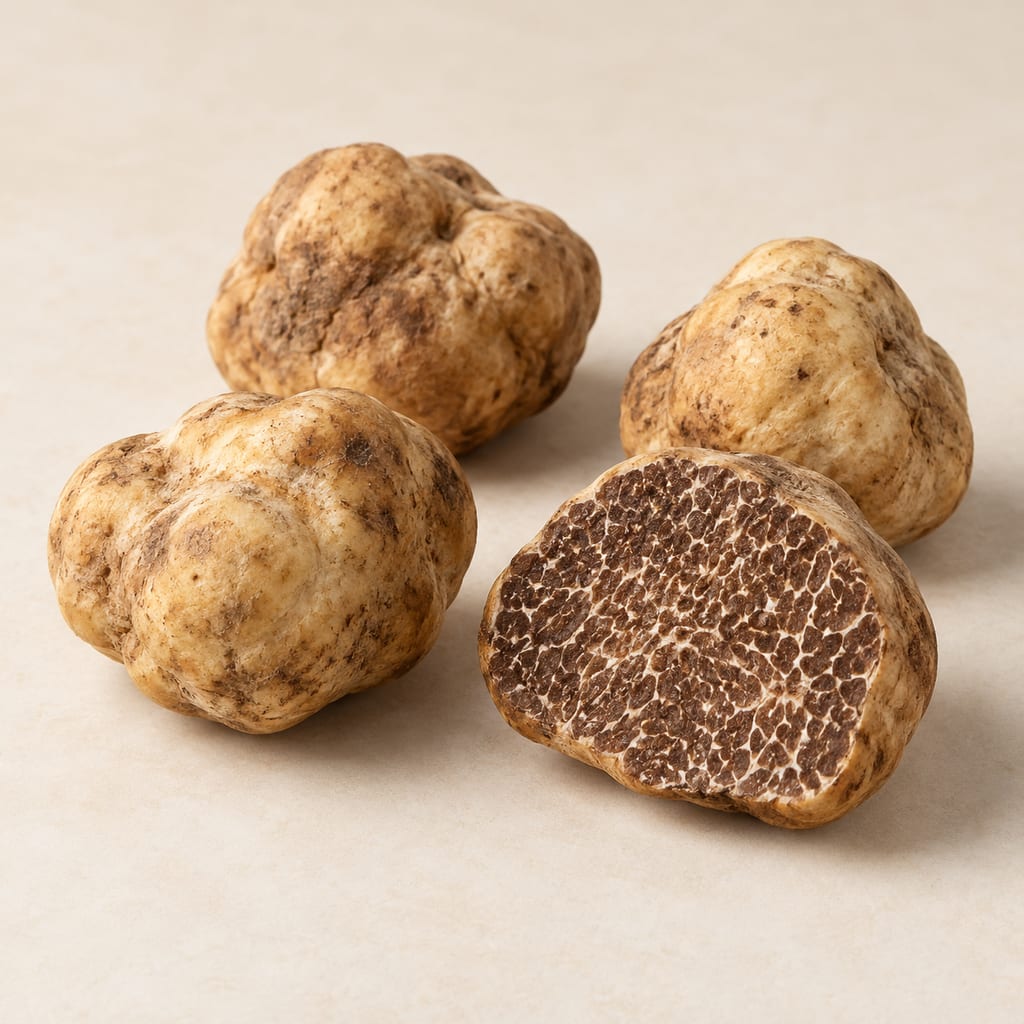
Tuber borchii, the bianchetto truffle, is a pale, pungent truffle that grows with trees and is now cultivated in Italy. It is used as a seasoning and is distinct from the costly white truffle, Tuber magnatum.
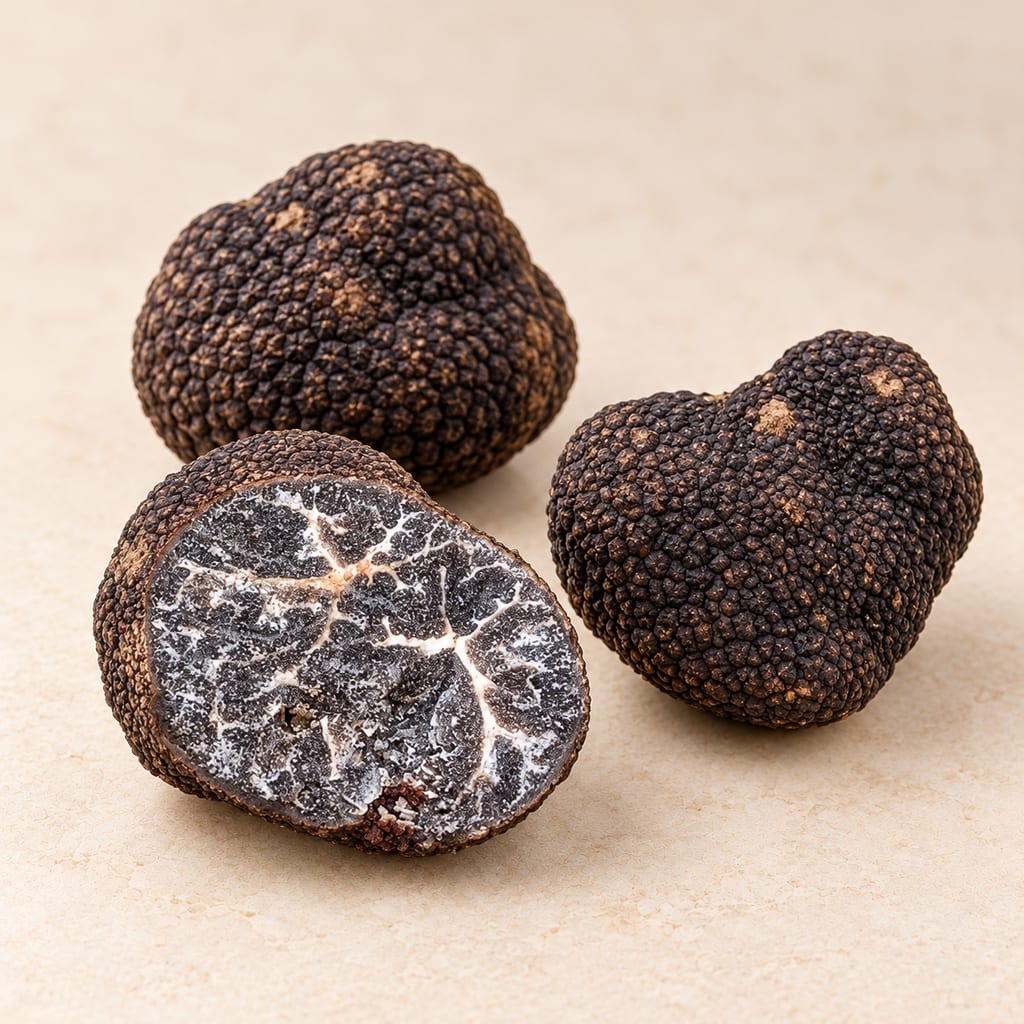
The dog-revealed truffle, Tuber canirevelatum, is a North American truffle found in a truffle orchard by a trained dog. Its aroma resembles that of European truffles, but its edibility and its range are not yet settled by the sources read.
A rarely reported subterranean fungus from South Africa’s Northern Cape. It is grouped with Kalahari truffles in some literature, but occurrence in the Kalahari Desert proper and food use are unconfirmed.
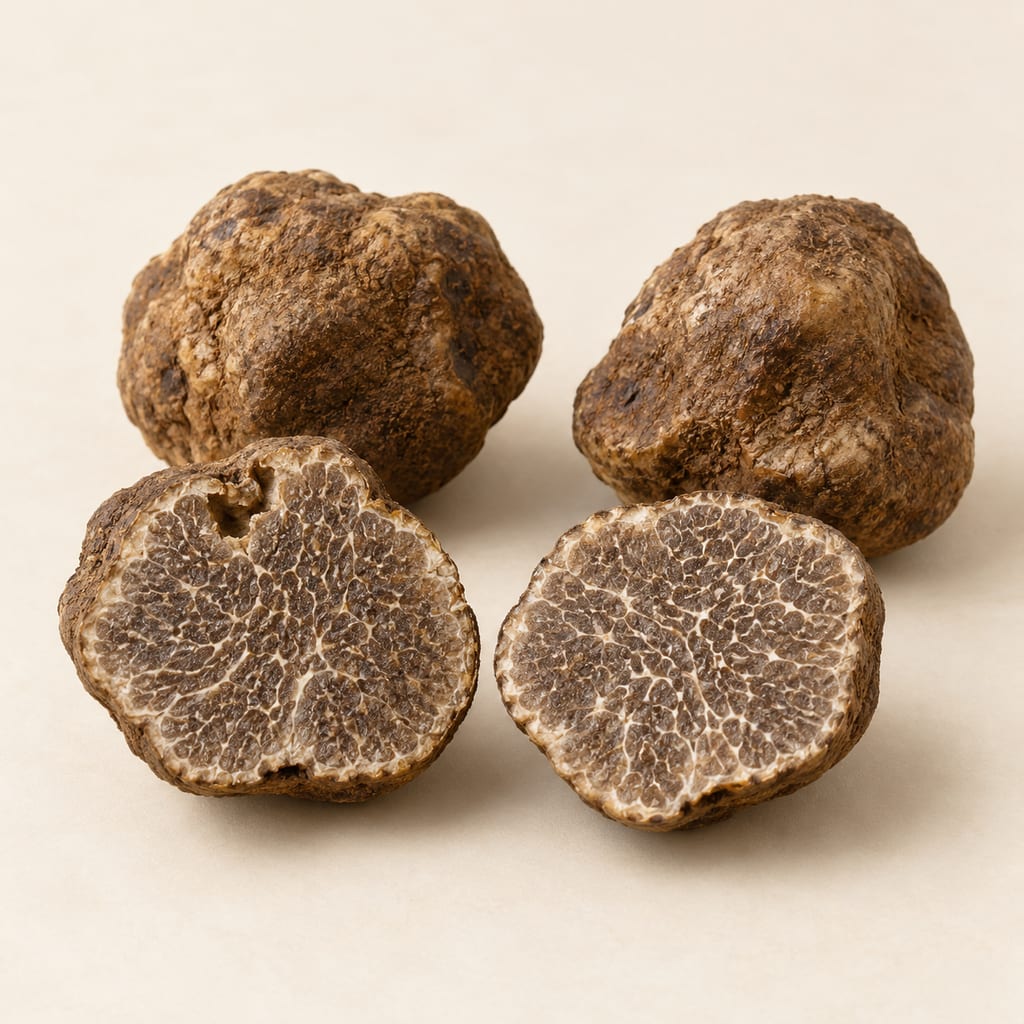
Tuber floridanum is a truffle that grows with pecan trees in orchards of the southeastern United States and has a recorded food use in Brazil. Sources describe its odour as unappealing, and the evidence for eating it is limited.
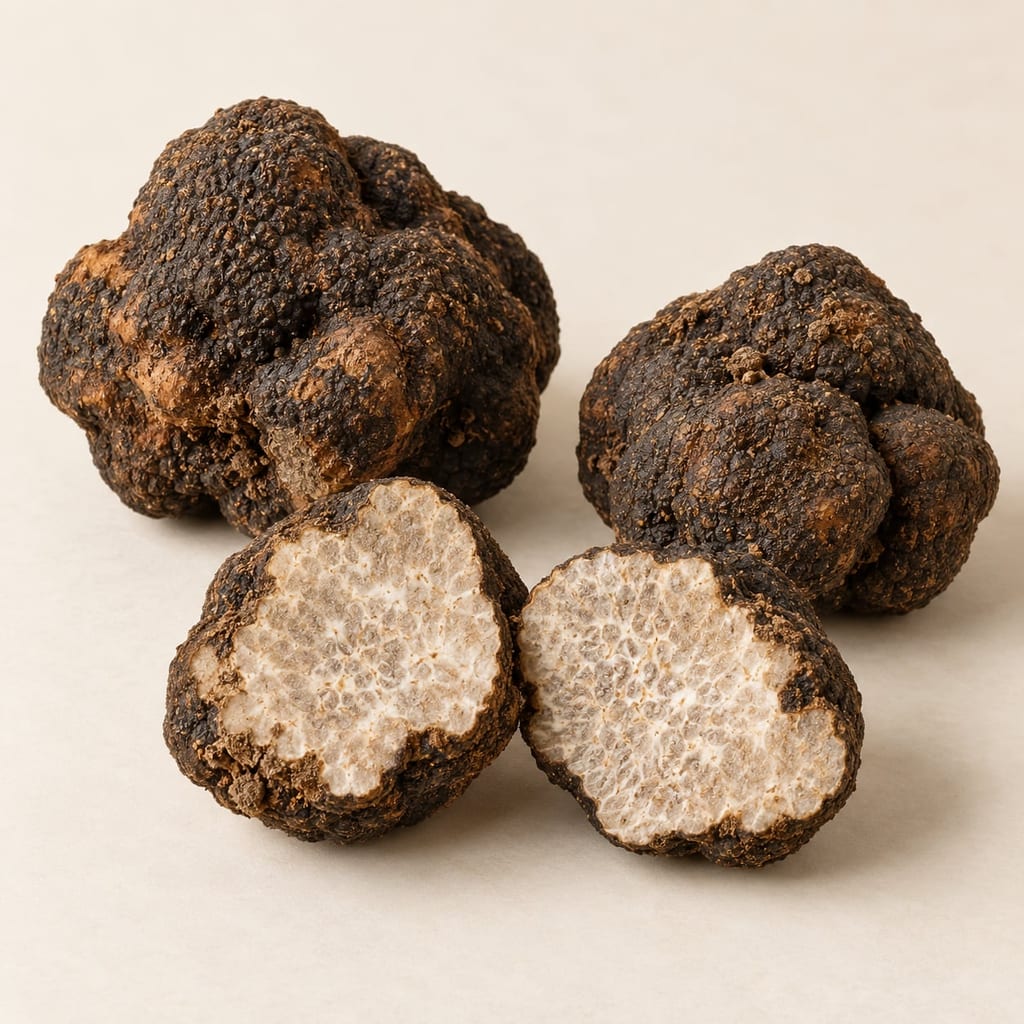
Kalapuya brunnea, the Oregon brown truffle, is a native truffle of the Pacific Northwest that is shaved raw over warm food. Sources describe it as a gourmet edible, and its safe identification needs an expert.
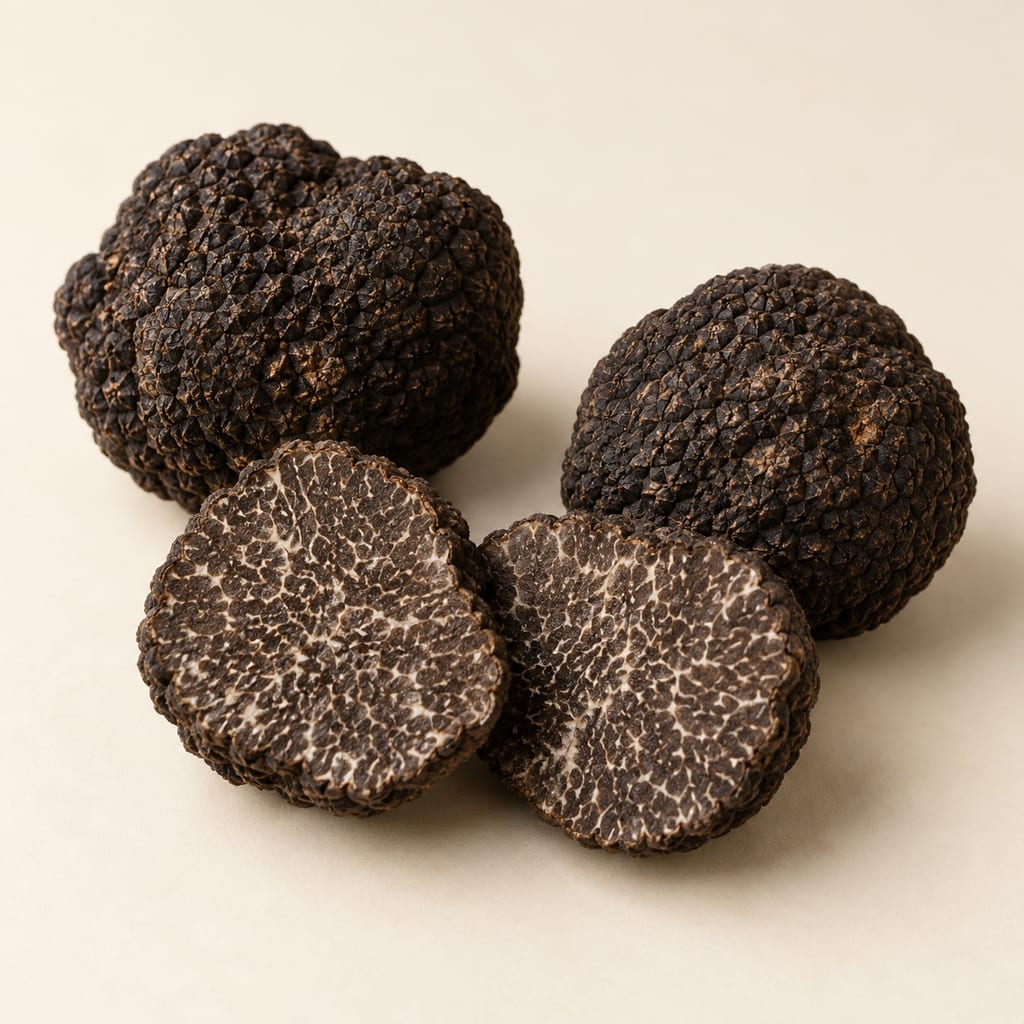
The winter truffle, Tuber brumale, is a dark, aromatic truffle of southern Europe, also called the Muscat truffle. It is sold as a cheaper relative of the Périgord truffle and is kept separate from Tuber melanosporum in records.
Tuber huidongense is a subterranean truffle of pine forests in south-western China, known from Sichuan and Yunnan. A recent Chinese catalogue lists it as edible, but no culinary tradition for it has been documented.
Desert truffle, Terfezia claveryi, is an underground fungus of dry Spanish and Moroccan ground that is gathered and sold seasonally, under names such as terfass, in local markets.
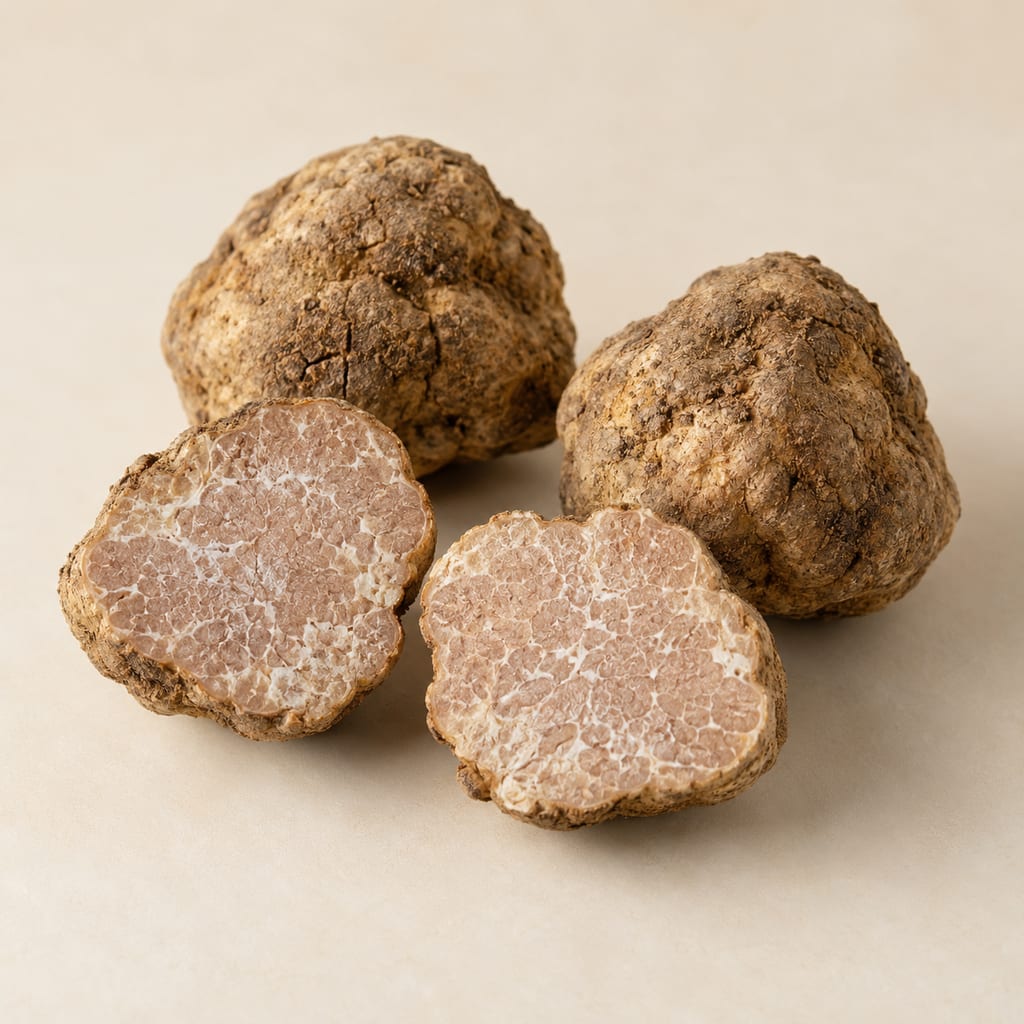
The sand desert truffle, Terfezia arenaria, is an underground fungus of sandy, arid soils around the Mediterranean Basin. It is widely harvested and traded, but the European Union does not list it as an edible truffle authorised for sale.
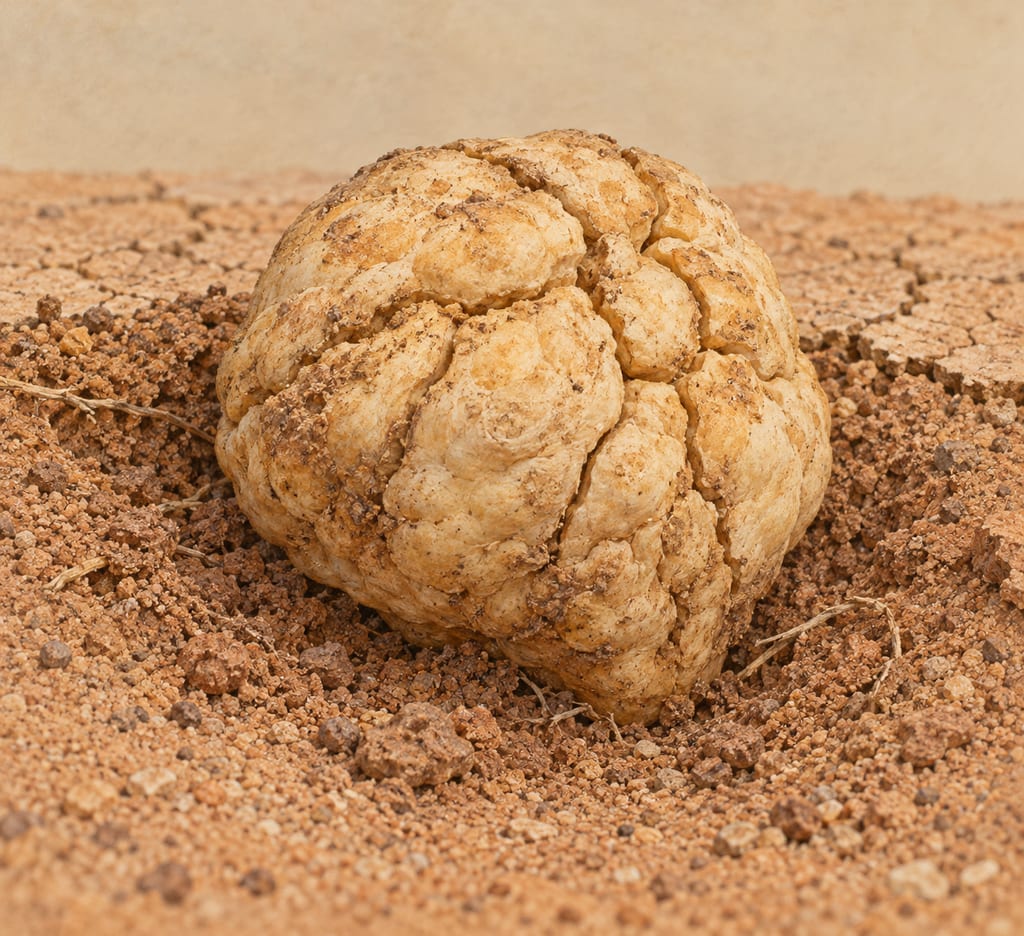
Choiromyces aboriginum is an underground desert truffle of Australia's dry interior. Aboriginal peoples ate its fruiting bodies raw or cooked and also drew water from it. Its accepted scientific name is disputed.
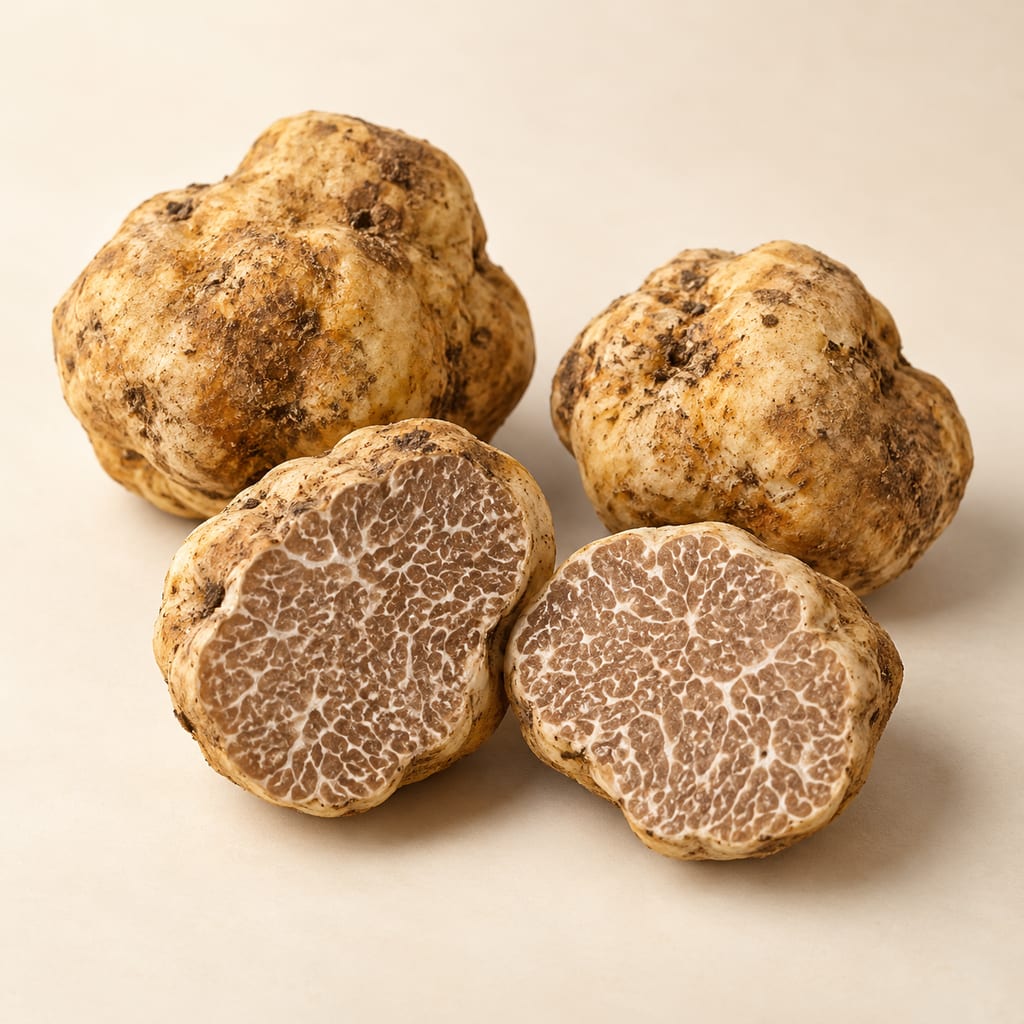
Tuber cumberlandense, an aromatic truffle described as a new species in 2024, native to eastern North America and sold from truffle orchards and woodlands dominated by broadleaf trees.